Spandidos Publications Logo
  • About
    • About Spandidos
    • Aims and Scopes
    • Abstracting and Indexing
    • Editorial Policies
    • Reprints and Permissions
    • Job Opportunities
    • Terms and Conditions
    • Contact
  • Journals
    • All Journals
    • Oncology Letters
      • Oncology Letters
      • Information for Authors
      • Editorial Policies
      • Editorial Board
      • Aims and Scope
      • Abstracting and Indexing
      • Bibliographic Information
      • Archive
    • International Journal of Oncology
      • International Journal of Oncology
      • Information for Authors
      • Editorial Policies
      • Editorial Board
      • Aims and Scope
      • Abstracting and Indexing
      • Bibliographic Information
      • Archive
    • Molecular and Clinical Oncology
      • Molecular and Clinical Oncology
      • Information for Authors
      • Editorial Policies
      • Editorial Board
      • Aims and Scope
      • Abstracting and Indexing
      • Bibliographic Information
      • Archive
    • Experimental and Therapeutic Medicine
      • Experimental and Therapeutic Medicine
      • Information for Authors
      • Editorial Policies
      • Editorial Board
      • Aims and Scope
      • Abstracting and Indexing
      • Bibliographic Information
      • Archive
    • International Journal of Molecular Medicine
      • International Journal of Molecular Medicine
      • Information for Authors
      • Editorial Policies
      • Editorial Board
      • Aims and Scope
      • Abstracting and Indexing
      • Bibliographic Information
      • Archive
    • Biomedical Reports
      • Biomedical Reports
      • Information for Authors
      • Editorial Policies
      • Editorial Board
      • Aims and Scope
      • Abstracting and Indexing
      • Bibliographic Information
      • Archive
    • Oncology Reports
      • Oncology Reports
      • Information for Authors
      • Editorial Policies
      • Editorial Board
      • Aims and Scope
      • Abstracting and Indexing
      • Bibliographic Information
      • Archive
    • Molecular Medicine Reports
      • Molecular Medicine Reports
      • Information for Authors
      • Editorial Policies
      • Editorial Board
      • Aims and Scope
      • Abstracting and Indexing
      • Bibliographic Information
      • Archive
    • World Academy of Sciences Journal
      • World Academy of Sciences Journal
      • Information for Authors
      • Editorial Policies
      • Editorial Board
      • Aims and Scope
      • Abstracting and Indexing
      • Bibliographic Information
      • Archive
    • International Journal of Functional Nutrition
      • International Journal of Functional Nutrition
      • Information for Authors
      • Editorial Policies
      • Editorial Board
      • Aims and Scope
      • Abstracting and Indexing
      • Bibliographic Information
      • Archive
    • International Journal of Epigenetics
      • International Journal of Epigenetics
      • Information for Authors
      • Editorial Policies
      • Editorial Board
      • Aims and Scope
      • Abstracting and Indexing
      • Bibliographic Information
      • Archive
    • Medicine International
      • Medicine International
      • Information for Authors
      • Editorial Policies
      • Editorial Board
      • Aims and Scope
      • Abstracting and Indexing
      • Bibliographic Information
      • Archive
  • Articles
  • Information
    • Information for Authors
    • Information for Reviewers
    • Information for Librarians
    • Information for Advertisers
    • Conferences
  • Language Editing
Spandidos Publications Logo
  • About
    • About Spandidos
    • Aims and Scopes
    • Abstracting and Indexing
    • Editorial Policies
    • Reprints and Permissions
    • Job Opportunities
    • Terms and Conditions
    • Contact
  • Journals
    • All Journals
    • Biomedical Reports
      • Information for Authors
      • Editorial Policies
      • Editorial Board
      • Aims and Scope
      • Abstracting and Indexing
      • Bibliographic Information
      • Archive
    • Experimental and Therapeutic Medicine
      • Information for Authors
      • Editorial Policies
      • Editorial Board
      • Aims and Scope
      • Abstracting and Indexing
      • Bibliographic Information
      • Archive
    • International Journal of Epigenetics
      • Information for Authors
      • Editorial Policies
      • Editorial Board
      • Aims and Scope
      • Abstracting and Indexing
      • Bibliographic Information
      • Archive
    • International Journal of Functional Nutrition
      • Information for Authors
      • Editorial Policies
      • Editorial Board
      • Aims and Scope
      • Abstracting and Indexing
      • Bibliographic Information
      • Archive
    • International Journal of Molecular Medicine
      • Information for Authors
      • Editorial Policies
      • Editorial Board
      • Aims and Scope
      • Abstracting and Indexing
      • Bibliographic Information
      • Archive
    • International Journal of Oncology
      • Information for Authors
      • Editorial Policies
      • Editorial Board
      • Aims and Scope
      • Abstracting and Indexing
      • Bibliographic Information
      • Archive
    • Medicine International
      • Information for Authors
      • Editorial Policies
      • Editorial Board
      • Aims and Scope
      • Abstracting and Indexing
      • Bibliographic Information
      • Archive
    • Molecular and Clinical Oncology
      • Information for Authors
      • Editorial Policies
      • Editorial Board
      • Aims and Scope
      • Abstracting and Indexing
      • Bibliographic Information
      • Archive
    • Molecular Medicine Reports
      • Information for Authors
      • Editorial Policies
      • Editorial Board
      • Aims and Scope
      • Abstracting and Indexing
      • Bibliographic Information
      • Archive
    • Oncology Letters
      • Information for Authors
      • Editorial Policies
      • Editorial Board
      • Aims and Scope
      • Abstracting and Indexing
      • Bibliographic Information
      • Archive
    • Oncology Reports
      • Information for Authors
      • Editorial Policies
      • Editorial Board
      • Aims and Scope
      • Abstracting and Indexing
      • Bibliographic Information
      • Archive
    • World Academy of Sciences Journal
      • Information for Authors
      • Editorial Policies
      • Editorial Board
      • Aims and Scope
      • Abstracting and Indexing
      • Bibliographic Information
      • Archive
  • Articles
  • Information
    • For Authors
    • For Reviewers
    • For Librarians
    • For Advertisers
    • Conferences
  • Language Editing
Login Register Submit
  • This site uses cookies
  • You can change your cookie settings at any time by following the instructions in our Cookie Policy. To find out more, you may read our Privacy Policy.

    I agree
Search articles by DOI, keyword, author or affiliation
Search
Advanced Search
presentation
Experimental and Therapeutic Medicine
Join Editorial Board Propose a Special Issue
Print ISSN: 1792-0981 Online ISSN: 1792-1015
Journal Cover
August 2012 Volume 4 Issue 2

Full Size Image

Sign up for eToc alerts
Recommend to Library

Journals

International Journal of Molecular Medicine

International Journal of Molecular Medicine

International Journal of Molecular Medicine is an international journal devoted to molecular mechanisms of human disease.

International Journal of Oncology

International Journal of Oncology

International Journal of Oncology is an international journal devoted to oncology research and cancer treatment.

Molecular Medicine Reports

Molecular Medicine Reports

Covers molecular medicine topics such as pharmacology, pathology, genetics, neuroscience, infectious diseases, molecular cardiology, and molecular surgery.

Oncology Reports

Oncology Reports

Oncology Reports is an international journal devoted to fundamental and applied research in Oncology.

Experimental and Therapeutic Medicine

Experimental and Therapeutic Medicine

Experimental and Therapeutic Medicine is an international journal devoted to laboratory and clinical medicine.

Oncology Letters

Oncology Letters

Oncology Letters is an international journal devoted to Experimental and Clinical Oncology.

Biomedical Reports

Biomedical Reports

Explores a wide range of biological and medical fields, including pharmacology, genetics, microbiology, neuroscience, and molecular cardiology.

Molecular and Clinical Oncology

Molecular and Clinical Oncology

International journal addressing all aspects of oncology research, from tumorigenesis and oncogenes to chemotherapy and metastasis.

World Academy of Sciences Journal

World Academy of Sciences Journal

Multidisciplinary open-access journal spanning biochemistry, genetics, neuroscience, environmental health, and synthetic biology.

International Journal of Functional Nutrition

International Journal of Functional Nutrition

Open-access journal combining biochemistry, pharmacology, immunology, and genetics to advance health through functional nutrition.

International Journal of Epigenetics

International Journal of Epigenetics

Publishes open-access research on using epigenetics to advance understanding and treatment of human disease.

Medicine International

Medicine International

An International Open Access Journal Devoted to General Medicine.

Journal Cover
August 2012 Volume 4 Issue 2

Full Size Image

Sign up for eToc alerts
Recommend to Library

  • Article
  • Citations
    • Cite This Article
    • Download Citation
    • Create Citation Alert
    • Remove Citation Alert
    • Cited By
  • Similar Articles
    • Related Articles (in Spandidos Publications)
    • Similar Articles (Google Scholar)
    • Similar Articles (PubMed)
  • Download PDF
  • Download XML
  • View XML
Article

Mitochondria are the primary source of the H2O2 signal for glucocorticoid-induced apoptosis of lymphoma cells

  • Authors:
    • Margaret E. Tome
    • Kristy Lee
    • Melba C. Jaramillo
    • Margaret M. Briehl
  • View Affiliations / Copyright

    Affiliations: Department of Pathology, University of Arizona, Tucson, AZ 85724, USA
  • Pages: 237-242
    |
    Published online on: May 31, 2012
       https://doi.org/10.3892/etm.2012.595
  • Expand metrics +
Metrics: Total Views: 0 (Spandidos Publications: | PMC Statistics: )
Metrics: Total PDF Downloads: 0 (Spandidos Publications: | PMC Statistics: )
Cited By (CrossRef): 0 citations Loading Articles...

This article is mentioned in:


Abstract

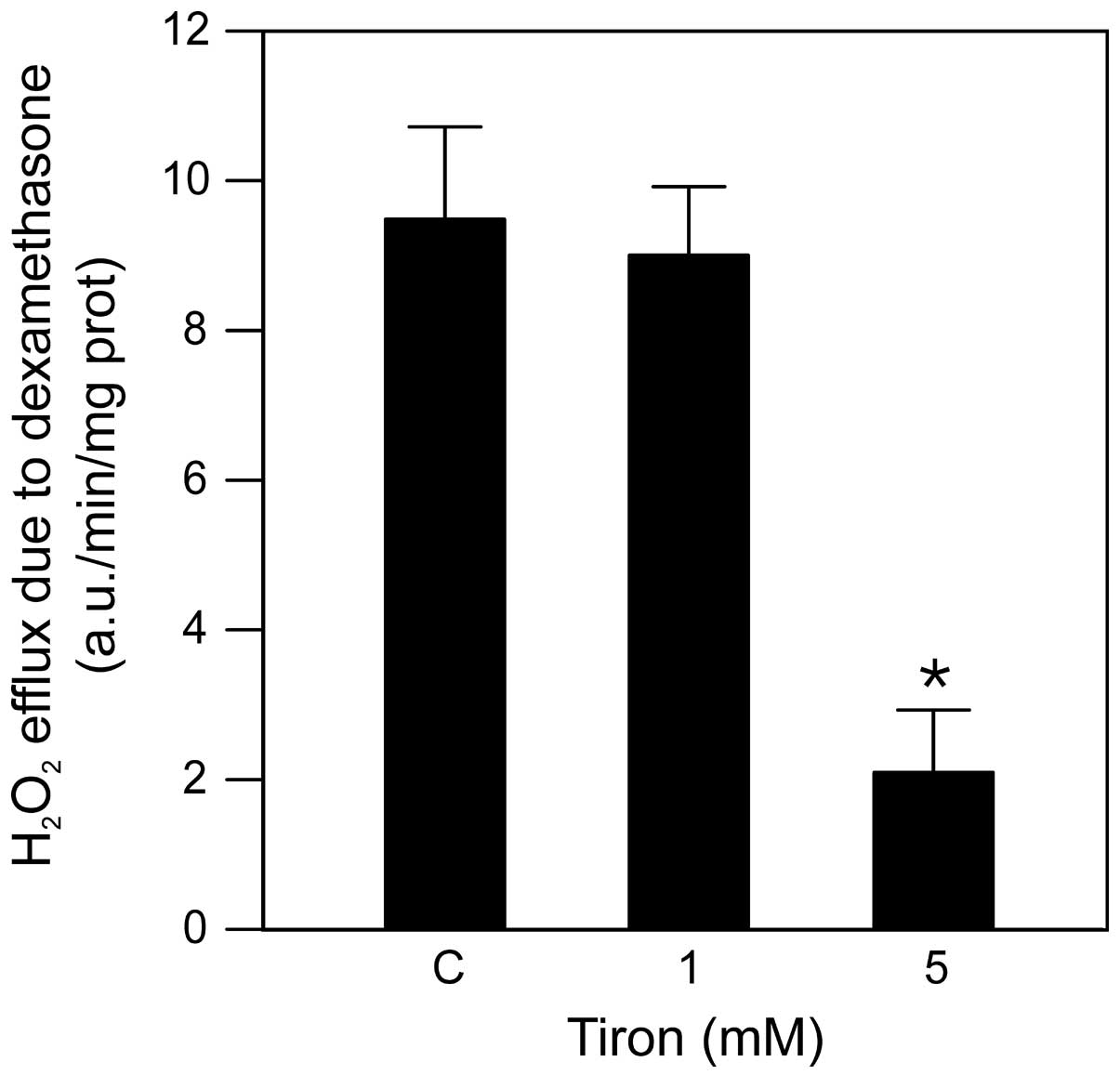
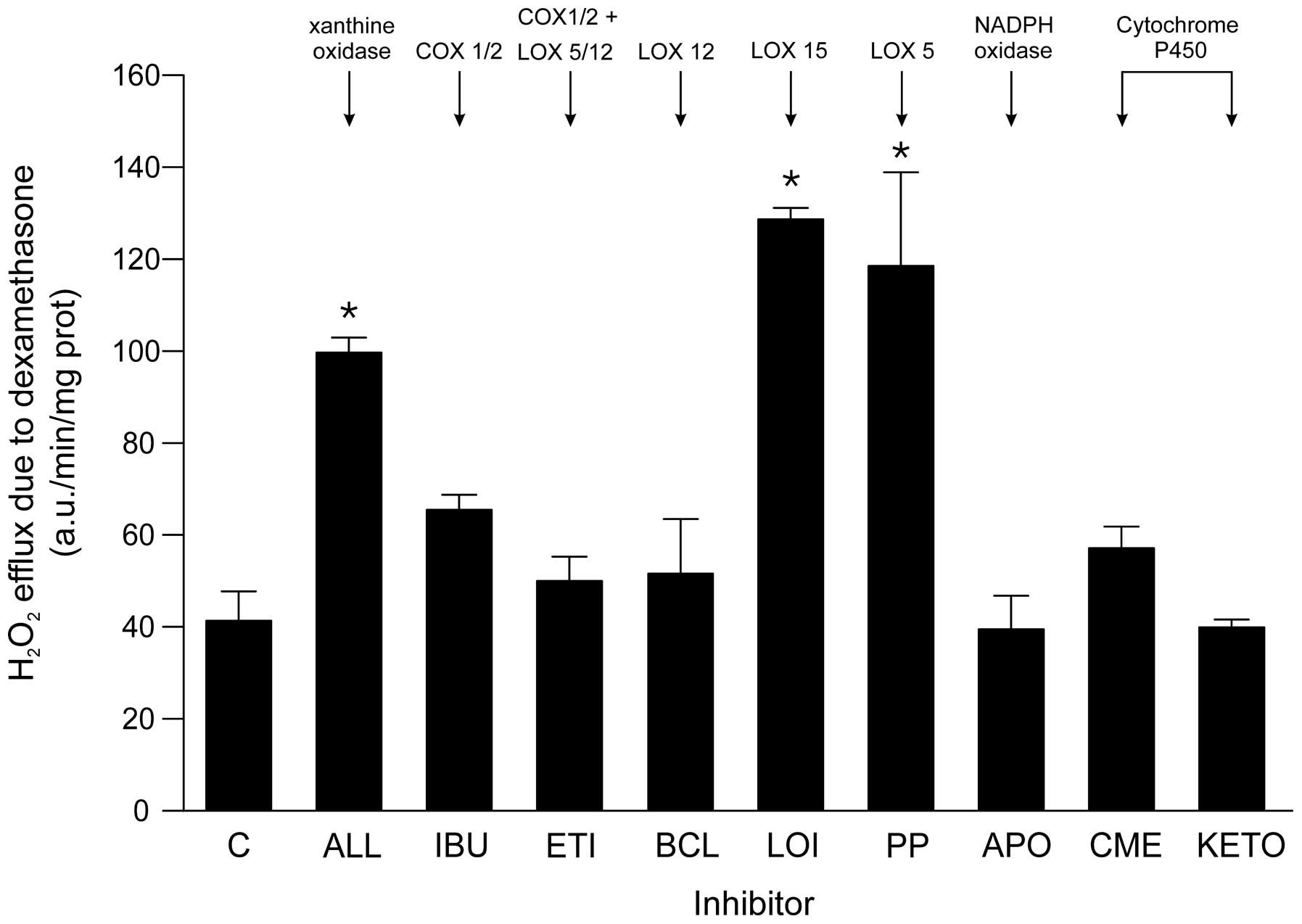
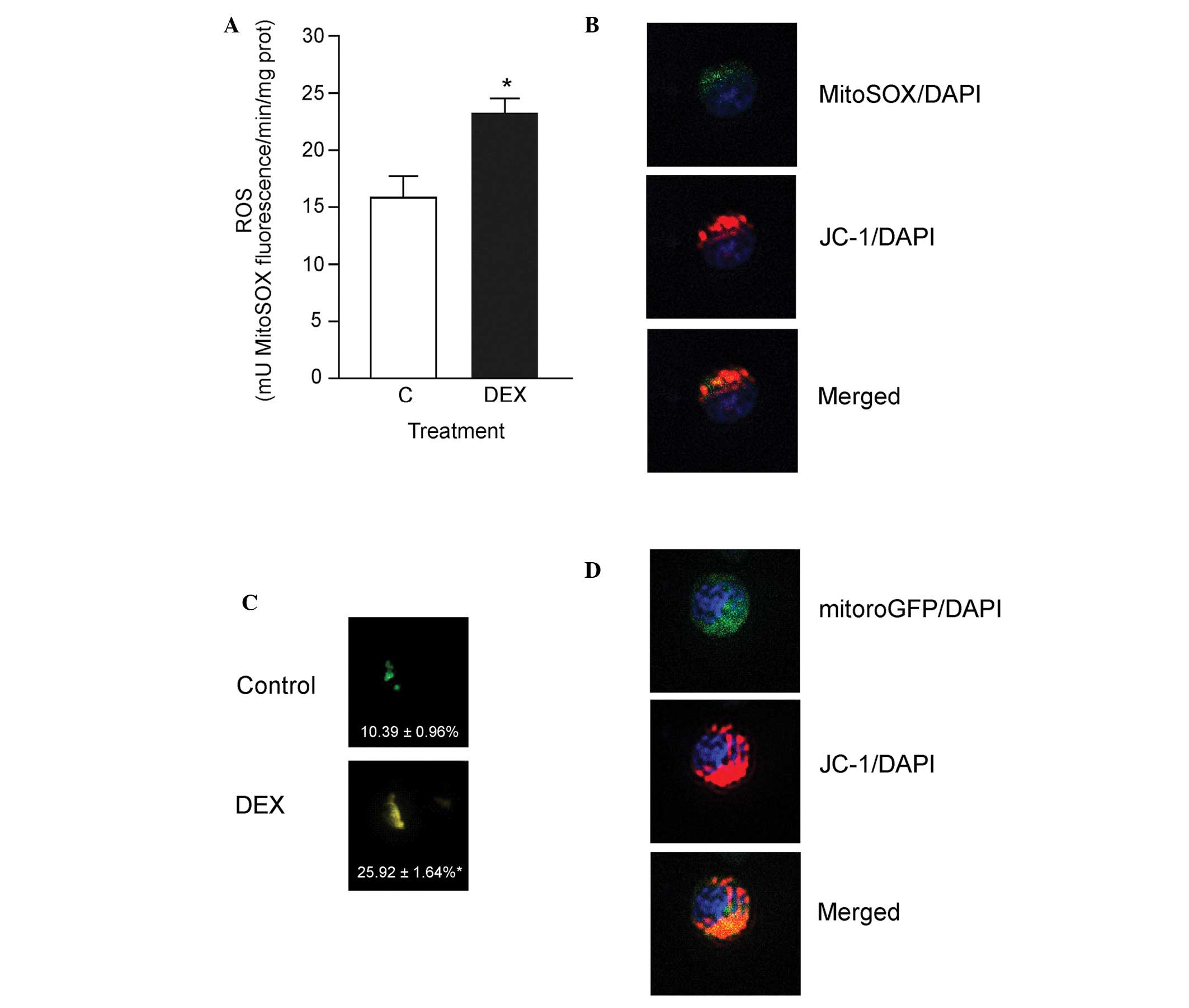
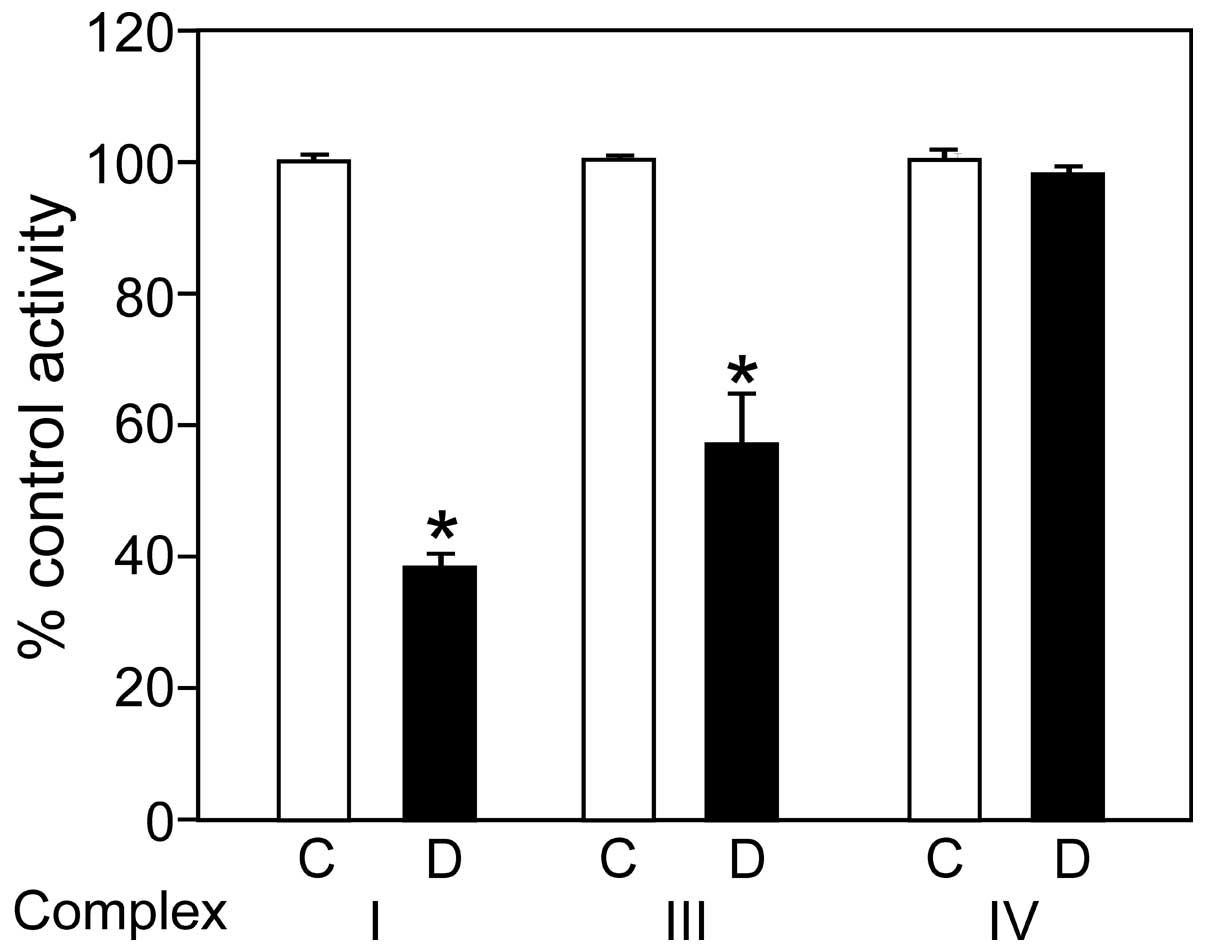
Glucocorticoids are a class of steroid hormones commonly used for the treatment of hematological malignancies due to their ability to induce apoptosis in lymphoid cells. An understanding of the critical steps in glucocorticoid-induced apoptosis is required to identify sources of drug resistance. Previously, we found that an increase in hydrogen peroxide is a necessary signal for glucocorticoid-induced apoptosis. In the current study, we found that mitochondria are the source of the signal. Glucocorticoid treatment inhibited Complex I and Complex III of the electron transport chain (ETC). Mitochondrial matrix reactive oxygen species (ROS) increased concomitantly with the oxidation of the mitochondrial glutathione pool. Treatment with Tiron, a superoxide scavenger, inhibited the signal. This suggests that the hydrogen peroxide signal originates as superoxide from the mitochondria and is metabolized to hydrogen peroxide. An inability to generate mitochondrial oxidants in response to glucocorticoids could cause drug resistance.
View Figures

Figure 1

Figure 2

Figure 3

Figure 4

Figure 5

View References

1. 

Hengartner MO: The biochemistry of apoptosis. Nature. 407:770–776. 2000. View Article : Google Scholar : PubMed/NCBI

2. 

Distelhorst CW: Recent insights into the mechanism of glucocorticosteroid-induced apoptosis. Cell Death Differ. 9:6–19. 2002. View Article : Google Scholar : PubMed/NCBI

3. 

Herold MJ, McPherson KG and Reichardt HM: Glucocorticoids in T cell apoptosis and function. Cell Mol Life Sci. 63:60–72. 2006. View Article : Google Scholar : PubMed/NCBI

4. 

Jamieson CA and Yamamoto KR: Crosstalk pathway for inhibition of glucocorticoid-induced apoptosis by T cell receptor signaling. Proc Natl Acad Sci USA. 97:7319–7324. 2000. View Article : Google Scholar : PubMed/NCBI

5. 

Wang Z, Malone MH, He H, McColl KS and Distelhorst CW: Microarray analysis uncovers the induction of the proapoptotic BH3-only protein Bim in multiple models of glucocorticoid-induced apoptosis. J Biol Chem. 278:23861–23867. 2003. View Article : Google Scholar : PubMed/NCBI

6. 

Squier MK and Cohen JJ: Calpain, an upstream regulator of thymocyte apoptosis. J Immunol. 158:3690–3697. 1997.PubMed/NCBI

7. 

Cifone MG, Migliorati G, Parroni R, Marchetti C, Millimaggi D, Santoni A and Riccardi C: Dexamethasone-induced thymocyte apoptosis: apoptotic signal involves the sequential activation of phosphoinositide-specific phospholipase C, acidic sphingomyelinase, and caspases. Blood. 93:2282–2296. 1999.

8. 

Tome ME, Jaramillo MC and Briehl MM: Hydrogen peroxide signaling is required for glucocorticoid-induced apoptosis in lymphoma cells. Free Radic Biol Med. 51:2048–2059. 2011. View Article : Google Scholar : PubMed/NCBI

9. 

Tonomura N, McLaughlin K, Grimm L, Goldsby RA and Osborne BA: Glucocorticoid-induced apoptosis of thymocytes: requirement of proteasome-dependent mitochondrial activity. J Immunol. 170:2469–2478. 2003. View Article : Google Scholar : PubMed/NCBI

10. 

López-Lázaro M: Dual role of hydrogen peroxide in cancer: possible relevance to cancer chemoprevention and therapy. Cancer Lett. 252:1–8:2007.PubMed/NCBI

11. 

Harris AW, Bankhurst AD, Mason S and Warner NL: Differentiated functions expressed by cultured mouse lymphoma cells. II. Theta antigen, surface immunoglobulin and a receptor for antibody on cells of a thymoma cell line. J Immunol. 110:431–438. 1973.PubMed/NCBI

12. 

Tome ME and Briehl MM: Thymocytes selected for resistance to hydrogen peroxide show altered antioxidant enzyme profiles and resistance to dexamethasone-induced apoptosis. Cell Death Differ. 8:953–961. 2001. View Article : Google Scholar : PubMed/NCBI

13. 

Li Z, Hyseni X, Carter JD, Soukup JM, Dailey LA and Huang YC: Pollutant particles enhanced H2O2 production from NAD(P) H oxidase and mitochondria in human pulmonary artery endothelial cells. Am J Physiol Cell Physiol. 291:C357–C365. 2006.PubMed/NCBI

14. 

Steinhour E, Sherwani SI, Mazerik JN, et al: Redox-active antioxidant modulation of lipid signaling in vascular endothelial cells: vitamin C induces activation of phospholipase D through phospholipase A2, lipoxygenase, and cyclooxygenase. Mol Cell Biochem. 315:97–112. 2008. View Article : Google Scholar

15. 

McCormack DG and Paterson NA: The contrasting influence of two lipoxygenase inhibitors on hypoxic pulmonary vasoconstriction in anesthetized pigs. Am Rev Respir Dis. 139:100–105. 1989. View Article : Google Scholar : PubMed/NCBI

16. 

Stresser DM, Broudy MI, Ho T, et al: Highly selective inhibition of human CYP3Aa in vitro by azamulin and evidence that inhibition is irreversible. Drug Metab Dispos. 32:105–112. 2004. View Article : Google Scholar : PubMed/NCBI

17. 

Jaramillo MC, Frye JB, Crapo JD, Briehl MM and Tome ME: Increased manganese superoxide dismutase expression or treatment with manganese porphyrin potentiates dexamethasone-induced apoptosis in lymphoma cells. Cancer Res. 69:5450–5457. 2009. View Article : Google Scholar

18. 

Janssen AJ, Trijbels FJ, Sengers RC, et al: Spectrophotometric assay for complex I of the respiratory chain in tissue samples and cultured fibroblasts. Clin Chem. 53:729–734. 2007. View Article : Google Scholar : PubMed/NCBI

19. 

Kramer KA, Oglesbee D, Hartman SJ, et al: Automated spectrophotometric analysis of mitochondrial respiratory chain complex enzyme activities in cultured skin fibroblasts. Clin Chem. 51:2110–2116. 2005. View Article : Google Scholar

20. 

Zhang S, Ding JH, Zhou F, Wang ZY, Zhou XQ and Hu G: Iptakalim ameliorates MPP+-induced astrocyte mitochondrial dysfunction by increasing mitochondrial complex activity besides opening mitoK(ATP) channels. J Neurosci Res. 87:1230–1239. 2009.

21. 

Hanson GT, Aggeler R, Oglesbee D, Cannon M, Capaldi RA, Tsien RY and Remington SJ: Investigating mitochondrial redox potential with redox-sensitive green fluorescent protein indicators. J Biol Chem. 279:13044–13053. 2004. View Article : Google Scholar : PubMed/NCBI

22. 

Menon SG, Sarsour EH, Kalen AL, et al: Superoxide signaling mediates N-acetyl-L-cysteine-induced G1 arrest: regulatory role of cyclin D1 and manganese superoxide dismutase. Cancer Res. 67:6392–6399. 2007. View Article : Google Scholar : PubMed/NCBI

23. 

Rigoulet M, Yoboue ED and Devin A: Mitochondrial ROS generation and its regulation: mechanisms involved in H(2)O(2) signaling. Antioxid Redox Signal. 14:459–468. 2011. View Article : Google Scholar : PubMed/NCBI

24. 

Tahara EB, Navarete FD and Kowaltowski AJ: Tissue-, substrate-, and site-specific characteristics of mitochondrial reactive oxygen species generation. Free Radic Biol Med. 46:1283–1297. 2009. View Article : Google Scholar : PubMed/NCBI

25. 

Circu ML and Aw TY: Reactive oxygen species, cellular redox systems, and apoptosis. Free Radic Biol Med. 48:749–762. 2010. View Article : Google Scholar : PubMed/NCBI

26. 

Tome ME, Lutz NW and Briehl MM: Overexpression of catalase or Bcl-2 alters glucose and energy metabolism concomitant with dexamethasone resistance. Biochim Biophys Acta. 1693:57–72. 2004. View Article : Google Scholar : PubMed/NCBI

27. 

Brand K, Leibold W, Luppa P, Schoerner C and Schulz A: Metabolic alterations associated with proliferation of mitogen-activated lymphocytes and of lymphoblastoid cell lines: evaluation of glucose and glutamine metabolism. Immunobiology. 173:23–34. 1986. View Article : Google Scholar

28. 

Giorgio M, Migliaccio E, Orsini F, et al: Electron transfer between cytochrome c and p66Shc generates reactive oxygen species that trigger mitochondrial apoptosis. Cell. 122:221–233. 2005. View Article : Google Scholar

29. 

Nie C, Tian C, Zhao L, Petit PX, Mehrpour M and Chen Q: Cysteine 62 of Bax is critical for its conformational activation and its proapoptotic activity in response to H2O2-induced apoptosis. J Biol Chem. 283:15359–15369. 2008. View Article : Google Scholar : PubMed/NCBI

30. 

Ott M, Robertson JD, Gogvadze V, Zhivotovsky B and Orrenius S: Cytochrome c release from mitochondria proceeds by a two-step process. Proc Natl Acad Sci USA. 99:1259–1263. 2002. View Article : Google Scholar : PubMed/NCBI

31. 

Kagan VE, Tyurin VA, Jiang J, et al: Cytochrome c acts as a cardiolipin oxygenase required for release of proapoptotic factors. Nat Chem Biol. 1:223–232. 2005. View Article : Google Scholar : PubMed/NCBI

Related Articles

  • Abstract
  • View
  • Download
  • Twitter
Copy and paste a formatted citation
Spandidos Publications style
Tome ME, Lee K, Jaramillo MC and Briehl MM: Mitochondria are the primary source of the H2O2 signal for glucocorticoid-induced apoptosis of lymphoma cells. Exp Ther Med 4: 237-242, 2012.
APA
Tome, M.E., Lee, K., Jaramillo, M.C., & Briehl, M.M. (2012). Mitochondria are the primary source of the H2O2 signal for glucocorticoid-induced apoptosis of lymphoma cells. Experimental and Therapeutic Medicine, 4, 237-242. https://doi.org/10.3892/etm.2012.595
MLA
Tome, M. E., Lee, K., Jaramillo, M. C., Briehl, M. M."Mitochondria are the primary source of the H2O2 signal for glucocorticoid-induced apoptosis of lymphoma cells". Experimental and Therapeutic Medicine 4.2 (2012): 237-242.
Chicago
Tome, M. E., Lee, K., Jaramillo, M. C., Briehl, M. M."Mitochondria are the primary source of the H2O2 signal for glucocorticoid-induced apoptosis of lymphoma cells". Experimental and Therapeutic Medicine 4, no. 2 (2012): 237-242. https://doi.org/10.3892/etm.2012.595
Copy and paste a formatted citation
x
Spandidos Publications style
Tome ME, Lee K, Jaramillo MC and Briehl MM: Mitochondria are the primary source of the H2O2 signal for glucocorticoid-induced apoptosis of lymphoma cells. Exp Ther Med 4: 237-242, 2012.
APA
Tome, M.E., Lee, K., Jaramillo, M.C., & Briehl, M.M. (2012). Mitochondria are the primary source of the H2O2 signal for glucocorticoid-induced apoptosis of lymphoma cells. Experimental and Therapeutic Medicine, 4, 237-242. https://doi.org/10.3892/etm.2012.595
MLA
Tome, M. E., Lee, K., Jaramillo, M. C., Briehl, M. M."Mitochondria are the primary source of the H2O2 signal for glucocorticoid-induced apoptosis of lymphoma cells". Experimental and Therapeutic Medicine 4.2 (2012): 237-242.
Chicago
Tome, M. E., Lee, K., Jaramillo, M. C., Briehl, M. M."Mitochondria are the primary source of the H2O2 signal for glucocorticoid-induced apoptosis of lymphoma cells". Experimental and Therapeutic Medicine 4, no. 2 (2012): 237-242. https://doi.org/10.3892/etm.2012.595
Follow us
  • Twitter
  • LinkedIn
  • Facebook
About
  • Spandidos Publications
  • Careers
  • Cookie Policy
  • Privacy Policy
How can we help?
  • Help
  • Live Chat
  • Contact
  • Email to our Support Team