Spandidos Publications Logo
  • About
    • About Spandidos
    • Aims and Scopes
    • Abstracting and Indexing
    • Editorial Policies
    • Reprints and Permissions
    • Job Opportunities
    • Terms and Conditions
    • Contact
  • Journals
    • All Journals
    • Oncology Letters
      • Oncology Letters
      • Information for Authors
      • Editorial Policies
      • Editorial Board
      • Aims and Scope
      • Abstracting and Indexing
      • Bibliographic Information
      • Archive
    • International Journal of Oncology
      • International Journal of Oncology
      • Information for Authors
      • Editorial Policies
      • Editorial Board
      • Aims and Scope
      • Abstracting and Indexing
      • Bibliographic Information
      • Archive
    • Molecular and Clinical Oncology
      • Molecular and Clinical Oncology
      • Information for Authors
      • Editorial Policies
      • Editorial Board
      • Aims and Scope
      • Abstracting and Indexing
      • Bibliographic Information
      • Archive
    • Experimental and Therapeutic Medicine
      • Experimental and Therapeutic Medicine
      • Information for Authors
      • Editorial Policies
      • Editorial Board
      • Aims and Scope
      • Abstracting and Indexing
      • Bibliographic Information
      • Archive
    • International Journal of Molecular Medicine
      • International Journal of Molecular Medicine
      • Information for Authors
      • Editorial Policies
      • Editorial Board
      • Aims and Scope
      • Abstracting and Indexing
      • Bibliographic Information
      • Archive
    • Biomedical Reports
      • Biomedical Reports
      • Information for Authors
      • Editorial Policies
      • Editorial Board
      • Aims and Scope
      • Abstracting and Indexing
      • Bibliographic Information
      • Archive
    • Oncology Reports
      • Oncology Reports
      • Information for Authors
      • Editorial Policies
      • Editorial Board
      • Aims and Scope
      • Abstracting and Indexing
      • Bibliographic Information
      • Archive
    • Molecular Medicine Reports
      • Molecular Medicine Reports
      • Information for Authors
      • Editorial Policies
      • Editorial Board
      • Aims and Scope
      • Abstracting and Indexing
      • Bibliographic Information
      • Archive
    • World Academy of Sciences Journal
      • World Academy of Sciences Journal
      • Information for Authors
      • Editorial Policies
      • Editorial Board
      • Aims and Scope
      • Abstracting and Indexing
      • Bibliographic Information
      • Archive
    • International Journal of Functional Nutrition
      • International Journal of Functional Nutrition
      • Information for Authors
      • Editorial Policies
      • Editorial Board
      • Aims and Scope
      • Abstracting and Indexing
      • Bibliographic Information
      • Archive
    • International Journal of Epigenetics
      • International Journal of Epigenetics
      • Information for Authors
      • Editorial Policies
      • Editorial Board
      • Aims and Scope
      • Abstracting and Indexing
      • Bibliographic Information
      • Archive
    • Medicine International
      • Medicine International
      • Information for Authors
      • Editorial Policies
      • Editorial Board
      • Aims and Scope
      • Abstracting and Indexing
      • Bibliographic Information
      • Archive
  • Articles
  • Information
    • Information for Authors
    • Information for Reviewers
    • Information for Librarians
    • Information for Advertisers
    • Conferences
  • Language Editing
Spandidos Publications Logo
  • About
    • About Spandidos
    • Aims and Scopes
    • Abstracting and Indexing
    • Editorial Policies
    • Reprints and Permissions
    • Job Opportunities
    • Terms and Conditions
    • Contact
  • Journals
    • All Journals
    • Biomedical Reports
      • Information for Authors
      • Editorial Policies
      • Editorial Board
      • Aims and Scope
      • Abstracting and Indexing
      • Bibliographic Information
      • Archive
    • Experimental and Therapeutic Medicine
      • Information for Authors
      • Editorial Policies
      • Editorial Board
      • Aims and Scope
      • Abstracting and Indexing
      • Bibliographic Information
      • Archive
    • International Journal of Epigenetics
      • Information for Authors
      • Editorial Policies
      • Editorial Board
      • Aims and Scope
      • Abstracting and Indexing
      • Bibliographic Information
      • Archive
    • International Journal of Functional Nutrition
      • Information for Authors
      • Editorial Policies
      • Editorial Board
      • Aims and Scope
      • Abstracting and Indexing
      • Bibliographic Information
      • Archive
    • International Journal of Molecular Medicine
      • Information for Authors
      • Editorial Policies
      • Editorial Board
      • Aims and Scope
      • Abstracting and Indexing
      • Bibliographic Information
      • Archive
    • International Journal of Oncology
      • Information for Authors
      • Editorial Policies
      • Editorial Board
      • Aims and Scope
      • Abstracting and Indexing
      • Bibliographic Information
      • Archive
    • Medicine International
      • Information for Authors
      • Editorial Policies
      • Editorial Board
      • Aims and Scope
      • Abstracting and Indexing
      • Bibliographic Information
      • Archive
    • Molecular and Clinical Oncology
      • Information for Authors
      • Editorial Policies
      • Editorial Board
      • Aims and Scope
      • Abstracting and Indexing
      • Bibliographic Information
      • Archive
    • Molecular Medicine Reports
      • Information for Authors
      • Editorial Policies
      • Editorial Board
      • Aims and Scope
      • Abstracting and Indexing
      • Bibliographic Information
      • Archive
    • Oncology Letters
      • Information for Authors
      • Editorial Policies
      • Editorial Board
      • Aims and Scope
      • Abstracting and Indexing
      • Bibliographic Information
      • Archive
    • Oncology Reports
      • Information for Authors
      • Editorial Policies
      • Editorial Board
      • Aims and Scope
      • Abstracting and Indexing
      • Bibliographic Information
      • Archive
    • World Academy of Sciences Journal
      • Information for Authors
      • Editorial Policies
      • Editorial Board
      • Aims and Scope
      • Abstracting and Indexing
      • Bibliographic Information
      • Archive
  • Articles
  • Information
    • For Authors
    • For Reviewers
    • For Librarians
    • For Advertisers
    • Conferences
  • Language Editing
Login Register Submit
  • This site uses cookies
  • You can change your cookie settings at any time by following the instructions in our Cookie Policy. To find out more, you may read our Privacy Policy.

    I agree
Search articles by DOI, keyword, author or affiliation
Search
Advanced Search
presentation
Experimental and Therapeutic Medicine
Join Editorial Board Propose a Special Issue
Print ISSN: 1792-0981 Online ISSN: 1792-1015
Journal Cover
November 2012 Volume 4 Issue 5

Full Size Image

Sign up for eToc alerts
Recommend to Library

Journals

International Journal of Molecular Medicine

International Journal of Molecular Medicine

International Journal of Molecular Medicine is an international journal devoted to molecular mechanisms of human disease.

International Journal of Oncology

International Journal of Oncology

International Journal of Oncology is an international journal devoted to oncology research and cancer treatment.

Molecular Medicine Reports

Molecular Medicine Reports

Covers molecular medicine topics such as pharmacology, pathology, genetics, neuroscience, infectious diseases, molecular cardiology, and molecular surgery.

Oncology Reports

Oncology Reports

Oncology Reports is an international journal devoted to fundamental and applied research in Oncology.

Experimental and Therapeutic Medicine

Experimental and Therapeutic Medicine

Experimental and Therapeutic Medicine is an international journal devoted to laboratory and clinical medicine.

Oncology Letters

Oncology Letters

Oncology Letters is an international journal devoted to Experimental and Clinical Oncology.

Biomedical Reports

Biomedical Reports

Explores a wide range of biological and medical fields, including pharmacology, genetics, microbiology, neuroscience, and molecular cardiology.

Molecular and Clinical Oncology

Molecular and Clinical Oncology

International journal addressing all aspects of oncology research, from tumorigenesis and oncogenes to chemotherapy and metastasis.

World Academy of Sciences Journal

World Academy of Sciences Journal

Multidisciplinary open-access journal spanning biochemistry, genetics, neuroscience, environmental health, and synthetic biology.

International Journal of Functional Nutrition

International Journal of Functional Nutrition

Open-access journal combining biochemistry, pharmacology, immunology, and genetics to advance health through functional nutrition.

International Journal of Epigenetics

International Journal of Epigenetics

Publishes open-access research on using epigenetics to advance understanding and treatment of human disease.

Medicine International

Medicine International

An International Open Access Journal Devoted to General Medicine.

Journal Cover
November 2012 Volume 4 Issue 5

Full Size Image

Sign up for eToc alerts
Recommend to Library

  • Article
  • Citations
    • Cite This Article
    • Download Citation
    • Create Citation Alert
    • Remove Citation Alert
    • Cited By
  • Similar Articles
    • Related Articles (in Spandidos Publications)
    • Similar Articles (Google Scholar)
    • Similar Articles (PubMed)
  • Download PDF
  • Download XML
  • View XML
Article

Short-term clinical outcomes of 42 cases of arthroscopic meniscectomy for discoid lateral meniscus tears

  • Authors:
    • Hong Cao
    • Ying Zhang
    • Wei Qian
    • Xin-Hua Cheng
    • Yong Ke
    • Xiao-Peng Guo
  • View Affiliations / Copyright

    Affiliations: Department of Orthopedic Surgery, Hubei University of Medicine, Shiyan, Hubei 442000, P.R. China, Reproductive Medicine Center, Renmin Hospital, Hubei University of Medicine, Shiyan, Hubei 442000, P.R. China
  • Pages: 807-810
    |
    Published online on: August 28, 2012
       https://doi.org/10.3892/etm.2012.686
  • Expand metrics +
Metrics: Total Views: 0 (Spandidos Publications: | PMC Statistics: )
Metrics: Total PDF Downloads: 0 (Spandidos Publications: | PMC Statistics: )
Cited By (CrossRef): 0 citations Loading Articles...

This article is mentioned in:


Abstract

Discoid lateral meniscus of the knee causes a high morbidity in China. Since the traditional treatment to open the capsule and resect the meniscus often results in arthritis, it is now believed that a discoid lateral meniscus should be treated with arthroscopy to preserve part of the meniscus. The current study aimed to investigate the short-term clinical outcomes of arthroscopic meniscectomy for the treatment of discoid lateral meniscus tears. In the present study, we diagnosed and treated 42 patients (47 knees) with discoid lateral meniscus tears using arthroscopy between February, 2007 and December, 2010. Thirty-seven knees received partial resection of the discoid meniscus, 8 received hypo-complete resection and 2 received complete resection. Thirty-nine of the patients were followed up for a mean of 21 months (ranging from 9 to 53 months). The Lysholm scoring system was used to assess the knee function prior to surgery and during the follow‑up. The results were analyzed using a Student's t-test with SPSS 12.0. Our study showed that patients with treated knees returned to normal activities within 4-6 weeks, and knee functions were more improved at 9 months after operation than 3 months, as measured by the Lysholm score (P<0.05). Arthroscopic meniscectomy is an effective treatment for discoid menisci resulting in minimal invasion, quick recovery and early functional exercise. The use of arthroscopy during surgery aids to preserve the meniscus and to reduce stress, therefore, having a beneficial effect on short-term clinical outcomes.

Introduction

A discoid meniscus is an anatomical congenital anomaly which was considered to be a vestige of viviparous cartilage development of the knee (1,2). Diagnosis of the discoid meniscus has been improved by the MRI technique, and the incidence of discoid lateral meniscus of the knee in the Chinese population is 16–46% (3). Although it may be left untreated, tearing of the discoid lateral meniscus may cause pain and immobility of the knee joint, and therefore requires surgery. The traditional treatment is to open the capsule and resect the meniscus, but this often leads to the development of arthritis (4). Since the use of arthroscopy has been suggested to preserve part of the meniscus (5,6), we investigated the short-term clinical outcomes of 43 cases of arthoscopic meniscectomy for discoid lateral meniscus tears.

Patients and methods

Patients

The study was conducted in the Renmin Hospital, Hubei University of Medicine, China from February, 2007 to December, 2010. Forty-two patients (47 knees) with injured discoid lateral meniscus were treated using arthroscopy, including 10 men and 32 women, aged from 14 to 62 years (mean, 31.46). The type of discoid lateral meniscus in these cases was evaluated by the O’Connor classification (7) (Table I) and there was no Wrisberg-type by Watanabe classification (8). This study was approved by the ethics committee of Hubei University of Medicine Hubei, China) and written informed consent was obtained from all subjects.

Table I

Tear patterns according to types of discoid lateral meniscus.

Table I

Tear patterns according to types of discoid lateral meniscus.

Type of discoid lateral meniscus
Tear patternCompleteIncompleteTotal
Simple horizontal707
Complicated horizontal8412
Longitudinal7613
Radial088
Degenerative044
Complex033
Total222547

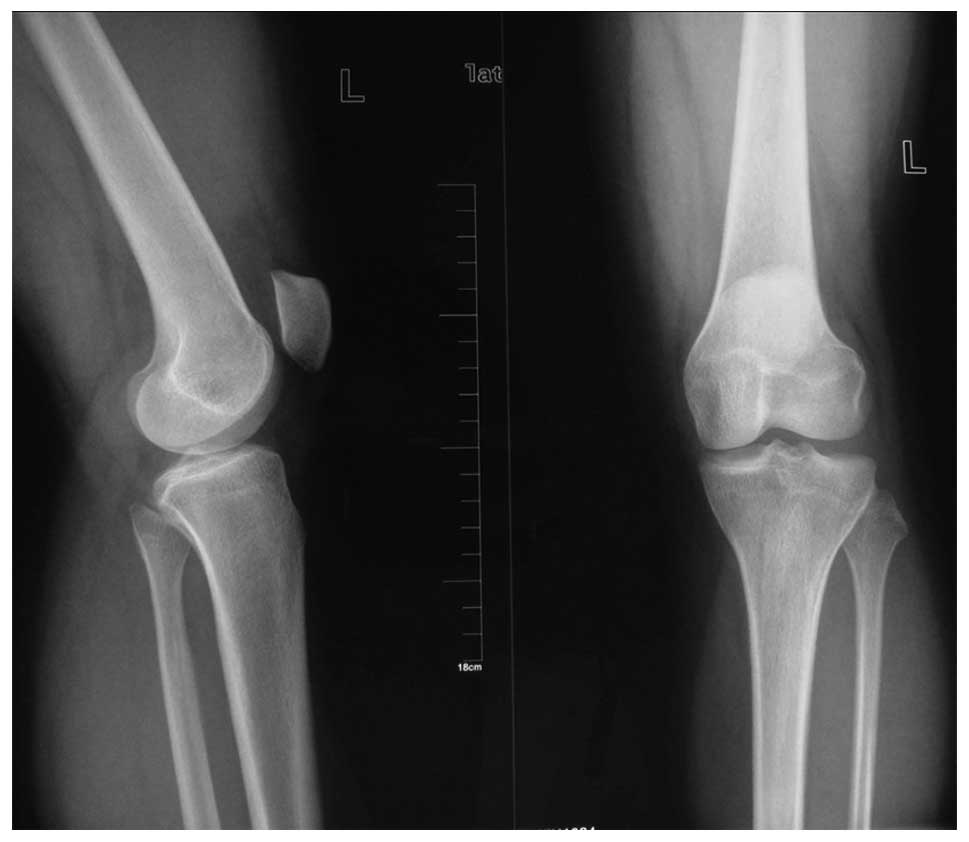
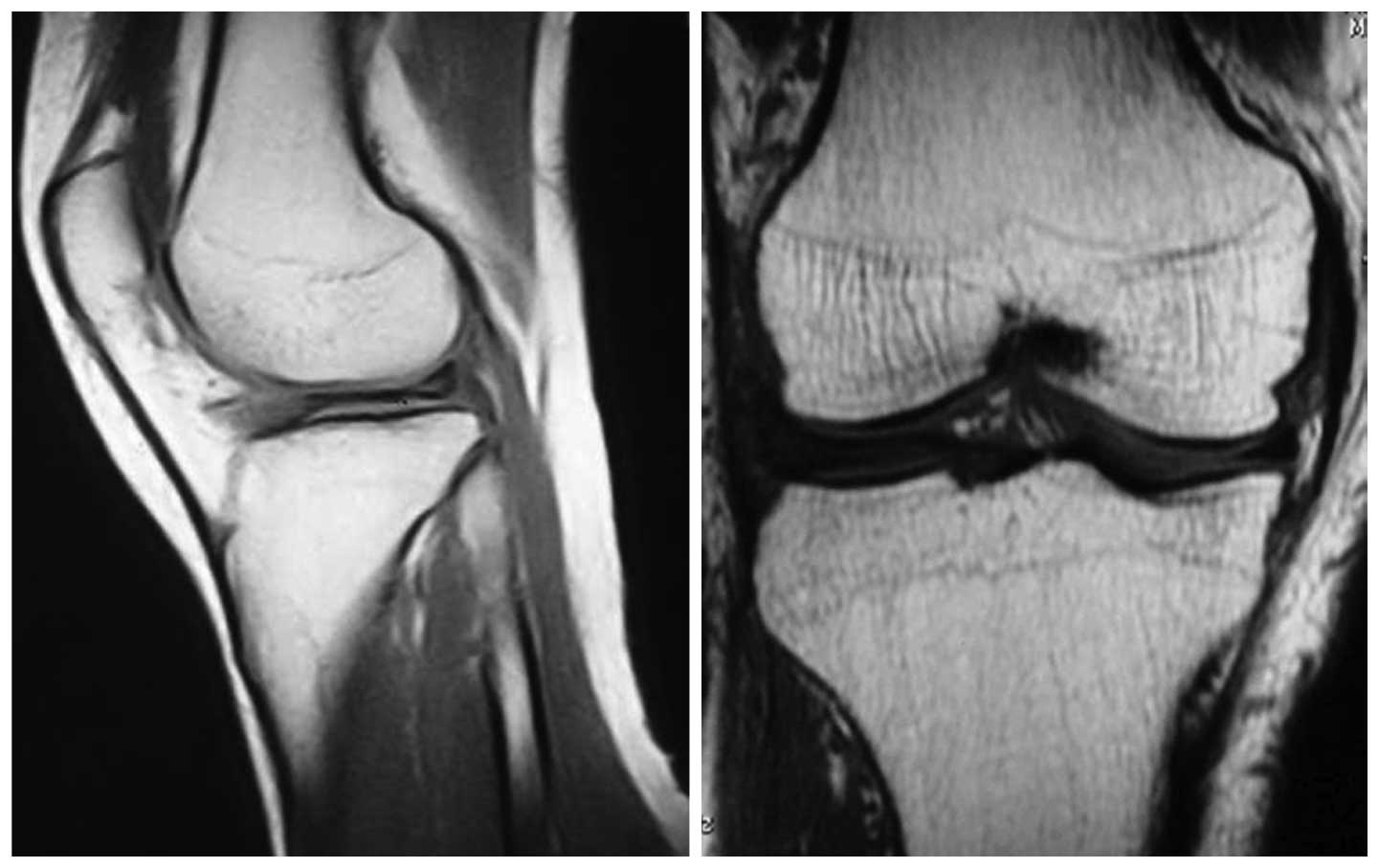
The preoperative examinations included physical examination, X-ray imaging and MRI of the injured knee. Physical examination revealed atrophy of the quadriceps femoris muscle, lateral tibiofemoral joint line tenderness, restriction of mobility and positive McMurray sign. Certain patients had ‘clicking’ of joints. Radiography revealed a widened lateral joint space (Fig. 1) in 13 knees. The MRI results were all in accordance with those of the arthroscopic examination (Fig. 2).

Figure 1

X-ray imaging prior to surgery shows a widened lateral joint space.

Figure 2

MRI shows injured discoid lateral meniscus.

Surgical techniques

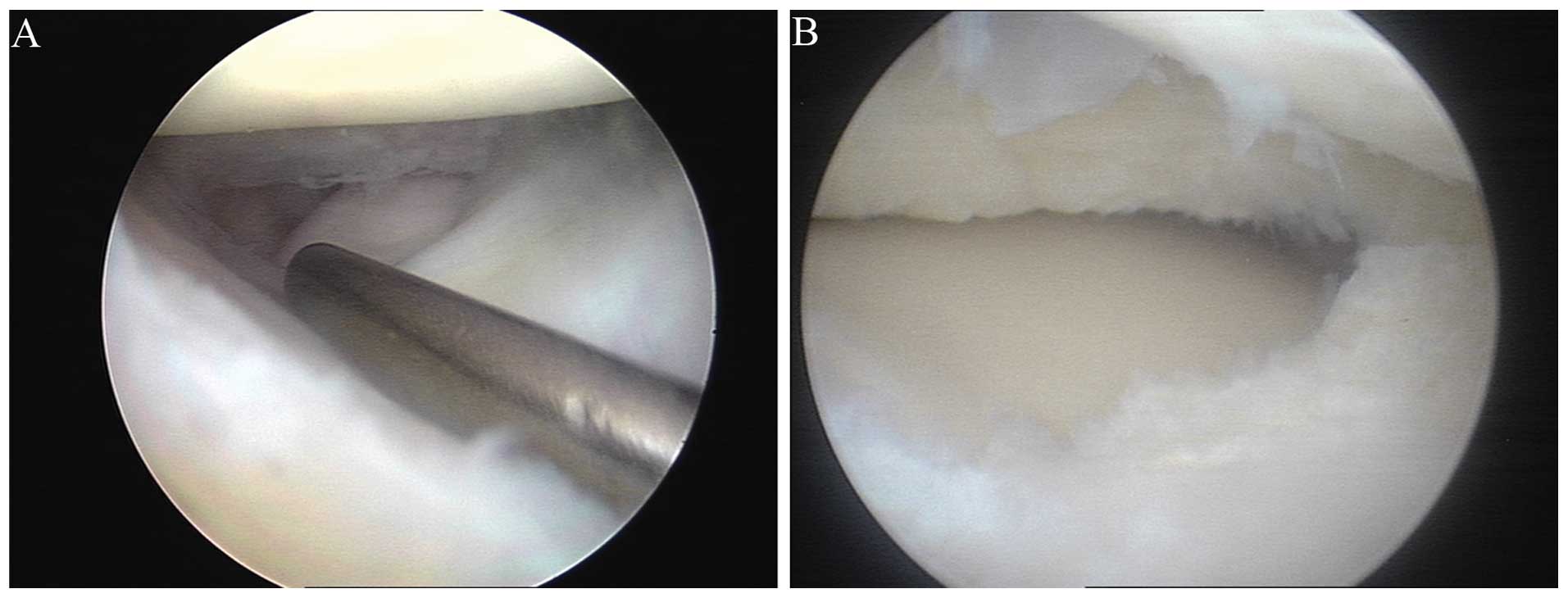
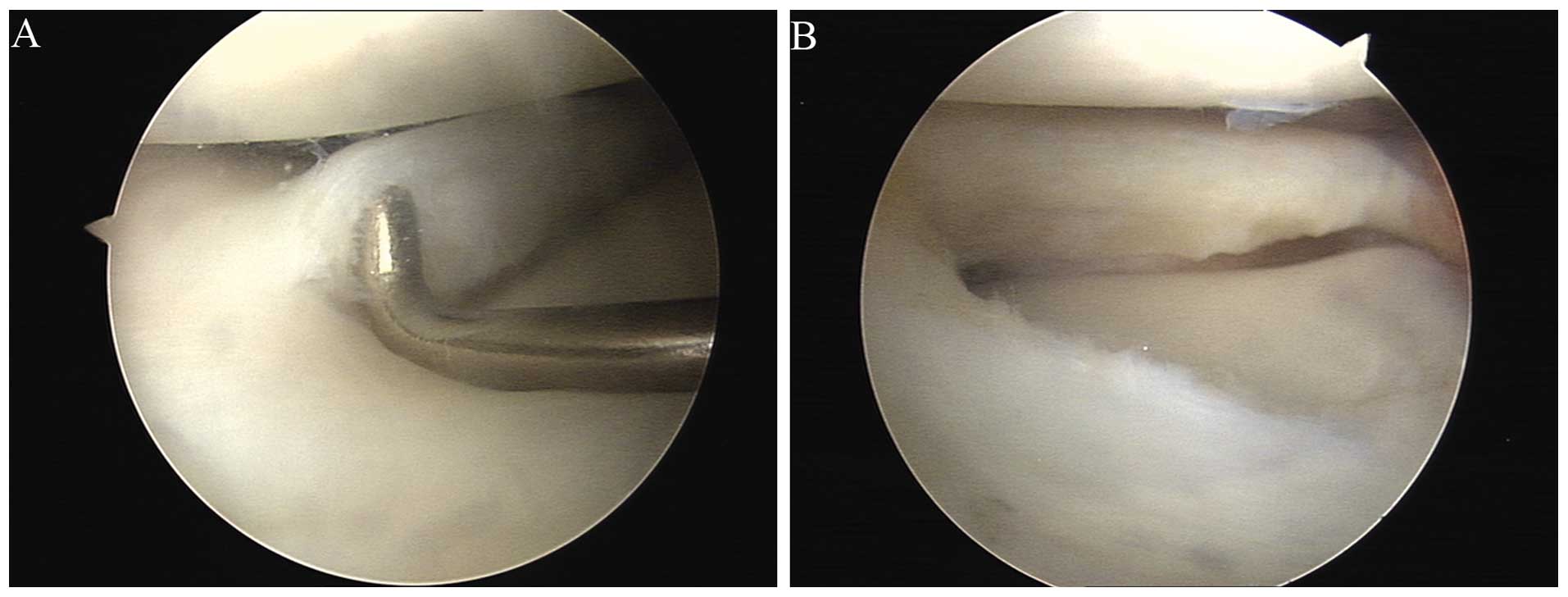
Patients were arthroscoped (Stryker, Kalamazoo, MI, USA) in the supine position under continuous peridural anesthesia or combined spinal epidural anesthesia with a calibrated pneumatic tourniquet (the tourniquet time was <90 min). Arthroscopic examination was performed to observe the intra-articular structures in the following order: suprapatellar pouch, patellofemoral joint, medial gutter, medial compartment, intercondylar notch, lateral compartment and lateral gutter. The meniscus was probed carefully to identify individual structures, type of the discoid lateral meniscus, stability of the peripheral rim, position and extent of the meniscus tear, as well as other accompanying lesions (Figs. 3A and 4A).

Figure 3

(A) Discoid lateral meniscus with longitudinal tear, (B) discoid lateral meniscus following partial resection.

Figure 4

(A) Discoid lateral meniscus with simple horizontal tear, (B) discoid lateral meniscus following surgery.

The meniscal tear was carefully resected using standard techniques and the meniscal rim was preserved. The methods in common use are partial resection (shaping of the discoid meniscus), hypo-complete resection and complete resection. For partial meniscectomy, the small inferior leaf of the horizontal cleavage tear was partially resected, whereas the main body was preserved 6–8 mm in width during surgery (9) and the anatomical shape was maintained with arthroscopy. Following the meniscectomy, the resected edge was smoothened, the meniscus was reshaped (from discoid to crescent), the peripheral rim was then thickened and the free edge of the meniscus was thinned to form a slope (Figs. 3B and 4B). Following surgery, the joint was lavaged thoroughly to remove all the debris, the arthroscopic portals were sutured and the knee was compressed with a bandage.

Postoperative rehabilitation

The rehabilitation training programs started soon after surgery with all the patients instructed to perform isometric quadricep exercises. The muscular training in the first week following surgery was focused on the quadriceps femoris muscle, including straight leg raises and Actimove GenuFlex movements, but no weight loading. Active flexion and extension exercises of the knee joint were performed in the second week, and patients could walk with walking sticks. Dermal sutures were removed 14 days after surgery, and four weeks after surgery, patients went back to normal life and continued the above training.

Follow-up

Thirty-nine of the patients (43 knees) were followed up for a mean of 21 months (ranging from 9 to 53 months). The Lysholm scoring system (10,11) was used to assess the function of the knee prior to surgery and during the follow-up, and the results were compared using a Student’s t-test with SPSS 12.0.

Results

Among the 47 knees, 37 received partial resection, 8 received hypo-complete resection and 2 had complete resection (Table II).

Table II

Surgical methods according to types of tear patterns.

Table II

Surgical methods according to types of tear patterns.

Type of surgical method
Tear patternPartial resectionHypo-complete resectionComplete resectionTotal
Simple horizontal6017
Complicated horizontal93012
Longitudinal102113
Radial6208
Degenerative4004
Complex2103
Total378247

One patient had pain and swelling of the knee joint postoperation, but the symptom disappeared 4 months after surgery. Another patient suffered with hemarthrosis, and the symptom disappeared following arthrocentesis. All the patients were instructed to perform the rehabilitation training and returned to normal activities within 4–6 weeks.

Knee function significantly improved postoperation, and the clinical outcome was improved at 9 months compared to the function after 3 months, as measured by Lysholm score (P<0.05), showing the curative effect of meniscectomy (Table III).

Table III

The Lysholm score measured preoperatively and postoperatively.

Table III

The Lysholm score measured preoperatively and postoperatively.

TimeLysholm score
Preoperative66.83±8.26
3 months after operation91.48±3.01a
9 months after operation95.28±2.01b

a Knee functions were significantly improved 3 months after surgery as measured by Lysholm score compared to preoperative functions (P<0.05).

b The clinical outcomes were improved after 9 months compared to 3 months (P<0.05).

Discussion

Discoid lateral meniscus of the knee is common in Asian populations (12,13). Unlike normal menisci, discoid menisci cannot control the coordination of the tibiofemoral joint, absorb shock, or reduce the mechanical pressure on articular cartilage, thus they quickly become worn and are torn easily, particularly when injured (14). Atay et al (15) revealed that the ultrastructure of discoid lateral menisci significantly differs from that of normal menisci. The collagen fibrils in discoid menisci are decreased in number and misaligned, both of which contribute to an increased incidence of tears. Therefore we suggested discoid menisci be treated by arthroscopy early, even when asymptomatic.

MRI accurately displays a discoid meniscus and the type, extent and position of the tear (16). In the present study, the use of radiography in addition to MRI was useful, since it identifies and tracks changes in the bone before and after surgery, including osteoarthritis, rheumatoid arthritis, fracture and bone tumor. We identified a widened lateral joint space in 13 knees by radiography.

The traditional treatment for a discoid lateral meniscus tear is to open the capsule and resect the meniscus, but this often leads to arthritis development, particularly in children who receive a total meniscectomy (17). With the recent advance in arthoscopic surgical techniques and results from research on healing function of meniscus arthroscopy, meniscal repair has now become the technique of first choice to preserve menisci (18). The aim of the surgery is to remove the central and torn parts of the discoid meniscus and to preserve a stable peripheral rim as much as possible. Since the thick discoid lateral meniscus is located within the space between knee joints this affects the performance of the surgery, and a large quantity of meniscal tissues has to be removed. It is much more difficult to perform the shaping of the discoid meniscus (partial resection) for a discoid lateral meniscus than for a normal one. In our experience, bending the knee during the surgery and lowering the lower leg along the side of the operation table to open up the joint space via gravity, as well as using a suitable meniscus knife and meniscus scissors, was helpful. When the discoid meniscus is reshaped, the femoral surface should be resected more to form a slope adapting to the shape of the femoral condyles. In our study, among the 47 knees, 37 received partial resection (78.72%), 8 received hypo-complete resection (17.02%) and 2 received complete resection (4.26%). Hayashi et al (9) suggested that the rim should be retained to 6–8 mm in width, but the excessive thickness of a complete-type discoid meniscus should be reduced substantially to avoid new tears. In partial meniscectomies, a rim of 8 mm was originally left for complete-type lesions and 10 mm for incomplete-type lesions (the average width of normal menisci is 12–13 mm). We followed this standard in our study.

In conclusion, arthroscopic meniscectomy is an effective treatment for discoid menisci resulting in maximal meniscus preservation, minimal invasion, quick recovery and early functional exercise.

References

1 

Ahn JH, Choi SH, Lee YS, et al: Symptomatic torn discoid lateral meniscus in adults. Knee Surg Sports Traumatol Arthrosc. 19:158–164. 2011. View Article : Google Scholar : PubMed/NCBI

2 

Smillie IS: The congenital discoid meniscus. J Bone Joint Surg Br. 30B:671–682. 1948.PubMed/NCBI

3 

Lu Y, Li Q and Hao J: Torn discoid lateral meniscus treated with arthroscopic meniscectomy: observations in 62 knees. Chin Med J (Engl). 120:211–215. 2007.PubMed/NCBI

4 

Washington ER III, Root L and Liener UC: Discoid lateral meniscus in children. Long-term follow-up after excision. J Bone Joint Surg Am. 77:1357–1361. 1995.PubMed/NCBI

5 

Kramer DE and Micheli LJ: Meniscal tears and discoid meniscus in children: diagnosis and treatment. J Am Acad Orthop Surg. 17:698–707. 2009.PubMed/NCBI

6 

Bellisari G, Samora W and Klingele K: Meniscus tears in children. Sports Med Arthrosc. 19:50–55. 2011. View Article : Google Scholar : PubMed/NCBI

7 

Woods GW and Whelan JM: Discoid meniscus. Clin Sports Med. 9:695–706. 1990.PubMed/NCBI

8 

Bin SI, Kim JC, Kim JM, Park SS and Han YK: Correlation between type of discoid lateral menisci and tear pattern. Knee Surg Sports Traumatol Arthrosc. 10:218–222. 2002. View Article : Google Scholar : PubMed/NCBI

9 

Hayashi LK, Yamaga H, Ida K and Miura T: Arthroscopic meniscectomy for discoid lateral meniscus in children. J Bone Joint Surg Am. 70:1495–1500. 1988.PubMed/NCBI

10 

Ristić V, Ninković S, Harhaji V, Stanković M, Savić D and Milankov M: Reconstruction of anterior cruciate ligament by using two different techniques. Med Pregl. 63:845–850. 2010.(In Serbian).

11 

Komárek J, Vališ P, Repko M, Chaloupka R and Krbec M: Treatment of deep cartilage defects of the knee with autologous chondrocyte transplantation: long-term results. Acta Chir Orthop Traumatol Cech. 77:291–295. 2010.(In Czech).

12 

Rao SK and Sripathi Rao P: Clinical, radiologic and arthroscopic assessment and treatment of bilateral discoid lateral meniscus. Knee Surg Sports Traumatol Arthrosc. 15:597–601. 2007. View Article : Google Scholar : PubMed/NCBI

13 

Fukuta S, Masaki K and Korai F: Prevalence of abnormal findings in magnetic resonance images of asymptomatic knees. J Orthop Sci. 7:287–291. 2002. View Article : Google Scholar : PubMed/NCBI

14 

Murlimanju BV, Nair N, Pai MM, Krishnamurthy A and Chandra Philip X: Morphology of the medial meniscus of the knee in human fetuses. Rom J Morphol Embryol. 51:347–351. 2010.PubMed/NCBI

15 

Atay OA, Pekmezci M, Doral MN, Sargon MF, Ayvaz M and Johnson DL: Discoid meniscus: an ultrastructural study with transmission electron microscopy. Am J Sports Med. 35:475–478. 2007. View Article : Google Scholar : PubMed/NCBI

16 

Yue BW, Gupta AK, Moorman CT III, Garrett WE and Helms CA: Wrisberg variant of the discoid lateral meniscus with flipped meniscal fragments simulating bucket-handle tear: MRI and arthroscopic correlation. Skeletal Radiol. 40:1089–1094. 2011. View Article : Google Scholar

17 

Räber DA, Friederich NF and Hefti F: Discoid lateral meniscus in children. Long-term follow-up after total meniscectomy. J Bone Joint Surg Am. 80:1579–1586. 1998.

18 

Stilli S, Marchesini Reggiani L, Marcheggiani Muccioli GM, Cappella M and Donzelli O: Arthroscopic treatment for symptomatic discoid lateral meniscus during childhood. Knee Surg Sports Traumatol Arthrosc. 19:1337–1342. 2011. View Article : Google Scholar : PubMed/NCBI

Related Articles

  • Abstract
  • View
  • Download
  • Twitter
Copy and paste a formatted citation
Spandidos Publications style
Cao H, Zhang Y, Qian W, Cheng X, Ke Y and Guo X: Short-term clinical outcomes of 42 cases of arthroscopic meniscectomy for discoid lateral meniscus tears. Exp Ther Med 4: 807-810, 2012.
APA
Cao, H., Zhang, Y., Qian, W., Cheng, X., Ke, Y., & Guo, X. (2012). Short-term clinical outcomes of 42 cases of arthroscopic meniscectomy for discoid lateral meniscus tears. Experimental and Therapeutic Medicine, 4, 807-810. https://doi.org/10.3892/etm.2012.686
MLA
Cao, H., Zhang, Y., Qian, W., Cheng, X., Ke, Y., Guo, X."Short-term clinical outcomes of 42 cases of arthroscopic meniscectomy for discoid lateral meniscus tears". Experimental and Therapeutic Medicine 4.5 (2012): 807-810.
Chicago
Cao, H., Zhang, Y., Qian, W., Cheng, X., Ke, Y., Guo, X."Short-term clinical outcomes of 42 cases of arthroscopic meniscectomy for discoid lateral meniscus tears". Experimental and Therapeutic Medicine 4, no. 5 (2012): 807-810. https://doi.org/10.3892/etm.2012.686
Copy and paste a formatted citation
x
Spandidos Publications style
Cao H, Zhang Y, Qian W, Cheng X, Ke Y and Guo X: Short-term clinical outcomes of 42 cases of arthroscopic meniscectomy for discoid lateral meniscus tears. Exp Ther Med 4: 807-810, 2012.
APA
Cao, H., Zhang, Y., Qian, W., Cheng, X., Ke, Y., & Guo, X. (2012). Short-term clinical outcomes of 42 cases of arthroscopic meniscectomy for discoid lateral meniscus tears. Experimental and Therapeutic Medicine, 4, 807-810. https://doi.org/10.3892/etm.2012.686
MLA
Cao, H., Zhang, Y., Qian, W., Cheng, X., Ke, Y., Guo, X."Short-term clinical outcomes of 42 cases of arthroscopic meniscectomy for discoid lateral meniscus tears". Experimental and Therapeutic Medicine 4.5 (2012): 807-810.
Chicago
Cao, H., Zhang, Y., Qian, W., Cheng, X., Ke, Y., Guo, X."Short-term clinical outcomes of 42 cases of arthroscopic meniscectomy for discoid lateral meniscus tears". Experimental and Therapeutic Medicine 4, no. 5 (2012): 807-810. https://doi.org/10.3892/etm.2012.686
Follow us
  • Twitter
  • LinkedIn
  • Facebook
About
  • Spandidos Publications
  • Careers
  • Cookie Policy
  • Privacy Policy
How can we help?
  • Help
  • Live Chat
  • Contact
  • Email to our Support Team