Spandidos Publications Logo
  • About
    • About Spandidos
    • Aims and Scopes
    • Abstracting and Indexing
    • Editorial Policies
    • Reprints and Permissions
    • Job Opportunities
    • Terms and Conditions
    • Contact
  • Journals
    • All Journals
    • Oncology Letters
      • Oncology Letters
      • Information for Authors
      • Editorial Policies
      • Editorial Board
      • Aims and Scope
      • Abstracting and Indexing
      • Bibliographic Information
      • Archive
    • International Journal of Oncology
      • International Journal of Oncology
      • Information for Authors
      • Editorial Policies
      • Editorial Board
      • Aims and Scope
      • Abstracting and Indexing
      • Bibliographic Information
      • Archive
    • Molecular and Clinical Oncology
      • Molecular and Clinical Oncology
      • Information for Authors
      • Editorial Policies
      • Editorial Board
      • Aims and Scope
      • Abstracting and Indexing
      • Bibliographic Information
      • Archive
    • Experimental and Therapeutic Medicine
      • Experimental and Therapeutic Medicine
      • Information for Authors
      • Editorial Policies
      • Editorial Board
      • Aims and Scope
      • Abstracting and Indexing
      • Bibliographic Information
      • Archive
    • International Journal of Molecular Medicine
      • International Journal of Molecular Medicine
      • Information for Authors
      • Editorial Policies
      • Editorial Board
      • Aims and Scope
      • Abstracting and Indexing
      • Bibliographic Information
      • Archive
    • Biomedical Reports
      • Biomedical Reports
      • Information for Authors
      • Editorial Policies
      • Editorial Board
      • Aims and Scope
      • Abstracting and Indexing
      • Bibliographic Information
      • Archive
    • Oncology Reports
      • Oncology Reports
      • Information for Authors
      • Editorial Policies
      • Editorial Board
      • Aims and Scope
      • Abstracting and Indexing
      • Bibliographic Information
      • Archive
    • Molecular Medicine Reports
      • Molecular Medicine Reports
      • Information for Authors
      • Editorial Policies
      • Editorial Board
      • Aims and Scope
      • Abstracting and Indexing
      • Bibliographic Information
      • Archive
    • World Academy of Sciences Journal
      • World Academy of Sciences Journal
      • Information for Authors
      • Editorial Policies
      • Editorial Board
      • Aims and Scope
      • Abstracting and Indexing
      • Bibliographic Information
      • Archive
    • International Journal of Functional Nutrition
      • International Journal of Functional Nutrition
      • Information for Authors
      • Editorial Policies
      • Editorial Board
      • Aims and Scope
      • Abstracting and Indexing
      • Bibliographic Information
      • Archive
    • International Journal of Epigenetics
      • International Journal of Epigenetics
      • Information for Authors
      • Editorial Policies
      • Editorial Board
      • Aims and Scope
      • Abstracting and Indexing
      • Bibliographic Information
      • Archive
    • Medicine International
      • Medicine International
      • Information for Authors
      • Editorial Policies
      • Editorial Board
      • Aims and Scope
      • Abstracting and Indexing
      • Bibliographic Information
      • Archive
  • Articles
  • Information
    • Information for Authors
    • Information for Reviewers
    • Information for Librarians
    • Information for Advertisers
    • Conferences
  • Language Editing
Spandidos Publications Logo
  • About
    • About Spandidos
    • Aims and Scopes
    • Abstracting and Indexing
    • Editorial Policies
    • Reprints and Permissions
    • Job Opportunities
    • Terms and Conditions
    • Contact
  • Journals
    • All Journals
    • Biomedical Reports
      • Information for Authors
      • Editorial Policies
      • Editorial Board
      • Aims and Scope
      • Abstracting and Indexing
      • Bibliographic Information
      • Archive
    • Experimental and Therapeutic Medicine
      • Information for Authors
      • Editorial Policies
      • Editorial Board
      • Aims and Scope
      • Abstracting and Indexing
      • Bibliographic Information
      • Archive
    • International Journal of Epigenetics
      • Information for Authors
      • Editorial Policies
      • Editorial Board
      • Aims and Scope
      • Abstracting and Indexing
      • Bibliographic Information
      • Archive
    • International Journal of Functional Nutrition
      • Information for Authors
      • Editorial Policies
      • Editorial Board
      • Aims and Scope
      • Abstracting and Indexing
      • Bibliographic Information
      • Archive
    • International Journal of Molecular Medicine
      • Information for Authors
      • Editorial Policies
      • Editorial Board
      • Aims and Scope
      • Abstracting and Indexing
      • Bibliographic Information
      • Archive
    • International Journal of Oncology
      • Information for Authors
      • Editorial Policies
      • Editorial Board
      • Aims and Scope
      • Abstracting and Indexing
      • Bibliographic Information
      • Archive
    • Medicine International
      • Information for Authors
      • Editorial Policies
      • Editorial Board
      • Aims and Scope
      • Abstracting and Indexing
      • Bibliographic Information
      • Archive
    • Molecular and Clinical Oncology
      • Information for Authors
      • Editorial Policies
      • Editorial Board
      • Aims and Scope
      • Abstracting and Indexing
      • Bibliographic Information
      • Archive
    • Molecular Medicine Reports
      • Information for Authors
      • Editorial Policies
      • Editorial Board
      • Aims and Scope
      • Abstracting and Indexing
      • Bibliographic Information
      • Archive
    • Oncology Letters
      • Information for Authors
      • Editorial Policies
      • Editorial Board
      • Aims and Scope
      • Abstracting and Indexing
      • Bibliographic Information
      • Archive
    • Oncology Reports
      • Information for Authors
      • Editorial Policies
      • Editorial Board
      • Aims and Scope
      • Abstracting and Indexing
      • Bibliographic Information
      • Archive
    • World Academy of Sciences Journal
      • Information for Authors
      • Editorial Policies
      • Editorial Board
      • Aims and Scope
      • Abstracting and Indexing
      • Bibliographic Information
      • Archive
  • Articles
  • Information
    • For Authors
    • For Reviewers
    • For Librarians
    • For Advertisers
    • Conferences
  • Language Editing
Login Register Submit
  • This site uses cookies
  • You can change your cookie settings at any time by following the instructions in our Cookie Policy. To find out more, you may read our Privacy Policy.

    I agree
Search articles by DOI, keyword, author or affiliation
Search
Advanced Search
presentation
Experimental and Therapeutic Medicine
Join Editorial Board Propose a Special Issue
Print ISSN: 1792-0981 Online ISSN: 1792-1015
Journal Cover
November 2012 Volume 4 Issue 5

Full Size Image

Sign up for eToc alerts
Recommend to Library

Journals

International Journal of Molecular Medicine

International Journal of Molecular Medicine

International Journal of Molecular Medicine is an international journal devoted to molecular mechanisms of human disease.

International Journal of Oncology

International Journal of Oncology

International Journal of Oncology is an international journal devoted to oncology research and cancer treatment.

Molecular Medicine Reports

Molecular Medicine Reports

Covers molecular medicine topics such as pharmacology, pathology, genetics, neuroscience, infectious diseases, molecular cardiology, and molecular surgery.

Oncology Reports

Oncology Reports

Oncology Reports is an international journal devoted to fundamental and applied research in Oncology.

Experimental and Therapeutic Medicine

Experimental and Therapeutic Medicine

Experimental and Therapeutic Medicine is an international journal devoted to laboratory and clinical medicine.

Oncology Letters

Oncology Letters

Oncology Letters is an international journal devoted to Experimental and Clinical Oncology.

Biomedical Reports

Biomedical Reports

Explores a wide range of biological and medical fields, including pharmacology, genetics, microbiology, neuroscience, and molecular cardiology.

Molecular and Clinical Oncology

Molecular and Clinical Oncology

International journal addressing all aspects of oncology research, from tumorigenesis and oncogenes to chemotherapy and metastasis.

World Academy of Sciences Journal

World Academy of Sciences Journal

Multidisciplinary open-access journal spanning biochemistry, genetics, neuroscience, environmental health, and synthetic biology.

International Journal of Functional Nutrition

International Journal of Functional Nutrition

Open-access journal combining biochemistry, pharmacology, immunology, and genetics to advance health through functional nutrition.

International Journal of Epigenetics

International Journal of Epigenetics

Publishes open-access research on using epigenetics to advance understanding and treatment of human disease.

Medicine International

Medicine International

An International Open Access Journal Devoted to General Medicine.

Journal Cover
November 2012 Volume 4 Issue 5

Full Size Image

Sign up for eToc alerts
Recommend to Library

  • Article
  • Citations
    • Cite This Article
    • Download Citation
    • Create Citation Alert
    • Remove Citation Alert
    • Cited By
  • Similar Articles
    • Related Articles (in Spandidos Publications)
    • Similar Articles (Google Scholar)
    • Similar Articles (PubMed)
  • Download PDF
  • Download XML
  • View XML
Article

Involvement of heat shock protein 27 in the susceptibility of KT human breast cancer cells to UVC and interferon lethality

  • Authors:
    • Xiao-Bo Tong
    • Kazuko Kita
    • Shi-Ping Chen
    • Xia Jiang
    • Shigeru Sugaya
    • Wen-Li Jing
    • Shu-Feng Zhang
    • Nobuo Suzuki
  • View Affiliations / Copyright

    Affiliations: Department of Physiology, Chengde Medical University, Chengde 067000, P.R. China, Department of Environmental Biochemistry, Graduate School of Medicine, Chiba University, Chiba 260-8670, Japan
  • Pages: 913-917
    |
    Published online on: September 4, 2012
       https://doi.org/10.3892/etm.2012.696
  • Expand metrics +
Metrics: Total Views: 0 (Spandidos Publications: | PMC Statistics: )
Metrics: Total PDF Downloads: 0 (Spandidos Publications: | PMC Statistics: )
Cited By (CrossRef): 0 citations Loading Articles...

This article is mentioned in:


Abstract

Revealing the key molecules regulating the stress‑response pathways in human cells is an intriguing problem. Chaperones, such as glucose-regulated protein 78 (GRP78) and heat shock protein 27 (HSP27), are important molecules for protecting the viability of human cells; however, it remains to be further clarified whether the molecules differentially modulate cellular responses to various types of stressors, such as DNA-damaging ultraviolet ray C (principally 254-nm wavelength, UVC) and cytocidal cytokine interferons. In the present study, the human breast cancer cell lines KT and MCF-7 were examined for GRP78 and HSP27 expression following exposure to UVC and human interferon-β (HuIFN‑β). The KT cells demonstrated a higher sensitivity to both UVC and HuIFN-β lethality than MCF-7 cells. The cellular expression levels of GRP78 in KT cells, assessed by western blot analysis, were approximately 2-fold higher than that in MCF-7 cells, while the expression of HSP27 in the KT cells was 20% of the expression in the MCF-7 cells. Decreased resistance to UVC lethality was observed in GRP78 siRNA‑transfected KT cells. In addition, HSP27 cDNA transfection of KT cells resulted in an increased resistance to UVC lethality. The cDNA-transfected KT cells showed an increased viability against HuIFN-β, compared with that of empty vector-transfected cells. By contrast, KT cells pretreated with HuIFN-β and irradiated with UVC demonstrated an increased resistance to UVC lethality, in association with increased levels of HSP27 expression. Thus, HSP27 may control the survival response pathways to both UVC and HuIFN-β in the human cells examined.

Introduction

Whether chaperones play a role in the resistance of human cancer cells to anticancer agents such as radiation and chemical compounds is a valuable question. Previously, we found that glucose-regulated protein 78 (GRP78) and heat shock protein 27 (HSP27) have a protective role against ultraviolet ray C (UVC) lethality in RSa cells, which are an established human cell line with high UVC sensitivity (1,2). Compared with the RSa-derived UVC-resistant cell line APr-1, RSa cells expressed lower amounts of GRP78 and HSP27. Using RSa and APr-1 cells transfected with siRNA and/or cDNA for GRP78 and HSP27, cellular amounts of these chaperones were suggested to be causally associated with cellular susceptibility to UVC lethality.

In addition to RSa cells, we previously established KT cells, which are a UVC-sensitive human cell line (3). Notably, both RSa and KT cells also show high sensitivity to cell proliferation inhibition by human interferon-β (HuIFN-β) (3). Coordination between cellular sensitivity to UVC and HuIFN was observed in various human cell lines, but the mechanisms underlying the coordination remain unclear (4–6). However, cellular chaperone metabolism may be the key for clarifying these mechanisms. Notably, UVC-sensitive cells, pretreated with HuIFN-β and then irradiated with UVC, become resistant to UVC lethality (5,6); however, the role of the chaperones in the HuIFN-β effect has not been studied.

In the present study, the cellular amounts of GRP78 and HSP27 were examined in KT cells. KT cells are derived from breast cancer tissue (3), therefore we used MCF-7 cells, another breast cancer-derived cell line, to compare the expression levels of the chaperones as well as to examine the UVC and HuIFN-β susceptibility of these cells.

Materials and methods

Cells and culture conditions

KT cells and their UVC and HuIFN-β susceptibility have been previously investigated (3). MCF-7 human breast cancer cells (HTB-26) were obtained from the American Type Culture Collection (Manassas, VA, USA). KT and MCF-7 cells were cultured in Eagle’s minimal essential medium (Nissui, Tokyo, Japan) supplemented with 5% (v/v) calf serum (Invitrogen, Carlsbad, CA, USA) and 10% (v/v) fetal bovine serum (Roche Diagnostics GmbH, Mannheim, Germany), respectively. All cells were grown at 37°C in a humidified atmosphere containing 5% CO2 and subcultured upon reaching semi-confluency.

UVC irradiation

UVC was generated from a 6-W National germicidal lamp (Matsushita Electronic Industrial, Co., Osaka, Japan). The UVC intensity was 1.0 J/m2/sec, which was measured by the UV radiometer, UVR-254 (Tokyo Kogaku Kikai, Co., Ltd., Tokyo, Japan). The cells were irradiated with UVC immediately after the medium was removed and then reincubated for an appropriate time, as previously described (7). Mock-irradiated cells were treated in the same manner but without irradiation.

HuIFN-β treatment

HuIFN-β was purchased from PeproTech, Inc. (Rocky Hill, NJ, USA). Twenty-four hours after plating the cells in dishes, HuIFN-β was added to the medium of each dish and cultured as described elsewhere (8).

Cell survival assays

The sensitivity of cells to UVC lethality was measured using a colony survival assay, as previously reported (2). Briefly, cells were plated in 100-mm dishes (1×10³ cells/dish) and irradiated with UVC at the indicated doses 24 h after plating. Fourteen days after UVC irradiation, colonies were stained and their numbers were estimated. The survival fraction at each dose was expressed as a percentage of the mock-irradiated cell number. D0, which is the UVC dosage required to reduce the colony survival from any point in the exponential portion of the surviving fraction curve to 37% of that point, was calculated.

Cell sensitivity to HuIFN-β was measured by the viability assay using methylthiazol tetrazolium (MTT), as previously described (1). Briefly, cells were plated into 96-well plates (1.3×10⁴ cells/well) and incubated for 3 days. After incubation, living cells were assayed by incubation with 0.5 mg/ml MTT (Sigma, St. Louis, MO, USA) for 4 h, followed by measurement of absorbance. Cell viability was calculated by the absorbance as a percentage of the mock-treated cells (1).

Immunoblotting analysis

Cells were washed twice with phosphate-buffered saline and whole cells were lysed with SDS sample buffer and boiled for 5 min. Whole-cell lysates were separated in a 10% SDS gel and immunoblotting analysis was performed as described elsewhere (2). GRP78 protein was detected with mouse anti-GRP78 monoclonal antibody (SPA-827; dilution, 1:1,000; StressGen, Victoria, BC, Canada), and HSP27 protein was detected with mouse anti-HSP27 monoclonal antibody (mH3; dilution, 1:1,000) (9,10). The antigen-antibody complexes were incubated with horseradish peroxidase-conjugated anti-mouse IgG antibody (Amersham Biosciences, Buckinghamshire, UK), followed by the ECL system reaction (Amersham Biosciences). Protein levels of actin were also analyzed as the loading control, using mouse anti-actin antibody (dilution, 1:20,000; ICN Biomedicals, Inc., Costa Mesa, CA, USA). The intensity of protein signals was quantified by the MultiGauge Ver2.2 image analyzing software (Fuji Photo Film Co., Ltd., Tokyo, Japan) and expressed as a value relative to actin.

Construction of expression vectors

Full-length human HSP27 cDNA was prepared according to a previously reported method (2). Briefly, the cDNA was ligated into pQE-30 plasmid (Qiagen, Germantown, MD, USA) using the SacI and PstI restriction sites. The construction was confirmed by sequencing and was then digested with EcoRI and HindIII. To construct a His-tagged HSP27 (His-HSP27) expression vector [His-HSP27/pcDNA3.1(-)], the digested fragment was gel-purified and then ligated into pcDNA3.1(-) (Invitrogen), using the EcoRI and HindIII restriction sites. The construct was confirmed by sequencing.

Plasmid transfection

Cells grown to 60–80% confluency in 35-mm dishes were transiently transfected with the indicated expression plasmids using Lipofectamine™ LTX reagent (Invitrogen) and Plus™ reagent (Invitrogen) according to the manufacturer’s instructions.

GRP78 knockdown

Duplex small interfering RNA (siRNA) with Stealth modification against human GRP78 (GRP78 siRNA) was synthesized based on the nucleotide sequence (Invitrogen), as previously described (11). Stealth RNAi negative control duplex (NC siRNA), with a GC content similar to that of the above Stealth RNAi, was used as a negative control. The siRNAs (100 nM) were transfected into cells for 6 h using Lipofectamine™ 2000 (Invitrogen) according to the manufacturer’s instructions, as described elsewhere (12). Two days after transfection, the cells were harvested and used for immunoblotting analysis and cell survival assays.

Statistical analysis

Statistical analysis was performed using the Student’s t-test with the StatView software (version 4.5; Abacus Concepts Inc., Berkeley, CA, USA).

Results

Discrepancy in UVC sensitivity between MCF-7 and KT cells

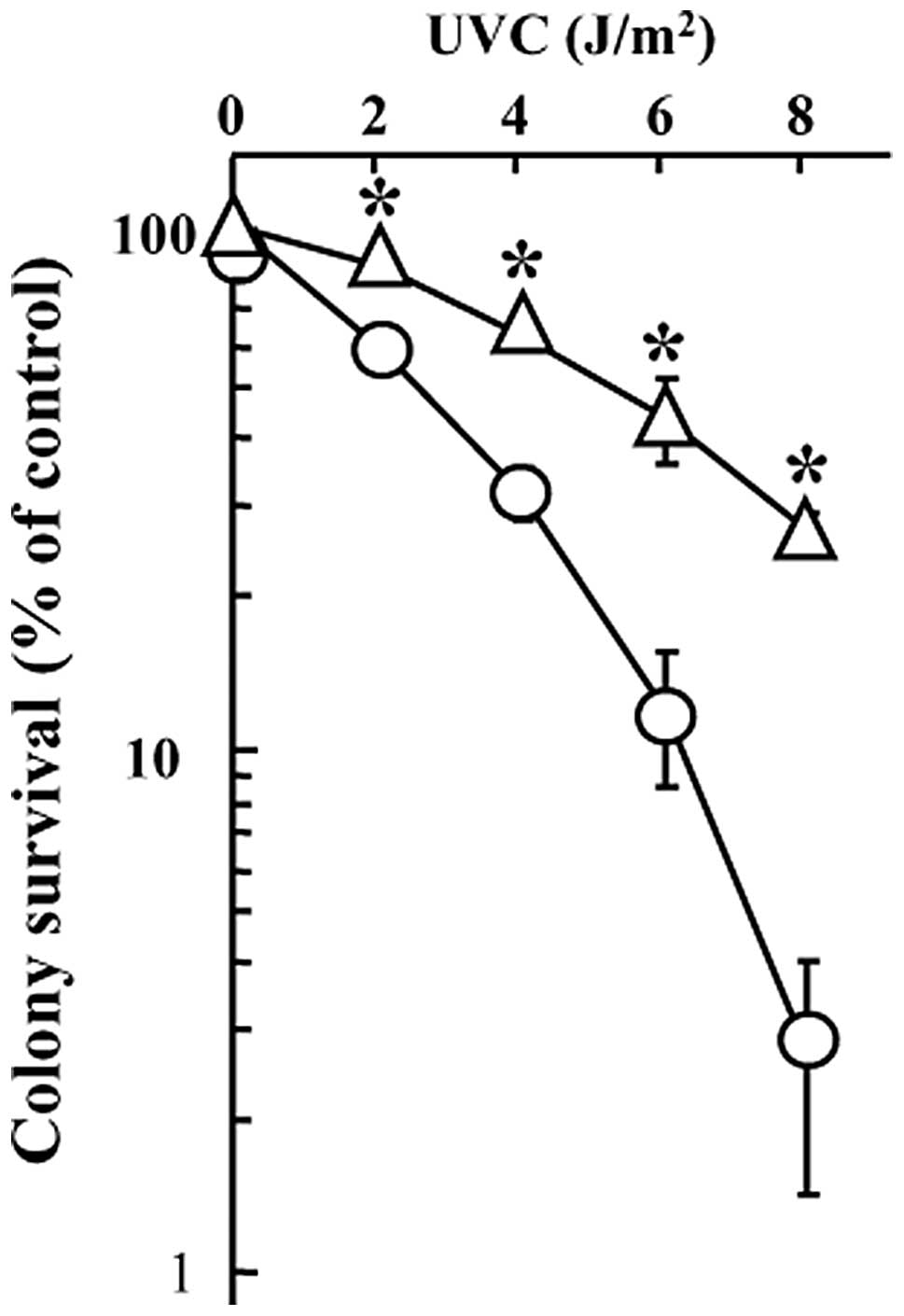
The sensitivity of MCF-7 and KT cells to UVC-induced cell death was examined by the colony survival assay. KT cells showed a higher UVC sensitivity than MCF-7 cells, with D0 values of 2.3 and 5.5 J/m2, respectively (Fig. 1).

Figure 1

Cell survival after UVC irradiation in KT and MCF-7 cells. Cells were mock or UVC irradiated, and their survival was measured by the colony survival assay. The surviving fraction was plotted according to the UVC dosage for KT (○) and MCF-7 (Δ) cells. Data representing the average percentage of colony numbers relative to the mock-irradiated control cells are presented as mean ± SD of 3 independent experiments. *P<0.05, MCF-7 vs. KT cells. UVC, ultraviolet ray C.

Discrepancy in expression levels of GRP78 and HSP27 in MCF-7 and KT cells

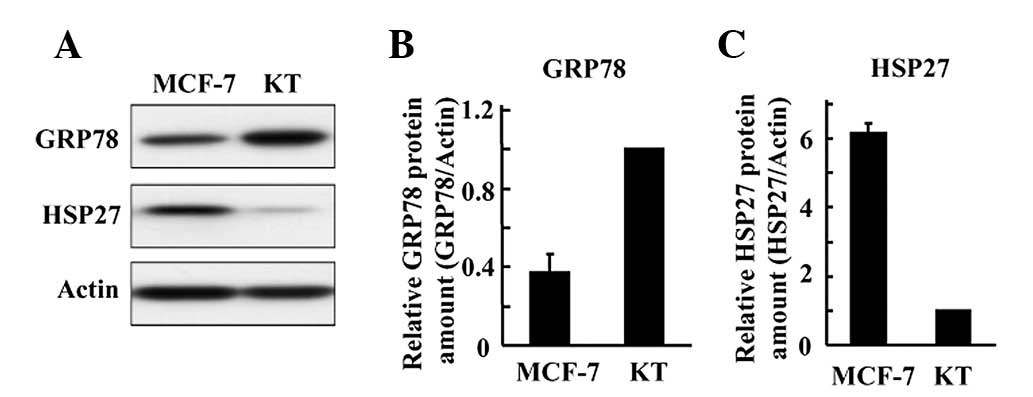
To evaluate chaperones associated with the high sensitivity of KT cells to UVC lethality, the expression levels of GRP78 and HSP27 were examined in MCF-7 and KT cells by western blot analysis. The GRP78 expression level was higher in KT than in MCF-7 cells (Fig. 2A and B), while the HSP27 expression level was lower in KT than in MCF-7 cells (Fig. 2A and B).

Figure 2

Expression levels of GRP78 and HSP27 in MCF-7 and KT cells. Protein levels were examined by (A) western blot analysis, and relative expression levels of (B) GRP78 and (C) HSP27 were analyzed. Actin was used as the loading control. Data are means ± SD of 3 independent experiments. GRP78, glucose-related protein 78; HSP27, heat shock protein 27.

Relationship between GRP78 expression and UVC-sensitivity of KT cells

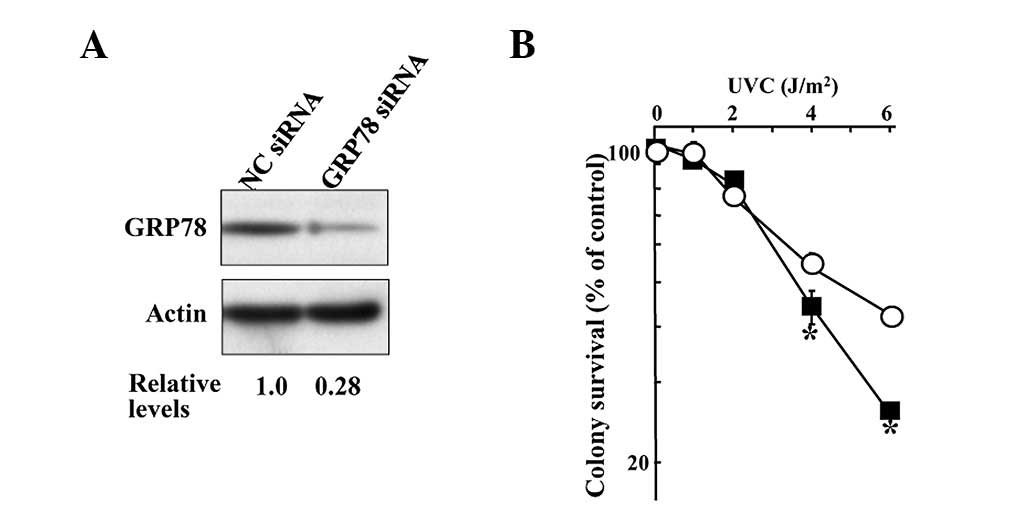
To investigate the role of the high levels of GRP78 expression in KT cells compared with MCF-7 cells, we knocked down the expression of GRP78 in KT cells by transfection with siRNA for GRP78. The transfectants with GRP78 siRNA demonstrated lower GRP78 protein expression than control KT cells transfected with NC siRNA (Fig. 3A). Compared with the NC siRNA-expressing cells, at UVC irradiation of up to 2 J/m2 the GRP78 siRNA-expressing cells showed the same sensitivity to UVC-induced cell death, although they showed higher sensitivity when the UVC irradiation was higher than 4 J/m2 (Fig. 3B).

Figure 3

Effect of GRP78 siRNA transfection on UVC sensitivity of KT cells. (A) Seventy-two hours after transfection with GRP78 siRNA and NC siRNA, cells were lysed and protein levels of GRP78 and actin were analyzed by western blot analysis. Relative levels represent GRP78 amounts after normalization with actin amounts. (B) Seventy-two hours after transfection with GRP78 siRNA (▪) and NC siRNA (○), survival of the cells after UVC irradiation was measured by the colony survival assay. Data represent the percentage of colony numbers relative to the mock-irradiated cells. The data are the mean ± SD of 3 independent experiments. *P<0.05, GRP78 siRNA-transfected vs. NC siRNA-transfected cells. NC siRNA, RNAi negative control duplex; UVC, ultraviolet ray C; GRP78, glucose-related protein 78.

Involvement of HSP27 expression in cellular susceptibility to UVC of KT cells

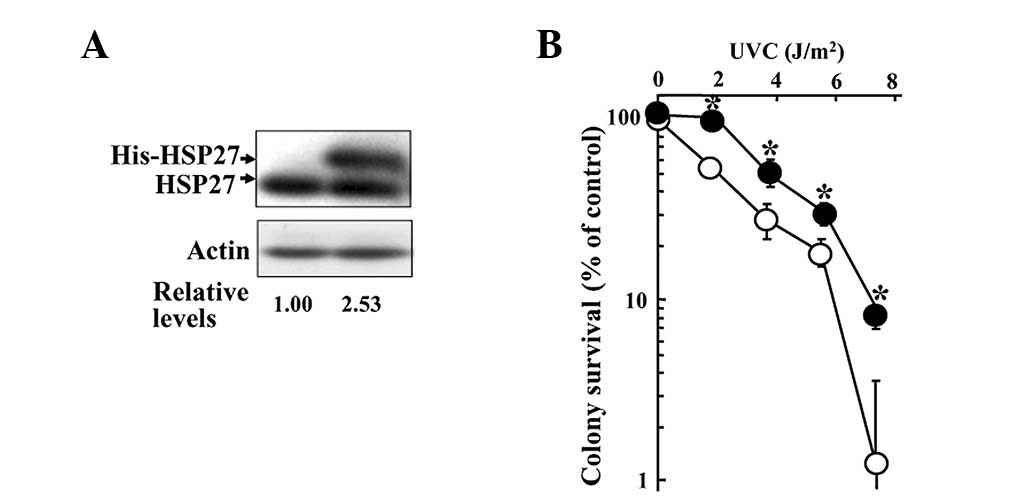
To investigate whether low levels of HSP27 are causally associated with the high UVC susceptibility of KT cells, we induced HSP27 overexpression in KT cells by transfection with His-HSP27/pcDNA3.1(-). The transfectants exhibited higher expression of the His-HSP27 protein than the control KT cells that were transfected with an empty vector (Fig. 4A). In addition, the colony survival assay demonstrated that the His-HSP27-expressing cells showed lower sensitivity to UVC-induced cell death than the control cells (Fig. 4B).

Figure 4

Effect of HSP27 protein overexpression on UVC sensitivity of KT cells. (A) Forty-eight hours after transfection with His-HSP27/pcDNA3.1(-) and pcDNA3.1(-), cells were lysed and protein levels of His-HSP27, HSP27 and actin were analyzed by western blot analysis. Relative levels represent the sum of exogenous His-HSP27 and endogenous HSP27 amounts after normalization with actin amounts. (B) Forty-eight hours after transfection with His-HSP27/pcDNA3.1(-) (•) and pcDNA3.1(-) (○), survival of the cells after UVC irradiation was measured by the colony survival assay. Data represent the percentage of colony numbers relative to the mock-irradiated cells. Data are the mean ± SD of 3 independent experiments. *P<0.05, His-HSP27/pcDNA3.1(-)-transfected vs. pcDNA3.1(-)-transfected cells. HSP27, heat shock protein 27; UVC, ultraviolet ray C.

Involvement of HSP27 in cellular HuIFN-β susceptibility of KT cells

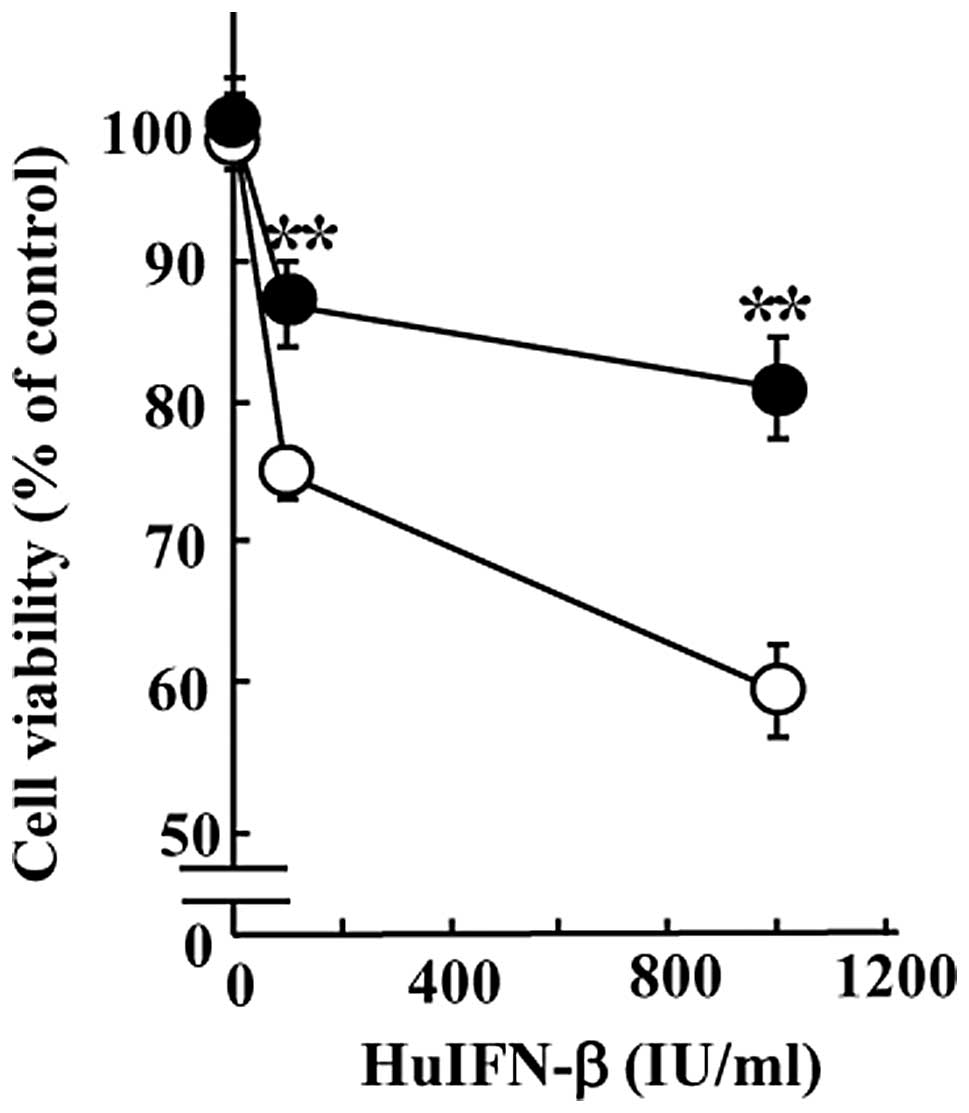
To evaluate the involvement of HSP27 in HuIFN susceptibility of KT cells, we used the MTT assay to determine the viability of His-HSP27-expressing cells 48 h after HuIFN-β treatment in comparison with control cells transfected with an empty vector. The former cells showed increased viability compared with the latter cells (Fig. 5). The viability of His-HSP27-expressing cells after treatment with HuIFN-β was similar to MCF-7 cells treated with the same interferon dose (Table I).

Figure 5

Effect of HSP27 protein overexpression on HuIFN susceptibility of KT cells. Forty-eight hours after transfection with His-HSP27/pcDNA3.1(-) (•) and pcDNA3.1(-) (○), cells were treated with HuIFN-β at the indicated dose, and 48 h later cell viability was analyzed by the MTT assay. Data represent the percentage of viability relative to the mock-treated cells. Data are the mean ± SD of 3 independent experiments. **P<0.005, His-HSP27/pcDNA3.1(-)-transfected vs. pcDNA3.1(-)-transfected cells. HSP27, heat shock protein 27; HuIFN-β, human interferon-β.

Table I

Effects of HSP27 overexpression on HuIFN-susceptibility of KT cells.

Table I

Effects of HSP27 overexpression on HuIFN-susceptibility of KT cells.

Viability (% of control) after HuIFN-β treatment
HuIFN-β (IU/ml)
CellsTransfection1001000
MCF-7Mock91.678.1
KTMock81.067.2
KTpcDNA3.1(-)74.967.3
KT His-HSP27/pcDNA3.1(-)90.184.2

[i] HSP27, heat shock protein 27; HuIFN-β, human interferon-β.

Involvement of HSP27 in HuIFN-β-induced resistance of KT cells to UVC lethality

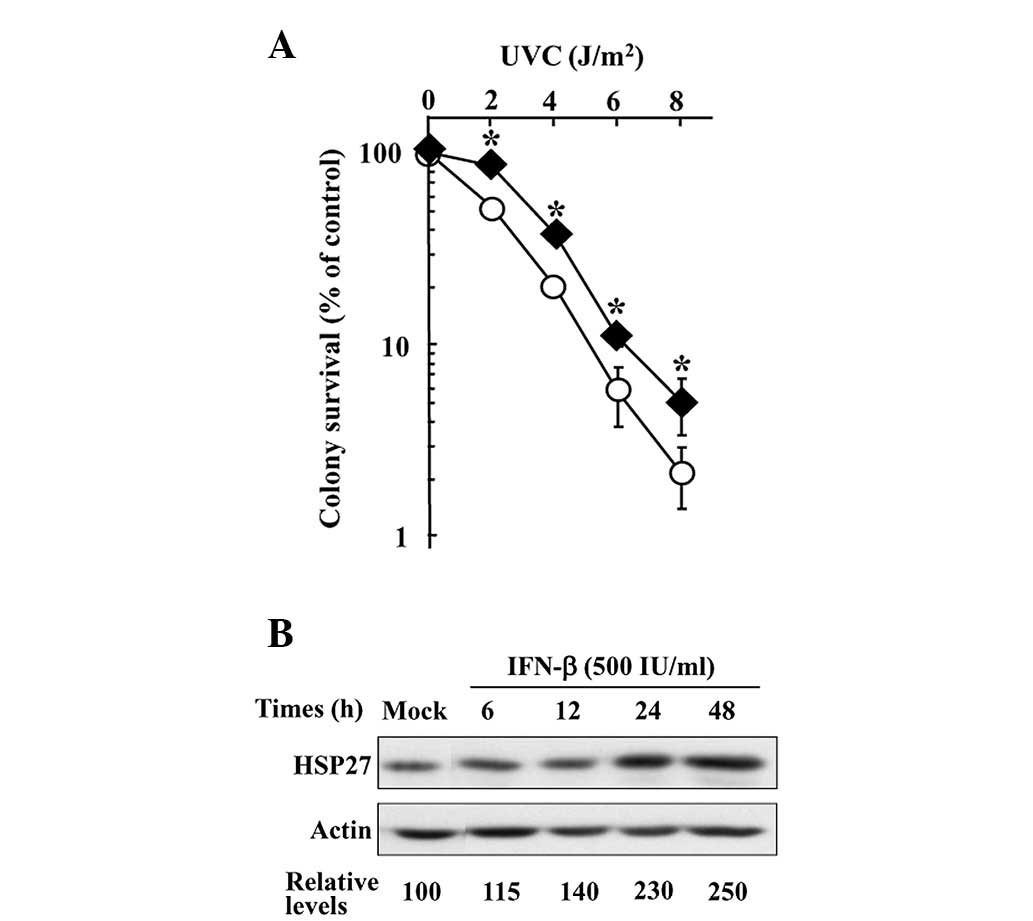
The susceptibility of HuIFN-β-pretreated KT cells to UVC lethality compared with mock cells without HuIFN-β pretreatment was tested using the colony survival assay. Following pretreatment with 50 IU/ml HuIFN-β for 24 h, the cells showed slightly higher colony survival after UVC irradiation compared with the mock cells (Fig. 6A).

Figure 6

Effect of HuIFN-β pretreatment on UVC sensitivity and the expression levels of HSP27 in KT cells. (A) Cells were pretreated with HuIFN-β (50 IU/ml) for 24 h, and then cell survival after UVC irradiation was measured by the colony survival assay. (B) After a 24-h treatment with IFN-β (500 IU/ml), cells were lysed and protein levels of HSP27 and actin were analyzed by western blot analysis. Relative levels represent HSP27 amounts after normalization with actin amounts. *P<0.05, HuIFN-β-treated vs. mock-treated cells. HSP27, heat shock protein 27; HuIFN-β, human interferon-β; UVC, ultraviolet ray C.

To determine whether the expression levels of HSP27 increase in HuIFN-β-treated KT cells, comparative analysis of the expression between HuIFN-β and mock treatment was performed by western blot analysis (Fig. 6B). The HSP27 expression levels in cells treated with 500 IU/ml HuIFN-β for >24 h increased by >2-fold compared with the mock-treated cells (Fig. 6B).

Discussion

In the present study, the relative roles of HSP27 and GRP78 chaperones in the cellular susceptibility to UVC and HuIFN lethality were investigated between two human breast cancer cell lines, MCF-7 and KT cells.

It appears likely that GRP78 plays a role in the susceptibility of human cells to DNA damaging agents, e.g., a protective role against UVC-induced cell death, possibly via enhancement of the DNA-nucleotide excision repair ability (1). Previously, we suggested that the protective role of GRP78 is associated with its constitutively expressed levels rather than the UVC-induced expression levels, and that GRP78 is involved in regulating the metabolism of nucleotide excision repair enzymes. KT cells, examined here, demonstrated higher levels of GRP78 expression than MCF-7 cells (Fig. 2), although the former cells were more sensitive to UVC lethality than the latter cells (Fig. 1). Thus, GRP78 expression levels do not appear to be associated with the UVC-sensitivity discrepancy between KT and MCF-7 cells, and the involvement of GRP78 expression in the UVC resistance of KT cells was unclear. However, KT cells transfected with GRP78 siRNA showed a decreased capacity of colony survival after UVC irradiation greater than 4 J/m2 compared with the NC siRNA transfectants (Fig. 3B). Therefore, GRP78 expression levels may be partially associated with the UVC resistance of KT cells, although the resistance is low.

HSP27 appears to be another chaperone responsible for the UVC resistance of human cells (2). The UVC resistance may be due to increased DNA-repair capacity, including removal of UVC-induced damage, thymine dimers (6-4) and photoproducts (2). As HSP27-overexpressing KT cells showed increased levels of colony survival (Fig. 4A and B), HSP27 may play a role in the increased UVC resistance of KT cells via the modulation of DNA-repair mechanisms. However, the UVC-induced DNA-repair capacity of KT cells appears to be normal (3). Recently, we observed that Annexin II, an HSP27-binding protein, confers UVC-resistance to human cells (13,14). Therefore, it is necessary to further investigate the mechanisms underlying the involvement of HSP27 and/or its binding protein in UVC resistance.

Yonekura et al (15) reported that HuIFN-γ, but not HuIFN-α, downregulates HSP27 expression and suppresses the negative regulation of cell death in cells derived from oral squamous cell carcinoma. However, in our study, HuIFN-β treatment was found to upregulate HSP27 expression in KT cells (Fig. 6B), possibly leading to the increased resistance of KT cells to HuIFN-β (Fig. 5) and UVC lethality (Fig. 6A). Previously, we reported that HuIFN-α treatment results in a similar increased UVC resistance of human UVC-sensitive cells (5). Therefore, HuIFN-α and -β may act differently than HuIFN-γ at the point of cell survival modulation against UVC. In addition, HSP27 may play a role in cellular HuIFN-β susceptibility in association with increased resistance of the cells to HuIFN-β lethality (Table I).

Acknowledgements

This study was partly supported by grants-in-aid from the following organizations: the Miso Central Institute of Japan, the Smoking Research Foundation, the Tokyo Foundation for a Better Environment, the Ministry of Health, the Labour and Welfare for the Intractable Diseases Treatment Research Program and the Japan Society for the Promotion of Science (Japan).

References

1 

Zhai L, Kita K, Wano C, Wu Y, Sugaya S and Suzuki N: Decreased cell survival and DNA repair capacity after UVC irradiation in association with down-regulation of GRP78/BiP in human RSa cells. Exp Cell Res. 305:244–252. 2005. View Article : Google Scholar : PubMed/NCBI

2 

Wano C, Kita K, Takahashi S, Sugaya S, Hino M, Hosoya H and Suzuki N: Protective role of HSP27 against UVC-induced cell death in human cells. Exp Cell Res. 298:584–592. 2004. View Article : Google Scholar : PubMed/NCBI

3 

Suzuki N, Inaba N, Sugano I, Umehara S, Murakami T and Takakubo Y: Establishment and characterization of a human cell strain, KT, with high sensitivity to UV-killing and to cell proliferation inhibition by interferon. Jpn J Cancer Res. 79:1184–1192. 1988. View Article : Google Scholar : PubMed/NCBI

4 

Suzuki N, Watanabe I, Nishimaki J, Fuse A, Sugita K, Sekiya S, Takakubo Y and Terao K: Increased resistance to the anticellular effect of interferon in an ultraviolet light-resistant human cell line, UVr-1. J Gen Virol. 67:651–661. 1986. View Article : Google Scholar : PubMed/NCBI

5 

Suzuki N, Suzuki H, Kojima T, Sugita K, Takakubo Y and Okamoto S: Effects of human interferon on cellular response to UV in UV-sensitive human cell strains. Mutat Res. 198:207–214. 1988. View Article : Google Scholar : PubMed/NCBI

6 

Sugita K, Suzuki N, Higuchi Y, Kita K, Suzuki Y and Lehmann A: Enhancement of XPG mRNA expression by human interferon-beta in Cockayne syndrome cells. Mutat Res. 408:67–72. 1998. View Article : Google Scholar : PubMed/NCBI

7 

Isogai E, Ishijima S, Sonoda T, et al: Protease activation following UV irradiation is linked to hypomutability in human cells selected for resistance to combination of UV and antipain. Mutat Res. 403:215–222. 1998. View Article : Google Scholar : PubMed/NCBI

8 

Tanaka T, Sugaya S, Kita K, et al: Inhibition of cell viability by human IFN-β is mediated by microRNA-431. Int J Oncol. 40:1470–1476. 2012.

9 

Okubo MA, Chiba S, Nishikata T, Matsuno A and Hosoya H: Generation and characterization of a monoclonal antibody, mH1, raised against mitotic HeLa cells. Dev Growth Differ. 41:381–389. 1999. View Article : Google Scholar : PubMed/NCBI

10 

Hino M, Kurogi K, Okubo MA, Murata-Hori M and Hosoya H: Small heat shock protein 27 (HSP27) associates with tubulin/microtubules in HeLa cells. Biochem Biophys Res Commun. 271:164–169. 2000. View Article : Google Scholar : PubMed/NCBI

11 

Jiang X, Ren Q, Chen SP, Tong XB, Dong M, Sugaya S, Tanaka T, Kita K and Suzuki N: UVC mutagenicity is suppressed in Japanese miso-treated human RSa cells, possibly via GRP78 expression. Biosci Biotechnol Biochem. 75:1685–1691. 2011. View Article : Google Scholar : PubMed/NCBI

12 

Jin YH, Kita K, Sun Z, Tong XB, Nie H and Suzuki N: The roles of HSP27 and Annexin II in resistance to UVC-induced cell death: comparative studies between the human UVC-sensitive and -resistant cell lines, RSa and APr-1. Biosci Biotec Biochem. 73:1318–1322. 2009. View Article : Google Scholar : PubMed/NCBI

13 

Tong XB, Kita K, Karata K, Zhu C, Sugaya S, Ichimura Y, Satoh M, Tomonaga T, Nomura F, Jin YH and Suzuki N: Annexin II, a novel HSP27-interacted protein, is involved in resistance to UVC-induced cell death in human APr-1 cells. Photochem Photobiol. 84:1455–1461. 2008. View Article : Google Scholar : PubMed/NCBI

14 

Kita K, Sugita K, Chen SP, Suzuki T, Sugaya S, Tanaka T, Jin YH, Satoh T, Tong XB and Suzuki N: Extracellular recombinant annexin II confers UVC resistance and increases the Bcl-xL to Bax protein ratios in human UVC-sensitive cells. Radiat Res. 176:732–742. 2011. View Article : Google Scholar : PubMed/NCBI

15 

Yonekura N, Yokota S, Yonekura K, Dehari H, Arata S, Kohama G and Fujii N: Interferon-gamma downregulates Hsp27 expression and suppresses the negative regulation of cell death in oral squamous cell carcinoma lines. Cell Death Differ. 10:313–322. 2003. View Article : Google Scholar : PubMed/NCBI

Related Articles

  • Abstract
  • View
  • Download
  • Twitter
Copy and paste a formatted citation
Spandidos Publications style
Tong X, Kita K, Chen S, Jiang X, Sugaya S, Jing W, Zhang S and Suzuki N: Involvement of heat shock protein 27 in the susceptibility of KT human breast cancer cells to UVC and interferon lethality. Exp Ther Med 4: 913-917, 2012.
APA
Tong, X., Kita, K., Chen, S., Jiang, X., Sugaya, S., Jing, W. ... Suzuki, N. (2012). Involvement of heat shock protein 27 in the susceptibility of KT human breast cancer cells to UVC and interferon lethality. Experimental and Therapeutic Medicine, 4, 913-917. https://doi.org/10.3892/etm.2012.696
MLA
Tong, X., Kita, K., Chen, S., Jiang, X., Sugaya, S., Jing, W., Zhang, S., Suzuki, N."Involvement of heat shock protein 27 in the susceptibility of KT human breast cancer cells to UVC and interferon lethality". Experimental and Therapeutic Medicine 4.5 (2012): 913-917.
Chicago
Tong, X., Kita, K., Chen, S., Jiang, X., Sugaya, S., Jing, W., Zhang, S., Suzuki, N."Involvement of heat shock protein 27 in the susceptibility of KT human breast cancer cells to UVC and interferon lethality". Experimental and Therapeutic Medicine 4, no. 5 (2012): 913-917. https://doi.org/10.3892/etm.2012.696
Copy and paste a formatted citation
x
Spandidos Publications style
Tong X, Kita K, Chen S, Jiang X, Sugaya S, Jing W, Zhang S and Suzuki N: Involvement of heat shock protein 27 in the susceptibility of KT human breast cancer cells to UVC and interferon lethality. Exp Ther Med 4: 913-917, 2012.
APA
Tong, X., Kita, K., Chen, S., Jiang, X., Sugaya, S., Jing, W. ... Suzuki, N. (2012). Involvement of heat shock protein 27 in the susceptibility of KT human breast cancer cells to UVC and interferon lethality. Experimental and Therapeutic Medicine, 4, 913-917. https://doi.org/10.3892/etm.2012.696
MLA
Tong, X., Kita, K., Chen, S., Jiang, X., Sugaya, S., Jing, W., Zhang, S., Suzuki, N."Involvement of heat shock protein 27 in the susceptibility of KT human breast cancer cells to UVC and interferon lethality". Experimental and Therapeutic Medicine 4.5 (2012): 913-917.
Chicago
Tong, X., Kita, K., Chen, S., Jiang, X., Sugaya, S., Jing, W., Zhang, S., Suzuki, N."Involvement of heat shock protein 27 in the susceptibility of KT human breast cancer cells to UVC and interferon lethality". Experimental and Therapeutic Medicine 4, no. 5 (2012): 913-917. https://doi.org/10.3892/etm.2012.696
Follow us
  • Twitter
  • LinkedIn
  • Facebook
About
  • Spandidos Publications
  • Careers
  • Cookie Policy
  • Privacy Policy
How can we help?
  • Help
  • Live Chat
  • Contact
  • Email to our Support Team