Spandidos Publications Logo
  • About
    • About Spandidos
    • Aims and Scopes
    • Abstracting and Indexing
    • Editorial Policies
    • Reprints and Permissions
    • Job Opportunities
    • Terms and Conditions
    • Contact
  • Journals
    • All Journals
    • Oncology Letters
      • Oncology Letters
      • Information for Authors
      • Editorial Policies
      • Editorial Board
      • Aims and Scope
      • Abstracting and Indexing
      • Bibliographic Information
      • Archive
    • International Journal of Oncology
      • International Journal of Oncology
      • Information for Authors
      • Editorial Policies
      • Editorial Board
      • Aims and Scope
      • Abstracting and Indexing
      • Bibliographic Information
      • Archive
    • Molecular and Clinical Oncology
      • Molecular and Clinical Oncology
      • Information for Authors
      • Editorial Policies
      • Editorial Board
      • Aims and Scope
      • Abstracting and Indexing
      • Bibliographic Information
      • Archive
    • Experimental and Therapeutic Medicine
      • Experimental and Therapeutic Medicine
      • Information for Authors
      • Editorial Policies
      • Editorial Board
      • Aims and Scope
      • Abstracting and Indexing
      • Bibliographic Information
      • Archive
    • International Journal of Molecular Medicine
      • International Journal of Molecular Medicine
      • Information for Authors
      • Editorial Policies
      • Editorial Board
      • Aims and Scope
      • Abstracting and Indexing
      • Bibliographic Information
      • Archive
    • Biomedical Reports
      • Biomedical Reports
      • Information for Authors
      • Editorial Policies
      • Editorial Board
      • Aims and Scope
      • Abstracting and Indexing
      • Bibliographic Information
      • Archive
    • Oncology Reports
      • Oncology Reports
      • Information for Authors
      • Editorial Policies
      • Editorial Board
      • Aims and Scope
      • Abstracting and Indexing
      • Bibliographic Information
      • Archive
    • Molecular Medicine Reports
      • Molecular Medicine Reports
      • Information for Authors
      • Editorial Policies
      • Editorial Board
      • Aims and Scope
      • Abstracting and Indexing
      • Bibliographic Information
      • Archive
    • World Academy of Sciences Journal
      • World Academy of Sciences Journal
      • Information for Authors
      • Editorial Policies
      • Editorial Board
      • Aims and Scope
      • Abstracting and Indexing
      • Bibliographic Information
      • Archive
    • International Journal of Functional Nutrition
      • International Journal of Functional Nutrition
      • Information for Authors
      • Editorial Policies
      • Editorial Board
      • Aims and Scope
      • Abstracting and Indexing
      • Bibliographic Information
      • Archive
    • International Journal of Epigenetics
      • International Journal of Epigenetics
      • Information for Authors
      • Editorial Policies
      • Editorial Board
      • Aims and Scope
      • Abstracting and Indexing
      • Bibliographic Information
      • Archive
    • Medicine International
      • Medicine International
      • Information for Authors
      • Editorial Policies
      • Editorial Board
      • Aims and Scope
      • Abstracting and Indexing
      • Bibliographic Information
      • Archive
  • Articles
  • Information
    • Information for Authors
    • Information for Reviewers
    • Information for Librarians
    • Information for Advertisers
    • Conferences
  • Language Editing
Spandidos Publications Logo
  • About
    • About Spandidos
    • Aims and Scopes
    • Abstracting and Indexing
    • Editorial Policies
    • Reprints and Permissions
    • Job Opportunities
    • Terms and Conditions
    • Contact
  • Journals
    • All Journals
    • Biomedical Reports
      • Information for Authors
      • Editorial Policies
      • Editorial Board
      • Aims and Scope
      • Abstracting and Indexing
      • Bibliographic Information
      • Archive
    • Experimental and Therapeutic Medicine
      • Information for Authors
      • Editorial Policies
      • Editorial Board
      • Aims and Scope
      • Abstracting and Indexing
      • Bibliographic Information
      • Archive
    • International Journal of Epigenetics
      • Information for Authors
      • Editorial Policies
      • Editorial Board
      • Aims and Scope
      • Abstracting and Indexing
      • Bibliographic Information
      • Archive
    • International Journal of Functional Nutrition
      • Information for Authors
      • Editorial Policies
      • Editorial Board
      • Aims and Scope
      • Abstracting and Indexing
      • Bibliographic Information
      • Archive
    • International Journal of Molecular Medicine
      • Information for Authors
      • Editorial Policies
      • Editorial Board
      • Aims and Scope
      • Abstracting and Indexing
      • Bibliographic Information
      • Archive
    • International Journal of Oncology
      • Information for Authors
      • Editorial Policies
      • Editorial Board
      • Aims and Scope
      • Abstracting and Indexing
      • Bibliographic Information
      • Archive
    • Medicine International
      • Information for Authors
      • Editorial Policies
      • Editorial Board
      • Aims and Scope
      • Abstracting and Indexing
      • Bibliographic Information
      • Archive
    • Molecular and Clinical Oncology
      • Information for Authors
      • Editorial Policies
      • Editorial Board
      • Aims and Scope
      • Abstracting and Indexing
      • Bibliographic Information
      • Archive
    • Molecular Medicine Reports
      • Information for Authors
      • Editorial Policies
      • Editorial Board
      • Aims and Scope
      • Abstracting and Indexing
      • Bibliographic Information
      • Archive
    • Oncology Letters
      • Information for Authors
      • Editorial Policies
      • Editorial Board
      • Aims and Scope
      • Abstracting and Indexing
      • Bibliographic Information
      • Archive
    • Oncology Reports
      • Information for Authors
      • Editorial Policies
      • Editorial Board
      • Aims and Scope
      • Abstracting and Indexing
      • Bibliographic Information
      • Archive
    • World Academy of Sciences Journal
      • Information for Authors
      • Editorial Policies
      • Editorial Board
      • Aims and Scope
      • Abstracting and Indexing
      • Bibliographic Information
      • Archive
  • Articles
  • Information
    • For Authors
    • For Reviewers
    • For Librarians
    • For Advertisers
    • Conferences
  • Language Editing
Login Register Submit
  • This site uses cookies
  • You can change your cookie settings at any time by following the instructions in our Cookie Policy. To find out more, you may read our Privacy Policy.

    I agree
Search articles by DOI, keyword, author or affiliation
Search
Advanced Search
presentation
Experimental and Therapeutic Medicine
Join Editorial Board Propose a Special Issue
Print ISSN: 1792-0981 Online ISSN: 1792-1015
Journal Cover
January 2013 Volume 5 Issue 1

Full Size Image

Sign up for eToc alerts
Recommend to Library

Journals

International Journal of Molecular Medicine

International Journal of Molecular Medicine

International Journal of Molecular Medicine is an international journal devoted to molecular mechanisms of human disease.

International Journal of Oncology

International Journal of Oncology

International Journal of Oncology is an international journal devoted to oncology research and cancer treatment.

Molecular Medicine Reports

Molecular Medicine Reports

Covers molecular medicine topics such as pharmacology, pathology, genetics, neuroscience, infectious diseases, molecular cardiology, and molecular surgery.

Oncology Reports

Oncology Reports

Oncology Reports is an international journal devoted to fundamental and applied research in Oncology.

Experimental and Therapeutic Medicine

Experimental and Therapeutic Medicine

Experimental and Therapeutic Medicine is an international journal devoted to laboratory and clinical medicine.

Oncology Letters

Oncology Letters

Oncology Letters is an international journal devoted to Experimental and Clinical Oncology.

Biomedical Reports

Biomedical Reports

Explores a wide range of biological and medical fields, including pharmacology, genetics, microbiology, neuroscience, and molecular cardiology.

Molecular and Clinical Oncology

Molecular and Clinical Oncology

International journal addressing all aspects of oncology research, from tumorigenesis and oncogenes to chemotherapy and metastasis.

World Academy of Sciences Journal

World Academy of Sciences Journal

Multidisciplinary open-access journal spanning biochemistry, genetics, neuroscience, environmental health, and synthetic biology.

International Journal of Functional Nutrition

International Journal of Functional Nutrition

Open-access journal combining biochemistry, pharmacology, immunology, and genetics to advance health through functional nutrition.

International Journal of Epigenetics

International Journal of Epigenetics

Publishes open-access research on using epigenetics to advance understanding and treatment of human disease.

Medicine International

Medicine International

An International Open Access Journal Devoted to General Medicine.

Journal Cover
January 2013 Volume 5 Issue 1

Full Size Image

Sign up for eToc alerts
Recommend to Library

  • Article
  • Citations
    • Cite This Article
    • Download Citation
    • Create Citation Alert
    • Remove Citation Alert
    • Cited By
  • Similar Articles
    • Related Articles (in Spandidos Publications)
    • Similar Articles (Google Scholar)
    • Similar Articles (PubMed)
  • Download PDF
  • Download XML
  • View XML
Article

Clinical value of preventive balloon dilatation for esophageal stricture

  • Authors:
    • Changxiong Wang
    • Xianghong Lu
    • Ping Chen
  • View Affiliations / Copyright

    Affiliations: Digest Endoscope Center, People's Hospital of Lishui, The Sixth Affiliated Hospital of Wenzhou Medical College, Lishui, Zhejiang 323000, P.R. China
  • Pages: 292-294
    |
    Published online on: October 19, 2012
       https://doi.org/10.3892/etm.2012.753
  • Expand metrics +
Metrics: Total Views: 0 (Spandidos Publications: | PMC Statistics: )
Metrics: Total PDF Downloads: 0 (Spandidos Publications: | PMC Statistics: )
Cited By (CrossRef): 0 citations Loading Articles...

This article is mentioned in:


Abstract

Endoscopic mucosal resection (EMR) and endoscopic submucosal dissection (ESD) were developed for the treatment of benign lesions and early superficial esophageal cancers in the gastrointestinal (GI) tract. However, esophageal strictures frequently develop in patients who undergo EMR/ESD. Therefore, we aimed to investigate the clinical value of preventive balloon dilatation (BD) for esophageal diseases following endoscopic therapy. A total of 30 patients who had received EMR or ESD were enrolled in the study. Preventive BD was carried out for 12 cases within 1 week following EMR/ESD. The remaining 18 cases were not subjected to preventive BD and were used as an historic control. The results revealed that no complications, including esophageal stenosis and dysphagia, were observed in the patients who received preventive BD. In the control group, seven cases experienced dysphagia, of which two were released without clinical treatment and the other five were released following two or three BD procedures. The results indicate that preventive BD is an effective treatment for patients with esophageal diseases following EMR and should be considered at an early stage when the mucosal injury exceeds two-thirds of the esophageal lumen.

Introduction

Endoscopic mucosal resection (EMR) and endoscopic submucosal dissection (ESD) were developed for the treatment of benign lesions and early superficial esophageal cancers in the gastrointestinal (GI) tract (1). EMR is typically used for the removal of lesions smaller than 2 cm or for the piecemeal removal of larger lesions. For the removal of larger lesions, ESD is usually required (1). EMR has been established as a treatment for superficial esophageal cancer due to its minimal invasiveness and excellent survival rate (2,3) and ESD enables the resection of widespread neoplasia, including Barrett’s esophageal cancer (4,5). However, esophageal strictures frequently develop in patients who undergo EMR/ESD (6). Esophageal stricture may seriously interfere with the oral intake of food and fluids, and thus lead to a decline in patients’ quality of life. More significantly, once severe esophageal stricture has developed, it is difficult to reverse the condition.

A number of methods have been reported to prevent esophageal stricture following EMR/ESD (7–9). Among them, balloon dilatation (BD) has been indicated as a frequently used technique for alleviating esophageal strictures post EMR/ESD. A retrospective study revealed that preventive BD reduced the incidence of esophageal stricture in patients who underwent an extensive EMR/ESD (10). However, the efficacy of preventive BD requires further confirmation. In the present study, we carried out a prospective randomized trial between September 2008 and September 2011 on 30 cases who received EMR/ESD treatment in our hospital.

Patients and methods

Patients

Between September 2008 and September 2011, 30 patients, including 9 cases with postoperative benign tumors and 21 cases with postoperative early-stage mucosal lesions, were enrolled in the study (Table I). Twelve patients received preventive BD 2 weeks after EMR/ESD therapy and 18 patients who had undergone EMR/ESD treatment served as a control. Written informed consent was obtained from all patients prior to carrying out EMR/ESD and BD. The study was approved by the Ethics Committees of the People’s Hospital of Lishui.

Table I

Patients’ backgrounds.

Table I

Patients’ backgrounds.

Gender
Diseases
Therapy
GroupMaleFemaleBenign tumorEarly lesionEMRESD
Control99513513
Treatment664839

[i] EMR, endoscopic mucosal resection; ESD, endoscopic submucosal dissection.

Treatment protocol

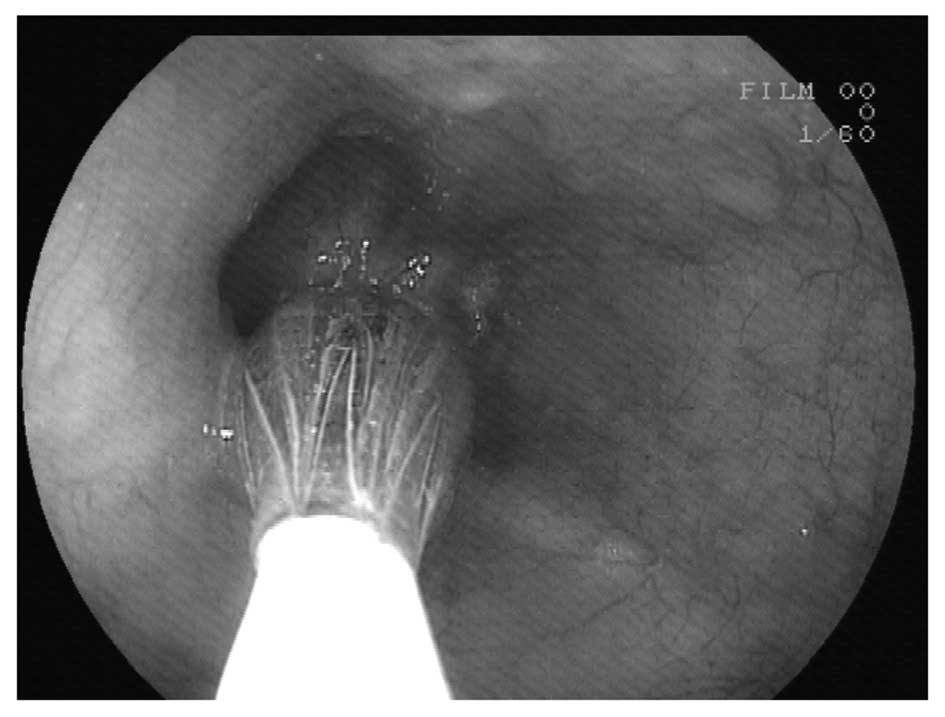
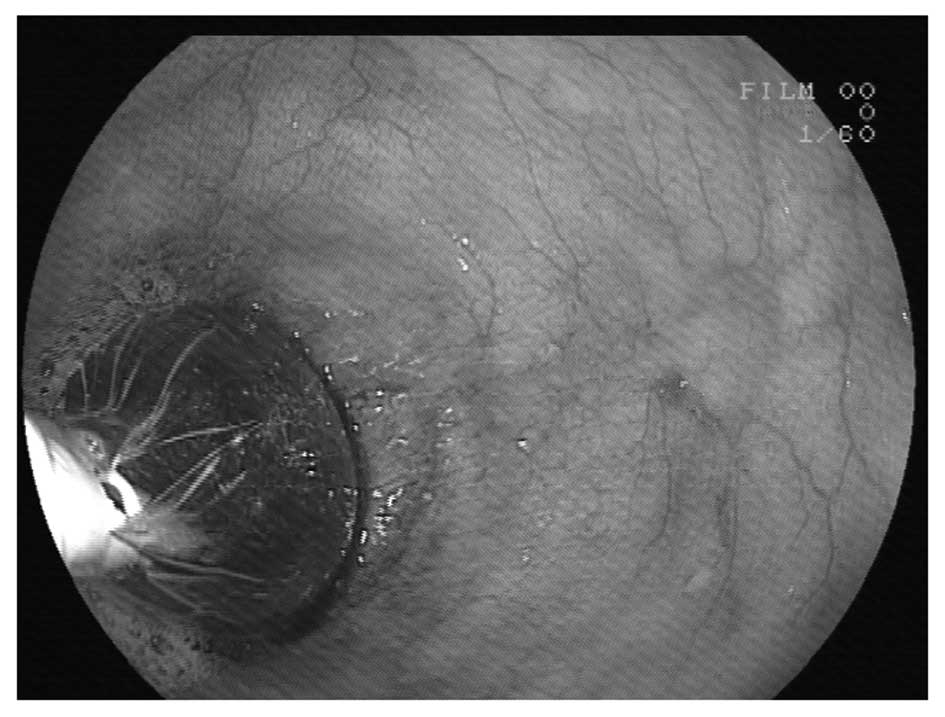
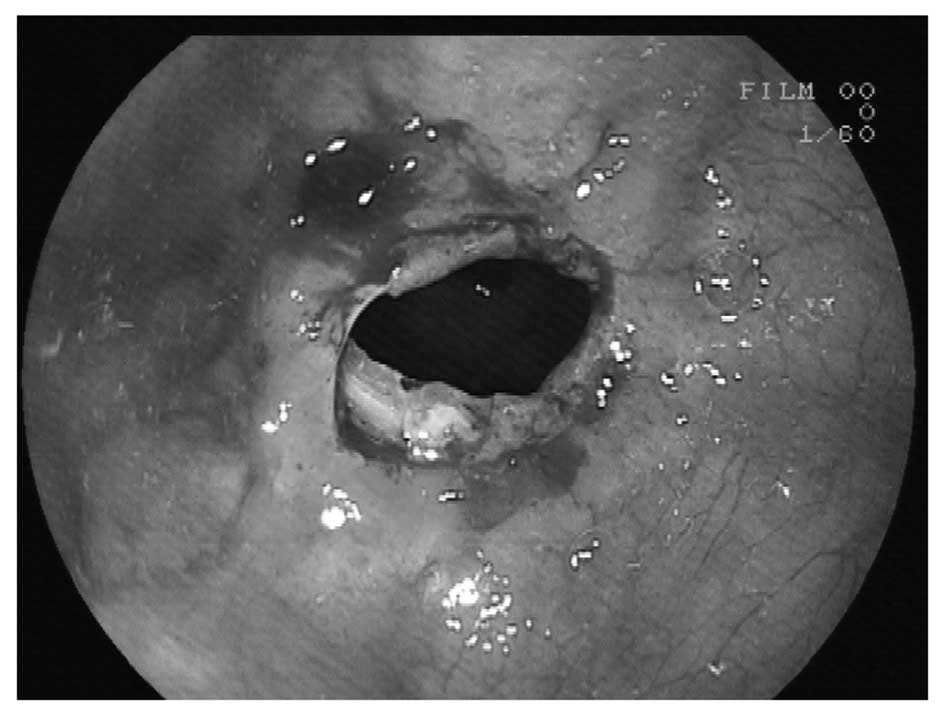
EMR/ESD treatment was performed according to previously described methods (11,12). The patients in the control group underwent common endoscopic re-examination. For patients receiving preventive BD, routine blood tests, clotting and bleeding time tests and an electrocardiogram (ECG) were performed prior to the treatment. Following 8 h of fasting, 0.5 mg atropine and 10 mg diazepam were injected intramuscularly. The local area was anesthetized with lidocaine mortar and the lubricated balloon catheter was inserted. The balloon was positioned at the center of the primary lesion and then inflated carefully with air to reach a pressure of 6 psi under the control of a pressure pump (Fig. 1). This dilatation was maintained for 1–3 min according to the patient’s situation, and the wound was monitored for bleeding. If bleeding occurred, it suggested that the dilatation was efficient (Fig. 2). The air was then released, the dilatation was repeated 3 min later and the balloon was then removed. Gastroscopy was used to observe the extent of the expansion of the stenosis and the possible complications (Fig. 3). During the procedure, the pulse, blood pressure and oxygen saturation of the patient were closely observed.

Figure 1

Wound area at the middle of the balloon.

Figure 2

Light bleeding at the wound focus.

Figure 3

Postoperative carotid dilatation.

Results

Efficacy of preventive BD

In the treatment group, every patient was treated with preventive BD only once and the result was observed to be satisfactory. One year follow-up revealed that no complications, including esophageal stenosis, dysphagia, esophageal perforation, heavy bleeding or mortality, had occurred. However, in the control group, seven cases experienced dysphagia, of which two were released without clinical treatment and the other five were released following two or three BD procedures (Table II).

Table II

Patients’ conditions following EMR/ESD.

Table II

Patients’ conditions following EMR/ESD.

Dysphagia
GroupPreventive BDTransientPersistentDilatationComplications
Control02550
Treatment120000

[i] EMR, endoscopic mucosal resection; ESD, endoscopic submucosal dissection; BD, balloon dilatation.

Discussion

EMR and ESD are efficient endoscopic techniques for minimally invasive therapy. However, the occurrence rate of cicatricial stenosis of postoperative esophageal diseases is 6–26% (13). Stenosis of the esophagus seriously affects the patients’ quality of life and causes certain complications, including poor nutrition. Dilatation at an early stage may alleviate the severity of the stenosis and, to some extent, avoid the formation of permanent cicatricial stenosis at later stages which may result in esophageal reconstruction due to dysphagia. BD using endoscopic guidance has been demonstrated to be very efficient for the treatment of esophageal stenosis (14). The balloon is able to apply pressure uniformly all around the esophagus, leading to the breakdown of fibrous scar tissue bundles around the stenosis and even the breakdown of muscle fibers and the subsequent relaxation of the esophageal lumen (1). BD therapy has the advantages of uniform pressure, being doubly controlled by the endoscope and the sensations of the patients. With these advantages, it is easy to control the extent of dilatation, avoid complications and obtain a clear field to increase the safety and success rate. Therefore, BD has been considered as the most favorable method for the treatment of esophageal stenosis and as a substitute for surgery (1,15). In the present study, no esophageal stenosis occurred in the patients treated with preventive BD in the one year follow-up period, whereas in the control group, five cases reported serious dysphagia and were treated several times with BD, indicating that preventive BD was able to prevent long-term complications in patients undergoing EMR/ESD. The current study indicates that patients with a wound area affecting over two-thirds of the esophageal lumen following EMR/ESD for esophageal diseases should receive preventive BD at an early stage to avoid esophageal stenosis and improve the quality of life.

In conclusion, the current study indicates that preventive BD may be considered as an effective therapy to reduce the incidence of esophageal stenosis following EMR/ESD. Since there is no other effective method for avoiding esophageal stenosis following EMR/ESD at present, preventive BD should be considered for all patients who undergo EMR/ESD. However, there are also certain shortcomings of the present study. Firstly, the number of patients is rather small, which limits the credibility of the study. Secondly, the follow-up period of the patients is only one year and certain complications may not have yet arisen. Therefore, further studies that include more patients and are maintained for a longer period are required to confirm the effectiveness of preventive BD for the prevention of esophageal stenosis following EMR/ESD in patients with early stage esophageal cancer.

Acknowledgements

This study was supported by a grant from the Science and Technology Bureau of Lishui, Zhejiang province (No. 20100416).

References

1 

ASGE Technology Committee; Kantsevoy SV, Adler DG, Conway JD, et al: Endoscopic mucosal resection and endoscopic submucosal dissection. Gastrointest Endosc. 68:11–18. 2008. View Article : Google Scholar : PubMed/NCBI

2 

Inoue H: Treatment of esophageal and gastric tumors. Endoscopy. 33:119–125. 2001. View Article : Google Scholar : PubMed/NCBI

3 

Inoue H, Tani M, Nagai K, et al: Treatment of esophageal and gastric tumors. Endoscopy. 31:47–55. 1999. View Article : Google Scholar : PubMed/NCBI

4 

Satodate H, Inoue H, Yoshida T, et al: Circumferential EMR of carcinoma arising in Barrett’s esophagus: case report. Gastrointest Endosc. 58:288–292. 2003.

5 

Fujishiro M, Yahagi N, Kakushima N, Kodashima S, Ichinose M and Omata M: En bloc resection of a large semicircular esophageal cancer by endoscopic submucosal dissection. Surg Laparosc Endosc Percutan Tech. 16:237–241. 2006. View Article : Google Scholar : PubMed/NCBI

6 

Kim SH and Lee SO: Circumferential intramural esophageal dissection successfully treated by endoscopic procedure and metal stent insertion. J Gastroenterol. 40:1065–1069. 2005. View Article : Google Scholar

7 

Yamaguchi N, Isomoto H, Shikuwa S, et al: Effect of oral prednisolone on esophageal stricture after complete circular endoscopic submucosal dissection for superficial esophageal squamous cell carcinoma: a case report. Digestion. 83:291–295. 2011. View Article : Google Scholar

8 

Alshammari J, Quesnel S, Pierrot S and Couloigner V: Endoscopic balloon dilatation of esophageal strictures in children. Int J Pediatr Otorhinolaryngol. 75:1376–1379. 2011. View Article : Google Scholar : PubMed/NCBI

9 

de Wijkerslooth LR, Vleggaar FP and Siersema PD: Endoscopic management of difficult or recurrent esophageal strictures. Am J Gastroenterol. 106:2080–2091. 2011.

10 

Ezoe Y, Muto M, Horimatsu T, et al: Efficacy of preventive endoscopic balloon dilation for esophageal stricture after endoscopic resection. J Clin Gastroenterol. 45:222–227. 2011. View Article : Google Scholar : PubMed/NCBI

11 

Soetikno R, Kaltenbach T, Yeh R and Gotoda T: Endoscopic mucosal resection for early cancers of the upper gastrointestinal tract. J Clin Oncol. 23:4490–4498. 2005. View Article : Google Scholar : PubMed/NCBI

12 

Fujishiro M, Yahagi N, Kakushima N, et al: Endoscopic submucosal dissection of esophageal squamous cell neoplasms. Clin Gastroenterol Hepatol. 4:688–694. 2006. View Article : Google Scholar : PubMed/NCBI

13 

Petrin G, Ruol A, Battaglia G, et al: Anastomotic stenoses occurring after circular stapling in esophageal cancer surgery. Surg Endosc. 14:670–674. 2000. View Article : Google Scholar : PubMed/NCBI

14 

Lv XP, Jiang HX, Tang GD, Qin LR, Tan ZR and Qin SY: Treatment of endoscopic probe dilation in esophagostenosis. China J Endoscopy. 13:22–23. 262007.(In Chinese).

15 

Cho YK, Shin JH, Kim BS, et al: Fluoroscopically guided balloon dilation of anastomotic strictures after total gastrectomy: long-term results. AJR Am J Roentgenol. 188:647–651. 2007. View Article : Google Scholar : PubMed/NCBI

Related Articles

  • Abstract
  • View
  • Download
  • Twitter
Copy and paste a formatted citation
Spandidos Publications style
Wang C, Lu X and Chen P: Clinical value of preventive balloon dilatation for esophageal stricture. Exp Ther Med 5: 292-294, 2013.
APA
Wang, C., Lu, X., & Chen, P. (2013). Clinical value of preventive balloon dilatation for esophageal stricture. Experimental and Therapeutic Medicine, 5, 292-294. https://doi.org/10.3892/etm.2012.753
MLA
Wang, C., Lu, X., Chen, P."Clinical value of preventive balloon dilatation for esophageal stricture". Experimental and Therapeutic Medicine 5.1 (2013): 292-294.
Chicago
Wang, C., Lu, X., Chen, P."Clinical value of preventive balloon dilatation for esophageal stricture". Experimental and Therapeutic Medicine 5, no. 1 (2013): 292-294. https://doi.org/10.3892/etm.2012.753
Copy and paste a formatted citation
x
Spandidos Publications style
Wang C, Lu X and Chen P: Clinical value of preventive balloon dilatation for esophageal stricture. Exp Ther Med 5: 292-294, 2013.
APA
Wang, C., Lu, X., & Chen, P. (2013). Clinical value of preventive balloon dilatation for esophageal stricture. Experimental and Therapeutic Medicine, 5, 292-294. https://doi.org/10.3892/etm.2012.753
MLA
Wang, C., Lu, X., Chen, P."Clinical value of preventive balloon dilatation for esophageal stricture". Experimental and Therapeutic Medicine 5.1 (2013): 292-294.
Chicago
Wang, C., Lu, X., Chen, P."Clinical value of preventive balloon dilatation for esophageal stricture". Experimental and Therapeutic Medicine 5, no. 1 (2013): 292-294. https://doi.org/10.3892/etm.2012.753
Follow us
  • Twitter
  • LinkedIn
  • Facebook
About
  • Spandidos Publications
  • Careers
  • Cookie Policy
  • Privacy Policy
How can we help?
  • Help
  • Live Chat
  • Contact
  • Email to our Support Team