Spandidos Publications Logo
  • About
    • About Spandidos
    • Aims and Scopes
    • Abstracting and Indexing
    • Editorial Policies
    • Reprints and Permissions
    • Job Opportunities
    • Terms and Conditions
    • Contact
  • Journals
    • All Journals
    • Oncology Letters
      • Oncology Letters
      • Information for Authors
      • Editorial Policies
      • Editorial Board
      • Aims and Scope
      • Abstracting and Indexing
      • Bibliographic Information
      • Archive
    • International Journal of Oncology
      • International Journal of Oncology
      • Information for Authors
      • Editorial Policies
      • Editorial Board
      • Aims and Scope
      • Abstracting and Indexing
      • Bibliographic Information
      • Archive
    • Molecular and Clinical Oncology
      • Molecular and Clinical Oncology
      • Information for Authors
      • Editorial Policies
      • Editorial Board
      • Aims and Scope
      • Abstracting and Indexing
      • Bibliographic Information
      • Archive
    • Experimental and Therapeutic Medicine
      • Experimental and Therapeutic Medicine
      • Information for Authors
      • Editorial Policies
      • Editorial Board
      • Aims and Scope
      • Abstracting and Indexing
      • Bibliographic Information
      • Archive
    • International Journal of Molecular Medicine
      • International Journal of Molecular Medicine
      • Information for Authors
      • Editorial Policies
      • Editorial Board
      • Aims and Scope
      • Abstracting and Indexing
      • Bibliographic Information
      • Archive
    • Biomedical Reports
      • Biomedical Reports
      • Information for Authors
      • Editorial Policies
      • Editorial Board
      • Aims and Scope
      • Abstracting and Indexing
      • Bibliographic Information
      • Archive
    • Oncology Reports
      • Oncology Reports
      • Information for Authors
      • Editorial Policies
      • Editorial Board
      • Aims and Scope
      • Abstracting and Indexing
      • Bibliographic Information
      • Archive
    • Molecular Medicine Reports
      • Molecular Medicine Reports
      • Information for Authors
      • Editorial Policies
      • Editorial Board
      • Aims and Scope
      • Abstracting and Indexing
      • Bibliographic Information
      • Archive
    • World Academy of Sciences Journal
      • World Academy of Sciences Journal
      • Information for Authors
      • Editorial Policies
      • Editorial Board
      • Aims and Scope
      • Abstracting and Indexing
      • Bibliographic Information
      • Archive
    • International Journal of Functional Nutrition
      • International Journal of Functional Nutrition
      • Information for Authors
      • Editorial Policies
      • Editorial Board
      • Aims and Scope
      • Abstracting and Indexing
      • Bibliographic Information
      • Archive
    • International Journal of Epigenetics
      • International Journal of Epigenetics
      • Information for Authors
      • Editorial Policies
      • Editorial Board
      • Aims and Scope
      • Abstracting and Indexing
      • Bibliographic Information
      • Archive
    • Medicine International
      • Medicine International
      • Information for Authors
      • Editorial Policies
      • Editorial Board
      • Aims and Scope
      • Abstracting and Indexing
      • Bibliographic Information
      • Archive
  • Articles
  • Information
    • Information for Authors
    • Information for Reviewers
    • Information for Librarians
    • Information for Advertisers
    • Conferences
  • Language Editing
Spandidos Publications Logo
  • About
    • About Spandidos
    • Aims and Scopes
    • Abstracting and Indexing
    • Editorial Policies
    • Reprints and Permissions
    • Job Opportunities
    • Terms and Conditions
    • Contact
  • Journals
    • All Journals
    • Biomedical Reports
      • Information for Authors
      • Editorial Policies
      • Editorial Board
      • Aims and Scope
      • Abstracting and Indexing
      • Bibliographic Information
      • Archive
    • Experimental and Therapeutic Medicine
      • Information for Authors
      • Editorial Policies
      • Editorial Board
      • Aims and Scope
      • Abstracting and Indexing
      • Bibliographic Information
      • Archive
    • International Journal of Epigenetics
      • Information for Authors
      • Editorial Policies
      • Editorial Board
      • Aims and Scope
      • Abstracting and Indexing
      • Bibliographic Information
      • Archive
    • International Journal of Functional Nutrition
      • Information for Authors
      • Editorial Policies
      • Editorial Board
      • Aims and Scope
      • Abstracting and Indexing
      • Bibliographic Information
      • Archive
    • International Journal of Molecular Medicine
      • Information for Authors
      • Editorial Policies
      • Editorial Board
      • Aims and Scope
      • Abstracting and Indexing
      • Bibliographic Information
      • Archive
    • International Journal of Oncology
      • Information for Authors
      • Editorial Policies
      • Editorial Board
      • Aims and Scope
      • Abstracting and Indexing
      • Bibliographic Information
      • Archive
    • Medicine International
      • Information for Authors
      • Editorial Policies
      • Editorial Board
      • Aims and Scope
      • Abstracting and Indexing
      • Bibliographic Information
      • Archive
    • Molecular and Clinical Oncology
      • Information for Authors
      • Editorial Policies
      • Editorial Board
      • Aims and Scope
      • Abstracting and Indexing
      • Bibliographic Information
      • Archive
    • Molecular Medicine Reports
      • Information for Authors
      • Editorial Policies
      • Editorial Board
      • Aims and Scope
      • Abstracting and Indexing
      • Bibliographic Information
      • Archive
    • Oncology Letters
      • Information for Authors
      • Editorial Policies
      • Editorial Board
      • Aims and Scope
      • Abstracting and Indexing
      • Bibliographic Information
      • Archive
    • Oncology Reports
      • Information for Authors
      • Editorial Policies
      • Editorial Board
      • Aims and Scope
      • Abstracting and Indexing
      • Bibliographic Information
      • Archive
    • World Academy of Sciences Journal
      • Information for Authors
      • Editorial Policies
      • Editorial Board
      • Aims and Scope
      • Abstracting and Indexing
      • Bibliographic Information
      • Archive
  • Articles
  • Information
    • For Authors
    • For Reviewers
    • For Librarians
    • For Advertisers
    • Conferences
  • Language Editing
Login Register Submit
  • This site uses cookies
  • You can change your cookie settings at any time by following the instructions in our Cookie Policy. To find out more, you may read our Privacy Policy.

    I agree
Search articles by DOI, keyword, author or affiliation
Search
Advanced Search
presentation
Experimental and Therapeutic Medicine
Join Editorial Board Propose a Special Issue
Print ISSN: 1792-0981 Online ISSN: 1792-1015
Journal Cover
2014-February Volume 7 Issue 2

Full Size Image

Sign up for eToc alerts
Recommend to Library

Journals

International Journal of Molecular Medicine

International Journal of Molecular Medicine

International Journal of Molecular Medicine is an international journal devoted to molecular mechanisms of human disease.

International Journal of Oncology

International Journal of Oncology

International Journal of Oncology is an international journal devoted to oncology research and cancer treatment.

Molecular Medicine Reports

Molecular Medicine Reports

Covers molecular medicine topics such as pharmacology, pathology, genetics, neuroscience, infectious diseases, molecular cardiology, and molecular surgery.

Oncology Reports

Oncology Reports

Oncology Reports is an international journal devoted to fundamental and applied research in Oncology.

Experimental and Therapeutic Medicine

Experimental and Therapeutic Medicine

Experimental and Therapeutic Medicine is an international journal devoted to laboratory and clinical medicine.

Oncology Letters

Oncology Letters

Oncology Letters is an international journal devoted to Experimental and Clinical Oncology.

Biomedical Reports

Biomedical Reports

Explores a wide range of biological and medical fields, including pharmacology, genetics, microbiology, neuroscience, and molecular cardiology.

Molecular and Clinical Oncology

Molecular and Clinical Oncology

International journal addressing all aspects of oncology research, from tumorigenesis and oncogenes to chemotherapy and metastasis.

World Academy of Sciences Journal

World Academy of Sciences Journal

Multidisciplinary open-access journal spanning biochemistry, genetics, neuroscience, environmental health, and synthetic biology.

International Journal of Functional Nutrition

International Journal of Functional Nutrition

Open-access journal combining biochemistry, pharmacology, immunology, and genetics to advance health through functional nutrition.

International Journal of Epigenetics

International Journal of Epigenetics

Publishes open-access research on using epigenetics to advance understanding and treatment of human disease.

Medicine International

Medicine International

An International Open Access Journal Devoted to General Medicine.

Journal Cover
2014-February Volume 7 Issue 2

Full Size Image

Sign up for eToc alerts
Recommend to Library

  • Article
  • Citations
    • Cite This Article
    • Download Citation
    • Create Citation Alert
    • Remove Citation Alert
    • Cited By
  • Similar Articles
    • Related Articles (in Spandidos Publications)
    • Similar Articles (Google Scholar)
    • Similar Articles (PubMed)
  • Download PDF
  • Download XML
  • View XML
Case Report

Accessory spleen arising from the gastric fundus mimicking gastrointestinal stromal tumor following splenectomy: A case report

  • Authors:
    • Guangyao Wang
    • Ping Chen
    • Liang Zong
  • View Affiliations / Copyright

    Affiliations: Gastrointestinal Surgery Department, Su Bei People's Hospital of Jiangsu Province, Yangzhou University, Yangzhou, Jiangsu 225001, P.R. China, Department of Gastrointestinal Surgery, Graduate School of Medicine, University of Tokyo, Tokyo, Japan
  • Pages: 349-351
    |
    Published online on: November 19, 2013
       https://doi.org/10.3892/etm.2013.1415
  • Expand metrics +
Metrics: Total Views: 0 (Spandidos Publications: | PMC Statistics: )
Metrics: Total PDF Downloads: 0 (Spandidos Publications: | PMC Statistics: )
Cited By (CrossRef): 0 citations Loading Articles...

This article is mentioned in:


Abstract

The current case report presents an accessory spleen mimicking gastrointestinal stromal tumor (GIST) of the stomach in a patient who had undergone a splenectomy ~20 years previously. A 61‑year‑old male, who presented with upper abdominal discomfort lasting three months, underwent gastrointestinal endoscopy. Gastroscopy and endoscopic ultrasonography revealed a smooth, hemispherical mass of ~2 cm in diameter, with homogenous echogenicity originating from the gastric muscular layer. Abdominal contrast‑enhanced computed tomography showed that the well‑marginated ovoid mass was ~2.6x1.9 cm in size. The patient was diagnosed with GIST. Subsequent therapy consisted of partial gastrectomy. The pathological results indicated the mass contained splenic tissue, which confirmed it to be an accessory spleen. Changes in the postoperative platelet count were noted. The observations of this case study highlight that platelet count should be used as a routine indicator for monitoring accessory spleen arising from gastric fundus lesion.

Introduction

The occurrence of an accessory spleen is relatively common and observed in 10–30% of autopsy patients (1,2). Accessory spleens are congenital foci of healthy splenic tissues that are separate from the main body of the spleen (3). They often originate from a failed fusion of the splenic anlage located in the dorsal mesogastrium during the 5th week of fetal development (4). Although they have been found at sites from the diaphragm to the scrotum, the vast majority are located in the spleen region, usually in the splenic hilum or along the splenic vessels or associated ligaments. The majority of accessory spleens appear as small nodules arising from adjacent organs, such as the kidney, adrenal gland and pancreas (5–10). Cases arising from the stomach are relatively rare. In the present case, the accessory spleen was unusual, presenting as a gastrointestinal stromal tumor (GIST) of the stomach at endoscopy.

This study was approved by the ethics committee of Su Bei People’s Hospital of Jiangsu Province (Yangzhou, China). The patient consented to the publication of this study.

Case report

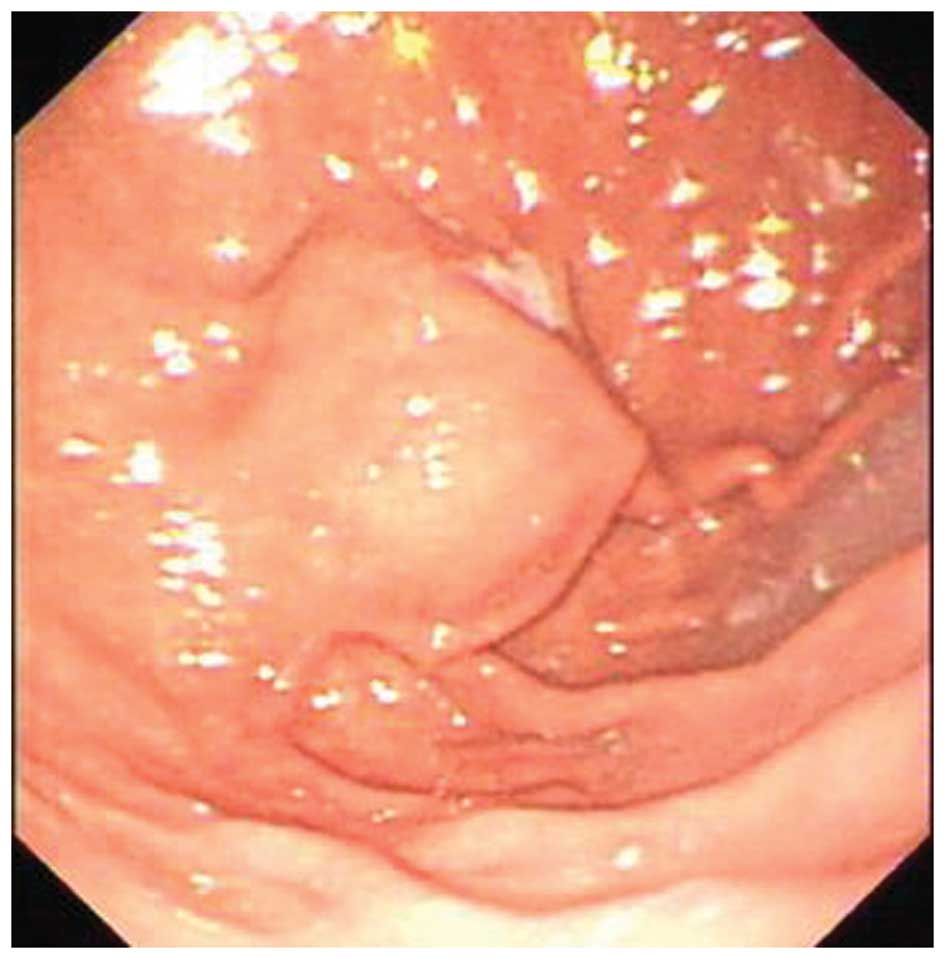
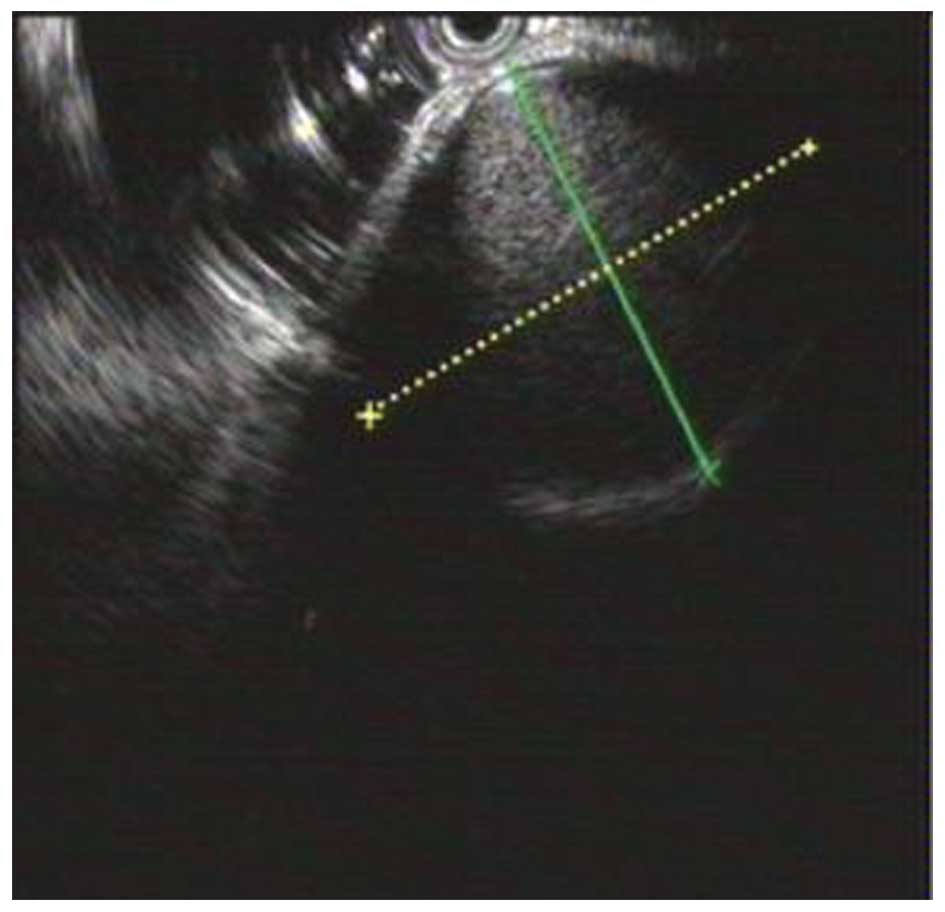
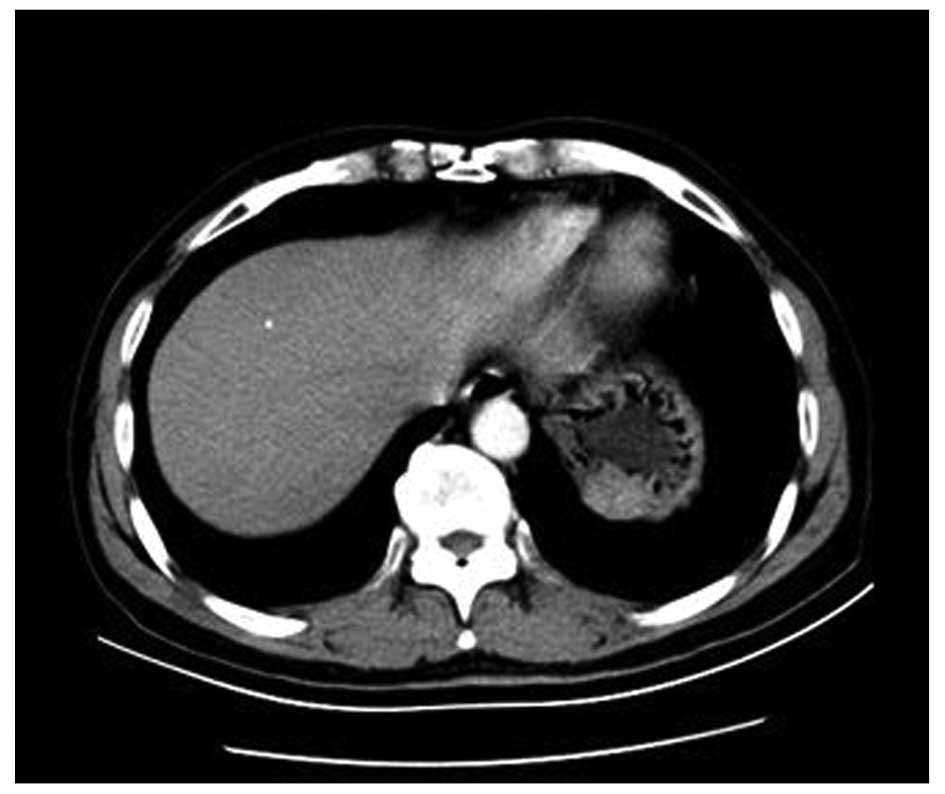
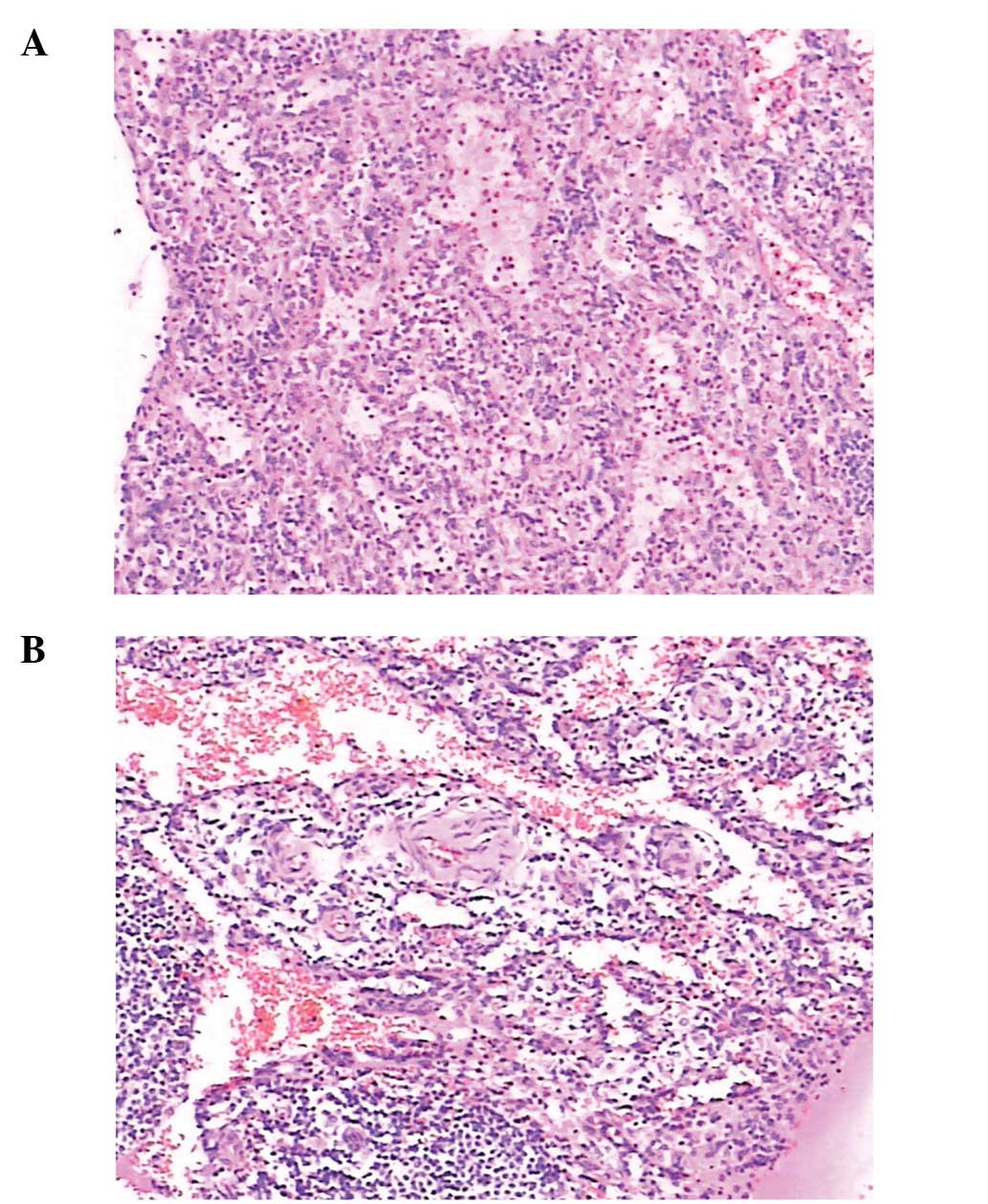
A 61-year-old male was admitted to the Department of Gastroenterology of Su Bei People’s Hospital of Jiangsu Province (Yangzhou, China) presenting with an upper abdominal discomfort of 3 months in duration. Past and family histories were non-contributory and the patient did not smoke or consume alcohol and had undergone a splenectomy 20 years earlier. Upon admission, physical examination and laboratory data, including peripheral blood counts, were all unremarkable. The platelet count was 1.48×10¹¹/l. The tumor markers showed no abnormalities and were as follows: Carbohydrate antigen (CA)50, 3.75 KU/l (normal range, <35.00); CA19-9, 2.09 KU/l (normal range, <35.00); α-fetoprotein, 4.58 ng/ml (<20.00); and carcinoembryonic antigen, 0.95 ng/ml (normal range, <5.00). Gastrointestinal endoscopy identified a fusiform mass at the posterior wall of the upper gastric fundus (Fig. 1). Endoscopic ultrasonography (EUS) revealed a tumor with low homogenous echogenicity originating in the gastric muscular layer (Fig. 2). Abdominal contrast-enhanced computed tomography (CT) showed a well-marginated ovoid mass ~2.6×1.9 cm in size located close to the gastric fundus (Fig. 3). A diagnosis of gastric GIST was made. Initially, endoscopic submucosal dissection was considered, however, the perforation involved rendered the problem difficult to repair by this method. Instead, gastroscopy was combined with laparoscopy. Under a laparoscope, the tumor was located at the posterior wall of the upper gastric fundus and was ~2.5×3.0 cm in size. Due to abdominal adhesions in the gastric fundus, separation and exposure was difficult. Open surgery was performed with enterolysis and partial gastrectomy. Histological examination identified specific representative structures in the red pulp and perifollicular zone of the human spleen. The tissue was largely composed of monocytes and lymphocytes and numerous sinusoidal spaces containing red blood cells were interspersed among these cells. The terminal end of the capillary branches of the arteriole sheaths were also identified, and were intermixed with lymphocytes and plasmocytes (Fig. 4). These results indicated that the mass contained splenic tissue, which confirmed it to be an accessory spleen.

Figure 1

Gastrointestinal endoscopy revealed a fusiform mass at the posterior wall of the upper gastric fundus.

Figure 2

Endoscopic ultrasonography revealed a tumor with low homogenous echogenicity originating in the gastric muscular layer.

Figure 3

Abdominal contrast-enhanced computed tomography showed a well-marginated ovoid mass of ~2.6×1.9 cm in size located close to the gastric fundus.

Figure 4

Histological examination of (A) and (B) revealed representative structures in red pulp and in the perifollicular zone of the human spleen. A number of sinusoidal spaces containing red blood cells were found to contain monocytes and lymphocytes.

Discussion

The current case report presents the diagnosis and treatment of an accessory spleen adjoining the stomach fundus, which appeared as a GIST at endoscopy in a patient who had undergone a splenectomy 20 years earlier. It has been reported that accessory spleens can have compensatory hypertrophy of residual splenic tissue following splenectomy and occasionally reach 3–5 cm in size (2). The accessory spleen observed in the present case appeared to be a GIST, considering that the patient had a history of splenectomy.

The following diagnostic approach can be considered effective when the diagnosis is unclear. CT is an important imaging technique used to evaluate the abdomen. It can identify the shape of accessory spleens (oval or round) and whether attenuation is identical to that of a proper splenic parenchyma prior to and following administration of contrast medium (1). Familiarity with the CT features of accessory spleens is useful to determine a diagnosis (6). Typically, accessory spleens are round or oval and the attenuation is identical to that of the proper splenic parenchyma prior to and following administration of contrast medium (6). Vascular branches arising from the splenic artery can be observed on dynamic CT (1). Endoscopic ultrasonography is able to show whether a mass with the homogenous parenchymal texture has originated from extragastric tissue, such as splenic parenchyma. The patient in the present case study had previously undergone a splenectomy, therefore it was impossible to compare the accessory spleen to proper splenic parenchyma. EUS-guided fine needle aspiration is beneficial for diagnosis of accessory spleen, which mimics a gastric subepithelial mass observed in histological examination (11). However, certain accessory spleens mimic an enlarged lymph node or tumor arising from adjacent organs, such as the kidney, adrenal gland or pancreas (12–15). Similarly, accessory spleens may be differentiated from metastatic lesions or lymphadenopathy when they are enhanced to the same degree as the spleen (1). In such cases, technetium 99m sulfur colloid scintigraphy provides an easy method of establishing the identity of ectopic splenic tissues (5,6). The mass mimicking GIST was readily identified by radionuclide imaging in the present case, resulting in the definite diagnosis of accessory spleens. An accessory spleen should be suspected in this type of case. In addition, ectopic splenic tissue may be caused by autotransplantation of splenic cells within the peritoneal cavity resulting from traumatic disruption of the splenic capsule (16,17).

Although an accessory spleen is usually found incidentally with no clinical significance in the majority of patients (1,6), it may occasionally be relevant to detection and characterization in clinical situations (18–20). Accessory spleens may become symptomatic due to spontaneous rupture, hemorrhage, embolism or torsion. The clinical significance of a residual accessory spleen post-splenectomy varies according to the individual conditions. Surgeons must be aware of their presence when the intention is to remove functional splenic tissues. The return of splenic function caused by compensatory enlargement of ectopic splenic tissues has been implicated in the recurrence of hematological disorders, such as thrombocytopenic purpura (18–20).

During follow-up, the platelet count of the present patient increased to 3.92×10¹¹/l on the second day following surgery and a high level of 4.10×10¹¹/l was observed on day 9. The patient peripheral blood count returned to normal after 2 weeks, and there was no evidence of recurrence. Platelet count usually increases within 2–3 days of splenectomy, peaks between 7 and 14 days and then gradually decreases and returns to normal after 1–2 months (21). This condition may cause venous thrombosis if the platelet count increases abnormally. Once thrombosis has extended to the superior mesenteric vein, it may cause extensive necrosis of its convolutions. Similarly, high postoperative platelet counts can easily lead to deep venous thrombosis of the lower limbs, resulting in pulmonary embolism and even mortality. For this reason, changes in platelet count should be observed carefully following a splenectomy. Appropriate treatment based on the platelet count and liver function may provide good therapeutic effects.

In conclusion, patients who present with accessory spleen arising from gastric fundus following splenectomy should undergo careful follow-up by imaging examination, including CT. If the clinical course is uneventful and the patient remains asymptomatic without any abnormalities in physical and laboratory examinations, then splenectomy should not be performed. Changes in postoperative platelet count should be taken into account. If splenectomy is necessary, platelet count should be used as a routine monitoring indicator.

References

1 

Halpert B and Gyorkey F: Lesions observed in accessory spleens of 311 patients. Am J Clin Pathol. 32:165–168. 1959.PubMed/NCBI

2 

Beahrs JR and Stephens DH: Enlarged accessory spleens: CT appearance in postsplenectomy patients. AJR Am J Roentgenol. 135:483–486. 1980. View Article : Google Scholar : PubMed/NCBI

3 

Freeman JL, Jafri SZ, Roberts JL, Mezwa DG and Shirkhoda A: CT of congenital and acquired abnormalities of the spleen. Radiographics. 13:597–610. 1993. View Article : Google Scholar : PubMed/NCBI

4 

Dodds WJ, Taylor AJ, Erickson SJ, Stewart ET and Lawson TL: Radiologic imaging of splenic anomalies. AJR Am J Roentgenol. 155:805–810. 1990. View Article : Google Scholar : PubMed/NCBI

5 

Mortelé KJ, Mortelé B and Silverman SG: CT features of the accessory spleen. AJR Am J Roentgenol. 183:1653–1657. 2004.PubMed/NCBI

6 

Gayer G, Zissin R, Apter S, et al: CT findings in congenital anomalies of the spleen. Br J Radiol. 74:767–772. 2001. View Article : Google Scholar : PubMed/NCBI

7 

Hayward I, Mindelzun RE and Jeffrey RB: Intrapancreatic accessory spleen mimicking pancreatic mass on CT. J Comput Assist Tomogr. 16:984–985. 1992. View Article : Google Scholar : PubMed/NCBI

8 

Harris GN, Kase DJ, Bradnock H and Mckinley MJ: Accessory spleen causing a mass in the tail of the pancreas: MR imaging findings. AJR Am J Roentgenol. 163:1120–1121. 1994. View Article : Google Scholar : PubMed/NCBI

9 

Stiris MG: Accessory spleen versus left adrenal tumor: computed tomographic and abdominal angiographic evaluation. J Comput Assist Tomogr. 4:543–544. 1980. View Article : Google Scholar : PubMed/NCBI

10 

Tsuchiya N, Sato K, Shimoda N, et al: An accessory spleen mimicking a nonfunctional adrenal tumor: a potential pitfall in the diagnosis of a left adrenal tumor. Urol Int. 65:226–228. 2000. View Article : Google Scholar : PubMed/NCBI

11 

Ahn JY, Jung HY, Kim do H, et al: Diagnosis of an accessory spleen mimicking a gastric submucosal tumor using endoscopic ultrasonography-guided fine-needle aspiration. Korean J Gastroenterol. 59:433–436. 2012. View Article : Google Scholar : PubMed/NCBI

12 

Seo T, Ito T, Watanabe Y and Umeda T: Torsion of an accessory spleen presenting as an acute abdomen with an inflammatory mass. US, CT, and MRI findings. Pediatr Radiol. 24:532–534. 1994. View Article : Google Scholar : PubMed/NCBI

13 

Valls C, Monés L, Gumà A and López-Calonge E: Torsion of a wandering accessory spleen: CT findings. Abdom Imaging. 23:194–195. 1998. View Article : Google Scholar : PubMed/NCBI

14 

Coote JM, Eyers PS, Walker A and Wells IP: Intra-abdominal bleeding caused by spontaneous rupture of an accessory spleen: the CT findings. Clin Radiol. 54:689–691. 1999. View Article : Google Scholar : PubMed/NCBI

15 

Pérez Fontán FJ, Soler R, Santos M and Facio I: Accessory spleen torsion: US, CT and MR findings. Eur Radiol. 11:509–512. 2001.PubMed/NCBI

16 

Brewster DC: Splenosis. Report of two cases and review of the literature. Am J Surg. 126:14–19. 1973.PubMed/NCBI

17 

Fleming CR, Dickson ER and Harrison EG Jr: Splenosis: autotransplantation of splenic tissue. Am J Med. 61:414–419. 1976. View Article : Google Scholar : PubMed/NCBI

18 

Facon T, Caulier MT, Fenaux P, et al: Accessory spleen in recurrent chronic immune thrombocytopenic purpura. Am J Hematol. 41:184–189. 1992. View Article : Google Scholar : PubMed/NCBI

19 

Antevil J, Thoman D, Taller J and Biondi M: Laparoscopic accessory splenectomy with intraoperative gamma probe localization for recurrent idiopathic thrombocytopenic purpura. Surg Laparosc Endosc Percutan Tech. 12:371–374. 2002. View Article : Google Scholar

20 

Budzynski A, Bobrzyński A, Sacha T and Skotnicki A: Laparoscopic removal of retroperitoneal accessory spleen in patient with relapsing idiopathic thrombocytopenic purpura 30 years after classical splenectomy. Surg Endosc. 16:16362002.

21 

Koyanagi N, Iso Y, Higashi H, Kitano S and Sugimachi K: Increased platelet count as a screening test for distal splenorenal shunt patency. Am J Surg. 156:29–33. 1988. View Article : Google Scholar : PubMed/NCBI

Related Articles

  • Abstract
  • View
  • Download
  • Twitter
Copy and paste a formatted citation
Spandidos Publications style
Wang G, Chen P and Zong L: Accessory spleen arising from the gastric fundus mimicking gastrointestinal stromal tumor following splenectomy: A case report. Exp Ther Med 7: 349-351, 2014.
APA
Wang, G., Chen, P., & Zong, L. (2014). Accessory spleen arising from the gastric fundus mimicking gastrointestinal stromal tumor following splenectomy: A case report. Experimental and Therapeutic Medicine, 7, 349-351. https://doi.org/10.3892/etm.2013.1415
MLA
Wang, G., Chen, P., Zong, L."Accessory spleen arising from the gastric fundus mimicking gastrointestinal stromal tumor following splenectomy: A case report". Experimental and Therapeutic Medicine 7.2 (2014): 349-351.
Chicago
Wang, G., Chen, P., Zong, L."Accessory spleen arising from the gastric fundus mimicking gastrointestinal stromal tumor following splenectomy: A case report". Experimental and Therapeutic Medicine 7, no. 2 (2014): 349-351. https://doi.org/10.3892/etm.2013.1415
Copy and paste a formatted citation
x
Spandidos Publications style
Wang G, Chen P and Zong L: Accessory spleen arising from the gastric fundus mimicking gastrointestinal stromal tumor following splenectomy: A case report. Exp Ther Med 7: 349-351, 2014.
APA
Wang, G., Chen, P., & Zong, L. (2014). Accessory spleen arising from the gastric fundus mimicking gastrointestinal stromal tumor following splenectomy: A case report. Experimental and Therapeutic Medicine, 7, 349-351. https://doi.org/10.3892/etm.2013.1415
MLA
Wang, G., Chen, P., Zong, L."Accessory spleen arising from the gastric fundus mimicking gastrointestinal stromal tumor following splenectomy: A case report". Experimental and Therapeutic Medicine 7.2 (2014): 349-351.
Chicago
Wang, G., Chen, P., Zong, L."Accessory spleen arising from the gastric fundus mimicking gastrointestinal stromal tumor following splenectomy: A case report". Experimental and Therapeutic Medicine 7, no. 2 (2014): 349-351. https://doi.org/10.3892/etm.2013.1415
Follow us
  • Twitter
  • LinkedIn
  • Facebook
About
  • Spandidos Publications
  • Careers
  • Cookie Policy
  • Privacy Policy
How can we help?
  • Help
  • Live Chat
  • Contact
  • Email to our Support Team