Spandidos Publications Logo
  • About
    • About Spandidos
    • Aims and Scopes
    • Abstracting and Indexing
    • Editorial Policies
    • Reprints and Permissions
    • Job Opportunities
    • Terms and Conditions
    • Contact
  • Journals
    • All Journals
    • Oncology Letters
      • Oncology Letters
      • Information for Authors
      • Editorial Policies
      • Editorial Board
      • Aims and Scope
      • Abstracting and Indexing
      • Bibliographic Information
      • Archive
    • International Journal of Oncology
      • International Journal of Oncology
      • Information for Authors
      • Editorial Policies
      • Editorial Board
      • Aims and Scope
      • Abstracting and Indexing
      • Bibliographic Information
      • Archive
    • Molecular and Clinical Oncology
      • Molecular and Clinical Oncology
      • Information for Authors
      • Editorial Policies
      • Editorial Board
      • Aims and Scope
      • Abstracting and Indexing
      • Bibliographic Information
      • Archive
    • Experimental and Therapeutic Medicine
      • Experimental and Therapeutic Medicine
      • Information for Authors
      • Editorial Policies
      • Editorial Board
      • Aims and Scope
      • Abstracting and Indexing
      • Bibliographic Information
      • Archive
    • International Journal of Molecular Medicine
      • International Journal of Molecular Medicine
      • Information for Authors
      • Editorial Policies
      • Editorial Board
      • Aims and Scope
      • Abstracting and Indexing
      • Bibliographic Information
      • Archive
    • Biomedical Reports
      • Biomedical Reports
      • Information for Authors
      • Editorial Policies
      • Editorial Board
      • Aims and Scope
      • Abstracting and Indexing
      • Bibliographic Information
      • Archive
    • Oncology Reports
      • Oncology Reports
      • Information for Authors
      • Editorial Policies
      • Editorial Board
      • Aims and Scope
      • Abstracting and Indexing
      • Bibliographic Information
      • Archive
    • Molecular Medicine Reports
      • Molecular Medicine Reports
      • Information for Authors
      • Editorial Policies
      • Editorial Board
      • Aims and Scope
      • Abstracting and Indexing
      • Bibliographic Information
      • Archive
    • World Academy of Sciences Journal
      • World Academy of Sciences Journal
      • Information for Authors
      • Editorial Policies
      • Editorial Board
      • Aims and Scope
      • Abstracting and Indexing
      • Bibliographic Information
      • Archive
    • International Journal of Functional Nutrition
      • International Journal of Functional Nutrition
      • Information for Authors
      • Editorial Policies
      • Editorial Board
      • Aims and Scope
      • Abstracting and Indexing
      • Bibliographic Information
      • Archive
    • International Journal of Epigenetics
      • International Journal of Epigenetics
      • Information for Authors
      • Editorial Policies
      • Editorial Board
      • Aims and Scope
      • Abstracting and Indexing
      • Bibliographic Information
      • Archive
    • Medicine International
      • Medicine International
      • Information for Authors
      • Editorial Policies
      • Editorial Board
      • Aims and Scope
      • Abstracting and Indexing
      • Bibliographic Information
      • Archive
  • Articles
  • Information
    • Information for Authors
    • Information for Reviewers
    • Information for Librarians
    • Information for Advertisers
    • Conferences
  • Language Editing
Spandidos Publications Logo
  • About
    • About Spandidos
    • Aims and Scopes
    • Abstracting and Indexing
    • Editorial Policies
    • Reprints and Permissions
    • Job Opportunities
    • Terms and Conditions
    • Contact
  • Journals
    • All Journals
    • Biomedical Reports
      • Information for Authors
      • Editorial Policies
      • Editorial Board
      • Aims and Scope
      • Abstracting and Indexing
      • Bibliographic Information
      • Archive
    • Experimental and Therapeutic Medicine
      • Information for Authors
      • Editorial Policies
      • Editorial Board
      • Aims and Scope
      • Abstracting and Indexing
      • Bibliographic Information
      • Archive
    • International Journal of Epigenetics
      • Information for Authors
      • Editorial Policies
      • Editorial Board
      • Aims and Scope
      • Abstracting and Indexing
      • Bibliographic Information
      • Archive
    • International Journal of Functional Nutrition
      • Information for Authors
      • Editorial Policies
      • Editorial Board
      • Aims and Scope
      • Abstracting and Indexing
      • Bibliographic Information
      • Archive
    • International Journal of Molecular Medicine
      • Information for Authors
      • Editorial Policies
      • Editorial Board
      • Aims and Scope
      • Abstracting and Indexing
      • Bibliographic Information
      • Archive
    • International Journal of Oncology
      • Information for Authors
      • Editorial Policies
      • Editorial Board
      • Aims and Scope
      • Abstracting and Indexing
      • Bibliographic Information
      • Archive
    • Medicine International
      • Information for Authors
      • Editorial Policies
      • Editorial Board
      • Aims and Scope
      • Abstracting and Indexing
      • Bibliographic Information
      • Archive
    • Molecular and Clinical Oncology
      • Information for Authors
      • Editorial Policies
      • Editorial Board
      • Aims and Scope
      • Abstracting and Indexing
      • Bibliographic Information
      • Archive
    • Molecular Medicine Reports
      • Information for Authors
      • Editorial Policies
      • Editorial Board
      • Aims and Scope
      • Abstracting and Indexing
      • Bibliographic Information
      • Archive
    • Oncology Letters
      • Information for Authors
      • Editorial Policies
      • Editorial Board
      • Aims and Scope
      • Abstracting and Indexing
      • Bibliographic Information
      • Archive
    • Oncology Reports
      • Information for Authors
      • Editorial Policies
      • Editorial Board
      • Aims and Scope
      • Abstracting and Indexing
      • Bibliographic Information
      • Archive
    • World Academy of Sciences Journal
      • Information for Authors
      • Editorial Policies
      • Editorial Board
      • Aims and Scope
      • Abstracting and Indexing
      • Bibliographic Information
      • Archive
  • Articles
  • Information
    • For Authors
    • For Reviewers
    • For Librarians
    • For Advertisers
    • Conferences
  • Language Editing
Login Register Submit
  • This site uses cookies
  • You can change your cookie settings at any time by following the instructions in our Cookie Policy. To find out more, you may read our Privacy Policy.

    I agree
Search articles by DOI, keyword, author or affiliation
Search
Advanced Search
presentation
Experimental and Therapeutic Medicine
Join Editorial Board Propose a Special Issue
Print ISSN: 1792-0981 Online ISSN: 1792-1015
Journal Cover
2014-February Volume 7 Issue 2

Full Size Image

Sign up for eToc alerts
Recommend to Library

Journals

International Journal of Molecular Medicine

International Journal of Molecular Medicine

International Journal of Molecular Medicine is an international journal devoted to molecular mechanisms of human disease.

International Journal of Oncology

International Journal of Oncology

International Journal of Oncology is an international journal devoted to oncology research and cancer treatment.

Molecular Medicine Reports

Molecular Medicine Reports

Covers molecular medicine topics such as pharmacology, pathology, genetics, neuroscience, infectious diseases, molecular cardiology, and molecular surgery.

Oncology Reports

Oncology Reports

Oncology Reports is an international journal devoted to fundamental and applied research in Oncology.

Experimental and Therapeutic Medicine

Experimental and Therapeutic Medicine

Experimental and Therapeutic Medicine is an international journal devoted to laboratory and clinical medicine.

Oncology Letters

Oncology Letters

Oncology Letters is an international journal devoted to Experimental and Clinical Oncology.

Biomedical Reports

Biomedical Reports

Explores a wide range of biological and medical fields, including pharmacology, genetics, microbiology, neuroscience, and molecular cardiology.

Molecular and Clinical Oncology

Molecular and Clinical Oncology

International journal addressing all aspects of oncology research, from tumorigenesis and oncogenes to chemotherapy and metastasis.

World Academy of Sciences Journal

World Academy of Sciences Journal

Multidisciplinary open-access journal spanning biochemistry, genetics, neuroscience, environmental health, and synthetic biology.

International Journal of Functional Nutrition

International Journal of Functional Nutrition

Open-access journal combining biochemistry, pharmacology, immunology, and genetics to advance health through functional nutrition.

International Journal of Epigenetics

International Journal of Epigenetics

Publishes open-access research on using epigenetics to advance understanding and treatment of human disease.

Medicine International

Medicine International

An International Open Access Journal Devoted to General Medicine.

Journal Cover
2014-February Volume 7 Issue 2

Full Size Image

Sign up for eToc alerts
Recommend to Library

  • Article
  • Citations
    • Cite This Article
    • Download Citation
    • Create Citation Alert
    • Remove Citation Alert
    • Cited By
  • Similar Articles
    • Related Articles (in Spandidos Publications)
    • Similar Articles (Google Scholar)
    • Similar Articles (PubMed)
  • Download PDF
  • Download XML
  • View XML
Article

Effects of BD1047, a σ1 receptor antagonist, on the expression of mTOR, Camk2γ and GSK‑3β in fluvoxamine‑treated N2a cells

  • Authors:
    • Dong-An Su
    • Ri-Yue Jiang
    • Ning Liu
    • Liang-Cai Ding
    • Da-Ming Wang
    • Hai-Ying Yu
    • En-Shi Yan
    • Mei-Hua Zhu
    • Bin Zhu
  • View Affiliations / Copyright

    Affiliations: Department of Anesthesiology, The PLA 102nd Hospital, Second Military Medical University, Changzhou, Jiangsu 213003, P.R. China, Department of Radiation Oncology, The Third Affiliated Hospital of Soochow University, Changzhou, Jiangsu 213003, P.R. China, Department of Critical Care Medicine, The Third Affiliated Hospital of Soochow University, Changzhou, Jiangsu 213003, P.R. China, Department of Psychiatry, The PLA 102nd Hospital, Second Military Medical University, Changzhou, Jiangsu 213003, P.R. China, Department of Anesthesiology, Brain Hospital Affiliated to Nanjing Medical University, Nanjing, Jiangsu 210029, P.R. China
  • Pages: 435-438
    |
    Published online on: December 5, 2013
       https://doi.org/10.3892/etm.2013.1438
  • Expand metrics +
Metrics: Total Views: 0 (Spandidos Publications: | PMC Statistics: )
Metrics: Total PDF Downloads: 0 (Spandidos Publications: | PMC Statistics: )
Cited By (CrossRef): 0 citations Loading Articles...

This article is mentioned in:


Abstract

Fluvoxamine, a common antidepressant agent, is designed to exert its pharmacological effect by inhibiting synaptic serotonin reuptake. However, increasing evidence has demonstrated that σ1 receptors are likely to be involved in the mechanism of action of fluvoxamine. The present study aimed to observe the effects of fluvoxamine on the expression levels of mammalian target of rapamycin (mTOR), Ca2+/calmodulin‑dependent protein kinase 2γ (Camk2γ) and glycogen synthase kinase‑3β (GSK‑3β) in fluvoxamine‑treated N2a cells and attempted to elucidate whether σ1 receptors mediate the pharmacological effects of fluvoxamine. The N2a cells were randomly divided into three groups (each n=6): DMEM group (D group), 0.5 µmol/l fluvoxamine group (F group) and 0.2 µmol/l BD1047 (a σ1 receptor antagonist) + 0.5 µmol/l fluvoxamine group (BF group). Western blotting was used to determine the expression levels of mTOR, Camk2γ and GSK‑3β in the cultured N2a cells after two days of incubation. The F group exhibited significant increases in the expression levels of mTOR and Camk2γ and a significant reduction in the expression levels of GSK‑3β compared with those in the D group (P<0.01). By contrast, the BF group demonstrated significant reductions in the expression levels of mTOR and Camk2γ and a significant increase in the expression levels of GSK‑3β, compared with those in the F group (P<0.01). These results suggest that σ1 receptors mediate fluvoxamine‑elicited changes in the expression levels of mTOR, Camk2γ and GSK‑3β in N2a cells, which indicates that σ1 receptors are likely to be involved in the pharmacological effects of fluvoxamine.

Introduction

Fluvoxamine, a common and widely used antidepressant agent, is intended to exert its therapeutic effects in patients with depression by inhibiting the reuptake of serotonin in synaptic clefts (1). Certain studies have supported the theory that fluvoxamine exerts therapeutic effects not only on depression but also on schizophrenia and bipolar depression (2,3). Consequently, the conventional serotonin hypothesis is not able to not fully elucidate the pharmacological mechanisms of action of fluvoxamine.

σ receptors are recognized as non-opioid, intracellular receptors that modulate a variety of types of signal transduction in cells (4). A number of studies have demonstrated the existence of at least two subtypes of the σ receptor, σ1 and σ2, and σ1 receptors are expressed in numerous organs such as the brain, liver, pancreas, spleen and adrenal glands (5–7). The wide distribution of σ1 receptors in a variety of tissues suggests a critical role in living systems (6). A previous study by Niitsu et al(8) suggested that a σ1 receptor agonist caused a significant therapeutic effect in the treatment of schizophrenia. Additionally, SA4503, a σ1 receptor agonist, alleviated schizophrenia symptoms in an animal model (9). A study using fluvoxamine for the treatment of a patient with schizophrenia suggested that σ1 receptors are probably associated with the mechanism of action of fluvoxamine (10).

Mammalian target of rapamycin (mTOR), Ca2+/calmodulin-dependent protein kinase 2γ (Camk2γ) and glycogen synthase kinase-3β (GSK-3β) are three fundamental biomarkers implicated in the underlying mechanisms of depression, schizophrenia, mania and certain neuropsychiatric diseases (11–13). The present study aimed to investigate the effects of fluvoxamine on the expression of these biomarkers by studying fluvoxamine-treated N2a cells and attempted to elucidate whether σ1 receptors mediate the pharmacological effects of fluvoxamine. Thus, BD1047, a σ1 receptor antagonist, was applied to fluvoxamine-treated N2a cells in order to observe its effects on the fluvoxamine-elicited pharmacological action.

Materials and methods

Reagents

Fluvoxamine and BD1047 were purchased from Tocris Bioscience (Minneapolis, MN, USA). Primary antibodies against mTOR, Camk2γ and GSK-3β were purchased from Cell Signalling Technology, Inc. (Danvers, MA, USA). The mouse N2a neuroblastoma cells were obtained from the Medical College, Soochow University (Suzhou, China).

Cell culture

N2a cell culture was performed as described previously (14,15). The N2a cells were cultured in DMEM (Gibco, Grand Island, NY, USA) solution supplemented with 10% fetal bovine serum (FBS; Gibco), 0.3 mM L-glutamine and 50 U/ml penicillin/streptomycin. The N2a cells were randomly divided into three groups (six duplicates per group): DMEM group (D group), 0.5 μmol/l fluvoxamine group (F group) and 0.2 μmol/l BD1047 (σ1 receptor antagonist) + 0.5 μmol/l fluvoxamine group (BF group). Each culture well contained 2×10⁵ N2a cells. The N2a cells were prepared for analysis 48 h after the initiation of incubation,.

Western blotting

The N2a cells were washed with phosphate-buffered saline (PBS). Protein levels were determined using the bicinchoninic acid method, according to the manufacturer’s instructions (Nanjing Kaiji Biochemistry Company, Nanjing, China). Briefly, bovine serum albumin (BSA) was applied as a standard protein. Prior to electrophoresis, a mixture of bromophenol blue and dithiothreitol (DTT; final concentration, 10 mM) was added to the samples. For western blotting, 50 μg of the total protein from each sample was separated by SDS-PAGE under reducing conditions. The proteins were then transferred onto polyvinylidene fluoride membranes (Nanjing Jiancheng Bioengineering Institute, Nanjing, China). The membranes were blocked for 2 h at room temperature using non-fat dried milk blotting-grade blocker and incubated overnight with primary antibodies. The primary antibodies used were goat anti-mTOR (1:1,000), rabbit anti-Camk2γ (1:1,000) and rabbit anti-GSK-3β (1:1,000). The primary antibodies were diluted in Tris-buffered saline (Thermo Fisher Scientific Inc., Rockford, IL, USA) containing 0.1% Tween-20 (TBS-T) and 2% BSA. Following extensive washing (three times for 15 min each in TBS-T), the mTOR, Camk2γ and GSK-3β protein levels were measured with horseradish peroxidase-conjugated rabbit anti-goat IgG (1:100,000 dilution) using enhanced chemiluminescence reagents (Beyotime, Nantong, China). Equal protein loading and transfer were assessed by subjecting each sample to western blotting for GAPDH with rabbit anti-GAPDH IgG (1:2,000 dilution).

Statistical analysis

Data are expressed as the mean ± standard deviation and were analyzed using one-way analysis of variance, and post hoc analyses were performed using the least significant difference test. Statistical analysis was conducted using SPSS Software, version 17.0 (IBM, Chicago, IL, USA). P<0.05 was considered to indicate a statistically significant difference for all the data analyzed.

Results

Effects of fluvoxamine on the expression of mTOR, Camk2γ and GSK-3β in cultured N2a cells

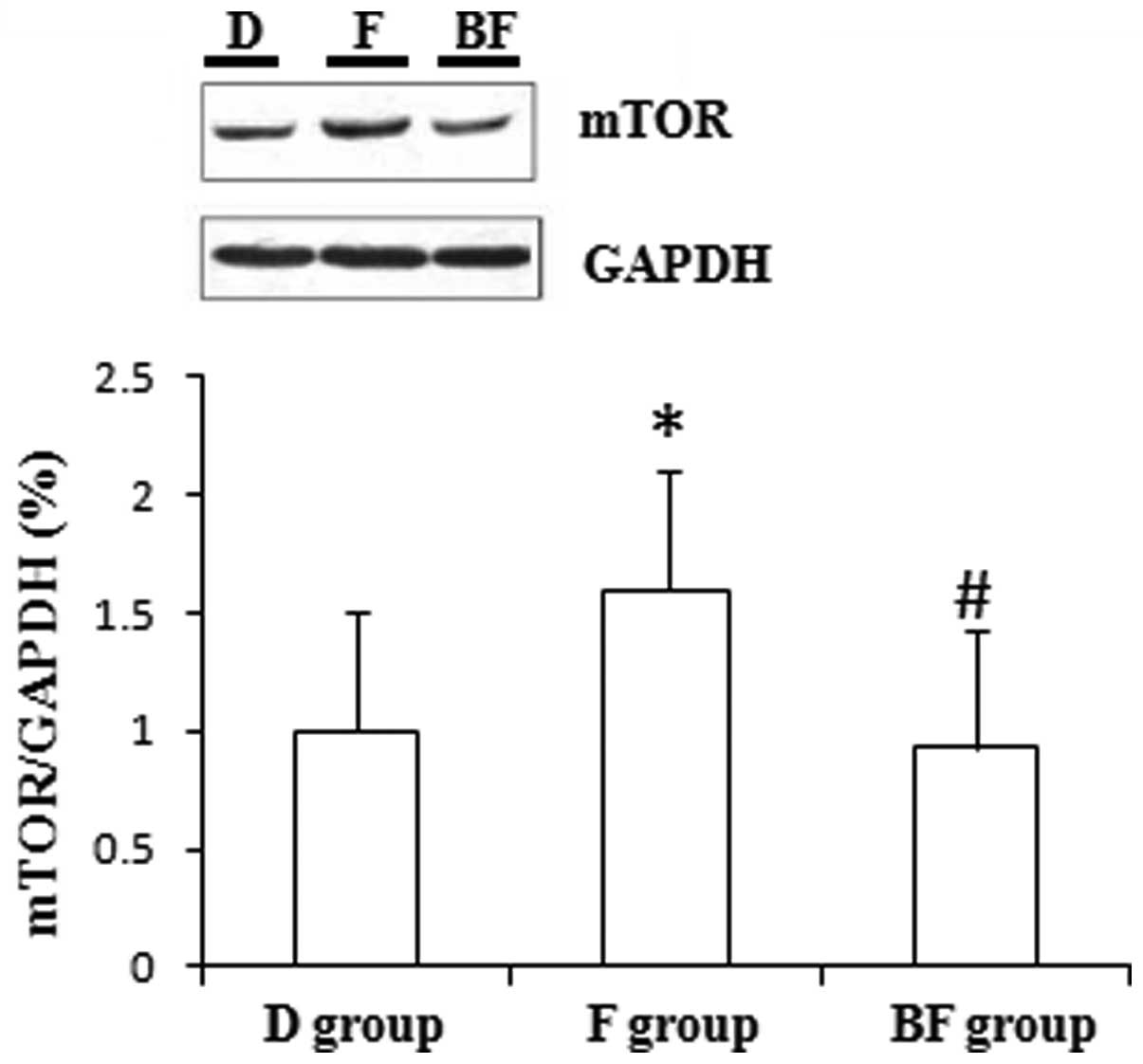
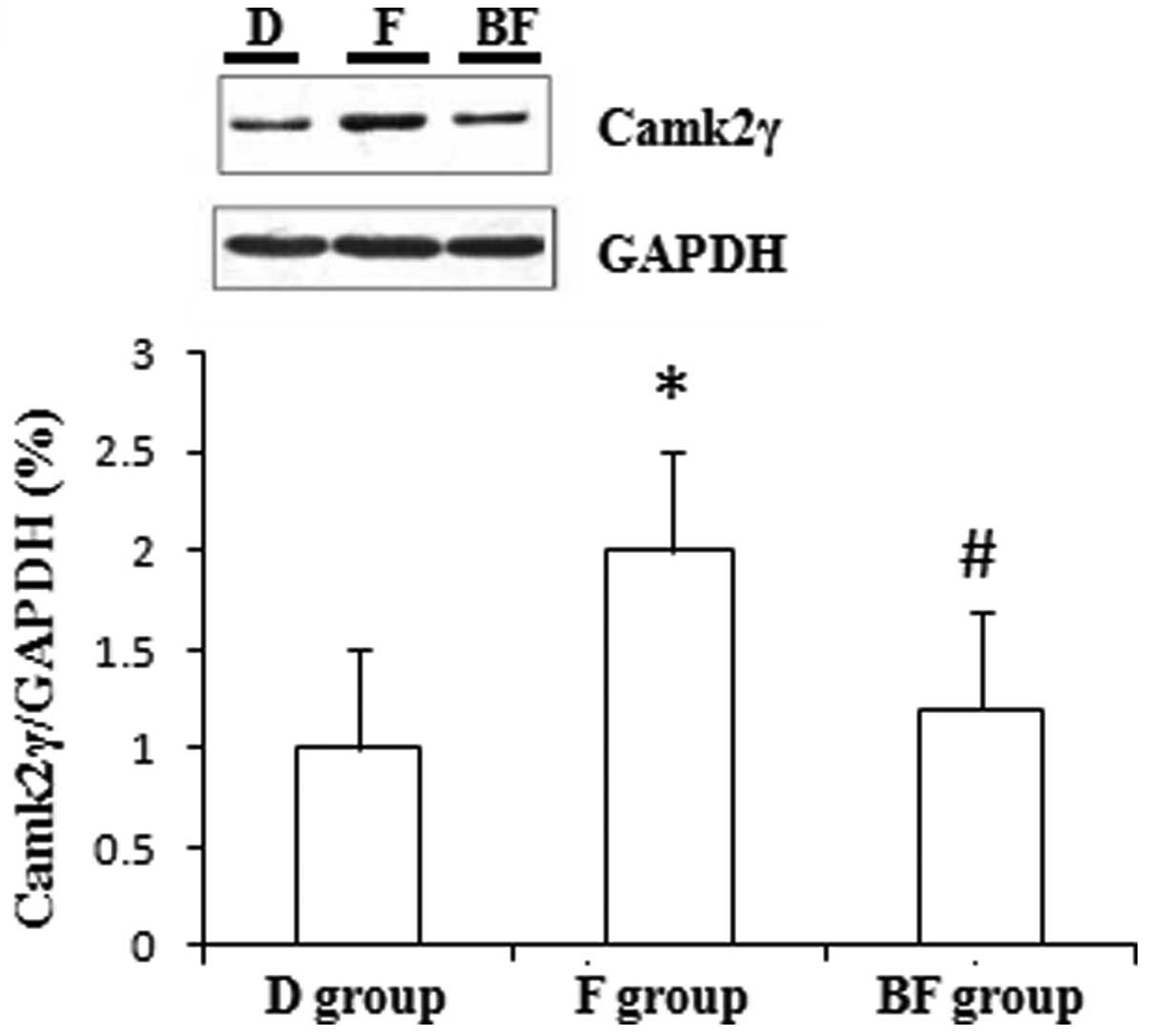
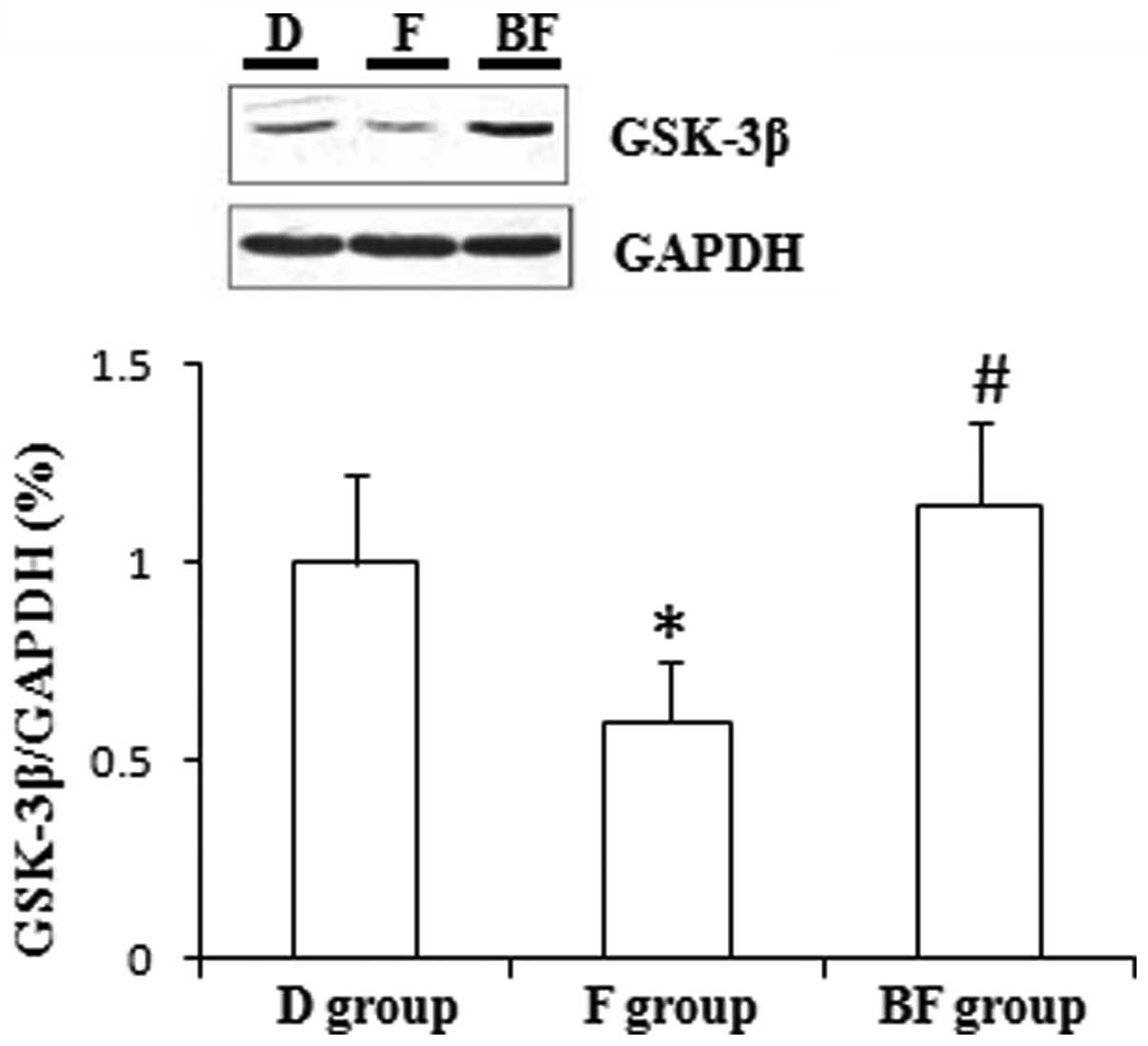
The administration of fluvoxamine significantly increased the levels of mTOR and Camk2γ expression compared with those of the D group in the cultured N2a cells (P<0.01; Figs. 1 and 2). Fluvoxamine significantly decreased the levels of GSK-3β expression compared with those of the D group in the cultured N2a cells (P<0.01; Fig. 3).

Figure 1

Expression of mTOR following fluvoxamine and/or BD1047 treatment in N2a cells. *P<0.01 compared with D group; #P<0.01 compared with F group. mTOR, mammalian target of rapamycin; D group, DMEM group; F group, fluvoxamine group; BF group, BD1047 + fluvoxamine group.

Figure 2

Expression of Camk2γ following fluvoxamine and/or BD1047 treatment in N2a cells. *P<0.01 compared with D group; #P<0.01 compared with F group. Camk2γ, Ca2+/calmodulin-dependent protein kinase 2γ; D group, DMEM group; F group, fluvoxamine group; BF group, BD1047 + fluvoxamine group.

Figure 3

Expression of GSK-3β following fluvoxamine and/or BD1047 treatment in N2a cells. *P<0.01 compared with D group; #P<0.01 compared with F group. GSK-3β glycogen synthase kinase-3β; D group, DMEM group; F group, fluvoxamine group; BF group, BD1047 + fluvoxamine group.

Effects of BD1047 on the fluvoxamine-elicited changes in the expression levels of mTOR, Camk2γ and GSK-3β in cultured N2a cells

The administration of BD1047 significantly decreased the levels of mTOR and Camk2γ expression compared with those of the F group in the cultured N2a cells (P<0.01; Figs. 1 and 2). Moreover, BD1047 significantly increased the levels of GSK-3β expression compared with those of the F group in the cultured N2a cells (P<0.01; Fig. 3).

Discussion

Fluvoxamine is a widely used clinical antidepressant agent. Its primary pharmacological action is inhibition of the reuptake of serotonin, which ultimately increases the levels of serotonin in synaptic clefts and exerts therapeutic effects in patients with depression (1). N2a cells are a semi-adherent, fast growing, mouse neuroblastoma cell line. In the present study, N2a cells were used to investigate the pharmacological properties of fluvoxamine, and the results demonstrated that fluvoxamine significantly increased the mTOR and Camk2γ expression levels and decreased the GSK-3β expression levels.

It is generally acknowledged that fluvoxamine acts as an antidepressant agent with therapeutic effects that alleviate the symptoms of schizophrenia, obsession, bipolar depression and certain neuropsychiatric diseases (16–18). Increasing evidence has suggested that σ1 receptors may be pivotal in the mechanism of action of fluvoxamine in the treatment of schizophrenia and other psychiatric diseases (2). Notably, the results of the present study also demonstrated that BD1047, a σ1 receptor agonist, abolished the fluvoxamine-elicited pharmacological effects. This result was consistent with the expectations of the study.

mTOR is a type of protein that promotes the activity of neurons (11). The results of present study indicate that fluvoxamine increased the expression levels of mTOR in cultured N2a cells. mTOR stimulates the growth of neurons via increasing the expression levels of neurotropic factors and supplying nutrients (17). It has been demonstrated that upregulated mTOR expression levels in the prefrontal cortex are likely to be associated with the mechanisms of antidepressant effects, which facilitate the return of the depression-induced atrophic neurons to normal morphology and function (18). Additionally, a postmortem study has demonstrated downregulated mTOR expression levels in the brain tissues of depressed patients (19). Therefore, in the present study it was suggested that increased mTOR expression levels are probably involved in the mechanisms by which fluvoxamine exerts antidepressant effects. Furthermore, it was observed that BD1047 attenuated the Camk2γ-elicited increased in mTOR expression levels, which indicates that σ1 receptors are likely to be involved in the mechanism of action of fluvoxamine.

Camk2γ is a Ca2+-dependent protein kinase (13). However, there is little literature reporting whether its expression is associated with the mechanisms of psychiatric diseases. In the present study, it was observed that Camk2γ expression levels were significantly increased following treatment with fluvoxamine in cultured N2a cells. It is widely accepted that this antidepressant agent has neuroprotective effects. The results of the present study indicate that increased Camk2γ expression levels are probably associated with the neuroprotective and antidepressant effect of fluvoxamine. In addition, the results suggest that σ1 receptors are probably involved in the pharmacological effect of fluvoxamine on the expression of Camk2γ.

GSK-3β is serine/threonine kinase, which has been acknowledged as a pivotal target for the treatment of depression and mania (12). In the present study, it was observed that that fluvoxamine has the potential to inhibit GSK-3β and that σ1 receptors probably mediate this process, which suggests that fluvoxamine exerts its pharmacological effects via the serotonin pathway and also by stimulating σ1 receptors.

In conclusion, the results of this study demonstrate that fluvoxamine has an effect on the expression levels of mTOR, Camk2γ and GSK-3β, and that this process is likely to be associated with the activation of σ1 receptors. However, an in vivo study was not conducted to investigate whether σ1 receptor antagonists are able to attenuate the therapeutic effects of fluvoxamine. Future large-scale studies are required to elucidate the pharmacological properties of fluvoxamine.

References

1 

Sugimoto Y, Tagawa N, Kobayashi Y, Mitsui-Saito K, Hotta Y and Yamada J: Involvement of the sigma1 receptor in the antidepressant-like effects of fluvoxamine in the forced swimming test in comparison with the effects elicited by paroxetine. Eur J Pharmacol. 696:96–100. 2012. View Article : Google Scholar : PubMed/NCBI

2 

Niitsu T, Iyo M and Hashimoto K: Sigma-1 receptor agonists as therapeutic drugs for cognitive impairment in neuropsychiatric diseases. Curr Pharm Des. 18:875–883. 2012. View Article : Google Scholar : PubMed/NCBI

3 

Hindmarch I and Hashimoto K: Cognition and depression: the effects of fluvoxamine, a sigma-1 receptor agonist, reconsidered. Hum Psychopharmacol. 25:193–200. 2010. View Article : Google Scholar : PubMed/NCBI

4 

Hayashi T and Su TP: An update on the development of drugs for neuropsychiatric disorders: focusing on the sigma 1 receptor ligand. Expert Opin Ther Targets. 12:45–58. 2008. View Article : Google Scholar : PubMed/NCBI

5 

Romieu P, Martin-Fardon R, Bowen WD and Maurice T: Sigma 1 receptor-related neuroactive steroids modulate cocaine-induced reward. J Neurosci. 23:3572–3576. 2003.PubMed/NCBI

6 

Matsumoto RR, McCracken KA, Pouw B, Zhang Y and Bowen WD: Involvement of sigma receptors in the behavioral effects of cocaine: evidence from novel ligands and antisense oligodeoxynucleotides. Neuropharmacology. 42:1043–1055. 2002. View Article : Google Scholar : PubMed/NCBI

7 

Gebreselassie D and Bowen WD: Sigma-2 receptors are specifically localized to lipid rafts in rat liver membranes. Eur J Pharmacol. 493:19–28. 2004. View Article : Google Scholar : PubMed/NCBI

8 

Niitsu T, Fujisaki M, Shiina A, et al: A randomized, double-blind, placebo-controlled trial of fluvoxamine in patients with schizophrenia: a preliminary study. J Clin Psychopharmacol. 32:593–601. 2012. View Article : Google Scholar : PubMed/NCBI

9 

Collina S, Gaggeri R, Marra A, et al: Sigma receptor modulators: a patent review. Expert Opin Ther Pat. 23:597–613. 2013. View Article : Google Scholar : PubMed/NCBI

10 

Iyo M, Shirayama Y, Watanabe H, et al: Fluvoxamine as a sigma-1 receptor agonist improved cognitive impairments in a patient with schizophrenia. Prog Neuropsychopharmacol Biol Psychiatry. 32:1072–1073. 2008. View Article : Google Scholar : PubMed/NCBI

11 

Kitagishi Y, Kobayashi M, Kikuta K and Matsuda S: Roles of PI3K/AKT/GSK3/mTOR pathway in cell signaling of mental illnesses. Depress Res Treat. 2012:7525632012.PubMed/NCBI

12 

Li X and Jope RS: Is glycogen synthase kinase-3 a central modulator in mood regulation? Neuropsychopharmacology. 35:2143–2154. 2010. View Article : Google Scholar : PubMed/NCBI

13 

Tombes RM, Faison MO and Turbeville JM: Organization and evolution of multifunctional Ca2+/CaM-dependent protein kinase genes. Gene. 322:17–31. 2003. View Article : Google Scholar : PubMed/NCBI

14 

Strenge K, Schauer R and Kelm S: Binding partners for the myelin-associated glycoprotein of N2A neuroblastoma cells. FEBS Lett. 444:59–64. 1999. View Article : Google Scholar : PubMed/NCBI

15 

Björkdahl C, Sjögren MJ, Winblad B and Pei JJ: Zinc induces neurofilament phosphorylation independent of p70 S6 kinase in N2a cells. Neuroreport. 16:591–595. 2005.PubMed/NCBI

16 

Apter A, Ratzoni G, King RA, et al: Fluvoxamine open-label treatment of adolescent inpatients with obsessive-compulsive disorder or depression. J Am Acad Child Adolesc Psychiatry. 33:342–348. 1994. View Article : Google Scholar : PubMed/NCBI

17 

Chen A, Xiong LJ, Tong Y and Mao M: Neuroprotective effect of brain-derived neurotrophic factor mediated by autophagy through the PI3K/Akt/mTOR pathway. Mol Med Rep. 8:1011–1016. 2013.PubMed/NCBI

18 

Li N, Lee B, Liu RJ, et al: mTOR-dependent synapse formation underlies the rapid antidepressant effects of NMDA antagonists. Science. 329:959–964. 2010. View Article : Google Scholar : PubMed/NCBI

19 

Jernigan CS, Goswami DB, Austin MC, et al: The mTOR signaling pathway in the prefrontal cortex is compromised in major depressive disorder. Prog Neuropsychopharmacol Biol Psychiatry. 35:1774–1779. 2011. View Article : Google Scholar : PubMed/NCBI

Related Articles

  • Abstract
  • View
  • Download
  • Twitter
Copy and paste a formatted citation
Spandidos Publications style
Su D, Jiang R, Liu N, Ding L, Wang D, Yu H, Yan E, Zhu M and Zhu B: Effects of BD1047, a σ1 receptor antagonist, on the expression of mTOR, Camk2γ and GSK‑3β in fluvoxamine‑treated N2a cells. Exp Ther Med 7: 435-438, 2014.
APA
Su, D., Jiang, R., Liu, N., Ding, L., Wang, D., Yu, H. ... Zhu, B. (2014). Effects of BD1047, a σ1 receptor antagonist, on the expression of mTOR, Camk2γ and GSK‑3β in fluvoxamine‑treated N2a cells. Experimental and Therapeutic Medicine, 7, 435-438. https://doi.org/10.3892/etm.2013.1438
MLA
Su, D., Jiang, R., Liu, N., Ding, L., Wang, D., Yu, H., Yan, E., Zhu, M., Zhu, B."Effects of BD1047, a σ1 receptor antagonist, on the expression of mTOR, Camk2γ and GSK‑3β in fluvoxamine‑treated N2a cells". Experimental and Therapeutic Medicine 7.2 (2014): 435-438.
Chicago
Su, D., Jiang, R., Liu, N., Ding, L., Wang, D., Yu, H., Yan, E., Zhu, M., Zhu, B."Effects of BD1047, a σ1 receptor antagonist, on the expression of mTOR, Camk2γ and GSK‑3β in fluvoxamine‑treated N2a cells". Experimental and Therapeutic Medicine 7, no. 2 (2014): 435-438. https://doi.org/10.3892/etm.2013.1438
Copy and paste a formatted citation
x
Spandidos Publications style
Su D, Jiang R, Liu N, Ding L, Wang D, Yu H, Yan E, Zhu M and Zhu B: Effects of BD1047, a σ1 receptor antagonist, on the expression of mTOR, Camk2γ and GSK‑3β in fluvoxamine‑treated N2a cells. Exp Ther Med 7: 435-438, 2014.
APA
Su, D., Jiang, R., Liu, N., Ding, L., Wang, D., Yu, H. ... Zhu, B. (2014). Effects of BD1047, a σ1 receptor antagonist, on the expression of mTOR, Camk2γ and GSK‑3β in fluvoxamine‑treated N2a cells. Experimental and Therapeutic Medicine, 7, 435-438. https://doi.org/10.3892/etm.2013.1438
MLA
Su, D., Jiang, R., Liu, N., Ding, L., Wang, D., Yu, H., Yan, E., Zhu, M., Zhu, B."Effects of BD1047, a σ1 receptor antagonist, on the expression of mTOR, Camk2γ and GSK‑3β in fluvoxamine‑treated N2a cells". Experimental and Therapeutic Medicine 7.2 (2014): 435-438.
Chicago
Su, D., Jiang, R., Liu, N., Ding, L., Wang, D., Yu, H., Yan, E., Zhu, M., Zhu, B."Effects of BD1047, a σ1 receptor antagonist, on the expression of mTOR, Camk2γ and GSK‑3β in fluvoxamine‑treated N2a cells". Experimental and Therapeutic Medicine 7, no. 2 (2014): 435-438. https://doi.org/10.3892/etm.2013.1438
Follow us
  • Twitter
  • LinkedIn
  • Facebook
About
  • Spandidos Publications
  • Careers
  • Cookie Policy
  • Privacy Policy
How can we help?
  • Help
  • Live Chat
  • Contact
  • Email to our Support Team