Spandidos Publications Logo
  • About
    • About Spandidos
    • Aims and Scopes
    • Abstracting and Indexing
    • Editorial Policies
    • Reprints and Permissions
    • Job Opportunities
    • Terms and Conditions
    • Contact
  • Journals
    • All Journals
    • Oncology Letters
      • Oncology Letters
      • Information for Authors
      • Editorial Policies
      • Editorial Board
      • Aims and Scope
      • Abstracting and Indexing
      • Bibliographic Information
      • Archive
    • International Journal of Oncology
      • International Journal of Oncology
      • Information for Authors
      • Editorial Policies
      • Editorial Board
      • Aims and Scope
      • Abstracting and Indexing
      • Bibliographic Information
      • Archive
    • Molecular and Clinical Oncology
      • Molecular and Clinical Oncology
      • Information for Authors
      • Editorial Policies
      • Editorial Board
      • Aims and Scope
      • Abstracting and Indexing
      • Bibliographic Information
      • Archive
    • Experimental and Therapeutic Medicine
      • Experimental and Therapeutic Medicine
      • Information for Authors
      • Editorial Policies
      • Editorial Board
      • Aims and Scope
      • Abstracting and Indexing
      • Bibliographic Information
      • Archive
    • International Journal of Molecular Medicine
      • International Journal of Molecular Medicine
      • Information for Authors
      • Editorial Policies
      • Editorial Board
      • Aims and Scope
      • Abstracting and Indexing
      • Bibliographic Information
      • Archive
    • Biomedical Reports
      • Biomedical Reports
      • Information for Authors
      • Editorial Policies
      • Editorial Board
      • Aims and Scope
      • Abstracting and Indexing
      • Bibliographic Information
      • Archive
    • Oncology Reports
      • Oncology Reports
      • Information for Authors
      • Editorial Policies
      • Editorial Board
      • Aims and Scope
      • Abstracting and Indexing
      • Bibliographic Information
      • Archive
    • Molecular Medicine Reports
      • Molecular Medicine Reports
      • Information for Authors
      • Editorial Policies
      • Editorial Board
      • Aims and Scope
      • Abstracting and Indexing
      • Bibliographic Information
      • Archive
    • World Academy of Sciences Journal
      • World Academy of Sciences Journal
      • Information for Authors
      • Editorial Policies
      • Editorial Board
      • Aims and Scope
      • Abstracting and Indexing
      • Bibliographic Information
      • Archive
    • International Journal of Functional Nutrition
      • International Journal of Functional Nutrition
      • Information for Authors
      • Editorial Policies
      • Editorial Board
      • Aims and Scope
      • Abstracting and Indexing
      • Bibliographic Information
      • Archive
    • International Journal of Epigenetics
      • International Journal of Epigenetics
      • Information for Authors
      • Editorial Policies
      • Editorial Board
      • Aims and Scope
      • Abstracting and Indexing
      • Bibliographic Information
      • Archive
    • Medicine International
      • Medicine International
      • Information for Authors
      • Editorial Policies
      • Editorial Board
      • Aims and Scope
      • Abstracting and Indexing
      • Bibliographic Information
      • Archive
  • Articles
  • Information
    • Information for Authors
    • Information for Reviewers
    • Information for Librarians
    • Information for Advertisers
    • Conferences
  • Language Editing
Spandidos Publications Logo
  • About
    • About Spandidos
    • Aims and Scopes
    • Abstracting and Indexing
    • Editorial Policies
    • Reprints and Permissions
    • Job Opportunities
    • Terms and Conditions
    • Contact
  • Journals
    • All Journals
    • Biomedical Reports
      • Information for Authors
      • Editorial Policies
      • Editorial Board
      • Aims and Scope
      • Abstracting and Indexing
      • Bibliographic Information
      • Archive
    • Experimental and Therapeutic Medicine
      • Information for Authors
      • Editorial Policies
      • Editorial Board
      • Aims and Scope
      • Abstracting and Indexing
      • Bibliographic Information
      • Archive
    • International Journal of Epigenetics
      • Information for Authors
      • Editorial Policies
      • Editorial Board
      • Aims and Scope
      • Abstracting and Indexing
      • Bibliographic Information
      • Archive
    • International Journal of Functional Nutrition
      • Information for Authors
      • Editorial Policies
      • Editorial Board
      • Aims and Scope
      • Abstracting and Indexing
      • Bibliographic Information
      • Archive
    • International Journal of Molecular Medicine
      • Information for Authors
      • Editorial Policies
      • Editorial Board
      • Aims and Scope
      • Abstracting and Indexing
      • Bibliographic Information
      • Archive
    • International Journal of Oncology
      • Information for Authors
      • Editorial Policies
      • Editorial Board
      • Aims and Scope
      • Abstracting and Indexing
      • Bibliographic Information
      • Archive
    • Medicine International
      • Information for Authors
      • Editorial Policies
      • Editorial Board
      • Aims and Scope
      • Abstracting and Indexing
      • Bibliographic Information
      • Archive
    • Molecular and Clinical Oncology
      • Information for Authors
      • Editorial Policies
      • Editorial Board
      • Aims and Scope
      • Abstracting and Indexing
      • Bibliographic Information
      • Archive
    • Molecular Medicine Reports
      • Information for Authors
      • Editorial Policies
      • Editorial Board
      • Aims and Scope
      • Abstracting and Indexing
      • Bibliographic Information
      • Archive
    • Oncology Letters
      • Information for Authors
      • Editorial Policies
      • Editorial Board
      • Aims and Scope
      • Abstracting and Indexing
      • Bibliographic Information
      • Archive
    • Oncology Reports
      • Information for Authors
      • Editorial Policies
      • Editorial Board
      • Aims and Scope
      • Abstracting and Indexing
      • Bibliographic Information
      • Archive
    • World Academy of Sciences Journal
      • Information for Authors
      • Editorial Policies
      • Editorial Board
      • Aims and Scope
      • Abstracting and Indexing
      • Bibliographic Information
      • Archive
  • Articles
  • Information
    • For Authors
    • For Reviewers
    • For Librarians
    • For Advertisers
    • Conferences
  • Language Editing
Login Register Submit
  • This site uses cookies
  • You can change your cookie settings at any time by following the instructions in our Cookie Policy. To find out more, you may read our Privacy Policy.

    I agree
Search articles by DOI, keyword, author or affiliation
Search
Advanced Search
presentation
Experimental and Therapeutic Medicine
Join Editorial Board Propose a Special Issue
Print ISSN: 1792-0981 Online ISSN: 1792-1015
Journal Cover
2014-March Volume 7 Issue 3

Full Size Image

Sign up for eToc alerts
Recommend to Library

Journals

International Journal of Molecular Medicine

International Journal of Molecular Medicine

International Journal of Molecular Medicine is an international journal devoted to molecular mechanisms of human disease.

International Journal of Oncology

International Journal of Oncology

International Journal of Oncology is an international journal devoted to oncology research and cancer treatment.

Molecular Medicine Reports

Molecular Medicine Reports

Covers molecular medicine topics such as pharmacology, pathology, genetics, neuroscience, infectious diseases, molecular cardiology, and molecular surgery.

Oncology Reports

Oncology Reports

Oncology Reports is an international journal devoted to fundamental and applied research in Oncology.

Experimental and Therapeutic Medicine

Experimental and Therapeutic Medicine

Experimental and Therapeutic Medicine is an international journal devoted to laboratory and clinical medicine.

Oncology Letters

Oncology Letters

Oncology Letters is an international journal devoted to Experimental and Clinical Oncology.

Biomedical Reports

Biomedical Reports

Explores a wide range of biological and medical fields, including pharmacology, genetics, microbiology, neuroscience, and molecular cardiology.

Molecular and Clinical Oncology

Molecular and Clinical Oncology

International journal addressing all aspects of oncology research, from tumorigenesis and oncogenes to chemotherapy and metastasis.

World Academy of Sciences Journal

World Academy of Sciences Journal

Multidisciplinary open-access journal spanning biochemistry, genetics, neuroscience, environmental health, and synthetic biology.

International Journal of Functional Nutrition

International Journal of Functional Nutrition

Open-access journal combining biochemistry, pharmacology, immunology, and genetics to advance health through functional nutrition.

International Journal of Epigenetics

International Journal of Epigenetics

Publishes open-access research on using epigenetics to advance understanding and treatment of human disease.

Medicine International

Medicine International

An International Open Access Journal Devoted to General Medicine.

Journal Cover
2014-March Volume 7 Issue 3

Full Size Image

Sign up for eToc alerts
Recommend to Library

  • Article
  • Citations
    • Cite This Article
    • Download Citation
    • Create Citation Alert
    • Remove Citation Alert
    • Cited By
  • Similar Articles
    • Related Articles (in Spandidos Publications)
    • Similar Articles (Google Scholar)
    • Similar Articles (PubMed)
  • Download PDF
  • Download XML
  • View XML
Article

Pathological changes of testicular tissue in normal adult mice: A retrospective analysis

  • Authors:
    • Bao‑Guo Xie
    • Jing Li
    • Wei‑Jie Zhu
  • View Affiliations / Copyright

    Affiliations: Department of Developmental and Regenerative Biology, College of Life Science and Technology, Jinan University, Guangzhou, Guangdong 510632, P.R. China, Department of Pathophysiology, Medical College, Jinan University, Guangzhou, Guangdong 510632, P.R. China
  • Pages: 654-656
    |
    Published online on: January 9, 2014
       https://doi.org/10.3892/etm.2014.1481
  • Expand metrics +
Metrics: Total Views: 0 (Spandidos Publications: | PMC Statistics: )
Metrics: Total PDF Downloads: 0 (Spandidos Publications: | PMC Statistics: )
Cited By (CrossRef): 0 citations Loading Articles...

This article is mentioned in:


Abstract

Mouse testicular experimental models are widely used in the study of andrology, reproductive toxicology and pharmacology. Under physiological conditions, a normal adult mouse is usually considered to have normal testes. However, whether normal adult mouse testes exhibit pathological changes has not been evaluated. The objective of this study was to investigate the pathological changes of testicular tissues in normal adult mice. A retrospective analysis of 720 adult male Kunming mice, used in previous studies as controls, was performed. Bilateral testicular tissues were stained with hematoxylin and eosin for pathological examinations. Among the 720 mice, nine had abnormal testes, an incidence of 1.3%. The nine mice with abnormal testes included two with microrchidia (22.2%) while the others had a normal testicular size. The observed pathological changes associated with microrchidia were seminiferous epithelial vacuolation, spermatogenesis arrest at the spermatocyte stage and the absence of sperm in all tubules. In other abnormal testes, pathological alterations included seminiferous epithelial vacuolation, severe hypospermatogenesis and symplasts composed of collapsed spermatids in tubules. The results demonstrate that normal adult male mice exhibit testicular pathological changes. Therefore, the possibility of abnormal testes in normal adult mice must be considered when using mice to establish a testicular experimental model.

Introduction

Mouse testes have been established as a useful model for studies on andrology and reproductive toxicology (1,2). Under normal conditions, the mouse testis is comprised of a mixture of Sertoli and germ cells that work together to accomplish reproductive functions.

Spermatogenesis is a complex process of germ cell proliferation and differentiation. A large number of factors affect the process of spermatogenesis, including pathological changes of the seminiferous epithelium, aberrant gene expression and environmental factors (3). A previous study indicated that pathological changes of spermatogonia lead to impaired stretching of spermatids and damaged production of the axoneme in rats (4). Pathological changes of the seminiferous epithelium may cause the disruption of Sertoli and germ cells, which results in impaired spermatogenesis (5). Disruption of Sertoli cell function may also lead to germ cell loss (6). Moreover, an analysis of the seminiferous epithelium in mutant male mouse testis indicated that spermiogenesis may undergo arrest at various steps (7). Hence, pathological changes of the seminiferous epithelium may result in decreased spermatogenesis. However, whether normal adult male mouse testes exhibit pathological changes has not, to the best of our knowledge, been reported.

The aims of the present study were to investigate whether normal adult mouse testes exhibit pathological changes and to evaluate the incidence of testicular abnormalities in normal adult mice. A retrospective analysis of 720 adult male Kunming mice testicular tissues, used in previous studies as controls, was performed.

Materials and methods

Animals

A total of 720 healthy adult Kunming male mice (body weight, 29–36 g; age, 9–10 weeks) were purchased from the Medical Laboratory Animal Center (Guangzhou, China). These mice had all been used as normal controls in previous experiments between July 2006 and October 2011, and the testicular tissue samples taken in the previous experiments were analyzed in this retrospective study. Mice were maintained at a controlled temperature (23–25°C) and raised in a light-controlled room on a 12/12 h light-dark cycle. The mice were housed in metal cages and fed a standard laboratory diet. The protocol was approved by the Ethics Committee of Jinan University, Guangzhou, China

Histological analysis

Mice were sacrificed by cervical dislocation and the testes were removed and placed in a Petri dish containing physiological saline. After washing, sections of the bilateral testicular tissues were quickly excised and then fixed in Bouin’s solution (Sigma, Louisville, KY, USA) for 24 h.

The samples were dehydrated and embedded in paraffin and 4-μm thick sections were cut and placed on glass slides, which were kept at 37°C for >12 h. The sections were immersed in xylol to remove the paraffin and then dehydrated with a descending alcohol series and deionized water. Finally, the sections were stained with hematoxylin and eosin prior to histological analysis.

Results

In total, the testes of nine mice (1.3%) exhibited pathological changes in the study. Among the nine adult mice with abnormal testes, two of the mice had bilateral microrchidia (22.2%), whilst the others showed a normal testicular size. In these abnormal mouse testes, bilateral testicular tissues showed similar pathological changes.

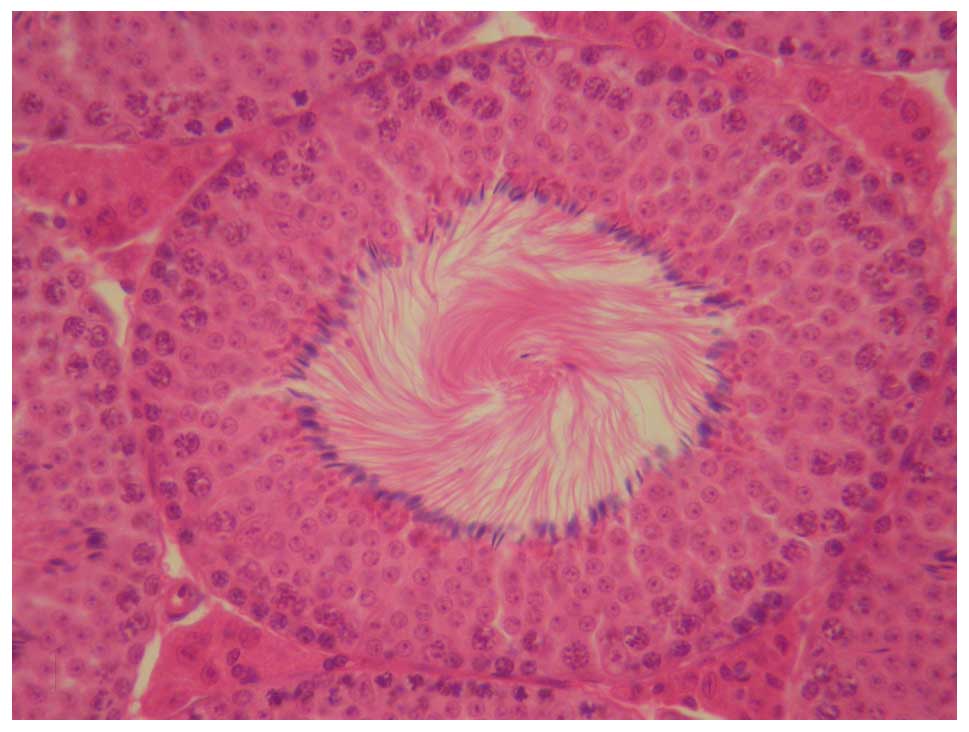
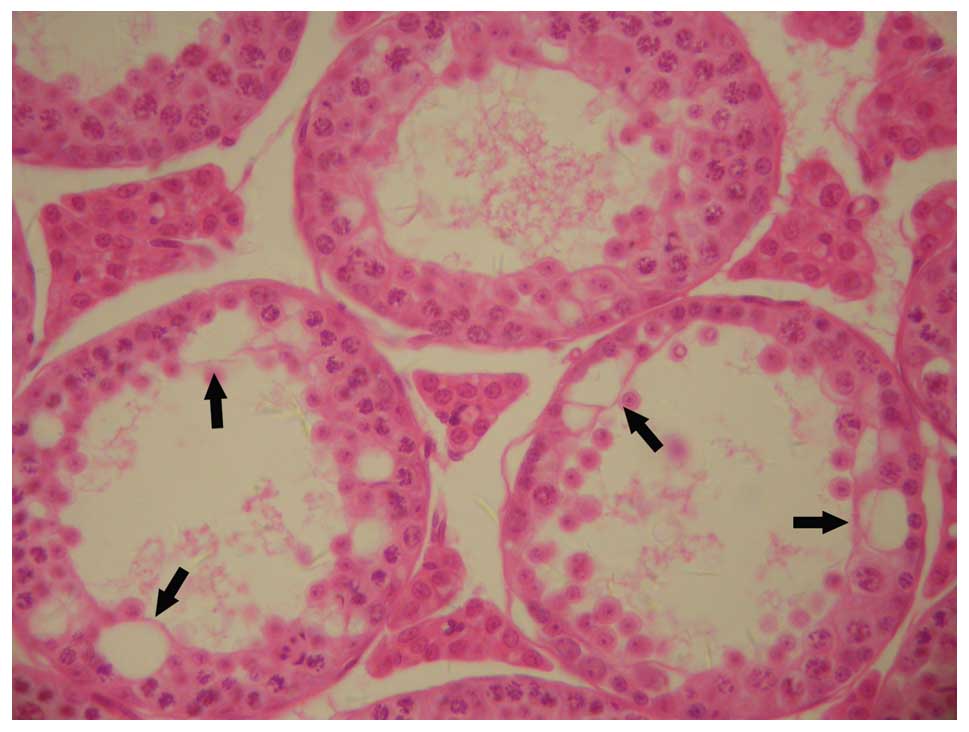
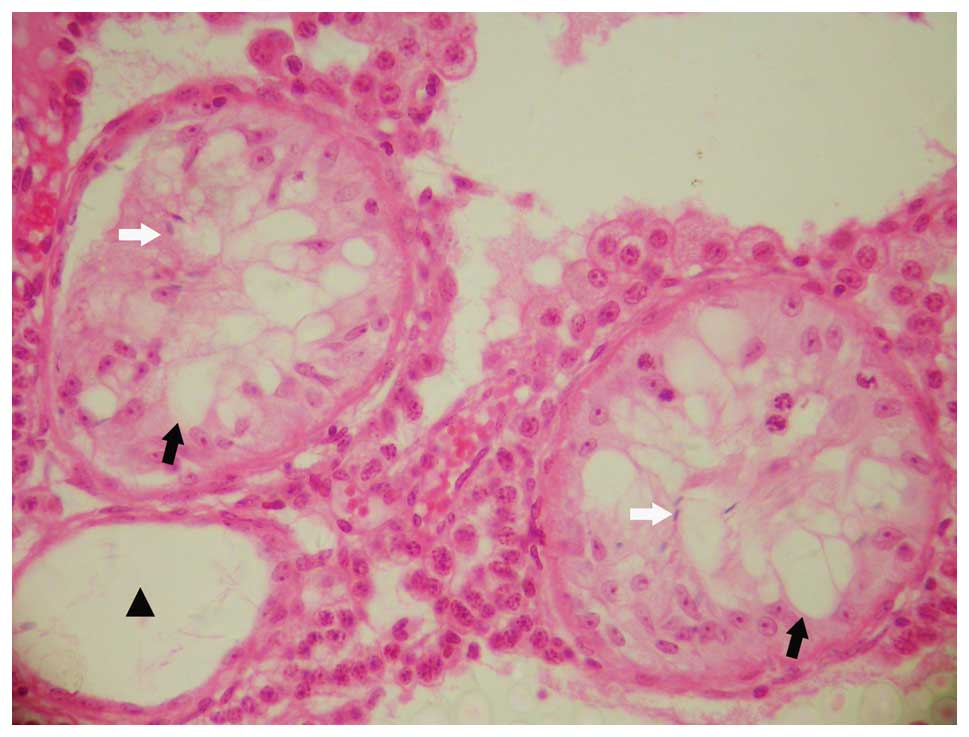
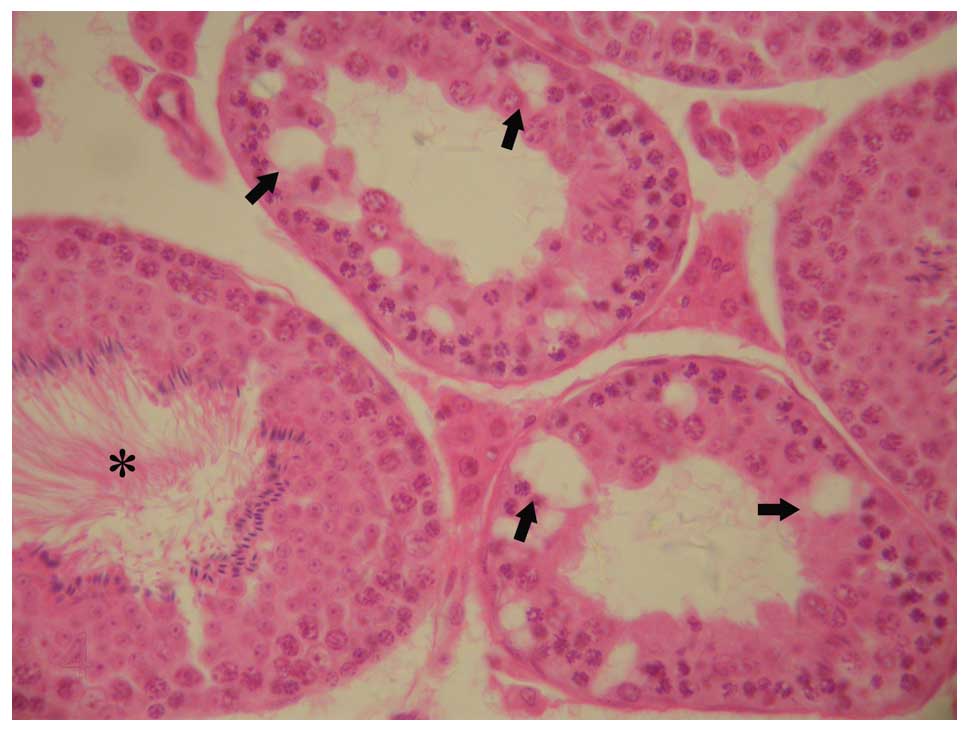
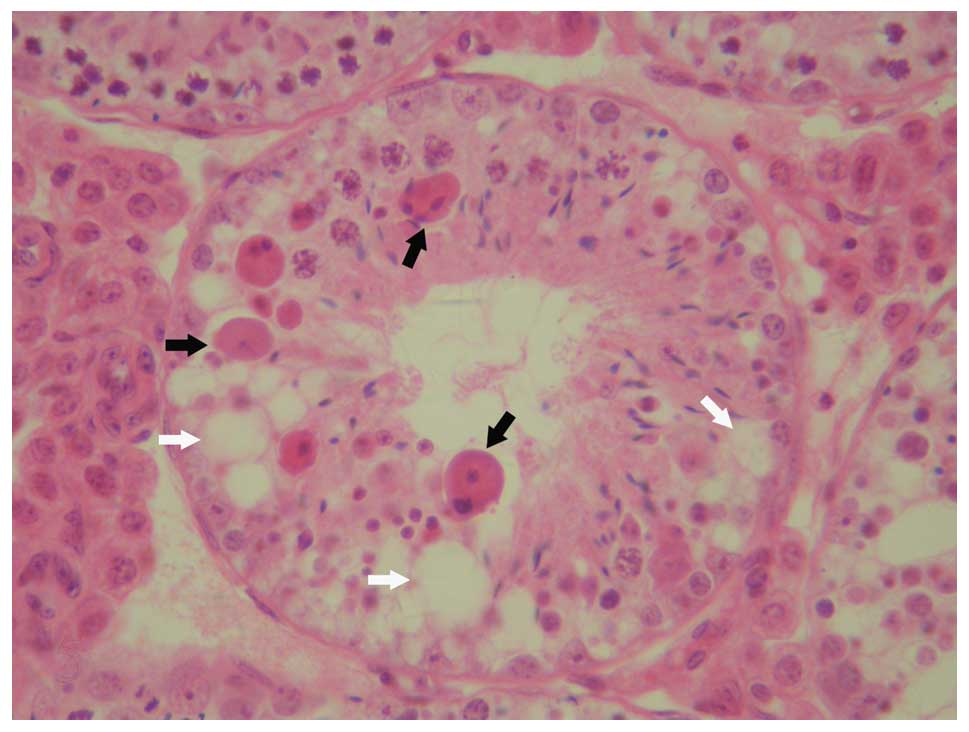
In normal testes, histological examinations demonstrated a normal arrangement of cellular components (Fig. 1). In the mice with microrchidia, testicular tissue showed that seminiferous epithelial vacuolation and the absence of sperm existed in all tubules and that spermatogenesis had arrested at the spermatocyte stage (Fig. 2). In other abnormal testes, testicular pathological changes included seminiferous epithelial vacuolation, severe hypospermatogenesis, the rare presence of sperm and the absence of seminiferous epithelium and Sertoli cells in tubules (Fig. 3). Moderate hypospermatogenisis was observed in tubules (Fig. 4), as well as seminiferous epithelial vacuolation and a small number of symplasts composed of collapsed spermatids (Fig. 5).

Figure 1

Normal spermatogenesis. The seminiferous tubule shows a clear lumen and a normal arrangement of cellular types (haematoxylin and eosin stain; magnification, ×400).

Figure 2

Seminiferous epithelia vacuolation (black arrows) and the absence of sperm are visible in all the tubules. Spermatogenesis was arrested at the spermatocyte stage (haematoxylin and eosin stain; magnification, ×400).

Figure 3

Seminiferous epithelia show severe hypospermatogenesis. Seminiferous epithelial vacuolation (black arrows) and the rare presence of sperm (white arrows) are present in tubules. pThe absence of seminiferous epithelium is observed in the tubule (haematoxylin and eosin stain; magnification, ×400).

Figure 4

Hypospermatogenesis and seminiferous epithelial vacuolation (black arrows) are visible in the tubules. *Adjacent tubule shows normal spermatogenesis (haematoxylin and eosin stain; magnification, ×400).

Figure 5

Symplasts composed of collapsed spermatids (black arrows) and seminiferous epithelial vacuolation (white arrows) are exhibited in the tubule (haematoxylin and eosin stain; magnification, ×400).

Discussion

The results of the present study are, to the best of our knowledge, the first to show that normal adult male mouse testes exhibit pathological changes, with an incidence of testicular abnormality of 1.3%. The histological changes may induce spermatogenic disorders and an absence of sperm and pathological changes of the male mouse testes may cause male infertility.

Abnormalities in spermatogenesis promote germ cell apoptosis, which results in spermatogenetic arrest (8). The spermatogenetic arrest, at various stages of spermatogenesis, causes subfertility or infertility and may be associated with genetic abnormalities (9). Various aspects of spermatogenetic arrest have also been reported and correlated with various possible mechanisms of meiotic abnormalities (10). Moreover, there are a variety of factors that have been demonstrated to cause spermatogenetic arrest, including genetic mutation, environmental factors and hormone deficiency (11,12). Testis weight is also an important indicator of overall testicular health, reflecting changes in germ cell loss (13). In the present study, in which the mice were reared in the same environment and conditions, histological examination showed that spermatogenesis was arrested at the spermatocyte stage. Additionally, microrchidia may also cause spermatogenetic arrest in the adult male mouse. Autosomal recessive mutation of the microrchidia (morc) gene results in the complete arrest of spermatogenesis at an early meiotic stage (14). Hence, we hypothesized that a spontaneous mutation is a possibility but morc mutation is more likely. In addition, other possibilities require consideration, including acute febrile disease, hyperthermia and other systemic insults/diseases.

Vacuolar changes of the seminiferous epithelia were observed to occur in normal mouse testicular tissues in the present study. Similar pathological changes of testicular tissues have also been reported in previous toxicological studies (15,16). Spermatogenic epithelial vacuolation in testis has been observed to decrease the number of testicular sperm (17). Moreover, seminiferous epithelial vacuolation is common in affected tubules, particularly near the rete, indicative of a breakdown in Sertoli-germ cell junctions (18). These factors indicate that pathological changes of the seminiferous epithelia in testes may lead to hypospermatogenesis. However, the etiology of vacuolation in testicular tissue is unknown. Vacuolation may be associated with abnormal gene expression (19,20). Mouse reproductive tract diseases may also cause seminiferous epithelial vacuolation (21). Therefore, abnormal testes should be identified when using normal adult mouse testes for studies of seminiferous epithelia.

The potential limitations of the present study require consideration. Firstly, this study was a retrospective analysis. It was not possible to examine whether the pathological changes of testicular tissues correlated with changes in other reproductive organs in normal adult mice, including the epididymis, prostate, seminal vesicles and urethral anatomy. Secondly, there were no surplus samples of abnormal testicular tissues for further analysis at the molecular and genetic levels. If possible, more studies of testicular tissues are likely to not only aid the understanding of pathogenesis of abnormal testes, but also provide new information concerning the etiology of developmental defects.

In conclusion, the results show that normal adult male mice exhibit testicular pathological changes. Therefore, more attention should be paid to the possibility of abnormal testes when using normal adult male mice to establish a testicular experimental model.

References

1 

Muczynski V, Cravedi JP, Lehraiki A, et al: Effect of mono-(2-ethylhexyl) phthalate on human and mouse fetal testis: In vitro and in vivo approaches. Toxicol Appl Pharmacol. 261:97–104. 2012. View Article : Google Scholar : PubMed/NCBI

2 

Nagano M, Patrizio P and Brinster RL: Long-term survival of human spermatogonial stem cells in mouse testes. Fertil Steril. 78:1225–1233. 2002. View Article : Google Scholar : PubMed/NCBI

3 

Beissbarth T, Borisevich I, Hörlein A, et al: Analysis of CREM-dependent gene expression during mouse spermatogenesis. Mol Cell Endocrinol. 212:29–39. 2003. View Article : Google Scholar : PubMed/NCBI

4 

Merker HJ and Günther T: Testis damage induced by zinc deficiency in rats. J Trace Elem Med Biol. 11:19–22. 1997. View Article : Google Scholar : PubMed/NCBI

5 

Vernet N, Dennefeld C, Guillou F, Chambon P, et al: Prepubertal testis development relies on retinoic acid but not rexinoid receptors in Sertoli cells. EMBO J. 25:5816–5825. 2006. View Article : Google Scholar : PubMed/NCBI

6 

Moffit JS, Bryant BH, Hall SJ and Boekelheide K: Dose-dependent effects of sertoli cell toxicants 2,5-hexanedione, carbendazim, and mono-(2-ethylhexyl) phthalate in adult rat testis. Toxicol Pathol. 35:719–727. 2007. View Article : Google Scholar : PubMed/NCBI

7 

Nantel F, Monaco L, Foulkes NS, et al: Spermiogenesis deficiency and germ-cell apoptosis in CREM-mutant mice. Nature. 380:159–162. 1996. View Article : Google Scholar : PubMed/NCBI

8 

Shaha C, Tripathi R and Mishra DP: Male germ cell apoptosis: regulation and biology. Philos Trans R Soc Lond B Biol Sci. 365:1501–1515. 2010. View Article : Google Scholar : PubMed/NCBI

9 

Shivanandappa T and Krishnakumari MK: Hexachlorocyclohexane-induced testicular dysfunction in rats. Acta Pharmacol Toxicol (Copenh). 52:12–17. 1983. View Article : Google Scholar : PubMed/NCBI

10 

Johannisson R, Schulze W and Holstein AF: Megalospermatocytes in the human testis exhibit asynapsis of chromosomes. Andrologia. 35:146–151. 2003. View Article : Google Scholar : PubMed/NCBI

11 

Carrell DT, De Jonge C and Lamb D: The genetics of male infertility: a field of study whose time is now. Arch Androl. 52:269–274. 2006. View Article : Google Scholar : PubMed/NCBI

12 

Toshimori K, Ito C, Maekawa M, Toyama Y, et al: Impairment of spermatogenesis leading to infertility. Anat Sci Int. 79:101–111. 2004. View Article : Google Scholar

13 

Elkis Y, Bel S, Lerer-Goldstein T, et al: Testosterone deficiency accompanied by testicular and epididymal abnormalities in TMF(−/−) mice. Mol Cell Endocrinol. 365:52–63. 2013.PubMed/NCBI

14 

Watson ML, Zinn AR, Inoue N, et al: Identification of morc (microrchidia), a mutation that results in arrest of spermatogenesis at an early meiotic stage in the mouse. Proc Natl Acad Sci USA. 95:14361–14366. 1998. View Article : Google Scholar : PubMed/NCBI

15 

Singh SK and Chakravarty S: Antispermatogenic and antifertility effects of 20,25-diazacholesterol dihydrochloride in mice. Reprod Toxicol. 17:37–44. 2003. View Article : Google Scholar : PubMed/NCBI

16 

Mahmoud YI: Effect of extract of Hibiscus on the ultrastructure of the testis in adult mice. Acta Histochem. 114:342–348. 2012. View Article : Google Scholar : PubMed/NCBI

17 

Hentrich A, Wolter M, Szardening-Kirchner C, et al: Reduced numbers of Sertoli, germ, and spermatogonial stem cells in impaired spermatogenesis. Mod Pathol. 24:1380–1389. 2011. View Article : Google Scholar : PubMed/NCBI

18 

Liao W, Cai M, Chen J, et al: Hypobaric hypoxia causes deleterious effects on spermatogenesis in rats. Reproduction. 139:1031–1038. 2010. View Article : Google Scholar : PubMed/NCBI

19 

Chuma S, Hosokawa M, Kitamura K, et al: Tdrd1/Mtr-1, a tudor-related gene, is essential for male germ-cell differentiation and nuage/germinal granule formation in mice. Proc Natl Acad Sci USA. 103:15894–15899. 2006. View Article : Google Scholar : PubMed/NCBI

20 

Paiardi C, Pasini ME, Gioria M and Berruti G: Failure of acrosome formation and globozoospermia in the wobbler mouse, a Vps54 spontaneous recessive mutant. Spermatogenesis. 1:52–62. 2011. View Article : Google Scholar : PubMed/NCBI

21 

Seachrist DD, Johnson E, Magee C, et al: Overexpression of follistatin in the mouse epididymis disrupts fluid resorption and sperm transit in testicular excurrent ducts. Biol Reprod. 87:412012. View Article : Google Scholar : PubMed/NCBI

Related Articles

  • Abstract
  • View
  • Download
  • Twitter
Copy and paste a formatted citation
Spandidos Publications style
Xie BG, Li J and Zhu WJ: Pathological changes of testicular tissue in normal adult mice: A retrospective analysis. Exp Ther Med 7: 654-656, 2014.
APA
Xie, B., Li, J., & Zhu, W. (2014). Pathological changes of testicular tissue in normal adult mice: A retrospective analysis. Experimental and Therapeutic Medicine, 7, 654-656. https://doi.org/10.3892/etm.2014.1481
MLA
Xie, B., Li, J., Zhu, W."Pathological changes of testicular tissue in normal adult mice: A retrospective analysis". Experimental and Therapeutic Medicine 7.3 (2014): 654-656.
Chicago
Xie, B., Li, J., Zhu, W."Pathological changes of testicular tissue in normal adult mice: A retrospective analysis". Experimental and Therapeutic Medicine 7, no. 3 (2014): 654-656. https://doi.org/10.3892/etm.2014.1481
Copy and paste a formatted citation
x
Spandidos Publications style
Xie BG, Li J and Zhu WJ: Pathological changes of testicular tissue in normal adult mice: A retrospective analysis. Exp Ther Med 7: 654-656, 2014.
APA
Xie, B., Li, J., & Zhu, W. (2014). Pathological changes of testicular tissue in normal adult mice: A retrospective analysis. Experimental and Therapeutic Medicine, 7, 654-656. https://doi.org/10.3892/etm.2014.1481
MLA
Xie, B., Li, J., Zhu, W."Pathological changes of testicular tissue in normal adult mice: A retrospective analysis". Experimental and Therapeutic Medicine 7.3 (2014): 654-656.
Chicago
Xie, B., Li, J., Zhu, W."Pathological changes of testicular tissue in normal adult mice: A retrospective analysis". Experimental and Therapeutic Medicine 7, no. 3 (2014): 654-656. https://doi.org/10.3892/etm.2014.1481
Follow us
  • Twitter
  • LinkedIn
  • Facebook
About
  • Spandidos Publications
  • Careers
  • Cookie Policy
  • Privacy Policy
How can we help?
  • Help
  • Live Chat
  • Contact
  • Email to our Support Team