Spandidos Publications Logo
  • About
    • About Spandidos
    • Aims and Scopes
    • Abstracting and Indexing
    • Editorial Policies
    • Reprints and Permissions
    • Job Opportunities
    • Terms and Conditions
    • Contact
  • Journals
    • All Journals
    • Oncology Letters
      • Oncology Letters
      • Information for Authors
      • Editorial Policies
      • Editorial Board
      • Aims and Scope
      • Abstracting and Indexing
      • Bibliographic Information
      • Archive
    • International Journal of Oncology
      • International Journal of Oncology
      • Information for Authors
      • Editorial Policies
      • Editorial Board
      • Aims and Scope
      • Abstracting and Indexing
      • Bibliographic Information
      • Archive
    • Molecular and Clinical Oncology
      • Molecular and Clinical Oncology
      • Information for Authors
      • Editorial Policies
      • Editorial Board
      • Aims and Scope
      • Abstracting and Indexing
      • Bibliographic Information
      • Archive
    • Experimental and Therapeutic Medicine
      • Experimental and Therapeutic Medicine
      • Information for Authors
      • Editorial Policies
      • Editorial Board
      • Aims and Scope
      • Abstracting and Indexing
      • Bibliographic Information
      • Archive
    • International Journal of Molecular Medicine
      • International Journal of Molecular Medicine
      • Information for Authors
      • Editorial Policies
      • Editorial Board
      • Aims and Scope
      • Abstracting and Indexing
      • Bibliographic Information
      • Archive
    • Biomedical Reports
      • Biomedical Reports
      • Information for Authors
      • Editorial Policies
      • Editorial Board
      • Aims and Scope
      • Abstracting and Indexing
      • Bibliographic Information
      • Archive
    • Oncology Reports
      • Oncology Reports
      • Information for Authors
      • Editorial Policies
      • Editorial Board
      • Aims and Scope
      • Abstracting and Indexing
      • Bibliographic Information
      • Archive
    • Molecular Medicine Reports
      • Molecular Medicine Reports
      • Information for Authors
      • Editorial Policies
      • Editorial Board
      • Aims and Scope
      • Abstracting and Indexing
      • Bibliographic Information
      • Archive
    • World Academy of Sciences Journal
      • World Academy of Sciences Journal
      • Information for Authors
      • Editorial Policies
      • Editorial Board
      • Aims and Scope
      • Abstracting and Indexing
      • Bibliographic Information
      • Archive
    • International Journal of Functional Nutrition
      • International Journal of Functional Nutrition
      • Information for Authors
      • Editorial Policies
      • Editorial Board
      • Aims and Scope
      • Abstracting and Indexing
      • Bibliographic Information
      • Archive
    • International Journal of Epigenetics
      • International Journal of Epigenetics
      • Information for Authors
      • Editorial Policies
      • Editorial Board
      • Aims and Scope
      • Abstracting and Indexing
      • Bibliographic Information
      • Archive
    • Medicine International
      • Medicine International
      • Information for Authors
      • Editorial Policies
      • Editorial Board
      • Aims and Scope
      • Abstracting and Indexing
      • Bibliographic Information
      • Archive
  • Articles
  • Information
    • Information for Authors
    • Information for Reviewers
    • Information for Librarians
    • Information for Advertisers
    • Conferences
  • Language Editing
Spandidos Publications Logo
  • About
    • About Spandidos
    • Aims and Scopes
    • Abstracting and Indexing
    • Editorial Policies
    • Reprints and Permissions
    • Job Opportunities
    • Terms and Conditions
    • Contact
  • Journals
    • All Journals
    • Biomedical Reports
      • Information for Authors
      • Editorial Policies
      • Editorial Board
      • Aims and Scope
      • Abstracting and Indexing
      • Bibliographic Information
      • Archive
    • Experimental and Therapeutic Medicine
      • Information for Authors
      • Editorial Policies
      • Editorial Board
      • Aims and Scope
      • Abstracting and Indexing
      • Bibliographic Information
      • Archive
    • International Journal of Epigenetics
      • Information for Authors
      • Editorial Policies
      • Editorial Board
      • Aims and Scope
      • Abstracting and Indexing
      • Bibliographic Information
      • Archive
    • International Journal of Functional Nutrition
      • Information for Authors
      • Editorial Policies
      • Editorial Board
      • Aims and Scope
      • Abstracting and Indexing
      • Bibliographic Information
      • Archive
    • International Journal of Molecular Medicine
      • Information for Authors
      • Editorial Policies
      • Editorial Board
      • Aims and Scope
      • Abstracting and Indexing
      • Bibliographic Information
      • Archive
    • International Journal of Oncology
      • Information for Authors
      • Editorial Policies
      • Editorial Board
      • Aims and Scope
      • Abstracting and Indexing
      • Bibliographic Information
      • Archive
    • Medicine International
      • Information for Authors
      • Editorial Policies
      • Editorial Board
      • Aims and Scope
      • Abstracting and Indexing
      • Bibliographic Information
      • Archive
    • Molecular and Clinical Oncology
      • Information for Authors
      • Editorial Policies
      • Editorial Board
      • Aims and Scope
      • Abstracting and Indexing
      • Bibliographic Information
      • Archive
    • Molecular Medicine Reports
      • Information for Authors
      • Editorial Policies
      • Editorial Board
      • Aims and Scope
      • Abstracting and Indexing
      • Bibliographic Information
      • Archive
    • Oncology Letters
      • Information for Authors
      • Editorial Policies
      • Editorial Board
      • Aims and Scope
      • Abstracting and Indexing
      • Bibliographic Information
      • Archive
    • Oncology Reports
      • Information for Authors
      • Editorial Policies
      • Editorial Board
      • Aims and Scope
      • Abstracting and Indexing
      • Bibliographic Information
      • Archive
    • World Academy of Sciences Journal
      • Information for Authors
      • Editorial Policies
      • Editorial Board
      • Aims and Scope
      • Abstracting and Indexing
      • Bibliographic Information
      • Archive
  • Articles
  • Information
    • For Authors
    • For Reviewers
    • For Librarians
    • For Advertisers
    • Conferences
  • Language Editing
Login Register Submit
  • This site uses cookies
  • You can change your cookie settings at any time by following the instructions in our Cookie Policy. To find out more, you may read our Privacy Policy.

    I agree
Search articles by DOI, keyword, author or affiliation
Search
Advanced Search
presentation
Experimental and Therapeutic Medicine
Join Editorial Board Propose a Special Issue
Print ISSN: 1792-0981 Online ISSN: 1792-1015
Journal Cover
November-2014 Volume 8 Issue 5

Full Size Image

Sign up for eToc alerts
Recommend to Library

Journals

International Journal of Molecular Medicine

International Journal of Molecular Medicine

International Journal of Molecular Medicine is an international journal devoted to molecular mechanisms of human disease.

International Journal of Oncology

International Journal of Oncology

International Journal of Oncology is an international journal devoted to oncology research and cancer treatment.

Molecular Medicine Reports

Molecular Medicine Reports

Covers molecular medicine topics such as pharmacology, pathology, genetics, neuroscience, infectious diseases, molecular cardiology, and molecular surgery.

Oncology Reports

Oncology Reports

Oncology Reports is an international journal devoted to fundamental and applied research in Oncology.

Experimental and Therapeutic Medicine

Experimental and Therapeutic Medicine

Experimental and Therapeutic Medicine is an international journal devoted to laboratory and clinical medicine.

Oncology Letters

Oncology Letters

Oncology Letters is an international journal devoted to Experimental and Clinical Oncology.

Biomedical Reports

Biomedical Reports

Explores a wide range of biological and medical fields, including pharmacology, genetics, microbiology, neuroscience, and molecular cardiology.

Molecular and Clinical Oncology

Molecular and Clinical Oncology

International journal addressing all aspects of oncology research, from tumorigenesis and oncogenes to chemotherapy and metastasis.

World Academy of Sciences Journal

World Academy of Sciences Journal

Multidisciplinary open-access journal spanning biochemistry, genetics, neuroscience, environmental health, and synthetic biology.

International Journal of Functional Nutrition

International Journal of Functional Nutrition

Open-access journal combining biochemistry, pharmacology, immunology, and genetics to advance health through functional nutrition.

International Journal of Epigenetics

International Journal of Epigenetics

Publishes open-access research on using epigenetics to advance understanding and treatment of human disease.

Medicine International

Medicine International

An International Open Access Journal Devoted to General Medicine.

Journal Cover
November-2014 Volume 8 Issue 5

Full Size Image

Sign up for eToc alerts
Recommend to Library

  • Article
  • Citations
    • Cite This Article
    • Download Citation
    • Create Citation Alert
    • Remove Citation Alert
    • Cited By
  • Similar Articles
    • Related Articles (in Spandidos Publications)
    • Similar Articles (Google Scholar)
    • Similar Articles (PubMed)
  • Download PDF
  • Download XML
  • View XML
Case Report

Acute paraquat poisoning with sinus bradycardia: A case report

  • Authors:
    • Chengzhen Song
    • Baotian Kan
    • Guangcai Yu
    • Xiangdong Jian
    • Jieru Wang
    • Jing Sun
  • View Affiliations / Copyright

    Affiliations: Department of Poisoning and Occupational Diseases, Qilu Hospital of Shandong University, Jinan, Shandong 250012, P.R. China
  • Pages: 1459-1462
    |
    Published online on: September 2, 2014
       https://doi.org/10.3892/etm.2014.1944
  • Expand metrics +
Metrics: Total Views: 0 (Spandidos Publications: | PMC Statistics: )
Metrics: Total PDF Downloads: 0 (Spandidos Publications: | PMC Statistics: )
Cited By (CrossRef): 0 citations Loading Articles...

This article is mentioned in:


Abstract

Paraquat (PQ) is a highly toxic herbicide, which not only leads to acute organ damage, but also to a variety of complications. Patients with severe PQ‑induced poisoning may succumb to multiple organ failure involving the circulatory and respiratory systems. Although numerous studies have been performed investigating PQ poisoning, cases of extreme bradycardia caused by acute PQ‑induced poisoning are rare. In the present case report, a 59-year‑old male who ingested PQ was admitted to the Department of Poisoning and Occupational Disease at Qilu Hospital of Shandong University (Jinan, China) after three days. The patient received treatment known as the ‘Qilu scheme’, which was established in the Department of Poisoning and Occupational Disease. However, the heart rate of the patient remained low following the administration of conventional medicines, until thyroid tablets were administered. To the best of our knowledge, cases of bradycardia following PQ poisoning are rare.

Introduction

The herbicidal properties of paraquat (PQ) were first identified in the 1950s, with PQ first marketed as a therapeutic agent in 1962. Contact of paraquat with soil causes immediate absorption and complete loss of its activity (1); thus, PQ is widely used around the world in agriculture. Presently, PQ is the second highest-selling weed killer globally and is available in a 20% solution form that requires dilution prior to agricultural use (2). PQ is a highly toxic compound and PQ poisoning is difficult to treat clinically due to the lack of effective treatments. Patients with severe PQ-induced poisoning may succumb to multiple organ failure involving the circulatory and respiratory systems. Ingestion of ~30 ml of PQ usually leads to circulatory failure within two days, whereas patients who ingest less than one mouthful often survive the early phase of PQ poisoning (3). In China, the use of PQ has been virtually banned in the future (4). However, a number of PQ poisoning cases remain, the majority of which are suicide attempts. Numerous patients have been treated at the Qilu Hospital of Shandong University (Jinan, China); however, cases of extreme bradycardia caused by acute PQ poisoning have rarely been observed. In the current study, a case of extreme bradycardia as a result of acute PQ poisoning is presented.

Case report

A 59-year-old male was admitted to the Department of Poisoning and Occupational Disease at the Qilu Hospital of Shandong University three days following an attempted suicide by PQ poisoning via oral admission. The patient became intoxicated, and ingested ~50 ml PQ at 13:20 on August 17, 2013. Minutes later, the patient was found by his family and was found to have vomited. On the third day the patient was transferred to our hospital for further treatment. The patient was lethargic on the way to the hospital, following administration of an emetic.

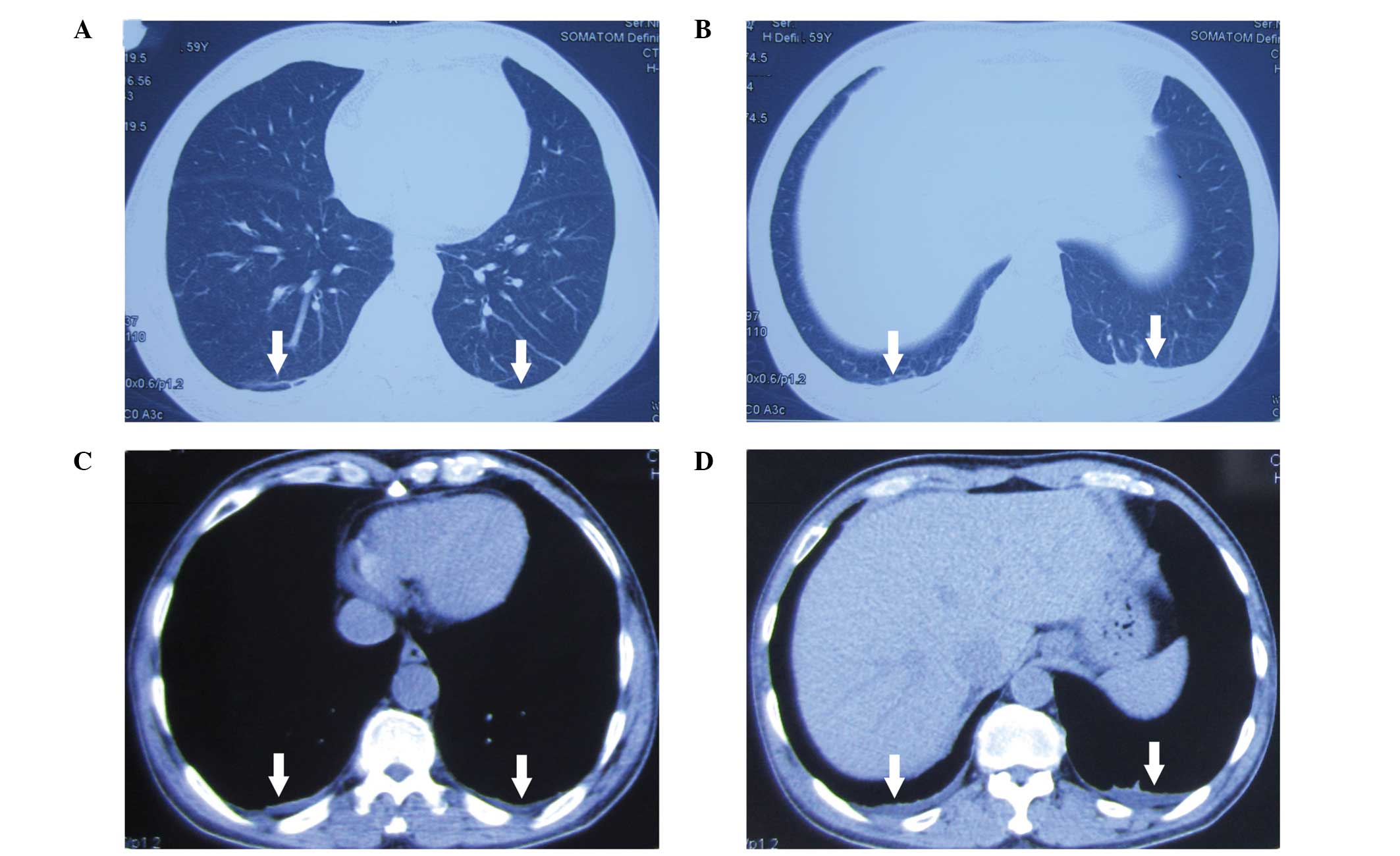
The patient was treated at the local hospital for alcohol consumption, without gastolavage and hemoperfusion. On the second day, the patient admitted to ingesting PQ; thus, was subsequently treated with steroid pulse therapy. The patient had no previous history of disease. During physical examination on admission to our local hospital, the patient was conscious with a blood pressure of 138/82 mmHg, a pulse rate of 61 bpm, a respiratory rate of 18 breaths/min, a blood oxygen saturation level of 98% and pharyngeal swelling was observed. The concentration of PQ in the urea was ~30 μg/ml. Analysis of the blood revealed a white blood cell count of 16.98×10⁹/l, a serum creatine level of 141 μmol/l and a blood sugar level of 19.8 mmol/l. In addition, effusion shadows and an unclear boundary in the double lower lobe were observed in the lungs following a computed tomography scan (Fig. 1).

Figure 1

Chest computed tomography scan at day 3 following paraquat poisoning.

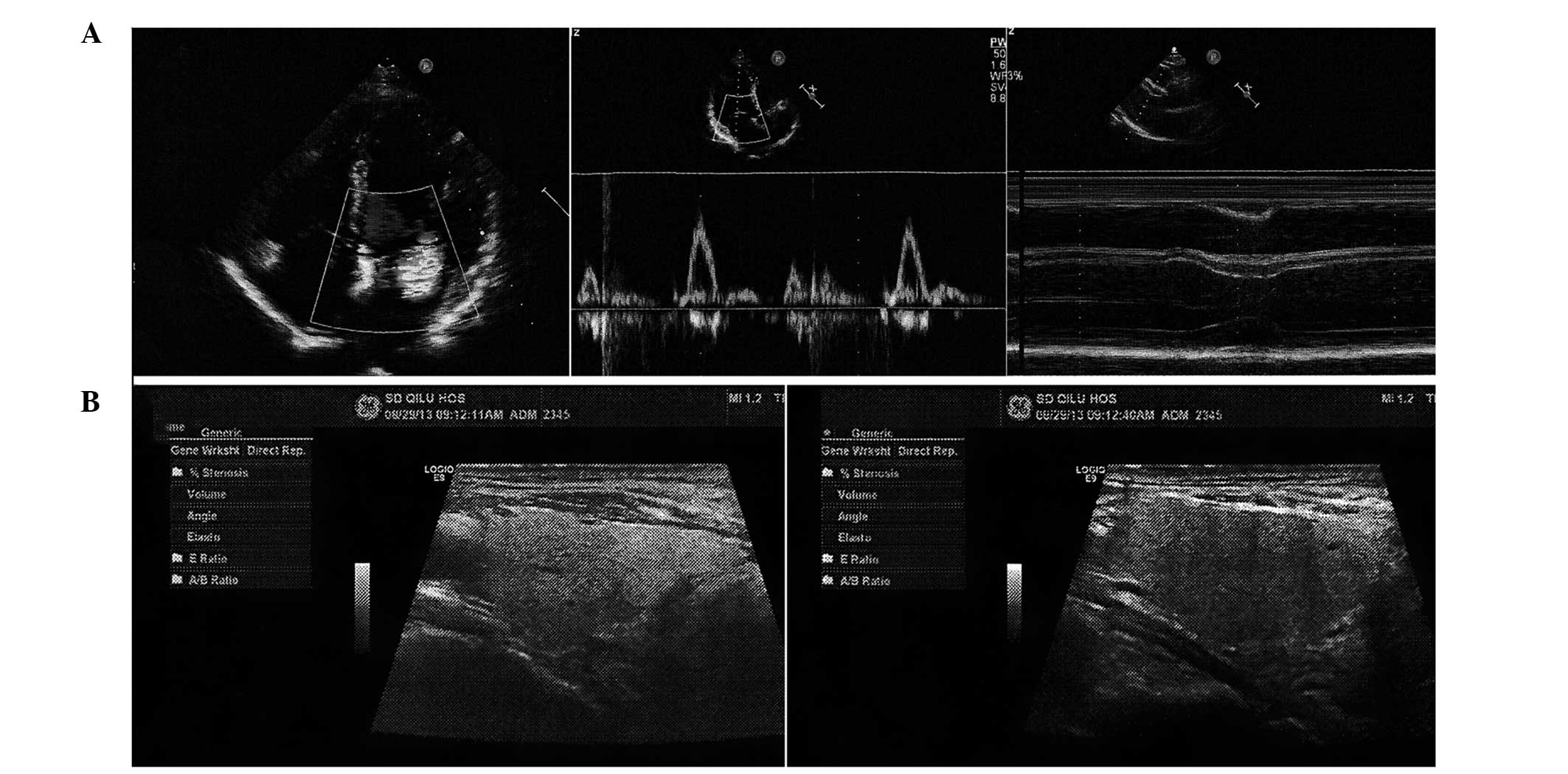
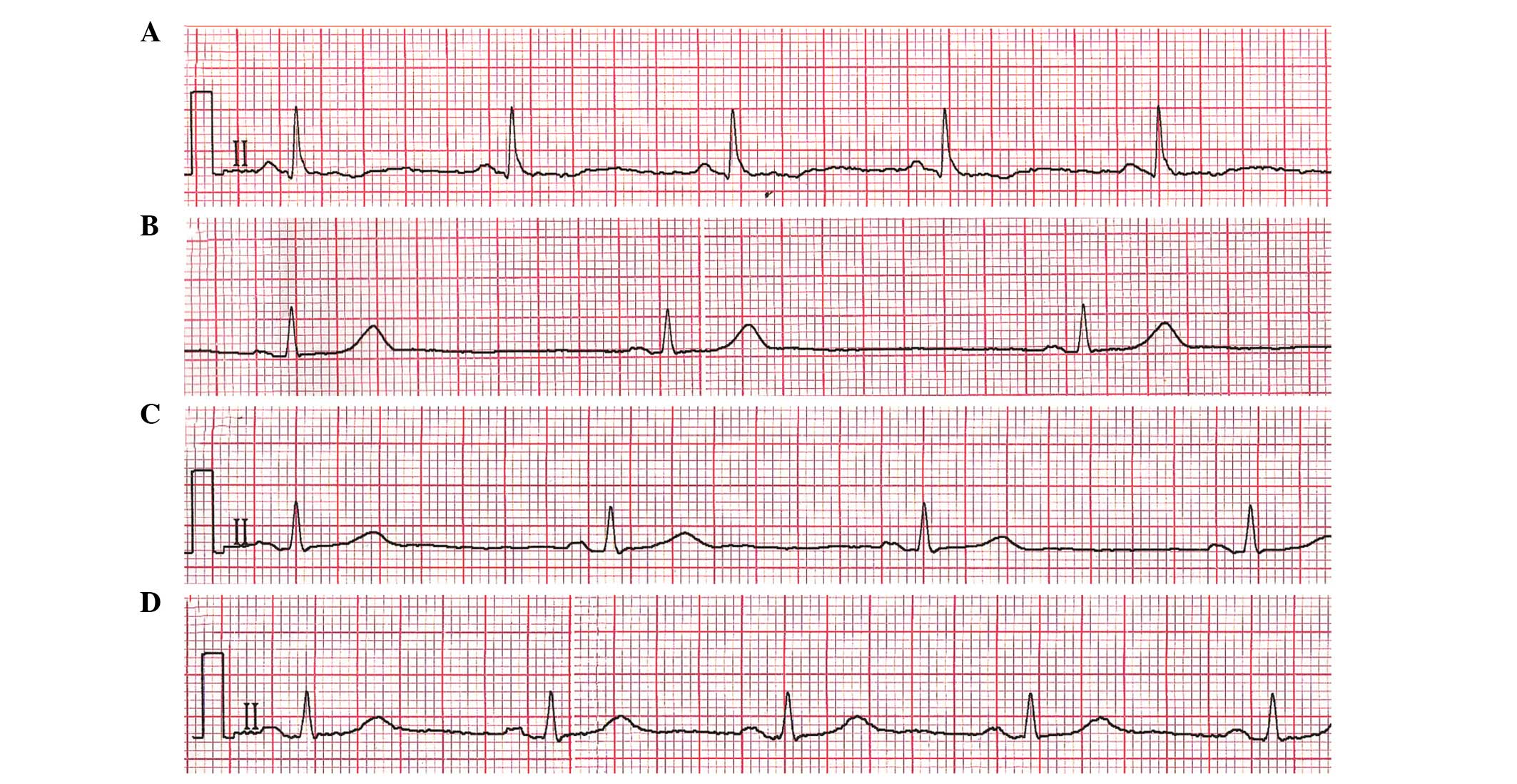
The patient was administered 1,000 mg methylprednisolone, which was gradually reduced according to the health condition. Furthermore, whole gastrointestinal lavage, protection of the gastrointestinal mucosa, free radical scavenging, protection of the liver and kidneys, myocardial nutrition and maintenance of the water and electrolyte balance were applied via the administration of the ‘Qilu scheme’ (Department of Poisoning and Occupational Diseases) (5). However, on August 23, bradycardia occurred, and the patient had a pulse of 35 bpm. The heart rate of the patient gradually increased to 53 bpm following an intramuscular injection of atropine, but decreased to 40 bpm after 3 h. The following day, isoprenaline was administered continuously via an intravenous drip, while 0.6 mg atropine was administered orally three times a day. However, the heart rate remained low at 35–45 bpm. An ultrasonic cardiogram revealed enlargement of the right atrium, widening of the ascending aorta, moderate mitral valve regurgitation, light-medium tricuspid regurgitation and mild pulmonary valve regurgitation (Fig. 2A). Furthermore, the ultrasound revealed that the thyroid gland was normal in size; however, a cyst (0.15 × 0.13 cm) was observed in the left lower pole (Fig. 2B). Additional biochemical analyses revealed that the creatine kinase (CK) level was 50 IU/l, the CK-MB level was 0.9 ng/ml, the cardiac troponin I level was 0 ng/ml, the triglyceride (TG) level was 2.59 mmol/l, the free triiodothyronine (T3) level was 1.18 pg/ml, the free thyroxine (T4) level was 10.90 pmol/l and the thyroid stimulating hormone (TSH) level was 2.550 μIU/ml. Atropine and isopropyl adrenaline treatments were stopped and thyroid tablets were administered (80 mg per day). The heart rate increased to 50–55 bpm and was steady. Changes in the electrocardiograms are shown in Fig. 3. Following the treatment, the main examination index returned to normal with mild obstructive ventilation dysfunction observed in lung function. The patient was discharged from hospital, but received a follow-up examination one month later. The heart rate of the patient was 63 bpm and the level of N-terminal pro-brain natriuretic peptide was 22.17 pg/ml, the cortisol level was 15.75 μg/dl, the thyroglobulin antibody level was 18.26 IU/ml and the antithyroid peroxidase antibodies level was 14.08 IU/ml. With the exception of a degree of pulmonary fibrosis, the other examinations, including blood routine examinations and blood biochemical tests, were found to be normal. A written informed patient consent was obtained for this study.

Figure 2

(A) An ultrasonic cardiogram revealed enlargement of the right atrium, widening of the ascending aorta, moderate mitral valve regurgitation, light medium tricuspid regurgitation and mild pulmonary valve regurgitation. (B) Ultrasound scans show that the thyroid gland was normal in size; however, a cyst (0.15 × 0.13 cm) was observed in the left lower pole.

Figure 3

Changes in the electrocardiogram of a patient following paraquat poisoning at days (A) 2, (B) 5, (C) 7 and (D) 14.

Discussion

PQ is a herbicide that is highly toxic to humans. Following the rapid oral absorption of PQ, a peak level is reached at 60–90 min following ingestion regardless of the plasma PQ levels (6). Misdiagnosis with alcohol poisoning during the early stages may result in patients not receiving gastric lavage and hemoperfusion, and as a consequence, the majority of the PQ is absorbed into the body. In the present study, the pulse rate of the patient decreased to 29 bpm from 61 bpm on admission to hospital. Isoprenaline was administered continuously via an intravenous drip, while atropine was administered orally; however, the condition of the patient did not improve. Treatment with atropine and isopropyl adrenaline was terminated and thyroid tablets were administered. The heart rate increased to 50–55 bpm and was steady. To the best of our knowledge, cases of bradycardia following PQ poisoning are rare. It was hypothesized that the following factors contributed to the decrease in the heart rate. Firstly, PQ poisoning may lead to toxic myocarditis (7) or dysfunction of the sinus node. Secondly, eating disorders and serious nutritional shortfalls may decrease the transport of T4 and T3 into tissues (8). Furthermore, in patients with existing heart conditions, low T3 levels may lower the neuroendocrine profile and ventricular performance (9). Finally, acute treatment with large doses of glucocorticoids results in a reduction of basal TSH levels. Pfister et al (10) demonstrated that free T3 and low-T3 syndrome are predictors of mortality, which are independent from other known cardiovascular risk parameters.

In conclusion, low levels of T3 are usually produced under the influence of a number of factors. When thyroid hormone levels are too low, a decrease in target organ function commonly occurs, and in particular, the heart rate may decrease. In addition, individuals with heart disease are more susceptible to being affected by levels of thyroid hormones. However, a number of other possible causes may lead to heart rate reduction; thus, further investigation is required.

Acknowledgements

The study was supported by grants from the Taishan Scholar Program of China Shandong Province and the Natural Science Foundation of China Shandong Province (no. Y2008C123) and Shandong University Qilu Hospital Clinical New Technology Innovation Project, China (nos. 013527Z1 and 2013527Z2).

References

1 

Bullivant CM: Accidental poisoning by paraquat: Report of two cases in man. Br Med J. 21:1272–1273. 1966. View Article : Google Scholar : PubMed/NCBI

2 

Arts J, Schuit G, Schipper A and Kleij van der B: A case report of PQ poisoning. Eur J Hosp Pharm. 12:22–24. 2006.

3 

Bertram A, Haenel SS, Hadem J, Hoeper MM, et al: Tissue concentration of PQ on day 32 after intoxication and failed bridge to transplantation by extracorporeal membrane oxygenation therapy. BMC Pharmacol Toxicol. 14:452013. View Article : Google Scholar : PubMed/NCBI

4 

Yin Y, Guo X, Zhang SL and Sun CY: Analysis of paraquat intoxication epidemic (2002–2011) within China. Biomed Environ Sci. 26:509–512. 2013.PubMed/NCBI

5 

Jian X, Zhang H, Sui H, Guo G, et al: Qilu Scheme of PQ poisoning treatment. Chinese Journal of Industrial Medicine. 27:119–121. 2014.(In Chinese).

6 

Kang MS, Gil HW, Yang JO, Lee EY and Hong SY: Comparison between kidney and hemoperfusion for paraquat elimination. J Korean Med Sci. 24:S156–S160. 2009. View Article : Google Scholar : PubMed/NCBI

7 

Magnani JW and Dec GW: Myocarditis current trends in diagnosis and treatment. Circulation. 113:876–890. 2006. View Article : Google Scholar : PubMed/NCBI

8 

Van der Heyden JT, Docter R, Van Toor H and Wilson JH: Effects of caloric deprivation on thyroid hormone tissue uptake and generation of low-T3 syndrome. Am J Physiol. 251:E156–E163. 1986.PubMed/NCBI

9 

Pingitore A, Galli E, Barison A, Lervasi A, et al: Acute effects of triiodothyronine (T3) replacement therapy in patients with chronic heart failure and low-T3 syndrome: a randomized, placebo-controlled study. J Clin Endocrinol Metab. 93:1351–1358. 2008. View Article : Google Scholar : PubMed/NCBI

10 

Pfister R, Strack N, Wielckens K, Malchau G, et al: The relationship and prognostic impact of low-T3 syndrome and NT-pro-BNP in cardiovascular patients. Int J Cardiol. 144:187–190. 2010. View Article : Google Scholar : PubMed/NCBI

Related Articles

  • Abstract
  • View
  • Download
  • Twitter
Copy and paste a formatted citation
Spandidos Publications style
Song C, Kan B, Yu G, Jian X, Wang J and Sun J: Acute paraquat poisoning with sinus bradycardia: A case report. Exp Ther Med 8: 1459-1462, 2014.
APA
Song, C., Kan, B., Yu, G., Jian, X., Wang, J., & Sun, J. (2014). Acute paraquat poisoning with sinus bradycardia: A case report. Experimental and Therapeutic Medicine, 8, 1459-1462. https://doi.org/10.3892/etm.2014.1944
MLA
Song, C., Kan, B., Yu, G., Jian, X., Wang, J., Sun, J."Acute paraquat poisoning with sinus bradycardia: A case report". Experimental and Therapeutic Medicine 8.5 (2014): 1459-1462.
Chicago
Song, C., Kan, B., Yu, G., Jian, X., Wang, J., Sun, J."Acute paraquat poisoning with sinus bradycardia: A case report". Experimental and Therapeutic Medicine 8, no. 5 (2014): 1459-1462. https://doi.org/10.3892/etm.2014.1944
Copy and paste a formatted citation
x
Spandidos Publications style
Song C, Kan B, Yu G, Jian X, Wang J and Sun J: Acute paraquat poisoning with sinus bradycardia: A case report. Exp Ther Med 8: 1459-1462, 2014.
APA
Song, C., Kan, B., Yu, G., Jian, X., Wang, J., & Sun, J. (2014). Acute paraquat poisoning with sinus bradycardia: A case report. Experimental and Therapeutic Medicine, 8, 1459-1462. https://doi.org/10.3892/etm.2014.1944
MLA
Song, C., Kan, B., Yu, G., Jian, X., Wang, J., Sun, J."Acute paraquat poisoning with sinus bradycardia: A case report". Experimental and Therapeutic Medicine 8.5 (2014): 1459-1462.
Chicago
Song, C., Kan, B., Yu, G., Jian, X., Wang, J., Sun, J."Acute paraquat poisoning with sinus bradycardia: A case report". Experimental and Therapeutic Medicine 8, no. 5 (2014): 1459-1462. https://doi.org/10.3892/etm.2014.1944
Follow us
  • Twitter
  • LinkedIn
  • Facebook
About
  • Spandidos Publications
  • Careers
  • Cookie Policy
  • Privacy Policy
How can we help?
  • Help
  • Live Chat
  • Contact
  • Email to our Support Team