Spandidos Publications Logo
  • About
    • About Spandidos
    • Aims and Scopes
    • Abstracting and Indexing
    • Editorial Policies
    • Reprints and Permissions
    • Job Opportunities
    • Terms and Conditions
    • Contact
  • Journals
    • All Journals
    • Oncology Letters
      • Oncology Letters
      • Information for Authors
      • Editorial Policies
      • Editorial Board
      • Aims and Scope
      • Abstracting and Indexing
      • Bibliographic Information
      • Archive
    • International Journal of Oncology
      • International Journal of Oncology
      • Information for Authors
      • Editorial Policies
      • Editorial Board
      • Aims and Scope
      • Abstracting and Indexing
      • Bibliographic Information
      • Archive
    • Molecular and Clinical Oncology
      • Molecular and Clinical Oncology
      • Information for Authors
      • Editorial Policies
      • Editorial Board
      • Aims and Scope
      • Abstracting and Indexing
      • Bibliographic Information
      • Archive
    • Experimental and Therapeutic Medicine
      • Experimental and Therapeutic Medicine
      • Information for Authors
      • Editorial Policies
      • Editorial Board
      • Aims and Scope
      • Abstracting and Indexing
      • Bibliographic Information
      • Archive
    • International Journal of Molecular Medicine
      • International Journal of Molecular Medicine
      • Information for Authors
      • Editorial Policies
      • Editorial Board
      • Aims and Scope
      • Abstracting and Indexing
      • Bibliographic Information
      • Archive
    • Biomedical Reports
      • Biomedical Reports
      • Information for Authors
      • Editorial Policies
      • Editorial Board
      • Aims and Scope
      • Abstracting and Indexing
      • Bibliographic Information
      • Archive
    • Oncology Reports
      • Oncology Reports
      • Information for Authors
      • Editorial Policies
      • Editorial Board
      • Aims and Scope
      • Abstracting and Indexing
      • Bibliographic Information
      • Archive
    • Molecular Medicine Reports
      • Molecular Medicine Reports
      • Information for Authors
      • Editorial Policies
      • Editorial Board
      • Aims and Scope
      • Abstracting and Indexing
      • Bibliographic Information
      • Archive
    • World Academy of Sciences Journal
      • World Academy of Sciences Journal
      • Information for Authors
      • Editorial Policies
      • Editorial Board
      • Aims and Scope
      • Abstracting and Indexing
      • Bibliographic Information
      • Archive
    • International Journal of Functional Nutrition
      • International Journal of Functional Nutrition
      • Information for Authors
      • Editorial Policies
      • Editorial Board
      • Aims and Scope
      • Abstracting and Indexing
      • Bibliographic Information
      • Archive
    • International Journal of Epigenetics
      • International Journal of Epigenetics
      • Information for Authors
      • Editorial Policies
      • Editorial Board
      • Aims and Scope
      • Abstracting and Indexing
      • Bibliographic Information
      • Archive
    • Medicine International
      • Medicine International
      • Information for Authors
      • Editorial Policies
      • Editorial Board
      • Aims and Scope
      • Abstracting and Indexing
      • Bibliographic Information
      • Archive
  • Articles
  • Information
    • Information for Authors
    • Information for Reviewers
    • Information for Librarians
    • Information for Advertisers
    • Conferences
  • Language Editing
Spandidos Publications Logo
  • About
    • About Spandidos
    • Aims and Scopes
    • Abstracting and Indexing
    • Editorial Policies
    • Reprints and Permissions
    • Job Opportunities
    • Terms and Conditions
    • Contact
  • Journals
    • All Journals
    • Biomedical Reports
      • Information for Authors
      • Editorial Policies
      • Editorial Board
      • Aims and Scope
      • Abstracting and Indexing
      • Bibliographic Information
      • Archive
    • Experimental and Therapeutic Medicine
      • Information for Authors
      • Editorial Policies
      • Editorial Board
      • Aims and Scope
      • Abstracting and Indexing
      • Bibliographic Information
      • Archive
    • International Journal of Epigenetics
      • Information for Authors
      • Editorial Policies
      • Editorial Board
      • Aims and Scope
      • Abstracting and Indexing
      • Bibliographic Information
      • Archive
    • International Journal of Functional Nutrition
      • Information for Authors
      • Editorial Policies
      • Editorial Board
      • Aims and Scope
      • Abstracting and Indexing
      • Bibliographic Information
      • Archive
    • International Journal of Molecular Medicine
      • Information for Authors
      • Editorial Policies
      • Editorial Board
      • Aims and Scope
      • Abstracting and Indexing
      • Bibliographic Information
      • Archive
    • International Journal of Oncology
      • Information for Authors
      • Editorial Policies
      • Editorial Board
      • Aims and Scope
      • Abstracting and Indexing
      • Bibliographic Information
      • Archive
    • Medicine International
      • Information for Authors
      • Editorial Policies
      • Editorial Board
      • Aims and Scope
      • Abstracting and Indexing
      • Bibliographic Information
      • Archive
    • Molecular and Clinical Oncology
      • Information for Authors
      • Editorial Policies
      • Editorial Board
      • Aims and Scope
      • Abstracting and Indexing
      • Bibliographic Information
      • Archive
    • Molecular Medicine Reports
      • Information for Authors
      • Editorial Policies
      • Editorial Board
      • Aims and Scope
      • Abstracting and Indexing
      • Bibliographic Information
      • Archive
    • Oncology Letters
      • Information for Authors
      • Editorial Policies
      • Editorial Board
      • Aims and Scope
      • Abstracting and Indexing
      • Bibliographic Information
      • Archive
    • Oncology Reports
      • Information for Authors
      • Editorial Policies
      • Editorial Board
      • Aims and Scope
      • Abstracting and Indexing
      • Bibliographic Information
      • Archive
    • World Academy of Sciences Journal
      • Information for Authors
      • Editorial Policies
      • Editorial Board
      • Aims and Scope
      • Abstracting and Indexing
      • Bibliographic Information
      • Archive
  • Articles
  • Information
    • For Authors
    • For Reviewers
    • For Librarians
    • For Advertisers
    • Conferences
  • Language Editing
Login Register Submit
  • This site uses cookies
  • You can change your cookie settings at any time by following the instructions in our Cookie Policy. To find out more, you may read our Privacy Policy.

    I agree
Search articles by DOI, keyword, author or affiliation
Search
Advanced Search
presentation
Experimental and Therapeutic Medicine
Join Editorial Board Propose a Special Issue
Print ISSN: 1792-0981 Online ISSN: 1792-1015
Journal Cover
August-2015 Volume 10 Issue 2

Full Size Image

Sign up for eToc alerts
Recommend to Library

Journals

International Journal of Molecular Medicine

International Journal of Molecular Medicine

International Journal of Molecular Medicine is an international journal devoted to molecular mechanisms of human disease.

International Journal of Oncology

International Journal of Oncology

International Journal of Oncology is an international journal devoted to oncology research and cancer treatment.

Molecular Medicine Reports

Molecular Medicine Reports

Covers molecular medicine topics such as pharmacology, pathology, genetics, neuroscience, infectious diseases, molecular cardiology, and molecular surgery.

Oncology Reports

Oncology Reports

Oncology Reports is an international journal devoted to fundamental and applied research in Oncology.

Experimental and Therapeutic Medicine

Experimental and Therapeutic Medicine

Experimental and Therapeutic Medicine is an international journal devoted to laboratory and clinical medicine.

Oncology Letters

Oncology Letters

Oncology Letters is an international journal devoted to Experimental and Clinical Oncology.

Biomedical Reports

Biomedical Reports

Explores a wide range of biological and medical fields, including pharmacology, genetics, microbiology, neuroscience, and molecular cardiology.

Molecular and Clinical Oncology

Molecular and Clinical Oncology

International journal addressing all aspects of oncology research, from tumorigenesis and oncogenes to chemotherapy and metastasis.

World Academy of Sciences Journal

World Academy of Sciences Journal

Multidisciplinary open-access journal spanning biochemistry, genetics, neuroscience, environmental health, and synthetic biology.

International Journal of Functional Nutrition

International Journal of Functional Nutrition

Open-access journal combining biochemistry, pharmacology, immunology, and genetics to advance health through functional nutrition.

International Journal of Epigenetics

International Journal of Epigenetics

Publishes open-access research on using epigenetics to advance understanding and treatment of human disease.

Medicine International

Medicine International

An International Open Access Journal Devoted to General Medicine.

Journal Cover
August-2015 Volume 10 Issue 2

Full Size Image

Sign up for eToc alerts
Recommend to Library

  • Article
  • Citations
    • Cite This Article
    • Download Citation
    • Create Citation Alert
    • Remove Citation Alert
    • Cited By
  • Similar Articles
    • Related Articles (in Spandidos Publications)
    • Similar Articles (Google Scholar)
    • Similar Articles (PubMed)
  • Download PDF
  • Download XML
  • View XML
Article Open Access

Methylation of Werner syndrome protein is associated with the occurrence and development of invasive meningioma via the regulation of Myc and p53 expression

  • Authors:
    • Puxian Li
    • Shuyu Hao
    • Zhiyong Bi
    • Junting Zhang
    • Zhen Wu
    • Xiaohui Ren
  • View Affiliations / Copyright

    Affiliations: Department of Neurosurgery, Beijing Tian Tan Hospital, Capital Medical University, Beijing 100050, P.R. China
    Copyright: © Li et al. This is an open access article distributed under the terms of Creative Commons Attribution License.
  • Pages: 498-502
    |
    Published online on: May 26, 2015
       https://doi.org/10.3892/etm.2015.2519
  • Expand metrics +
Metrics: Total Views: 0 (Spandidos Publications: | PMC Statistics: )
Metrics: Total PDF Downloads: 0 (Spandidos Publications: | PMC Statistics: )
Cited By (CrossRef): 0 citations Loading Articles...

This article is mentioned in:


Abstract

The aim of the present study was to investigate the positive rate of Werner syndrome protein (WRN) methylation in meningioma patients, and further assess the association between WRN methylation and the occurrence of meningioma. A total of 56 consecutive meningioma patients and 26 healthy individuals were enrolled in the study. A methylation‑specific polymerase chain reaction assay was performed to detect the positive rate of WRN methylation in the peripheral blood and tissue samples collected from the recruited subjects. In addition, western blot analysis was performed to determine the protein expression levels of WRN, Myc and p53 in the peripheral blood and tissue samples. The positive rate of WRN methylation in the peripheral blood of the meningioma group was increased when compared with the control group (P<0.05). In addition, the protein expression levels of WRN were significantly decreased in the peripheral blood and tissue samples collected from the individuals with a positive WRN methylation status (P<0.05), as compared with the samples without WRN methylation. Furthermore, the protein expression levels of Myc and p53 were increased in the peripheral blood and tissue samples that exhibited positive WRN methylation when compared with those without WRN methylation (P<0.05). Therefore, WRN methylation was demonstrated to be associated with the occurrence and development of invasive meningioma, possibly through the regulation of Myc and p53 expression.

Introduction

Meningiomas are one of the most common types of intracranial tumor, with the incidence rate of meningiomas (∼19.2%) ranking second among intracranial tumors worldwide (1). At an early stage, meningiomas are benign tumors. However, previous studies (2,3) have demonstrated that meningiomas exhibit several metastatic malignant forms, with characteristics of fast-growth, invasion, metastasis and easy to relapse. The malignancy degree of meningioma increases with the increasing tumor grade (4).

Methylation is involved in the modification of heavy metals and the regulation of gene expression. DNA methylation in vertebrates includes global hypomethylation and regional hypermethylation, which typically occurs at cytosine-phosphate-guanine (CpG) sites. DNA methylation is associated with the activation and expression of cancer genes (5), and the process of DNA methylation has been demonstrated to play an important role in the occurrence and development of tumors at an early stage (6–8).

Werner syndrome protein (WRN) is a protein-coding gene that is associated with a variety of diseases, including Werner syndrome and Rothmund-Thomson syndrome (9). The WRN gene is located on the short arm of chromosome 8 between positions 12 and 11.2, and the promoter of the WRN gene has been shown to be methylated in numerous types of malignant tumor (10,11). A previous study demonstrated that a polymorphism of the WRN gene was associated with the risk of developing a meningioma (12). However, the association between WRN methylation and the occurrence of meningiomas remains unclear, despite the incidence of meningiomas being associated with the abnormal expression of a variety of genes (13).

In the present study, the methylation status of the WRN promoter was detected in the peripheral blood and tissue samples of patients with meningioma using a methylation-specific polymerase chain reaction (PCR) assay. Thus, the association between WRN methylation and the incidence of meningioma was further investigated.

Materials and methods

Reagents

A DNA extraction kit and a total protein extraction kit were purchased from TIANGEN Biotech Co., Ltd. (Beijing, China). An EZ DNA Methylation-Direct™ kit was purchased from Zymo Research Corporation (Irvine, CA, USA). A rabbit anti-human WRN polyclonal antibody (ab200), a rabbit anti-human Myc polyclonal antibody (ab9106) and a mouse anti-human p53 monoclonal antibody (ab26) were purchased from Abcam (Cambridge, MA, USA). In addition, a horseradish peroxidase (HRP)-conjugated goat anti-mouse IgG polyclonal secondary antibody (ab6789) and a goat anti-rabbit IgG polyclonal antibody (ab6721) were purchased from Abcam. BeyoECL Plus enhanced chemiluminescence reagent was obtained from the Beyotime Institute of Biotechnology (Suzhou, China).

Patients

A total of 56 consecutive patients with meningioma were enrolled in the study (meningioma group), of which 31 individuals were male and 25 patients were female. The age of the 56 patients ranged between 9 and 76 years, with an average age of 47.6 years. The course of the disease ranged between 2 and 51 months, with an average disease course of 21.3 months. With regard to the control group, 26 healthy individuals were enrolled in the study (control group). Peripheral blood samples were collected from the meningioma patients and the healthy individuals. In addition, meningioma tissues were collected from the meningioma patients, while healthy arachnoid tissues were collected from the healthy individuals in the control group. Prior written and informed consent was obtained from every patient, and the study was approved by the Ethics Review Board of the Capital Medical University (Beijing, China).

Detection of DNA methylation

DNA from the peripheral blood and tissue samples was extracted using the DNA extraction kit, in accordance with the manufacturer's instructions. The detection of the DNA methylation status was performed using the EZ DNA Methylation-Direct™ kit, in accordance with the manufacturer's instructions. DNA methylation was detected using a methylation-specific PCR assay, where DNA without the presence of methylation was used as a control. The primer sequences for positive WRN gene methylation were as follows: Forward, 5′-CGGGTAGGGGTATCGTTCGC-3′ and reverse, 5′-CGATATCCGAAATCAAACGACG-3′. The primer sequences for negative WRN gene methylation were as follows: Forward, 5′-GTAGTTGGGTAGTAGGGGTATTGTTTGT-3′ and reverse, 5′-CCAATATCCAAAATCAAACAACAAC-3′.

Western blot analysis

Total proteins from the peripheral blood and tissue samples were extracted using the total protein extraction kit. The total proteins were separated by 12% SDS-PAGE, and subsequently analyzed by immunoblotting, where β-actin was used as an internal control. Briefly, the membrane was blocked with 5% non-fat milk at room temperature for 1 h. The membrane was then incubated with primary antibodies at 4°C overnight, prior to washing. The membrane was incubated with secondary antibodies at room temperature for 1 h,. The primary antibodies used included a rabbit anti-human WRN polyclonal antibody (1:2,000), a rabbit anti-human Myc polyclonal antibody (1:500) and a mouse anti-human p53 monoclonal antibody (1:1,000). The secondary antibodies used in the experiment were a HRP-conjugated goat anti-rabbit IgG polyclonal antibody (1:3,000) and a HRP-conjugated goat anti-mouse IgG polyclonal antibody (1:5,000). The blots were detected using BeyoECL Plus enhanced chemiluminescence reagent, and image quantifications were performed using ImageLab software, version 4.1 (Bio-Rad Laboratories, Inc., Hercules, CA, USA). The experiments were repeated a minimum of three times.

Statistical analysis

All results are expressed as the mean ± standard deviation. The statistical analyses were performed using SPSS software, version 17.0 for Windows (SPSS, Inc., Chicago, IL, USA). The least significant difference t-test was used to analyze the comparisons between groups and for the analysis of paired data, where P<0.05 was considered to indicate a statistically significant difference.

Results

Positive rate of WRN methylation is increased in the peripheral blood and tissues of meningioma patients

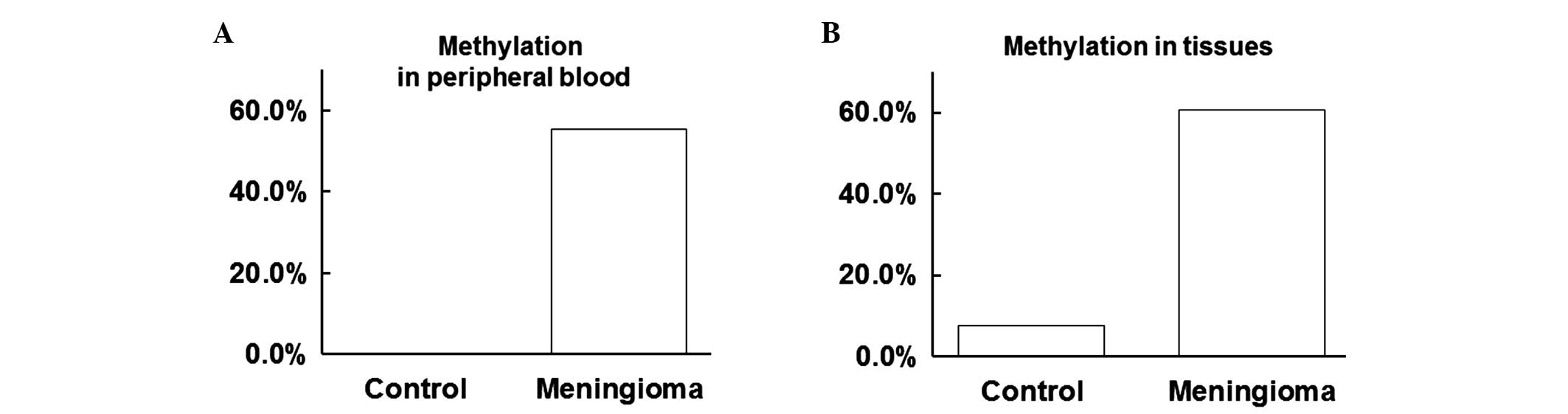
To investigate the levels of WRN methylation in the peripheral blood and tissues, a methylation-specific PCR assay was performed. As shown in Table I, the positive rate of WRN methylation was 55.36 and 0.00% in the peripheral blood of the meningioma and control groups, respectively. Furthermore, the positive rate of WRN methylation was 60.71 and 7.69% in the tissues of the meningioma and control groups, respectively. Thus, the positive rate of WRN methylation in the peripheral blood of the meningioma group was significantly increased when compared with the control group (P<0.05; Fig. 1A). In addition, the positive rate of WRN methylation in the tissues of the meningioma group was significantly increased when compared with the control group (P<0.05; Fig. 1B). These results indicated that the positive rate of WRN methylation was increased in the peripheral blood and tissues of meningioma patients.

Figure 1.

Positive rate of Werner syndrome protein (WRN) methylation in the peripheral blood and tissues. A methylation-specific polymerase chain reaction assay was performed to detect the positive rate of WRN methylation in the (A) peripheral blood and (B) tissue samples collected from the meningioma patients and the healthy control group.

Table I.

Positive rate of WRN methylation in the peripheral blood and tissues.

Table I.

Positive rate of WRN methylation in the peripheral blood and tissues.

Methylation in the peripheral bloodMethylation in the tissues


GroupsCases (n)Yes (n)No (n)Positive rate (%)P-valueYes (n)No (n)Positive rate (%)P-value
Control260260 2247.69
Meningioma56312555.36<0.001322460.71<0.001

[i] WRN, Werner syndrome protein.

Protein expression of WRN is inhibited following WRN methylation in the peripheral blood and tissues

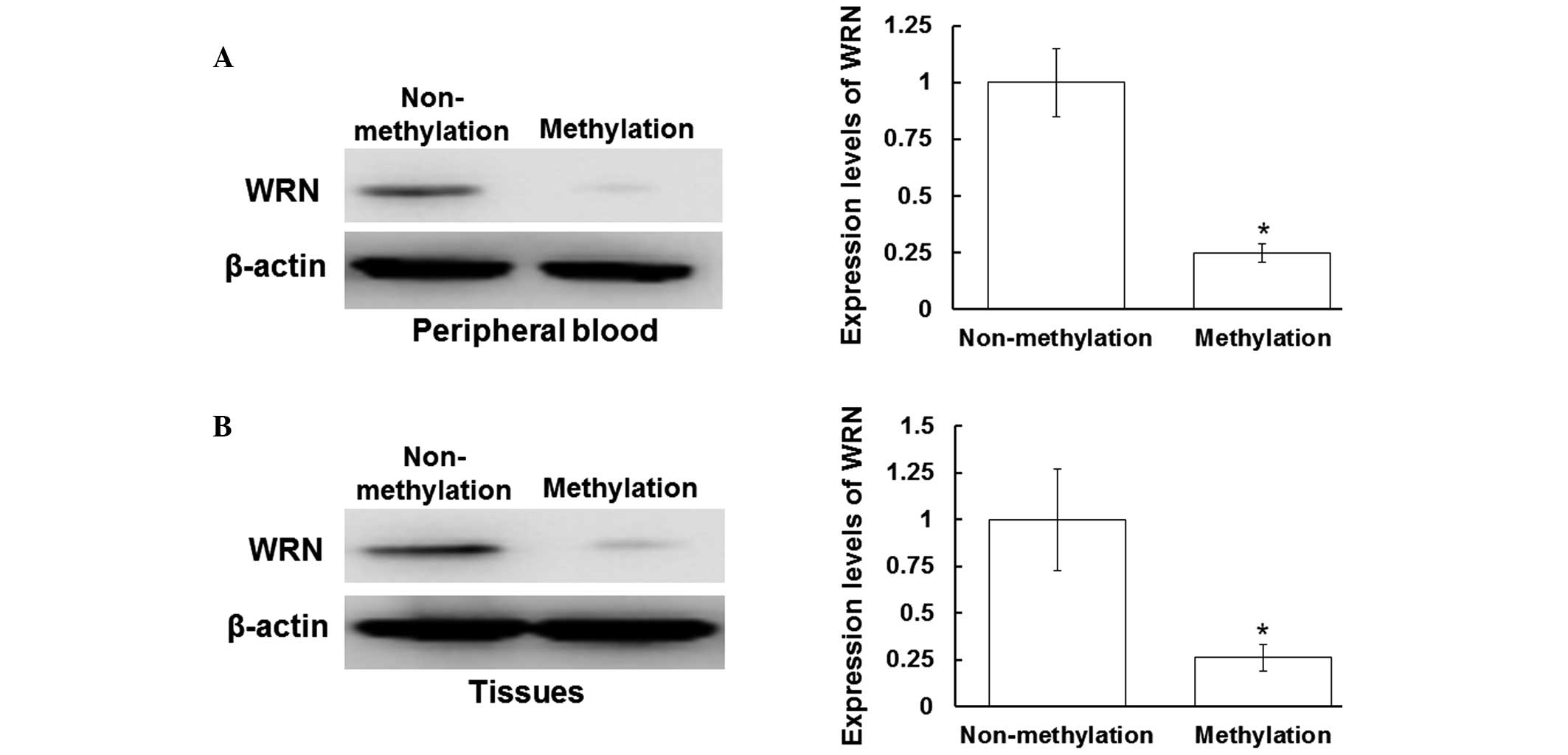
To determine the protein expression levels of WRN in the peripheral blood and tissue samples, western blot analysis was performed. As shown in Fig. 2A, the protein expression levels of WRN in the peripheral blood samples with positive WRN methylation were decreased when compared with those without WRN methylation (P<0.05). In addition, the protein expression levels of WRN in the tissues with WRN methylation were decreased when compared with those without WRN methylation (P<0.05). Therefore, in the peripheral blood and tissue samples with positive WRN methylation, WRN protein expression levels were significantly decreased. These results indicated that the protein expression of WRN is inhibited following WRN methylation in the peripheral blood and tissues.

Figure 2.

Protein expression levels of WRN in the peripheral blood and tissues. Total proteins from the peripheral blood and tissue samples were harvested, separated by 12% SDS-PAGE and analyzed by western blot analysis, where β-actin was used as a loading control. Protein expression levels of WRN in the (A) peripheral blood and (B) tissues were detected using a rabbit anti-human WRN polyclonal antibody (1:2,000). Left panel, representative western blot; right panel, quantitative assessment of the western blot analysis results. *P<0.05, vs. non-methylation group. WRN, Werner syndrome protein.

Myc and p53 protein expression levels are increased in the peripheral blood and tissues with WRN methylation

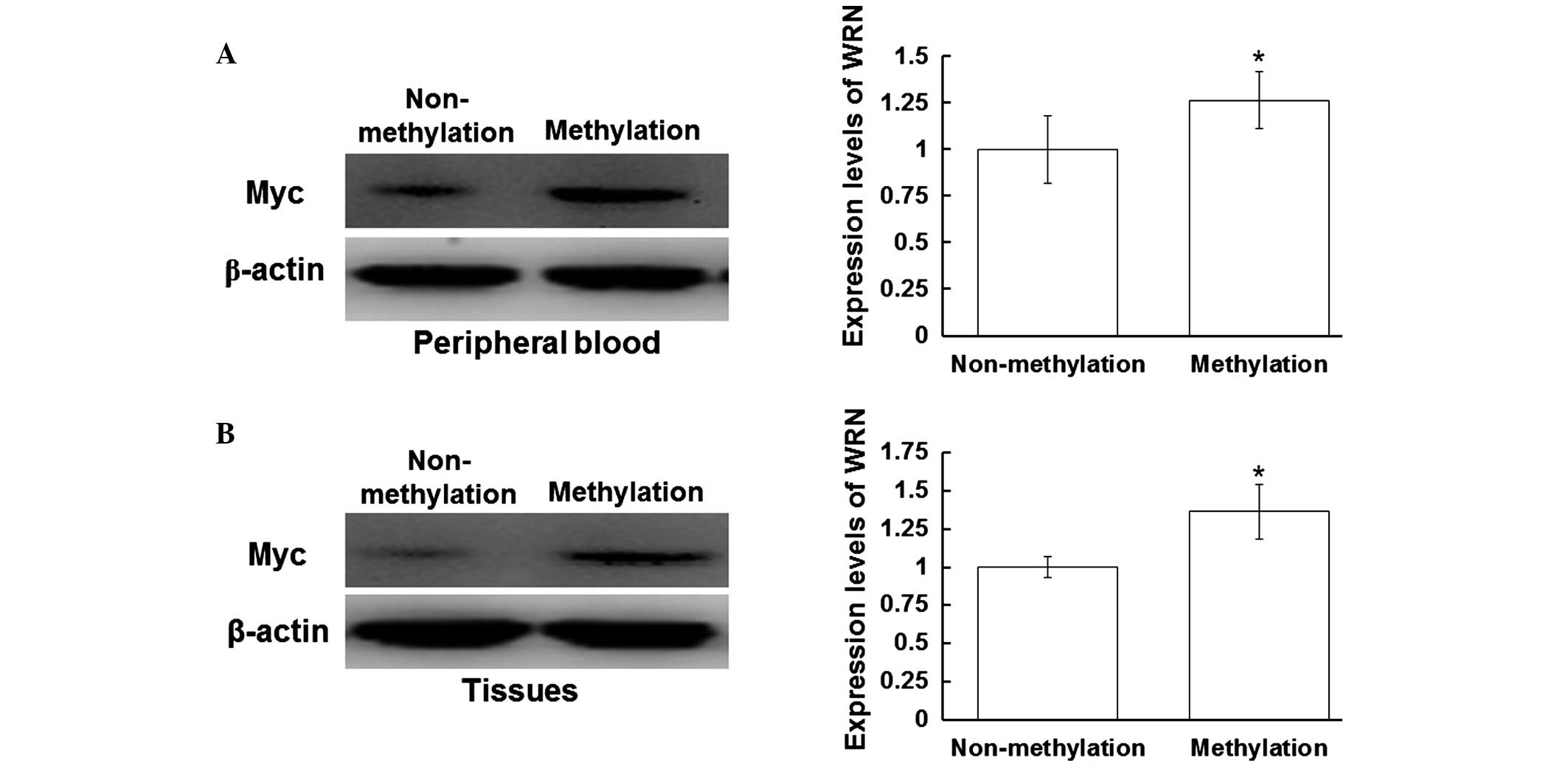
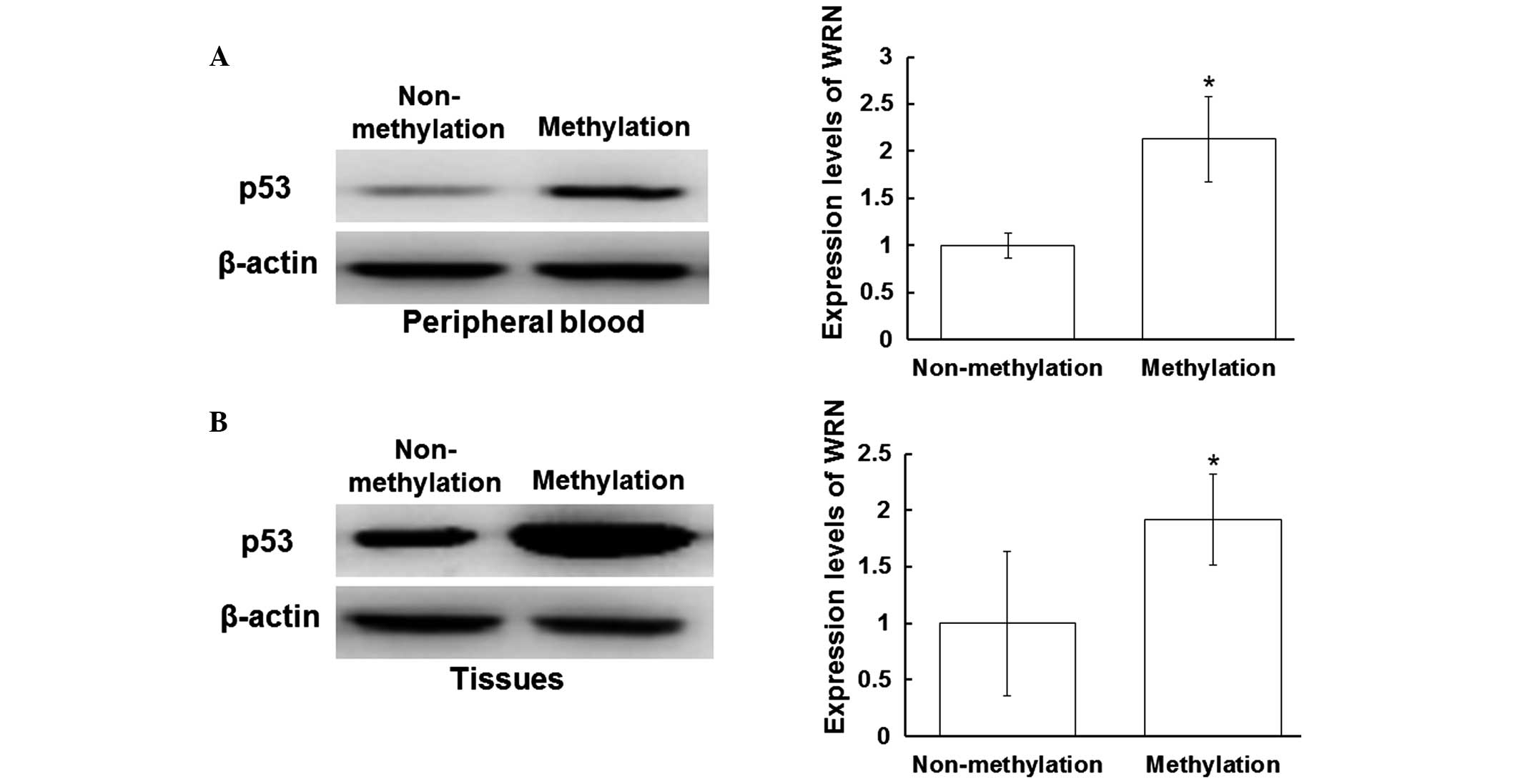
To investigate the effect of WRN methylation on the regulation of tumor gene expression, western blot analysis was performed to detect the protein expression levels of Myc and p53. Myc and p53 are regulated by WRN in the process of tumor development (14). As shown in Fig. 3A, the expression levels of Myc in the peripheral blood of the patients with positive WRN methylation were increased when compared with those without WRN methylation (P<0.05). In addition, the expression levels of Myc in the tissue samples with WRN methylation were increased when compared with those without WRN methylation (P<0.05) (Fig. 3B). As shown in Fig. 4A, the expression levels of p53 in the peripheral blood samples with positive WRN methylation were increased when compared with those without WRN methylation (P<0.05). Furthermore, the expression levels of p53 in the tissue samples with positive WRN methylation were increased when compared with those without WRN methylation (P<0.05; Fig. 4B). These results indicated that the protein expression levels of Myc and p53 were increased in the peripheral blood and tissue samples that exhibited positive WRN methylation.

Figure 3.

Expression levels of Myc in the peripheral blood and tissues. Total proteins from the peripheral blood and tissue samples were harvested, separated by 12% SDS-PAGE and analyzed with western blot analysis, where β-actin was used as a loading control. Protein expression levels of Myc in the (A) peripheral blood and (B) tissues were detected using a rabbit anti-human Myc polyclonal antibody (1:500). Left panel, representative western blot; right panel, quantitative assessment of the western blot analysis results. *P<0.05, vs. non-methylation group. WRN, Werner syndrome protein.

Figure 4.

Expression levels of p53 in the peripheral blood and tissues. Total proteins from the peripheral blood and tissue samples were harvested, separated by 12% SDS-PAGE and analyzed by western blot analysis, where β-actin was used as a loading control. Protein expression levels of p53 in the (A) peripheral blood and (B) tissues were detected using a mouse anti-human p53 monoclonal antibody (1:1,000). Left panel, representative western blot; right panel, quantitative assessment of the western blot analysis results. *P<0.05, vs. non-methylation group. WRN, Werner syndrome protein.

Discussion

The incidence of meningiomas has increased in recent years (15). The occurrence of tumors is associated with the activation of cancer genes and the inactivation of tumor suppressor genes (16,17). Tumor suppressor genes exist in normal cells of every healthy individual. When the tumor suppressor gene is activated, cell proliferation is inhibited. However, when the tumor suppressor gene is suppressed, the role of the tumor suppressor is eradicated (18).

In the human genome, fragments that are rich in CpG dinucleotides are known as CpG islands, and these are primarily located in the promoter region and the first exon region of the gene (17). Approximately 60% of the promoter region is estimated to contain CpG islands (19). The occurrence and development of tumors are associated with DNA methylation. A number of tumor-associated tumor suppressor genes are methylated in the CpG islands of the gene promoter, which has been shown to affect the conformation and stability of DNA, and ultimately regulate gene expression (20). WRN plays an important role in DNA damage repair processes, which are involved in the maintenance of gene stability (14,21). High expression levels of WRN have been shown to inhibit the regulatory function of Myc in the process of cell aging (14).

In the present study, the results demonstrated that the positive rate of WRN methylation in the peripheral blood of the meningioma group was increased when compared with the control group. In addition, the protein expression levels of WRN were significantly decreased in the peripheral blood and tissue samples of the individuals exhibiting positive WRN methylation, indicating that the expression levels of WRN may be inhibited by the regulation of WRN methylation. Furthermore, the protein expression levels of Myc and p53 were increased in the peripheral blood and tissue samples from the patients with positive WRN methylation, as compared with those that did not exhibit WRN methylation. Therefore, these results indicate that WRN methylation may be associated with tumorigenesis.

In conclusion, the methylation of WRN was demonstrated to be associated with the occurrence and development of invasive meningioma, possibly through the regulation of Myc and p53 protein expression. Subsequently, the diagnosis of meningioma may be predicted by the detection of WRN methylation. Therefore, the detection of the WRN methylation status may play an important role in the diagnosis and treatment of meningioma patients.

Acknowledgements

The study was supported by grants from the Natural Science Foundation of China (no. 81341059) and the Beijing Nova Program (no. 2012033). The authors thank Professor Hong Wan from the Beijing Neurosurgery Institute of the Capital Medical University for the support provided during the study.

References

1 

Chamberlain MC, Glantz MJ and Fadul CE: Recurrent meningioma: Salvage therapy with long-acting somatostatin analogue. Neurology. 69:969–973. 2007. View Article : Google Scholar : PubMed/NCBI

2 

Park KJ, Yu MO, Song NH, et al: Expression of astrocyte elevated gene-1 (AEG-1) in human meningiomas and its role in cell proliferation and survival. J Neurooncol. 121:31–39. 2015. View Article : Google Scholar : PubMed/NCBI

3 

Erkutlu I, Buyukhatipoglu H, Alptekin M, et al: Spinal drop metastases from a papillary meningioma: A case report and review of the literature: Utility of CSF sampling. Med Oncol. 26:242–246. 2009. View Article : Google Scholar : PubMed/NCBI

4 

Louis DN, Ohgaki H and Wiestler OD: The 2007 WHO classification of tumours of the central nervous system. Acta Neuropathol. 114:97–109. 2007. View Article : Google Scholar : PubMed/NCBI

5 

Hatziapostolou M and Iliopoulos D: Epigenetic aberrations during oncogenesis. Cell Mol Life Sci. 68:1681–1702. 2011. View Article : Google Scholar : PubMed/NCBI

6 

Alvarez H, Opalinska J, Zhou L, et al: Widespread hypomethylation occurs early and synergizes with gene amplification during esophageal carcino-genesis. PLoS Genet. 7:e10013562011. View Article : Google Scholar : PubMed/NCBI

7 

Simmer F, Brinkman AB, Assenov Y, et al: Comparative genome-wide DNA methylation analysis of colorectal tumor and matched normal tissues. Epigenetics. 7:1355–1367. 2012. View Article : Google Scholar : PubMed/NCBI

8 

Jordà M and Peinado MA: Methods for DNA methylation analysis and applications in colon cancer. Mutat Res. 693:84–93. 2010. View Article : Google Scholar : PubMed/NCBI

9 

Furuichi Y: Premature aging and predisposition to cancers caused by mutations in RecQ family helicases. Ann NY Acad Sci. 928:121–131. 2001. View Article : Google Scholar : PubMed/NCBI

10 

Wang L, Xie L, Wang J, et al: Correlation between the methylation of SULF2 and WRN promoter and the irinotecan chemosensitivity in gastric cancer. BMC Gastroenterol. 13:1732013. View Article : Google Scholar : PubMed/NCBI

11 

Kawasaki T, Ohnishi M, Suemoto Y, et al: WRN promoter methylation possibly connects mucinous differentiation, microsatellite instability and CpG island methylator phenotype in colorectal cancer. Mod Pathol. 21:150–158. 2008.PubMed/NCBI

12 

Wang K, Hao SY, Huang GY, et al: Association study between polymorphism of WRN gene and meningioma in Chinese population. Zhong Guo Wei Qin Xi Shen Jing Wai Ke Za Zhi. 17:248–251. 2012.(In Chinese).

13 

He S, Pham MH, Pease M, et al: A review of epigenetic and gene expression alterations associated with intracranial meningiomas. Neurosurg Focus. 35:E52013. View Article : Google Scholar : PubMed/NCBI

14 

Opresko PL, Calvo JP and von Kobbe C: Roles for Werner syndrome protein in the promotion of tumor cell growth. Mech Ageing Dev. 128:423–436. 2007. View Article : Google Scholar : PubMed/NCBI

15 

Campbell BA, Jhamb A, Maguire JA, et al: Meningiomas in 2009: Controversies and future challenges. Am J Clin Oncol. 32:73–85. 2009. View Article : Google Scholar : PubMed/NCBI

16 

Vranic A, Peyre M and Kalamarides M: New insights into meningioma: From genetics to trials. Curr Opin Oncol. 24:660–665. 2012. View Article : Google Scholar : PubMed/NCBI

17 

Curtin K, Slattery ML and Samowitz WS: CpG island methylation in colorectal cancer: Past, present and future. Patholog Res Int. 2011:9026742011.PubMed/NCBI

18 

Fearon ER: Molecular genetics of colorectal cancer. Annu Rev Pathol. 6:479–507. 2011. View Article : Google Scholar : PubMed/NCBI

19 

Feltus FA, Lee EK, Costello JF, et al: Predicting aberrant CpG island methylation. Proc Natl Acad Sci USA. 100:12253–12258. 2003. View Article : Google Scholar : PubMed/NCBI

20 

Takai D and Jones PA: Comprehensive analysis of CpG islands in human chromosomes 21 and 22. Proc Natl Acad Sci USA. 99:3740–3745. 2002. View Article : Google Scholar : PubMed/NCBI

21 

Bacolla A, Wang G, Jain A, et al: Non-B DNA-forming sequences and WRN deficiency independently increase the frequency of base substitution in human cells. J Biol Chem. 286:10017–10026. 2011. View Article : Google Scholar : PubMed/NCBI

Related Articles

  • Abstract
  • View
  • Download
  • Twitter
Copy and paste a formatted citation
Spandidos Publications style
Li P, Hao S, Bi Z, Zhang J, Wu Z and Ren X: Methylation of Werner syndrome protein is associated with the occurrence and development of invasive meningioma via the regulation of Myc and p53 expression. Exp Ther Med 10: 498-502, 2015.
APA
Li, P., Hao, S., Bi, Z., Zhang, J., Wu, Z., & Ren, X. (2015). Methylation of Werner syndrome protein is associated with the occurrence and development of invasive meningioma via the regulation of Myc and p53 expression. Experimental and Therapeutic Medicine, 10, 498-502. https://doi.org/10.3892/etm.2015.2519
MLA
Li, P., Hao, S., Bi, Z., Zhang, J., Wu, Z., Ren, X."Methylation of Werner syndrome protein is associated with the occurrence and development of invasive meningioma via the regulation of Myc and p53 expression". Experimental and Therapeutic Medicine 10.2 (2015): 498-502.
Chicago
Li, P., Hao, S., Bi, Z., Zhang, J., Wu, Z., Ren, X."Methylation of Werner syndrome protein is associated with the occurrence and development of invasive meningioma via the regulation of Myc and p53 expression". Experimental and Therapeutic Medicine 10, no. 2 (2015): 498-502. https://doi.org/10.3892/etm.2015.2519
Copy and paste a formatted citation
x
Spandidos Publications style
Li P, Hao S, Bi Z, Zhang J, Wu Z and Ren X: Methylation of Werner syndrome protein is associated with the occurrence and development of invasive meningioma via the regulation of Myc and p53 expression. Exp Ther Med 10: 498-502, 2015.
APA
Li, P., Hao, S., Bi, Z., Zhang, J., Wu, Z., & Ren, X. (2015). Methylation of Werner syndrome protein is associated with the occurrence and development of invasive meningioma via the regulation of Myc and p53 expression. Experimental and Therapeutic Medicine, 10, 498-502. https://doi.org/10.3892/etm.2015.2519
MLA
Li, P., Hao, S., Bi, Z., Zhang, J., Wu, Z., Ren, X."Methylation of Werner syndrome protein is associated with the occurrence and development of invasive meningioma via the regulation of Myc and p53 expression". Experimental and Therapeutic Medicine 10.2 (2015): 498-502.
Chicago
Li, P., Hao, S., Bi, Z., Zhang, J., Wu, Z., Ren, X."Methylation of Werner syndrome protein is associated with the occurrence and development of invasive meningioma via the regulation of Myc and p53 expression". Experimental and Therapeutic Medicine 10, no. 2 (2015): 498-502. https://doi.org/10.3892/etm.2015.2519
Follow us
  • Twitter
  • LinkedIn
  • Facebook
About
  • Spandidos Publications
  • Careers
  • Cookie Policy
  • Privacy Policy
How can we help?
  • Help
  • Live Chat
  • Contact
  • Email to our Support Team