Spandidos Publications Logo
  • About
    • About Spandidos
    • Aims and Scopes
    • Abstracting and Indexing
    • Editorial Policies
    • Reprints and Permissions
    • Job Opportunities
    • Terms and Conditions
    • Contact
  • Journals
    • All Journals
    • Oncology Letters
      • Oncology Letters
      • Information for Authors
      • Editorial Policies
      • Editorial Board
      • Aims and Scope
      • Abstracting and Indexing
      • Bibliographic Information
      • Archive
    • International Journal of Oncology
      • International Journal of Oncology
      • Information for Authors
      • Editorial Policies
      • Editorial Board
      • Aims and Scope
      • Abstracting and Indexing
      • Bibliographic Information
      • Archive
    • Molecular and Clinical Oncology
      • Molecular and Clinical Oncology
      • Information for Authors
      • Editorial Policies
      • Editorial Board
      • Aims and Scope
      • Abstracting and Indexing
      • Bibliographic Information
      • Archive
    • Experimental and Therapeutic Medicine
      • Experimental and Therapeutic Medicine
      • Information for Authors
      • Editorial Policies
      • Editorial Board
      • Aims and Scope
      • Abstracting and Indexing
      • Bibliographic Information
      • Archive
    • International Journal of Molecular Medicine
      • International Journal of Molecular Medicine
      • Information for Authors
      • Editorial Policies
      • Editorial Board
      • Aims and Scope
      • Abstracting and Indexing
      • Bibliographic Information
      • Archive
    • Biomedical Reports
      • Biomedical Reports
      • Information for Authors
      • Editorial Policies
      • Editorial Board
      • Aims and Scope
      • Abstracting and Indexing
      • Bibliographic Information
      • Archive
    • Oncology Reports
      • Oncology Reports
      • Information for Authors
      • Editorial Policies
      • Editorial Board
      • Aims and Scope
      • Abstracting and Indexing
      • Bibliographic Information
      • Archive
    • Molecular Medicine Reports
      • Molecular Medicine Reports
      • Information for Authors
      • Editorial Policies
      • Editorial Board
      • Aims and Scope
      • Abstracting and Indexing
      • Bibliographic Information
      • Archive
    • World Academy of Sciences Journal
      • World Academy of Sciences Journal
      • Information for Authors
      • Editorial Policies
      • Editorial Board
      • Aims and Scope
      • Abstracting and Indexing
      • Bibliographic Information
      • Archive
    • International Journal of Functional Nutrition
      • International Journal of Functional Nutrition
      • Information for Authors
      • Editorial Policies
      • Editorial Board
      • Aims and Scope
      • Abstracting and Indexing
      • Bibliographic Information
      • Archive
    • International Journal of Epigenetics
      • International Journal of Epigenetics
      • Information for Authors
      • Editorial Policies
      • Editorial Board
      • Aims and Scope
      • Abstracting and Indexing
      • Bibliographic Information
      • Archive
    • Medicine International
      • Medicine International
      • Information for Authors
      • Editorial Policies
      • Editorial Board
      • Aims and Scope
      • Abstracting and Indexing
      • Bibliographic Information
      • Archive
  • Articles
  • Information
    • Information for Authors
    • Information for Reviewers
    • Information for Librarians
    • Information for Advertisers
    • Conferences
  • Language Editing
Spandidos Publications Logo
  • About
    • About Spandidos
    • Aims and Scopes
    • Abstracting and Indexing
    • Editorial Policies
    • Reprints and Permissions
    • Job Opportunities
    • Terms and Conditions
    • Contact
  • Journals
    • All Journals
    • Biomedical Reports
      • Information for Authors
      • Editorial Policies
      • Editorial Board
      • Aims and Scope
      • Abstracting and Indexing
      • Bibliographic Information
      • Archive
    • Experimental and Therapeutic Medicine
      • Information for Authors
      • Editorial Policies
      • Editorial Board
      • Aims and Scope
      • Abstracting and Indexing
      • Bibliographic Information
      • Archive
    • International Journal of Epigenetics
      • Information for Authors
      • Editorial Policies
      • Editorial Board
      • Aims and Scope
      • Abstracting and Indexing
      • Bibliographic Information
      • Archive
    • International Journal of Functional Nutrition
      • Information for Authors
      • Editorial Policies
      • Editorial Board
      • Aims and Scope
      • Abstracting and Indexing
      • Bibliographic Information
      • Archive
    • International Journal of Molecular Medicine
      • Information for Authors
      • Editorial Policies
      • Editorial Board
      • Aims and Scope
      • Abstracting and Indexing
      • Bibliographic Information
      • Archive
    • International Journal of Oncology
      • Information for Authors
      • Editorial Policies
      • Editorial Board
      • Aims and Scope
      • Abstracting and Indexing
      • Bibliographic Information
      • Archive
    • Medicine International
      • Information for Authors
      • Editorial Policies
      • Editorial Board
      • Aims and Scope
      • Abstracting and Indexing
      • Bibliographic Information
      • Archive
    • Molecular and Clinical Oncology
      • Information for Authors
      • Editorial Policies
      • Editorial Board
      • Aims and Scope
      • Abstracting and Indexing
      • Bibliographic Information
      • Archive
    • Molecular Medicine Reports
      • Information for Authors
      • Editorial Policies
      • Editorial Board
      • Aims and Scope
      • Abstracting and Indexing
      • Bibliographic Information
      • Archive
    • Oncology Letters
      • Information for Authors
      • Editorial Policies
      • Editorial Board
      • Aims and Scope
      • Abstracting and Indexing
      • Bibliographic Information
      • Archive
    • Oncology Reports
      • Information for Authors
      • Editorial Policies
      • Editorial Board
      • Aims and Scope
      • Abstracting and Indexing
      • Bibliographic Information
      • Archive
    • World Academy of Sciences Journal
      • Information for Authors
      • Editorial Policies
      • Editorial Board
      • Aims and Scope
      • Abstracting and Indexing
      • Bibliographic Information
      • Archive
  • Articles
  • Information
    • For Authors
    • For Reviewers
    • For Librarians
    • For Advertisers
    • Conferences
  • Language Editing
Login Register Submit
  • This site uses cookies
  • You can change your cookie settings at any time by following the instructions in our Cookie Policy. To find out more, you may read our Privacy Policy.

    I agree
Search articles by DOI, keyword, author or affiliation
Search
Advanced Search
presentation
Experimental and Therapeutic Medicine
Join Editorial Board Propose a Special Issue
Print ISSN: 1792-0981 Online ISSN: 1792-1015
Journal Cover
October-2015 Volume 10 Issue 4

Full Size Image

Sign up for eToc alerts
Recommend to Library

Journals

International Journal of Molecular Medicine

International Journal of Molecular Medicine

International Journal of Molecular Medicine is an international journal devoted to molecular mechanisms of human disease.

International Journal of Oncology

International Journal of Oncology

International Journal of Oncology is an international journal devoted to oncology research and cancer treatment.

Molecular Medicine Reports

Molecular Medicine Reports

Covers molecular medicine topics such as pharmacology, pathology, genetics, neuroscience, infectious diseases, molecular cardiology, and molecular surgery.

Oncology Reports

Oncology Reports

Oncology Reports is an international journal devoted to fundamental and applied research in Oncology.

Experimental and Therapeutic Medicine

Experimental and Therapeutic Medicine

Experimental and Therapeutic Medicine is an international journal devoted to laboratory and clinical medicine.

Oncology Letters

Oncology Letters

Oncology Letters is an international journal devoted to Experimental and Clinical Oncology.

Biomedical Reports

Biomedical Reports

Explores a wide range of biological and medical fields, including pharmacology, genetics, microbiology, neuroscience, and molecular cardiology.

Molecular and Clinical Oncology

Molecular and Clinical Oncology

International journal addressing all aspects of oncology research, from tumorigenesis and oncogenes to chemotherapy and metastasis.

World Academy of Sciences Journal

World Academy of Sciences Journal

Multidisciplinary open-access journal spanning biochemistry, genetics, neuroscience, environmental health, and synthetic biology.

International Journal of Functional Nutrition

International Journal of Functional Nutrition

Open-access journal combining biochemistry, pharmacology, immunology, and genetics to advance health through functional nutrition.

International Journal of Epigenetics

International Journal of Epigenetics

Publishes open-access research on using epigenetics to advance understanding and treatment of human disease.

Medicine International

Medicine International

An International Open Access Journal Devoted to General Medicine.

Journal Cover
October-2015 Volume 10 Issue 4

Full Size Image

Sign up for eToc alerts
Recommend to Library

  • Article
  • Citations
    • Cite This Article
    • Download Citation
    • Create Citation Alert
    • Remove Citation Alert
    • Cited By
  • Similar Articles
    • Related Articles (in Spandidos Publications)
    • Similar Articles (Google Scholar)
    • Similar Articles (PubMed)
  • Download PDF
  • Download XML
  • View XML
Article Open Access

Rapamycin-induced autophagy activity promotes bone fracture healing in rats

Corrigendum in: /10.3892/etm.2021.9749
  • Authors:
    • Ge Yang
    • Xunhong Duan
    • Dasheng Lin
    • Ten Li
    • Deqing Luo
    • Lei Wang
    • Kejian Lian
  • View Affiliations / Copyright

    Affiliations: Department of Orthopedic Surgery, The Affiliated Southeast Hospital of Xiamen University, Orthopedic Center of People's Liberation Army, Zhangzhou, Fujian 363000, P.R. China
    Copyright: © Yang et al. This is an open access article distributed under the terms of Creative Commons Attribution License.
  • Pages: 1327-1333
    |
    Published online on: July 27, 2015
       https://doi.org/10.3892/etm.2015.2660
  • Expand metrics +
Metrics: Total Views: 0 (Spandidos Publications: | PMC Statistics: )
Metrics: Total PDF Downloads: 0 (Spandidos Publications: | PMC Statistics: )
Cited By (CrossRef): 0 citations Loading Articles...

This article is mentioned in:


Abstract

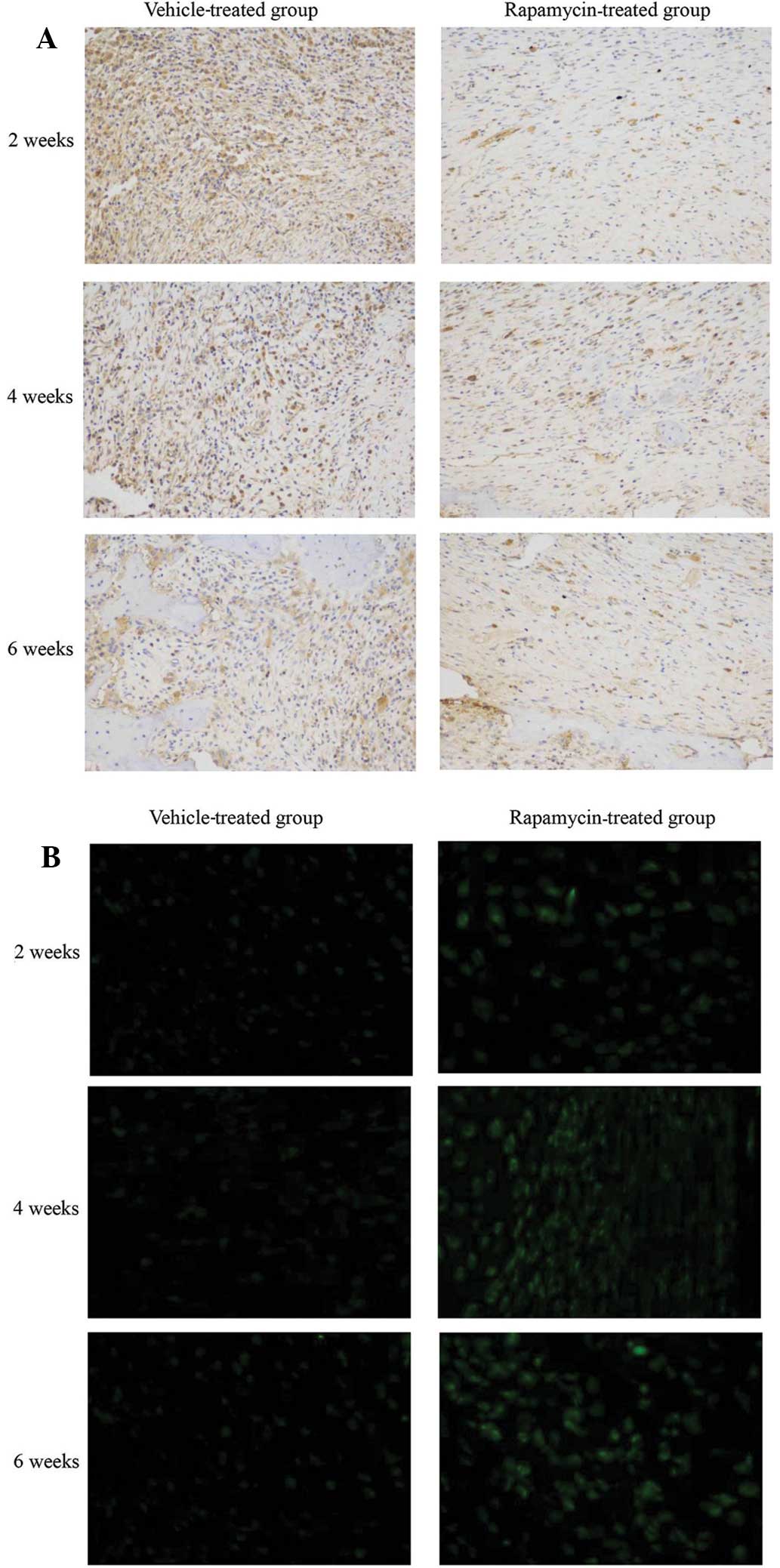
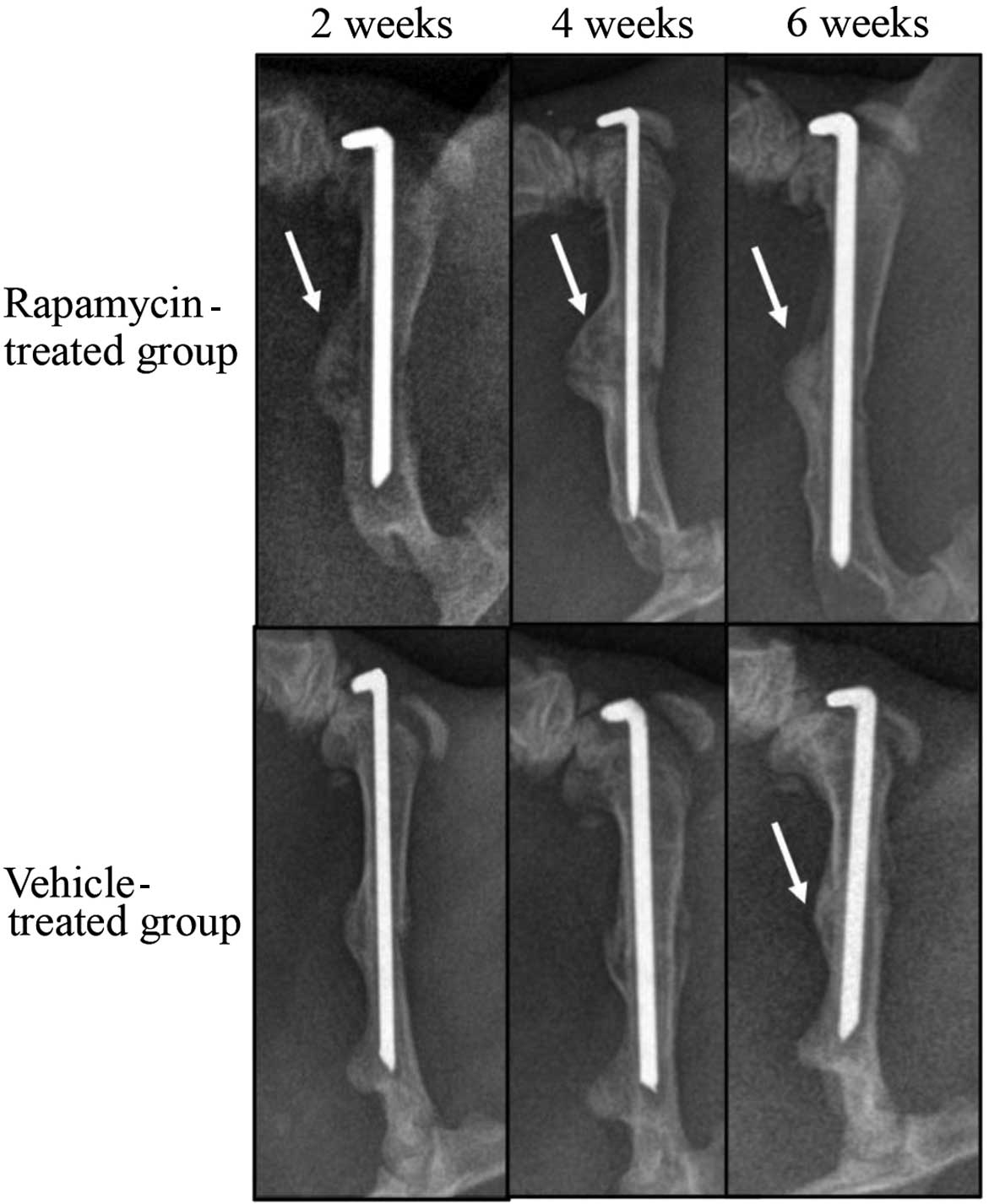
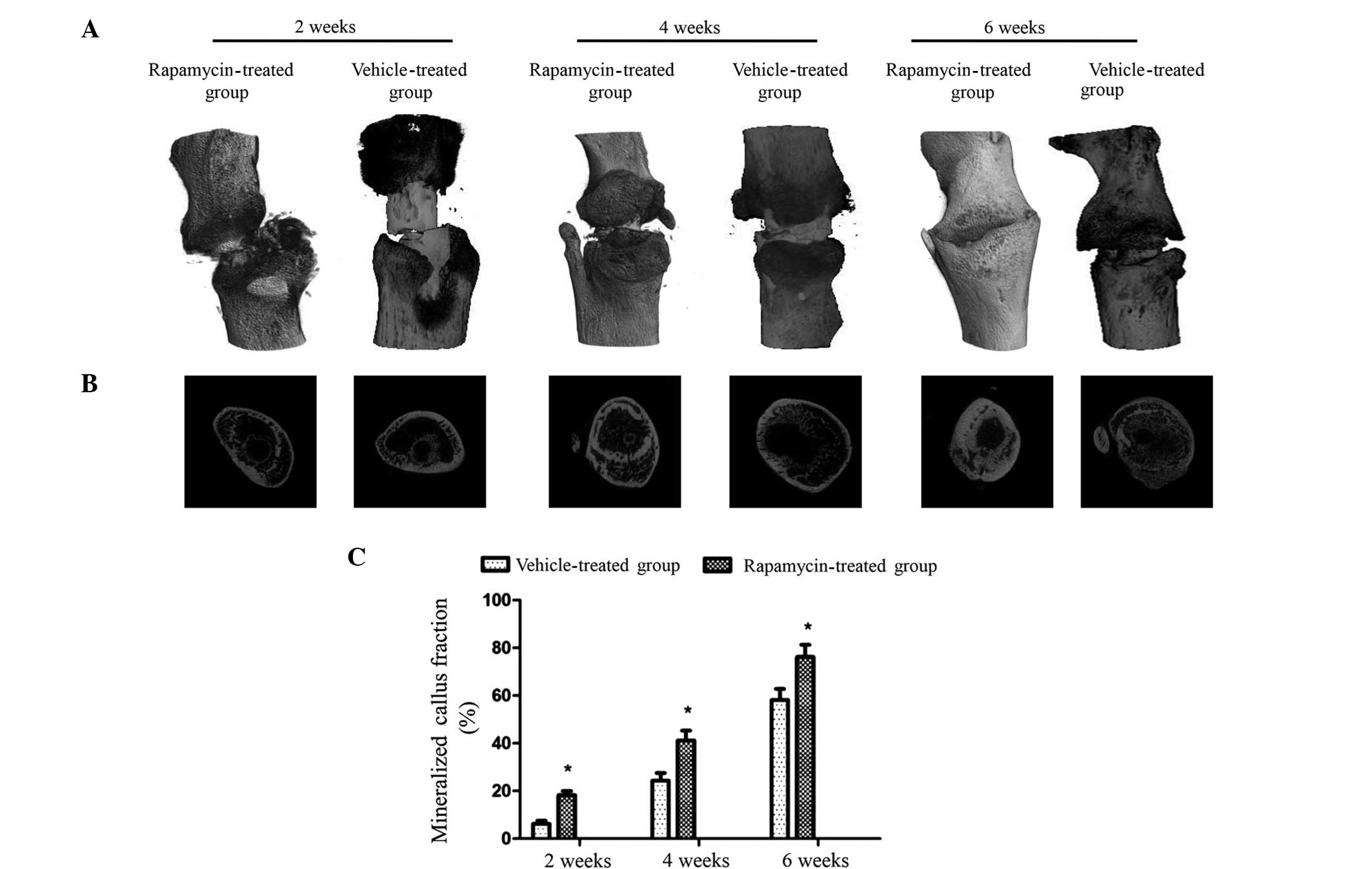
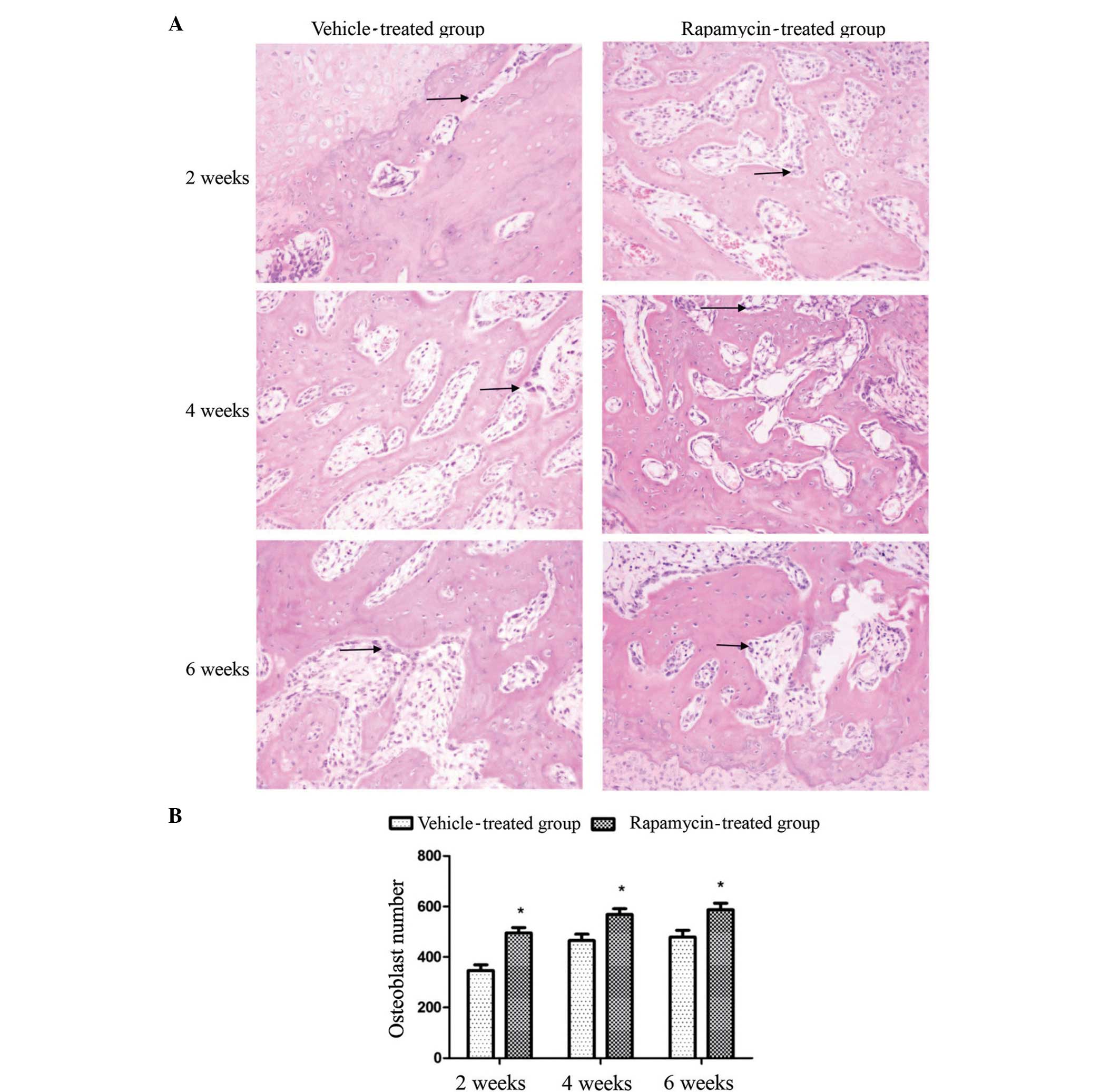
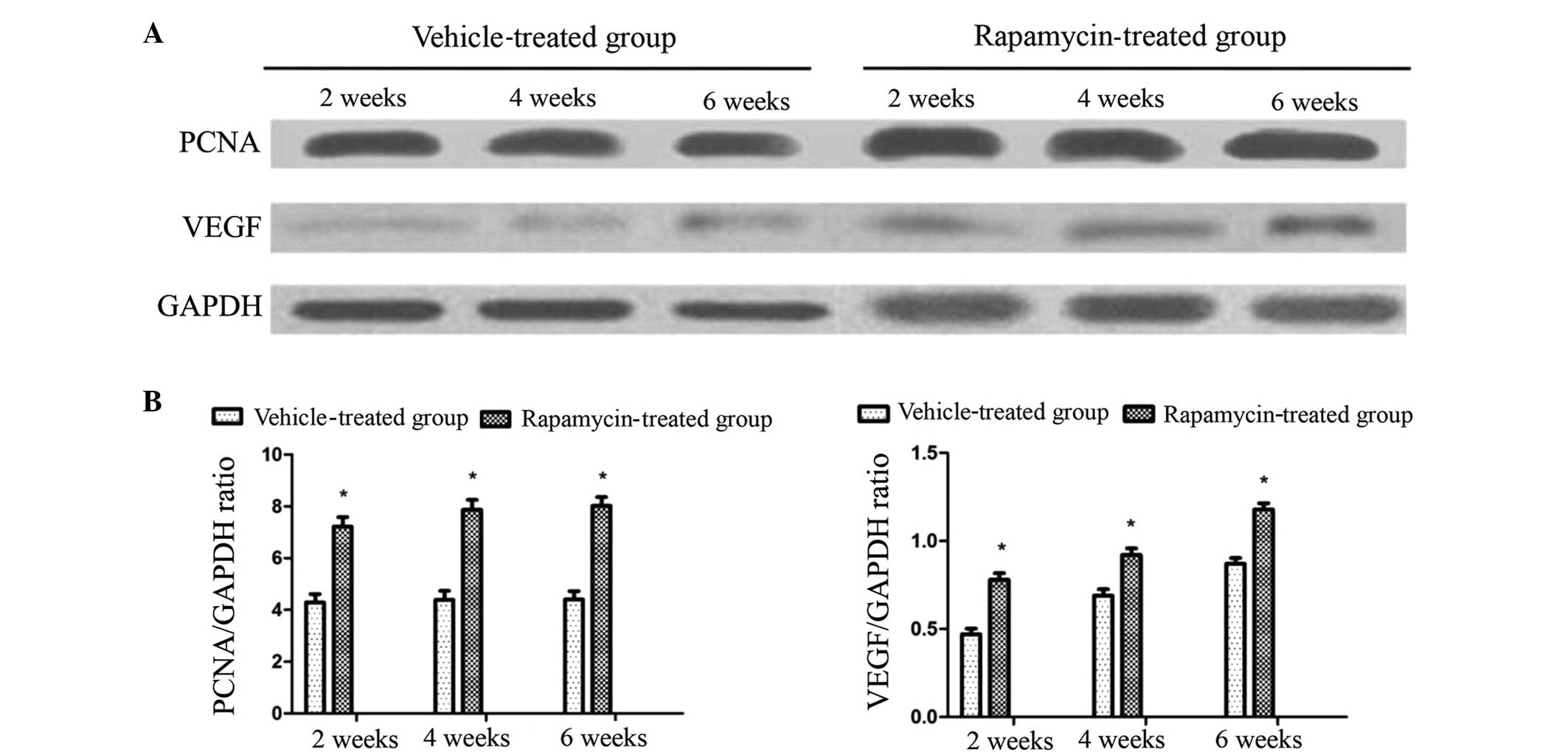
Autophagy is a crucial mediating process for normal bone cell function and metabolism in physiology or pathology. Rapamycin has been demonstrated to induce the autophagy pathway by inhibiting the mammalian target of rapamycin (mTOR) pathway. However, the contribution of autophagy in orthopedic diseases is rarely reported. The aim of the present study was to evaluate the capacity of pharmacologically induced autophagy to modify disease function in a rat model of bone fracture. A femur fracture model was established via surgery in adult male Sprague‑Dawley rats. Rapamycin (n=63 rats) or dimethyl sulfoxide (DMSO) vehicle control (n=63 rats) was administered intraperitoneally for 2, 4 and 6 weeks, and 21 randomly selected rats were sacrificed in each group at each time point. X‑ray micro‑computed tomography and hematoxylin and eosin staining were used to evaluate the extent of fracture healing in each group. The effects of rapamycin on autophagy, mTOR signaling and the expression levels of vascular endothelial growth factor (VEGF) and proliferating cell nuclear antigen (PCNA) were analyzed using immunohistochemistry, immunofluorescence staining and western blot analysis. Rapamycin affected the mTOR signaling pathway in rats following fracture, as indicated by the inhibition of the phosphorylation of ribosomal protein S6, a target of mTOR, and activation of microtubule‑associated protein 2 light chain 3, a key marker of autophagy. Histomorphometry and image examination indicated that the number of osteoblasts in each section was significantly (P<0.01) increased in the rapamycin group compared with the control group, and this was associated with a significant (P<0.05) increase in mineralized callus fraction. Furthermore, rapamycin treatment increased the expression levels of VEGF and PCNA in the rat callus tissue. These results suggest that rapamycin may serve a beneficial function in fracture healing, and that the underlying mechanism may involve the activation of autophagy.
View Figures

Figure 1

Figure 2

Figure 3

Figure 4

Figure 5

View References

1 

Einhorn T: Enhancement of fracture-healing. J Bone Joint Surg Am. 77:940–956. 1995.PubMed/NCBI

2 

O'Neill KR, Stutz CM, Mignemi NA, et al: Micro-computed tomography assessment of the progression of fracture healing in mice. Bone. 50:1357–1367. 2012. View Article : Google Scholar : PubMed/NCBI

3 

Mizushima N, Levine B, Cuervo AM and Klionsky DJ: Autophagy fights disease through cellular self-digestion. Nature. 451:1069–1075. 2008. View Article : Google Scholar : PubMed/NCBI

4 

Levine B and Kroemer G: Autophagy in the pathogenesis of disease. Cell. 132:27–42. 2008. View Article : Google Scholar : PubMed/NCBI

5 

Mathew R, Karp CM, Beaudoin B, et al: Autophagy suppresses tumorigenesis through elimination of p62. Cell. 137:1062–1075. 2009. View Article : Google Scholar : PubMed/NCBI

6 

Hara T, Nakamura K, Matsui M, et al: Suppression of basal autophagy in neural cells causes neurodegenerative disease in mice. Nature. 441:885–889. 2006. View Article : Google Scholar : PubMed/NCBI

7 

Komatsu M, Waguri S, Ueno T, et al: Impairment of starvation-induced and constitutive autophagy in Atg7-deficient mice. J Cell Biol. 169:425–434. 2005. View Article : Google Scholar : PubMed/NCBI

8 

Shibata M, Lu T, Furuya T, et al: Regulation of intracellular accumulation of mutant Huntingtin by Beclin 1. J Biol Chem. 281:14474–14485. 2006. View Article : Google Scholar : PubMed/NCBI

9 

Su JC, Tseng PH, Hsu CY, et al: RFX1-dependent activation of SHP-1 induces autophagy by a novel obatoclax derivative in hepatocellular carcinoma cells. Oncotarget. 5:4909–4919. 2014.PubMed/NCBI

10 

Wullschleger S, Loewith R and Hall MN: TOR signaling in growth and metabolism. Cell. 124:471–484. 2006. View Article : Google Scholar : PubMed/NCBI

11 

Dann SG, Selvaraj A and Thomas G: mTOR Complex1-S6K1 signaling: At the crossroads of obesity, diabetes and cancer. Trends Mol Med. 13:252–259. 2007. View Article : Google Scholar : PubMed/NCBI

12 

Shigemitsu K, Tsujishita Y, Hara K, Nanahoshi M, Avruch J and Yonezawa K: Regulation of translational effectors by amino acid and mammalian target of rapamycin signaling pathways. Possible involvement of autophagy in cultured hepatoma cells. J Biol Chem. 274:1058–1065. 1999. View Article : Google Scholar : PubMed/NCBI

13 

Sabers CJ, Martin MM, Brunn GJ, et al: Isolation of a protein target of the FKBP12-rapamycin complex in mammalian cells. J Biol Chem. 270:815–822. 1995. View Article : Google Scholar : PubMed/NCBI

14 

Sarkar S and Rubinsztein DC: Huntington's disease: Degradation of mutant huntingtin by autophagy. FEBS J. 275:4263–4270. 2008. View Article : Google Scholar : PubMed/NCBI

15 

Harrison DE, Strong R, Sharp ZD, et al: Rapamycin fed late in life extends lifespan in genetically heterogeneous mice. Nature. 460:392–395. 2009.PubMed/NCBI

16 

Pan T, Rawal P, Wu Y, Xie W, Jankovic J and Le W: Rapamycin protects against rotenone-induced apoptosis through autophagy induction. Neuroscience. 164:541–551. 2009. View Article : Google Scholar : PubMed/NCBI

17 

Spilman P, Podlutskaya N, Hart MJ, et al: Inhibition of mTOR by rapamycin abolishes cognitive deficits and reduces amyloid-beta levels in a mouse model of Alzheimer's disease. PLoS One. 5:e99792010. View Article : Google Scholar : PubMed/NCBI

18 

Inuzuka Y, Okuda J, Kawashima T, et al: Suppression of phosphoinositide 3-kinase prevents cardiac aging in mice. Circulation. 120:1695–1703. 2009. View Article : Google Scholar : PubMed/NCBI

19 

Holstein JH, Menger MD, Culemann U, Meier C and Pohlemann T: Development of a locking femur nail for mice. J Biomech. 40:215–219. 2007. View Article : Google Scholar : PubMed/NCBI

20 

Müller ME, Nazarian S, Koch P and Schatzker J: The Comprehensive Classification of Fractures of Long Bones. 1st edition. Springer; New York, NY: 1994

21 

Ekim B, Magnuson B, AcostaJaquez HA, Keller JA, Feener EP and Fingar DC: mTOR kinase domain phosphorylation promotes mTORC1 signaling, cell growth and cell cycle progression. Mol Cell Biol. 31:2787–2801. 2011. View Article : Google Scholar : PubMed/NCBI

22 

Moscat J and Diaz-Meco MT: p62 at the crossroads of autophagy, apoptosis and cancer. Cell. 137:1001–1004. 2009. View Article : Google Scholar : PubMed/NCBI

23 

Lin NY, Stefanica A and Distler JH: Autophagy: A key pathway of TNF-induced inflammatory bone loss. Autophagy. 9:1253–1255. 2013. View Article : Google Scholar : PubMed/NCBI

24 

Zhang L, Guo YF, Liu YZ, et al: Pathway-based genome-wide association analysis identified the importance of regulation-of-autophagy pathway for ultradistal radius BMD. J Bone Miner Res. 25:1572–1580. 2010. View Article : Google Scholar : PubMed/NCBI

25 

Zoncu R, Efeyan A and Sabatini DM: mTOR: From growth signal integration to cancer, diabetes and ageing. Nat Rev Mol Cell Biol. 12:21–35. 2011. View Article : Google Scholar : PubMed/NCBI

26 

Guertin DA and Sabatini DM: The pharmacology of mTOR inhibition. Sci Signal. 2:pe242009.PubMed/NCBI

27 

Yu X, Guo Y, Kang Q and Luo C: Effects and mechanisms of mechanical stress on secondary fracture healing. Front Biosci (Landmark Ed). 18:1344–1348. 2013. View Article : Google Scholar : PubMed/NCBI

28 

Keramaris NC, Calori GM, Nikolaou VS, Schemitsch EH and Giannoudis PV: Fracture vascularity and bone healing: A systematic review of the role of VEGF. Injury. 39 (Suppl 2):S45–S57. 2008. View Article : Google Scholar : PubMed/NCBI

29 

Morrow PW, Tung HY and Hemmings HC Jr: Rapamycin causes activation of protein phosphatase-2A1 and nuclear translocation of PCNA in CD4+ T cells. Biochem Biophys Res Commun. 323:645–651. 2004. View Article : Google Scholar : PubMed/NCBI

30 

Kobayashi S, Kishimoto T, Kamata S, Otsuka M, Miyazaki M and Ishikura H: Rapamycin, a specific inhibitor of the mammalian target of rapamycin, suppresses lymphangiogenesis and lymphatic metastasis. Cancer Sci. 98:726–733. 2007. View Article : Google Scholar : PubMed/NCBI

31 

Kawahara T, Asthana S and Kneteman NM: m-TOR inhibitors: What role in liver transplantation? J Hepatol. 55:1441–1451. 2011. View Article : Google Scholar : PubMed/NCBI

32 

Cirstea D, Hideshima T, Rodig S, et al: Dual inhibition of Akt/mammalian target of rapamycin pathway by nanoparticle albumin-bound-rapamycin and perifosine induces antitumor activity in multiple myeloma. Mol Cancer Ther. 9:963–975. 2010. View Article : Google Scholar : PubMed/NCBI

33 

Caramés B, Taniguchi N, Otsuki S, Blanco FJ and Lotz M: Autophagy is a protective mechanism in normal cartilage and its aging-related loss is linked with cell death and osteoarthritis. Arthritis Rheum. 62:791–801. 2010. View Article : Google Scholar : PubMed/NCBI

34 

Wong E and Cuervo AM: Autophagy gone awry in neurodegenerative diseases. Nat Neurosci. 13:805–811. 2010. View Article : Google Scholar : PubMed/NCBI

35 

Chen K, Yang YH, Jiang SD and Jiang LS: Decreased activity of osteocyte autophagy with aging may contribute to the bone loss in senile population. Histochem Cell Biol. 142:285–295. 2014. View Article : Google Scholar : PubMed/NCBI

36 

Stanfel MN, Shamieh LS, Kaeberlein M and Kennedy BK: The TOR pathway comes of age. Biochim Biophys Acta. 1790:1067–1074. 2009. View Article : Google Scholar : PubMed/NCBI

37 

Sciarretta S, Volpe M and Sadoshima J: Mammalian target of rapamycin signaling in cardiac physiology and disease. Circ Res. 114:549–564. 2014. View Article : Google Scholar : PubMed/NCBI

38 

Mirzaei H and Longo VD: Acetyl-CoA synthetase is a conserved regulator of autophagy and life span. Cell Metab. 19:555–557. 2014. View Article : Google Scholar : PubMed/NCBI

39 

Holstein JH, Klein M, Garcia P, et al: Rapamycin affects early fracture healing in mice. Br J Pharmacol. 154:1055–1062. 2008. View Article : Google Scholar : PubMed/NCBI

40 

Wagner R, Mollison KW, Liu L, et al: Rapamycin analogs with reduced systemic exposure. Bioorg Med Chem Lett. 15:5340–5343. 2005. View Article : Google Scholar : PubMed/NCBI

41 

Holstein JH, Klein M, Garcia P, Histing T, Culemann U, Pizanis A, Laschke MW, Scheuer C, Meier C, Schorr H, et al: Rapamycin affects early fracture healing in mice. Br J Pharmacol. 154:1055–1062. 2008. View Article : Google Scholar : PubMed/NCBI

Related Articles

  • Abstract
  • View
  • Download
  • Twitter
Copy and paste a formatted citation
Spandidos Publications style
Yang G, Duan X, Lin D, Li T, Luo D, Wang L and Lian K: Rapamycin-induced autophagy activity promotes bone fracture healing in rats Corrigendum in /10.3892/etm.2021.9749. Exp Ther Med 10: 1327-1333, 2015.
APA
Yang, G., Duan, X., Lin, D., Li, T., Luo, D., Wang, L., & Lian, K. (2015). Rapamycin-induced autophagy activity promotes bone fracture healing in rats Corrigendum in /10.3892/etm.2021.9749. Experimental and Therapeutic Medicine, 10, 1327-1333. https://doi.org/10.3892/etm.2015.2660
MLA
Yang, G., Duan, X., Lin, D., Li, T., Luo, D., Wang, L., Lian, K."Rapamycin-induced autophagy activity promotes bone fracture healing in rats Corrigendum in /10.3892/etm.2021.9749". Experimental and Therapeutic Medicine 10.4 (2015): 1327-1333.
Chicago
Yang, G., Duan, X., Lin, D., Li, T., Luo, D., Wang, L., Lian, K."Rapamycin-induced autophagy activity promotes bone fracture healing in rats Corrigendum in /10.3892/etm.2021.9749". Experimental and Therapeutic Medicine 10, no. 4 (2015): 1327-1333. https://doi.org/10.3892/etm.2015.2660
Copy and paste a formatted citation
x
Spandidos Publications style
Yang G, Duan X, Lin D, Li T, Luo D, Wang L and Lian K: Rapamycin-induced autophagy activity promotes bone fracture healing in rats Corrigendum in /10.3892/etm.2021.9749. Exp Ther Med 10: 1327-1333, 2015.
APA
Yang, G., Duan, X., Lin, D., Li, T., Luo, D., Wang, L., & Lian, K. (2015). Rapamycin-induced autophagy activity promotes bone fracture healing in rats Corrigendum in /10.3892/etm.2021.9749. Experimental and Therapeutic Medicine, 10, 1327-1333. https://doi.org/10.3892/etm.2015.2660
MLA
Yang, G., Duan, X., Lin, D., Li, T., Luo, D., Wang, L., Lian, K."Rapamycin-induced autophagy activity promotes bone fracture healing in rats Corrigendum in /10.3892/etm.2021.9749". Experimental and Therapeutic Medicine 10.4 (2015): 1327-1333.
Chicago
Yang, G., Duan, X., Lin, D., Li, T., Luo, D., Wang, L., Lian, K."Rapamycin-induced autophagy activity promotes bone fracture healing in rats Corrigendum in /10.3892/etm.2021.9749". Experimental and Therapeutic Medicine 10, no. 4 (2015): 1327-1333. https://doi.org/10.3892/etm.2015.2660
Follow us
  • Twitter
  • LinkedIn
  • Facebook
About
  • Spandidos Publications
  • Careers
  • Cookie Policy
  • Privacy Policy
How can we help?
  • Help
  • Live Chat
  • Contact
  • Email to our Support Team