Spandidos Publications Logo
  • About
    • About Spandidos
    • Aims and Scopes
    • Abstracting and Indexing
    • Editorial Policies
    • Reprints and Permissions
    • Job Opportunities
    • Terms and Conditions
    • Contact
  • Journals
    • All Journals
    • Oncology Letters
      • Oncology Letters
      • Information for Authors
      • Editorial Policies
      • Editorial Board
      • Aims and Scope
      • Abstracting and Indexing
      • Bibliographic Information
      • Archive
    • International Journal of Oncology
      • International Journal of Oncology
      • Information for Authors
      • Editorial Policies
      • Editorial Board
      • Aims and Scope
      • Abstracting and Indexing
      • Bibliographic Information
      • Archive
    • Molecular and Clinical Oncology
      • Molecular and Clinical Oncology
      • Information for Authors
      • Editorial Policies
      • Editorial Board
      • Aims and Scope
      • Abstracting and Indexing
      • Bibliographic Information
      • Archive
    • Experimental and Therapeutic Medicine
      • Experimental and Therapeutic Medicine
      • Information for Authors
      • Editorial Policies
      • Editorial Board
      • Aims and Scope
      • Abstracting and Indexing
      • Bibliographic Information
      • Archive
    • International Journal of Molecular Medicine
      • International Journal of Molecular Medicine
      • Information for Authors
      • Editorial Policies
      • Editorial Board
      • Aims and Scope
      • Abstracting and Indexing
      • Bibliographic Information
      • Archive
    • Biomedical Reports
      • Biomedical Reports
      • Information for Authors
      • Editorial Policies
      • Editorial Board
      • Aims and Scope
      • Abstracting and Indexing
      • Bibliographic Information
      • Archive
    • Oncology Reports
      • Oncology Reports
      • Information for Authors
      • Editorial Policies
      • Editorial Board
      • Aims and Scope
      • Abstracting and Indexing
      • Bibliographic Information
      • Archive
    • Molecular Medicine Reports
      • Molecular Medicine Reports
      • Information for Authors
      • Editorial Policies
      • Editorial Board
      • Aims and Scope
      • Abstracting and Indexing
      • Bibliographic Information
      • Archive
    • World Academy of Sciences Journal
      • World Academy of Sciences Journal
      • Information for Authors
      • Editorial Policies
      • Editorial Board
      • Aims and Scope
      • Abstracting and Indexing
      • Bibliographic Information
      • Archive
    • International Journal of Functional Nutrition
      • International Journal of Functional Nutrition
      • Information for Authors
      • Editorial Policies
      • Editorial Board
      • Aims and Scope
      • Abstracting and Indexing
      • Bibliographic Information
      • Archive
    • International Journal of Epigenetics
      • International Journal of Epigenetics
      • Information for Authors
      • Editorial Policies
      • Editorial Board
      • Aims and Scope
      • Abstracting and Indexing
      • Bibliographic Information
      • Archive
    • Medicine International
      • Medicine International
      • Information for Authors
      • Editorial Policies
      • Editorial Board
      • Aims and Scope
      • Abstracting and Indexing
      • Bibliographic Information
      • Archive
  • Articles
  • Information
    • Information for Authors
    • Information for Reviewers
    • Information for Librarians
    • Information for Advertisers
    • Conferences
  • Language Editing
Spandidos Publications Logo
  • About
    • About Spandidos
    • Aims and Scopes
    • Abstracting and Indexing
    • Editorial Policies
    • Reprints and Permissions
    • Job Opportunities
    • Terms and Conditions
    • Contact
  • Journals
    • All Journals
    • Biomedical Reports
      • Information for Authors
      • Editorial Policies
      • Editorial Board
      • Aims and Scope
      • Abstracting and Indexing
      • Bibliographic Information
      • Archive
    • Experimental and Therapeutic Medicine
      • Information for Authors
      • Editorial Policies
      • Editorial Board
      • Aims and Scope
      • Abstracting and Indexing
      • Bibliographic Information
      • Archive
    • International Journal of Epigenetics
      • Information for Authors
      • Editorial Policies
      • Editorial Board
      • Aims and Scope
      • Abstracting and Indexing
      • Bibliographic Information
      • Archive
    • International Journal of Functional Nutrition
      • Information for Authors
      • Editorial Policies
      • Editorial Board
      • Aims and Scope
      • Abstracting and Indexing
      • Bibliographic Information
      • Archive
    • International Journal of Molecular Medicine
      • Information for Authors
      • Editorial Policies
      • Editorial Board
      • Aims and Scope
      • Abstracting and Indexing
      • Bibliographic Information
      • Archive
    • International Journal of Oncology
      • Information for Authors
      • Editorial Policies
      • Editorial Board
      • Aims and Scope
      • Abstracting and Indexing
      • Bibliographic Information
      • Archive
    • Medicine International
      • Information for Authors
      • Editorial Policies
      • Editorial Board
      • Aims and Scope
      • Abstracting and Indexing
      • Bibliographic Information
      • Archive
    • Molecular and Clinical Oncology
      • Information for Authors
      • Editorial Policies
      • Editorial Board
      • Aims and Scope
      • Abstracting and Indexing
      • Bibliographic Information
      • Archive
    • Molecular Medicine Reports
      • Information for Authors
      • Editorial Policies
      • Editorial Board
      • Aims and Scope
      • Abstracting and Indexing
      • Bibliographic Information
      • Archive
    • Oncology Letters
      • Information for Authors
      • Editorial Policies
      • Editorial Board
      • Aims and Scope
      • Abstracting and Indexing
      • Bibliographic Information
      • Archive
    • Oncology Reports
      • Information for Authors
      • Editorial Policies
      • Editorial Board
      • Aims and Scope
      • Abstracting and Indexing
      • Bibliographic Information
      • Archive
    • World Academy of Sciences Journal
      • Information for Authors
      • Editorial Policies
      • Editorial Board
      • Aims and Scope
      • Abstracting and Indexing
      • Bibliographic Information
      • Archive
  • Articles
  • Information
    • For Authors
    • For Reviewers
    • For Librarians
    • For Advertisers
    • Conferences
  • Language Editing
Login Register Submit
  • This site uses cookies
  • You can change your cookie settings at any time by following the instructions in our Cookie Policy. To find out more, you may read our Privacy Policy.

    I agree
Search articles by DOI, keyword, author or affiliation
Search
Advanced Search
presentation
Experimental and Therapeutic Medicine
Join Editorial Board Propose a Special Issue
Print ISSN: 1792-0981 Online ISSN: 1792-1015
Journal Cover
October-2015 Volume 10 Issue 4

Full Size Image

Sign up for eToc alerts
Recommend to Library

Journals

International Journal of Molecular Medicine

International Journal of Molecular Medicine

International Journal of Molecular Medicine is an international journal devoted to molecular mechanisms of human disease.

International Journal of Oncology

International Journal of Oncology

International Journal of Oncology is an international journal devoted to oncology research and cancer treatment.

Molecular Medicine Reports

Molecular Medicine Reports

Covers molecular medicine topics such as pharmacology, pathology, genetics, neuroscience, infectious diseases, molecular cardiology, and molecular surgery.

Oncology Reports

Oncology Reports

Oncology Reports is an international journal devoted to fundamental and applied research in Oncology.

Experimental and Therapeutic Medicine

Experimental and Therapeutic Medicine

Experimental and Therapeutic Medicine is an international journal devoted to laboratory and clinical medicine.

Oncology Letters

Oncology Letters

Oncology Letters is an international journal devoted to Experimental and Clinical Oncology.

Biomedical Reports

Biomedical Reports

Explores a wide range of biological and medical fields, including pharmacology, genetics, microbiology, neuroscience, and molecular cardiology.

Molecular and Clinical Oncology

Molecular and Clinical Oncology

International journal addressing all aspects of oncology research, from tumorigenesis and oncogenes to chemotherapy and metastasis.

World Academy of Sciences Journal

World Academy of Sciences Journal

Multidisciplinary open-access journal spanning biochemistry, genetics, neuroscience, environmental health, and synthetic biology.

International Journal of Functional Nutrition

International Journal of Functional Nutrition

Open-access journal combining biochemistry, pharmacology, immunology, and genetics to advance health through functional nutrition.

International Journal of Epigenetics

International Journal of Epigenetics

Publishes open-access research on using epigenetics to advance understanding and treatment of human disease.

Medicine International

Medicine International

An International Open Access Journal Devoted to General Medicine.

Journal Cover
October-2015 Volume 10 Issue 4

Full Size Image

Sign up for eToc alerts
Recommend to Library

  • Article
  • Citations
    • Cite This Article
    • Download Citation
    • Create Citation Alert
    • Remove Citation Alert
    • Cited By
  • Similar Articles
    • Related Articles (in Spandidos Publications)
    • Similar Articles (Google Scholar)
    • Similar Articles (PubMed)
  • Download PDF
  • Download XML
  • View XML
Case Report Open Access

Nitrogen mustard hydrochloride-induced acute respiratory failure and myelosuppression: A case report

  • Authors:
    • Xiaojuan Zhang
    • Zhidan Zhang
    • Song Chen
    • Dongmei Zhao
    • Fangxiao Zhang
    • Ziwei Hu
    • Feng Xiao
    • Xiaochun Ma
  • View Affiliations / Copyright

    Affiliations: Intensive Care Unit, The First Affiliated Hospital of China Medical University, Shenyang, Liaoning 110001, P.R. China
    Copyright: © Zhang et al. This is an open access article distributed under the terms of Creative Commons Attribution License.
  • Pages: 1293-1296
    |
    Published online on: July 29, 2015
       https://doi.org/10.3892/etm.2015.2664
  • Expand metrics +
Metrics: Total Views: 0 (Spandidos Publications: | PMC Statistics: )
Metrics: Total PDF Downloads: 0 (Spandidos Publications: | PMC Statistics: )
Cited By (CrossRef): 0 citations Loading Articles...

This article is mentioned in:


Abstract

Nitrogen mustards are chemical agents that are similar to sulfur mustards, with similar toxicities. The present study describes a case of nitrogen mustard‑induced acute respiratory failure and myelosuppression in a 33‑year‑old man. The patient, who was accidentally exposed to nitrogen mustard hydrochloride in a pharmaceutical factory, exhibited severe inhalation injury and respiratory symptoms. Laboratory tests revealed reduced white blood cell counts and lowered platelet levels during the first 6 days after the skin exposure to nitrogen mustard. Following treatment with mechanical ventilation, immunity‑enhancing agents and nutritional supplements for 1 month, the patient successfully recovered and was released from hospital.

Introduction

Nitrogen mustards (HN-1, HN-2 and HN-3) are chemical agents analogous to sulfur mustards, with similar toxicities. Although nitrogen mustards were applied as chemical warfare agents in the 1930s, they are usually used to treat vitiligo, due to their ability to increase the number of melanosomes within melanocytes (1); however, nitrogen mustard exposure increases the occurrence of tumors (2,3). Nitrogen mustards are toxic to various tissues due to the formation of reactive molecular species. One of the major side effects of these chemicals is severe respiratory toxicity. Symptoms of acute toxicity include chest tightness, a hacking cough and rhinorrhea. The disorders caused by chronic toxicity include bronchiolitis, emphysema and lung fibrosis. The severe symptoms caused by nitrogen mustards are critical factors determining the mortality and long-term survival of patients (4). Nitrogen mustards cause difunctional alkylation through the cross-linking of DNA; therefore, nitrogen mustards can lead to DNA damage, which results in dysfunctional cellular activities, including apoptosis and autophagy (5,6). Nitrogen mustards can, therefore, be lethal upon absorption into the human body, particularly through dermal, respiratory, gastrointestinal and ocular routes of exposure (7). There is no known antidote specifically for toxicities caused by nitrogen mustard, and successfully treated cases are rarely reported. In the present study, a case of nitrogen mustard-induced acute respiratory failure and myelosuppression in a 33-year-old man is described.

Case report

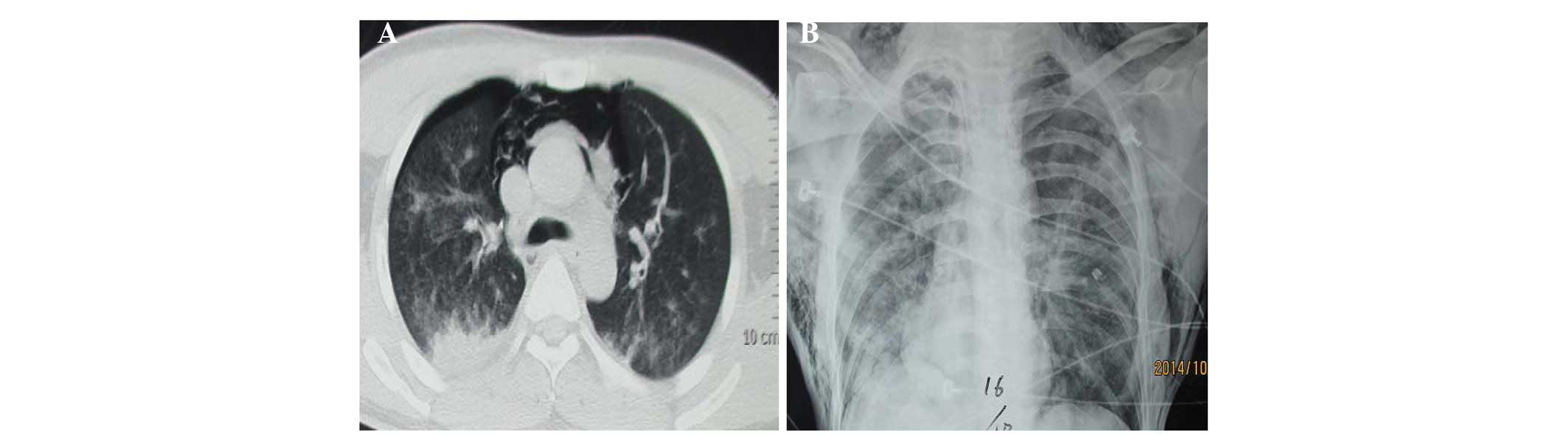
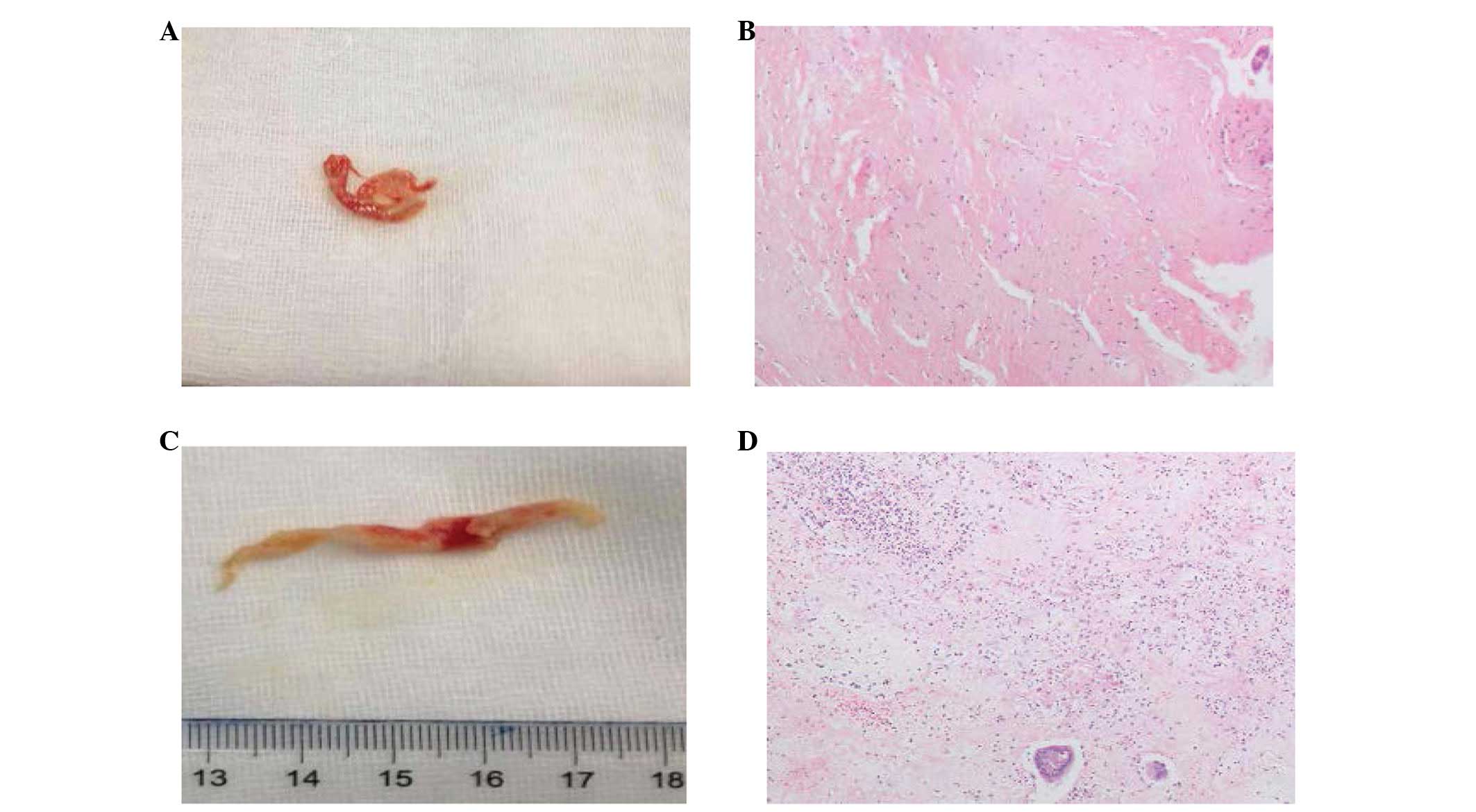
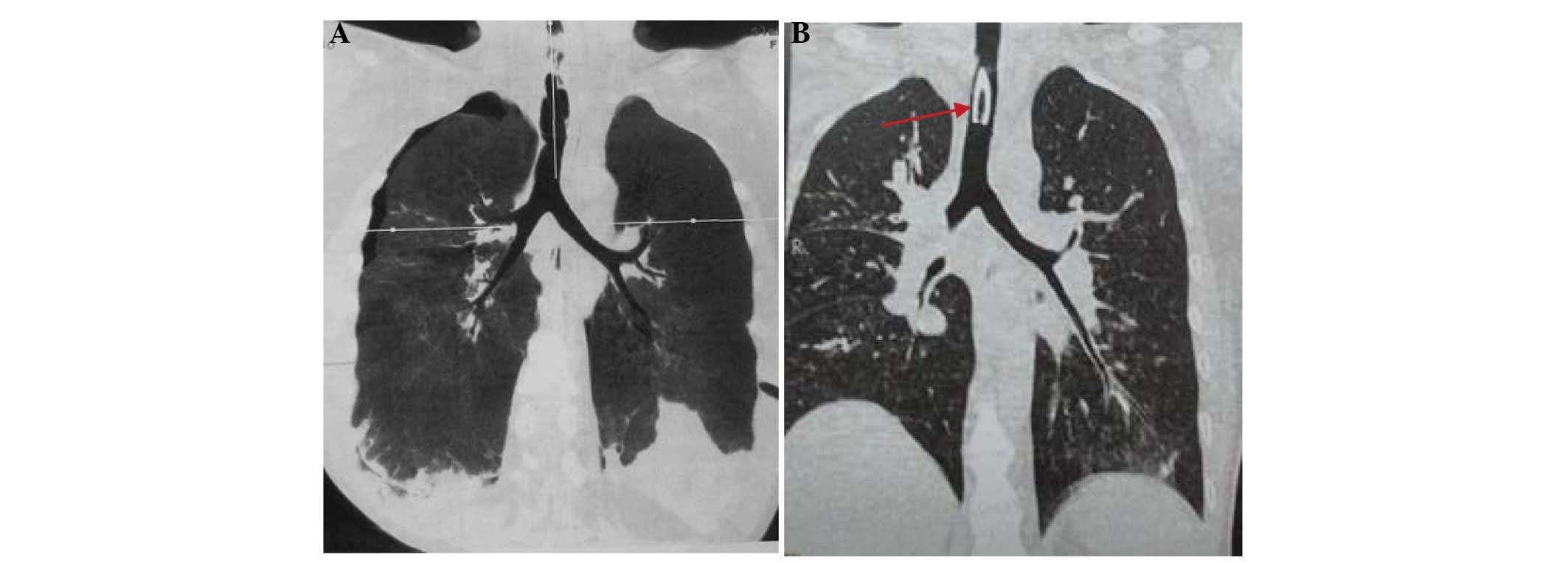
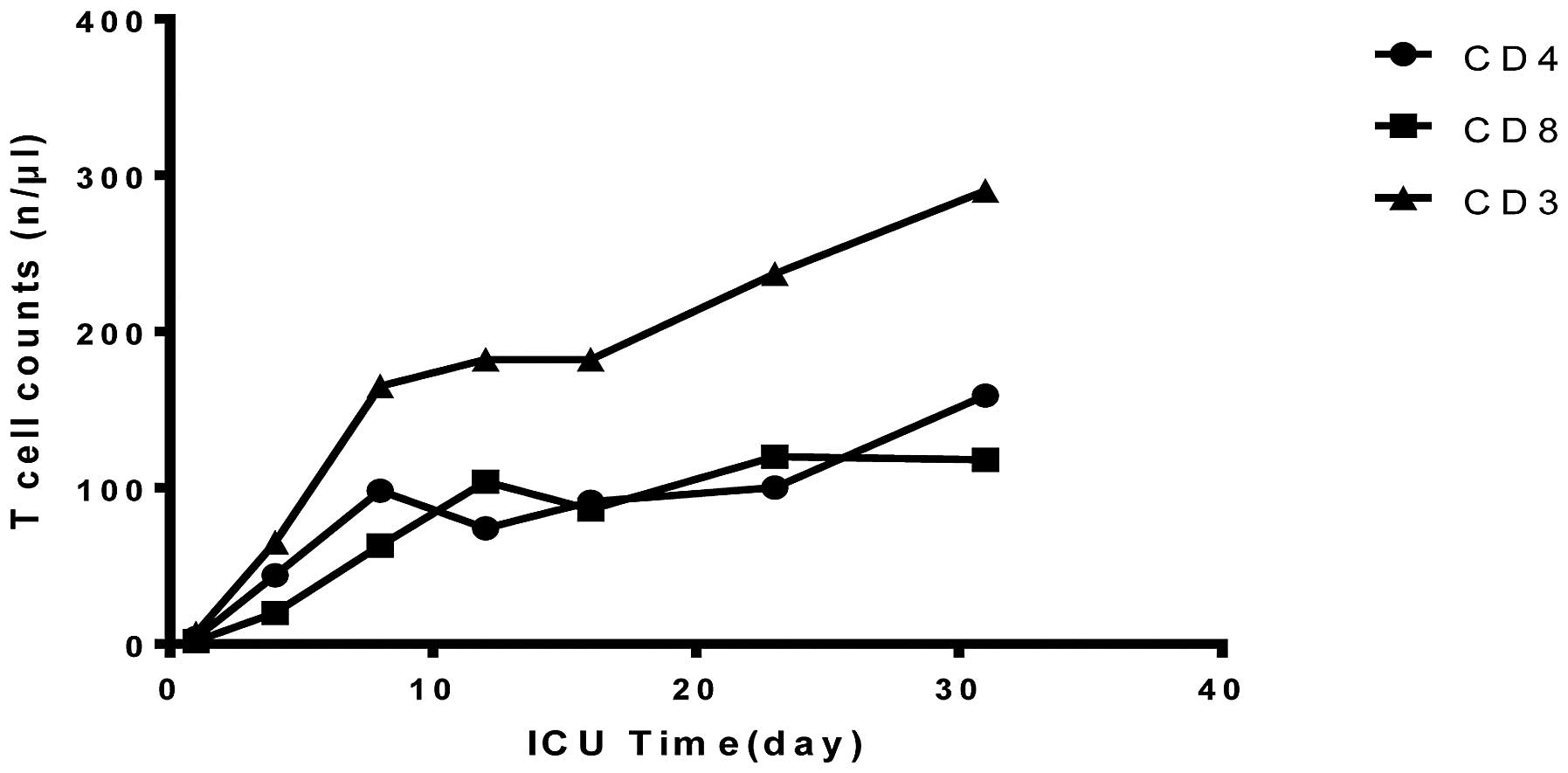
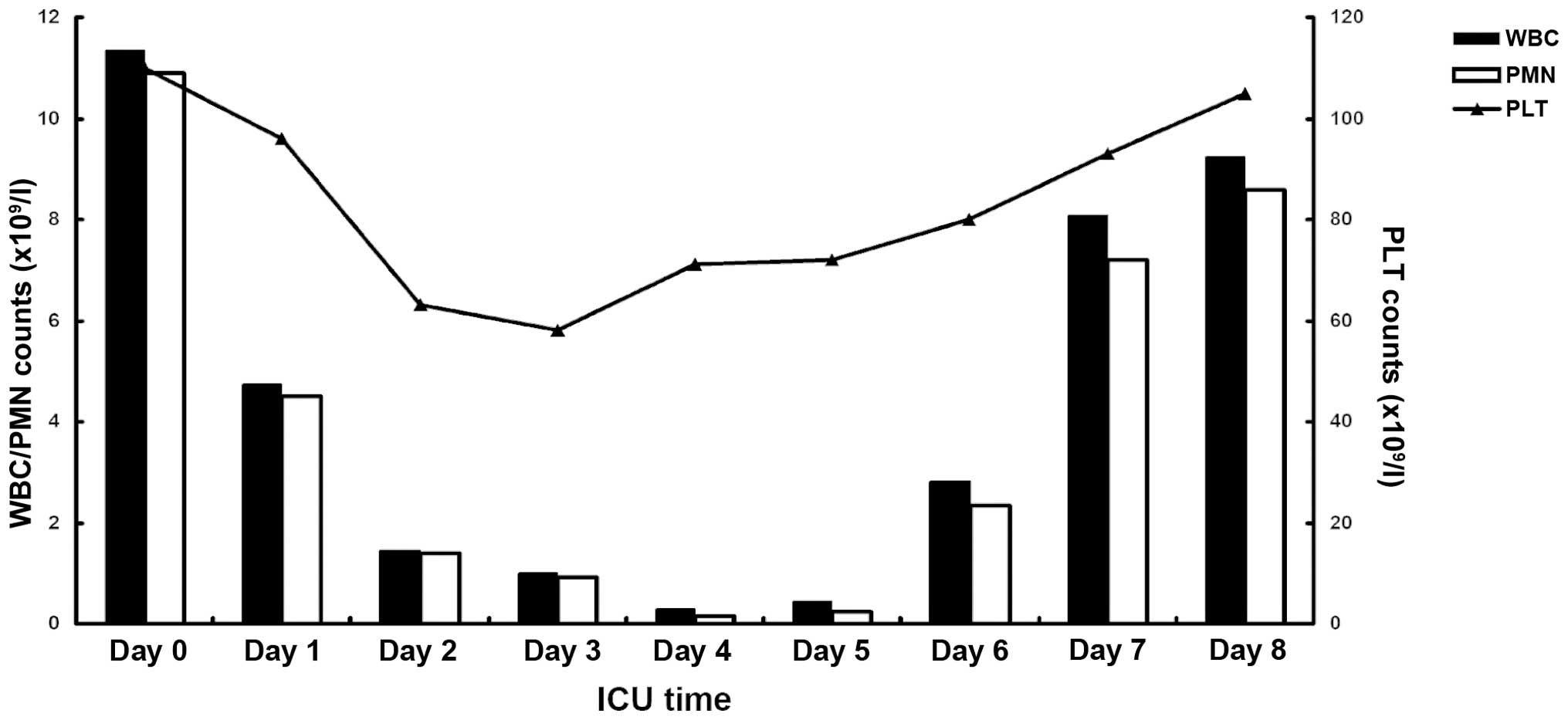
A 33-year-old man was accidentally exposed to nitrogen mustard hydrochloride in a pharmaceutical factory. The patient experienced progressing dyspnea and was immediately sent to an emergency room at the First Affiliated Hospital of China Medical University (Shenyang, China). Physical examination of the patient showed that his blood pressure was 160/90 mmHg; his respiration rate was 30 breaths/min and his heart rate was 150 bpm. Congestion of the bulbar conjunctiva was observed in the eyes, and moist rales were heard in the lungs. An arterial blood gas test revealed a pH of 7.33, a partial pressure of O2 (pO2) of 63 mmHg, a pCO2 of 51 mmHg and an elevated arterial lactate of 1.9 mmol/l. Blood cell counts revealed significant leukocytosis with a white blood cell count of 11.36×10⁹/l, of which 96% were neutrophils. A chest computed tomography scan showed mediastinal emphysema and pneumothorax (Fig. 1A). The patient had a fever, with a temperature of >39°C, and he was given an oxygen mask. The patient's blood pressure continued to increase to 165/100 mmHg, his heart rate increased to 140–150 bpm and oxygen saturation was 76% in atmospheric air. Re-examination of the arterial blood gas revealed a pH of 7.44, pO2 of 49 mmHg and pCO2 of 72 mmHg. The patient then underwent tracheotomy and mechanical ventilation. Due to the higher pressure of the mechanical ventilation, the patient suffered the complication of pneumothorax and subcutaneous emphysema (Fig. 1B). Bronchoscopy revealed mucosal edema and necrosis in the airway resulting in a partial obstruction. Mucosal pathology confirmed necrosis (Fig. 2). After 13 days of treatment, the respiratory function of the patient improved markedly, although the patient had developed airway stenosis due to the tracheotomy and mechanical ventilation. The airway stenosis was successfully relieved by local treatment, which included bronchoscopy for sputum suction, and inhalation treatment with mucosalvan (60 mg/d) and budenoside suspension (2 mg/d) (Fig. 3). Despite the improved pulmonary function, the patient had a deteriorated immune function. In the first 24 h, the levels of cellular immune biomarkers [cluster of differentiation 4 (CD4), CD8 and CD3] decreased significantly. The patient was then given thymopeptides (s.c., 1.6 mg/d) to restore immune function; however, this approach was only marginally successful during the acute phase (Fig. 4). The white blood cell count of the patient was decreased in the first 6 days, largely resulting from the loss of neutrophils, and the platelet count was also lower than normal (Fig. 5). The patient was given granulocyte-macrophage colony-stimulating factor at 200 mg/day to stimulate neutrophils. Two drops of antibiotics (whole body piperacillin i.v. 4.5 g, levofloxacin eye drops) were administered every 4 h to protect the eyes from nitrogen mustard injury, and potential infection. After being treated for 32 days, the patient fully recovered and was discharged from hospital. Informed consent was obtained from the patient for publishing this case and the associated images.

Figure 1.

(A) Chest computed tomography scan image of the patient on day 1. The scan shows mediastinal emphysema and pneumothorax. (B) Chest X-ray image of the patient on day 2 following ventilation in the intensive care unit. The image shows pneumothorax and subcutaneous emphysema.

Figure 2.

(A and C) Necrotic mucus removed by bronchoscopy. (B and D) Mucosal histology shows the necrosis of the mucus (hematoxylin and eosin staining; magnification, ×10).

Figure 3.

(A) Tracheal 3D CT scan images of the patient on day 13 after treatment showing airway mucosal damage and pneumothorax. (B) Tracheal 3D CT scan images of the patient on day 33 after treatment. Red arrows indicate metal trachea cannula. 3D CT, three-dimensional computed tomography.

Figure 4.

Functional tests of cellular immunity (CD4, CD8 and CD3 levels). Immunity decreased significantly to nearly zero in the first 24 h. Following the application of thymopeptides (1.6 mg/d), immune function recovered slowly, and the levels were up to half of normal levels in a month. ICU, intensive care unit; CD, cluster of differentiation.

Figure 5.

Numbers of WBCs were reduced in the first 6 days, largely resulting from the reduction of neutrophils (PMN). The PLT counts were also lower in the first week. Following granulocyte-macrophage colony-stimulating factor administration at 200 mg/day on the second day, the WBC and the PLT counts returned to normal. WBC, white blood cell; PLT, platelet; PMN, polymorphonuclear leukocytes; ICU, intensive care unit.

Discussion

One of the most severe side effects of nitrogen and sulfur mustard is toxicity to the respiratory tract (4,8). Transdermal injection of nitrogen mustard into rats causes alveolar epithelial cell injury and interalveolar septal thickening (9). These physiological changes cause decreased lung compliance and end-tidal volume, as well as tissue damping and elastance (10). Nitrogen mustard impairs pulmonary function by inducing lung inflammation and oxidative stress (8). Aminoguanidine, a nitric oxide synthase inhibitor, has been reported to alleviate acute lung inflammation and fibrosis caused by nitrogen mustard, suggesting that nitric oxide pathways may play a critical role in nitrogen mustard-induced acute lung injury (11). Nitrogen mustard also increases levels of connective tissue growth factor and matrix metalloproteinase-9 in rats (10). Osterlund et al (12) have shown that the activation of extracellular signal-regulated kinase 1/2, p38 mitogen-activated protein kinases and nuclear factor-κB are involved in nitrogen mustard-induced injury to human lung epithelial cells in vitro. Activation of these pathways causes subsequent elevations of inflammatory mediators, including tumor necrosis factor-α and intercellular adhesion molecule-1. Ucar et al (13) reported that melatonin, an antioxidant molecule and peroxynitrite scavenger, could reduce nitrogen mustard-induced toxicity in the lungs by restoration of oxidative and nitrosative stress markers.

Nitrogen mustard has a high affinity for DNA guanine residues and forms adducts and crosslinks with DNA, RNA and proteins; therefore, nitrogen mustard is potentially mutagenic and carcinogenic (14). Overexpression of the glutathione-S-transferase (GST) subfamily member GSTA2 has been found to protect cells against nitrogen mustard-induced cell cycle arrest and apoptosis (15). Recently, Inturi et al (16) studied the mechanism of DNA repair following nitrogen mustard-induced double-strand breaks. They demonstrated that homologous recombination repair pathways were critical in DNA repair following nitrogen mustard toxicity, which could be useful in developing novel therapeutic strategies against nitrogen mustard-associated DNA damage. In addition, DNA repair following DNA damage caused by the nitrogen mustard HN-1 depends on the pathway affecting base excision repair, but the repair process associated with HN-2 primarily requires the activation of a nucleotide excision repair pathway, suggesting that HN-1 and HN-2 may induce different types of cellular damage (17).

As there is no known antidote specifically for toxicity induced by nitrogen mustard, the most efficient treatment to decrease tissue damage is to reduce absorption by using water or potassium permanganate (18). Other methods include organ support therapy, prevention of infection and nutritional support. To the best of our knowledge, there is no case report in recent years regarding human nitrogen mustard exposure. In the present case, the patient presented with symptoms of severe respiratory failure in the first 48 h, with a reduced white blood cell count and complications that included pneumothorax and mediastinal emphysema. Therapies including respiratory support treatment, sputum drainage and airway pressure control played a large role in the successful treatment in this case.

When the temperature is >70°C, nitrogen mustard is in the gaseous state; therefore, at this temperature, nitrogen mustard vapor can potentially be inhaled. The nitrogen mustard in the gaseous state can cause necrosis or apoptosis of bronchial epithelial cells (19). Once nitrogen mustards bind to proteins in the human body, it will be slowly released from the tissues or blood, resulting in multiple organ injuries. The myelosuppression was severe in the present case, and it took 7–10 days for the platelets and white blood cells to recover. Hugel et al (20) reported the occurrence of sulfur mustard-induced neutrophil apoptosis. The patient in the present case had symptoms of ocular tissue injury following exposure to nitrogen mustards. Antibiotics were administered to protect the eyes from nitrogen mustard injury and the potential infection; the ocular symptoms disappeared on day 16.

In conclusion, nitrogen mustards can cause severe respiratory injury and they can also damage hematopoietic lineages and immune cells. Timely comprehensive treatment is required to minimize the toxicity caused by nitrogen mustards. The present study demonstrated the importance of multidisciplinary treatments in the intensive care unit.

Acknowledgements

The present study was supported by the National Natural Science Foundation of China (grant no. 81301619) and Shenyang Science and Technology plan projects (grant no. F13-220-9-11).

References

1 

Ma HJ, Zhao G, Shi F and Wang YX: Eruptive cherry angiomas associated with vitiligo: Provoked by topical nitrogen mustard? J Dermatol. 33:877–879. 2006. View Article : Google Scholar : PubMed/NCBI

2 

Abel EA, Sendagorta E and Hoppe RT: Cutaneous malignancies and metastatic squamous cell carcinoma following topical therapies for mycosis fungoides. J Am Acad Dermatol. 14:1029–1038. 1986. View Article : Google Scholar : PubMed/NCBI

3 

Zhu LL, Zheng S, Wei H, Hong YX, Zhang L, Zhang L, Chen HD and Gao XH: Multiple cutaneous malignancies and cherry hemangiomas in a vitiligo patient treated with topical nitrogen mustard. Dermatol Ther. 27:52–54. 2014. View Article : Google Scholar : PubMed/NCBI

4 

Weinberger B, Laskin JD, Sunil VR, Sinko PJ, Heck DE and Laskin DL: Sulfur mustard-induced pulmonary injury: Therapeutic approaches to mitigating toxicity. Pulm Pharmacol Ther. 24:92–99. 2011. View Article : Google Scholar : PubMed/NCBI

5 

Malaviya R, Sunil VR, Cervelli J, Anderson DR, Holmes WW, Conti ML, Gordon RE, Laskin JD and Laskin DL: Inflammatory effects of inhaled sulfur mustard in rat lung. Toxicol Appl Pharmacol. 248:89–99. 2010. View Article : Google Scholar : PubMed/NCBI

6 

Shakarjian MP, Heck DE, Gray JP, Sinko PJ, Gordon MK, Casillas RP, Heindel ND, Gerecke DR, Laskin DL and Laskin JD: Mechanisms mediating the vesicant actions of sulfur mustard after cutaneous exposure. Toxicol Sci. 114:5–19. 2010. View Article : Google Scholar : PubMed/NCBI

7 

Wang GQ and Xia ZF: Tissue injury by hot fluid containing nitrogen mustard. Burns. 33:923–926. 2007. View Article : Google Scholar : PubMed/NCBI

8 

Sunil VR, Vayas KN, Cervelli JA, Malaviya R, Hall L, Massa CB, Gow AJ, Laskin JD and Laskin DL: Pentoxifylline attenuates nitrogen mustard-induced acute lung injury, oxidative stress and inflammation. Exp Mol Pathol. 97:89–98. 2014. View Article : Google Scholar : PubMed/NCBI

9 

Macit E, Yaren H, Aydin I, Kunak ZI, Yaman H, Onguru O, Uysal B, Korkmaz A, Turel S and Kenar L: The protective effect of melatonin and S-methylisothiourea treatments in nitrogen mustard induced lung toxicity in rats. Environ Toxicol Pharmacol. 36:1283–1290. 2013. View Article : Google Scholar : PubMed/NCBI

10 

Sunil VR, Patel KJ, Shen J, Reimer D, Gow AJ, Laskin JD and Laskin DL: Functional and inflammatory alterations in the lung following exposure of rats to nitrogen mustard. Toxicol Appl Pharmacol. 250:10–18. 2011. View Article : Google Scholar : PubMed/NCBI

11 

Malaviya R, Venosa A, Hall L, Gow AJ, Sinko PJ, Laskin JD and Laskin DL: Attenuation of acute nitrogen mustard-induced lung injury, inflammation and fibrogenesis by a nitric oxide synthase inhibitor. Toxicol Appl Pharmacol. 265:279–291. 2012. View Article : Google Scholar : PubMed/NCBI

12 

Osterlund C, Lilliehöök B, Ekstrand-Hammarström B, Sandström T and Bucht A: The nitrogen mustard melphalan activates mitogen-activated phosphorylated kinases (MAPK), nuclear factor-kappaB and inflammatory response in lung epithelial cells. J Appl Toxicol. 25:328–337. 2005. View Article : Google Scholar : PubMed/NCBI

13 

Ucar M, Korkmaz A, Reiter RJ, Yaren H, Oter S, Kurt B and Topal T: Melatonin alleviates lung damage induced by the chemical warfare agent nitrogen mustard. Toxicol Lett. 173:124–131. 2007. View Article : Google Scholar : PubMed/NCBI

14 

Ramsay DL, Meller JA and Zackheim HS: Topical treatment of early cutaneous T-cell lymphoma. Hematol Oncol Clin North Am. 9:1031–1056. 1995.PubMed/NCBI

15 

Xie J, Shults K, Flye L, Jiang F, Head DR and Briggs RC: Overexpression of GSTA2 protects against cell cycle arrest and apoptosis induced by the DNA inter-strand crosslinking nitrogen mustard, mechlorethamine. J Cell Biochem. 95:339–351. 2005. View Article : Google Scholar : PubMed/NCBI

16 

Inturi S, TewariSingh N, Agarwal C, White CW and Agarwal R: Activation of DNA damage repair pathways in response to nitrogen mustard-induced DNA damage and toxicity in skin keratinocytes. Mutat Res 763–764. 53–63. 2014. View Article : Google Scholar

17 

DeAlencar TA, Leitão AC and Lage C: Nitrogen mustard- and half-mustard-induced damage in Escherichia coli requires different DNA repair pathways. Mutat Res. 582:105–115. 2005. View Article : Google Scholar : PubMed/NCBI

18 

Eldad A, Weinberg A, Breiterman S, Chaouat M, Palanker D and Ben-Bassat H: Early nonsurgical removal of chemically injured tissue enhances wound healing in partial thickness burns. Burns. 24:166–172. 1998. View Article : Google Scholar : PubMed/NCBI

19 

Rappeneau S, BaezaSquiban A, Jeulin C and Marano F: Protection from cytotoxic effects induced by the nitrogen mustard mechlorethamine on human bronchial epithelial cells in vitro. Toxicol Sci. 54:212–221. 2000. View Article : Google Scholar : PubMed/NCBI

20 

Hugel B, Weltin D, Holl V, Marchal J, Dufour P, Freyssinet JM and Bischoff PL: Assessment of apoptosis occurring in spleen cells from nitrogen mustard-treated or gamma-irradiated mice. Anticancer Res. 18:3289–3294. 1998.PubMed/NCBI

Related Articles

  • Abstract
  • View
  • Download
  • Twitter
Copy and paste a formatted citation
Spandidos Publications style
Zhang X, Zhang Z, Chen S, Zhao D, Zhang F, Hu Z, Xiao F and Ma X: Nitrogen mustard hydrochloride-induced acute respiratory failure and myelosuppression: A case report. Exp Ther Med 10: 1293-1296, 2015.
APA
Zhang, X., Zhang, Z., Chen, S., Zhao, D., Zhang, F., Hu, Z. ... Ma, X. (2015). Nitrogen mustard hydrochloride-induced acute respiratory failure and myelosuppression: A case report. Experimental and Therapeutic Medicine, 10, 1293-1296. https://doi.org/10.3892/etm.2015.2664
MLA
Zhang, X., Zhang, Z., Chen, S., Zhao, D., Zhang, F., Hu, Z., Xiao, F., Ma, X."Nitrogen mustard hydrochloride-induced acute respiratory failure and myelosuppression: A case report". Experimental and Therapeutic Medicine 10.4 (2015): 1293-1296.
Chicago
Zhang, X., Zhang, Z., Chen, S., Zhao, D., Zhang, F., Hu, Z., Xiao, F., Ma, X."Nitrogen mustard hydrochloride-induced acute respiratory failure and myelosuppression: A case report". Experimental and Therapeutic Medicine 10, no. 4 (2015): 1293-1296. https://doi.org/10.3892/etm.2015.2664
Copy and paste a formatted citation
x
Spandidos Publications style
Zhang X, Zhang Z, Chen S, Zhao D, Zhang F, Hu Z, Xiao F and Ma X: Nitrogen mustard hydrochloride-induced acute respiratory failure and myelosuppression: A case report. Exp Ther Med 10: 1293-1296, 2015.
APA
Zhang, X., Zhang, Z., Chen, S., Zhao, D., Zhang, F., Hu, Z. ... Ma, X. (2015). Nitrogen mustard hydrochloride-induced acute respiratory failure and myelosuppression: A case report. Experimental and Therapeutic Medicine, 10, 1293-1296. https://doi.org/10.3892/etm.2015.2664
MLA
Zhang, X., Zhang, Z., Chen, S., Zhao, D., Zhang, F., Hu, Z., Xiao, F., Ma, X."Nitrogen mustard hydrochloride-induced acute respiratory failure and myelosuppression: A case report". Experimental and Therapeutic Medicine 10.4 (2015): 1293-1296.
Chicago
Zhang, X., Zhang, Z., Chen, S., Zhao, D., Zhang, F., Hu, Z., Xiao, F., Ma, X."Nitrogen mustard hydrochloride-induced acute respiratory failure and myelosuppression: A case report". Experimental and Therapeutic Medicine 10, no. 4 (2015): 1293-1296. https://doi.org/10.3892/etm.2015.2664
Follow us
  • Twitter
  • LinkedIn
  • Facebook
About
  • Spandidos Publications
  • Careers
  • Cookie Policy
  • Privacy Policy
How can we help?
  • Help
  • Live Chat
  • Contact
  • Email to our Support Team