Spandidos Publications Logo
  • About
    • About Spandidos
    • Aims and Scopes
    • Abstracting and Indexing
    • Editorial Policies
    • Reprints and Permissions
    • Job Opportunities
    • Terms and Conditions
    • Contact
  • Journals
    • All Journals
    • Oncology Letters
      • Oncology Letters
      • Information for Authors
      • Editorial Policies
      • Editorial Board
      • Aims and Scope
      • Abstracting and Indexing
      • Bibliographic Information
      • Archive
    • International Journal of Oncology
      • International Journal of Oncology
      • Information for Authors
      • Editorial Policies
      • Editorial Board
      • Aims and Scope
      • Abstracting and Indexing
      • Bibliographic Information
      • Archive
    • Molecular and Clinical Oncology
      • Molecular and Clinical Oncology
      • Information for Authors
      • Editorial Policies
      • Editorial Board
      • Aims and Scope
      • Abstracting and Indexing
      • Bibliographic Information
      • Archive
    • Experimental and Therapeutic Medicine
      • Experimental and Therapeutic Medicine
      • Information for Authors
      • Editorial Policies
      • Editorial Board
      • Aims and Scope
      • Abstracting and Indexing
      • Bibliographic Information
      • Archive
    • International Journal of Molecular Medicine
      • International Journal of Molecular Medicine
      • Information for Authors
      • Editorial Policies
      • Editorial Board
      • Aims and Scope
      • Abstracting and Indexing
      • Bibliographic Information
      • Archive
    • Biomedical Reports
      • Biomedical Reports
      • Information for Authors
      • Editorial Policies
      • Editorial Board
      • Aims and Scope
      • Abstracting and Indexing
      • Bibliographic Information
      • Archive
    • Oncology Reports
      • Oncology Reports
      • Information for Authors
      • Editorial Policies
      • Editorial Board
      • Aims and Scope
      • Abstracting and Indexing
      • Bibliographic Information
      • Archive
    • Molecular Medicine Reports
      • Molecular Medicine Reports
      • Information for Authors
      • Editorial Policies
      • Editorial Board
      • Aims and Scope
      • Abstracting and Indexing
      • Bibliographic Information
      • Archive
    • World Academy of Sciences Journal
      • World Academy of Sciences Journal
      • Information for Authors
      • Editorial Policies
      • Editorial Board
      • Aims and Scope
      • Abstracting and Indexing
      • Bibliographic Information
      • Archive
    • International Journal of Functional Nutrition
      • International Journal of Functional Nutrition
      • Information for Authors
      • Editorial Policies
      • Editorial Board
      • Aims and Scope
      • Abstracting and Indexing
      • Bibliographic Information
      • Archive
    • International Journal of Epigenetics
      • International Journal of Epigenetics
      • Information for Authors
      • Editorial Policies
      • Editorial Board
      • Aims and Scope
      • Abstracting and Indexing
      • Bibliographic Information
      • Archive
    • Medicine International
      • Medicine International
      • Information for Authors
      • Editorial Policies
      • Editorial Board
      • Aims and Scope
      • Abstracting and Indexing
      • Bibliographic Information
      • Archive
  • Articles
  • Information
    • Information for Authors
    • Information for Reviewers
    • Information for Librarians
    • Information for Advertisers
    • Conferences
  • Language Editing
Spandidos Publications Logo
  • About
    • About Spandidos
    • Aims and Scopes
    • Abstracting and Indexing
    • Editorial Policies
    • Reprints and Permissions
    • Job Opportunities
    • Terms and Conditions
    • Contact
  • Journals
    • All Journals
    • Biomedical Reports
      • Information for Authors
      • Editorial Policies
      • Editorial Board
      • Aims and Scope
      • Abstracting and Indexing
      • Bibliographic Information
      • Archive
    • Experimental and Therapeutic Medicine
      • Information for Authors
      • Editorial Policies
      • Editorial Board
      • Aims and Scope
      • Abstracting and Indexing
      • Bibliographic Information
      • Archive
    • International Journal of Epigenetics
      • Information for Authors
      • Editorial Policies
      • Editorial Board
      • Aims and Scope
      • Abstracting and Indexing
      • Bibliographic Information
      • Archive
    • International Journal of Functional Nutrition
      • Information for Authors
      • Editorial Policies
      • Editorial Board
      • Aims and Scope
      • Abstracting and Indexing
      • Bibliographic Information
      • Archive
    • International Journal of Molecular Medicine
      • Information for Authors
      • Editorial Policies
      • Editorial Board
      • Aims and Scope
      • Abstracting and Indexing
      • Bibliographic Information
      • Archive
    • International Journal of Oncology
      • Information for Authors
      • Editorial Policies
      • Editorial Board
      • Aims and Scope
      • Abstracting and Indexing
      • Bibliographic Information
      • Archive
    • Medicine International
      • Information for Authors
      • Editorial Policies
      • Editorial Board
      • Aims and Scope
      • Abstracting and Indexing
      • Bibliographic Information
      • Archive
    • Molecular and Clinical Oncology
      • Information for Authors
      • Editorial Policies
      • Editorial Board
      • Aims and Scope
      • Abstracting and Indexing
      • Bibliographic Information
      • Archive
    • Molecular Medicine Reports
      • Information for Authors
      • Editorial Policies
      • Editorial Board
      • Aims and Scope
      • Abstracting and Indexing
      • Bibliographic Information
      • Archive
    • Oncology Letters
      • Information for Authors
      • Editorial Policies
      • Editorial Board
      • Aims and Scope
      • Abstracting and Indexing
      • Bibliographic Information
      • Archive
    • Oncology Reports
      • Information for Authors
      • Editorial Policies
      • Editorial Board
      • Aims and Scope
      • Abstracting and Indexing
      • Bibliographic Information
      • Archive
    • World Academy of Sciences Journal
      • Information for Authors
      • Editorial Policies
      • Editorial Board
      • Aims and Scope
      • Abstracting and Indexing
      • Bibliographic Information
      • Archive
  • Articles
  • Information
    • For Authors
    • For Reviewers
    • For Librarians
    • For Advertisers
    • Conferences
  • Language Editing
Login Register Submit
  • This site uses cookies
  • You can change your cookie settings at any time by following the instructions in our Cookie Policy. To find out more, you may read our Privacy Policy.

    I agree
Search articles by DOI, keyword, author or affiliation
Search
Advanced Search
presentation
Experimental and Therapeutic Medicine
Join Editorial Board Propose a Special Issue
Print ISSN: 1792-0981 Online ISSN: 1792-1015
Journal Cover
October-2015 Volume 10 Issue 4

Full Size Image

Sign up for eToc alerts
Recommend to Library

Journals

International Journal of Molecular Medicine

International Journal of Molecular Medicine

International Journal of Molecular Medicine is an international journal devoted to molecular mechanisms of human disease.

International Journal of Oncology

International Journal of Oncology

International Journal of Oncology is an international journal devoted to oncology research and cancer treatment.

Molecular Medicine Reports

Molecular Medicine Reports

Covers molecular medicine topics such as pharmacology, pathology, genetics, neuroscience, infectious diseases, molecular cardiology, and molecular surgery.

Oncology Reports

Oncology Reports

Oncology Reports is an international journal devoted to fundamental and applied research in Oncology.

Experimental and Therapeutic Medicine

Experimental and Therapeutic Medicine

Experimental and Therapeutic Medicine is an international journal devoted to laboratory and clinical medicine.

Oncology Letters

Oncology Letters

Oncology Letters is an international journal devoted to Experimental and Clinical Oncology.

Biomedical Reports

Biomedical Reports

Explores a wide range of biological and medical fields, including pharmacology, genetics, microbiology, neuroscience, and molecular cardiology.

Molecular and Clinical Oncology

Molecular and Clinical Oncology

International journal addressing all aspects of oncology research, from tumorigenesis and oncogenes to chemotherapy and metastasis.

World Academy of Sciences Journal

World Academy of Sciences Journal

Multidisciplinary open-access journal spanning biochemistry, genetics, neuroscience, environmental health, and synthetic biology.

International Journal of Functional Nutrition

International Journal of Functional Nutrition

Open-access journal combining biochemistry, pharmacology, immunology, and genetics to advance health through functional nutrition.

International Journal of Epigenetics

International Journal of Epigenetics

Publishes open-access research on using epigenetics to advance understanding and treatment of human disease.

Medicine International

Medicine International

An International Open Access Journal Devoted to General Medicine.

Journal Cover
October-2015 Volume 10 Issue 4

Full Size Image

Sign up for eToc alerts
Recommend to Library

  • Article
  • Citations
    • Cite This Article
    • Download Citation
    • Create Citation Alert
    • Remove Citation Alert
    • Cited By
  • Similar Articles
    • Related Articles (in Spandidos Publications)
    • Similar Articles (Google Scholar)
    • Similar Articles (PubMed)
  • Download PDF
  • Download XML
  • View XML
Article Open Access

Relief of diabetes by duodenal‑jejunal bypass sleeve implantation in the high‑fat diet and streptozotocin‑induced diabetic rat model is associated with an increase in GLP‑1 levels and the number of GLP‑1‑positive cells

  • Authors:
    • Jinquan Shuang
    • Ying Zhang
    • Limei Ma
    • Xueming Tan
    • Jing Huang
    • Xiang Wang
    • Guanyin Xiong
    • Zhonghua Jiang
    • Xiuhua Zhang
    • Shiqing Du
    • Yongsong Gu
    • Xiangyang Shi
    • Zhining Fan
  • View Affiliations / Copyright

    Affiliations: Department of Digestive Endoscopy and Medical Center for Digestive Diseases, Second Affiliated Hospital of Nanjing Medical University, Nanjing, Jiangsu 210011, P.R. China, Department of Gastroenterology, People's Hospital of Chizhou, Chizhou, Anhui 247100, P.R. China
    Copyright: © Shuang et al. This is an open access article distributed under the terms of Creative Commons Attribution License.
  • Pages: 1355-1363
    |
    Published online on: August 4, 2015
       https://doi.org/10.3892/etm.2015.2669
  • Expand metrics +
Metrics: Total Views: 0 (Spandidos Publications: | PMC Statistics: )
Metrics: Total PDF Downloads: 0 (Spandidos Publications: | PMC Statistics: )
Cited By (CrossRef): 0 citations Loading Articles...

This article is mentioned in:


Abstract

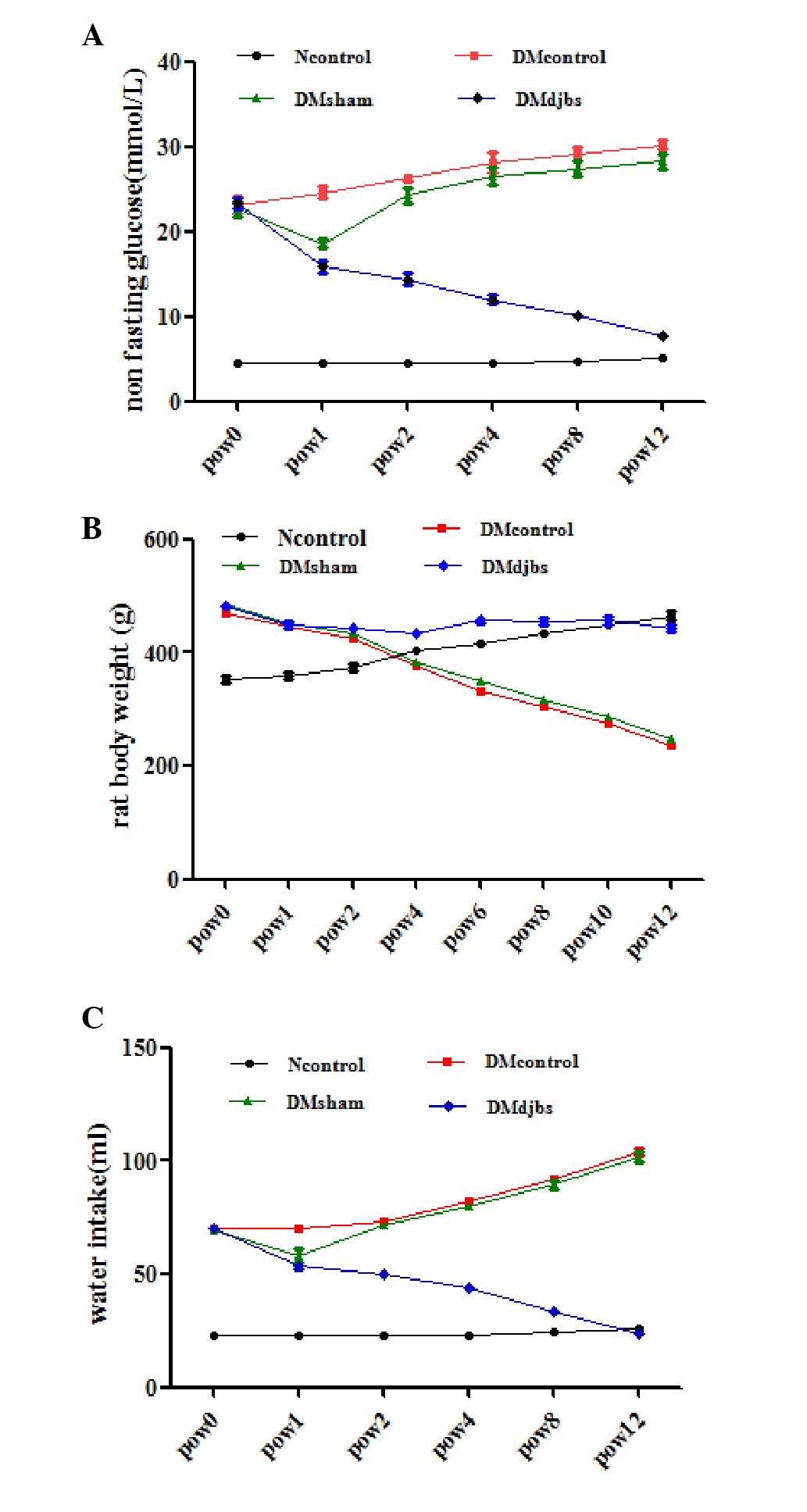
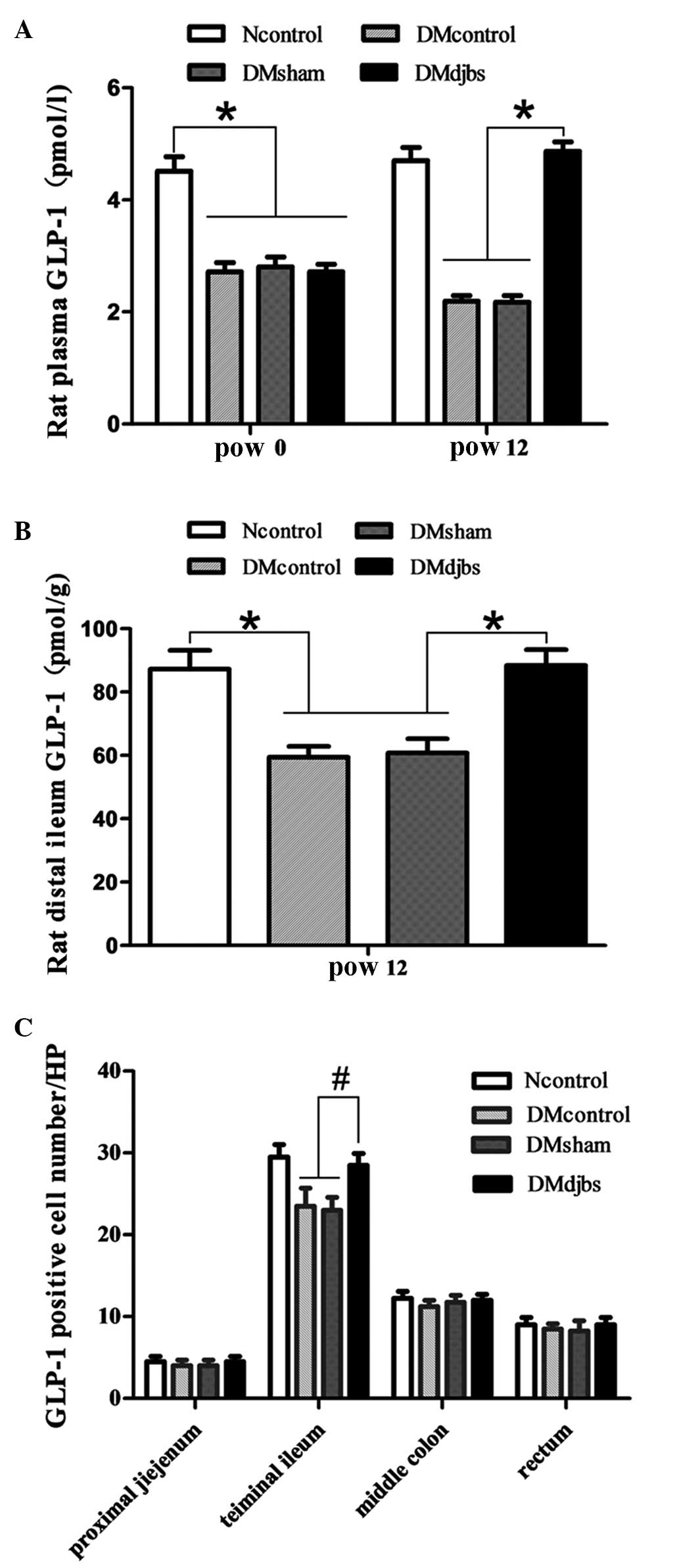
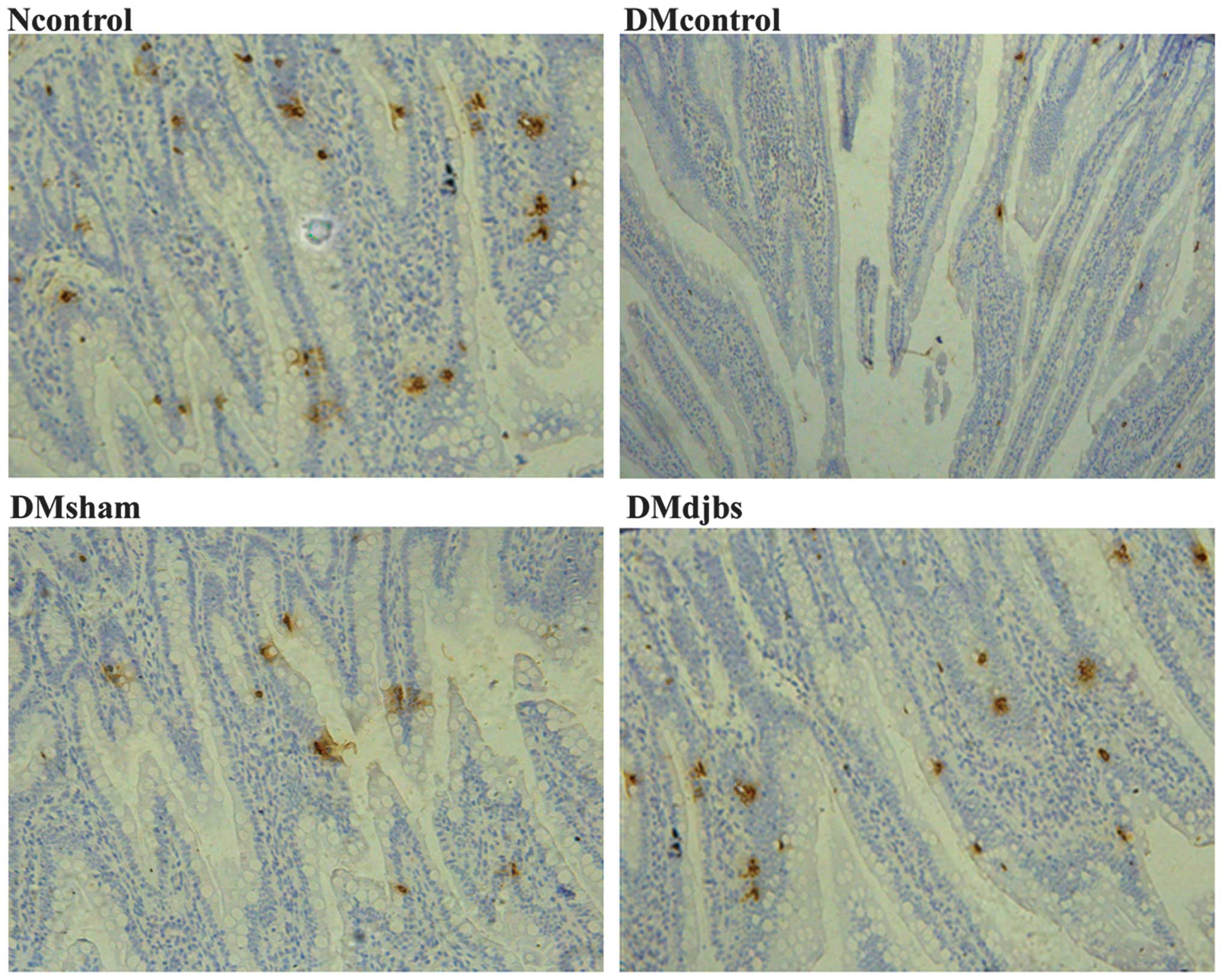
A recently invented duodenal‑jejunal bypass sleeve (DJBS) implanted in the duodenum and proximal jejunum has exhibited good glycemic control in diabetes mellitus. However, the specific mechanism by which DJBS placement induces the remission of diabetes is not well known. Previous studies have indicated that changes in the pattern of gut hormone secretion may play a role. The aim of the present study was to explore the role of intestinal L cells and the production of glucagon‑like peptide‑1 (GLP‑1) by these cells in DJBS implantation‑induced glycemic control in diabetic rats. A DJBS was placed in the proximal small intestine of rats with diabetes induced by a high‑fat diet and low‑dose streptozotocin (STZ), and the effects of the DJBS on the remission of diabetes and the GLP‑1 levels of plasma and intestinal tissues were investigated 12 weeks after DJBS placement. The number of intestinal GLP‑1 positive cells was also counted. When the DJBS had been in place for 12 weeks, the plasma glucose level of the DJBS‑implanted rats decreased significantly from 23.33±1.56 mmol/l prior to surgery to 7.70±0.84 mmol/l and the diabetes mellitus was relieved completely; however, diabetic control rats and diabetic rats subjected to sham surgery did not show any improvement. Parallel with the remission of diabetes, the plasma and distal ileum GLP‑1 levels of rats in the DJBS implantation group were also higher than those of rats in the diabetic control and sham surgery groups. The number of GLP‑1‑positive cells in the distal ileum was also higher in the DJBS implantation group than in the diabetic control and sham surgery groups (31.0±2.6 vs. 23.5±4.4 vs. 23.0±3.2 respectively; P<0.01). DJBS implantation effectively led to the remission of diabetes in rats with diabetes induced by a high‑fat diet and low‑dose STZ when implanted for 12 weeks. The remission of diabetes may be associated with the increase in the number of L cells and elevation of GLP‑1 levels induced by DJBS implantation.
View Figures

Figure 1

Figure 2

Figure 3

Figure 4

Figure 5

View References

1 

Shaw JE, Sicree RA and Zimmet PZ: Global estimates of the prevalence of diabetes for 2010 and 2030. Diabetes Res Clin Prac. 87:4–14. 2010. View Article : Google Scholar

2 

Yang W, Lu J, Weng J, Jia W, Ji L, Xiao J, Shan Z, Liu J, Tian H, Ji Q, et al: Prevalence of diabetes among men and women in China. N Engl J Med. 362:1090–1101. 2010. View Article : Google Scholar : PubMed/NCBI

3 

Nissen SE and Wolski K: Rosiglitazone revisited: An updated meta-analysis of risk for myocardial infarction and cardiovascular mortality. Arch Intern Med. 170:1191–1201. 2010. View Article : Google Scholar : PubMed/NCBI

4 

Loke YK, Kwok CS and Singh S: Comparative cardiovascular effects of thiazolidinediones: Systematic review and meta-analysis of observational studies. BMJ. 342:d13092011. View Article : Google Scholar : PubMed/NCBI

5 

UK Prospective Diabetes Study (UKPDS) Group, . Intensive blood-glucose control with sulphonylureas or insulin compared with conventional treatment and risk of complications in patients with type 2 diabetes (UKPDS 33). Lancet. 352:837–853. 1998. View Article : Google Scholar : PubMed/NCBI

6 

Buchwald H and Oien DM: Metabolic/bariatric surgery worldwide 2008. Obes Surg. 19:1605–1611. 2009. View Article : Google Scholar : PubMed/NCBI

7 

Buchwald H, Estok R, Fahrbach K, Banel D, Jensen MD, Pories WJ, Bantle JP and Sledge I: Weight and type 2 diabetes after bariatric surgery: Systematic review and meta-analysis. Am J Med. 122:248–256. 2009. View Article : Google Scholar : PubMed/NCBI

8 

Mingrone G, Panunzi S, De Gaetano A, Guidone C, Iaconelli A, Leccesi L, Nanni G, Pomp A, Castagneto M, Ghirlanda G and Rubino F: Bariatric surgery versus conventional medical therapy for type 2 diabetes. N Engl J Med. 366:1577–1585. 2012. View Article : Google Scholar : PubMed/NCBI

9 

Dogan K, Betzel B, Homan J, Aarts EO, Ploeger N, de Boer H, Aufenacker TJ, van Laarhoven CJ, Janssen IM and Berends FJ: Long-term effects of laparoscopic Roux-en-Y gastric bypass on diabetes mellitus, hypertension and dyslipidaemia in morbidly obese patients. Obes Surg. 24:1835–1842. 2014. View Article : Google Scholar : PubMed/NCBI

10 

Adams TD, Gress RE, Smith SC, Halverson RC, Simper SC, Rosamond WD, Lamonte MJ, Stroup AM and Hunt SC: Long-term mortality after gastric bypass surgery. N Engl J Med. 357:753–761. 2007. View Article : Google Scholar : PubMed/NCBI

11 

Encinosa WE, Bernard DM, Steiner CA and Chen CC: Use and costs of bariatric surgery and prescription weight-loss medications. Health Aff (Millwood). 24:1039–1046. 2005. View Article : Google Scholar : PubMed/NCBI

12 

Rodriguez L, Reyes E, Fagalde P, Oltra MS, Saba J, Aylwin CG, Prieto C, Ramos A, Galvao M, Gersin KS and Sorli C: Pilot clinical study of an endoscopic, removable duodenal-jejunal bypass liner for the treatment of type 2 diabetes. Diabetes Technol Ther. 11:725–732. 2009. View Article : Google Scholar : PubMed/NCBI

13 

Milone L, Gagner M, Ueda K, Bardaro SJ and Ki-Young Y: Effect of a polyethylene endoluminal duodeno-jejunal tube (EDJT) on weight gain: A feasibility study in a porcine model. Obes Surg. 16:620–626. 2006. View Article : Google Scholar : PubMed/NCBI

14 

Gersin KS, Keller JE, Stefanidis D, Simms CS, Abraham DD, Deal SE, Kuwada TS and Heniford BT: Duodenal- jejunal bypass sleeve: A totally endoscopic device for the treatment of morbid obesity. Surg Innov. 14:275–278. 2007. View Article : Google Scholar : PubMed/NCBI

15 

Schouten R, Rijs CS, Bouvy ND, Hameeteman W, Koek GH, Janssen IM and Greve JW: A multicenter, randomized efficacy study of the EndoBarrier gastrointestinal liner for presurgical weight loss prior to bariatric surgery. Ann Surg. 251:236–243. 2010. View Article : Google Scholar : PubMed/NCBI

16 

de Jonge C, Rensen SS, Verdam FJ, Vincent RP, Bloom SR, Buurman WA, le Roux CW, Schaper NC, Bouvy ND and Greve JW: Endoscopic duodenal-jejunal bypass liner rapidly improves type 2 diabetes. Obes Surg. 23:1354–1360. 2013. View Article : Google Scholar : PubMed/NCBI

17 

Mumphrey MB, Patterson LM, Zheng H and Berthoud HR: Roux-en-Y gastric bypass surgery increases number but not density of CCK-, GLP-1-, 5-HT- and neurotensin-expressing enteroendocrine cells in rats. Neurogastroenterol Motil. 25:e70–e79. 2013. View Article : Google Scholar : PubMed/NCBI

18 

Muñoz R, Carmody JS, Stylopoulos N, Davis P and Kaplan LM: Isolated duodenal exclusion increases energy expenditure and improves glucose homeostasis in diet-induced obese rats. Am J Physiol Regul Integr Comp Physiol. 303:R985–R993. 2012. View Article : Google Scholar : PubMed/NCBI

19 

Holst JJ: Enteroendocrine secretion of gut hormones in diabetes, obesity and after bariatric surgery. Curr Opin Pharmacol. 13:983–988. 2013. View Article : Google Scholar : PubMed/NCBI

20 

Holst JJ and Gromada J: Role of incretin hormones in the regulation of insulin secretion in diabetic and nondiabetic humans. Am J Physiol Endocrinol Metab. 287:E199–E206. 2004. View Article : Google Scholar : PubMed/NCBI

21 

Perley MJ and Kipnis DM: Plasma insulin responses to oral and intravenous glucose: Studies in normal and diabetic sujbjects. J Clin Invest. 46:1954–1962. 1967. View Article : Google Scholar : PubMed/NCBI

22 

McIntyre N, Holdsworth CD and Turner DS: New interpretation of oral glucose tolerance. Lancet. 4:20–21. 1964. View Article : Google Scholar

23 

Morgan LM: The role of the entero-insular axis in insulin secretion. Biochem Soc Trans. 18:101–102. 1990. View Article : Google Scholar : PubMed/NCBI

24 

Eissele R, Göke R, Willemer S, Harthus HP, Vermeer H, Arnold R and Göke B: Glucagon-like peptide-1 cells in the gastrointestinal-tract and pancreas of rat, pig and man. Eur J Clin Invest. 22:283–291. 1992. View Article : Google Scholar : PubMed/NCBI

25 

Hansen CF, Bueter M, Theis N, Lutz T, Paulsen S, Dalbøge LS, Vrang N and Jelsing J: Hypertrophy dependent doubling of L-cells in Roux-en-Y gastric bypass operated rats. PLoS One. 8:656962013. View Article : Google Scholar

26 

Aguirre V, Stylopoulos N, Grinbaum R and Kaplan LM: An endoluminal sleeve induces substantial weight loss and normalizes glucose homeostasis in rats with diet-induced obesity. Obesity (Silver Spring). 16:2585–2592. 2008. View Article : Google Scholar : PubMed/NCBI

27 

Srinivasan K, Viswanad B, Asrat L, Kaul CL and Ramarao P: Combination of high-fat diet-fed and low-dose streptozotocin-treated rat: A model for type 2 diabetes and pharmacological screening. Pharmacol Res. 52:313–320. 2005. View Article : Google Scholar : PubMed/NCBI

28 

Liu SZ, Deng YX, Chen B, Zhang XJ, Shi QZ and Qiu XM: Antihyperglycemic effect of the traditional Chinese scutellaria-coptis herb couple and its main components in streptozotocin-induced diabetic rats. J Ethnopharmacol. 145:490–498. 2013. View Article : Google Scholar : PubMed/NCBI

29 

Tolhurst G, Reimann F and Gribble FM: Nutritional regulation of glucagon-like peptide-1 secretion. J Physiol. 587:Pt 127–32. 2009. View Article : Google Scholar : PubMed/NCBI

30 

Gautier JF, Choukem SP and Girard J: Physiology of incretins (GIP and GLP-1) and abnormalities in type 2 diabetes. Diabetes Metab. 34 (Suppl 2):S65–S72. 2008. View Article : Google Scholar : PubMed/NCBI

31 

Vilsbøll T, Krarup T, Deacon CF, Madsbad S and Holst JJ: Reduced postprandial concentrations of intact biologically active glucagon like peptide 1 in type 2 diabetes patients. Diabetes. 50:609–613. 2001. View Article : Google Scholar : PubMed/NCBI

32 

ToftNielsen MB, Damholt MB, Madsbad S, Hilsted LM, Hughes TE, Michelsen BK and Holst JJ: Determinants of the impaired secretion of glucagon-like peptide-1 in type 2 diabetes patients. J Clin Endocrinol Metab. 86:3717–3723. 2001. View Article : Google Scholar : PubMed/NCBI

33 

Dar MS, Chapman WH III, Pender JR, Drake AJ III, O'Brien K, Tanenberg RJ, Dohm GL and Pories WJ: GLP-1 response to a mixed meal: What happens 10 years after Roux-en-Y gastric bypass (RYGB)? Obes Surg. 22:1077–1083. 2012. View Article : Google Scholar : PubMed/NCBI

34 

Chaikomin R, Doran S, Jones KL, FeinleBisset C, O'Donovan D, Rayner CK and Horowitz M: Initially more rapid small intestinal glucose delivery increases plasma insulin, GIP and GLP-1 but does not improve overall glycemia in healthy subjects. Am J Physiol Endocrinol Metab. 289:E504–E507. 2005. View Article : Google Scholar : PubMed/NCBI

35 

Pilichiewicz AN, Chaikomin R, Brennan IM, Wishart JM, Rayner CK, Jones KL, Smout AJ, Horowitz M and Feinle-Bisset C: Load-dependent effects of duodenal glucose on glycemia, gastrointestinal hormones, antropyloroduodenal motility and energy intake in healthy men. Am J Physiol Endocrinol Metab. 293:E743–E753. 2007. View Article : Google Scholar : PubMed/NCBI

36 

Chaikomin R, Wu KL, Doran S, Jones KL, Smout AJ, Renooij W, Holloway RH, Meyer JH, Horowitz M and Rayner CK: Concurrent duodenal manometric and impedance recording to evaluate the effects of hyoscine on motility and flow events, glucose absorption and incretin release. Am J Physiol Gastrointest Liver Physiol. 292:G1099–G1104. 2007. View Article : Google Scholar : PubMed/NCBI

37 

Little TJ, Doran S, Meyer JH, Smout AJ, O'Donovan DG, Wu KL, Jones KL, Wishart J, Rayner CK, Horowitz M and Feinle-Bisset C: The release of GLP-1 and ghrelin, but not GIP and CCK, by glucose is dependent upon the length of small intestine exposed. Am J Physiol Endocrinol Metab. 291:E647–E655. 2006. View Article : Google Scholar : PubMed/NCBI

38 

Gentilcore D, Bryant B, Wishart JM, Morris HA, Horowitz M and Jones KL: Acarbose attenuates the hypotensive response to sucrose and slows gastric emptying in the elderly. Am J Med. 118:12892005. View Article : Google Scholar : PubMed/NCBI

39 

Qualmann C, Nauck MA, Holst JJ, Orskov C and Creutzfeldt W: Glucagon-like peptide 1 (7–36 amide) secretion in response to luminal sucrose from the upper and lower gut. A study using alpha-glucosidase inhibition (acarbose). Scand J Gastroenterol. 30:892–896. 1995. View Article : Google Scholar : PubMed/NCBI

Related Articles

  • Abstract
  • View
  • Download
  • Twitter
Copy and paste a formatted citation
Spandidos Publications style
Shuang J, Zhang Y, Ma L, Tan X, Huang J, Wang X, Xiong G, Jiang Z, Zhang X, Du S, Du S, et al: Relief of diabetes by duodenal‑jejunal bypass sleeve implantation in the high‑fat diet and streptozotocin‑induced diabetic rat model is associated with an increase in GLP‑1 levels and the number of GLP‑1‑positive cells. Exp Ther Med 10: 1355-1363, 2015.
APA
Shuang, J., Zhang, Y., Ma, L., Tan, X., Huang, J., Wang, X. ... Fan, Z. (2015). Relief of diabetes by duodenal‑jejunal bypass sleeve implantation in the high‑fat diet and streptozotocin‑induced diabetic rat model is associated with an increase in GLP‑1 levels and the number of GLP‑1‑positive cells. Experimental and Therapeutic Medicine, 10, 1355-1363. https://doi.org/10.3892/etm.2015.2669
MLA
Shuang, J., Zhang, Y., Ma, L., Tan, X., Huang, J., Wang, X., Xiong, G., Jiang, Z., Zhang, X., Du, S., Gu, Y., Shi, X., Fan, Z."Relief of diabetes by duodenal‑jejunal bypass sleeve implantation in the high‑fat diet and streptozotocin‑induced diabetic rat model is associated with an increase in GLP‑1 levels and the number of GLP‑1‑positive cells". Experimental and Therapeutic Medicine 10.4 (2015): 1355-1363.
Chicago
Shuang, J., Zhang, Y., Ma, L., Tan, X., Huang, J., Wang, X., Xiong, G., Jiang, Z., Zhang, X., Du, S., Gu, Y., Shi, X., Fan, Z."Relief of diabetes by duodenal‑jejunal bypass sleeve implantation in the high‑fat diet and streptozotocin‑induced diabetic rat model is associated with an increase in GLP‑1 levels and the number of GLP‑1‑positive cells". Experimental and Therapeutic Medicine 10, no. 4 (2015): 1355-1363. https://doi.org/10.3892/etm.2015.2669
Copy and paste a formatted citation
x
Spandidos Publications style
Shuang J, Zhang Y, Ma L, Tan X, Huang J, Wang X, Xiong G, Jiang Z, Zhang X, Du S, Du S, et al: Relief of diabetes by duodenal‑jejunal bypass sleeve implantation in the high‑fat diet and streptozotocin‑induced diabetic rat model is associated with an increase in GLP‑1 levels and the number of GLP‑1‑positive cells. Exp Ther Med 10: 1355-1363, 2015.
APA
Shuang, J., Zhang, Y., Ma, L., Tan, X., Huang, J., Wang, X. ... Fan, Z. (2015). Relief of diabetes by duodenal‑jejunal bypass sleeve implantation in the high‑fat diet and streptozotocin‑induced diabetic rat model is associated with an increase in GLP‑1 levels and the number of GLP‑1‑positive cells. Experimental and Therapeutic Medicine, 10, 1355-1363. https://doi.org/10.3892/etm.2015.2669
MLA
Shuang, J., Zhang, Y., Ma, L., Tan, X., Huang, J., Wang, X., Xiong, G., Jiang, Z., Zhang, X., Du, S., Gu, Y., Shi, X., Fan, Z."Relief of diabetes by duodenal‑jejunal bypass sleeve implantation in the high‑fat diet and streptozotocin‑induced diabetic rat model is associated with an increase in GLP‑1 levels and the number of GLP‑1‑positive cells". Experimental and Therapeutic Medicine 10.4 (2015): 1355-1363.
Chicago
Shuang, J., Zhang, Y., Ma, L., Tan, X., Huang, J., Wang, X., Xiong, G., Jiang, Z., Zhang, X., Du, S., Gu, Y., Shi, X., Fan, Z."Relief of diabetes by duodenal‑jejunal bypass sleeve implantation in the high‑fat diet and streptozotocin‑induced diabetic rat model is associated with an increase in GLP‑1 levels and the number of GLP‑1‑positive cells". Experimental and Therapeutic Medicine 10, no. 4 (2015): 1355-1363. https://doi.org/10.3892/etm.2015.2669
Follow us
  • Twitter
  • LinkedIn
  • Facebook
About
  • Spandidos Publications
  • Careers
  • Cookie Policy
  • Privacy Policy
How can we help?
  • Help
  • Live Chat
  • Contact
  • Email to our Support Team