Spandidos Publications Logo
  • About
    • About Spandidos
    • Aims and Scopes
    • Abstracting and Indexing
    • Editorial Policies
    • Reprints and Permissions
    • Job Opportunities
    • Terms and Conditions
    • Contact
  • Journals
    • All Journals
    • Oncology Letters
      • Oncology Letters
      • Information for Authors
      • Editorial Policies
      • Editorial Board
      • Aims and Scope
      • Abstracting and Indexing
      • Bibliographic Information
      • Archive
    • International Journal of Oncology
      • International Journal of Oncology
      • Information for Authors
      • Editorial Policies
      • Editorial Board
      • Aims and Scope
      • Abstracting and Indexing
      • Bibliographic Information
      • Archive
    • Molecular and Clinical Oncology
      • Molecular and Clinical Oncology
      • Information for Authors
      • Editorial Policies
      • Editorial Board
      • Aims and Scope
      • Abstracting and Indexing
      • Bibliographic Information
      • Archive
    • Experimental and Therapeutic Medicine
      • Experimental and Therapeutic Medicine
      • Information for Authors
      • Editorial Policies
      • Editorial Board
      • Aims and Scope
      • Abstracting and Indexing
      • Bibliographic Information
      • Archive
    • International Journal of Molecular Medicine
      • International Journal of Molecular Medicine
      • Information for Authors
      • Editorial Policies
      • Editorial Board
      • Aims and Scope
      • Abstracting and Indexing
      • Bibliographic Information
      • Archive
    • Biomedical Reports
      • Biomedical Reports
      • Information for Authors
      • Editorial Policies
      • Editorial Board
      • Aims and Scope
      • Abstracting and Indexing
      • Bibliographic Information
      • Archive
    • Oncology Reports
      • Oncology Reports
      • Information for Authors
      • Editorial Policies
      • Editorial Board
      • Aims and Scope
      • Abstracting and Indexing
      • Bibliographic Information
      • Archive
    • Molecular Medicine Reports
      • Molecular Medicine Reports
      • Information for Authors
      • Editorial Policies
      • Editorial Board
      • Aims and Scope
      • Abstracting and Indexing
      • Bibliographic Information
      • Archive
    • World Academy of Sciences Journal
      • World Academy of Sciences Journal
      • Information for Authors
      • Editorial Policies
      • Editorial Board
      • Aims and Scope
      • Abstracting and Indexing
      • Bibliographic Information
      • Archive
    • International Journal of Functional Nutrition
      • International Journal of Functional Nutrition
      • Information for Authors
      • Editorial Policies
      • Editorial Board
      • Aims and Scope
      • Abstracting and Indexing
      • Bibliographic Information
      • Archive
    • International Journal of Epigenetics
      • International Journal of Epigenetics
      • Information for Authors
      • Editorial Policies
      • Editorial Board
      • Aims and Scope
      • Abstracting and Indexing
      • Bibliographic Information
      • Archive
    • Medicine International
      • Medicine International
      • Information for Authors
      • Editorial Policies
      • Editorial Board
      • Aims and Scope
      • Abstracting and Indexing
      • Bibliographic Information
      • Archive
  • Articles
  • Information
    • Information for Authors
    • Information for Reviewers
    • Information for Librarians
    • Information for Advertisers
    • Conferences
  • Language Editing
Spandidos Publications Logo
  • About
    • About Spandidos
    • Aims and Scopes
    • Abstracting and Indexing
    • Editorial Policies
    • Reprints and Permissions
    • Job Opportunities
    • Terms and Conditions
    • Contact
  • Journals
    • All Journals
    • Biomedical Reports
      • Information for Authors
      • Editorial Policies
      • Editorial Board
      • Aims and Scope
      • Abstracting and Indexing
      • Bibliographic Information
      • Archive
    • Experimental and Therapeutic Medicine
      • Information for Authors
      • Editorial Policies
      • Editorial Board
      • Aims and Scope
      • Abstracting and Indexing
      • Bibliographic Information
      • Archive
    • International Journal of Epigenetics
      • Information for Authors
      • Editorial Policies
      • Editorial Board
      • Aims and Scope
      • Abstracting and Indexing
      • Bibliographic Information
      • Archive
    • International Journal of Functional Nutrition
      • Information for Authors
      • Editorial Policies
      • Editorial Board
      • Aims and Scope
      • Abstracting and Indexing
      • Bibliographic Information
      • Archive
    • International Journal of Molecular Medicine
      • Information for Authors
      • Editorial Policies
      • Editorial Board
      • Aims and Scope
      • Abstracting and Indexing
      • Bibliographic Information
      • Archive
    • International Journal of Oncology
      • Information for Authors
      • Editorial Policies
      • Editorial Board
      • Aims and Scope
      • Abstracting and Indexing
      • Bibliographic Information
      • Archive
    • Medicine International
      • Information for Authors
      • Editorial Policies
      • Editorial Board
      • Aims and Scope
      • Abstracting and Indexing
      • Bibliographic Information
      • Archive
    • Molecular and Clinical Oncology
      • Information for Authors
      • Editorial Policies
      • Editorial Board
      • Aims and Scope
      • Abstracting and Indexing
      • Bibliographic Information
      • Archive
    • Molecular Medicine Reports
      • Information for Authors
      • Editorial Policies
      • Editorial Board
      • Aims and Scope
      • Abstracting and Indexing
      • Bibliographic Information
      • Archive
    • Oncology Letters
      • Information for Authors
      • Editorial Policies
      • Editorial Board
      • Aims and Scope
      • Abstracting and Indexing
      • Bibliographic Information
      • Archive
    • Oncology Reports
      • Information for Authors
      • Editorial Policies
      • Editorial Board
      • Aims and Scope
      • Abstracting and Indexing
      • Bibliographic Information
      • Archive
    • World Academy of Sciences Journal
      • Information for Authors
      • Editorial Policies
      • Editorial Board
      • Aims and Scope
      • Abstracting and Indexing
      • Bibliographic Information
      • Archive
  • Articles
  • Information
    • For Authors
    • For Reviewers
    • For Librarians
    • For Advertisers
    • Conferences
  • Language Editing
Login Register Submit
  • This site uses cookies
  • You can change your cookie settings at any time by following the instructions in our Cookie Policy. To find out more, you may read our Privacy Policy.

    I agree
Search articles by DOI, keyword, author or affiliation
Search
Advanced Search
presentation
Experimental and Therapeutic Medicine
Join Editorial Board Propose a Special Issue
Print ISSN: 1792-0981 Online ISSN: 1792-1015
Journal Cover
November-2015 Volume 10 Issue 5

Full Size Image

Sign up for eToc alerts
Recommend to Library

Journals

International Journal of Molecular Medicine

International Journal of Molecular Medicine

International Journal of Molecular Medicine is an international journal devoted to molecular mechanisms of human disease.

International Journal of Oncology

International Journal of Oncology

International Journal of Oncology is an international journal devoted to oncology research and cancer treatment.

Molecular Medicine Reports

Molecular Medicine Reports

Covers molecular medicine topics such as pharmacology, pathology, genetics, neuroscience, infectious diseases, molecular cardiology, and molecular surgery.

Oncology Reports

Oncology Reports

Oncology Reports is an international journal devoted to fundamental and applied research in Oncology.

Experimental and Therapeutic Medicine

Experimental and Therapeutic Medicine

Experimental and Therapeutic Medicine is an international journal devoted to laboratory and clinical medicine.

Oncology Letters

Oncology Letters

Oncology Letters is an international journal devoted to Experimental and Clinical Oncology.

Biomedical Reports

Biomedical Reports

Explores a wide range of biological and medical fields, including pharmacology, genetics, microbiology, neuroscience, and molecular cardiology.

Molecular and Clinical Oncology

Molecular and Clinical Oncology

International journal addressing all aspects of oncology research, from tumorigenesis and oncogenes to chemotherapy and metastasis.

World Academy of Sciences Journal

World Academy of Sciences Journal

Multidisciplinary open-access journal spanning biochemistry, genetics, neuroscience, environmental health, and synthetic biology.

International Journal of Functional Nutrition

International Journal of Functional Nutrition

Open-access journal combining biochemistry, pharmacology, immunology, and genetics to advance health through functional nutrition.

International Journal of Epigenetics

International Journal of Epigenetics

Publishes open-access research on using epigenetics to advance understanding and treatment of human disease.

Medicine International

Medicine International

An International Open Access Journal Devoted to General Medicine.

Journal Cover
November-2015 Volume 10 Issue 5

Full Size Image

Sign up for eToc alerts
Recommend to Library

  • Article
  • Citations
    • Cite This Article
    • Download Citation
    • Create Citation Alert
    • Remove Citation Alert
    • Cited By
  • Similar Articles
    • Related Articles (in Spandidos Publications)
    • Similar Articles (Google Scholar)
    • Similar Articles (PubMed)
  • Download PDF
  • Download XML
  • View XML
Case Report

Breast infarction during pregnancy and lactation: A case report

  • Authors:
    • Bing Han
    • Haipeng Zhang
    • Pengli Jiang
    • Chao Zheng
    • Lirong Bi
    • Lu Lu
    • Zhimin Fan
  • View Affiliations / Copyright

    Affiliations: Division of Breast Surgery, The Bethune First Hospital, Jilin University, Changchun, Jilin 130021, P.R. China, Department of Obstetrics, The Bethune First Hospital, Jilin University, Changchun, Jilin 130021, P.R. China, Clinical Pathology Diagnosis Center, The Bethune First Hospital, Jilin University, Changchun, Jilin 130021, P.R. China
  • Pages: 1888-1892
    |
    Published online on: September 21, 2015
       https://doi.org/10.3892/etm.2015.2756
  • Expand metrics +
Metrics: Total Views: 0 (Spandidos Publications: | PMC Statistics: )
Metrics: Total PDF Downloads: 0 (Spandidos Publications: | PMC Statistics: )
Cited By (CrossRef): 0 citations Loading Articles...

This article is mentioned in:


Abstract

Spontaneous infarction is a rare condition associated with the physiological hyperplasia of breast tissue associated with pregnancy and lactation. The causes of and mechanism underlying the occurrence of this complication remain largely unknown. The present study describes a rare case of breast infarction occurring during pregnancy and lactation in a 20-year-old woman. At 2 months of gestation, the patient noticed a soft and painless lump (size, ~5x4 cm) in the right breast. The lump grew to eventually occupy the entire breast. The patient was hospitalized 1 month after delivery and underwent a mastectomy. Histopathological study of the resected breast tissue revealed that 90% of the breast tissue had undergone infarction, with the infarct located centrally, under the areola. Involution of the breast tissue and small focal hemorrhages were noted, along with acute or chronic inflammatory cell infiltration in the interstitial tissue. Some breast ducts showed cystic dilatation, while some small blood vessels showed dilatation and congestion. Postoperative recovery of the patient was uneventful. This was a case of breast infarction with irregular, high‑grade fever. The findings of core‑biopsy were inconclusive, which highlights the importance of Mammotome™ biopsy or surgical excision in the diagnosis in such cases.

Introduction

Breast infarction occurs as a sequela of benign breast lesions, such as fibroadenomas, or as a spontaneous change in healthy breast tissue typically during pregnancy and lactation (1). Spontaneous solitary infarction is very rare. Infarction of the breast tissue with hyperplasia related to pregnancy and/or lactation was first reported by Hasson and Pope in 1961 (2). Infarction typically presents as a palpable mass that may be painful and varies between soft and hard in consistency. It can be mistaken for a carcinoma due to the hard consistency of the lesion. Infarcts usually occur as a single lesion, localized to a fibroadenoma, or hyperplastic lactating breast tissue during the peripartum period; however, extensive, multifocal, bilateral mammary infarction is very rare (3). Localized infarction is most frequently observed in the third trimester of pregnancy or early postpartum period. In this report, a rare case of breast infarction occurring during pregnancy and lactation in a 20-year-old woman is presented.

Case report

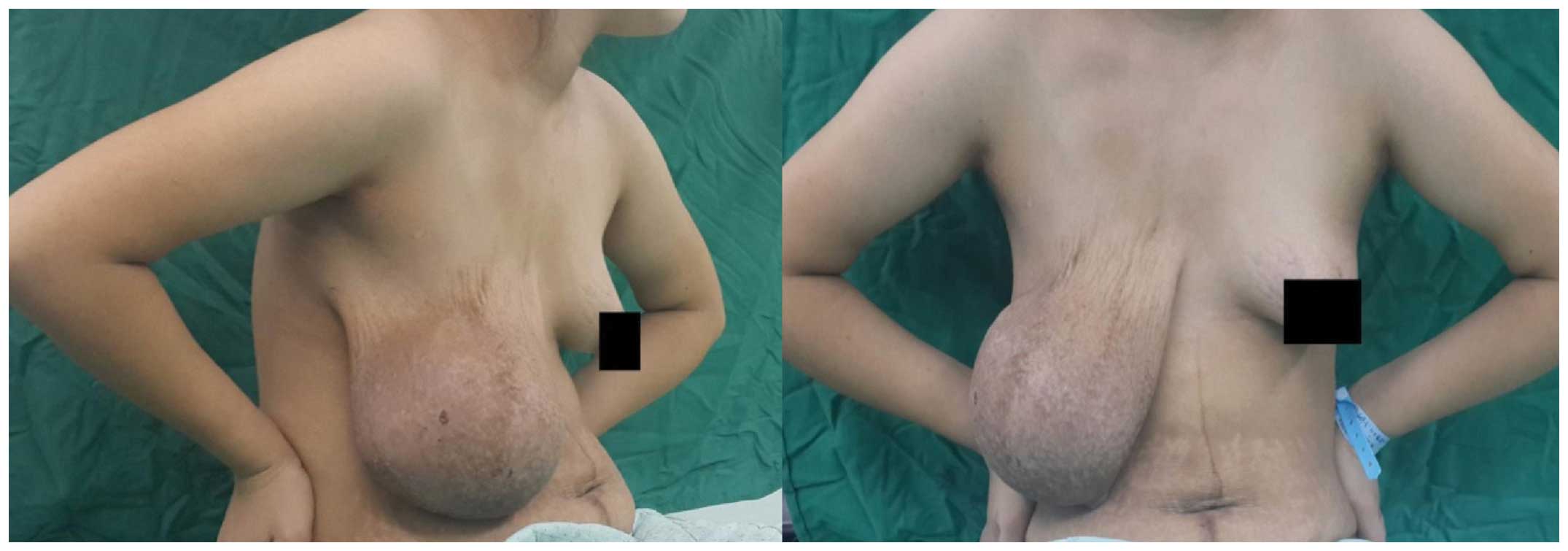
A 20-year-old woman first noticed a painless lump (~5×4 cm in size) in her right breast at 2 months of gestation. However, she did not seek medical attention for the lump. The lump gradually increased in size but remained painless. At term, she delivered a healthy, normal baby boy by cesarean section. During lactation, the patient noted that milk production in the right breast was less than that in the left one. Over a period of 1 month after delivery, the lump grew rapidly in size with marked discoloration of the overlying skin. The patient also had irregular, high-grade fever, with the body temperature rising to 39°C. The patient was then admitted to hospital at 1 month postpartum. The patient had no history of taking any special medication. Clinical examination revealed a soft lump of size 18×16 cm in her right breast with pigmentation and induration of the overlying skin (Fig. 1). A palpable lymph node (~2×1.5 cm) was identified in the right axilla of the patient. The patient had no history of trauma or use of oral contraceptives.

Figure 1.

Clinical appearance of the right breast lump. The lump was 18×16 cm in size, with soft consistency and pigmentation and induration of overlying skin.

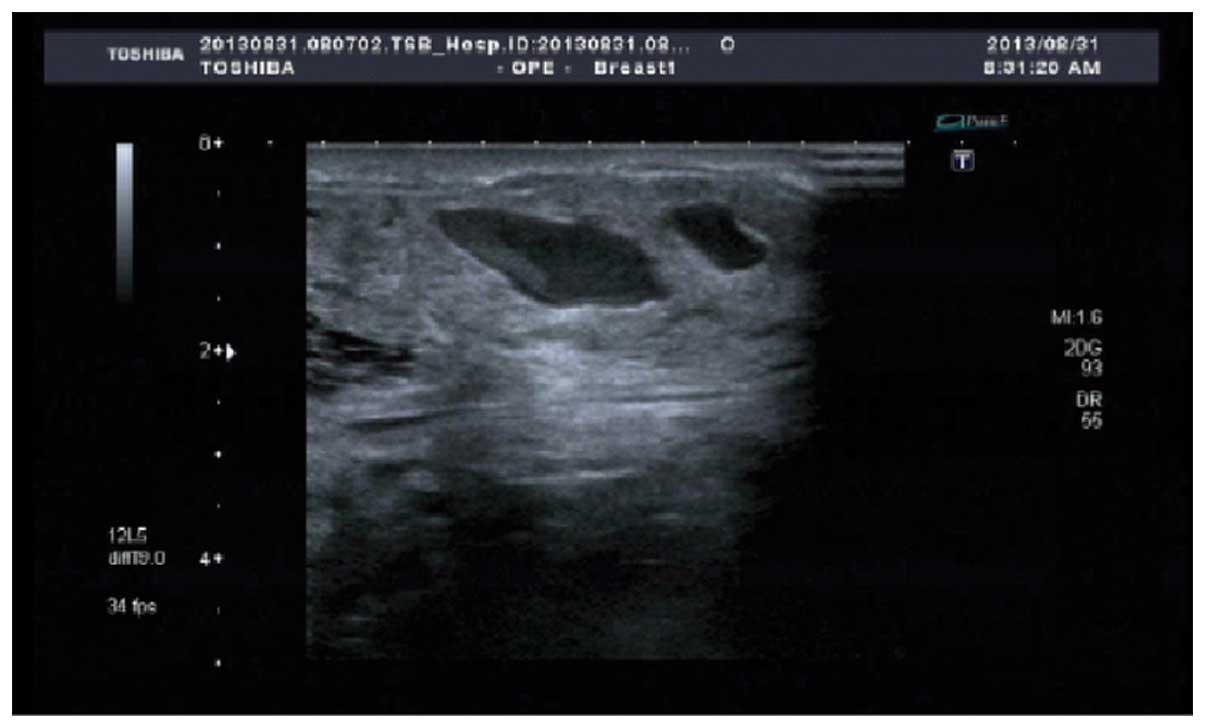
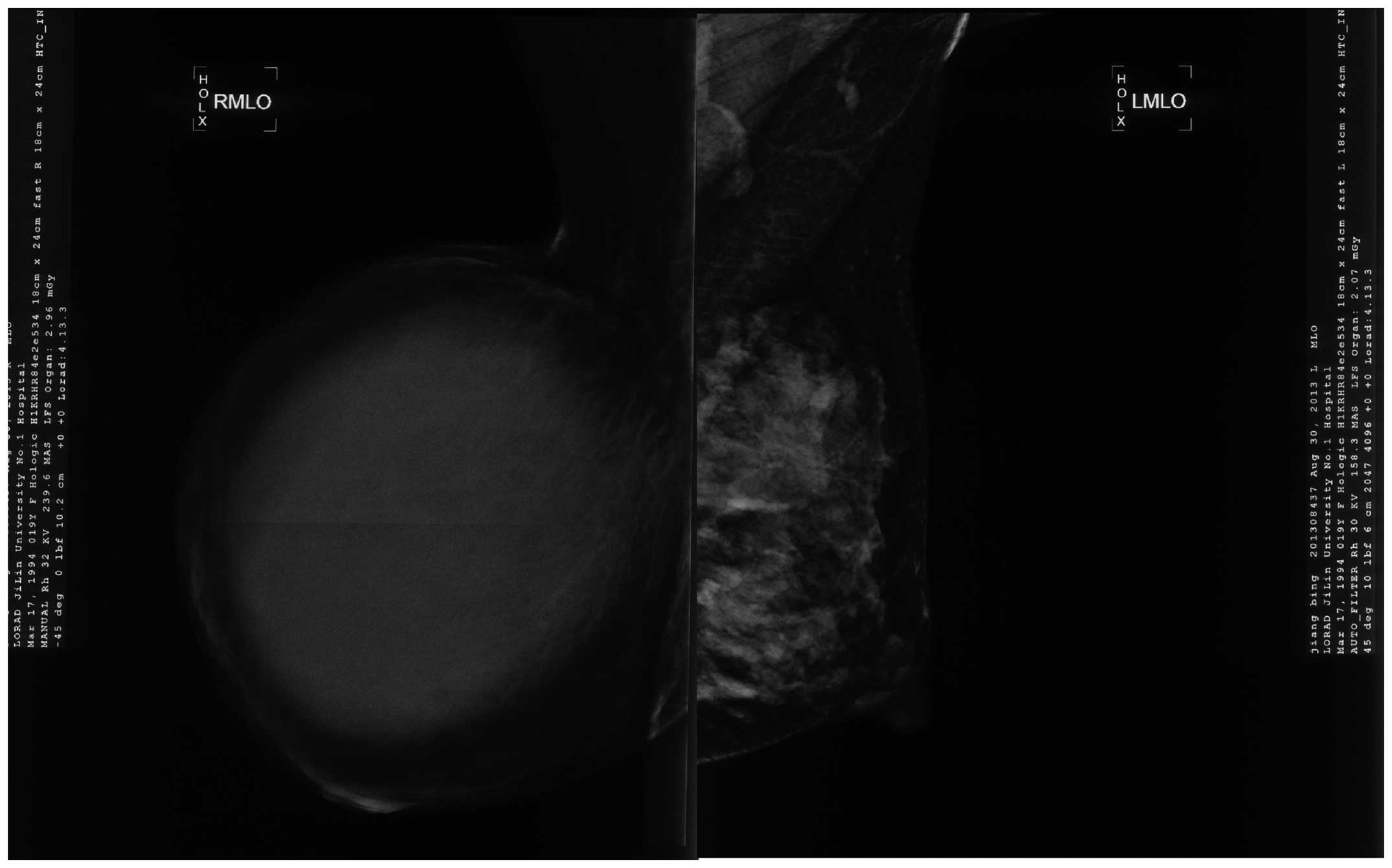
Color Doppler ultrasonography of the right breast revealed a well-circumscribed area of mixed echogenicity, with an approximate size of 199.7×56.7 mm; the heterogeneous echogenicity of the internal region of the mass suggested fluid content. Some lymph nodes with abnormal appearance were noted in the right axilla, with the maximum size of the lymph nodes being 19.0×12.1 mm (Fig. 2). Mammography of the right breast showed a regular, high-density mass shadow, with an approximate size of 11.0×13.0 cm (Fig. 3). Normal mammary gland tissue could not be identified on the mammogram. No clear calcification was found within and around the lesion.

Figure 2.

Ultrasonography of the right breast. Ultrasound examination of the right breast revealed a mixed echogenic mass, with an approximate size of 199.7×56.7 mm and a distinct border; the echogenicity within the border was heterogeneous, suggesting fluid content. The breast tissue exhibited involution.

Figure 3.

Mammography images of the right breast. Mammography revealed a regular high-density mass shadow in the right breast, with an approximate size of 11.0×13.0 cm. No distinct areas of calcification were noted within and around the lesion. The results were classified as breast imaging reporting and data system (BI-RADS) score of 4.

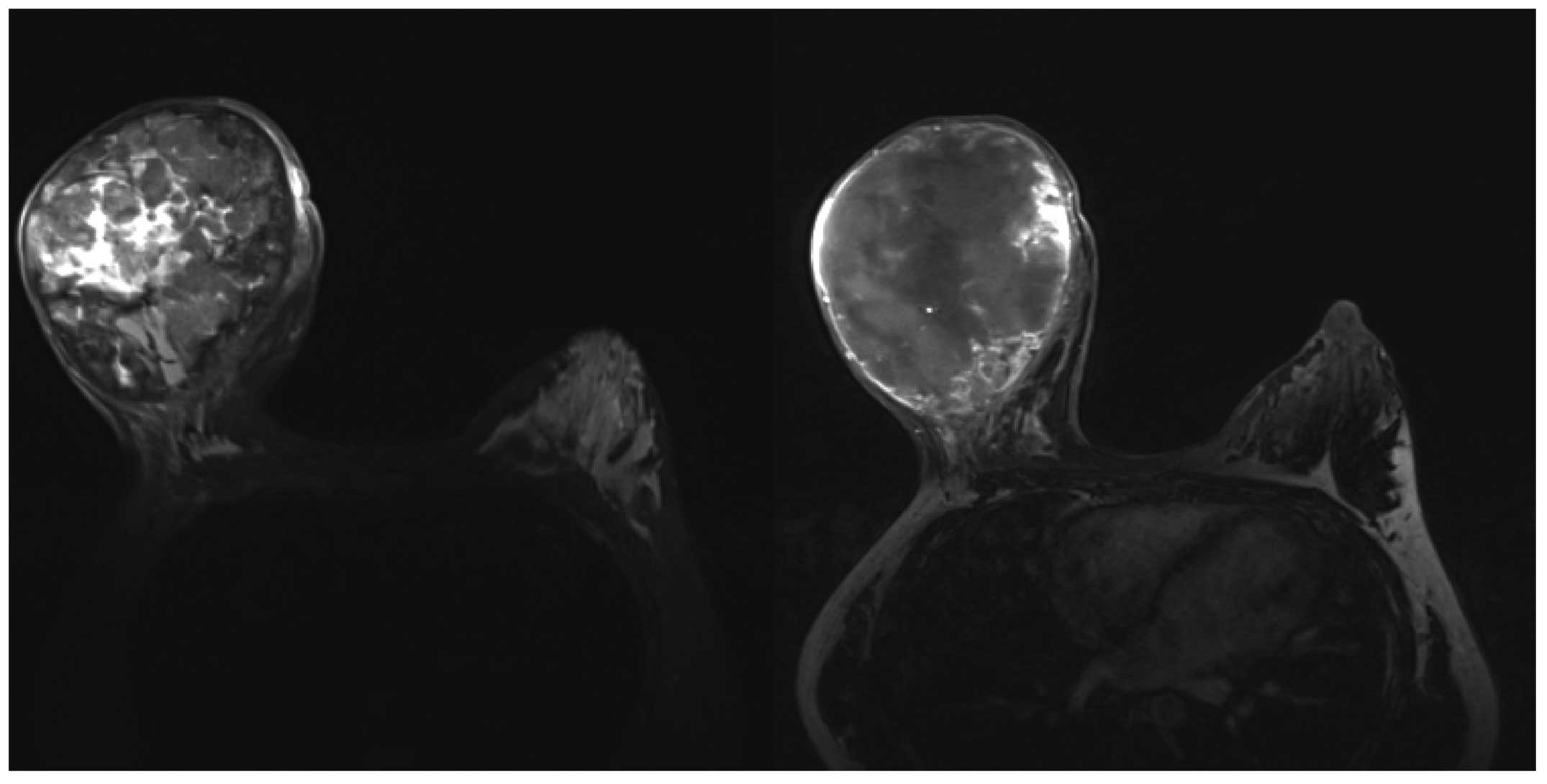
T1-weighted nuclear magnetic resonance imaging (NMRI) of the right breast revealed the presence of a mass of size 13.4×10.9 cm showing heterogeneous signal intensity, with areas of isointensity, slight hyperintensity and hypointensity. A scan with edge enhancement showed a significant increase in heterogeneity. No abnormality in signal intensity was identified in the pectoralis. Soft tissue masses, with visible enhancement and diameter 0.4–1.4 cm, were also detected in the right axilla (Fig. 4).

Figure 4.

Findings of NMRI of the right breast. T1-weighted NMRI revealed a mass of heterogeneous signal intensity in right breast, with areas of isointensity, slight hyperintensity, and hypointensity. An enhanced edge scan image showed significant enhancement in the heterogeneous area. No abnormality in signal intensity was identified in the pectoralis. There were no abnormal signals evident in the left breast. NMRI, nuclear magnetic resonance imaging.

The patient had unexplained, irregular high-grade fever, but no post-cesarean wound infection. Gynecological ultrasonography revealed that the depth of ascitic fluid posterior to the uterus was 11 mm, which suggested that the possibility of postoperative infection was minimal. The results of blood culture tests were negative. Urine culture revealed the presence of Corynebacterium species at a concentration of <10,000 cfu/ml. The fever (temperature, 38°C) persisted.

Core-needle biopsy was performed to establish the pathological diagnosis and revealed that the lump was composed of necrotic and unorganized material. No clear tumor lesions were found within and around the lump. At 5 days after admission, minimally invasive Mammotome™ biopsy was performed to further confirm the diagnosis; examination of the biopsied sample revealed fibroadenosis in the right breast, with lobular hyperplasia, tissue infarction and unorganized structure. Therefore, surgical treatment was considered.

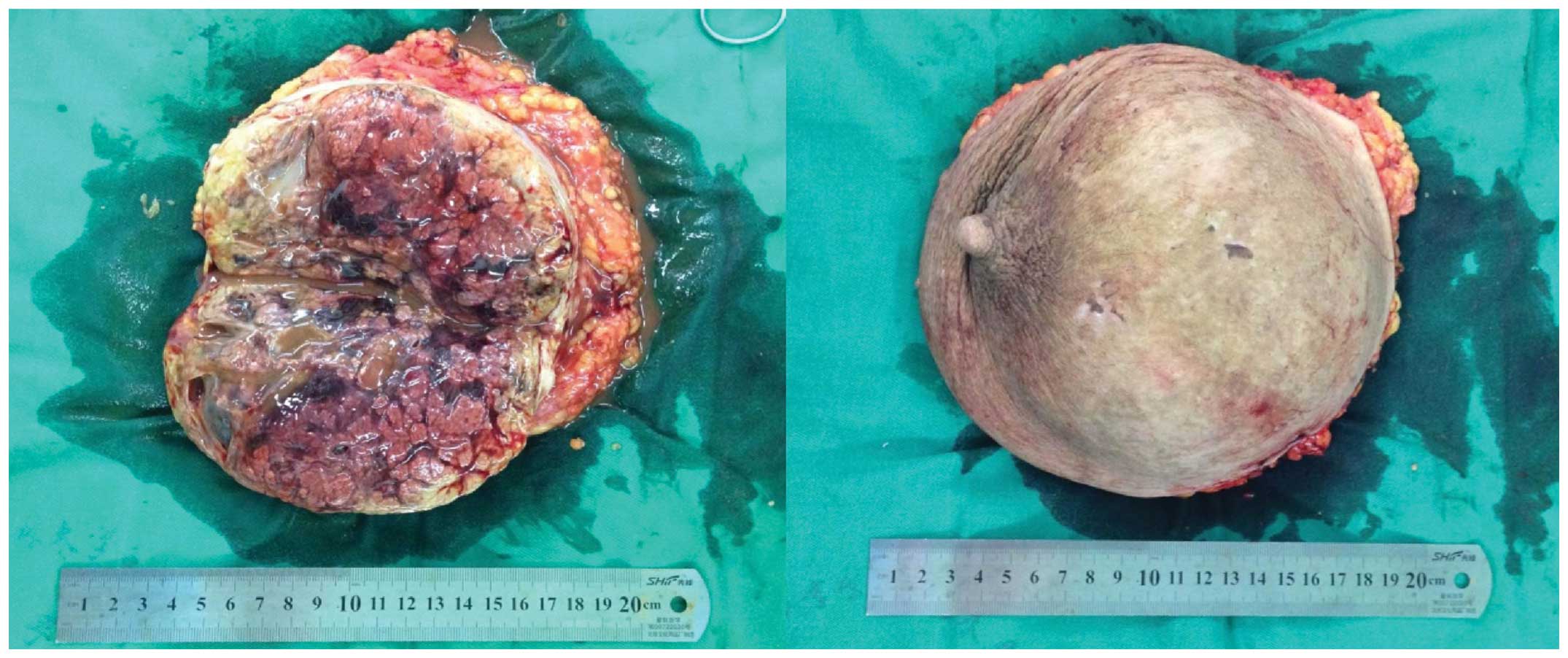
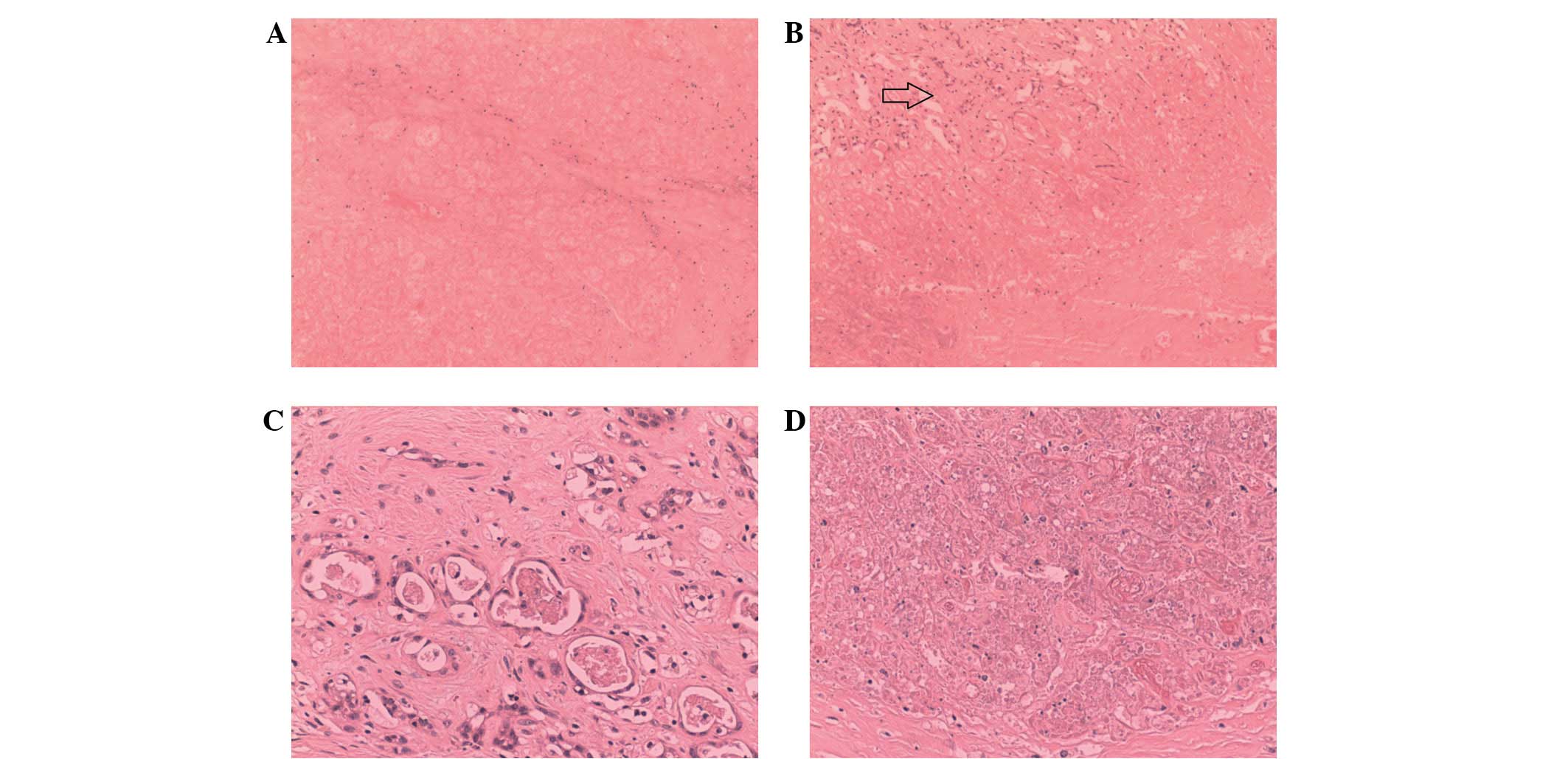
Since there was no evidence of normal breast tissue in the right breast, we advised the patient to undergo mastectomy and prosthetic reconstruction. The patient underwent mastectomy but refused prosthetic reconstruction for financial reasons. Histopathological study of the resected breast tissue revealed that 90% of the breast tissue had undergone infarction and that the infarct was located centrally, under the areola. The breast tissue also exhibited tissue involution and small focal hemorrhages. The interstitial tissue showed infiltration of acute and chronic inflammatory cells. Some of the breast ducts showed cystic dilatation, and the formation of cysts with galactostasia. The nipple and milk ducts did not show any evident lesions, and the basal tissue of the breast did not show any evidence of infarction, with the exception of dilatation and congestion of small blood vessels to a certain extent. Postoperative recovery of the patient was good and uneventful, and the fever subsided following the surgical resection (Figs. 5 and 6). This study was approved by the ethics committee of the Bethune First Hospital, Jilin University (Jilin, China) and written informed consent was provided by the patient.

Figure 5.

Appearance of the resected breast. The resected section showed a well-circumscribed mass measuring 22×18×9 cm, attached by spindle-shaped skin (~18×18 cm in size). The diameter of the nipple was ~1.8 cm. A huge lump measuring 17×16×7 cm occupied the entire breast. The lump showed a clear-cut distinction from the surrounding tissue, indicating the possibility of encapsulation. The cut section of the mass was pale brown in appearance. The mass was solid and hard in consistency. Localized cysts measuring 0.2–1.0 cm in diameter were detected within the mass.

Figure 6.

Clinicopathological examination of the resected breast tissue. The examination revealed that (A) 90% of the breast tissue on the right side was infarcted (H&E staining; magnification, ×40); (B) tissue surrounding the infarcted areas showed capillary proliferation, indicated by the arrow (H&E staining; magnification, ×100); (C) the remaining breast tissue showed dilatation of small ducts, with visible intraluminal secretions (H&E staining, magnification, ×100); (D) completely infarcted tissue with visible traces of milk and breast tissue infarction (H&E staining; magnification, ×100). H&E, hematoxylin and eosin.

Discussion

Spontaneous breast infarction is a rare entity. Infarction of the breast tissue with hyperplasia associated with pregnancy and/or lactation was first reported by Hasson and Pope in 1961 (2). Infarction typically presents as a palpable mass that is sometimes painful and soft or hard in consistency. It can be mistaken for a carcinoma due to the hard consistency of the lesion. Infarcts usually occur as a single lesion, localized to a fibroadenoma, or hyperplastic lactating breast tissue during the peripartum period; however, extensive, multifocal, bilateral mammary infarction is very rare (3). Localized infarction is most frequently observed in the third trimester of pregnancy or early postpartum period. Breast infarction during pregnancy or lactation may also be mistaken for fibroadenoma (4). Clinically, fibroadenoma typically occurs in young women during pregnancy or lactation and presents as a firm, smooth, painless and easily palpable lump with a well-defined shape. These features are very similar to those of spontaneous infarction of the breast; therefore, it is very difficult to distinguish between the two lesions on the basis of clinical examination alone. Other terms used to describe breast infarction in the published literature are adenoma associated with pregnancy or lactation adenoma, drug-induced breast necrosis (5), and ischemic fat necrosis of the mammary region (6). In the present case, the results of pathologic examination revealed the presence of hyperplastic breast lobules and ischemic necrosis rather than adenomatous features. Thus, the distinction between infarction and lesions such as fibroadenoma may not be very difficult. However, during the diagnostic evaluation in this case, Bard-needle aspiration biopsy revealed that most tissues were necrotic, with loss of organized structure. The diagnosis of the lesions could not be definitively established by core-needle biopsy alone because the sample size collected was small; this highlights the importance of performing Mammotome™ biopsy or surgery to confirm the diagnosis of breast infarction.

On admission, the patient had high-grade, irregular fever. No case of breast infarction accompanied by fever has been reported thus far in the literature (7). The fever could have been related to urinary tract infection, heat absorption of necrotic tissue, or infection associated with the lump. After the surgery, the patient's body temperature was restored to normal, and no signs of infection were noted in the lump tissue. This implies that the patient's fever was most probably caused by heat absorption from the necrotic tissue.

The etiology of breast infarction is yet to be conclusively established; however, proposed theories implicate vascular insufficiency and localized thrombosis. None of the cases of breast infarction reported thus far have shown any evidence of vascular disease or trauma. Another factor associated with the occurrence of breast infarction is the use of oral contraceptives (4). Certain medications are known to exacerbate fibrocystic disease or compromise breast vascularity, which in turn results in mass formation and necrosis; however, none of the patient's medications have been shown to lead to breast complications (3). In the present case, the pathological examination showed hyperplastic breast lobules and ischemic necrosis, but no evidence of malignancy. Therefore, a diagnosis of ischemic infarct was made. The pathological examination did not reveal any clear signs of venous thrombosis or vascular endothelial lesions. One of the possible explanations for the occurrence of breast infarction in this case is that a local artery may have been compressed during the lactation period, during which a rich blood supply is necessary. This compression could have led to ischemic infarction of the glandular tissue distant from the base of the breast. However, no signs of infarction were noted in the breast, skin and subcutaneous tissue because of their intact inherent blood circulation system. The functions of the mammary glands are controlled by the neuroendocrine system. Therefore, neuroendocrine disorders may lead to partial arterial spasm, insufficient blood supply, and tissue ischemia in the mammary glands. In the present case, the patient should have been in the lactation stage, but the resected breast tissue showed involution of the remaining breast tissue on histopathological examination, thereby indicating dysfunction of the lactation system. The results of the pathological examination showed that 90% of the infarct was located centrally, under the areola, and no evidence of infarction was noted in the peripheral areas of the breast, including the subcutaneous tissue and glandular tissue at the base of breast. This finding supports the possibility that the hyperplastic breast tissue underwent necrotic changes secondary to ischemia. However, these considerations are inadequate to explain why the infarction was unilateral rather than bilateral.

NMRI revealed linearly distributed areas of low signal intensity surrounding the mass. Enhanced edge scanning showed a significant enhancement of heterogeneity. The lesion was observed to be composed of mixed elements, including necrotic tissues and lactation-associated components. Non-enhanced NMRI revealed heterogeneous signals in the lesions; however, contrast-enhanced NMRI revealed pronounced heterogeneous signals in long and wedge-shaped regions that extended to the center of the lesions, which may represent granulation tissue growing into the infarcted area. Increases in the number and thickening of the arterial shadows were also observed around the lesion, which most probably reflects the compensatory dilatation and congestion of the collateral circulation around the lesion. It is possible that the surface of the lesion was covered in fibrous tissue that formed a capsule.

The majority of patients with breast infarction are treated with widespread local excision, which is often performed after pregnancy (7). In such cases, the period of hyperplasia of breast tissue ends at the time of the surgery, and therefore, no case of breast tissue remaining after local excision has been reported thus far. However, it remains to be determined whether widespread local excision is safe in patients with hyperplastic breast tissue. In the present case, the lump was too big (occupying the entire right breast) for wide local excision to be performed; therefore, mastectomy and prosthetic reconstruction was recommended. However, the patient refused prosthetic reconstruction because of financial constraints.

In conclusion, the present study describes a rare case of breast infarction associated with pregnancy and lactation presenting with irregular, high-grade fever. From experience in this case, it is suggested that in cases of breast infarction, the findings of core-needle biopsy should be cautiously interpreted when the sample size is small and that Mammotome™ biopsy or surgical excision should be performed to confirm the diagnosis. Widespread local excision is the treatment of choice for this condition.

References

1 

Kavdia R and Kini U: WCAFTI: Worrisome cytologic alterations following tissue infarction; a mimicker of malignancy in breast cytology. Diagn Cytopathol. 36:586–588. 2008. View Article : Google Scholar : PubMed/NCBI

2 

Hasson J and Pope CH: Mammary infarcts associated with pregnancy presenting as breast tumors. Surgery. 49:313–316. 1961.PubMed/NCBI

3 

Aggon AA, Eakin LO, Desimone N and Snyder JA: Extensive multifocal mammary infarction - a case report. Breast Care (Basel). 8:143–145. 2013. View Article : Google Scholar : PubMed/NCBI

4 

Skenderi F, Krakonja F and Vranic S: Infarcted fibroadenoma of the breast: Report of two new cases with review of the literature. Diagn Pathol. 8:382013. View Article : Google Scholar : PubMed/NCBI

5 

Davis CE Jr, Wiley WB and Faulconer RJ: Necrosis of the female breast complicating oral anticoagulant treatment. Ann Surg. 175:647–656. 1972. View Article : Google Scholar : PubMed/NCBI

6 

Robitaille Y, Seemayer TA, Thelmo WL and Cumberlidge MC: Infarction of the mammary region mimicking carcinoma of the breast. Cancer. 33:1183–1189. 1974. View Article : Google Scholar : PubMed/NCBI

7 

Behrndt VS, Barbakoff D, Askin FB and Brem RF: Infarcted lactating adenoma presenting as a rapidly enlarging breast mass. AJR Am J Roentgenol. 173:933–935. 1999. View Article : Google Scholar : PubMed/NCBI

Related Articles

  • Abstract
  • View
  • Download
  • Twitter
Copy and paste a formatted citation
Spandidos Publications style
Han B, Zhang H, Jiang P, Zheng C, Bi L, Lu L and Fan Z: Breast infarction during pregnancy and lactation: A case report. Exp Ther Med 10: 1888-1892, 2015.
APA
Han, B., Zhang, H., Jiang, P., Zheng, C., Bi, L., Lu, L., & Fan, Z. (2015). Breast infarction during pregnancy and lactation: A case report. Experimental and Therapeutic Medicine, 10, 1888-1892. https://doi.org/10.3892/etm.2015.2756
MLA
Han, B., Zhang, H., Jiang, P., Zheng, C., Bi, L., Lu, L., Fan, Z."Breast infarction during pregnancy and lactation: A case report". Experimental and Therapeutic Medicine 10.5 (2015): 1888-1892.
Chicago
Han, B., Zhang, H., Jiang, P., Zheng, C., Bi, L., Lu, L., Fan, Z."Breast infarction during pregnancy and lactation: A case report". Experimental and Therapeutic Medicine 10, no. 5 (2015): 1888-1892. https://doi.org/10.3892/etm.2015.2756
Copy and paste a formatted citation
x
Spandidos Publications style
Han B, Zhang H, Jiang P, Zheng C, Bi L, Lu L and Fan Z: Breast infarction during pregnancy and lactation: A case report. Exp Ther Med 10: 1888-1892, 2015.
APA
Han, B., Zhang, H., Jiang, P., Zheng, C., Bi, L., Lu, L., & Fan, Z. (2015). Breast infarction during pregnancy and lactation: A case report. Experimental and Therapeutic Medicine, 10, 1888-1892. https://doi.org/10.3892/etm.2015.2756
MLA
Han, B., Zhang, H., Jiang, P., Zheng, C., Bi, L., Lu, L., Fan, Z."Breast infarction during pregnancy and lactation: A case report". Experimental and Therapeutic Medicine 10.5 (2015): 1888-1892.
Chicago
Han, B., Zhang, H., Jiang, P., Zheng, C., Bi, L., Lu, L., Fan, Z."Breast infarction during pregnancy and lactation: A case report". Experimental and Therapeutic Medicine 10, no. 5 (2015): 1888-1892. https://doi.org/10.3892/etm.2015.2756
Follow us
  • Twitter
  • LinkedIn
  • Facebook
About
  • Spandidos Publications
  • Careers
  • Cookie Policy
  • Privacy Policy
How can we help?
  • Help
  • Live Chat
  • Contact
  • Email to our Support Team