Spandidos Publications Logo
  • About
    • About Spandidos
    • Aims and Scopes
    • Abstracting and Indexing
    • Editorial Policies
    • Reprints and Permissions
    • Job Opportunities
    • Terms and Conditions
    • Contact
  • Journals
    • All Journals
    • Oncology Letters
      • Oncology Letters
      • Information for Authors
      • Editorial Policies
      • Editorial Board
      • Aims and Scope
      • Abstracting and Indexing
      • Bibliographic Information
      • Archive
    • International Journal of Oncology
      • International Journal of Oncology
      • Information for Authors
      • Editorial Policies
      • Editorial Board
      • Aims and Scope
      • Abstracting and Indexing
      • Bibliographic Information
      • Archive
    • Molecular and Clinical Oncology
      • Molecular and Clinical Oncology
      • Information for Authors
      • Editorial Policies
      • Editorial Board
      • Aims and Scope
      • Abstracting and Indexing
      • Bibliographic Information
      • Archive
    • Experimental and Therapeutic Medicine
      • Experimental and Therapeutic Medicine
      • Information for Authors
      • Editorial Policies
      • Editorial Board
      • Aims and Scope
      • Abstracting and Indexing
      • Bibliographic Information
      • Archive
    • International Journal of Molecular Medicine
      • International Journal of Molecular Medicine
      • Information for Authors
      • Editorial Policies
      • Editorial Board
      • Aims and Scope
      • Abstracting and Indexing
      • Bibliographic Information
      • Archive
    • Biomedical Reports
      • Biomedical Reports
      • Information for Authors
      • Editorial Policies
      • Editorial Board
      • Aims and Scope
      • Abstracting and Indexing
      • Bibliographic Information
      • Archive
    • Oncology Reports
      • Oncology Reports
      • Information for Authors
      • Editorial Policies
      • Editorial Board
      • Aims and Scope
      • Abstracting and Indexing
      • Bibliographic Information
      • Archive
    • Molecular Medicine Reports
      • Molecular Medicine Reports
      • Information for Authors
      • Editorial Policies
      • Editorial Board
      • Aims and Scope
      • Abstracting and Indexing
      • Bibliographic Information
      • Archive
    • World Academy of Sciences Journal
      • World Academy of Sciences Journal
      • Information for Authors
      • Editorial Policies
      • Editorial Board
      • Aims and Scope
      • Abstracting and Indexing
      • Bibliographic Information
      • Archive
    • International Journal of Functional Nutrition
      • International Journal of Functional Nutrition
      • Information for Authors
      • Editorial Policies
      • Editorial Board
      • Aims and Scope
      • Abstracting and Indexing
      • Bibliographic Information
      • Archive
    • International Journal of Epigenetics
      • International Journal of Epigenetics
      • Information for Authors
      • Editorial Policies
      • Editorial Board
      • Aims and Scope
      • Abstracting and Indexing
      • Bibliographic Information
      • Archive
    • Medicine International
      • Medicine International
      • Information for Authors
      • Editorial Policies
      • Editorial Board
      • Aims and Scope
      • Abstracting and Indexing
      • Bibliographic Information
      • Archive
  • Articles
  • Information
    • Information for Authors
    • Information for Reviewers
    • Information for Librarians
    • Information for Advertisers
    • Conferences
  • Language Editing
Spandidos Publications Logo
  • About
    • About Spandidos
    • Aims and Scopes
    • Abstracting and Indexing
    • Editorial Policies
    • Reprints and Permissions
    • Job Opportunities
    • Terms and Conditions
    • Contact
  • Journals
    • All Journals
    • Biomedical Reports
      • Information for Authors
      • Editorial Policies
      • Editorial Board
      • Aims and Scope
      • Abstracting and Indexing
      • Bibliographic Information
      • Archive
    • Experimental and Therapeutic Medicine
      • Information for Authors
      • Editorial Policies
      • Editorial Board
      • Aims and Scope
      • Abstracting and Indexing
      • Bibliographic Information
      • Archive
    • International Journal of Epigenetics
      • Information for Authors
      • Editorial Policies
      • Editorial Board
      • Aims and Scope
      • Abstracting and Indexing
      • Bibliographic Information
      • Archive
    • International Journal of Functional Nutrition
      • Information for Authors
      • Editorial Policies
      • Editorial Board
      • Aims and Scope
      • Abstracting and Indexing
      • Bibliographic Information
      • Archive
    • International Journal of Molecular Medicine
      • Information for Authors
      • Editorial Policies
      • Editorial Board
      • Aims and Scope
      • Abstracting and Indexing
      • Bibliographic Information
      • Archive
    • International Journal of Oncology
      • Information for Authors
      • Editorial Policies
      • Editorial Board
      • Aims and Scope
      • Abstracting and Indexing
      • Bibliographic Information
      • Archive
    • Medicine International
      • Information for Authors
      • Editorial Policies
      • Editorial Board
      • Aims and Scope
      • Abstracting and Indexing
      • Bibliographic Information
      • Archive
    • Molecular and Clinical Oncology
      • Information for Authors
      • Editorial Policies
      • Editorial Board
      • Aims and Scope
      • Abstracting and Indexing
      • Bibliographic Information
      • Archive
    • Molecular Medicine Reports
      • Information for Authors
      • Editorial Policies
      • Editorial Board
      • Aims and Scope
      • Abstracting and Indexing
      • Bibliographic Information
      • Archive
    • Oncology Letters
      • Information for Authors
      • Editorial Policies
      • Editorial Board
      • Aims and Scope
      • Abstracting and Indexing
      • Bibliographic Information
      • Archive
    • Oncology Reports
      • Information for Authors
      • Editorial Policies
      • Editorial Board
      • Aims and Scope
      • Abstracting and Indexing
      • Bibliographic Information
      • Archive
    • World Academy of Sciences Journal
      • Information for Authors
      • Editorial Policies
      • Editorial Board
      • Aims and Scope
      • Abstracting and Indexing
      • Bibliographic Information
      • Archive
  • Articles
  • Information
    • For Authors
    • For Reviewers
    • For Librarians
    • For Advertisers
    • Conferences
  • Language Editing
Login Register Submit
  • This site uses cookies
  • You can change your cookie settings at any time by following the instructions in our Cookie Policy. To find out more, you may read our Privacy Policy.

    I agree
Search articles by DOI, keyword, author or affiliation
Search
Advanced Search
presentation
Experimental and Therapeutic Medicine
Join Editorial Board Propose a Special Issue
Print ISSN: 1792-0981 Online ISSN: 1792-1015
Journal Cover
January-2016 Volume 11 Issue 1

Full Size Image

Sign up for eToc alerts
Recommend to Library

Journals

International Journal of Molecular Medicine

International Journal of Molecular Medicine

International Journal of Molecular Medicine is an international journal devoted to molecular mechanisms of human disease.

International Journal of Oncology

International Journal of Oncology

International Journal of Oncology is an international journal devoted to oncology research and cancer treatment.

Molecular Medicine Reports

Molecular Medicine Reports

Covers molecular medicine topics such as pharmacology, pathology, genetics, neuroscience, infectious diseases, molecular cardiology, and molecular surgery.

Oncology Reports

Oncology Reports

Oncology Reports is an international journal devoted to fundamental and applied research in Oncology.

Experimental and Therapeutic Medicine

Experimental and Therapeutic Medicine

Experimental and Therapeutic Medicine is an international journal devoted to laboratory and clinical medicine.

Oncology Letters

Oncology Letters

Oncology Letters is an international journal devoted to Experimental and Clinical Oncology.

Biomedical Reports

Biomedical Reports

Explores a wide range of biological and medical fields, including pharmacology, genetics, microbiology, neuroscience, and molecular cardiology.

Molecular and Clinical Oncology

Molecular and Clinical Oncology

International journal addressing all aspects of oncology research, from tumorigenesis and oncogenes to chemotherapy and metastasis.

World Academy of Sciences Journal

World Academy of Sciences Journal

Multidisciplinary open-access journal spanning biochemistry, genetics, neuroscience, environmental health, and synthetic biology.

International Journal of Functional Nutrition

International Journal of Functional Nutrition

Open-access journal combining biochemistry, pharmacology, immunology, and genetics to advance health through functional nutrition.

International Journal of Epigenetics

International Journal of Epigenetics

Publishes open-access research on using epigenetics to advance understanding and treatment of human disease.

Medicine International

Medicine International

An International Open Access Journal Devoted to General Medicine.

Journal Cover
January-2016 Volume 11 Issue 1

Full Size Image

Sign up for eToc alerts
Recommend to Library

  • Article
  • Citations
    • Cite This Article
    • Download Citation
    • Create Citation Alert
    • Remove Citation Alert
    • Cited By
  • Similar Articles
    • Related Articles (in Spandidos Publications)
    • Similar Articles (Google Scholar)
    • Similar Articles (PubMed)
  • Download PDF
  • Download XML
  • View XML
Case Report

Anti-leucine-rich glioma-inactivated 1 limbic encephalitis: A case report and literature review

  • Authors:
    • Jingyao Liu
    • Min Li
    • Guibo Li
    • Chunkui Zhou
    • Rensheng Zhang
  • View Affiliations / Copyright

    Affiliations: Department of Neurology, First Hospital, Jilin University, Changchun, Jilin 130031, P.R. China, Changchun Medical College, Changchun, Jilin 130031, P.R. China
  • Pages: 315-317
    |
    Published online on: November 13, 2015
       https://doi.org/10.3892/etm.2015.2866
  • Expand metrics +
Metrics: Total Views: 0 (Spandidos Publications: | PMC Statistics: )
Metrics: Total PDF Downloads: 0 (Spandidos Publications: | PMC Statistics: )
Cited By (CrossRef): 0 citations Loading Articles...

This article is mentioned in:


Abstract

This study describes the case of a 41-year-old woman admitted for anterograde memory loss, right facial grimacing and right arm posturing that had begun 1 month previously. Cranial magnetic resonance-diffusion weighted imaging and -fluid‑attenuated inversion recovery imaging revealed a hyperintense signal in the left hippocampus and right basal ganglia, but no contrast enhancement. An electroencephalogram revealed rhythmic sharp and slow waves and rhythmic θ build‑ups in the left temporal area. Single‑photon emission computed tomography showed increased regional blood flow perfusion in the left cerebral frontal lobe and the right basal ganglia. The cerebrospinal fluid was normal, with the exception of the presence of leucine‑rich glioma‑inactivated 1 (LGI1) antibodies, and LGI1 antibodies were also found in the blood serum. The presence of the antibodies, the faciobrachial dystonic seizures (FBDSs) and the memory loss indicated limbic encephalitis. After 3 months of immunotherapy, the patient was free from epileptic seizures and had undergone a partial memory restoration. FBDSs alone justify the immediate initiation of immunotherapy, even prior to laboratory confirmation of the disease, as early treatment limits the duration of the illness.

Introduction

Anti-leucine-rich glioma-inactivated 1 (LGI1) limbic encephalitis (LE) is characterized by faciobrachial dystonic seizures (FBDSs), memory loss and antibodies against the leucine-rich, glioma-inactivated subunit of the voltage-gated potassium channel (VGKC)-complex. FBDSs precede the other symptoms and prompt the diagnosis (1). The clinical course is subacute (2). Newly discovered antibodies have revealed that target neuronal cell surface antigens, VGKCs and ligand-gated ion channels are present in anti-LGI1 LE, despite not being commonly found in the presence of malignancies (3). LGI1 has also been identified as a specific target of potassium channel antibodies (4). In the present case, the patient presented with FBDSs and memory loss, but no nausea, vomiting, insomnia or hyponatremia, which commonly accompany anti-LGI1 LE.

The patient provided informed consent for the use of her case data, and permission to present the case was obtained from the ethics committee of the First Hospital of Jilin University (Changchun, China).

Case report

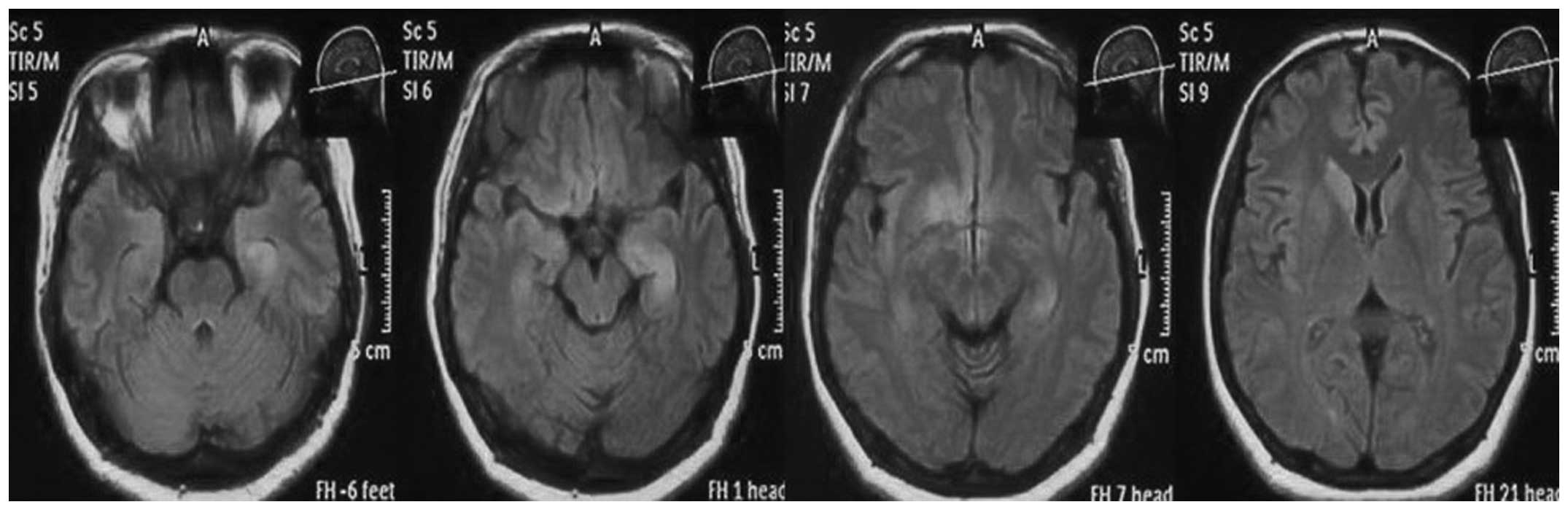
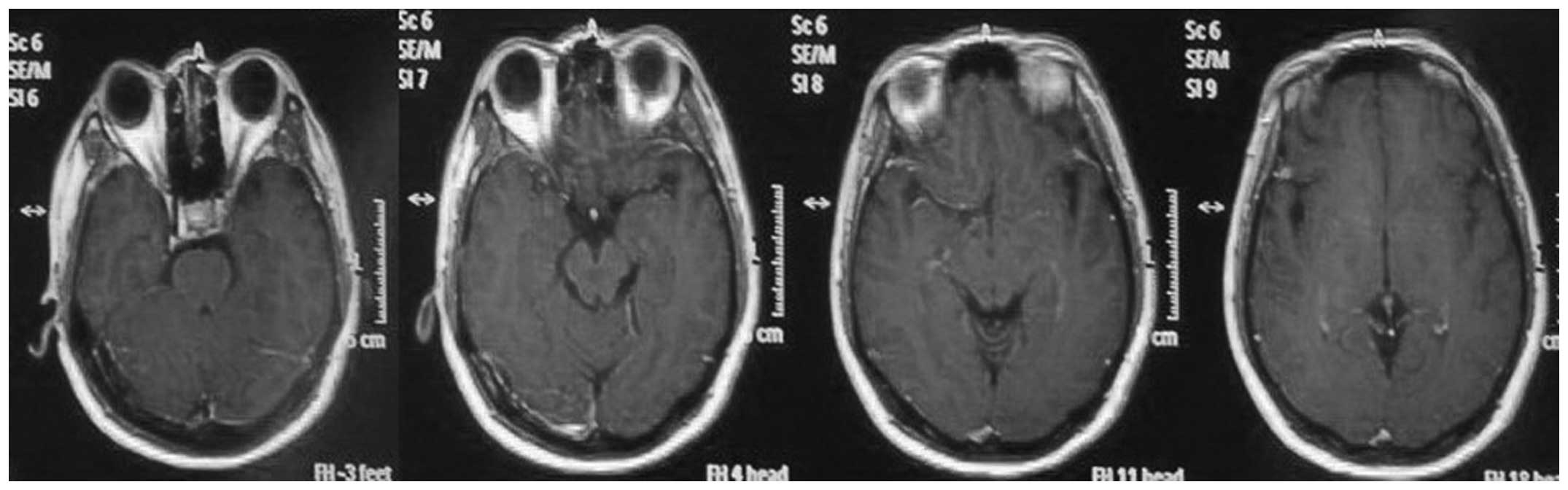
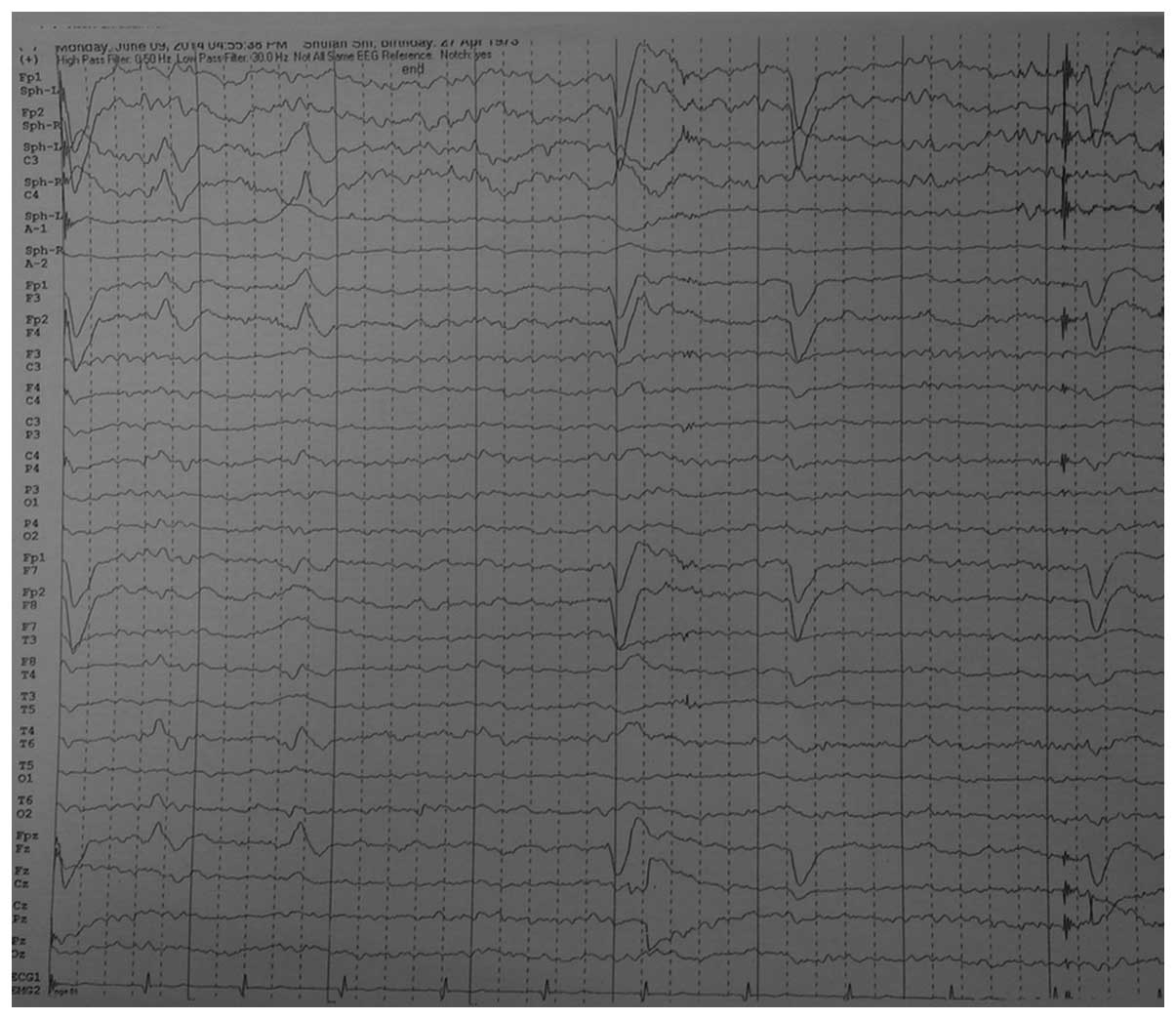
A 41-year-old woman was admitted for anterograde memory loss and right facial grimacing and arm posturing that had started 1 month previously, in May 2014. The relatives of the patient stated that her memory disturbances, particularly short-term memory loss and disorientation, had developed gradually over the last month. Episodes of involuntary movement of her right arm and face, lasting between 10 and 30 sec, were occurring with increasing frequency; while at first these episodes had occurred 2 or 3 times a day, they had progressed to >10 times a day after 2 weeks. No signs of insomnia or hyponatremia were observed. The patient's temperature was normal and her past medical history was unremarkable. The patient had no vomiting and headache at the onset of her condition. No focal deficit was found on neurological examination, with the exception of memory disturbance. Cranial magnetic resonance (MR)-diffusion weighted imaging and -fluid attenuated inversion recovery imaging revealed a hyperintense signal in the left hippocampus and right basal ganglia, but without contrast enhancement (Figs. 1 and 2). An electroencephalogram (EEG) revealed rhythmic sharp and slow waves and rhythmic θ build-ups in the left temporal area (Fig. 3). Video-EEG captured eleptiform paradoxical discharge when the patient was asleep at night. Single-photon emission computed tomography (SEPCT) showed regional blood flow perfusion in the left cerebral frontal lobe and right basal ganglia. Laboratory studies revealed a normal serum sodium level, and the glucose, lactate and protein levels in the cerebrospinal fluid (CSF) were normal. No evidence of herpes simplex virus 1 or 2, Borrelia burgdorferi or Treponema pallidum was found in the CSF or the blood. The serum and CSF were positive for antibodies to LGI1 but negative for anti-Yo, -Ri, -Hu, -Ma, -N-methyl-D-aspartate receptor, -α-amino-3-hydroxy-5-methyl-4-isoxazolepropionic acid receptor and -CV2 autoantibodies.

Figure 1.

Cranial magnetic resonance-fluid attenuated inversion recovery imaging showed a hyperintense signal in the left hippocampus and right basal ganglia.

Figure 2.

No abnormal signal was observed on the cranial magnetic resonance imaging enhancement scan.

Figure 3.

An electroencephalogram revealed rhythmic sharp and slow waves and rhythmic θ build-ups in the right temporal area.

The patient was diagnosed with anti-LGI1 LE based on the characteristic FBDSs, memory loss and positive LGI1 antibodies in the blood and CSF. A treatment regimen of 500 mg/day IV methylprednisolone for 3 days followed by 250 mg/day for 3 days and 125 mg/day for 3 days was initiated. This was followed by IVIg (0.4 g/kg/day) for 5 days and 8 weeks of tapered oral prednisolone. The patient also received oxcarbazepine. The FBDSs of the patient stopped completely 1 day after the initiation of treatment and her memory deficits improved. At 3 months after treatment began, the patient remained free from epileptic seizures and her memory had been partially restored.

Discussion

LE is a well-recognized syndrome and is associated with several different antibodies, including anti-Hu, anti-Ri, anti-Yo, anti-Ma2, anti-amphiphysin and anti-CV2/collapsin response mediator protein 5. These antibodies are expressed throughout the nervous system and are also associated with less well-known neurological disorders that affect wider brain systems (5). Numerous patients with LE do not have detectable brain tumors.

Anti-LGI1 LE has been identified as an autoimmune encephalitis. The disorder usually involves the medial temporal area, which causes memory dysfunction and seizures, and has distinctive clinical characteristics, including FBDSs, memory disturbance and a subacute, progressive course (6). According to the literature, hyponatremia is commonly found in patients with anti-LGI1 LE (1); however, this is a non-specific sign (7). The patient in the present case exhibited the characteristic clinical symptoms, but no hyponatremia, insomnia or abnormalities on cranial MR imaging, video-EEG and SPECT. The patient's diagnosis was confirmed by the presence of LGI1 antibodies in the blood and CSF.

The diagnosis of autoimmune LE is difficult and often delayed. While certain cases involve the limbic system exclusively, other systems may also be involved, confusing the diagnostic picture (8). Clinicians in Korea (5) described a case that spontaneously went into remission prior to a definitive diagnosis being made. The symptoms recurred in 2013, when the disorder was identified. French researchers observed a 65-year-old anti-LGI1 LE patient with insomnia in 2012 (9). Only few reports have highlighted the presence of reversible insomnia in autoimmune encephalitis (10), and the mechanisms by which LGI1 antibodies may cause insomnia remain unclear (9). German researchers were the first to report the neuropathological characteristics of LGI1 LE and suggested a CD8+ T-cell-mediated immune process directed against hippocampal neurons (11).

Early diagnosis of this rare disease is important so that treatment can be instituted as soon as possible. Treatment delays can result in ongoing functional memory problems and other lingering neurological deficits (12). FBDSs may be the earliest manifestation of LE associated with the LGI1 antibody, so recognizing this unique type of seizure at once is important and allows treatment to start quickly, when it is most effective (13).

Although there are no definitive therapeutic guidelines for anti-LGI1 LE (14), first-line treatment usually involves high doses of steroids in combination with other immunosuppressive therapy, such as IVIg, plasma exchange or mycophenolate (15). Failure to respond within 1–2 weeks should prompt second-line therapy, such as three to five plasmapheresis exchanges or the administration of cyclophosphamide or rituximab (16). Response to therapy is best judged by the patient's clinical status. Following antibody titers alone is not useful, as they do not always correlate with clinical progress. The effect of long-term, steroid-sparing agents, such as mycophenolate or azathioprine, on relapse rates is unclear (17).

If clinicians suspect anti-LGI1 LE due to symptoms of FBDSs and memory loss, immunotherapy should begin at once, even before the laboratory results have confirmed the presence of LGI1 antibodies in the CSF and blood, to limit the duration of the illness.

References

1 

Irani SR, Michell AW, Lang B, Pettingill P, Waters P, Johnson MR, Schott JM, Armstrong RJS, Zagami A, Bleasel A, et al: Faciobrachial dystonic seizures precede Lgi1 antibody limbic encephalitis. Ann Neurol. 69:892–900. 2011. View Article : Google Scholar : PubMed/NCBI

2 

Asztely F and Kumlien E: The diagnosis and treatment of limbic encephalitis. Acta Neurol Scand. 126:365–375. 2012. View Article : Google Scholar : PubMed/NCBI

3 

Tüzün E and Dalmau J: Limbic encephalitis and variants: Classification, diagnosis and treatment. Neurologist. 13:261–271. 2007. View Article : Google Scholar : PubMed/NCBI

4 

Lancaster E, Huijbers MG, Bar V, Boronat A, Wong A, Martinez-Hernandez E, Wilson C, Jacobs D, Lai M, Walker RW, et al: Investigations of caspr2, an autoantigen of encephalitis and neuromyotonia. Ann Neurol. 69:303–311. 2011. View Article : Google Scholar : PubMed/NCBI

5 

Lee JJ, Lee ST, Jung KH, Chu K and Lee SK: Anti-lGI1 Limbic encephalitis presented with atypical manifestations. Exp Neurobiol. 22:337–340. 2013. View Article : Google Scholar : PubMed/NCBI

6 

Machado S, Pinto AN and Irani SR: What should you know about limbic encephalitis? Arq Neuropsiquiatr. 70:817–822. 2012. View Article : Google Scholar : PubMed/NCBI

7 

Gulati S and Kumar L: ‘Chest epilepsy’ in a child. Postgrad Med J. 68:369–370. 1992. View Article : Google Scholar : PubMed/NCBI

8 

Irani SR, Bien CG and Lang B: Autoimmune epilepsies. Curr Opin Neurol. 24:146–153. 2011. View Article : Google Scholar : PubMed/NCBI

9 

Peter-Derex L, Devic P, Rogemond V, Rheims S, Mauguière F and Honnorat J: Full recovery of agrypnia associated with anti-Lgi1 antibodies encephalitis under immunomodulatory treatment: A case report with sequential polysomnographic assessment. Sleep Med. 13:554–556. 2012. View Article : Google Scholar : PubMed/NCBI

10 

Montiel P, Sellal F, Clerc C, Richard P and Batailard M: Limbic encephalitis with severe sleep disorder associated with voltage-gated potassium channels (VGKCs) antibodies. Rev Neurol (Paris). 164:181–184. 2008.(In French). View Article : Google Scholar : PubMed/NCBI

11 

Schultze-Amberger J, Pehl D and Stenzel W: LGI-1-positive limbic encephalitis: A clinicopathological study. J Neurol. 259:2478–2480. 2012. View Article : Google Scholar : PubMed/NCBI

12 

Irani SR, Stagg CJ, Schott JM, Rosenthal CR, Schneider SA, Pettingill P, Pettingill R, Waters P, Thomas A, Voets NL, et al: Faciobrachial dystonic seizures: The influence of immunotherapy on seizure control and prevention of cognitive impairment in a broadening phenotype. Brain. 136:3151–3162. 2013. View Article : Google Scholar : PubMed/NCBI

13 

Sen A, Wang J, Laue-Gizzi H, Lee T, Ghougassian D and Somerville ER: Pathognomonic seizures in limbic encephalitis associated with anti-LGI1 antibodies. Lancet. 383:20182014. View Article : Google Scholar : PubMed/NCBI

14 

Thieben MJ, Lennon VA, Boeve BF, Aksamit AJ, Keegan M and Vernino S: Potentially reversible autoimmune limbic encephalitis with neuronal potassium channel antibody. Neurology. 62:1177–1182. 2004. View Article : Google Scholar : PubMed/NCBI

15 

Lancaster E, Martinez-Hernandez E and Dalmau J: Encephalitis and antibodies to synaptic and neuronal cell surface proteins. Neurology. 77:179–189. 2011. View Article : Google Scholar : PubMed/NCBI

16 

Ishiura H, Matsuda S, Higashihara M, Hasegawa M, Hida A, Hanajima R, Yamamoto T, Shimizu J, Dalmau J and Tsuji S: Response of anti-NMDA receptor encephalitis without tumor to immunotherapy including rituximab. Neurology. 71:1921–1923. 2008. View Article : Google Scholar : PubMed/NCBI

17 

Irani SR and Vincent A: NMDA receptor antibody encephalitis. Curr Neurol Neurosci Rep. 11:298–304. 2011. View Article : Google Scholar : PubMed/NCBI

Related Articles

  • Abstract
  • View
  • Download
  • Twitter
Copy and paste a formatted citation
Spandidos Publications style
Liu J, Li M, Li G, Zhou C and Zhang R: Anti-leucine-rich glioma-inactivated 1 limbic encephalitis: A case report and literature review. Exp Ther Med 11: 315-317, 2016.
APA
Liu, J., Li, M., Li, G., Zhou, C., & Zhang, R. (2016). Anti-leucine-rich glioma-inactivated 1 limbic encephalitis: A case report and literature review. Experimental and Therapeutic Medicine, 11, 315-317. https://doi.org/10.3892/etm.2015.2866
MLA
Liu, J., Li, M., Li, G., Zhou, C., Zhang, R."Anti-leucine-rich glioma-inactivated 1 limbic encephalitis: A case report and literature review". Experimental and Therapeutic Medicine 11.1 (2016): 315-317.
Chicago
Liu, J., Li, M., Li, G., Zhou, C., Zhang, R."Anti-leucine-rich glioma-inactivated 1 limbic encephalitis: A case report and literature review". Experimental and Therapeutic Medicine 11, no. 1 (2016): 315-317. https://doi.org/10.3892/etm.2015.2866
Copy and paste a formatted citation
x
Spandidos Publications style
Liu J, Li M, Li G, Zhou C and Zhang R: Anti-leucine-rich glioma-inactivated 1 limbic encephalitis: A case report and literature review. Exp Ther Med 11: 315-317, 2016.
APA
Liu, J., Li, M., Li, G., Zhou, C., & Zhang, R. (2016). Anti-leucine-rich glioma-inactivated 1 limbic encephalitis: A case report and literature review. Experimental and Therapeutic Medicine, 11, 315-317. https://doi.org/10.3892/etm.2015.2866
MLA
Liu, J., Li, M., Li, G., Zhou, C., Zhang, R."Anti-leucine-rich glioma-inactivated 1 limbic encephalitis: A case report and literature review". Experimental and Therapeutic Medicine 11.1 (2016): 315-317.
Chicago
Liu, J., Li, M., Li, G., Zhou, C., Zhang, R."Anti-leucine-rich glioma-inactivated 1 limbic encephalitis: A case report and literature review". Experimental and Therapeutic Medicine 11, no. 1 (2016): 315-317. https://doi.org/10.3892/etm.2015.2866
Follow us
  • Twitter
  • LinkedIn
  • Facebook
About
  • Spandidos Publications
  • Careers
  • Cookie Policy
  • Privacy Policy
How can we help?
  • Help
  • Live Chat
  • Contact
  • Email to our Support Team