Spandidos Publications Logo
  • About
    • About Spandidos
    • Aims and Scopes
    • Abstracting and Indexing
    • Editorial Policies
    • Reprints and Permissions
    • Job Opportunities
    • Terms and Conditions
    • Contact
  • Journals
    • All Journals
    • Oncology Letters
      • Oncology Letters
      • Information for Authors
      • Editorial Policies
      • Editorial Board
      • Aims and Scope
      • Abstracting and Indexing
      • Bibliographic Information
      • Archive
    • International Journal of Oncology
      • International Journal of Oncology
      • Information for Authors
      • Editorial Policies
      • Editorial Board
      • Aims and Scope
      • Abstracting and Indexing
      • Bibliographic Information
      • Archive
    • Molecular and Clinical Oncology
      • Molecular and Clinical Oncology
      • Information for Authors
      • Editorial Policies
      • Editorial Board
      • Aims and Scope
      • Abstracting and Indexing
      • Bibliographic Information
      • Archive
    • Experimental and Therapeutic Medicine
      • Experimental and Therapeutic Medicine
      • Information for Authors
      • Editorial Policies
      • Editorial Board
      • Aims and Scope
      • Abstracting and Indexing
      • Bibliographic Information
      • Archive
    • International Journal of Molecular Medicine
      • International Journal of Molecular Medicine
      • Information for Authors
      • Editorial Policies
      • Editorial Board
      • Aims and Scope
      • Abstracting and Indexing
      • Bibliographic Information
      • Archive
    • Biomedical Reports
      • Biomedical Reports
      • Information for Authors
      • Editorial Policies
      • Editorial Board
      • Aims and Scope
      • Abstracting and Indexing
      • Bibliographic Information
      • Archive
    • Oncology Reports
      • Oncology Reports
      • Information for Authors
      • Editorial Policies
      • Editorial Board
      • Aims and Scope
      • Abstracting and Indexing
      • Bibliographic Information
      • Archive
    • Molecular Medicine Reports
      • Molecular Medicine Reports
      • Information for Authors
      • Editorial Policies
      • Editorial Board
      • Aims and Scope
      • Abstracting and Indexing
      • Bibliographic Information
      • Archive
    • World Academy of Sciences Journal
      • World Academy of Sciences Journal
      • Information for Authors
      • Editorial Policies
      • Editorial Board
      • Aims and Scope
      • Abstracting and Indexing
      • Bibliographic Information
      • Archive
    • International Journal of Functional Nutrition
      • International Journal of Functional Nutrition
      • Information for Authors
      • Editorial Policies
      • Editorial Board
      • Aims and Scope
      • Abstracting and Indexing
      • Bibliographic Information
      • Archive
    • International Journal of Epigenetics
      • International Journal of Epigenetics
      • Information for Authors
      • Editorial Policies
      • Editorial Board
      • Aims and Scope
      • Abstracting and Indexing
      • Bibliographic Information
      • Archive
    • Medicine International
      • Medicine International
      • Information for Authors
      • Editorial Policies
      • Editorial Board
      • Aims and Scope
      • Abstracting and Indexing
      • Bibliographic Information
      • Archive
  • Articles
  • Information
    • Information for Authors
    • Information for Reviewers
    • Information for Librarians
    • Information for Advertisers
    • Conferences
  • Language Editing
Spandidos Publications Logo
  • About
    • About Spandidos
    • Aims and Scopes
    • Abstracting and Indexing
    • Editorial Policies
    • Reprints and Permissions
    • Job Opportunities
    • Terms and Conditions
    • Contact
  • Journals
    • All Journals
    • Biomedical Reports
      • Information for Authors
      • Editorial Policies
      • Editorial Board
      • Aims and Scope
      • Abstracting and Indexing
      • Bibliographic Information
      • Archive
    • Experimental and Therapeutic Medicine
      • Information for Authors
      • Editorial Policies
      • Editorial Board
      • Aims and Scope
      • Abstracting and Indexing
      • Bibliographic Information
      • Archive
    • International Journal of Epigenetics
      • Information for Authors
      • Editorial Policies
      • Editorial Board
      • Aims and Scope
      • Abstracting and Indexing
      • Bibliographic Information
      • Archive
    • International Journal of Functional Nutrition
      • Information for Authors
      • Editorial Policies
      • Editorial Board
      • Aims and Scope
      • Abstracting and Indexing
      • Bibliographic Information
      • Archive
    • International Journal of Molecular Medicine
      • Information for Authors
      • Editorial Policies
      • Editorial Board
      • Aims and Scope
      • Abstracting and Indexing
      • Bibliographic Information
      • Archive
    • International Journal of Oncology
      • Information for Authors
      • Editorial Policies
      • Editorial Board
      • Aims and Scope
      • Abstracting and Indexing
      • Bibliographic Information
      • Archive
    • Medicine International
      • Information for Authors
      • Editorial Policies
      • Editorial Board
      • Aims and Scope
      • Abstracting and Indexing
      • Bibliographic Information
      • Archive
    • Molecular and Clinical Oncology
      • Information for Authors
      • Editorial Policies
      • Editorial Board
      • Aims and Scope
      • Abstracting and Indexing
      • Bibliographic Information
      • Archive
    • Molecular Medicine Reports
      • Information for Authors
      • Editorial Policies
      • Editorial Board
      • Aims and Scope
      • Abstracting and Indexing
      • Bibliographic Information
      • Archive
    • Oncology Letters
      • Information for Authors
      • Editorial Policies
      • Editorial Board
      • Aims and Scope
      • Abstracting and Indexing
      • Bibliographic Information
      • Archive
    • Oncology Reports
      • Information for Authors
      • Editorial Policies
      • Editorial Board
      • Aims and Scope
      • Abstracting and Indexing
      • Bibliographic Information
      • Archive
    • World Academy of Sciences Journal
      • Information for Authors
      • Editorial Policies
      • Editorial Board
      • Aims and Scope
      • Abstracting and Indexing
      • Bibliographic Information
      • Archive
  • Articles
  • Information
    • For Authors
    • For Reviewers
    • For Librarians
    • For Advertisers
    • Conferences
  • Language Editing
Login Register Submit
  • This site uses cookies
  • You can change your cookie settings at any time by following the instructions in our Cookie Policy. To find out more, you may read our Privacy Policy.

    I agree
Search articles by DOI, keyword, author or affiliation
Search
Advanced Search
presentation
Experimental and Therapeutic Medicine
Join Editorial Board Propose a Special Issue
Print ISSN: 1792-0981 Online ISSN: 1792-1015
Journal Cover
March-2016 Volume 11 Issue 3

Full Size Image

Sign up for eToc alerts
Recommend to Library

Journals

International Journal of Molecular Medicine

International Journal of Molecular Medicine

International Journal of Molecular Medicine is an international journal devoted to molecular mechanisms of human disease.

International Journal of Oncology

International Journal of Oncology

International Journal of Oncology is an international journal devoted to oncology research and cancer treatment.

Molecular Medicine Reports

Molecular Medicine Reports

Covers molecular medicine topics such as pharmacology, pathology, genetics, neuroscience, infectious diseases, molecular cardiology, and molecular surgery.

Oncology Reports

Oncology Reports

Oncology Reports is an international journal devoted to fundamental and applied research in Oncology.

Experimental and Therapeutic Medicine

Experimental and Therapeutic Medicine

Experimental and Therapeutic Medicine is an international journal devoted to laboratory and clinical medicine.

Oncology Letters

Oncology Letters

Oncology Letters is an international journal devoted to Experimental and Clinical Oncology.

Biomedical Reports

Biomedical Reports

Explores a wide range of biological and medical fields, including pharmacology, genetics, microbiology, neuroscience, and molecular cardiology.

Molecular and Clinical Oncology

Molecular and Clinical Oncology

International journal addressing all aspects of oncology research, from tumorigenesis and oncogenes to chemotherapy and metastasis.

World Academy of Sciences Journal

World Academy of Sciences Journal

Multidisciplinary open-access journal spanning biochemistry, genetics, neuroscience, environmental health, and synthetic biology.

International Journal of Functional Nutrition

International Journal of Functional Nutrition

Open-access journal combining biochemistry, pharmacology, immunology, and genetics to advance health through functional nutrition.

International Journal of Epigenetics

International Journal of Epigenetics

Publishes open-access research on using epigenetics to advance understanding and treatment of human disease.

Medicine International

Medicine International

An International Open Access Journal Devoted to General Medicine.

Journal Cover
March-2016 Volume 11 Issue 3

Full Size Image

Sign up for eToc alerts
Recommend to Library

  • Article
  • Citations
    • Cite This Article
    • Download Citation
    • Create Citation Alert
    • Remove Citation Alert
    • Cited By
  • Similar Articles
    • Related Articles (in Spandidos Publications)
    • Similar Articles (Google Scholar)
    • Similar Articles (PubMed)
  • Download PDF
  • Download XML
  • View XML
Case Report

Case report: Real-time contrast-enhanced ultrasonography for the diagnosis of typical ̔bull's eye̓ sign of hepatic abscess caused by Acinetobacter baumannii in a tumor patient

  • Authors:
    • Meng Wu
    • Qi‑Chao Zheng
  • View Affiliations / Copyright

    Affiliations: Department of Ultrasonography, Zhongnan Hospital of Wuhan University, Wuhan, Hubei 430071, P.R. China
  • Pages: 929-932
    |
    Published online on: January 11, 2016
       https://doi.org/10.3892/etm.2016.2976
  • Expand metrics +
Metrics: Total Views: 0 (Spandidos Publications: | PMC Statistics: )
Metrics: Total PDF Downloads: 0 (Spandidos Publications: | PMC Statistics: )
Cited By (CrossRef): 0 citations Loading Articles...

This article is mentioned in:


Abstract

The present case report details a unique case of a 51-year-old male patient who underwent a radical operation for carcinoma of the stomach and pancreaticoduodenectomy. Conventional ultrasonography examination exhibited a characteristic ̔bull's eye̓ sign in the liver; whereas real‑time contrast‑enhanced ultrasonography (CEUS) demonstrated the patient was suffering from a hepatic abscess, corroborated by cytologic examination, which confirmed the presence of Acinetobacter baumannii. The hepatic localization of A. baumannii is rare in tumor patients presenting with a typical ̔bull's eye̓ sign; and such a case could easily be misdiagnosed as hepatic metastasis. The findings presented in this case report demonstrate that real‑time CEUS may offer important diagnostic elements, albeit not specific, which should, together with a positive cytologic test, confirm the diagnosis of a hepatic abscess.

Introduction

Liver abscess is type of liver suppurative lesion caused by microorganisms such as bacteria, fungus or Entamoeba histolytica. The mortality rate may reach 10–30% if liver abscess patients fail to receive timely treatment (1). Generally, liver abscesses are catalogued into three types: Bacterial liver abscess, mixed infection by numerous kind of bacterial, comprise ~80% of liver abscess cases; E. histolytica-induced abscesses account for 10% of cases; and fungus-induced liver abscesses account for <10% of cases (2,3). Approximately 8–16/100,000 of the total number of people who were admitted to hospital are caused by liver abscess (4). The majority of liver abscess patient are 60–70 years old. Similar rates of liver abscesses are exhibited by males and females; however, female patients typically have an improved prognosis compared with males. The most common causes of fatality in patients with liver abscess include septicopyemia, multiple organ failure and liver failure. Treatment options for bacterial liver abscesses include antibiotics, alone or in combination with percutaneous catheter drainage, surgical drainage or surgical resection. Treatment options for E. histolytica and fungus liver abscesses may conservatively include anti-amoeba and anti-fungal medication, or treatment measures similar to those for bacterial liver abscess. Hepatic abscesses are relatively common in Asian countries (5). However, the report of a typical ‘bull's eye’ sign hepatic abscess caused by Acinetobacter baumannii in a tumor patient is rare and could easily be to misdiagnosed as hepatic metastasis. During real-time contrast-enhanced ultrasonography (CEUS), lesions disappear with an intense and prolonged enhancement after contrast media injection. Typical contrast agents are microbubbles containing gas which are injected intravenously into the circulation. Ultrasonic imaging using microbubble contrast agents enhances the ultrasound backscatter, reflection of the ultrasound waves, in order to produce a sonogram with increased contrast due to the increased echogenicity difference (6–8). Once diagnosed, patients with hepatic abscesses typically recover following conservative surgical treatment or anti-inflammatory drainage therapy, and the characteristic ‘bull's eye’ sign in the liver gradually disappears (9,10).

Case report

A 51-year-old male patient presented at the Zhongnan Hospital of Wuhan University (Wuhan, China) in October 2013 for treatment due to flatulence in the right upper abdomen and two days of fever. The patient experienced pain in the right upper abdomen due to the pressure. The patient had previously undergone a radical surgical operation for carcinoma of the stomach and pancreaticoduodenectomy. Written informed consent was obtained from the patient. Upon physical examination, the patient complained of deep tenderness in the right upper abdomen; however, no obvious masses were detected. Laboratory examinations (Liaison Analyzer; DiaSorin Deutschland GmbH, Germany) demonstrated that the patient's hepatic and renal functions and other biochemical indicators were normal; however, alpha-fetoprotein (AFP) and carcinoembryonic antigen (CEA) levels were higher than normal.

Conventional and color Doppler ultrasonography were conducted using a GE E9 ultrasonography machine (GE Healthcare Life Sciences, Little Chalfont, UK) with an ultrasonography probe (probe, C1-C5; frequency, 2.0–5.0 MHz; mechanical index, 0.11). These examinations revealed several slightly low and slightly strong echoic masses in the liver with a surrounding low echo halo, representing a ‘bull's eye’ sign. The profile was clear, whereas the internal echoes were not; the size of one echo was 3.5×2.5 cm and no obvious blood flow activity was demonstrated. These results did not indicate the presence of metastatic tumors.

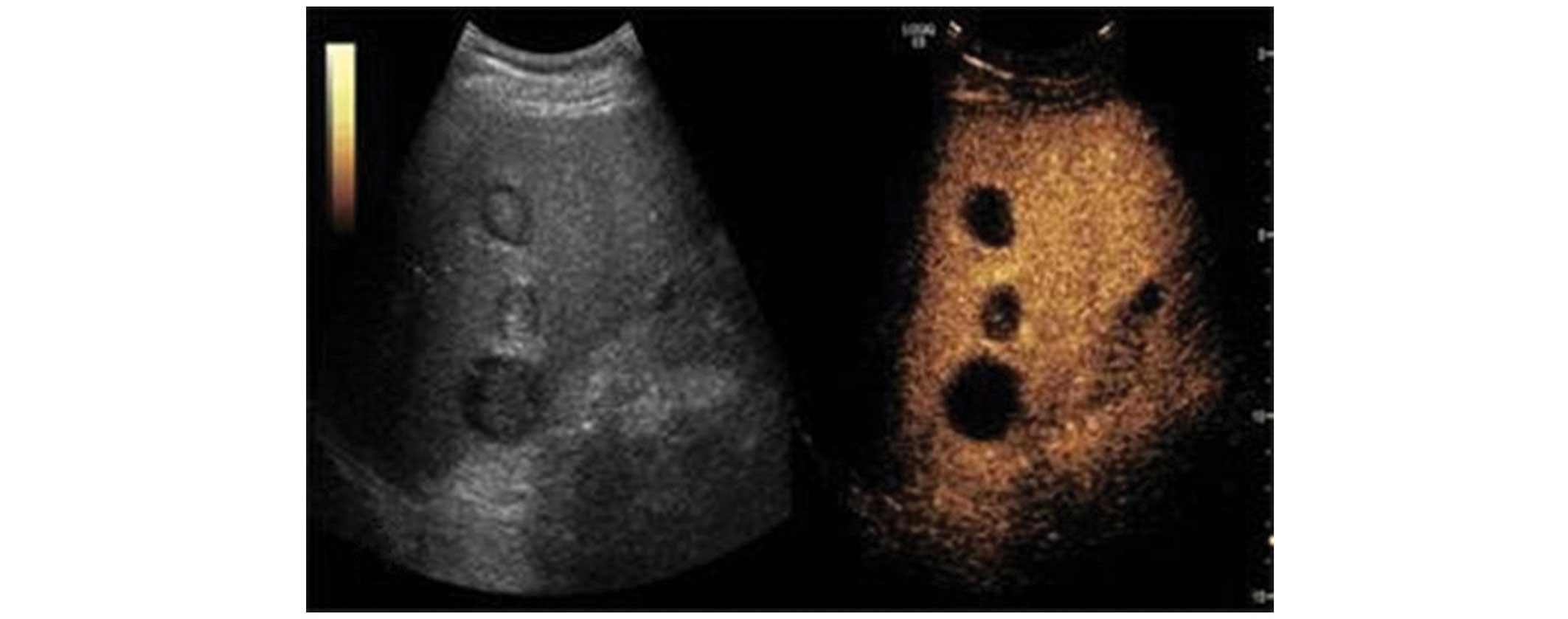
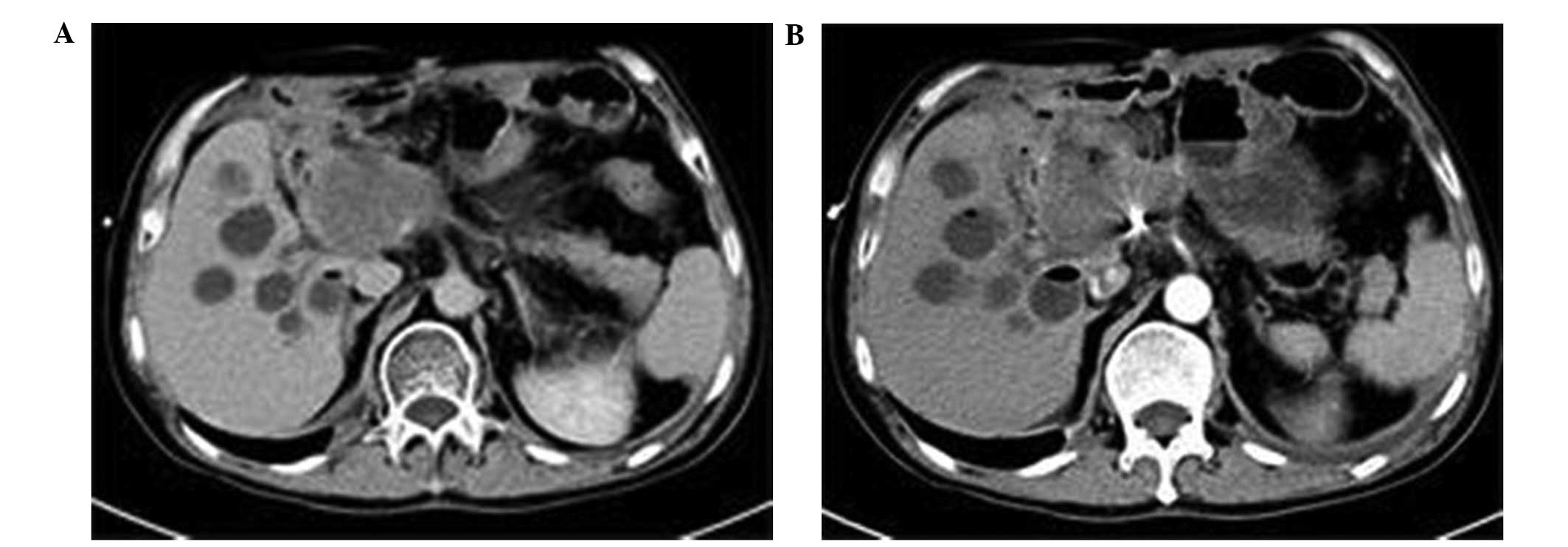
Real-time CEUS was conducted using sulfur hexafluoride (SF6; SonoVue) as a contrast agent, with a mean microbubble diameter of 2.5 mm of the phospholipid microcyst. Real-time CEUS demonstrated that the arterial, portal vein and prolonged phases were not enhanced in the focal zone of the liver (Fig. 1). The ultrasound detected several cystic masses in the liver of the patient. These were considered to be benign lesions or hepatic abscesses, and a plain computed tomography (CT) scan (Spiral CT; Siemens, Munich, Germany) detected several low echo nodules in the liver (Fig. 2A). A number of nodules were detected; however, no obvious enhancement of the low echo nodule was observed following completion of an enhanced CT scan (Fig. 2B).

Figure 1.

Examination with (left) conventional ultrasonography demonstrated a typical ‘bulls-eye’ sign; whereas (right) contrast-enhanced ultrasonography demonstrated that no filling enhancement was observed with the contrast agent in the whole focus.

Figure 2.

Diagnostic computed tomography (CT) scans. (A) Plain CT scan demonstrated several low echo nodules in the liver; whereas an (B) enhanced CT scan revealed no obvious enhancement of the hepatic nodules.

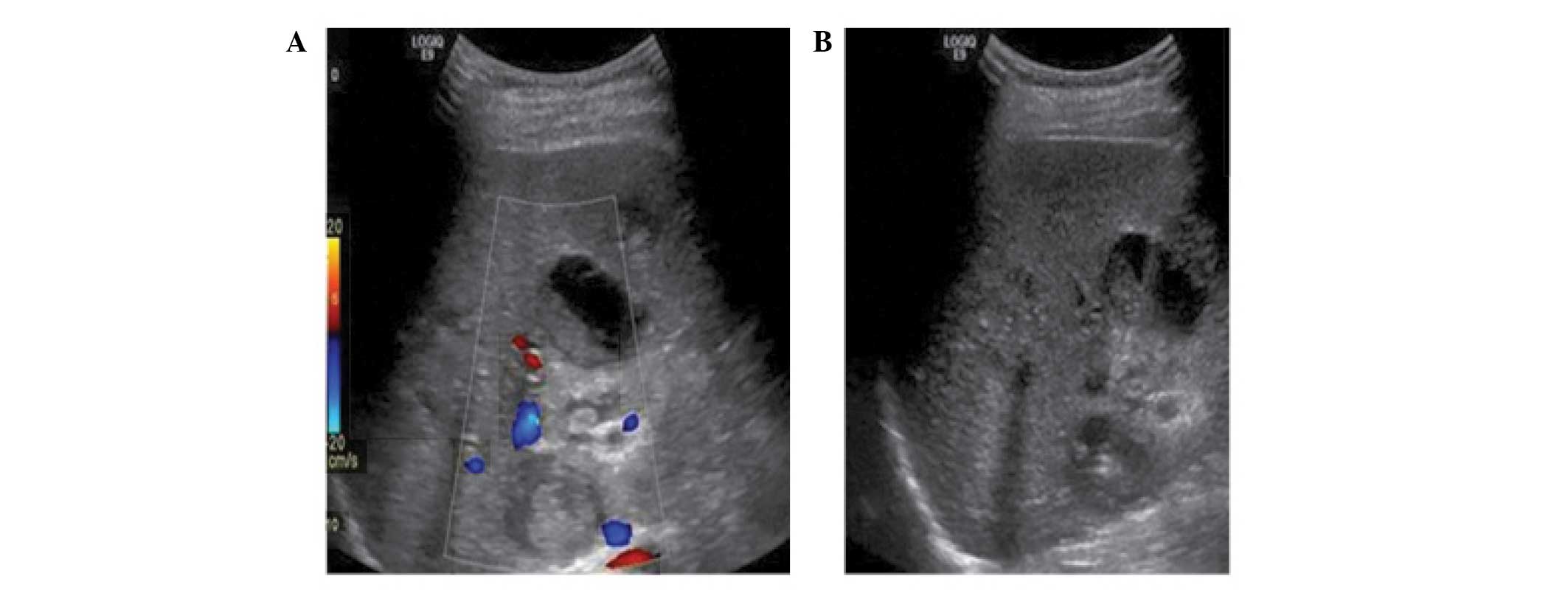
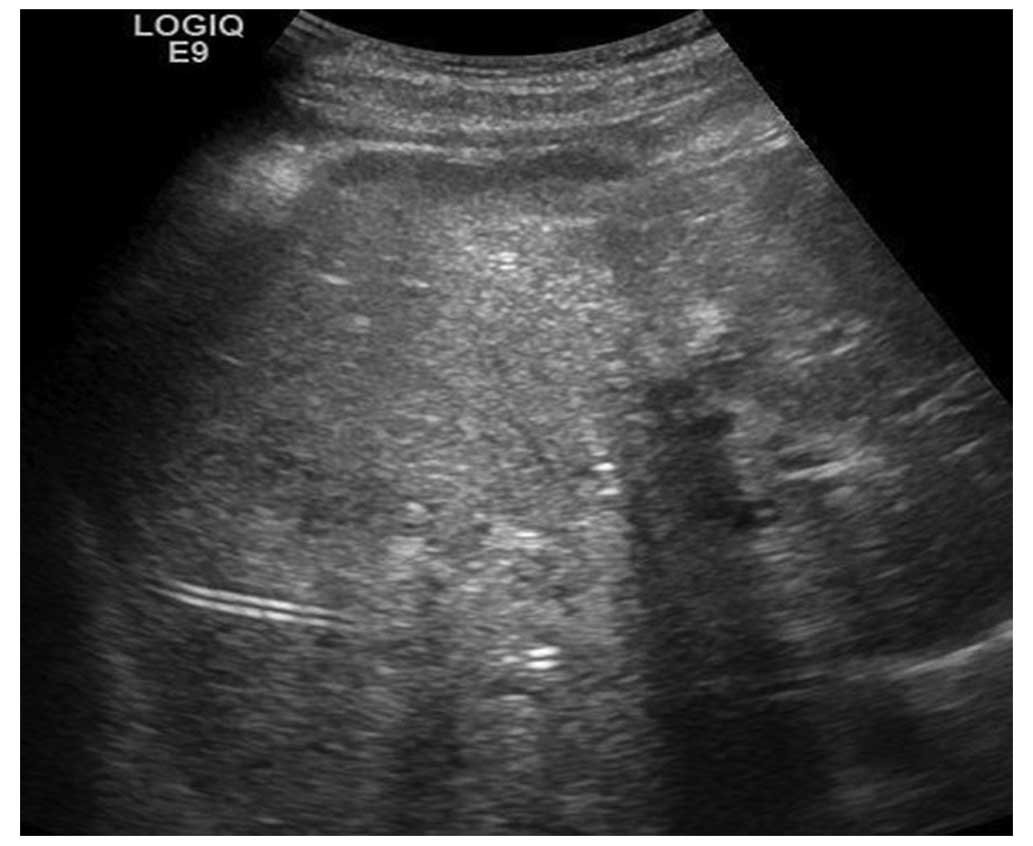
In order to make a definitive diagnosis, a sample was drawn from the liver by puncture with the guidance of traveling-wave ultrasonic sounds. A cytologic examination was completed on the grass green turbid liquid sample, which demonstrated that the sample contained Acinetobacter baumannii. Therefore, the final diagnosis was of hepatic abscess. Anti-inflammatory therapy was subsequently administered for 5 days, and liquefaction was detected in parts of the low echo nodule in the liver (Fig. 3). The therapy comprised of the intravenous administration of 3.0 g sulperzone and 0.9% normal saline every 8 h, 100 ml metronidazole every 12 h and two tablets of tigecydine every 12 h. Minimal blood flow was exhibited around the low echo nodule and, following 30 days of drainage and anti-inflammatory therapy, the characteristic ‘bull's eye’ sign in the liver disappeared. The hepatic tissue repaired and the patient gradually recovered (Fig. 4). AFP and CEA levels gradually returned to normal at a 5-month follow-up examination.

Figure 3.

Patient liver after 5 days of anti-inflammatory therapy. (A) Color Doppler ultrasound scan, red represents blood flow directed to the probe, while blue represents blood flow away from the probe, indicating a small quantity of blood flow around the low echo nodule. (B) Conventional ultrasound scan demonstrating liquefaction in parts of the low echo nodule in the liver. Minimal blood flow could be seen around the low echo nodule.

Figure 4.

Following 30 days of drainage and anti-inflammatory therapy, a conventional ultrasonic scan demonstrated that the typical ‘bulls-eye’ sign in the liver had disappeared, the liver tissue had subsequently repaired and the patient gradually recovered.

Discussion

Hepatic abscesses are common and are usually straightforward to clinically diagnose. In images generated through a conventional ultrasonic examination, a typical hepatic abscess presents as an even or uneven round low echo area with visible internal masses or spots (11,12). However, following the increased consumption of clinical drugs, the manifestations of hepatic abscesses are increasingly atypical (13). Treatment for bacterial liver abscess may be conducted as follows: Prior to bacterial culture and drug sensitivity testing, intensified and large doses broad-spectrum antibiotic should be to eliminate gram-positive and gram-negative bacteria. In addition, anaerobion infection may occur, so anti-anaerobic agents should be applied regularly. Treatment for E. histolytica may be conducted as follows: Drugs to eliminate E. histolytica in the inner organs are commonly used, assisted by radical treatment drugs for the treatment of intestinal amebiasis (3,14). Currently, metronidazole is the preferred antibiotic agent. A typical ‘bull's eye’ sign of hepatic abscess caused by A. baumannii may be observed in tumor patients, although this is considered an atypical hepatic abscess. Clinically, it is becoming increasingly difficult to decipher between atypical hepatic abscess and hepatic malignant tumors by conventional ultrasonic examination. As was demonstrated in the present case report, hepatic abscesses may exhibit a typical ‘bull's eye’ sign; however, in patients with a medical history of gastric carcinoma and colorectal cancer this may easily be misdiagnosed as metastatic colorectal cancer in the liver when using conventional ultrasonic examination. In the present case report, real-time CEUS was applied, as a supplement to the conventional ultrasonic examination, and this determined that the hepatic abscess exhibited no obvious enhancement in the arterial, portal vein or prolonged phases, which was inconsistent with the fast-in-fast-out imaging of hepatic malignant tumors. Furthermore, blood perfusion was observed on a real-time basis and the structure of the focal zone was clearly indicated. Based on these manifestations of real-time CEUS, an accurate ultrasonic diagnosis was achieved in this case. Therefore, the present case report demonstrated that real-time CEUS may provide great value for the definitive diagnosis of atypical hepatic abscesses, particularly in patients with a history of cancer, and also provides an important reference tool for differential diagnoses in clinical surgery.

Acknowledgements

This study was supported by the Youth Science Fund of Wuhan University (grant no. 2014A12).

References

1 

Kuo SH, Lee YT, Li CR, Tseng CJ, Chao WN, Wang PH, Wong RH, Chen CC, Chen SC and Lee MC: Mortality in Emergency Department Sepsis score as prognostic indicator in patients with pyogenic liver abscess. Am J Emerg Med. 31:916–921. 2013. View Article : Google Scholar : PubMed/NCBI

2 

Sharma MP and Ahuja V: Amoebic Liver Abscess. JIACM. 4:107–111. 2003.

3 

Sahoo AK and Rauta S: A clinical study on amoebic liver abscess. Bangladesh J Med Sci. 14:49–52. 2015.

4 

Huang CJ, Pitt HA, Lipsett PA, Osterman FA, Lillemoe KD, Cameron JL and Zuidema GD: Pyogenic hepatic abscess.Changing trends over 42 years. Ann Surg. 223:600–609. 1996. View Article : Google Scholar : PubMed/NCBI

5 

Rajagopalan S and Langer V: Hepatic abscesses. Med J Armed Forces India. 68:271–275. 2012. View Article : Google Scholar : PubMed/NCBI

6 

Zhou K and Chen Z: MRI of Body. Shanghai: Shanghai Medical University Press. 888–892. 2000.

7 

Claudon M, Cosgrove D, Albrecht T, Bolondi L, Bosio M, Calliada F, Correas JM, Darge K, Dietrich C, D'Onofrio M, et al: Guidelines and good clinical practice recommendations for contrast enhanced ultrasound (CEUS) - update 2008. Ultraschall Med. 29:28–44. 2008. View Article : Google Scholar : PubMed/NCBI

8 

Feinstein SB, Coll B, Staub D, Adam D, Schinkel AF, ten Cata FJ and Thomenius K: Contrast enhanced ultrasound imaging. J Nucl Cardio. 17:106–115. 2010. View Article : Google Scholar

9 

Khanna S, Chaudhary D, Kumar A and Vij JC: Experience with aspiration in cases of amebic liver abscess in an endemic area. Eur J Clin Microbiol Infect Dis. 24:428–430. 2005. View Article : Google Scholar : PubMed/NCBI

10 

Rajak CL, Gupta S, Jain S, Chawla Y, Gulati M and Suri S: Percutaneous treatment of liver abscesses: needle aspiration versus catheter drainage. AJR Am J Roentgenol. 170:1035–1039. 1998. View Article : Google Scholar : PubMed/NCBI

11 

Donovan AJ, Yellin AE and Ralls PW: Hepatic abscess. World J Surg. 15:162–169. 1991. View Article : Google Scholar : PubMed/NCBI

12 

Ryan RS, Al-Hashimi H and Lee MJ: Hepatic abscesses in elderly patients mimicking metastatic disease. Ir J Med Sci. 170:251–253. 2001. View Article : Google Scholar : PubMed/NCBI

13 

Brown KT, Gandhi RT, Covey AM, Brody LA and Getrajdman GI: Pylephlebitis and liver abscess mimicking hepatocellular carcinoma. Hepatobiliary Pancreat Dis Int. 2:221–225. 2003.PubMed/NCBI

14 

Cerwenka H: Pyogenic liver abscess: Differences in etiology and treatment in Southeast Asia and Central Europe. World J Gastroenterol. 16:2458–2462. 2010. View Article : Google Scholar : PubMed/NCBI

Related Articles

  • Abstract
  • View
  • Download
  • Twitter
Copy and paste a formatted citation
Spandidos Publications style
Wu M and Zheng QC: Case report: Real-time contrast-enhanced ultrasonography for the diagnosis of typical ̔bull's eye̓ sign of hepatic abscess caused by Acinetobacter baumannii in a tumor patient. Exp Ther Med 11: 929-932, 2016.
APA
Wu, M., & Zheng, Q. (2016). Case report: Real-time contrast-enhanced ultrasonography for the diagnosis of typical ̔bull's eye̓ sign of hepatic abscess caused by Acinetobacter baumannii in a tumor patient. Experimental and Therapeutic Medicine, 11, 929-932. https://doi.org/10.3892/etm.2016.2976
MLA
Wu, M., Zheng, Q."Case report: Real-time contrast-enhanced ultrasonography for the diagnosis of typical ̔bull's eye̓ sign of hepatic abscess caused by Acinetobacter baumannii in a tumor patient". Experimental and Therapeutic Medicine 11.3 (2016): 929-932.
Chicago
Wu, M., Zheng, Q."Case report: Real-time contrast-enhanced ultrasonography for the diagnosis of typical ̔bull's eye̓ sign of hepatic abscess caused by Acinetobacter baumannii in a tumor patient". Experimental and Therapeutic Medicine 11, no. 3 (2016): 929-932. https://doi.org/10.3892/etm.2016.2976
Copy and paste a formatted citation
x
Spandidos Publications style
Wu M and Zheng QC: Case report: Real-time contrast-enhanced ultrasonography for the diagnosis of typical ̔bull's eye̓ sign of hepatic abscess caused by Acinetobacter baumannii in a tumor patient. Exp Ther Med 11: 929-932, 2016.
APA
Wu, M., & Zheng, Q. (2016). Case report: Real-time contrast-enhanced ultrasonography for the diagnosis of typical ̔bull's eye̓ sign of hepatic abscess caused by Acinetobacter baumannii in a tumor patient. Experimental and Therapeutic Medicine, 11, 929-932. https://doi.org/10.3892/etm.2016.2976
MLA
Wu, M., Zheng, Q."Case report: Real-time contrast-enhanced ultrasonography for the diagnosis of typical ̔bull's eye̓ sign of hepatic abscess caused by Acinetobacter baumannii in a tumor patient". Experimental and Therapeutic Medicine 11.3 (2016): 929-932.
Chicago
Wu, M., Zheng, Q."Case report: Real-time contrast-enhanced ultrasonography for the diagnosis of typical ̔bull's eye̓ sign of hepatic abscess caused by Acinetobacter baumannii in a tumor patient". Experimental and Therapeutic Medicine 11, no. 3 (2016): 929-932. https://doi.org/10.3892/etm.2016.2976
Follow us
  • Twitter
  • LinkedIn
  • Facebook
About
  • Spandidos Publications
  • Careers
  • Cookie Policy
  • Privacy Policy
How can we help?
  • Help
  • Live Chat
  • Contact
  • Email to our Support Team