Spandidos Publications Logo
  • About
    • About Spandidos
    • Aims and Scopes
    • Abstracting and Indexing
    • Editorial Policies
    • Reprints and Permissions
    • Job Opportunities
    • Terms and Conditions
    • Contact
  • Journals
    • All Journals
    • Oncology Letters
      • Oncology Letters
      • Information for Authors
      • Editorial Policies
      • Editorial Board
      • Aims and Scope
      • Abstracting and Indexing
      • Bibliographic Information
      • Archive
    • International Journal of Oncology
      • International Journal of Oncology
      • Information for Authors
      • Editorial Policies
      • Editorial Board
      • Aims and Scope
      • Abstracting and Indexing
      • Bibliographic Information
      • Archive
    • Molecular and Clinical Oncology
      • Molecular and Clinical Oncology
      • Information for Authors
      • Editorial Policies
      • Editorial Board
      • Aims and Scope
      • Abstracting and Indexing
      • Bibliographic Information
      • Archive
    • Experimental and Therapeutic Medicine
      • Experimental and Therapeutic Medicine
      • Information for Authors
      • Editorial Policies
      • Editorial Board
      • Aims and Scope
      • Abstracting and Indexing
      • Bibliographic Information
      • Archive
    • International Journal of Molecular Medicine
      • International Journal of Molecular Medicine
      • Information for Authors
      • Editorial Policies
      • Editorial Board
      • Aims and Scope
      • Abstracting and Indexing
      • Bibliographic Information
      • Archive
    • Biomedical Reports
      • Biomedical Reports
      • Information for Authors
      • Editorial Policies
      • Editorial Board
      • Aims and Scope
      • Abstracting and Indexing
      • Bibliographic Information
      • Archive
    • Oncology Reports
      • Oncology Reports
      • Information for Authors
      • Editorial Policies
      • Editorial Board
      • Aims and Scope
      • Abstracting and Indexing
      • Bibliographic Information
      • Archive
    • Molecular Medicine Reports
      • Molecular Medicine Reports
      • Information for Authors
      • Editorial Policies
      • Editorial Board
      • Aims and Scope
      • Abstracting and Indexing
      • Bibliographic Information
      • Archive
    • World Academy of Sciences Journal
      • World Academy of Sciences Journal
      • Information for Authors
      • Editorial Policies
      • Editorial Board
      • Aims and Scope
      • Abstracting and Indexing
      • Bibliographic Information
      • Archive
    • International Journal of Functional Nutrition
      • International Journal of Functional Nutrition
      • Information for Authors
      • Editorial Policies
      • Editorial Board
      • Aims and Scope
      • Abstracting and Indexing
      • Bibliographic Information
      • Archive
    • International Journal of Epigenetics
      • International Journal of Epigenetics
      • Information for Authors
      • Editorial Policies
      • Editorial Board
      • Aims and Scope
      • Abstracting and Indexing
      • Bibliographic Information
      • Archive
    • Medicine International
      • Medicine International
      • Information for Authors
      • Editorial Policies
      • Editorial Board
      • Aims and Scope
      • Abstracting and Indexing
      • Bibliographic Information
      • Archive
  • Articles
  • Information
    • Information for Authors
    • Information for Reviewers
    • Information for Librarians
    • Information for Advertisers
    • Conferences
  • Language Editing
Spandidos Publications Logo
  • About
    • About Spandidos
    • Aims and Scopes
    • Abstracting and Indexing
    • Editorial Policies
    • Reprints and Permissions
    • Job Opportunities
    • Terms and Conditions
    • Contact
  • Journals
    • All Journals
    • Biomedical Reports
      • Information for Authors
      • Editorial Policies
      • Editorial Board
      • Aims and Scope
      • Abstracting and Indexing
      • Bibliographic Information
      • Archive
    • Experimental and Therapeutic Medicine
      • Information for Authors
      • Editorial Policies
      • Editorial Board
      • Aims and Scope
      • Abstracting and Indexing
      • Bibliographic Information
      • Archive
    • International Journal of Epigenetics
      • Information for Authors
      • Editorial Policies
      • Editorial Board
      • Aims and Scope
      • Abstracting and Indexing
      • Bibliographic Information
      • Archive
    • International Journal of Functional Nutrition
      • Information for Authors
      • Editorial Policies
      • Editorial Board
      • Aims and Scope
      • Abstracting and Indexing
      • Bibliographic Information
      • Archive
    • International Journal of Molecular Medicine
      • Information for Authors
      • Editorial Policies
      • Editorial Board
      • Aims and Scope
      • Abstracting and Indexing
      • Bibliographic Information
      • Archive
    • International Journal of Oncology
      • Information for Authors
      • Editorial Policies
      • Editorial Board
      • Aims and Scope
      • Abstracting and Indexing
      • Bibliographic Information
      • Archive
    • Medicine International
      • Information for Authors
      • Editorial Policies
      • Editorial Board
      • Aims and Scope
      • Abstracting and Indexing
      • Bibliographic Information
      • Archive
    • Molecular and Clinical Oncology
      • Information for Authors
      • Editorial Policies
      • Editorial Board
      • Aims and Scope
      • Abstracting and Indexing
      • Bibliographic Information
      • Archive
    • Molecular Medicine Reports
      • Information for Authors
      • Editorial Policies
      • Editorial Board
      • Aims and Scope
      • Abstracting and Indexing
      • Bibliographic Information
      • Archive
    • Oncology Letters
      • Information for Authors
      • Editorial Policies
      • Editorial Board
      • Aims and Scope
      • Abstracting and Indexing
      • Bibliographic Information
      • Archive
    • Oncology Reports
      • Information for Authors
      • Editorial Policies
      • Editorial Board
      • Aims and Scope
      • Abstracting and Indexing
      • Bibliographic Information
      • Archive
    • World Academy of Sciences Journal
      • Information for Authors
      • Editorial Policies
      • Editorial Board
      • Aims and Scope
      • Abstracting and Indexing
      • Bibliographic Information
      • Archive
  • Articles
  • Information
    • For Authors
    • For Reviewers
    • For Librarians
    • For Advertisers
    • Conferences
  • Language Editing
Login Register Submit
  • This site uses cookies
  • You can change your cookie settings at any time by following the instructions in our Cookie Policy. To find out more, you may read our Privacy Policy.

    I agree
Search articles by DOI, keyword, author or affiliation
Search
Advanced Search
presentation
Experimental and Therapeutic Medicine
Join Editorial Board Propose a Special Issue
Print ISSN: 1792-0981 Online ISSN: 1792-1015
Journal Cover
August-2016 Volume 12 Issue 2

Full Size Image

Sign up for eToc alerts
Recommend to Library

Journals

International Journal of Molecular Medicine

International Journal of Molecular Medicine

International Journal of Molecular Medicine is an international journal devoted to molecular mechanisms of human disease.

International Journal of Oncology

International Journal of Oncology

International Journal of Oncology is an international journal devoted to oncology research and cancer treatment.

Molecular Medicine Reports

Molecular Medicine Reports

Covers molecular medicine topics such as pharmacology, pathology, genetics, neuroscience, infectious diseases, molecular cardiology, and molecular surgery.

Oncology Reports

Oncology Reports

Oncology Reports is an international journal devoted to fundamental and applied research in Oncology.

Experimental and Therapeutic Medicine

Experimental and Therapeutic Medicine

Experimental and Therapeutic Medicine is an international journal devoted to laboratory and clinical medicine.

Oncology Letters

Oncology Letters

Oncology Letters is an international journal devoted to Experimental and Clinical Oncology.

Biomedical Reports

Biomedical Reports

Explores a wide range of biological and medical fields, including pharmacology, genetics, microbiology, neuroscience, and molecular cardiology.

Molecular and Clinical Oncology

Molecular and Clinical Oncology

International journal addressing all aspects of oncology research, from tumorigenesis and oncogenes to chemotherapy and metastasis.

World Academy of Sciences Journal

World Academy of Sciences Journal

Multidisciplinary open-access journal spanning biochemistry, genetics, neuroscience, environmental health, and synthetic biology.

International Journal of Functional Nutrition

International Journal of Functional Nutrition

Open-access journal combining biochemistry, pharmacology, immunology, and genetics to advance health through functional nutrition.

International Journal of Epigenetics

International Journal of Epigenetics

Publishes open-access research on using epigenetics to advance understanding and treatment of human disease.

Medicine International

Medicine International

An International Open Access Journal Devoted to General Medicine.

Journal Cover
August-2016 Volume 12 Issue 2

Full Size Image

Sign up for eToc alerts
Recommend to Library

  • Article
  • Citations
    • Cite This Article
    • Download Citation
    • Create Citation Alert
    • Remove Citation Alert
    • Cited By
  • Similar Articles
    • Related Articles (in Spandidos Publications)
    • Similar Articles (Google Scholar)
    • Similar Articles (PubMed)
  • Download PDF
  • Download XML
  • View XML
Article Open Access

Antimicrobial prophylaxis in caesarean section delivery

  • Authors:
    • Ronghua Liu
    • Lin Lin
    • Dujuan Wang
  • View Affiliations / Copyright

    Affiliations: Department of Obstetrics, People's Hospital of Linyi, Linyi, Shandong 276000, P.R. China
    Copyright: © Liu et al. This is an open access article distributed under the terms of Creative Commons Attribution License.
  • Pages: 961-964
    |
    Published online on: May 18, 2016
       https://doi.org/10.3892/etm.2016.3350
  • Expand metrics +
Metrics: Total Views: 0 (Spandidos Publications: | PMC Statistics: )
Metrics: Total PDF Downloads: 0 (Spandidos Publications: | PMC Statistics: )
Cited By (CrossRef): 0 citations Loading Articles...

This article is mentioned in:


Abstract

Antimicrobial prophylaxis is used routinely for pre-, intra- and post-operative caesarean section. One of the most important risk factors for postpartum infection is caesarean delivery. Caesarean section shows a higher incidence of infection than vaginal delivery. It is complicated by surgical site infections, endometritis or urinary tract infection. The aim of the present study was to assess the usage of antimicrobials in women undergoing caesarean section at a Tertiary Care Hospital. A prospective study was conducted in 100 women during the period of February 2013 to August 2013 in the inpatient Department of Gynaecology and Obstetrics. Data collected included the age of the patient, gravidity, and type of caesarean section, which was analyzed for the nature and number of antimicrobials prescribed, duration of treatment, polypharmacy, fixed‑dose combinations, generic/brand names used and failure of prophylaxis. Antimicrobial prophylaxis was administered to the patients. The most commonly prescribed antimicrobial was a combination of ceftriaxone and sulbactam. Of 100 patients, 87% were aged 20-35 years. The highest proportion of patients were primigravida 72%. Elective procedure was carried out in 38%, the remaining were emergency C-section in whom intra- and post-operative antimicrobial prophylaxis was given for a duration of 7 days. In total, 27% of patients were reported with infection even after the antimicrobial prophylaxis. In conclusion, pre-operative prophylaxis was given in the early rupture of membranes. Fixed‑dose combinations were preferred. Incidence of infection even after antimicrobial prophylaxis was reported due to pre‑existing infection, debilitating disease or prolonged rupture of membranes. Patients with recurrent infection were shifted to amoxicillin and clavulinic acid combination. Drugs were prescribed only by brand names which is of concern.

Introduction

Antimicrobials are commonly prescribed in Obstetrics and Gynaecology prophylactically for pre-operative and post-operative procedures (1) (caesarean section, episiotomy, medical termination of pregnancy, total vaginal or abdominal hysterectomy, laparoscopic procedures, tubal ligation, dilatation and curettage, and myomectomy) or to treat ongoing infection (vaginitis, pelvic inflammatory disease, endometriosis, sexually transmitted diseases and urinary tract infections).

The rational use of antimicrobials in women of the child-bearing age group is important because it affects this population as well as their offspring. Indiscriminate use of antibiotics may result in the appearance of drug-resistant organisms (2).

Drug utilization is defined by the WHO as ‘The marketing, distribution, prescription, and use of drugs in society, with special emphasis on the resulting medical, social, and economic consequences’. A drug utilization study is therefore one designed to describe quantitatively and qualitatively the use of a given drug, i.e., class of drugs, indications, duration of treatment, dosage, previous or associated treatments and compliance (3,4).

Surgical site infections are a common complication of obstetric and gynaecological procedures. The use of antimicrobial prophylaxis for caesarean section has been shown to be effective in reducing postoperative morbidity, cost and duration of hospitalization (5–8).

Antimicrobial usage in the above setting becomes inevitable but should be restricted. The judicious use of these drugs can prevent post-partum infection of the mother and neonate and reduce incidence of adverse drug reactions.

The present study was performed to assess the usage of antimicrobials in 100 women undergoing caesarean section

Materials and methods

A prospective study of 100 prescriptions of women attending the inpatient and outpatient Department of Obstetrics and Gynaecology, People's Hospital of Linyi (Shandong, China), a Tertiary Care Hospital during the period of February 2013 to August 2013 was conducted. Prior to start of the study Institutional Ethics Committee approval was obtained. The prescriptions were analyzed using WHO core drug use indicators including average number of drugs per encounter, percentage of drugs prescribed by generic name, percentage of drugs prescribed from the essential drug list, patient care and availability of drugs (4).

The data collected were analyzed for the following para-meters: i) age of patient; ii) gravidity; iii) type of caesarean section - (elective/emergency); iv) number of drugs per prescription; v) class of antimicrobials; vi) duration of antimicrobial treatment; vii) average number of antimicrobials prescribed; viii) polypharmacy; ix) number of fixed-dose combinations prescribed; x) generic/brand name prescribed; and xi) failure of prophylaxis.

Results

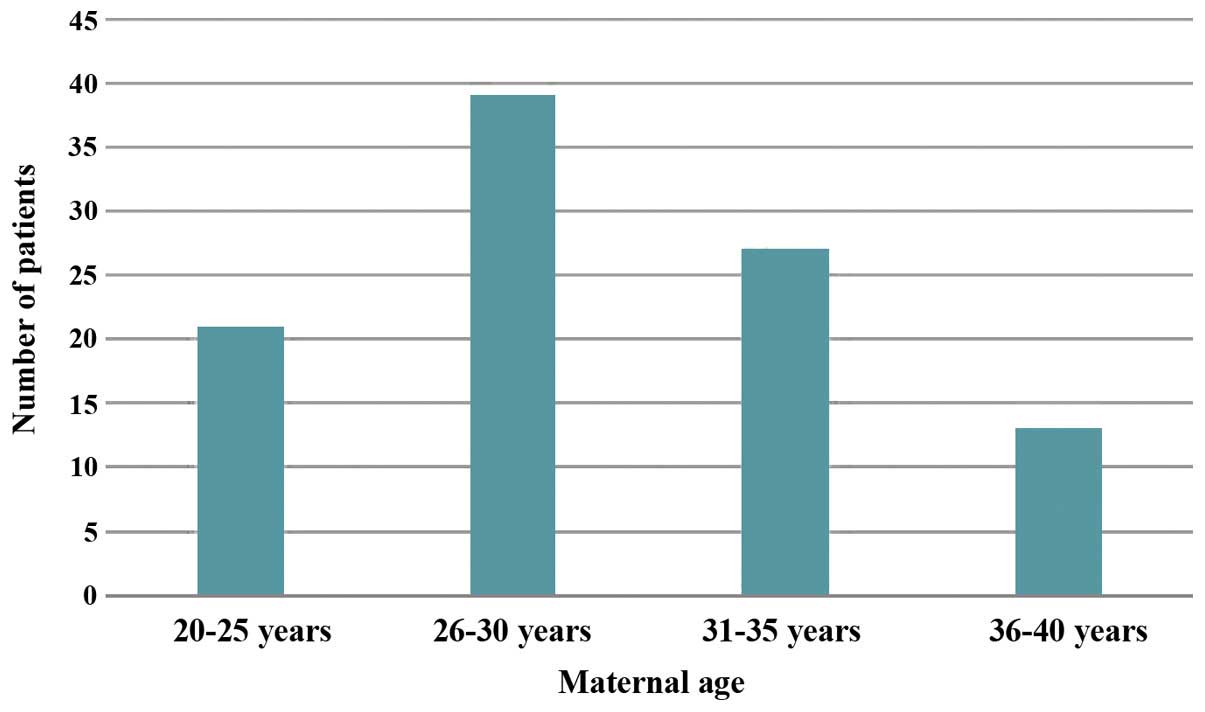
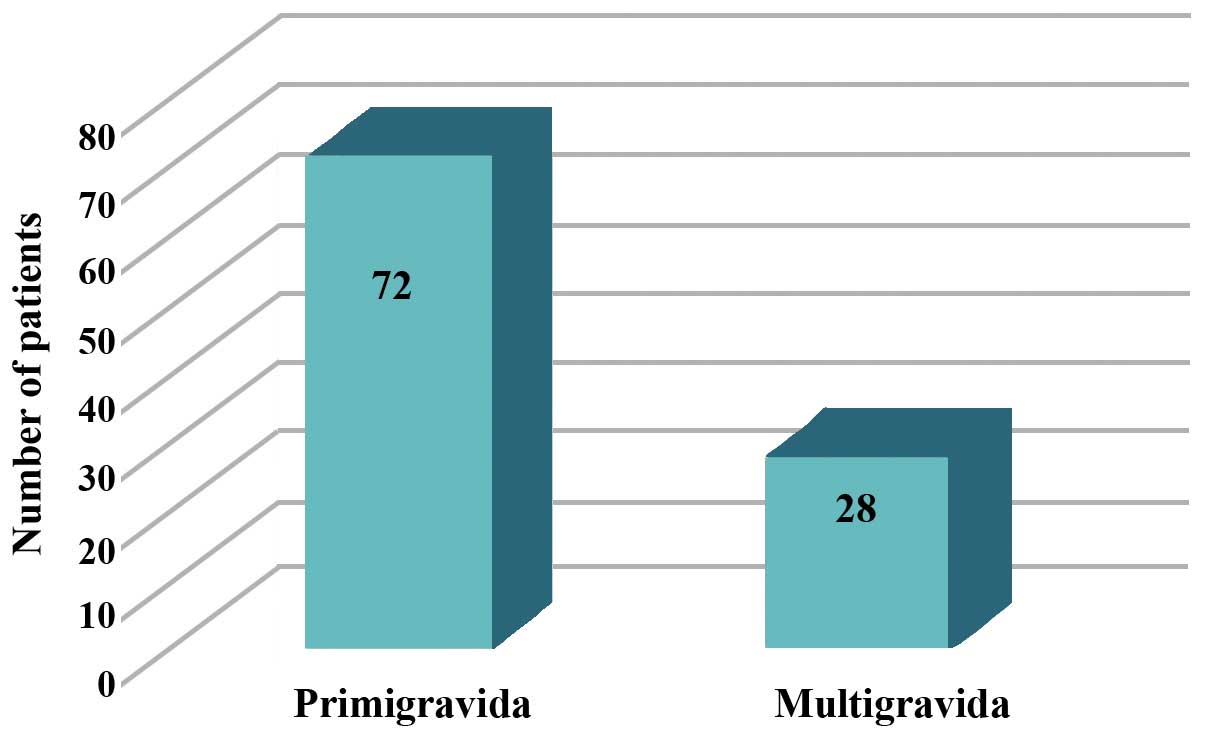
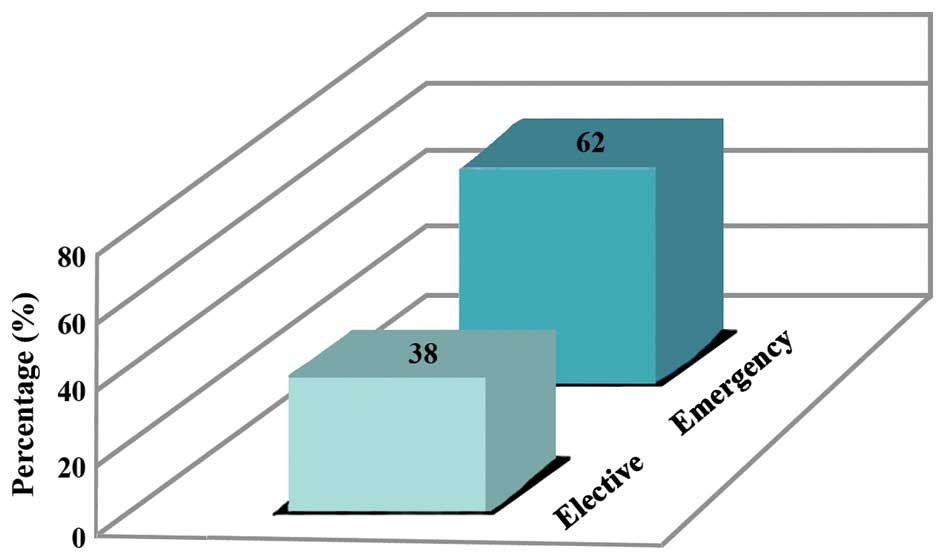
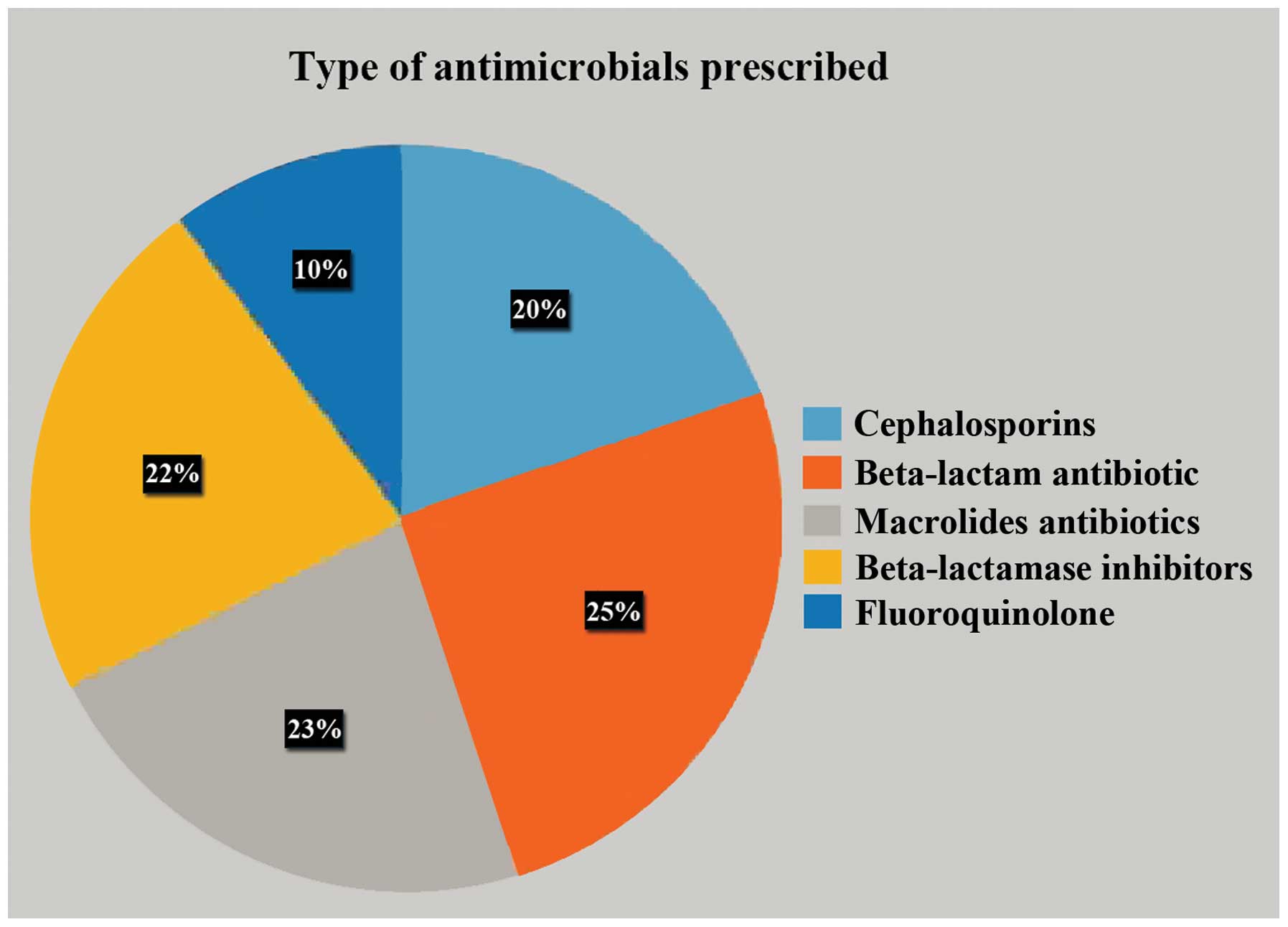
Of 100 patients, 87% were in the age group of 20–35 years, 21% were in the age group of 20–25 years, 39% were in the age group of 26–30 years, 27% were in the age group of 31–35 years and the remaining 13% were in the age group of 36–39 years (Fig. 1). The highest proportion of patients was primigravida (72%) (Fig. 2). Elective C-sections were carried out in 38% of cases and the remaining were emergency C-section in whom intra- and post-operative antimicrobial prophylaxis was received for a duration of 7 days (Fig. 3). Antimicrobial prophylaxis was given to all the patients, while the most commonly prescribed antimicrobial was a combination of ceftriaxone and sulbactam (Fig. 4). Patients who were reported with infection even after antimicrobial prophylaxis were 27% (Fig. 5).

Figure 1.

Maternal age at delivery. Highest proportions of patients were primigravida 72%. Elective caesarean section was carried out in 38%, and the remaining were emergency cases. Intra- and post-operative antimicrobial prophylaxis was given in both settings of patients for a duration of 7–12 days. Intra-operative prophylaxis was associated in patients with long duration of rupture of membranes. Patients who underwent the elective procedure received pre-operative antimicrobial prophylaxis.

Figure 2.

Type of gravida. Antimicrobial prophylaxis was prescribed to all the patients. The total number of antimicrobials prescribed post-operatively, during hospital stay, discharge and after suture removal ranged between 4 and 8 (average 5).

Figure 3.

Type of C-section. The most commonly prescribed antibiotics were ceftriaxone, sulbactam, amikacin, metronidazole, satranidazole, amoxicillin, clavulanic acid, ciprofoxacin and tinidazole. The most commonly prescribed fixed-dose combinations were the ceftriaxone and sulbactam combination, amoxicillin and clavulinic acid combination and ciprofoxacin and tinidazole combination. A total of 214 fxed-dose combinations were prescribed. The prescriptions were prescribed by brand names.

Figure 4.

Class of antimicrobials prescribed.

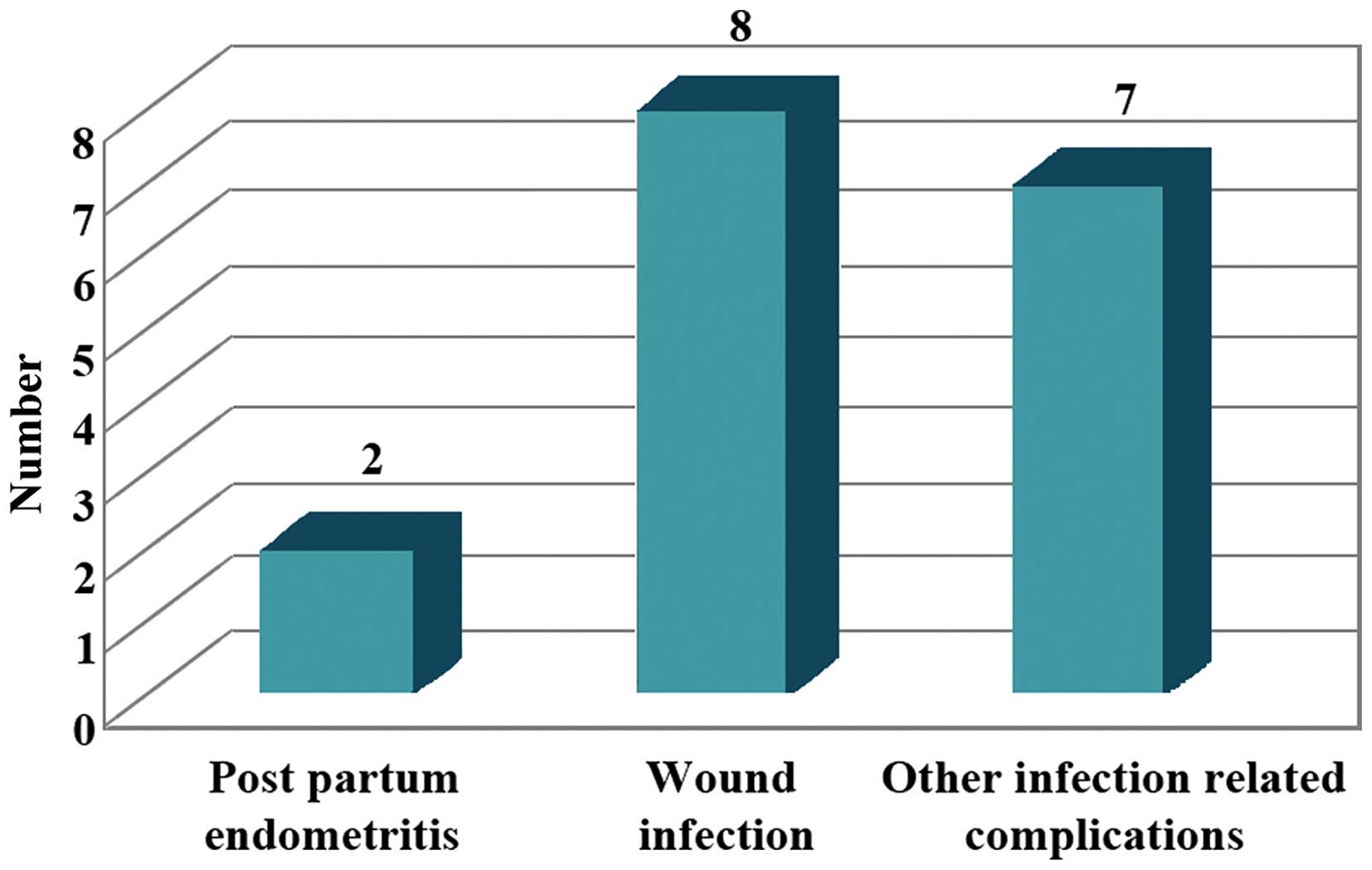
Figure 5.

Complications due to failure of antibiotic prophylaxis.

Post-partum endometritis develops usually in patients undergoing caesarean section, after labour or rupture of membranes despite the use of prophylactic antibiotics (9). Therapeutic use of antimicrobials was ‘empirical’. Patients who were reported with infection even after antimicrobial prophylaxis were 17% of which 2% were diagnosed with post-partum endometritis, 8% with wound infection and 7% with urinary tract infection (10,11). The patients with failure of antimicrobial prophylaxis were shifted to other regimens following empiric treatment (Tables I and II).

Table I.

Number of antimicrobials prescribed per patient.

Table I.

Number of antimicrobials prescribed per patient.

No. of antimicrobialsPercentage of use
4  6
522
628
713
816
9 or more15

Table II.

Antepartum complications.

Table II.

Antepartum complications.

Antepartum complicationsNo. of patients
Antepartum infections17
Gestational diabetes  5
Antepartum anemia44

Discussion

The largest number of patients in the present study was in the age group of 26–30 years. The age distribution is a reflection of the demographic status of the community as the majority of women tend to complete their families during this period. The emergency lower segment caesarean section (LSCS) group formed over 50% of the study participants. It is important to opt for elective procedures, where feasible, as it provides the opportunity to have a clean operative field (12,13). LSCS were performed under antimicrobial prophylaxis to avoid post-operative morbidity. This reflects that, in general, the practice in the audit setting is evidence-based.

Regardless of the antibiotic regimen used, the protective effect of prophylactic antibiotics was homogeneous across all the patients undergoing caesarean section. This effect of significant reduction in postoperative infectious morbidity (by around two thirds) led the reviewers to recommend that antibiotic prophylaxis be provided to all the women undergoing caesarean section. All the patients received antimicrobial prophylaxis, which is good clinical practice and comparable to international standards of evidence-based practice worldwide. The reduction in post-operative infection-related morbidity, in turn, is cost effective as it reduces the number of days the patient has to stay in hospital. Additionally, it reduces the incidence of hospital-acquired infections and infection with more resistant microorganisms.

The most frequent microbes isolated from endometrial cultures of women with post-caesarean wound infections are staphylococci, enterococci, anaerobes and ureaplasmas (14–17). Furthermore, when specifically identified, ureaplasma (or Mycoplasma genus) is the most common organism isolated from the amniotic fluid and chorioamnion at caesarean delivery, and is associated with a 3- to 8-fold increased risk of post-caesarean endometritis or wound infection (18,19). Bacterial vaginosis is also associated with an increased risk of post-caesarean endometritis. Therefore, the recommended regimen of ceftriaxone alone does not cover frequent isolates or risk factors of such infection. Thus, use of an extended spectrum regimen involving a second antibiotic metronidazole was used (9,20,21).

In conclusion, antimicrobial prophylaxis was given routinely to all 100 patients undergoing caesarean section pre-operatively, intra-operatively and post-operatively. Use of prophylactic antibiotics for patients undergoing caesarean section has significantly reduced post-operative maternal infection, morbidity and hospital stay (22,23). Pre-operative prophylaxis was given in the early rupture of membranes. Fixed-dose combinations were used, the most common being ceftriaxone and sulbactam combination. Incidence of infection even after antimicrobial prophylaxis was reported due to pre-existing infection, debilitating disease or prolonged rupture of membranes. Patients with recurrent infection were shifted to a regime that included amoxicillin and clavulanic acid, ciprofloxacin and tinidazole combination and the duration of treatment was prolonged (24). Patients with failure of antimicrobial prophylaxis were treated following the change in antimicrobial regimen, prolonging the duration of treatment and dilatation and curettage in 2% of the patients who reported with post-partum endometritis. Drugs were prescribed only by brand names which is of concern, generic drug prescribing is recommended and would enhance cost-effectiveness. Use of certain antimicrobials (fluoroquinolones and nitro-imidazole) not recommended in lactating mothers could have been avoided.

Since the patients with failure of antimicrobial prophylaxis received ‘empiric’ treatment, antibiotic culture sensitivity testing is recommended prior to introducing a change in the antimicrobial treatment regimen, to exclude antibiotic resistance.

References

1 

Warnecke HH, Graeff H, Selbmann HK, Preac-Mursic V, Adam D, Gloning KP, Jänicke F and Zander J: Perioperative short-term prophylaxis with antibiotics in caesarean section. Geburtshilfe Frauenheilkd. 42:654–661. 1982.(In German). View Article : Google Scholar : PubMed/NCBI

2 

Smaill FM and Grivell RM: Antibiotic prophylaxis versus no prophylaxis for preventing infection after cesarean section. Cochrane Database Syst Rev. 10:CD0074822014.PubMed/NCBI

3 

de Jonge L, Bos HJ, van Langen IM, de Jong-van den Berg LT and Bakker MK: Antibiotics prescribed before, during and after pregnancy in the Netherlands: a drug utilization study. Pharmacoepidemiol Drug Saf. 23:60–68. 2014. View Article : Google Scholar : PubMed/NCBI

4 

Lee F, Wong P, Hill F, Burgner D and Taylor R: Evidence behind the WHO guidelines: hospital care for children: what is the role of prophylactic antibiotics in the management of burns? J Trop Pediatr. 55:73–77. 2009. View Article : Google Scholar : PubMed/NCBI

5 

Clifford V and Daley A: Antibiotic prophylaxis in obstetric and gynaecological procedures: a review. Aust N Z J Obstet Gynaecol. 52:412–419. 2012. View Article : Google Scholar : PubMed/NCBI

6 

van Schalkwyk J, Van Eyk N, Yudin MH, Boucher M, Cormier B, Gruslin A, Money DM, Ogilvie G, Castillo E, Paquet C, et al: Society of Obstetricians and Gynaecologists of Canada Infectious Diseases Committee: Antibiotic prophylaxis in obstetric procedures. J Obstet Gynaecol Can. 32:878–892. 2010. View Article : Google Scholar : PubMed/NCBI

7 

Janisch H, Philipp K and Riss P: The effect of antibiotic prophylaxis in vaginal obstetric procedures (author's transl). Wien Klin Wochenschr. 91:227–230. 1979.(In German). PubMed/NCBI

8 

Tita AT, Rouse DJ, Blackwell S, Saade GR, Spong CY and Andrews WW: Emerging concepts in antibiotic prophylaxis for cesarean delivery: a systematic review. Obstet Gynecol. 113:675–682. 2009. View Article : Google Scholar : PubMed/NCBI

9 

Watts DH, Krohn MA, Hillier SL and Eschenbach DA: Bacterial vaginosis as a risk factor for post-cesarean endometritis. Obstet Gynecol. 75:52–58. 1990.PubMed/NCBI

10 

Mara JE and Baker JL: Hypertension and haematomas: prophylaxis with apresoline. Br J Plast Surg. 30:169–170. 1977. View Article : Google Scholar : PubMed/NCBI

11 

Lamont RF, Sobel JD, Kusanovic JP, Vaisbuch E, Mazaki-Tovi S, Kim SK, Uldbjerg N and Romero R: Current debate on the use of antibiotic prophylaxis for caesarean section. BJOG. 118:193–201. 2011. View Article : Google Scholar : PubMed/NCBI

12 

Dlamini LD, Sekikubo M, Tumukunde J, Kojjo C, Ocen D, Wabule A and Kwizera A: Antibiotic prophylaxis for caesarean section at a Ugandan hospital: a randomised clinical trial evaluating the effect of administration time on the incidence of postoperative infections. BMC Pregnancy Childbirth. 15:912015. View Article : Google Scholar : PubMed/NCBI

13 

Liabsuetrakul T, Lumbiganon P and Chongsuvivatwong V: Prophylactic antibiotic prescription for cesarean section. Int J Qual Health Care. 14:503–508. 2002. View Article : Google Scholar : PubMed/NCBI

14 

Newton ER and Wallace PA: Effects of prophylactic antibiotics on endometrial flora in women with postcesarean endometritis. Obstet Gynecol. 92:262–268. 1998. View Article : Google Scholar : PubMed/NCBI

15 

Sherman D, Lurie S, Betzer M, Pinhasi Y, Arieli S and Boldur I: Uterine flora at cesarean and its relationship to postpartum endometritis. Obstet Gynecol. 94:787–791. 1999. View Article : Google Scholar : PubMed/NCBI

16 

Watts DH, Eschenbach DA and Kenny GE: Early postpartum endometritis: the role of bacteria, genital mycoplasmas, and Chlamydia trachomatis. Obstet Gynecol. 73:52–60. 1989.PubMed/NCBI

17 

Emmons SL, Krohn M, Jackson M and Eschenbach DA: Development of wound infections among women undergoing cesarean section. Obstet Gynecol. 72:559–564. 1988.PubMed/NCBI

18 

Roberts S, Maccato M, Faro S and Pinell P: The microbiology of post-cesarean wound morbidity. Obstet Gynecol. 81:383–386. 1993.PubMed/NCBI

19 

Andrews WW, Shah SR, Goldenberg RL, Cliver SP, Hauth JC and Cassell GH: Association of post-cesarean delivery endometritis with colonization of the chorioamnion by Ureaplasma urealyticum. Obstet Gynecol. 85:509–514. 1995. View Article : Google Scholar : PubMed/NCBI

20 

Keski-Nisula L, Kirkinen P, Katila ML, Ollikainen M, Suonio S and Saarikoski S: Amniotic fluid U. urealyticum colonization: significance for maternal peripartal infections at term. Am J Perinatol. 14:151–156. 1997. View Article : Google Scholar : PubMed/NCBI

21 

Yoon BH, Romero R, Park JS, Chang JW, Kim YA, Kim JC and Kim KS: Microbial invasion of the amniotic cavity with Ureaplasma urealyticum is associated with a robust host response in fetal, amniotic, and maternal compartments. Am J Obstet Gynecol. 179:1254–1260. 1998. View Article : Google Scholar : PubMed/NCBI

22 

Gordon HR, Phelps D and Blanchard K: Prophylactic cesarean section antibiotics: maternal and neonatal morbidity before or after cord clamping. Obstet Gynecol. 53:151–156. 1979.PubMed/NCBI

23 

Itskovitz J, Paldi E and Katz M: The effect of prophylactic antibiotics on febrile morbidity following cesarean section. Obstet Gynecol. 53:162–165. 1979.PubMed/NCBI

24 

Ledger WJ: Prophylactic antibiotics in cesarean section. Am J Obstet Gynecol. 194:15002006. View Article : Google Scholar : PubMed/NCBI

Related Articles

  • Abstract
  • View
  • Download
  • Twitter
Copy and paste a formatted citation
Spandidos Publications style
Liu R, Lin L and Wang D: Antimicrobial prophylaxis in caesarean section delivery. Exp Ther Med 12: 961-964, 2016.
APA
Liu, R., Lin, L., & Wang, D. (2016). Antimicrobial prophylaxis in caesarean section delivery. Experimental and Therapeutic Medicine, 12, 961-964. https://doi.org/10.3892/etm.2016.3350
MLA
Liu, R., Lin, L., Wang, D."Antimicrobial prophylaxis in caesarean section delivery". Experimental and Therapeutic Medicine 12.2 (2016): 961-964.
Chicago
Liu, R., Lin, L., Wang, D."Antimicrobial prophylaxis in caesarean section delivery". Experimental and Therapeutic Medicine 12, no. 2 (2016): 961-964. https://doi.org/10.3892/etm.2016.3350
Copy and paste a formatted citation
x
Spandidos Publications style
Liu R, Lin L and Wang D: Antimicrobial prophylaxis in caesarean section delivery. Exp Ther Med 12: 961-964, 2016.
APA
Liu, R., Lin, L., & Wang, D. (2016). Antimicrobial prophylaxis in caesarean section delivery. Experimental and Therapeutic Medicine, 12, 961-964. https://doi.org/10.3892/etm.2016.3350
MLA
Liu, R., Lin, L., Wang, D."Antimicrobial prophylaxis in caesarean section delivery". Experimental and Therapeutic Medicine 12.2 (2016): 961-964.
Chicago
Liu, R., Lin, L., Wang, D."Antimicrobial prophylaxis in caesarean section delivery". Experimental and Therapeutic Medicine 12, no. 2 (2016): 961-964. https://doi.org/10.3892/etm.2016.3350
Follow us
  • Twitter
  • LinkedIn
  • Facebook
About
  • Spandidos Publications
  • Careers
  • Cookie Policy
  • Privacy Policy
How can we help?
  • Help
  • Live Chat
  • Contact
  • Email to our Support Team