Spandidos Publications Logo
  • About
    • About Spandidos
    • Aims and Scopes
    • Abstracting and Indexing
    • Editorial Policies
    • Reprints and Permissions
    • Job Opportunities
    • Terms and Conditions
    • Contact
  • Journals
    • All Journals
    • Oncology Letters
      • Oncology Letters
      • Information for Authors
      • Editorial Policies
      • Editorial Board
      • Aims and Scope
      • Abstracting and Indexing
      • Bibliographic Information
      • Archive
    • International Journal of Oncology
      • International Journal of Oncology
      • Information for Authors
      • Editorial Policies
      • Editorial Board
      • Aims and Scope
      • Abstracting and Indexing
      • Bibliographic Information
      • Archive
    • Molecular and Clinical Oncology
      • Molecular and Clinical Oncology
      • Information for Authors
      • Editorial Policies
      • Editorial Board
      • Aims and Scope
      • Abstracting and Indexing
      • Bibliographic Information
      • Archive
    • Experimental and Therapeutic Medicine
      • Experimental and Therapeutic Medicine
      • Information for Authors
      • Editorial Policies
      • Editorial Board
      • Aims and Scope
      • Abstracting and Indexing
      • Bibliographic Information
      • Archive
    • International Journal of Molecular Medicine
      • International Journal of Molecular Medicine
      • Information for Authors
      • Editorial Policies
      • Editorial Board
      • Aims and Scope
      • Abstracting and Indexing
      • Bibliographic Information
      • Archive
    • Biomedical Reports
      • Biomedical Reports
      • Information for Authors
      • Editorial Policies
      • Editorial Board
      • Aims and Scope
      • Abstracting and Indexing
      • Bibliographic Information
      • Archive
    • Oncology Reports
      • Oncology Reports
      • Information for Authors
      • Editorial Policies
      • Editorial Board
      • Aims and Scope
      • Abstracting and Indexing
      • Bibliographic Information
      • Archive
    • Molecular Medicine Reports
      • Molecular Medicine Reports
      • Information for Authors
      • Editorial Policies
      • Editorial Board
      • Aims and Scope
      • Abstracting and Indexing
      • Bibliographic Information
      • Archive
    • World Academy of Sciences Journal
      • World Academy of Sciences Journal
      • Information for Authors
      • Editorial Policies
      • Editorial Board
      • Aims and Scope
      • Abstracting and Indexing
      • Bibliographic Information
      • Archive
    • International Journal of Functional Nutrition
      • International Journal of Functional Nutrition
      • Information for Authors
      • Editorial Policies
      • Editorial Board
      • Aims and Scope
      • Abstracting and Indexing
      • Bibliographic Information
      • Archive
    • International Journal of Epigenetics
      • International Journal of Epigenetics
      • Information for Authors
      • Editorial Policies
      • Editorial Board
      • Aims and Scope
      • Abstracting and Indexing
      • Bibliographic Information
      • Archive
    • Medicine International
      • Medicine International
      • Information for Authors
      • Editorial Policies
      • Editorial Board
      • Aims and Scope
      • Abstracting and Indexing
      • Bibliographic Information
      • Archive
  • Articles
  • Information
    • Information for Authors
    • Information for Reviewers
    • Information for Librarians
    • Information for Advertisers
    • Conferences
  • Language Editing
Spandidos Publications Logo
  • About
    • About Spandidos
    • Aims and Scopes
    • Abstracting and Indexing
    • Editorial Policies
    • Reprints and Permissions
    • Job Opportunities
    • Terms and Conditions
    • Contact
  • Journals
    • All Journals
    • Biomedical Reports
      • Information for Authors
      • Editorial Policies
      • Editorial Board
      • Aims and Scope
      • Abstracting and Indexing
      • Bibliographic Information
      • Archive
    • Experimental and Therapeutic Medicine
      • Information for Authors
      • Editorial Policies
      • Editorial Board
      • Aims and Scope
      • Abstracting and Indexing
      • Bibliographic Information
      • Archive
    • International Journal of Epigenetics
      • Information for Authors
      • Editorial Policies
      • Editorial Board
      • Aims and Scope
      • Abstracting and Indexing
      • Bibliographic Information
      • Archive
    • International Journal of Functional Nutrition
      • Information for Authors
      • Editorial Policies
      • Editorial Board
      • Aims and Scope
      • Abstracting and Indexing
      • Bibliographic Information
      • Archive
    • International Journal of Molecular Medicine
      • Information for Authors
      • Editorial Policies
      • Editorial Board
      • Aims and Scope
      • Abstracting and Indexing
      • Bibliographic Information
      • Archive
    • International Journal of Oncology
      • Information for Authors
      • Editorial Policies
      • Editorial Board
      • Aims and Scope
      • Abstracting and Indexing
      • Bibliographic Information
      • Archive
    • Medicine International
      • Information for Authors
      • Editorial Policies
      • Editorial Board
      • Aims and Scope
      • Abstracting and Indexing
      • Bibliographic Information
      • Archive
    • Molecular and Clinical Oncology
      • Information for Authors
      • Editorial Policies
      • Editorial Board
      • Aims and Scope
      • Abstracting and Indexing
      • Bibliographic Information
      • Archive
    • Molecular Medicine Reports
      • Information for Authors
      • Editorial Policies
      • Editorial Board
      • Aims and Scope
      • Abstracting and Indexing
      • Bibliographic Information
      • Archive
    • Oncology Letters
      • Information for Authors
      • Editorial Policies
      • Editorial Board
      • Aims and Scope
      • Abstracting and Indexing
      • Bibliographic Information
      • Archive
    • Oncology Reports
      • Information for Authors
      • Editorial Policies
      • Editorial Board
      • Aims and Scope
      • Abstracting and Indexing
      • Bibliographic Information
      • Archive
    • World Academy of Sciences Journal
      • Information for Authors
      • Editorial Policies
      • Editorial Board
      • Aims and Scope
      • Abstracting and Indexing
      • Bibliographic Information
      • Archive
  • Articles
  • Information
    • For Authors
    • For Reviewers
    • For Librarians
    • For Advertisers
    • Conferences
  • Language Editing
Login Register Submit
  • This site uses cookies
  • You can change your cookie settings at any time by following the instructions in our Cookie Policy. To find out more, you may read our Privacy Policy.

    I agree
Search articles by DOI, keyword, author or affiliation
Search
Advanced Search
presentation
Experimental and Therapeutic Medicine
Join Editorial Board Propose a Special Issue
Print ISSN: 1792-0981 Online ISSN: 1792-1015
Journal Cover
August-2016 Volume 12 Issue 2

Full Size Image

Sign up for eToc alerts
Recommend to Library

Journals

International Journal of Molecular Medicine

International Journal of Molecular Medicine

International Journal of Molecular Medicine is an international journal devoted to molecular mechanisms of human disease.

International Journal of Oncology

International Journal of Oncology

International Journal of Oncology is an international journal devoted to oncology research and cancer treatment.

Molecular Medicine Reports

Molecular Medicine Reports

Covers molecular medicine topics such as pharmacology, pathology, genetics, neuroscience, infectious diseases, molecular cardiology, and molecular surgery.

Oncology Reports

Oncology Reports

Oncology Reports is an international journal devoted to fundamental and applied research in Oncology.

Experimental and Therapeutic Medicine

Experimental and Therapeutic Medicine

Experimental and Therapeutic Medicine is an international journal devoted to laboratory and clinical medicine.

Oncology Letters

Oncology Letters

Oncology Letters is an international journal devoted to Experimental and Clinical Oncology.

Biomedical Reports

Biomedical Reports

Explores a wide range of biological and medical fields, including pharmacology, genetics, microbiology, neuroscience, and molecular cardiology.

Molecular and Clinical Oncology

Molecular and Clinical Oncology

International journal addressing all aspects of oncology research, from tumorigenesis and oncogenes to chemotherapy and metastasis.

World Academy of Sciences Journal

World Academy of Sciences Journal

Multidisciplinary open-access journal spanning biochemistry, genetics, neuroscience, environmental health, and synthetic biology.

International Journal of Functional Nutrition

International Journal of Functional Nutrition

Open-access journal combining biochemistry, pharmacology, immunology, and genetics to advance health through functional nutrition.

International Journal of Epigenetics

International Journal of Epigenetics

Publishes open-access research on using epigenetics to advance understanding and treatment of human disease.

Medicine International

Medicine International

An International Open Access Journal Devoted to General Medicine.

Journal Cover
August-2016 Volume 12 Issue 2

Full Size Image

Sign up for eToc alerts
Recommend to Library

  • Article
  • Citations
    • Cite This Article
    • Download Citation
    • Create Citation Alert
    • Remove Citation Alert
    • Cited By
  • Similar Articles
    • Related Articles (in Spandidos Publications)
    • Similar Articles (Google Scholar)
    • Similar Articles (PubMed)
  • Download PDF
  • Download XML
  • View XML
Article Open Access

Clinical significance of elevated serum A-FABP and free fatty acid in neonates with hypoxic ischemic brain damage

  • Authors:
    • Mei Li
    • Lian Jiang
    • Huifen Zhang
    • Dandan Wang
    • Min Zhang
    • Lianshan Zhang
  • View Affiliations / Copyright

    Affiliations: Department of Pediatrics, Fourth Hospital of Hebei Medical University, Shijiazhuang, Hebei 050011, P.R. China, Department of Pathology, Wuxi Maternal and Child Health Hospital, Wuxi, Jiangsu 214002, P.R. China, Basic Medical College, Hebei Medical University, Shijiazhuang, Hebei 050017, P.R. China
    Copyright: © Li et al. This is an open access article distributed under the terms of Creative Commons Attribution License.
  • Pages: 746-752
    |
    Published online on: June 1, 2016
       https://doi.org/10.3892/etm.2016.3411
  • Expand metrics +
Metrics: Total Views: 0 (Spandidos Publications: | PMC Statistics: )
Metrics: Total PDF Downloads: 0 (Spandidos Publications: | PMC Statistics: )
Cited By (CrossRef): 0 citations Loading Articles...

This article is mentioned in:


Abstract

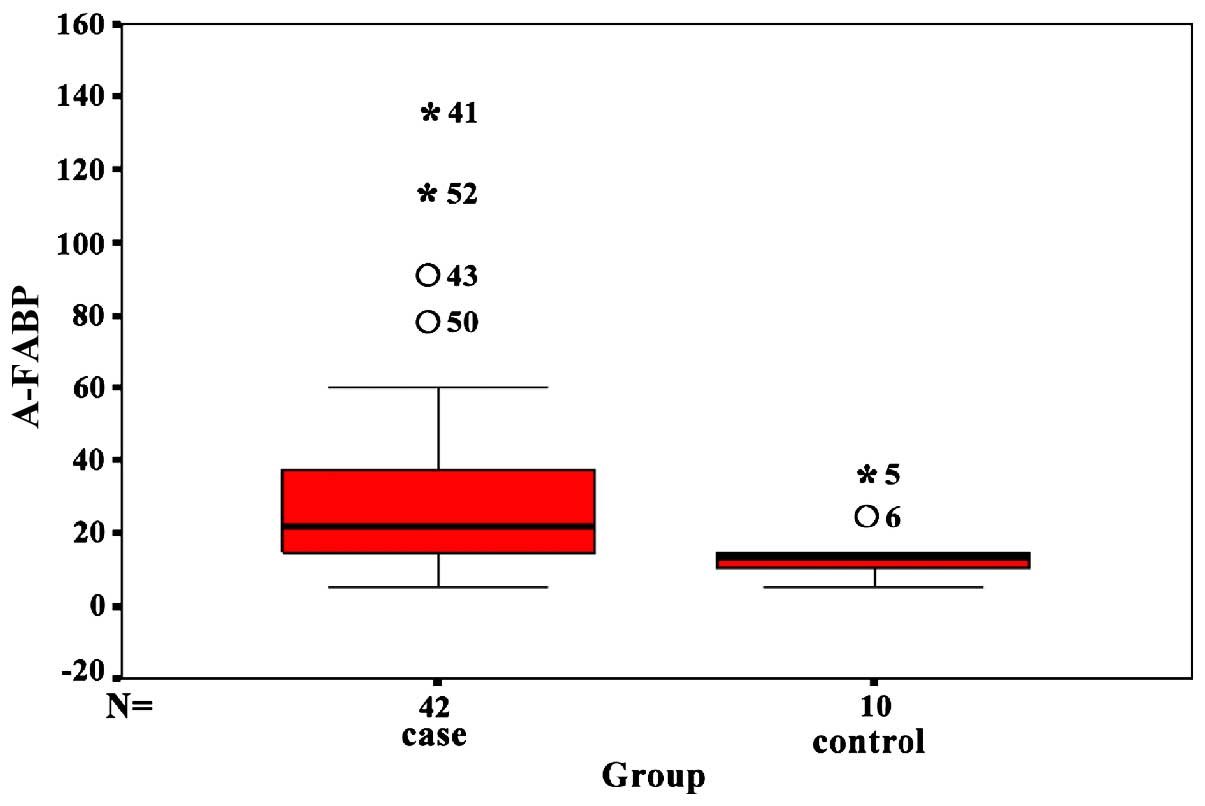
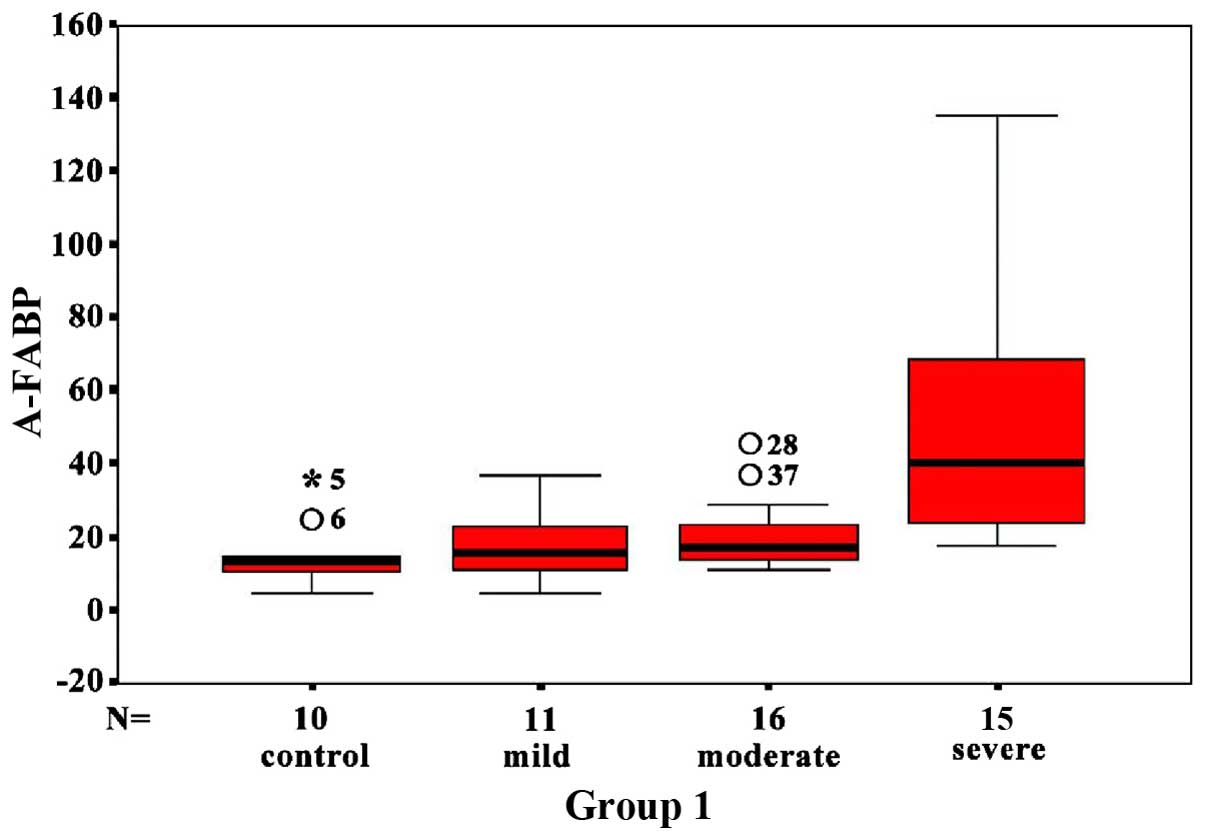
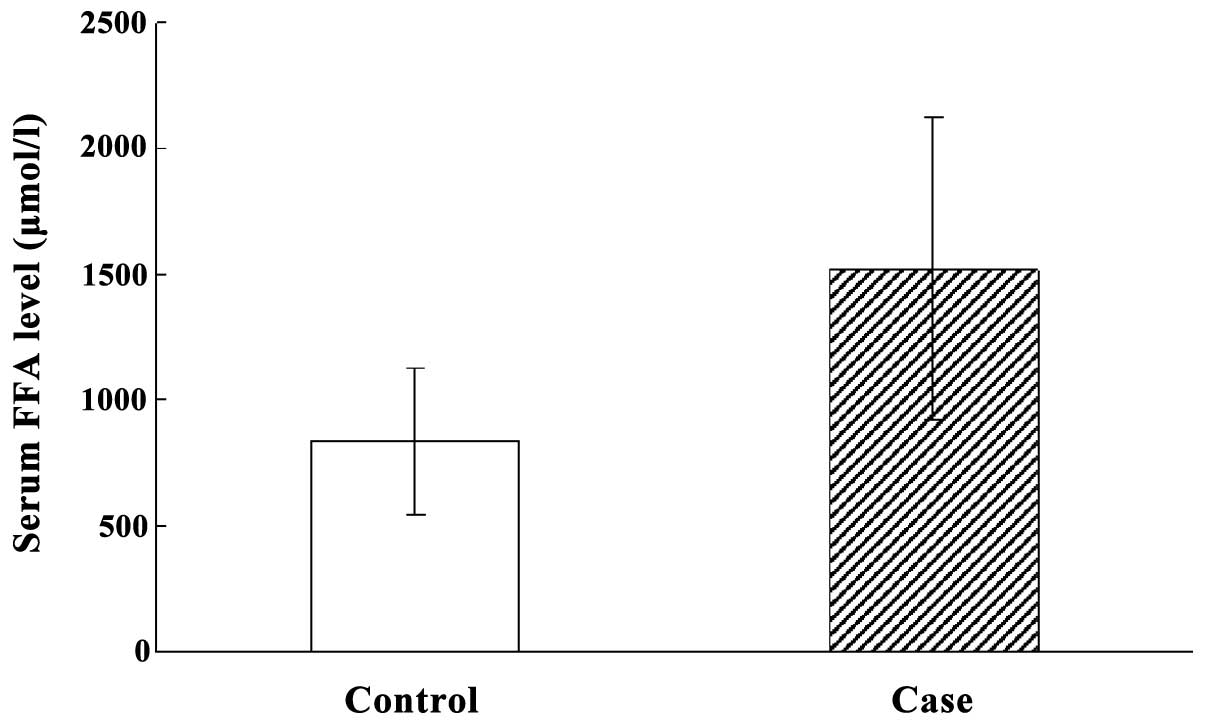
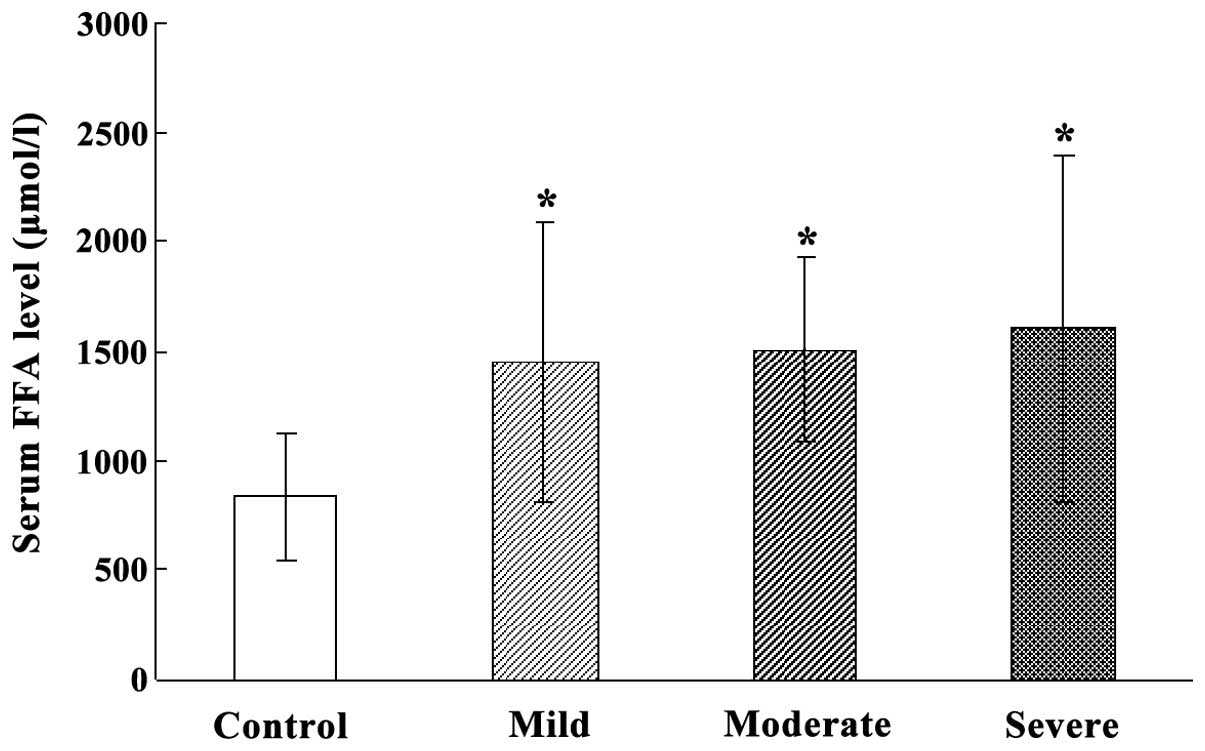
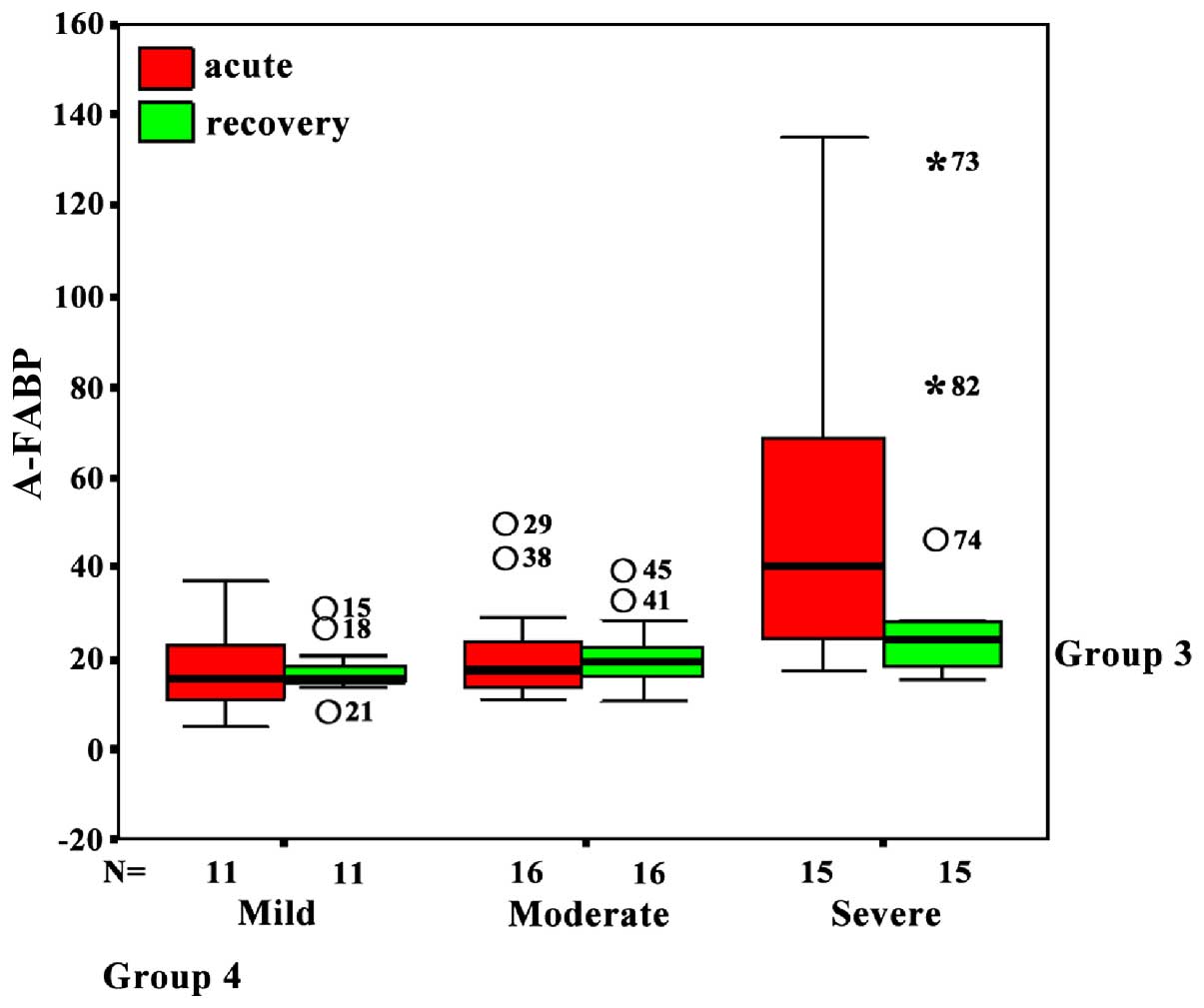
The main function of adipocyte fatty acid-binding protein (A‑FABP) is to regulate fatty acid metabolism as its molecular chaperone. The clinical significance of A‑FABP in hypoxic-ischemic brain damage (HIBD) neonates is not yet clear. Free fatty acid (FFA) in cerebral cortex increases along with hypoxia ischemia degree. Thus, we aimed to investigate whether FFA can induce A-FABP expression and elevate the serum A-FABP level in HIBD neonates. In the present study, 42 HIBD neonates were selected including 11 cases as mild, 16 cases as moderate and 15 cases as severe. The serum was collected from peripheral vein at 72 h after the first visit (acute stage) and 7 days after birth (recovery stage), and the serum from 10 normal neonates was used as the control. The serum level of A-FABP and FFA in 42 neonates with acute phase and recovery phase HIBD were detected using ELISA and copper colorimetric method. The overall serum A‑FABP content in HIBD neonates at the acute stage was significantly higher compared to the normal neonates (P<0.05). The serum A-FABP level in severe HIBD neonates was significantly higher than that in mild HIBD, moderate HIBD and normal neonates (P<0.05). The serum FFA level in HIBD neonates at the acute stage was 1,521.57±605.63 µmol/l, which was significantly higher than that in the normal neonates 838.24±294.22 µmol/l. The serum FFA levels in mild, moderate and severe HIBD neonates were significantly higher than those in the normal neonates. The overall A-FABP level in HIBD neonates at the recovery stage was significantly lower compared to the acute stage, which was significant in severe HIBD neonates. A‑FABP levels in mild and moderate HIBD neonates at recovery stage were decreased compared with the acute stage, although there was no statistical difference. There was a positive correlation between serum A-FABP and FFA in HIBD neonates at acute stage (r=0.369, P<0.05). In conclusion, serum A‑FABP and FFA levels were signifcantly increased in HIBD neonates at acute stage, and were positively correlated. The serum A-FABP level in HIBD neonates at recovery stage was significantly lower than that in the acute stage. The results suggested that serum A‑FABP and FFA levels at acute stage can reflect the severity of HIBD. The detection of serum A-FABP and FFA can be applied as indicators for the early diagnosis of HIBD, but also provides a basis for the clinical evaluation of HIBD treatment.
View Figures

Figure 1

Figure 2

Figure 3

Figure 4

Figure 5

View References

1 

Ilyukhina VA, Kataeva GV, Korotkov AD and Chernysheva EM: [Oxygen-dependent energy deficit as related to the problems of ontogenetic development disorders and human sociobiological adaptation (theoretical and applied aspects)]. Zh Evol Biokhim Fiziol. 51:77–87. 2015.PubMed/NCBI

2 

Karadag N, Beken S, Dilli D, Zenciroglu A and Okumus N: Successful hypothermia treatment of hypoxic-ischemic encephalopathy in a neonate with epidermolysis bullosa. Indian J Pediatr. 81:803–804. 2014. View Article : Google Scholar : PubMed/NCBI

3 

Strasser A, Stanimirovic D, Kawai N, McCarron RM and Spatz M: Hypoxia modulates free radical formation in brain microvascular endothelium. Acta Neurochir Suppl. 70:8–11. 1997.PubMed/NCBI

4 

Kralisch S, Klöting N, Ebert T, Kern M, Hoffmann A, Krause K, Jessnitzer B, Lossner U, Sommerer I, Stumvoll M, et al: Circulating adipocyte fatty acid-binding protein induces insulin resistance in mice in vivo. Obesity (Silver Spring). 23:1007–1013. 2015. View Article : Google Scholar : PubMed/NCBI

5 

Rafay MF, Cortez MA, de Veber GA, Tan-Dy C, Al-Futaisi A, Yoon W, Fallah S and Moore AM: Predictive value of clinical and EEG features in the diagnosis of stroke and hypoxic ischemic encephalopathy in neonates with seizures. Stroke. 40:2402–2407. 2009. View Article : Google Scholar : PubMed/NCBI

6 

Busl KM and Greer DM: Hypoxic-ischemic brain injury: Pathophysiology, neuropathology and mechanisms. NeuroRehabilitation. 26:5–13. 2010.PubMed/NCBI

7 

No authors listed: Use and abuse of the Apgar score. Committee on Fetus and Newborn, American Academy of Pediatrics, and Committee on Obstetric Practice, American College of Obstetricians and Gynecologists. Pediatrics. 98:141–142. 1996.PubMed/NCBI

8 

Tataranno ML, Perrone S and Buonocore G: Plasma biomarkers of oxidative stress in neonatal brain injury. Clin Perinatol. 42:529–539. 2015. View Article : Google Scholar : PubMed/NCBI

9 

Niatsetskaya ZV, Sosunov SA, Matsiukevich D, Utkina-Sosunova IV, Ratner VI, Starkov AA and Ten VS: The oxygen free radicals originating from mitochondrial complex I contribute to oxidative brain injury following hypoxia-ischemia in neonatal mice. J Neurosci. 32:3235–3244. 2012. View Article : Google Scholar : PubMed/NCBI

10 

Gardiner M, Nilsson B, Rehncrona S and Siesjö BK: Free fatty acids in the rat brain in moderate and severe hypoxia. J Neurochem. 36:1500–1505. 1981. View Article : Google Scholar : PubMed/NCBI

11 

Siesjö BK: Cerebral circulation and metabolism. J Neurosurg. 60:883–908. 1984. View Article : Google Scholar : PubMed/NCBI

12 

Chmurzyńska A: The multigene family of fatty acid-binding proteins (FABPs): Function, structure and polymorphism. J Appl Genet. 47:39–48. 2006. View Article : Google Scholar : PubMed/NCBI

13 

Glatz JF and van der Vusse GJ: Cellular fatty acid-binding proteins: Their function and physiological significance. Prog Lipid Res. 35:243–282. 1996. View Article : Google Scholar : PubMed/NCBI

14 

Coe NR and Bernlohr DA: Physiological properties and functions of intracellular fatty acid-binding proteins. Biochim Biophys Acta. 1391:287–306. 1998. View Article : Google Scholar : PubMed/NCBI

15 

Hotamisligil GS, Johnson RS, Distel RJ, Ellis R, Papaioannou VE and Spiegelman BM: Uncoupling of obesity from insulin resistance through a targeted mutation in aP2, the adipocyte fatty acid binding protein. Science. 274:1377–1379. 1996. View Article : Google Scholar : PubMed/NCBI

16 

Engl J, Ciardi C, Tatarczyk T, Kaser S, Laimer M, Laimer E, Weiss H, Aigner F, Molnar C, Tilg H, et al: A-FABP - a biomarker associated with the metabolic syndrome and/or an indicator of weight change? Obesity (Silver Spring). 16:1838–1842. 2008. View Article : Google Scholar : PubMed/NCBI

17 

Veerkamp JH and Maatman RG: Cytoplasmic fatty acid-binding proteins: Their structure and genes. Prog Lipid Res. 34:17–52. 1995. View Article : Google Scholar : PubMed/NCBI

18 

Reese-Wagoner A, Thompson J and Banaszak L: Structural properties of the adipocyte lipid binding protein. Biochim Biophys Acta. 1441:106–116. 1999. View Article : Google Scholar : PubMed/NCBI

19 

Radisky DC, Stallings-Mann M, Hirai Y and Bissell MJ: Single proteins might have dual but related functions in intracellular and extracellular microenvironments. Nat Rev Mol Cell Biol. 10:228–234. 2009. View Article : Google Scholar : PubMed/NCBI

20 

Aoki N, Jin-no S, Nakagawa Y, Asai N, Arakawa E, Tamura N, Tamura T and Matsuda T: Identification and characterization of microvesicles secreted by 3T3-L1 adipocytes: redox- and hormone-dependent induction of milk fat globule-epidermal growth factor 8-associated microvesicles. Endocrinology. 148:3850–3862. 2007. View Article : Google Scholar : PubMed/NCBI

21 

Miyake T, Ogawa E, Mikoshiba A, Kobayashi A, Hosoe H, Kashiwabara S, Uhara H, Owada Y and Okuyama R: Epidermal-type FABP is a predictive marker of clinical response to systemic treatment and ultraviolet therapy in psoriatic skin lesions. J Dermatol Sci. 68:199–202. 2012. View Article : Google Scholar : PubMed/NCBI

22 

Lamounier-Zepter V, Look C, Alvarez J, Christ T, Ravens U, Schunck WH, Ehrhart-Bornstein M, Bornstein SR and Morano I: Adipocyte fatty acid-binding protein suppresses cardiomyocyte contraction: A new link between obesity and heart disease. Circ Res. 105:326–334. 2009. View Article : Google Scholar : PubMed/NCBI

23 

Stejskal D and Karpisek M: Adipocyte fatty acid binding protein in a Caucasian population: A new marker of metabolic syndrome? Eur J Clin Invest. 36:621–625. 2006. View Article : Google Scholar : PubMed/NCBI

24 

Cabré A, Lázaro I, Cofán M, Jarauta E, Plana N, Garcia-Otín AL, Ascaso JF, Ferré R, Civeira F, Ros E, et al: FABP4 plasma levels are increased in familial combined hyperlipidemia. J Lipid Res. 51:1173–1178. 2010. View Article : Google Scholar : PubMed/NCBI

25 

Milner KL, van der Poorten D, Xu A, Bugianesi E, Kench JG, Lam KS, Chisholm DJ and George J: Adipocyte fatty acid binding protein levels relate to inflammation and fibrosis in nonalcoholic fatty liver disease. Hepatology. 49:1926–1934. 2009. View Article : Google Scholar : PubMed/NCBI

26 

Karbek B, Özbek M, Bozkurt NC, Ginis Z, Güngünes A, Ünsal IÖ, Cakal E and Delibası T: Heart-type fatty acid binding protein (H-FABP): Relationship with arterial intima-media thickness and role as diagnostic marker for atherosclerosis in patients with ımpaired glucose metabolism. Cardiovasc Diabetol. 10:372011. View Article : Google Scholar : PubMed/NCBI

27 

Doi M, Miyoshi T, Hirohata S, Nakamura K, Usui S, Takeda K, Iwamoto M, Kusachi S, Kusano K and Ito H: Association of increased plasma adipocyte fatty acid-binding protein with coronary artery disease in non-elderly men. Cardiovasc Diabetol. 10:442011. View Article : Google Scholar : PubMed/NCBI

28 

Rueda-Valencia ML, Infante S, Campos M, Belendez C and Saavedra LJ: Trimethoprim-sulfamethoxazole-induced DRESS syndrome in a 4-year-old child. Ann Allergy Asthma Immunol. 116:366–367. 2016. View Article : Google Scholar : PubMed/NCBI

29 

Yu T, Kui LQ and Ming QZ: Effect of asphyxia on non-protein-bound iron and lipid peroxidation in newborn infants. Dev Med Child Neurol. 45:24–27. 2003. View Article : Google Scholar : PubMed/NCBI

30 

Barrera-de León JC, Cervantes-Munguía R, Vásquez C, Higareda-Almaraz MA, Bravo-Cuellar A and González-López L: Usefulness of serum lipid peroxide as a diagnostic test for hypoxic ischemic encephalopathy in the full-term neonate. J Perinatol. 33:15–20. 2013. View Article : Google Scholar : PubMed/NCBI

Related Articles

  • Abstract
  • View
  • Download
  • Twitter
Copy and paste a formatted citation
Spandidos Publications style
Li M, Jiang L, Zhang H, Wang D, Zhang M and Zhang L: Clinical significance of elevated serum A-FABP and free fatty acid in neonates with hypoxic ischemic brain damage. Exp Ther Med 12: 746-752, 2016.
APA
Li, M., Jiang, L., Zhang, H., Wang, D., Zhang, M., & Zhang, L. (2016). Clinical significance of elevated serum A-FABP and free fatty acid in neonates with hypoxic ischemic brain damage. Experimental and Therapeutic Medicine, 12, 746-752. https://doi.org/10.3892/etm.2016.3411
MLA
Li, M., Jiang, L., Zhang, H., Wang, D., Zhang, M., Zhang, L."Clinical significance of elevated serum A-FABP and free fatty acid in neonates with hypoxic ischemic brain damage". Experimental and Therapeutic Medicine 12.2 (2016): 746-752.
Chicago
Li, M., Jiang, L., Zhang, H., Wang, D., Zhang, M., Zhang, L."Clinical significance of elevated serum A-FABP and free fatty acid in neonates with hypoxic ischemic brain damage". Experimental and Therapeutic Medicine 12, no. 2 (2016): 746-752. https://doi.org/10.3892/etm.2016.3411
Copy and paste a formatted citation
x
Spandidos Publications style
Li M, Jiang L, Zhang H, Wang D, Zhang M and Zhang L: Clinical significance of elevated serum A-FABP and free fatty acid in neonates with hypoxic ischemic brain damage. Exp Ther Med 12: 746-752, 2016.
APA
Li, M., Jiang, L., Zhang, H., Wang, D., Zhang, M., & Zhang, L. (2016). Clinical significance of elevated serum A-FABP and free fatty acid in neonates with hypoxic ischemic brain damage. Experimental and Therapeutic Medicine, 12, 746-752. https://doi.org/10.3892/etm.2016.3411
MLA
Li, M., Jiang, L., Zhang, H., Wang, D., Zhang, M., Zhang, L."Clinical significance of elevated serum A-FABP and free fatty acid in neonates with hypoxic ischemic brain damage". Experimental and Therapeutic Medicine 12.2 (2016): 746-752.
Chicago
Li, M., Jiang, L., Zhang, H., Wang, D., Zhang, M., Zhang, L."Clinical significance of elevated serum A-FABP and free fatty acid in neonates with hypoxic ischemic brain damage". Experimental and Therapeutic Medicine 12, no. 2 (2016): 746-752. https://doi.org/10.3892/etm.2016.3411
Follow us
  • Twitter
  • LinkedIn
  • Facebook
About
  • Spandidos Publications
  • Careers
  • Cookie Policy
  • Privacy Policy
How can we help?
  • Help
  • Live Chat
  • Contact
  • Email to our Support Team