Spandidos Publications Logo
  • About
    • About Spandidos
    • Aims and Scopes
    • Abstracting and Indexing
    • Editorial Policies
    • Reprints and Permissions
    • Job Opportunities
    • Terms and Conditions
    • Contact
  • Journals
    • All Journals
    • Oncology Letters
      • Oncology Letters
      • Information for Authors
      • Editorial Policies
      • Editorial Board
      • Aims and Scope
      • Abstracting and Indexing
      • Bibliographic Information
      • Archive
    • International Journal of Oncology
      • International Journal of Oncology
      • Information for Authors
      • Editorial Policies
      • Editorial Board
      • Aims and Scope
      • Abstracting and Indexing
      • Bibliographic Information
      • Archive
    • Molecular and Clinical Oncology
      • Molecular and Clinical Oncology
      • Information for Authors
      • Editorial Policies
      • Editorial Board
      • Aims and Scope
      • Abstracting and Indexing
      • Bibliographic Information
      • Archive
    • Experimental and Therapeutic Medicine
      • Experimental and Therapeutic Medicine
      • Information for Authors
      • Editorial Policies
      • Editorial Board
      • Aims and Scope
      • Abstracting and Indexing
      • Bibliographic Information
      • Archive
    • International Journal of Molecular Medicine
      • International Journal of Molecular Medicine
      • Information for Authors
      • Editorial Policies
      • Editorial Board
      • Aims and Scope
      • Abstracting and Indexing
      • Bibliographic Information
      • Archive
    • Biomedical Reports
      • Biomedical Reports
      • Information for Authors
      • Editorial Policies
      • Editorial Board
      • Aims and Scope
      • Abstracting and Indexing
      • Bibliographic Information
      • Archive
    • Oncology Reports
      • Oncology Reports
      • Information for Authors
      • Editorial Policies
      • Editorial Board
      • Aims and Scope
      • Abstracting and Indexing
      • Bibliographic Information
      • Archive
    • Molecular Medicine Reports
      • Molecular Medicine Reports
      • Information for Authors
      • Editorial Policies
      • Editorial Board
      • Aims and Scope
      • Abstracting and Indexing
      • Bibliographic Information
      • Archive
    • World Academy of Sciences Journal
      • World Academy of Sciences Journal
      • Information for Authors
      • Editorial Policies
      • Editorial Board
      • Aims and Scope
      • Abstracting and Indexing
      • Bibliographic Information
      • Archive
    • International Journal of Functional Nutrition
      • International Journal of Functional Nutrition
      • Information for Authors
      • Editorial Policies
      • Editorial Board
      • Aims and Scope
      • Abstracting and Indexing
      • Bibliographic Information
      • Archive
    • International Journal of Epigenetics
      • International Journal of Epigenetics
      • Information for Authors
      • Editorial Policies
      • Editorial Board
      • Aims and Scope
      • Abstracting and Indexing
      • Bibliographic Information
      • Archive
    • Medicine International
      • Medicine International
      • Information for Authors
      • Editorial Policies
      • Editorial Board
      • Aims and Scope
      • Abstracting and Indexing
      • Bibliographic Information
      • Archive
  • Articles
  • Information
    • Information for Authors
    • Information for Reviewers
    • Information for Librarians
    • Information for Advertisers
    • Conferences
  • Language Editing
Spandidos Publications Logo
  • About
    • About Spandidos
    • Aims and Scopes
    • Abstracting and Indexing
    • Editorial Policies
    • Reprints and Permissions
    • Job Opportunities
    • Terms and Conditions
    • Contact
  • Journals
    • All Journals
    • Biomedical Reports
      • Information for Authors
      • Editorial Policies
      • Editorial Board
      • Aims and Scope
      • Abstracting and Indexing
      • Bibliographic Information
      • Archive
    • Experimental and Therapeutic Medicine
      • Information for Authors
      • Editorial Policies
      • Editorial Board
      • Aims and Scope
      • Abstracting and Indexing
      • Bibliographic Information
      • Archive
    • International Journal of Epigenetics
      • Information for Authors
      • Editorial Policies
      • Editorial Board
      • Aims and Scope
      • Abstracting and Indexing
      • Bibliographic Information
      • Archive
    • International Journal of Functional Nutrition
      • Information for Authors
      • Editorial Policies
      • Editorial Board
      • Aims and Scope
      • Abstracting and Indexing
      • Bibliographic Information
      • Archive
    • International Journal of Molecular Medicine
      • Information for Authors
      • Editorial Policies
      • Editorial Board
      • Aims and Scope
      • Abstracting and Indexing
      • Bibliographic Information
      • Archive
    • International Journal of Oncology
      • Information for Authors
      • Editorial Policies
      • Editorial Board
      • Aims and Scope
      • Abstracting and Indexing
      • Bibliographic Information
      • Archive
    • Medicine International
      • Information for Authors
      • Editorial Policies
      • Editorial Board
      • Aims and Scope
      • Abstracting and Indexing
      • Bibliographic Information
      • Archive
    • Molecular and Clinical Oncology
      • Information for Authors
      • Editorial Policies
      • Editorial Board
      • Aims and Scope
      • Abstracting and Indexing
      • Bibliographic Information
      • Archive
    • Molecular Medicine Reports
      • Information for Authors
      • Editorial Policies
      • Editorial Board
      • Aims and Scope
      • Abstracting and Indexing
      • Bibliographic Information
      • Archive
    • Oncology Letters
      • Information for Authors
      • Editorial Policies
      • Editorial Board
      • Aims and Scope
      • Abstracting and Indexing
      • Bibliographic Information
      • Archive
    • Oncology Reports
      • Information for Authors
      • Editorial Policies
      • Editorial Board
      • Aims and Scope
      • Abstracting and Indexing
      • Bibliographic Information
      • Archive
    • World Academy of Sciences Journal
      • Information for Authors
      • Editorial Policies
      • Editorial Board
      • Aims and Scope
      • Abstracting and Indexing
      • Bibliographic Information
      • Archive
  • Articles
  • Information
    • For Authors
    • For Reviewers
    • For Librarians
    • For Advertisers
    • Conferences
  • Language Editing
Login Register Submit
  • This site uses cookies
  • You can change your cookie settings at any time by following the instructions in our Cookie Policy. To find out more, you may read our Privacy Policy.

    I agree
Search articles by DOI, keyword, author or affiliation
Search
Advanced Search
presentation
Experimental and Therapeutic Medicine
Join Editorial Board Propose a Special Issue
Print ISSN: 1792-0981 Online ISSN: 1792-1015
Journal Cover
November-2016 Volume 12 Issue 5

Full Size Image

Sign up for eToc alerts
Recommend to Library

Journals

International Journal of Molecular Medicine

International Journal of Molecular Medicine

International Journal of Molecular Medicine is an international journal devoted to molecular mechanisms of human disease.

International Journal of Oncology

International Journal of Oncology

International Journal of Oncology is an international journal devoted to oncology research and cancer treatment.

Molecular Medicine Reports

Molecular Medicine Reports

Covers molecular medicine topics such as pharmacology, pathology, genetics, neuroscience, infectious diseases, molecular cardiology, and molecular surgery.

Oncology Reports

Oncology Reports

Oncology Reports is an international journal devoted to fundamental and applied research in Oncology.

Experimental and Therapeutic Medicine

Experimental and Therapeutic Medicine

Experimental and Therapeutic Medicine is an international journal devoted to laboratory and clinical medicine.

Oncology Letters

Oncology Letters

Oncology Letters is an international journal devoted to Experimental and Clinical Oncology.

Biomedical Reports

Biomedical Reports

Explores a wide range of biological and medical fields, including pharmacology, genetics, microbiology, neuroscience, and molecular cardiology.

Molecular and Clinical Oncology

Molecular and Clinical Oncology

International journal addressing all aspects of oncology research, from tumorigenesis and oncogenes to chemotherapy and metastasis.

World Academy of Sciences Journal

World Academy of Sciences Journal

Multidisciplinary open-access journal spanning biochemistry, genetics, neuroscience, environmental health, and synthetic biology.

International Journal of Functional Nutrition

International Journal of Functional Nutrition

Open-access journal combining biochemistry, pharmacology, immunology, and genetics to advance health through functional nutrition.

International Journal of Epigenetics

International Journal of Epigenetics

Publishes open-access research on using epigenetics to advance understanding and treatment of human disease.

Medicine International

Medicine International

An International Open Access Journal Devoted to General Medicine.

Journal Cover
November-2016 Volume 12 Issue 5

Full Size Image

Sign up for eToc alerts
Recommend to Library

  • Article
  • Citations
    • Cite This Article
    • Download Citation
    • Create Citation Alert
    • Remove Citation Alert
    • Cited By
  • Similar Articles
    • Related Articles (in Spandidos Publications)
    • Similar Articles (Google Scholar)
    • Similar Articles (PubMed)
  • Download PDF
  • Download XML
  • View XML
Article

Intermittent fasting is neuroprotective in focal cerebral ischemia by minimizing autophagic flux disturbance and inhibiting apoptosis

  • Authors:
    • Ji Heun Jeong
    • Kwang Sik Yu
    • Dong Ho Bak
    • Je Hun Lee
    • Nam Seob Lee
    • Young Gil Jeong
    • Dong Kwan Kim
    • Jwa‑Jin Kim
    • Seung‑Yun Han
  • View Affiliations / Copyright

    Affiliations: Department of Anatomy, College of Medicine, Konyang University, Seo‑gu, Daejeon 302‑718, Republic of Korea, Department of Physiology, College of Medicine, Konyang University, Seo‑gu, Daejeon 302‑718, Republic of Korea, Department of Anatomy, Brain Research Institute, College of Medicine, Chungnam National University, Jung‑gu, Daejeon 301-747, Republic of Korea
  • Pages: 3021-3028
    |
    Published online on: October 31, 2016
       https://doi.org/10.3892/etm.2016.3852
  • Expand metrics +
Metrics: Total Views: 0 (Spandidos Publications: | PMC Statistics: )
Metrics: Total PDF Downloads: 0 (Spandidos Publications: | PMC Statistics: )
Cited By (CrossRef): 0 citations Loading Articles...

This article is mentioned in:


Abstract

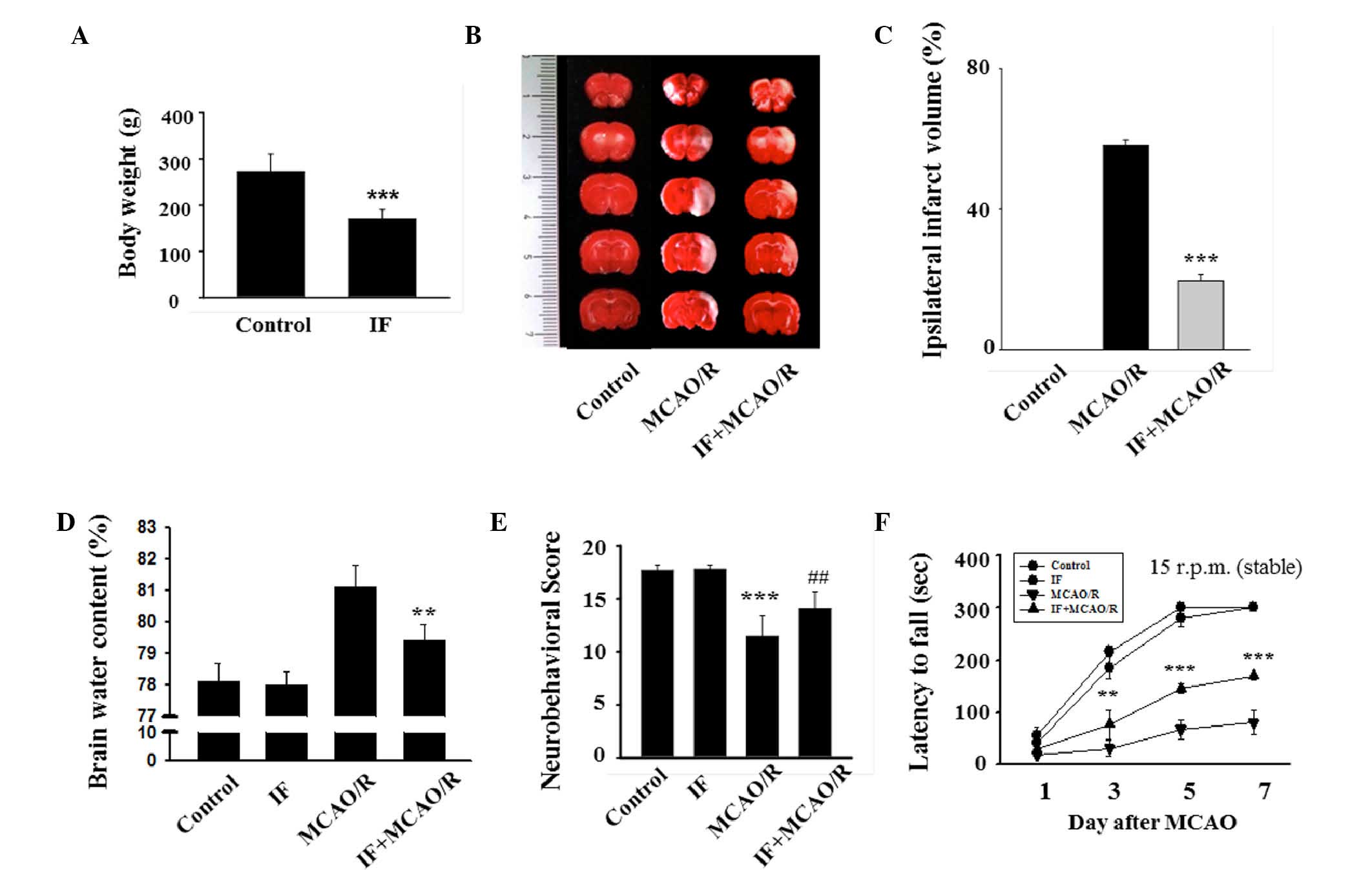
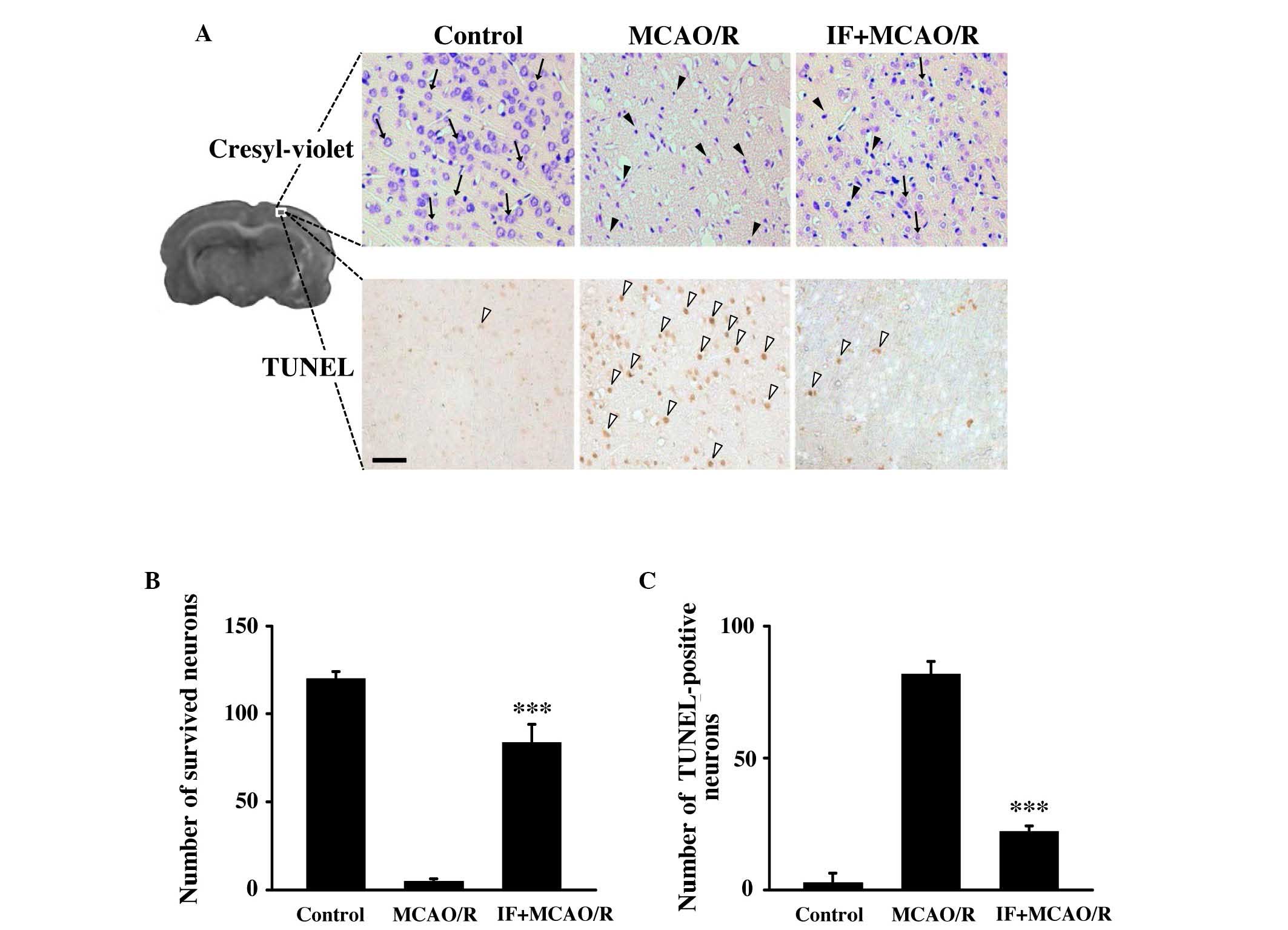
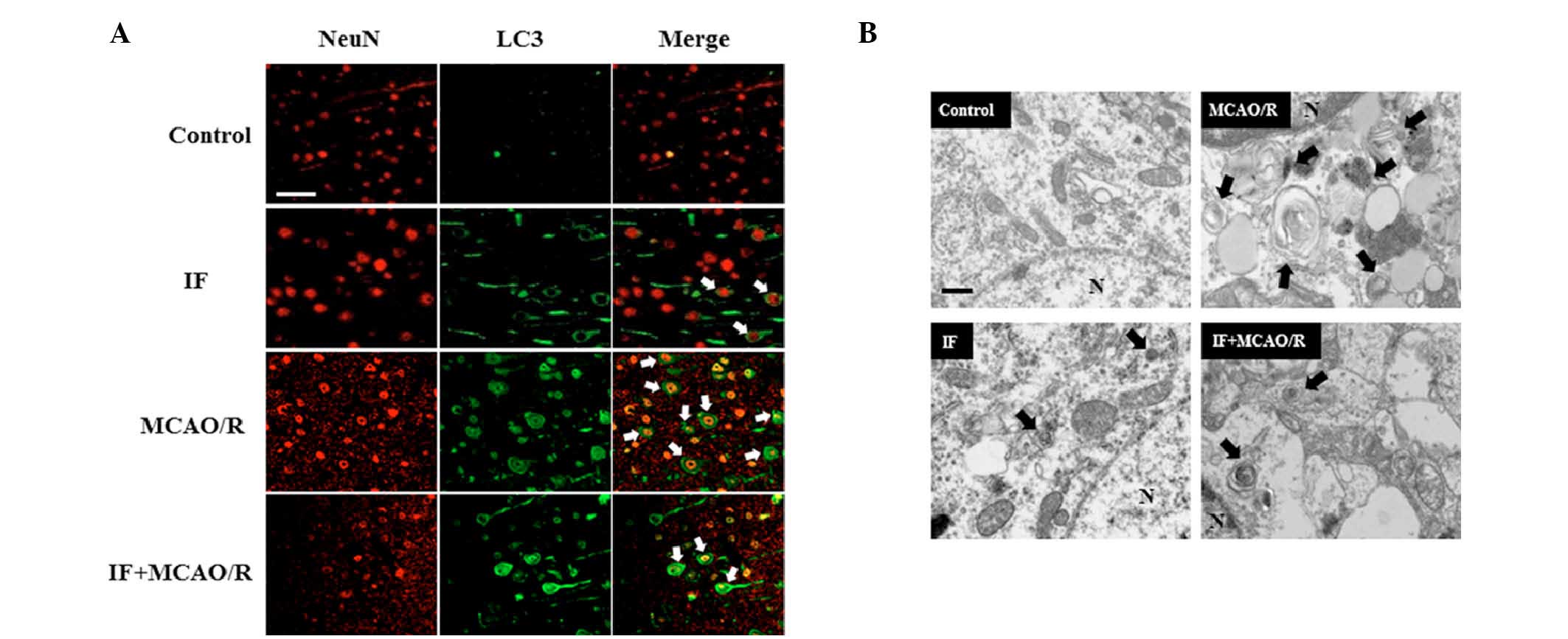
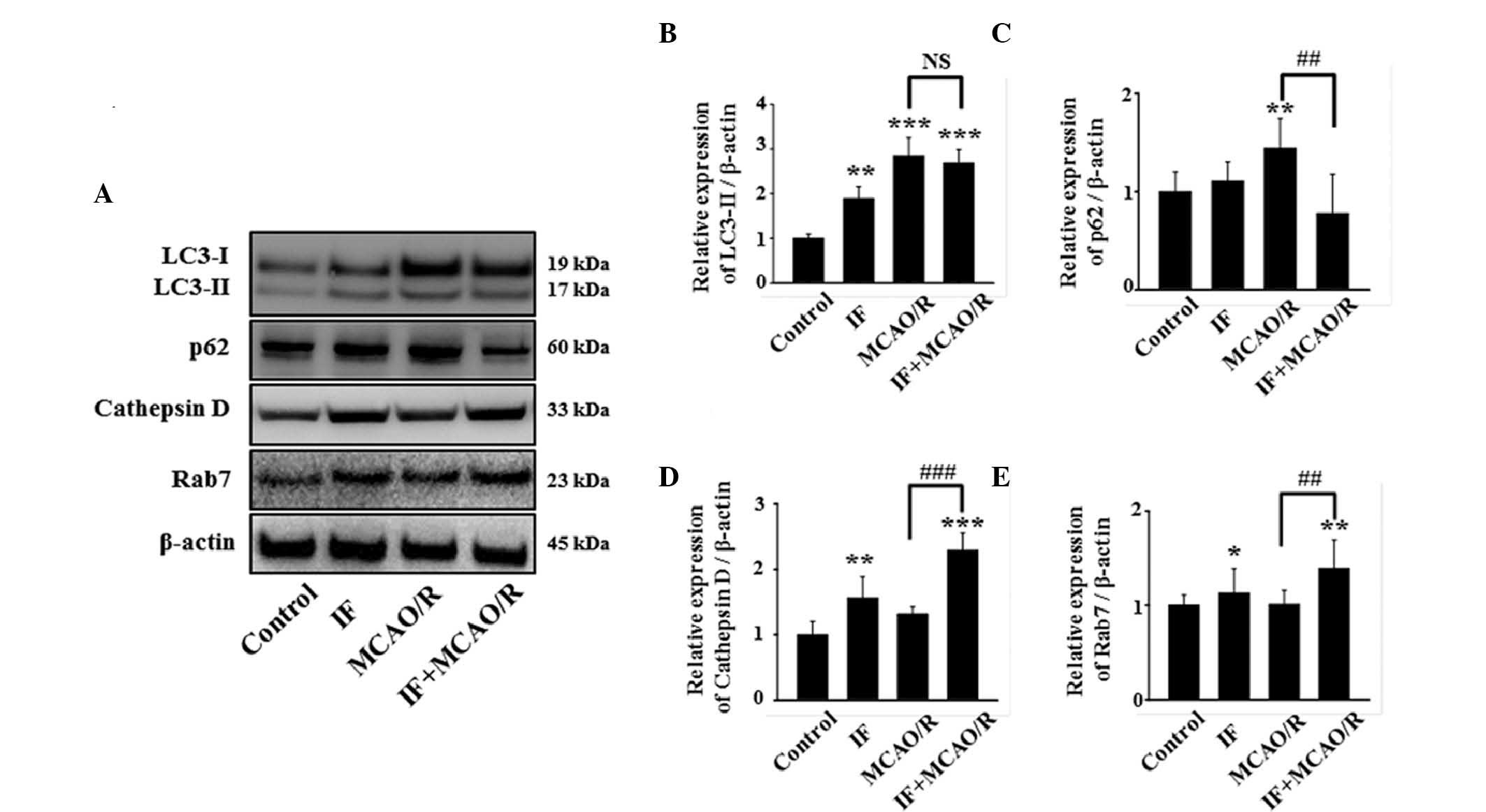
Previous studies have demonstrated that autophagy induced by caloric restriction (CR) is neuroprotective against cerebral ischemia. However, it has not been determined whether intermittent fasting (IF), a variation of CR, can exert autophagy-related neuroprotection against cerebral ischemia. Therefore, the neuroprotective effect of IF was evaluated over the course of two weeks in a rat model of focal cerebral ischemia, which was induced by middle cerebral artery occlusion and reperfusion (MCAO/R). Specifically, the role of autophagy modulation as a potential underlying mechanism for this phenomenon was investigated. It was demonstrated that IF reduced infarct volume and brain edema, improved neurobehavioral deficits, and rescued neuronal loss after MCAO/R. Furthermore, neuronal apoptosis was decreased by IF in the rat cortex. An increase in the number of autophagosomes (APs) was demonstrated in the cortices of IF‑treated rats, using immunofluorescence staining and transmission electron microscopy. Using immunoblots, an IF‑induced increase was detected in microtubule‑associated protein 1 light chain 3 (LC3)‑II, Rab7, and cathepsin D protein levels, which corroborated previous morphological studies. Notably, IF reduced the accumulation of APs and p62, demonstrating that IF attenuated the MCAO/R‑induced disturbance of autophagic flux in neurons. The findings of the present study suggest that IF-induced neuroprotection in focal cerebral ischemia is due, at least in part, to the minimization of autophagic flux disturbance and inhibition of apoptosis.
View Figures

Figure 1

Figure 2

Figure 3

Figure 4

View References

1 

Lipton P: Ischemic cell death in brain neurons. Physiol Rev. 79:1431–568. 1999.PubMed/NCBI

2 

Kim JH, Yu KS, Jeong JH, Lee NS, Lee JH, Jeong YG, Yoo YC and Han SY: All-trans-retinoic acid rescues neurons after global ischemia by attenuating neuroinflammatory reactions. Neurochem Res. 38:2604–2615. 2013. View Article : Google Scholar : PubMed/NCBI

3 

Liu L, Zhang W, Wang L, Li Y, Tan B, Lu X, Deng Y, Zhang Y, Guo X, Mu J and Yu G: Curcumin prevents cerebral ischemia reperfusion injury via increase of mitochondrial biogenesis. Neurochem Res. 39:1322–1331. 2014. View Article : Google Scholar : PubMed/NCBI

4 

Mizushima N: Autophagy: Process and function. Genes Dev. 21:2861–2873. 2007. View Article : Google Scholar : PubMed/NCBI

5 

Kroemer G, Mariño G and Levine B: Autophagy and the integrated stress response. Mol Cell. 40:280–293. 2010. View Article : Google Scholar : PubMed/NCBI

6 

Son JH, Shim JH, Kim KH, Ha JY and Han JY: Neuronal autophagy and neurodegenerative diseases. Exp Mol Med. 44:89–98. 2012. View Article : Google Scholar : PubMed/NCBI

7 

Yang F, Chu X, Yin M, Liu X, Yuan H, Niu Y and Fu L: mTOR and autophagy in normal brain aging and caloric restriction ameliorating age-related cognition deficits. Behav Brain Res. 264:82–90. 2014. View Article : Google Scholar : PubMed/NCBI

8 

Barnosky AR, Hoddy KK, Unterman TG and Varady KA: Intermittent fasting vs daily calorie restriction for type 2 diabetes prevention: A review of human findings. Transl Res. 164:302–311. 2014. View Article : Google Scholar : PubMed/NCBI

9 

Fann DY, Santro T, Manzanero S, Widiapradja A, Cheng YL, Lee SY, Chunduri P, Jo DG, Stranahan AM, Mattson MP and Arumugam TV: Intermittent fasting attenuates inflammasome activity in ischemic stroke. Exp Neurol. 257:114–119. 2014. View Article : Google Scholar : PubMed/NCBI

10 

Manzanero S, Erion JR, Santro T, Steyn FJ, Chen C, Arumugam TV and Stranahan AM: Intermittent fasting attenuates increases in neurogenesis after ischemia and reperfusion and improves recovery. J Cereb Blood Flow Metab. 34:897–905. 2014. View Article : Google Scholar : PubMed/NCBI

11 

Calloni RL, Winkler BC, Ricci G, Poletto MG, Homero WM, Serafini EP and Corleta OC: Transient middle cerebral artery occlusion in rats as an experimental model of brain ischemia. Acta Cir Bras. 25:428–433. 2010. View Article : Google Scholar : PubMed/NCBI

12 

Güzel A, Rölz R, Nikkhah G, Kahlert UD and Maciaczyk J: A microsurgical procedure for middle cerebral artery occlusion by intraluminal monofilament insertion technique in the rat: A special emphasis on the methodology. Exp Transl Stroke Med. 6:6. 2014. View Article : Google Scholar : PubMed/NCBI

13 

Li F, Irie K, Anwer MS and Fisher M: Delayed Triphenyltetrazolium chloride staining remains useful for evaluating cerebral infarct volume in a rat stroke model. J Cereb Blood Flow Metab. 17:1132–1135. 1997. View Article : Google Scholar : PubMed/NCBI

14 

Ito U, Ohno K, Nakamura R, Suganuma F and Inaba Y: Brain edema during ischemia and after restoration of blood flow. Measurement of water, sodium, potassium content and plasma protein permeability. Stroke. 10:542–547. 1979. View Article : Google Scholar : PubMed/NCBI

15 

Garcia JH, Wagner S, Liu KF and Hu XJ: Neurological Deficit and Extent of neuronal necrosis attributable to middle cerebral artery occlusion in rats: Statistical validation. Stroke. 26:627–635. 1995. View Article : Google Scholar : PubMed/NCBI

16 

Gu Z, Sun Y, Liu K, Wang F, Zhang T, Li Q, Shen L, Zhou L, Dong L, Shi N, et al: The role of autophagic and lysosomal pathways in ischemic brain injury. Neural Regen Res. 8:2117–2125. 2013.PubMed/NCBI

17 

Tanida I, Ueno T and Kominami E: LC3 and Autophagy. Methods Mol Biol. 445:77–88. 2008. View Article : Google Scholar : PubMed/NCBI

18 

Su H, Li F, Ranek MJ, Wei N and Wang X: COP9 Signalosome regulates autophagosome maturation. Circulation. 124:2117–2128. 2011. View Article : Google Scholar : PubMed/NCBI

19 

Bjørkøy G, Lamark T, Brech A, Outzen H, Perander M, Overvatn A, Stenmark H and Johansen T: p62/SQSTM1 forms protein aggregates degraded by autophagy and has a protective effect on huntingtin-induced cell death. J Cell Biol. 171:603–614. 2005. View Article : Google Scholar : PubMed/NCBI

20 

Sarkar C, Zhao Z, Aungst S, Sabirzhanov B, Faden AI and Lipinski MM: Impaired autophagy flux is associated with neuronal cell death after traumatic brain injury. Autophagy. 10:2208–2222. 2014. View Article : Google Scholar : PubMed/NCBI

21 

Hyttinen JM, Niittykoski M, Salminen A and Kaarniranta K: Maturation of autophagosomes and endosomes: A key role for Rab7. Biochim Biophys Acta. 1833:503–510. 2013. View Article : Google Scholar : PubMed/NCBI

22 

Hossmann KA: Viability thresholds and the penumbra of focal ischemia. Ann Neurol. 36:557–565. 1994. View Article : Google Scholar : PubMed/NCBI

23 

Klionsky DJ and Emr SD: Autophagy as a regulated pathway of cellular degradation. Science. 290:1717–1721. 2000. View Article : Google Scholar : PubMed/NCBI

24 

Das G, Shravage BV and Baehrecke EH: Regulation and function of autophagy during cell survival and cell death. Cold Spring Harb Perspect Biol. 4(pii): a0088132012.PubMed/NCBI

25 

Dalby KN, Tekedereli I, Lopez-Berestein G and Ozpolat B: Targeting the prodeath and prosurvival functions of autophagy as novel therapeutic strategies in cancer. Autophagy. 6:322–329. 2010. View Article : Google Scholar : PubMed/NCBI

26 

Pankiv S, Clausen TH, Lamark T, Brech A, Bruun JA, Outzen H, Øvervatn A, Bjørkøy G and Johansen T: p62/SQSTM1 binds directly to Atg8/LC3 to facilitate degradation of ubiquitinated protein aggregates by autophagy. J Biol Chem. 282:24131–24145. 2007. View Article : Google Scholar : PubMed/NCBI

27 

Mizushima N, Levine B, Cuervo AM and Klionsky DJ: Autophagy fights disease through cellular self-digestion. Nature. 451:1069–1075. 2008. View Article : Google Scholar : PubMed/NCBI

28 

Bursch W, Ellinger A, Gerner CH, Fröhwein U and Schulte-Hermann R: Programmed cell death (PCD). Apoptosis, autophagic PCD, or Others? Ann N Y Acad Sci. 926:1–12. 2000. View Article : Google Scholar : PubMed/NCBI

29 

Yue Z, Friedman L, Komatsu M and Tanaka K: The cellular pathways of neuronal autophagy and their implication in neurodegenerative diseases. Biochim Biophys Acta. 1793:1496–1507. 2009. View Article : Google Scholar : PubMed/NCBI

30 

Chu CT: Autophagic stress in neuronal injury and disease. J Neuropathol Exp Neurol. 65:423–432. 2006. View Article : Google Scholar : PubMed/NCBI

31 

Meriin AB and Sherman MY: Role of molecular chaperones in neurodegenerative disorders. Int J Hyperthermia. 21:403–419. 2005. View Article : Google Scholar : PubMed/NCBI

32 

Carloni S, Girelli S, Scopa C, Buonocore G, Longini M and Balduini W: Activation of autophagy and Akt/CREB signaling play an equivalent role in the neuroprotective effect of rapamycin in neonatal hypoxia-ischemia. Autophagy. 6:366–377. 2010. View Article : Google Scholar : PubMed/NCBI

Related Articles

  • Abstract
  • View
  • Download
  • Twitter
Copy and paste a formatted citation
Spandidos Publications style
Jeong JH, Yu KS, Bak DH, Lee JH, Lee NS, Jeong YG, Kim DK, Kim JJ and Han SY: Intermittent fasting is neuroprotective in focal cerebral ischemia by minimizing autophagic flux disturbance and inhibiting apoptosis. Exp Ther Med 12: 3021-3028, 2016.
APA
Jeong, J.H., Yu, K.S., Bak, D.H., Lee, J.H., Lee, N.S., Jeong, Y.G. ... Han, S. (2016). Intermittent fasting is neuroprotective in focal cerebral ischemia by minimizing autophagic flux disturbance and inhibiting apoptosis. Experimental and Therapeutic Medicine, 12, 3021-3028. https://doi.org/10.3892/etm.2016.3852
MLA
Jeong, J. H., Yu, K. S., Bak, D. H., Lee, J. H., Lee, N. S., Jeong, Y. G., Kim, D. K., Kim, J., Han, S."Intermittent fasting is neuroprotective in focal cerebral ischemia by minimizing autophagic flux disturbance and inhibiting apoptosis". Experimental and Therapeutic Medicine 12.5 (2016): 3021-3028.
Chicago
Jeong, J. H., Yu, K. S., Bak, D. H., Lee, J. H., Lee, N. S., Jeong, Y. G., Kim, D. K., Kim, J., Han, S."Intermittent fasting is neuroprotective in focal cerebral ischemia by minimizing autophagic flux disturbance and inhibiting apoptosis". Experimental and Therapeutic Medicine 12, no. 5 (2016): 3021-3028. https://doi.org/10.3892/etm.2016.3852
Copy and paste a formatted citation
x
Spandidos Publications style
Jeong JH, Yu KS, Bak DH, Lee JH, Lee NS, Jeong YG, Kim DK, Kim JJ and Han SY: Intermittent fasting is neuroprotective in focal cerebral ischemia by minimizing autophagic flux disturbance and inhibiting apoptosis. Exp Ther Med 12: 3021-3028, 2016.
APA
Jeong, J.H., Yu, K.S., Bak, D.H., Lee, J.H., Lee, N.S., Jeong, Y.G. ... Han, S. (2016). Intermittent fasting is neuroprotective in focal cerebral ischemia by minimizing autophagic flux disturbance and inhibiting apoptosis. Experimental and Therapeutic Medicine, 12, 3021-3028. https://doi.org/10.3892/etm.2016.3852
MLA
Jeong, J. H., Yu, K. S., Bak, D. H., Lee, J. H., Lee, N. S., Jeong, Y. G., Kim, D. K., Kim, J., Han, S."Intermittent fasting is neuroprotective in focal cerebral ischemia by minimizing autophagic flux disturbance and inhibiting apoptosis". Experimental and Therapeutic Medicine 12.5 (2016): 3021-3028.
Chicago
Jeong, J. H., Yu, K. S., Bak, D. H., Lee, J. H., Lee, N. S., Jeong, Y. G., Kim, D. K., Kim, J., Han, S."Intermittent fasting is neuroprotective in focal cerebral ischemia by minimizing autophagic flux disturbance and inhibiting apoptosis". Experimental and Therapeutic Medicine 12, no. 5 (2016): 3021-3028. https://doi.org/10.3892/etm.2016.3852
Follow us
  • Twitter
  • LinkedIn
  • Facebook
About
  • Spandidos Publications
  • Careers
  • Cookie Policy
  • Privacy Policy
How can we help?
  • Help
  • Live Chat
  • Contact
  • Email to our Support Team