Spandidos Publications Logo
  • About
    • About Spandidos
    • Aims and Scopes
    • Abstracting and Indexing
    • Editorial Policies
    • Reprints and Permissions
    • Job Opportunities
    • Terms and Conditions
    • Contact
  • Journals
    • All Journals
    • Oncology Letters
      • Oncology Letters
      • Information for Authors
      • Editorial Policies
      • Editorial Board
      • Aims and Scope
      • Abstracting and Indexing
      • Bibliographic Information
      • Archive
    • International Journal of Oncology
      • International Journal of Oncology
      • Information for Authors
      • Editorial Policies
      • Editorial Board
      • Aims and Scope
      • Abstracting and Indexing
      • Bibliographic Information
      • Archive
    • Molecular and Clinical Oncology
      • Molecular and Clinical Oncology
      • Information for Authors
      • Editorial Policies
      • Editorial Board
      • Aims and Scope
      • Abstracting and Indexing
      • Bibliographic Information
      • Archive
    • Experimental and Therapeutic Medicine
      • Experimental and Therapeutic Medicine
      • Information for Authors
      • Editorial Policies
      • Editorial Board
      • Aims and Scope
      • Abstracting and Indexing
      • Bibliographic Information
      • Archive
    • International Journal of Molecular Medicine
      • International Journal of Molecular Medicine
      • Information for Authors
      • Editorial Policies
      • Editorial Board
      • Aims and Scope
      • Abstracting and Indexing
      • Bibliographic Information
      • Archive
    • Biomedical Reports
      • Biomedical Reports
      • Information for Authors
      • Editorial Policies
      • Editorial Board
      • Aims and Scope
      • Abstracting and Indexing
      • Bibliographic Information
      • Archive
    • Oncology Reports
      • Oncology Reports
      • Information for Authors
      • Editorial Policies
      • Editorial Board
      • Aims and Scope
      • Abstracting and Indexing
      • Bibliographic Information
      • Archive
    • Molecular Medicine Reports
      • Molecular Medicine Reports
      • Information for Authors
      • Editorial Policies
      • Editorial Board
      • Aims and Scope
      • Abstracting and Indexing
      • Bibliographic Information
      • Archive
    • World Academy of Sciences Journal
      • World Academy of Sciences Journal
      • Information for Authors
      • Editorial Policies
      • Editorial Board
      • Aims and Scope
      • Abstracting and Indexing
      • Bibliographic Information
      • Archive
    • International Journal of Functional Nutrition
      • International Journal of Functional Nutrition
      • Information for Authors
      • Editorial Policies
      • Editorial Board
      • Aims and Scope
      • Abstracting and Indexing
      • Bibliographic Information
      • Archive
    • International Journal of Epigenetics
      • International Journal of Epigenetics
      • Information for Authors
      • Editorial Policies
      • Editorial Board
      • Aims and Scope
      • Abstracting and Indexing
      • Bibliographic Information
      • Archive
    • Medicine International
      • Medicine International
      • Information for Authors
      • Editorial Policies
      • Editorial Board
      • Aims and Scope
      • Abstracting and Indexing
      • Bibliographic Information
      • Archive
  • Articles
  • Information
    • Information for Authors
    • Information for Reviewers
    • Information for Librarians
    • Information for Advertisers
    • Conferences
  • Language Editing
Spandidos Publications Logo
  • About
    • About Spandidos
    • Aims and Scopes
    • Abstracting and Indexing
    • Editorial Policies
    • Reprints and Permissions
    • Job Opportunities
    • Terms and Conditions
    • Contact
  • Journals
    • All Journals
    • Biomedical Reports
      • Information for Authors
      • Editorial Policies
      • Editorial Board
      • Aims and Scope
      • Abstracting and Indexing
      • Bibliographic Information
      • Archive
    • Experimental and Therapeutic Medicine
      • Information for Authors
      • Editorial Policies
      • Editorial Board
      • Aims and Scope
      • Abstracting and Indexing
      • Bibliographic Information
      • Archive
    • International Journal of Epigenetics
      • Information for Authors
      • Editorial Policies
      • Editorial Board
      • Aims and Scope
      • Abstracting and Indexing
      • Bibliographic Information
      • Archive
    • International Journal of Functional Nutrition
      • Information for Authors
      • Editorial Policies
      • Editorial Board
      • Aims and Scope
      • Abstracting and Indexing
      • Bibliographic Information
      • Archive
    • International Journal of Molecular Medicine
      • Information for Authors
      • Editorial Policies
      • Editorial Board
      • Aims and Scope
      • Abstracting and Indexing
      • Bibliographic Information
      • Archive
    • International Journal of Oncology
      • Information for Authors
      • Editorial Policies
      • Editorial Board
      • Aims and Scope
      • Abstracting and Indexing
      • Bibliographic Information
      • Archive
    • Medicine International
      • Information for Authors
      • Editorial Policies
      • Editorial Board
      • Aims and Scope
      • Abstracting and Indexing
      • Bibliographic Information
      • Archive
    • Molecular and Clinical Oncology
      • Information for Authors
      • Editorial Policies
      • Editorial Board
      • Aims and Scope
      • Abstracting and Indexing
      • Bibliographic Information
      • Archive
    • Molecular Medicine Reports
      • Information for Authors
      • Editorial Policies
      • Editorial Board
      • Aims and Scope
      • Abstracting and Indexing
      • Bibliographic Information
      • Archive
    • Oncology Letters
      • Information for Authors
      • Editorial Policies
      • Editorial Board
      • Aims and Scope
      • Abstracting and Indexing
      • Bibliographic Information
      • Archive
    • Oncology Reports
      • Information for Authors
      • Editorial Policies
      • Editorial Board
      • Aims and Scope
      • Abstracting and Indexing
      • Bibliographic Information
      • Archive
    • World Academy of Sciences Journal
      • Information for Authors
      • Editorial Policies
      • Editorial Board
      • Aims and Scope
      • Abstracting and Indexing
      • Bibliographic Information
      • Archive
  • Articles
  • Information
    • For Authors
    • For Reviewers
    • For Librarians
    • For Advertisers
    • Conferences
  • Language Editing
Login Register Submit
  • This site uses cookies
  • You can change your cookie settings at any time by following the instructions in our Cookie Policy. To find out more, you may read our Privacy Policy.

    I agree
Search articles by DOI, keyword, author or affiliation
Search
Advanced Search
presentation
Experimental and Therapeutic Medicine
Join Editorial Board Propose a Special Issue
Print ISSN: 1792-0981 Online ISSN: 1792-1015
Journal Cover
December-2017 Volume 14 Issue 6

Full Size Image

Sign up for eToc alerts
Recommend to Library

Journals

International Journal of Molecular Medicine

International Journal of Molecular Medicine

International Journal of Molecular Medicine is an international journal devoted to molecular mechanisms of human disease.

International Journal of Oncology

International Journal of Oncology

International Journal of Oncology is an international journal devoted to oncology research and cancer treatment.

Molecular Medicine Reports

Molecular Medicine Reports

Covers molecular medicine topics such as pharmacology, pathology, genetics, neuroscience, infectious diseases, molecular cardiology, and molecular surgery.

Oncology Reports

Oncology Reports

Oncology Reports is an international journal devoted to fundamental and applied research in Oncology.

Experimental and Therapeutic Medicine

Experimental and Therapeutic Medicine

Experimental and Therapeutic Medicine is an international journal devoted to laboratory and clinical medicine.

Oncology Letters

Oncology Letters

Oncology Letters is an international journal devoted to Experimental and Clinical Oncology.

Biomedical Reports

Biomedical Reports

Explores a wide range of biological and medical fields, including pharmacology, genetics, microbiology, neuroscience, and molecular cardiology.

Molecular and Clinical Oncology

Molecular and Clinical Oncology

International journal addressing all aspects of oncology research, from tumorigenesis and oncogenes to chemotherapy and metastasis.

World Academy of Sciences Journal

World Academy of Sciences Journal

Multidisciplinary open-access journal spanning biochemistry, genetics, neuroscience, environmental health, and synthetic biology.

International Journal of Functional Nutrition

International Journal of Functional Nutrition

Open-access journal combining biochemistry, pharmacology, immunology, and genetics to advance health through functional nutrition.

International Journal of Epigenetics

International Journal of Epigenetics

Publishes open-access research on using epigenetics to advance understanding and treatment of human disease.

Medicine International

Medicine International

An International Open Access Journal Devoted to General Medicine.

Journal Cover
December-2017 Volume 14 Issue 6

Full Size Image

Sign up for eToc alerts
Recommend to Library

  • Article
  • Citations
    • Cite This Article
    • Download Citation
    • Create Citation Alert
    • Remove Citation Alert
    • Cited By
  • Similar Articles
    • Related Articles (in Spandidos Publications)
    • Similar Articles (Google Scholar)
    • Similar Articles (PubMed)
  • Download PDF
  • Download XML
  • View XML
Article Open Access

Suppression of Alzheimer's disease‑related phenotypes by the heat shock protein 70 inducer, geranylgeranylacetone, in APP/PS1 transgenic mice via the ERK/p38 MAPK signaling pathway

  • Authors:
    • Yuan Sun
    • Jiang‑Rong Zhang
    • Shuyan Chen
  • View Affiliations / Copyright

    Affiliations: Department of Geratology, Xinhua Hospital, Shanghai Jiaotong University School of Medicine, Shanghai 200092, P.R. China
    Copyright: © Sun et al. This is an open access article distributed under the terms of Creative Commons Attribution License.
  • Pages: 5267-5274
    |
    Published online on: October 3, 2017
       https://doi.org/10.3892/etm.2017.5253
  • Expand metrics +
Metrics: Total Views: 0 (Spandidos Publications: | PMC Statistics: )
Metrics: Total PDF Downloads: 0 (Spandidos Publications: | PMC Statistics: )
Cited By (CrossRef): 0 citations Loading Articles...

This article is mentioned in:


Abstract

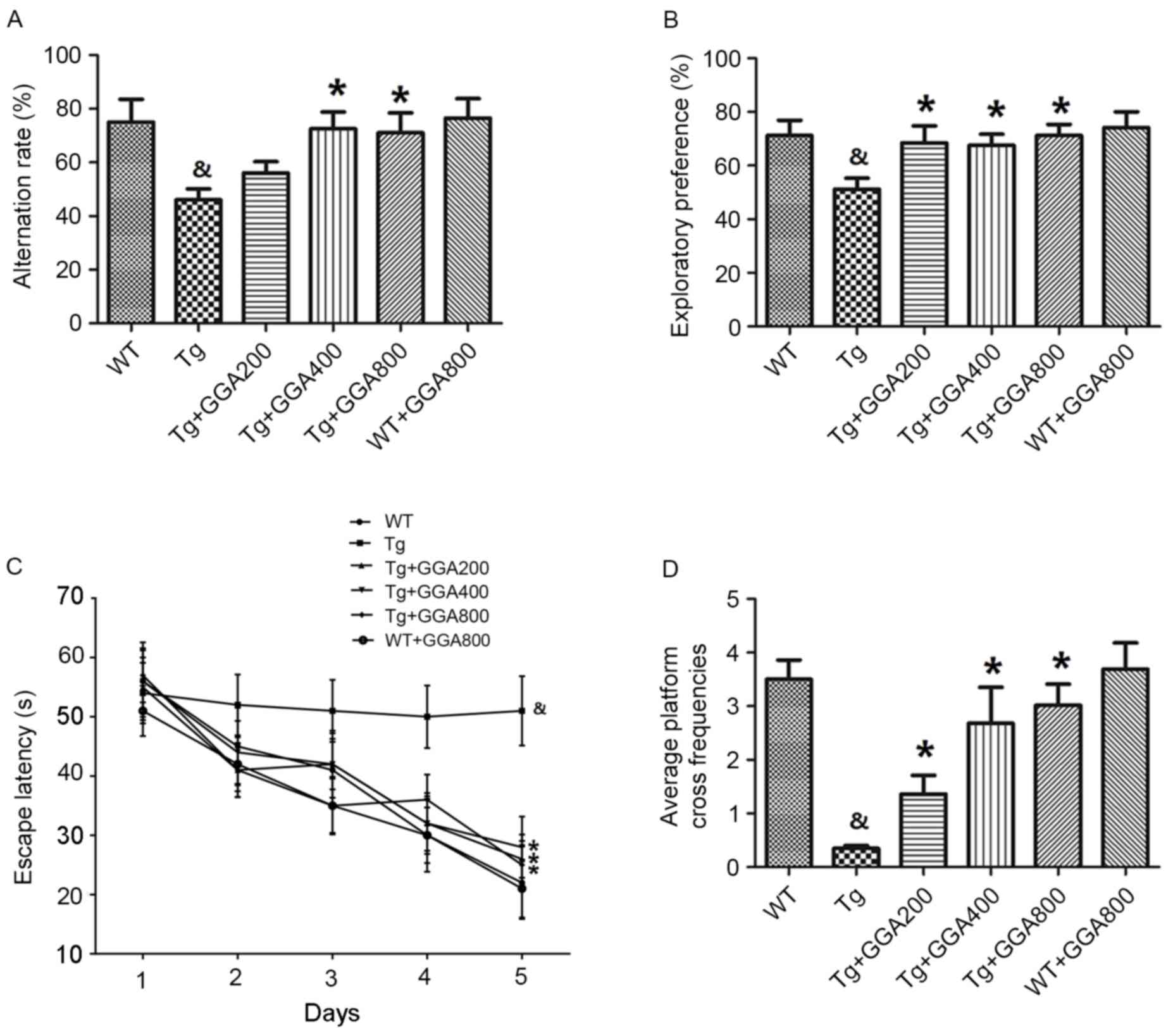
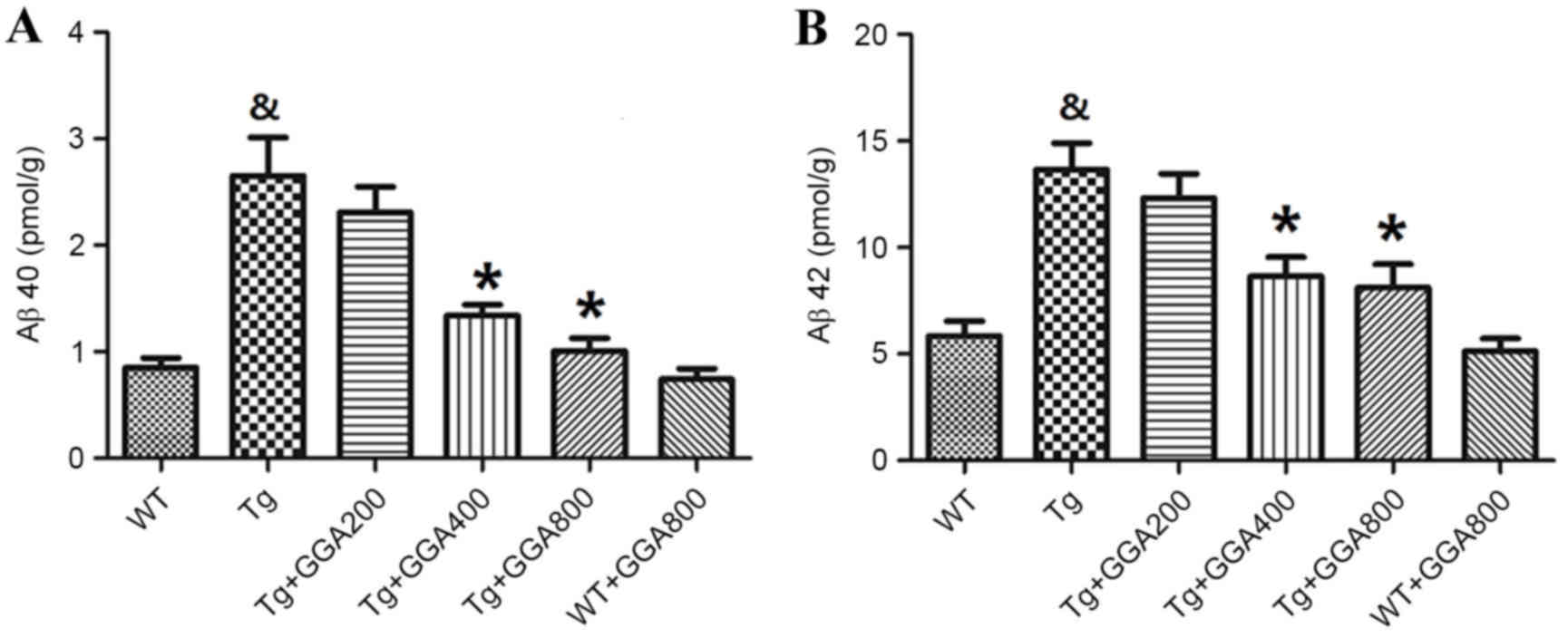
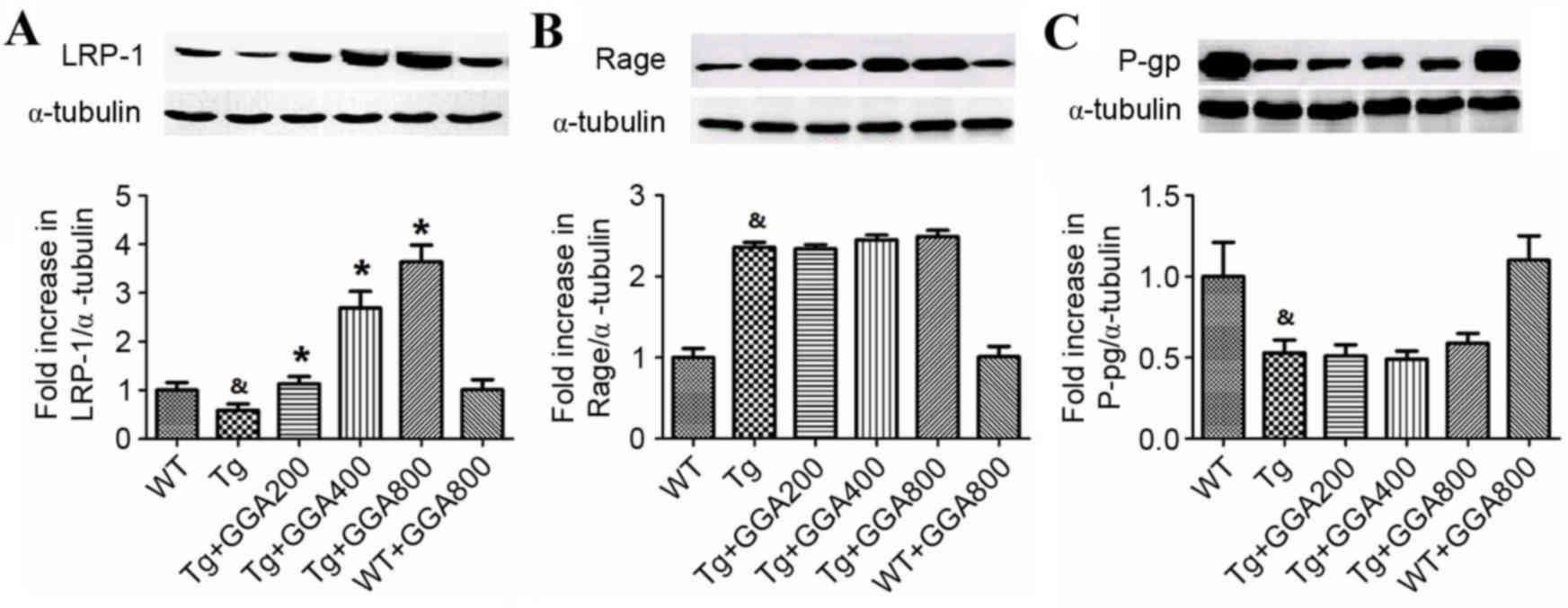
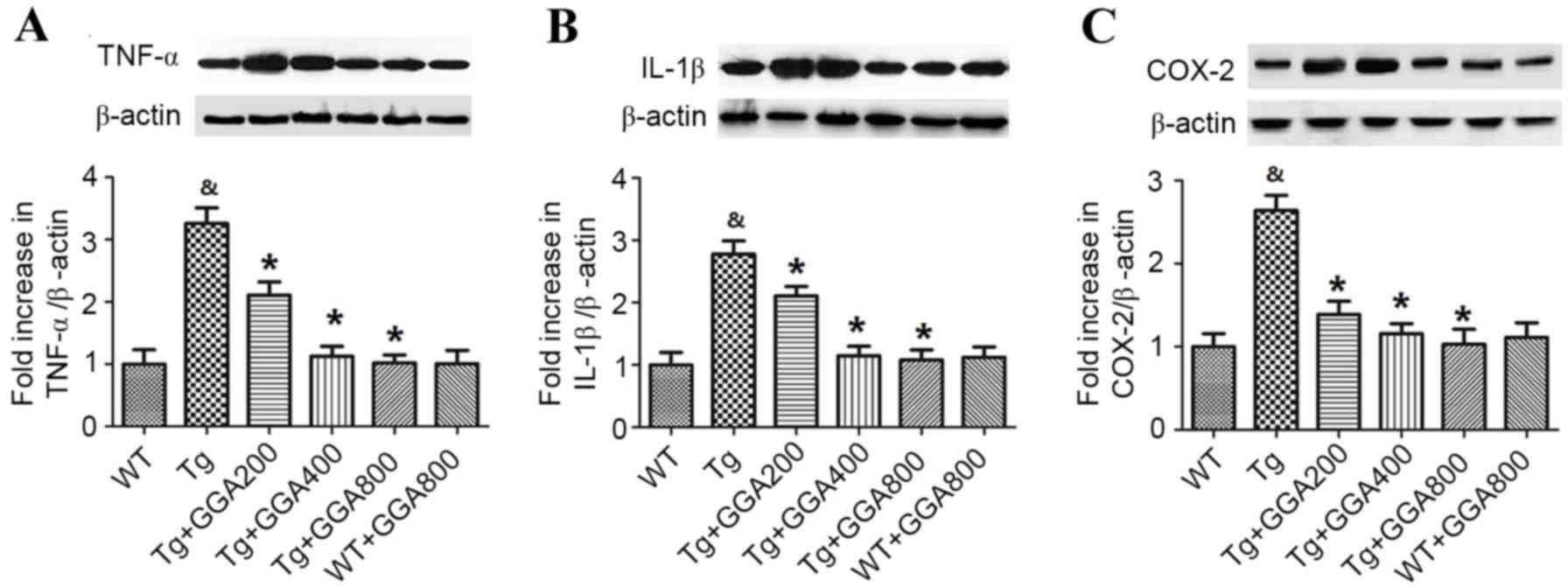
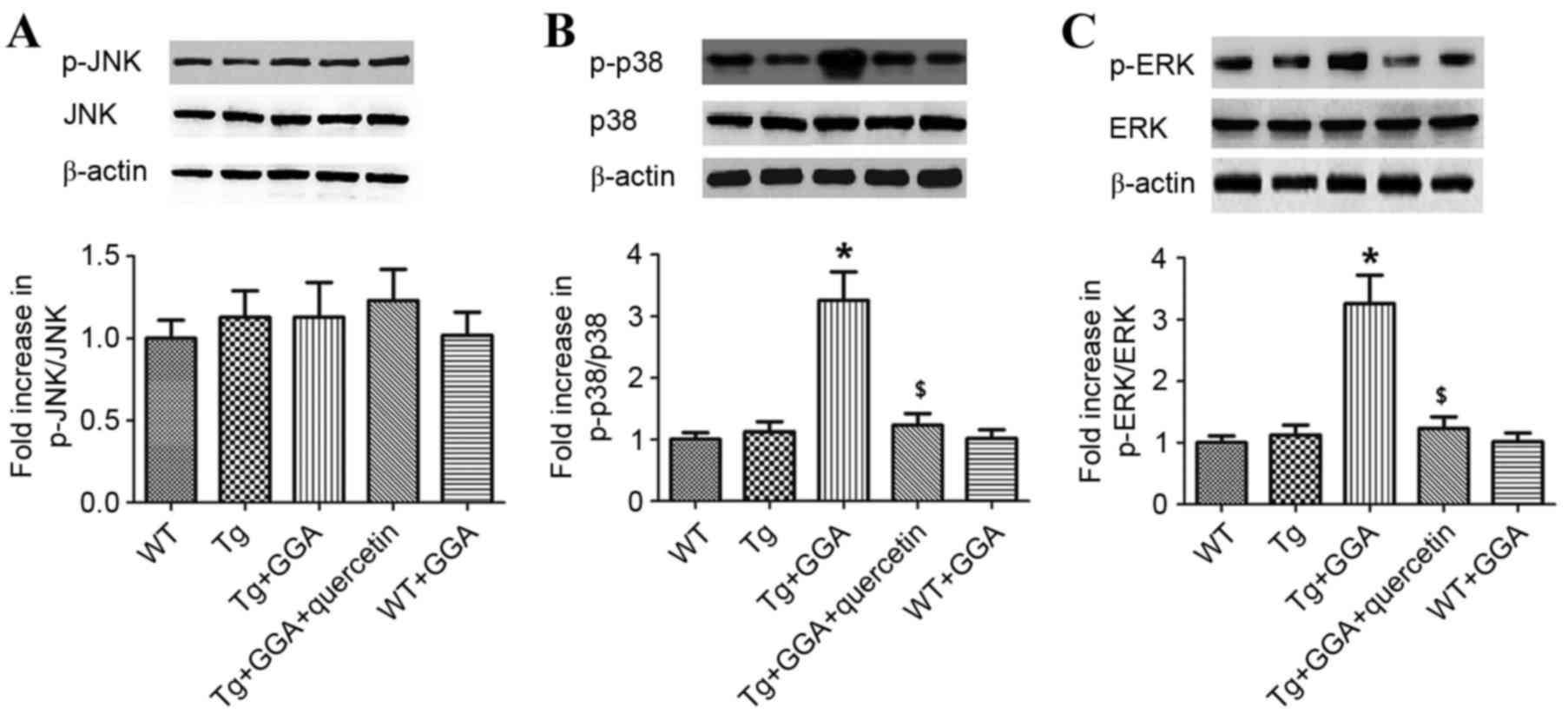
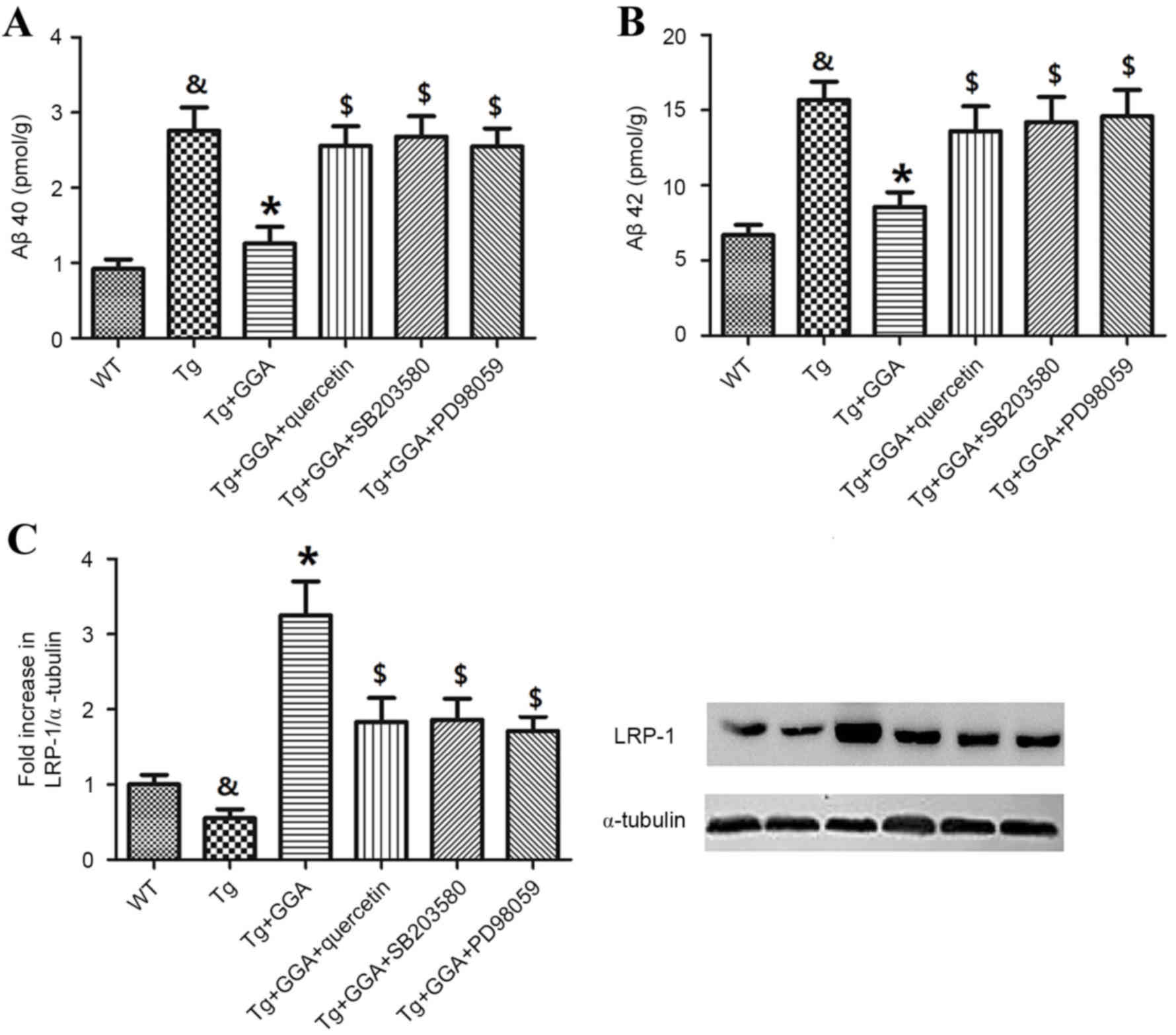
HSP70 overexpression has a remedying effect in neurodegenerative diseases. In Alzheimer's disease (AD), the suppressive effects of HSP70 overexpression on AD‑related phenotypes and the underlying mechanisms are unknown. In the current study, the effect of geranylgeranylacetone (GGA), a non‑toxic inducer of heat shock protein (HSP)‑70 expression, on cognitive function and other pathological phenotypes were evaluated in APP/PS1 mice. It was observed that all doses of orally administered GGA (200, 400, and 800 mg/kg/day) improved cognitive deficit (P<0.05) and lowered the levels of amyloid‑β (Aβ) peptide (P<0.05) in APP/PS1 mice. GGA treatment also increased the levels of low density lipoprotein receptor‑related protein 1 (LRP‑1) (P<0.05), while the levels of p‑glycoprotein and receptor for advanced glycation end products were unaltered. Significant decreases in the levels of inflammatory cytokines, namely tumor necrosis factor‑α, interleukin‑1β and cyclooxygenase‑2, were also observed in the GGA‑treated mice (P<0.05). Subsequent treatment with the HSP70 inhibitor quercetin caused significant decreases in the levels of phosphorylated (p)‑p38 mitogen‑activated protein kinase (p38 MAPK) and p‑extracellular signal‑regulated protein kinases (ERK; P<0.05), indicating that ERK/p38 MAPK signaling in AD‑related phenotypes may be suppressed by oral administration of GGA. Finally, in APP/PS1 mice treated with GGA+SB‑203580 (p38 inhibitor) and GGA+PD98059 (ERK inhibitor), it was observed that orally administered GGA led to the activation of ERK/p38 MAPK signaling (P<0.05) and increased LRP‑1 expression (P<0.05), which subsequently aided the clearance of Aβ40 and Aβ42 (P<0.05) and alleviated AD‑related phenotypes. These results indicate that oral administration of GGA in APP/PS1 mice alleviates AD‑related phenotypes by regulation of the ERK/p38 MAPK signaling pathway. Thus, GGA may be a potential therapeutic for the treatment of AD.
View Figures

Figure 1

Figure 2

Figure 3

Figure 4

Figure 5

Figure 6

View References

1 

Katzman R: The prevalence and malignancy of Alzheimer disease: A Major Killer. Arch Neurol. 33:217–218. 2008. View Article : Google Scholar

2 

Brookmeyer R, Johnson E, Ziegler-Graham K and Arrighi HM: Forecasting the global burden of Alzheimer's disease. Alzheimers Dement. 3:186–191. 2007. View Article : Google Scholar : PubMed/NCBI

3 

McKhann G, Drachman D, Folstein M, Katzman R, Price D and Stadlan EM: Clinical diagnosis of Alzheimer's disease: Report of the NINCDS-ADRDA Work Group under the auspices of Department of Health and Human Services Task Force on Alzheimer's Disease. Neurology. 34:939–944. 1984. View Article : Google Scholar : PubMed/NCBI

4 

Hardy J and Selkoe DJ: The amyloid hypothesis of Alzheimer's disease: Progress and problems on the road to therapeutics. Science. 297:353–356. 2002. View Article : Google Scholar : PubMed/NCBI

5 

Whitwell JL, Dickson DW, Murray ME, Weigand SD, Tosakulwong N, Senjem ML, Knopman DS, Boeve BF, Parisi JE, Petersen RC, et al: Neuroimaging correlates of pathologically defined subtypes of Alzheimer's disease: A case-control study. Lancet Neurol. 11:868–877. 2012. View Article : Google Scholar : PubMed/NCBI

6 

Kurz A and Perneczky R: Amyloid clearance as a treatment target against Alzheimer's disease. J Alzheimers Dis. 24 Suppl 2:S61–S73. 2011.

7 

Haass C and Selkoe DJ: Soluble protein oligomers in neurodegeneration: Lessons from the Alzheimer's amyloid beta-peptide. Nat Rev Mol Cell Biol. 8:101–112. 2007. View Article : Google Scholar : PubMed/NCBI

8 

Tanzi RE, Moir RD and Wagner SL: Clearance of Alzheimer's Aβ Peptide: The Many Roads to Perdition. Neuron. 43:605–608. 2004. View Article : Google Scholar : PubMed/NCBI

9 

Yoon SS and Jo SA: Mechanisms of amyloid-β peptide clearance: Potential therapeutic targets for Alzheimer's disease. Biomol Ther (Seoul). 20:245–255. 2012. View Article : Google Scholar : PubMed/NCBI

10 

Zlokovic BV: Clearing amyloid through the blood-brain barrier. J Neurochem. 89:807–811. 2004. View Article : Google Scholar : PubMed/NCBI

11 

Tuppo EE and Arias HR: The role of inflammation in Alzheimer's disease. Int J Biochem Cell Biol. 37:289–305. 2015. View Article : Google Scholar

12 

Selkoe DJ: Cell biology of protein misfolding: The examples of Alzheimer's and Parkinson's diseases. Nat Cell Biol. 6:1054–1061. 2004. View Article : Google Scholar : PubMed/NCBI

13 

Forloni G, Terreni L, Fogliarino S, Invernizzi R, Assini A, Ribizzi G, Negro A, Calabrese E, Volonté MA, Mariani C, et al: Protein misfolding in Alzheimer's and Parkinson's disease: Genetics and molecular mechanisms. Neurobiol Aging. 23:957–976. 2002. View Article : Google Scholar : PubMed/NCBI

14 

Liberek K, Lewandowska A and Zietkiewicz S: Chaperones in control of protein disaggregation. EMBO J. 27:328–335. 2008. View Article : Google Scholar : PubMed/NCBI

15 

Meriin AB and Sherman MY: Role of molecular chaperones in neurodegenerative disorders. Int J Hyperthermia. 21:403–419. 2009. View Article : Google Scholar

16 

Wyttenbach A and Arrigo AP: The role of heat shock proteins during neurodegeneration in Alzheimer's, Parkinson's and Huntington's Disease. Heat Shock Proteins in Neural Cells. 81–99. 2009. View Article : Google Scholar

17 

Bobkova NV, Garbuz DG, Nesterova I, Medvinskaya N, Samokhin A, Alexandrova I, Yashin V, Karpov V, Kukharsky MS, Ninkina NN, et al: Therapeutic effect of exogenous hsp70 in mouse models of Alzheimer's disease. J Alzheimers Dis. 38:425–435. 2014.PubMed/NCBI

18 

Sinadinos C, Quraishe S, Sealey M, Samson PB, Mudher A and Wyttenbach A: Low endogenous and chemical induced heat shock protein induction in a 0N3Rtau-expressing drosophila larval model of Alzheimer's disease. J Alzheimers Dis. 33:1117–1133. 2013.PubMed/NCBI

19 

Hoshino T, Murao N, Namba T, Takehara M, Adachi H, Katsuno M, Sobue G, Matsushima T, Suzuki T and Mizushima T: Suppression of Alzheimer's disease-related phenotypes by expression of heat shock protein 70 in mice. J Neurosci. 31:5225–5234. 2011. View Article : Google Scholar : PubMed/NCBI

20 

Mikuriya T, Sugahara K, Takemoto T, Tanaka K, Takeno K, Shimogori H, Nakai A and Yamashita H: Geranylgeranylacetone, a heat shock protein inducer, prevents acoustic injury in the guinea pig. Brain Res. 1065:107–114. 2005. View Article : Google Scholar : PubMed/NCBI

21 

Jankowsky JL, Fadale DJ, Anderson J, Xu GM, Gonzales V, Jenkins NA, Copeland NG, Lee MK, Younkin LH, Wagner SL, et al: Mutant presenilins specifically elevate the levels of the 42 residue beta-amyloid peptide in vivo: Evidence for augmentation of a 42-specific gamma secretase. Hum Mol Genet. 13:159–170. 2004. View Article : Google Scholar : PubMed/NCBI

22 

Katsuno M, Sang CH, Adachi H, Minamiyama M, Waza M, Tanaka F, Doyu M and Sobue G: Pharmacological induction of heat-shock proteins alleviates polyglutamine-mediated motor neuron disease. Proc Natl Acad Sci USA. 102:pp. 16801–16806. 2005, View Article : Google Scholar : PubMed/NCBI

23 

Bromley-Brits K, Deng Y and Song W: Morris water maze test for learning and memory deficits in Alzheimer's disease model mice. J Vis Exp: pii. e29202011.

24 

Hughes RN: The value of spontaneous alternation behavior (SAB) as a test of retention in pharmacological investigations of memory. Neurosci Biobehav Rev. 28:497–505. 2004. View Article : Google Scholar : PubMed/NCBI

25 

Broadbent NJ, Gaskin S, Squire LR and Clark RE: Object recognition memory and the rodent hippocampus. Learn Mem. 17:5–11. 2009. View Article : Google Scholar : PubMed/NCBI

26 

Iwata N, Mizukami H, Shirotani K, Takaki Y, Muramatsu S, Lu B, Gerard NP, Gerard C, Ozawa K and Saido TC: Presynaptic localization of neprilysin contributes to efficient clearance of amyloid-beta peptide in mouse brain. J Neurosci. 24:991–998. 2004. View Article : Google Scholar : PubMed/NCBI

27 

Munoz L and Ammit AJ: Targeting p38 MAPK pathway for the treatment of Alzheimer's disease. Neuropharmacology. 58:561–568. 2010. View Article : Google Scholar : PubMed/NCBI

28 

Adachi H, Katsuno M, Waz M, Minamiyam M, Tanak F and Sobue G: Heat shock proteins in neurodegenerative diseases: Pathogenic roles and therapeutic implications. Int J Hyperthermia. 25:647–654. 2009. View Article : Google Scholar : PubMed/NCBI

29 

Hoshino T, Suzuki K, Matsushima T, Yamakawa N, Suzuki T and Mizushima T: Suppression of Alzheimer's disease-related phenotypes by geranylgeranylacetone in mice. PLoS One. 8:e763062013. View Article : Google Scholar : PubMed/NCBI

30 

Seno K, Joh T, Yokoyama Y and Itoh M: Role of mucus in gastric mucosal injury induced by local ischemia/reperfusion. J Lab Clin Med. 126:287–293. 1995.PubMed/NCBI

31 

Murakami M, Oketani K, Fujisaki H, Wakabayashi T and Ohgo T: Antiulcer effect of geranylgeranylacetone, a new acyclic polyisoprenoid on experimentally induced gastric and duodenal ulcers in rats. Arzneimittelforschung. 31:799–804. 1981.PubMed/NCBI

32 

Donahue JE, Flaherty SL, Johanson CE, Duncan JA III, Silverberg GD, Miller MC, Tavares R, Yang W, Wu Q, Sabo E, et al: RAGE, LRP-1, and amyloid-beta protein in Alzheimer's disease. Acta Neuropathol. 112:405–415. 2006. View Article : Google Scholar : PubMed/NCBI

33 

Weller RO, Subash M, Preston SD, Mazanti I and Carare RO: SYMPOSIUM: Clearance of Aβ from the brain in Alzheimer's disease: Perivascular drainage of amyloid-β peptides from the brain and its failure in cerebral amyloid angiopathy and Alzheimer's disease. Brain Pathol. 18:253–266. 2008. View Article : Google Scholar : PubMed/NCBI

34 

Finch CE and Morgan TE: Systemic inflammation, infection, ApoE alleles, and Alzheimer disease: A position paper. Curr Alzheimer Res. 4:185–189. 2007. View Article : Google Scholar : PubMed/NCBI

35 

Griffin WS and Mrak RE: Interleukin-1 in the genesis and progression of and risk for development of neuronal degeneration in Alzheimer's disease. J Leukoc Biol. 72:233–238. 2002.PubMed/NCBI

36 

Bona DD, Plaia A, Vasto S, Cavallone L, Lescai F, Franceschi C, Licastro F, Colonna-Romano G, Lio D, Candore G and Caruso C: Association between the interleukin-1beta polymorphisms and Alzheimer's disease: A systematic review and meta-analysis. Brain Res Rev. 59:155–163. 2008. View Article : Google Scholar : PubMed/NCBI

37 

Deane R, Sagare A and Zlokovic BV: The role of the cell Surface LRP and Soluble LRP in blood-brain barrier abeta clearance in Alzheimer's disease. Curr Pharm Des. 14:1601–1605. 2008. View Article : Google Scholar : PubMed/NCBI

38 

Jacquier-Sarlin MR, Fuller K, Dinh-Xuan AT, Richard MJ and Polla BS: Protective effects of the hsp70 in inflammation. Experimentia. 50:1031–1038. 1994. View Article : Google Scholar

39 

Colombo A, Bastone A, Ploia C, Sclip A, Salmona M, Forloni G and Borsello T: JNK regulates APP cleavage and degradation in a model of Alzheimer's disease. Neurobiol Dis. 33:518–525. 2013. View Article : Google Scholar

40 

Webber KM, Smith MA, Lee HG, Harris PL, Moreira P, Perry G and Zhu X: Mitogen- and stress-activated protein kinase 1: Convergence of the ERK and p38 pathways in Alzheimer's disease. J Neurosci Res. 79:554–560. 2005. View Article : Google Scholar : PubMed/NCBI

41 

Roux PP and Blenis J: ERK and p38 MAPK-activated protein kinases: A family of protein kinases with diverse biological functions. Microbiol Mol Biol Rev. 68:320–344. 2004. View Article : Google Scholar : PubMed/NCBI

42 

Sarina, Yagi Y, Nakano O, Hashimoto T, Kimura K, Asakawa Y, Zhong M, Narimatsu S and Gohda E: Induction of neurite outgrowth in PC12 cells by artemisinin through activation of ERK and p38 MAPK signaling pathways. Brain Res. 1490:61–71. 2013. View Article : Google Scholar : PubMed/NCBI

43 

Lenka M and Alaina JA: Targeting p38 MAPK pathway for the treatment of Alzheimer's disease. Neuropharmacology. 58:561–568. 2010. View Article : Google Scholar : PubMed/NCBI

44 

Khan TK and Alkon DL: Alzheimer's disease-specific alterations of the Erk1/Erk2 phosphorylation ratio. Journal. 2009.

Related Articles

  • Abstract
  • View
  • Download
  • Twitter
Copy and paste a formatted citation
Spandidos Publications style
Sun Y, Zhang JR and Chen S: Suppression of Alzheimer's disease‑related phenotypes by the heat shock protein 70 inducer, geranylgeranylacetone, in APP/PS1 transgenic mice via the ERK/p38 MAPK signaling pathway. Exp Ther Med 14: 5267-5274, 2017.
APA
Sun, Y., Zhang, J., & Chen, S. (2017). Suppression of Alzheimer's disease‑related phenotypes by the heat shock protein 70 inducer, geranylgeranylacetone, in APP/PS1 transgenic mice via the ERK/p38 MAPK signaling pathway. Experimental and Therapeutic Medicine, 14, 5267-5274. https://doi.org/10.3892/etm.2017.5253
MLA
Sun, Y., Zhang, J., Chen, S."Suppression of Alzheimer's disease‑related phenotypes by the heat shock protein 70 inducer, geranylgeranylacetone, in APP/PS1 transgenic mice via the ERK/p38 MAPK signaling pathway". Experimental and Therapeutic Medicine 14.6 (2017): 5267-5274.
Chicago
Sun, Y., Zhang, J., Chen, S."Suppression of Alzheimer's disease‑related phenotypes by the heat shock protein 70 inducer, geranylgeranylacetone, in APP/PS1 transgenic mice via the ERK/p38 MAPK signaling pathway". Experimental and Therapeutic Medicine 14, no. 6 (2017): 5267-5274. https://doi.org/10.3892/etm.2017.5253
Copy and paste a formatted citation
x
Spandidos Publications style
Sun Y, Zhang JR and Chen S: Suppression of Alzheimer's disease‑related phenotypes by the heat shock protein 70 inducer, geranylgeranylacetone, in APP/PS1 transgenic mice via the ERK/p38 MAPK signaling pathway. Exp Ther Med 14: 5267-5274, 2017.
APA
Sun, Y., Zhang, J., & Chen, S. (2017). Suppression of Alzheimer's disease‑related phenotypes by the heat shock protein 70 inducer, geranylgeranylacetone, in APP/PS1 transgenic mice via the ERK/p38 MAPK signaling pathway. Experimental and Therapeutic Medicine, 14, 5267-5274. https://doi.org/10.3892/etm.2017.5253
MLA
Sun, Y., Zhang, J., Chen, S."Suppression of Alzheimer's disease‑related phenotypes by the heat shock protein 70 inducer, geranylgeranylacetone, in APP/PS1 transgenic mice via the ERK/p38 MAPK signaling pathway". Experimental and Therapeutic Medicine 14.6 (2017): 5267-5274.
Chicago
Sun, Y., Zhang, J., Chen, S."Suppression of Alzheimer's disease‑related phenotypes by the heat shock protein 70 inducer, geranylgeranylacetone, in APP/PS1 transgenic mice via the ERK/p38 MAPK signaling pathway". Experimental and Therapeutic Medicine 14, no. 6 (2017): 5267-5274. https://doi.org/10.3892/etm.2017.5253
Follow us
  • Twitter
  • LinkedIn
  • Facebook
About
  • Spandidos Publications
  • Careers
  • Cookie Policy
  • Privacy Policy
How can we help?
  • Help
  • Live Chat
  • Contact
  • Email to our Support Team