Spandidos Publications Logo
  • About
    • About Spandidos
    • Aims and Scopes
    • Abstracting and Indexing
    • Editorial Policies
    • Reprints and Permissions
    • Job Opportunities
    • Terms and Conditions
    • Contact
  • Journals
    • All Journals
    • Oncology Letters
      • Oncology Letters
      • Information for Authors
      • Editorial Policies
      • Editorial Board
      • Aims and Scope
      • Abstracting and Indexing
      • Bibliographic Information
      • Archive
    • International Journal of Oncology
      • International Journal of Oncology
      • Information for Authors
      • Editorial Policies
      • Editorial Board
      • Aims and Scope
      • Abstracting and Indexing
      • Bibliographic Information
      • Archive
    • Molecular and Clinical Oncology
      • Molecular and Clinical Oncology
      • Information for Authors
      • Editorial Policies
      • Editorial Board
      • Aims and Scope
      • Abstracting and Indexing
      • Bibliographic Information
      • Archive
    • Experimental and Therapeutic Medicine
      • Experimental and Therapeutic Medicine
      • Information for Authors
      • Editorial Policies
      • Editorial Board
      • Aims and Scope
      • Abstracting and Indexing
      • Bibliographic Information
      • Archive
    • International Journal of Molecular Medicine
      • International Journal of Molecular Medicine
      • Information for Authors
      • Editorial Policies
      • Editorial Board
      • Aims and Scope
      • Abstracting and Indexing
      • Bibliographic Information
      • Archive
    • Biomedical Reports
      • Biomedical Reports
      • Information for Authors
      • Editorial Policies
      • Editorial Board
      • Aims and Scope
      • Abstracting and Indexing
      • Bibliographic Information
      • Archive
    • Oncology Reports
      • Oncology Reports
      • Information for Authors
      • Editorial Policies
      • Editorial Board
      • Aims and Scope
      • Abstracting and Indexing
      • Bibliographic Information
      • Archive
    • Molecular Medicine Reports
      • Molecular Medicine Reports
      • Information for Authors
      • Editorial Policies
      • Editorial Board
      • Aims and Scope
      • Abstracting and Indexing
      • Bibliographic Information
      • Archive
    • World Academy of Sciences Journal
      • World Academy of Sciences Journal
      • Information for Authors
      • Editorial Policies
      • Editorial Board
      • Aims and Scope
      • Abstracting and Indexing
      • Bibliographic Information
      • Archive
    • International Journal of Functional Nutrition
      • International Journal of Functional Nutrition
      • Information for Authors
      • Editorial Policies
      • Editorial Board
      • Aims and Scope
      • Abstracting and Indexing
      • Bibliographic Information
      • Archive
    • International Journal of Epigenetics
      • International Journal of Epigenetics
      • Information for Authors
      • Editorial Policies
      • Editorial Board
      • Aims and Scope
      • Abstracting and Indexing
      • Bibliographic Information
      • Archive
    • Medicine International
      • Medicine International
      • Information for Authors
      • Editorial Policies
      • Editorial Board
      • Aims and Scope
      • Abstracting and Indexing
      • Bibliographic Information
      • Archive
  • Articles
  • Information
    • Information for Authors
    • Information for Reviewers
    • Information for Librarians
    • Information for Advertisers
    • Conferences
  • Language Editing
Spandidos Publications Logo
  • About
    • About Spandidos
    • Aims and Scopes
    • Abstracting and Indexing
    • Editorial Policies
    • Reprints and Permissions
    • Job Opportunities
    • Terms and Conditions
    • Contact
  • Journals
    • All Journals
    • Biomedical Reports
      • Information for Authors
      • Editorial Policies
      • Editorial Board
      • Aims and Scope
      • Abstracting and Indexing
      • Bibliographic Information
      • Archive
    • Experimental and Therapeutic Medicine
      • Information for Authors
      • Editorial Policies
      • Editorial Board
      • Aims and Scope
      • Abstracting and Indexing
      • Bibliographic Information
      • Archive
    • International Journal of Epigenetics
      • Information for Authors
      • Editorial Policies
      • Editorial Board
      • Aims and Scope
      • Abstracting and Indexing
      • Bibliographic Information
      • Archive
    • International Journal of Functional Nutrition
      • Information for Authors
      • Editorial Policies
      • Editorial Board
      • Aims and Scope
      • Abstracting and Indexing
      • Bibliographic Information
      • Archive
    • International Journal of Molecular Medicine
      • Information for Authors
      • Editorial Policies
      • Editorial Board
      • Aims and Scope
      • Abstracting and Indexing
      • Bibliographic Information
      • Archive
    • International Journal of Oncology
      • Information for Authors
      • Editorial Policies
      • Editorial Board
      • Aims and Scope
      • Abstracting and Indexing
      • Bibliographic Information
      • Archive
    • Medicine International
      • Information for Authors
      • Editorial Policies
      • Editorial Board
      • Aims and Scope
      • Abstracting and Indexing
      • Bibliographic Information
      • Archive
    • Molecular and Clinical Oncology
      • Information for Authors
      • Editorial Policies
      • Editorial Board
      • Aims and Scope
      • Abstracting and Indexing
      • Bibliographic Information
      • Archive
    • Molecular Medicine Reports
      • Information for Authors
      • Editorial Policies
      • Editorial Board
      • Aims and Scope
      • Abstracting and Indexing
      • Bibliographic Information
      • Archive
    • Oncology Letters
      • Information for Authors
      • Editorial Policies
      • Editorial Board
      • Aims and Scope
      • Abstracting and Indexing
      • Bibliographic Information
      • Archive
    • Oncology Reports
      • Information for Authors
      • Editorial Policies
      • Editorial Board
      • Aims and Scope
      • Abstracting and Indexing
      • Bibliographic Information
      • Archive
    • World Academy of Sciences Journal
      • Information for Authors
      • Editorial Policies
      • Editorial Board
      • Aims and Scope
      • Abstracting and Indexing
      • Bibliographic Information
      • Archive
  • Articles
  • Information
    • For Authors
    • For Reviewers
    • For Librarians
    • For Advertisers
    • Conferences
  • Language Editing
Login Register Submit
  • This site uses cookies
  • You can change your cookie settings at any time by following the instructions in our Cookie Policy. To find out more, you may read our Privacy Policy.

    I agree
Search articles by DOI, keyword, author or affiliation
Search
Advanced Search
presentation
Experimental and Therapeutic Medicine
Join Editorial Board Propose a Special Issue
Print ISSN: 1792-0981 Online ISSN: 1792-1015
Journal Cover
December-2017 Volume 14 Issue 6

Full Size Image

Sign up for eToc alerts
Recommend to Library

Journals

International Journal of Molecular Medicine

International Journal of Molecular Medicine

International Journal of Molecular Medicine is an international journal devoted to molecular mechanisms of human disease.

International Journal of Oncology

International Journal of Oncology

International Journal of Oncology is an international journal devoted to oncology research and cancer treatment.

Molecular Medicine Reports

Molecular Medicine Reports

Covers molecular medicine topics such as pharmacology, pathology, genetics, neuroscience, infectious diseases, molecular cardiology, and molecular surgery.

Oncology Reports

Oncology Reports

Oncology Reports is an international journal devoted to fundamental and applied research in Oncology.

Experimental and Therapeutic Medicine

Experimental and Therapeutic Medicine

Experimental and Therapeutic Medicine is an international journal devoted to laboratory and clinical medicine.

Oncology Letters

Oncology Letters

Oncology Letters is an international journal devoted to Experimental and Clinical Oncology.

Biomedical Reports

Biomedical Reports

Explores a wide range of biological and medical fields, including pharmacology, genetics, microbiology, neuroscience, and molecular cardiology.

Molecular and Clinical Oncology

Molecular and Clinical Oncology

International journal addressing all aspects of oncology research, from tumorigenesis and oncogenes to chemotherapy and metastasis.

World Academy of Sciences Journal

World Academy of Sciences Journal

Multidisciplinary open-access journal spanning biochemistry, genetics, neuroscience, environmental health, and synthetic biology.

International Journal of Functional Nutrition

International Journal of Functional Nutrition

Open-access journal combining biochemistry, pharmacology, immunology, and genetics to advance health through functional nutrition.

International Journal of Epigenetics

International Journal of Epigenetics

Publishes open-access research on using epigenetics to advance understanding and treatment of human disease.

Medicine International

Medicine International

An International Open Access Journal Devoted to General Medicine.

Journal Cover
December-2017 Volume 14 Issue 6

Full Size Image

Sign up for eToc alerts
Recommend to Library

  • Article
  • Citations
    • Cite This Article
    • Download Citation
    • Create Citation Alert
    • Remove Citation Alert
    • Cited By
  • Similar Articles
    • Related Articles (in Spandidos Publications)
    • Similar Articles (Google Scholar)
    • Similar Articles (PubMed)
  • Download PDF
  • Download XML
  • View XML
Article Open Access

Effects of hUCB‑MSCs on recovery of neurological function and TERT expression in brain tissue of rats with cerebral ischemia‑reperfusion injury

  • Authors:
    • Xiaohui Huang
    • Shuangli Zhang
    • Fuchun Li
    • Yuyun Zhou
    • Xiaohe Wang
    • Guojiao Fu
    • Xueling Ma
  • View Affiliations / Copyright

    Affiliations: Department of Neurology, The Fourth Affiliated Hospital of Harbin Medical University, Harbin, Heilongjiang 150001, P.R. China, Department of Oncology, The First Hospital of Qiqihar, Qiqihar, Heilongjiang 161005, P.R. China, Department of Orthopedics, The First Affiliated Hospital of Harbin Medical University, Harbin, Heilongjiang 150001, P.R. China
    Copyright: © Huang et al. This is an open access article distributed under the terms of Creative Commons Attribution License.
  • Pages: 5843-5846
    |
    Published online on: October 10, 2017
       https://doi.org/10.3892/etm.2017.5274
  • Expand metrics +
Metrics: Total Views: 0 (Spandidos Publications: | PMC Statistics: )
Metrics: Total PDF Downloads: 0 (Spandidos Publications: | PMC Statistics: )
Cited By (CrossRef): 0 citations Loading Articles...

This article is mentioned in:


Abstract

The aim of this study was to investigate and analyze the effects of human umbilical cord blood mesenchymal stem cells (hUCB‑MSCs) on the recovery of neurological function and telomerase reverse transcriptase (TERT) expression in brain tissue of rats with cerebral ischemia‑reperfusion injury. A total of 100 healthy adult Wistar rats were randomly divided into two groups: The control group and the observation group according to the random number table method. After the model of cerebral ischemia‑reperfusion injury was established, the rats in the observation group were treated with hUCB‑MSCs (10 ml/kg), while the rats in the control group were treated with saline every day. The neurological deficit score and foot fault test were evaluated at 1, 7 and 14 days after treatment, and the rats were sacrificed at 14 days to detect the expression of TERT in brain tissue. There was no significant difference in the scores of mNSS between the two groups before the model establishment (P>0.05), but there was significant differences in two groups after the operation (P<0.05). At 1 day after the operation, the mNSS score of the two groups peaked, which was decreased in the groups with the progress of treatment. The degree of decline in the observation group was significantly greater than that in the control group (P<0.05). Similarly, there was no significant difference in the number of errors between the two groups before the model establishment (P>0.05), but there was significant difference in two groups after the operation (P<0.05). At 1 day after the operation, the number of errors also peaked, which was reduced in the groups with the progress of treatment. The degree of reduction in the observation group was significantly greater than that in the control group (P<0.05). The results of H&E staining showed it had positive reaction as nucleus or cytoplasm stained brown or yellowish brown in the observation group, while it showed neuronal shrinkage, cytoplasm and nucleus yellow dye deepening in the control group as the significant positive reaction. The gray level of the TERT protein in the brain tissue of the control group was 0.458±0.052 LOD, which was significantly lower than that in the observation group with 0.983±0.056 LOD (P<0.05). In conclusion, hUCB‑MSCs can effectively improve the neurological function and the expression of TERT in brain tissue of rats with cerebral ischemia‑reperfusion injury, which may be helpful to reduce the ischemia‑reperfusion injury of brain tissue.

Introduction

With the incidence of ischemic encephalopathy gradually increased, people have payed increased attention to the prevention and treatment of cerebral ischemia-reperfusion injury (1,2). Cerebral infarction is a common cause of ischemic encephalopathy, thrombolytic therapy after cerebral infarction in time can save the lives of patients, but also may cause ischemia-reperfusion injury. Therefore, if the mechanism of ischemia-reperfusion injury is clear, it is of great significance for timely target treatment for ischemia-reperfusion injury. In recent years, there were more studies on ischemia-reperfusion injury, but there is still not a unified opinion on the prevention and treatment of ischemia-reperfusion injury. Studies showed that the expression of telomerase was increased in the brain tissues of patients with ischemia-reperfusion injury (2,3), while some researchers found that telomerase was overexpressed after the injury of brain tissue, considering the protective effect of telomerase on ischemia-reperfusion injury in order to reduce the tissue damage (4). Human umbilical cord blood mesenchymal stem cells (hUCB-MSCs) can secrete a variety of cytokines and neurotrophic factors and promote nerve regeneration, but the conventional route of administration can not fully play the role of hUCB-MSCs. So some scholars proposed nasal administration of hUCB-MSCs to improve neurological function in rats with ischemia-reperfusion injury (5). At present, the study of hUCB-MSCs on nerve injury in rats with ischemia-reperfusion injury is scarce. So the aim of our study was to investigate the effects of hUCB-MSCs on rats with ischemia-reperfusion injury, in order to explore the mechanism of the prevention and treatment of ischemia-reperfusion injury.

Materials and methods

Animals

Experiments were performed using 100 healthy adult Wistar rats weighing 180–220 g, provided by College Animal Center, Harbin Medical University. Rats were kept in the animal house under constant temperature (18–25°C) and humidity (60 to 70%) on natural light with C060 sterilized commercial feed and free water intake, with 12 h before fasting. The study was approved by the Ethics Committee of Harbin Medical University.

Modeling method

All rats were randomly divided into control group and observation group and treated with 10% chloral hydrate (3.5 ml/kg) at RT. After anesthesia, the middle cerebral artery ischemia-reperfusion model was established by the suture method, and the specific modeling method was according to the method given by Chopp and Li (6). Then the rats in the observation group were treated with hUCB-MSCs (10 ml/kg) by nasal administration for 14 days, with the saline in the control group. The neurological deficit score and foot fault test were evaluated at 1, 7 and 14 days after treatment, and the rats were sacrificed at 14 days to detect the expression of telomerase reverse transcriptase (TERT) in brain tissue.

The source of hUCB-MSCs: 30 ml human umbilical cord blood was taken under sterile conditions with heparin anticoagulant, then transferred into a 15 ml centrifuge tube and centrifuged at 2,800 × g for 20 min. The upper plasma was removed, collecting the white blood cells in interface layer, and stored at 4°C. The expression of TERT was detected by western blot analysis. The above operations are carried out by the researchers in our laboratory according to the instructions, and the reagents and kits were purchased from LanPai Biotechnology Co., Ltd. (Shanghai, China).

Observation and evaluation of indicators
The criteria for mNSS (7)

The four aspects as sensory, motor, reflex and muscle tensionin of rats were scored with the total score of 18. The higher the score, the more serious the nerve damage.

Foot fault test

The foot fault test was used to evaluate the disorder of rat forelimb, placing the rats on the Hanging mesh grid (2.5×2.5 cm), then recording the total number of bilateral forelimb movement and the number of left forelimb foot errors. The percent of the number of left forelimb foot errors to the total number of bilateral forelimb movement as the statistical results.

Statistical analysis

The statistical analysis was performed with SPSS 21.0 (IBM Corp., Armonk, NY, USA) and the obtained data are in normal distribution. Measurement data were expressed as mean ± SD and the t-test was performed. Counting data were calculated by Chi-square test. A P-value <0.05 was considered as a significant difference.

Results

Comparison of neurological deficit score between the two groups

There was no significant difference in the scores of mNSS between the two groups before the model establishment (P>0.05), but after the model established there was significant difference in two groups respectively (P<0.05). At 1 day after the operation, the mNSS score of two groups was peaked, which was decreased in the groups with the progress of treatment. The degree of decline in the observation group was significantly greater than that in the control group (P<0.05; Table I).

Table I.

Neurological deficit score in two groups (mean ± SD).

Table I.

Neurological deficit score in two groups (mean ± SD).

mNSS score

GroupsnPreoperativePostoperative day 1Postoperative day 7Postoperative day 14
Control group500.56±0.12 11.51±0.56a 8.52±0.84a 6.85±1.25a
Observation group500.58±0.14 10.54±0.58a 4.59±0.68a,b 3.25±0.52a,b
Group F=12.32, P=0.002
Time F=8.12, P=0.026
Time group F=9.15, P=0.012

a P<0.05 compared with the preoperative score

b P<0.05 compared with control group.

Comparison of foot fault number between the groups

There was no significant difference in the foot fault number between the two groups before ischemia-reperfusion model establishment (P>0.05), but after the model established the foot fault frequency was significantly increased in each group. At 1 day after operation, the number of foot errors peaked, but it was decreased in the groups with the progress of treatment. The number of foot errors was decreased significantly in the observation group compared to that in the control group (P<0.05; Table II).

Table II.

The number of foot errors in the two groups (mean ± SD).

Table II.

The number of foot errors in the two groups (mean ± SD).

Wrong steps

GroupnPreoperativePostoperative day 1Postoperative day 7Postoperative day 14
Control group500.44±0.15 29.5±3.82a 23.65±3.43a 16.98±2.68a
Observation group500.42±0.12 28.32±3.46a 20.32±3.24a,b 6.52±1.87a,b
Group F=10.45, P=0.002
Time F=7.43, P=0.034
Time group F=8.65, P=0.027

a P<0.05 compared with preoperative foot errors

b P<0.05 compared with control group.

The gray value of TERT content in brain tissue in the two groups

The gray value of TERT content in the observation group was 0.983±0.056 LOD, which was significantly higher than that in the control group with the gray value of 0.458±0.052 LOD (P<0.05; Table III).

Table III.

The gray value of TERT content in brain tissue of the two groups (mean ± SD).

Table III.

The gray value of TERT content in brain tissue of the two groups (mean ± SD).

GroupnTERT (WB, LOD)
Control group500.458±0.052
Observation group500.983±0.056
T value 8.62
P-value <0.05

[i] TERT, telomerase reverse transcriptase.

Comparison of groups of rats with brain tissue immunohistochemical reaction

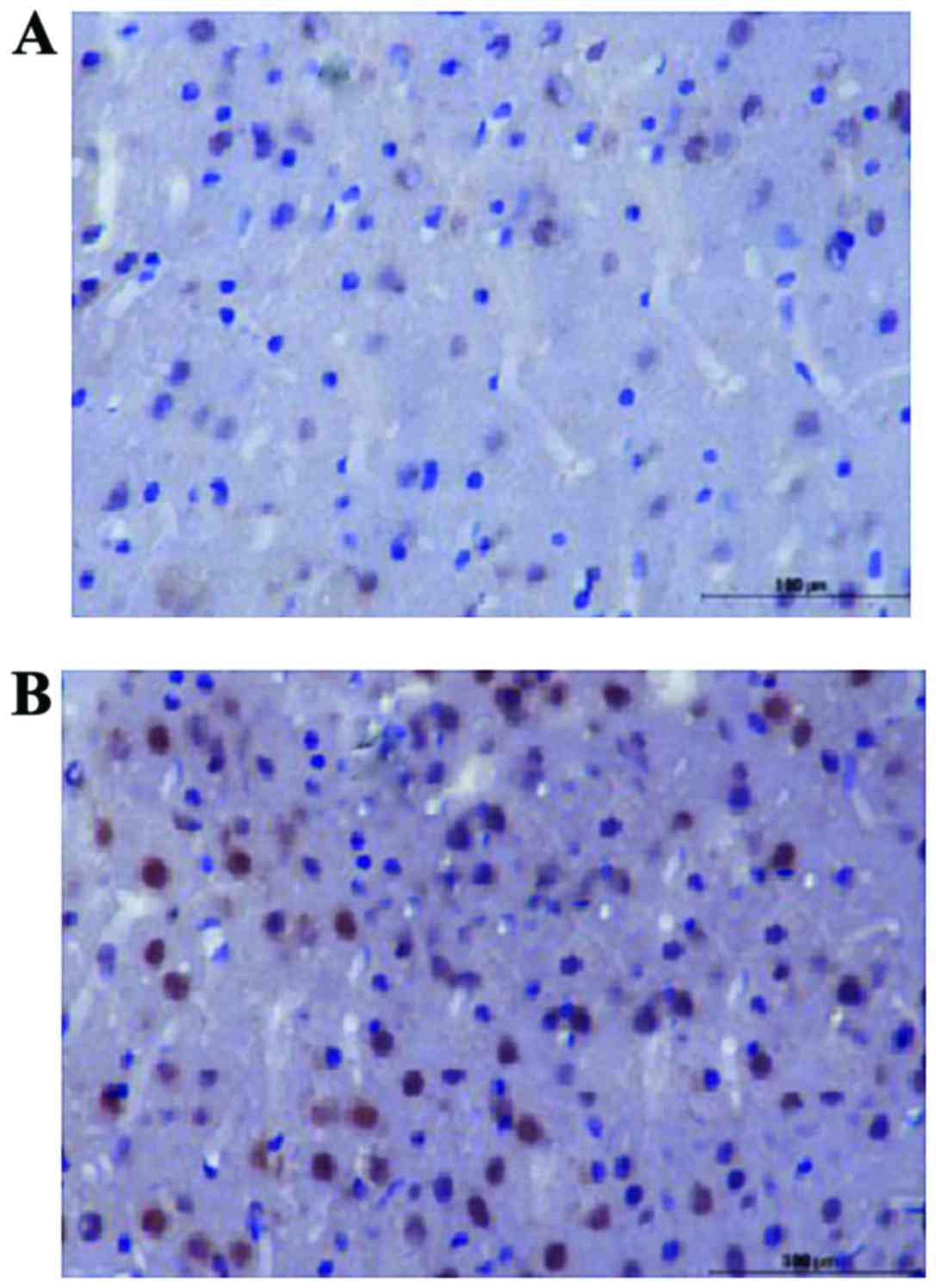
The H&E staining showed the nucleus or cytoplasm in the brain tissue of rats was brown or yellow brown in the observation group, which showed positive reaction (Fig. 1A). The cytoplasm and the nucleus were stained yellow in the control group, suggested the neurons were shrunken (Fig. 1B).

Figure 1.

H&E staining of the rat brain tissue immunohistochemical reaction. (A) The nucleus or cytoplasm was brown or yellow brown in the observation group, which showed positive reaction. (B) The cytoplasm and the nucleus were stained yellow in the control group, suggested the neurons were shrunken.

TERT protein expression in two groups

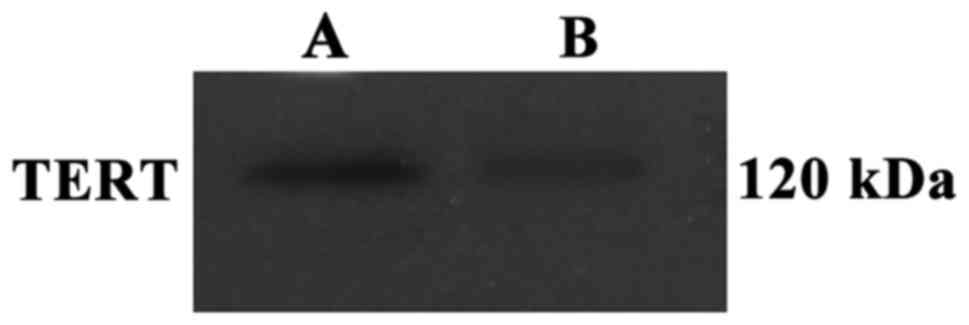
As Fig. 2 shows, the expression of TERT protein in brain tissue of rats in observation group was significantly decreased compared to that in the control group.

Figure 2.

The expression of TERT protein in brain tissue of rats. A, the control group; B, the observation group; TERT, telomerase reverse transcriptase.

Discussion

Ischemia and hypoxia is an important factor for tissue necrosis. For the brain tissue, short-term ischemia and hypoxia can cause irreversible tissue damage (8). In recent years, with the deep study of ischemic diseases, increased number of studies found that ischemia is not the only factor for the tissue damage (9). Free radical release caused by ischemia-reperfusion plays an important role in the tissue injury induced by ischemia and hypoxia, which is known as ischemia-reperfusion injury. Telomerase refers to an enzyme that is responsible for telomere elongation in cells and is a basic nucleoprotein reverse transcriptase that binds telomere DNA to the eukaryotic chromosome ends. The primary role of telomerase is to maintain telomere integrity and prevents its loss in cell division (10). The activity of telomerase is inhibited in normal cells, but it can be significantly activated in tumor cells. TERT, as a catalytic subunit of telomerase, not only activates telomerase activity, but also protects mitochondria and has an anti-apoptotic effect. Studies showed that TERT can effectively improve neuronal apoptosis and neurological function in patients with ischemia-reperfusion injury (11). Stem cell therapy is a more popular treatment in recent years, which have a good therapeutic effect for some diseases. Some scholars have found that hUCB-MSCs contains a variety of cytokines and nerve growth factors, which can effectively improve neuronal damage, but these growth factors can not pass through the blood-brain barrier (12). Nasal administration not only allows drugs to enter the brain tissue, but also reduces the loss of stem cells.

In this study, there were no significant differences in the scores of mNSS between the two groups before the model establishment (P>0.05), but there was significant differences in two groups after the operation (P<0.05). At 1 day after the operation, the mNSS score of two groups peaked, which was decreased in the groups with the progress of treatment. The degree of decline in the observation group was significantly greater than that in the control group (P<0.05). Similarly, there were no significant differences in the number of preoperative footsteps between the two groups before the model establishment (P>0.05), but there was significant differences in two groups after the operation (P<0.05). At 1 day after the operation, the number of preoperative footsteps was peaked, which was reduced in the groups with the progress of treatment. The degree of reduction in the observation group was significantly greater than that in the control group (P<0.05). The results in our study showed that hUCB-MSCs could effectively reduce the neurological injury of rats with ischemia-reperfusion injury, which was consistent with the decrease of neuronal apoptosis in brain tissue. Zhao et al also found that after administration of hUCB-MSCs, neuronal dysfunction in rats with ischemia-reperfusion injury was improved, which was possibly related to the effects of TERT on promoting astrocyte proliferation and activation, increasing hypoxia ischemic rat brain astrocytes proliferation and promoting neuronal survival (13). With the gray value of the TERT protein as 0.458±0.052 LOD in the control group, which was significantly lower than that in the observation group with 0.983±0.056 LOD, which suggested that hUCB-MSCs could effectively promote the expression of TERT in brain tissue of rats with ischemia-reperfusion. Chen et al also found that hUCB-MSCs significantly increased the expression of TERT protein in rat brain by nasal administration, possibly related to the effect of hUCB-MSCs on promoting the expression of TERT in brain tissue induced by cytokines and neurotrophic factors (14).

In conclusion, hUCB-MSCs can effectively improve the neurological function of cerebral ischemia-reperfusion injury in rats and improve the expression of TERT in brain tissue, which may help to reduce cerebral ischemia-reperfusion injury.

Acknowledgements

The study was supported by the Post-Doctoral Initial Fund of Heilongjiang Province (LBH-Q15091) and the Distinguished Young Scholars Fund of the Fourth Clinical Medical College of Haerbin Medical University (HYDSYJQ201506).

References

1 

Lahiani A, Zahavi E, Netzer N, Ofir R, Pinzur L, Raveh S, Arien-Zakay H, Yavin E and Lazarovici P: Human placental eXpanded (PLX) mesenchymal-like adherent stromal cells confer neuroprotection to nerve growth factor (NGF)-differentiated PC12 cells exposed to ischemia by secretion of IL-6 and VEGF. Biochim Biophys Acta. 1853:422–430. 2015. View Article : Google Scholar : PubMed/NCBI

2 

Yu H, Chen P, Yang Z, Luo W, Pi M, Wu Y and Wang L: Electro-acupuncture at conception and governor vessels and transplantation of umbilical cord blood-derived mesenchymal stem cells for treating cerebral ischemia/reperfusion injury. Neural Regen Res. 9:84–91. 2014. View Article : Google Scholar : PubMed/NCBI

3 

Guerrero-Beltrán CE, Tapia E, Sánchez-González DJ, Martínez-Martínez CM, Cristobal-García M and Pedraza-Chaverri J: Tert-Butylhydroquinone pretreatment protects kidney from ischemia-reperfusion injury. J Nephrol. 25:84–89. 2012. View Article : Google Scholar : PubMed/NCBI

4 

Khan I, Ali A, Akhter MA, Naeem N, Chotani MA, Iqbal H, Kabir N, Atiq M and Salim A: Epac-Rap1-activated mesenchymal stem cells improve cardiac function in rat model of myocardial infarction. Cardiovasc Ther. 35:352017. View Article : Google Scholar

5 

Karantalis V and Hare JM: Use of mesenchymal stem cells for therapy of cardiac disease. Circ Res. 116:1413–1430. 2015. View Article : Google Scholar : PubMed/NCBI

6 

Chopp M and Li Y: Treatment of neural injury with marrow stromal cells. Lancet Neurol. 1:92–100. 2002. View Article : Google Scholar : PubMed/NCBI

7 

Chen J, Sanberg PR, Li Y, Wang L, Lu M, Willing AE, Sanchez-Ramos J and Chopp M: Intravenous administration of human umbilical cord blood reduces behavioral deficits after stroke in rats. Stroke. 32:2682–2688. 2001. View Article : Google Scholar : PubMed/NCBI

8 

Luo CJ, Zhang FJ, Zhang L, Geng YQ, Li QG, Hong Q, Fu B, Zhu F, Cui SY, Feng Z, et al: Mesenchymal stem cells ameliorate sepsis-associated acute kidney injury in mice. Shock. 41:123–129. 2014. View Article : Google Scholar : PubMed/NCBI

9 

Sun T, Gao GZ, Li RF, Li X, Li DW, Wu SS, Yeo AE and Jin B: Bone marrow-derived mesenchymal stem cell transplantation ameliorates oxidative stress and restores intestinal mucosal permeability in chemically induced colitis in mice. Am J Transl Res. 7:891–901. 2015.PubMed/NCBI

10 

Chung DJ, Choi CB, Lee SH, Kang EH, Lee JH, Hwang SH, Han H, Lee JH, Choe BY, Lee SY and Kim HY: Intraarterially delivered human umbilical cord blood-derived mesenchymal stem cells in canine cerebral ischemia. J Neurosci Res. 87:3554–3567. 2009. View Article : Google Scholar : PubMed/NCBI

11 

Li J, Qu Y, Chen D, Zhang L, Zhao F, Luo L, Pan L, Hua J and Mu D: The neuroprotective role and mechanisms of TERT in neurons with oxygen-glucose deprivation. Neuroscience. 252:346–358. 2013. View Article : Google Scholar : PubMed/NCBI

12 

Leong KH, Zhou LL, Lin QM, Wang P, Yao L and Huang ZT: Therapeutic effects of various methods of MSC transplantation on cerebral resuscitation following cardiac arrest in rats. Mol Med Rep. 13:3043–3051. 2016. View Article : Google Scholar : PubMed/NCBI

13 

Zhao F, Qu Y, Xiong T, Duan Z, Ye Q and Mu D: The neuroprotective role of TERT via an antiapoptotic mechanism in neonatal rats after hypoxia-ischemia brain injury. Neurosci Lett. 515:39–43. 2012. View Article : Google Scholar : PubMed/NCBI

14 

Chen M, Xiang Z and Cai J: The anti-apoptotic and neuro-protective effects of human umbilical cord blood mesenchymal stem cells (hUCB-MSCs) on acute optic nerve injury is transient. Brain Res. 1532:63–75. 2013. View Article : Google Scholar : PubMed/NCBI

Related Articles

  • Abstract
  • View
  • Download
  • Twitter
Copy and paste a formatted citation
Spandidos Publications style
Huang X, Zhang S, Li F, Zhou Y, Wang X, Fu G and Ma X: Effects of hUCB‑MSCs on recovery of neurological function and TERT expression in brain tissue of rats with cerebral ischemia‑reperfusion injury. Exp Ther Med 14: 5843-5846, 2017.
APA
Huang, X., Zhang, S., Li, F., Zhou, Y., Wang, X., Fu, G., & Ma, X. (2017). Effects of hUCB‑MSCs on recovery of neurological function and TERT expression in brain tissue of rats with cerebral ischemia‑reperfusion injury. Experimental and Therapeutic Medicine, 14, 5843-5846. https://doi.org/10.3892/etm.2017.5274
MLA
Huang, X., Zhang, S., Li, F., Zhou, Y., Wang, X., Fu, G., Ma, X."Effects of hUCB‑MSCs on recovery of neurological function and TERT expression in brain tissue of rats with cerebral ischemia‑reperfusion injury". Experimental and Therapeutic Medicine 14.6 (2017): 5843-5846.
Chicago
Huang, X., Zhang, S., Li, F., Zhou, Y., Wang, X., Fu, G., Ma, X."Effects of hUCB‑MSCs on recovery of neurological function and TERT expression in brain tissue of rats with cerebral ischemia‑reperfusion injury". Experimental and Therapeutic Medicine 14, no. 6 (2017): 5843-5846. https://doi.org/10.3892/etm.2017.5274
Copy and paste a formatted citation
x
Spandidos Publications style
Huang X, Zhang S, Li F, Zhou Y, Wang X, Fu G and Ma X: Effects of hUCB‑MSCs on recovery of neurological function and TERT expression in brain tissue of rats with cerebral ischemia‑reperfusion injury. Exp Ther Med 14: 5843-5846, 2017.
APA
Huang, X., Zhang, S., Li, F., Zhou, Y., Wang, X., Fu, G., & Ma, X. (2017). Effects of hUCB‑MSCs on recovery of neurological function and TERT expression in brain tissue of rats with cerebral ischemia‑reperfusion injury. Experimental and Therapeutic Medicine, 14, 5843-5846. https://doi.org/10.3892/etm.2017.5274
MLA
Huang, X., Zhang, S., Li, F., Zhou, Y., Wang, X., Fu, G., Ma, X."Effects of hUCB‑MSCs on recovery of neurological function and TERT expression in brain tissue of rats with cerebral ischemia‑reperfusion injury". Experimental and Therapeutic Medicine 14.6 (2017): 5843-5846.
Chicago
Huang, X., Zhang, S., Li, F., Zhou, Y., Wang, X., Fu, G., Ma, X."Effects of hUCB‑MSCs on recovery of neurological function and TERT expression in brain tissue of rats with cerebral ischemia‑reperfusion injury". Experimental and Therapeutic Medicine 14, no. 6 (2017): 5843-5846. https://doi.org/10.3892/etm.2017.5274
Follow us
  • Twitter
  • LinkedIn
  • Facebook
About
  • Spandidos Publications
  • Careers
  • Cookie Policy
  • Privacy Policy
How can we help?
  • Help
  • Live Chat
  • Contact
  • Email to our Support Team