Spandidos Publications Logo
  • About
    • About Spandidos
    • Aims and Scopes
    • Abstracting and Indexing
    • Editorial Policies
    • Reprints and Permissions
    • Job Opportunities
    • Terms and Conditions
    • Contact
  • Journals
    • All Journals
    • Oncology Letters
      • Oncology Letters
      • Information for Authors
      • Editorial Policies
      • Editorial Board
      • Aims and Scope
      • Abstracting and Indexing
      • Bibliographic Information
      • Archive
    • International Journal of Oncology
      • International Journal of Oncology
      • Information for Authors
      • Editorial Policies
      • Editorial Board
      • Aims and Scope
      • Abstracting and Indexing
      • Bibliographic Information
      • Archive
    • Molecular and Clinical Oncology
      • Molecular and Clinical Oncology
      • Information for Authors
      • Editorial Policies
      • Editorial Board
      • Aims and Scope
      • Abstracting and Indexing
      • Bibliographic Information
      • Archive
    • Experimental and Therapeutic Medicine
      • Experimental and Therapeutic Medicine
      • Information for Authors
      • Editorial Policies
      • Editorial Board
      • Aims and Scope
      • Abstracting and Indexing
      • Bibliographic Information
      • Archive
    • International Journal of Molecular Medicine
      • International Journal of Molecular Medicine
      • Information for Authors
      • Editorial Policies
      • Editorial Board
      • Aims and Scope
      • Abstracting and Indexing
      • Bibliographic Information
      • Archive
    • Biomedical Reports
      • Biomedical Reports
      • Information for Authors
      • Editorial Policies
      • Editorial Board
      • Aims and Scope
      • Abstracting and Indexing
      • Bibliographic Information
      • Archive
    • Oncology Reports
      • Oncology Reports
      • Information for Authors
      • Editorial Policies
      • Editorial Board
      • Aims and Scope
      • Abstracting and Indexing
      • Bibliographic Information
      • Archive
    • Molecular Medicine Reports
      • Molecular Medicine Reports
      • Information for Authors
      • Editorial Policies
      • Editorial Board
      • Aims and Scope
      • Abstracting and Indexing
      • Bibliographic Information
      • Archive
    • World Academy of Sciences Journal
      • World Academy of Sciences Journal
      • Information for Authors
      • Editorial Policies
      • Editorial Board
      • Aims and Scope
      • Abstracting and Indexing
      • Bibliographic Information
      • Archive
    • International Journal of Functional Nutrition
      • International Journal of Functional Nutrition
      • Information for Authors
      • Editorial Policies
      • Editorial Board
      • Aims and Scope
      • Abstracting and Indexing
      • Bibliographic Information
      • Archive
    • International Journal of Epigenetics
      • International Journal of Epigenetics
      • Information for Authors
      • Editorial Policies
      • Editorial Board
      • Aims and Scope
      • Abstracting and Indexing
      • Bibliographic Information
      • Archive
    • Medicine International
      • Medicine International
      • Information for Authors
      • Editorial Policies
      • Editorial Board
      • Aims and Scope
      • Abstracting and Indexing
      • Bibliographic Information
      • Archive
  • Articles
  • Information
    • Information for Authors
    • Information for Reviewers
    • Information for Librarians
    • Information for Advertisers
    • Conferences
  • Language Editing
Spandidos Publications Logo
  • About
    • About Spandidos
    • Aims and Scopes
    • Abstracting and Indexing
    • Editorial Policies
    • Reprints and Permissions
    • Job Opportunities
    • Terms and Conditions
    • Contact
  • Journals
    • All Journals
    • Biomedical Reports
      • Information for Authors
      • Editorial Policies
      • Editorial Board
      • Aims and Scope
      • Abstracting and Indexing
      • Bibliographic Information
      • Archive
    • Experimental and Therapeutic Medicine
      • Information for Authors
      • Editorial Policies
      • Editorial Board
      • Aims and Scope
      • Abstracting and Indexing
      • Bibliographic Information
      • Archive
    • International Journal of Epigenetics
      • Information for Authors
      • Editorial Policies
      • Editorial Board
      • Aims and Scope
      • Abstracting and Indexing
      • Bibliographic Information
      • Archive
    • International Journal of Functional Nutrition
      • Information for Authors
      • Editorial Policies
      • Editorial Board
      • Aims and Scope
      • Abstracting and Indexing
      • Bibliographic Information
      • Archive
    • International Journal of Molecular Medicine
      • Information for Authors
      • Editorial Policies
      • Editorial Board
      • Aims and Scope
      • Abstracting and Indexing
      • Bibliographic Information
      • Archive
    • International Journal of Oncology
      • Information for Authors
      • Editorial Policies
      • Editorial Board
      • Aims and Scope
      • Abstracting and Indexing
      • Bibliographic Information
      • Archive
    • Medicine International
      • Information for Authors
      • Editorial Policies
      • Editorial Board
      • Aims and Scope
      • Abstracting and Indexing
      • Bibliographic Information
      • Archive
    • Molecular and Clinical Oncology
      • Information for Authors
      • Editorial Policies
      • Editorial Board
      • Aims and Scope
      • Abstracting and Indexing
      • Bibliographic Information
      • Archive
    • Molecular Medicine Reports
      • Information for Authors
      • Editorial Policies
      • Editorial Board
      • Aims and Scope
      • Abstracting and Indexing
      • Bibliographic Information
      • Archive
    • Oncology Letters
      • Information for Authors
      • Editorial Policies
      • Editorial Board
      • Aims and Scope
      • Abstracting and Indexing
      • Bibliographic Information
      • Archive
    • Oncology Reports
      • Information for Authors
      • Editorial Policies
      • Editorial Board
      • Aims and Scope
      • Abstracting and Indexing
      • Bibliographic Information
      • Archive
    • World Academy of Sciences Journal
      • Information for Authors
      • Editorial Policies
      • Editorial Board
      • Aims and Scope
      • Abstracting and Indexing
      • Bibliographic Information
      • Archive
  • Articles
  • Information
    • For Authors
    • For Reviewers
    • For Librarians
    • For Advertisers
    • Conferences
  • Language Editing
Login Register Submit
  • This site uses cookies
  • You can change your cookie settings at any time by following the instructions in our Cookie Policy. To find out more, you may read our Privacy Policy.

    I agree
Search articles by DOI, keyword, author or affiliation
Search
Advanced Search
presentation
Experimental and Therapeutic Medicine
Join Editorial Board Propose a Special Issue
Print ISSN: 1792-0981 Online ISSN: 1792-1015
Journal Cover
December-2017 Volume 14 Issue 6

Full Size Image

Sign up for eToc alerts
Recommend to Library

Journals

International Journal of Molecular Medicine

International Journal of Molecular Medicine

International Journal of Molecular Medicine is an international journal devoted to molecular mechanisms of human disease.

International Journal of Oncology

International Journal of Oncology

International Journal of Oncology is an international journal devoted to oncology research and cancer treatment.

Molecular Medicine Reports

Molecular Medicine Reports

Covers molecular medicine topics such as pharmacology, pathology, genetics, neuroscience, infectious diseases, molecular cardiology, and molecular surgery.

Oncology Reports

Oncology Reports

Oncology Reports is an international journal devoted to fundamental and applied research in Oncology.

Experimental and Therapeutic Medicine

Experimental and Therapeutic Medicine

Experimental and Therapeutic Medicine is an international journal devoted to laboratory and clinical medicine.

Oncology Letters

Oncology Letters

Oncology Letters is an international journal devoted to Experimental and Clinical Oncology.

Biomedical Reports

Biomedical Reports

Explores a wide range of biological and medical fields, including pharmacology, genetics, microbiology, neuroscience, and molecular cardiology.

Molecular and Clinical Oncology

Molecular and Clinical Oncology

International journal addressing all aspects of oncology research, from tumorigenesis and oncogenes to chemotherapy and metastasis.

World Academy of Sciences Journal

World Academy of Sciences Journal

Multidisciplinary open-access journal spanning biochemistry, genetics, neuroscience, environmental health, and synthetic biology.

International Journal of Functional Nutrition

International Journal of Functional Nutrition

Open-access journal combining biochemistry, pharmacology, immunology, and genetics to advance health through functional nutrition.

International Journal of Epigenetics

International Journal of Epigenetics

Publishes open-access research on using epigenetics to advance understanding and treatment of human disease.

Medicine International

Medicine International

An International Open Access Journal Devoted to General Medicine.

Journal Cover
December-2017 Volume 14 Issue 6

Full Size Image

Sign up for eToc alerts
Recommend to Library

  • Article
  • Citations
    • Cite This Article
    • Download Citation
    • Create Citation Alert
    • Remove Citation Alert
    • Cited By
  • Similar Articles
    • Related Articles (in Spandidos Publications)
    • Similar Articles (Google Scholar)
    • Similar Articles (PubMed)
  • Download PDF
  • Download XML
  • View XML
Case Report

Hemorrhagic pleural effusion related to acquired coagulation factor VIII deficiency: A case report

  • Authors:
    • Yu‑Ping Liu
    • Xiang‑Hua Lin
    • Xue‑Ke Wang
    • Shang‑Zhi Yang
    • Chang‑Qing Fan
  • View Affiliations / Copyright

    Affiliations: Department of Endocrinology and Metabolism, Xiamen Chang Gung Hospital, Xiamen, Fujian 361000, P.R. China, Department of Hematology, Xiamen Chang Gung Hospital, Xiamen, Fujian 361000, P.R. China, Department of Urology, Xiamen Chang Gung Hospital, Xiamen, Fujian 361000, P.R. China, Department of Radiotherapy, Xiamen Chang Gung Hospital, Xiamen, Fujian 361000, P.R. China, Department of Cardiology, Xiamen Chang Gung Hospital, Xiamen, Fujian 361000, P.R. China
  • Pages: 6084-6086
    |
    Published online on: October 18, 2017
       https://doi.org/10.3892/etm.2017.5339
  • Expand metrics +
Metrics: Total Views: 0 (Spandidos Publications: | PMC Statistics: )
Metrics: Total PDF Downloads: 0 (Spandidos Publications: | PMC Statistics: )
Cited By (CrossRef): 0 citations Loading Articles...

This article is mentioned in:


Abstract

A patient with acquired hemophilia A (AHA) with hemorrhagic pericardial effusions was admitted to Xiamen Chang Gung Hospital (Xiamen, China) in August 2015. The patient had been experiencing progressive dyspnea for 1 week. Bloody effusion (~6.3 l) was drained from the membrane surrounding the heart over a period of 20 days. Biochemical, cytological and radiological examinations were unable to elucidate the reason for the effusion. Coincidentally, it was discovered that activated partial thromboplastin time prolongation could not be corrected by plasma mixing. Furthermore, immunologic and functional assays identified that the patient had factor VIII‑deficient plasma. Finally, the coagulopathy was treated by infusion of cryoagglutinin and steroids to eradicate the coagulation inhibitor. The production of cardiac bloody effusions did not recur. Notably, the patient was diagnosed with AHA accompanied by the rare complication of pericardial effusions. The present case was the first to report AHA with the complication of pericardial effusions.

Introduction

Acquired hemophilia A (AHA) is a coagulopathy that results in soft tissue and mucocutaneous hemorrhage, and possibly even life-threatening intracranial hemorrhage (1). The present study reported a case of AHA with acquired factor VIII deficiency associated with hemorrhagic pericardial effusions. It is necessary to uncover the primary cause of this disease in order to effectively manage it; however, the causes are variable and there is no evidence to suggest why factor VIII deficiency is associated with hemorrhagic pericardial effusions. The major treatment for acquired hemophilia A with acquired factor VIII deficiency is management to avoid bleeding, eradicating the inhibitor, treating underlying diseases and decreasing the risk of injuries that may cause iatrogenic bleeding (1). Bypassing agents are currently the most commonly used first line treatment; recombinant activated factor VII and factor VIII inhibitor bypassing activity (FEIBA) have been demonstrated to be effective treatments for acquired hemophilia (1). In the present study, the patient was treated with infusion of cryoagglutinin to prevent the production of continuous bloody pericardial effusions. This treatment was successful. The present study presents a case with hemorrhagic pleural effusions related to acquired coagulation factor VIII deficiency.

Case report

A 39-year-old Chinese man who had experienced progressive dyspnea for one week was admitted to the outpatient clinic of Xiamen Chang Gung Hospital (Xiamen, China) in August 2015. The patient had a history of hematoma of scrotum requiring negative pressure suction 2 years prior to admission to the hospital. Over the course of the week prior to admittance to the hospital, the patient became short of breath, experienced paroxysmal nocturnal dyspnea and was unable lie down on the bed. Furthermore, the patient was unable to climb the stairs. The patient complained of chest pain, which he described as a sense of constriction in his chest that gradually worsened. The patient had no notable medical history or familial genetic diseases.

On physical examination, the patient's vital signs included a heart rate of 101 beats per min, blood pressure of 108/51 mmHg and temperature of 36.4°C. When receiving oxygen via a nasal cannula (2 l/min), the patient was mildly tachypneic (19 breaths/min) with an oxygen saturation of 98%. Cardiovascular examination demonstrated distant heart sounds, normal first and second heart sounds and no murmurs, rubs or knocks. There was jugular venous distention to 16 cm above the manubriosternal angle. Lung examination did not demonstrate anything abnormal. The patient's abdomen was soft and nondistended. There was no peripheral edema, adenopathy or hepatosplenomegaly.

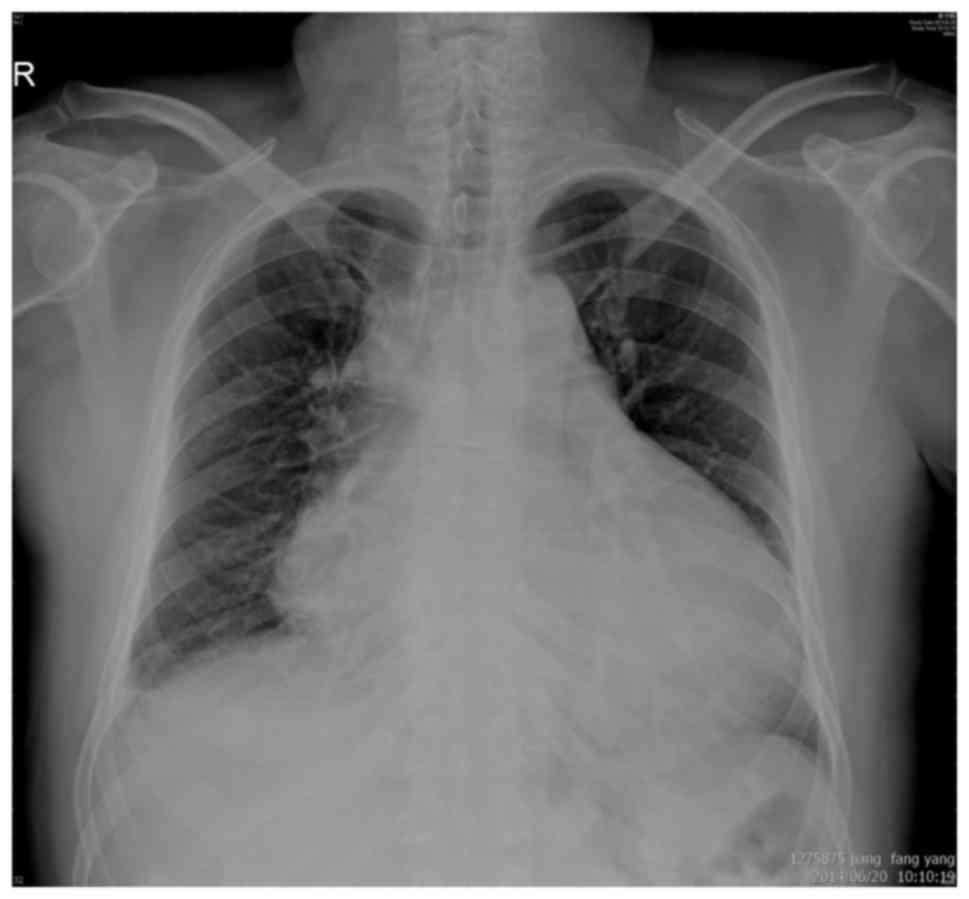
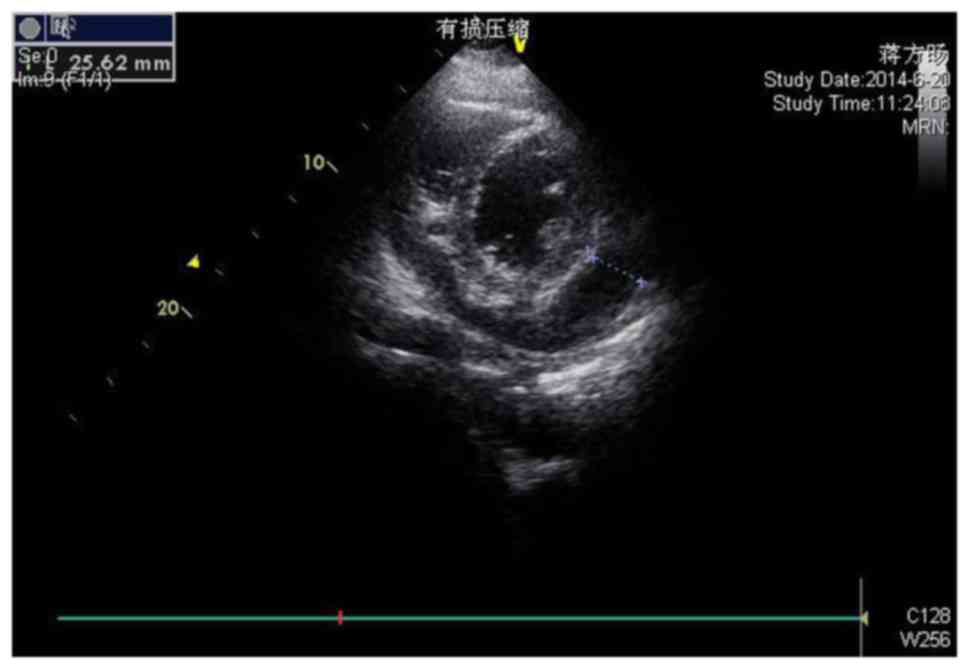
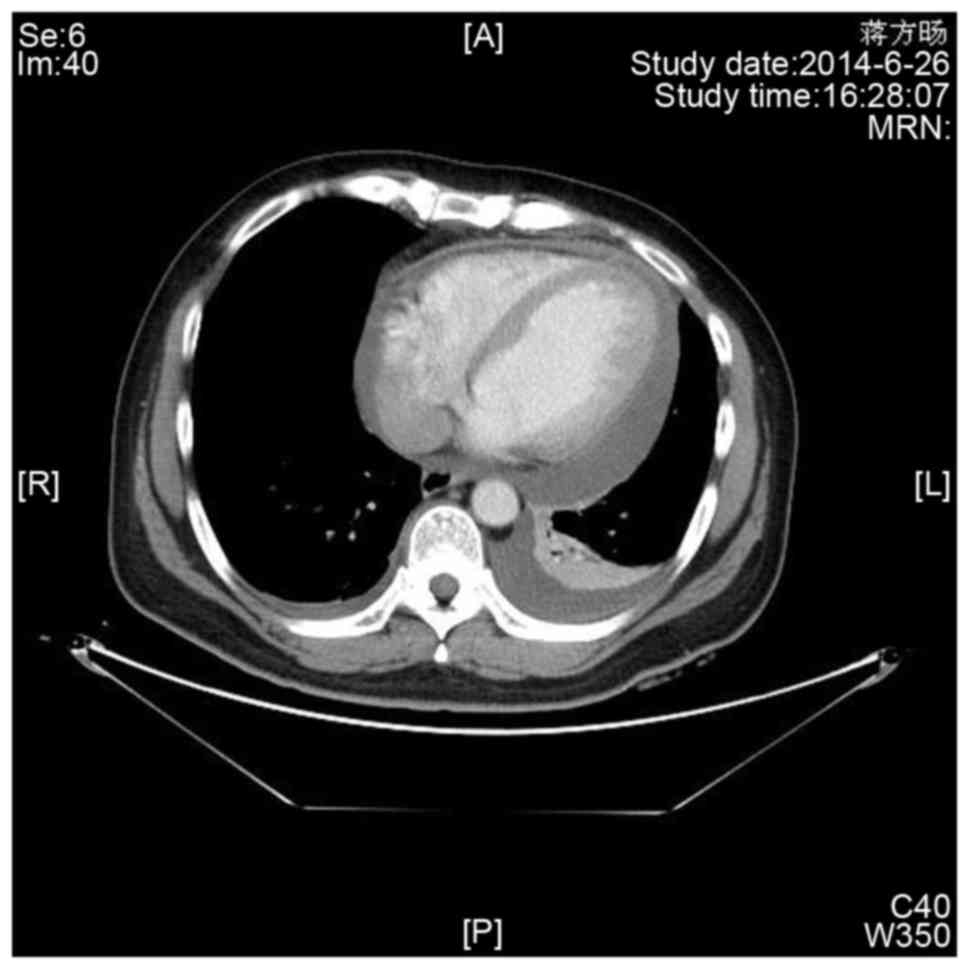
A chest X-ray revealed cardiomegaly and a medium left pleural effusion (Fig. 1). Echocardiography demonstrated sinus tachycardia. A subsequent transthoracic echocardiogram (Fig. 2) revealed a large circumferential pericardial effusion, with the area of the darkest liquid measuring 25 mm in the right ventricular anterior wall near to the apex, with evidence of right atrial and ventricular collapse and pericardial thickening. Enhanced chest computed tomography (Fig. 3) demonstrated evident pericardial effusion, and a small amount of pleural effusion on the left side. No evidence of malignant or metastatic lesions was found elsewhere in the body.

Figure 1.

Chest X-ray demonstrating cardiac dilation.

Figure 2.

A transthoracic 2-diamensional echocardiogram prior to pericardiocentesis. Note the circumferential pericardial effusion (>2 mm) on the long-axis parasternal views on this transthoracic echocardiogram.

Figure 3.

Contrast computed tomography scan. Evidence of low density in the circumferential pericardial effusion and mild left pleural effusion.

A routine blood test revealed a white blood cell count of 10.2×10⁹ cells/l with 66.6% segment, 109 g/l hemoglobin and a platelet count of 240×109 platelets/l. A laboratory assessment was performed to determine coagulation function. Results were as follows: Prothrombin time, 17.2 sec (reference, 10–13 sec); plasma fibrinogen, 13.0 mg/l (reference, <5); active partial thromboplastin time, 42.8 sec (reference, 23.3–39.3 sec); plasma D-dimer, 3.36 mg/l (reference, 0–1 mg/l); coagulation factor IX, normal; and factor VIII activity, 14%. Coagulation factor antibodies were negative in coagulation factor inhibitor screening and titer tests in a Bethesda assay performed as previously described (2). Factor VIII 1 and 2 inversion analysis reports were negative. The patient was diagnosed with coagulation factor VIII deficiency.

Although the patient's blood pressure was normal, the jugular venous distention and distant heart sounds exhibited by the patient were consistent with progression to tamponade, thus pericardiocentesis was performed. Bloody effusion, amounting to ~6.3 l, was drained from the membrane surrounding the heart over a period of 20 days. Following drainage, the patient's health gradually improved and the patient exhibited resolution of dyspnea and normalization of physical examination after 3 months.

The pericardial fluid contained 1,950,000 red blood cells and 3,960 leukocytes/µl. The leukocyte composition was 64% neutrophils, 29% lymphocytes, 5% monocytes and 2% eosinophils. Fluid analysis demonstrated that fluid glucose was 6.03 mmol/l, fluid lactate dehydrogenase was 353.4 IU/l and total protein was 57 g/dl. Acid fast staining of the fluid was performed to identify acid-fast bacilli for 20 min at room temperature and the result was negative, as were the bacterial cultures. Fluid cytology revealed only reactive mesothelial cells.

Due to concern about possible hemorrhagic fluid, coagulopathy was performed using a transfusion approach. On gross examination, the thickened pericardium measured between 0.1 and 0.3 cm; however, acid-fast stains and culture remained negative.

On the sixth day after admission, the daily complete blood count was notable for the presence of immunoblasts. Flow cytometry of peripheral blood for lymphocyte subsets was performed. A repeat echocardiogram did not demonstrate re-accumulation of pericardial fluid; the patient remained asymptomatic and was discharged for outpatient evaluation. Informed consent was obtained from the patient.

Discussion

Certificating the etiological spectrum of pericardial bloody effusions is essential to allow for the diagnosis and treatment of the disease. Common causes of pericardial bloody effusions are malignancy, uremia and tuberculosis. Patients suffering with this symptom are often transferred to a cardiologist, respiratory physician or oncologist (3). Pericardial bloody effusion associated with factor VIII deficiency is a rare complication and may often be overlooked. Patients with factor VIII deficiency may develop serious and fatal complications, such as intracerebral hemorrhage, muscle bleeding, hematuria, epistaxis and gastrointestinal bleeding (4). The present study reported a life-threatening case of pericardial bloody effusion following cardiac tamponade and arrhythmia in a 39-year-old male whose factor VIII activity measured 14%.

Coagulation factor VIII, also known as Hageman factor, participates in the intrinsic coagulation system and initiates the intrinsic coagulation pathway by activating coagulation factor XI (5). Acquired coagulation factor VIII deficiency is rare and has various causes, including autoimmune disease, malignancy, pregnancy, skin disorders, drugs and infection. Secondary to anti-factor VIII antibodies, which are usually diagnosed following the clinical presentation of cutaneous or soft tissue bleeding in adults, activated partial thromboplastin time (aPTT) showed prolongation as it did not correct with normal plasma addition incubation periods later (6). Finally, factor VIII deficiency was confirmed by the presence of very low levels of factor VIII in a Bethesda assay (2). Genetic testing has recently been made available to determine an individual's risk of developing or passing on hemophilia (7).

In the present case, the patient experienced hematoma of the scrotum 2 years prior to admission to Xiamen Chang Gung Hospital. The patient did not bleed during surgery until pericardiocentesis was performed, which revealed pericardial non-clotting red fluid with a red blood cell count of ≥100,000 cells/mm3. Furthermore, investigations were conducted to determine the presence of tumor markers or pathogens and a tuberculosis smear and culture was performed. All of these investigations yielded negative results. Finally, it was discovered that aPTT prolongation of 42.8 sec (reference, 23.3–39.3 sec) was unable to be corrected by plasma mixing. Coagulation factor antibodies were negative in coagulation factor inhibitor screening and titer tests. The patient was diagnosed with coagulation factor VIII deficiency.

For the patient, the most effective treatment focused on eradication of the inhibitor in order to remiss the production of continuous bloody pericardial effusions. Along with pericardiocentesis, the coagulopathy was treated by infusion of cryoagglutinin and steroids to eradicate the coagulation inhibitor. After 3 months, the pericardium did not produce cardiac bloody effusions according to the echocardiogram and the patient had been successfully treated.

In conclusion, coagulation factor XIII deficiency is may cause hemorrhagic cardiac effusions. Hemorrhagic cardiac effusions are rare and may result in high mortality. The present case report highlights the successful management of an AHA patient who exhibited life-threatening hemorrhagic pericardial effusions. Although the specific coagulation inhibitor was not identified in the patient, immunosuppressive therapy (steroids) was used according to treatment guidelines to suppress the inhibitor. In future, the inhibitor levels should be measured again to determine if the treatment was effective in the long-term in preventing recurrence of disease. Early recognition and intervention of coagulopathy and fatal cardiac effusions is essential for increasing the survival rate for this disorder.

Acknowledgements

We would like to thank the staff of the Intensive Care Unit, Xiamen Chang Gung Hospital, for their help in the management of this patient. We would like to thank the Hematology and Cardiology units at Xiamen Chang Gung Hospital for arranging investigations and assisting with patient management.

References

1 

Higasa S: Diagnosis and treatment of congenital and acquired hemophilia. Rinsho Ketsueki. 58:857–865. 2017.PubMed/NCBI

2 

Collins PW and Percy CL: Advances in the understanding of acquired haemophilia A: Implications for clinical practice. Br J Haematol. 148:183–194. 2010. View Article : Google Scholar : PubMed/NCBI

3 

Atar S, Chiu J, Forrester JS and Siegel RJ: Bloody pericardial effusions in patients with cardiac tamponade: Is the cause cancerous, tuberculosis, or iatrogenic in the 1990s? Chest. 116:1564–1569. 1999. View Article : Google Scholar : PubMed/NCBI

4 

Ma AD and Carrizosa D: Acquired factor VIII inhibitors: Pathophysiology and treatment. Hematology Am Soc Hematol Educ Program. 432–437. 2006.PubMed/NCBI

5 

Fay PJ: Factor VIII structure and function. Int J Hematol. 83:103–108. 2006. View Article : Google Scholar : PubMed/NCBI

6 

Huth-Kühne A, Baudo F, Collins P, Ingerslev J, Kessler CM, Lévesque H, Castellano ME, Shima M and St-Louis J: International recommendations on the diagnosis and treatment of patients with acquired hemophilia A. Haematologica. 94:566–575. 2009. View Article : Google Scholar : PubMed/NCBI

7 

Matino D, Makris M, Dwan K, D'Amico R and Iorio A: Recombinant factor VIIa concentrate versus plasma-derived concentrates for treating acute bleeding episodes in people with haemophilia and inhibitors. Cochrane Database Syst Rev: CD004449. 2015. View Article : Google Scholar

Related Articles

  • Abstract
  • View
  • Download
  • Twitter
Copy and paste a formatted citation
Spandidos Publications style
Liu YP, Lin XH, Wang XK, Yang SZ and Fan CQ: Hemorrhagic pleural effusion related to acquired coagulation factor VIII deficiency: A case report. Exp Ther Med 14: 6084-6086, 2017.
APA
Liu, Y., Lin, X., Wang, X., Yang, S., & Fan, C. (2017). Hemorrhagic pleural effusion related to acquired coagulation factor VIII deficiency: A case report. Experimental and Therapeutic Medicine, 14, 6084-6086. https://doi.org/10.3892/etm.2017.5339
MLA
Liu, Y., Lin, X., Wang, X., Yang, S., Fan, C."Hemorrhagic pleural effusion related to acquired coagulation factor VIII deficiency: A case report". Experimental and Therapeutic Medicine 14.6 (2017): 6084-6086.
Chicago
Liu, Y., Lin, X., Wang, X., Yang, S., Fan, C."Hemorrhagic pleural effusion related to acquired coagulation factor VIII deficiency: A case report". Experimental and Therapeutic Medicine 14, no. 6 (2017): 6084-6086. https://doi.org/10.3892/etm.2017.5339
Copy and paste a formatted citation
x
Spandidos Publications style
Liu YP, Lin XH, Wang XK, Yang SZ and Fan CQ: Hemorrhagic pleural effusion related to acquired coagulation factor VIII deficiency: A case report. Exp Ther Med 14: 6084-6086, 2017.
APA
Liu, Y., Lin, X., Wang, X., Yang, S., & Fan, C. (2017). Hemorrhagic pleural effusion related to acquired coagulation factor VIII deficiency: A case report. Experimental and Therapeutic Medicine, 14, 6084-6086. https://doi.org/10.3892/etm.2017.5339
MLA
Liu, Y., Lin, X., Wang, X., Yang, S., Fan, C."Hemorrhagic pleural effusion related to acquired coagulation factor VIII deficiency: A case report". Experimental and Therapeutic Medicine 14.6 (2017): 6084-6086.
Chicago
Liu, Y., Lin, X., Wang, X., Yang, S., Fan, C."Hemorrhagic pleural effusion related to acquired coagulation factor VIII deficiency: A case report". Experimental and Therapeutic Medicine 14, no. 6 (2017): 6084-6086. https://doi.org/10.3892/etm.2017.5339
Follow us
  • Twitter
  • LinkedIn
  • Facebook
About
  • Spandidos Publications
  • Careers
  • Cookie Policy
  • Privacy Policy
How can we help?
  • Help
  • Live Chat
  • Contact
  • Email to our Support Team