Spandidos Publications Logo
  • About
    • About Spandidos
    • Aims and Scopes
    • Abstracting and Indexing
    • Editorial Policies
    • Reprints and Permissions
    • Job Opportunities
    • Terms and Conditions
    • Contact
  • Journals
    • All Journals
    • Oncology Letters
      • Oncology Letters
      • Information for Authors
      • Editorial Policies
      • Editorial Board
      • Aims and Scope
      • Abstracting and Indexing
      • Bibliographic Information
      • Archive
    • International Journal of Oncology
      • International Journal of Oncology
      • Information for Authors
      • Editorial Policies
      • Editorial Board
      • Aims and Scope
      • Abstracting and Indexing
      • Bibliographic Information
      • Archive
    • Molecular and Clinical Oncology
      • Molecular and Clinical Oncology
      • Information for Authors
      • Editorial Policies
      • Editorial Board
      • Aims and Scope
      • Abstracting and Indexing
      • Bibliographic Information
      • Archive
    • Experimental and Therapeutic Medicine
      • Experimental and Therapeutic Medicine
      • Information for Authors
      • Editorial Policies
      • Editorial Board
      • Aims and Scope
      • Abstracting and Indexing
      • Bibliographic Information
      • Archive
    • International Journal of Molecular Medicine
      • International Journal of Molecular Medicine
      • Information for Authors
      • Editorial Policies
      • Editorial Board
      • Aims and Scope
      • Abstracting and Indexing
      • Bibliographic Information
      • Archive
    • Biomedical Reports
      • Biomedical Reports
      • Information for Authors
      • Editorial Policies
      • Editorial Board
      • Aims and Scope
      • Abstracting and Indexing
      • Bibliographic Information
      • Archive
    • Oncology Reports
      • Oncology Reports
      • Information for Authors
      • Editorial Policies
      • Editorial Board
      • Aims and Scope
      • Abstracting and Indexing
      • Bibliographic Information
      • Archive
    • Molecular Medicine Reports
      • Molecular Medicine Reports
      • Information for Authors
      • Editorial Policies
      • Editorial Board
      • Aims and Scope
      • Abstracting and Indexing
      • Bibliographic Information
      • Archive
    • World Academy of Sciences Journal
      • World Academy of Sciences Journal
      • Information for Authors
      • Editorial Policies
      • Editorial Board
      • Aims and Scope
      • Abstracting and Indexing
      • Bibliographic Information
      • Archive
    • International Journal of Functional Nutrition
      • International Journal of Functional Nutrition
      • Information for Authors
      • Editorial Policies
      • Editorial Board
      • Aims and Scope
      • Abstracting and Indexing
      • Bibliographic Information
      • Archive
    • International Journal of Epigenetics
      • International Journal of Epigenetics
      • Information for Authors
      • Editorial Policies
      • Editorial Board
      • Aims and Scope
      • Abstracting and Indexing
      • Bibliographic Information
      • Archive
    • Medicine International
      • Medicine International
      • Information for Authors
      • Editorial Policies
      • Editorial Board
      • Aims and Scope
      • Abstracting and Indexing
      • Bibliographic Information
      • Archive
  • Articles
  • Information
    • Information for Authors
    • Information for Reviewers
    • Information for Librarians
    • Information for Advertisers
    • Conferences
  • Language Editing
Spandidos Publications Logo
  • About
    • About Spandidos
    • Aims and Scopes
    • Abstracting and Indexing
    • Editorial Policies
    • Reprints and Permissions
    • Job Opportunities
    • Terms and Conditions
    • Contact
  • Journals
    • All Journals
    • Biomedical Reports
      • Information for Authors
      • Editorial Policies
      • Editorial Board
      • Aims and Scope
      • Abstracting and Indexing
      • Bibliographic Information
      • Archive
    • Experimental and Therapeutic Medicine
      • Information for Authors
      • Editorial Policies
      • Editorial Board
      • Aims and Scope
      • Abstracting and Indexing
      • Bibliographic Information
      • Archive
    • International Journal of Epigenetics
      • Information for Authors
      • Editorial Policies
      • Editorial Board
      • Aims and Scope
      • Abstracting and Indexing
      • Bibliographic Information
      • Archive
    • International Journal of Functional Nutrition
      • Information for Authors
      • Editorial Policies
      • Editorial Board
      • Aims and Scope
      • Abstracting and Indexing
      • Bibliographic Information
      • Archive
    • International Journal of Molecular Medicine
      • Information for Authors
      • Editorial Policies
      • Editorial Board
      • Aims and Scope
      • Abstracting and Indexing
      • Bibliographic Information
      • Archive
    • International Journal of Oncology
      • Information for Authors
      • Editorial Policies
      • Editorial Board
      • Aims and Scope
      • Abstracting and Indexing
      • Bibliographic Information
      • Archive
    • Medicine International
      • Information for Authors
      • Editorial Policies
      • Editorial Board
      • Aims and Scope
      • Abstracting and Indexing
      • Bibliographic Information
      • Archive
    • Molecular and Clinical Oncology
      • Information for Authors
      • Editorial Policies
      • Editorial Board
      • Aims and Scope
      • Abstracting and Indexing
      • Bibliographic Information
      • Archive
    • Molecular Medicine Reports
      • Information for Authors
      • Editorial Policies
      • Editorial Board
      • Aims and Scope
      • Abstracting and Indexing
      • Bibliographic Information
      • Archive
    • Oncology Letters
      • Information for Authors
      • Editorial Policies
      • Editorial Board
      • Aims and Scope
      • Abstracting and Indexing
      • Bibliographic Information
      • Archive
    • Oncology Reports
      • Information for Authors
      • Editorial Policies
      • Editorial Board
      • Aims and Scope
      • Abstracting and Indexing
      • Bibliographic Information
      • Archive
    • World Academy of Sciences Journal
      • Information for Authors
      • Editorial Policies
      • Editorial Board
      • Aims and Scope
      • Abstracting and Indexing
      • Bibliographic Information
      • Archive
  • Articles
  • Information
    • For Authors
    • For Reviewers
    • For Librarians
    • For Advertisers
    • Conferences
  • Language Editing
Login Register Submit
  • This site uses cookies
  • You can change your cookie settings at any time by following the instructions in our Cookie Policy. To find out more, you may read our Privacy Policy.

    I agree
Search articles by DOI, keyword, author or affiliation
Search
Advanced Search
presentation
Experimental and Therapeutic Medicine
Join Editorial Board Propose a Special Issue
Print ISSN: 1792-0981 Online ISSN: 1792-1015
Journal Cover
May-2018 Volume 15 Issue 5

Full Size Image

Sign up for eToc alerts
Recommend to Library

Journals

International Journal of Molecular Medicine

International Journal of Molecular Medicine

International Journal of Molecular Medicine is an international journal devoted to molecular mechanisms of human disease.

International Journal of Oncology

International Journal of Oncology

International Journal of Oncology is an international journal devoted to oncology research and cancer treatment.

Molecular Medicine Reports

Molecular Medicine Reports

Covers molecular medicine topics such as pharmacology, pathology, genetics, neuroscience, infectious diseases, molecular cardiology, and molecular surgery.

Oncology Reports

Oncology Reports

Oncology Reports is an international journal devoted to fundamental and applied research in Oncology.

Experimental and Therapeutic Medicine

Experimental and Therapeutic Medicine

Experimental and Therapeutic Medicine is an international journal devoted to laboratory and clinical medicine.

Oncology Letters

Oncology Letters

Oncology Letters is an international journal devoted to Experimental and Clinical Oncology.

Biomedical Reports

Biomedical Reports

Explores a wide range of biological and medical fields, including pharmacology, genetics, microbiology, neuroscience, and molecular cardiology.

Molecular and Clinical Oncology

Molecular and Clinical Oncology

International journal addressing all aspects of oncology research, from tumorigenesis and oncogenes to chemotherapy and metastasis.

World Academy of Sciences Journal

World Academy of Sciences Journal

Multidisciplinary open-access journal spanning biochemistry, genetics, neuroscience, environmental health, and synthetic biology.

International Journal of Functional Nutrition

International Journal of Functional Nutrition

Open-access journal combining biochemistry, pharmacology, immunology, and genetics to advance health through functional nutrition.

International Journal of Epigenetics

International Journal of Epigenetics

Publishes open-access research on using epigenetics to advance understanding and treatment of human disease.

Medicine International

Medicine International

An International Open Access Journal Devoted to General Medicine.

Journal Cover
May-2018 Volume 15 Issue 5

Full Size Image

Sign up for eToc alerts
Recommend to Library

  • Article
  • Citations
    • Cite This Article
    • Download Citation
    • Create Citation Alert
    • Remove Citation Alert
    • Cited By
  • Similar Articles
    • Related Articles (in Spandidos Publications)
    • Similar Articles (Google Scholar)
    • Similar Articles (PubMed)
  • Download PDF
  • Download XML
  • View XML
Article Open Access

(-)-Epigallocatechin-3-gallate protects PC12 cells against corticosterone-induced neurotoxicity via the hedgehog signaling pathway

  • Authors:
    • Sha Feng
    • Jue Liu
    • Biao Cheng
    • Aiping Deng
    • Hong Zhang
  • View Affiliations / Copyright

    Affiliations: Department of Pharmacy, Renmin Hospital of Wuhan University, Wuhan, Hubei 430060, P.R. China, Department of Pharmacy, The Central Hospital of Wuhan, Tongji Medical College, Huazhong University of Science and Technology, Wuhan, Hubei 430014, P.R. China
    Copyright: © Feng et al. This is an open access article distributed under the terms of Creative Commons Attribution License.
  • Pages: 4284-4290
    |
    Published online on: March 8, 2018
       https://doi.org/10.3892/etm.2018.5936
  • Expand metrics +
Metrics: Total Views: 0 (Spandidos Publications: | PMC Statistics: )
Metrics: Total PDF Downloads: 0 (Spandidos Publications: | PMC Statistics: )
Cited By (CrossRef): 0 citations Loading Articles...

This article is mentioned in:


Abstract

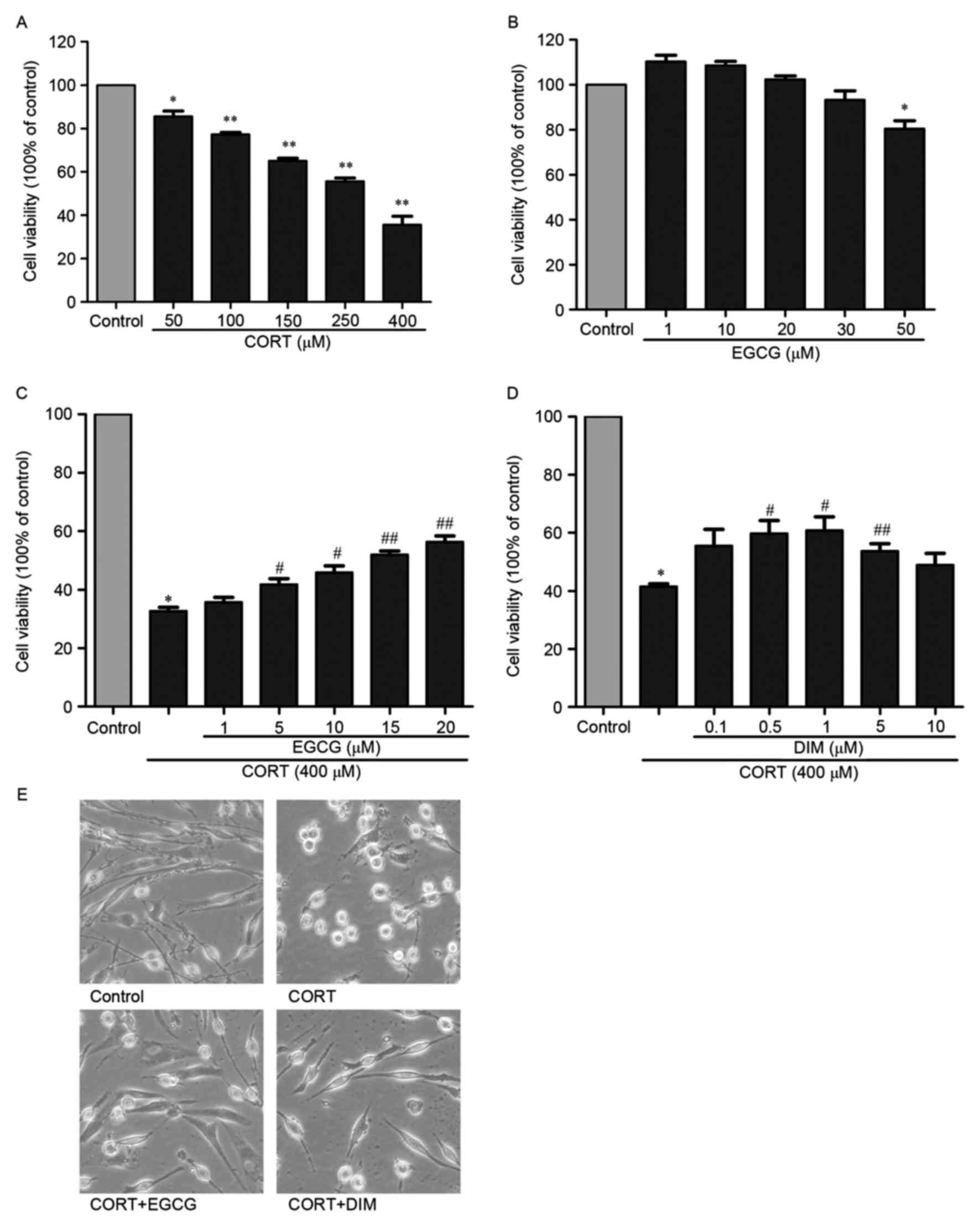
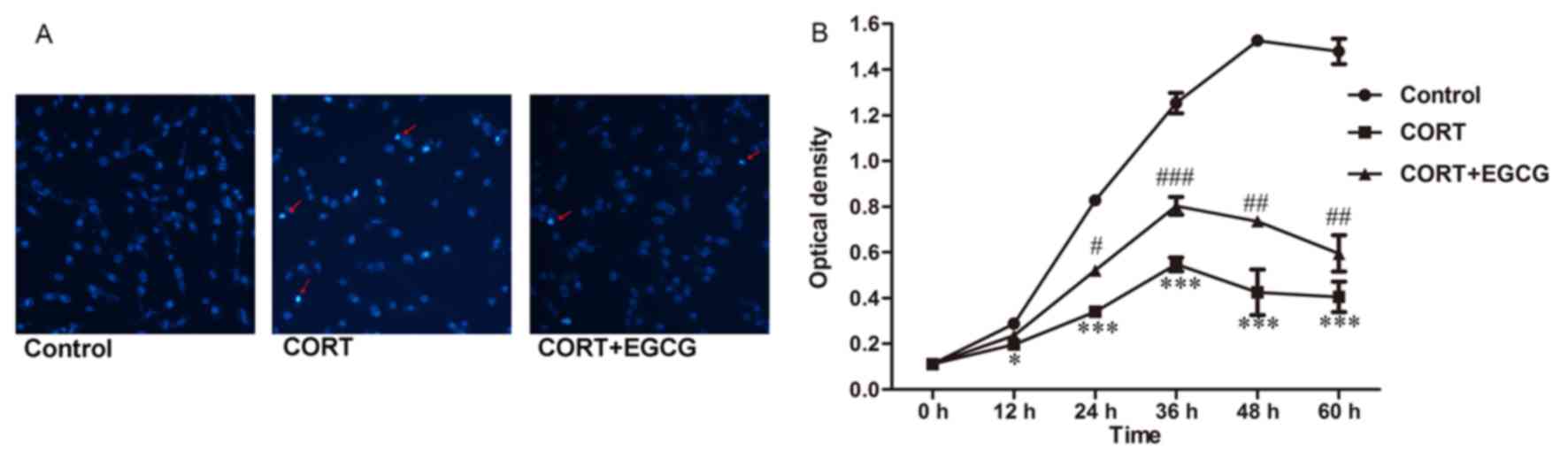
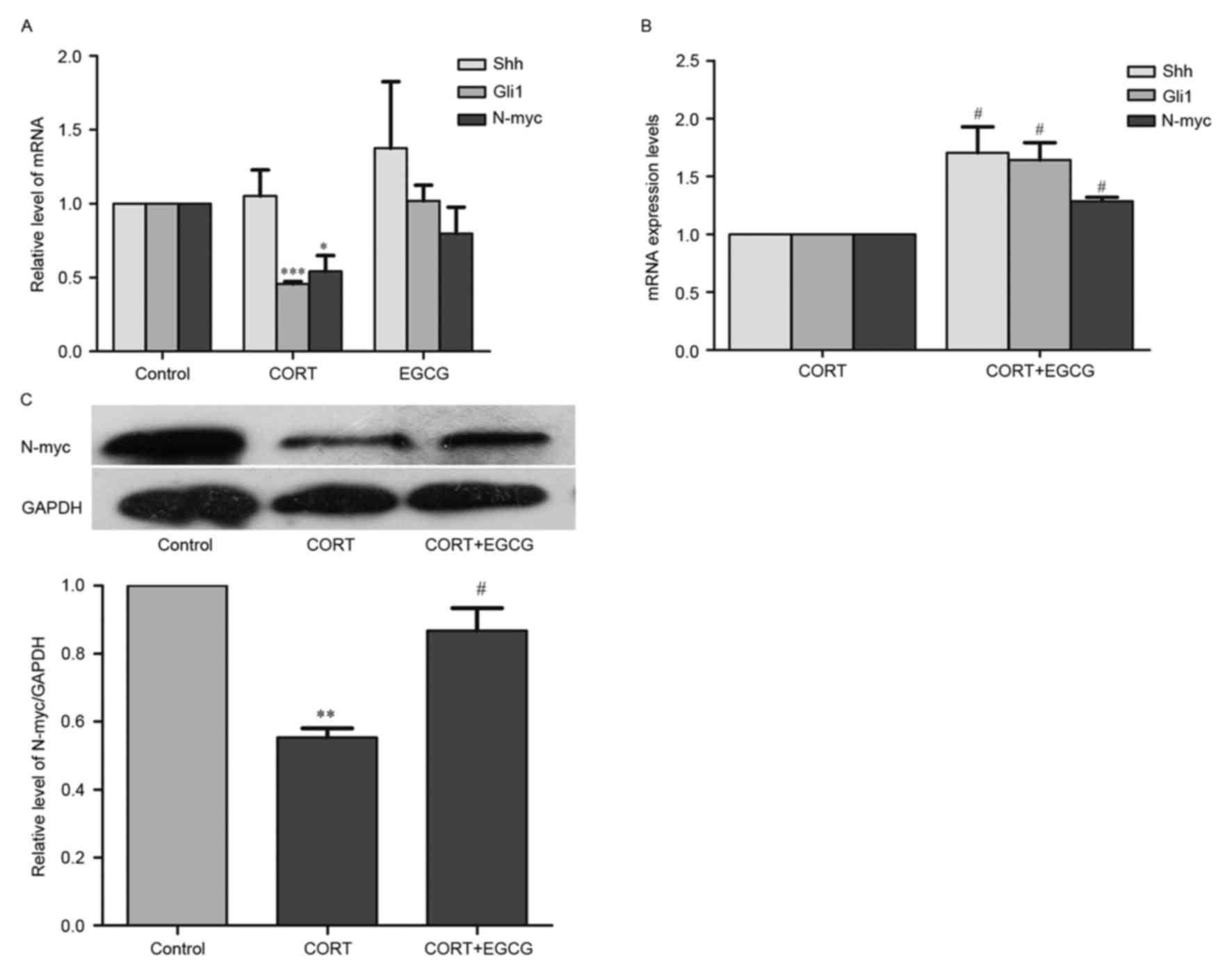
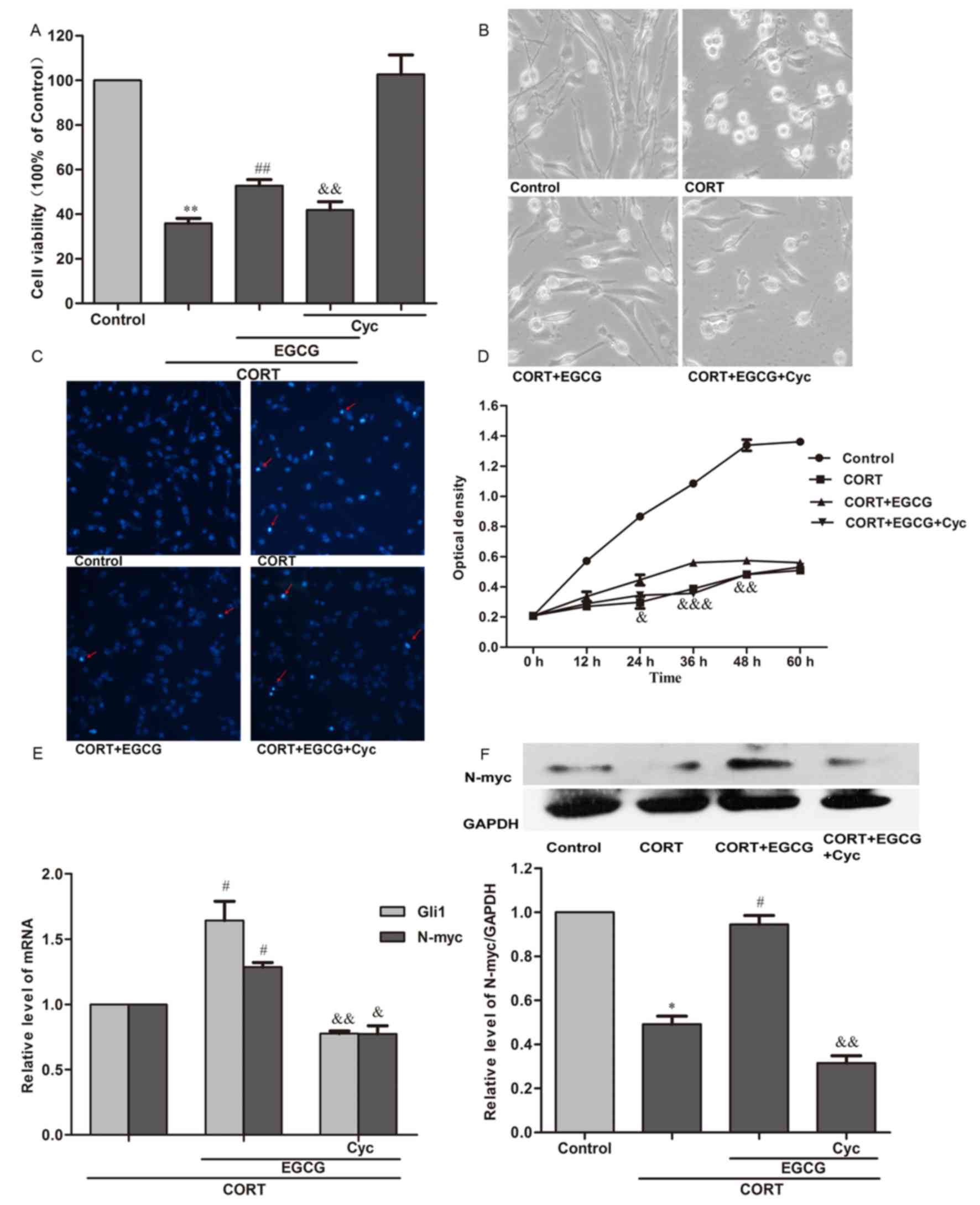
It has been acknowledged that environmental stress is a risk factor for developing mental disorders. Chronic stress may contribute to the hyperactivation of the hypothalamic‑pituitary‑adrenal (HPA) axis and a sustained rise in the levels of glucocorticoids (GCs). A high concentration of corticosterone (CORT) damages neuronal PC12 cells. It has been reported that (‑)‑Epigallocatechin‑3‑gallate (EGCG), a major component of green tea, exhibits neuroprotective activity. However, the protective effect of EGCG on neuronal cells injured by CORT remains to be elucidated. The present study aimed to identify the effects of EGCG on CORT‑injured neuronal PC12 cells and its associated mechanisms of action. CORT‑injured PC12 cells were pretreated with EGCG with or without cyclopamine. Cell viability was assessed using an MTT assay, changes in cell morphology were observed using phase‑contrast microscopy, cellular apoptosis was assessed by Hoechst 33342 staining, cell proliferation was measured using a cell counting kit‑8 assay, mRNA levels were measured by reverse transcription‑quantitative polymerase chain reaction and protein expression was assessed using western blot analysis. The current study demonstrated that exposure to high concentrations of CORT induced cytotoxicity and downregulated the Sonic hedgehog pathway (Shh) in PC12 cells. These effects were attenuated by EGCG. However, the EGCG‑mediated neuroprotective effects, as well as upregulation of the Shh pathway were all attenuated by the Shh signaling inhibitor cyclopamine. These results indicate that EGCG protects PC12 cells from CORT‑induced neurotoxicity via activation of the Shh signaling pathway.
View Figures

Figure 1

Figure 2

Figure 3

Figure 4

View References

1 

Spielmans GI, Berman MI, Linardatos E, Rosenlicht NZ, Perry A and Tsai AC: Adjunctive atypical antipsychotic treatment for major depressive disorder: A meta-analysis of depression, quality of life, and safety outcomes. PLoS Med. 10:e10014032013. View Article : Google Scholar : PubMed/NCBI

2 

Watson S, Gallagher P, Del-Estal D, Hearn A, Ferrier IN and Young AH: Hypothalamic-pituitary-adrenal axis function in patients with chronic depression. Psychol Med. 32:1021–1028. 2002. View Article : Google Scholar : PubMed/NCBI

3 

Zhao J, Peng L, Zheng W, Wang R, Zhang L, Yang J and Chen H: Chemically bonding of amantadine with gardenamide a enhances the neuroprotective effects against corticosterone-induced insults in PC12 cells. Int J Mol Sci. 16:22795–22810. 2015. View Article : Google Scholar : PubMed/NCBI

4 

Li YF, Liu YQ, Huang WC and Luo ZP: Cytoprotective effect is one of common action pathways for antidepressants. Acta Pharmacol Sin. 24:996–1000. 2003.PubMed/NCBI

5 

Bastianetto S, Zheng WH and Quirion R: The Ginkgo biloba extract (EGb 761) protects and rescues hippocampal cells against nitric oxide-induced toxicity: Involvement of its flavonoid constituents and protein kinase C. J Neurochem. 74:2268–2277. 2000. View Article : Google Scholar : PubMed/NCBI

6 

Dong Z, Ma W, Huang C and Yang CS: Inhibition of tumor promoter-induced activator protein 1 activation and cell transformation by tea polyphenols, (-)-epigallocatechin gallate, and theaflavins. Cancer Res. 57:4414–4419. 1997.PubMed/NCBI

7 

Song DU, Jung YD, Chay KO, Chung MA, Lee KH, Yang SY, Shin BA and Ahn BW: Effect of drinking green tea on age-associated accumulation of Maillard-type fluorescence and carbonyl groups in rat aortic and skin collagen. Arch Biochem Biophys. 397:424–429. 2002. View Article : Google Scholar : PubMed/NCBI

8 

Liu Y, Jia G, Gou L, Sun L, Fu X, Lan N, Li S and Yin X: Antidepressant-like effects of tea polyphenols on mouse model of chronic unpredictable mild stress. Pharmacol Biochem Behav. 104:27–32. 2013. View Article : Google Scholar : PubMed/NCBI

9 

Zhu WL, Shi HS, Wei YM, Wang SJ, Sun CY, Ding ZB and Lu L: Green tea polyphenols produce antidepressant-like effects in adult mice. Pharmacol Res. 65:74–80. 2012. View Article : Google Scholar : PubMed/NCBI

10 

Lee B, Sur B, Kwon S, Yeom M, Shim I, Lee H and Hahm DH: Chronic administration of catechin decreases depression and anxiety-like behaviors in a rat model using chronic corticosterone injections. Biomol Ther (Seoul). 21:313–322. 2013. View Article : Google Scholar : PubMed/NCBI

11 

Cai J, Jing D, Shi M, Liu Y, Lin T, Xie Z, Zhu Y, Zhao H, Shi X, Du F and Zhao G: Epigallocatechin gallate (EGCG) attenuates infrasound-induced neuronal impairment by inhibiting microglia-mediated inflammation. J Nutr Biochem. 25:716–725. 2014. View Article : Google Scholar : PubMed/NCBI

12 

Xie J, Jiang L, Zhang T, Jin Y, Yang D and Chen F: Neuroprotective effects of Epigallocatechin-3-gallate (EGCG) in optic nerve crush model in rats. Neurosci Lett. 479:26–30. 2010. View Article : Google Scholar : PubMed/NCBI

13 

Gu HF, Nie YX, Tong QZ, Tang YL, Zeng Y, Jing KQ, Zheng XL and Liao DF: Epigallocatechin-3-gallate attenuates impairment of learning and memory in chronic unpredictable mild stress-treated rats by restoring hippocampal autophagic flux. PLoS One. 9:e1126832014. View Article : Google Scholar : PubMed/NCBI

14 

Itoh T, Imano M, Nishida S, Tsubaki M, Mizuguchi N, Hashimoto S, Ito A and Satou T: (-)-Epigallocatechin-3-gallate increases the number of neural stem cells around the damaged area after rat traumatic brain injury. J Neural Transm (Vienna). 119:877–890. 2012. View Article : Google Scholar : PubMed/NCBI

15 

Lee MY, Choi EJ, Lee MK and Lee JJ: Epigallocatechin gallate attenuates L-DOPA-induced apoptosis in rat PC12 cells. Nutr Res Pract. 7:249–255. 2013. View Article : Google Scholar : PubMed/NCBI

16 

Li ZY, Jiang YM, Liu YM, Guo Z, Shen SN, Liu XM and Pan RL: Saikosaponin D acts against corticosterone-induced apoptosis via regulation of mitochondrial GR translocation and a GR-dependent pathway. Prog Neuropsychopharmacol Biol Psychiatry. 53:80–89. 2014. View Article : Google Scholar : PubMed/NCBI

17 

Huang Z, Mao QQ, Zhong XM, Feng CR, Pan AJ and Li ZY: Herbal formula SYJN protect PC12 cells from neurotoxicity induced by corticosterone. J Ethnopharmacol. 125:456–460. 2009. View Article : Google Scholar : PubMed/NCBI

18 

Zhou H, Li X and Gao M: Curcumin protects PC12 cells from corticosterone-induced cytotoxicity: Possible involvement of the ERK1/2 pathway. Basic Clin Pharmacol Toxicol. 104:236–240. 2009. View Article : Google Scholar : PubMed/NCBI

19 

Cappiello A, McDougle CJ, Delgado PL, Malison RT, Jatlow P, Charney DS, Heninger GR and Price LH: Lithium and desipramine versus desipramine alone in the treatment of severe major depression: A preliminary study. Int Clin Psychopharmacol. 13:191–198. 1998. View Article : Google Scholar : PubMed/NCBI

20 

Livak KJ and Schmittgen TD: Analysis of relative gene expression data using real-time quantitative PCR and the 2(-Delta Delta C(T)) method. Methods. 25:402–408. 2001. View Article : Google Scholar : PubMed/NCBI

21 

Crowther CA, Doyle LW, Haslam RR, Hiller JE, Harding JE and Robinson JS: ACTORDS Study Group: Outcomes at 2 years of age after repeat doses of antenatal corticosteroids. N Engl J Med. 357:1179–1189. 2007. View Article : Google Scholar : PubMed/NCBI

22 

Wang H, Zhou X, Huang J, Mu N, Guo Z, Wen Q, Wang R, Chen S, Feng ZP and Zheng W: The role of Akt/FoxO3a in the protective effect of venlafaxine against corticosterone-induced cell death in PC12 cells. Psychopharmacology (Berl). 228:129–141. 2013. View Article : Google Scholar : PubMed/NCBI

23 

Mandel S, Weinreb O, Amit T and Youdim MB: Cell signaling pathways in the neuroprotective actions of the green tea polyphenol (-)-epigallocatechin-3-gallate: Implications for neurodegenerative diseases. J Neurochem. 88:1555–1569. 2004. View Article : Google Scholar : PubMed/NCBI

24 

Weinreb O, Amit T, Mandel S and Youdim MB: Neuroprotective molecular mechanisms of (-)-epigallocatechin-3-gallate: A reflective outcome of its antioxidant, iron chelating and neuritogenic properties. Genes Nutr. 4:283–296. 2009. View Article : Google Scholar : PubMed/NCBI

25 

Ye Q, Ye L, Xu X, Huang B, Zhang X, Zhu Y and Chen X: Epigallocatechin-3-gallate suppresses 1-methyl-4-phenyl-pyridine-induced oxidative stress in PC12 cells via the SIRT1/PGC-1α signaling pathway. BMC Complement Altern Med. 12:822012. View Article : Google Scholar : PubMed/NCBI

26 

Gundimeda U, McNeill TH, Elhiani AA, Schiffman JE, Hinton DR and Gopalakrishna R: Green tea polyphenols precondition against cell death induced by oxygen-glucose deprivation via stimulation of laminin receptor, generation of reactive oxygen species, and activation of protein kinase Cε. J Biol Chem. 287:34694–34708. 2012. View Article : Google Scholar : PubMed/NCBI

27 

Ortiz-López L, Márquez-Valadez B, Gómez-Sánchez A, Silva-Lucero MD, Torres-Pérez M, Téllez-Ballesteros RI, Ichwan M, Meraz-Ríos MA, Kempermann G and Ramírez-Rodríguez GB: Green tea compound epigallo-catechin-3-gallate (EGCG) increases neuronal survival in adult hippocampal neurogenesis in vivo and in vitro. Neuroscience. 322:208–220. 2016. View Article : Google Scholar : PubMed/NCBI

28 

Anacker C, Cattaneo A, Luoni A, Musaelyan K, Zunszain PA, Milanesi E, Rybka J, Berry A, Cirulli F, Thuret S, et al: Glucocorticoid-related molecular signaling pathways regulating hippocampal neurogenesis. Neuropsychopharmacology. 38:872–883. 2013. View Article : Google Scholar : PubMed/NCBI

29 

Heine VM, Griveau A, Chapin C, Ballard PL, Chen JK and Rowitch DH: A small-molecule smoothened agonist prevents glucocorticoid-induced neonatal cerebellar injury. Sci Transl Med. 3:105ra1042011. View Article : Google Scholar : PubMed/NCBI

30 

Heine VM and Rowitch DH: Hedgehog signaling has a protective effect in glucocorticoid-induced mouse neonatal brain injury through an 11betaHSD2-dependent mechanism. J Clin Invest. 119:267–277. 2009.PubMed/NCBI

31 

Gulino A, Di Marcotullio L, Ferretti E, De Smaele E and Screpanti I: Hedgehog signaling pathway in neural development and disease. Psychoneuroendocrinology. 32 Suppl 1:S52–S56. 2007. View Article : Google Scholar : PubMed/NCBI

32 

Varjosalo M and Taipale J: Hedgehog: Functions and mechanisms. Genes Dev. 22:2454–2472. 2008. View Article : Google Scholar : PubMed/NCBI

33 

Heine VM, Priller M, Ling J, Rowitch DH and Schüller U: Dexamethasone destabilizes Nmyc to inhibit the growth of hedgehog-associated medulloblastoma. Cancer Res. 70:5220–5225. 2010. View Article : Google Scholar : PubMed/NCBI

34 

Bambakidis NC, Petrullis M, Kui X, Rothstein B, Karampelas I, Kuang Y, Selman WR, LaManna JC and Miller RH: Improvement of neurological recovery and stimulation of neural progenitor cell proliferation by intrathecal administration of Sonic hedgehog. J Neurosurg. 116:1114–1120. 2012. View Article : Google Scholar : PubMed/NCBI

35 

Wang Y, Li M, Xu X, Song M, Tao H and Bai Y: Green tea epigallocatechin-3-gallate (EGCG) promotes neural progenitor cell proliferation and sonic hedgehog pathway activation during adult hippocampal neurogenesis. Mol Nutr Food Res. 56:1292–1303. 2012. View Article : Google Scholar : PubMed/NCBI

Related Articles

  • Abstract
  • View
  • Download
  • Twitter
Copy and paste a formatted citation
Spandidos Publications style
Feng S, Liu J, Cheng B, Deng A and Zhang H: (-)-Epigallocatechin-3-gallate protects PC12 cells against corticosterone-induced neurotoxicity via the hedgehog signaling pathway. Exp Ther Med 15: 4284-4290, 2018.
APA
Feng, S., Liu, J., Cheng, B., Deng, A., & Zhang, H. (2018). (-)-Epigallocatechin-3-gallate protects PC12 cells against corticosterone-induced neurotoxicity via the hedgehog signaling pathway. Experimental and Therapeutic Medicine, 15, 4284-4290. https://doi.org/10.3892/etm.2018.5936
MLA
Feng, S., Liu, J., Cheng, B., Deng, A., Zhang, H."(-)-Epigallocatechin-3-gallate protects PC12 cells against corticosterone-induced neurotoxicity via the hedgehog signaling pathway". Experimental and Therapeutic Medicine 15.5 (2018): 4284-4290.
Chicago
Feng, S., Liu, J., Cheng, B., Deng, A., Zhang, H."(-)-Epigallocatechin-3-gallate protects PC12 cells against corticosterone-induced neurotoxicity via the hedgehog signaling pathway". Experimental and Therapeutic Medicine 15, no. 5 (2018): 4284-4290. https://doi.org/10.3892/etm.2018.5936
Copy and paste a formatted citation
x
Spandidos Publications style
Feng S, Liu J, Cheng B, Deng A and Zhang H: (-)-Epigallocatechin-3-gallate protects PC12 cells against corticosterone-induced neurotoxicity via the hedgehog signaling pathway. Exp Ther Med 15: 4284-4290, 2018.
APA
Feng, S., Liu, J., Cheng, B., Deng, A., & Zhang, H. (2018). (-)-Epigallocatechin-3-gallate protects PC12 cells against corticosterone-induced neurotoxicity via the hedgehog signaling pathway. Experimental and Therapeutic Medicine, 15, 4284-4290. https://doi.org/10.3892/etm.2018.5936
MLA
Feng, S., Liu, J., Cheng, B., Deng, A., Zhang, H."(-)-Epigallocatechin-3-gallate protects PC12 cells against corticosterone-induced neurotoxicity via the hedgehog signaling pathway". Experimental and Therapeutic Medicine 15.5 (2018): 4284-4290.
Chicago
Feng, S., Liu, J., Cheng, B., Deng, A., Zhang, H."(-)-Epigallocatechin-3-gallate protects PC12 cells against corticosterone-induced neurotoxicity via the hedgehog signaling pathway". Experimental and Therapeutic Medicine 15, no. 5 (2018): 4284-4290. https://doi.org/10.3892/etm.2018.5936
Follow us
  • Twitter
  • LinkedIn
  • Facebook
About
  • Spandidos Publications
  • Careers
  • Cookie Policy
  • Privacy Policy
How can we help?
  • Help
  • Live Chat
  • Contact
  • Email to our Support Team