Introduction
Acute lung injury (ALI) is a life threatening
condition. The major clinical manifestations of ALI include
inflammatory cell infiltration, arterial hypoxaemia and pulmonary
oedema (1). The prognosis of
patients with ALI is poor and the mortality rate of such patients
remains high (35–45%) (2).
ALI is caused by direct lung damage or by indirect
injury, including via bacterial infection of the blood. Sepsis,
which is a severe infection of the bloodstream, is the most common
cause of ALI (3). ALI may also be
caused by collagen vascular diseases, drugs, ingestants, inhalants,
shock, acute eosinophilic pneumonia, immunologically mediated
pulmonary hemorrhage and vasculitis and radiation pneumonitis
(4). However, it remains unclear
whether all patients with sepsis develop ALI and studies are being
conducted to determine whether this is the case. Exaggerated
responses to inflammatory stimuli and endothelial dysfunction occur
in patients with ALI and in those with sepsis. In addition,
platelets serve an important role in sepsis-induced lung injury by
increasing the expression of Mac-1 (5). However, the mechanisms underlying the
development of sepsis-induced ALI remain largely unknown. Several
treatment options for ALI have been developed, including low tidal
volume ventilation, fluid-conservative therapy and
anti-inflammatory drugs (6), however
at present there is no single recommended therapy available. Thus,
it is also important to identify the underlying cause of
sepsis-induced ALI and the most effective method of treating
it.
Although there have been a few studies investigating
the treatment of ALI (6,7), much remains unknown. Therefore, the
current study systematically investigated the genes that were
differentially expressed between patients with sepsis alone and
those with sepsis and ALI. Genome-wide expression profiling was
performed using methods previously described by Guo et al
(8) in order to identify the genes
and mechanisms involved in the pathogenesis of sepsis-induced ALI.
Furthermore, the potential interactions between drug and
differentially expressed gene (DEG) targets were analyzed, with the
aim of identifying a novel effective therapeutic strategy for
patients with sepsis-induced ALI.
Materials and methods
Microarray data
The gene expression data set GSE10474, generated by
Howrylak et al (9) were
retrieved from the Gene Expression Omnibus (GEO) database
(ncbi.nlm.nih.gov/geo/). These data were
obtained from whole blood of 34 patients, including 13 with ALI and
sepsis (6 males and 7 females; mean age, 54.2 years) and 21
patients with sepsis alone (10 males and 11 females; mean age, 60.1
years) within 48 h of admission. All patients were recruited from
the Medical Intensive Care Unit of the University of Pittsburgh
Medical Center (Pittsburgh, PA, USA) between February 2005 and June
2007.
Data processing and normalization
Raw array data were preprocessed using the R
Bioconductor package ‘affy’ (version 1.30.0; Affymetrix; Thermo
Fisher Scientific, Inc., Waltham, MA, USA) as previously described
(10) using the following three
steps: Background-adjustment, quantile normalization and
log2 transformation. Multiple probe sets were mapped to
a single transcript and the mean expression value of all probe sets
was then calculated.
Differential expression analysis
The differential expression of genes between
patients with ALI and sepsis, and those with sepsis alone, were
detected using the limma package (version 3.14.0) (11) from R/Bioconductor. If the difference
in expression between genes in the two groups of patients was
P<0.05, they were classed as DEGs.
Principal component analysis
(PCA)
PCA is a procedure used to emphasize principal
components (uncorrelated variables) in a multivariate dataset. Raw
data with k-dimension subspace were mapped to n dimensions space
(k<n) using SIMCA version P10.0 (Umetrics; Satorius Stedim,
Umea, Sweden) for DEGs.
Functional enrichment analysis
Clue gene ontology (GO) (http://apps.cytoscape.org/apps/cluego) (12) and CluePedia (http://apps.cytoscape.org/apps/cluepedia) (13) are two plug-in portions of Cytoscape
(14), Clue GO was used for GO term
and Kyoto encyclopedia of genes and genomes (KEGG) pathway
enrichment analysis of DEGs. CluePedia was used to explore the
functional network. Terms with P<0.05 and a κ score of 0.4 were
regarded as significantly enriched terms.
Differential co-expression
analysis
Co-expression networks (CEN) are typically
constructed based on co-expression between gene pairs. Modules
obtained from gene differential co-expression analysis were
assessed using GO biological process (BP) using the Biological
Networks Gene Ontology tool (psb.ugent.be/cbd/papers/BiNGO/;
version 2.3) (15). P<0.05 was
defined as the threshold for a differentially expressed gene. The
differential co-expression network (DCEN) was constructed with the
absolute value of correlation coefficient ≥0.9. Correlation
analysis between genes was measured using Pearson's correlation
coefficient.
Gene and drug interaction
analysis
The drug-gene interaction database (DGIdb;
dgidb.org) is a web resource that integrates disparate
data sources to help researchers to search for drug-gene
interactions (16). The present
study analyzed drugs targeted by genes using this database with
default parameter values.
Results
Normalized data and DEGs
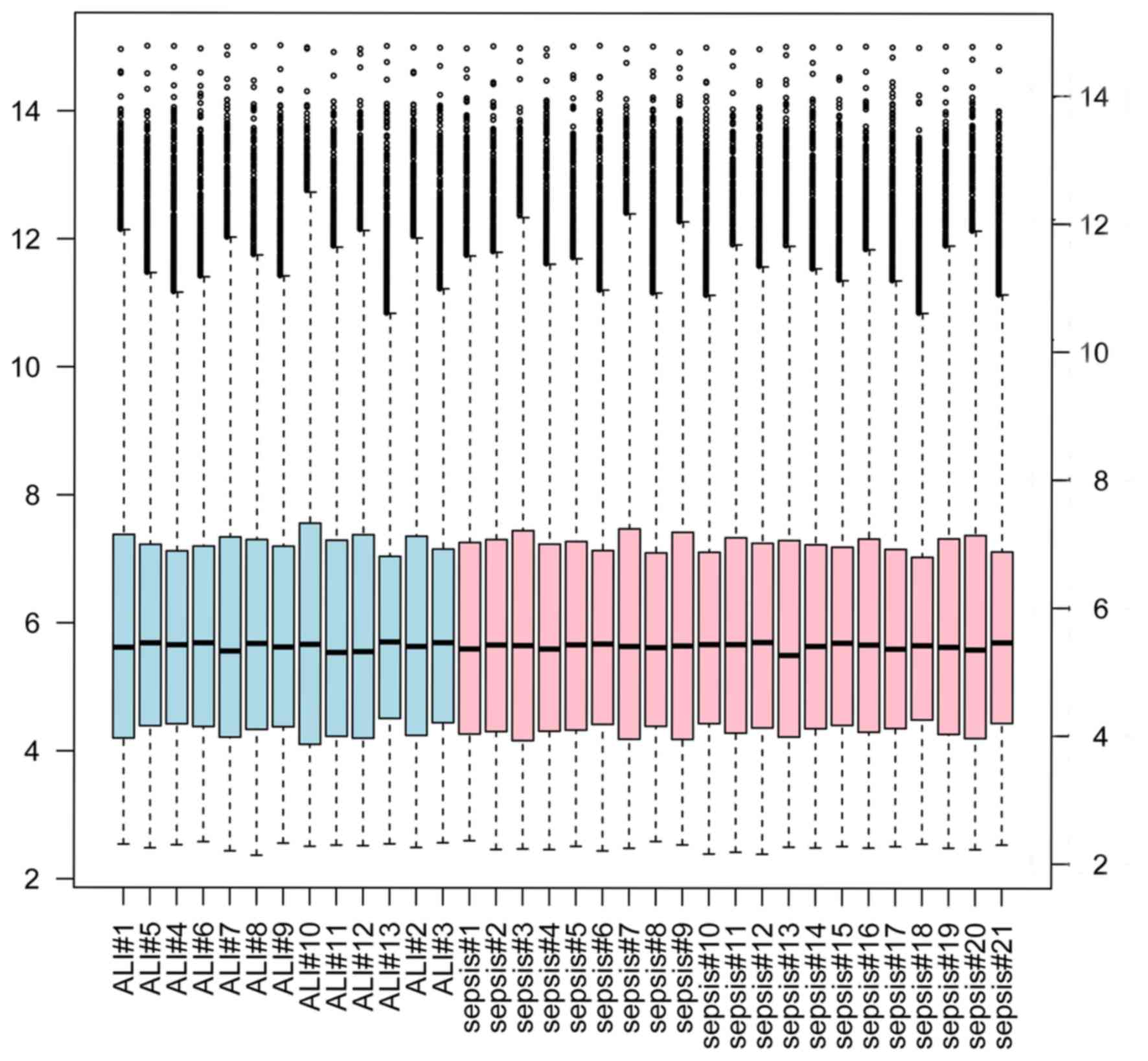
As presented in Fig.
1, gene expression was uniformly distributed following data
normalization. In addition, total 209 DEGs including 107
upregulated and 102 downregulated genes were screened. In the PCA
diagram, the light blue circles represent samples from patients
with ALI and the pink circles represent samples from patients with
sepsis. The majority of circles are separate, which indicates that
all DEGs were able to distinguish between samples from patients
with ALI and sepsis, and those from patients with sepsis alone
(Fig. 2).
Enriched GO-BP term and KEGG
pathways
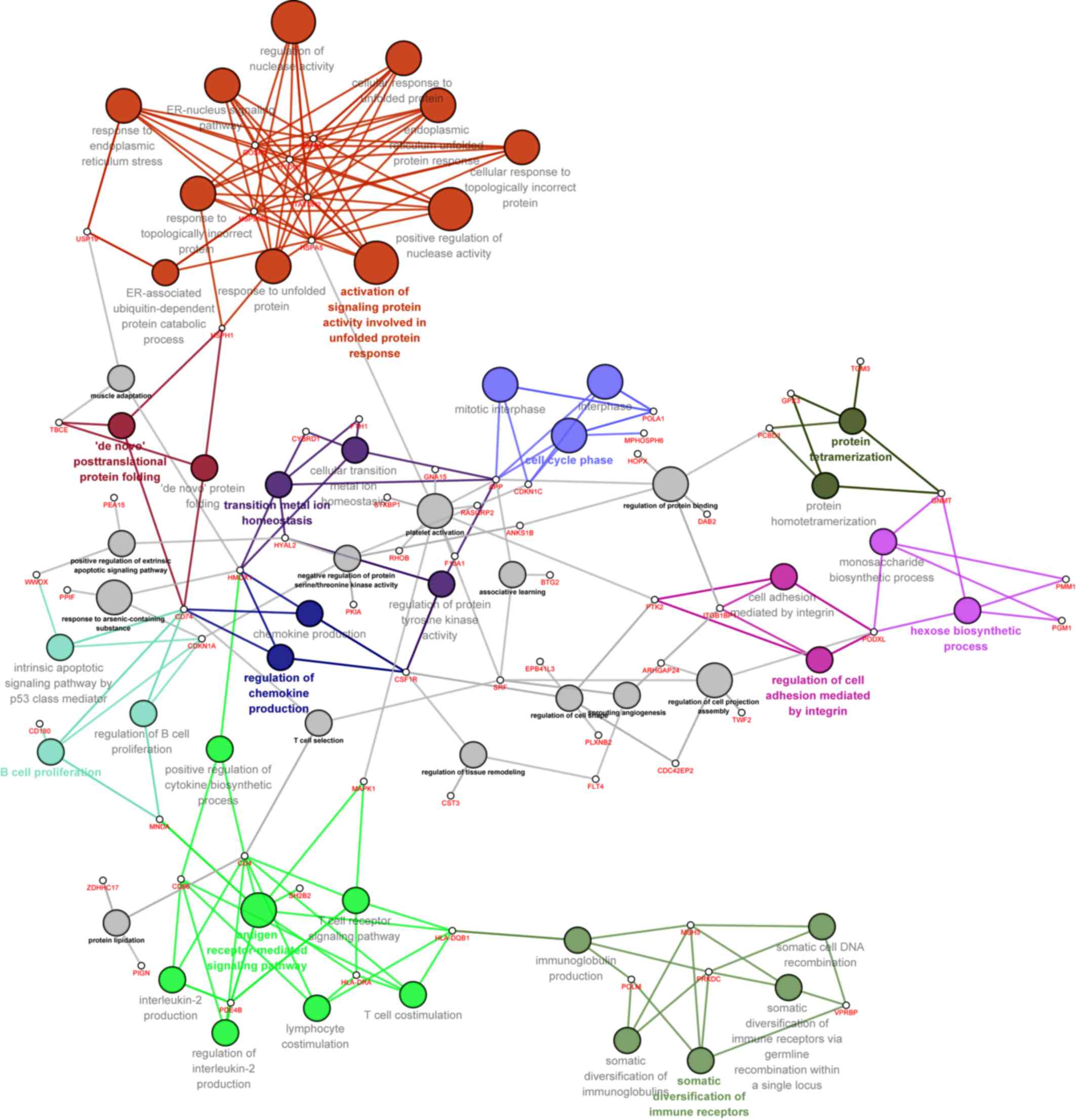
Significantly enriched GO-BP terms, as well as the
enriched genes in each term, are presented in Fig. 3. DEGs were associated with the
cellular response to unfolded protein and response to unfolded
protein, cell cycle phase, cell adhesion mediated by integrin, B
cell proliferation and T cell receptor signaling as the nodes were
notably larger. Furthermore, heat shock protein family A, Hsp70,
member 5 (HSPA5), heat shock protein 90 kDa β, member 1
(HSP90B1), zinc finger and BTB domain containing 17
(ZBTB17), Golgi SNAP receptor complex member 2
(GOSR2), TatD DNase domain containing 2 and hypoxia
upregulated 1 (HYOU1) were differentially regulated to a
greater extent than other genes in the network (Fig. 3).
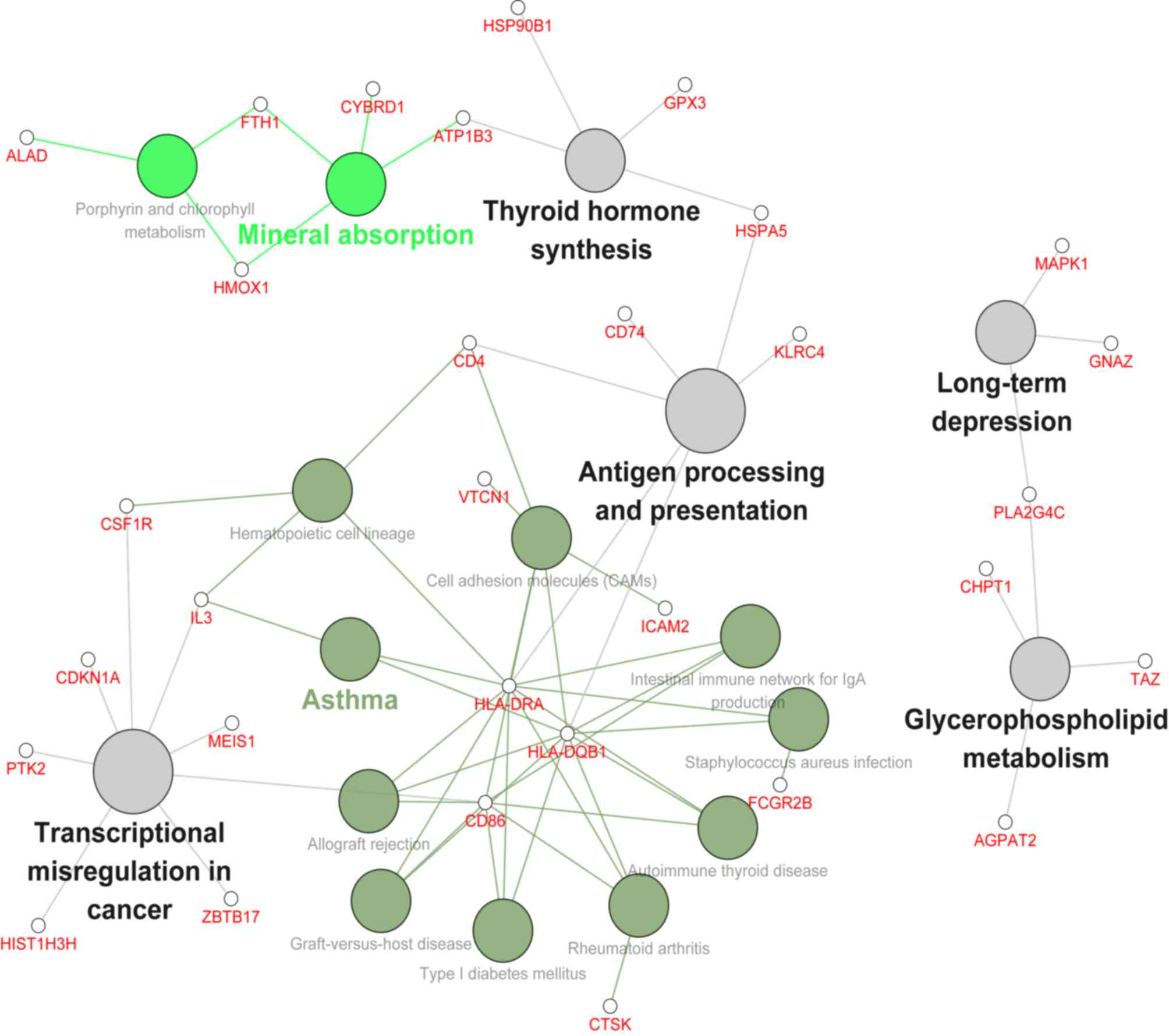
Fig. 4 indicated that
DEGs are primarily involved in pathways associated with antigen
processing and presentation, glycerophospholipid metabolism,
transcriptional misregulation in cancer, thyroid hormone synthesis
and pathways associated with diseases, such as asthma. In addition,
major histocompatibility complex, class II, DR α (HLA-DRA) and
major histocompatibility complex, class II, DQ β1 (HLA-DQB1)
were highlighted in the network. Cluster of differentiation 86
(CD86) was associated with several signaling pathways
including, rheumatoid arthritis, autoimmune thyroid disease and
graft-versus-host disease and it was also determined to be involved
in the network.
The constructed DCEN
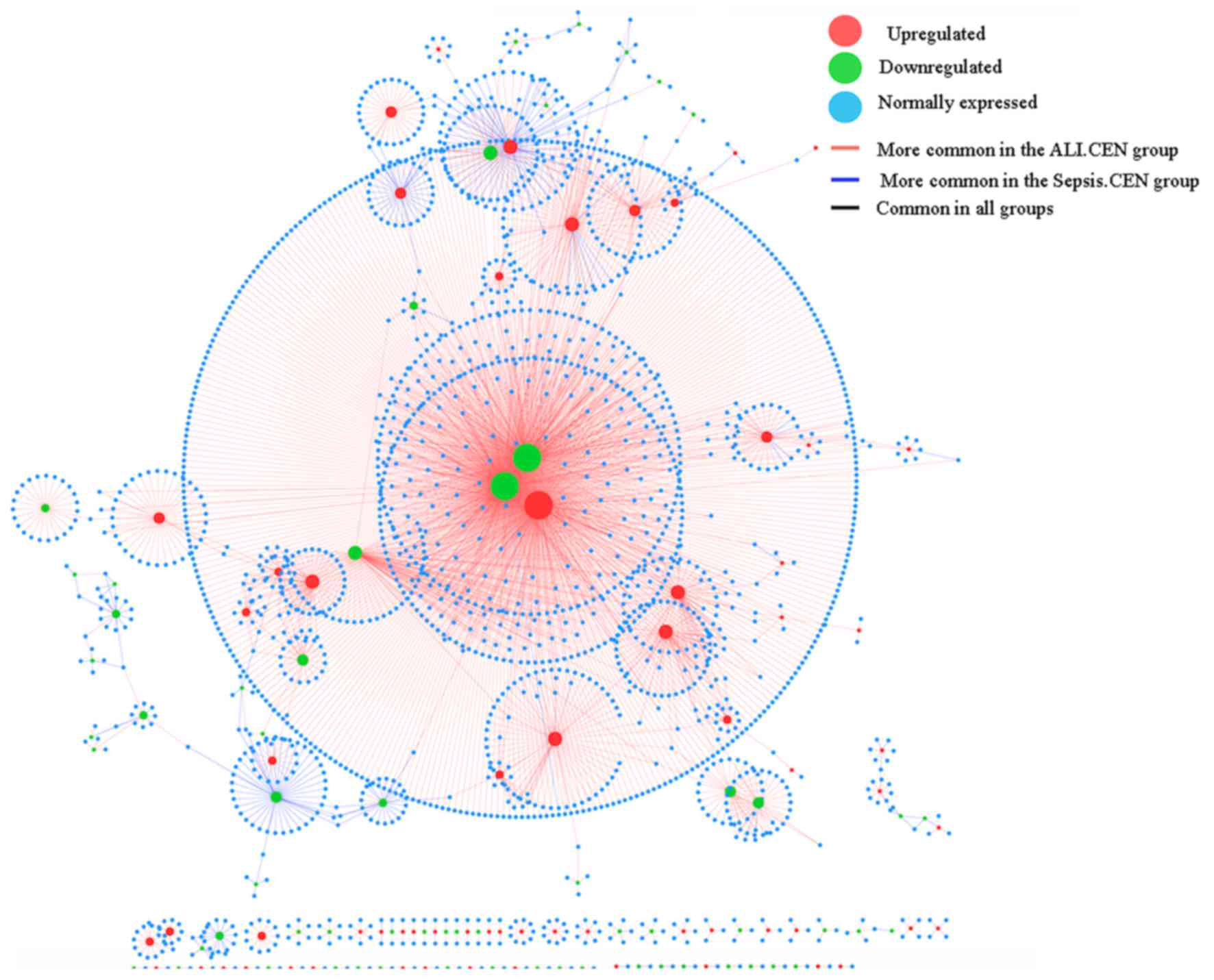
The DCEN, which was composed of 2,482 edges and
2,109 nodes was obtained following the comparison of the ALI.CEN
and the Sepsis.CEN (Fig. 5).
Ubiquitin-conjugating enzyme E2D 4 (UBE2D4; putative;
degree=529), (tubulin, γ complex associated protein 3,
(TUBGCP3; degree=271) and centromere protein O
(CENPO; degree=269) which were co-expressed in ALI samples,
were the top three genes in the network.
GO-BP enrichment analysis revealed that
UBE2D4 and TUBGCP3 were primarily associated with
cell differentiation, phylogeny and RNA stability, whereas
CENPO may participate in intercellular communication (data
not shown).
Interactions between DEGs and
different drugs
Interactions between target DEGs and drugs are
presented in Table I. These included
interactions between HSP90B1 and adenosine-5′-diphosphate
and radicicol; HLA-DQB1 and amoxicillin, HLA-DQB1 and
insulin, porcine; HSPA5 and antihemophilic factor; and
CD86 and abatacept as well as antithymocyte globulin.
Interactions mean that these DEGs may target the corresponding
drugs.
 | Table I.Interactions between DEGs and
different drugs. |
Table I.
Interactions between DEGs and
different drugs.
| Gene symbol | Gene name | Drug | Interaction
type | Source |
|---|
| HSP90B1 | Heat shock protein
90 kDa β (Grp94) member 1 | Adenosine
5′-diphosphate | N/A | DrugBank |
|
|
|
2-(3-amino-2,5,6-trimethoxyphenyl)ether
5-chlor-2,4-dihydroxybenzoate | N/A | DrugBank |
|
|
|
1-methocy-2-(2-methoxyethoxy)ethane | N/A | DrugBank |
|
|
|
2-chlorodideoxyadenosine | N/A | DrugBank |
|
|
| Radicicol | N/A | DrugBank |
|
|
|
N-ethyl-5′-carboxamidoadenosine | N/A | DrugBank |
|
|
|
Methyl-3-chloro-2{3-[2,5-dihydroxy-4-methoxyp
henyl) amino]-3-oxopropyl}-4,6-dihydroxybenzoate | N/A | DrugBank |
|
|
| Rifabutin | Other/unknown | DrugBank |
| HLA-DQB1 | Major
histocompatibility complex class II, DQ β1 | Amoxicillin | N/A | PharmGKB |
|
|
| Clavulanate | N/A | PharmGKB |
|
|
| Insulin,
porcine | N/A | DrugBank |
| CD86 | CD86 molecule | Abatacept | N/A | TEND |
|
|
| Abatacept | Binder | TTD |
|
|
| Abatacept | Antagonist | DrugBank |
|
|
| Antithymocyte
globulin | N/A | DrugBank |
| HSPA5 | Heat shock 70 kDa
protein 5 (glucose-regulated protein, 78 kDa) | Antihemophilic
factor | Chaperone | DrugBank |
Discussion
ALI is a rapidly progressive disease and the
mortality rate of patients with this condition is high. Systemic
sepsis may be a predisposing factor for the onset and development
of ALI. The current study investigated the mechanism by which
sepsis-induced ALI progresses and identified the genes involved in
this process. A total of 209 DEGs, including 107 upregulated and
102 downregulated genes, were screened. DEGs, including HSPA5,
HSP90B1 and HLA-DRA, and GO terms including unfolded
protein response and cell adhesion, as well as pathways of
transcriptional misregulation in cancer and thyroid hormone
synthesis were identified. In addition, a DCEN containing
UBE2D4 and TUBGCP3 was constructed. Certain DEG-drug
interactions, including between HSP90B1 and
adenosine-5′-diphosphate, were identified. This may help to clarify
the complex mechanisms underlying the progression of sepsis-induced
ALI.
It has been demonstrated that HLA-DRA and
HLA-DRB, which are associated with antigen processing and
presentation, are expressed at low levels in patients with ALI
(17). In the current study,
HLA-DRA and HLA-DQB1 were downregulated in patients
with ALI and enriched in pathways associated with antigen
processing and presentation, metabolism and the immune response. It
has been previously confirmed that CD86 is downregulated in
a monkey model of ALI (18). It has
been demonstrated that systemic and pulmonary inflammation occur in
ALI (19), the results of the
current study are in accordance with those of previous studies.
ZBTB17 encodes the zinc finger protein Miz-1
required for cell cycle progression (20,21). It
also serves a role in lymphocyte development and lymphomagenesis
(22). In addition, ZBTB24 is
associated with centromere instability (23). This may indicate a connection between
ZBTB17 and the centromere. Other cell cycle-associated DEGs
were obtained in the current study. CENPO is required for
bipolar mitotic spindle assembly and segregation of chromosome
during mitosis (24). TUBGCP3
is required for gamma-tubulin binding and microtubule nucleation at
the centrosome (25,26). Cell proliferation is directly
correlated with enhancing endothelial barrier integrity and
repairing leaking microvessels (27). Therefore, ZBTB17 not only
participates in the development of lymphocytes, but may also be
important in the maintenance of endothelial cell integrity in
sepsis-induced ALI.
UBE2D4 was determined to be a significant
node in the DCEN. The protein encoded by UBE2D4 introduces
covalent attachment of the E1 complex to other proteins and
promotes polyubiquitination (28).
The results of the current study indicated that protein misfolding
and the unfolded protein response were enriched by DEGs, including
HSPA5, HSP90B1 and HYOU1. The results of previous
studies suggested that the endoplasmic reticulum-located
HSPA5 is involved in protein folding and protein assembly
(29) and may be critical for the
intercellular transport of proteins (30). It has also been demonstrated that the
protein Grp94, which is encoded by HSP90B1, induces similar
effects (31). HYOU1 functions as a
molecular chaperone and participates in protein folding and
secretion (32). In a previous
study, certain DEGs associated with membrane protein transport,
such as GOSR2 (33) were also
obtained. All these DEGs may participant in sepsis-induced ALI
through protein folding, assembly and secretion.
Several potential drug targets, including
HSP90B1, HLA-DQB1, CD86 and HSPA5 were identified in
the current study. Adenosine-5′-diphosphate, which participates in
the aggregation of human blood-platelets and myocardial infarction
(34), was found to target
HSP90B1. HLA-DQB1 was targeted by amoxicillin,
clavulanate and insulin. Amoxicillin and clavulanate are widely
used as anti-inflammatory drugs and it is thought that insulin may
also exhibit anti-inflammatory activity (35). Previous study showed that ALI was
associated with inflammation (36).
Antihemophilic factor was found to target HSPA5, whereas
abatacept, which inhibits T lymphocyte activation (37), was found to target CD86.
In conclusion, the results of the current study
indicate that ZBTB17, which is associated with the cell
cycle and lymphocyte development, and UBE2D4, HSPA5 and
HSP90B1, which are associated with protein folding and
secretion, may be involved in the pathomechanism of sepsis-induced
ALI. Drugs targeting DEGs, including adenosine-5′-diphosphate that
acts on HSP90B1, may be developed as a novel therapeutic
agent to treat patients with ALI induced by sepsis. However, the
small sample size included in the current study was a major
limitation and further experiments are required to confirm the
results of the current study.
Acknowledgements
Not applicable.
Funding
No funding was received.
Availability of data and materials
The datasets used and/or analyzed during the current
study are available from the corresponding author on reasonable
request.
Authors' contributions
CX and ZG designed the study. CZ and XZ performed
the statistical analysis. ZW collected the data and drafted the
manuscript. CX and ZG helped to draft the manuscript.
Ethics approval and consent to
participate
Not applicable.
Consent for publication
Not applicable.
Competing interests
The authors declare that they have no conflicts of
interest.
Glossary
Abbreviations
Abbreviations:
|
ALI
|
acute lung injury
|
|
DEGs
|
differentially expressed genes
|
|
PCA
|
principal component analysis
|
|
CEN
|
co-expression network
|
References
|
1
|
Jia Y, Chen K, Lin P, Lieber G, Nishi M,
Yan R, Wang Z, Yao Y, Li Y, Whitson BA, et al: Treatment of acute
lung injury by targeting MG53-mediated cell membrane repair. Nat
Commun. 5:43872014. View Article : Google Scholar : PubMed/NCBI
|
|
2
|
Memtsoudis SG, Bombardieri AM, Ma Y, Walz
JM, Chiu YL and Mazumdar M: Mortality of patients with respiratory
insufficiency and adult respiratory distress syndrome after surgery
the obesity paradox. J Intensive Care Med. 27:306–311. 2012.
View Article : Google Scholar : PubMed/NCBI
|
|
3
|
Matthay MA, Ware LB and Zimmerman GA: The
acute respiratory distress syndrome. J Clin Invest. 122:2731–2740.
2012. View
Article : Google Scholar : PubMed/NCBI
|
|
4
|
Butt Y, Kurdowska A and Allen TC: Acute
lung injury: A clinical and molecular review. Arch Pathol Lab Med.
140:345–350. 2016. View Article : Google Scholar : PubMed/NCBI
|
|
5
|
Asaduzzaman M, Lavasani S, Rahman M, Zhang
S, Braun OO, Jeppsson B and Thorlacius H: Platelets support
pulmonary recruitment of neutrophils in abdominal sepsis. Crit Care
Med. 37:1389–1396. 2009. View Article : Google Scholar : PubMed/NCBI
|
|
6
|
Sweeney RM, Griffiths M and Mcauley D:
Treatment of acute lung injury: current and emerging
pharmacological therapies. Semin Respir Crit Care Med. 34:487–498.
2013. View Article : Google Scholar : PubMed/NCBI
|
|
7
|
Dreyfuss D: Ventilation with lower tidal
volumes as compared with traditional tidal volumes for acute lung
injury and the acute respiratory distress syndrome. N Engl J Med.
342:1301–1308. 2000. View Article : Google Scholar : PubMed/NCBI
|
|
8
|
Guo Z, Zhao C and Wang Z: Gene expression
profiles analysis identifies key genes for acute lung injury in
patients with sepsis. Diagn Pathol. 9:1762014. View Article : Google Scholar : PubMed/NCBI
|
|
9
|
Howrylak JA, Dolinay T, Lucht L, Wang Z,
Christiani DC, Sethi JM, Xing EP, Donahoe MP and Choi AM: Discovery
of the gene signature for acute lung injury in patients with
sepsis. Physiol Genomics. 37:133–139. 2009. View Article : Google Scholar : PubMed/NCBI
|
|
10
|
Gautier L, Cope L, Bolstad BM and Irizarry
RA: Affy-analysis of Affymetrix GeneChip data at the probe level.
Bioinformatics. 20:307–315. 2004. View Article : Google Scholar : PubMed/NCBI
|
|
11
|
Phipson B, Lee S, Majewski IJ, Alexander
WS and Smyth GK: Robust hyperparameter estimation protects against
hypervariable genes and improves power to detect differential
expression. Ann Appl Stat. 10:946–963. 2016. View Article : Google Scholar : PubMed/NCBI
|
|
12
|
Bindea G, Mlecnik B, Hackl H, Charoentong
P, Tosolini M, Kirilovsky A, Fridman WH, Pagès F, Trajanoski Z and
Galon J: ClueGO: A Cytoscape plug-in to decipher functionally
grouped gene ontology and pathway annotation networks.
Bioinformatics. 25:1091–1093. 2009. View Article : Google Scholar : PubMed/NCBI
|
|
13
|
Bindea G, Galon J and Mlecnik B: CluePedia
Cytoscape plugin: Pathway insights using integrated experimental
and in silico data. Bioinformatics. 29:661–663. 2013. View Article : Google Scholar : PubMed/NCBI
|
|
14
|
Shannon P, Markiel A, Ozier O, Baliga NS,
Wang JT, Ramage D, Amin N, Schwikowski B and Ideker T: Cytoscape: A
software environment for integrated models of biomolecular
interaction networks. Genome Res. 13:2498–2504. 2003. View Article : Google Scholar : PubMed/NCBI
|
|
15
|
Maere S, Heymans K and Kuiper M: BiNGO: A
Cytoscape plugin to assess overrepresentation of gene ontology
categories in biological networks. Bioinformatics. 21:3448–3449.
2005. View Article : Google Scholar : PubMed/NCBI
|
|
16
|
Griffith M, Griffith OL, Coffman AC,
Weible JV, McMichael JF, Spies NC, Koval J, Das I, Callaway MB,
Eldred JM, et al: DGIdb: Mining the druggable genome. Nat Methods.
10:1209–1210. 2013. View Article : Google Scholar : PubMed/NCBI
|
|
17
|
Hu WC: Acute respiratory distress syndrome
is a TH17-like and Treg immune disease. Cornell University Library.
2013.https://arxiv.org/abs/1311.4384Nov 18–2013
|
|
18
|
Smits SL, van den Brand JM, de Lang A,
Leijten LM, van Ijcken WF, van Amerongen G, Osterhaus AD, Andeweg
AC and Haagmans BL: Distinct severe acute respiratory syndrome
coronavirus-induced acute lung injury pathways in two different
nonhuman primate species. J Virol. 85:4234–4245. 2011. View Article : Google Scholar : PubMed/NCBI
|
|
19
|
Meduri GU, Annane D, Chrousos GP, Marik PE
and Sinclair SE: Activation and regulation of systemic inflammation
in ARDS: Rationale for prolonged glucocorticoid therapy. Chest.
136:1631–1643. 2009. View Article : Google Scholar : PubMed/NCBI
|
|
20
|
Schneider A, Peukert K, Eilers M and Hänel
F: Association of Myc with the zinc-finger protein Miz-1 defines a
novel pathway for gene regulation by MycC-Myc in B-Cell Neoplasia.
Springer; New York, NY: pp. 137–146. 1997, View Article : Google Scholar
|
|
21
|
Staller P, Peukert K, Kiermaier A, Seoane
J, Lukas J, Karsunky H, Möröy T, Bartek J, Massagué J, Hänel F and
Eilers M: Repression of p15INK4b expression by Myc through
association with Miz-1. Nat Cell Biol. 3:392–399. 2001. View Article : Google Scholar : PubMed/NCBI
|
|
22
|
Möröy T, Saba I and Kosan C: The role of
the transcription factor Miz-1 in lymphocyte development and
lymphomagenesis-Binding Myc makes the difference. Semin Immunol.
23:379–387. 2011. View Article : Google Scholar : PubMed/NCBI
|
|
23
|
Lee SU and Maeda T: POK/ZBTB proteins: An
emerging family of proteins that regulate lymphoid development and
function. Immunol Rev. 247:107–119. 2012. View Article : Google Scholar : PubMed/NCBI
|
|
24
|
Verdaasdonk JS and Bloom K: Centromeres:
Unique chromatin structures that drive chromosome segregation. Nat
Rev Mol Cell Biol. 12:320–332. 2011. View
Article : Google Scholar : PubMed/NCBI
|
|
25
|
Guillet V, Knibiehler M, Gregory-Pauron L,
Remy MH, Chemin C, Raynaud-Messina B, Bon C, Kollman JM, Agard DA,
Merdes A and Mourey L: Crystal structure of γ-tubulin complex
protein GCP4 provides insight into microtubule nucleation. Nat
Struct Mol Biol. 18:915–919. 2011. View Article : Google Scholar : PubMed/NCBI
|
|
26
|
Ducat D, Kawaguchi S, Liu H, Yates JR III
and Zheng Y: Regulation of microtubule assembly and organization in
mitosis by the AAA+ ATPase pontin. Mol Biol Cell. 19:3097–3110.
2008. View Article : Google Scholar : PubMed/NCBI
|
|
27
|
Huang X and Zhao YY: Transgenic expression
of FoxM1 promotes endothelial repair following lung injury induced
by polymicrobial sepsis in mice. PLoS One. 7:e500942012. View Article : Google Scholar : PubMed/NCBI
|
|
28
|
David Y, Ziv T, Admon A and Navon A: The
E2 ubiquitin-conjugating enzymes direct polyubiquitination to
preferred lysines. J Biol Chem. 285:8595–8604. 2010. View Article : Google Scholar : PubMed/NCBI
|
|
29
|
Hetz C: The unfolded protein response:
Controlling cell fate decisions under ER stress and beyond. Nat Rev
Mol Cell Biol. 13:89–102. 2012. View
Article : Google Scholar : PubMed/NCBI
|
|
30
|
Hendershot LM, Valentine VA, Lee AS,
Morris SW and Shapiro DN: Localization of the gene encoding human
BiP/GRP78, the endoplasmic reticulum cognate of the HSP70 family,
to chromosome 9q34. Genomics. 20:281–284. 1994. View Article : Google Scholar : PubMed/NCBI
|
|
31
|
Pizzo P, Scapin C, Vitadello M, Florean C
and Gorza L: Grp94 acts as a mediator of curcumin-induced
antioxidant defence in myogenic cells. J Cell Mol Med. 14:970–981.
2010. View Article : Google Scholar : PubMed/NCBI
|
|
32
|
Omikorede O: The role of ER stress and the
unfolded protein response in obesity associated type 2 diabetes.
University of Leicester. 2012.
|
|
33
|
Lowe SL, Peter F, Subramaniam VN, Wong SH
and Hong W: A SNARE involved in protein transport through the Golgi
apparatus. Nature. 389:881–884. 1997. View
Article : Google Scholar : PubMed/NCBI
|
|
34
|
Moschos CB, Lahiri K, Lyons M, Weisse AB,
Oldewurtel HA and Regan TJ: Relation of microcirculatory thrombosis
to thrombus in the proximal coronary artery: Effect of aspirin,
dipyridamole and thrombolysis. Am Heart J. 86:61–68. 1973.
View Article : Google Scholar : PubMed/NCBI
|
|
35
|
Das UN: Is insulin an antiinflammatory
molecule? Nutrition. 17:409–413. 2001. View Article : Google Scholar : PubMed/NCBI
|
|
36
|
Lee JS: Cytokine-mediated inflammation in
acute lung injury. Cytokine Growth Factor Rev. 14:523–535. 2003.
View Article : Google Scholar : PubMed/NCBI
|
|
37
|
Kremer JM, Dougados M, Emery P, Durez P,
Sibilia J, Shergy W, Steinfeld S, Tindall E, Becker JC, Li T, et
al: Treatment of rheumatoid arthritis with the selective
costimulation modulator abatacept: Twelve-month results of a phase
IIb, double-blind, randomized, placebo-controlled trial. Arthritis
Rheum. 52:2263–2271. 2005. View Article : Google Scholar : PubMed/NCBI
|