Spandidos Publications Logo
  • About
    • About Spandidos
    • Aims and Scopes
    • Abstracting and Indexing
    • Editorial Policies
    • Reprints and Permissions
    • Job Opportunities
    • Terms and Conditions
    • Contact
  • Journals
    • All Journals
    • Oncology Letters
      • Oncology Letters
      • Information for Authors
      • Editorial Policies
      • Editorial Board
      • Aims and Scope
      • Abstracting and Indexing
      • Bibliographic Information
      • Archive
    • International Journal of Oncology
      • International Journal of Oncology
      • Information for Authors
      • Editorial Policies
      • Editorial Board
      • Aims and Scope
      • Abstracting and Indexing
      • Bibliographic Information
      • Archive
    • Molecular and Clinical Oncology
      • Molecular and Clinical Oncology
      • Information for Authors
      • Editorial Policies
      • Editorial Board
      • Aims and Scope
      • Abstracting and Indexing
      • Bibliographic Information
      • Archive
    • Experimental and Therapeutic Medicine
      • Experimental and Therapeutic Medicine
      • Information for Authors
      • Editorial Policies
      • Editorial Board
      • Aims and Scope
      • Abstracting and Indexing
      • Bibliographic Information
      • Archive
    • International Journal of Molecular Medicine
      • International Journal of Molecular Medicine
      • Information for Authors
      • Editorial Policies
      • Editorial Board
      • Aims and Scope
      • Abstracting and Indexing
      • Bibliographic Information
      • Archive
    • Biomedical Reports
      • Biomedical Reports
      • Information for Authors
      • Editorial Policies
      • Editorial Board
      • Aims and Scope
      • Abstracting and Indexing
      • Bibliographic Information
      • Archive
    • Oncology Reports
      • Oncology Reports
      • Information for Authors
      • Editorial Policies
      • Editorial Board
      • Aims and Scope
      • Abstracting and Indexing
      • Bibliographic Information
      • Archive
    • Molecular Medicine Reports
      • Molecular Medicine Reports
      • Information for Authors
      • Editorial Policies
      • Editorial Board
      • Aims and Scope
      • Abstracting and Indexing
      • Bibliographic Information
      • Archive
    • World Academy of Sciences Journal
      • World Academy of Sciences Journal
      • Information for Authors
      • Editorial Policies
      • Editorial Board
      • Aims and Scope
      • Abstracting and Indexing
      • Bibliographic Information
      • Archive
    • International Journal of Functional Nutrition
      • International Journal of Functional Nutrition
      • Information for Authors
      • Editorial Policies
      • Editorial Board
      • Aims and Scope
      • Abstracting and Indexing
      • Bibliographic Information
      • Archive
    • International Journal of Epigenetics
      • International Journal of Epigenetics
      • Information for Authors
      • Editorial Policies
      • Editorial Board
      • Aims and Scope
      • Abstracting and Indexing
      • Bibliographic Information
      • Archive
    • Medicine International
      • Medicine International
      • Information for Authors
      • Editorial Policies
      • Editorial Board
      • Aims and Scope
      • Abstracting and Indexing
      • Bibliographic Information
      • Archive
  • Articles
  • Information
    • Information for Authors
    • Information for Reviewers
    • Information for Librarians
    • Information for Advertisers
    • Conferences
  • Language Editing
Spandidos Publications Logo
  • About
    • About Spandidos
    • Aims and Scopes
    • Abstracting and Indexing
    • Editorial Policies
    • Reprints and Permissions
    • Job Opportunities
    • Terms and Conditions
    • Contact
  • Journals
    • All Journals
    • Biomedical Reports
      • Information for Authors
      • Editorial Policies
      • Editorial Board
      • Aims and Scope
      • Abstracting and Indexing
      • Bibliographic Information
      • Archive
    • Experimental and Therapeutic Medicine
      • Information for Authors
      • Editorial Policies
      • Editorial Board
      • Aims and Scope
      • Abstracting and Indexing
      • Bibliographic Information
      • Archive
    • International Journal of Epigenetics
      • Information for Authors
      • Editorial Policies
      • Editorial Board
      • Aims and Scope
      • Abstracting and Indexing
      • Bibliographic Information
      • Archive
    • International Journal of Functional Nutrition
      • Information for Authors
      • Editorial Policies
      • Editorial Board
      • Aims and Scope
      • Abstracting and Indexing
      • Bibliographic Information
      • Archive
    • International Journal of Molecular Medicine
      • Information for Authors
      • Editorial Policies
      • Editorial Board
      • Aims and Scope
      • Abstracting and Indexing
      • Bibliographic Information
      • Archive
    • International Journal of Oncology
      • Information for Authors
      • Editorial Policies
      • Editorial Board
      • Aims and Scope
      • Abstracting and Indexing
      • Bibliographic Information
      • Archive
    • Medicine International
      • Information for Authors
      • Editorial Policies
      • Editorial Board
      • Aims and Scope
      • Abstracting and Indexing
      • Bibliographic Information
      • Archive
    • Molecular and Clinical Oncology
      • Information for Authors
      • Editorial Policies
      • Editorial Board
      • Aims and Scope
      • Abstracting and Indexing
      • Bibliographic Information
      • Archive
    • Molecular Medicine Reports
      • Information for Authors
      • Editorial Policies
      • Editorial Board
      • Aims and Scope
      • Abstracting and Indexing
      • Bibliographic Information
      • Archive
    • Oncology Letters
      • Information for Authors
      • Editorial Policies
      • Editorial Board
      • Aims and Scope
      • Abstracting and Indexing
      • Bibliographic Information
      • Archive
    • Oncology Reports
      • Information for Authors
      • Editorial Policies
      • Editorial Board
      • Aims and Scope
      • Abstracting and Indexing
      • Bibliographic Information
      • Archive
    • World Academy of Sciences Journal
      • Information for Authors
      • Editorial Policies
      • Editorial Board
      • Aims and Scope
      • Abstracting and Indexing
      • Bibliographic Information
      • Archive
  • Articles
  • Information
    • For Authors
    • For Reviewers
    • For Librarians
    • For Advertisers
    • Conferences
  • Language Editing
Login Register Submit
  • This site uses cookies
  • You can change your cookie settings at any time by following the instructions in our Cookie Policy. To find out more, you may read our Privacy Policy.

    I agree
Search articles by DOI, keyword, author or affiliation
Search
Advanced Search
presentation
Experimental and Therapeutic Medicine
Join Editorial Board Propose a Special Issue
Print ISSN: 1792-0981 Online ISSN: 1792-1015
Journal Cover
June-2018 Volume 15 Issue 6

Full Size Image

Sign up for eToc alerts
Recommend to Library

Journals

International Journal of Molecular Medicine

International Journal of Molecular Medicine

International Journal of Molecular Medicine is an international journal devoted to molecular mechanisms of human disease.

International Journal of Oncology

International Journal of Oncology

International Journal of Oncology is an international journal devoted to oncology research and cancer treatment.

Molecular Medicine Reports

Molecular Medicine Reports

Covers molecular medicine topics such as pharmacology, pathology, genetics, neuroscience, infectious diseases, molecular cardiology, and molecular surgery.

Oncology Reports

Oncology Reports

Oncology Reports is an international journal devoted to fundamental and applied research in Oncology.

Experimental and Therapeutic Medicine

Experimental and Therapeutic Medicine

Experimental and Therapeutic Medicine is an international journal devoted to laboratory and clinical medicine.

Oncology Letters

Oncology Letters

Oncology Letters is an international journal devoted to Experimental and Clinical Oncology.

Biomedical Reports

Biomedical Reports

Explores a wide range of biological and medical fields, including pharmacology, genetics, microbiology, neuroscience, and molecular cardiology.

Molecular and Clinical Oncology

Molecular and Clinical Oncology

International journal addressing all aspects of oncology research, from tumorigenesis and oncogenes to chemotherapy and metastasis.

World Academy of Sciences Journal

World Academy of Sciences Journal

Multidisciplinary open-access journal spanning biochemistry, genetics, neuroscience, environmental health, and synthetic biology.

International Journal of Functional Nutrition

International Journal of Functional Nutrition

Open-access journal combining biochemistry, pharmacology, immunology, and genetics to advance health through functional nutrition.

International Journal of Epigenetics

International Journal of Epigenetics

Publishes open-access research on using epigenetics to advance understanding and treatment of human disease.

Medicine International

Medicine International

An International Open Access Journal Devoted to General Medicine.

Journal Cover
June-2018 Volume 15 Issue 6

Full Size Image

Sign up for eToc alerts
Recommend to Library

  • Article
  • Citations
    • Cite This Article
    • Download Citation
    • Create Citation Alert
    • Remove Citation Alert
    • Cited By
  • Similar Articles
    • Related Articles (in Spandidos Publications)
    • Similar Articles (Google Scholar)
    • Similar Articles (PubMed)
  • Download PDF
  • Download XML
  • View XML
Article

Cinchonine activates endoplasmic reticulum stress‑induced apoptosis in human liver cancer cells

  • Authors:
    • Zhi‑Liang Jin
    • Wei Yan
    • Mei Qu
    • Chang‑Zheng Ge
    • Xia Chen
    • Shao‑Feng Zhang
  • View Affiliations / Copyright

    Affiliations: Department of Oncology, The Second Clinical Medical College, Yangtze University, Jingzhou, Hubei 434020, P.R. China, Department of Gastrointestinal Surgery, The Second Clinical Medical College, Yangtze University, Jingzhou, Hubei 434020, P.R. China, Department of Liver Disease, The Second Hospital of Nanjing Medical School, Southeast University, Nanjing, Jiangsu 21000, P.R. China
  • Pages: 5046-5050
    |
    Published online on: March 29, 2018
       https://doi.org/10.3892/etm.2018.6005
  • Expand metrics +
Metrics: Total Views: 0 (Spandidos Publications: | PMC Statistics: )
Metrics: Total PDF Downloads: 0 (Spandidos Publications: | PMC Statistics: )
Cited By (CrossRef): 0 citations Loading Articles...

This article is mentioned in:


Abstract

Cinchonine is a natural compound present in Cinchona bark. It exerts multidrug resistance reversal activity and synergistic apoptotic effect with paclitaxel in uterine sarcoma cells. Whether cinchonine is effective against human liver cancer, however, remains elusive. A total of five liver cancer cell lines including Bel‑7402, MHCC97H, HepG2, Hep3B and SMCC7721 were used. The anti‑proliferative effects of cinchonine on these liver cancer cell lines were assessed by MTT assay. The apoptotic effects of cinchonine on liver cancer cell lines were assessed by flow cytometry with Annexin V/propidium iodide assay. Caspase‑3 activation, poly (ADP‑Ribose) polymerase (PARP) cleavage as well as the endoplasmic‑reticulum (ER) stress response was detected by western blotting. Balb/c‑nude mice bearing HepG2 xenograft tumors were used to evaluate the in vivo antitumor effect of cinchonine. It was demonstrated that cinchonine inhibited cell proliferation and promoteed apoptosis in liver cancer cells in a dose‑dependent manner. Cinchonine promoted caspase‑3 activation and PARP1 cleavage in liver cancer cells. Furthermore, cinchonine activated the ER stress response by upregulating GRP78 and promoting PERK and Eukaryotic Translation Initiation Factor 2 α phosphorylation. The Balb/c‑nude mice experiment revealed that cinchonine suppressed HepG2 xenograft tumor growth in mice. The findings indicated that cinchonine promoted ER stress‑induced apoptosis in liver cancer cells and suggested that cinchonine may have a potential beneficial effect for liver cancer treatment.

Introduction

Liver cancer remains a major health issue because it is the sixth most common malignancy and the third principal cause of cancer deaths worldwide (1). Despite the progress of potentially curative treatments, liver transplantation and surgical resection remain the first choice for liver cancer patients (2). Natural compounds have been widely used for cancer prevention and treatment because of its multi-level, multi-target and coordinated intervention effects (3). The significant anticancer effects against liver cancer have also been identified, such as curcumin and baicalein, indicating that these natural compounds represent an important medical and pharmaceutical resource for the development of new treatments for liver cancer (4,5).

Cinchonine (C19H22N2O) is a natural compound which has been effectively used as antimalarial drug along with quinine, quinidine and cinchonidine and all these agents were separated from Cinchona bark (6). Interestingly, all these agents have been found with antitumor effects and among which cinchonine has much lower toxicity and higher activity (7). Cinchonine exerted multidrug resistance (MDR) reversal activity and synergistic apoptotic effect with paclitaxel (TAX) in MES-SA/DX5 uterine sarcoma cells as a potent MDR-reversal and combined therapy agent with TAX (8). A very recent study found that cinchonine could reduce proliferation and induce apoptosis in both HeLa and A549 cells. Their computational modeling predicted that cinchonine could target the RING domain of TRAF6 protein, leading to the disruption of the binding with Ubc13 protein, its natural ligand, and inhibiting the downstream events including AKT and TAK1 activations (9). However, whether cinchonine could be used as an antitumor agent against liver cancer remains elusive.

Endoplasmic reticulum (ER) stress is triggered by perturbations in ER function, called unfolded protein response (UPR) (10). There are three signaling pathways of eukaryotic cells responding to ER stress and are initiated by ER stress sensors, PERK, IRE1, and ATF6, respectively (11). PERK phosphorylates eIF2-alpha to reduce the overall rate of translational initiation, and activates the downstream transcriptional factor CHOP (12,13). CHOP mediates cell death in a number of ER stress models and induced the expression of Bim (14), which initiates the mitochondrial pathway of apoptosis, ultimately resulting in caspase-9 and caspase-3 activation.

In the present study, we found that cinchonine elicited inhibition of cell viability and promotes apoptosis in liver cancer cells by promoting endoplasmic-reticulum (ER) stress.

Materials and methods

Cell culture

Liver cancer cell lines Bel-7402, MHCC97H, HepG2, Hep3B and SMCC7721 were obtained from The Cell Bank of Type Culture Collection of Chinese Academy of Sciences (Shanghai, China). All cell lines were grown in Dulbecco's modified Eagle's medium (DMEM; Gibco, Shanghai, China) supplemented with 10% fetal bovine serum (Gibco), 100 IU/ml penicillin as well as 100 mg/ml streptomycin. Cells were maintained at 37°C in a humidified atmosphere with 5% CO2. 3-(4, 5-Dimethylthiazol-2-yl)-2,5-diphenyltetrazolium bromide (MTT) assay.

Cells were seeded into 96-well plate. Different concentrations of cinchonine were added to these wells. After treatment, cells were incubated with 20 µl MTT (5 mg/ml) for 4 h at 37°C. The MTT solution was discarded and formazan was dissolved in 150 µl DMSO. The absorbance of each well was read using a Microplate reader at 490 nm.

Flow cytometry

Apoptosis of the cells were determined using the Annexin V-FITC Apoptosis Detection kit (Becton-Dickinson, Franklin Lakes, NJ, USA) according to the manufacturer's protocol. Cells were seeded into six-well plate with cinchonine administration. Cells were then washed twice in cold PBS and resuspended in binging buffer. Five µl Annexin V-FITC and PI were added into 100 µl cell suspension. The mixture was incubated for 15 min at room temperature in the dark. Results were immediately analyzed with a flow cytometry (Becton-Dickinson) and all data were analyzed by ModFit software (Verity Software House, Inc., Topsham, ME, USA).

Western blot analysis

Cells were harvested and lysed with ice-cold lysis buffer (50 mM Tris-HCl, pH 6.8, 100 mM 2-mercaptoethanol, 2% SDS and 10% glycerol). After centrifugation at 15,000 × g for 15 min at 4°C, proteins in the supernatants were quantified and separated by 10–12% SDS PAGE. Western blot assay was performed using the following antibodies: Anti-GRP78 and poly (ADP-Ribose) polymerase (PARP) 1 (Santa Cruz Biotechnology, Inc., Santa Cruz, CA, USA), eIF2a, P-eIF2a, PERK, P-PERK and Δ Caspase-3 (Cell Signaling Technology, Inc., CA, USA). Protein levels were normalized to total GAPDH, using a mouse anti-GAPDH antibody (Santa Cruz Biotechnology, Inc.).

Tumor growth assay

Male BALB/c nude mice aged 4 weeks were purchased from Shanghai Laboratory Animal Company (Shanghai, China). Mice were first subcutaneously inoculated with cancer cells (5×10⁶ cell/ml) to establish transplanted mode of liver cancer for 3 weeks. The mice were observed over 5 weeks for tumor formation. After the mice were sacrificed, the tumors were recovered and the wet weights of each tumor were determined. The present study was approved by the Animal Ethical and Welfare Committee of the Second Clinical Medical College, Yangtze University (Jingzhou, China).

Statistical analysis

The results are expressed as the mean ± SD. Statistical significance was calculated using one-way ANOVA, followed by Duncan's multiple range tests. All the statistical analyses were performed with Graphpad prism 5.0 software (GraphPad Software, Inc., La Jolla, CA, USA). P<0.05 was considered to indiciate a statistically significant difference.

Results

Cinchonine inhibited cell growth and promoted apoptosis in human liver cancer cells

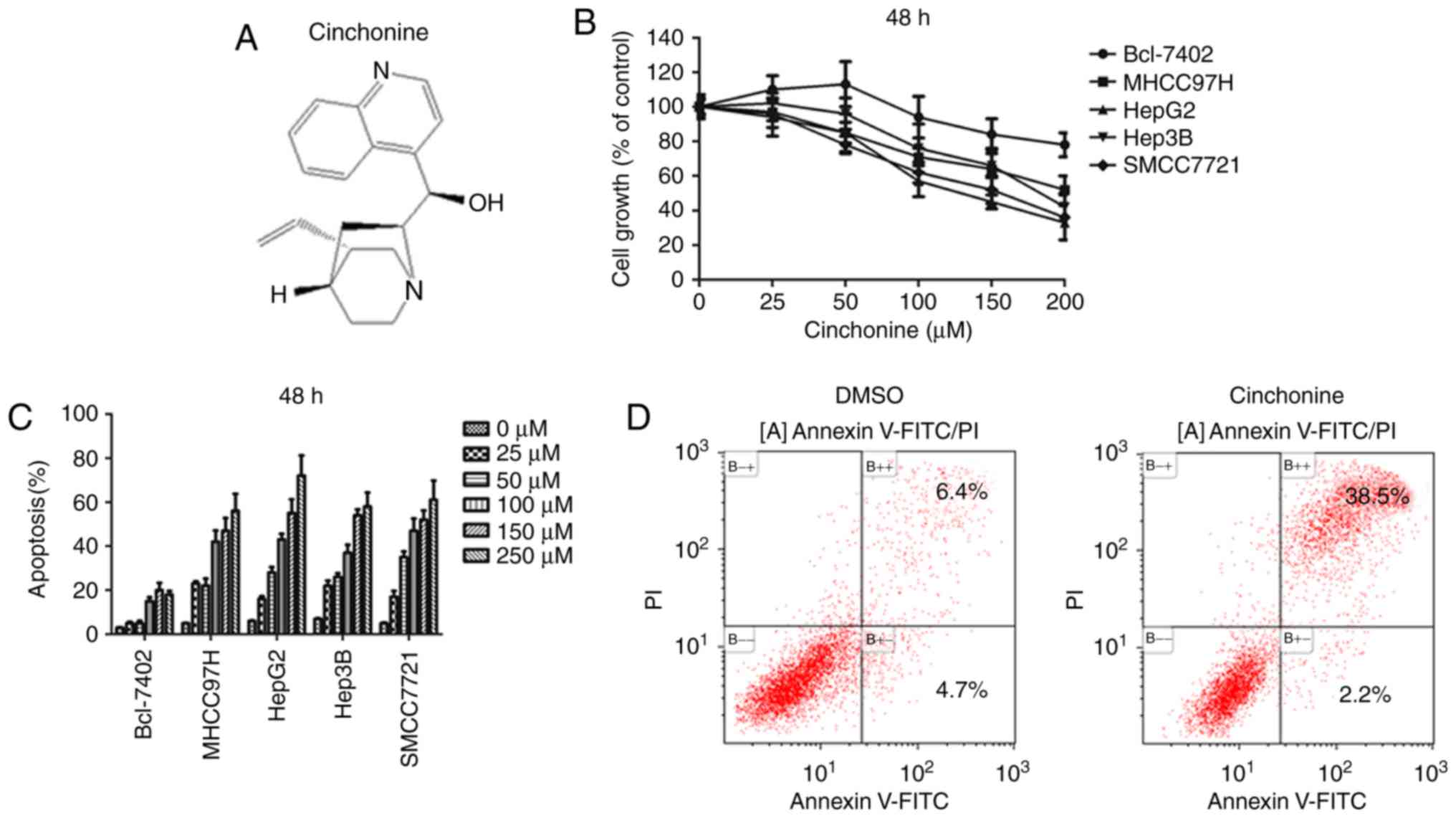
Cinchonine is a natural compound of Cinchona bark (Fig. 1A). Previous studies have reported that cinchonine is an inhibitor of human platelet aggregation and has antitumor effect in MES-SA/DX5 uterine sarcoma cells (8,15). However, the antitumor effect of cinchonine in liver cancer cells has never been studied. To test whether cinchonine could inhibit liver cancer cells proliferation, five liver cancer cell lines were enrolled in this study, including Bel-7402, MHCC97H, HepG2, Hep3B and SMCC7721 cells. To determine the effect of cinchonine on the viability of liver cancer cells, these cells were treated with various concentrations of cinchonine, and the cell viability was then measured with an MTT assay. We found that, cinchonine significantly suppressed the viability of the four out of five liver cancer cell lines we used in a dose-dependent after 48 h of treatment (Fig. 1). Cinchonine treatment also caused decreased viability of Bel-7402 cells but with less effective when compared with other four liver cancer cell lines. A recent study suggested that 50 µM cinchonine is stable and sufficient to induce apoptosis in in HeLa and A549 cells in vitro. In consistent with these data, our flow cytometry assay with Annexin V-FITC/PI labeling showed that 50 µM cinchonine is sufficient to induce apoptosis in four out of five liver cancer cell lines after 48 h of treatment. In consistent with MTT data, Bel-7402 cells were also less sensitive to cinchonine treatment when compared with other four liver cancer cell lines. Taken together, these data suggested that cinchonine inhibited cell growth and promoted apoptosis in most human liver cancer cells.

Figure 1.

Cinchonine elicited inhibition of cell viability and promotes apoptosis in human liver cancer cells. (A) Chemical structure of cinchonine. (B) Liver cancer cells were treated with increasing concentrations of cinchonine for 48 h, respectively. MTT assays were performed to assess growth inhibition of cinchonine. Data represent mean ± SD derived from 3 independent experiments. (C) Liver cancer cells were cultured with increasing doses of cinchonine for 48 h and assessed for apoptosis using flow cytometry for Annexin V/PI. (D) HepG2 cells were cultured with increasing doses of cinchonine for 48 h and assessed for apoptosis using flow cytometry for Annexin V/PI. MTT, 3-(4, 5-Dimethylthiazol-2-yl)-2,5-diphenyltetrazolium bromide.

Cinchonine promoted caspase-3 activation and PARP1 cleavage in human liver cancer cells

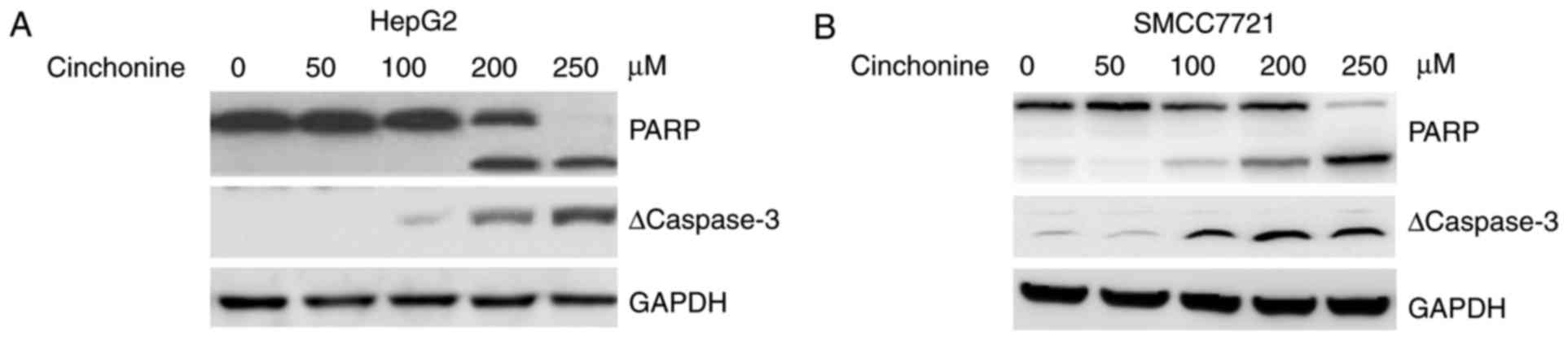
Then the expression of apoptosis-related proteins in the cell lysates of the two liver cancer cell lines was measured by western blot 48 h after cinchonine treatment. Our results showed that cinchonine activated promoted caspase-3 activation and PARP1 cleavage in both HepG2 and SMCC7721 in a dose-dependent manner (Fig. 2A and B). These data suggested that cinchonine inhibited liver cancer cells proliferation by activating caspase-3-dependent apoptosis.

Figure 2.

Cinchonine promoted caspase-3 activation and PARP1 cleavage. (A) HepG2 cells were treated with increasing concentrations of cinchonine for 48 h, cells were harvested and subjected to western blot with indicated antibodies. (B) SMCC7721 cells were treated with increasing concentrations of cinchonine for 48 h, cells were harvested and subjected to western blot with indicated antibodies. PARP, poly (ADP-Ribose) polymerase.

Cinchonine activated endoplasmic reticulum stress in human liver cancer cells

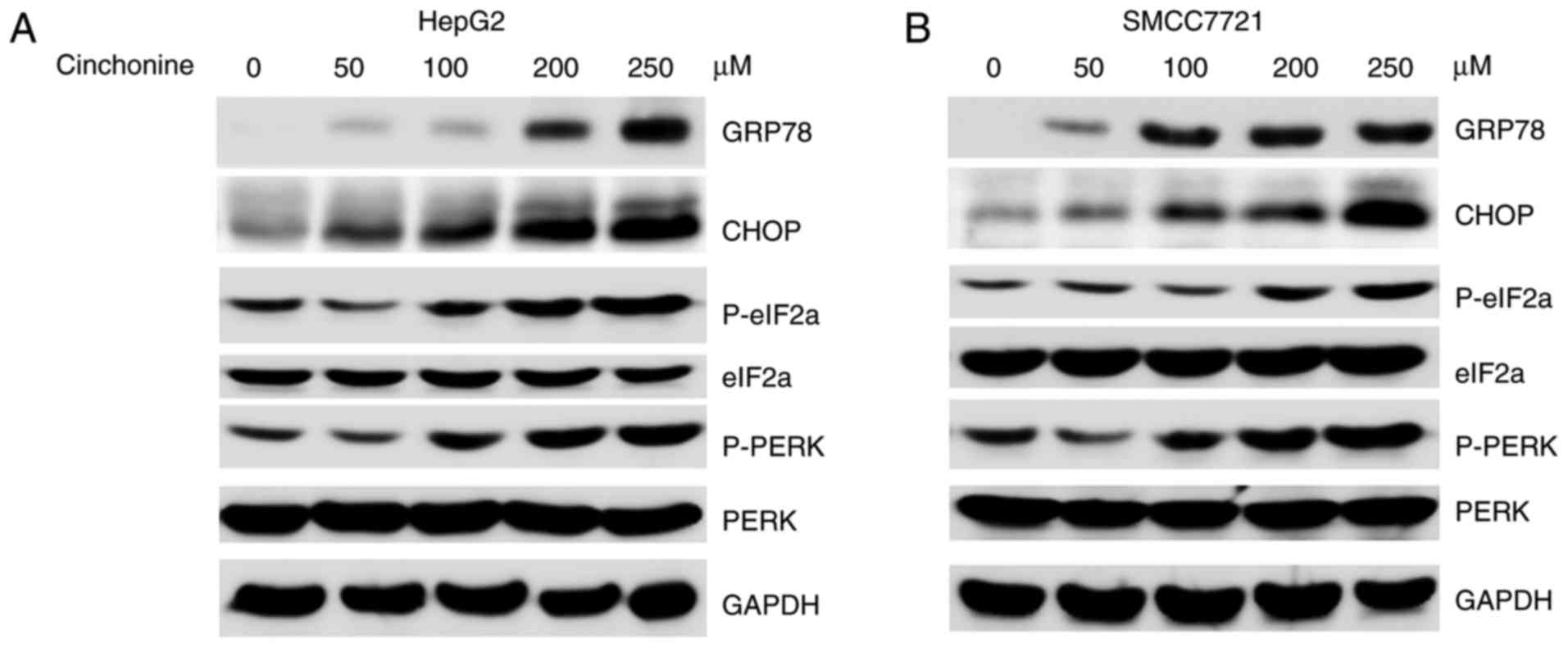
Prolonged ER stress could trigger cellular apoptosis (16,17). We then asked whether cinchonine could activate ER stress to induce apoptosis. The markers for ER stress, such as phospho-PKR-like ER kinase (p-PERK), phospho-eukaryotic initiation factor-2α (p-eIF2α) and GRP78 were investigated. To this end, HepG2 and SMCC7721 cells were treated with increased dose of cinchonine for 12 h. We found that cinchonine markedly induced the expressions of ER stress makers in liver cancer cells in a dose dependent manner (Fig. 3A and B). Taken together, these data suggested that cinchonine efficiently activated ER stress in liver cancer, and eventually leading to cells apoptosis.

Figure 3.

Cinchonine activated ER stress in human liver cancer cells. (A) HepG2 cells were treated with several concentrations of Cinchonine for 48 h. Cell lysates were harvested, and the expression levels of ER stress-related molecules were assessed by western blot. (B) SMCC7721 cells were treated with several concentrations of cinchonine for 48 h. Cell lysates were harvested and subjected to western blot with indicated antibodies. ER, endoplasmic-reticulum.

Cinchonine inhibited liver cancer cells growth in vivo

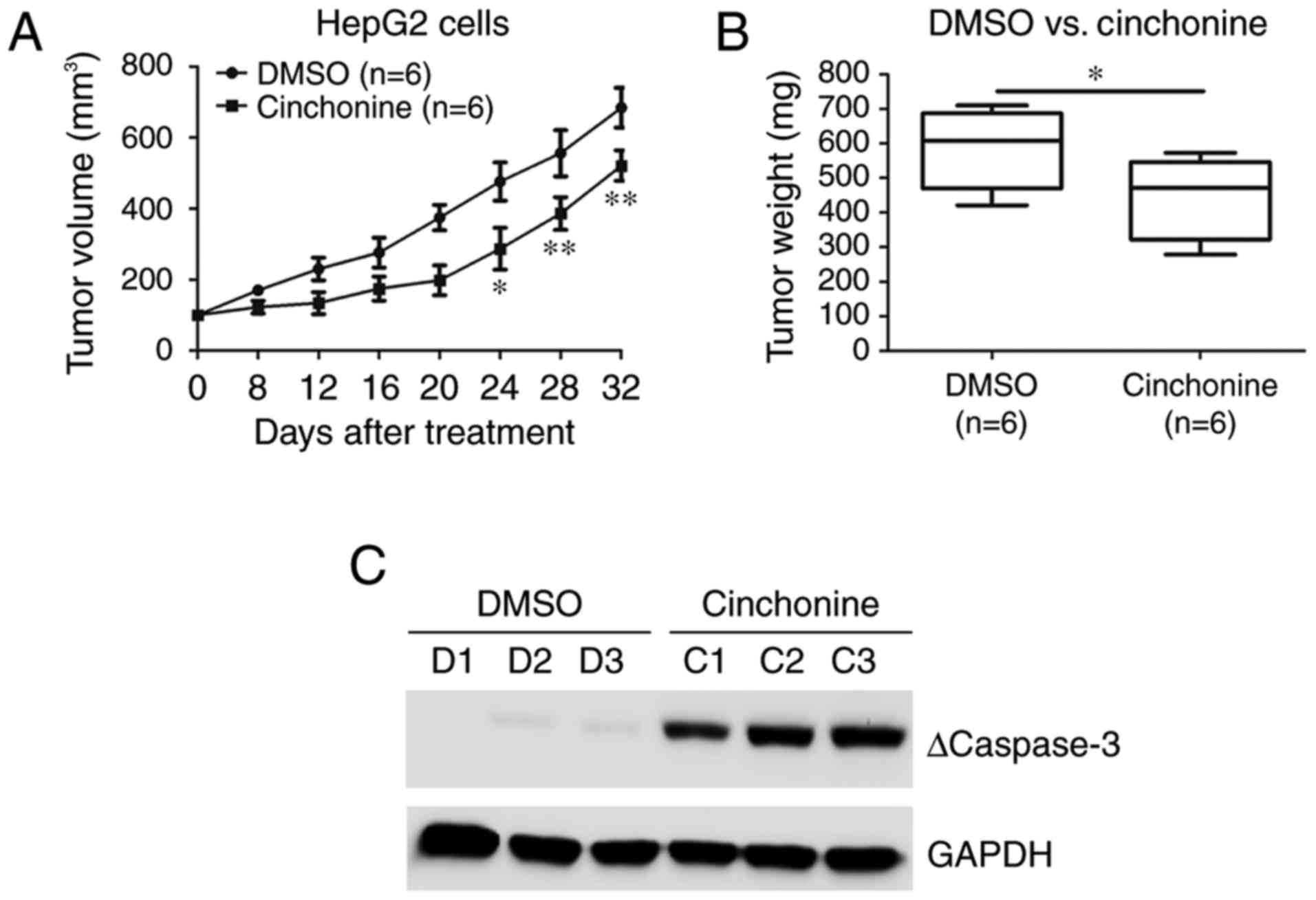
We then evaluated the antitumor effects of cinchonine in vivo using a xenograft mouse model. HepG2 cells were injected subcutaneously into the flanks of Balb/c-nude mice. After the tumors reached about 150 mm3 in volume, these mice were treated with DMSO or cinchonine (0.5 mg/Kg) by intraperitoneal injection once per day for 32 days. From about three weeks after treatment, the tumor growth was markedly inhibited in the cinchonine-treated group than in DMSO group (Fig. 4A). At the end of the treatment, the tumors in the cinchonine-treated group were significantly lighter than those in the control group (Fig. 4B). We examined the protein expression levels of cleaved caspase-3 in xenograft tumor samples from both groups. We try to confirm our in vitro findings concerning the associations between caspase-3 activation and tumor growth inhibition induced by cinchonine treatment. Western blot data revealed increased cleaved caspase-3 levels after cinchonine treatment in HepG2 tumor tissues (Fig. 4C), indicating that enhanced cell apoptosis contributed to cinchonine-induced tumor growth inhibition.

Figure 4.

Cinchonine inhibited liver cancer cells growth in vivo. (A) The tumor volumes assessed during the different treatments are presented as the response. Quantitative analyses of tumor volumes are presented as the means ± SD. DMSO vs. cinchonine. *P<0.05, **P<0.01. (B) The tumor weights of each group measured on the last day of treatment were compared. DMSO vs. Cinchonine. *P<0.05. (C) The expression level of cleaved caspase-3 in each tumor was assessed by western blot analysis. D, DMSO; C, cinchonine.

Discussion

Previous studies have reported that cinchonine is an inhibitor of human platelet aggregation through the inhibition of Ca2+ influx and PKC pathways in platelets (15). Cinchonine has been shown to possess a suppressive effect on adipogenesis and it also attenuates inflammation in the adipose tissue of mice fed on the High-Fat-Diet (18). A recent study found that cinchonine bound to TRAF6 in HeLa and A549 cells to induce apoptosis of these cancer cells, suggesting the potential antitumor effect of cinchonine. However, whether cinchonine is effective against liver cancer is still unknown.

In the present study, we found that cinchonine inhibits most liver cancer cells proliferation and promotes apoptosis in a dose-dependent manner. Perturbation of the ER environment, such as increased improperly folded proteins in ER, can cause ER stress and trigger the unfolded protein response. High levels of misfolded proteins can disrupt cellular homeostasis, induce ER stress, and might eventually lead to apoptosis (10). We found that cinchonine dramatically increased GRP78/CHOP protein levels and promoted PERK and eIF2a phosphorylation, suggesting that cinchonine activated ER stress response. We further observed that prolonged cinchonine exposure promoted caspase-3 activation and PARP1 cleavage in liver cancer cells, suggesting that cinchonine activate ER stress-induced apoptosis in liver cancer cells. Moreover, we also observed that cinchonine significantly suppressed HepG2 xenograft tumors growth in mice and also activated caspase-3 activation in vivo. Bel-7402 cell was not very sensitive to cinchonine treatment, and perhaps it contains less amount of GRP78 or CHOP protein levels, which should be test in the future.

In conclusion, cinchonine promotes ER-stress in liver cancer which in turn activating caspase-3-dependent apoptosis both in vitro and in vivo. These results suggest cinchonine might be a potential antitumor drug in the treatment of human liver cancer.

References

1 

Forner A, Llovet JM and Bruix J: Hepatocellular carcinoma. Lancet. 379:1245–1255. 2012. View Article : Google Scholar : PubMed/NCBI

2 

Cabibbo G and Craxì A: Epidemiology, risk factors and surveillance of hepatocellular carcinoma. Eur Rev Med Pharmacol Sci. 14:352–355. 2010.PubMed/NCBI

3 

Mann J: Natural products in cancer chemotherapy: Past, present and future. Nat Rev Cancer. 2:143–148. 2002. View Article : Google Scholar : PubMed/NCBI

4 

Darvesh AS, Aggarwal BB and Bishayee A: Curcumin and liver cancer: A review. Curr Pharm Biotechnol. 13:218–228. 2012. View Article : Google Scholar : PubMed/NCBI

5 

Liang RR, Zhang S, Qi JA, Wang ZD, Li J, Liu PJ, Huang C, Le XF, Yang J and Li ZF: Preferential inhibition of hepatocellular carcinoma by the flavonoid Baicalein through blocking MEK-ERK signaling. Int J Oncol. 41:969–978. 2012. View Article : Google Scholar : PubMed/NCBI

6 

Singh P, Singh IN, Mondal SC, Singh L and Garg VK: Platelet-activating factor (PAF)-antagonists of natural origin. Fitoterapia. 84:180–201. 2013. View Article : Google Scholar : PubMed/NCBI

7 

Nobili S, Landini I, Giglioni B and Mini E: Pharmacological strategies for overcoming multidrug resistance. Curr Drug Targets. 7:861–879. 2006. View Article : Google Scholar : PubMed/NCBI

8 

Lee SY, Rhee YH, Jeong SJ, Lee HJ, Lee HJ, Jung MH and Kim SH, Lee EO, Ahn KS, Ahn KS and Kim SH: Hydrocinchonine, cinchonine, and quinidine potentiate paclitaxel-induced cytotoxicity and apoptosis via multidrug resistance reversal in MES-SA/DX5 uterine sarcoma cells. Environ Toxicol. 26:424–431. 2011. View Article : Google Scholar : PubMed/NCBI

9 

Chen P, Wang K, Guo W, Liu X, Liu Y and Li C: Enantioselective reactions of 2-sulfonylalkyl phenols with allenic esters: Dynamic kinetic resolution and [4+2] cycloaddition involving ortho-Quinone methide intermediates. Angew Chem Int Ed Engl. 56:3689–3693. 2017. View Article : Google Scholar : PubMed/NCBI

10 

Sano R and Reed JC: ER stress-induced cell death mechanisms. Biochim Biophys Acta. 1833:3460–3470. 2013. View Article : Google Scholar : PubMed/NCBI

11 

Ryoo HD: Long and short (timeframe) of endoplasmic reticulum stress-induced cell death. FEBS J. 283:3718–3722. 2016. View Article : Google Scholar : PubMed/NCBI

12 

Palam LR, Baird TD and Wek RC: Phosphorylation of eIF2 facilitates ribosomal bypass of an inhibitory upstream ORF to enhance CHOP translation. J Biol Chem. 286:10939–10949. 2011. View Article : Google Scholar : PubMed/NCBI

13 

Harding HP, Novoa I, Zhang Y, Zeng H, Wek R, Schapira M and Ron D: Regulated translation initiation controls stress-induced gene expression in mammalian cells. Mol cell. 6:1099–1108. 2000. View Article : Google Scholar : PubMed/NCBI

14 

Zinszner H, Kuroda M, Wang X, Batchvarova N, Lightfoot RT, Remotti H, Stevens JL and Ron D: CHOP is implicated in programmed cell death in response to impaired function of the endoplasmic reticulum. Genes Dev. 12:982–995. 1998. View Article : Google Scholar : PubMed/NCBI

15 

Shah BH, Nawaz Z, Virani SS, Ali IQ, Saeed SA and Gilani AH: The inhibitory effect of cinchonine on human platelet aggregation due to blockade of calcium influx. Biochem Pharmacol. 56:955–960. 1998. View Article : Google Scholar : PubMed/NCBI

16 

Lipson KL, Fonseca SG and Urano F: Endoplasmic reticulum stress-induced apoptosis and auto-immunity in diabetes. Curr Mol Med. 6:71–77. 2006. View Article : Google Scholar : PubMed/NCBI

17 

Boyce M and Yuan J: Cellular response to endoplasmic reticulum stress: A matter of life or death. Cell Death Differ. 13:363–373. 2006. View Article : Google Scholar : PubMed/NCBI

18 

Jung SA, Choi M, Kim S, Yu R and Park T: Cinchonine prevents high-fat-diet-induced obesity through downregulation of adipogenesis and adipose inflammation. PPAR Res. 2012:5412042012. View Article : Google Scholar : PubMed/NCBI

Related Articles

  • Abstract
  • View
  • Download
  • Twitter
Copy and paste a formatted citation
Spandidos Publications style
Jin ZL, Yan W, Qu M, Ge CZ, Chen X and Zhang SF: Cinchonine activates endoplasmic reticulum stress‑induced apoptosis in human liver cancer cells. Exp Ther Med 15: 5046-5050, 2018.
APA
Jin, Z., Yan, W., Qu, M., Ge, C., Chen, X., & Zhang, S. (2018). Cinchonine activates endoplasmic reticulum stress‑induced apoptosis in human liver cancer cells. Experimental and Therapeutic Medicine, 15, 5046-5050. https://doi.org/10.3892/etm.2018.6005
MLA
Jin, Z., Yan, W., Qu, M., Ge, C., Chen, X., Zhang, S."Cinchonine activates endoplasmic reticulum stress‑induced apoptosis in human liver cancer cells". Experimental and Therapeutic Medicine 15.6 (2018): 5046-5050.
Chicago
Jin, Z., Yan, W., Qu, M., Ge, C., Chen, X., Zhang, S."Cinchonine activates endoplasmic reticulum stress‑induced apoptosis in human liver cancer cells". Experimental and Therapeutic Medicine 15, no. 6 (2018): 5046-5050. https://doi.org/10.3892/etm.2018.6005
Copy and paste a formatted citation
x
Spandidos Publications style
Jin ZL, Yan W, Qu M, Ge CZ, Chen X and Zhang SF: Cinchonine activates endoplasmic reticulum stress‑induced apoptosis in human liver cancer cells. Exp Ther Med 15: 5046-5050, 2018.
APA
Jin, Z., Yan, W., Qu, M., Ge, C., Chen, X., & Zhang, S. (2018). Cinchonine activates endoplasmic reticulum stress‑induced apoptosis in human liver cancer cells. Experimental and Therapeutic Medicine, 15, 5046-5050. https://doi.org/10.3892/etm.2018.6005
MLA
Jin, Z., Yan, W., Qu, M., Ge, C., Chen, X., Zhang, S."Cinchonine activates endoplasmic reticulum stress‑induced apoptosis in human liver cancer cells". Experimental and Therapeutic Medicine 15.6 (2018): 5046-5050.
Chicago
Jin, Z., Yan, W., Qu, M., Ge, C., Chen, X., Zhang, S."Cinchonine activates endoplasmic reticulum stress‑induced apoptosis in human liver cancer cells". Experimental and Therapeutic Medicine 15, no. 6 (2018): 5046-5050. https://doi.org/10.3892/etm.2018.6005
Follow us
  • Twitter
  • LinkedIn
  • Facebook
About
  • Spandidos Publications
  • Careers
  • Cookie Policy
  • Privacy Policy
How can we help?
  • Help
  • Live Chat
  • Contact
  • Email to our Support Team