Spandidos Publications Logo
  • About
    • About Spandidos
    • Aims and Scopes
    • Abstracting and Indexing
    • Editorial Policies
    • Reprints and Permissions
    • Job Opportunities
    • Terms and Conditions
    • Contact
  • Journals
    • All Journals
    • Oncology Letters
      • Oncology Letters
      • Information for Authors
      • Editorial Policies
      • Editorial Board
      • Aims and Scope
      • Abstracting and Indexing
      • Bibliographic Information
      • Archive
    • International Journal of Oncology
      • International Journal of Oncology
      • Information for Authors
      • Editorial Policies
      • Editorial Board
      • Aims and Scope
      • Abstracting and Indexing
      • Bibliographic Information
      • Archive
    • Molecular and Clinical Oncology
      • Molecular and Clinical Oncology
      • Information for Authors
      • Editorial Policies
      • Editorial Board
      • Aims and Scope
      • Abstracting and Indexing
      • Bibliographic Information
      • Archive
    • Experimental and Therapeutic Medicine
      • Experimental and Therapeutic Medicine
      • Information for Authors
      • Editorial Policies
      • Editorial Board
      • Aims and Scope
      • Abstracting and Indexing
      • Bibliographic Information
      • Archive
    • International Journal of Molecular Medicine
      • International Journal of Molecular Medicine
      • Information for Authors
      • Editorial Policies
      • Editorial Board
      • Aims and Scope
      • Abstracting and Indexing
      • Bibliographic Information
      • Archive
    • Biomedical Reports
      • Biomedical Reports
      • Information for Authors
      • Editorial Policies
      • Editorial Board
      • Aims and Scope
      • Abstracting and Indexing
      • Bibliographic Information
      • Archive
    • Oncology Reports
      • Oncology Reports
      • Information for Authors
      • Editorial Policies
      • Editorial Board
      • Aims and Scope
      • Abstracting and Indexing
      • Bibliographic Information
      • Archive
    • Molecular Medicine Reports
      • Molecular Medicine Reports
      • Information for Authors
      • Editorial Policies
      • Editorial Board
      • Aims and Scope
      • Abstracting and Indexing
      • Bibliographic Information
      • Archive
    • World Academy of Sciences Journal
      • World Academy of Sciences Journal
      • Information for Authors
      • Editorial Policies
      • Editorial Board
      • Aims and Scope
      • Abstracting and Indexing
      • Bibliographic Information
      • Archive
    • International Journal of Functional Nutrition
      • International Journal of Functional Nutrition
      • Information for Authors
      • Editorial Policies
      • Editorial Board
      • Aims and Scope
      • Abstracting and Indexing
      • Bibliographic Information
      • Archive
    • International Journal of Epigenetics
      • International Journal of Epigenetics
      • Information for Authors
      • Editorial Policies
      • Editorial Board
      • Aims and Scope
      • Abstracting and Indexing
      • Bibliographic Information
      • Archive
    • Medicine International
      • Medicine International
      • Information for Authors
      • Editorial Policies
      • Editorial Board
      • Aims and Scope
      • Abstracting and Indexing
      • Bibliographic Information
      • Archive
  • Articles
  • Information
    • Information for Authors
    • Information for Reviewers
    • Information for Librarians
    • Information for Advertisers
    • Conferences
  • Language Editing
Spandidos Publications Logo
  • About
    • About Spandidos
    • Aims and Scopes
    • Abstracting and Indexing
    • Editorial Policies
    • Reprints and Permissions
    • Job Opportunities
    • Terms and Conditions
    • Contact
  • Journals
    • All Journals
    • Biomedical Reports
      • Information for Authors
      • Editorial Policies
      • Editorial Board
      • Aims and Scope
      • Abstracting and Indexing
      • Bibliographic Information
      • Archive
    • Experimental and Therapeutic Medicine
      • Information for Authors
      • Editorial Policies
      • Editorial Board
      • Aims and Scope
      • Abstracting and Indexing
      • Bibliographic Information
      • Archive
    • International Journal of Epigenetics
      • Information for Authors
      • Editorial Policies
      • Editorial Board
      • Aims and Scope
      • Abstracting and Indexing
      • Bibliographic Information
      • Archive
    • International Journal of Functional Nutrition
      • Information for Authors
      • Editorial Policies
      • Editorial Board
      • Aims and Scope
      • Abstracting and Indexing
      • Bibliographic Information
      • Archive
    • International Journal of Molecular Medicine
      • Information for Authors
      • Editorial Policies
      • Editorial Board
      • Aims and Scope
      • Abstracting and Indexing
      • Bibliographic Information
      • Archive
    • International Journal of Oncology
      • Information for Authors
      • Editorial Policies
      • Editorial Board
      • Aims and Scope
      • Abstracting and Indexing
      • Bibliographic Information
      • Archive
    • Medicine International
      • Information for Authors
      • Editorial Policies
      • Editorial Board
      • Aims and Scope
      • Abstracting and Indexing
      • Bibliographic Information
      • Archive
    • Molecular and Clinical Oncology
      • Information for Authors
      • Editorial Policies
      • Editorial Board
      • Aims and Scope
      • Abstracting and Indexing
      • Bibliographic Information
      • Archive
    • Molecular Medicine Reports
      • Information for Authors
      • Editorial Policies
      • Editorial Board
      • Aims and Scope
      • Abstracting and Indexing
      • Bibliographic Information
      • Archive
    • Oncology Letters
      • Information for Authors
      • Editorial Policies
      • Editorial Board
      • Aims and Scope
      • Abstracting and Indexing
      • Bibliographic Information
      • Archive
    • Oncology Reports
      • Information for Authors
      • Editorial Policies
      • Editorial Board
      • Aims and Scope
      • Abstracting and Indexing
      • Bibliographic Information
      • Archive
    • World Academy of Sciences Journal
      • Information for Authors
      • Editorial Policies
      • Editorial Board
      • Aims and Scope
      • Abstracting and Indexing
      • Bibliographic Information
      • Archive
  • Articles
  • Information
    • For Authors
    • For Reviewers
    • For Librarians
    • For Advertisers
    • Conferences
  • Language Editing
Login Register Submit
  • This site uses cookies
  • You can change your cookie settings at any time by following the instructions in our Cookie Policy. To find out more, you may read our Privacy Policy.

    I agree
Search articles by DOI, keyword, author or affiliation
Search
Advanced Search
presentation
Experimental and Therapeutic Medicine
Join Editorial Board Propose a Special Issue
Print ISSN: 1792-0981 Online ISSN: 1792-1015
Journal Cover
August-2019 Volume 18 Issue 2

Full Size Image

Sign up for eToc alerts
Recommend to Library

Journals

International Journal of Molecular Medicine

International Journal of Molecular Medicine

International Journal of Molecular Medicine is an international journal devoted to molecular mechanisms of human disease.

International Journal of Oncology

International Journal of Oncology

International Journal of Oncology is an international journal devoted to oncology research and cancer treatment.

Molecular Medicine Reports

Molecular Medicine Reports

Covers molecular medicine topics such as pharmacology, pathology, genetics, neuroscience, infectious diseases, molecular cardiology, and molecular surgery.

Oncology Reports

Oncology Reports

Oncology Reports is an international journal devoted to fundamental and applied research in Oncology.

Experimental and Therapeutic Medicine

Experimental and Therapeutic Medicine

Experimental and Therapeutic Medicine is an international journal devoted to laboratory and clinical medicine.

Oncology Letters

Oncology Letters

Oncology Letters is an international journal devoted to Experimental and Clinical Oncology.

Biomedical Reports

Biomedical Reports

Explores a wide range of biological and medical fields, including pharmacology, genetics, microbiology, neuroscience, and molecular cardiology.

Molecular and Clinical Oncology

Molecular and Clinical Oncology

International journal addressing all aspects of oncology research, from tumorigenesis and oncogenes to chemotherapy and metastasis.

World Academy of Sciences Journal

World Academy of Sciences Journal

Multidisciplinary open-access journal spanning biochemistry, genetics, neuroscience, environmental health, and synthetic biology.

International Journal of Functional Nutrition

International Journal of Functional Nutrition

Open-access journal combining biochemistry, pharmacology, immunology, and genetics to advance health through functional nutrition.

International Journal of Epigenetics

International Journal of Epigenetics

Publishes open-access research on using epigenetics to advance understanding and treatment of human disease.

Medicine International

Medicine International

An International Open Access Journal Devoted to General Medicine.

Journal Cover
August-2019 Volume 18 Issue 2

Full Size Image

Sign up for eToc alerts
Recommend to Library

  • Article
  • Citations
    • Cite This Article
    • Download Citation
    • Create Citation Alert
    • Remove Citation Alert
    • Cited By
  • Similar Articles
    • Related Articles (in Spandidos Publications)
    • Similar Articles (Google Scholar)
    • Similar Articles (PubMed)
  • Download PDF
  • Download XML
  • View XML
Article Open Access

Forkhead box P3 gene silencing inhibits the expression of chemokines and chemokine receptors associated with cell growth, migration, and apoptosis in hepatocellular carcinoma cells

  • Authors:
    • Xi Ou
    • Guang‑Tao Zhang
    • Pei‑Kai Tian
    • Jing‑Sen Chen
    • Ze‑Wei Lin
    • Yong Xie
    • Ai‑Hong Wang
    • Xiao‑Ping Liu
    • Ji‑kui Liu
  • View Affiliations / Copyright

    Affiliations: Department of Hepatopancreatobiliary Surgery, Peking University Shenzhen Hospital, Shenzhen, Guangdong 518036, P.R. China, Department of Hepatobiliary Surgery, Shenzhen University General Hospital, Shenzhen, Guangdong 518055, P.R. China, Department of Breast Surgery, Shenzhen Maternity and Child Healthcare Hospital, Shenzhen, Guangdong 518028, P.R. China
    Copyright: © Ou et al. This is an open access article distributed under the terms of Creative Commons Attribution License.
  • Pages: 1091-1098
    |
    Published online on: June 10, 2019
       https://doi.org/10.3892/etm.2019.7658
  • Expand metrics +
Metrics: Total Views: 0 (Spandidos Publications: | PMC Statistics: )
Metrics: Total PDF Downloads: 0 (Spandidos Publications: | PMC Statistics: )
Cited By (CrossRef): 0 citations Loading Articles...

This article is mentioned in:


Abstract

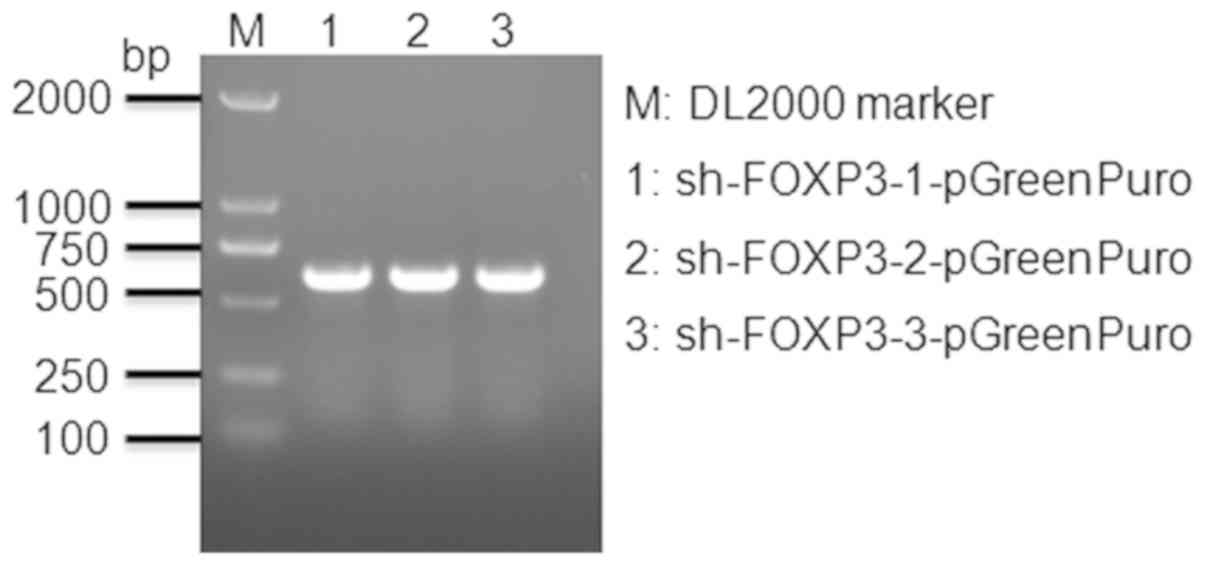
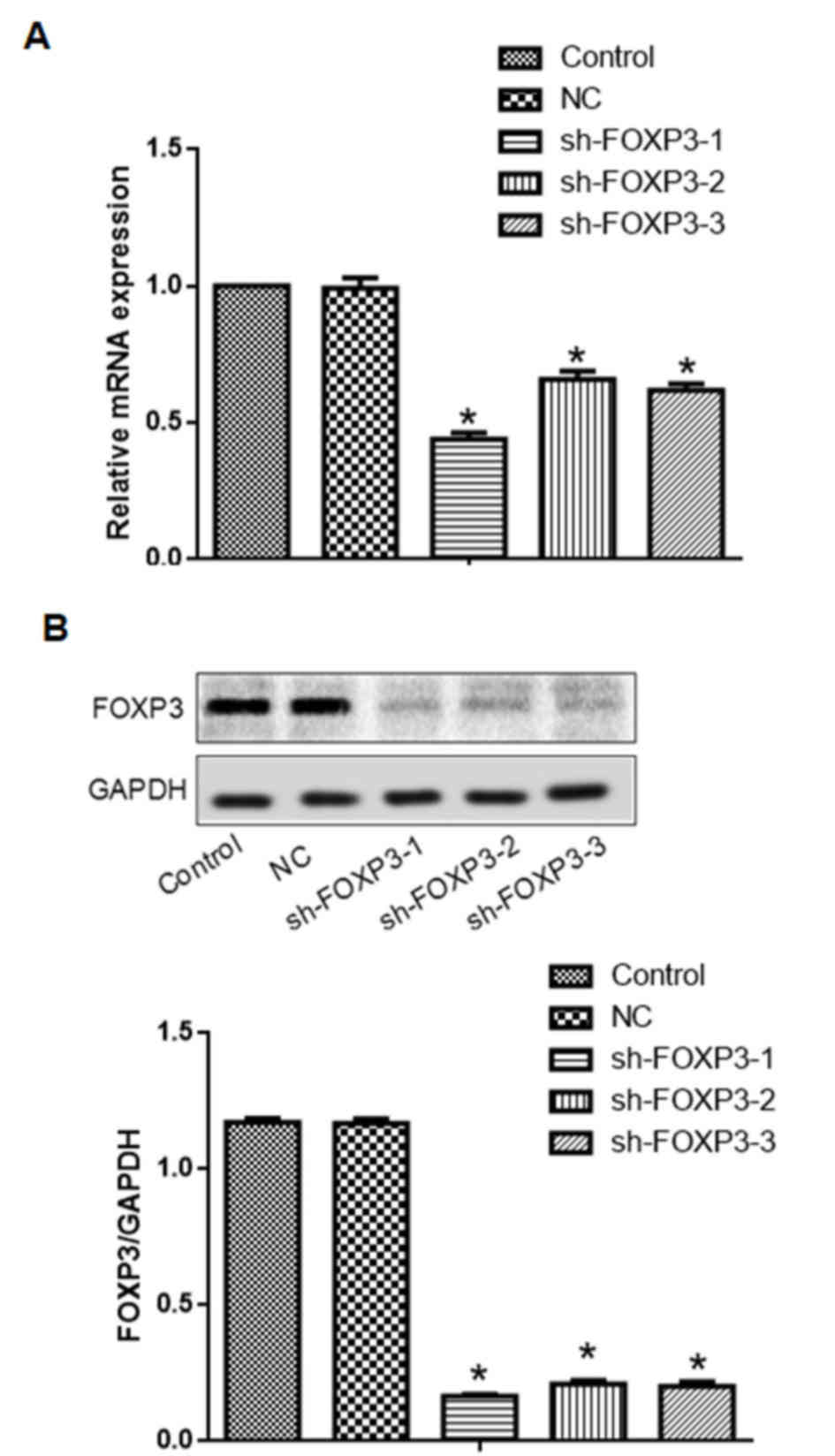
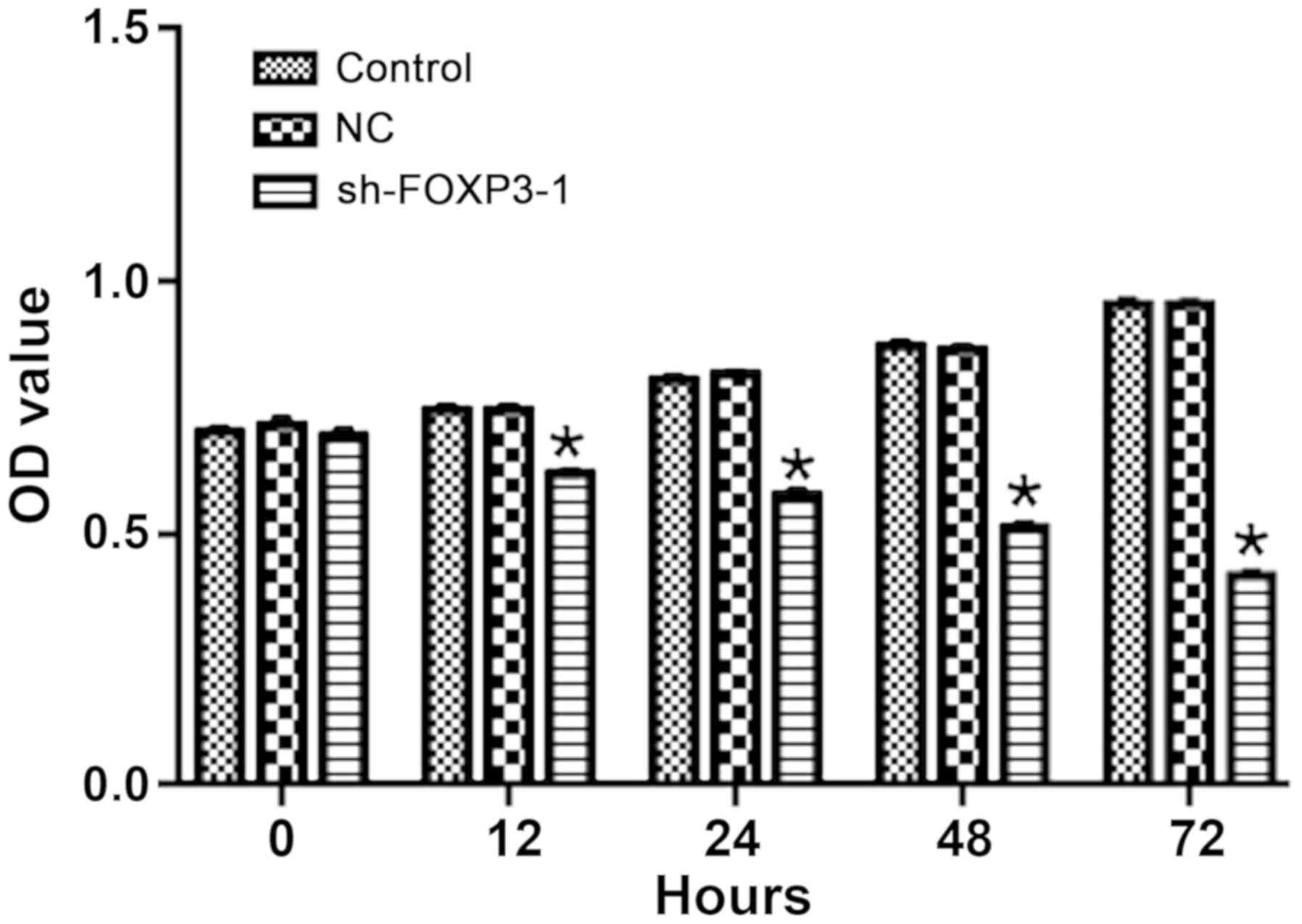
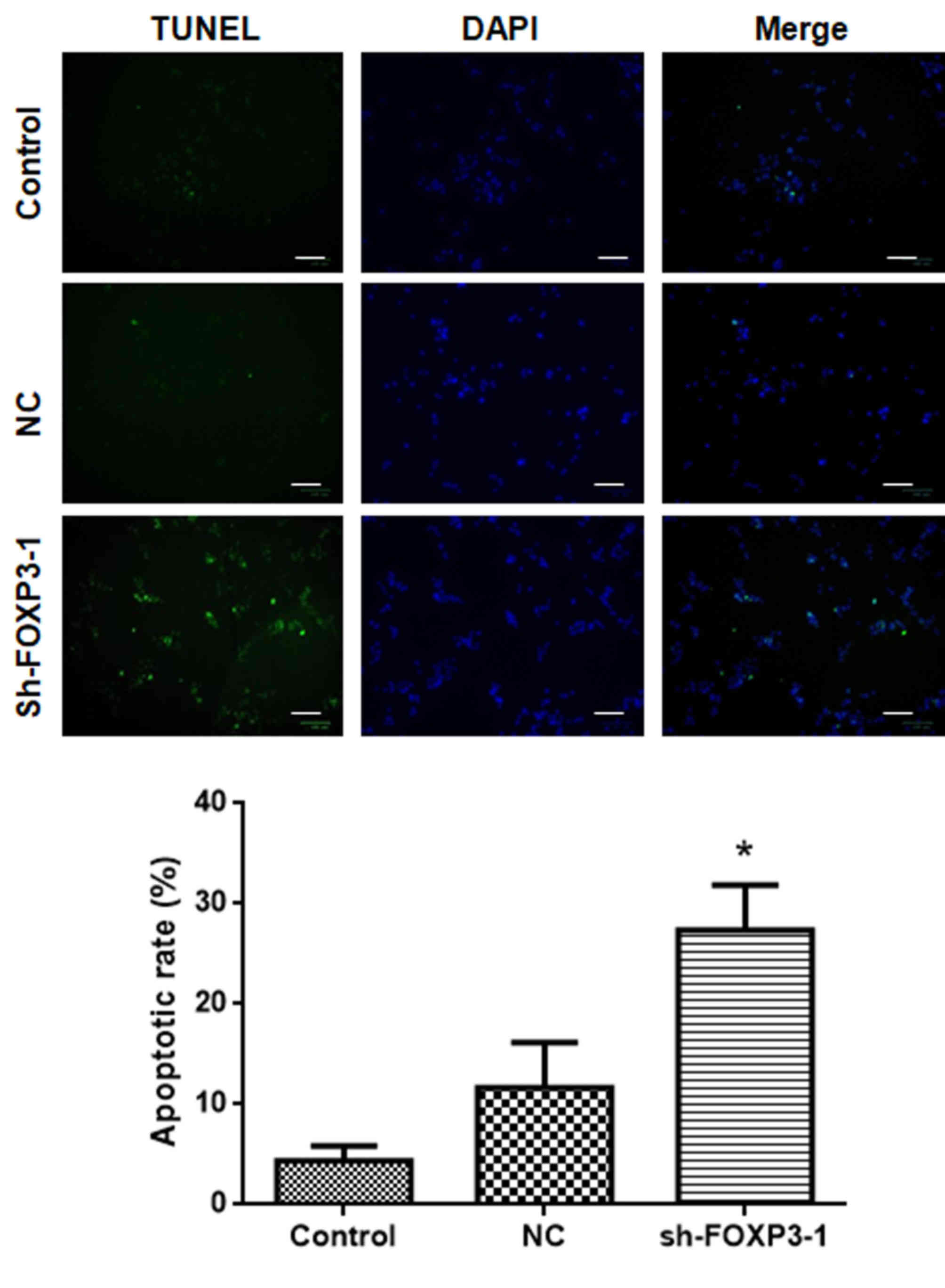
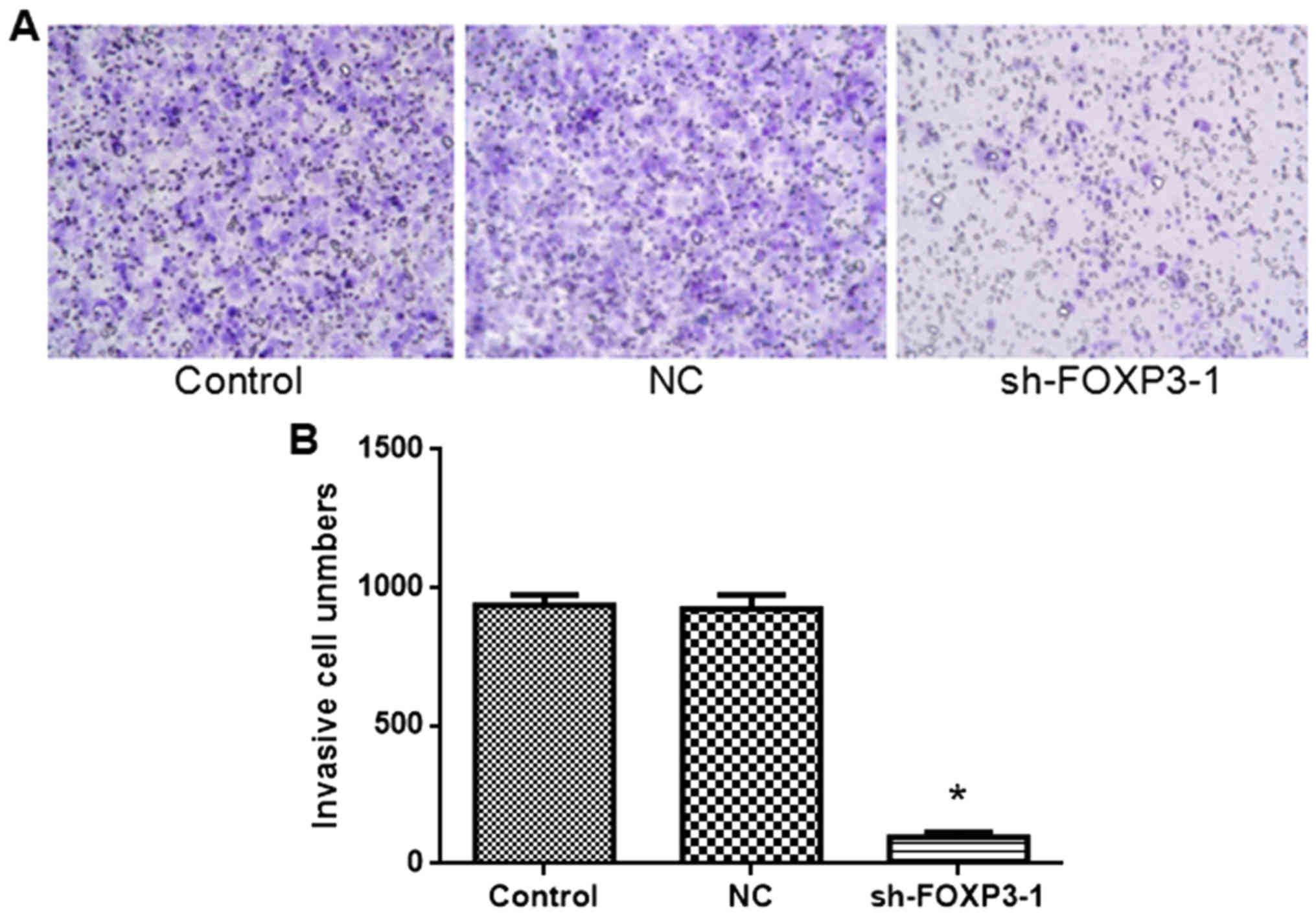
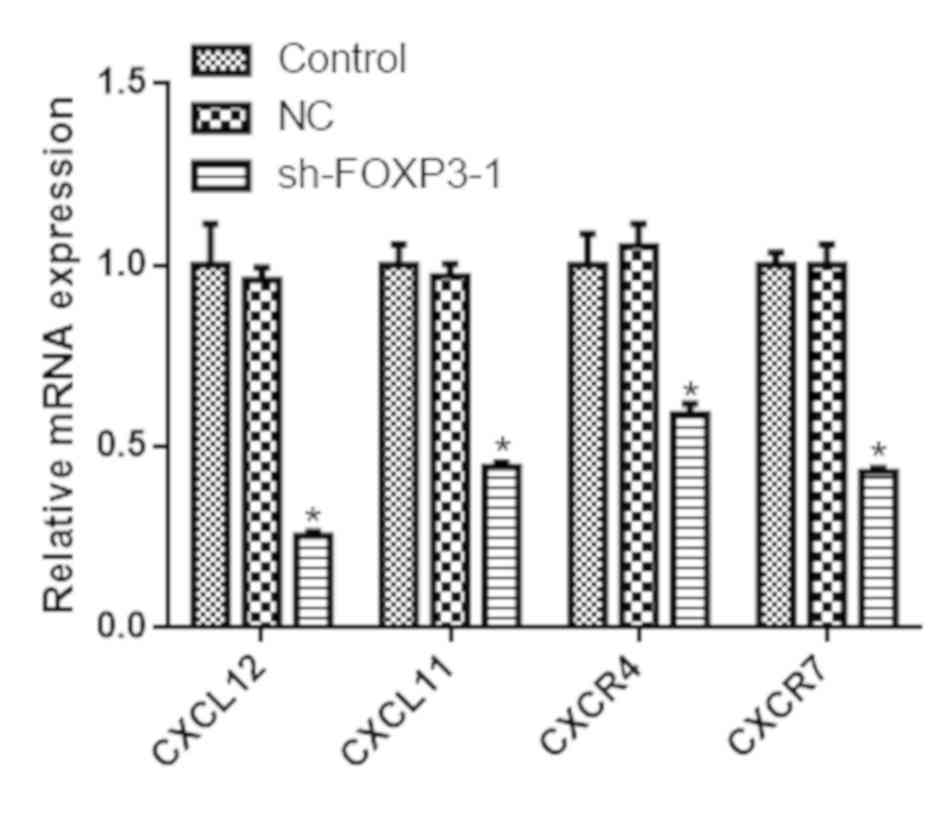
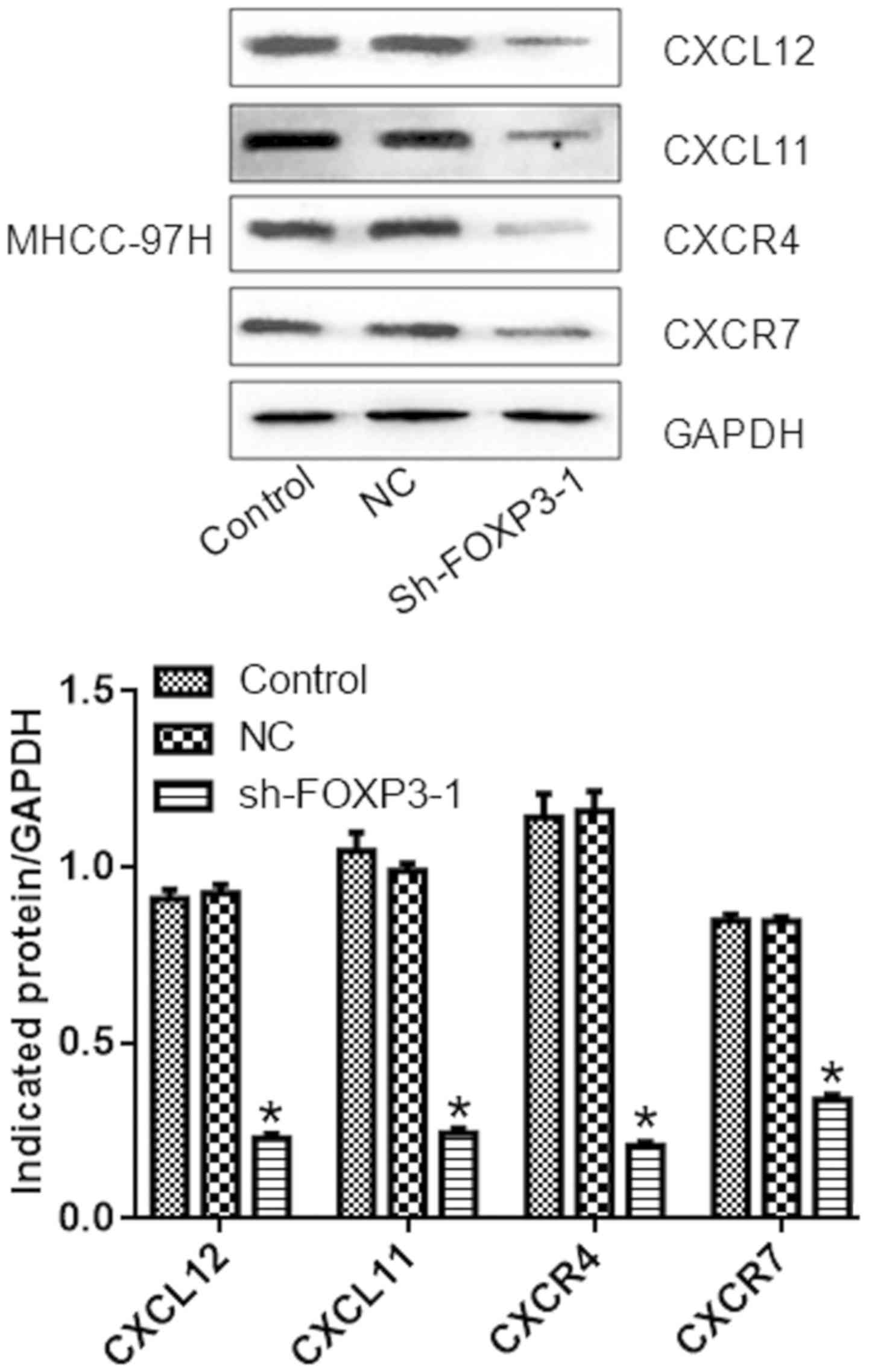
The aberrant expression of forkhead box P3 (FOXP3) leads to the formation of malignant tumors. FOXP3 expression levels are also elevated in hepatocellular carcinoma (HCC). The aim of the present study was to investigate the effects of FOXP3 silencing on cell proliferation, migration, apoptosis and chemokine/chemokine receptor expression in the MHCC‑97H HCC cell line. Three FOXP3 short hairpin (sh)RNA constructs were designed: Sh‑FOXP3‑1‑pGreenPuro, sh‑FOXP3‑2‑pGreenPuro, and sh‑FOXP3‑3‑pGreenPuro. MHCC‑97H cells were transfected with shRNA‑FOXP3, and the mRNA and protein expression levels of C‑X‑C motif chemokine (CXC) ligand 12 (CXCL12), CXCL11, CXC receptor 4 (CXCR4) and CXCR7 were measured. Cell Counting Kit‑8, terminal deoxynucleotidyl‑transferase‑mediated dUTP nick end labeling and Transwell assays were used to evaluate cell proliferation, apoptosis and migration, respectively. Of the three FOXP3 lentivirus carriers constructed, sh‑FOXP3‑1 significantly reduced FOXP3 expression levels and was chosen for further experiments. sh‑FOXP3‑1 inhibited cell proliferation, promoted apoptosis and inhibited cell migration compared with the negative control. The mRNA and protein expression levels of CXCL12, CXCL11, CXCR4 and CXCR7 were decreased significantly in response to FOXP3 silencing. FOXP3 silencing may therefore inhibit cell growth, induce apoptosis and inhibit migration in HCC cells, possibly by impairing the chemokine/chemokine receptor axes.
View Figures

Figure 1

Figure 2

Figure 3

Figure 4

Figure 5

Figure 6

Figure 7

View References

1 

Singh AK, Kumar R and Pandey AK: Hepatocellular carcinoma: Causes, mechanism of progression and biomarkers. Curr Chem Genom Transl Med. 12:9–26. 2018. View Article : Google Scholar : PubMed/NCBI

2 

Glantzounis GK, Kyrochristos ID, Ziogas DE, Lykoudis EG and Roukos DH: Novel translational therapeutic strategy by sequencing primary liver cancer genomes. Future Oncol. 13:1049–1052. 2017. View Article : Google Scholar : PubMed/NCBI

3 

Yang B, Petrick JL, Kelly SP, Graubard BI, Freedman ND and McGlynn KA: Adiposity across the adult life course and incidence of primary liver cancer: The NIH-AARP cohort. Int J Cancer. 141:271–278. 2017. View Article : Google Scholar : PubMed/NCBI

4 

Lan L, Zhao F, Cai Y, Wu RX and Meng Q: Epidemiological analysis on mortality of cancer in China, 2015. Zhonghua Liu Xing Bing Xue Za Zhi. 39:32–34. 2018.(In Chinese). PubMed/NCBI

5 

Sakaguchi S, Yamaguchi T, Nomura T and Ono M: Regulatory T cells and immune tolerance. Cell. 133:775–787. 2008. View Article : Google Scholar : PubMed/NCBI

6 

Bennett CL, Christie J, Ramsdell F, Brunkow ME, Ferguson PJ, Whitesell L, Kelly TE, Saulsbury FT, Chance PF and Ochs HD: The immune dysregulation, polyendocrinopathy, enteropathy, X-linked syndrome (IPEX) is caused by mutations of FOXP3. Nat Genet. 27:20–21. 2001. View Article : Google Scholar : PubMed/NCBI

7 

Malik S and Awasthi A: Transcriptional control of Th9 cells: Role of foxo1 in interleukin-9 induction. Front Immunol. 9:9952018. View Article : Google Scholar : PubMed/NCBI

8 

Wada M, Tsuchikawa T, Kyogoku N, Abiko T, Miyauchi K, Takeuchi S, Kuwatani T, Shichinohe T, Miyahara Y, Kageyama S, et al: Clinical implications of CD4+CD25+Foxp3+Regulatory T cell frequencies after CHP--MAGE-A4 cancer vaccination. Anticancer Res. 38:1435–1444. 2018.PubMed/NCBI

9 

Lin SZ, Chen KJ, Xu ZY, Chen H, Zhou L, Xie HY and Zheng SS: Prediction of recurrence and survival in hepatocellular carcinoma based on two cox models mainly determined by FoxP3+ regulatory T cells. Cancer Prev Res (Phila). 6:594–602. 2013. View Article : Google Scholar : PubMed/NCBI

10 

Triulzi T, Tagliabue E, Balsari A and Casalini P: FOXP3 expression in tumor cells and implications for cancer progression. J Cell Physiol. 228:30–35. 2013. View Article : Google Scholar : PubMed/NCBI

11 

McInnes N, Sadlon TJ, Brown CY, Pederson S, Beyer M, Schultze JL, McColl S, Goodall GJ and Barry SC: FOXP3 and FOXP3-regulated microRNAs suppress SATB1 in breast cancer cells. Oncogene. 31:1045–1054. 2012. View Article : Google Scholar : PubMed/NCBI

12 

Merlo A, Casalini P, Carcangiu ML, Malventano C, Triulzi T, Mènard S, Tagliabue E and Balsari A: FOXP3 expression and overall survival in breast cancer. J Clin Oncol. 27:1746–1752. 2009. View Article : Google Scholar : PubMed/NCBI

13 

Ebert LM, Tan BS, Browning J, Svobodova S, Russell SE, Kirkpatrick N, Gedye C, Moss D, Ng SP, MacGregor D, et al: The regulatory T cell-associated transcription factor FoxP3 is expressed by tumor cells. Cancer Res. 68:3001–3009. 2008. View Article : Google Scholar : PubMed/NCBI

14 

Chen DJ, Li XS, Zhao H, Shi XL, Zhang HH, Fan ZY, Yao YM and DU N: Inhibitory effect of lentiviral-mediated RNA on the expression of Foxp3 protein in melanoma cells. Xi Bao Yu Fen Zi Mian Yi Xue Za Zhi. 28:337–339. 2012.(In Chinese). PubMed/NCBI

15 

Kobayashi N, Hiraoka N, Yamagami W, Ojima H, Kanai Y, Kosuge T, Nakajima A and Hirohashi S: FOXP3+ regulatory T cells affect the development and progression of hepatocarcinogenesis. Clin Cancer Res. 13:902–911. 2007. View Article : Google Scholar : PubMed/NCBI

16 

Wang WH, Jiang CL, Yan W, Zhang YH, Yang JT, Zhang C, Yan B, Zhang W, Han W, Wang JZ and Zhang YQ: FOXP3 expression and clinical characteristics of hepatocellular carcinoma. World J Gastroenterol. 16:5502–5509. 2010. View Article : Google Scholar : PubMed/NCBI

17 

Shi JY, Ma LJ, Zhang JW, Duan M, Ding ZB, Yang LX, Cao Y, Zhou J, Fan J, Zhang X, et al: FOXP3 Is a HCC suppressor gene and Acts through regulating the TGF-β/Smad2/3 signaling pathway. BMC Cancer. 17:6482017. View Article : Google Scholar : PubMed/NCBI

18 

Nagasawa T: CXC chemokine ligand 12 (CXCL12) and its receptor CXCR4. J Mol Med. 92:433–439. 2014. View Article : Google Scholar : PubMed/NCBI

19 

Liu X, Dai LI and Zhou R: Association between preeclampsia and the CXC chemokine family (Review). Exp Ther Med. 9:1572–1576. 2015. View Article : Google Scholar : PubMed/NCBI

20 

Zhou XM, He L, Hou G, Jiang B, Wang YH and Zhao L: Clinicopathological significance of CXCR4 in non-small cell lung cancer. Drug Des Devel Ther. 9:1349–1358. 2015. View Article : Google Scholar : PubMed/NCBI

21 

Izumi D, Ishimoto T, Miyake K, Sugihara H, Eto K, Sawayama H, Yasuda T, Kiyozumi Y, Kaida T, Kurashige J, et al: CXCL12/CXCR4 activation by cancer-associated fibroblasts promotes integrin β1 clustering and invasiveness in gastric cancer. Int J Cancer. 138:1207–1219. 2016. View Article : Google Scholar : PubMed/NCBI

22 

Rave-Frank M, Tehrany N, Kitz J, Leu M, Weber HE, Burfeind P, Schliephake H, Canis M, Beissbarth T, Reichardt HM and Wolff HA: Prognostic value of CXCL12 and CXCR4 in inoperable head and neck squamous cell carcinoma. Strahlenther Onkol. 192:47–54. 2016. View Article : Google Scholar : PubMed/NCBI

23 

Fontanella R, Pelagalli A, Nardelli A, D'Alterio C, Ieranò C, Cerchia L, Lucarelli E, Scala S and Zannetti A: A novel antagonist of CXCR4 prevents bone marrow-derived mesenchymal stem cell-mediated osteosarcoma and hepatocellular carcinoma cell migration and invasion. Cancer Lett. 370:100–107. 2016. View Article : Google Scholar : PubMed/NCBI

24 

Shi JY, Yang LX, Wang ZC, Wang LY, Zhou J, Wang XY, Shi GM, Ding ZB, Ke AW, Dai Z, et al: CC chemokine receptor-like 1 functions as a tumour suppressor by impairing CCR7-related chemotaxis in hepatocellular carcinoma. J Pathol. 235:546–558. 2015. View Article : Google Scholar : PubMed/NCBI

25 

Hao M, Zheng J, Hou K and Wang J, Chen X, Lu X, Bo J, Xu C, Shen K and Wang J: Role of chemokine receptor CXCR7 in bladder cancer progression. Biochem Pharmacol. 84:204–214. 2012. View Article : Google Scholar : PubMed/NCBI

26 

Benredjem B, Girard M, Rhainds D, St-Onge G and Heveker N: Mutational analysis of atypical chemokine receptor 3 (ACKR3/CXCR7) interaction with its chemokine ligands CXCL11 and CXCL12. J Biol Chem. 292:31–42. 2017. View Article : Google Scholar : PubMed/NCBI

27 

Burns JM, Summers BC, Wang Y, Melikian A, Berahovich R, Miao Z, Penfold ME, Sunshine MJ, Littman DR, Kuo CJ, et al: A novel chemokine receptor for SDF-1 and I-TAC involved in cell survival, cell adhesion, and tumor development. J Exp Med. 203:2201–2213. 2006. View Article : Google Scholar : PubMed/NCBI

28 

Li Y, Lu Z, Liang Z, Ji D, Zhang P, Liu Q, Zheng X and Yao Y: Metastasis-associated in colon cancer-1 is associated with poor prognosis in hepatocellular carcinoma, partly by promoting proliferation through enhanced glucose metabolism. Mol Med Rep. 12:426–434. 2015. View Article : Google Scholar : PubMed/NCBI

29 

Livak KJ and Schmittgen TD: Analysis of relative gene expression data using real-time quantitative PCR and the 2(-Delta Delta C(T)) method. Methods. 25:402–408. 2001. View Article : Google Scholar : PubMed/NCBI

30 

Wiedmann MW and Mossner J: Molecular targeted therapy of hepatocellular carcinoma-results of the first clinical studies. Curr Cancer Drug Targets. 11:714–733. 2011. View Article : Google Scholar : PubMed/NCBI

31 

Tabrizian P, Jibara G, Shrager B, Schwartz M and Roayaie S: Recurrence of hepatocellular cancer after resection: Patterns, treatments, and prognosis. Ann Surg. 261:947–955. 2015. View Article : Google Scholar : PubMed/NCBI

32 

Lopes JE, Torgerson TR, Schubert LA, Anover SD, Ocheltree EL, Ochs HD and Ziegler SF: Analysis of FOXP3 reveals multiple domains required for its function as a transcriptional repressor. J Immunol. 177:3133–3142. 2006. View Article : Google Scholar : PubMed/NCBI

33 

Rudensky AY: Regulatory T cells and Foxp3. Immunol Rev. 241:260–268. 2011. View Article : Google Scholar : PubMed/NCBI

34 

Grimmig T, Kim M, Germer CT, Gasser M and Waaga-Gasser AM: The role of FOXP3 in disease progression in colorectal cancer patients. Oncoimmunology. 2:e245212013. View Article : Google Scholar : PubMed/NCBI

35 

Cunha LL, Morari EC, Nonogaki S, Soares FA, Vassallo J and Ward LS: Foxp3 expression is associated with aggressiveness in differentiated thyroid carcinomas. Clinics. 67:483–488. 2012. View Article : Google Scholar : PubMed/NCBI

36 

Wang L, Mei M, Sun X, et al: Expression and significance of Foxp3 in hepatocellular carcinoma. Shandong Med J. 48:8–11. 2010.(In Chinese).

37 

Niu J, Jiang C, Li C, Liu L, Li K, Jian Z and Gao T: Foxp3 expression in melanoma cells as a possible mechanism of resistance to immune destruction. Cancer Immunol Immunother. 60:1109–1118. 2011. View Article : Google Scholar : PubMed/NCBI

38 

Geng Y, Wang H, Lu C, Li Q, Xu B, Jiang J and Wu C: Expression of costimulatory molecules B7-H1, B7-H4 and Foxp3+ Tregs in gastric cancer and its clinical significance. Int J Clin Oncol. 20:273–281. 2015. View Article : Google Scholar : PubMed/NCBI

39 

Fu S, Zhang N, Yopp AC, Chen D, Mao M, Chen D, Zhang H, Ding Y and Bromberg JS: TGF-beta induces Foxp3 + T-regulatory cells from CD4+CD25-precursors. Am J Transplant. 4:1614–1627. 2004. View Article : Google Scholar : PubMed/NCBI

40 

Zheng K, Li HY, Su XL, Wang XY, Tian T, Li F and Ren GS: Chemokine receptor CXCR7 regulates the invasion, angiogenesis and tumor growth of human hepatocellular carcinoma cells. J Exp Clin Cancer Res. 29:312010. View Article : Google Scholar : PubMed/NCBI

41 

Xue TC, Chen RX, Han D, Chen J, Xue Q, Gao DM, Sun RX, Tang ZY and Ye SL: Down-regulation of CXCR7 inhibits the growth and lung metastasis of human hepatocellular carcinoma cells with highly metastatic potential. Exp Ther Med. 3:117–123. 2012. View Article : Google Scholar : PubMed/NCBI

42 

Sutton A, Friand V, Brulé-Donneger S, Chaigneau T, Ziol M, Sainte-Catherine O, Poiré A, Saffar L, Kraemer M, Vassy J, et al: Stromal cell-derived factor-1/chemokine (C-X-C motif) ligand 12 stimulates human hepatoma cell growth, migration, and invasion. Mol Cancer Res. 5:21–33. 2007. View Article : Google Scholar : PubMed/NCBI

43 

Monnier J, Boissan M, L'Helgoualc'h A, Lacombe ML, Turlin B, Zucman-Rossi J, Théret N, Piquet-Pellorce C and Samson M: CXCR7 is up-regulated in human and murine hepatocellular carcinoma and is specifically expressed by endothelial cells. Eur J Cancer. 48:138–148. 2012. View Article : Google Scholar : PubMed/NCBI

44 

Zheng Y and Rudensky AY: Foxp3 in control of the regulatory T cell lineage. Nat Immunol. 8:457–462. 2007. View Article : Google Scholar : PubMed/NCBI

45 

Overbeck-Zubrzycka D, Ali S, Kirby J and Lennard T: FOXP3 transcription factor regulates metastatic spread of breast cancer via control of expression of CXCR4 chemokine receptor. Br J Surg. 98:842011.PubMed/NCBI

46 

Duda DG, Kozin SV, Kirkpatrick ND, Xu L, Fukumura D and Jain RK: CXCL12 (SDF1alpha)-CXCR4/CXCR7 pathway inhibition: An emerging sensitizer for anticancer therapies? Clin Cancer Res. 17:2074–2080. 2011. View Article : Google Scholar : PubMed/NCBI

Related Articles

  • Abstract
  • View
  • Download
  • Twitter
Copy and paste a formatted citation
Spandidos Publications style
Ou X, Zhang GT, Tian PK, Chen JS, Lin ZW, Xie Y, Wang AH, Liu XP and Liu Jk: Forkhead box P3 gene silencing inhibits the expression of chemokines and chemokine receptors associated with cell growth, migration, and apoptosis in hepatocellular carcinoma cells. Exp Ther Med 18: 1091-1098, 2019.
APA
Ou, X., Zhang, G., Tian, P., Chen, J., Lin, Z., Xie, Y. ... Liu, J. (2019). Forkhead box P3 gene silencing inhibits the expression of chemokines and chemokine receptors associated with cell growth, migration, and apoptosis in hepatocellular carcinoma cells. Experimental and Therapeutic Medicine, 18, 1091-1098. https://doi.org/10.3892/etm.2019.7658
MLA
Ou, X., Zhang, G., Tian, P., Chen, J., Lin, Z., Xie, Y., Wang, A., Liu, X., Liu, J."Forkhead box P3 gene silencing inhibits the expression of chemokines and chemokine receptors associated with cell growth, migration, and apoptosis in hepatocellular carcinoma cells". Experimental and Therapeutic Medicine 18.2 (2019): 1091-1098.
Chicago
Ou, X., Zhang, G., Tian, P., Chen, J., Lin, Z., Xie, Y., Wang, A., Liu, X., Liu, J."Forkhead box P3 gene silencing inhibits the expression of chemokines and chemokine receptors associated with cell growth, migration, and apoptosis in hepatocellular carcinoma cells". Experimental and Therapeutic Medicine 18, no. 2 (2019): 1091-1098. https://doi.org/10.3892/etm.2019.7658
Copy and paste a formatted citation
x
Spandidos Publications style
Ou X, Zhang GT, Tian PK, Chen JS, Lin ZW, Xie Y, Wang AH, Liu XP and Liu Jk: Forkhead box P3 gene silencing inhibits the expression of chemokines and chemokine receptors associated with cell growth, migration, and apoptosis in hepatocellular carcinoma cells. Exp Ther Med 18: 1091-1098, 2019.
APA
Ou, X., Zhang, G., Tian, P., Chen, J., Lin, Z., Xie, Y. ... Liu, J. (2019). Forkhead box P3 gene silencing inhibits the expression of chemokines and chemokine receptors associated with cell growth, migration, and apoptosis in hepatocellular carcinoma cells. Experimental and Therapeutic Medicine, 18, 1091-1098. https://doi.org/10.3892/etm.2019.7658
MLA
Ou, X., Zhang, G., Tian, P., Chen, J., Lin, Z., Xie, Y., Wang, A., Liu, X., Liu, J."Forkhead box P3 gene silencing inhibits the expression of chemokines and chemokine receptors associated with cell growth, migration, and apoptosis in hepatocellular carcinoma cells". Experimental and Therapeutic Medicine 18.2 (2019): 1091-1098.
Chicago
Ou, X., Zhang, G., Tian, P., Chen, J., Lin, Z., Xie, Y., Wang, A., Liu, X., Liu, J."Forkhead box P3 gene silencing inhibits the expression of chemokines and chemokine receptors associated with cell growth, migration, and apoptosis in hepatocellular carcinoma cells". Experimental and Therapeutic Medicine 18, no. 2 (2019): 1091-1098. https://doi.org/10.3892/etm.2019.7658
Follow us
  • Twitter
  • LinkedIn
  • Facebook
About
  • Spandidos Publications
  • Careers
  • Cookie Policy
  • Privacy Policy
How can we help?
  • Help
  • Live Chat
  • Contact
  • Email to our Support Team