Spandidos Publications Logo
  • About
    • About Spandidos
    • Aims and Scopes
    • Abstracting and Indexing
    • Editorial Policies
    • Reprints and Permissions
    • Job Opportunities
    • Terms and Conditions
    • Contact
  • Journals
    • All Journals
    • Oncology Letters
      • Oncology Letters
      • Information for Authors
      • Editorial Policies
      • Editorial Board
      • Aims and Scope
      • Abstracting and Indexing
      • Bibliographic Information
      • Archive
    • International Journal of Oncology
      • International Journal of Oncology
      • Information for Authors
      • Editorial Policies
      • Editorial Board
      • Aims and Scope
      • Abstracting and Indexing
      • Bibliographic Information
      • Archive
    • Molecular and Clinical Oncology
      • Molecular and Clinical Oncology
      • Information for Authors
      • Editorial Policies
      • Editorial Board
      • Aims and Scope
      • Abstracting and Indexing
      • Bibliographic Information
      • Archive
    • Experimental and Therapeutic Medicine
      • Experimental and Therapeutic Medicine
      • Information for Authors
      • Editorial Policies
      • Editorial Board
      • Aims and Scope
      • Abstracting and Indexing
      • Bibliographic Information
      • Archive
    • International Journal of Molecular Medicine
      • International Journal of Molecular Medicine
      • Information for Authors
      • Editorial Policies
      • Editorial Board
      • Aims and Scope
      • Abstracting and Indexing
      • Bibliographic Information
      • Archive
    • Biomedical Reports
      • Biomedical Reports
      • Information for Authors
      • Editorial Policies
      • Editorial Board
      • Aims and Scope
      • Abstracting and Indexing
      • Bibliographic Information
      • Archive
    • Oncology Reports
      • Oncology Reports
      • Information for Authors
      • Editorial Policies
      • Editorial Board
      • Aims and Scope
      • Abstracting and Indexing
      • Bibliographic Information
      • Archive
    • Molecular Medicine Reports
      • Molecular Medicine Reports
      • Information for Authors
      • Editorial Policies
      • Editorial Board
      • Aims and Scope
      • Abstracting and Indexing
      • Bibliographic Information
      • Archive
    • World Academy of Sciences Journal
      • World Academy of Sciences Journal
      • Information for Authors
      • Editorial Policies
      • Editorial Board
      • Aims and Scope
      • Abstracting and Indexing
      • Bibliographic Information
      • Archive
    • International Journal of Functional Nutrition
      • International Journal of Functional Nutrition
      • Information for Authors
      • Editorial Policies
      • Editorial Board
      • Aims and Scope
      • Abstracting and Indexing
      • Bibliographic Information
      • Archive
    • International Journal of Epigenetics
      • International Journal of Epigenetics
      • Information for Authors
      • Editorial Policies
      • Editorial Board
      • Aims and Scope
      • Abstracting and Indexing
      • Bibliographic Information
      • Archive
    • Medicine International
      • Medicine International
      • Information for Authors
      • Editorial Policies
      • Editorial Board
      • Aims and Scope
      • Abstracting and Indexing
      • Bibliographic Information
      • Archive
  • Articles
  • Information
    • Information for Authors
    • Information for Reviewers
    • Information for Librarians
    • Information for Advertisers
    • Conferences
  • Language Editing
Spandidos Publications Logo
  • About
    • About Spandidos
    • Aims and Scopes
    • Abstracting and Indexing
    • Editorial Policies
    • Reprints and Permissions
    • Job Opportunities
    • Terms and Conditions
    • Contact
  • Journals
    • All Journals
    • Biomedical Reports
      • Information for Authors
      • Editorial Policies
      • Editorial Board
      • Aims and Scope
      • Abstracting and Indexing
      • Bibliographic Information
      • Archive
    • Experimental and Therapeutic Medicine
      • Information for Authors
      • Editorial Policies
      • Editorial Board
      • Aims and Scope
      • Abstracting and Indexing
      • Bibliographic Information
      • Archive
    • International Journal of Epigenetics
      • Information for Authors
      • Editorial Policies
      • Editorial Board
      • Aims and Scope
      • Abstracting and Indexing
      • Bibliographic Information
      • Archive
    • International Journal of Functional Nutrition
      • Information for Authors
      • Editorial Policies
      • Editorial Board
      • Aims and Scope
      • Abstracting and Indexing
      • Bibliographic Information
      • Archive
    • International Journal of Molecular Medicine
      • Information for Authors
      • Editorial Policies
      • Editorial Board
      • Aims and Scope
      • Abstracting and Indexing
      • Bibliographic Information
      • Archive
    • International Journal of Oncology
      • Information for Authors
      • Editorial Policies
      • Editorial Board
      • Aims and Scope
      • Abstracting and Indexing
      • Bibliographic Information
      • Archive
    • Medicine International
      • Information for Authors
      • Editorial Policies
      • Editorial Board
      • Aims and Scope
      • Abstracting and Indexing
      • Bibliographic Information
      • Archive
    • Molecular and Clinical Oncology
      • Information for Authors
      • Editorial Policies
      • Editorial Board
      • Aims and Scope
      • Abstracting and Indexing
      • Bibliographic Information
      • Archive
    • Molecular Medicine Reports
      • Information for Authors
      • Editorial Policies
      • Editorial Board
      • Aims and Scope
      • Abstracting and Indexing
      • Bibliographic Information
      • Archive
    • Oncology Letters
      • Information for Authors
      • Editorial Policies
      • Editorial Board
      • Aims and Scope
      • Abstracting and Indexing
      • Bibliographic Information
      • Archive
    • Oncology Reports
      • Information for Authors
      • Editorial Policies
      • Editorial Board
      • Aims and Scope
      • Abstracting and Indexing
      • Bibliographic Information
      • Archive
    • World Academy of Sciences Journal
      • Information for Authors
      • Editorial Policies
      • Editorial Board
      • Aims and Scope
      • Abstracting and Indexing
      • Bibliographic Information
      • Archive
  • Articles
  • Information
    • For Authors
    • For Reviewers
    • For Librarians
    • For Advertisers
    • Conferences
  • Language Editing
Login Register Submit
  • This site uses cookies
  • You can change your cookie settings at any time by following the instructions in our Cookie Policy. To find out more, you may read our Privacy Policy.

    I agree
Search articles by DOI, keyword, author or affiliation
Search
Advanced Search
presentation
Experimental and Therapeutic Medicine
Join Editorial Board Propose a Special Issue
Print ISSN: 1792-0981 Online ISSN: 1792-1015
Journal Cover
August-2019 Volume 18 Issue 2

Full Size Image

Sign up for eToc alerts
Recommend to Library

Journals

International Journal of Molecular Medicine

International Journal of Molecular Medicine

International Journal of Molecular Medicine is an international journal devoted to molecular mechanisms of human disease.

International Journal of Oncology

International Journal of Oncology

International Journal of Oncology is an international journal devoted to oncology research and cancer treatment.

Molecular Medicine Reports

Molecular Medicine Reports

Covers molecular medicine topics such as pharmacology, pathology, genetics, neuroscience, infectious diseases, molecular cardiology, and molecular surgery.

Oncology Reports

Oncology Reports

Oncology Reports is an international journal devoted to fundamental and applied research in Oncology.

Experimental and Therapeutic Medicine

Experimental and Therapeutic Medicine

Experimental and Therapeutic Medicine is an international journal devoted to laboratory and clinical medicine.

Oncology Letters

Oncology Letters

Oncology Letters is an international journal devoted to Experimental and Clinical Oncology.

Biomedical Reports

Biomedical Reports

Explores a wide range of biological and medical fields, including pharmacology, genetics, microbiology, neuroscience, and molecular cardiology.

Molecular and Clinical Oncology

Molecular and Clinical Oncology

International journal addressing all aspects of oncology research, from tumorigenesis and oncogenes to chemotherapy and metastasis.

World Academy of Sciences Journal

World Academy of Sciences Journal

Multidisciplinary open-access journal spanning biochemistry, genetics, neuroscience, environmental health, and synthetic biology.

International Journal of Functional Nutrition

International Journal of Functional Nutrition

Open-access journal combining biochemistry, pharmacology, immunology, and genetics to advance health through functional nutrition.

International Journal of Epigenetics

International Journal of Epigenetics

Publishes open-access research on using epigenetics to advance understanding and treatment of human disease.

Medicine International

Medicine International

An International Open Access Journal Devoted to General Medicine.

Journal Cover
August-2019 Volume 18 Issue 2

Full Size Image

Sign up for eToc alerts
Recommend to Library

  • Article
  • Citations
    • Cite This Article
    • Download Citation
    • Create Citation Alert
    • Remove Citation Alert
    • Cited By
  • Similar Articles
    • Related Articles (in Spandidos Publications)
    • Similar Articles (Google Scholar)
    • Similar Articles (PubMed)
  • Download PDF
  • Download XML
  • View XML
Article Open Access

HSP70 silencing aggravates apoptosis induced by hypoxia/reoxygenation in vitro

  • Authors:
    • Congying Zhai
    • Jiling Lv
    • Keke Wang
    • Qingshu Li
    • Yan Qu
  • View Affiliations / Copyright

    Affiliations: Intensive Care Unit, Affiliated Qingdao Municipal Hospital of Qingdao University, Qingdao, Shandong 266071, P.R. China, Department of Respiratory Medicine, Zibo First Hospital, Zibo, Shandong 255200, P.R. China, Department of Emergency, Affiliated Qingdao Municipal Hospital of Qingdao University, Qingdao, Shandong 266071, P.R. China
    Copyright: © Zhai et al. This is an open access article distributed under the terms of Creative Commons Attribution License.
  • Pages: 1013-1020
    |
    Published online on: June 21, 2019
       https://doi.org/10.3892/etm.2019.7697
  • Expand metrics +
Metrics: Total Views: 0 (Spandidos Publications: | PMC Statistics: )
Metrics: Total PDF Downloads: 0 (Spandidos Publications: | PMC Statistics: )
Cited By (CrossRef): 0 citations Loading Articles...

This article is mentioned in:


Abstract

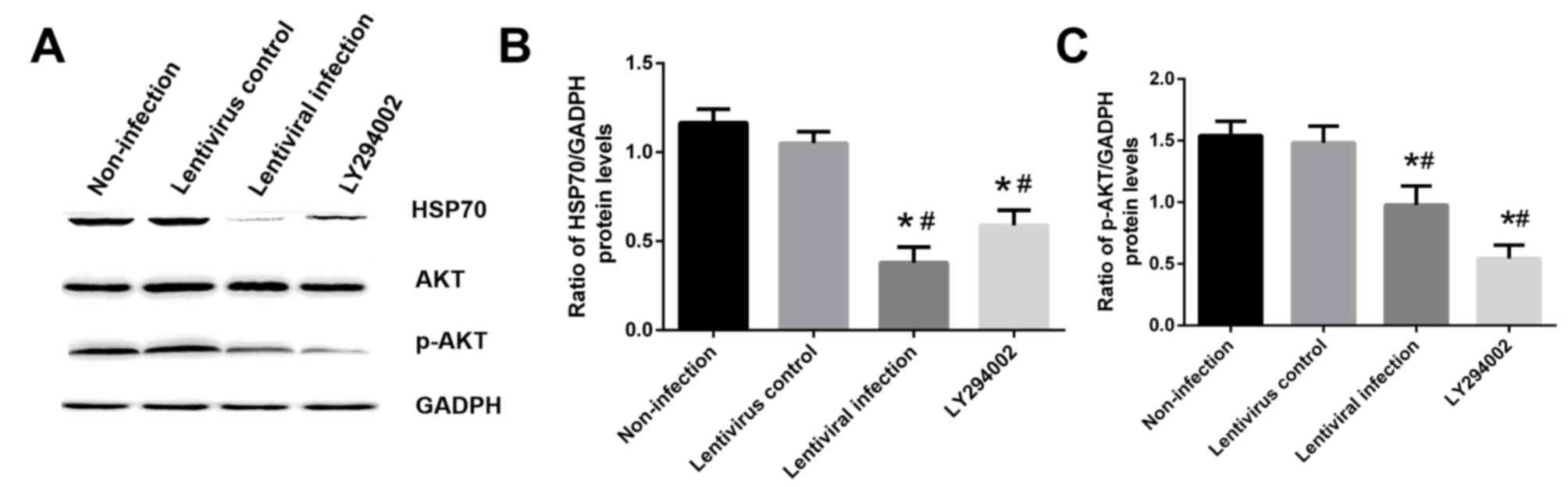
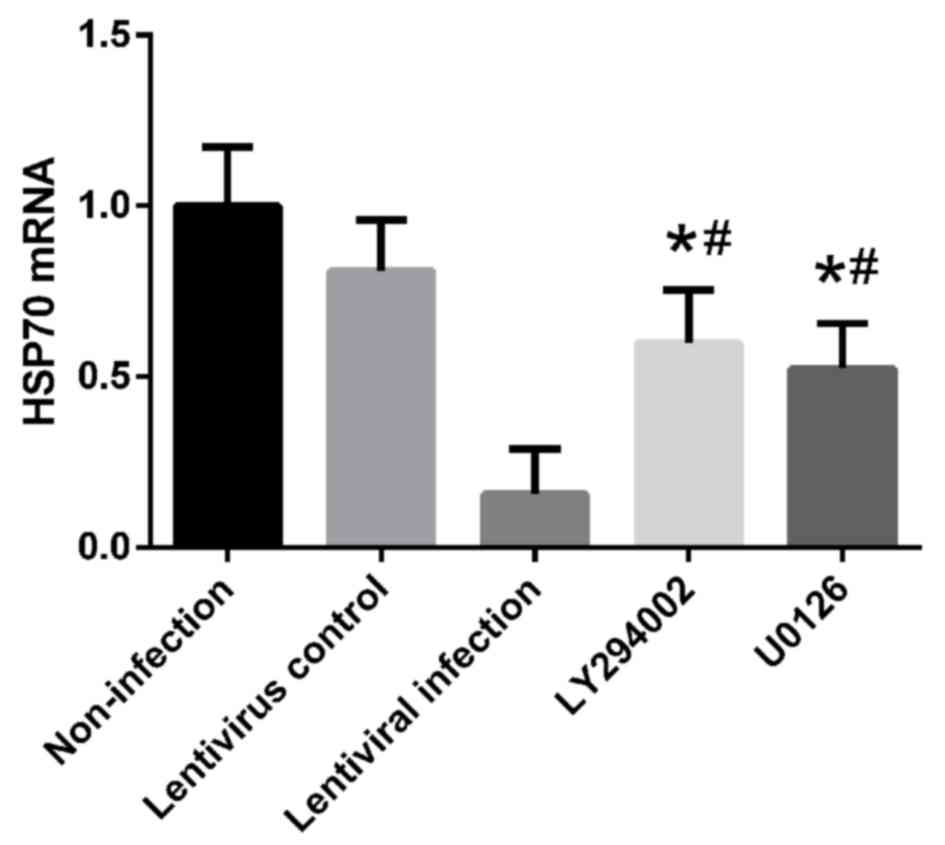
Lung ischemia‑reperfusion can cause acute lung injury, which is closely associated with apoptosis. Heat shock protein 70 (HSP70) is an anti‑apoptotic protein that promotes cell survival under a variety of different stress conditions. However, the role and mechanism of HSP70 in lung ischemia‑reperfusion injury is yet to be fully elucidated. In the present study, an in vitro hypoxia/reoxygenation model of A549 cells was established to simulate lung ischemia‑reperfusion and HSP70 was silenced by transfecting A549 cells with an shRNA sequence targeting HSP70. Western blotting, reverse transcription‑quantitative polymerase chain reaction, Cell Counting kit‑8 and flow cytometry were used to detect protein levels, RNA expression, cell activity and apoptosis. The results revealed that silencing HSP70 reduced cell viability, aggravated apoptosis, increased lactate dehydrogenase levels and induced a G2/M blockade in a hypoxia‑reoxygenation A549 cell model. Furthermore, silencing HSP70 decreased the phosphorylation levels of protein kinase B (AKT) and extracellular signal‑regulated kinase (ERK); however, the total AKT and ERK levels did not change significantly. Pretreating A549 cells with the AKT pathway inhibitor, LY294002 and the ERK pathway inhibitor, U0216 led to a decrease in HSP70 expression. These results indicate that silencing HSP70 may aggravate apoptosis in hypoxia‑reoxygenation cell models, potentially via the mitogen‑activated protein kinase/ERK and phosphoinositide 3‑kinase/AKT signaling pathways.
View Figures

Figure 1

Figure 2

Figure 3

Figure 4

Figure 5

Figure 6

Figure 7

Figure 8

Figure 9

Figure 10

View References

1 

de Perrot M, Liu M, Waddell TK and Keshavjee S: Ischemia-reperfusion-induced lung injury. Am J Respir Crit Care Med. 167:490–511. 2003. View Article : Google Scholar : PubMed/NCBI

2 

Cottini SR, Lerch N, de Perrot M, Treggiari MM, Spiliopoulos A, Nicod L and Ricou B: Risk factors for reperfusion injury after lung transplantation. Intensive Care Med. 32:557–563. 2006. View Article : Google Scholar : PubMed/NCBI

3 

Shimamoto A, Pohlman TH, Shomura S, Tarukawa T, Takao M and Shimpo H: Toll-like receptor 4 mediates lung ischemia-reperfusion injury. Ann Thorac Surg. 82:2017–2023. 2006. View Article : Google Scholar : PubMed/NCBI

4 

Ambrosio G and Tritto I: Reperfusion injury: Experimental evidence and clinical implications. Am Heart J. 138:S69–S75. 1999. View Article : Google Scholar : PubMed/NCBI

5 

Quadri SM, Segall L, de Perrot M, Han B, Edwards V, Jones N, Waddell TK, Liu M and Keshavjee S: Caspase inhibition improves ischemia-reperfusion injury after lung transplantation. Am J Transplant. 5:292–299. 2005. View Article : Google Scholar : PubMed/NCBI

6 

Fischer S, Maclean AA, Liu M, Cardella JA, Slutsky AS, Suga M, Moreira JF and Keshavjee S: Dynamic changes in apoptotic and necrotic cell death correlate with severity of ischemia-reperfusion injury in lung transplantation. Am J Respir Crit Care Med. 162:1932–1939. 2000. View Article : Google Scholar : PubMed/NCBI

7 

Radons J: The human HSP70 family of chaperones: Where do we stand? Cell Stress Chaperones. 21:379–404. 2016. View Article : Google Scholar : PubMed/NCBI

8 

van Eden W, van der Zee R and Prakken B: Heat-shock proteins induce T-cell regulation of chronic inflammation. Nat Rev Immunol. 5:318–330. 2005. View Article : Google Scholar : PubMed/NCBI

9 

Mayer MP and Bukau B: Hsp70 chaperones: Cellular functions and molecular mechanism. Cell Mol Life Sci. 62:670–684. 2005. View Article : Google Scholar : PubMed/NCBI

10 

Gao Y, Han C, Huang H, Xin Y, Xu Y, Luo L and Yin Z: Heat shock protein 70 together with its co-chaperone CHIP inhibits TNF-alpha induced apoptosis by promoting proteasomal degradation of apoptosis signal-regulating kinase1. Apoptosis. 15:822–833. 2010. View Article : Google Scholar : PubMed/NCBI

11 

Liu S, Xu J, Fang C, Shi C, Zhang X, Yu B and Yin Y: Over-expression of heat shock protein 70 protects mice against lung ischemia/reperfusion injury through SIRT1/AMPK/eNOS pathway. Am J Transl Res. 8:4394–4404. 2016.PubMed/NCBI

12 

Paul S and Mahanta S: Association of heat-shock proteins in various neurodegenerative disorders: Is it a master key to open the therapeutic door? Mol Cell Biochem. 386:45–61. 2014. View Article : Google Scholar : PubMed/NCBI

13 

Yamashima T: Hsp70.1 and related lysosomal factors for necrotic neuronal death. J Neurochem. 120:477–494. 2012. View Article : Google Scholar : PubMed/NCBI

14 

Hiratsuka M, Mora BN, Yano M, Mohanakumar T and Patterson GA: Gene transfer of heat shock protein 70 protects lung grafts from ischemia-reperfusion injury. Ann Thorac Surg. 67:1421–1427. 1999. View Article : Google Scholar : PubMed/NCBI

15 

Li J, Zhang Y, Li C, Xie J, Liu Y, Zhu W, Zhang X, Jiang S, Liu L and Ding Z: HSPA12B attenuates cardiac dysfunction and remodelling after myocardial infarction through an eNOS-dependent mechanism. Cardiovasc Res. 99:674–684. 2013. View Article : Google Scholar : PubMed/NCBI

16 

Chi W, Meng F, Li Y, Wang Q, Wang G, Han S, Wang P and Li J: Downregulation of miRNA-134 protects neural cells against ischemic injury in N2A cells and mouse brain with ischemic stroke by targeting HSPA12B. Neuroscience. 277:111–122. 2014. View Article : Google Scholar : PubMed/NCBI

17 

Jayanthi S, Deng X, Bordelon M, McCoy MT and Cadet JL: Methamphetamine causes differential regulation of pro-death and anti-death Bcl-2 genes in the mouse neocortex. FASEB J. 15:1745–1752. 2001. View Article : Google Scholar : PubMed/NCBI

18 

Nuñez G, Benedict MA, Hu Y and Inohara N: Caspases: The proteases of the apoptotic pathway. Oncogene. 17:3237–3245. 1998. View Article : Google Scholar : PubMed/NCBI

19 

Wu H, Che X, Zheng Q, Wu A, Pan K, Shao A, Wu Q, Zhang J and Hong Y: Caspases: A molecular switch node in the crosstalk between autophagy and apoptosis. Int J Biol Sci. 10:1072–1083. 2014. View Article : Google Scholar : PubMed/NCBI

20 

Qi Z, Qi S, Gui L, Shen L and Feng Z: Daphnetin protects oxidative stress-induced neuronal apoptosis via regulation of MAPK signaling and HSP70 expression. Oncol Lett. 12:1959–1964. 2016. View Article : Google Scholar : PubMed/NCBI

21 

Zhang L, Ding W, Sun H, Zhou Q, Huang J, Li X, Xie Y and Chen J: Salidroside protects PC12 cells from MPP+-induced apoptosis via activation of the PI3K/Akt pathway. Food Chem Toxicol. 50:2591–2597. 2012. View Article : Google Scholar : PubMed/NCBI

22 

Shoji T, Yoshida S, Mitsunari M, Miyake N, Tsukihara S, Iwabe T, Harada T and Terakawa N: Involvement of p38 MAP kinase in lipopolysaccharide-induced production of pro- and anti-inflammatory cytokines and prostaglandin E(2) in human choriodecidua. J Reprod Immunol. 75:82–90. 2007. View Article : Google Scholar : PubMed/NCBI

23 

López-Neblina F and Toledo-Pereyra LH: Phosphoregulation of signal transduction pathways in ischemia and reperfusion. J Surg Res. 134:292–299. 2006. View Article : Google Scholar : PubMed/NCBI

24 

Kamiya T, Kwon AH, Kanemaki T, Matsui Y, Uetsuji S, Okumura T and Kamiyama Y: A simplified model of hypoxic injury in primary cultured rat hepatocytes. In Vitro Cell Dev Biol Anim. 34:131–137. 1998. View Article : Google Scholar : PubMed/NCBI

25 

Livak KJ and Schmittgen TD: Analysis of relative gene expression data using real-time quantitative PCR and the 2(-Delta Delta C(T)) method. Methods. 25:402–408. 2001. View Article : Google Scholar : PubMed/NCBI

26 

Ng CS, Wan S, Arifi AA and Yim AP: Inflammatory response to pulmonary ischemia-reperfusion injury. Surg Today. 36:205–214. 2006. View Article : Google Scholar : PubMed/NCBI

27 

Ng CS, Wan S and Yim AP: Pulmonary ischaemia-reperfusion injury: Role of apoptosis. Eur Respir J. 25:356–363. 2005. View Article : Google Scholar : PubMed/NCBI

28 

Antoniou KM, Pataka A, Bouros D and Siafakas NM: Pathogenetic pathways and novel pharmacotherapeutic targets in idiopathic pulmonary fibrosis. Pulm Pharmacol Ther. 20:453–461. 2007. View Article : Google Scholar : PubMed/NCBI

29 

Giffard RG and Yenari MA: Many mechanisms for hsp70 protection from cerebral ischemia. J Neurosurg Anesthesiol. 16:53–61. 2004. View Article : Google Scholar : PubMed/NCBI

30 

Kato K, Yamanaka K, Hasegawa A and Okada S: Dimethylarsinic acid exposure causes accumulation of Hsp72 in cell nuclei and suppresses apoptosis in human alveolar cultured (L-132) cells. Biol Pharm Bull. 22:1185–1188. 1999. View Article : Google Scholar : PubMed/NCBI

31 

Wang H, Dong Y and Cai Y: Alanyl-glutamine prophylactically protects against lipopolysaccharide-induced acute lung injury by enhancing the expression of HSP70. Mol Med Rep. 16:2807–2813. 2017. View Article : Google Scholar : PubMed/NCBI

32 

Higashi T, Takechi H, Uemura Y, Kikuchi H and Nagata K: Differential induction of mRNA species encoding several classes of stress proteins following focal cerebral ischemia in rats. Brain Res. 650:239–248. 1994. View Article : Google Scholar : PubMed/NCBI

33 

Zhang H, Okamoto M, Panzhinskiy E, Zawada WM and Das M: PKCδ/midkine pathway drives hypoxia-induced proliferation and differentiation of human lung epithelial cells. Am J Physiol Cell Physiol. 306:C648–C658. 2014. View Article : Google Scholar : PubMed/NCBI

34 

Hu Z, Huang J, Li Q, Yang J, Zhong L and Zeng Q: Effect of hypoxia on infiltration and migration of lung cancer cells and expression of MMP-2 and TIMP-2. Zhongguo Fei Ai Za Zhi. 8:270–273. 2005.(In Chinese). PubMed/NCBI

35 

Pietenpol JA and Stewart ZA: Cell cycle checkpoint signaling: Cell cycle arrest versus apoptosis. Toxicology 181–182. 475–481. 2002. View Article : Google Scholar

36 

Tanoue T and Nishida E: Molecular recognitions in the MAP kinase cascades. Cell Signal. 15:455–462. 2003. View Article : Google Scholar : PubMed/NCBI

37 

Johnson GL and Lapadat R: Mitogen-activated protein kinase pathways mediated by ERK, JNK, and p38 protein kinases. Science. 298:1911–1912. 2002. View Article : Google Scholar : PubMed/NCBI

38 

Chao X, Zao J, Xiao-Yi G, Li-Jun M and Tao S: Blocking of PI3K/AKT induces apoptosis by its effect on NF-κB activity in gastric carcinoma cell line SGC7901. Biomed Pharmacother. 64:600–604. 2010. View Article : Google Scholar : PubMed/NCBI

39 

Plotkin LI and Bellido T: Bisphosphonate-induced, hemichannel-mediated, anti-apoptosis through the Src/ERK pathway: A gap junction-independent action of connexin43. Cell Commun Adhes. 8:377–382. 2001. View Article : Google Scholar : PubMed/NCBI

40 

Bezler M, Hengstler JG and Ullrich A: Inhibition of doxorubicin-induced HER3-PI3K-AKT signalling enhances apoptosis of ovarian cancer cells. Mol Oncol. 6:516–529. 2012. View Article : Google Scholar : PubMed/NCBI

41 

Qi Z, Qi S, Gui L, Shen L and Feng Z: Daphnetin protects oxidative stress-induced neuronal apoptosis via regulation of MAPK signaling and HSP70 expression. Oncol Lett. 12:1959–1964. 2016. View Article : Google Scholar : PubMed/NCBI

42 

Ji K, Xue L, Cheng J and Bai Y: Preconditioning of H2S inhalation protects against cerebral ischemia/reperfusion injury by induction of HSP70 through PI3K/Akt/Nrf2 pathway. Brain Res Bull. 121:68–74. 2016. View Article : Google Scholar : PubMed/NCBI

43 

Oraldi M, Saracino S, Maggiora M, Chiaravalloti A, Buemi C, Martinasso G, Paiuzzi E, Thompson D, Vasiliou V and Canuto RA: Importance of inverse correlation between ALDH3A1 and PPARγ in tumor cells and tissue regeneration. Chem Biol Interact. 191:171–176. 2011. View Article : Google Scholar : PubMed/NCBI

Related Articles

  • Abstract
  • View
  • Download
  • Twitter
Copy and paste a formatted citation
Spandidos Publications style
Zhai C, Lv J, Wang K, Li Q and Qu Y: HSP70 silencing aggravates apoptosis induced by hypoxia/reoxygenation in vitro. Exp Ther Med 18: 1013-1020, 2019.
APA
Zhai, C., Lv, J., Wang, K., Li, Q., & Qu, Y. (2019). HSP70 silencing aggravates apoptosis induced by hypoxia/reoxygenation in vitro. Experimental and Therapeutic Medicine, 18, 1013-1020. https://doi.org/10.3892/etm.2019.7697
MLA
Zhai, C., Lv, J., Wang, K., Li, Q., Qu, Y."HSP70 silencing aggravates apoptosis induced by hypoxia/reoxygenation in vitro". Experimental and Therapeutic Medicine 18.2 (2019): 1013-1020.
Chicago
Zhai, C., Lv, J., Wang, K., Li, Q., Qu, Y."HSP70 silencing aggravates apoptosis induced by hypoxia/reoxygenation in vitro". Experimental and Therapeutic Medicine 18, no. 2 (2019): 1013-1020. https://doi.org/10.3892/etm.2019.7697
Copy and paste a formatted citation
x
Spandidos Publications style
Zhai C, Lv J, Wang K, Li Q and Qu Y: HSP70 silencing aggravates apoptosis induced by hypoxia/reoxygenation in vitro. Exp Ther Med 18: 1013-1020, 2019.
APA
Zhai, C., Lv, J., Wang, K., Li, Q., & Qu, Y. (2019). HSP70 silencing aggravates apoptosis induced by hypoxia/reoxygenation in vitro. Experimental and Therapeutic Medicine, 18, 1013-1020. https://doi.org/10.3892/etm.2019.7697
MLA
Zhai, C., Lv, J., Wang, K., Li, Q., Qu, Y."HSP70 silencing aggravates apoptosis induced by hypoxia/reoxygenation in vitro". Experimental and Therapeutic Medicine 18.2 (2019): 1013-1020.
Chicago
Zhai, C., Lv, J., Wang, K., Li, Q., Qu, Y."HSP70 silencing aggravates apoptosis induced by hypoxia/reoxygenation in vitro". Experimental and Therapeutic Medicine 18, no. 2 (2019): 1013-1020. https://doi.org/10.3892/etm.2019.7697
Follow us
  • Twitter
  • LinkedIn
  • Facebook
About
  • Spandidos Publications
  • Careers
  • Cookie Policy
  • Privacy Policy
How can we help?
  • Help
  • Live Chat
  • Contact
  • Email to our Support Team