Spandidos Publications Logo
  • About
    • About Spandidos
    • Aims and Scopes
    • Abstracting and Indexing
    • Editorial Policies
    • Reprints and Permissions
    • Job Opportunities
    • Terms and Conditions
    • Contact
  • Journals
    • All Journals
    • Oncology Letters
      • Oncology Letters
      • Information for Authors
      • Editorial Policies
      • Editorial Board
      • Aims and Scope
      • Abstracting and Indexing
      • Bibliographic Information
      • Archive
    • International Journal of Oncology
      • International Journal of Oncology
      • Information for Authors
      • Editorial Policies
      • Editorial Board
      • Aims and Scope
      • Abstracting and Indexing
      • Bibliographic Information
      • Archive
    • Molecular and Clinical Oncology
      • Molecular and Clinical Oncology
      • Information for Authors
      • Editorial Policies
      • Editorial Board
      • Aims and Scope
      • Abstracting and Indexing
      • Bibliographic Information
      • Archive
    • Experimental and Therapeutic Medicine
      • Experimental and Therapeutic Medicine
      • Information for Authors
      • Editorial Policies
      • Editorial Board
      • Aims and Scope
      • Abstracting and Indexing
      • Bibliographic Information
      • Archive
    • International Journal of Molecular Medicine
      • International Journal of Molecular Medicine
      • Information for Authors
      • Editorial Policies
      • Editorial Board
      • Aims and Scope
      • Abstracting and Indexing
      • Bibliographic Information
      • Archive
    • Biomedical Reports
      • Biomedical Reports
      • Information for Authors
      • Editorial Policies
      • Editorial Board
      • Aims and Scope
      • Abstracting and Indexing
      • Bibliographic Information
      • Archive
    • Oncology Reports
      • Oncology Reports
      • Information for Authors
      • Editorial Policies
      • Editorial Board
      • Aims and Scope
      • Abstracting and Indexing
      • Bibliographic Information
      • Archive
    • Molecular Medicine Reports
      • Molecular Medicine Reports
      • Information for Authors
      • Editorial Policies
      • Editorial Board
      • Aims and Scope
      • Abstracting and Indexing
      • Bibliographic Information
      • Archive
    • World Academy of Sciences Journal
      • World Academy of Sciences Journal
      • Information for Authors
      • Editorial Policies
      • Editorial Board
      • Aims and Scope
      • Abstracting and Indexing
      • Bibliographic Information
      • Archive
    • International Journal of Functional Nutrition
      • International Journal of Functional Nutrition
      • Information for Authors
      • Editorial Policies
      • Editorial Board
      • Aims and Scope
      • Abstracting and Indexing
      • Bibliographic Information
      • Archive
    • International Journal of Epigenetics
      • International Journal of Epigenetics
      • Information for Authors
      • Editorial Policies
      • Editorial Board
      • Aims and Scope
      • Abstracting and Indexing
      • Bibliographic Information
      • Archive
    • Medicine International
      • Medicine International
      • Information for Authors
      • Editorial Policies
      • Editorial Board
      • Aims and Scope
      • Abstracting and Indexing
      • Bibliographic Information
      • Archive
  • Articles
  • Information
    • Information for Authors
    • Information for Reviewers
    • Information for Librarians
    • Information for Advertisers
    • Conferences
  • Language Editing
Spandidos Publications Logo
  • About
    • About Spandidos
    • Aims and Scopes
    • Abstracting and Indexing
    • Editorial Policies
    • Reprints and Permissions
    • Job Opportunities
    • Terms and Conditions
    • Contact
  • Journals
    • All Journals
    • Biomedical Reports
      • Information for Authors
      • Editorial Policies
      • Editorial Board
      • Aims and Scope
      • Abstracting and Indexing
      • Bibliographic Information
      • Archive
    • Experimental and Therapeutic Medicine
      • Information for Authors
      • Editorial Policies
      • Editorial Board
      • Aims and Scope
      • Abstracting and Indexing
      • Bibliographic Information
      • Archive
    • International Journal of Epigenetics
      • Information for Authors
      • Editorial Policies
      • Editorial Board
      • Aims and Scope
      • Abstracting and Indexing
      • Bibliographic Information
      • Archive
    • International Journal of Functional Nutrition
      • Information for Authors
      • Editorial Policies
      • Editorial Board
      • Aims and Scope
      • Abstracting and Indexing
      • Bibliographic Information
      • Archive
    • International Journal of Molecular Medicine
      • Information for Authors
      • Editorial Policies
      • Editorial Board
      • Aims and Scope
      • Abstracting and Indexing
      • Bibliographic Information
      • Archive
    • International Journal of Oncology
      • Information for Authors
      • Editorial Policies
      • Editorial Board
      • Aims and Scope
      • Abstracting and Indexing
      • Bibliographic Information
      • Archive
    • Medicine International
      • Information for Authors
      • Editorial Policies
      • Editorial Board
      • Aims and Scope
      • Abstracting and Indexing
      • Bibliographic Information
      • Archive
    • Molecular and Clinical Oncology
      • Information for Authors
      • Editorial Policies
      • Editorial Board
      • Aims and Scope
      • Abstracting and Indexing
      • Bibliographic Information
      • Archive
    • Molecular Medicine Reports
      • Information for Authors
      • Editorial Policies
      • Editorial Board
      • Aims and Scope
      • Abstracting and Indexing
      • Bibliographic Information
      • Archive
    • Oncology Letters
      • Information for Authors
      • Editorial Policies
      • Editorial Board
      • Aims and Scope
      • Abstracting and Indexing
      • Bibliographic Information
      • Archive
    • Oncology Reports
      • Information for Authors
      • Editorial Policies
      • Editorial Board
      • Aims and Scope
      • Abstracting and Indexing
      • Bibliographic Information
      • Archive
    • World Academy of Sciences Journal
      • Information for Authors
      • Editorial Policies
      • Editorial Board
      • Aims and Scope
      • Abstracting and Indexing
      • Bibliographic Information
      • Archive
  • Articles
  • Information
    • For Authors
    • For Reviewers
    • For Librarians
    • For Advertisers
    • Conferences
  • Language Editing
Login Register Submit
  • This site uses cookies
  • You can change your cookie settings at any time by following the instructions in our Cookie Policy. To find out more, you may read our Privacy Policy.

    I agree
Search articles by DOI, keyword, author or affiliation
Search
Advanced Search
presentation
Experimental and Therapeutic Medicine
Join Editorial Board Propose a Special Issue
Print ISSN: 1792-0981 Online ISSN: 1792-1015
Journal Cover
December-2019 Volume 18 Issue 6

Full Size Image

Sign up for eToc alerts
Recommend to Library

Journals

International Journal of Molecular Medicine

International Journal of Molecular Medicine

International Journal of Molecular Medicine is an international journal devoted to molecular mechanisms of human disease.

International Journal of Oncology

International Journal of Oncology

International Journal of Oncology is an international journal devoted to oncology research and cancer treatment.

Molecular Medicine Reports

Molecular Medicine Reports

Covers molecular medicine topics such as pharmacology, pathology, genetics, neuroscience, infectious diseases, molecular cardiology, and molecular surgery.

Oncology Reports

Oncology Reports

Oncology Reports is an international journal devoted to fundamental and applied research in Oncology.

Experimental and Therapeutic Medicine

Experimental and Therapeutic Medicine

Experimental and Therapeutic Medicine is an international journal devoted to laboratory and clinical medicine.

Oncology Letters

Oncology Letters

Oncology Letters is an international journal devoted to Experimental and Clinical Oncology.

Biomedical Reports

Biomedical Reports

Explores a wide range of biological and medical fields, including pharmacology, genetics, microbiology, neuroscience, and molecular cardiology.

Molecular and Clinical Oncology

Molecular and Clinical Oncology

International journal addressing all aspects of oncology research, from tumorigenesis and oncogenes to chemotherapy and metastasis.

World Academy of Sciences Journal

World Academy of Sciences Journal

Multidisciplinary open-access journal spanning biochemistry, genetics, neuroscience, environmental health, and synthetic biology.

International Journal of Functional Nutrition

International Journal of Functional Nutrition

Open-access journal combining biochemistry, pharmacology, immunology, and genetics to advance health through functional nutrition.

International Journal of Epigenetics

International Journal of Epigenetics

Publishes open-access research on using epigenetics to advance understanding and treatment of human disease.

Medicine International

Medicine International

An International Open Access Journal Devoted to General Medicine.

Journal Cover
December-2019 Volume 18 Issue 6

Full Size Image

Sign up for eToc alerts
Recommend to Library

  • Article
  • Citations
    • Cite This Article
    • Download Citation
    • Create Citation Alert
    • Remove Citation Alert
    • Cited By
  • Similar Articles
    • Related Articles (in Spandidos Publications)
    • Similar Articles (Google Scholar)
    • Similar Articles (PubMed)
  • Download PDF
  • Download XML
  • View XML
Case Report Open Access

Case report on a 32‑year‑old female with elevated serum creatinine levels and primary Sjögren's syndrome‑chronic interstitial nephritis

  • Authors:
    • Yi Yu
    • Bojun Zheng
    • Jing Huang
    • Dingwei Deng
    • Xiaoli Jing
  • View Affiliations / Copyright

    Affiliations: Department of Critical Care Medicine, The Second Affiliated Hospital of Guangzhou University of Chinese Medicine, Guangzhou, Guangdong 510006, P.R. China, Department of Emergency, The First Affiliated Hospital, Sun Yat‑Sen University, Guangzhou, Guangdong 510080, P.R. China
    Copyright: © Yu et al. This is an open access article distributed under the terms of Creative Commons Attribution License.
  • Pages: 4363-4367
    |
    Published online on: October 1, 2019
       https://doi.org/10.3892/etm.2019.8073
  • Expand metrics +
Metrics: Total Views: 0 (Spandidos Publications: | PMC Statistics: )
Metrics: Total PDF Downloads: 0 (Spandidos Publications: | PMC Statistics: )
Cited By (CrossRef): 0 citations Loading Articles...

This article is mentioned in:


Abstract

Primary Sjögren's syndrome (PSS) is a chronic autoimmune disease characterized by lymphoplasmacytic infiltration of the exocrine glands, which results in multiple organs damage. Renal injury affects 0.3‑27.0% of PSS patients, and tubulointerstitial nephritis is the most frequent form of nephropathy in PSS. The present study reports on the case of a 32‑year‑old female with a 1‑year history of elevated serum creatinine levels, and a 6‑month history of mild pain in the waist and leg. Blood biochemistry tests indicated a creatinine level of 221.3 µmol/l and estimated glomerular filtration rate of 24.6 ml/min/1.73 m2 [Chronic Kidney Disease Epidemiology (CKD‑EPI) formula]. Accordingly, the patient was diagnosed with stage IV chronic kidney disease. To clarify the underlying cause of the disease, a kidney biopsy was performed, which revealed tubular epithelial cells with multiple focal and lamellar atrophy (~60%), as well as extensive renal interstitial fibrosis with scattered inflammatory cell infiltration. Based on these results, the patient was finally diagnosed with severe chronic interstitial nephritis, chronic kidney disease stage IV, PSS and anemia due to chronic kidney disease. The patient was treated with half‑dose glucocorticoid (prednisone, 25 mg oral qd maintained up to 12 months). The patient's serum creatinine levels had decreased to 172.4 µmol/l after 1 month and to 178.7 µmol/l after 12 months. The present case concluded that young patients with chronic renal failure should first be assessed for rheumatic immune system diseases. PSS may involve several organs and the clinical manifestations may be varied. Although chronic renal failure is frequently the first manifestation of renal disorder due to PSS, it may be overlooked by clinicians. The present results suggest that further attention should be paid to determine the association between symptoms in the clinical setting.

Background

PSS is a chronic inflammatory, multi-systemic autoimmune disease (1) that may involve various organs, but commonly results in renal damage (40–50% of cases) (2). Although the condition may be life-threatening in severe cases, the early clinical symptoms of renal lesions in such cases are frequently atypical, and may hence be overlooked by clinicians. The present study reports on the clinical and pathological features, as well as the laboratory and immunofluorescence data of a patient who initially presented with chronic renal insufficiency, but was finally diagnosed with PSS.

Case presentation

A 32-year-old female presented at our hospital The Second Affiliated Hospital of Guangzhou University of Chinese Medicine (Guangzhou, China) in June 2017 with a 1-year history of elevated serum creatinine levels and a 6-month history of mild pain in the waist and leg. For >6 months prior to admission, the patient did not experience any symptoms/complaints including fever, dizziness, headache, cough, expectoration, nausea, vomiting, abdominal pain, diarrhea, hematuria, frothy urine, eyelid, facial or lower extremity edema. The patient had undergone a routine medical examination in June 2018 and ignored the result of blood creatinine levels of 229.0 µmol/l (normal range, 53–98 µmol/l). Thereafter, the patient was admitted to the First Affiliated Hospital of Guangzhou University of Traditional Chinese Medicine (Guangzhou, China) in August 2017 for low back pain, and the laboratory test results indicated a creatinine level of 242.0 µmol/l, urea levels of 11.2 mmol/l (2.86–7.14 mmol/l), parathyroid hormone levels of 73.1 pmol/l (1–10.5 pmol/l), and total cholesterol level of 6.3 mmol/l (3–5.2 mmol/l); the other symptoms/complaints were similar to those observed previously. Furthermore, the presence of kidney stones was noted in a physical examination 1 year previously. The patient had no history of tuberculosis, type 2 diabetes, steroid use, traditional homeopathic remedies or herbal medications.

On admission to our hospital, the patient weighed 47.0 kg, had a body height of 160.0 cm and a body mass index of 18.3 kg/m2. The patient's blood pressure and pulse were recorded as 123/77 mmHg and 86 beats/min. The patient was mildly anemic, but did not have any goiter or clinically palpable lymph nodes. Furthermore, no gynecomastia, striae or evidence of pruritus was noted. The patient's visual field was normal and no papilledema was detected. The other physical findings were unremarkable.

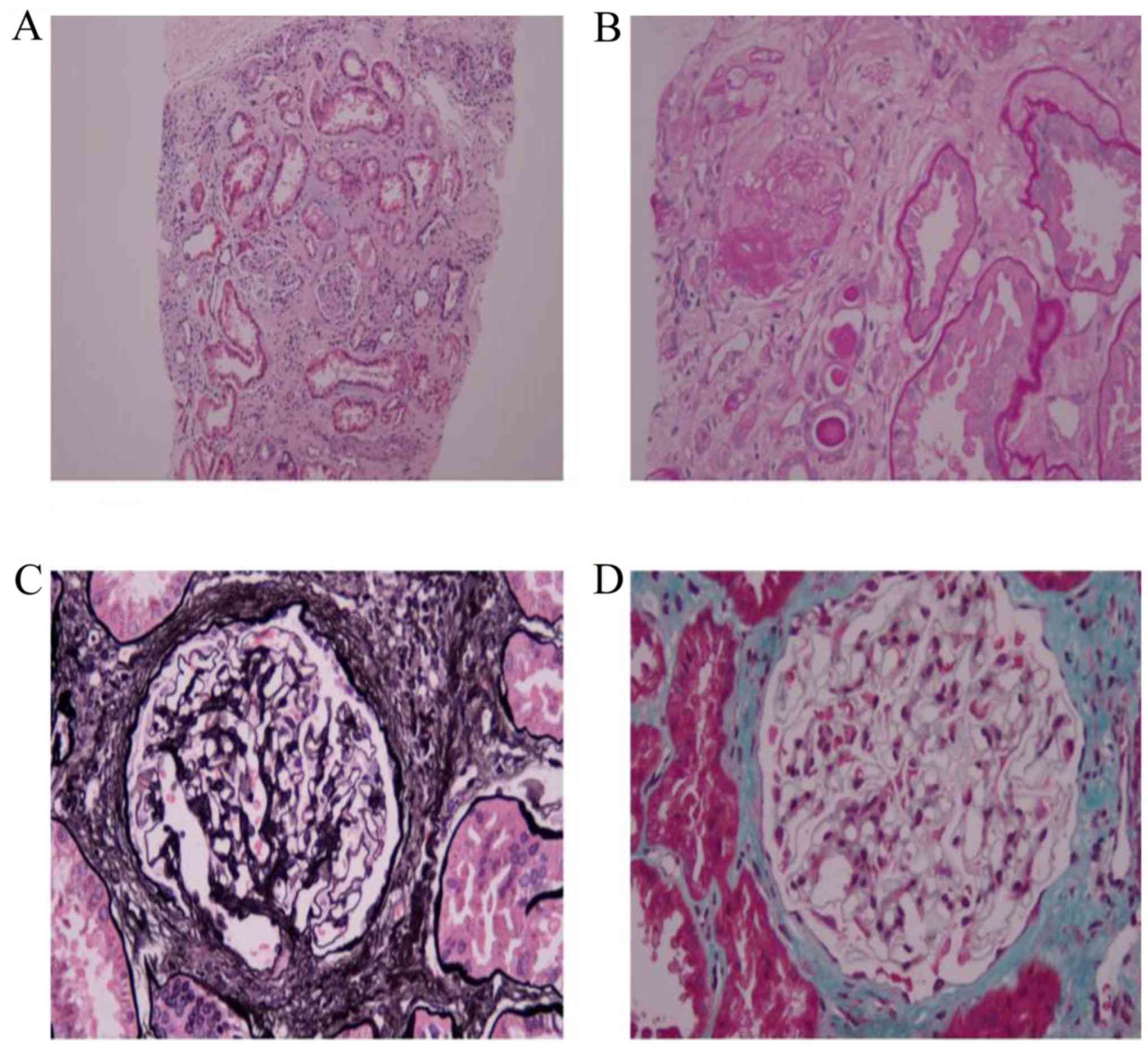
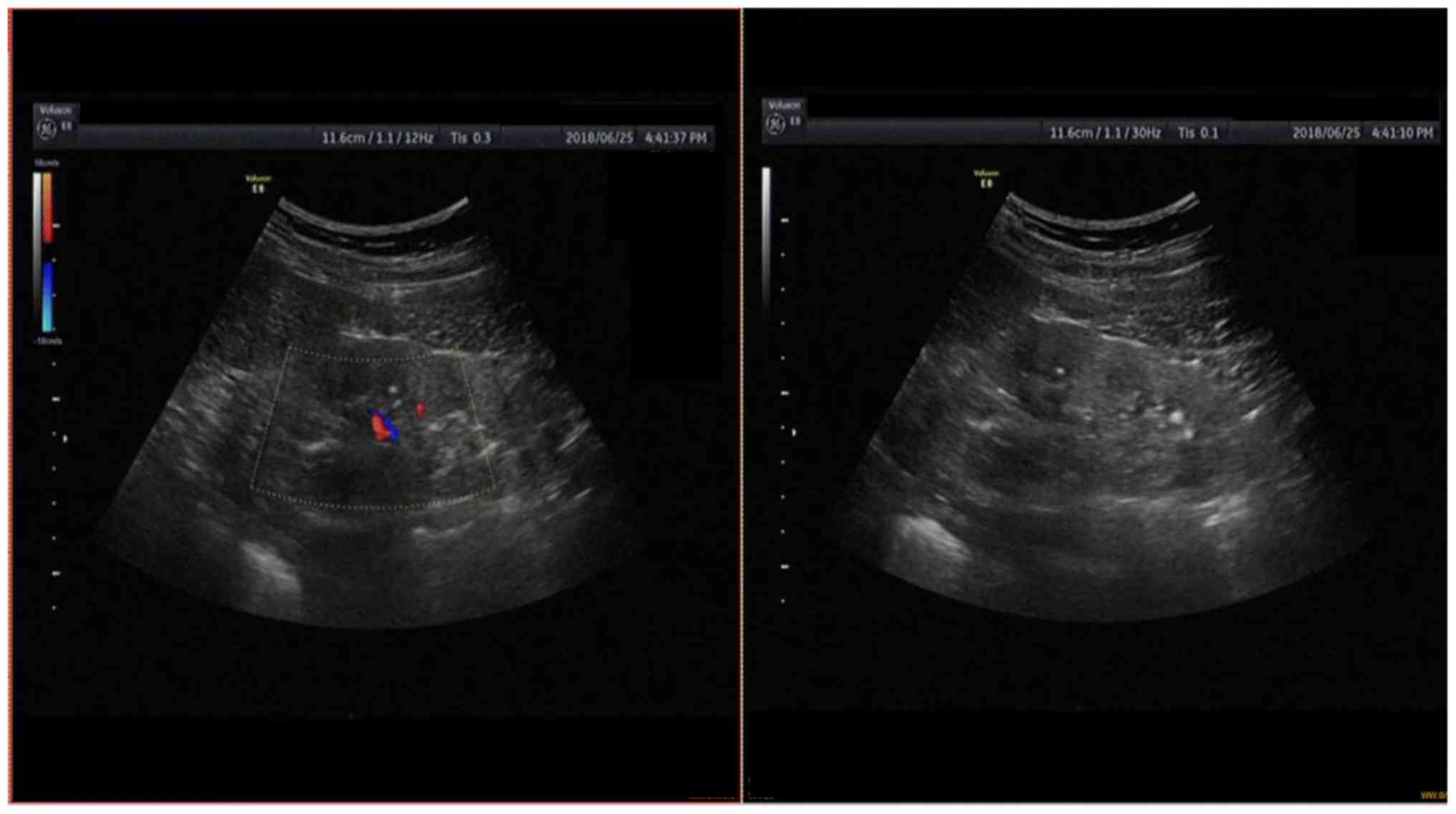
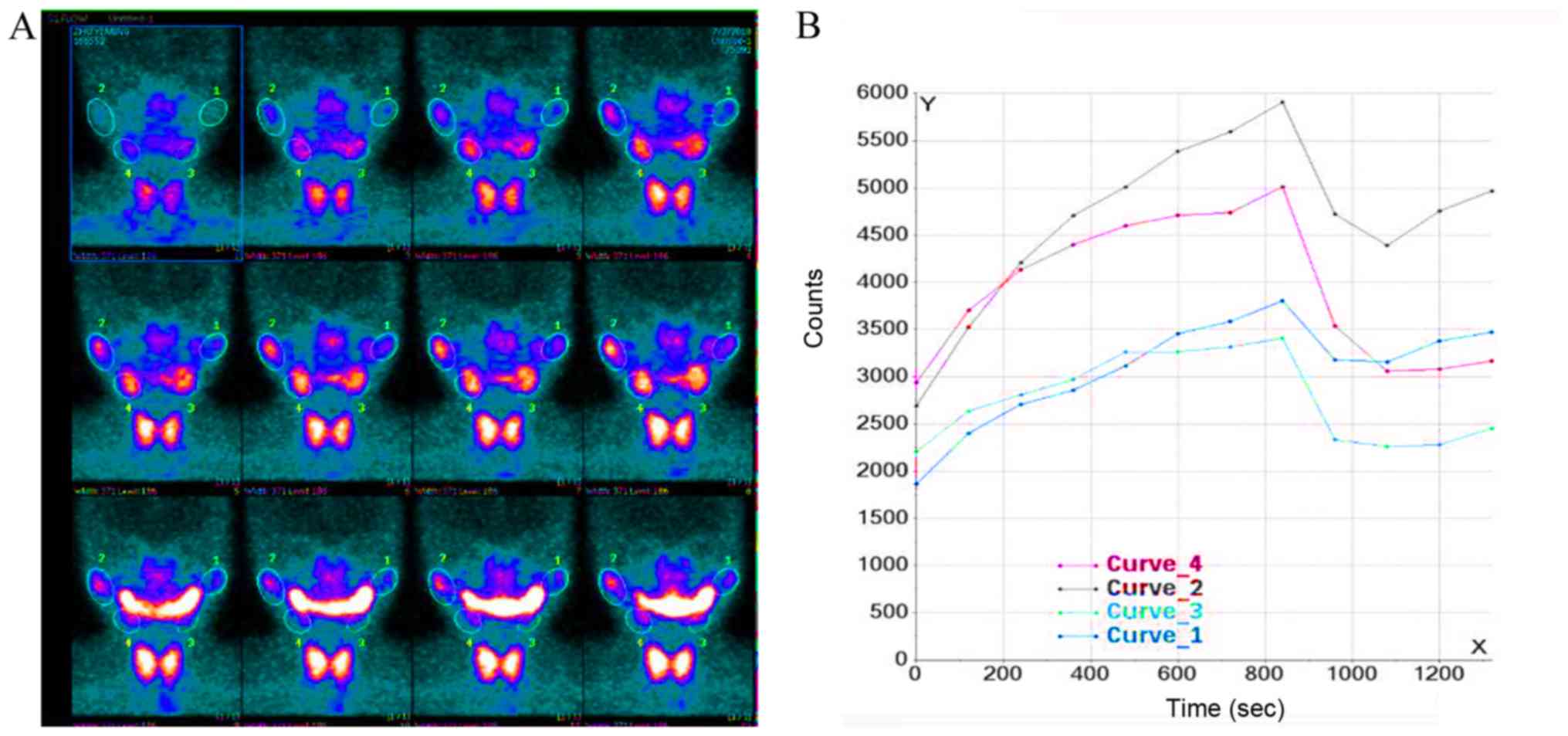
The laboratory test results on admission and during the follow-up period are presented in Table I. Twenty-four-hour urine output monitoring indicated stable fluctuations from 2,200 to 3,100 ml, and a urine osmolarity of 169.0 mOsm/kg H2O (normal range, 280.0–310.0 mOsm/kg H2O) was noted. Based on these results, tests for antinuclear antibodies (ANA; 1:100 granular pattern), along with other tumor, rheumatic disease and immune system markers, were performed, but the results were negative. Thus, the patient was initially diagnosed with severe chronic interstitial nephritis and chronic kidney disease stage IV. As the patient had a long history of xerostomia and dry eye syndrome, the presence of Sjogren's syndrome was suspected. To confirm this hypothesis, a kidney biopsy was performed. Routine clinical examination by specialist including comprehensive light microscopy, immunofluorescence and electron microscopy examination indicated the presence of severe chronic interstitial nephritis (Figs. 1–3), consistent with the biochemical indicators. Furthermore, kidney ultrasonography was performed (Fig. 4), which indicated an abnormal echo of the bilateral kidneys (consistent with sonographic changes in chronic kidney disease), as well as multiple calculi or calcifications in the bilateral kidneys. In addition, salivary gland scintigraphy indicated a decrease in left parotid uptake tracer function, as well as impairment of secretion and excretion. However, no abnormal uptake, secretion or excretion were observed in the right parotid gland and bilateral submandibular glands (Fig. 5).
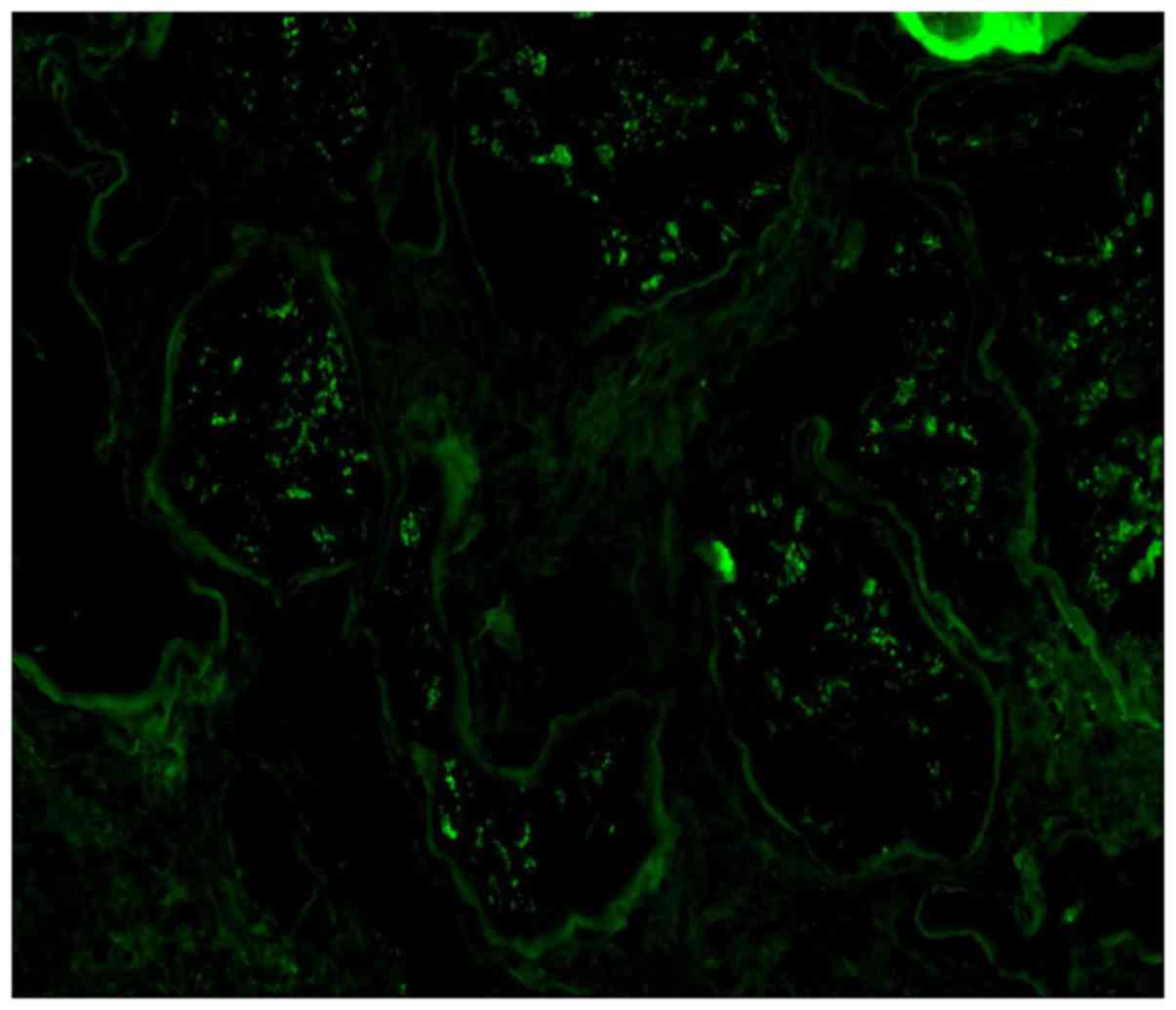
Figure 1.

Immunofluorescence to clarify diagnosis. magnification, ×400. κ, negative; λ, negative; amyloid A, negative; fibrin, negative; albumin, reabsorbed droplets visible in the renal tubules; IgG1, negative; IgG2, negative; IgG3, negative; IgG4, negative; phospholipase A2 receptor, negative; hepatitis B surface antigen, negative; hepatitis B e antigen, negative; hepatitis B core antigen, negative; C4d, glomeruli in the kidney (−); thrombospondin type 1 domain containing 7A, negative.

Figure 3.

(A) Hematoxylin-eosin staining indicated extensive renal interstitial fibrosis with scattered inflammatory cell infiltration; (B) periodic acid-Schiff staining revealed sclerosis of the glomeruli. magnification, ×100. (C) periodic Schiff-methenamine staining indicates that the capillary loops are open and the basement membrane is not thickened; (D) Masson staining reveals no apparent deposition of complexed erythropoietin in the glomeruli. magnification, ×400.

Figure 4.

Abnormal echo of the bilateral kidneys (consistent with sonographic changes in chronic kidney disease) indicates multiple calculi or calcifications in the kidneys.

Figure 5.

Bilateral parotid gland and submandibular gland. (A) Dynamic imaging of maxillofacial blood flow in the bilateral parotid gland and submandibular gland. (B) Line chart of radioactive distribution. On dynamic imaging of maxillofacial blood flow performed via intravenous injection of the imaging agent, no abnormal radioactivity distribution in the bilateral parotid gland and submandibular gland was observed. In brief, the salivary gland function was dynamically developed for 24 min, vitamin C tablets were ingested after 18 min, and bilateral and anteroposterior plane imaging was performed after gargling, along with delayed flank imaging of the salivary glands. No delay in bilateral parotid and submandibular gland radioactivity uptake was observed, although the right parotid gland and bilateral submandibular gland radioactivity uptake were abnormal but approximately symmetrical. After ingesting vitamin C tablets at 18 min, no obvious radioactivity clearance in the bilateral parotid gland or bilateral submandibular gland, or partial accumulation of radioactivity in the oral cavity was noted. The two sides of the parotid gland and submandibular gland were clearly developed and the distribution of the bilateral parotid gland radioactivity was sparse. Minimal radioactivity distribution was noted in the oral cavity, although this decreased after gargling and delayed imaging.

Table I.

Laboratory results at presentation and during the follow-up period.

Table I.

Laboratory results at presentation and during the follow-up period.

Clinical parameteraFirst admission1 Month2 Months3 Months6 Months9 Months12 Months
Blood
  Hemoglobin, g/l (115–150)10593110107106107131
  White blood cells, ×109/l (4–10)10.26.013.811.414.415.411.0
  Platelets, ×109/l (125–350)320204320246283288245
  Creatinine, µmol/l221.3172.4231.8180.7160.0171.4178.7
  eGFR, ml/min/1.73 m2 (CKD-EPI)24.633.223.231.436.433.431.8
  K, mmol/l (3.50–5.30)3.773.23.34.33.04.03.8
  Na, mmol/l (137.0–147.0)135.5139.9143.3141.6142.0143.0142
  Cl, mmol/l (96.0–108.0)106.9110.9105.9102.4103.4104.4103.8
  PO4, mmol/l (0.85–1.51)1.4–––1.21.41.1
  Ca, mmol/l (2.11–2.52)2.32.12.12.32.12.42.2
  MG, mmol/l (0.75–1.02)0.90.8––0.60.80.7
  PTH, pg/ml (15–65)475.1–––371.5–267.4
  ANA (Speckled)+(1:100) +(1:100)–+(1:100)
  dsDNA (0.0–20.0)13.5 21.8–14.9
Urine
  Ca, mmol/24 h (0.00–6.20)1.04
  Protein, mg/24 h (<150)453.6 383.4 118.4
  ALB, mg/24 h (<30)160.2 119.4 90.7
  UPro:UCr mg/g (0.00–100.00)2,990.3412.1 385.2581.0121.7
  ALBU:CrU mg/gCr (0.00–30.00)1,797.3109.1 122.9203.782.3
  Beta-2 microglobulin, mg/l (<0.4)4.0–––––3.7
  PH (4.5–8.0)6.0 6.07.06.05.57.0
  SG (1.003–1.030)1.011.001.011.011.001.001.01

a The normal range for each laboratory variable is given in parentheses. K, potassium; Na, sodium; PO4, phosphate radical; Ca, calcium; MG, magnesium; eGFR, Estimation of glomerular filtration rate; Cl, chlorine; PTH, parathormone; ANA, antinuclear antibodies; DsDNA, double-stranded DNA; ALB, albumin; UPro, Urine protein; UCr, urine creatinine; SG, specific gravity.

Based on these results, the patient was diagnosed with severe chronic interstitial nephritis, stage IV chronic kidney disease, PSS and anemia due to chronic kidney disease. To address the PSS-associated chronic interstitial nephritis, the patient was subjected to continuous treatment with half-dose glucocorticoid. Given the presence of PSS, initial treatment involved prednisone (0.5 mg/kg/day), with subsequent slow tapering to 0.5–0.25 mg/kg/day, followed by addition of cyclophosphamide at doses of 800 mg/month over the next 6 months. A 12-month follow-up examination indicated significant improvement (Table I).

Discussion

PSS is a common condition involving various organs. The detection of autoimmune diseases with the exocrine gland as the target organ has improved with the advancements in detection methods and a better understanding of the disease (3). Accordingly, the rate of early detection and diagnosis in cases with PSS has also significantly increased. In particular, kidney damage as a result of PSS has been receiving an increasing amount of attention (4). PSS-associated renal damage may be asymptomatic or may present only as an electrolyte disorder. Furthermore, as the clinical manifestations of the disease in these patients are varied (including proteinuria, simple hematuria, combined hematuria and proteinuria, or nephrotic syndrome and renal insufficiency), and the prognosis is good, only a small number of clinical studies have focused on this condition thus far (5). Although the incidence of renal damage in PSS was previously thought to be low, recent studies indicated a rate of as high as 33.5% (2,6,7). Most cases exhibit renal tubular dysfunction, particularly involving the distal renal tubule. Prominent manifestations include distal renal tubular acidosis, renal diabetes insipidus and urinary concentration dysfunction, followed by glomerulonephritis and partial renal insufficiency (8). As there are no uniform diagnostic criteria for assessing renal damage in PSS patients with mild or no symptoms, the condition is overlooked in most of such cases. Only a small number of such patients exhibit renal failure at the time of visit, and hence, early diagnosis is particularly important.

It is recommended that patients with PSS are screened at least twice a year, including urine protein, urine pH, urine osmotic pressure, serum creatinine, glomerular filtration rate and electrolyte levels (9). The European League Against Rheumatism Sjogren's syndrome disease activity index may be used to assess renal disease activity during follow-up (10). Renal biopsy should be promptly performed, if required, in such cases, and the cause and extent of renal lesions may be determined via renal pathology examinations (11).

With regard to treatment, individualized therapy may be suitable, based on the patient's clinical manifestation and the type of renal damage. At present, treatment may be divided into local replacement therapy and systemic treatment (4,12). The present case was managed by low-dose hormone therapy and regular follow-up. The renal function was stable and did not deteriorate during follow-up, which indicated that the treatment was effective. However, it may be necessary to perform further detailed studies in order to better understand the disease mechanism, and large-sample multicenter randomized controlled trials should be performed to assess the efficacy and safety of drugs including hormones and immunosuppressants in these patients with different types of renal damage.

In the clinical setting, patients with kidney stones and renal insufficiency are frequently encountered, and it is likely that kidney dysfunction has led to stone obstruction in these cases. However, it is recommended that clinicians should also consider systemic diseases, including tumors, rheumatism and immune diseases, in such patients. Accordingly, careful assessment of the relevant medical history may help improve the diagnostic accuracy and avoid kidney failure.

Acknowledgements

Not applicable.

Funding

No funding was received.

Availability of data and materials

The data used for the preparation of the manuscript, including all relevant raw data, are freely available to any scientist wishing to use them for non-commercial purposes, without breaching participant confidentiality. Available from the corresponding author upon reasonable request.

Authors' contributions

YY, BZ and JH prepared the manuscript, made substantial contributions to the design of the work and to revise it critically for important intellectual content. XJ and DD critically reviewed the manuscript for important intellectual content and approved the final manuscript. All authors read and approved the final manuscript.

Ethics approval and consent to participate

The patient consented to participate and provided written informed consent.

Patient consent for publication

The patient agreed to the publication of their data and images.

Competing interests

The authors declare that they have no competing interests.

References

1 

Nilsson AM, Tufvesson E, Hesselstrand R, Olsson P, Wollmer P and Mandl T: Increased B-cell activating factor, interleukin-6, and interleukin-8 in induced sputum from primary Sjögren's syndrome patients. Scand J Rheumatol. 48:149–156. 2019. View Article : Google Scholar : PubMed/NCBI

2 

Jain A, Srinivas BH, Emmanuel D, Jain VK, Parameshwaran S and Negi VS: Renal involvement in primary Sjögren's syndrome: A prospective cohort study. Rheumatol Int. 38:2251–2262. 2018. View Article : Google Scholar : PubMed/NCBI

3 

Holdgate N and St Clair EW: Recent advances in primary Sjögren's syndrome. F1000Res. 5(pii): F1000 Faculty Rev. 14122016. View Article : Google Scholar

4 

Brito-Zerón P and Ramos-Casals M; EULAR-SS task force group, : Advances in the understanding and treatment of systemic complications in Sjögren's syndrome. Curr Opin Rheumatol. 26:520–527. 2014. View Article : Google Scholar : PubMed/NCBI

5 

Flores-Chavez A, Kostov B, Solans R, Fraile G, Maure B, Feijoo-Massó C, Rascón FJ, Pérez-Alvarez R, Zamora-Pasadas M, García-Pérez A, et al: Severe, life-threatening phenotype of primary Sjögren's syndrome: Clinical characterisation and outcomes in 1580 patients (GEAS-SS Registry). Clin Exp Rheumatol. 36 (Suppl 112):S121–S129. 2018.

6 

Zou Y, Ling G, Tian J, Chen J and Ge Y: Research progress in renal injury relevant to primary Sjögren's syndrome. Zhong Nan Da Xue Xue Bao Yi Xue Ban. 43:320–326. 2018.(In Chinese). PubMed/NCBI

7 

Weiner SM: Renal involvement in connective tissue diseases. Dtsch Med Wochenschr. 143:89–100. 2018.(In German). PubMed/NCBI

8 

Narayan R, Abdulla MC, Alungal J and Krishnadas NC: Distal renal tubular acidosis in Sjögren's syndrome. Saudi J Kidney Dis Transpl. 29:470–473. 2018. View Article : Google Scholar : PubMed/NCBI

9 

Liu X, Li X, Li X, Li Z, Zhao D, Liu S, Zhang M, Zhang F, Zhu P, Chen J, et al: The efficacy and safety of total glucosides of peony in the treatment of primary Sjögren's syndrome: A multi-center, randomized, double-blinded, placebo-controlled clinical trial. Clin Rheumatol. 38:657–664. 2019. View Article : Google Scholar : PubMed/NCBI

10 

Kobayashi I, Okura Y, Ueki M, Tozawa Y, Takezaki S, Yamada M and Ariga T: Evaluation of systemic activity of pediatric primary Sjögren's syndrome by EULAR Sjögren's syndrome disease activity index (ESSDAI). Mod Rheumatol. 29:130–133. 2019. View Article : Google Scholar : PubMed/NCBI

11 

Jasiek M, Karras A, Le Guern V, Krastinova E, Mesbah R, Faguer S, Jourde-Chiche N, Fauchais AL, Chiche L, Dernis E, et al: A multicentre study of 95 biopsy-proven cases of renal disease in primary Sjögren's syndrome. Rheumatology (Oxford). 56:362–370. 2017.PubMed/NCBI

12 

Meiners PM, Vissink A, Kroese FG, Spijkervet FK, Smitt-Kamminga NS, Abdulahad WH, Bulthuis-Kuiper J, Brouwer E, Arends S and Bootsma H: Abatacept treatment reduces disease activity in early primary Sjögren's syndrome (open-label proof of concept ASAP study). Ann Rheum Dis. 73:1393–1396. 2014. View Article : Google Scholar : PubMed/NCBI

Related Articles

  • Abstract
  • View
  • Download
  • Twitter
Copy and paste a formatted citation
Spandidos Publications style
Yu Y, Zheng B, Huang J, Deng D and Jing X: Case report on a 32‑year‑old female with elevated serum creatinine levels and primary Sjögren's syndrome‑chronic interstitial nephritis. Exp Ther Med 18: 4363-4367, 2019.
APA
Yu, Y., Zheng, B., Huang, J., Deng, D., & Jing, X. (2019). Case report on a 32‑year‑old female with elevated serum creatinine levels and primary Sjögren's syndrome‑chronic interstitial nephritis. Experimental and Therapeutic Medicine, 18, 4363-4367. https://doi.org/10.3892/etm.2019.8073
MLA
Yu, Y., Zheng, B., Huang, J., Deng, D., Jing, X."Case report on a 32‑year‑old female with elevated serum creatinine levels and primary Sjögren's syndrome‑chronic interstitial nephritis". Experimental and Therapeutic Medicine 18.6 (2019): 4363-4367.
Chicago
Yu, Y., Zheng, B., Huang, J., Deng, D., Jing, X."Case report on a 32‑year‑old female with elevated serum creatinine levels and primary Sjögren's syndrome‑chronic interstitial nephritis". Experimental and Therapeutic Medicine 18, no. 6 (2019): 4363-4367. https://doi.org/10.3892/etm.2019.8073
Copy and paste a formatted citation
x
Spandidos Publications style
Yu Y, Zheng B, Huang J, Deng D and Jing X: Case report on a 32‑year‑old female with elevated serum creatinine levels and primary Sjögren's syndrome‑chronic interstitial nephritis. Exp Ther Med 18: 4363-4367, 2019.
APA
Yu, Y., Zheng, B., Huang, J., Deng, D., & Jing, X. (2019). Case report on a 32‑year‑old female with elevated serum creatinine levels and primary Sjögren's syndrome‑chronic interstitial nephritis. Experimental and Therapeutic Medicine, 18, 4363-4367. https://doi.org/10.3892/etm.2019.8073
MLA
Yu, Y., Zheng, B., Huang, J., Deng, D., Jing, X."Case report on a 32‑year‑old female with elevated serum creatinine levels and primary Sjögren's syndrome‑chronic interstitial nephritis". Experimental and Therapeutic Medicine 18.6 (2019): 4363-4367.
Chicago
Yu, Y., Zheng, B., Huang, J., Deng, D., Jing, X."Case report on a 32‑year‑old female with elevated serum creatinine levels and primary Sjögren's syndrome‑chronic interstitial nephritis". Experimental and Therapeutic Medicine 18, no. 6 (2019): 4363-4367. https://doi.org/10.3892/etm.2019.8073
Follow us
  • Twitter
  • LinkedIn
  • Facebook
About
  • Spandidos Publications
  • Careers
  • Cookie Policy
  • Privacy Policy
How can we help?
  • Help
  • Live Chat
  • Contact
  • Email to our Support Team