Spandidos Publications Logo
  • About
    • About Spandidos
    • Aims and Scopes
    • Abstracting and Indexing
    • Editorial Policies
    • Reprints and Permissions
    • Job Opportunities
    • Terms and Conditions
    • Contact
  • Journals
    • All Journals
    • Oncology Letters
      • Oncology Letters
      • Information for Authors
      • Editorial Policies
      • Editorial Board
      • Aims and Scope
      • Abstracting and Indexing
      • Bibliographic Information
      • Archive
    • International Journal of Oncology
      • International Journal of Oncology
      • Information for Authors
      • Editorial Policies
      • Editorial Board
      • Aims and Scope
      • Abstracting and Indexing
      • Bibliographic Information
      • Archive
    • Molecular and Clinical Oncology
      • Molecular and Clinical Oncology
      • Information for Authors
      • Editorial Policies
      • Editorial Board
      • Aims and Scope
      • Abstracting and Indexing
      • Bibliographic Information
      • Archive
    • Experimental and Therapeutic Medicine
      • Experimental and Therapeutic Medicine
      • Information for Authors
      • Editorial Policies
      • Editorial Board
      • Aims and Scope
      • Abstracting and Indexing
      • Bibliographic Information
      • Archive
    • International Journal of Molecular Medicine
      • International Journal of Molecular Medicine
      • Information for Authors
      • Editorial Policies
      • Editorial Board
      • Aims and Scope
      • Abstracting and Indexing
      • Bibliographic Information
      • Archive
    • Biomedical Reports
      • Biomedical Reports
      • Information for Authors
      • Editorial Policies
      • Editorial Board
      • Aims and Scope
      • Abstracting and Indexing
      • Bibliographic Information
      • Archive
    • Oncology Reports
      • Oncology Reports
      • Information for Authors
      • Editorial Policies
      • Editorial Board
      • Aims and Scope
      • Abstracting and Indexing
      • Bibliographic Information
      • Archive
    • Molecular Medicine Reports
      • Molecular Medicine Reports
      • Information for Authors
      • Editorial Policies
      • Editorial Board
      • Aims and Scope
      • Abstracting and Indexing
      • Bibliographic Information
      • Archive
    • World Academy of Sciences Journal
      • World Academy of Sciences Journal
      • Information for Authors
      • Editorial Policies
      • Editorial Board
      • Aims and Scope
      • Abstracting and Indexing
      • Bibliographic Information
      • Archive
    • International Journal of Functional Nutrition
      • International Journal of Functional Nutrition
      • Information for Authors
      • Editorial Policies
      • Editorial Board
      • Aims and Scope
      • Abstracting and Indexing
      • Bibliographic Information
      • Archive
    • International Journal of Epigenetics
      • International Journal of Epigenetics
      • Information for Authors
      • Editorial Policies
      • Editorial Board
      • Aims and Scope
      • Abstracting and Indexing
      • Bibliographic Information
      • Archive
    • Medicine International
      • Medicine International
      • Information for Authors
      • Editorial Policies
      • Editorial Board
      • Aims and Scope
      • Abstracting and Indexing
      • Bibliographic Information
      • Archive
  • Articles
  • Information
    • Information for Authors
    • Information for Reviewers
    • Information for Librarians
    • Information for Advertisers
    • Conferences
  • Language Editing
Spandidos Publications Logo
  • About
    • About Spandidos
    • Aims and Scopes
    • Abstracting and Indexing
    • Editorial Policies
    • Reprints and Permissions
    • Job Opportunities
    • Terms and Conditions
    • Contact
  • Journals
    • All Journals
    • Biomedical Reports
      • Information for Authors
      • Editorial Policies
      • Editorial Board
      • Aims and Scope
      • Abstracting and Indexing
      • Bibliographic Information
      • Archive
    • Experimental and Therapeutic Medicine
      • Information for Authors
      • Editorial Policies
      • Editorial Board
      • Aims and Scope
      • Abstracting and Indexing
      • Bibliographic Information
      • Archive
    • International Journal of Epigenetics
      • Information for Authors
      • Editorial Policies
      • Editorial Board
      • Aims and Scope
      • Abstracting and Indexing
      • Bibliographic Information
      • Archive
    • International Journal of Functional Nutrition
      • Information for Authors
      • Editorial Policies
      • Editorial Board
      • Aims and Scope
      • Abstracting and Indexing
      • Bibliographic Information
      • Archive
    • International Journal of Molecular Medicine
      • Information for Authors
      • Editorial Policies
      • Editorial Board
      • Aims and Scope
      • Abstracting and Indexing
      • Bibliographic Information
      • Archive
    • International Journal of Oncology
      • Information for Authors
      • Editorial Policies
      • Editorial Board
      • Aims and Scope
      • Abstracting and Indexing
      • Bibliographic Information
      • Archive
    • Medicine International
      • Information for Authors
      • Editorial Policies
      • Editorial Board
      • Aims and Scope
      • Abstracting and Indexing
      • Bibliographic Information
      • Archive
    • Molecular and Clinical Oncology
      • Information for Authors
      • Editorial Policies
      • Editorial Board
      • Aims and Scope
      • Abstracting and Indexing
      • Bibliographic Information
      • Archive
    • Molecular Medicine Reports
      • Information for Authors
      • Editorial Policies
      • Editorial Board
      • Aims and Scope
      • Abstracting and Indexing
      • Bibliographic Information
      • Archive
    • Oncology Letters
      • Information for Authors
      • Editorial Policies
      • Editorial Board
      • Aims and Scope
      • Abstracting and Indexing
      • Bibliographic Information
      • Archive
    • Oncology Reports
      • Information for Authors
      • Editorial Policies
      • Editorial Board
      • Aims and Scope
      • Abstracting and Indexing
      • Bibliographic Information
      • Archive
    • World Academy of Sciences Journal
      • Information for Authors
      • Editorial Policies
      • Editorial Board
      • Aims and Scope
      • Abstracting and Indexing
      • Bibliographic Information
      • Archive
  • Articles
  • Information
    • For Authors
    • For Reviewers
    • For Librarians
    • For Advertisers
    • Conferences
  • Language Editing
Login Register Submit
  • This site uses cookies
  • You can change your cookie settings at any time by following the instructions in our Cookie Policy. To find out more, you may read our Privacy Policy.

    I agree
Search articles by DOI, keyword, author or affiliation
Search
Advanced Search
presentation
Experimental and Therapeutic Medicine
Join Editorial Board Propose a Special Issue
Print ISSN: 1792-0981 Online ISSN: 1792-1015
Journal Cover
December-2019 Volume 18 Issue 6

Full Size Image

Sign up for eToc alerts
Recommend to Library

Journals

International Journal of Molecular Medicine

International Journal of Molecular Medicine

International Journal of Molecular Medicine is an international journal devoted to molecular mechanisms of human disease.

International Journal of Oncology

International Journal of Oncology

International Journal of Oncology is an international journal devoted to oncology research and cancer treatment.

Molecular Medicine Reports

Molecular Medicine Reports

Covers molecular medicine topics such as pharmacology, pathology, genetics, neuroscience, infectious diseases, molecular cardiology, and molecular surgery.

Oncology Reports

Oncology Reports

Oncology Reports is an international journal devoted to fundamental and applied research in Oncology.

Experimental and Therapeutic Medicine

Experimental and Therapeutic Medicine

Experimental and Therapeutic Medicine is an international journal devoted to laboratory and clinical medicine.

Oncology Letters

Oncology Letters

Oncology Letters is an international journal devoted to Experimental and Clinical Oncology.

Biomedical Reports

Biomedical Reports

Explores a wide range of biological and medical fields, including pharmacology, genetics, microbiology, neuroscience, and molecular cardiology.

Molecular and Clinical Oncology

Molecular and Clinical Oncology

International journal addressing all aspects of oncology research, from tumorigenesis and oncogenes to chemotherapy and metastasis.

World Academy of Sciences Journal

World Academy of Sciences Journal

Multidisciplinary open-access journal spanning biochemistry, genetics, neuroscience, environmental health, and synthetic biology.

International Journal of Functional Nutrition

International Journal of Functional Nutrition

Open-access journal combining biochemistry, pharmacology, immunology, and genetics to advance health through functional nutrition.

International Journal of Epigenetics

International Journal of Epigenetics

Publishes open-access research on using epigenetics to advance understanding and treatment of human disease.

Medicine International

Medicine International

An International Open Access Journal Devoted to General Medicine.

Journal Cover
December-2019 Volume 18 Issue 6

Full Size Image

Sign up for eToc alerts
Recommend to Library

  • Article
  • Citations
    • Cite This Article
    • Download Citation
    • Create Citation Alert
    • Remove Citation Alert
    • Cited By
  • Similar Articles
    • Related Articles (in Spandidos Publications)
    • Similar Articles (Google Scholar)
    • Similar Articles (PubMed)
  • Download PDF
  • Download XML
  • View XML
Article Open Access

Increased temperature‑related adeno‑associated virus vectors transduction of ovarian cancer cells ‑ essential signatures of AAV receptor and heat shock proteins

  • Authors:
    • Alicja Bieńkowska
    • Magdalena Ducher
    • Magdalena Orzechowska
    • Żaneta Słyk
    • Olga Ciepiela
    • Janusz Jaworowski
    • Maciej Małecki
  • View Affiliations / Copyright

    Affiliations: Department of Applied Pharmacy, Faculty of Pharmacy with Laboratory Medicine, Medical University of Warsaw, Warsaw 02‑097, Poland, Department of Laboratory Diagnostics, Faculty of Medicine, Medical University of Warsaw, Warsaw 02‑091, Poland, Timeless Plastic Surgery Clinic, Warsaw 03‑982, Poland
    Copyright: © Bieńkowska et al. This is an open access article distributed under the terms of Creative Commons Attribution License.
  • Pages: 4718-4732
    |
    Published online on: October 21, 2019
       https://doi.org/10.3892/etm.2019.8112
  • Expand metrics +
Metrics: Total Views: 0 (Spandidos Publications: | PMC Statistics: )
Metrics: Total PDF Downloads: 0 (Spandidos Publications: | PMC Statistics: )
Cited By (CrossRef): 0 citations Loading Articles...

This article is mentioned in:


Abstract

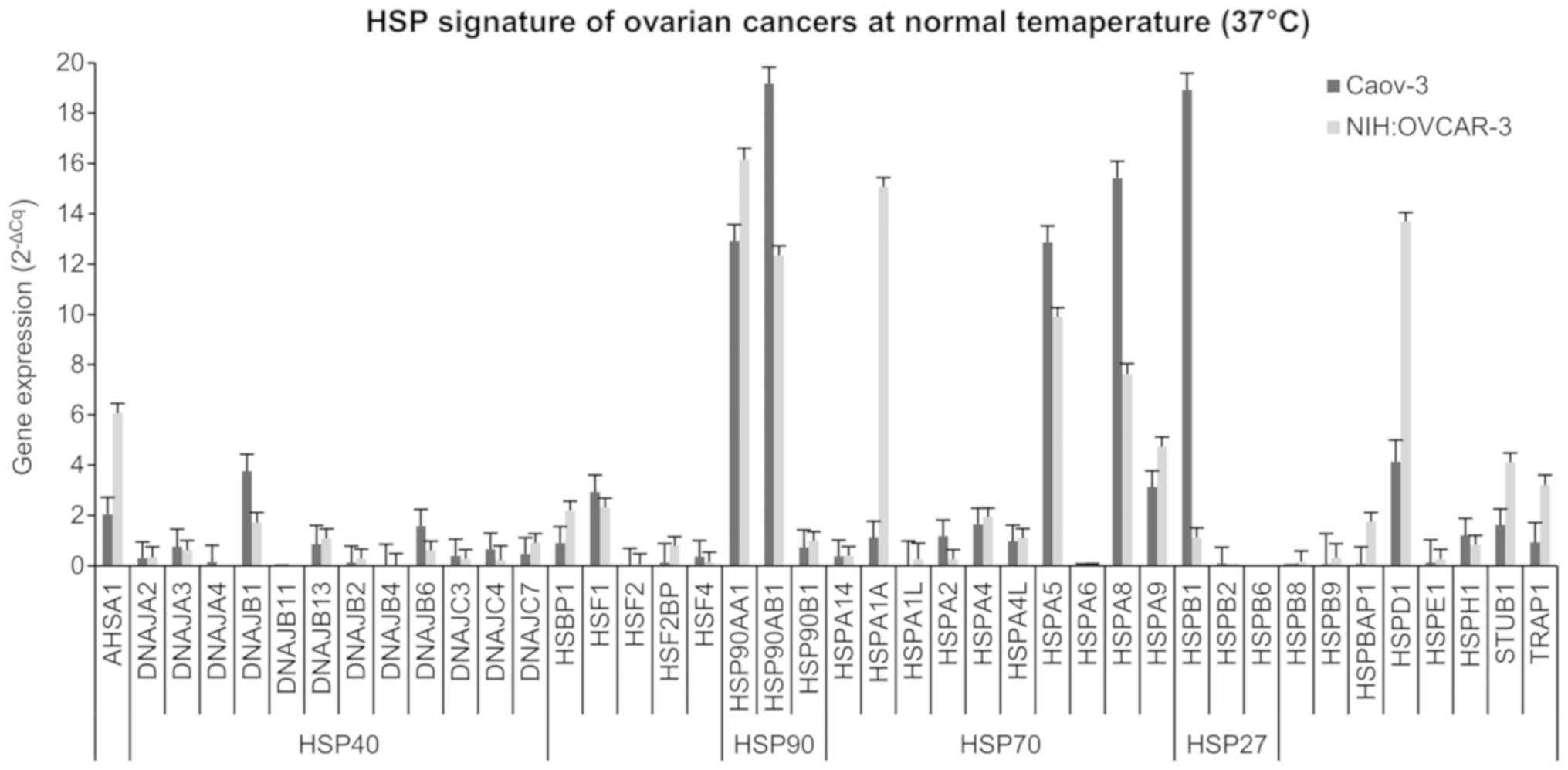
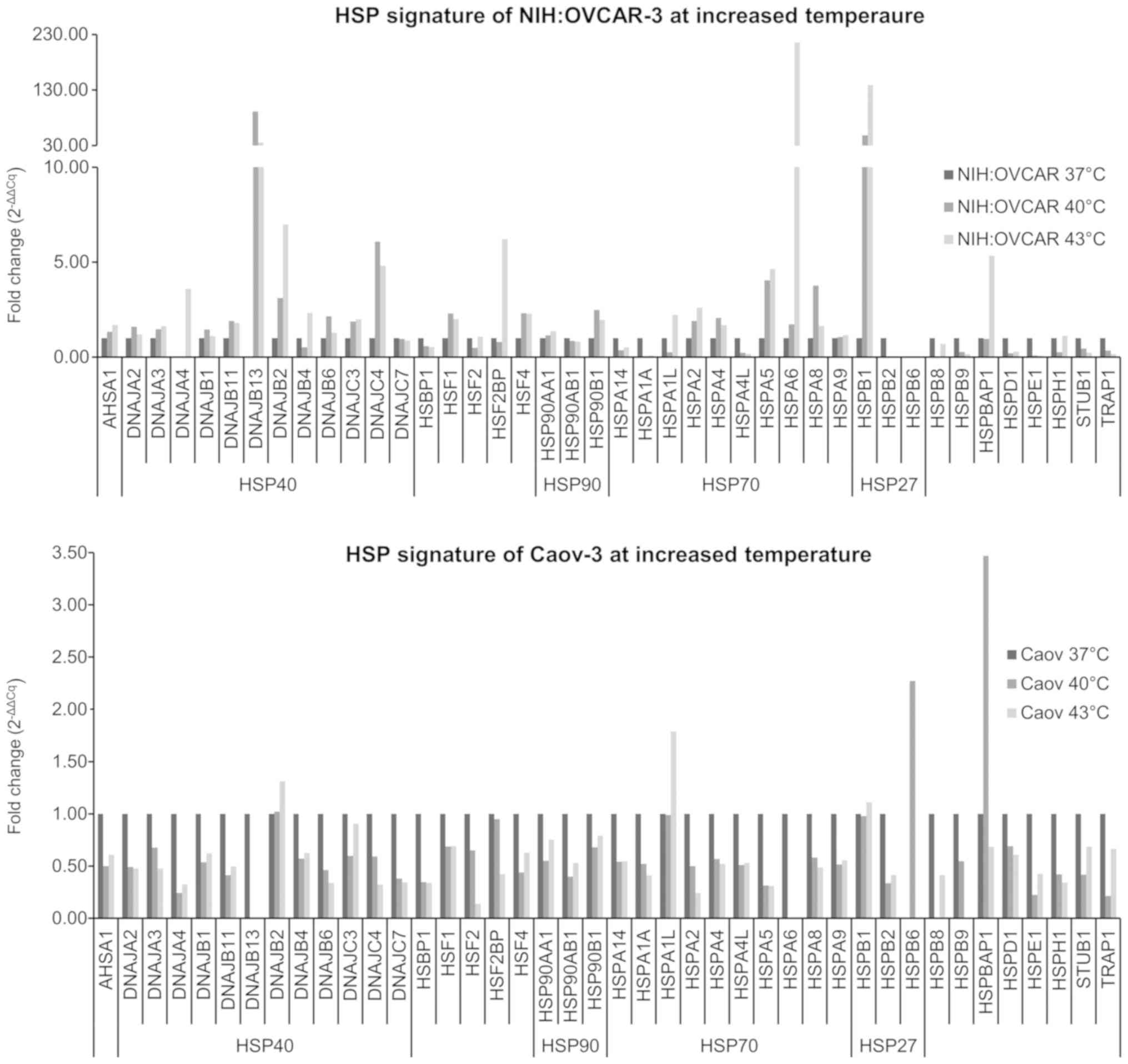
Recombinant adeno‑associated viruses (rAAVs) are becoming more commonly used in clinical trials involving gene therapy. Additionally AAV‑based drugs have already been registered. Gene therapy aims to increase transduction efficiency, increase in vivo selectivity and reduce side effects. One approach to achieve this is the use of physical factors, such as temperature or more specifically, hyperthermia, which is already utilized in oncology. The aim of the present study was to investigate the effect of hyperthermic conditions (40˚C and 43˚C) on the rAAV transduction efficiency of ovarian cancer cells (Caov‑3 and NIH:OVCAR‑3) and non‑cancerous cells (AAV‑293). The present study was designed to identify functional associations between the level of gene transfer and the expression of representative genes for rAAV transmission (AAVR (AAV receptor), heparan sulfate proteoglycan (HSPG) 1 and HSPG2) and heat shock proteins (HSPs). The expressions of selected genes were measured via reverse transcription‑quantitative PCR and cell adhesion/invasion chamber tests were also performed. The results revealed that ovarian cancer cell lines were more efficiently transduced with rAAV vectors at an elevated temperature. Additionally, the expression patterns of AAVR, HSPG1 and HSPG2 genes were different between the tested lines. The expression of certain receptors in ascites‑derived NIH:OVCAR‑3 ovarian cancer cells was higher compared with tumor‑derived Caov‑3 cells at 37, 40 and 43˚C, which indicates a higher transduction efficiency in the formerly mentioned cells. Ascites‑derived ovarian cancer cells were characterized by high expressions of HSP40, HSP90 and HSP70 families. Lower levels of HSP expression were demonstrated in less‑effectively transduced Caov‑3 cells. Furthermore, expressions of the examined genes changed with increasing temperature. The results indicated that temperature‑dependent transduction is associated with the expression of the rAAV receptor and HSP genes. The results of the current study may aid the design of effective protocols for ovarian cancer gene therapy.
View Figures

Figure 1

Figure 2

Figure 3

Figure 4

Figure 5

Figure 6

Figure 7

Figure 8

View References

1 

Naso MF, Tomkowicz B, Perry WL and Strohl WR: Adeno-associated virus (AAV) as a vector for gene therapy. BioDrugs. 31:317–334. 2017. View Article : Google Scholar : PubMed/NCBI

2 

Yalkinoglu AO, Heilbronn R, Bürkle A, Schlehofer JR and zur Hausen H: DNA Amplification of adeno-associated virus as a response to cellular genotoxic stress. Cancer Res. 48:3123–3129. 1988.PubMed/NCBI

3 

Ginn SL, Amaya AK, Alexander IE, Edelstein M and Abedi MR: Gene therapy clinical trials worldwide to 2017: An update. J Gene Med. 20:e30152018. View Article : Google Scholar : PubMed/NCBI

4 

Berry GE and Asokan A: Cellular transduction mechanisms of adeno-associated viral vectors. Curr Opin Virol. 21:54–60. 2016. View Article : Google Scholar : PubMed/NCBI

5 

Stutika C, Mietzsch M, Gogol-Döring A, Weger S, Sohn M, Chen W and Heilbronn R: Comprehensive small RNA-seq of adeno-associated virus (AAV)-infected human cells detects patterns of novel, non-coding AAV RNAs in the absence of cellular miRNA regulation. PLoS One. 11:e01614542016. View Article : Google Scholar : PubMed/NCBI

6 

Pillay S, Meyer NL, Puschnik AS, Davulcu O, Diep J, Ishikawa Y, Jae LT, Wosen JE, Nagamine CM, Chapman MS and Carette JE: An essential receptor for adeno-associated virus infection. Nature. 530:108–112. 2016. View Article : Google Scholar : PubMed/NCBI

7 

Dudek AM, Pillay S, Puschnik AS, Nagamine CM, Cheng F, Qiu J, Carette JE and Vandenberghe LH: An alternate route for adeno-associated Virus (AAV) entry independent of AAV receptor. J Virol. 92:e02213–e02217. 2018. View Article : Google Scholar : PubMed/NCBI

8 

Pillay S and Carette JE: Host determinants of adeno-associated viral vector entry. Curr Opin Virol. 24:124–131. 2017. View Article : Google Scholar : PubMed/NCBI

9 

Gigout L, Rebollo P, Clement N, Warrington KH Jr, Muzyczka N, Linden RM and Weber T: Altering AAV tropism with mosaic viral capsids. Mol Ther. 11:856–865. 2005. View Article : Google Scholar : PubMed/NCBI

10 

McCarty DM: Self-complementary AAV vectors; advances and applications. Mol Ther. 16:1648–1656. 2008. View Article : Google Scholar : PubMed/NCBI

11 

Wei F, McConnell KI, Yu TK and Suh J: Conjugation of paclitaxel on adeno-associated virus (AAV) nanoparticles for co-delivery of genes and drugs. Eur J Pharm Sci. 46:167–172. 2012. View Article : Google Scholar : PubMed/NCBI

12 

Zhong L, Qing K, Si Y, Chen L, Tan M and Srivastava A: Heat-shock treatment-mediated increase in transduction by recombinant adeno-associated virus 2 vectors is independent of the cellular heat-shock protein 90. J Biol Chem. 279:12714–12723. 2004. View Article : Google Scholar : PubMed/NCBI

13 

Mitchell AM and Samulski RJ: Mechanistic insights into the enhancement of adeno-associated virus transduction by proteasome inhibitors. J Virol. 87:13035–13041. 2013. View Article : Google Scholar : PubMed/NCBI

14 

Berry GE and Asokan A: Chemical modulation of endocytic sorting augments adeno-associated viral transduction. J Biol Chem. 291:939–947. 2016. View Article : Google Scholar : PubMed/NCBI

15 

Morrison SF and Nakamura K: Central neural pathways for thermoregulation. Front Biosci (Landmark Ed). 16:74–104. 2011. View Article : Google Scholar : PubMed/NCBI

16 

Romanovsky AA: Skin temperature: Its role in thermoregulation. Act physiol (Oxf). 210:498–507. 2014. View Article : Google Scholar

17 

González-Alonso J: Human thermoregulation and the cardiovascular system. Exp Physiol. 97:340–346. 2012. View Article : Google Scholar : PubMed/NCBI

18 

Walter EJ, Hanna-Jumma S, Carraretto M and Forni L: The pathophysiological basis and consequences of fever. Crit Care. 20:2002016. View Article : Google Scholar : PubMed/NCBI

19 

Mazzotta E, Tavano L and Muzzalupo R: Thermo-sensitive vesicles in controlled drug delivery for chemotherapy. Pharmaceutics. 10:E1502018. View Article : Google Scholar : PubMed/NCBI

20 

Zhu X, Zhang Y, Huang H, Zhang H, Hou L and Zhang Z: Functionalized graphene oxide-based thermosensitive hydrogel for near-infrared chemo-photothermal therapy on tumor. J Biomater Appl. 30:1230–1241. 2016. View Article : Google Scholar : PubMed/NCBI

21 

Hildebrandt B, Wust P, Ahlers O, Dieing A, Sreenivasa G, Kerner T, Felix R and Riess H: The cellular and molecular basis of hyperthermia. Crit Rev Oncol Hematol. 43:33–56. 2002. View Article : Google Scholar : PubMed/NCBI

22 

Jewell A, McMahon M and Khabele D: Heated intraperitoneal chemotherapy in the management of advanced ovarian cancer. Cancers (Basel). 10:E2962018. View Article : Google Scholar : PubMed/NCBI

23 

Hantute-Ghesquier A, Haustrate A, Prevarskaya N and Lehen'kyi V: TRPM family channels in cancer. Pharmaceuticals (Basel). 11:582018. View Article : Google Scholar

24 

Fels B, Bulk E, Pethő Z and Schwab A: The role of TRP channels in the metastatic cascade. Pharmaceuticals (Basel). 11:E482018. View Article : Google Scholar : PubMed/NCBI

25 

Arrigo AP: Mammalian HspB1 (Hsp27) is a molecular sensor linked to the physiology and environment of the cell. Cell Stress Chaperones. 22:517–529. 2017. View Article : Google Scholar : PubMed/NCBI

26 

Grimmig T, Moll EM, Kloos K, Thumm R, Moench R, Callies S, Kreckel J, Vetterlein M, Pelz J, Polat B, et al: Upregulated heat shock proteins after hyperthermic chemotherapy point to induced cell survival mechanisms in affected tumor cells from peritoneal carcinomatosis. Cancer Growth Metastasis. 10:11790644177305592017. View Article : Google Scholar : PubMed/NCBI

27 

Prodromou C: Mechanisms of Hsp90 regulation. Biochem J. 473:2439–2452. 2016. View Article : Google Scholar : PubMed/NCBI

28 

Tu Y, Tian Y, Wu Y and Cui S: Clinical significance of heat shock proteins in gastric cancer following hyperthermia stress: Indications for hyperthermic intraperitoneal chemoperfusion therapy. Oncol Lett. 15:9385–9391. 2018.PubMed/NCBI

29 

Stope MB, Koensgen D, Burchardt M, Concin N, Zygmunt M and Mustea A: Jump in the fire-heat shock proteins and their impact on ovarian cancer therapy. Crit Rev Oncol Hematol. 97:152–156. 2016. View Article : Google Scholar : PubMed/NCBI

30 

Qing K, Hansen J, Weigel-Kelley KA, Tan M, Zhou S and Srivastava A: Adeno-Associated virus type 2-mediated gene transfer: Role of cellular FKBP52 protein in transgene expression. J Virol. 75:8968–8976. 2001. View Article : Google Scholar : PubMed/NCBI

31 

Áyen Á, Jiménez Martínez Y, Marchal JA and Boulaiz H: Recent progress in gene therapy for ovarian cancer. Int J Mol Sci. 19:E19302018. View Article : Google Scholar : PubMed/NCBI

32 

Hamilton TC, Young RC, McKoy WM, Grotzinger KR, Green JA, Chu EW, Whang-Peng J, Rogan AM, Green WR and Ozols RF: Characterization of a human ovarian carcinoma cell line (NIH:OVCAR-3) with androgen and estrogen receptors. Cancer Res. 43:5379–5389. 1983.PubMed/NCBI

33 

Karlan BY, Jones J, Slamon DJ and Lagasse LD: Glucocorticoids stabilize HER-2/neu messenger RNA in human epithelial ovarian carcinoma cells. Gynecol Oncol. 53:70–77. 1994. View Article : Google Scholar : PubMed/NCBI

34 

Capes-Davis A, Theodosopoulos G, Atkin I, Drexler HG, Kohara A, Macleod RA, Masters JR, Nakamura Y, Reid YA, Reddel RR and Freshney RI: Check your cultures! A list of cross-contaminated or misidentified cell lines. Int J Cancer. 127:1–8. 2010. View Article : Google Scholar : PubMed/NCBI

35 

Bairoch A: The cellosaurus, a cell-line knowledge resource. J Biomol Tech. 29:25–38. 2018. View Article : Google Scholar : PubMed/NCBI

36 

Aurnhammer C, Haase M, Muether N, Hausl M, Rauschhuber C, Huber I, Nitschko H, Busch U, Sing A, Ehrhardt A and Baiker A: Universal real-time PCR for the detection and quantification of adeno-associated virus serotype 2-derived inverted terminal repeat sequences. Hum Gene Ther Methods. 23:18–28. 2012. View Article : Google Scholar : PubMed/NCBI

37 

Livak KJ and Schmittgen TD: Analysis of relative gene expression data using real-time quantitative PCR and the 2(-Delta Delta C(T)) method. Methods. 25:402–408. 2001. View Article : Google Scholar : PubMed/NCBI

38 

Bustin SA: A-Z of quantitative PCRInternational University Line; La Jolla, CA: 2004

39 

Chomczynski P and Sacchi N: Single step method of RNA isolation by acid guanidinium thyocyanate-phenolcholoroform extraction. Anal Biochem. 162:156–159. 1987. View Article : Google Scholar : PubMed/NCBI

40 

Wong N and Wang X: miRDB: An online resource for microRNA target prediction and functional annotations. Nucleic Acids Research. 43((Database Issue)): D146–D152. 2015. View Article : Google Scholar : PubMed/NCBI

41 

Chou CH, Shrestha S, Yang CD, Chang NW, Lin YL, Liao KW, Huang WC, Sun TH, Tu SJ, Lee WH, et al: miRTarBase update 2018: A resource for experimentally validated microRNA-target interactions. Nucleic Acids Res. 46(D1): D296–D302. 2018. View Article : Google Scholar : PubMed/NCBI

42 

Dunbar CE, High KA, Joung JK, Kohn DB, Ozawa K and Sadelain M: Gene therapy comes of age. Science. 359:eaan46722018. View Article : Google Scholar : PubMed/NCBI

43 

Turaga K, Levine E, Barone R, Sticca R, Petrelli N, Lambert L, Nash G, Morse M, Adbel-Misih R, Alexander HR, et al: Consensus guidelines from The American Society of Peritoneal Surface Malignancies on standardizing the delivery of hyperthermic intraperitoneal chemotherapy (HIPEC) in colorectal cancer patients in the United States. Ann Surg Oncol. 21:1501–1505. 2014. View Article : Google Scholar : PubMed/NCBI

44 

Rutkowski P, Śpiewankiewicz B, Herman K, Jastrzębski T, Kładny J, Kojs Z, Krzakowski M, Polkowski W, Wyrwicz L, Wysocki P, et al: Polish clinical practice guideline on hyperthermic intraperitoneal chemotherapy (HIPEC) with cytoreductive surgery in peritoneal melignancy treatment. Curr Gynecol Oncol. 12:86–97. 2014. View Article : Google Scholar

45 

van der Zee J: Heating the patient: A promising approach? Ann Oncol. 13:1173–1184. 2002. View Article : Google Scholar : PubMed/NCBI

46 

Wust P, Hildebrandt B, Sreenivasa G, Rau B, Gellermann J, Riess H, Felix R and Schlag PM: Hyperthermia in combined treatment of cancer. Lancet Oncol. 3:487–497. 2002. View Article : Google Scholar : PubMed/NCBI

47 

Orzechowska M, Fabijańska M, Ochocki J and Małecki M: Anticancer activity of a trans-platinum(II) complex of 3-aminoflavone to ovarian cancer cells. Ginekol Pol. 88:68–74. 2017. View Article : Google Scholar : PubMed/NCBI

48 

Grecka E, Statkiewicz M, Gorska A, Biernacka M, Grygorowicz MA, Masnyk M, Chmielewski M, Gawarecka K, Chojnacki T, Swiezewska E and Malecki M: Prenyl ammonium salts-new carriers for gene delivery: A B16-F10 mouse melanoma model. PLoS One. 11:e01536332016. View Article : Google Scholar : PubMed/NCBI

49 

Kosuga M, Enosawa S, Li XK, Suzuki S, Matsuo N, Yamada M, Roy-Chowdhury J, Koiwai O and Okuyama T: Strong, long-term transgene expression in rat liver using chicken beta-actin promoter associated with cytomegalovirus immediate-early enhancer (CAG promoter). Cell Transplant. 9:675–680. 2000. View Article : Google Scholar : PubMed/NCBI

50 

Damdindorj L, Karnan S, Ota A, Takahashi M, Konishi Y, Hossain E, Hosokawa Y and Konishi H: Assessment of the long-term transcriptional activity of a 550-bp-long human β-actin promoter region. Plasmid. 68:195–200. 2012. View Article : Google Scholar : PubMed/NCBI

51 

Lerch TF, O'Donnell JK, Meyer NL, Xie Q, Taylor KA, Stagg SM and Chapman MS: Structure of AAV-DJ, a retargeted gene therapy vector: Cryo-electron microscopy at 4.5 Å resolution. Structure. 20:1310–1320. 2012. View Article : Google Scholar : PubMed/NCBI

52 

Zhao W, Zhong L, Wu J, Chen L, Qing K, Weigel-Kelley KA, Larsen SH, Shou W, Warrington KH Jr and Srivastava A: Role of cellular FKBP52 protein in intracellular trafficking of recombinant adeno-associated virus 2 vectors. Virology. 353:283–293. 2006. View Article : Google Scholar : PubMed/NCBI

53 

Ganju A, Khan S, Hafeez BB, Behrman SW, Yallapu MM, Chauhan SC and Jaggi M: miRNA nanotherapeutics for cancer. Drug Discov Today. 22:424–432. 2016. View Article : Google Scholar : PubMed/NCBI

54 

Hayes J, Peruzzi PP and Lawler S: MicroRNAs in cancer: Biomarkers, functions and therapy. Trends Mol Med. 20:460–469. 2014. View Article : Google Scholar : PubMed/NCBI

55 

Luchetti F, Mannello F, Canonico B, Battistelli M, Burattini S, Falcieri E and Papa S: Integrin and cytoskeleton behaviour in human neuroblastoma cells during hyperthermia-related apoptosis. Apoptosis. 9:635–648. 2004. View Article : Google Scholar : PubMed/NCBI

56 

Zhang B, Xie F, Aziz AUR, Shao S, Li W, Deng S, Liao X and Liu B: Heat shock protein 27 phosphorylation regulates tumor cell migration under shear stress. Biomolecules. 9:E502019. View Article : Google Scholar : PubMed/NCBI

57 

Voll EA, Ogden IM, Pavese JM, Huang X, Xu L, Jovanovic BD and Bergan RC: Heat shock protein 27 regulates human prostate cancer cell motility and metastatic progression. Oncotarget. 5:2648–2663. 2014. View Article : Google Scholar : PubMed/NCBI

58 

Calderwood SK, Khaleque MA, Sawyer DB and Ciocca DR: Heat shock proteins in cancer: Chaperones of tumorigenesis. Treands Biochem Sci. 31:164–172. 2006. View Article : Google Scholar

59 

Xie X, Shao X, Gao F, Jin H, Zhou J, Du L, Zhang Y, Ouyang W, Wang X, Zhao L, et al: Effect of hyperthermia on invasion ability and TGF-β1 expression of breast carcinoma MCF-7 cells. Oncol Rep. 25:1573–1579. 2011.PubMed/NCBI

60 

Jin H, Xie X, Hu B, Gao F, Zhou J, Zhang Y, Du L, Wang X, Zhao L, Zhang X, et al: Hyperthermia inhibits the proliferation and invasive ability of mouse malignant melanoma through TGF-β(1). Oncol Rep. 29:725–734. 2013. View Article : Google Scholar : PubMed/NCBI

61 

Narod SA: Personalised medicine and population health: Breast and ovarian cancer. Hum Genet. 137:769–778. 2018. View Article : Google Scholar : PubMed/NCBI

Related Articles

  • Abstract
  • View
  • Download
  • Twitter
Copy and paste a formatted citation
Spandidos Publications style
Bieńkowska A, Ducher M, Orzechowska M, Słyk Ż, Ciepiela O, Jaworowski J and Małecki M: Increased temperature‑related adeno‑associated virus vectors transduction of ovarian cancer cells ‑ essential signatures of AAV receptor and heat shock proteins. Exp Ther Med 18: 4718-4732, 2019.
APA
Bieńkowska, A., Ducher, M., Orzechowska, M., Słyk, Ż., Ciepiela, O., Jaworowski, J., & Małecki, M. (2019). Increased temperature‑related adeno‑associated virus vectors transduction of ovarian cancer cells ‑ essential signatures of AAV receptor and heat shock proteins. Experimental and Therapeutic Medicine, 18, 4718-4732. https://doi.org/10.3892/etm.2019.8112
MLA
Bieńkowska, A., Ducher, M., Orzechowska, M., Słyk, Ż., Ciepiela, O., Jaworowski, J., Małecki, M."Increased temperature‑related adeno‑associated virus vectors transduction of ovarian cancer cells ‑ essential signatures of AAV receptor and heat shock proteins". Experimental and Therapeutic Medicine 18.6 (2019): 4718-4732.
Chicago
Bieńkowska, A., Ducher, M., Orzechowska, M., Słyk, Ż., Ciepiela, O., Jaworowski, J., Małecki, M."Increased temperature‑related adeno‑associated virus vectors transduction of ovarian cancer cells ‑ essential signatures of AAV receptor and heat shock proteins". Experimental and Therapeutic Medicine 18, no. 6 (2019): 4718-4732. https://doi.org/10.3892/etm.2019.8112
Copy and paste a formatted citation
x
Spandidos Publications style
Bieńkowska A, Ducher M, Orzechowska M, Słyk Ż, Ciepiela O, Jaworowski J and Małecki M: Increased temperature‑related adeno‑associated virus vectors transduction of ovarian cancer cells ‑ essential signatures of AAV receptor and heat shock proteins. Exp Ther Med 18: 4718-4732, 2019.
APA
Bieńkowska, A., Ducher, M., Orzechowska, M., Słyk, Ż., Ciepiela, O., Jaworowski, J., & Małecki, M. (2019). Increased temperature‑related adeno‑associated virus vectors transduction of ovarian cancer cells ‑ essential signatures of AAV receptor and heat shock proteins. Experimental and Therapeutic Medicine, 18, 4718-4732. https://doi.org/10.3892/etm.2019.8112
MLA
Bieńkowska, A., Ducher, M., Orzechowska, M., Słyk, Ż., Ciepiela, O., Jaworowski, J., Małecki, M."Increased temperature‑related adeno‑associated virus vectors transduction of ovarian cancer cells ‑ essential signatures of AAV receptor and heat shock proteins". Experimental and Therapeutic Medicine 18.6 (2019): 4718-4732.
Chicago
Bieńkowska, A., Ducher, M., Orzechowska, M., Słyk, Ż., Ciepiela, O., Jaworowski, J., Małecki, M."Increased temperature‑related adeno‑associated virus vectors transduction of ovarian cancer cells ‑ essential signatures of AAV receptor and heat shock proteins". Experimental and Therapeutic Medicine 18, no. 6 (2019): 4718-4732. https://doi.org/10.3892/etm.2019.8112
Follow us
  • Twitter
  • LinkedIn
  • Facebook
About
  • Spandidos Publications
  • Careers
  • Cookie Policy
  • Privacy Policy
How can we help?
  • Help
  • Live Chat
  • Contact
  • Email to our Support Team