Spandidos Publications Logo
  • About
    • About Spandidos
    • Aims and Scopes
    • Abstracting and Indexing
    • Editorial Policies
    • Reprints and Permissions
    • Job Opportunities
    • Terms and Conditions
    • Contact
  • Journals
    • All Journals
    • Oncology Letters
      • Oncology Letters
      • Information for Authors
      • Editorial Policies
      • Editorial Board
      • Aims and Scope
      • Abstracting and Indexing
      • Bibliographic Information
      • Archive
    • International Journal of Oncology
      • International Journal of Oncology
      • Information for Authors
      • Editorial Policies
      • Editorial Board
      • Aims and Scope
      • Abstracting and Indexing
      • Bibliographic Information
      • Archive
    • Molecular and Clinical Oncology
      • Molecular and Clinical Oncology
      • Information for Authors
      • Editorial Policies
      • Editorial Board
      • Aims and Scope
      • Abstracting and Indexing
      • Bibliographic Information
      • Archive
    • Experimental and Therapeutic Medicine
      • Experimental and Therapeutic Medicine
      • Information for Authors
      • Editorial Policies
      • Editorial Board
      • Aims and Scope
      • Abstracting and Indexing
      • Bibliographic Information
      • Archive
    • International Journal of Molecular Medicine
      • International Journal of Molecular Medicine
      • Information for Authors
      • Editorial Policies
      • Editorial Board
      • Aims and Scope
      • Abstracting and Indexing
      • Bibliographic Information
      • Archive
    • Biomedical Reports
      • Biomedical Reports
      • Information for Authors
      • Editorial Policies
      • Editorial Board
      • Aims and Scope
      • Abstracting and Indexing
      • Bibliographic Information
      • Archive
    • Oncology Reports
      • Oncology Reports
      • Information for Authors
      • Editorial Policies
      • Editorial Board
      • Aims and Scope
      • Abstracting and Indexing
      • Bibliographic Information
      • Archive
    • Molecular Medicine Reports
      • Molecular Medicine Reports
      • Information for Authors
      • Editorial Policies
      • Editorial Board
      • Aims and Scope
      • Abstracting and Indexing
      • Bibliographic Information
      • Archive
    • World Academy of Sciences Journal
      • World Academy of Sciences Journal
      • Information for Authors
      • Editorial Policies
      • Editorial Board
      • Aims and Scope
      • Abstracting and Indexing
      • Bibliographic Information
      • Archive
    • International Journal of Functional Nutrition
      • International Journal of Functional Nutrition
      • Information for Authors
      • Editorial Policies
      • Editorial Board
      • Aims and Scope
      • Abstracting and Indexing
      • Bibliographic Information
      • Archive
    • International Journal of Epigenetics
      • International Journal of Epigenetics
      • Information for Authors
      • Editorial Policies
      • Editorial Board
      • Aims and Scope
      • Abstracting and Indexing
      • Bibliographic Information
      • Archive
    • Medicine International
      • Medicine International
      • Information for Authors
      • Editorial Policies
      • Editorial Board
      • Aims and Scope
      • Abstracting and Indexing
      • Bibliographic Information
      • Archive
  • Articles
  • Information
    • Information for Authors
    • Information for Reviewers
    • Information for Librarians
    • Information for Advertisers
    • Conferences
  • Language Editing
Spandidos Publications Logo
  • About
    • About Spandidos
    • Aims and Scopes
    • Abstracting and Indexing
    • Editorial Policies
    • Reprints and Permissions
    • Job Opportunities
    • Terms and Conditions
    • Contact
  • Journals
    • All Journals
    • Biomedical Reports
      • Information for Authors
      • Editorial Policies
      • Editorial Board
      • Aims and Scope
      • Abstracting and Indexing
      • Bibliographic Information
      • Archive
    • Experimental and Therapeutic Medicine
      • Information for Authors
      • Editorial Policies
      • Editorial Board
      • Aims and Scope
      • Abstracting and Indexing
      • Bibliographic Information
      • Archive
    • International Journal of Epigenetics
      • Information for Authors
      • Editorial Policies
      • Editorial Board
      • Aims and Scope
      • Abstracting and Indexing
      • Bibliographic Information
      • Archive
    • International Journal of Functional Nutrition
      • Information for Authors
      • Editorial Policies
      • Editorial Board
      • Aims and Scope
      • Abstracting and Indexing
      • Bibliographic Information
      • Archive
    • International Journal of Molecular Medicine
      • Information for Authors
      • Editorial Policies
      • Editorial Board
      • Aims and Scope
      • Abstracting and Indexing
      • Bibliographic Information
      • Archive
    • International Journal of Oncology
      • Information for Authors
      • Editorial Policies
      • Editorial Board
      • Aims and Scope
      • Abstracting and Indexing
      • Bibliographic Information
      • Archive
    • Medicine International
      • Information for Authors
      • Editorial Policies
      • Editorial Board
      • Aims and Scope
      • Abstracting and Indexing
      • Bibliographic Information
      • Archive
    • Molecular and Clinical Oncology
      • Information for Authors
      • Editorial Policies
      • Editorial Board
      • Aims and Scope
      • Abstracting and Indexing
      • Bibliographic Information
      • Archive
    • Molecular Medicine Reports
      • Information for Authors
      • Editorial Policies
      • Editorial Board
      • Aims and Scope
      • Abstracting and Indexing
      • Bibliographic Information
      • Archive
    • Oncology Letters
      • Information for Authors
      • Editorial Policies
      • Editorial Board
      • Aims and Scope
      • Abstracting and Indexing
      • Bibliographic Information
      • Archive
    • Oncology Reports
      • Information for Authors
      • Editorial Policies
      • Editorial Board
      • Aims and Scope
      • Abstracting and Indexing
      • Bibliographic Information
      • Archive
    • World Academy of Sciences Journal
      • Information for Authors
      • Editorial Policies
      • Editorial Board
      • Aims and Scope
      • Abstracting and Indexing
      • Bibliographic Information
      • Archive
  • Articles
  • Information
    • For Authors
    • For Reviewers
    • For Librarians
    • For Advertisers
    • Conferences
  • Language Editing
Login Register Submit
  • This site uses cookies
  • You can change your cookie settings at any time by following the instructions in our Cookie Policy. To find out more, you may read our Privacy Policy.

    I agree
Search articles by DOI, keyword, author or affiliation
Search
Advanced Search
presentation
Experimental and Therapeutic Medicine
Join Editorial Board Propose a Special Issue
Print ISSN: 1792-0981 Online ISSN: 1792-1015
Journal Cover
April-2020 Volume 19 Issue 4

Full Size Image

Sign up for eToc alerts
Recommend to Library

Journals

International Journal of Molecular Medicine

International Journal of Molecular Medicine

International Journal of Molecular Medicine is an international journal devoted to molecular mechanisms of human disease.

International Journal of Oncology

International Journal of Oncology

International Journal of Oncology is an international journal devoted to oncology research and cancer treatment.

Molecular Medicine Reports

Molecular Medicine Reports

Covers molecular medicine topics such as pharmacology, pathology, genetics, neuroscience, infectious diseases, molecular cardiology, and molecular surgery.

Oncology Reports

Oncology Reports

Oncology Reports is an international journal devoted to fundamental and applied research in Oncology.

Experimental and Therapeutic Medicine

Experimental and Therapeutic Medicine

Experimental and Therapeutic Medicine is an international journal devoted to laboratory and clinical medicine.

Oncology Letters

Oncology Letters

Oncology Letters is an international journal devoted to Experimental and Clinical Oncology.

Biomedical Reports

Biomedical Reports

Explores a wide range of biological and medical fields, including pharmacology, genetics, microbiology, neuroscience, and molecular cardiology.

Molecular and Clinical Oncology

Molecular and Clinical Oncology

International journal addressing all aspects of oncology research, from tumorigenesis and oncogenes to chemotherapy and metastasis.

World Academy of Sciences Journal

World Academy of Sciences Journal

Multidisciplinary open-access journal spanning biochemistry, genetics, neuroscience, environmental health, and synthetic biology.

International Journal of Functional Nutrition

International Journal of Functional Nutrition

Open-access journal combining biochemistry, pharmacology, immunology, and genetics to advance health through functional nutrition.

International Journal of Epigenetics

International Journal of Epigenetics

Publishes open-access research on using epigenetics to advance understanding and treatment of human disease.

Medicine International

Medicine International

An International Open Access Journal Devoted to General Medicine.

Journal Cover
April-2020 Volume 19 Issue 4

Full Size Image

Sign up for eToc alerts
Recommend to Library

  • Article
  • Citations
    • Cite This Article
    • Download Citation
    • Create Citation Alert
    • Remove Citation Alert
    • Cited By
  • Similar Articles
    • Related Articles (in Spandidos Publications)
    • Similar Articles (Google Scholar)
    • Similar Articles (PubMed)
  • Download PDF
  • Download XML
  • View XML
Article Open Access

Effects of mevalonate kinase interference on cell differentiation, apoptosis, prenylation and geranylgeranylation of human keratinocytes are attenuated by farnesyl pyrophosphate or geranylgeranyl pyrophosphate

  • Authors:
    • Min Li
    • Wei Min
    • Jianbo Wang
    • Lu Wang
    • Yan Li
    • Naihui Zhou
    • Ziliang Yang
    • Qihong Qian
  • View Affiliations / Copyright

    Affiliations: Department of Dermatology, First Affiliated Hospital of Soochow University, Suzhou, Jiangsu 215006, P.R. China, Department of Dermatology, Henan Provincial People's Hospital, People's Hospital of Zhengzhou University, School of Clinical Medicine, Henan University, Zhengzhou, Henan 450003, P.R. China
    Copyright: © Li et al. This is an open access article distributed under the terms of Creative Commons Attribution License.
  • Pages: 2861-2870
    |
    Published online on: February 27, 2020
       https://doi.org/10.3892/etm.2020.8569
  • Expand metrics +
Metrics: Total Views: 0 (Spandidos Publications: | PMC Statistics: )
Metrics: Total PDF Downloads: 0 (Spandidos Publications: | PMC Statistics: )
Cited By (CrossRef): 0 citations Loading Articles...

This article is mentioned in:


Abstract

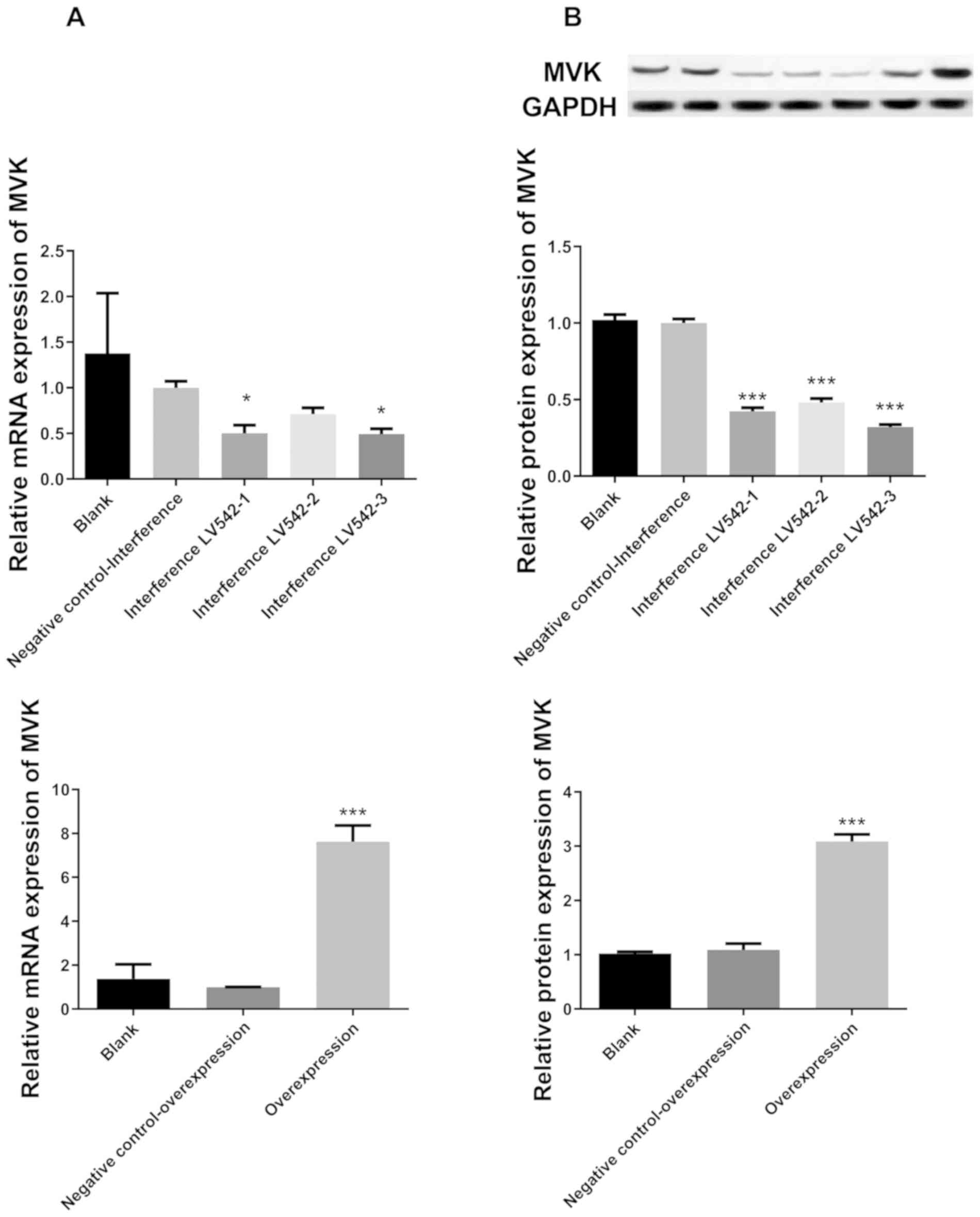
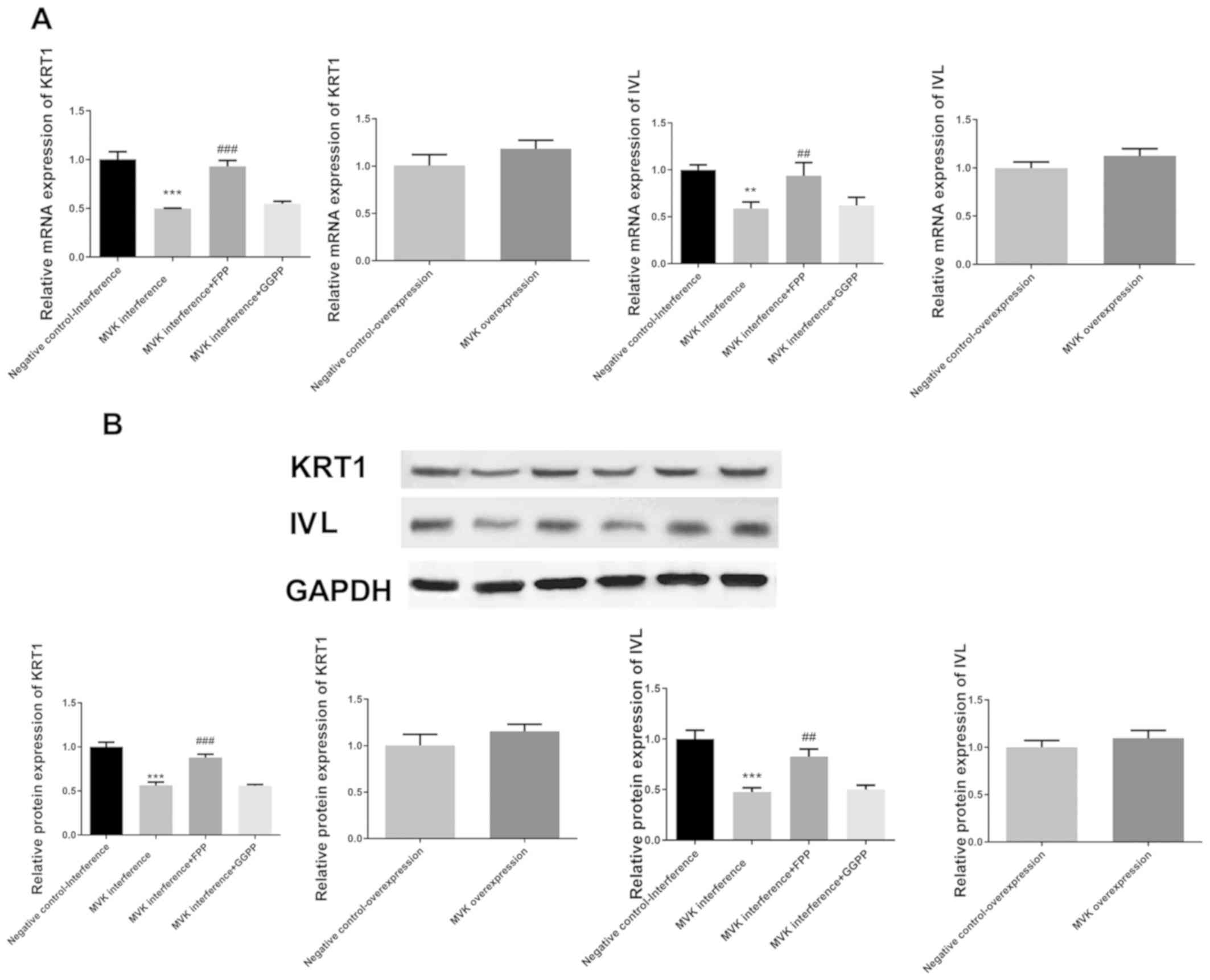
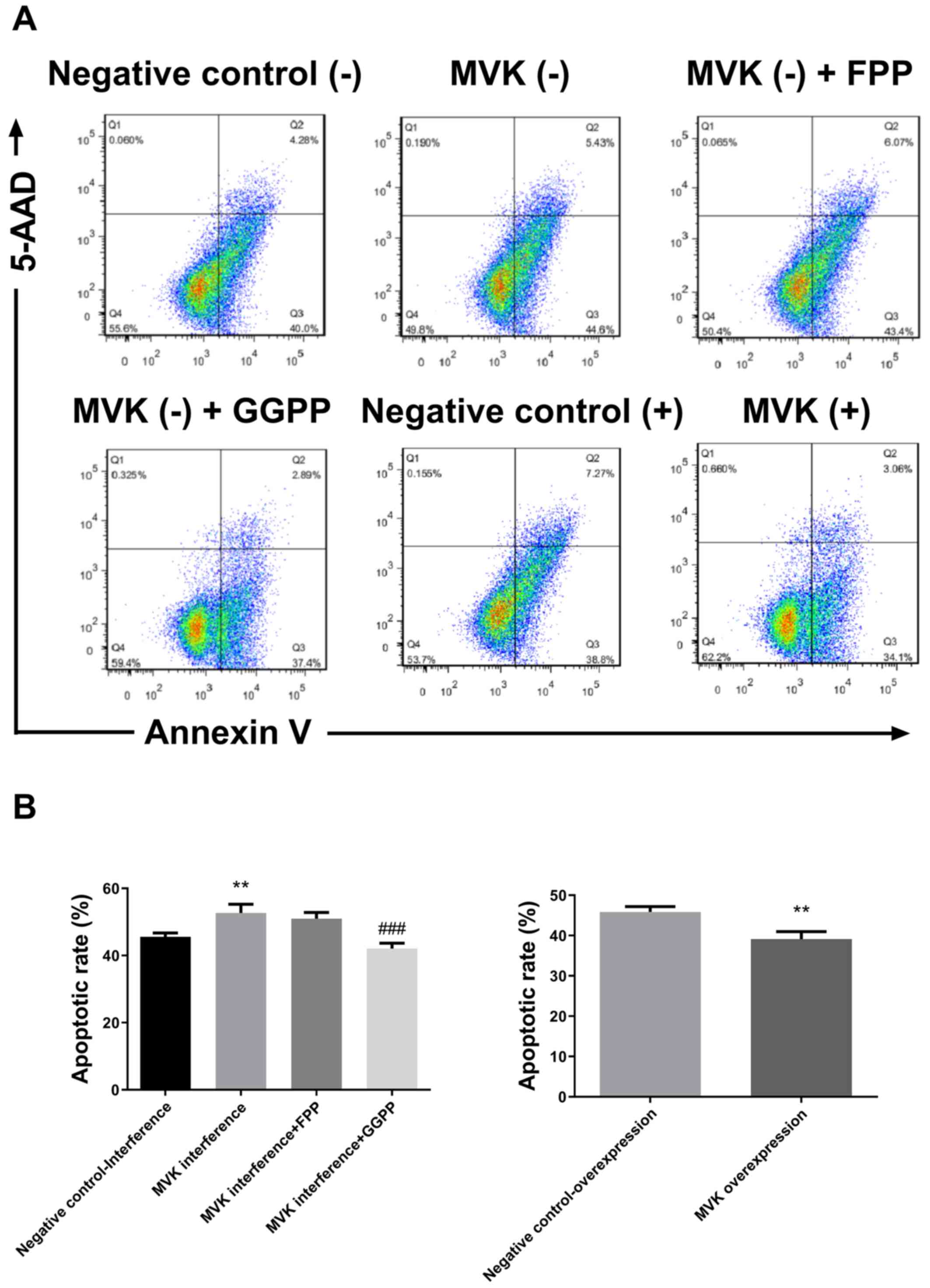
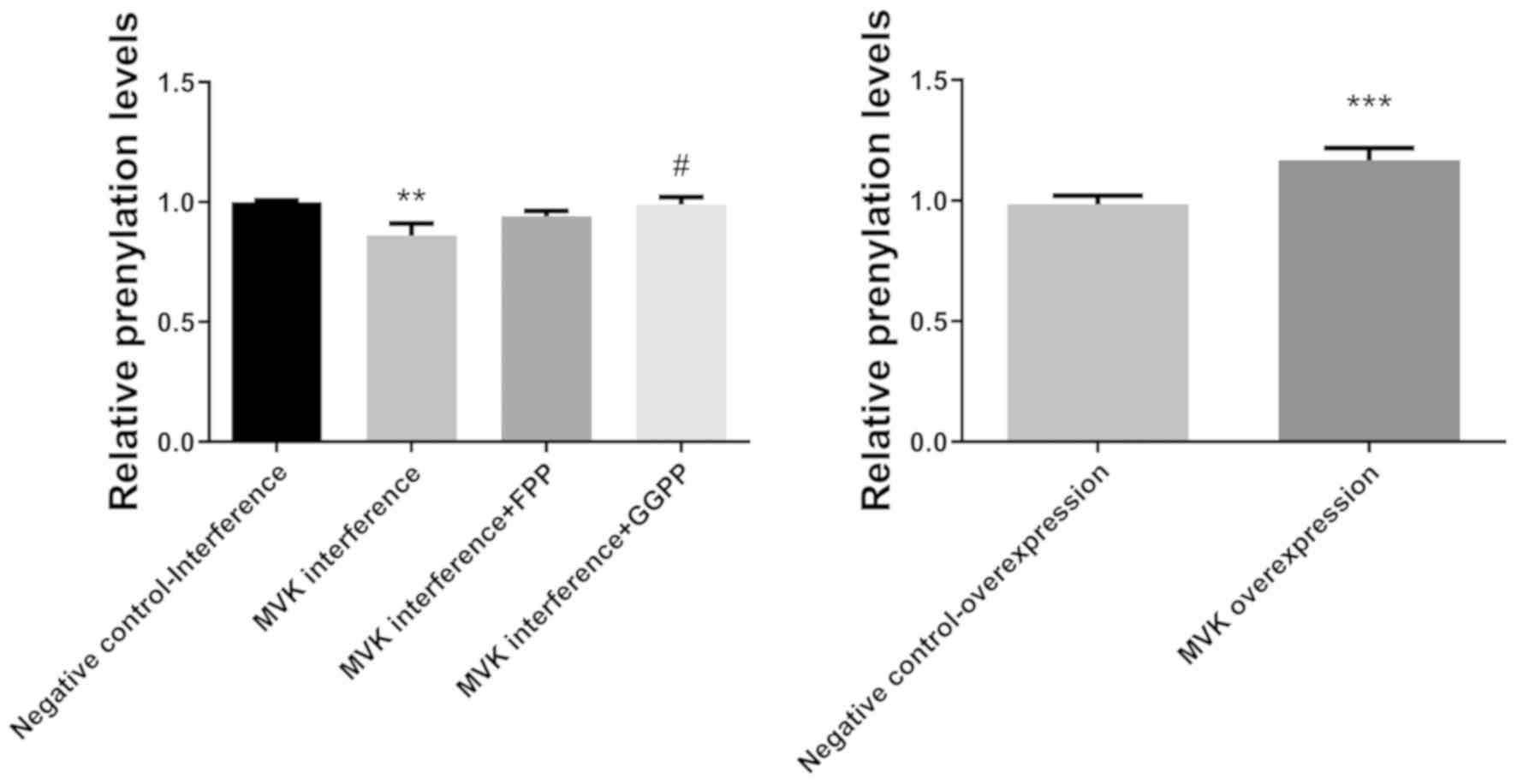
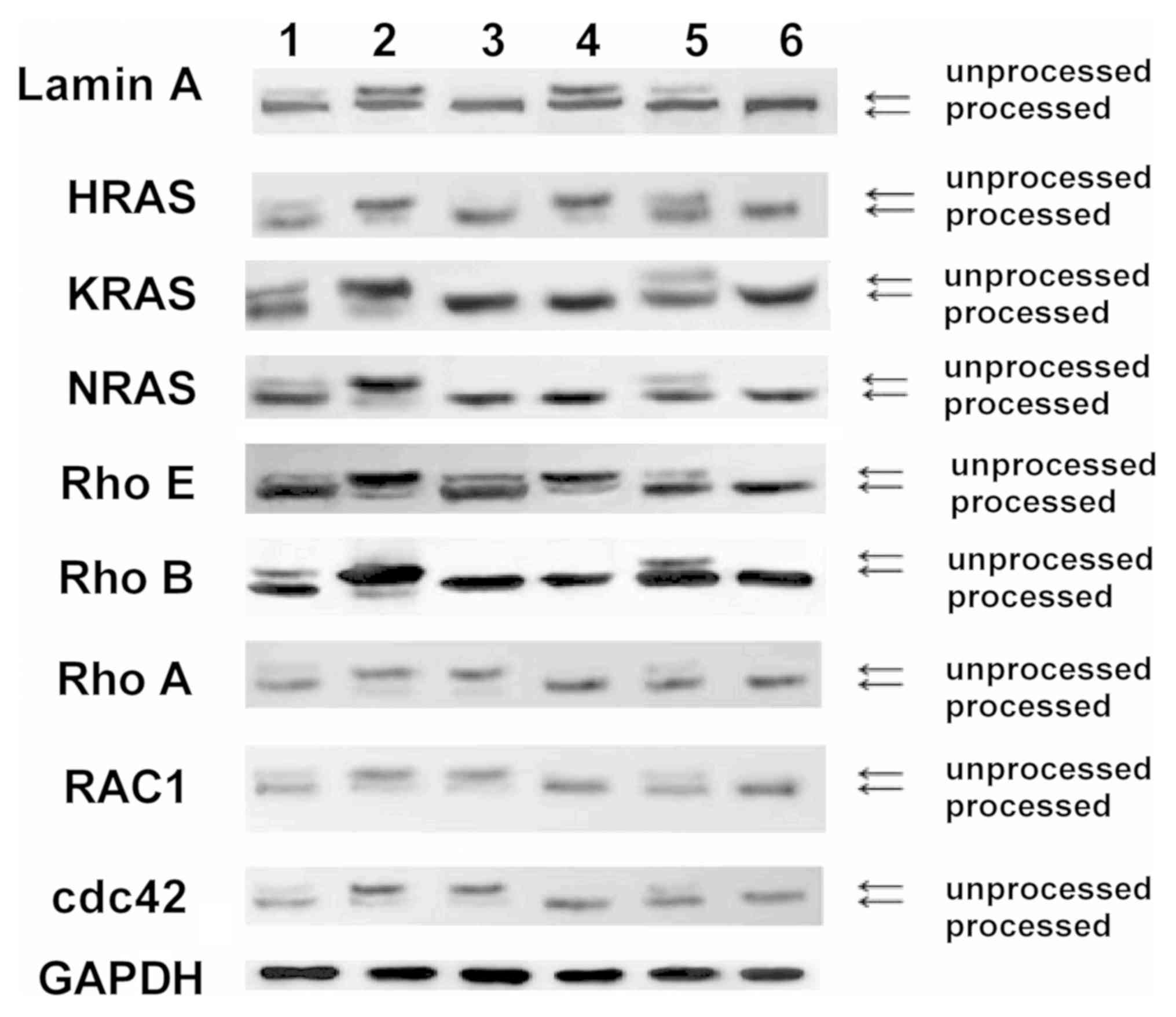
Mevalonate kinase (MVK) mutations were previously identified in disseminated superficial actinic porokeratosis. However, the role of MVK in differentiation, apoptosis and prenylation of keratinocytes requires further investigation. Farnesyl pyrophosphate (FPP) and geranylgeranyl pyrophosphate (GGPP) of the mevalonate pathway attach to small G proteins, and serve as molecular switches in biochemical pathways. Therefore, the aim of the present study was to investigate the role of MVK in the expression of keratin 1 and involucrin, apoptosis, protein prenylation and the processing of small G proteins. HaCat human keratinocytes were transfected with viruses carrying MVK interference and overexpression vectors, respectively. The mRNA expression of MVK, keratin 1 and involucrin was detected by reverse transcription‑quantitative PCR. Protein expression of MVK, keratin 1, involucrin, lamin A, HRAS, KRAS, NRAS, Rho E, Rho B, Rho A, RAC1 and cdc42 in HaCat cells was detected by western blotting. The apoptotic rates of HaCat cells and protein prenylation levels were examined by flow cytometry. The expression of MVK in HaCat cells was significantly decreased in the interference groups, and markedly increased in the overexpression group compared with the negative control groups. The mRNA and protein expression levels of keratin 1 and involucrin were significantly decreased following interference of MVK expression, and the decrease was markedly attenuated by FPP. Furthermore, the apoptotic rate was markedly increased following MVK interference, and the increase was significantly attenuated by GGPP. The overexpression of MVK significantly decreased the apoptotic rate of HaCat cells. The prenylation levels after MVK interference was notably decreased, which was markedly attenuated by GGPP. The overexpression of MVK significantly increased the prenylation levels of HaCat cells. FPP or GGPP reversed MVK interference‑induced decrease in geranylgeranylation levels of lamin A, HRAS, KRAS, NRAS, Rho E, Rho B, Rho A, RAC1 and cdc42. In conclusion, MVK interference decreases the expression of differentiation markers, increases apoptosis, and decreases protein prenylation and geranylgeranylation levels in keratinocytes. These changes are attenuated by FPP or GGPP.
View Figures

Figure 1

Figure 2

Figure 3

Figure 4

Figure 5

View References

1 

Fu Z, Wang M, Potter D, Miziorko HM and Kim JJ: The structure of a binary complex between a mammalian mevalonate kinase and ATP: Insights into the reaction mechanism and human inherited disease. J Biol Chem. 277:18134–18142. 2002.PubMed/NCBI View Article : Google Scholar

2 

Houten SM, Wanders RJ and Waterham HR: Biochemical and genetic aspects of mevalonate kinase and its deficiency. Biochim Biophys Acta. 1529:19–32. 2000.PubMed/NCBI View Article : Google Scholar

3 

Bouwstra JA and Ponec M: The skin barrier in healthy and diseased state. Biochim Biophys Acta. 1758:2080–2095. 2006.PubMed/NCBI View Article : Google Scholar

4 

Zhao Y, Gartner U, Smith FJ and McLean WH: Statins downregulate K6a promoter activity: A possible therapeutic avenue for pachyonychia congenita. J Invest Dermatol. 131:1045–1052. 2011.PubMed/NCBI View Article : Google Scholar

5 

Zhang SQ, Jiang T, Li M, Zhang X, Ren YQ, Wei SC, Sun LD, Cheng H, Li Y, Yin XY, et al: Exome sequencing identifies MVK mutations in disseminated superficial actinic porokeratosis. Nat Genet. 44:1156–1160. 2012.PubMed/NCBI View Article : Google Scholar

6 

Shen CS, Tabata K, Matsuki M, Goto T, Yokochi T and Yamanishi K: Premature apoptosis of keratinocytes and the dysregulation of keratinization in porokeratosis. Br J Dermatol. 147:498–502. 2002.PubMed/NCBI View Article : Google Scholar

7 

Alaei P, MacNulty EE and Ryder NS: Inhibition of protein prenylation down-regulates signalling by inflammatory mediators in human keratinocytes. Biochem Biophys Res Commun. 222:133–138. 1996.PubMed/NCBI View Article : Google Scholar

8 

McTaggart SJ: Isoprenylated proteins. Cell Mol Life Sci. 63:255–267. 2006.PubMed/NCBI View Article : Google Scholar

9 

Livak KJ and Schmittgen TD: Analysis of relative gene expression data using real-time quantitative PCR and the 2(-Delta Delta C(T)) method. Methods. 25:402–408. 2001.PubMed/NCBI View Article : Google Scholar

10 

Xia Z, Tan MM, Wong WW, Dimitroulakos J, Minden MD and Penn LZ: Blocking protein geranylgeranylation is essential for lovastatin-induced apoptosis of human acute myeloid leukemia cells. Leukemia. 15:1398–1407. 2001.PubMed/NCBI View Article : Google Scholar

11 

Moravcová M, Libra A, Dvořáková J, Víšková A, Muthný T, Velebný V and Kubala L: Modulation of keratin 1, 10 and involucrin expression as part of the complex response of the human keratinocyte cell line HaCaT to ultraviolet radiation. Interdiscip Toxicol. 6:203–208. 2013.PubMed/NCBI View Article : Google Scholar

12 

Ichikawa E, Watanabe S and Takahashi H: Keratin and involucrin expression in discoid lupus erythematosus and lichen planus. Arch Dermatol Res. 289:519–526. 1997.PubMed/NCBI View Article : Google Scholar

13 

Poumay Y, Herphelin F, Smits P, De Potter IY and Pittelkow MR: High-cell-density phorbol ester and retinoic acid upregulate involucrin and downregulate suprabasal keratin 10 in autocrine cultures of human epidermal keratinocytes. Mol Cell Biol Res Commun. 2:138–144. 1999.PubMed/NCBI View Article : Google Scholar

14 

Ichikawa E, Ohnishi T and Watanabe S: Expression of keratin and involucrin in keratoacanthoma: An immunohistochemical aid to diagnosis. J Dermatol Sci. 34:115–117. 2004.PubMed/NCBI View Article : Google Scholar

15 

Ivanova P, Atanasova G, Poumay Y and Mitev V: Knockdown of PKD1 in normal human epidermal keratinocytes increases mRNA expression of keratin 10 and involucrin: Early markers of keratinocyte differentiation. Arch Dermatol Res. 300:139–145. 2008.PubMed/NCBI View Article : Google Scholar

16 

Pastar I, Stojadinovic O, Sawaya AP, Stone RC, Lindley LE, Ojeh N, Vukelic S, Samuels HH and Tomic-Canic M: Skin metabolite, farnesyl pyrophosphate, regulates epidermal response to inflammation, oxidative stress, and migration. J Cell Physiol. 231:2452–2463. 2016.PubMed/NCBI View Article : Google Scholar

17 

Tricarico PM, Romeo A, Gratton R, Crovella S and Celsi F: Lack of prenylated proteins, autophagy impairment and apoptosis in SH-SY5Y neuronal cell model of mevalonate kinase deficiency. Cell Physiol Biochem. 41:1649–1660. 2017.PubMed/NCBI View Article : Google Scholar

18 

Tricarico PM, Marcuzzi A, Piscianz E, Monasta L, Crovella S and Kleiner G: Mevalonate kinase deficiency and neuroinflammation: Balance between apoptosis and pyroptosis. Int J Mol Sci. 14:23274–23288. 2013.PubMed/NCBI View Article : Google Scholar

19 

Yanae M, Tsubaki M, Satou T, Itoh T, Imano M, Yamazoe Y and Nishida S: Statin-induced apoptosis via the suppression of ERK1/2 and Akt activation by inhibition of the geranylgeranyl-pyrophosphate biosynthesis in glioblastoma. J Exp Clin Cancer Res. 30(74)2011.PubMed/NCBI View Article : Google Scholar

20 

Jurczyluk J, Munoz MA, Skinner OP, Chai RC, Ali N, Palendira U, Quinn JM, Preston A, Tangye SG, Brown AJ, et al: Mevalonate kinase deficiency leads to decreased prenylation of Rab GTPases. Immunol Cell Biol. 94:994–999. 2016.PubMed/NCBI View Article : Google Scholar

21 

Munoz MA, Jurczyluk J, Mehr S, Chai RC, Arts RJW, Sheu A, McMahon C, Center JR, Singh-Grewal D, Chaitow J, et al: Defective protein prenylation is a diagnostic biomarker of mevalonate kinase deficiency. J Allergy Clin Immunol. 140:873–875, e876. 2017.PubMed/NCBI View Article : Google Scholar

22 

Lacbay CM, Waller DD, Park J, Gómez Palou M, Vincent F, Huang XF, Ta V, Berghuis AM, Sebag M and Tsantrizos YS: Unraveling the Prenylation-cancer paradox in multiple myeloma with novel geranylgeranyl pyrophosphate synthase (GGPPS) inhibitors. J Med Chem. 61:6904–6917. 2018.PubMed/NCBI View Article : Google Scholar

23 

Satoh K, Ichihara K, Landon EJ, Inagami T and Tang H: 3-Hydroxy-3-methylglutaryl-CoA reductase inhibitors block calcium-dependent tyrosine kinase Pyk2 activation by angiotensin II in vascular endothelial cells. involvement of geranylgeranylation of small G protein Rap1. J Biol Chem. 276:15761–15767. 2001.PubMed/NCBI View Article : Google Scholar

24 

Wassmann S, Laufs U, Bäumer AT, Müller K, Konkol C, Sauer H, Böhm M and Nickenig G: Inhibition of geranylgeranylation reduces angiotensin II-mediated free radical production in vascular smooth muscle cells: Involvement of angiotensin AT1 receptor expression and Rac1 GTPase. Mol Pharmacol. 59:646–654. 2001.PubMed/NCBI View Article : Google Scholar

25 

Waiczies S, Bendix I, Prozorovski T, Ratner M, Nazarenko I, Pfueller CF, Brandt AU, Herz J, Brocke S, Ullrich O and Zipp F: Geranylgeranylation but not GTP loading determines rho migratory function in T cells. J Immunol. 179:6024–6032. 2007.PubMed/NCBI View Article : Google Scholar

26 

Kusama T, Mukai M, Tatsuta M, Nakamura H and Inoue M: Inhibition of transendothelial migration and invasion of human breast cancer cells by preventing geranylgeranylation of Rho. Int J Oncol. 29:217–223. 2006.PubMed/NCBI

27 

Jiang C, Diao F, Sang YJ, Xu N, Zhu RL, Wang XX, Chen Z, Tao WW, Yao B, Sun HX, et al: GGPP-mediated protein geranylgeranylation in oocyte is essential for the establishment of oocyte-granulosa cell communication and primary-secondary follicle transition in mouse ovary. PLoS Genet. 13(e1006535)2017.PubMed/NCBI View Article : Google Scholar

28 

Fuchs D, Berges C, Opelz G, Daniel V and Naujokat C: HMG-CoA reductase inhibitor simvastatin overcomes bortezomib-induced apoptosis resistance by disrupting a geranylgeranyl pyrophosphate-dependent survival pathway. Biochem Biophys Res Commun. 374:309–314. 2008.PubMed/NCBI View Article : Google Scholar

29 

Yokoyama K, Zimmerman K, Scholten J and Gelb MH: Differential prenyl pyrophosphate binding to mammalian protein geranylgeranyltransferase-I and protein farnesyltransferase and its consequence on the specificity of protein prenylation. J Biol Chem. 272:3944–3952. 1997.PubMed/NCBI View Article : Google Scholar

Related Articles

  • Abstract
  • View
  • Download
  • Twitter
Copy and paste a formatted citation
Spandidos Publications style
Li M, Min W, Wang J, Wang L, Li Y, Zhou N, Yang Z and Qian Q: Effects of mevalonate kinase interference on cell differentiation, apoptosis, prenylation and geranylgeranylation of human keratinocytes are attenuated by farnesyl pyrophosphate or geranylgeranyl pyrophosphate. Exp Ther Med 19: 2861-2870, 2020.
APA
Li, M., Min, W., Wang, J., Wang, L., Li, Y., Zhou, N. ... Qian, Q. (2020). Effects of mevalonate kinase interference on cell differentiation, apoptosis, prenylation and geranylgeranylation of human keratinocytes are attenuated by farnesyl pyrophosphate or geranylgeranyl pyrophosphate. Experimental and Therapeutic Medicine, 19, 2861-2870. https://doi.org/10.3892/etm.2020.8569
MLA
Li, M., Min, W., Wang, J., Wang, L., Li, Y., Zhou, N., Yang, Z., Qian, Q."Effects of mevalonate kinase interference on cell differentiation, apoptosis, prenylation and geranylgeranylation of human keratinocytes are attenuated by farnesyl pyrophosphate or geranylgeranyl pyrophosphate". Experimental and Therapeutic Medicine 19.4 (2020): 2861-2870.
Chicago
Li, M., Min, W., Wang, J., Wang, L., Li, Y., Zhou, N., Yang, Z., Qian, Q."Effects of mevalonate kinase interference on cell differentiation, apoptosis, prenylation and geranylgeranylation of human keratinocytes are attenuated by farnesyl pyrophosphate or geranylgeranyl pyrophosphate". Experimental and Therapeutic Medicine 19, no. 4 (2020): 2861-2870. https://doi.org/10.3892/etm.2020.8569
Copy and paste a formatted citation
x
Spandidos Publications style
Li M, Min W, Wang J, Wang L, Li Y, Zhou N, Yang Z and Qian Q: Effects of mevalonate kinase interference on cell differentiation, apoptosis, prenylation and geranylgeranylation of human keratinocytes are attenuated by farnesyl pyrophosphate or geranylgeranyl pyrophosphate. Exp Ther Med 19: 2861-2870, 2020.
APA
Li, M., Min, W., Wang, J., Wang, L., Li, Y., Zhou, N. ... Qian, Q. (2020). Effects of mevalonate kinase interference on cell differentiation, apoptosis, prenylation and geranylgeranylation of human keratinocytes are attenuated by farnesyl pyrophosphate or geranylgeranyl pyrophosphate. Experimental and Therapeutic Medicine, 19, 2861-2870. https://doi.org/10.3892/etm.2020.8569
MLA
Li, M., Min, W., Wang, J., Wang, L., Li, Y., Zhou, N., Yang, Z., Qian, Q."Effects of mevalonate kinase interference on cell differentiation, apoptosis, prenylation and geranylgeranylation of human keratinocytes are attenuated by farnesyl pyrophosphate or geranylgeranyl pyrophosphate". Experimental and Therapeutic Medicine 19.4 (2020): 2861-2870.
Chicago
Li, M., Min, W., Wang, J., Wang, L., Li, Y., Zhou, N., Yang, Z., Qian, Q."Effects of mevalonate kinase interference on cell differentiation, apoptosis, prenylation and geranylgeranylation of human keratinocytes are attenuated by farnesyl pyrophosphate or geranylgeranyl pyrophosphate". Experimental and Therapeutic Medicine 19, no. 4 (2020): 2861-2870. https://doi.org/10.3892/etm.2020.8569
Follow us
  • Twitter
  • LinkedIn
  • Facebook
About
  • Spandidos Publications
  • Careers
  • Cookie Policy
  • Privacy Policy
How can we help?
  • Help
  • Live Chat
  • Contact
  • Email to our Support Team