Spandidos Publications Logo
  • About
    • About Spandidos
    • Aims and Scopes
    • Abstracting and Indexing
    • Editorial Policies
    • Reprints and Permissions
    • Job Opportunities
    • Terms and Conditions
    • Contact
  • Journals
    • All Journals
    • Oncology Letters
      • Oncology Letters
      • Information for Authors
      • Editorial Policies
      • Editorial Board
      • Aims and Scope
      • Abstracting and Indexing
      • Bibliographic Information
      • Archive
    • International Journal of Oncology
      • International Journal of Oncology
      • Information for Authors
      • Editorial Policies
      • Editorial Board
      • Aims and Scope
      • Abstracting and Indexing
      • Bibliographic Information
      • Archive
    • Molecular and Clinical Oncology
      • Molecular and Clinical Oncology
      • Information for Authors
      • Editorial Policies
      • Editorial Board
      • Aims and Scope
      • Abstracting and Indexing
      • Bibliographic Information
      • Archive
    • Experimental and Therapeutic Medicine
      • Experimental and Therapeutic Medicine
      • Information for Authors
      • Editorial Policies
      • Editorial Board
      • Aims and Scope
      • Abstracting and Indexing
      • Bibliographic Information
      • Archive
    • International Journal of Molecular Medicine
      • International Journal of Molecular Medicine
      • Information for Authors
      • Editorial Policies
      • Editorial Board
      • Aims and Scope
      • Abstracting and Indexing
      • Bibliographic Information
      • Archive
    • Biomedical Reports
      • Biomedical Reports
      • Information for Authors
      • Editorial Policies
      • Editorial Board
      • Aims and Scope
      • Abstracting and Indexing
      • Bibliographic Information
      • Archive
    • Oncology Reports
      • Oncology Reports
      • Information for Authors
      • Editorial Policies
      • Editorial Board
      • Aims and Scope
      • Abstracting and Indexing
      • Bibliographic Information
      • Archive
    • Molecular Medicine Reports
      • Molecular Medicine Reports
      • Information for Authors
      • Editorial Policies
      • Editorial Board
      • Aims and Scope
      • Abstracting and Indexing
      • Bibliographic Information
      • Archive
    • World Academy of Sciences Journal
      • World Academy of Sciences Journal
      • Information for Authors
      • Editorial Policies
      • Editorial Board
      • Aims and Scope
      • Abstracting and Indexing
      • Bibliographic Information
      • Archive
    • International Journal of Functional Nutrition
      • International Journal of Functional Nutrition
      • Information for Authors
      • Editorial Policies
      • Editorial Board
      • Aims and Scope
      • Abstracting and Indexing
      • Bibliographic Information
      • Archive
    • International Journal of Epigenetics
      • International Journal of Epigenetics
      • Information for Authors
      • Editorial Policies
      • Editorial Board
      • Aims and Scope
      • Abstracting and Indexing
      • Bibliographic Information
      • Archive
    • Medicine International
      • Medicine International
      • Information for Authors
      • Editorial Policies
      • Editorial Board
      • Aims and Scope
      • Abstracting and Indexing
      • Bibliographic Information
      • Archive
  • Articles
  • Information
    • Information for Authors
    • Information for Reviewers
    • Information for Librarians
    • Information for Advertisers
    • Conferences
  • Language Editing
Spandidos Publications Logo
  • About
    • About Spandidos
    • Aims and Scopes
    • Abstracting and Indexing
    • Editorial Policies
    • Reprints and Permissions
    • Job Opportunities
    • Terms and Conditions
    • Contact
  • Journals
    • All Journals
    • Biomedical Reports
      • Information for Authors
      • Editorial Policies
      • Editorial Board
      • Aims and Scope
      • Abstracting and Indexing
      • Bibliographic Information
      • Archive
    • Experimental and Therapeutic Medicine
      • Information for Authors
      • Editorial Policies
      • Editorial Board
      • Aims and Scope
      • Abstracting and Indexing
      • Bibliographic Information
      • Archive
    • International Journal of Epigenetics
      • Information for Authors
      • Editorial Policies
      • Editorial Board
      • Aims and Scope
      • Abstracting and Indexing
      • Bibliographic Information
      • Archive
    • International Journal of Functional Nutrition
      • Information for Authors
      • Editorial Policies
      • Editorial Board
      • Aims and Scope
      • Abstracting and Indexing
      • Bibliographic Information
      • Archive
    • International Journal of Molecular Medicine
      • Information for Authors
      • Editorial Policies
      • Editorial Board
      • Aims and Scope
      • Abstracting and Indexing
      • Bibliographic Information
      • Archive
    • International Journal of Oncology
      • Information for Authors
      • Editorial Policies
      • Editorial Board
      • Aims and Scope
      • Abstracting and Indexing
      • Bibliographic Information
      • Archive
    • Medicine International
      • Information for Authors
      • Editorial Policies
      • Editorial Board
      • Aims and Scope
      • Abstracting and Indexing
      • Bibliographic Information
      • Archive
    • Molecular and Clinical Oncology
      • Information for Authors
      • Editorial Policies
      • Editorial Board
      • Aims and Scope
      • Abstracting and Indexing
      • Bibliographic Information
      • Archive
    • Molecular Medicine Reports
      • Information for Authors
      • Editorial Policies
      • Editorial Board
      • Aims and Scope
      • Abstracting and Indexing
      • Bibliographic Information
      • Archive
    • Oncology Letters
      • Information for Authors
      • Editorial Policies
      • Editorial Board
      • Aims and Scope
      • Abstracting and Indexing
      • Bibliographic Information
      • Archive
    • Oncology Reports
      • Information for Authors
      • Editorial Policies
      • Editorial Board
      • Aims and Scope
      • Abstracting and Indexing
      • Bibliographic Information
      • Archive
    • World Academy of Sciences Journal
      • Information for Authors
      • Editorial Policies
      • Editorial Board
      • Aims and Scope
      • Abstracting and Indexing
      • Bibliographic Information
      • Archive
  • Articles
  • Information
    • For Authors
    • For Reviewers
    • For Librarians
    • For Advertisers
    • Conferences
  • Language Editing
Login Register Submit
  • This site uses cookies
  • You can change your cookie settings at any time by following the instructions in our Cookie Policy. To find out more, you may read our Privacy Policy.

    I agree
Search articles by DOI, keyword, author or affiliation
Search
Advanced Search
presentation
Experimental and Therapeutic Medicine
Join Editorial Board Propose a Special Issue
Print ISSN: 1792-0981 Online ISSN: 1792-1015
Journal Cover
September-2021 Volume 22 Issue 3

Full Size Image

Sign up for eToc alerts
Recommend to Library

Journals

International Journal of Molecular Medicine

International Journal of Molecular Medicine

International Journal of Molecular Medicine is an international journal devoted to molecular mechanisms of human disease.

International Journal of Oncology

International Journal of Oncology

International Journal of Oncology is an international journal devoted to oncology research and cancer treatment.

Molecular Medicine Reports

Molecular Medicine Reports

Covers molecular medicine topics such as pharmacology, pathology, genetics, neuroscience, infectious diseases, molecular cardiology, and molecular surgery.

Oncology Reports

Oncology Reports

Oncology Reports is an international journal devoted to fundamental and applied research in Oncology.

Experimental and Therapeutic Medicine

Experimental and Therapeutic Medicine

Experimental and Therapeutic Medicine is an international journal devoted to laboratory and clinical medicine.

Oncology Letters

Oncology Letters

Oncology Letters is an international journal devoted to Experimental and Clinical Oncology.

Biomedical Reports

Biomedical Reports

Explores a wide range of biological and medical fields, including pharmacology, genetics, microbiology, neuroscience, and molecular cardiology.

Molecular and Clinical Oncology

Molecular and Clinical Oncology

International journal addressing all aspects of oncology research, from tumorigenesis and oncogenes to chemotherapy and metastasis.

World Academy of Sciences Journal

World Academy of Sciences Journal

Multidisciplinary open-access journal spanning biochemistry, genetics, neuroscience, environmental health, and synthetic biology.

International Journal of Functional Nutrition

International Journal of Functional Nutrition

Open-access journal combining biochemistry, pharmacology, immunology, and genetics to advance health through functional nutrition.

International Journal of Epigenetics

International Journal of Epigenetics

Publishes open-access research on using epigenetics to advance understanding and treatment of human disease.

Medicine International

Medicine International

An International Open Access Journal Devoted to General Medicine.

Journal Cover
September-2021 Volume 22 Issue 3

Full Size Image

Sign up for eToc alerts
Recommend to Library

  • Article
  • Citations
    • Cite This Article
    • Download Citation
    • Create Citation Alert
    • Remove Citation Alert
    • Cited By
  • Similar Articles
    • Related Articles (in Spandidos Publications)
    • Similar Articles (Google Scholar)
    • Similar Articles (PubMed)
  • Download PDF
  • Download XML
  • View XML
Article Open Access

Autophagy promotes invadopodia formation in human ovarian cancer cells via the p62-extracellular signal-regulated kinase 1/2 pathway

  • Authors:
    • Zizhen Zhou
    • Jia Zhao
    • Yanan Liu
    • Xiaoyu Yan
    • Hongyu Sun
    • Meihui Xia
    • Jing Su
  • View Affiliations / Copyright

    Affiliations: Key Laboratory of Pathobiology, Ministry of Education, Department of Pathophysiology, Basic College of Medicine, Jilin University, Changchun, Jilin 130021, P.R. China, Department of Obstetrics and Gynecology, The First Hospital, Jilin University, Changchun, Jilin 130021, P.R. China
    Copyright: © Zhou et al. This is an open access article distributed under the terms of Creative Commons Attribution License.
  • Article Number: 952
    |
    Published online on: July 5, 2021
       https://doi.org/10.3892/etm.2021.10384
  • Expand metrics +
Metrics: Total Views: 0 (Spandidos Publications: | PMC Statistics: )
Metrics: Total PDF Downloads: 0 (Spandidos Publications: | PMC Statistics: )
Cited By (CrossRef): 0 citations Loading Articles...

This article is mentioned in:


Abstract

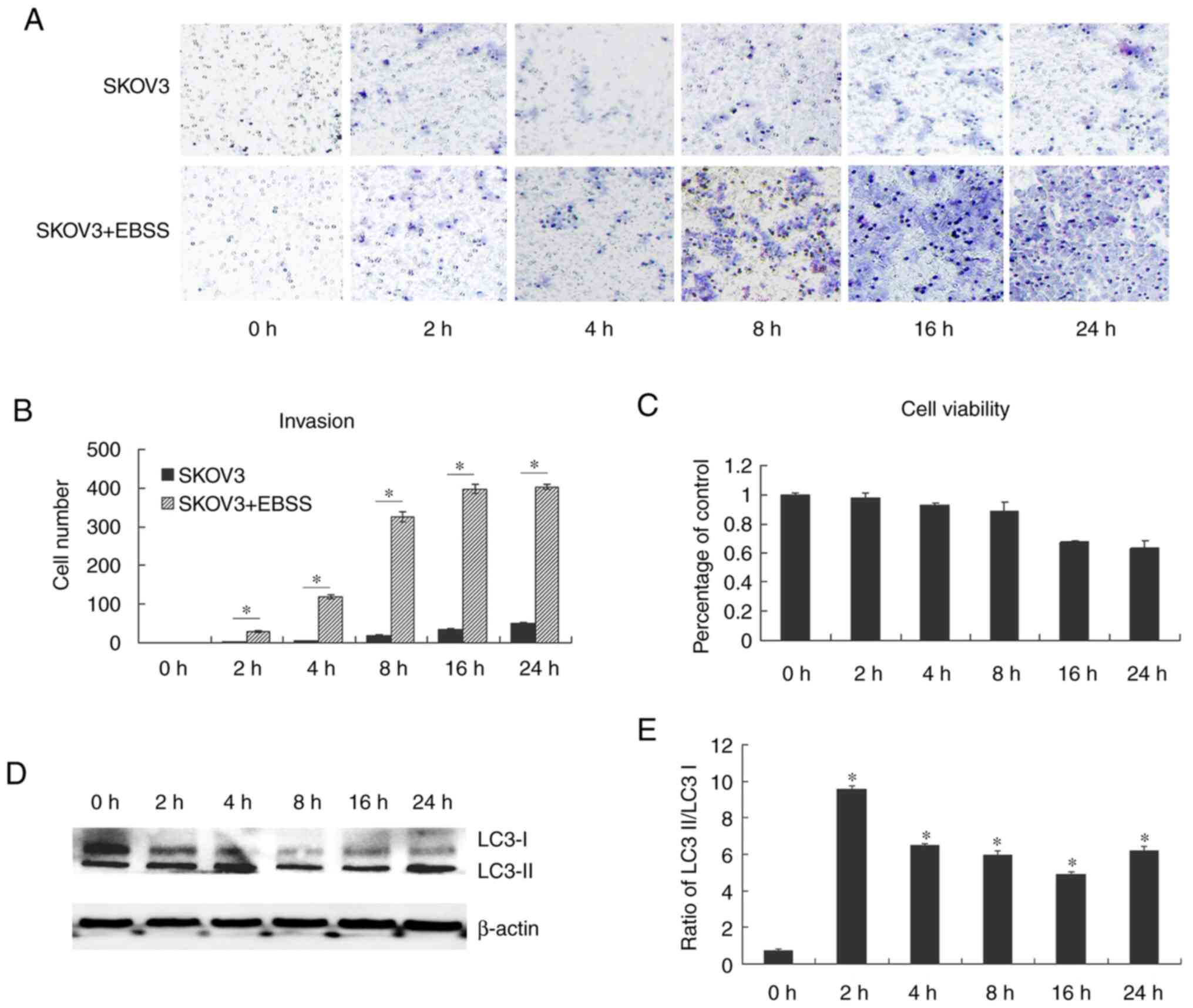
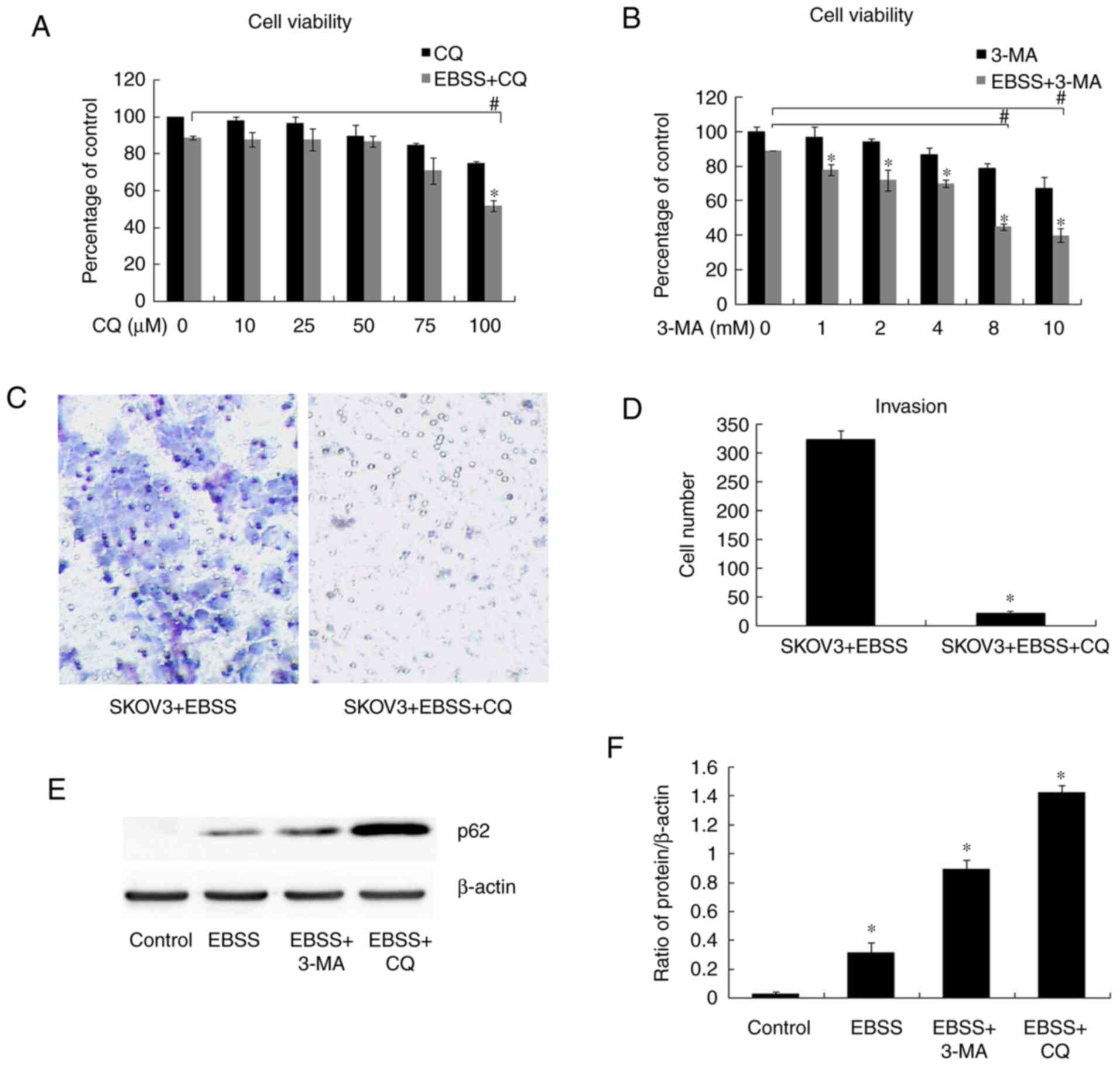
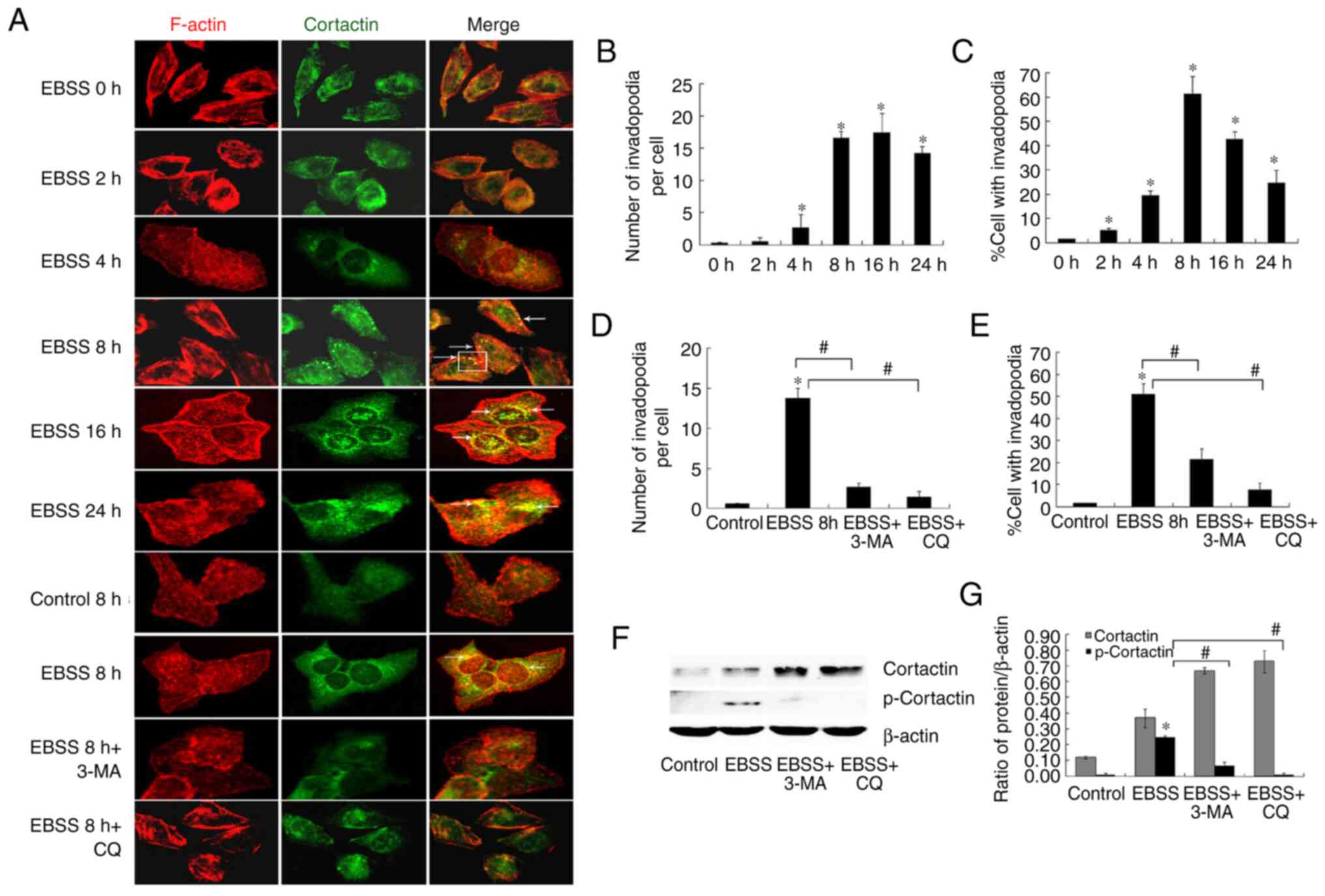
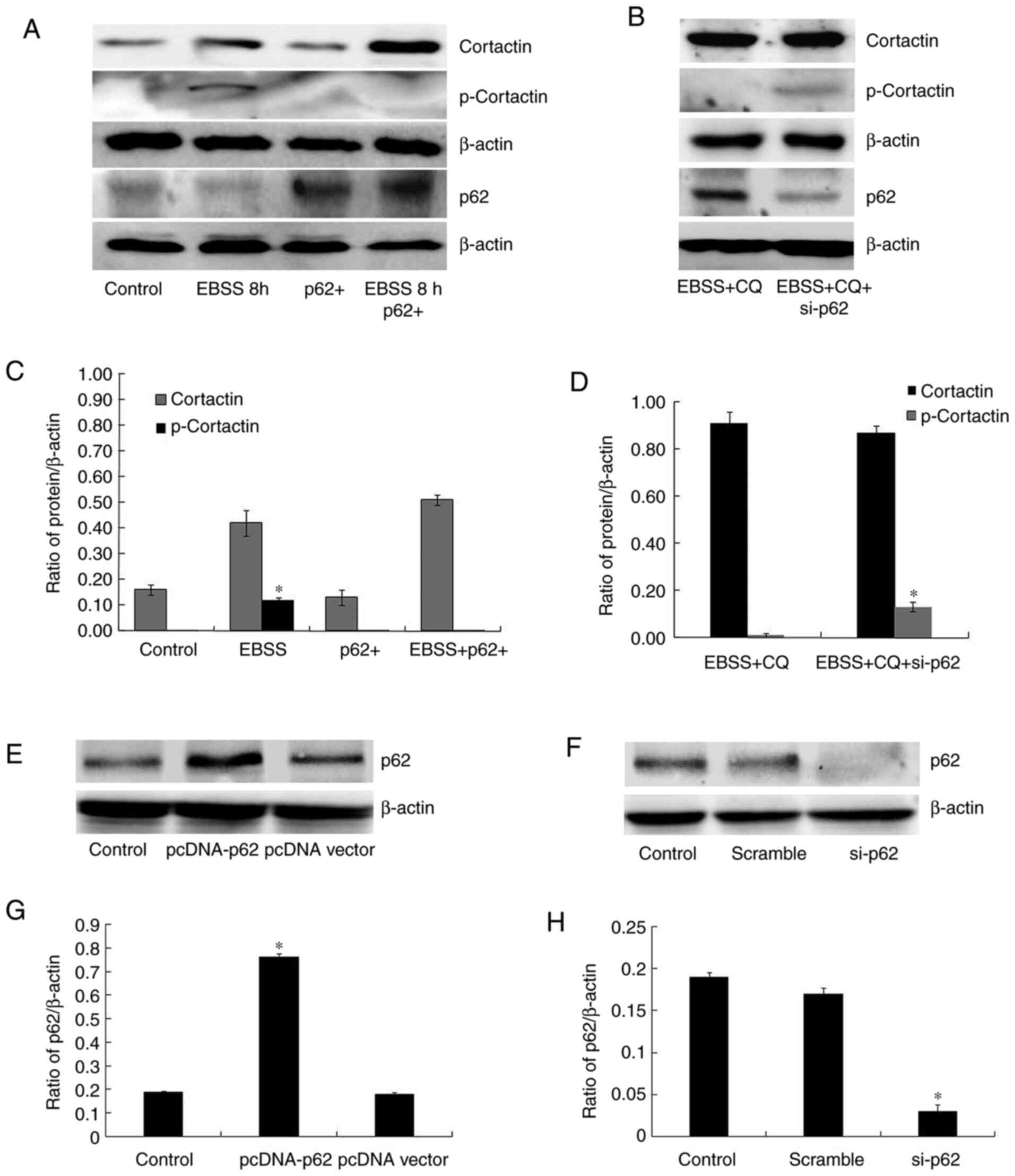
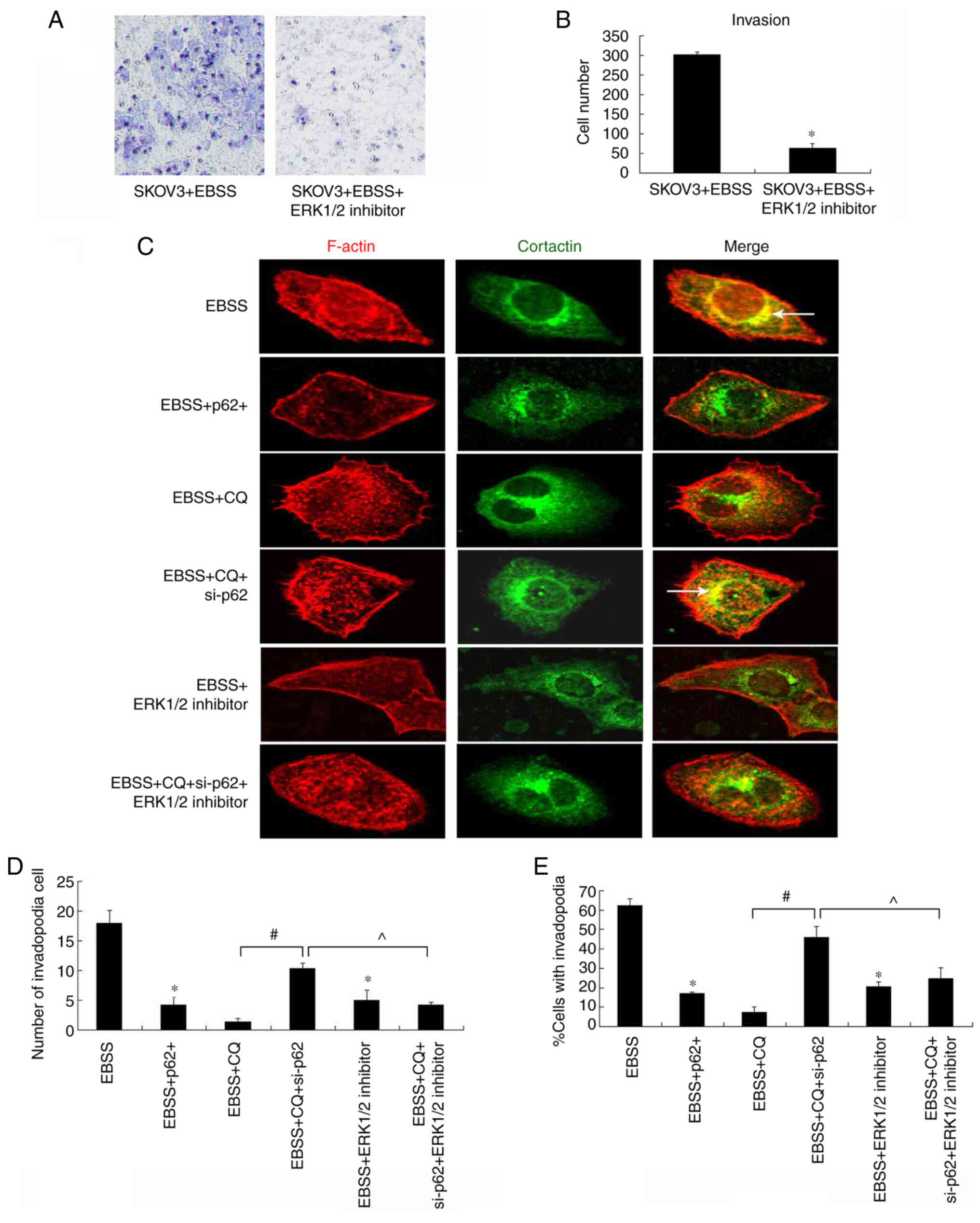
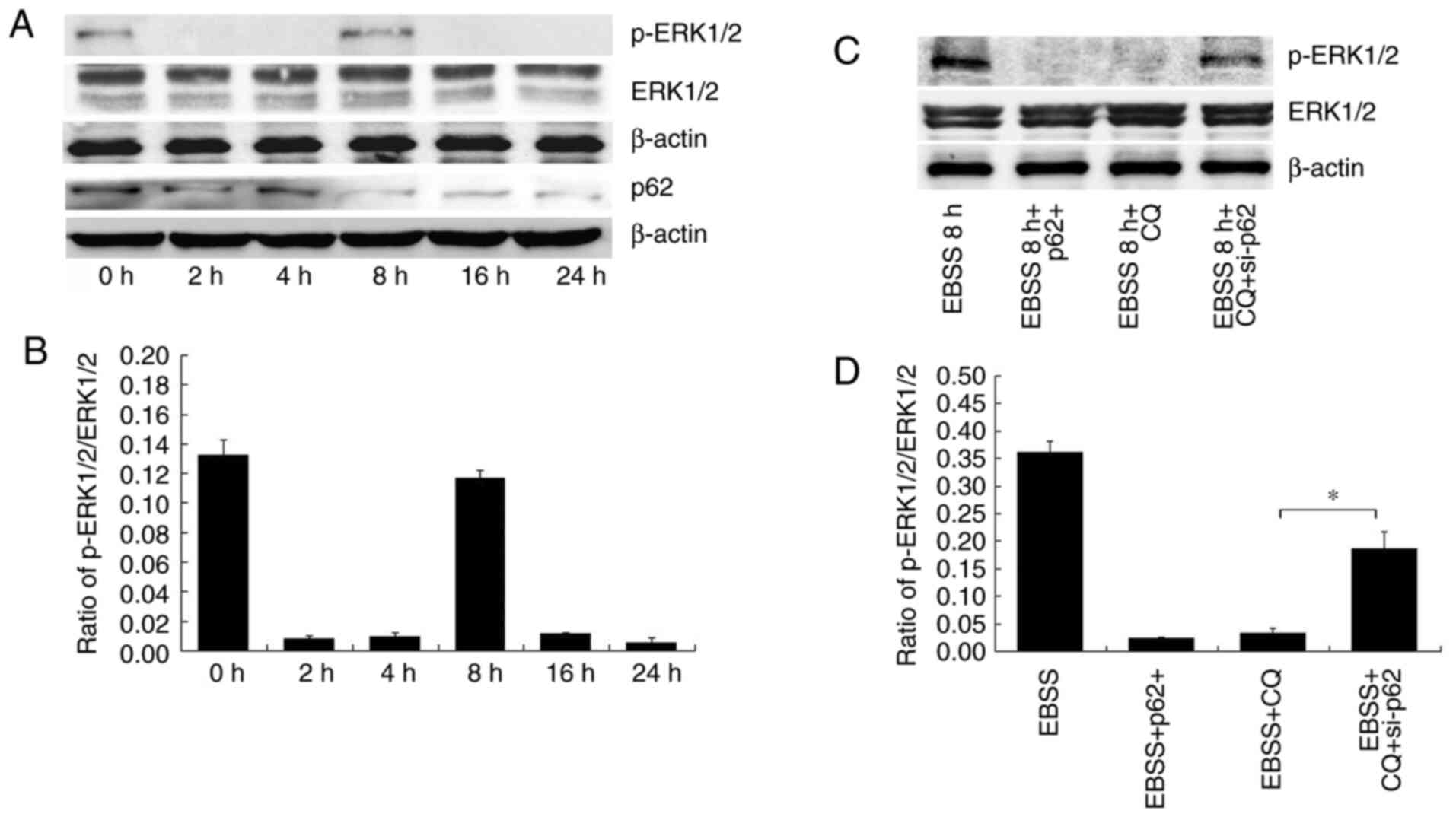
Invasiveness and metastatic potential are among the most essential characteristics of malignant tumors. Furthermore, it has been reported that autophagy and invasion are enhanced when tumor cells are grown in adverse conditions, such as nutritional deficiency and starvation. However, the association between autophagy and invasion remains largely unclear. In the present study, Earle's balanced salt solution (EBSS) was used to induce autophagy and an autophagy inhibitor was used to block autophagy. The results of Transwell assays revealed that autophagy inhibition limited the invasiveness of human ovarian cancer cells. Furthermore, the results of invadopodia formation assay indicated that autophagy stimulated invadopodia formation, and the selective autophagy receptor and signaling adaptor, sequestosome-1 (SQSTM1/p62 or simply p62), was closely associated with invadopodia formation in human ovarian cancer SKOV3 cells. The results of western blot analysis indicated that autophagy induced changes in p62 protein levels and p62 then functioned as a negative regulator of extracellular signal-regulated kinase 1/2 (ERK1/2) activity and invadopodia formation. The interaction between autophagy and invasion may thus be a self-protective mechanism for tumor cells in an unfavorable environment of nutritional deficiency, that maintains their survival and leads to increased invasiveness. An exploration of the intrinsic link between autophagy and invasion may provide a novel theoretical basis to reverse the resistance of tumor cells to a nutritional deficient environment.
View Figures

Figure 1

Figure 2

Figure 3

Figure 4

Figure 5

Figure 6

View References

1 

De Bock K, Mazzone M and Carmeliet P: Antiangiogenic therapy, hypoxia, and metastasis: Risky liaisons, or not? Nat Rev Clin Oncol. 8:393–404. 2011.PubMed/NCBI View Article : Google Scholar

2 

Fulda S and Kögel D: Cell death by autophagy: Emerging molecular mechanisms and implications for cancer therapy. Oncogene. 34:5105–5113. 2015.PubMed/NCBI View Article : Google Scholar

3 

Hou J, Han Z, Zhao N and Wei L: Autophagy and tumour metastasis. Adv Exp Med Biol. 1207:315–338. 2020.PubMed/NCBI View Article : Google Scholar

4 

Perez-Montoyo H: Therapeutic potential of autophagy modulation in cholangiocarcinoma. Cells. 9(614)2020.PubMed/NCBI View Article : Google Scholar

5 

Garcia J, Hurwitz HI, Sandler AB, Miles D, Coleman RL, Deurloo R and Chinot OL: Bevacizumab (Avastin®) in cancer treatment: A review of 15 years of clinical experience and future outlook. Cancer Treat Rev. 86(102017)2020.PubMed/NCBI View Article : Google Scholar

6 

Murphy DA and Courtneidge SA: The ‘ins’ and ‘outs’ of podosomes and invadopodia: characteristics, formation and function. Nat Rev Mol Cell Biol. 12:413–426. 2011.PubMed/NCBI View Article : Google Scholar

7 

Leong HS, Robertson AE, Stoletov K, Leith SJ, Chin CA, Chien AE, Hague MN, Ablack A, Carmine-Simmen K, McPherson VA, et al: Invadopodia are required for cancer cell extravasation and are a therapeutic target for metastasis. Cell Rep. 8:1558–1570. 2014.PubMed/NCBI View Article : Google Scholar

8 

Clark ES, Whigham AS, Yarbrough WG and Weaver AM: . Cortactin is an essential regulator of matrix metalloproteinase secretion and extracellular matrix degradation in invadopodia. Cancer Res. 67:4227–4235. 2007.PubMed/NCBI View Article : Google Scholar

9 

Goertzen CG, Dragan M, Turley E, Babwah AV and Bhattacharya M: KISS1R signaling promotes invadopodia formation in human breast cancer cell via β-arrestin2/ERK. Cell Signal. 28:165–176. 2016.PubMed/NCBI View Article : Google Scholar

10 

Kelley LC, Hayes KE, Ammer AG, Martin KH and Weed SA: Revisiting the ERK/Src cortactin switch. Commun Integr Biol. 4:205–207. 2011.PubMed/NCBI View Article : Google Scholar

11 

Samuelson DR and Konkel ME: Serine phosphorylation of cortactin is required for maximal host cell invasion by Campylobacter jejuni. Cell Commun Signal. 11(82)2013.PubMed/NCBI View Article : Google Scholar

12 

Navratil AM, Dozier MG, Whitesell JD, Clay CM and Roberson MS: Role of cortactin in dynamic actin remodeling events in gonadotrope cells. Endocrinology. 155:548–557. 2014.PubMed/NCBI View Article : Google Scholar

13 

Moscat J and Diaz-Meco MT: p62: a versatile multitasker takes on cancer. Trends Biochem Sci. 37:230–236. 2012.PubMed/NCBI View Article : Google Scholar

14 

Anand PK, Tait SW, Lamkanfi M, Amer AO, Nunez G, Pagès G, Pouysségur J, McGargill MA, Green DR and Kanneganti TD: TLR2 and RIP2 pathways mediate autophagy of Listeria monocytogenes via extracellular signal-regulated kinase (ERK) activation. J Biol Chem. 286:42981–42991. 2011.PubMed/NCBI View Article : Google Scholar

15 

Ciuffa R, Lamark T, Tarafder AK, Guesdon A, Rybina S, Hagen WJ, Johansen T and Sachse C: The selective autophagy receptor p62 forms a flexible filamentous helical scaffold. Cell Rep. 11:748–758. 2015.PubMed/NCBI View Article : Google Scholar

16 

Matsumoto G, Wada K, Okuno M, Kurosawa M and Nukina N: Serine 403 phosphorylation of p62/SQSTM1 regulates selective autophagic clearance of ubiquitinated proteins. Mol Cell. 44:279–289. 2011.PubMed/NCBI View Article : Google Scholar

17 

Ishimura R, Tanaka K and Komatsu M: Dissection of the role of p62/Sqstm1 in activation of Nrf2 during xenophagy. FEBS Lett. 588:822–828. 2014.PubMed/NCBI View Article : Google Scholar

18 

Mohamed NV, Plouffe V, Rémillard-Labrosse G, Planel E and Leclerc N: Starvation and inhibition of lysosomal function increased tau secretion by primary cortical neurons. Sci Rep. 4(5715)2014.PubMed/NCBI View Article : Google Scholar

19 

Barutcu SA, Girnius N, Vernia S and Davis RJ: Role of the MAPK/cJun NH2-terminal kinase signaling pathway in starvation-induced autophagy. Autophagy. 14:1586–1595. 2018.PubMed/NCBI View Article : Google Scholar

20 

Chang L, Chai X, Chen P, Cao J, Xie H and Zhu J: miR-181b-5p suppresses starvation-induced cardiomyocyte autophagy by targeting Hspa5. Int J Mol Med. 43:143–154. 2019.PubMed/NCBI View Article : Google Scholar

21 

Zhang Y, Ren S, Liu Y, Gao K, Liu Z and Zhang Z: Inhibition of Starvation-Triggered Endoplasmic Reticulum Stress, Autophagy, and Apoptosis in ARPE-19 Cells by Taurine through Modulating the Expression of Calpain-1 and Calpain-2. Int J Mol Sci. 18(E2146)2017.PubMed/NCBI View Article : Google Scholar

22 

Yan XY, Zhang Y, Zhang JJ, Zhang LC, Liu YN, Wu Y, Xue YN, Lu SY, Su J and Sun LK: p62/SQSTM1 as an oncotarget mediates cisplatin resistance through activating RIP1-NF-κB pathway in human ovarian cancer cells. Cancer Sci. 108:1405–1413. 2017.PubMed/NCBI View Article : Google Scholar

23 

Moscat J and Diaz-Meco MT: p62 at the crossroads of autophagy, apoptosis, and cancer. Cell. 137:1001–1004. 2009.PubMed/NCBI View Article : Google Scholar

24 

Roy R, Morad G, Jedinak A and Moses MA: Metalloproteinases and their roles in human cancer. Anat Rec (Hoboken). 303:1557–1572. 2020.PubMed/NCBI View Article : Google Scholar

25 

Gonzalez-Avila G, Sommer B, García-Hernández AA and Ramos C: Matrix metalloproteinases' role in tumor microenvironment. Adv Exp Med Biol. 1245:97–131. 2020.PubMed/NCBI View Article : Google Scholar

26 

Cerofolini L, Fragai M and Luchinat C: Mechanism and inhibition of matrix metalloproteinases. Curr Med Chem. 26:2609–2633. 2019.PubMed/NCBI View Article : Google Scholar

27 

Eddy RJ, Weidmann MD, Sharma VP and Condeelis JS: Tumor cell invadopodia: Invasive protrusions that orchestrate metastasis. Trends Cell Biol. 27:595–607. 2017.PubMed/NCBI View Article : Google Scholar

28 

Yin M, Ma W and An L: Cortactin in cancer cell migration and invasion. Oncotarget. 8:88232–88243. 2017.PubMed/NCBI View Article : Google Scholar

29 

Martinez-Quiles N, Ho HY, Kirschner MW, Ramesh N and Geha RS: Erk/Src phosphorylation of cortactin acts as a switch on-switch off mechanism that controls its ability to activate N-WASP. Mol Cell Biol. 24:5269–5280. 2004.PubMed/NCBI View Article : Google Scholar

30 

Islam MA, Sooro MA and Zhang P: Autophagic regulation of p62 is critical for cancer therapy. Int J Mol Sci. 19(E1405)2018.PubMed/NCBI View Article : Google Scholar

31 

Moscat J, Karin M and Diaz-Meco MT: p62 in cancer: Signaling adaptor beyond autophagy. Cell. 167:606–609. 2016.PubMed/NCBI View Article : Google Scholar

32 

Sánchez-Martín P, Saito T and Komatsu M: p62/SQSTM1: ‘Jack of all trades’ in health and cancer. FEBS J. 286:8–23. 2019.PubMed/NCBI View Article : Google Scholar

33 

Cook SJ, Stuart K, Gilley R and Sale MJ: Control of cell death and mitochondrial fission by ERK1/2 MAP kinase signalling. FEBS J. 284:4177–4195. 2017.PubMed/NCBI View Article : Google Scholar

34 

Sun Y, Liu W-Z, Liu T, Feng X, Yang N and Zhou H-F: Signaling pathway of MAPK/ERK in cell proliferation, differentiation, migration, senescence and apoptosis. J Recept Signal Transduct Res. 35:600–604. 2015.PubMed/NCBI View Article : Google Scholar

35 

Roskoski R Jr: Targeting ERK1/2 protein-serine/threonine kinases in human cancers. Pharmacol Res. 142:151–168. 2019.PubMed/NCBI View Article : Google Scholar

36 

Gao H, Zhang Y, Dong L, Qu XY, Tao LN, Zhang YM, Zhai JH and Song YQ: Triptolide induces autophagy and apoptosis through ERK activation in human breast cancer MCF-7 cells. Exp Ther Med. 15:3413–3419. 2018.PubMed/NCBI View Article : Google Scholar

37 

Hou XO, Si JM, Ren HG, Chen D, Wang HF, Ying Z, Hu QS, Gao F and Wang GH: Parkin represses 6-hydroxydopamine-induced apoptosis via stabilizing scaffold protein p62 in PC12 cells. Acta Pharmacol Sin. 36:1300–1307. 2015.PubMed/NCBI View Article : Google Scholar

38 

Li C and Siragy HM: Autophagy upregulates (pro)renin receptor expression via reduction of P62/SQSTM1 and activation of ERK1/2 signaling pathway in podocytes. Am J Physiol Regul Integr Comp Physiol. 313:R58–R64. 2017.PubMed/NCBI View Article : Google Scholar

39 

Gatica D and Klionsky DJ: Towards understanding mRNA-binding protein specificity: Lessons from post-transcriptional regulation of ATG mRNA during nitrogen starvation-induced autophagy. Curr Genet. 65:847–849. 2019.PubMed/NCBI View Article : Google Scholar

Related Articles

  • Abstract
  • View
  • Download
  • Twitter
Copy and paste a formatted citation
Spandidos Publications style
Zhou Z, Zhao J, Liu Y, Yan X, Sun H, Xia M and Su J: Autophagy promotes invadopodia formation in human ovarian cancer cells via the p62-extracellular signal-regulated kinase 1/2 pathway. Exp Ther Med 22: 952, 2021.
APA
Zhou, Z., Zhao, J., Liu, Y., Yan, X., Sun, H., Xia, M., & Su, J. (2021). Autophagy promotes invadopodia formation in human ovarian cancer cells via the p62-extracellular signal-regulated kinase 1/2 pathway. Experimental and Therapeutic Medicine, 22, 952. https://doi.org/10.3892/etm.2021.10384
MLA
Zhou, Z., Zhao, J., Liu, Y., Yan, X., Sun, H., Xia, M., Su, J."Autophagy promotes invadopodia formation in human ovarian cancer cells via the p62-extracellular signal-regulated kinase 1/2 pathway". Experimental and Therapeutic Medicine 22.3 (2021): 952.
Chicago
Zhou, Z., Zhao, J., Liu, Y., Yan, X., Sun, H., Xia, M., Su, J."Autophagy promotes invadopodia formation in human ovarian cancer cells via the p62-extracellular signal-regulated kinase 1/2 pathway". Experimental and Therapeutic Medicine 22, no. 3 (2021): 952. https://doi.org/10.3892/etm.2021.10384
Copy and paste a formatted citation
x
Spandidos Publications style
Zhou Z, Zhao J, Liu Y, Yan X, Sun H, Xia M and Su J: Autophagy promotes invadopodia formation in human ovarian cancer cells via the p62-extracellular signal-regulated kinase 1/2 pathway. Exp Ther Med 22: 952, 2021.
APA
Zhou, Z., Zhao, J., Liu, Y., Yan, X., Sun, H., Xia, M., & Su, J. (2021). Autophagy promotes invadopodia formation in human ovarian cancer cells via the p62-extracellular signal-regulated kinase 1/2 pathway. Experimental and Therapeutic Medicine, 22, 952. https://doi.org/10.3892/etm.2021.10384
MLA
Zhou, Z., Zhao, J., Liu, Y., Yan, X., Sun, H., Xia, M., Su, J."Autophagy promotes invadopodia formation in human ovarian cancer cells via the p62-extracellular signal-regulated kinase 1/2 pathway". Experimental and Therapeutic Medicine 22.3 (2021): 952.
Chicago
Zhou, Z., Zhao, J., Liu, Y., Yan, X., Sun, H., Xia, M., Su, J."Autophagy promotes invadopodia formation in human ovarian cancer cells via the p62-extracellular signal-regulated kinase 1/2 pathway". Experimental and Therapeutic Medicine 22, no. 3 (2021): 952. https://doi.org/10.3892/etm.2021.10384
Follow us
  • Twitter
  • LinkedIn
  • Facebook
About
  • Spandidos Publications
  • Careers
  • Cookie Policy
  • Privacy Policy
How can we help?
  • Help
  • Live Chat
  • Contact
  • Email to our Support Team