Spandidos Publications Logo
  • About
    • About Spandidos
    • Aims and Scopes
    • Abstracting and Indexing
    • Editorial Policies
    • Reprints and Permissions
    • Job Opportunities
    • Terms and Conditions
    • Contact
  • Journals
    • All Journals
    • Oncology Letters
      • Oncology Letters
      • Information for Authors
      • Editorial Policies
      • Editorial Board
      • Aims and Scope
      • Abstracting and Indexing
      • Bibliographic Information
      • Archive
    • International Journal of Oncology
      • International Journal of Oncology
      • Information for Authors
      • Editorial Policies
      • Editorial Board
      • Aims and Scope
      • Abstracting and Indexing
      • Bibliographic Information
      • Archive
    • Molecular and Clinical Oncology
      • Molecular and Clinical Oncology
      • Information for Authors
      • Editorial Policies
      • Editorial Board
      • Aims and Scope
      • Abstracting and Indexing
      • Bibliographic Information
      • Archive
    • Experimental and Therapeutic Medicine
      • Experimental and Therapeutic Medicine
      • Information for Authors
      • Editorial Policies
      • Editorial Board
      • Aims and Scope
      • Abstracting and Indexing
      • Bibliographic Information
      • Archive
    • International Journal of Molecular Medicine
      • International Journal of Molecular Medicine
      • Information for Authors
      • Editorial Policies
      • Editorial Board
      • Aims and Scope
      • Abstracting and Indexing
      • Bibliographic Information
      • Archive
    • Biomedical Reports
      • Biomedical Reports
      • Information for Authors
      • Editorial Policies
      • Editorial Board
      • Aims and Scope
      • Abstracting and Indexing
      • Bibliographic Information
      • Archive
    • Oncology Reports
      • Oncology Reports
      • Information for Authors
      • Editorial Policies
      • Editorial Board
      • Aims and Scope
      • Abstracting and Indexing
      • Bibliographic Information
      • Archive
    • Molecular Medicine Reports
      • Molecular Medicine Reports
      • Information for Authors
      • Editorial Policies
      • Editorial Board
      • Aims and Scope
      • Abstracting and Indexing
      • Bibliographic Information
      • Archive
    • World Academy of Sciences Journal
      • World Academy of Sciences Journal
      • Information for Authors
      • Editorial Policies
      • Editorial Board
      • Aims and Scope
      • Abstracting and Indexing
      • Bibliographic Information
      • Archive
    • International Journal of Functional Nutrition
      • International Journal of Functional Nutrition
      • Information for Authors
      • Editorial Policies
      • Editorial Board
      • Aims and Scope
      • Abstracting and Indexing
      • Bibliographic Information
      • Archive
    • International Journal of Epigenetics
      • International Journal of Epigenetics
      • Information for Authors
      • Editorial Policies
      • Editorial Board
      • Aims and Scope
      • Abstracting and Indexing
      • Bibliographic Information
      • Archive
    • Medicine International
      • Medicine International
      • Information for Authors
      • Editorial Policies
      • Editorial Board
      • Aims and Scope
      • Abstracting and Indexing
      • Bibliographic Information
      • Archive
  • Articles
  • Information
    • Information for Authors
    • Information for Reviewers
    • Information for Librarians
    • Information for Advertisers
    • Conferences
  • Language Editing
Spandidos Publications Logo
  • About
    • About Spandidos
    • Aims and Scopes
    • Abstracting and Indexing
    • Editorial Policies
    • Reprints and Permissions
    • Job Opportunities
    • Terms and Conditions
    • Contact
  • Journals
    • All Journals
    • Biomedical Reports
      • Information for Authors
      • Editorial Policies
      • Editorial Board
      • Aims and Scope
      • Abstracting and Indexing
      • Bibliographic Information
      • Archive
    • Experimental and Therapeutic Medicine
      • Information for Authors
      • Editorial Policies
      • Editorial Board
      • Aims and Scope
      • Abstracting and Indexing
      • Bibliographic Information
      • Archive
    • International Journal of Epigenetics
      • Information for Authors
      • Editorial Policies
      • Editorial Board
      • Aims and Scope
      • Abstracting and Indexing
      • Bibliographic Information
      • Archive
    • International Journal of Functional Nutrition
      • Information for Authors
      • Editorial Policies
      • Editorial Board
      • Aims and Scope
      • Abstracting and Indexing
      • Bibliographic Information
      • Archive
    • International Journal of Molecular Medicine
      • Information for Authors
      • Editorial Policies
      • Editorial Board
      • Aims and Scope
      • Abstracting and Indexing
      • Bibliographic Information
      • Archive
    • International Journal of Oncology
      • Information for Authors
      • Editorial Policies
      • Editorial Board
      • Aims and Scope
      • Abstracting and Indexing
      • Bibliographic Information
      • Archive
    • Medicine International
      • Information for Authors
      • Editorial Policies
      • Editorial Board
      • Aims and Scope
      • Abstracting and Indexing
      • Bibliographic Information
      • Archive
    • Molecular and Clinical Oncology
      • Information for Authors
      • Editorial Policies
      • Editorial Board
      • Aims and Scope
      • Abstracting and Indexing
      • Bibliographic Information
      • Archive
    • Molecular Medicine Reports
      • Information for Authors
      • Editorial Policies
      • Editorial Board
      • Aims and Scope
      • Abstracting and Indexing
      • Bibliographic Information
      • Archive
    • Oncology Letters
      • Information for Authors
      • Editorial Policies
      • Editorial Board
      • Aims and Scope
      • Abstracting and Indexing
      • Bibliographic Information
      • Archive
    • Oncology Reports
      • Information for Authors
      • Editorial Policies
      • Editorial Board
      • Aims and Scope
      • Abstracting and Indexing
      • Bibliographic Information
      • Archive
    • World Academy of Sciences Journal
      • Information for Authors
      • Editorial Policies
      • Editorial Board
      • Aims and Scope
      • Abstracting and Indexing
      • Bibliographic Information
      • Archive
  • Articles
  • Information
    • For Authors
    • For Reviewers
    • For Librarians
    • For Advertisers
    • Conferences
  • Language Editing
Login Register Submit
  • This site uses cookies
  • You can change your cookie settings at any time by following the instructions in our Cookie Policy. To find out more, you may read our Privacy Policy.

    I agree
Search articles by DOI, keyword, author or affiliation
Search
Advanced Search
presentation
Experimental and Therapeutic Medicine
Join Editorial Board Propose a Special Issue
Print ISSN: 1792-0981 Online ISSN: 1792-1015
Journal Cover
April-2021 Volume 21 Issue 4

Full Size Image

Sign up for eToc alerts
Recommend to Library

Journals

International Journal of Molecular Medicine

International Journal of Molecular Medicine

International Journal of Molecular Medicine is an international journal devoted to molecular mechanisms of human disease.

International Journal of Oncology

International Journal of Oncology

International Journal of Oncology is an international journal devoted to oncology research and cancer treatment.

Molecular Medicine Reports

Molecular Medicine Reports

Covers molecular medicine topics such as pharmacology, pathology, genetics, neuroscience, infectious diseases, molecular cardiology, and molecular surgery.

Oncology Reports

Oncology Reports

Oncology Reports is an international journal devoted to fundamental and applied research in Oncology.

Experimental and Therapeutic Medicine

Experimental and Therapeutic Medicine

Experimental and Therapeutic Medicine is an international journal devoted to laboratory and clinical medicine.

Oncology Letters

Oncology Letters

Oncology Letters is an international journal devoted to Experimental and Clinical Oncology.

Biomedical Reports

Biomedical Reports

Explores a wide range of biological and medical fields, including pharmacology, genetics, microbiology, neuroscience, and molecular cardiology.

Molecular and Clinical Oncology

Molecular and Clinical Oncology

International journal addressing all aspects of oncology research, from tumorigenesis and oncogenes to chemotherapy and metastasis.

World Academy of Sciences Journal

World Academy of Sciences Journal

Multidisciplinary open-access journal spanning biochemistry, genetics, neuroscience, environmental health, and synthetic biology.

International Journal of Functional Nutrition

International Journal of Functional Nutrition

Open-access journal combining biochemistry, pharmacology, immunology, and genetics to advance health through functional nutrition.

International Journal of Epigenetics

International Journal of Epigenetics

Publishes open-access research on using epigenetics to advance understanding and treatment of human disease.

Medicine International

Medicine International

An International Open Access Journal Devoted to General Medicine.

Journal Cover
April-2021 Volume 21 Issue 4

Full Size Image

Sign up for eToc alerts
Recommend to Library

  • Article
  • Citations
    • Cite This Article
    • Download Citation
    • Create Citation Alert
    • Remove Citation Alert
    • Cited By
  • Similar Articles
    • Related Articles (in Spandidos Publications)
    • Similar Articles (Google Scholar)
    • Similar Articles (PubMed)
  • Download PDF
  • Download XML
  • View XML

  • Supplementary Files
    • Supplementary_Data.pdf
Article Open Access

MicroRNA‑874‑3p promotes testosterone‑induced granulosa cell apoptosis by suppressing HDAC1‑mediated p53 deacetylation

  • Authors:
    • Youhua Wei
    • Zhijun Wang
    • Li Wei
    • Shen Li
    • Xuemei Qiu
    • Chengwen Liu
  • View Affiliations / Copyright

    Affiliations: Department of Medical Heredity and Prenatal Screening, Zaozhuang Maternal and Child Health Care Hospital, Zaozhuang, Shandong 277100, P.R. China, Department of Obstetrics and Gynecology, Zaozhuang Maternal and Child Health Care Hospital, Zaozhuang, Shandong 277100, P.R. China, Department of Reproductive Center, Zaozhuang Maternal and Child Health Care Hospital, Zaozhuang, Shandong 277100, P.R. China
    Copyright: © Wei et al. This is an open access article distributed under the terms of Creative Commons Attribution License.
  • Article Number: 359
    |
    Published online on: February 13, 2021
       https://doi.org/10.3892/etm.2021.9790
  • Expand metrics +
Metrics: Total Views: 0 (Spandidos Publications: | PMC Statistics: )
Metrics: Total PDF Downloads: 0 (Spandidos Publications: | PMC Statistics: )
Cited By (CrossRef): 0 citations Loading Articles...

This article is mentioned in:


Abstract

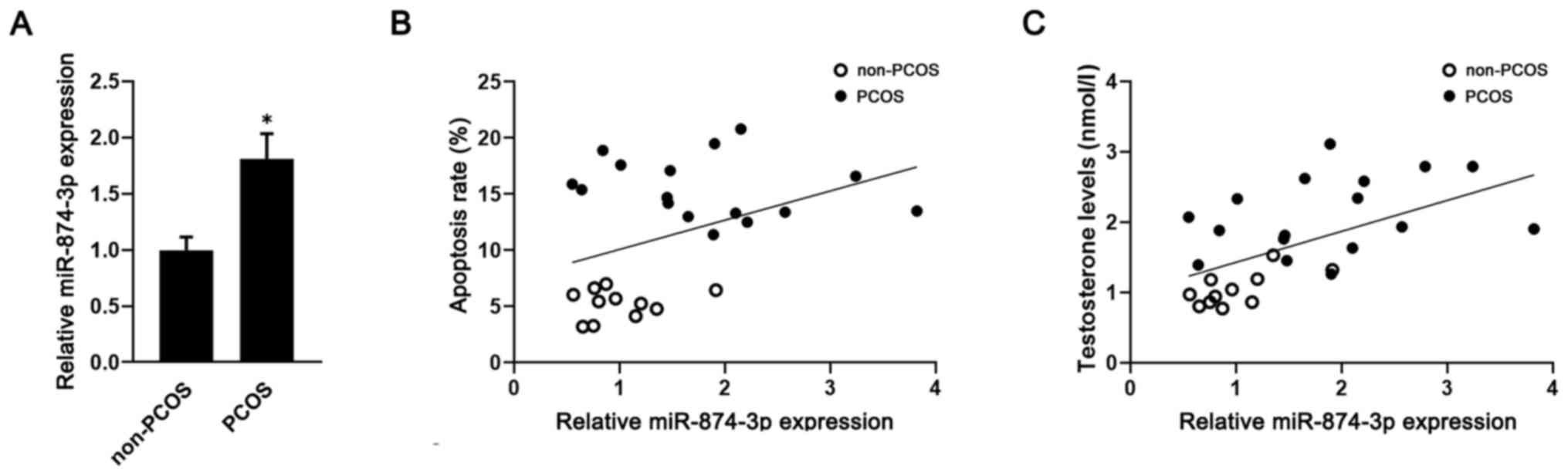
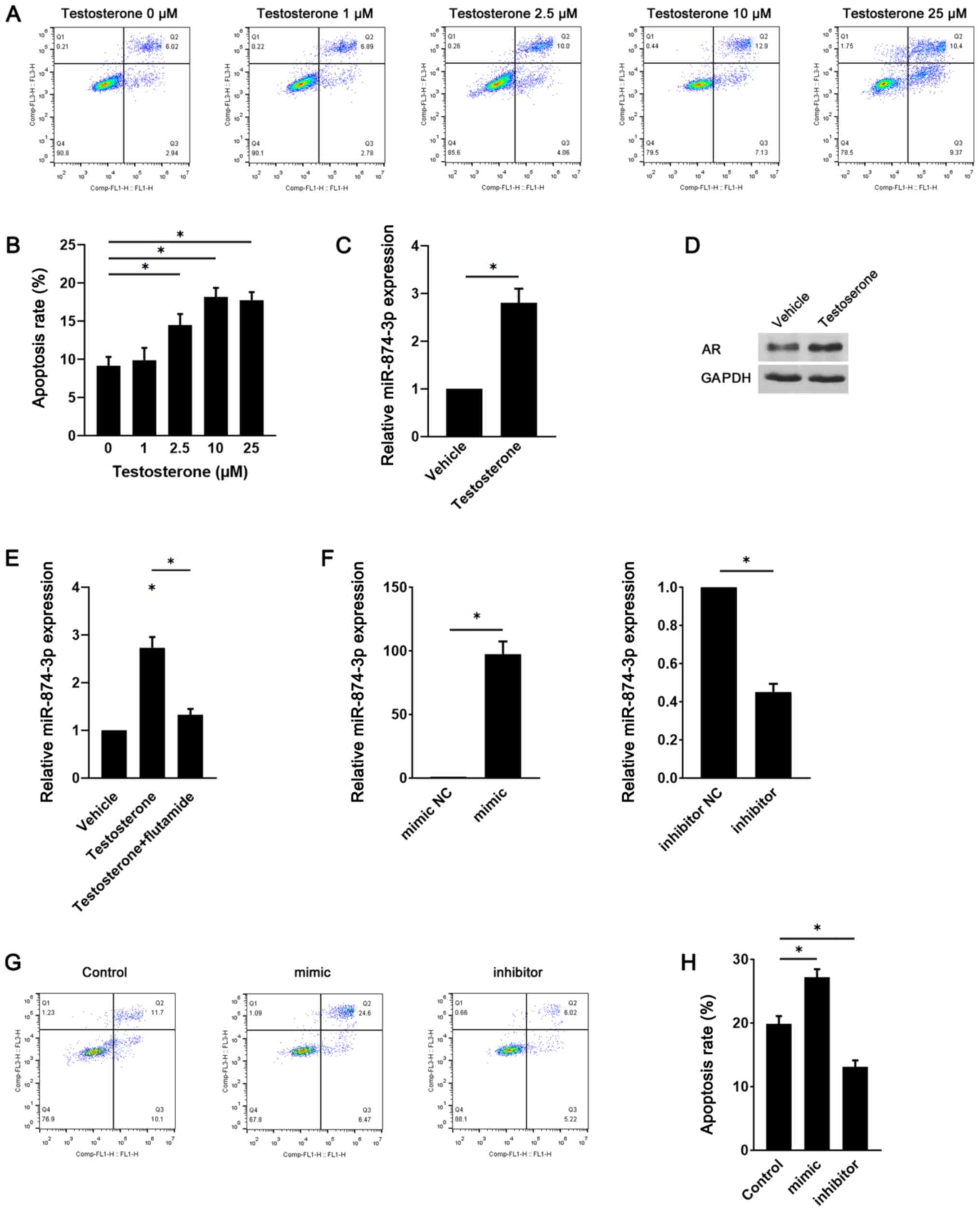
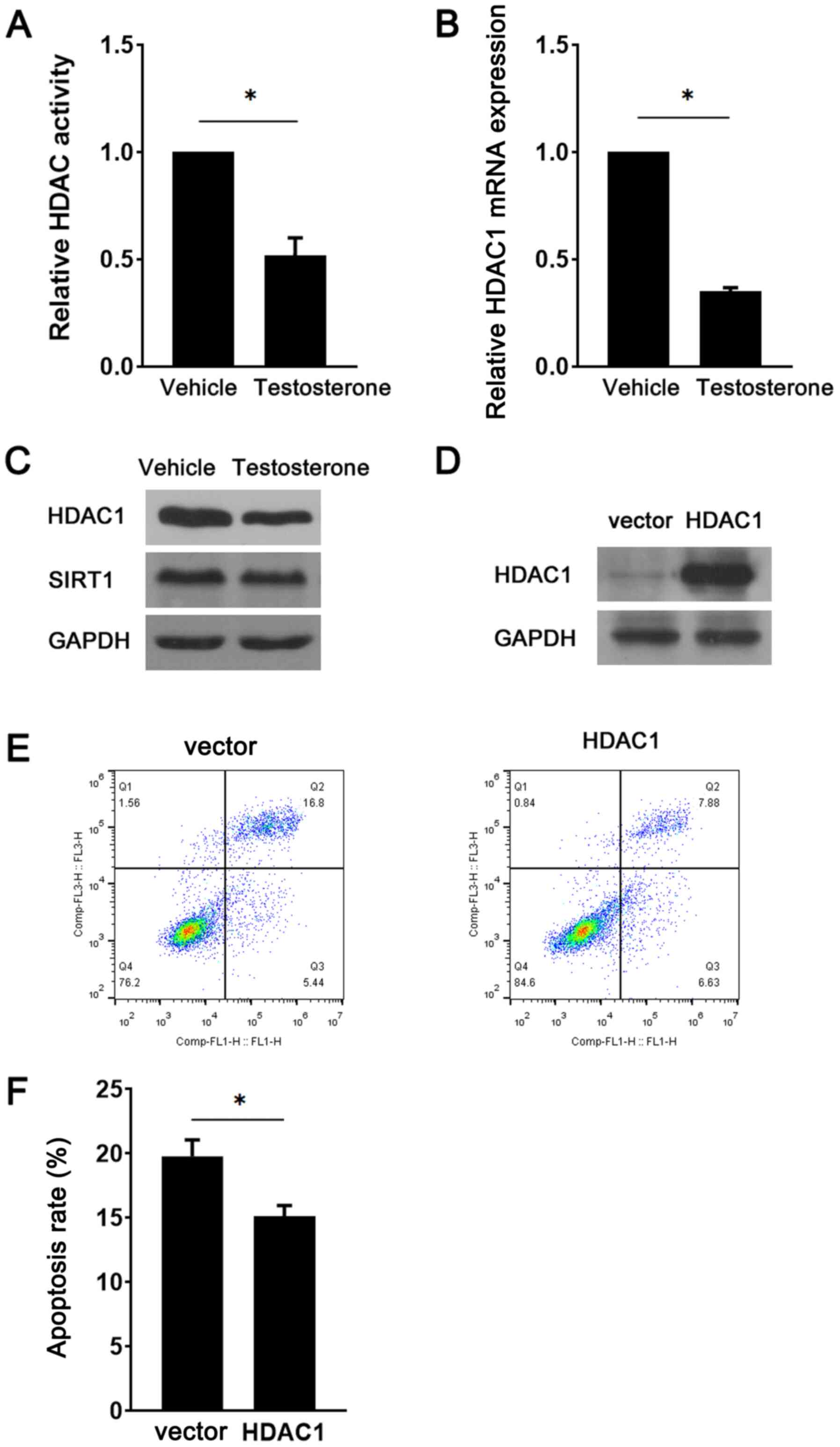
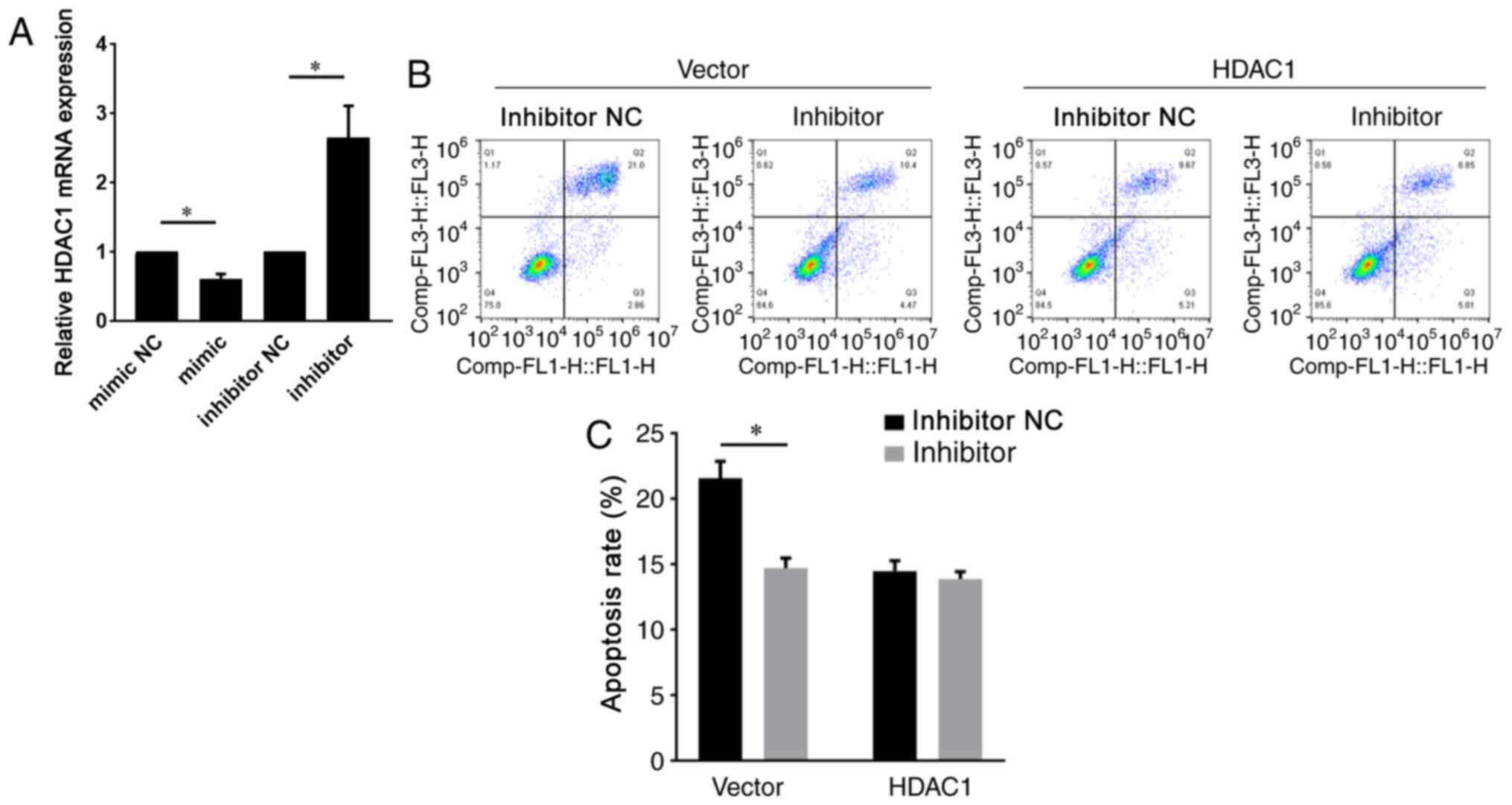
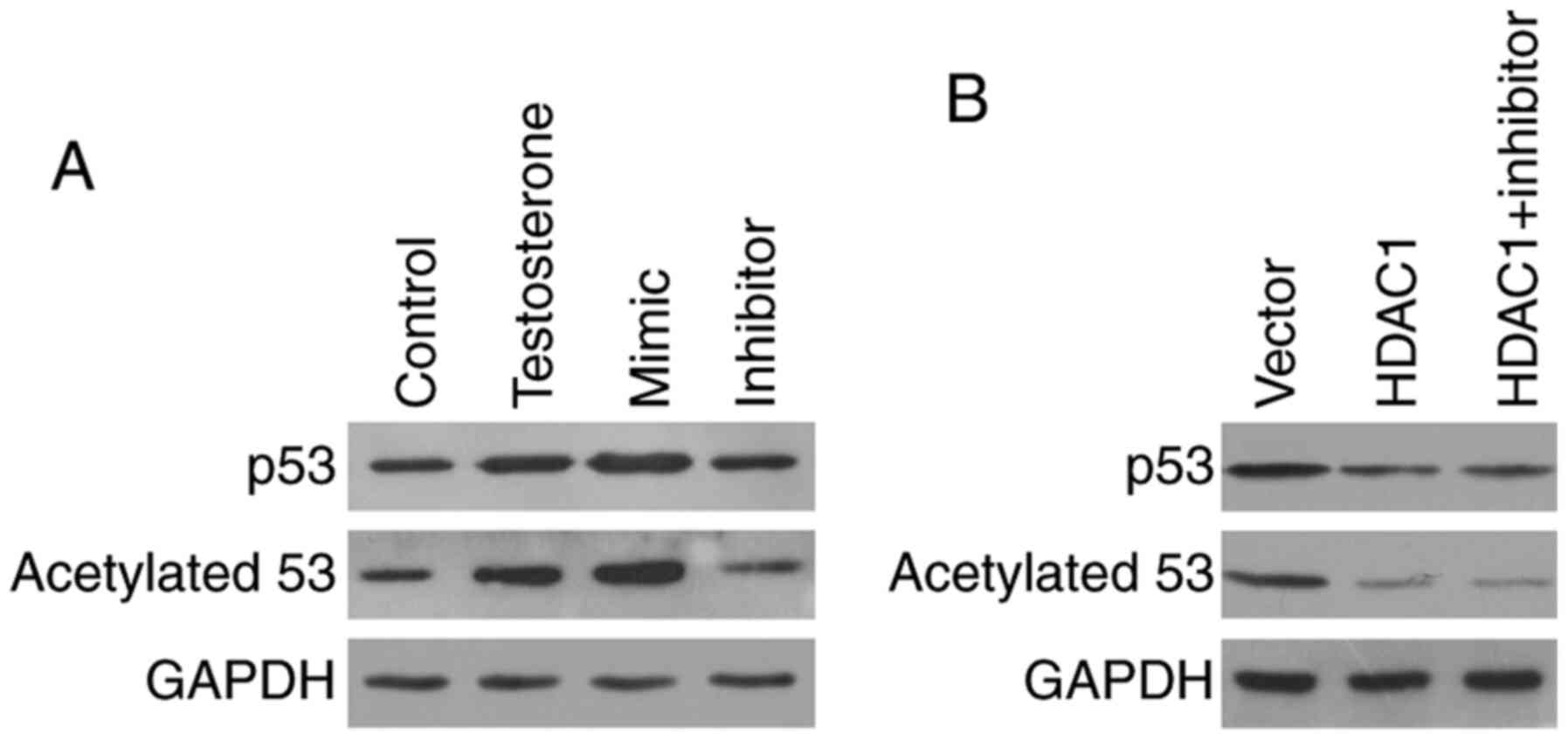
MicroRNA (miR)‑874‑3p is a newly identified miRNA that is involved in several pathological processes, including cancer, myocardial infarction, bone formation and erectile dysfunction. However, the role of miR‑874‑3p in polycystic ovary syndrome (PCOS) and granulosa cell (GC) apoptosis is not completely understood. The present study investigated the expression profile of miR‑874‑3p in PCOS by reverse transcription‑ quantitative PCR and the GC apoptosis by flow cytometry analysis. miR‑874‑3p expression was significantly upregulated in GCs isolated from patients with PCOS compared with patients without PCOS. In addition, miR‑874‑3p expression was positively correlated with GC apoptosis and testosterone levels in both patients with PCOS and patients without PCOS. Therefore, the present study also aimed to investigate the effects of miR‑874‑3p on testosterone‑induced GC apoptosis. Compared with vehicle‑treated GCs, miR‑874‑3p expression levels were significantly increased in testosterone‑treated GCs, which was inhibited by the androgen receptor antagonist flutamide. GCs were transfected with either the miR‑874‑3p mimic or a miR‑874‑3p inhibitor. Compared with the control group, miR‑874‑3p mimic significantly enhanced GC apoptosis, whereas miR‑874‑3p inhibitor significantly decreased GC apoptosis. Moreover, histone deacetylase (HDAC) activity and HDAC1 expression levels were decreased in testosterone‑treated GCs compared with vehicle‑treated GCs. HDAC1 overexpression significantly attenuated the proapoptotic effects of testosterone. Additionally, miR‑874‑3p mimic and inhibitor significantly decreased and increased HDAC1 expression levels, respectively, compared with the control group. miR‑874‑3p inhibitor failed to attenuate HDAC1 overexpression‑induced GC apoptosis. Furthermore, compared with the control group, testosterone treatment notably increased p53 expression and acetylation. Compared with the control group, western blotting analysis showed that miR‑874‑3p mimic notably increased p53 expression and acetylation, whereas miR‑874‑3p inhibitor markedly decreased p53 expression and acetylation. However, miR‑874‑3p inhibitor did not further decrease p53 acetylation and expression in cell overexpressing HDAC1. Collectively, the results of the present study indicated that miR‑874‑3p was upregulated in PCOS and promoted testosterone‑induced GC apoptosis by suppressing HDAC1‑mediated p53 deacetylation. Therefore, the present study improved the current understanding of the pathogenesis of PCOS and GC apoptosis.
View Figures

Figure 1

Figure 2

Figure 3

Figure 4

Figure 5

View References

1 

Escobar-Morreale HF: Polycystic ovary syndrome: Definition, aetiology, diagnosis and treatment. Nat Rev Endocrinol. 14:270–284. 2018.PubMed/NCBI View Article : Google Scholar

2 

Neven ACH, Laven J, Teede HJ and Boyle JA: A summary on polycystic ovary syndrome: Diagnostic criteria, prevalence, clinical manifestations, and management according to the latest international guidelines. Semin Reprod Med. 36:5–12. 2018.PubMed/NCBI View Article : Google Scholar

3 

Cai L, Ma X, Liu S, Liu J, Wang W, Cui Y, Ding W, Mao Y, Chen H, Huang J, et al: Effects of upregulation of Hsp27 expression on oocyte development and maturation derived from polycystic ovary syndrome. PLoS One. 8(e83402)2013.PubMed/NCBI View Article : Google Scholar

4 

Shen H and Wang Y: Activation of TGF-β1/Smad3 signaling pathway inhibits the development of ovarian follicle in polycystic ovary syndrome by promoting apoptosis of granulosa cells. J Cell Physiol. 234:11976–11985. 2019.PubMed/NCBI View Article : Google Scholar

5 

Yeung CK, Wang G, Yao Y, Liang J, Tenny Chung CY, Chuai M, Lee KK and Yang X: BRE modulates granulosa cell death to affect ovarian follicle development and atresia in the mouse. Cell Death Dis. 8(e2697)2017.PubMed/NCBI View Article : Google Scholar

6 

Mikaeili S, Rashidi BH, Safa M, Najafi A, Sobhani A, Asadi E and Abbasi M: Altered FoxO3 expression and apoptosis in granulosa cells of women with polycystic ovary syndrome. Arch Gynecol Obstet. 294:185–192. 2016.PubMed/NCBI View Article : Google Scholar

7 

Azhary JMK, Harada M, Takahashi N, Nose E, Kunitomi C, Koike H, Hirata T, Hirota Y, Koga K, Wada-Hiraike O, et al: Endoplasmic reticulum stress activated by androgen enhances apoptosis of granulosa cells via induction of death receptor 5 in PCOS. Endocrinology. 160:119–132. 2019.PubMed/NCBI View Article : Google Scholar

8 

Zheng Q, Li Y, Zhang D, Cui X, Dai K, Yang Y, Liu S, Tan J and Yan Q: ANP promotes proliferation and inhibits apoptosis of ovarian granulosa cells by NPRA/PGRMC1/EGFR complex and improves ovary functions of PCOS rats. Cell Death Dis. 8(e3145)2017.PubMed/NCBI View Article : Google Scholar

9 

Zhao KK, Cui YG, Jiang YQ, Wang J, Li M, Zhang Y, Ma X, Diao FY and Liu JY: Effect of HSP10 on apoptosis induced by testosterone in cultured mouse ovarian granulosa cells. Eur J Obstet Gynecol Reprod Biol. 171:301–306. 2013.PubMed/NCBI View Article : Google Scholar

10 

Pal I, Safari M, Jovanovic M, Bates SE and Deng C: Targeting translation of mRNA as a therapeutic strategy in cancer. Curr Hematol Malig Rep. 14:219–227. 2019.PubMed/NCBI View Article : Google Scholar

11 

Feng X, Xue H, Guo S, Chen Y, Zhang X and Tang X: miR-874-3p suppresses cell proliferation and invasion by targeting ADAM19 in nasopharyngeal carcinoma. Panminerva Med: Jul 19, 2019 (Epub ahead of print). doi: 10.23736/S0031-0808.19.03682-6.

12 

Yuan RB, Zhang SH, He Y, Zhang XY and Zhang YB: miR-874-3p is an independent prognostic factor and functions as an anti-oncomir in esophageal squamous cell carcinoma via targeting STAT3. Eur Rev Med Pharmacol Sci. 22:7265–7273. 2018.PubMed/NCBI View Article : Google Scholar

13 

Yan Y, Song X, Li Z, Zhang J, Ren J, Wu J, Li Y, Guan Y and Wang J: Elevated levels of granzyme B correlated with miR-874-3p downregulation in patients with acute myocardial infarction. Biomark Med. 11:761–767. 2017.PubMed/NCBI View Article : Google Scholar

14 

Kushwaha P, Khedgikar V, Sharma D, Yuen T, Gautam J, Ahmad N, Karvande A, Mishra PR, Trivedi PK, Sun L, et al: MicroRNA 874-3p exerts skeletal anabolic effects epigenetically during weaning by suppressing Hdac1 expression. J Biol Chem. 291:3959–3966. 2016.PubMed/NCBI View Article : Google Scholar

15 

Huo W and Li H, Zhang Y and Li H: Epigenetic silencing of microRNA-874-3p implicates in erectile dysfunction in diabetic rats by activating the Nupr1/Chop-mediated pathway. FASEB J. 34:1695–1709. 2020.PubMed/NCBI View Article : Google Scholar

16 

Wang XQ, Bai HM, Li ST, Sun H, Min LZ, Tao BB, Zhong J and Li B: Knockdown of HDAC1 expression suppresses invasion and induces apoptosis in glioma cells. Oncotarget. 8:48027–48040. 2017.PubMed/NCBI View Article : Google Scholar

17 

Demyanenko SV, Dzreyan VA, Neginskaya MA and Uzdensky AB: Expression of histone deacetylases HDAC1 and HDAC2 and their role in apoptosis in the penumbra induced by photothrombotic stroke. Mol Neurobiol. 57:226–238. 2020.PubMed/NCBI View Article : Google Scholar

18 

Rotterdam ESHRE/ASRM-Sponsored PCOS consensus workshop group. Revised 2003 consensus on diagnostic criteria and long-term health risks related to polycystic ovary syndrome (PCOS). Hum Reprod. 19:41–47. 2004.PubMed/NCBI View Article : Google Scholar

19 

Ferrero H, Delgado-Rosas F, Garcia-Pascual CM, Monterde M, Zimmermann RC, Simón C, Pellicer A and Gómez R: Efficiency and purity provided by the existing methods for the isolation of luteinized granulosa cells: A comparative study. Hum Reprod. 27:1781–1789. 2012.PubMed/NCBI View Article : Google Scholar

20 

Livak KJ and Schmittgen TD: Analysis of relative gene expression data using real-time quantitative PCR and the 2(-Delta Delta C(T)) method. Methods. 25:402–408. 2001.PubMed/NCBI View Article : Google Scholar

21 

Brooks CL and Gu W: The impact of acetylation and deacetylation on the p53 pathway. Protein Cell. 2:456–462. 2011.PubMed/NCBI View Article : Google Scholar

22 

Chen B, Xu P, Wang J and Zhang C: The role of miRNA in polycystic ovary syndrome (PCOS). Gene. 706:91–96. 2019.PubMed/NCBI View Article : Google Scholar

23 

Chen Z, Ou H, Wu H, Wu P and Mo Z: Role of microRNA in the pathogenesis of polycystic ovary syndrome. DNA Cell Biol. 38:754–762. 2019.PubMed/NCBI View Article : Google Scholar

24 

Wang P, Wang Z and Liu J: Role of HDACs in normal and malignant hematopoiesis. Mol Cancer. 19(5)2020.PubMed/NCBI View Article : Google Scholar

25 

Seto E and Yoshida M: Erasers of histone acetylation: The histone deacetylase enzymes. Cold Spring Harb Perspect Biol. 6(a018713)2014.PubMed/NCBI View Article : Google Scholar

26 

Tao X, Zhang X, Ge SQ, Zhang EH and Zhang B: Expression of SIRT1 in the ovaries of rats with polycystic ovary syndrome before and after therapeutic intervention with exenatide. Int J Clin Exp Pathol. 8:8276–8283. 2015.PubMed/NCBI

27 

Isojarvi JI, Laatikainen TJ, Pakarinen AJ, Juntunen KT and Myllyla VV: Polycystic ovaries and hyperandrogenism in women taking valproate for epilepsy. N Engl J Med. 329:1383–1388. 1993.PubMed/NCBI View Article : Google Scholar

28 

Gaughan L, Logan IR, Cook S, Neal DE and Robson CN: Tip60 and histone deacetylase 1 regulate androgen receptor activity through changes to the acetylation status of the receptor. J Biol Chem. 277:25904–25913. 2002.PubMed/NCBI View Article : Google Scholar

29 

Welsbie DS, Xu J, Chen Y, Borsu L, Scher HI, Rosen N and Sawyers CL: Histone deacetylases are required for androgen receptor function in hormone-sensitive and castrate-resistant prostate cancer. Cancer Res. 69:958–966. 2009.PubMed/NCBI View Article : Google Scholar

30 

Ou HL and Schumacher B: DNA damage responses and p53 in the aging process. Blood. 131:488–495. 2018.PubMed/NCBI View Article : Google Scholar

31 

Pronsato L and Milanesi L: Effect of testosterone on the regulation of p53 and p66Shc during oxidative stress damage in C2C12 cells. Steroids. 106:41–54. 2016.PubMed/NCBI View Article : Google Scholar

32 

Luo J, Su F, Chen D, Shiloh A and Gu W: Deacetylation of p53 modulates its effect on cell growth and apoptosis. Nature. 408:377–381. 2000.PubMed/NCBI View Article : Google Scholar

33 

Chen S, Yao X, Li Y, Saifudeen Z, Bachvarov D and El-Dahr SS: Histone deacetylase 1 and 2 regulate Wnt and p53 pathways in the ureteric bud epithelium. Development. 142:1180–1192. 2015.PubMed/NCBI View Article : Google Scholar

Related Articles

  • Abstract
  • View
  • Download
  • Twitter
Copy and paste a formatted citation
Spandidos Publications style
Wei Y, Wang Z, Wei L, Li S, Qiu X and Liu C: MicroRNA‑874‑3p promotes testosterone‑induced granulosa cell apoptosis by suppressing HDAC1‑mediated p53 deacetylation. Exp Ther Med 21: 359, 2021.
APA
Wei, Y., Wang, Z., Wei, L., Li, S., Qiu, X., & Liu, C. (2021). MicroRNA‑874‑3p promotes testosterone‑induced granulosa cell apoptosis by suppressing HDAC1‑mediated p53 deacetylation. Experimental and Therapeutic Medicine, 21, 359. https://doi.org/10.3892/etm.2021.9790
MLA
Wei, Y., Wang, Z., Wei, L., Li, S., Qiu, X., Liu, C."MicroRNA‑874‑3p promotes testosterone‑induced granulosa cell apoptosis by suppressing HDAC1‑mediated p53 deacetylation". Experimental and Therapeutic Medicine 21.4 (2021): 359.
Chicago
Wei, Y., Wang, Z., Wei, L., Li, S., Qiu, X., Liu, C."MicroRNA‑874‑3p promotes testosterone‑induced granulosa cell apoptosis by suppressing HDAC1‑mediated p53 deacetylation". Experimental and Therapeutic Medicine 21, no. 4 (2021): 359. https://doi.org/10.3892/etm.2021.9790
Copy and paste a formatted citation
x
Spandidos Publications style
Wei Y, Wang Z, Wei L, Li S, Qiu X and Liu C: MicroRNA‑874‑3p promotes testosterone‑induced granulosa cell apoptosis by suppressing HDAC1‑mediated p53 deacetylation. Exp Ther Med 21: 359, 2021.
APA
Wei, Y., Wang, Z., Wei, L., Li, S., Qiu, X., & Liu, C. (2021). MicroRNA‑874‑3p promotes testosterone‑induced granulosa cell apoptosis by suppressing HDAC1‑mediated p53 deacetylation. Experimental and Therapeutic Medicine, 21, 359. https://doi.org/10.3892/etm.2021.9790
MLA
Wei, Y., Wang, Z., Wei, L., Li, S., Qiu, X., Liu, C."MicroRNA‑874‑3p promotes testosterone‑induced granulosa cell apoptosis by suppressing HDAC1‑mediated p53 deacetylation". Experimental and Therapeutic Medicine 21.4 (2021): 359.
Chicago
Wei, Y., Wang, Z., Wei, L., Li, S., Qiu, X., Liu, C."MicroRNA‑874‑3p promotes testosterone‑induced granulosa cell apoptosis by suppressing HDAC1‑mediated p53 deacetylation". Experimental and Therapeutic Medicine 21, no. 4 (2021): 359. https://doi.org/10.3892/etm.2021.9790
Follow us
  • Twitter
  • LinkedIn
  • Facebook
About
  • Spandidos Publications
  • Careers
  • Cookie Policy
  • Privacy Policy
How can we help?
  • Help
  • Live Chat
  • Contact
  • Email to our Support Team