Spandidos Publications Logo
  • About
    • About Spandidos
    • Aims and Scopes
    • Abstracting and Indexing
    • Editorial Policies
    • Reprints and Permissions
    • Job Opportunities
    • Terms and Conditions
    • Contact
  • Journals
    • All Journals
    • Oncology Letters
      • Oncology Letters
      • Information for Authors
      • Editorial Policies
      • Editorial Board
      • Aims and Scope
      • Abstracting and Indexing
      • Bibliographic Information
      • Archive
    • International Journal of Oncology
      • International Journal of Oncology
      • Information for Authors
      • Editorial Policies
      • Editorial Board
      • Aims and Scope
      • Abstracting and Indexing
      • Bibliographic Information
      • Archive
    • Molecular and Clinical Oncology
      • Molecular and Clinical Oncology
      • Information for Authors
      • Editorial Policies
      • Editorial Board
      • Aims and Scope
      • Abstracting and Indexing
      • Bibliographic Information
      • Archive
    • Experimental and Therapeutic Medicine
      • Experimental and Therapeutic Medicine
      • Information for Authors
      • Editorial Policies
      • Editorial Board
      • Aims and Scope
      • Abstracting and Indexing
      • Bibliographic Information
      • Archive
    • International Journal of Molecular Medicine
      • International Journal of Molecular Medicine
      • Information for Authors
      • Editorial Policies
      • Editorial Board
      • Aims and Scope
      • Abstracting and Indexing
      • Bibliographic Information
      • Archive
    • Biomedical Reports
      • Biomedical Reports
      • Information for Authors
      • Editorial Policies
      • Editorial Board
      • Aims and Scope
      • Abstracting and Indexing
      • Bibliographic Information
      • Archive
    • Oncology Reports
      • Oncology Reports
      • Information for Authors
      • Editorial Policies
      • Editorial Board
      • Aims and Scope
      • Abstracting and Indexing
      • Bibliographic Information
      • Archive
    • Molecular Medicine Reports
      • Molecular Medicine Reports
      • Information for Authors
      • Editorial Policies
      • Editorial Board
      • Aims and Scope
      • Abstracting and Indexing
      • Bibliographic Information
      • Archive
    • World Academy of Sciences Journal
      • World Academy of Sciences Journal
      • Information for Authors
      • Editorial Policies
      • Editorial Board
      • Aims and Scope
      • Abstracting and Indexing
      • Bibliographic Information
      • Archive
    • International Journal of Functional Nutrition
      • International Journal of Functional Nutrition
      • Information for Authors
      • Editorial Policies
      • Editorial Board
      • Aims and Scope
      • Abstracting and Indexing
      • Bibliographic Information
      • Archive
    • International Journal of Epigenetics
      • International Journal of Epigenetics
      • Information for Authors
      • Editorial Policies
      • Editorial Board
      • Aims and Scope
      • Abstracting and Indexing
      • Bibliographic Information
      • Archive
    • Medicine International
      • Medicine International
      • Information for Authors
      • Editorial Policies
      • Editorial Board
      • Aims and Scope
      • Abstracting and Indexing
      • Bibliographic Information
      • Archive
  • Articles
  • Information
    • Information for Authors
    • Information for Reviewers
    • Information for Librarians
    • Information for Advertisers
    • Conferences
  • Language Editing
Spandidos Publications Logo
  • About
    • About Spandidos
    • Aims and Scopes
    • Abstracting and Indexing
    • Editorial Policies
    • Reprints and Permissions
    • Job Opportunities
    • Terms and Conditions
    • Contact
  • Journals
    • All Journals
    • Biomedical Reports
      • Information for Authors
      • Editorial Policies
      • Editorial Board
      • Aims and Scope
      • Abstracting and Indexing
      • Bibliographic Information
      • Archive
    • Experimental and Therapeutic Medicine
      • Information for Authors
      • Editorial Policies
      • Editorial Board
      • Aims and Scope
      • Abstracting and Indexing
      • Bibliographic Information
      • Archive
    • International Journal of Epigenetics
      • Information for Authors
      • Editorial Policies
      • Editorial Board
      • Aims and Scope
      • Abstracting and Indexing
      • Bibliographic Information
      • Archive
    • International Journal of Functional Nutrition
      • Information for Authors
      • Editorial Policies
      • Editorial Board
      • Aims and Scope
      • Abstracting and Indexing
      • Bibliographic Information
      • Archive
    • International Journal of Molecular Medicine
      • Information for Authors
      • Editorial Policies
      • Editorial Board
      • Aims and Scope
      • Abstracting and Indexing
      • Bibliographic Information
      • Archive
    • International Journal of Oncology
      • Information for Authors
      • Editorial Policies
      • Editorial Board
      • Aims and Scope
      • Abstracting and Indexing
      • Bibliographic Information
      • Archive
    • Medicine International
      • Information for Authors
      • Editorial Policies
      • Editorial Board
      • Aims and Scope
      • Abstracting and Indexing
      • Bibliographic Information
      • Archive
    • Molecular and Clinical Oncology
      • Information for Authors
      • Editorial Policies
      • Editorial Board
      • Aims and Scope
      • Abstracting and Indexing
      • Bibliographic Information
      • Archive
    • Molecular Medicine Reports
      • Information for Authors
      • Editorial Policies
      • Editorial Board
      • Aims and Scope
      • Abstracting and Indexing
      • Bibliographic Information
      • Archive
    • Oncology Letters
      • Information for Authors
      • Editorial Policies
      • Editorial Board
      • Aims and Scope
      • Abstracting and Indexing
      • Bibliographic Information
      • Archive
    • Oncology Reports
      • Information for Authors
      • Editorial Policies
      • Editorial Board
      • Aims and Scope
      • Abstracting and Indexing
      • Bibliographic Information
      • Archive
    • World Academy of Sciences Journal
      • Information for Authors
      • Editorial Policies
      • Editorial Board
      • Aims and Scope
      • Abstracting and Indexing
      • Bibliographic Information
      • Archive
  • Articles
  • Information
    • For Authors
    • For Reviewers
    • For Librarians
    • For Advertisers
    • Conferences
  • Language Editing
Login Register Submit
  • This site uses cookies
  • You can change your cookie settings at any time by following the instructions in our Cookie Policy. To find out more, you may read our Privacy Policy.

    I agree
Search articles by DOI, keyword, author or affiliation
Search
Advanced Search
presentation
Experimental and Therapeutic Medicine
Join Editorial Board Propose a Special Issue
Print ISSN: 1792-0981 Online ISSN: 1792-1015
Journal Cover
August-2023 Volume 26 Issue 2

Full Size Image

Sign up for eToc alerts
Recommend to Library

Journals

International Journal of Molecular Medicine

International Journal of Molecular Medicine

International Journal of Molecular Medicine is an international journal devoted to molecular mechanisms of human disease.

International Journal of Oncology

International Journal of Oncology

International Journal of Oncology is an international journal devoted to oncology research and cancer treatment.

Molecular Medicine Reports

Molecular Medicine Reports

Covers molecular medicine topics such as pharmacology, pathology, genetics, neuroscience, infectious diseases, molecular cardiology, and molecular surgery.

Oncology Reports

Oncology Reports

Oncology Reports is an international journal devoted to fundamental and applied research in Oncology.

Experimental and Therapeutic Medicine

Experimental and Therapeutic Medicine

Experimental and Therapeutic Medicine is an international journal devoted to laboratory and clinical medicine.

Oncology Letters

Oncology Letters

Oncology Letters is an international journal devoted to Experimental and Clinical Oncology.

Biomedical Reports

Biomedical Reports

Explores a wide range of biological and medical fields, including pharmacology, genetics, microbiology, neuroscience, and molecular cardiology.

Molecular and Clinical Oncology

Molecular and Clinical Oncology

International journal addressing all aspects of oncology research, from tumorigenesis and oncogenes to chemotherapy and metastasis.

World Academy of Sciences Journal

World Academy of Sciences Journal

Multidisciplinary open-access journal spanning biochemistry, genetics, neuroscience, environmental health, and synthetic biology.

International Journal of Functional Nutrition

International Journal of Functional Nutrition

Open-access journal combining biochemistry, pharmacology, immunology, and genetics to advance health through functional nutrition.

International Journal of Epigenetics

International Journal of Epigenetics

Publishes open-access research on using epigenetics to advance understanding and treatment of human disease.

Medicine International

Medicine International

An International Open Access Journal Devoted to General Medicine.

Journal Cover
August-2023 Volume 26 Issue 2

Full Size Image

Sign up for eToc alerts
Recommend to Library

  • Article
  • Citations
    • Cite This Article
    • Download Citation
    • Create Citation Alert
    • Remove Citation Alert
    • Cited By
  • Similar Articles
    • Related Articles (in Spandidos Publications)
    • Similar Articles (Google Scholar)
    • Similar Articles (PubMed)
  • Download PDF
  • Download XML
  • View XML
Article Open Access

Complement factor H inhibits endothelial cell migration through suppression of STAT3 signaling

  • Authors:
    • Jiang Li
    • Hong Huang
    • Shanhu Xu
    • Mengge Fan
    • Kaili Wang
    • Xia Wang
    • Jiao Zhang
    • Shengshi Huang
    • Alex Gatt
    • Ju Liu
  • View Affiliations / Copyright

    Affiliations: Medical Research Center, Shandong Provincial Qianfoshan Hospital, Shandong University, Jinan, Shandong 250014, P.R. China, Institute of Microvascular Medicine, Medical Research Center, The First Affiliated Hospital of Shandong First Medical University and Shandong Provincial Qianfoshan Hospital, Jinan, Shandong 250014, P.R. China, Department of Infectious Diseases, Shandong Provincial Hospital Affiliated to Shandong First Medical University, Jinan, Shandong 250021, P.R. China, Department of Pathology, Faculty of Medicine and Surgery, University of Malta, Msida, MSD 2080, Malta
    Copyright: © Li et al. This is an open access article distributed under the terms of Creative Commons Attribution License.
  • Article Number: 408
    |
    Published online on: July 10, 2023
       https://doi.org/10.3892/etm.2023.12107
  • Expand metrics +
Metrics: Total Views: 0 (Spandidos Publications: | PMC Statistics: )
Metrics: Total PDF Downloads: 0 (Spandidos Publications: | PMC Statistics: )
Cited By (CrossRef): 0 citations Loading Articles...

This article is mentioned in:


Abstract

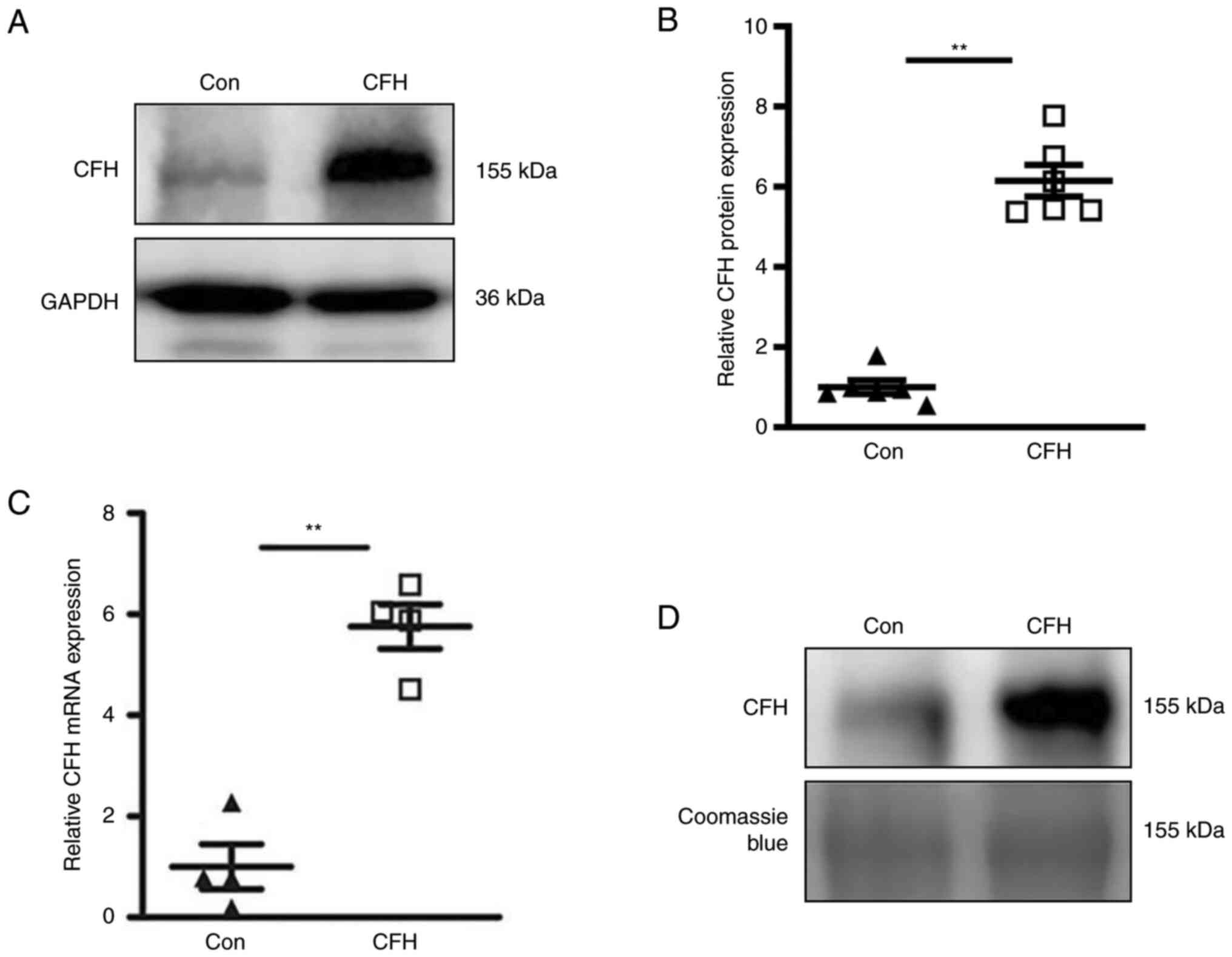
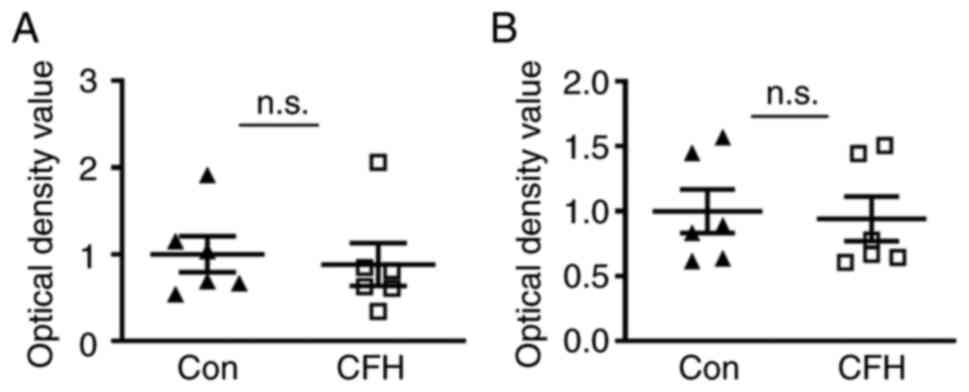
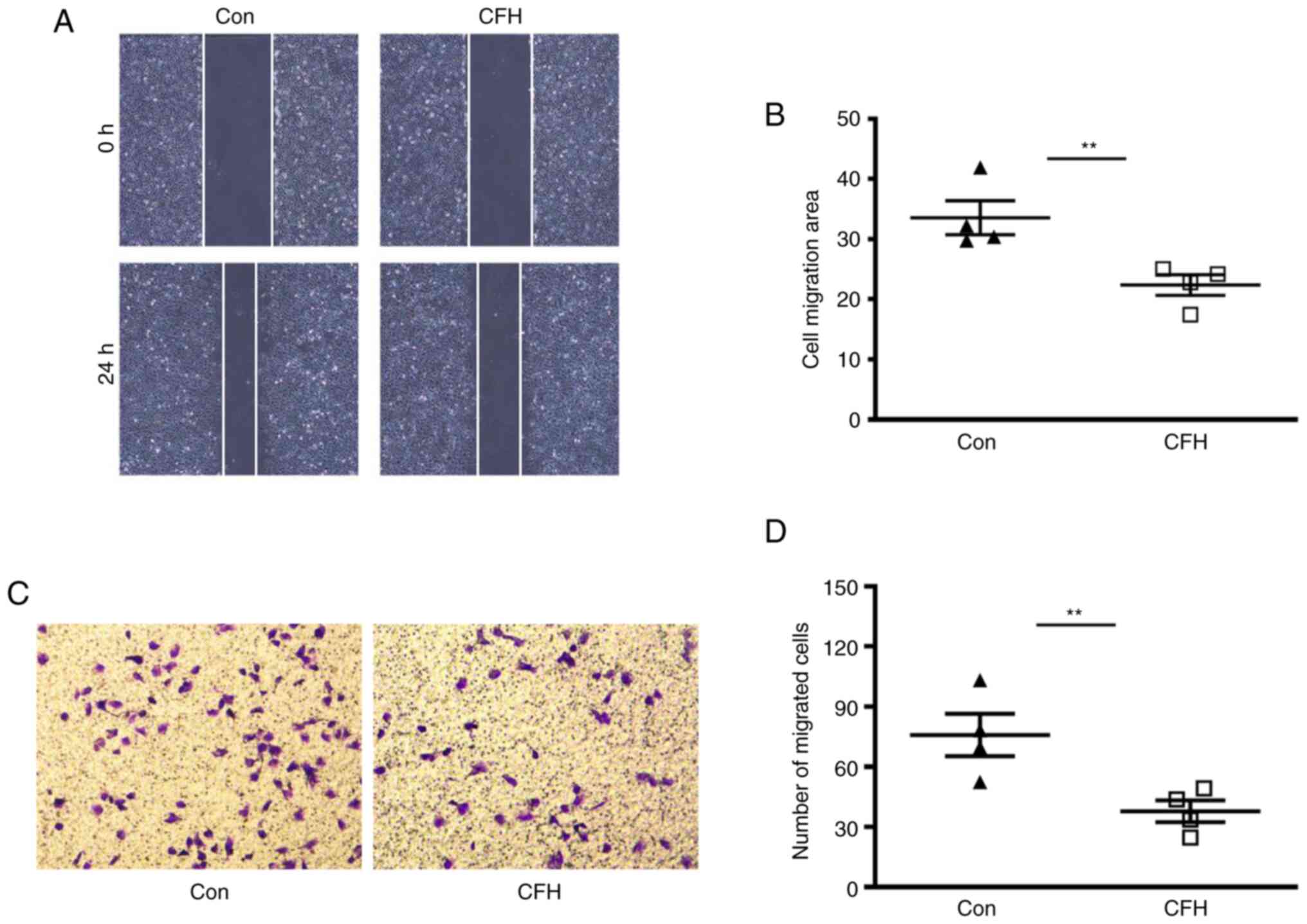
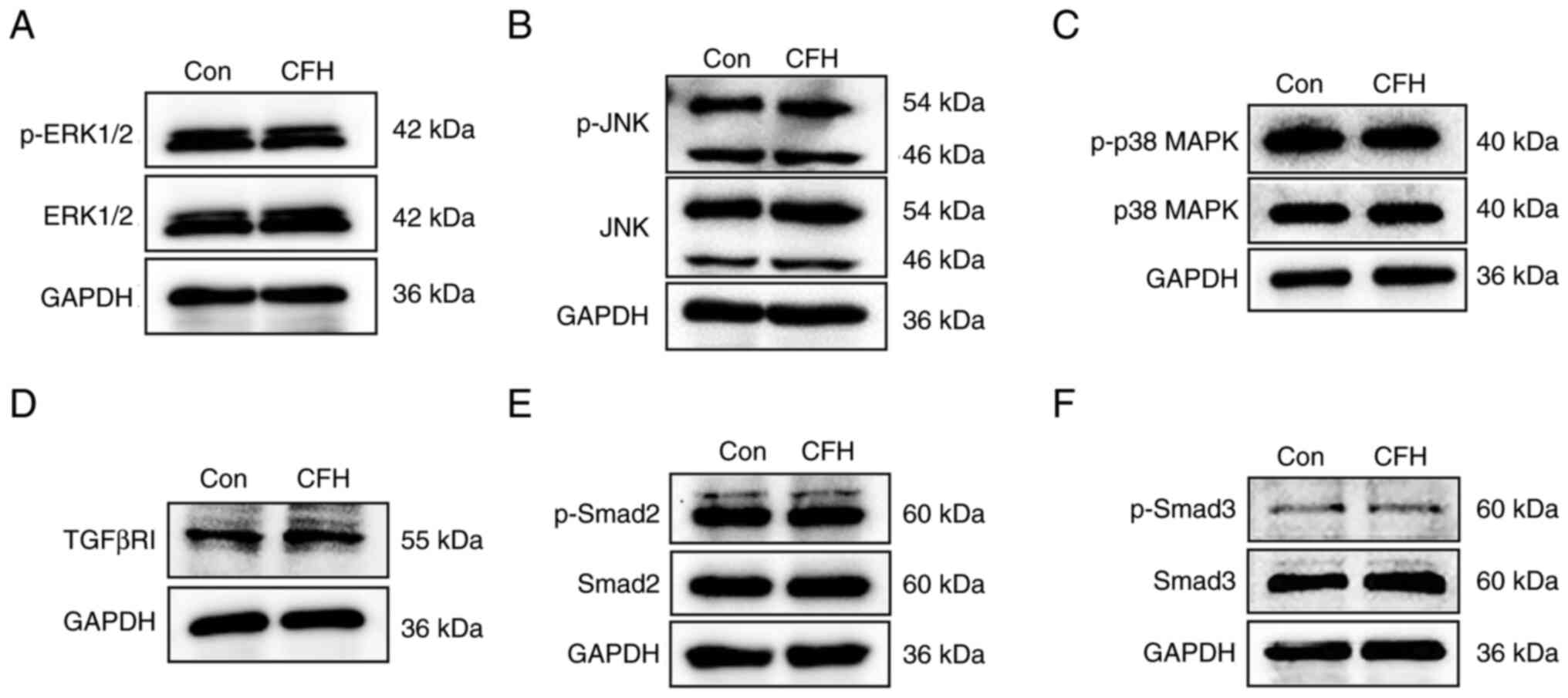
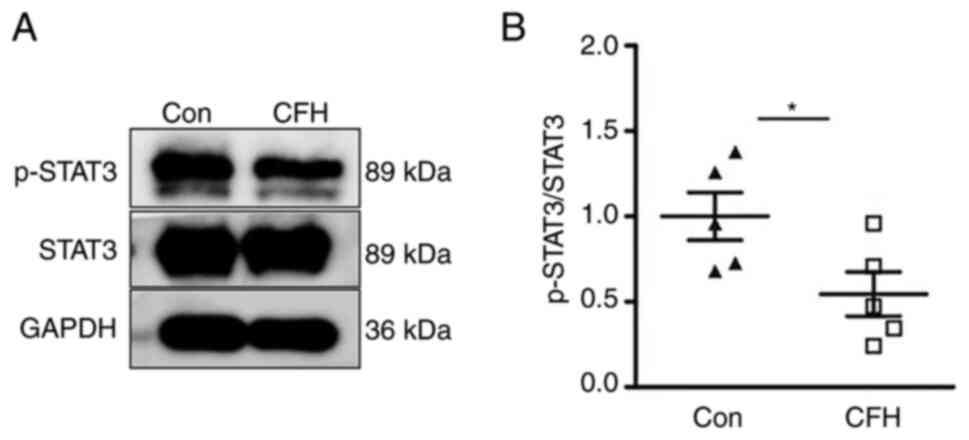
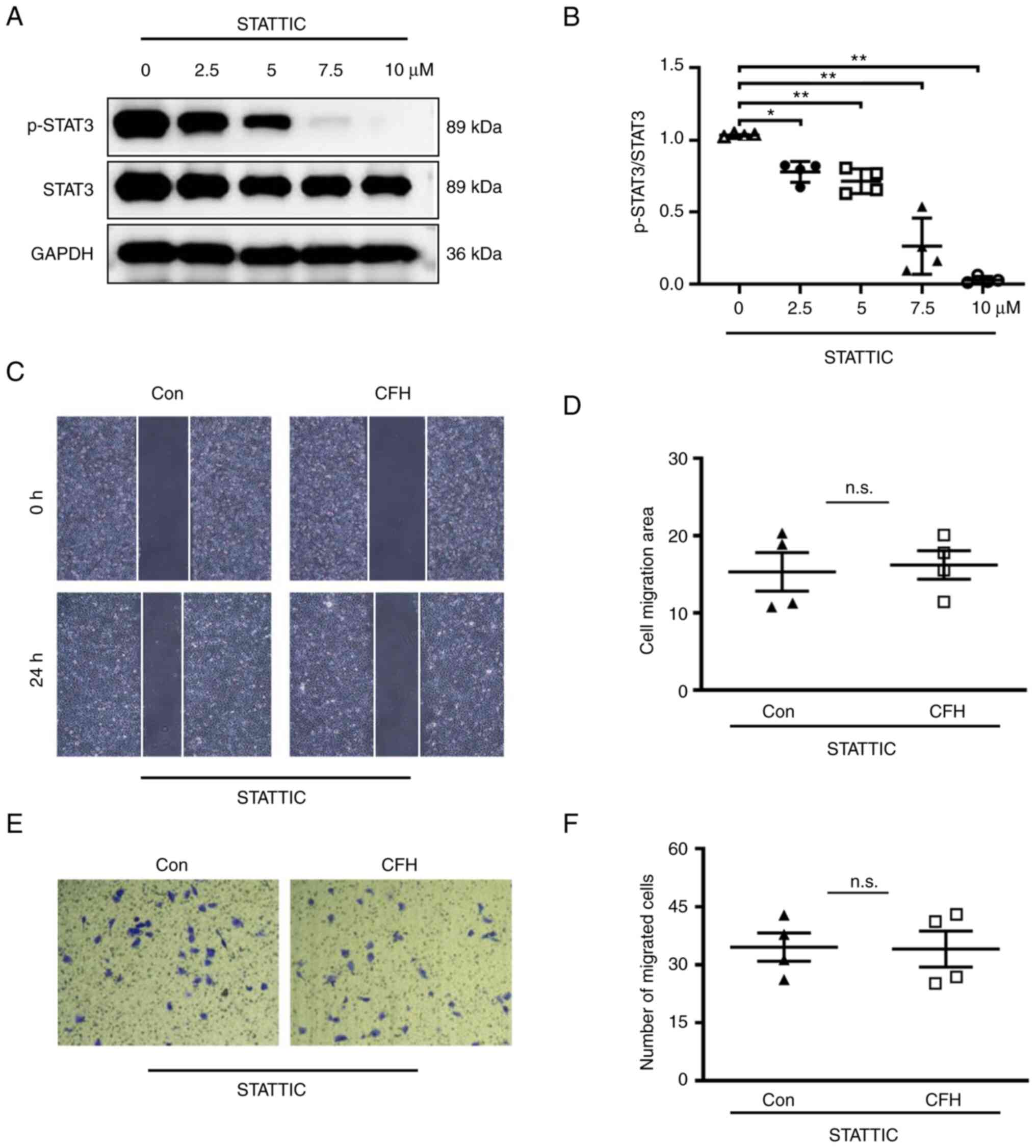
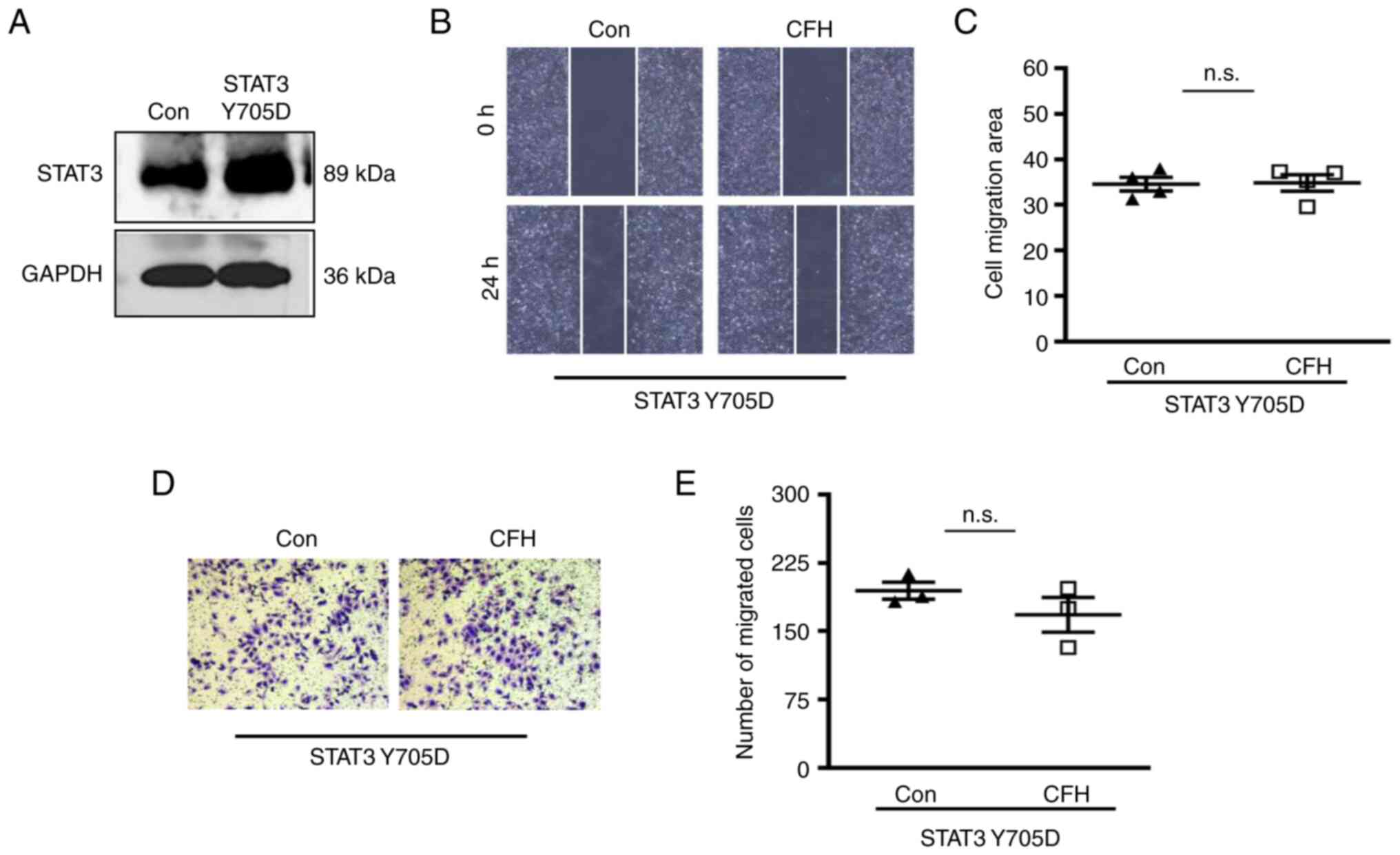
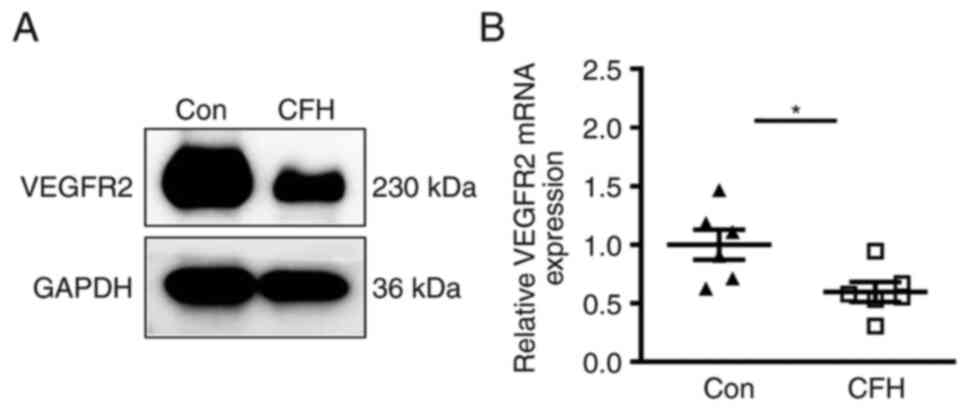
Complement factor H (CFH), a major soluble inhibitor of complement, is a plasma protein that directly interacts with the endothelium of blood vessels. Mutations in the CFH gene lead to diseases associated with excessive angiogenesis; however, the underlying mechanisms are unknown. The present study aimed to determine the effects of CFH on endothelial cells and to explore the underlying mechanisms. The adenoviral plasmid expressing CFH was transduced into HepG2 cells, and the culture medium supernatant was collected and co‑cultured with human umbilical vein endothelial cells (HUVECs). Cell proliferation was measured by CCK8 and MTT assays, and cell migration was measured by wound healing and Transwell assays. Reverse transcription‑quantitative PCR was performed to detect gene transcription. Western blotting was used to determine protein levels. The results revealed that CFH can inhibit migration, but not viability, of HUVECs. In addition, CFH did not significantly alter MAPK or TGF‑β signaling, whereas it decreased STAT3 phosphorylation in HUVECs. Furthermore, CFH failed to reduce migration of HUVECs, with inhibition of STAT3 signaling by STATTIC or activation of STAT3 signaling by overexpression of STAT3 (Y705D) compromising CFH‑inhibited HUVEC migration. CFH also decreased the expression levels of vascular endothelial growth factor receptor 2, a downstream effector of STAT3 mediating endothelial cell migration. In conclusion, the present study suggested that CFH may be a potential therapeutic target for angiogenesis‑related diseases.
View Figures

Figure 1

Figure 2

Figure 3

Figure 4

Figure 5

Figure 6

Figure 7

Figure 8

View References

1 

Grant ZL, Whitehead L, Wong VH, He Z, Yan RY, Miles AR, Benest AV, Bates DO, Prahst C, Bentley K, et al: Blocking endothelial apoptosis revascularizes the retina in a model of ischemic retinopathy. J Clin Invest. 130:4235–4251. 2020.PubMed/NCBI View Article : Google Scholar

2 

Dahham SS, Tabana Y, Asif M, Ahmed M, Babu D, Hassan LE, Ahamed MBK, Sandai D, Barakat K, Siraki A and Majid AMSA: β-Caryophyllene induces apoptosis and inhibits angiogenesis in colorectal cancer models. Int J Mol Sci. 22(10550)2021.PubMed/NCBI View Article : Google Scholar

3 

Unterleuthner D, Neuhold P, Schwarz K, Janker L, Neuditschko B, Nivarthi H, Crncec I, Kramer N, Unger C, Hengstschläger M, et al: Cancer-associated fibroblast-derived WNT2 increases tumor angiogenesis in colon cancer. Angiogenesis. 23:159–177. 2020.PubMed/NCBI View Article : Google Scholar

4 

Wang X, Abraham S, McKenzie JAG, Jeffs N, Swire M, Tripathi VB, Luhmann UFO, Lange CAK, Zhai Z, Arthur HM, et al: LRG1 promotes angiogenesis by modulating endothelial TGF-β signalling. Nature. 499:306–311. 2013.PubMed/NCBI View Article : Google Scholar

5 

Bell CL, Vandenberghe LH, Bell P, Limberis MP, Gao GP, Van Vliet K, Agbandje-McKenna M and Wilson JM: The AAV9 receptor and its modification to improve in vivo lung gene transfer in mice. J Clin Invest. 121:2427–2435. 2011.PubMed/NCBI View Article : Google Scholar

6 

Gao P, Wang LL, Liu J, Dong F, Song W, Liao L, Wang B, Zhang W, Zhou X, Xie Q, et al: Dihydroartemisinin inhibits endothelial cell tube formation by suppression of the STAT3 signaling pathway. Life Sci. 242(117221)2020.PubMed/NCBI View Article : Google Scholar

7 

Li L, Dong F, Xu D, Du L, Yan S, Hu H, Lobe CG, Yi F, Kapron CM and Liu J: Short-term, low-dose cadmium exposure induces hyperpermeability in human renal glomerular endothelial cells. J Appl Toxicol. 36:257–265. 2016.PubMed/NCBI View Article : Google Scholar

8 

Yang X, Song W, Zhang K, Wang Y, Chen F, Chen Y, Huang T, Jiang Y, Wang X and Zhang C: p38 mediates T-2 toxin-induced Leydig cell testosterone synthesis disorder. Ecotoxicol Environ Saf. 253(114695)2023.PubMed/NCBI View Article : Google Scholar

9 

Mao X, Zhou L, Tey SK, Ma APY, Yeung CLS, Ng TH, Wong SWK, Liu BHM, Fung YME, Patz EF Jr, et al: Tumour extracellular vesicle-derived complement factor H promotes tumorigenesis and metastasis by inhibiting complement-dependent cytotoxicity of tumour cells. J Extracell Vesicles. 10(e12031)2020.PubMed/NCBI View Article : Google Scholar

10 

Esparza-Gordillo J, Soria JM, Buil A, Almasy L, Blangero J, Fontcuberta J and Rodríguez de Córdoba S: Genetic and environmental factors influencing the human factor H plasma levels. Immunogenetics. 56:77–82. 2004.PubMed/NCBI View Article : Google Scholar

11 

Klein RJ, Zeiss C, Chew EY, Tsai JY, Sackler RS, Haynes C, Henning AK, SanGiovanni JP, Mane SM, Mayne ST, et al: Complement factor H polymorphism in age-related macular degeneration. Science. 308:385–389. 2005.PubMed/NCBI View Article : Google Scholar

12 

Kim SJ, Kim J, Lee J, Cho SY, Kang HJ, Kim KY and Jin DK: Intravitreal human complement factor H in a rat model of laser-induced choroidal neovascularisation. Br J Ophthalmol. 97:367–370. 2013.PubMed/NCBI View Article : Google Scholar

13 

Liu J and Hoh J: Loss of complement factor H in plasma increases endothelial cell migration. J Cancer. 8:2184–2190. 2017.PubMed/NCBI View Article : Google Scholar

14 

Zhang Y, Huang Q, Tang M, Zhang J and Fan W: Complement factor H expressed by retinal pigment epithelium cells can suppress neovascularization of human umbilical vein endothelial cells: An in vitro study. PLoS One. 10(e0129945)2015.PubMed/NCBI View Article : Google Scholar

15 

Hu Z, Han Y, Liu Y, Zhao Z, Ma F, Cui A, Zhang F, Liu Z, Xue Y, Bai J, et al: CREBZF as a key regulator of STAT3 pathway in the control of liver regeneration in mice. Hepatology. 71:1421–1436. 2020.PubMed/NCBI View Article : Google Scholar

16 

Yahata Y, Shirakata Y, Tokumaru S, Yamasaki K, Sayama K, Hanakawa Y, Detmar M and Hashimoto K: Nuclear translocation of phosphorylated STAT3 is essential for vascular endothelial growth factor-induced human dermal microvascular endothelial cell migration and tube formation. J Biol Chem. 278:40026–40031. 2003.PubMed/NCBI View Article : Google Scholar

17 

Zhang M, Zhou L, Xu Y, Yang M, Xu Y, Komaniecki GP, Kosciuk T, Chen X, Lu X, Zou X, et al: A STAT3 palmitoylation cycle promotes TH17 differentiation and colitis. Nature. 586:434–439. 2020.PubMed/NCBI View Article : Google Scholar

18 

Shen Y, Wang X, Liu Y, Singhal M, Gürkaşlar C, Valls AF, Lei Y, Hu W, Schermann G, Adler H, et al: STAT3-YAP/TAZ signaling in endothelial cells promotes tumor angiogenesis. Sci Signal. 14(eabj8393)2021.PubMed/NCBI View Article : Google Scholar

19 

Song D, Lan J, Chen Y, Liu A, Wu Q, Zhao C, Feng Y, Wang J, Luo X, Cao Z, et al: NSD2 promotes tumor angiogenesis through methylating and activating STAT3 protein. Oncogene. 40:2952–2967. 2021.PubMed/NCBI View Article : Google Scholar

20 

Huang J, Tang L, Zhao Y and Ding W: TRIM11 promotes tumor angiogenesis via activation of STAT3/VEGFA signaling in lung adenocarcinoma. Am J Cancer Res. 9:2019–2027. 2019.PubMed/NCBI

21 

Xia Z, Xiao J, Dai Z and Chen Q: Membrane progesterone receptor α (mPRα) enhances hypoxia-induced vascular endothelial growth factor secretion and angiogenesis in lung adenocarcinoma through STAT3 signaling. J Transl Med. 20(72)2022.PubMed/NCBI View Article : Google Scholar

22 

Xu G, Zhu L, Wang Y, Shi Y, Gong A and Wu C: Stattic enhances radiosensitivity and reduces radio-induced migration and invasion in HCC cell lines through an apoptosis pathway. Biomed Res Int. 2017(1832494)2017.PubMed/NCBI View Article : Google Scholar

23 

Cao L, Ren Y, Guo X, Wang L, Zhang Q, Li X, Wu X, Meng Z and Xu K: Downregulation of SETD7 promotes migration and invasion of lung cancer cells via JAK2/STAT3 pathway. Int J Mol Med. 45:1616–1626. 2020.PubMed/NCBI View Article : Google Scholar

24 

Xie TX, Wei D, Liu M, Gao AC, Ali-Osman F, Sawaya R and Huang S: Stat3 activation regulates the expression of matrix metalloproteinase-2 and tumor invasion and metastasis. Oncogene. 23:3550–3560. 2004.PubMed/NCBI View Article : Google Scholar

25 

Chen J and Wang Y, Wang S, Zhao X, Zhao L and Wang Y: Salvianolic acid B and ferulic acid synergistically promote angiogenesis in HUVECs and zebrafish via regulating VEGF signaling. J Ethnopharmacol. 283(114667)2022.PubMed/NCBI View Article : Google Scholar

26 

Porter AM, Klinge CM and Gobin AS: Biomimetic hydrogels with VEGF induce angiogenic processes in both hUVEC and hMEC. Biomacromolecules. 12:242–246. 2011.PubMed/NCBI View Article : Google Scholar

27 

Cerezo AB, Hornedo-Ortega R, Alvarez-Fernandez MA, Troncoso AM and Garcia-Parrilla MC: Inhibition of VEGF-induced VEGFR-2 activation and HUVEC migration by melatonin and other bioactive indolic compounds. Nutrients. 9(248)2017.PubMed/NCBI View Article : Google Scholar

28 

Mac Gabhann F and Popel AS: Dimerization of VEGF receptors and implications for signal transduction: A computational study. Biophys Chem. 128:125–139. 2007.PubMed/NCBI View Article : Google Scholar

29 

Rezzola S, Di Somma M, Corsini M, Leali D, Ravelli C, Polli VAB, Grillo E, Presta M and Mitola S: VEGFR2 activation mediates the pro-angiogenic activity of BMP4. Angiogenesis. 22:521–533. 2019.PubMed/NCBI View Article : Google Scholar

30 

Melincovici CS, Boşca AB, Şuşman S, Mărginean M, Mihu C, Istrate M, Moldovan IM, Roman AL and Mihu CM: Vascular endothelial growth factor (VEGF)-key factor in normal and pathological angiogenesis. Rom J Morphol Embryol. 59:455–467. 2018.PubMed/NCBI

31 

Nagarkoti S, Kim YM, Ash D, Das A, Vitriol E, Read TA, Youn SW, Sudhahar V, McMenamin M, Hou Y, et al: Protein disulfide isomerase A1 as a novel redox sensor in VEGFR2 signaling and angiogenesis. Angiogenesis. 26:77–96. 2023.PubMed/NCBI View Article : Google Scholar

32 

Zou S, Gao Y and Zhang S: lncRNA HCP5 acts as a ceRNA to regulate EZH2 by sponging miR-138-5p in cutaneous squamous cell carcinoma. Int J Oncol. 59(56)2021.PubMed/NCBI View Article : Google Scholar

33 

Zhao M, Hu X, Xu Y, Wu C, Chen J, Ren Y, Kong L, Sun S, Zhang L, Jin R and Zhou X: Targeting of EZH2 inhibits epithelial-mesenchymal transition in head and neck squamous cell carcinoma via regulating the STAT3/VEGFR2 axis. Int J Oncol. 55:1165–1175. 2019.PubMed/NCBI View Article : Google Scholar

34 

Lee HT, Xue J, Chou PC, Zhou A, Yang P, Conrad CA, Aldape KD, Priebe W, Patterson C, Sawaya R, et al: Stat3 orchestrates interaction between endothelial and tumor cells and inhibition of Stat3 suppresses brain metastasis of breast cancer cells. Oncotarget. 6:10016–10029. 2015.PubMed/NCBI View Article : Google Scholar

35 

Zhang F, Hu G, Chen X, Zhang L, Guo L, Li C, Zhao H, Cui Z, Guo X, Sun F, et al: Excessive branched-chain amino acid accumulation restricts mesenchymal stem cell-based therapy efficacy in myocardial infarction. Signal Transduct Target Ther. 7(171)2022.PubMed/NCBI View Article : Google Scholar

36 

Livak KJ and Schmittgen TD: Analysis of relative gene expression data using real-time quantitative PCR and the 2(-Delta Delta C(T)) method. Methods. 25:402–408. 2001.PubMed/NCBI View Article : Google Scholar

37 

Zhu T, Yao Q, Hu X, Chen C, Yao H and Chao J: The role of MCPIP1 in ischemia/reperfusion injury-induced HUVEC migration and apoptosis. Cell Physiol Biochem. 37:577–591. 2015.PubMed/NCBI View Article : Google Scholar

38 

Chen W, He S and Xiang D: Hypoxia-induced retinal pigment epithelium cell-derived bFGF promotes the migration and angiogenesis of HUVECs through regulating TGF-β1/smad2/3 pathway. Gene. 790(145695)2021.PubMed/NCBI View Article : Google Scholar

39 

Schust J, Sperl B, Hollis A, Mayer TU and Berg T: Stattic: A small-molecule inhibitor of STAT3 activation and dimerization. Chem Biol. 13:1235–1242. 2006.PubMed/NCBI View Article : Google Scholar

40 

Lyzogubov VV, Tytarenko RG, Jha P, Liu J, Bora NS and Bora PS: Role of ocular complement factor H in a murine model of choroidal neovascularization. Am J Pathol. 177:1870–1880. 2010.PubMed/NCBI View Article : Google Scholar

41 

Rohrer B, Long Q, Coughlin B, Wilson RB, Huang Y, Qiao F, Tang PH, Kunchithapautham K, Gilkeson GS and Tomlinson S: A targeted inhibitor of the alternative complement pathway reduces angiogenesis in a mouse model of age-related macular degeneration. Invest Ophthalmol Vis Sci. 50:3056–3064. 2009.PubMed/NCBI View Article : Google Scholar

42 

Borras C, Delaunay K, Slaoui Y, Abache T, Jorieux S, Naud MC, Sanharawi ME, Gelize E, Lassiaz P, An N, et al: Mechanisms of FH protection against neovascular AMD. Front Immunol. 11(443)2020.PubMed/NCBI View Article : Google Scholar

43 

Moore SR, Menon SS, Cortes C and Ferreira VP: Hijacking factor H for complement immune evasion. Front Immunol. 12(602277)2021.PubMed/NCBI View Article : Google Scholar

44 

Siamwala JH, Reddy SH, Majumder S, Kolluru GK, Muley A, Sinha S and Chatterjee S: Simulated microgravity perturbs actin polymerization to promote nitric oxide-associated migration in human immortalized Eahy926 cells. Protoplasma. 242:3–12. 2010.PubMed/NCBI View Article : Google Scholar

45 

Valanti EK, Dalakoura-Karagkouni K, Fotakis P, Vafiadaki E, Mantzoros CS, Chroni A, Zannis V, Kardassis D and Sanoudou D: Reconstituted HDL-apoE3 promotes endothelial cell migration through ID1 and its downstream kinases ERK1/2, AKT and p38 MAPK. Metabolism. 127(154954)2022.PubMed/NCBI View Article : Google Scholar

46 

Bora NS, Kaliappan S, Jha P, Xu Q, Sohn JH, Dhaulakhandi DB, Kaplan HJ and Bora PS: Complement activation via alternative pathway is critical in the development of laser-induced choroidal neovascularization: role of factor B and facto H. J Immunol. 177:1872–1878. 2006.PubMed/NCBI View Article : Google Scholar

47 

Goumans MJ, Valdimarsdottir G, Itoh S, Lebrin F, Larsson J, Mummery C, Karlsson S and ten Dijke P: Activin receptor-like kinase (ALK)1 is an antagonistic mediator of lateral TGFbeta/ALK5 signaling. Mol Cell. 12:817–828. 2003.PubMed/NCBI View Article : Google Scholar

48 

Min TR, Park HJ, Park MN, Kim B and Park SH: The root bark of Morus alba L. Suppressed the migration of human non-small-cell lung cancer cells through inhibition of epithelial-mesenchymal transition mediated by STAT3 and Src. Int J Mol Sci. 20(2244)2019.PubMed/NCBI View Article : Google Scholar

49 

Coleman DR IV, Ren Z, Mandal PK, Cameron AG, Dyer GA, Muranjan S, Campbell M, Chen X and McMurray JS: Investigation of the binding determinants of phosphopeptides targeted to the SRC homology 2 domain of the signal transducer and activator of transcription 3. Development of a high-affinity peptide inhibitor. J Med Chem. 48:6661–6670. 2005.PubMed/NCBI View Article : Google Scholar

50 

Jin J, Yuan F, Shen MQ, Feng YF and He QL: Vascular endothelial growth factor regulates primate choroid-retinal endothelial cell proliferation and tube formation through PI3K/Akt and MEK/ERK dependent signaling. Mol Cell Biochem. 381:267–272. 2013.PubMed/NCBI View Article : Google Scholar

Related Articles

  • Abstract
  • View
  • Download
  • Twitter
Copy and paste a formatted citation
Spandidos Publications style
Li J, Huang H, Xu S, Fan M, Wang K, Wang X, Zhang J, Huang S, Gatt A, Liu J, Liu J, et al: Complement factor H inhibits endothelial cell migration through suppression of STAT3 signaling. Exp Ther Med 26: 408, 2023.
APA
Li, J., Huang, H., Xu, S., Fan, M., Wang, K., Wang, X. ... Liu, J. (2023). Complement factor H inhibits endothelial cell migration through suppression of STAT3 signaling. Experimental and Therapeutic Medicine, 26, 408. https://doi.org/10.3892/etm.2023.12107
MLA
Li, J., Huang, H., Xu, S., Fan, M., Wang, K., Wang, X., Zhang, J., Huang, S., Gatt, A., Liu, J."Complement factor H inhibits endothelial cell migration through suppression of STAT3 signaling". Experimental and Therapeutic Medicine 26.2 (2023): 408.
Chicago
Li, J., Huang, H., Xu, S., Fan, M., Wang, K., Wang, X., Zhang, J., Huang, S., Gatt, A., Liu, J."Complement factor H inhibits endothelial cell migration through suppression of STAT3 signaling". Experimental and Therapeutic Medicine 26, no. 2 (2023): 408. https://doi.org/10.3892/etm.2023.12107
Copy and paste a formatted citation
x
Spandidos Publications style
Li J, Huang H, Xu S, Fan M, Wang K, Wang X, Zhang J, Huang S, Gatt A, Liu J, Liu J, et al: Complement factor H inhibits endothelial cell migration through suppression of STAT3 signaling. Exp Ther Med 26: 408, 2023.
APA
Li, J., Huang, H., Xu, S., Fan, M., Wang, K., Wang, X. ... Liu, J. (2023). Complement factor H inhibits endothelial cell migration through suppression of STAT3 signaling. Experimental and Therapeutic Medicine, 26, 408. https://doi.org/10.3892/etm.2023.12107
MLA
Li, J., Huang, H., Xu, S., Fan, M., Wang, K., Wang, X., Zhang, J., Huang, S., Gatt, A., Liu, J."Complement factor H inhibits endothelial cell migration through suppression of STAT3 signaling". Experimental and Therapeutic Medicine 26.2 (2023): 408.
Chicago
Li, J., Huang, H., Xu, S., Fan, M., Wang, K., Wang, X., Zhang, J., Huang, S., Gatt, A., Liu, J."Complement factor H inhibits endothelial cell migration through suppression of STAT3 signaling". Experimental and Therapeutic Medicine 26, no. 2 (2023): 408. https://doi.org/10.3892/etm.2023.12107
Follow us
  • Twitter
  • LinkedIn
  • Facebook
About
  • Spandidos Publications
  • Careers
  • Cookie Policy
  • Privacy Policy
How can we help?
  • Help
  • Live Chat
  • Contact
  • Email to our Support Team