Spandidos Publications Logo
  • About
    • About Spandidos
    • Aims and Scopes
    • Abstracting and Indexing
    • Editorial Policies
    • Reprints and Permissions
    • Job Opportunities
    • Terms and Conditions
    • Contact
  • Journals
    • All Journals
    • Oncology Letters
      • Oncology Letters
      • Information for Authors
      • Editorial Policies
      • Editorial Board
      • Aims and Scope
      • Abstracting and Indexing
      • Bibliographic Information
      • Archive
    • International Journal of Oncology
      • International Journal of Oncology
      • Information for Authors
      • Editorial Policies
      • Editorial Board
      • Aims and Scope
      • Abstracting and Indexing
      • Bibliographic Information
      • Archive
    • Molecular and Clinical Oncology
      • Molecular and Clinical Oncology
      • Information for Authors
      • Editorial Policies
      • Editorial Board
      • Aims and Scope
      • Abstracting and Indexing
      • Bibliographic Information
      • Archive
    • Experimental and Therapeutic Medicine
      • Experimental and Therapeutic Medicine
      • Information for Authors
      • Editorial Policies
      • Editorial Board
      • Aims and Scope
      • Abstracting and Indexing
      • Bibliographic Information
      • Archive
    • International Journal of Molecular Medicine
      • International Journal of Molecular Medicine
      • Information for Authors
      • Editorial Policies
      • Editorial Board
      • Aims and Scope
      • Abstracting and Indexing
      • Bibliographic Information
      • Archive
    • Biomedical Reports
      • Biomedical Reports
      • Information for Authors
      • Editorial Policies
      • Editorial Board
      • Aims and Scope
      • Abstracting and Indexing
      • Bibliographic Information
      • Archive
    • Oncology Reports
      • Oncology Reports
      • Information for Authors
      • Editorial Policies
      • Editorial Board
      • Aims and Scope
      • Abstracting and Indexing
      • Bibliographic Information
      • Archive
    • Molecular Medicine Reports
      • Molecular Medicine Reports
      • Information for Authors
      • Editorial Policies
      • Editorial Board
      • Aims and Scope
      • Abstracting and Indexing
      • Bibliographic Information
      • Archive
    • World Academy of Sciences Journal
      • World Academy of Sciences Journal
      • Information for Authors
      • Editorial Policies
      • Editorial Board
      • Aims and Scope
      • Abstracting and Indexing
      • Bibliographic Information
      • Archive
    • International Journal of Functional Nutrition
      • International Journal of Functional Nutrition
      • Information for Authors
      • Editorial Policies
      • Editorial Board
      • Aims and Scope
      • Abstracting and Indexing
      • Bibliographic Information
      • Archive
    • International Journal of Epigenetics
      • International Journal of Epigenetics
      • Information for Authors
      • Editorial Policies
      • Editorial Board
      • Aims and Scope
      • Abstracting and Indexing
      • Bibliographic Information
      • Archive
    • Medicine International
      • Medicine International
      • Information for Authors
      • Editorial Policies
      • Editorial Board
      • Aims and Scope
      • Abstracting and Indexing
      • Bibliographic Information
      • Archive
  • Articles
  • Information
    • Information for Authors
    • Information for Reviewers
    • Information for Librarians
    • Information for Advertisers
    • Conferences
  • Language Editing
Spandidos Publications Logo
  • About
    • About Spandidos
    • Aims and Scopes
    • Abstracting and Indexing
    • Editorial Policies
    • Reprints and Permissions
    • Job Opportunities
    • Terms and Conditions
    • Contact
  • Journals
    • All Journals
    • Biomedical Reports
      • Information for Authors
      • Editorial Policies
      • Editorial Board
      • Aims and Scope
      • Abstracting and Indexing
      • Bibliographic Information
      • Archive
    • Experimental and Therapeutic Medicine
      • Information for Authors
      • Editorial Policies
      • Editorial Board
      • Aims and Scope
      • Abstracting and Indexing
      • Bibliographic Information
      • Archive
    • International Journal of Epigenetics
      • Information for Authors
      • Editorial Policies
      • Editorial Board
      • Aims and Scope
      • Abstracting and Indexing
      • Bibliographic Information
      • Archive
    • International Journal of Functional Nutrition
      • Information for Authors
      • Editorial Policies
      • Editorial Board
      • Aims and Scope
      • Abstracting and Indexing
      • Bibliographic Information
      • Archive
    • International Journal of Molecular Medicine
      • Information for Authors
      • Editorial Policies
      • Editorial Board
      • Aims and Scope
      • Abstracting and Indexing
      • Bibliographic Information
      • Archive
    • International Journal of Oncology
      • Information for Authors
      • Editorial Policies
      • Editorial Board
      • Aims and Scope
      • Abstracting and Indexing
      • Bibliographic Information
      • Archive
    • Medicine International
      • Information for Authors
      • Editorial Policies
      • Editorial Board
      • Aims and Scope
      • Abstracting and Indexing
      • Bibliographic Information
      • Archive
    • Molecular and Clinical Oncology
      • Information for Authors
      • Editorial Policies
      • Editorial Board
      • Aims and Scope
      • Abstracting and Indexing
      • Bibliographic Information
      • Archive
    • Molecular Medicine Reports
      • Information for Authors
      • Editorial Policies
      • Editorial Board
      • Aims and Scope
      • Abstracting and Indexing
      • Bibliographic Information
      • Archive
    • Oncology Letters
      • Information for Authors
      • Editorial Policies
      • Editorial Board
      • Aims and Scope
      • Abstracting and Indexing
      • Bibliographic Information
      • Archive
    • Oncology Reports
      • Information for Authors
      • Editorial Policies
      • Editorial Board
      • Aims and Scope
      • Abstracting and Indexing
      • Bibliographic Information
      • Archive
    • World Academy of Sciences Journal
      • Information for Authors
      • Editorial Policies
      • Editorial Board
      • Aims and Scope
      • Abstracting and Indexing
      • Bibliographic Information
      • Archive
  • Articles
  • Information
    • For Authors
    • For Reviewers
    • For Librarians
    • For Advertisers
    • Conferences
  • Language Editing
Login Register Submit
  • This site uses cookies
  • You can change your cookie settings at any time by following the instructions in our Cookie Policy. To find out more, you may read our Privacy Policy.

    I agree
Search articles by DOI, keyword, author or affiliation
Search
Advanced Search
presentation
Experimental and Therapeutic Medicine
Join Editorial Board Propose a Special Issue
Print ISSN: 1792-0981 Online ISSN: 1792-1015
Journal Cover
September-2023 Volume 26 Issue 3

Full Size Image

Sign up for eToc alerts
Recommend to Library

Journals

International Journal of Molecular Medicine

International Journal of Molecular Medicine

International Journal of Molecular Medicine is an international journal devoted to molecular mechanisms of human disease.

International Journal of Oncology

International Journal of Oncology

International Journal of Oncology is an international journal devoted to oncology research and cancer treatment.

Molecular Medicine Reports

Molecular Medicine Reports

Covers molecular medicine topics such as pharmacology, pathology, genetics, neuroscience, infectious diseases, molecular cardiology, and molecular surgery.

Oncology Reports

Oncology Reports

Oncology Reports is an international journal devoted to fundamental and applied research in Oncology.

Experimental and Therapeutic Medicine

Experimental and Therapeutic Medicine

Experimental and Therapeutic Medicine is an international journal devoted to laboratory and clinical medicine.

Oncology Letters

Oncology Letters

Oncology Letters is an international journal devoted to Experimental and Clinical Oncology.

Biomedical Reports

Biomedical Reports

Explores a wide range of biological and medical fields, including pharmacology, genetics, microbiology, neuroscience, and molecular cardiology.

Molecular and Clinical Oncology

Molecular and Clinical Oncology

International journal addressing all aspects of oncology research, from tumorigenesis and oncogenes to chemotherapy and metastasis.

World Academy of Sciences Journal

World Academy of Sciences Journal

Multidisciplinary open-access journal spanning biochemistry, genetics, neuroscience, environmental health, and synthetic biology.

International Journal of Functional Nutrition

International Journal of Functional Nutrition

Open-access journal combining biochemistry, pharmacology, immunology, and genetics to advance health through functional nutrition.

International Journal of Epigenetics

International Journal of Epigenetics

Publishes open-access research on using epigenetics to advance understanding and treatment of human disease.

Medicine International

Medicine International

An International Open Access Journal Devoted to General Medicine.

Journal Cover
September-2023 Volume 26 Issue 3

Full Size Image

Sign up for eToc alerts
Recommend to Library

  • Article
  • Citations
    • Cite This Article
    • Download Citation
    • Create Citation Alert
    • Remove Citation Alert
    • Cited By
  • Similar Articles
    • Related Articles (in Spandidos Publications)
    • Similar Articles (Google Scholar)
    • Similar Articles (PubMed)
  • Download PDF
  • Download XML
  • View XML

  • Supplementary Files
    • Supplementary_Data.pdf
Article Open Access

Multi‑omics‑based analysis of the regulatory mechanism of gypenosides on bile acids in hypercholesterolemic mice

  • Authors:
    • Chengcheng Feng
    • Yanping Yang
    • Anjing Lu
    • Daopeng Tan
    • Yanliu Lu
    • Lin Qin
    • Yuqi He
  • View Affiliations / Copyright

    Affiliations: Joint International Research Laboratory of Ethnomedicine of Ministry of Education, Zunyi Medical University, Zunyi, Guizhou 563000, P.R. China, Guizhou Engineering Research Center of Industrial Key‑Technology for Dendrobium Nobile, Zunyi Medical University, Zunyi, Guizhou 563000, P.R. China
    Copyright: © Feng et al. This is an open access article distributed under the terms of Creative Commons Attribution License.
  • Article Number: 438
    |
    Published online on: July 31, 2023
       https://doi.org/10.3892/etm.2023.12136
  • Expand metrics +
Metrics: Total Views: 0 (Spandidos Publications: | PMC Statistics: )
Metrics: Total PDF Downloads: 0 (Spandidos Publications: | PMC Statistics: )
Cited By (CrossRef): 0 citations Loading Articles...

This article is mentioned in:


Abstract

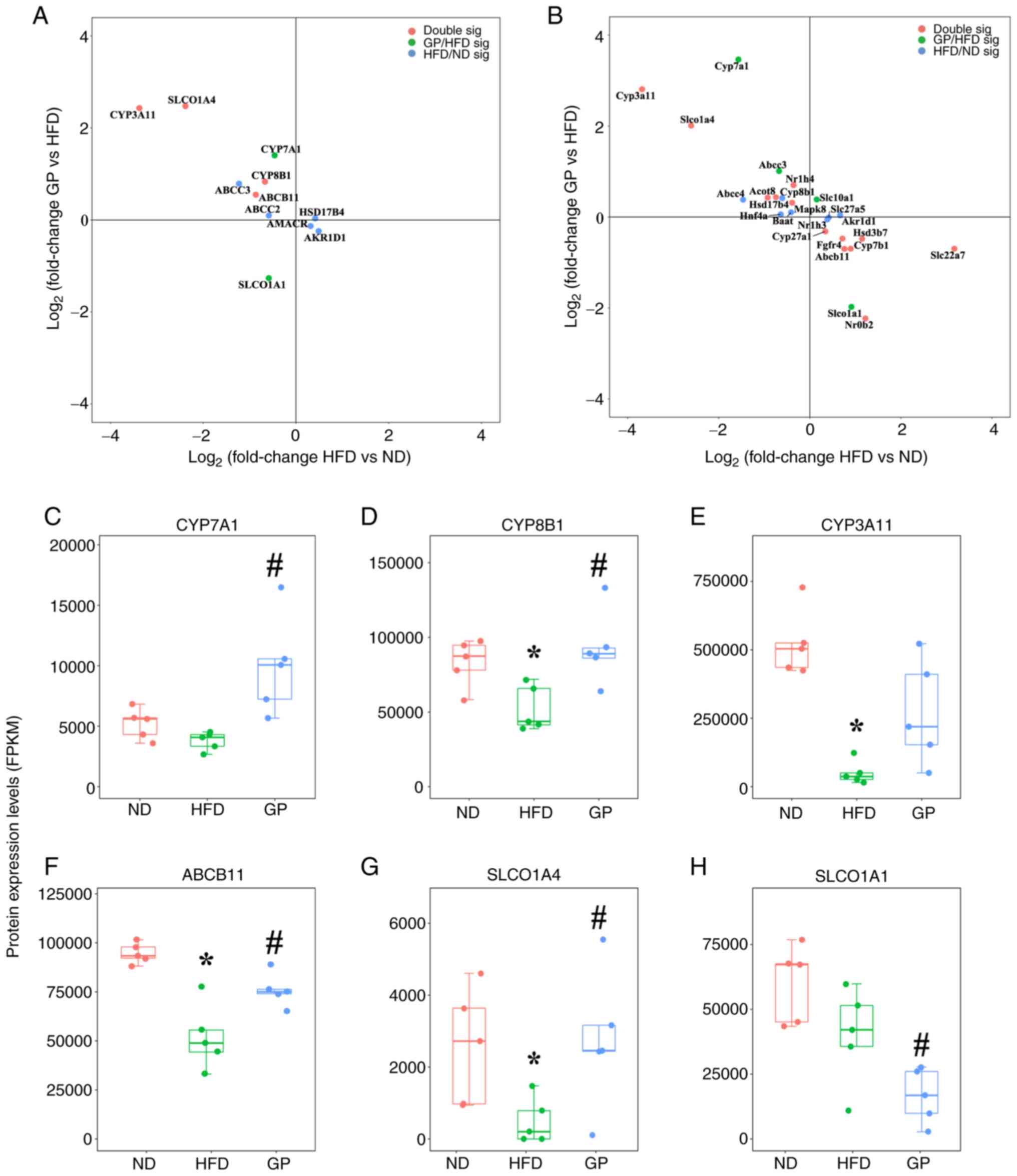
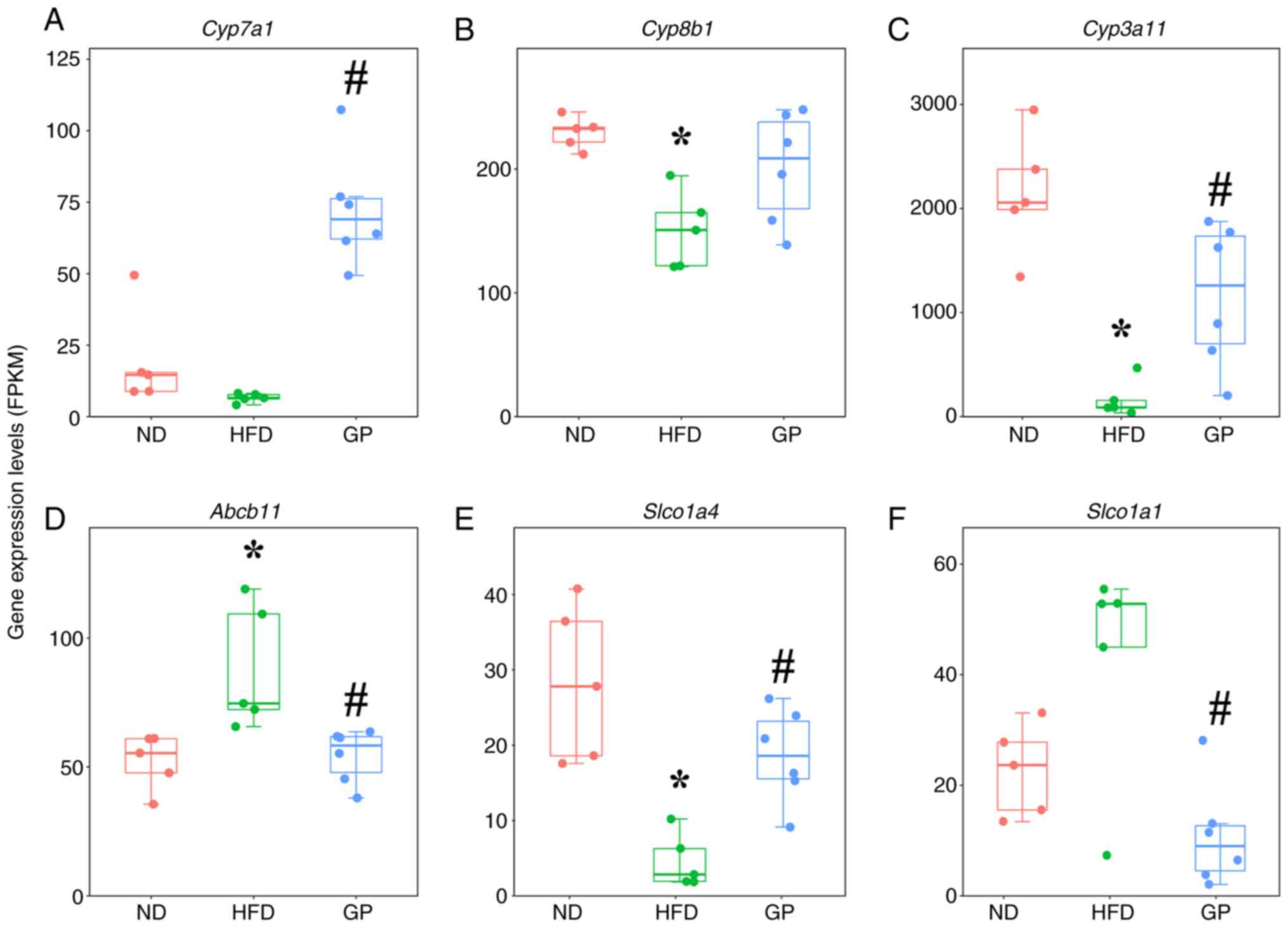
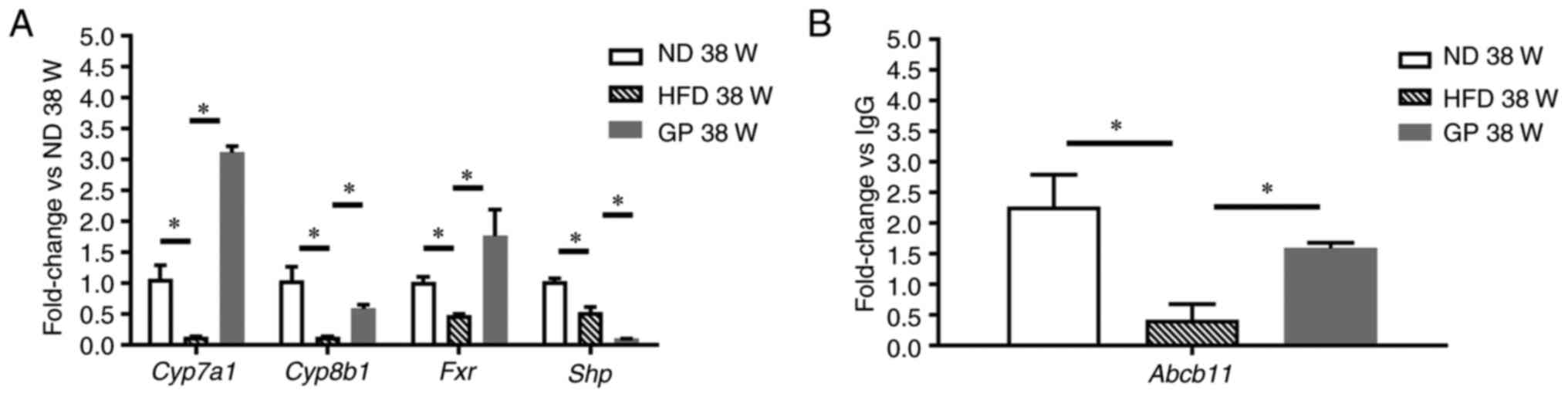
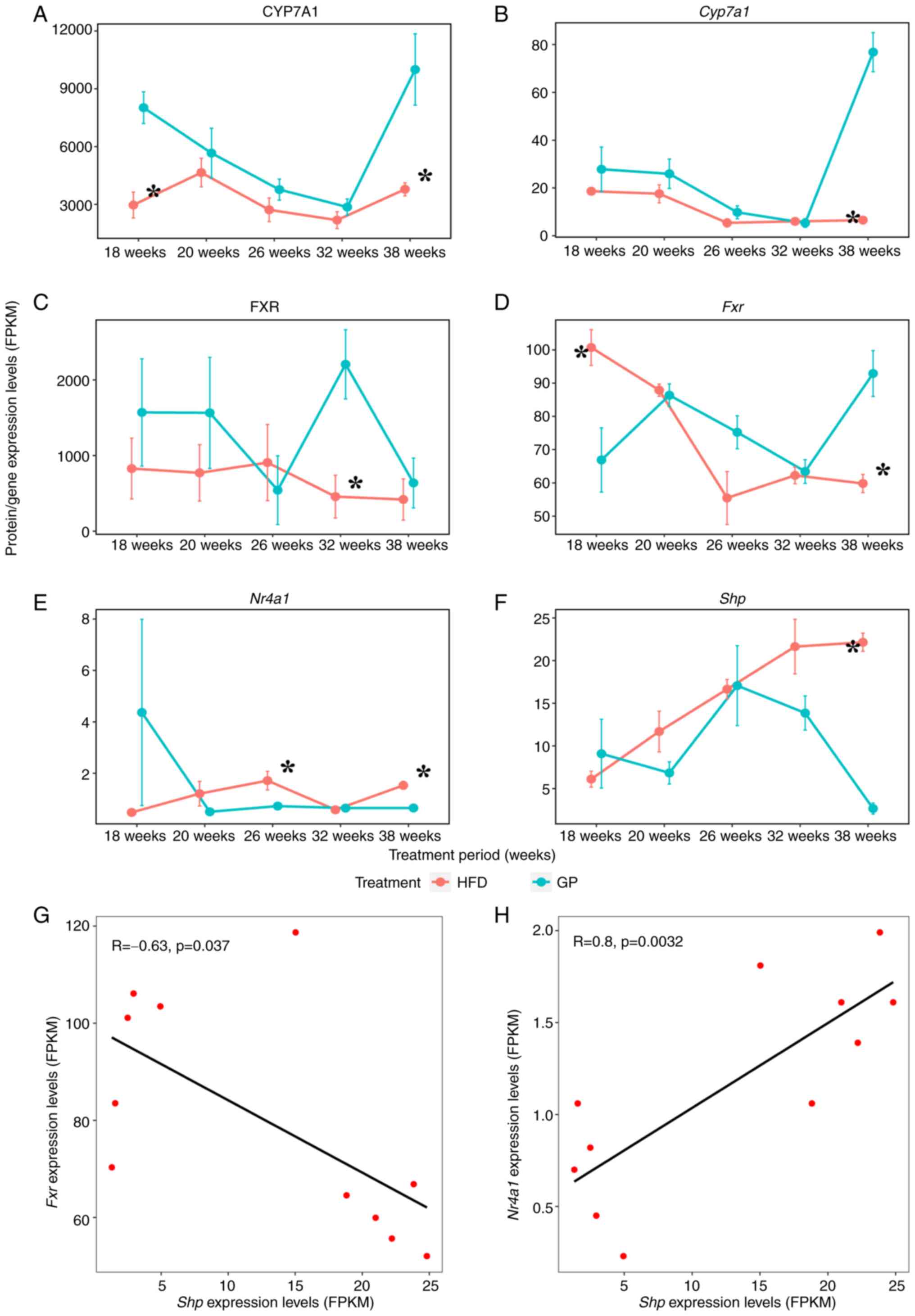
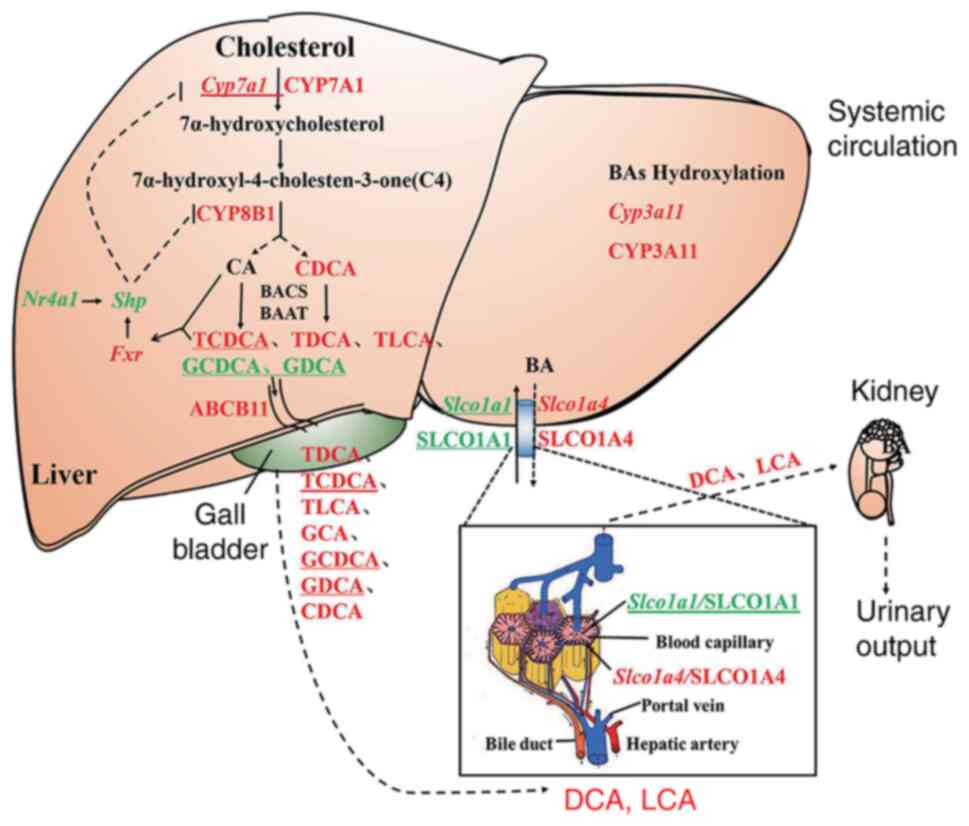
Gynostemma pentaphyllum is a traditional medicine used by ethnic minorities in southwest China and gypenosides are currently recognized as essential components of the pharmacological substances of Gynostemma pentaphyllum, which are effective in regulating metabolic syndrome, especially in improving hepatic metabolic disorders. The present study randomly divided C57BL/6J male mice into the normal diet control group (ND), high‑fat diet modeling group (HFD) and gypenosides group (GP). Liquid chromatography‑mass spectrometry (UPLC‑MS) was applied to quantify bile acids in the liver, bile and serum of mice in ND, HFD and GP groups. Liver proteins were extracted for trypsin hydrolysis and analyzed quantitatively using UPLC‑MS + MS/MS (timsTOF Pro 2). Total mouse liver RNA was extracted from ND, HFD and GP groups respectively, cDNA sequencing libraries constructed and sequenced using BGISEQ‑500 sequencing platform. The expression of key genes Fxr, Shp, Cyp7a1, Cyp8b1, and Abab11 was detected by RT‑qPCR. The results showed that gypenosides accelerated free bile acid synthesis by promoting the expression of bile acid synthase CYP7A1 and CYP8B1 genes and proteins and accelerating the secretion of conjugated bile acids from the liver to the bile ducts. GP inhibited the bile acid transporters solute carrier organic anion transporter family member (SLCO) 1A1 and SLCO1A4, reducing the reabsorption of free bile acids and accelerating the excretion of free bile acids from the blood to the kidneys. It also promoted the metabolic enzyme CYP3A11, which accelerated the metabolism and clearance of bile acids, thus maintaining the balance of the bile acid internal environment.
View Figures

Figure 1

Figure 2

Figure 3

Figure 4

Figure 5

Figure 6

Figure 7

Figure 8

Figure 9

View References

1 

Yu JN, Cunningham SR, Thouin T, Gurvich D and Liu D: Hyperlipidemia. Prim Care. 27:541–587. 2000.PubMed/NCBI View Article : Google Scholar

2 

Bunnoy A, Saenphet K, Lumyong S, Saenphet S and Chomdej S: Monascus purpureus-fermented Thai glutinous rice reduces blood and hepatic cholesterol and hepatic steatosis concentrations in diet-induced hypercholesterolemic rats. BMC Complement Altern Med. 15(88)2015.PubMed/NCBI View Article : Google Scholar

3 

Karr S: Epidemiology and management of hyperlipidemia. Am J Manag Care. 23:139–148. 2017.PubMed/NCBI

4 

Collins R, Reith C, Emberson J, Armitage J, Baigent C, Blackwell L, Blumenthal R, Danesh J, Smith GD, DeMets D, et al: Interpretation of the evidence for the efficacy and safety of statin therapy. Lancet. 19:2532–2561. 2016.PubMed/NCBI View Article : Google Scholar

5 

Sessa M, Rafaniello C, Scavone C, Mascolo A, di Mauro G, Fucile A, Rossi F, Sportiello L and Capuano A: Preventable statin adverse reactions and therapy discontinuation. What can we learn from the spontaneous reporting system? Expert Opin Drug Saf. 17:457–465. 2018.PubMed/NCBI View Article : Google Scholar

6 

Livingstone SJ, Looker HC, Akbar T, Betteridge DJ, Durrington PN, Hitman GA, Neil HA, Fuller JH and Colhoun HM: Effect of atorvastatin on glycaemia progression in patients with diabetes: An analysis from the collaborative atorvastatin in diabetes trial (CARDS). Diabetologia. 59:299–306. 2016.PubMed/NCBI View Article : Google Scholar

7 

Lu Y, Du Y, Qin L, Wu D, Wang W, Ling L, Ma F, Ling H, Yang L, Wang C, et al: Gypenosides altered hepatic bile acids homeostasis in mice treated with high fat diet. Evid Based Complement Alternat Med. 2018(8098059)2018.PubMed/NCBI View Article : Google Scholar

8 

Megalli S, Aktan F, Davies NM and Roufogalis BD: Phytopreventative anti-hyperlipidemic effects of gynostemma pentaphyllum in rats. J Pharm Pharm Sci. 8:507–515. 2005.PubMed/NCBI

9 

Attawish A, Chivapat S, Phadungpat S, Bansiddhi J, Techadamrongsin Y, Mitrijit O, Chaorai B and Chavalittumrong P: Chronic toxicity of Gynostemma pentaphyllum. Fitoterapia. 75:539–551. 2004.PubMed/NCBI View Article : Google Scholar

10 

Chiranthanut N, Teekachunhatean S, Panthong A, Khonsung P, Kanjanapothi D and Lertprasertsuk N: Toxicity evaluation of standardized extract of Gynostemma pentaphyllum Makino. J Ethnopharmacol. 149:228–234. 2013.PubMed/NCBI View Article : Google Scholar

11 

Lazarević S, Đanić M, Goločorbin-Kon S, Al-Salami H and Mikov M: Semisynthetic bile acids: A new therapeutic option for metabolic syndrome. Pharmacol Res. 146(104333)2019.PubMed/NCBI View Article : Google Scholar

12 

Staley C, Weingarden AR, Khoruts A and Sadowsky MJ: Interaction of gut microbiota with bile acid metabolism and its influence on disease states. Appl Microbiol Biotechnol. 101:47–64. 2017.PubMed/NCBI View Article : Google Scholar

13 

Vallim TQdA, Tarling EJ and Edwards PA: Pleiotropic roles of bile acids in metabolism. Cell Metab. 17:657–669. 2013.PubMed/NCBI View Article : Google Scholar

14 

Malhi H and Camilleri M: Modulating bile acid pathways and TGR5 receptors for treating liver and GI diseases. Curr Opin Pharmacol. 37:80–86. 2017.PubMed/NCBI View Article : Google Scholar

15 

Trauner M, Fuchs D, Halilbasic E and Paumgartner G: New therapeutic concepts in bile acid transport and signaling for management of cholestasis. Hepatology. 65:1393–1404. 2017.PubMed/NCBI View Article : Google Scholar

16 

Zhang L, Wang Q, Liu W, Liu F, Ji A and Li Y: The orphan nuclear receptor 4A1: A potential new therapeutic target for metabolic diseases. J Diabetes Res. 2018(9363461)2018.PubMed/NCBI View Article : Google Scholar

17 

Dawson PA and Oelkers P: Bile acid transporters. Curr Opin Lipidol. 6:109–114. 1995.PubMed/NCBI View Article : Google Scholar

18 

Meier PJ, Eckhardt U, Schroeder A, Hagenbuch B and Stieger B: Substrate specificity of sinusoidal bile acid and organic anion uptake systems in rat and human liver. Hepatology. 26:1667–1677. 1997.PubMed/NCBI View Article : Google Scholar

19 

Modica S, Gadaleta RM and Moschetta A: Deciphering the nuclear bile acid receptor FXR paradigm. Nucl Recept Signal. 8(e005)2010.PubMed/NCBI View Article : Google Scholar

20 

Goodwin B, Jones SA, Price RR, Watson MA, McKee DD, Moore LB, Galardi C, Wilson JG, Lewis MC, Roth ME, et al: A regulatory cascade of the nuclear receptors FXR, SHP-1, and LRH-1 represses bile acid biosynthesis. Mol Cell. 6:517–526. 2000.PubMed/NCBI View Article : Google Scholar

21 

Chiang JY, Kimmel R, Weinberger C and Stroup D: Farnesoid X receptor responds to bile acids and represses cholesterol 7alpha-hydroxylase gene (CYP7A1) transcription. J Biol Chem. 275:10918–10924. 2000.PubMed/NCBI View Article : Google Scholar

22 

Hu YW, Zhang P, Yang JY, Huang JL, Ma X, Li SF, Zhao JY, Hu YR, Wang YC, Gao JJ, et al: Nur77 decreases atherosclerosis progression in apoE(-/-) mice fed a high-fat/high-cholesterol diet. PLoS One. 9(e87313)2014.PubMed/NCBI View Article : Google Scholar

23 

Jung YS, Lee HS, Cho HR, Kim KJ, Kim JH, Safe S and Lee SO: Dual targeting of Nur77 and AMPKα by isoalantolactone inhibits adipogenesis in vitro and decreases body fat mass in vivo. Int J Obes (Lond). 43:952–962. 2019.PubMed/NCBI View Article : Google Scholar

24 

Kudo T, Nakayama E, Suzuki S, Akiyama M and Shibata S: Cholesterol diet enhances daily rhythm of Pai-1 mRNA in the mouse liver. Am J Physiol Endocrinol Metab. 287:E644–E651. 2004.PubMed/NCBI View Article : Google Scholar

25 

Abdou HS, Robert NM and Tremblay JJ: Calcium-dependent Nr4a1 expression in mouse Leydig cells requires distinct AP1/CRE and MEF2 elements. J Mol Endocrinol. 56:151–161. 2016.PubMed/NCBI View Article : Google Scholar

26 

De Fabiani E, Mitro N, Anzulovich AC, Pinelli A, Galli G and Crestani M: The negative effects of bile acids and tumor necrosis factor-alpha on the transcription of cholesterol 7alpha-hydroxylase gene (CYP7A1) converge to hepatic nuclear factor-4: A novel mechanism of feedback regulation of bile acid synthesis mediated by nuclear receptors. J Biol Chem. 276:30708–30716. 2001.PubMed/NCBI View Article : Google Scholar

27 

He Y, Yang T, Du Y, Qin L, Ma F, Wu Z, Ling H, Yang L, Wang Z, Zhou Q, et al: High fat diet significantly changed the global gene expression profile involved in hepatic drug metabolism and pharmacokinetic system in mice. Nutr Metab (Lond). 17(37)2020.PubMed/NCBI View Article : Google Scholar

28 

Zhang Y and Klaassen CD: Effects of feeding bile acids and a bile acid sequestrant on hepatic bile acid composition in mice. J Lipid Res. 51:3230–3242. 2010.PubMed/NCBI View Article : Google Scholar

29 

Kakiyama G, Pandak WM, Gillevet PM, Hylemon PB, Heuman DM, Daita K, Takei H, Muto A, Nittono H, Ridlon JM, et al: Modulation of the fecal bile acid profile by gut microbiota in cirrhosis. J Hepatol. 58:949–955. 2013.PubMed/NCBI View Article : Google Scholar

30 

Wood M, Ananthanarayanan M, Jones B, Wooton-Kee R, Hoffman T, Suchy FJ and Vore M: Hormonal regulation of hepatic organic anion transporting polypeptides. Mol Pharmacol. 68:218–225. 2005.PubMed/NCBI View Article : Google Scholar

31 

Miyazaki H, Sekine T and Endou H: The multispecific organic anion transporter family: Properties and pharmacological significance. Trends Pharmacol Sci. 25:654–662. 2004.PubMed/NCBI View Article : Google Scholar

32 

Zhang H, Chen X, Zong B, Yuan H, Wang Z, Wei Y, Wang X, Liu G, Zhang J, Li S, et al: Gypenosides improve diabetic cardiomyopathy by inhibiting ROS-mediated NLRP3 inflammasome activation. J Cell Mol Med. 22:4437–4448. 2018.PubMed/NCBI View Article : Google Scholar

33 

He X, Zheng N, He J, Liu C, Feng J, Jia W and Li H: Gut microbiota modulation attenuated the hypolipidemic effect of simvastatin in High-Fat/cholesterol-diet fed mice. J Proteome Res. 16:1900–1910. 2017.PubMed/NCBI View Article : Google Scholar

34 

Yu L, Lu H, Yang X, Li R, Shi J, Yu Y, Ma C, Sun F, Zhang S and Zhang F: Diosgenin alleviates hypercholesterolemia via SRB1/CES-1/CYP7A1/FXR pathway in high-fat diet-fed rats. Toxicol App Pharmacol. 412(115388)2021.PubMed/NCBI View Article : Google Scholar

35 

Gillard J, Clerbaux LA, Nachit M, Sempoux C, Staels B, Bindels LB, Tailleux A and Leclercq IA: Bile acids contribute to the development of non-alcoholic steatohepatitis in mice. JHEP Rep. 4(100387)2022.PubMed/NCBI View Article : Google Scholar

36 

Gryn SE and Hegele RA: Ezetimibe plus simvastatin for the treatment of hypercholesterolemia. Expert Opin Pharmacother. 16:1255–1262. 2015.PubMed/NCBI View Article : Google Scholar

37 

Ren T, Pang L, Dai W, Wu S and Kong J: Regulatory mechanisms of the bile salt export pump (BSEP/ABCB11) and its role in related diseases. Clin Res Hepatol Gastroenterol. 45(101641)2021.PubMed/NCBI View Article : Google Scholar

38 

Okushin K, Tsutsumi T, Ikeuchi K, Kado A, Enooku K, Fujinaga H, Yamauchi N, Ushiku T, Moriya K, Yotsuyanagi H and Koike K: Heterozygous knockout of Bile salt export pump ameliorates liver steatosis in mice fed a high-fat diet. PLoS One. 15(e0234750)2020.PubMed/NCBI View Article : Google Scholar

39 

Okushin K, Tsutsumi T, Enooku K, Fujinaga H, Kado A, Shibahara J, Fukayama M, Moriya K, Yotsuyanagi H and Koike K: The intrahepatic expression levels of bile acid transporters are inversely correlated with the histological progression of nonalcoholic fatty liver disease. J Gastroenterol. 51:808–818. 2016.PubMed/NCBI View Article : Google Scholar

40 

Kalliokoski A and Niemi M: Impact of OATP transporters on pharmacokinetics. Br J Pharmacol. 158:693–705. 2009.PubMed/NCBI View Article : Google Scholar

41 

Herrema H, Meissner M, Dijk TH, Brufa G, Boverhof R, Oosterveer MH, Reijngoud DJ, Müller M, Stellaard F, Groen AK and Kuipers F: Bile salt sequestration induces hepatic de novo lipogenesis through farnesoid X receptor- and liver X receptor alpha-controlled metabolic pathways in mice. Hepatology. 51:806–816. 2010.PubMed/NCBI View Article : Google Scholar

42 

Out C, Hageman J, Bloks VW, Gerrits H, Gelpke MDS, Bos T, Smit MJ, Kuipers F and Groen AK: Liver receptor homolog-1 is critical for adequate up-regulation of Cyp7a1 gene transcription and bile salt synthesis during bile salt sequestration. Hepatology. 53:2075–2085. 2011.PubMed/NCBI View Article : Google Scholar

43 

Chen J, Zhao KN and Chen C: The role of CYP3A4 in the biotransformation of bile acids and therapeutic implication for cholestasis. Ann Transl Med. 2(7)2014.PubMed/NCBI View Article : Google Scholar

44 

Cao K, Zhang K, Ma M, Ma J, Tian J and Jin Y: Lactobacillus mediates the expression of NPC1L1, CYP7A1, and ABCG5 genes to regulate cholesterol. Food Sci Nutr. 9:6882–6891. 2021.PubMed/NCBI View Article : Google Scholar

45 

Maekawa M: Domain 4 (D4) of perfringolysin O to visualize cholesterol in cellular membranes-the update. Sensors (Basel). 17:504–518. 2017.PubMed/NCBI View Article : Google Scholar

46 

Lorbek G, Lewinska M and Rozman D: Cytochrome P450s in the synthesis of cholesterol and bile acids-from mouse models to human diseases. FEBS J. 279:1516–1533. 2012.PubMed/NCBI View Article : Google Scholar

47 

Chiang JYL: Bile acids: Regulation of synthesis. J Lipid Res. 50:1955–1966. 2009.PubMed/NCBI View Article : Google Scholar

48 

Makishima M, Okamoto AY, Repa JJ, Tu H, Learned RM, Luk A, Hull MV, Lustig KD, Mangelsdorf DJ and Shan B: Identification of a nuclear receptor for bile acids. Science. 284:1362–1365. 1999.PubMed/NCBI View Article : Google Scholar

49 

Li G and Guo GL: Farnesoid X receptor, the bile acid sensing nuclear receptor, in liver regeneration. Acta Pharm Sin B. 5:93–98. 2015.PubMed/NCBI View Article : Google Scholar

50 

Xiang D, Yang J, Liu Y, He W, Zhang S, Li X, Zhang C and Liu D: Calculus bovis sativus improves bile acid homeostasis via Farnesoid X receptor-mediated signaling in rats with estrogen-induced cholestasis. Front Pharmacol. 10(48)2019.PubMed/NCBI View Article : Google Scholar

51 

Zhang Y, Jackson JP, St Claire RL III, Freeman K, Brouwer KR and Edwards JE: Obeticholic acid, a selective farnesoid X receptor agonist, regulates bile acid homeostasis in sandwich-cultured human hepatocytes. Pharmacol Res Perspect. 5:329–340. 2017.PubMed/NCBI View Article : Google Scholar

52 

Miao L, Yang Y, Liu Y, Lai L, Wang L, Zhan Y, Yin R, Yu M, Li C, Yang X and Ge C: Glycerol kinase interacts with nuclear receptor NR4A1 and regulates glucose metabolism in the liver. FASEB J. 33:6736–6747. 2019.PubMed/NCBI View Article : Google Scholar

53 

Wahlström A, Sayin SI, Marschall HU and Bäckhed F: Intestinal crosstalk between bile acids and microbiota and its impact on host metabolism. Cell Metab. 24:41–50. 2016.PubMed/NCBI View Article : Google Scholar

54 

Begley M, Hill C and Gahan CG: Bile salt hydrolase activity in probiotics. App Environs Microbiol. 72:1729–1738. 2006.PubMed/NCBI View Article : Google Scholar

55 

Tanaka H, Hashiba H, Kok J and Mierau I: Bile salt hydrolase of Bifidobacterium longum-biochemical and genetic characterization. App Environ Microbiol. 66:2502–2512. 2000.PubMed/NCBI View Article : Google Scholar

56 

Kim GB, Miyamoto CM, Meighen EA and Lee BH: Cloning and characterization of the bile salt hydrolase genes (bsh) from Bifidobacterium bifidum strains. App Environ Microbiol. 70:5603–5612. 2004.PubMed/NCBI View Article : Google Scholar

57 

Yang T, Shu T, Liu G, Mei H, Zhu X, Huang X, Zhang L and Jiang Z: Quantitative profiling of 19 bile acids in rat plasma, liver, bile and different intestinal section contents to investigate bile acid homeostasis and the application of temporal variation of endogenous bile acids. J Steroid Biochem Mol Biol. 172:69–78. 2017.PubMed/NCBI View Article : Google Scholar

Related Articles

  • Abstract
  • View
  • Download
  • Twitter
Copy and paste a formatted citation
Spandidos Publications style
Feng C, Yang Y, Lu A, Tan D, Lu Y, Qin L and He Y: Multi‑omics‑based analysis of the regulatory mechanism of gypenosides on bile acids in hypercholesterolemic mice. Exp Ther Med 26: 438, 2023.
APA
Feng, C., Yang, Y., Lu, A., Tan, D., Lu, Y., Qin, L., & He, Y. (2023). Multi‑omics‑based analysis of the regulatory mechanism of gypenosides on bile acids in hypercholesterolemic mice. Experimental and Therapeutic Medicine, 26, 438. https://doi.org/10.3892/etm.2023.12136
MLA
Feng, C., Yang, Y., Lu, A., Tan, D., Lu, Y., Qin, L., He, Y."Multi‑omics‑based analysis of the regulatory mechanism of gypenosides on bile acids in hypercholesterolemic mice". Experimental and Therapeutic Medicine 26.3 (2023): 438.
Chicago
Feng, C., Yang, Y., Lu, A., Tan, D., Lu, Y., Qin, L., He, Y."Multi‑omics‑based analysis of the regulatory mechanism of gypenosides on bile acids in hypercholesterolemic mice". Experimental and Therapeutic Medicine 26, no. 3 (2023): 438. https://doi.org/10.3892/etm.2023.12136
Copy and paste a formatted citation
x
Spandidos Publications style
Feng C, Yang Y, Lu A, Tan D, Lu Y, Qin L and He Y: Multi‑omics‑based analysis of the regulatory mechanism of gypenosides on bile acids in hypercholesterolemic mice. Exp Ther Med 26: 438, 2023.
APA
Feng, C., Yang, Y., Lu, A., Tan, D., Lu, Y., Qin, L., & He, Y. (2023). Multi‑omics‑based analysis of the regulatory mechanism of gypenosides on bile acids in hypercholesterolemic mice. Experimental and Therapeutic Medicine, 26, 438. https://doi.org/10.3892/etm.2023.12136
MLA
Feng, C., Yang, Y., Lu, A., Tan, D., Lu, Y., Qin, L., He, Y."Multi‑omics‑based analysis of the regulatory mechanism of gypenosides on bile acids in hypercholesterolemic mice". Experimental and Therapeutic Medicine 26.3 (2023): 438.
Chicago
Feng, C., Yang, Y., Lu, A., Tan, D., Lu, Y., Qin, L., He, Y."Multi‑omics‑based analysis of the regulatory mechanism of gypenosides on bile acids in hypercholesterolemic mice". Experimental and Therapeutic Medicine 26, no. 3 (2023): 438. https://doi.org/10.3892/etm.2023.12136
Follow us
  • Twitter
  • LinkedIn
  • Facebook
About
  • Spandidos Publications
  • Careers
  • Cookie Policy
  • Privacy Policy
How can we help?
  • Help
  • Live Chat
  • Contact
  • Email to our Support Team