Spandidos Publications Logo
  • About
    • About Spandidos
    • Aims and Scopes
    • Abstracting and Indexing
    • Editorial Policies
    • Reprints and Permissions
    • Job Opportunities
    • Terms and Conditions
    • Contact
  • Journals
    • All Journals
    • Oncology Letters
      • Oncology Letters
      • Information for Authors
      • Editorial Policies
      • Editorial Board
      • Aims and Scope
      • Abstracting and Indexing
      • Bibliographic Information
      • Archive
    • International Journal of Oncology
      • International Journal of Oncology
      • Information for Authors
      • Editorial Policies
      • Editorial Board
      • Aims and Scope
      • Abstracting and Indexing
      • Bibliographic Information
      • Archive
    • Molecular and Clinical Oncology
      • Molecular and Clinical Oncology
      • Information for Authors
      • Editorial Policies
      • Editorial Board
      • Aims and Scope
      • Abstracting and Indexing
      • Bibliographic Information
      • Archive
    • Experimental and Therapeutic Medicine
      • Experimental and Therapeutic Medicine
      • Information for Authors
      • Editorial Policies
      • Editorial Board
      • Aims and Scope
      • Abstracting and Indexing
      • Bibliographic Information
      • Archive
    • International Journal of Molecular Medicine
      • International Journal of Molecular Medicine
      • Information for Authors
      • Editorial Policies
      • Editorial Board
      • Aims and Scope
      • Abstracting and Indexing
      • Bibliographic Information
      • Archive
    • Biomedical Reports
      • Biomedical Reports
      • Information for Authors
      • Editorial Policies
      • Editorial Board
      • Aims and Scope
      • Abstracting and Indexing
      • Bibliographic Information
      • Archive
    • Oncology Reports
      • Oncology Reports
      • Information for Authors
      • Editorial Policies
      • Editorial Board
      • Aims and Scope
      • Abstracting and Indexing
      • Bibliographic Information
      • Archive
    • Molecular Medicine Reports
      • Molecular Medicine Reports
      • Information for Authors
      • Editorial Policies
      • Editorial Board
      • Aims and Scope
      • Abstracting and Indexing
      • Bibliographic Information
      • Archive
    • World Academy of Sciences Journal
      • World Academy of Sciences Journal
      • Information for Authors
      • Editorial Policies
      • Editorial Board
      • Aims and Scope
      • Abstracting and Indexing
      • Bibliographic Information
      • Archive
    • International Journal of Functional Nutrition
      • International Journal of Functional Nutrition
      • Information for Authors
      • Editorial Policies
      • Editorial Board
      • Aims and Scope
      • Abstracting and Indexing
      • Bibliographic Information
      • Archive
    • International Journal of Epigenetics
      • International Journal of Epigenetics
      • Information for Authors
      • Editorial Policies
      • Editorial Board
      • Aims and Scope
      • Abstracting and Indexing
      • Bibliographic Information
      • Archive
    • Medicine International
      • Medicine International
      • Information for Authors
      • Editorial Policies
      • Editorial Board
      • Aims and Scope
      • Abstracting and Indexing
      • Bibliographic Information
      • Archive
  • Articles
  • Information
    • Information for Authors
    • Information for Reviewers
    • Information for Librarians
    • Information for Advertisers
    • Conferences
  • Language Editing
Spandidos Publications Logo
  • About
    • About Spandidos
    • Aims and Scopes
    • Abstracting and Indexing
    • Editorial Policies
    • Reprints and Permissions
    • Job Opportunities
    • Terms and Conditions
    • Contact
  • Journals
    • All Journals
    • Biomedical Reports
      • Information for Authors
      • Editorial Policies
      • Editorial Board
      • Aims and Scope
      • Abstracting and Indexing
      • Bibliographic Information
      • Archive
    • Experimental and Therapeutic Medicine
      • Information for Authors
      • Editorial Policies
      • Editorial Board
      • Aims and Scope
      • Abstracting and Indexing
      • Bibliographic Information
      • Archive
    • International Journal of Epigenetics
      • Information for Authors
      • Editorial Policies
      • Editorial Board
      • Aims and Scope
      • Abstracting and Indexing
      • Bibliographic Information
      • Archive
    • International Journal of Functional Nutrition
      • Information for Authors
      • Editorial Policies
      • Editorial Board
      • Aims and Scope
      • Abstracting and Indexing
      • Bibliographic Information
      • Archive
    • International Journal of Molecular Medicine
      • Information for Authors
      • Editorial Policies
      • Editorial Board
      • Aims and Scope
      • Abstracting and Indexing
      • Bibliographic Information
      • Archive
    • International Journal of Oncology
      • Information for Authors
      • Editorial Policies
      • Editorial Board
      • Aims and Scope
      • Abstracting and Indexing
      • Bibliographic Information
      • Archive
    • Medicine International
      • Information for Authors
      • Editorial Policies
      • Editorial Board
      • Aims and Scope
      • Abstracting and Indexing
      • Bibliographic Information
      • Archive
    • Molecular and Clinical Oncology
      • Information for Authors
      • Editorial Policies
      • Editorial Board
      • Aims and Scope
      • Abstracting and Indexing
      • Bibliographic Information
      • Archive
    • Molecular Medicine Reports
      • Information for Authors
      • Editorial Policies
      • Editorial Board
      • Aims and Scope
      • Abstracting and Indexing
      • Bibliographic Information
      • Archive
    • Oncology Letters
      • Information for Authors
      • Editorial Policies
      • Editorial Board
      • Aims and Scope
      • Abstracting and Indexing
      • Bibliographic Information
      • Archive
    • Oncology Reports
      • Information for Authors
      • Editorial Policies
      • Editorial Board
      • Aims and Scope
      • Abstracting and Indexing
      • Bibliographic Information
      • Archive
    • World Academy of Sciences Journal
      • Information for Authors
      • Editorial Policies
      • Editorial Board
      • Aims and Scope
      • Abstracting and Indexing
      • Bibliographic Information
      • Archive
  • Articles
  • Information
    • For Authors
    • For Reviewers
    • For Librarians
    • For Advertisers
    • Conferences
  • Language Editing
Login Register Submit
  • This site uses cookies
  • You can change your cookie settings at any time by following the instructions in our Cookie Policy. To find out more, you may read our Privacy Policy.

    I agree
Search articles by DOI, keyword, author or affiliation
Search
Advanced Search
presentation
Experimental and Therapeutic Medicine
Join Editorial Board Propose a Special Issue
Print ISSN: 1792-0981 Online ISSN: 1792-1015
Journal Cover
January-2024 Volume 27 Issue 1

Full Size Image

Sign up for eToc alerts
Recommend to Library

Journals

International Journal of Molecular Medicine

International Journal of Molecular Medicine

International Journal of Molecular Medicine is an international journal devoted to molecular mechanisms of human disease.

International Journal of Oncology

International Journal of Oncology

International Journal of Oncology is an international journal devoted to oncology research and cancer treatment.

Molecular Medicine Reports

Molecular Medicine Reports

Covers molecular medicine topics such as pharmacology, pathology, genetics, neuroscience, infectious diseases, molecular cardiology, and molecular surgery.

Oncology Reports

Oncology Reports

Oncology Reports is an international journal devoted to fundamental and applied research in Oncology.

Experimental and Therapeutic Medicine

Experimental and Therapeutic Medicine

Experimental and Therapeutic Medicine is an international journal devoted to laboratory and clinical medicine.

Oncology Letters

Oncology Letters

Oncology Letters is an international journal devoted to Experimental and Clinical Oncology.

Biomedical Reports

Biomedical Reports

Explores a wide range of biological and medical fields, including pharmacology, genetics, microbiology, neuroscience, and molecular cardiology.

Molecular and Clinical Oncology

Molecular and Clinical Oncology

International journal addressing all aspects of oncology research, from tumorigenesis and oncogenes to chemotherapy and metastasis.

World Academy of Sciences Journal

World Academy of Sciences Journal

Multidisciplinary open-access journal spanning biochemistry, genetics, neuroscience, environmental health, and synthetic biology.

International Journal of Functional Nutrition

International Journal of Functional Nutrition

Open-access journal combining biochemistry, pharmacology, immunology, and genetics to advance health through functional nutrition.

International Journal of Epigenetics

International Journal of Epigenetics

Publishes open-access research on using epigenetics to advance understanding and treatment of human disease.

Medicine International

Medicine International

An International Open Access Journal Devoted to General Medicine.

Journal Cover
January-2024 Volume 27 Issue 1

Full Size Image

Sign up for eToc alerts
Recommend to Library

  • Article
  • Citations
    • Cite This Article
    • Download Citation
    • Create Citation Alert
    • Remove Citation Alert
    • Cited By
  • Similar Articles
    • Related Articles (in Spandidos Publications)
    • Similar Articles (Google Scholar)
    • Similar Articles (PubMed)
  • Download PDF
  • Download XML
  • View XML
Article Open Access

Identification of potential miR‑155 target genes in epidermal immune microenvironment of atopic dermatitis patients and their inflammatory effects on HaCaT cells

  • Authors:
    • Xiaochen Wang
    • Lu Chen
    • Xiaoqing Chen
    • Chang Liu
    • Wenhong Qiu
    • Kaiwen Guo
  • View Affiliations / Copyright

    Affiliations: Department of Immunology, School of Medicine, Jianghan University, Wuhan, Hubei 430056, P.R. China, Department of Pathogenic Biology, Medical College, Wuhan University of Science and Technology, Wuhan, Hubei 430065, P.R. China
    Copyright: © Wang et al. This is an open access article distributed under the terms of Creative Commons Attribution License.
  • Article Number: 25
    |
    Published online on: November 22, 2023
       https://doi.org/10.3892/etm.2023.12313
  • Expand metrics +
Metrics: Total Views: 0 (Spandidos Publications: | PMC Statistics: )
Metrics: Total PDF Downloads: 0 (Spandidos Publications: | PMC Statistics: )
Cited By (CrossRef): 0 citations Loading Articles...

This article is mentioned in:


Abstract

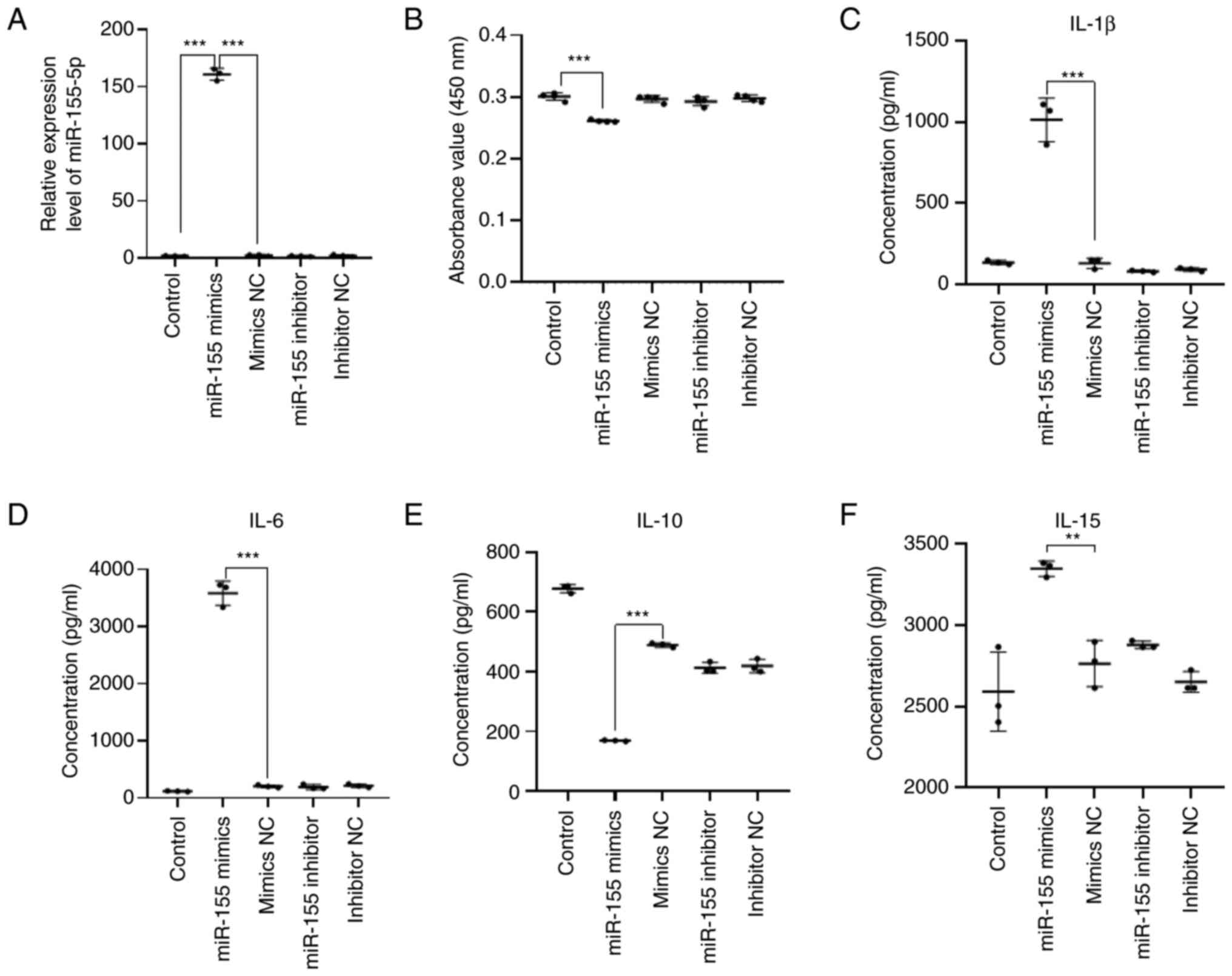
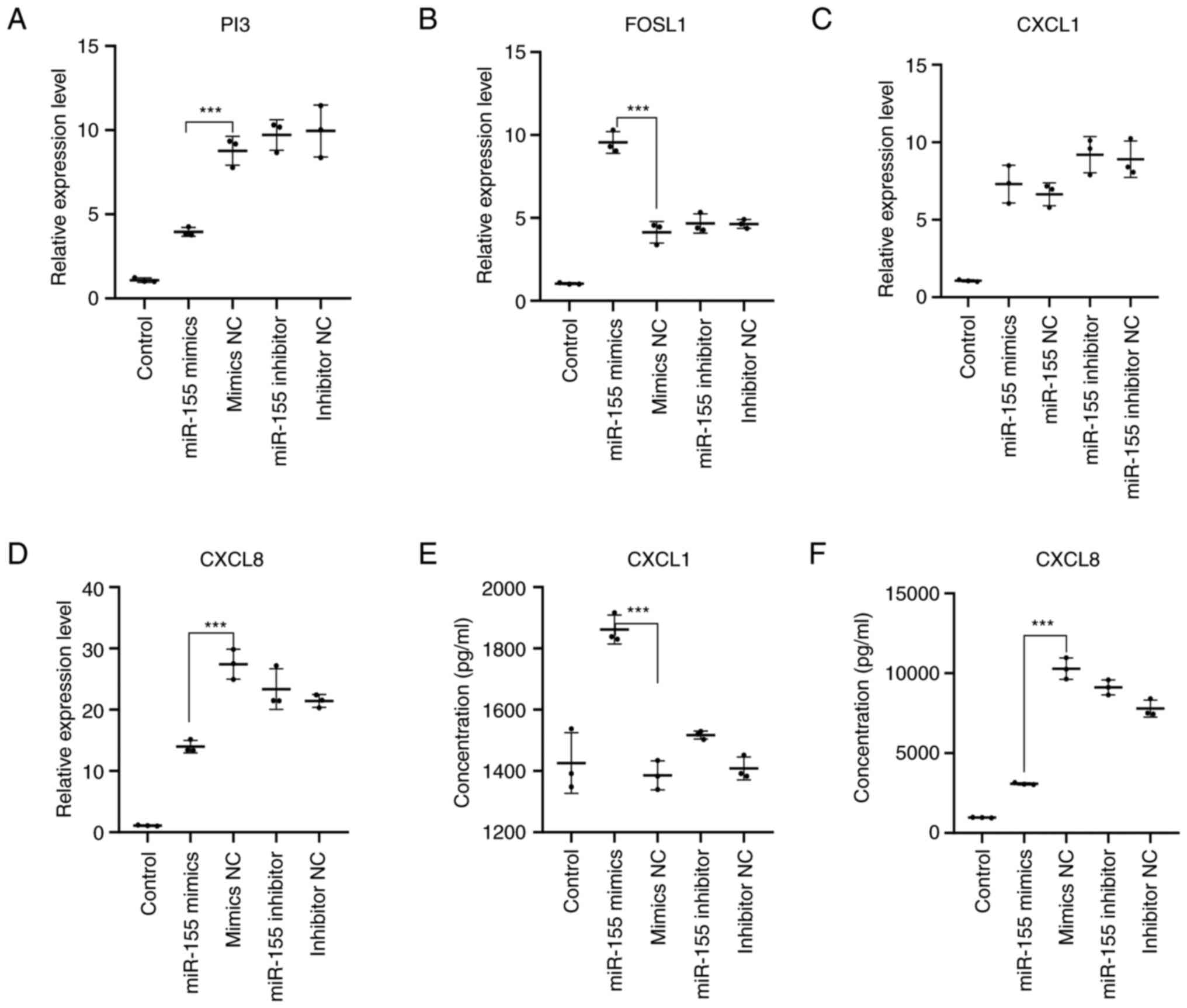
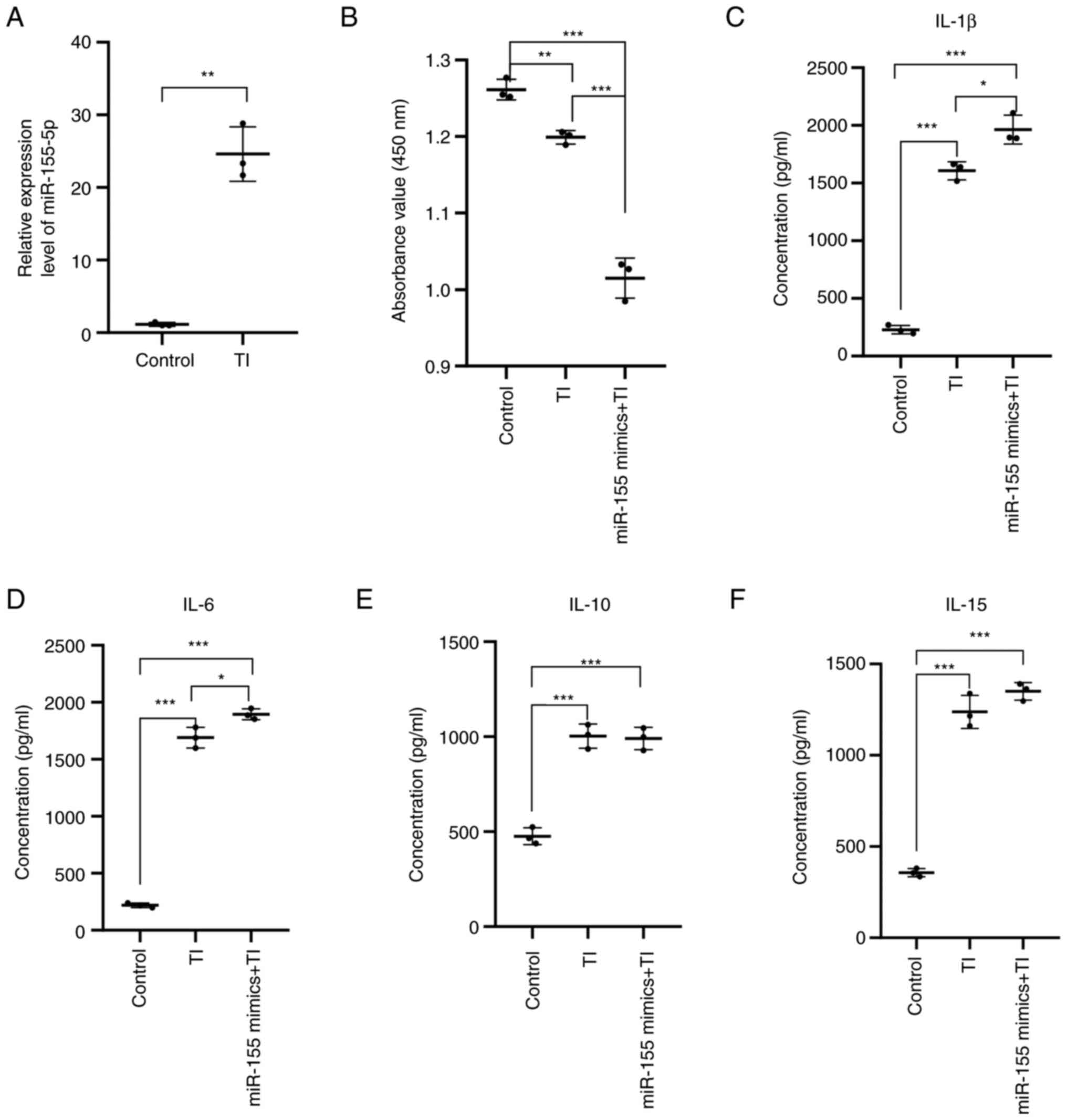
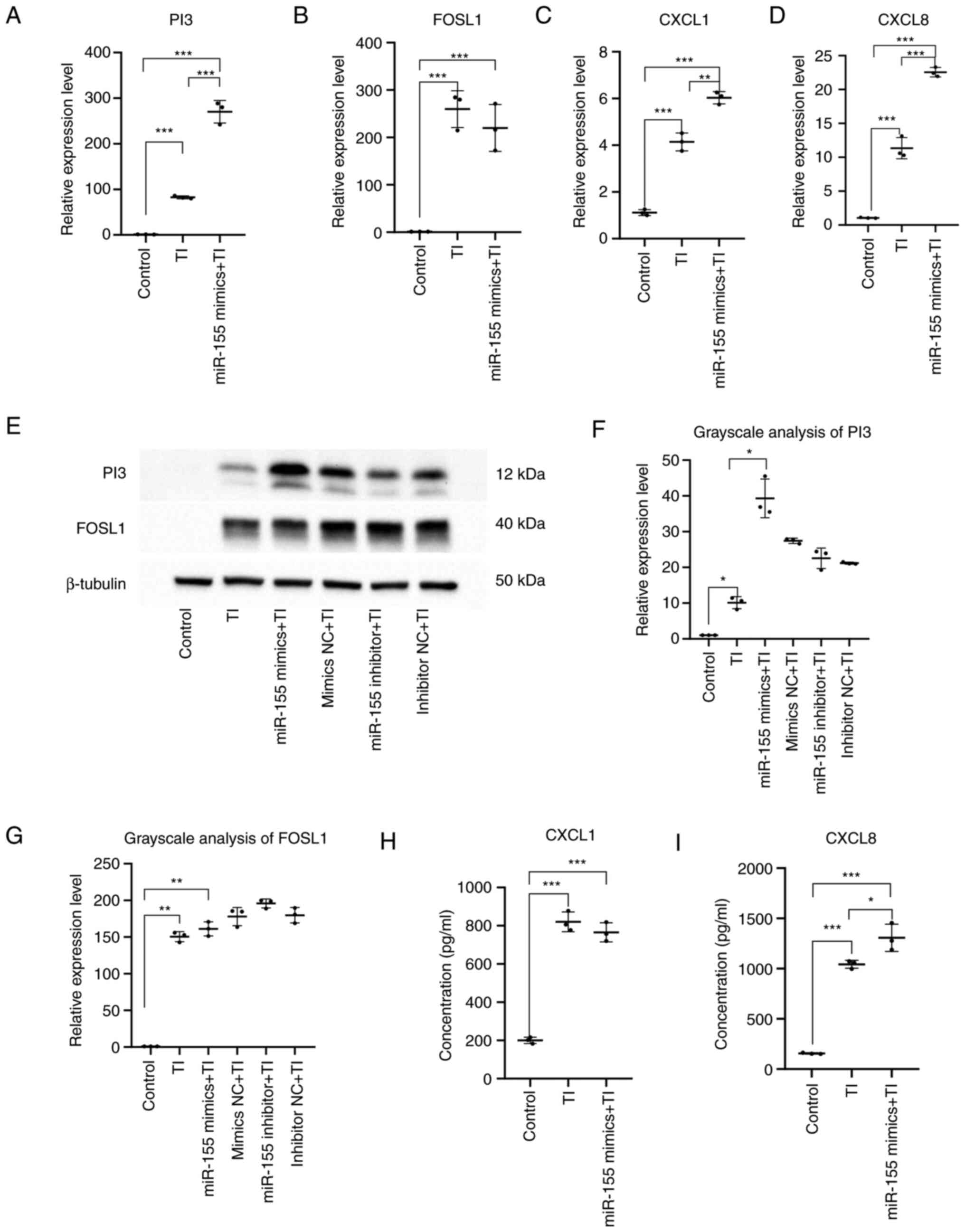
Atopic dermatitis (AD) is a common inflammatory skin condition and the leading cause of morbidity associated with skin conditions worldwide. For the majority of patients, AD is a lifelong disease that cannot be cured completely. Therefore, in the present study, differentially expressed genes (DEGs) in the epidermal immune microenvironment were screened using bioinformatic techniques. Subsequently, an in vitro cellular model was constructed to investigate the role of microRNA (miR)‑155 in immune infiltration during AD. In the present study, two datasets (GSE121212 and GSE157194) were downloaded from Gene Expression Omnibus, before the DEGs were screened and subjected to Gene Ontology and Kyoto Encyclopedia of Genes and Genomes functional enrichment analyses. miRNet was used to predict the possible target genes of miR‑155 among the differentially expressed genes found. Consequently, peptidase inhibitor 3 (PI3), FOS‑like 1, AP‑1 transcription factor subunit (FOSL1), C‑X‑C motif chemokine ligand (CXCL)1 and CXCL8 were selected to be the potential target genes of miR‑155 in the epidermal immune microenvironment of patients with AD. Concurrently, an inflammatory cell model using HaCaT cells was constructed by TNF‑α and IFN‑γ treatment. The effects of miR‑155 on HaCaT cell proliferation and secretion of IL‑1β, IL‑6, IL‑10, IL‑15, PI3, FOSL1, CXCL1 and CXCL8 under inflammatory and non‑inflammatory conditions were then analyzed. The results showed that after the HaCaT cells were transfected with miR‑155, miR‑155 inhibited HaCaT cell proliferation and decreased the mRNA expression levels of PI3 and CXCL8, increased the mRNA levels of FOSL1 and secretion levels of IL‑1β, IL‑6, IL‑15 and CXCL1. By contrast, miR‑155 decreased the secretion levels of IL‑10 and CXCL8. In the inflammatory cell model of HaCaT cells, miR‑155 was found to significantly inhibit the proliferation of HaCaT cells during inflammation whilst significantly increasing the secretion of IL‑1β, IL‑6, IL‑10 and IL‑15. In addition, miR‑155 increased the mRNA expression and secretion levels of CXCL1 and CXCL8, whilst also increasing the mRNA expression levels of PI3. Results from the current study suggest that miR‑155 can stimulate keratinocytes to produce inflammatory cytokines and proteins to enhance the inflammatory response in AD.
View Figures

Figure 1

Figure 2

Figure 3

Figure 4

Figure 5

Figure 6

Figure 7

Figure 8

View References

1 

Silverberg JI and Hanifin JM: Adult eczema prevalence and associations with asthma and other health and demographic factors: A US population-based study. J Allergy Clin Immunol. 132:1132–1138. 2013.PubMed/NCBI View Article : Google Scholar

2 

Hay RJ, Johns NE, Williams HC, Bolliger IW, Dellavalle RP, Margolis DJ, Marks R, Naldi L, Weinstock MA, Wulf SK, et al: The global burden of skin disease in 2010: An analysis of the prevalence and impact of skin conditions. J Invest Dermatol. 134:1527–1534. 2014.PubMed/NCBI View Article : Google Scholar

3 

Patrick GJ, Archer NK and Miller LS: Which way do we go? Complex interactions in atopic dermatitis pathogenesis. J Invest Dermatol. 141:274–284. 2021.PubMed/NCBI View Article : Google Scholar

4 

Langan SM, Irvine AD and Weidinger S: Atopic dermatitis. Lancet. 396:345–360. 2020.PubMed/NCBI View Article : Google Scholar

5 

De Benedetto A, Kubo A and Beck LA: Skin barrier disruption: A requirement for allergen sensitization? J Invest Dermatol. 132:949–963. 2012.PubMed/NCBI View Article : Google Scholar

6 

Bangert C, Rindler K, Krausgruber T, Alkon N, Thaler FM, Kurz H, Ayub T, Demirtas D, Fortelny N, Vorstandlechner V, et al: Persistence of mature dendritic cells, T(H)2A and Tc2 cells characterize clinically resolved atopic dermatitis under IL-4Rα blockade. Sci Immunol. 6(eabe2749)2021.PubMed/NCBI View Article : Google Scholar

7 

Wongvibulsin S, Sutaria N, Kannan S, Alphonse MP, Belzberg M, Williams KA, Brown ID, Choi J, Roh YS, Pritchard T, et al: Transcriptomic analysis of atopic dermatitis in African Americans is characterized by Th2/Th17-centered cutaneous immune activation. Sci Rep. 11(11175)2021.PubMed/NCBI View Article : Google Scholar

8 

Gross N, Kropp J and Khatib H: MicroRNA signaling in embryo development. Biology (Basel). 6(34)2017.PubMed/NCBI View Article : Google Scholar

9 

Chang J, Zhou B, Wei Z and Luo Y: IL-32 promotes the occurrence of atopic dermatitis by activating the JAK1/microRNA-155 axis. J Transl Med. 20(207)2022.PubMed/NCBI View Article : Google Scholar

10 

Wang X, Chen Y, Yuan W, Yao L, Wang S, Jia Z, Wu P, Li L, Wei P, Wang X and Hong M: MicroRNA-155-5p is a key regulator of allergic inflammation, modulating the epithelial barrier by targeting PKIα. Cell Death Dis. 10(884)2019.PubMed/NCBI View Article : Google Scholar

11 

Sonkoly E, Janson P, Majuri ML, Savinko T, Fyhrquist N, Eidsmo L, Xu N, Meisgen F, Wei T, Bradley M, et al: MiR-155 is overexpressed in patients with atopic dermatitis and modulates T-cell proliferative responses by targeting cytotoxic T lymphocyte-associated antigen 4. J Allergy Clin Immunol. 126:581–589. 2010.PubMed/NCBI View Article : Google Scholar

12 

Tsoi LC, Rodriguez E, Degenhardt F, Baurecht H, Wehkamp U, Volks N, Szymczak S, Swindell WR, Sarkar MK, Raja K, et al: Atopic dermatitis is an IL-13-dominant disease with greater molecular heterogeneity compared to psoriasis. J Invest Dermatol. 139:1480–1489. 2019.PubMed/NCBI View Article : Google Scholar

13 

Möbus L, Rodriguez E, Harder I, Stölzl D, Boraczynski N, Gerdes S, Kleinheinz A, Abraham S, Heratizadeh A, Handrick C, et al: Atopic dermatitis displays stable and dynamic skin transcriptome signatures. J Allergy Clin Immunol. 147:213–223. 2021.PubMed/NCBI View Article : Google Scholar

14 

Ritchie ME, Phipson B, Wu D, Hu Y, Law CW, Shi W and Smyth GK: limma powers differential expression analyses for RNA-sequencing and microarray studies. Nucleic Acids Res. 43(e47)2015.PubMed/NCBI View Article : Google Scholar

15 

Livak KJ and Schmittgen TD: Analysis of relative gene expression data using real-time quantitative PCR and the 2(-Delta Delta C(T)) method. Methods. 25:402–408. 2001.PubMed/NCBI View Article : Google Scholar

16 

Huang LY, Li ST, Lin SC, Kao CH, Hong CH, Lee CH and Yang LT: Gasdermin a is required for epidermal cornification during skin barrier regeneration and in an atopic dermatitis-like model. J Invest Dermatol. 143:1735–1745. 2023.PubMed/NCBI View Article : Google Scholar

17 

Jiang Y, Tsoi LC, Billi AC, Ward NL, Harms PW, Zeng C, Maverakis E, Kahlenberg JM and Gudjonsson JE: Cytokinocytes: The diverse contribution of keratinocytes to immune responses in skin. JCI Insight. 5(e142067)2020.PubMed/NCBI View Article : Google Scholar

18 

Testa U, Pelosi E, Castelli G and Labbaye C: miR-146 and miR-155: Two key modulators of immune response and tumor development. Noncoding RNA. 3(22)2017.PubMed/NCBI View Article : Google Scholar

19 

Jankauskas SS, Gambardella J, Sardu C, Lombardi A and Santulli G: Functional role of miR-155 in the pathogenesis of diabetes mellitus and its complications. Noncoding RNA. 7(39)2021.PubMed/NCBI View Article : Google Scholar

20 

Eissa MG and Artlett CM: The microRNA miR-155 is essential in fibrosis. Noncoding RNA. 5(23)2019.PubMed/NCBI View Article : Google Scholar

21 

Hu C, Liao J, Huang R, Su Q and He L: MicroRNA-155-5p in serum derived-exosomes promotes ischaemia-reperfusion injury by reducing CypD ubiquitination by NEDD4. ESC Heart Fail. 10:1144–1157. 2023.PubMed/NCBI View Article : Google Scholar

22 

Toshitani A, Ansel JC, Chan SC, Li SH and Hanifin JM: Increased interleukin 6 production by T cells derived from patients with atopic dermatitis. J Invest Dermatol. 100:299–304. 1993.PubMed/NCBI View Article : Google Scholar

23 

Tang L and Zhou F: Inflammasomes in common immune-related skin diseases. Front Immunol. 11(882)2020.PubMed/NCBI View Article : Google Scholar

24 

Bernard M, Carrasco C, Laoubi L, Guiraud B, Rozières A, Goujon C, Duplan H, Bessou-Touya S, Nicolas JF, Vocanson M and Galliano MF: IL-1β induces thymic stromal lymphopoietin and an atopic dermatitis-like phenotype in reconstructed healthy human epidermis. J Pathol. 242:234–245. 2017.PubMed/NCBI View Article : Google Scholar

25 

Barker KR, Lu Z, Kim H, Zheng Y, Chen J, Conroy AL, Hawkes M, Cheng HS, Njock MS, Fish JE, et al: MiR-155 modifies inflammation, endothelial activation and blood-brain barrier dysfunction in cerebral malaria. Mol Med. 23:24–33. 2017.PubMed/NCBI View Article : Google Scholar

26 

Ollague JE and Nousari CH: Expression of elafin in dermatitis herpetiformis. Am J Dermatopathol. 40:1–6. 2018.PubMed/NCBI View Article : Google Scholar

27 

Moreau T, Baranger K, Dade S, Dallet-Choisy S, Guyot N and Zani ML: Multifaceted roles of human elafin and secretory leukocyte proteinase inhibitor (SLPI), two serine protease inhibitors of the chelonianin family. Biochimie. 90:284–295. 2008.PubMed/NCBI View Article : Google Scholar

28 

Teng G, Liu Z, Liu Y, Wu T, Dai Y, Wang H and Wang W: Probiotic escherichia coli nissle 1917 expressing elafin protects against inflammation and restores the gut microbiota. Front Microbiol. 13(819336)2022.PubMed/NCBI View Article : Google Scholar

29 

Li K, Zhang F, Wei L, Han Z, Liu X, Pan Y, Guo C and Han W: Recombinant human elafin ameliorates chronic hyperoxia-induced lung injury by inhibiting nuclear factor-kappa B signaling in neonatal mice. J Interferon Cytokine Res. 40:320–330. 2020.PubMed/NCBI View Article : Google Scholar

30 

Elgharib I, Khashaba SA, Elsaid HH and Sharaf MM: Serum elafin as a potential inflammatory marker in psoriasis. Int J Dermatol. 58:205–209. 2019.PubMed/NCBI View Article : Google Scholar

31 

Brunner PM, He H, Pavel AB, Czarnowicki T, Lefferdink R, Erickson T, Canter T, Puar N, Rangel SM, Malik K, et al: The blood proteomic signature of early-onset pediatric atopic dermatitis shows systemic inflammation and is distinct from adult long-standing disease. J Am Acad Dermatol. 81:510–519. 2019.PubMed/NCBI View Article : Google Scholar

32 

He YY, Zhou HF, Chen L, Wang YT, Xie WL, Xu ZZ, Xiong Y, Feng YQ, Liu GY, Li X, et al: The Fra-1: Novel role in regulating extensive immune cell states and affecting inflammatory diseases. Front Immunol. 13(954744)2022.PubMed/NCBI View Article : Google Scholar

33 

Mishra RK, Potteti HR, Tamatam CR, Elangovan I and Reddy SP: c-Jun is required for nuclear factor-kappaB-dependent, LPS-stimulated fos-related antigen-1 transcription in alveolar macrophages. Am J Respir Cell Mol Biol. 55:667–674. 2016.PubMed/NCBI View Article : Google Scholar

34 

Moon YM, Lee SY, Kwok SK, Lee SH, Kim D, Kim WK, Her YM, Son HJ, Kim EK, Ryu JG, et al: The fos-related antigen 1-JUNB/Activator protein 1 transcription complex, a downstream target of signal transducer and activator of transcription 3, induces t helper 17 differentiation and promotes experimental autoimmune arthritis. Front Immunol. 8(1793)2017.PubMed/NCBI View Article : Google Scholar

35 

Korbecki J, Barczak K, Gutowska I, Chlubek D and Baranowska-Bosiacka I: CXCL1: Gene, promoter, regulation of expression, mRNA stability, regulation of activity in the intercellular space. Int J Mol Sci. 23(792)2022.PubMed/NCBI View Article : Google Scholar

36 

Korbecki J, Maruszewska A, Bosiacki M, Chlubek D and Baranowska-Bosiacka I: The potential importance of CXCL1 in the physiological state and in noncancer diseases of the cardiovascular system, respiratory system and skin. Int J Mol Sci. 24(205)2022.PubMed/NCBI View Article : Google Scholar

37 

Zhu Y, Yang S, Zhao N, Liu C, Zhang F, Guo Y and Liu H: CXCL8 chemokine in ulcerative colitis. Biomed Pharmacother. 138(111427)2021.PubMed/NCBI View Article : Google Scholar

38 

Kamsteeg M, Jansen PA, van Vlijmen-Willems IM, van Erp PE, Rodijk-Olthuis D, van der Valk PG, Feuth T, Zeeuwen PL and Schalkwijk J: Molecular diagnostics of psoriasis, atopic dermatitis, allergic contact dermatitis and irritant contact dermatitis. Br J Dermatol. 162:568–578. 2010.PubMed/NCBI View Article : Google Scholar

39 

Hulshof L, Hack DP, Hasnoe Q, Dontje B, Jakasa I, Riethmüller C, McLean WHI, van Aalderen WMC, Van't Land B, Kezic S, et al: A minimally invasive tool to study immune response and skin barrier in children with atopic dermatitis. Br J Dermatol. 180:621–630. 2019.PubMed/NCBI View Article : Google Scholar

40 

Liu Q, Li A, Tian Y, Wu JD, Liu Y, Li T, Chen Y, Han X and Wu K: The CXCL8-CXCR1/2 pathways in cancer. Cytokine Growth Factor Rev. 31:61–71. 2016.PubMed/NCBI View Article : Google Scholar

41 

DiStasi MR and Ley K: Opening the flood-gates: How neutrophil-endothelial interactions regulate permeability. Trends Immunol. 30:547–556. 2009.PubMed/NCBI View Article : Google Scholar

Related Articles

  • Abstract
  • View
  • Download
  • Twitter
Copy and paste a formatted citation
Spandidos Publications style
Wang X, Chen L, Chen X, Liu C, Qiu W and Guo K: Identification of potential miR‑155 target genes in epidermal immune microenvironment of atopic dermatitis patients and their inflammatory effects on HaCaT cells. Exp Ther Med 27: 25, 2024.
APA
Wang, X., Chen, L., Chen, X., Liu, C., Qiu, W., & Guo, K. (2024). Identification of potential miR‑155 target genes in epidermal immune microenvironment of atopic dermatitis patients and their inflammatory effects on HaCaT cells. Experimental and Therapeutic Medicine, 27, 25. https://doi.org/10.3892/etm.2023.12313
MLA
Wang, X., Chen, L., Chen, X., Liu, C., Qiu, W., Guo, K."Identification of potential miR‑155 target genes in epidermal immune microenvironment of atopic dermatitis patients and their inflammatory effects on HaCaT cells". Experimental and Therapeutic Medicine 27.1 (2024): 25.
Chicago
Wang, X., Chen, L., Chen, X., Liu, C., Qiu, W., Guo, K."Identification of potential miR‑155 target genes in epidermal immune microenvironment of atopic dermatitis patients and their inflammatory effects on HaCaT cells". Experimental and Therapeutic Medicine 27, no. 1 (2024): 25. https://doi.org/10.3892/etm.2023.12313
Copy and paste a formatted citation
x
Spandidos Publications style
Wang X, Chen L, Chen X, Liu C, Qiu W and Guo K: Identification of potential miR‑155 target genes in epidermal immune microenvironment of atopic dermatitis patients and their inflammatory effects on HaCaT cells. Exp Ther Med 27: 25, 2024.
APA
Wang, X., Chen, L., Chen, X., Liu, C., Qiu, W., & Guo, K. (2024). Identification of potential miR‑155 target genes in epidermal immune microenvironment of atopic dermatitis patients and their inflammatory effects on HaCaT cells. Experimental and Therapeutic Medicine, 27, 25. https://doi.org/10.3892/etm.2023.12313
MLA
Wang, X., Chen, L., Chen, X., Liu, C., Qiu, W., Guo, K."Identification of potential miR‑155 target genes in epidermal immune microenvironment of atopic dermatitis patients and their inflammatory effects on HaCaT cells". Experimental and Therapeutic Medicine 27.1 (2024): 25.
Chicago
Wang, X., Chen, L., Chen, X., Liu, C., Qiu, W., Guo, K."Identification of potential miR‑155 target genes in epidermal immune microenvironment of atopic dermatitis patients and their inflammatory effects on HaCaT cells". Experimental and Therapeutic Medicine 27, no. 1 (2024): 25. https://doi.org/10.3892/etm.2023.12313
Follow us
  • Twitter
  • LinkedIn
  • Facebook
About
  • Spandidos Publications
  • Careers
  • Cookie Policy
  • Privacy Policy
How can we help?
  • Help
  • Live Chat
  • Contact
  • Email to our Support Team