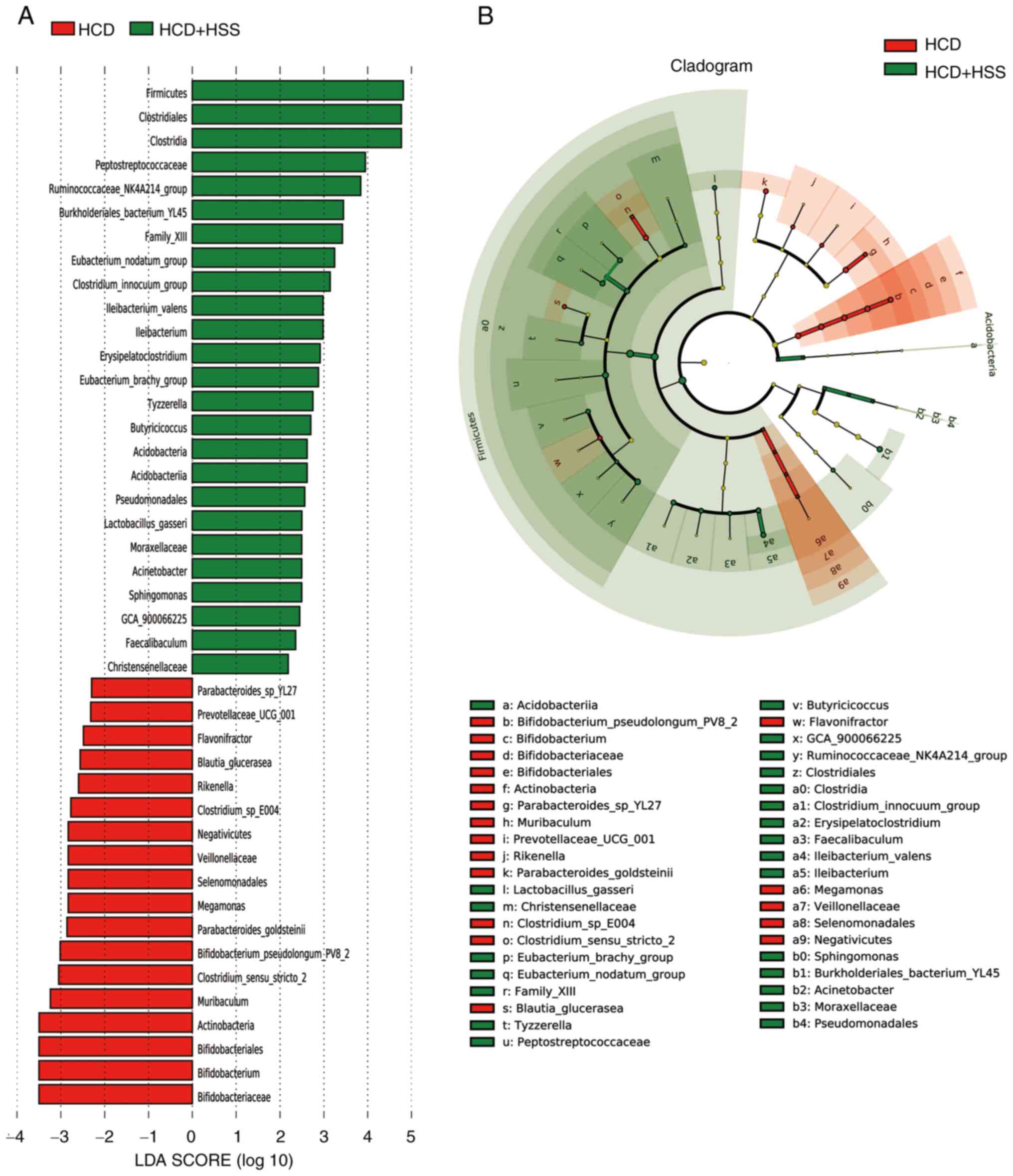
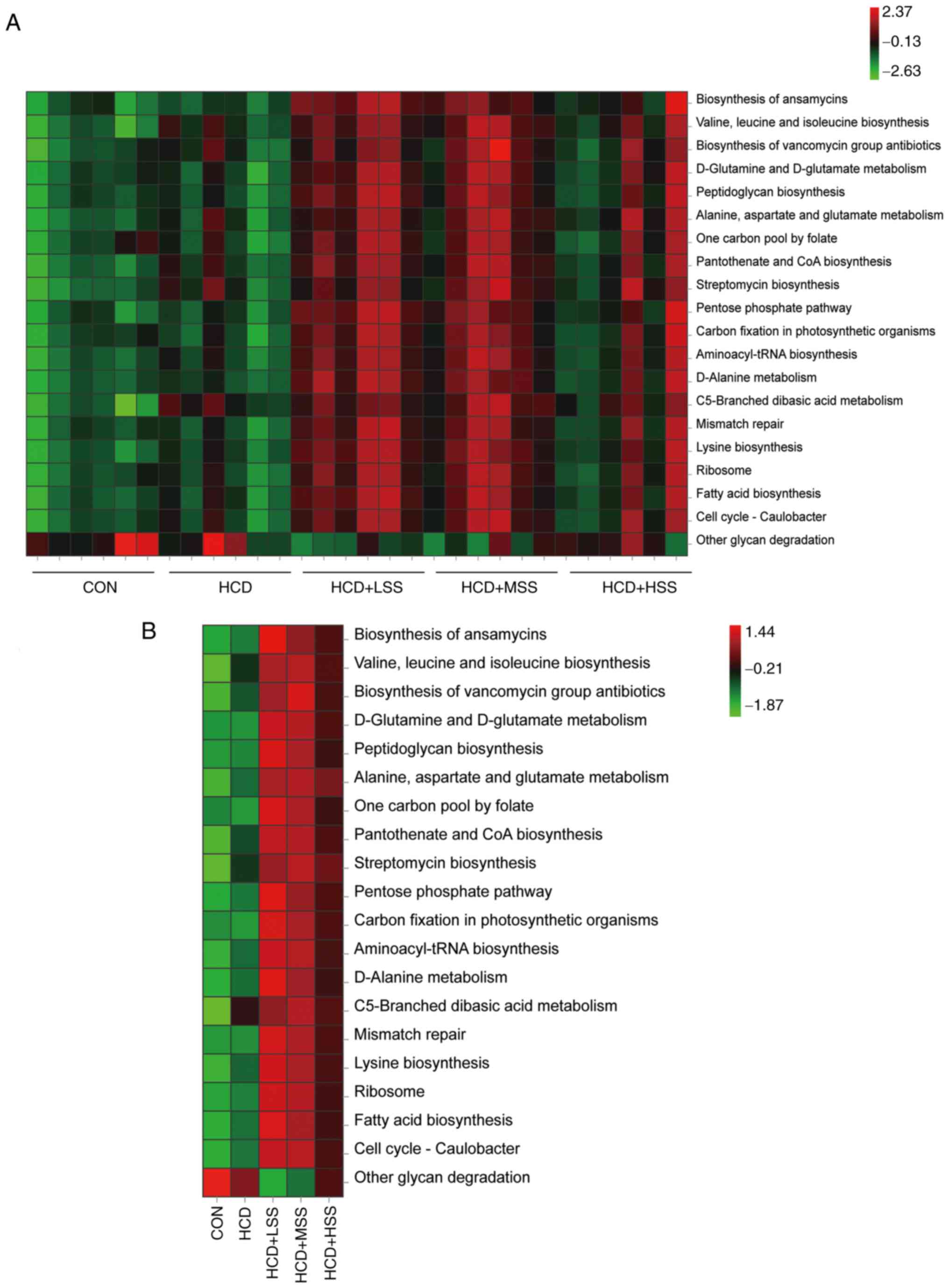
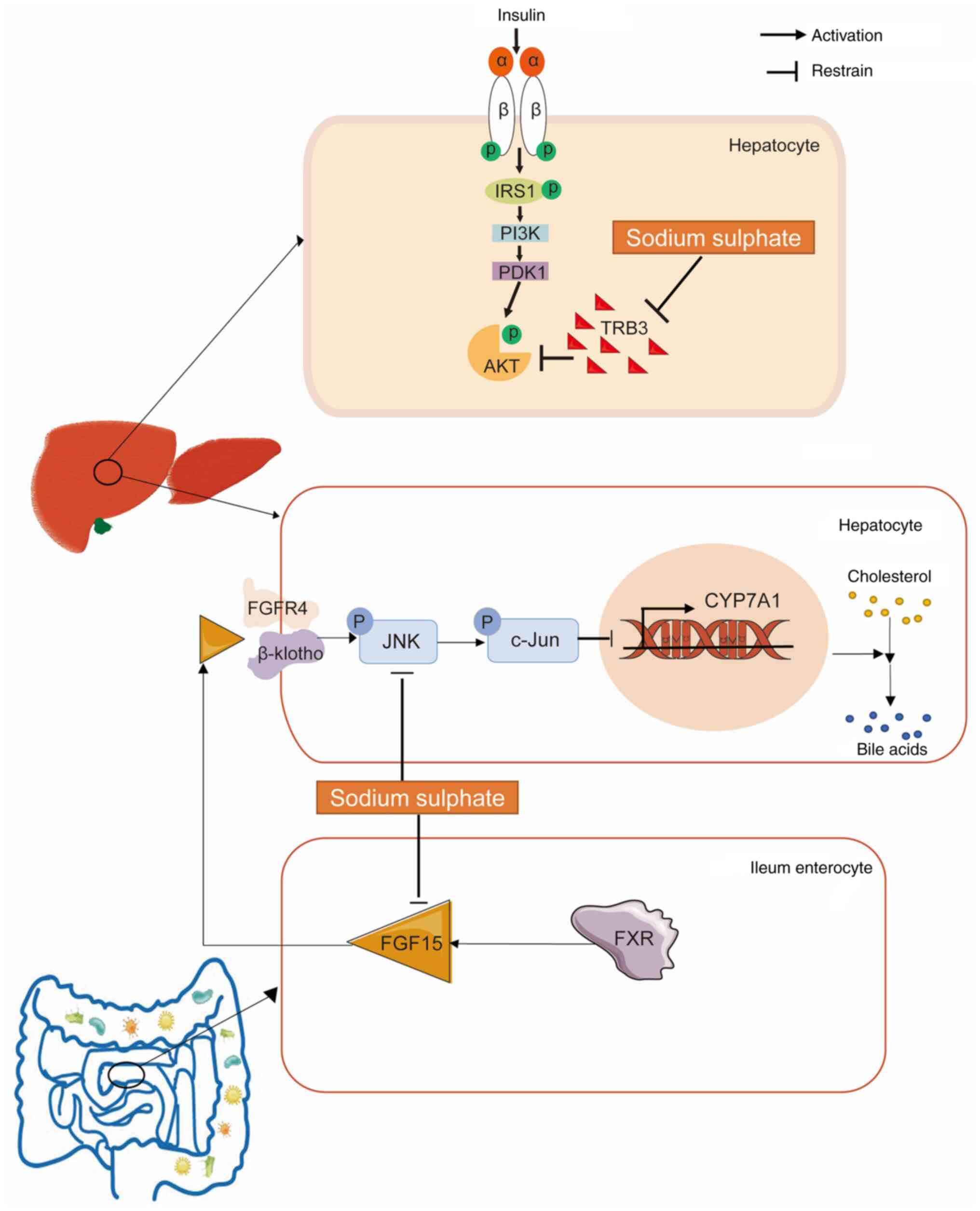
|
1
|
Ruotsalainen AK, Mäkinen P and
Ylä-Herttuala S: Novel RNAi-based therapies for atherosclerosis.
Curr Atheroscler Rep. 23(45)2021.PubMed/NCBI View Article : Google Scholar
|
|
2
|
World Health Organization (WHO):
Cardiovascular diseases (CVDs). WHO, Geneva, 2021. https://www.who.int/news-room/fact-sheets/detail/cardiovascular-diseases-(cvds).
Accessed June 11, 2021.
|
|
3
|
Zhang M, Deng Q and Wang L, Huang Z, Zhou
M, Li Y, Zhao Z, Zhang Y and Wang L: Prevalence of dyslipidemia and
achievement of low-density lipoprotein cholesterol targets in
Chinese adults: A nationally representative survey of 163,641
adults. Int J Cardiol. 260:196–203. 2018.PubMed/NCBI View Article : Google Scholar
|
|
4
|
Meng XD, Yao HH, Wang LM, Yu M, Shi S,
Yuan ZX and Liu J: Knockdown of GAS5 inhibits atherosclerosis
progression via reducing EZH2-mediated ABCA1 transcription in
ApoE(-/-) mice. Mol Ther Nucl Acids. 19:84–96. 2020.PubMed/NCBI View Article : Google Scholar
|
|
5
|
Tseng SH, Lee HH, Chen LG, Wu CH and Wang
CC: Effects of three purgative decoctions on inflammatory
mediators. J Ethnopharmacol. 105:118–124. 2006.PubMed/NCBI View Article : Google Scholar
|
|
6
|
Zhong XG, Zheng FJ, Li YH, Xu H, Wang Q,
Liu YC, Liu M, Wu RH, Gao YS, Zhang SJ, et al: Specific link
between lung and large intestine: A new perspective on neuropeptide
secretion in lung with herbal laxative stimulation. Evid Based
Complement Alternat Med. 2013(547837)2013.PubMed/NCBI View Article : Google Scholar
|
|
7
|
Sun H, Zhang AH, Zhang HL, Zhou XH, Wang
XQ, Liu L and Wang XJ: Ultra-performance liquid chromatography/mass
spectrometry technology and high-throughput metabolomics for
deciphering the preventive mechanism of mirabilite on colorectal
cancer via the modulation of complex metabolic networks. RSC Adv.
9:35356–35363. 2019.PubMed/NCBI View Article : Google Scholar
|
|
8
|
Mottacki N, Simrén M and Bajor A: Review
article: Bile acid diarrhoea-pathogenesis, diagnosis and
management. Aliment Pharmacol Ther. 43:884–898. 2016.PubMed/NCBI View Article : Google Scholar
|
|
9
|
Jahnel J, Fickert P, Hauer AC, Högenauer
C, Avian A and Trauner M: Inflammatory bowel disease alters
intestinal bile acid transporter expression. Drug Metab Dispos.
42:1423–1431. 2014.PubMed/NCBI View Article : Google Scholar
|
|
10
|
Camilleri M and Vijayvargiya P: The role
of bile acids in chronic diarrhea. Am J Gastroenterol.
115:1596–1603. 2020.PubMed/NCBI View Article : Google Scholar
|
|
11
|
Shin A, Camilleri M, Vijayvargiya P,
Busciglio I, Burton D, Ryks M, Rhoten D, Lueke A, Saenger A,
Girtman A and Zinsmeister AR: Bowel functions, fecal unconjugated
primary and secondary bile acids, and colonic transit in patients
with irritable bowel syndrome. Clin Gastroenterol Hepatol.
11:1270–1275.e1271. 2013.PubMed/NCBI View Article : Google Scholar
|
|
12
|
Kim YC, Seok S, Zhang Y, Ma J, Kong B, Guo
G, Kemper B and Kemper JK: Intestinal FGF15/19 physiologically
repress hepatic lipogenesis in the late fed-state by activating SHP
and DNMT3A. Nat Commun. 11(5969)2020.PubMed/NCBI View Article : Google Scholar
|
|
13
|
Fiorucci S, Distrutti E, Carino A,
Zampella A and Biagioli M: Bile acids and their receptors in
metabolic disorders. Prog Lipid Res. 82(101094)2021.PubMed/NCBI View Article : Google Scholar
|
|
14
|
Wu X, Ge H, Lemon B, Weiszmann J, Gupte J,
Hawkins N, Li X, Tang J, Lindberg R and Li Y: Selective activation
of FGFR4 by an FGF19 variant does not improve glucose metabolism in
ob/ob mice. Proc Natl Acad Sci USA. 106:14379–14384.
2009.PubMed/NCBI View Article : Google Scholar
|
|
15
|
Williams CM, Calderon JH, Hock E, Jimenez
Y, Barringer K, Carbonaro M, Molina-Portela MDP, Thurston G, Li Z
and Daly C: Monomeric/dimeric forms of Fgf15/FGF19 show
differential activity in hepatocyte proliferation and metabolic
function. FASEB J. 35(e21286)2021.PubMed/NCBI View Article : Google Scholar
|
|
16
|
de Vos WM, Tilg H, Van Hul M and Cani PD:
Gut microbiome and health: Mechanistic insights. Gut. 71:1020–1032.
2022.PubMed/NCBI View Article : Google Scholar
|
|
17
|
Kriaa A, Bourgin M, Potiron A, Mkaouar H,
Jablaoui A, Gérard P, Maguin E and Rhimi M: Microbial impact on
cholesterol and bile acid metabolism: Current status and future
prospects. J Lipid Res. 60:323–332. 2019.PubMed/NCBI View Article : Google Scholar
|
|
18
|
Le Roy T, Lécuyer E, Chassaing B, Rhimi M,
Lhomme M, Boudebbouze S, Ichou F, Barceló JH, Huby T, Guerin M, et
al: The intestinal microbiota regulates host cholesterol
homeostasis. BMC Biol. 17(94)2019.PubMed/NCBI View Article : Google Scholar
|
|
19
|
Vourakis M, Mayer G and Rousseau G: The
role of gut microbiota on cholesterol metabolism in
atherosclerosis. Int J Mol Sci. 22(8074)2021.PubMed/NCBI View Article : Google Scholar
|
|
20
|
Tong LT, Xiao T, Wang L, Lu C, Liu L, Zhou
X, Wang A, Qin W and Wang F: Plant protein reduces serum
cholesterol levels in hypercholesterolemia hamsters by modulating
the compositions of gut microbiota and metabolites. iScience.
24(103435)2021.PubMed/NCBI View Article : Google Scholar
|
|
21
|
Chen S, Zhou Y, Chen Y and Gu J: fastp: An
ultra-fast all-in-one FASTQ preprocessor. Bioinformatics.
34:i884–i890. 2018.PubMed/NCBI View Article : Google Scholar
|
|
22
|
Love MI, Huber W and Anders S: Moderated
estimation of fold change and dispersion for RNA-seq data with
DESeq2. Genome Biol. 15(550)2014.PubMed/NCBI View Article : Google Scholar
|
|
23
|
Kanehisa M, Araki M, Goto S, Hattori M,
Hirakawa M, Itoh M, Katayama T, Kawashima S, Okuda S, Tokimatsu T
and Yamanishi Y: KEGG for linking genomes to life and the
environment. Nucl Acids Res. 36:D480–D484. 2007.PubMed/NCBI View Article : Google Scholar
|
|
24
|
Zhuri D, Gurkan H, Eker D, Karal Y,
Yalcintepe S, Atli E, Demir S and Atli EI: Investigation on the
effects of modifying genes on the spinal muscular atrophy
phenotype. Global Med Gene. 9:226–236. 2022.PubMed/NCBI View Article : Google Scholar
|
|
25
|
Lei Z, Wu H, Yang Y, Hu Q, Lei Y, Liu W,
Nie Y, Yang L, Zhang X, Yang C, et al: Ovariectomy impaired hepatic
glucose and lipid homeostasis and altered the gut microbiota in
mice with different diets. Front Endocrinol (Lausanne).
12(708838)2021.PubMed/NCBI View Article : Google Scholar
|
|
26
|
Lennernäs H and Fager G: Pharmacodynamics
and pharmacokinetics of the HMG-CoA reductase inhibitors. Clin
Pharmacokinet. 32:403–425. 1997.PubMed/NCBI View Article : Google Scholar
|
|
27
|
Liu A, Jin H, Dirsch O, Deng M, Huang H,
Bröcker-Preuss M and Dahmen U: Release of danger signals during
ischemic storage of the liver: A potential marker of organ damage?
Mediators Inflamm. 2010(436145)2010.PubMed/NCBI View Article : Google Scholar
|
|
28
|
Tan D, Ling L, Qin L, Lu Y, Wu D and He Y:
Rosiglitazone induces hepatocyte injury by increasing DCA
accumulation through OATP1A4 inhibiting in mice. Arab J Chem.
16(105142)2023.
|
|
29
|
Khan AA, Sundar P, Natarajan B, Gupta V,
Arige V, Reddy SS, Barthwal MK and Mahapatra NR: An
evolutionarily-conserved promoter allele governs HMG-CoA reductase
expression in spontaneously hypertensive rat. J Mol Cell Cardiol.
158:140–152. 2021.PubMed/NCBI View Article : Google Scholar
|
|
30
|
Zhong S, Li L, Liang N, Zhang L, Xu X,
Chen S and Yin H: Acetaldehyde Dehydrogenase 2 regulates HMG-CoA
reductase stability and cholesterol synthesis in the liver. Red
Biol. 41(101919)2021.PubMed/NCBI View Article : Google Scholar
|
|
31
|
Cheng KK, Iglesias MA, Lam KS, Wang Y,
Sweeney G, Zhu W, Vanhoutte PM, Kraegen EW and Xu A: APPL1
potentiates insulin-mediated inhibition of hepatic glucose
production and alleviates diabetes via Akt activation in mice. Cell
Metab. 9:417–427. 2009.PubMed/NCBI View Article : Google Scholar
|
|
32
|
Du K, Herzig S, Kulkarni RN and Montminy
M: TRB3: A tribbles homolog that inhibits Akt/PKB activation by
insulin in liver. Science. 300:1574–1577. 2003.PubMed/NCBI View Article : Google Scholar
|
|
33
|
Koo SH, Satoh H, Herzig S, Lee CH, Hedrick
S, Kulkarni R, Evans RM, Olefsky J and Montminy M: PGC-1 promotes
insulin resistance in liver through PPAR-alpha-dependent induction
of TRB-3. Nat Med. 10:530–534. 2004.PubMed/NCBI View
Article : Google Scholar
|
|
34
|
Lei Z, Yang L, Yang Y, Yang J, Niu Z,
Zhang X, Song Q, Lei Y, Wu H and Guo J: Activation of Wnt/β-catenin
pathway causes insulin resistance and increases lipogenesis in
HepG2 cells via regulation of endoplasmic reticulum stress. Biochem
Biophys Res Commun. 526:764–771. 2020.PubMed/NCBI View Article : Google Scholar
|
|
35
|
Zhang Z, Du Z, Liu Q, Wu T, Tang Q, Zhang
J, Huang C, Huang Y, Li R, Li Y, et al: Glucagon-like peptide 1
analogue prevents cholesterol gallstone formation by modulating
intestinal farnesoid X receptor activity. Metabolism.
118(154728)2021.PubMed/NCBI View Article : Google Scholar
|
|
36
|
Wang F, Zhao C, Yang M, Zhang L, Wei R,
Meng K, Bao Y, Zhang L and Zheng J: Four citrus flavanones exert
atherosclerosis alleviation effects in apoE(-/-) mice via different
metabolic and signaling pathways. J Agric Food Chem. 69:5226–5237.
2021.PubMed/NCBI View Article : Google Scholar
|
|
37
|
Gulfo J, Rotondo F, de León CG,
Cornide-Petronio ME, Fuster C, Gracia-Sancho J, Jiménez-Castro MB
and Peralta C: FGF15 improves outcomes after brain dead donor liver
transplantation with steatotic and non-steatotic grafts in rats. J
Hepatol. 73:1131–1143. 2020.PubMed/NCBI View Article : Google Scholar
|
|
38
|
Ge MX, Niu WX, Ren JF, Cai SY, Yu DK, Liu
HT, Zhang N, Zhang YX, Wang YC, Shao RG, et al: A novel ASBT
inhibitor, IMB17-15, repressed nonalcoholic fatty liver disease
development in high-fat diet-fed Syrian golden hamsters. Acta Pharm
Sin. 40:895–907. 2019.PubMed/NCBI View Article : Google Scholar
|
|
39
|
Jung D, York JP, Wang L, Yang C, Zhang A,
Francis HL, Webb P, McKeehan WL, Alpini G, Lesage GD, et al:
FXR-induced secretion of FGF15/19 inhibits CYP27 expression in
cholangiocytes through p38 kinase pathway. Pflugers Arch.
466:1011–1019. 2014.PubMed/NCBI View Article : Google Scholar
|
|
40
|
Gupta S, Stravitz RT, Dent P and Hylemon
PB: Down-regulation of cholesterol 7alpha-hydroxylase (CYP7A1) gene
expression by bile acids in primary rat hepatocytes is mediated by
the c-Jun N-terminal kinase pathway. J Biol Chem. 276:15816–15822.
2001.PubMed/NCBI View Article : Google Scholar
|
|
41
|
Schoeler M and Caesar R: Dietary lipids,
gut microbiota and lipid metabolism. Rev Endocr Metab Disord.
20:461–472. 2019.PubMed/NCBI View Article : Google Scholar
|
|
42
|
Peters SA, Singhateh Y, Mackay D, Huxley
RR and Woodward M: Total cholesterol as a risk factor for coronary
heart disease and stroke in women compared with men: A systematic
review and meta-analysis. Atherosclerosis. 248:123–131.
2016.PubMed/NCBI View Article : Google Scholar
|
|
43
|
Cao J, Remaley AT, Guan W, Devaraj S and
Tsai MY: Performance of novel low-density lipoprotein-cholesterol
calculation methods in predicting clinical and subclinical
atherosclerotic cardiovascular disease risk: The multi-ethnic study
of atherosclerosis. Atherosclerosis. 327:1–4. 2021.PubMed/NCBI View Article : Google Scholar
|
|
44
|
Wu Y, Jiang L, Zhang H, Cheng S, Wen W, Xu
L, Zhang F, Yang Y, Wang L and Chen J: Integrated analysis of
microRNA and mRNA expression profiles in homozygous familial
hypercholesterolemia patients and validation of atherosclerosis
associated critical regulatory network. Genomics. 113:2572–2582.
2021.PubMed/NCBI View Article : Google Scholar
|
|
45
|
Ha KT, Kim JK, Lee YC and Kim CH:
Inhibitory effect of Daesungki-Tang on the invasiveness potential
of hepatocellular carcinoma through inhibition of matrix
metalloproteinase-2 and -9 activities. Toxic App Pharmacol.
200:1–6. 2004.PubMed/NCBI View Article : Google Scholar
|
|
46
|
Chung HJ, Kim DW, Maruyama I and Tani T:
Effects of traditional Chinese formulations on rat carotid artery
injured by balloon endothelial denudation. Am J Chin Med.
31:201–212. 2003.PubMed/NCBI View Article : Google Scholar
|
|
47
|
Chiang JY: Bile acids: Regulation of
synthesis. J Lipid Res. 50:1955–1966. 2009.PubMed/NCBI View Article : Google Scholar
|
|
48
|
Schwarz M, Russell DW, Dietschy JM and
Turley SD: Marked reduction in bile acid synthesis in cholesterol
7alpha-hydroxylase-deficient mice does not lead to diminished
tissue cholesterol turnover or to hypercholesterolemia. J Lipid
Res. 39:1833–1843. 1998.PubMed/NCBI
|
|
49
|
Donepudi AC, Ferrell JM, Boehme S, Choi HS
and Chiang JYL: Deficiency of cholesterol 7α-hydroxylase in bile
acid synthesis exacerbates alcohol-induced liver injury in mice.
Hepatol Commun. 2:99–112. 2018.PubMed/NCBI View Article : Google Scholar
|
|
50
|
Yu L, Lu H, Yang X, Li R, Shi J, Yu Y, Ma
C, Sun F, Zhang S and Zhang F: Diosgenin alleviates
hypercholesterolemia via SRB1/CES-1/CYP7A1/FXR pathway in high-fat
diet-fed rats. Toxicol Appl Pharmacol. 412(115388)2021.PubMed/NCBI View Article : Google Scholar
|
|
51
|
Hu Y, Xu J, Chen Q, Liu M, Wang S, Yu H,
Zhang Y and Wang T: Regulation effects of total flavonoids in Morus
alba L. on hepatic cholesterol disorders in orotic acid induced
NAFLD rats. BMC Complement Med Ther. 20(257)2020.PubMed/NCBI View Article : Google Scholar
|
|
52
|
He WS, Li L, Rui J, Li J, Sun Y, Cui D and
Xu B: Tomato seed oil attenuates hyperlipidemia and modulates gut
microbiota in C57BL/6J mice. Food Funct. 11:4275–4290.
2020.PubMed/NCBI View Article : Google Scholar
|
|
53
|
Zhang Y, Liu Y, Duan J, Wang H, Zhang Y,
Qiao K and Wang J: Cholesterol depletion sensitizes gallbladder
cancer to cisplatin by impairing DNA damage response. Cell Cycle.
18:3337–3350. 2019.PubMed/NCBI View Article : Google Scholar
|
|
54
|
Zhou C, King N, Chen KY and Breslow JL:
Activation of PXR induces hypercholesterolemia in wild-type and
accelerates atherosclerosis in apoE deficient mice. J Lipid Res.
50:2004–2013. 2009.PubMed/NCBI View Article : Google Scholar
|
|
55
|
Tiwari V and Khokhar M: Mechanism of
action of anti-hypercholesterolemia drugs and their resistance. Eur
J Pharmacol. 741:156–170. 2014.PubMed/NCBI View Article : Google Scholar
|
|
56
|
Fuchs CD, Paumgartner G, Mlitz V, Kunczer
V, Halilbasic E, Leditznig N, Wahlström A, Ståhlman M, Thüringer A,
Kashofer K, et al: Colesevelam attenuates cholestatic liver and
bile duct injury in Mdr2(-/-) mice by modulating composition,
signalling and excretion of faecal bile acids. Gut. 67:1683–1691.
2018.PubMed/NCBI View Article : Google Scholar
|
|
57
|
Gaspar RC, Muñoz VR, Nakandakari S, Vieira
RFL, da Conceição LR, de Oliveira F, Crisol BM, da Silva ASR,
Cintra DE, de Moura LP, et al: Aging is associated with increased
TRB3, ER stress, and hepatic glucose production in the liver of
rats. Exp Gerontol. 139(111021)2020.PubMed/NCBI View Article : Google Scholar
|
|
58
|
Ren X, Chen N, Chen Y, Liu W and Hu Y:
TRB3 stimulates SIRT1 degradation and induces insulin resistance by
lipotoxicity via COP1. Exp Cell Res. 382(111428)2019.PubMed/NCBI View Article : Google Scholar
|
|
59
|
Sun L, Liu YL, Ye F, Xie JW, Zeng JW, Qin
L, Xue J, Wang YT, Guo KM, Ma MM, et al: Free fatty acid-induced
H(2)O(2) activates TRPM2 to aggravate endothelial insulin
resistance via Ca(2+)-dependent PERK/ATF4/TRB3 cascade in obese
mice. Free Radic Biol Med. 143:288–299. 2019.PubMed/NCBI View Article : Google Scholar
|
|
60
|
Zhang J, Gupte J, Gong Y, Weiszmann J,
Zhang Y, Lee KJ, Richards WG and Li Y: Chronic over-expression of
fibroblast growth factor 21 increases bile acid biosynthesis by
opposing FGF15/19 ACTION. EBioMedicine. 15:173–183. 2017.PubMed/NCBI View Article : Google Scholar
|
|
61
|
Fu T, Kim YC, Byun S, Kim DH, Seok S,
Suino-Powell K, Xu HE, Kemper B and Kemper JK: FXR primes the liver
for intestinal FGF15 signaling by transient induction of β-Klotho.
Mol Endocrinol. 30:92–103. 2016.PubMed/NCBI View Article : Google Scholar
|
|
62
|
Kliewer SA and Mangelsdorf DJ: Bile acids
as hormones: The FXR-FGF15/19 Pathway. Dig Dis. 33:327–331.
2015.PubMed/NCBI View Article : Google Scholar
|
|
63
|
Yu C, Wang F, Kan M, Jin C, Jones RB,
Weinstein M, Deng CX and McKeehan WL: Elevated cholesterol
metabolism and bile acid synthesis in mice lacking membrane
tyrosine kinase receptor FGFR4. J Biol Chem. 275:15482–15489.
2000.PubMed/NCBI View Article : Google Scholar
|
|
64
|
Ito S, Fujimori T, Furuya A, Satoh J and
Nabeshima Y and Nabeshima Y: Impaired negative feedback suppression
of bile acid synthesis in mice lacking betaKlotho. J Clin Invest.
115:2202–2208. 2005.PubMed/NCBI View Article : Google Scholar
|
|
65
|
Ge MX, Shao RG and He HW: Advances in
understanding the regulatory mechanism of cholesterol
7α-hydroxylase. Biochem Pharmacol. 164:152–164. 2019.PubMed/NCBI View Article : Google Scholar
|
|
66
|
Samuel VT and Shulman GI: Mechanisms for
insulin resistance: Common threads and missing links. Cell.
148:852–871. 2012.PubMed/NCBI View Article : Google Scholar
|
|
67
|
Ye M, Sun J, Chen Y, Ren Q, Li Z, Zhao Y,
Pan Y and Xue H: Oatmeal induced gut microbiota alteration and its
relationship with improved lipid profiles: A secondary analysis of
a randomized clinical trial. Nutr Metab (Lond).
17(85)2020.PubMed/NCBI View Article : Google Scholar
|
|
68
|
Turnbaugh PJ, Ley RE, Mahowald MA, Magrini
V, Mardis ER and Gordon JI: An obesity-associated gut microbiome
with increased capacity for energy harvest. Nature. 444:1027–1031.
2006.PubMed/NCBI View Article : Google Scholar
|