Spandidos Publications Logo
  • About
    • About Spandidos
    • Aims and Scopes
    • Abstracting and Indexing
    • Editorial Policies
    • Reprints and Permissions
    • Job Opportunities
    • Terms and Conditions
    • Contact
  • Journals
    • All Journals
    • Oncology Letters
      • Oncology Letters
      • Information for Authors
      • Editorial Policies
      • Editorial Board
      • Aims and Scope
      • Abstracting and Indexing
      • Bibliographic Information
      • Archive
    • International Journal of Oncology
      • International Journal of Oncology
      • Information for Authors
      • Editorial Policies
      • Editorial Board
      • Aims and Scope
      • Abstracting and Indexing
      • Bibliographic Information
      • Archive
    • Molecular and Clinical Oncology
      • Molecular and Clinical Oncology
      • Information for Authors
      • Editorial Policies
      • Editorial Board
      • Aims and Scope
      • Abstracting and Indexing
      • Bibliographic Information
      • Archive
    • Experimental and Therapeutic Medicine
      • Experimental and Therapeutic Medicine
      • Information for Authors
      • Editorial Policies
      • Editorial Board
      • Aims and Scope
      • Abstracting and Indexing
      • Bibliographic Information
      • Archive
    • International Journal of Molecular Medicine
      • International Journal of Molecular Medicine
      • Information for Authors
      • Editorial Policies
      • Editorial Board
      • Aims and Scope
      • Abstracting and Indexing
      • Bibliographic Information
      • Archive
    • Biomedical Reports
      • Biomedical Reports
      • Information for Authors
      • Editorial Policies
      • Editorial Board
      • Aims and Scope
      • Abstracting and Indexing
      • Bibliographic Information
      • Archive
    • Oncology Reports
      • Oncology Reports
      • Information for Authors
      • Editorial Policies
      • Editorial Board
      • Aims and Scope
      • Abstracting and Indexing
      • Bibliographic Information
      • Archive
    • Molecular Medicine Reports
      • Molecular Medicine Reports
      • Information for Authors
      • Editorial Policies
      • Editorial Board
      • Aims and Scope
      • Abstracting and Indexing
      • Bibliographic Information
      • Archive
    • World Academy of Sciences Journal
      • World Academy of Sciences Journal
      • Information for Authors
      • Editorial Policies
      • Editorial Board
      • Aims and Scope
      • Abstracting and Indexing
      • Bibliographic Information
      • Archive
    • International Journal of Functional Nutrition
      • International Journal of Functional Nutrition
      • Information for Authors
      • Editorial Policies
      • Editorial Board
      • Aims and Scope
      • Abstracting and Indexing
      • Bibliographic Information
      • Archive
    • International Journal of Epigenetics
      • International Journal of Epigenetics
      • Information for Authors
      • Editorial Policies
      • Editorial Board
      • Aims and Scope
      • Abstracting and Indexing
      • Bibliographic Information
      • Archive
    • Medicine International
      • Medicine International
      • Information for Authors
      • Editorial Policies
      • Editorial Board
      • Aims and Scope
      • Abstracting and Indexing
      • Bibliographic Information
      • Archive
  • Articles
  • Information
    • Information for Authors
    • Information for Reviewers
    • Information for Librarians
    • Information for Advertisers
    • Conferences
  • Language Editing
Spandidos Publications Logo
  • About
    • About Spandidos
    • Aims and Scopes
    • Abstracting and Indexing
    • Editorial Policies
    • Reprints and Permissions
    • Job Opportunities
    • Terms and Conditions
    • Contact
  • Journals
    • All Journals
    • Biomedical Reports
      • Information for Authors
      • Editorial Policies
      • Editorial Board
      • Aims and Scope
      • Abstracting and Indexing
      • Bibliographic Information
      • Archive
    • Experimental and Therapeutic Medicine
      • Information for Authors
      • Editorial Policies
      • Editorial Board
      • Aims and Scope
      • Abstracting and Indexing
      • Bibliographic Information
      • Archive
    • International Journal of Epigenetics
      • Information for Authors
      • Editorial Policies
      • Editorial Board
      • Aims and Scope
      • Abstracting and Indexing
      • Bibliographic Information
      • Archive
    • International Journal of Functional Nutrition
      • Information for Authors
      • Editorial Policies
      • Editorial Board
      • Aims and Scope
      • Abstracting and Indexing
      • Bibliographic Information
      • Archive
    • International Journal of Molecular Medicine
      • Information for Authors
      • Editorial Policies
      • Editorial Board
      • Aims and Scope
      • Abstracting and Indexing
      • Bibliographic Information
      • Archive
    • International Journal of Oncology
      • Information for Authors
      • Editorial Policies
      • Editorial Board
      • Aims and Scope
      • Abstracting and Indexing
      • Bibliographic Information
      • Archive
    • Medicine International
      • Information for Authors
      • Editorial Policies
      • Editorial Board
      • Aims and Scope
      • Abstracting and Indexing
      • Bibliographic Information
      • Archive
    • Molecular and Clinical Oncology
      • Information for Authors
      • Editorial Policies
      • Editorial Board
      • Aims and Scope
      • Abstracting and Indexing
      • Bibliographic Information
      • Archive
    • Molecular Medicine Reports
      • Information for Authors
      • Editorial Policies
      • Editorial Board
      • Aims and Scope
      • Abstracting and Indexing
      • Bibliographic Information
      • Archive
    • Oncology Letters
      • Information for Authors
      • Editorial Policies
      • Editorial Board
      • Aims and Scope
      • Abstracting and Indexing
      • Bibliographic Information
      • Archive
    • Oncology Reports
      • Information for Authors
      • Editorial Policies
      • Editorial Board
      • Aims and Scope
      • Abstracting and Indexing
      • Bibliographic Information
      • Archive
    • World Academy of Sciences Journal
      • Information for Authors
      • Editorial Policies
      • Editorial Board
      • Aims and Scope
      • Abstracting and Indexing
      • Bibliographic Information
      • Archive
  • Articles
  • Information
    • For Authors
    • For Reviewers
    • For Librarians
    • For Advertisers
    • Conferences
  • Language Editing
Login Register Submit
  • This site uses cookies
  • You can change your cookie settings at any time by following the instructions in our Cookie Policy. To find out more, you may read our Privacy Policy.

    I agree
Search articles by DOI, keyword, author or affiliation
Search
Advanced Search
presentation
Experimental and Therapeutic Medicine
Join Editorial Board Propose a Special Issue
Print ISSN: 1792-0981 Online ISSN: 1792-1015
Journal Cover
September-2024 Volume 28 Issue 3

Full Size Image

Sign up for eToc alerts
Recommend to Library

Journals

International Journal of Molecular Medicine

International Journal of Molecular Medicine

International Journal of Molecular Medicine is an international journal devoted to molecular mechanisms of human disease.

International Journal of Oncology

International Journal of Oncology

International Journal of Oncology is an international journal devoted to oncology research and cancer treatment.

Molecular Medicine Reports

Molecular Medicine Reports

Covers molecular medicine topics such as pharmacology, pathology, genetics, neuroscience, infectious diseases, molecular cardiology, and molecular surgery.

Oncology Reports

Oncology Reports

Oncology Reports is an international journal devoted to fundamental and applied research in Oncology.

Experimental and Therapeutic Medicine

Experimental and Therapeutic Medicine

Experimental and Therapeutic Medicine is an international journal devoted to laboratory and clinical medicine.

Oncology Letters

Oncology Letters

Oncology Letters is an international journal devoted to Experimental and Clinical Oncology.

Biomedical Reports

Biomedical Reports

Explores a wide range of biological and medical fields, including pharmacology, genetics, microbiology, neuroscience, and molecular cardiology.

Molecular and Clinical Oncology

Molecular and Clinical Oncology

International journal addressing all aspects of oncology research, from tumorigenesis and oncogenes to chemotherapy and metastasis.

World Academy of Sciences Journal

World Academy of Sciences Journal

Multidisciplinary open-access journal spanning biochemistry, genetics, neuroscience, environmental health, and synthetic biology.

International Journal of Functional Nutrition

International Journal of Functional Nutrition

Open-access journal combining biochemistry, pharmacology, immunology, and genetics to advance health through functional nutrition.

International Journal of Epigenetics

International Journal of Epigenetics

Publishes open-access research on using epigenetics to advance understanding and treatment of human disease.

Medicine International

Medicine International

An International Open Access Journal Devoted to General Medicine.

Journal Cover
September-2024 Volume 28 Issue 3

Full Size Image

Sign up for eToc alerts
Recommend to Library

  • Article
  • Citations
    • Cite This Article
    • Download Citation
    • Create Citation Alert
    • Remove Citation Alert
    • Cited By
  • Similar Articles
    • Related Articles (in Spandidos Publications)
    • Similar Articles (Google Scholar)
    • Similar Articles (PubMed)
  • Download PDF
  • Download XML
  • View XML
Article Open Access

A high salt diet impairs the bladder epithelial barrier and activates the NLRP3 and NF‑κB signaling pathways to induce an overactive bladder in vivo

  • Authors:
    • Jingwen Xue
    • Zhipeng Zhou
    • Zhangrui Zhu
    • Qi Sun
    • Yuexuan Zhu
    • Peng Wu
  • View Affiliations / Copyright

    Affiliations: Department of Urology, Nanfang Hospital, Southern Medical University, Guangzhou, Guangdong 510515, P.R. China
    Copyright: © Xue et al. This is an open access article distributed under the terms of Creative Commons Attribution License [CC BY 4.0].
  • Article Number: 362
    |
    Published online on: July 12, 2024
       https://doi.org/10.3892/etm.2024.12651
  • Expand metrics +
Metrics: Total Views: 0 (Spandidos Publications: | PMC Statistics: )
Metrics: Total PDF Downloads: 0 (Spandidos Publications: | PMC Statistics: )
Cited By (CrossRef): 0 citations Loading Articles...

This article is mentioned in:


Abstract

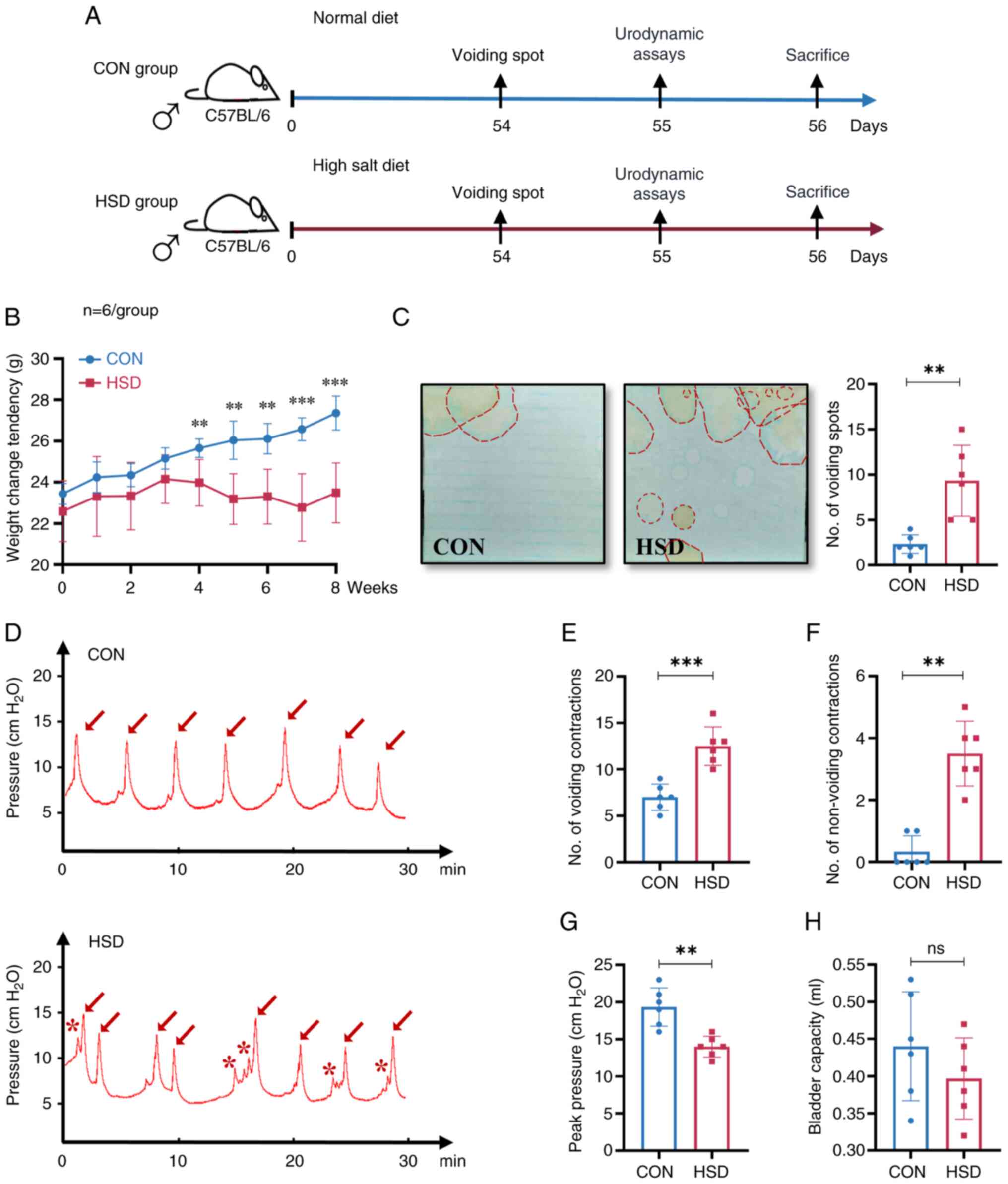
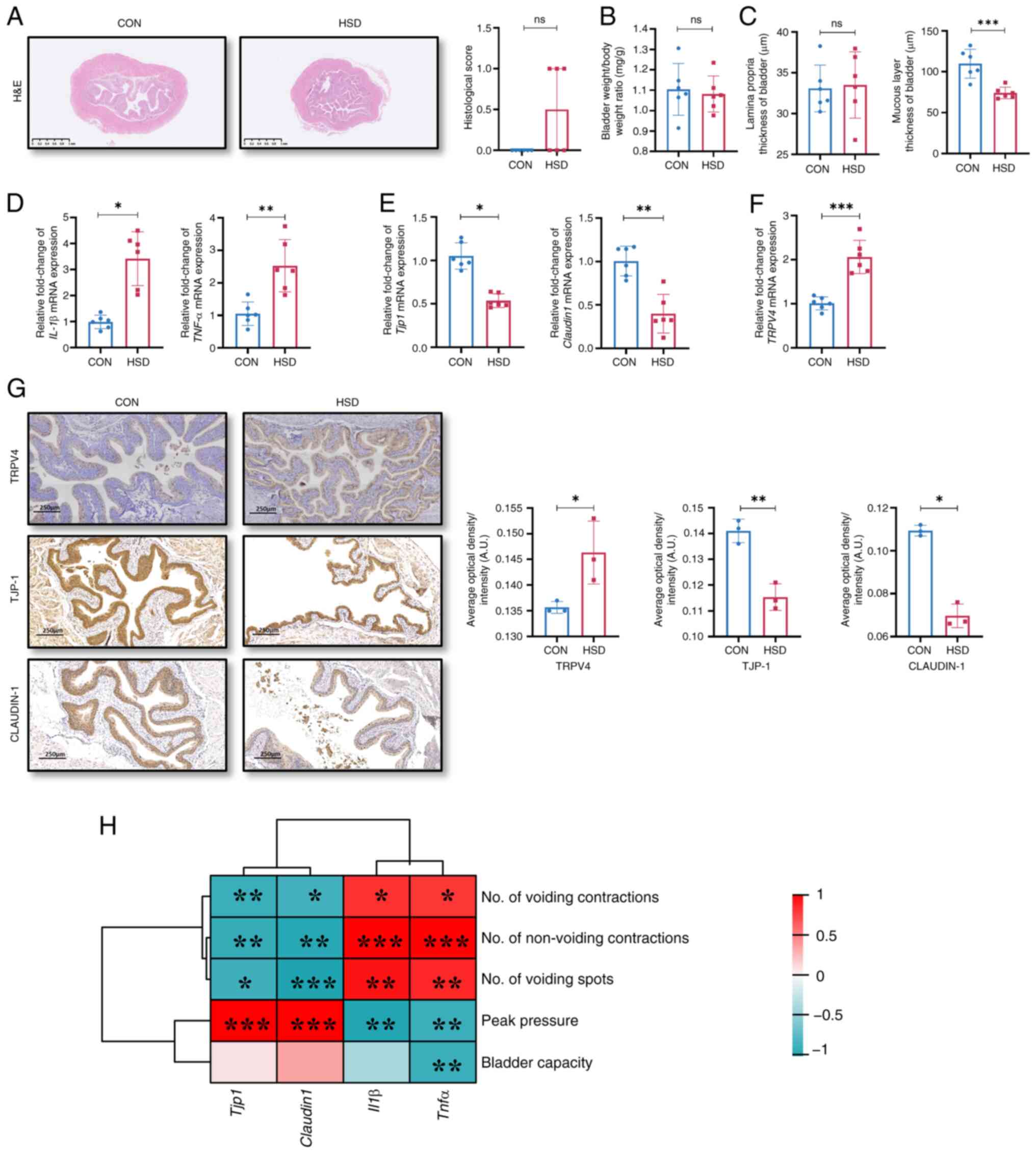
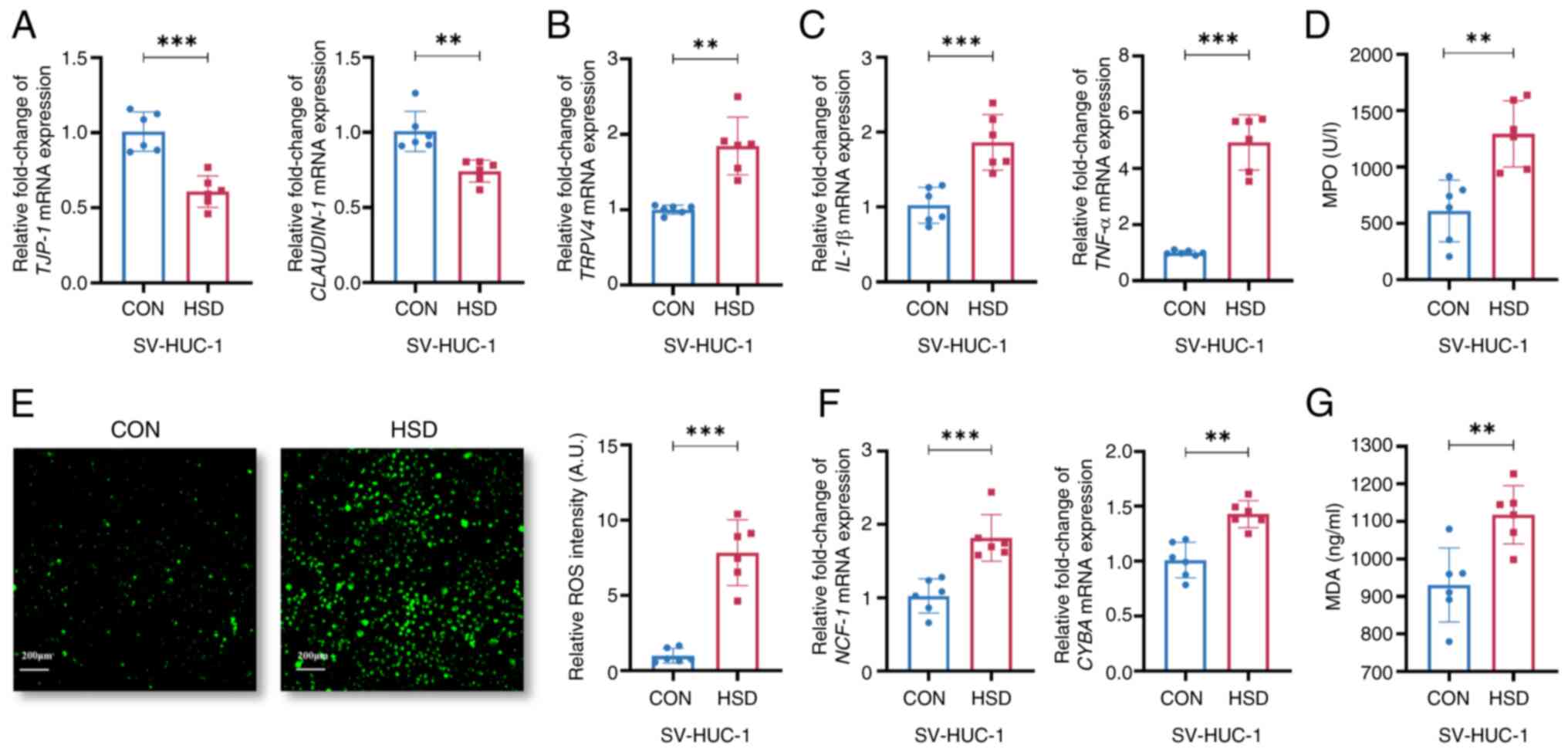
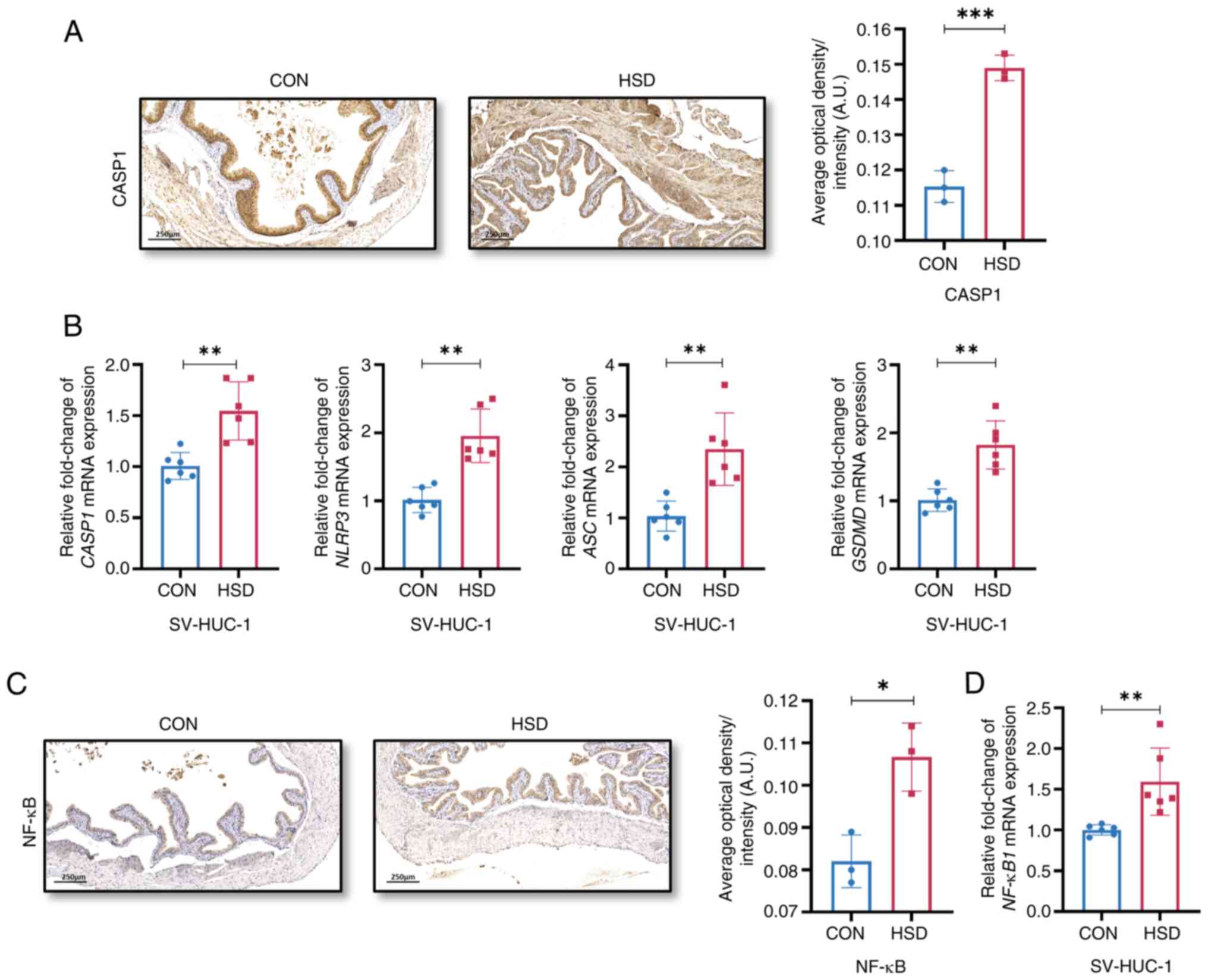
Overactive bladder (OAB) is a condition characterized by an urgency to urinate, which is associated with the urodynamic observation of detrusor overexcitation. Although the etiology of OAB is currently unclear, it has been suggested that in patients with OAB, disruption of bladder epithelial barrier integrity can disturb the normal contractile function of the detrusor. Additionally, dietary preferences have been suggested to influence the severity of OAB. Therefore, the aim of the present study was to investigate the effect of a high salt diet (HSD) on the development of OAB in a murine model. Mice were fed either a HSD or standard diet for 8 weeks, following which voiding characteristics and bladder barrier function were assessed. The present study demonstrated that a HSD in mice was associated with OAB‑like symptoms such as increased urinary frequency and non‑voiding bladder contractions. The HSD group demonstrated a thinner bladder mucus layer and decreased expression of bladder barrier markers, tight junction protein‑1 and claudin‑1, which may be potentially indicative of induced bladder damage. A HSD for 8 weeks in mice and a high salt treatment at the uroepithelium cellular (SV‑HUC‑1s) level resulted in increased uroepithelial oxidative stress and inflammatory cell infiltration, as indicated by increased expression levels of TNF‑α and IL‑1β, as well as activation of the nucleotide‑binding domain leucine‑rich‑containing family pyrin domain‑containing 3 (NLRP3) and NF‑κB signaling pathways in vivo and in vitro. Therefore, the present study indicated that a HSD could be a potentially important risk factor for the development of OAB, as it may be associated with overactivation of contractile function of the bladder by impairing the integrity of the bladder epithelial barrier and activation of the NLRP3 and NF‑κB signaling pathways. Remodeling of the bladder barrier and reduction of the inflammatory response may be potential targets for the treatment of OAB in the future.
View Figures

Figure 1

Figure 2

Figure 3

Figure 4

View References

1 

Abrams P, Chapple C, Khoury S, Roehrborn C and de la Rosette J: International Scientific Committee. Evaluation and treatment of lower urinary tract symptoms in older men. J Urol. 181:1779–1787. 2009.PubMed/NCBI View Article : Google Scholar

2 

Nambiar AK, Arlandis S, Bø K, Cobussen-Boekhorst H, Costantini E, de Heide M, Farag F, Groen J, Karavitakis M, Lapitan MC, et al: European association of urology guidelines on the diagnosis and management of female non-neurogenic lower urinary tract symptoms. part 1: diagnostics, overactive bladder, stress urinary incontinence, and mixed urinary incontinence. Eur Urol. 82:49–59. 2022.PubMed/NCBI View Article : Google Scholar

3 

Abrams P, Cardozo L, Fall M, Griffiths D, Rosier P, Ulmsten U, Van Kerrebroeck P, Victor A and Wein A: Standardisation Sub-Committee of the International Continence Society. The standardisation of terminology in lower urinary tract function: Report from the standardisation sub-committee of the International Continence Society. Urology. 61:37–49. 2003.PubMed/NCBI View Article : Google Scholar

4 

Farag F, Sakalis VI, Arteaga SM, Sihra N, Karavitakis M, Arlandis S, Bø K, Cobussen-Boekhorst H, Costantini E, de Heide M, et al: What Are the short-term benefits and potential harms of therapeutic modalities for the management of overactive bladder syndrome in women? A review of evidence under the auspices of the European Association of urology, female non-neurogenic lower urinary tract symptoms guidelines Panel. Eur Urol. 84:302–312. 2023.PubMed/NCBI View Article : Google Scholar

5 

Chow PM, Liu SP, Chuang YC, Lee KS, Yoo TK, Liao L, Wang JY, Liu M, Sumarsono B and Jong JJ: The prevalence and risk factors of nocturia in China, South Korea, and Taiwan: Results from a cross-sectional, population-based study. World J Urol. 36:1853–1862. 2018.PubMed/NCBI View Article : Google Scholar

6 

Jeong JB, Lee JH, Choo MS, Ahn DW, Kim SH, Lee DS, Cho MC, Son H, Jeong H and Yoo S: Association between life-style, metabolic syndrome and lower urinary tract symptoms and its impact on quality of life in men ≥ 40 years. Sci Rep. 12(6859)2022.PubMed/NCBI View Article : Google Scholar

7 

Yamamoto S, Hotta Y, Maeda K, Kataoka T, Maeda Y, Hamakawa T, Shibata Y, Sasaki S, Ugawa S, Yasui T and Kimura K: High salt loading induces urinary storage dysfunction via upregulation of epithelial sodium channel alpha in the bladder epithelium in Dahl salt-sensitive rats. J Pharmacol Sci. 135:121–125. 2017.PubMed/NCBI View Article : Google Scholar

8 

Iwamoto T, Torimoto K, Gotoh D, Onishi S, Hori S, Morizawa Y, Nakai Y, Miyake M and Fujimoto K: Reduced salt intake partially restores the circadian rhythm of bladder clock genes in Dahl salt-sensitive rats. Life Sci. 306(120842)2022.PubMed/NCBI View Article : Google Scholar

9 

Kawata R, Hotta Y, Maeda K, Kataoka T and Kimura K: Effects of high salt intake on detrusor muscle contraction in dahl salt-sensitive rats. Nutrients. 13(539)2021.PubMed/NCBI View Article : Google Scholar

10 

Andersson KE: Storage and voiding symptoms: Pathophysiologic aspects. Urology. 62 (5 Suppl 2):S3–S10. 2003.PubMed/NCBI View Article : Google Scholar

11 

Andersson KE: Bladder activation: Afferent mechanisms. Urology. 59 (5 Suppl 1):S43–S50. 2002.PubMed/NCBI View Article : Google Scholar

12 

Birder LA: Urothelial signaling. Auton Neurosci. 153:33–40. 2010.PubMed/NCBI View Article : Google Scholar

13 

Chen YH, Chen CJ, Wang SJ, Lin YN, Chen WC, Tsai MY and Chen HY: Downregulation of tight junction protein zonula occludens-2 and urothelium damage in a cyclophosphamide-induced mouse model of cystitis. Taiwan J Obstet Gyne. 57:399–406. 2018.PubMed/NCBI View Article : Google Scholar

14 

Chen YH, Chen WC, Liu PL and Chen HY: Astragalus polysaccharides and astragaloside IV ameliorates cyclophosphamide-induced mouse model of overactive bladder. Taiwan J Obstet Gyne. 59:248–255. 2020.PubMed/NCBI View Article : Google Scholar

15 

Montalbetti N, Rued AC, Taiclet SN, Birder LA, Kullmann FA and Carattino MD: Urothelial tight junction barrier dysfunction sensitizes bladder afferents. eNeuro. 4(ENEURO.0381-16.2017)2017.PubMed/NCBI View Article : Google Scholar

16 

Fredriksson K, Kalimo H, Westergren I, Kåhrström J and Johansson BB: Blood-brain barrier leakage and brain edema in stroke-prone spontaneously hypertensive rats. Effect of chronic sympathectomy and low protein/high salt diet. Acta Neuropathol. 74:259–268. 1987.PubMed/NCBI View Article : Google Scholar

17 

Hu L, Zhu S, Peng X, Li K, Peng W, Zhong Y, Kang C, Cao X, Liu Z and Zhao B: High salt elicits brain inflammation and cognitive dysfunction, accompanied by alternations in the gut microbiota and decreased SCFA production. J Alzheimers Dis. 77:629–640. 2020.PubMed/NCBI View Article : Google Scholar

18 

Fu J and Wu H: Structural Mechanisms of NLRP3 inflammasome assembly and activation. Annu Rev Immunol. 41:301–316. 2023.PubMed/NCBI View Article : Google Scholar

19 

Liu T, Zhang L, Joo D and Sun SC: NF-κB signaling in inflammation. Signal Transduct Target Ther. 2(17023)2017.PubMed/NCBI View Article : Google Scholar

20 

Pitzer A, Elijovich F, Laffer CL, Ertuglu LA, Sahinoz M, Saleem M, Krishnan J, Dola T, Aden LA, Sheng Q, et al: DC ENaC-Dependent Inflammasome Activation Contributes to Salt-Sensitive Hypertension. Circ Res. 131:328–344. 2022.PubMed/NCBI View Article : Google Scholar

21 

Shen S, Duan J, Hu J, Qi Y, Kang L, Wang K, Chen J, Wu X, Xu B and Gu R: Colchicine alleviates inflammation and improves diastolic dysfunction in heart failure rats with preserved ejection fraction. Eur J Pharmacol. 929(175126)2022.PubMed/NCBI View Article : Google Scholar

22 

de Oliveira MG, de Medeiros ML, Tavares EBG, Mónica FZ and Antunes E: Methylglyoxal, a reactive glucose metabolite, induces bladder overactivity in addition to inflammation in mice. Front Physiol. 11(290)2020.PubMed/NCBI View Article : Google Scholar

23 

Hughes FM Jr, Allkanjari A, Odom MR, Jin H and Purves JT: Diabetic bladder dysfunction progresses from an overactive to an underactive phenotype in a type-1 diabetic mouse model (Akita female mouse) and is dependent on NLRP3. Life Sci. 299(120528)2022.PubMed/NCBI View Article : Google Scholar

24 

Chen J, Li Q, Hong Y, Zhou X, Yu C, Tian X, Zhao J, Long C, Shen L, Wu S and Wei G: Inhibition of the NF-κB signaling pathway alleviates pyroptosis in bladder epithelial cells and neurogenic bladder fibrosis. Int J Mol Sci. 24(11160)2023.PubMed/NCBI View Article : Google Scholar

25 

Mohanty S, Kamolvit W, Hertting O and Brauner A: Vitamin D strengthens the bladder epithelial barrier by inducing tight junction proteins during E. coli urinary tract infection. Cell Tissue Res. 380:669–673. 2020.PubMed/NCBI View Article : Google Scholar

26 

Wu Y, Qi J, Wu C and Rong W: Emerging roles of the TRPV4 channel in bladder physiology and dysfunction. J Physiol. 599:39–47. 2021.PubMed/NCBI View Article : Google Scholar

27 

Girard BM, Campbell SE, Perkins M, Hsiang H, Tooke K, Drescher C, Hennig GW, Heppner TJ, Nelson MT and Vizzard MA: TRPV4 blockade reduces voiding frequency, ATP release, and pelvic sensitivity in mice with chronic urothelial overexpression of NGF. Am J Physiol Renal Physiol. 317:F1695–F1706. 2019.PubMed/NCBI View Article : Google Scholar

28 

Gohar EY, De Miguel C, Obi IE, Daugherty EM, Hyndman KA, Becker BK, Jin C, Sedaka R, Johnston JG, Liu P, et al: Acclimation to a high-salt diet is sex dependent. J Am Heart Assoc. 11(e020450)2022.PubMed/NCBI View Article : Google Scholar

29 

Hu J, Luo H, Wang J, Tang W, Lu J, Wu S, Xiong Z, Yang G, Chen Z, Lan T, et al: Enteric dysbiosis-linked gut barrier disruption triggers early renal injury induced by chronic high salt feeding in mice. Exp Mol Med. 49(e370)2017.PubMed/NCBI View Article : Google Scholar

30 

Dörr W: Cystometry in mice-influence of bladder filling rate and circadian variations in bladder compliance. J Urol. 148:183–187. 1992.PubMed/NCBI View Article : Google Scholar

31 

Kamiyama Y, Muto S, Masuda H, Ide H, Ishizuka N, Saito K and Horie S: Inhibitory effects of nicorandil, a K ATP channel opener and a nitric oxide donor, on overactive bladder in animal models. BJU Int. 101:360–365. 2008.PubMed/NCBI View Article : Google Scholar

32 

Karakus S, Anele UA, Silva FH, Musicki B and Burnett AL: Urinary dysfunction in transgenic sickle cell mice: Model of idiopathic overactive bladder syndrome. Am J Physiol Renal Physiol. 317:F540–F546. 2019.PubMed/NCBI View Article : Google Scholar

33 

Wang J, Chen Y, Gu D, Zhang G, Chen J, Zhao J and Wu P: Ketamine-induced bladder fibrosis involves epithelial-to-mesenchymal transition mediated by transforming growth factor-β1. Am J Physiol Renal Physiol. 313:F961–F972. 2017.PubMed/NCBI View Article : Google Scholar

34 

Wang Q, Wu Q, Wang J, Chen Y, Zhang G, Chen J, Zhao J and Wu P: Ketamine analog methoxetamine induced inflammation and dysfunction of bladder in rats. Int J Mol Sci. 18(117)2017.PubMed/NCBI View Article : Google Scholar

35 

Livak KJ and Schmittgen TD: Analysis of relative gene expression data using real-time quantitative PCR and the 2(-Delta Delta C(T)) Method. Methods. 25:402–408. 2001.PubMed/NCBI View Article : Google Scholar

36 

Gray KJ, Engelmann UH, Johnson EH and Fishman IJ: Evaluation of misoprostol cytoprotection of the bladder with cyclophosphamide (Cytoxan) therapy. J Urol. 136:497–500. 1986.PubMed/NCBI View Article : Google Scholar

37 

Chen H, Zhang L, Hill WG and Yu W: Evaluating the voiding spot assay in mice: A simple method with complex environmental interactions. Am J Physiol Renal Physiol. 313:F1274–F1280. 2017.PubMed/NCBI View Article : Google Scholar

38 

Zhang C, Huang Y, Ouyang F, Su M, Li W, Chen J, Xiao H, Zhou X and Liu B: Extracellular vesicles derived from mesenchymal stem cells alleviate neuroinflammation and mechanical allodynia in interstitial cystitis rats by inhibiting NLRP3 inflammasome activation. J Neuroinflammation. 19(80)2022.PubMed/NCBI View Article : Google Scholar

39 

Obaidul Islam M, Bacchetti T, Berrougui H, Abdelouahed Khalil and Ferretti G: Effect of glycated HDL on oxidative stress and cholesterol homeostasis in a human bladder cancer cell line, J82. Exp Mol Pathol. 126(104777)2022.PubMed/NCBI View Article : Google Scholar

40 

Zhao X, Zeng H, Lei L, Tong X, Yang L, Yang Y, Li S, Zhou Y, Luo L, Huang J, et al: Tight junctions and their regulation by non-coding RNAs. Int J Biol Sci. 17:712–727. 2021.PubMed/NCBI View Article : Google Scholar

41 

Khandelwal P, Abraham SN and Apodaca G: Cell biology and physiology of the uroepithelium. Am J Physiol Renal Physiol. 297:F1477–F1501. 2009.PubMed/NCBI View Article : Google Scholar

42 

Monastyrskaya K, Sánchez-Freire V, Hashemi Gheinani A, Klumpp DJ, Babiychuk EB, Draeger A and Burkhard FC: miR-199a-5p regulates urothelial permeability and may play a role in bladder pain syndrome. Am J Pathol. 182:431–448. 2013.PubMed/NCBI View Article : Google Scholar

43 

Beča KIK, Girard BM, Heppner TJ, Hennig GW, Herrera GM, Nelson MT and Vizzard MA: The Role of PIEZO1 in urinary bladder function and dysfunction in a rodent model of cyclophosphamide-induced cystitis. Front Pain Res (Lausanne). 2(748385)2021.PubMed/NCBI View Article : Google Scholar

44 

Perkins ME and Vizzard MA: Transient receptor potential vanilloid type 4 (TRPV4) in urinary bladder structure and function. Curr Top Membr. 89:95–138. 2022.PubMed/NCBI View Article : Google Scholar

45 

Hughes FM Jr, Hirshman NA, Inouye BM, Jin H, Stanton EW, Yun CE, Davis LG, Routh JC and Purves JT: NLRP3 promotes diabetic bladder dysfunction and changes in symptom-specific bladder innervation. Diabetes. 68:430–440. 2019.PubMed/NCBI View Article : Google Scholar

46 

Odom MR, Hughes FM Jr, Jin H and Purves JT: Diabetes causes NLRP3-dependent barrier dysfunction in mice with detrusor overactivity but not underactivity. Am J Physiol Renal Physiol. 323:F616–F632. 2022.PubMed/NCBI View Article : Google Scholar

47 

Thangavel C, Gomes CM, Zderic SA, Javed E, Addya S, Singh J, Das S, Birbe R, Den RB, Rattan S, et al: NF-κB and GATA-Binding factor 6 repress transcription of caveolins in bladder smooth muscle hypertrophy. Am J Pathol. 189:847–867. 2019.PubMed/NCBI View Article : Google Scholar

48 

Birder LA, Wolf-Johnston AS, Sun Y and Chai TC: Alteration in TRPV1 and Muscarinic (M3) receptor expression and function in idiopathic overactive bladder urothelial cells. Acta Physiol (Oxf). 207:123–129. 2013.PubMed/NCBI View Article : Google Scholar

Related Articles

  • Abstract
  • View
  • Download
  • Twitter
Copy and paste a formatted citation
Spandidos Publications style
Xue J, Zhou Z, Zhu Z, Sun Q, Zhu Y and Wu P: A high salt diet impairs the bladder epithelial barrier and activates the NLRP3 and NF‑&kappa;B signaling pathways to induce an overactive bladder <em>in</em> <em>vivo</em>. Exp Ther Med 28: 362, 2024.
APA
Xue, J., Zhou, Z., Zhu, Z., Sun, Q., Zhu, Y., & Wu, P. (2024). A high salt diet impairs the bladder epithelial barrier and activates the NLRP3 and NF‑&kappa;B signaling pathways to induce an overactive bladder <em>in</em> <em>vivo</em>. Experimental and Therapeutic Medicine, 28, 362. https://doi.org/10.3892/etm.2024.12651
MLA
Xue, J., Zhou, Z., Zhu, Z., Sun, Q., Zhu, Y., Wu, P."A high salt diet impairs the bladder epithelial barrier and activates the NLRP3 and NF‑&kappa;B signaling pathways to induce an overactive bladder <em>in</em> <em>vivo</em>". Experimental and Therapeutic Medicine 28.3 (2024): 362.
Chicago
Xue, J., Zhou, Z., Zhu, Z., Sun, Q., Zhu, Y., Wu, P."A high salt diet impairs the bladder epithelial barrier and activates the NLRP3 and NF‑&kappa;B signaling pathways to induce an overactive bladder <em>in</em> <em>vivo</em>". Experimental and Therapeutic Medicine 28, no. 3 (2024): 362. https://doi.org/10.3892/etm.2024.12651
Copy and paste a formatted citation
x
Spandidos Publications style
Xue J, Zhou Z, Zhu Z, Sun Q, Zhu Y and Wu P: A high salt diet impairs the bladder epithelial barrier and activates the NLRP3 and NF‑&kappa;B signaling pathways to induce an overactive bladder <em>in</em> <em>vivo</em>. Exp Ther Med 28: 362, 2024.
APA
Xue, J., Zhou, Z., Zhu, Z., Sun, Q., Zhu, Y., & Wu, P. (2024). A high salt diet impairs the bladder epithelial barrier and activates the NLRP3 and NF‑&kappa;B signaling pathways to induce an overactive bladder <em>in</em> <em>vivo</em>. Experimental and Therapeutic Medicine, 28, 362. https://doi.org/10.3892/etm.2024.12651
MLA
Xue, J., Zhou, Z., Zhu, Z., Sun, Q., Zhu, Y., Wu, P."A high salt diet impairs the bladder epithelial barrier and activates the NLRP3 and NF‑&kappa;B signaling pathways to induce an overactive bladder <em>in</em> <em>vivo</em>". Experimental and Therapeutic Medicine 28.3 (2024): 362.
Chicago
Xue, J., Zhou, Z., Zhu, Z., Sun, Q., Zhu, Y., Wu, P."A high salt diet impairs the bladder epithelial barrier and activates the NLRP3 and NF‑&kappa;B signaling pathways to induce an overactive bladder <em>in</em> <em>vivo</em>". Experimental and Therapeutic Medicine 28, no. 3 (2024): 362. https://doi.org/10.3892/etm.2024.12651
Follow us
  • Twitter
  • LinkedIn
  • Facebook
About
  • Spandidos Publications
  • Careers
  • Cookie Policy
  • Privacy Policy
How can we help?
  • Help
  • Live Chat
  • Contact
  • Email to our Support Team