Spandidos Publications Logo
  • About
    • About Spandidos
    • Aims and Scopes
    • Abstracting and Indexing
    • Editorial Policies
    • Reprints and Permissions
    • Job Opportunities
    • Terms and Conditions
    • Contact
  • Journals
    • All Journals
    • Oncology Letters
      • Oncology Letters
      • Information for Authors
      • Editorial Policies
      • Editorial Board
      • Aims and Scope
      • Abstracting and Indexing
      • Bibliographic Information
      • Archive
    • International Journal of Oncology
      • International Journal of Oncology
      • Information for Authors
      • Editorial Policies
      • Editorial Board
      • Aims and Scope
      • Abstracting and Indexing
      • Bibliographic Information
      • Archive
    • Molecular and Clinical Oncology
      • Molecular and Clinical Oncology
      • Information for Authors
      • Editorial Policies
      • Editorial Board
      • Aims and Scope
      • Abstracting and Indexing
      • Bibliographic Information
      • Archive
    • Experimental and Therapeutic Medicine
      • Experimental and Therapeutic Medicine
      • Information for Authors
      • Editorial Policies
      • Editorial Board
      • Aims and Scope
      • Abstracting and Indexing
      • Bibliographic Information
      • Archive
    • International Journal of Molecular Medicine
      • International Journal of Molecular Medicine
      • Information for Authors
      • Editorial Policies
      • Editorial Board
      • Aims and Scope
      • Abstracting and Indexing
      • Bibliographic Information
      • Archive
    • Biomedical Reports
      • Biomedical Reports
      • Information for Authors
      • Editorial Policies
      • Editorial Board
      • Aims and Scope
      • Abstracting and Indexing
      • Bibliographic Information
      • Archive
    • Oncology Reports
      • Oncology Reports
      • Information for Authors
      • Editorial Policies
      • Editorial Board
      • Aims and Scope
      • Abstracting and Indexing
      • Bibliographic Information
      • Archive
    • Molecular Medicine Reports
      • Molecular Medicine Reports
      • Information for Authors
      • Editorial Policies
      • Editorial Board
      • Aims and Scope
      • Abstracting and Indexing
      • Bibliographic Information
      • Archive
    • World Academy of Sciences Journal
      • World Academy of Sciences Journal
      • Information for Authors
      • Editorial Policies
      • Editorial Board
      • Aims and Scope
      • Abstracting and Indexing
      • Bibliographic Information
      • Archive
    • International Journal of Functional Nutrition
      • International Journal of Functional Nutrition
      • Information for Authors
      • Editorial Policies
      • Editorial Board
      • Aims and Scope
      • Abstracting and Indexing
      • Bibliographic Information
      • Archive
    • International Journal of Epigenetics
      • International Journal of Epigenetics
      • Information for Authors
      • Editorial Policies
      • Editorial Board
      • Aims and Scope
      • Abstracting and Indexing
      • Bibliographic Information
      • Archive
    • Medicine International
      • Medicine International
      • Information for Authors
      • Editorial Policies
      • Editorial Board
      • Aims and Scope
      • Abstracting and Indexing
      • Bibliographic Information
      • Archive
  • Articles
  • Information
    • Information for Authors
    • Information for Reviewers
    • Information for Librarians
    • Information for Advertisers
    • Conferences
  • Language Editing
Spandidos Publications Logo
  • About
    • About Spandidos
    • Aims and Scopes
    • Abstracting and Indexing
    • Editorial Policies
    • Reprints and Permissions
    • Job Opportunities
    • Terms and Conditions
    • Contact
  • Journals
    • All Journals
    • Biomedical Reports
      • Information for Authors
      • Editorial Policies
      • Editorial Board
      • Aims and Scope
      • Abstracting and Indexing
      • Bibliographic Information
      • Archive
    • Experimental and Therapeutic Medicine
      • Information for Authors
      • Editorial Policies
      • Editorial Board
      • Aims and Scope
      • Abstracting and Indexing
      • Bibliographic Information
      • Archive
    • International Journal of Epigenetics
      • Information for Authors
      • Editorial Policies
      • Editorial Board
      • Aims and Scope
      • Abstracting and Indexing
      • Bibliographic Information
      • Archive
    • International Journal of Functional Nutrition
      • Information for Authors
      • Editorial Policies
      • Editorial Board
      • Aims and Scope
      • Abstracting and Indexing
      • Bibliographic Information
      • Archive
    • International Journal of Molecular Medicine
      • Information for Authors
      • Editorial Policies
      • Editorial Board
      • Aims and Scope
      • Abstracting and Indexing
      • Bibliographic Information
      • Archive
    • International Journal of Oncology
      • Information for Authors
      • Editorial Policies
      • Editorial Board
      • Aims and Scope
      • Abstracting and Indexing
      • Bibliographic Information
      • Archive
    • Medicine International
      • Information for Authors
      • Editorial Policies
      • Editorial Board
      • Aims and Scope
      • Abstracting and Indexing
      • Bibliographic Information
      • Archive
    • Molecular and Clinical Oncology
      • Information for Authors
      • Editorial Policies
      • Editorial Board
      • Aims and Scope
      • Abstracting and Indexing
      • Bibliographic Information
      • Archive
    • Molecular Medicine Reports
      • Information for Authors
      • Editorial Policies
      • Editorial Board
      • Aims and Scope
      • Abstracting and Indexing
      • Bibliographic Information
      • Archive
    • Oncology Letters
      • Information for Authors
      • Editorial Policies
      • Editorial Board
      • Aims and Scope
      • Abstracting and Indexing
      • Bibliographic Information
      • Archive
    • Oncology Reports
      • Information for Authors
      • Editorial Policies
      • Editorial Board
      • Aims and Scope
      • Abstracting and Indexing
      • Bibliographic Information
      • Archive
    • World Academy of Sciences Journal
      • Information for Authors
      • Editorial Policies
      • Editorial Board
      • Aims and Scope
      • Abstracting and Indexing
      • Bibliographic Information
      • Archive
  • Articles
  • Information
    • For Authors
    • For Reviewers
    • For Librarians
    • For Advertisers
    • Conferences
  • Language Editing
Login Register Submit
  • This site uses cookies
  • You can change your cookie settings at any time by following the instructions in our Cookie Policy. To find out more, you may read our Privacy Policy.

    I agree
Search articles by DOI, keyword, author or affiliation
Search
Advanced Search
presentation
Experimental and Therapeutic Medicine
Join Editorial Board Propose a Special Issue
Print ISSN: 1792-0981 Online ISSN: 1792-1015
Journal Cover
May-2025 Volume 29 Issue 5

Full Size Image

Sign up for eToc alerts
Recommend to Library

Journals

International Journal of Molecular Medicine

International Journal of Molecular Medicine

International Journal of Molecular Medicine is an international journal devoted to molecular mechanisms of human disease.

International Journal of Oncology

International Journal of Oncology

International Journal of Oncology is an international journal devoted to oncology research and cancer treatment.

Molecular Medicine Reports

Molecular Medicine Reports

Covers molecular medicine topics such as pharmacology, pathology, genetics, neuroscience, infectious diseases, molecular cardiology, and molecular surgery.

Oncology Reports

Oncology Reports

Oncology Reports is an international journal devoted to fundamental and applied research in Oncology.

Experimental and Therapeutic Medicine

Experimental and Therapeutic Medicine

Experimental and Therapeutic Medicine is an international journal devoted to laboratory and clinical medicine.

Oncology Letters

Oncology Letters

Oncology Letters is an international journal devoted to Experimental and Clinical Oncology.

Biomedical Reports

Biomedical Reports

Explores a wide range of biological and medical fields, including pharmacology, genetics, microbiology, neuroscience, and molecular cardiology.

Molecular and Clinical Oncology

Molecular and Clinical Oncology

International journal addressing all aspects of oncology research, from tumorigenesis and oncogenes to chemotherapy and metastasis.

World Academy of Sciences Journal

World Academy of Sciences Journal

Multidisciplinary open-access journal spanning biochemistry, genetics, neuroscience, environmental health, and synthetic biology.

International Journal of Functional Nutrition

International Journal of Functional Nutrition

Open-access journal combining biochemistry, pharmacology, immunology, and genetics to advance health through functional nutrition.

International Journal of Epigenetics

International Journal of Epigenetics

Publishes open-access research on using epigenetics to advance understanding and treatment of human disease.

Medicine International

Medicine International

An International Open Access Journal Devoted to General Medicine.

Journal Cover
May-2025 Volume 29 Issue 5

Full Size Image

Sign up for eToc alerts
Recommend to Library

  • Article
  • Citations
    • Cite This Article
    • Download Citation
    • Create Citation Alert
    • Remove Citation Alert
    • Cited By
  • Similar Articles
    • Related Articles (in Spandidos Publications)
    • Similar Articles (Google Scholar)
    • Similar Articles (PubMed)
  • Download PDF
  • Download XML
  • View XML

  • Supplementary Files
    • Supplementary_Data1.pdf
    • Supplementary_Data2.pdf
Article Open Access

Influence of CDC‑XM and HLA compatibility on clinical outcomes in kidney transplant recipients during the post‑operative recovery period: A retrospective analysis

  • Authors:
    • Siqi Xie
    • Chonghe Xu
    • Zhongqi Zhu
    • Chao Qin
    • Xixi Song
    • Xin Wang
    • Wei Xu
    • Mei Zhu
  • View Affiliations / Copyright

    Affiliations: Department of Clinical Laboratory, The Affiliated Chaohu Hospital of Anhui Medical University, Chaohu, Anhui 238000, P.R. China, School of Basic Medical Sciences, Capital Medical University, Beijing 100069, P.R. China, Department of Blood Transfusion, The First Affiliated Hospital of Anhui Medical University, Hefei, Anhui 230022, P.R. China
    Copyright: © Xie et al. This is an open access article distributed under the terms of Creative Commons Attribution License.
  • Article Number: 99
    |
    Published online on: March 19, 2025
       https://doi.org/10.3892/etm.2025.12849
  • Expand metrics +
Metrics: Total Views: 0 (Spandidos Publications: | PMC Statistics: )
Metrics: Total PDF Downloads: 0 (Spandidos Publications: | PMC Statistics: )
Cited By (CrossRef): 0 citations Loading Articles...

This article is mentioned in:


Abstract

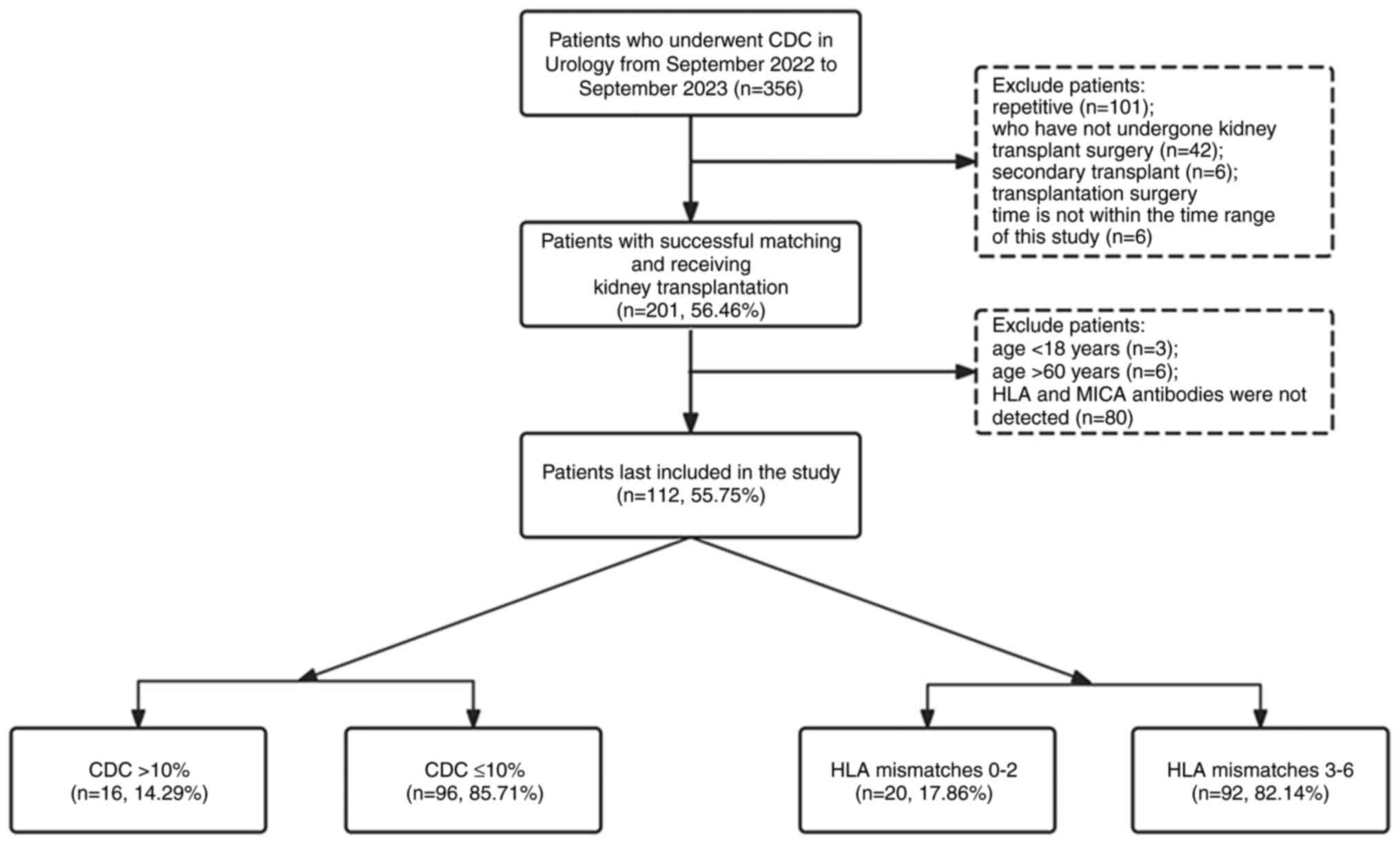
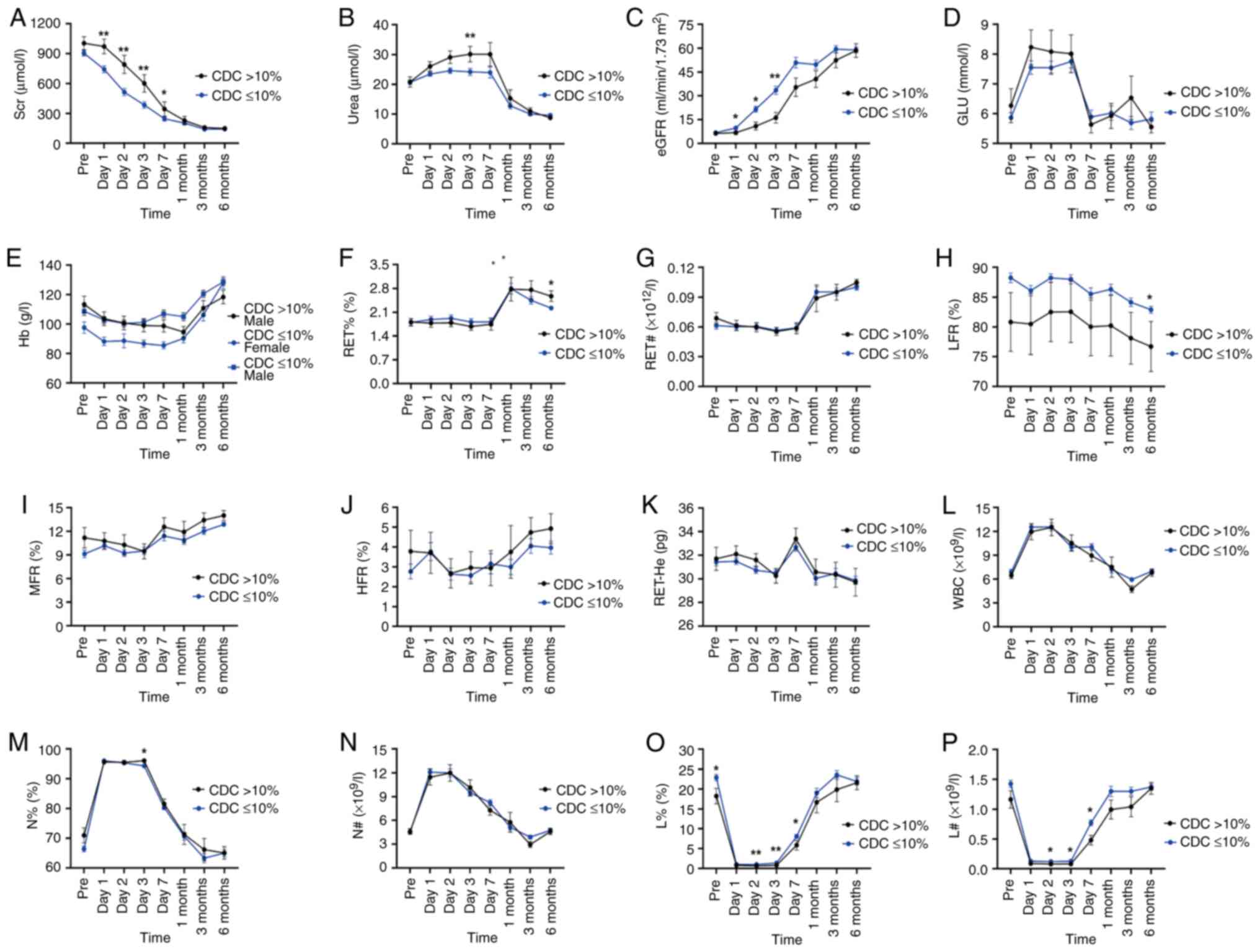
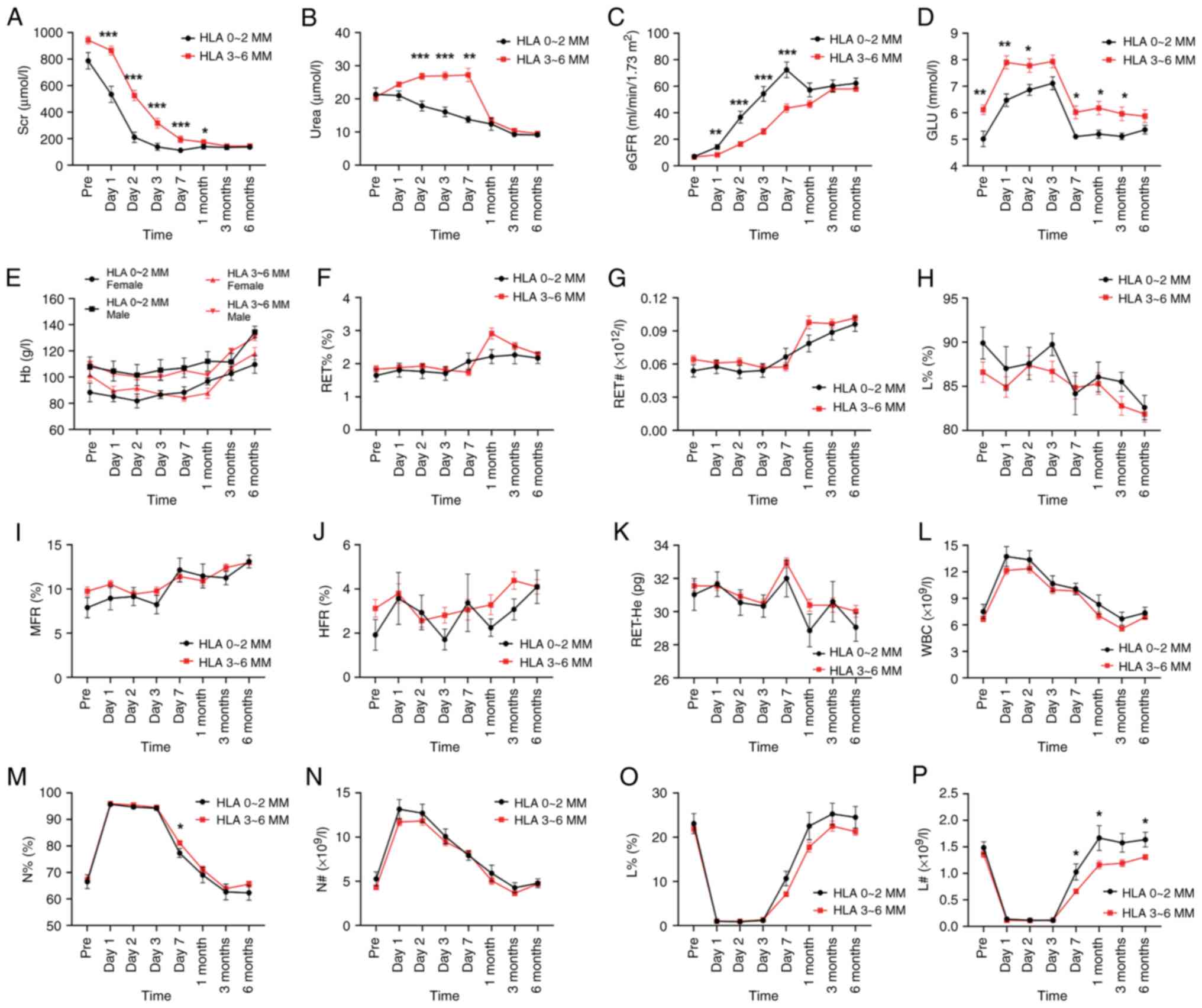
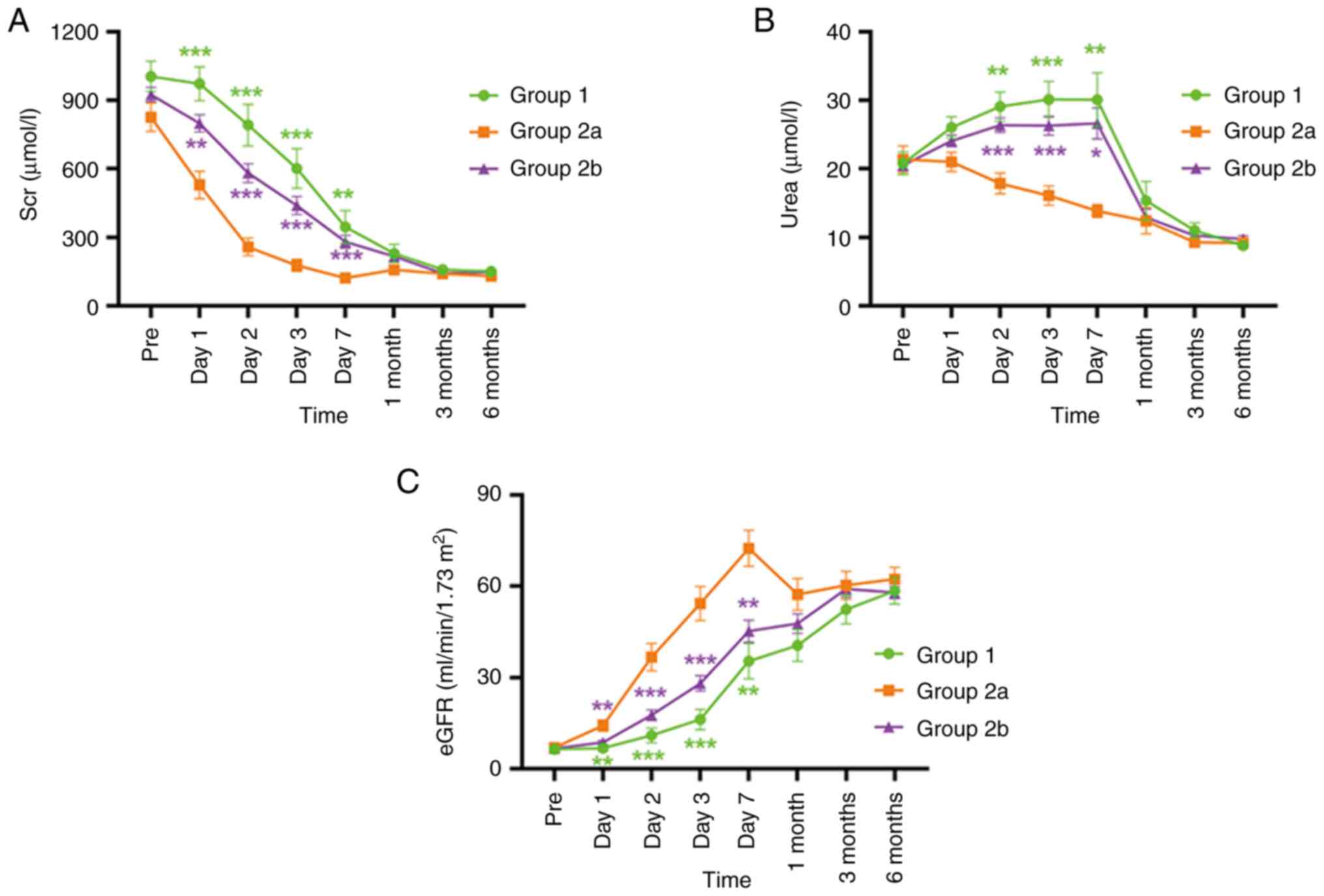
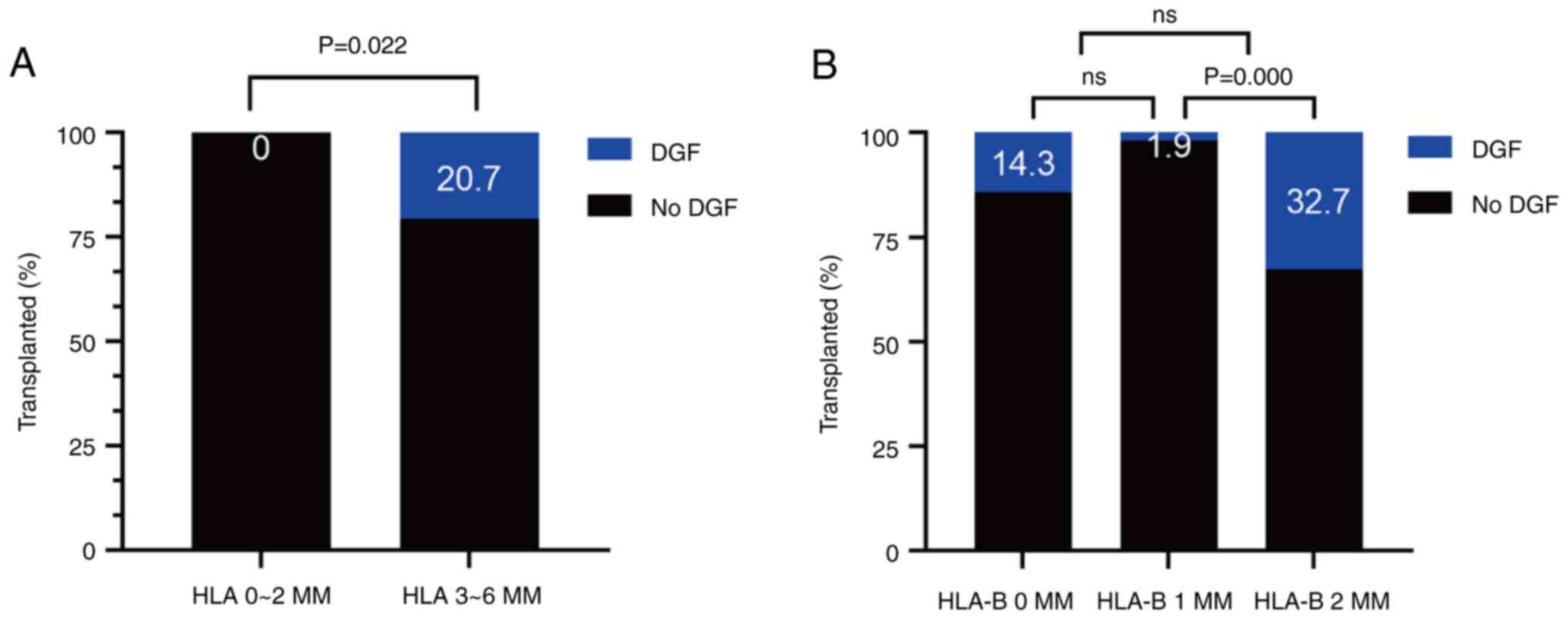
Kidney transplantation remains the preferred treatment for patients with end‑stage kidney failure. Complement‑dependent cytotoxicity (CDC) crossmatch (CDC‑XM) and human leukocyte antigen (HLA) typing are two important methods of donor‑recipient matching prior to kidney transplantation. The purpose of the present study was to explore the effects of CDC‑XM levels and HLA matching on early post‑operative clinical outcomes in kidney transplant recipients. A total of 112 consecutive recipients who underwent allogeneic kidney transplantation were selected and their data collected, including pre‑operative general information, indicators associated with renal function, red blood cell and white blood cell counts, the blood glucose level at each follow‑up time point and both the incidence of adverse events following transplantation and their risk factors. During the follow‑up period, statistical methods were used to compare and systematically analyze the differences in clinical indicators and adverse events between each groups. In each different groups that were assigned for the CDC‑XM levels and HLA matching, the differences in the clinical indicators between the groups during the follow‑up period were mainly centered on the first week post‑transplantation, with the greatest differences being identified for the renal function‑associated indicators, whereas the observed recovery was essentially comparable between 1‑6 months. According to the multivariate analysis, recipients of age ≥40 years and with a BMI ≥25 tended to have an increased risk of delayed graft function (DGF), whereas the risk was reduced when the organ had been donated by a living donor and also when the number of HLA mismatches was 0‑2. In conclusion, the present study showed that CDC‑negativity and improved HLA matching help to promote the recovery of renal function in kidney transplant recipients during the early post‑operative period. Patients who met the conditions of CDC‑negativity and fewer HLA mismatches had faster and improved early postoperative recovery of renal function and a lower incidence of DGF. Furthermore, in a multifactorial analysis of DGF, recipient age, recipient BMI, donor type and HLA mismatch were found to be important risk factors for DGF.
View Figures

Figure 1

Figure 2

Figure 3

Figure 4

Figure 5

View References

1 

Pan GH, Chen Z, Xu L, Zhu JH, Xiang P, Ma JJ, Peng YW, Li GH, Chen XY, Fang JL, et al: Low-dose tacrolimus combined with donor-derived mesenchymal stem cells after renal transplantation: A prospective, non-randomized study. Oncotarget. 7:12089–12101. 2016.PubMed/NCBI View Article : Google Scholar

2 

Strohmaier S, Wallisch C, Kammer M, Geroldinger A, Heinze G, Oberbauer R and Haller MC: Survival benefit of first single-organ deceased donor kidney transplantation compared with long-term dialysis across ages in transplant-eligible patients with kidney failure. JAMA Netw Open. 5(e2234971)2022.PubMed/NCBI View Article : Google Scholar

3 

Li J, Luo Y, Wang X and Feng G: Regulatory B cells and advances in transplantation. J Leukoc Biol. 105:657–668. 2019.PubMed/NCBI View Article : Google Scholar

4 

Sellarés J, de Freitas DG, Mengel M, Reeve J, Einecke G, Sis B, Hidalgo LG, Famulski K, Matas A and Halloran PF: Understanding the causes of kidney transplant failure: The dominant role of antibody-mediated rejection and nonadherence. Am J Transplant. 12:388–399. 2012.PubMed/NCBI View Article : Google Scholar

5 

Lim WH, Wong G, Heidt S and Claas FHJ: Novel aspects of epitope matching and practical application in kidney transplantation. Kidney Int. 93:314–324. 2018.PubMed/NCBI View Article : Google Scholar

6 

Gunawansa N, Rathore R, Sharma A and Halawa A: Crossmatch strategies in renal transplantation: A practical guide for the practicing clinician. J Transplant Surg. 1:8–15. 2017.

7 

Tellis VA, Matas AJ, Senitzer D, Louis P, Glicklich D, Soberman R and Veith FJ: Successful transplantation after conversion of a positive crossmatch to negative by dissociation of IgM antibody. Transplantation. 47:127–129. 1989.PubMed/NCBI View Article : Google Scholar

8 

Opelz G and Döhler B: Effect of human leukocyte antigen compatibility on kidney graft survival: Comparative analysis of two decades. Transplantation. 84:137–143. 2007.PubMed/NCBI View Article : Google Scholar

9 

Cecka JM: HLA matching for renal transplantation: The last word? Transplantation. 100:975–976. 2016.PubMed/NCBI View Article : Google Scholar

10 

Lim WH, Chapman JR, Coates PT, Lewis JR, Russ GR, Watson N, Holdsworth R and Wong G: HLA-DQ mismatches and rejection in kidney transplant recipients. Clin J Am Soc Nephrol. 11:875–883. 2016.PubMed/NCBI View Article : Google Scholar

11 

Leeaphorn N, Pena JRA, Thamcharoen N, Khankin EV, Pavlakis M and Cardarelli F: HLA-DQ mismatching and kidney transplant outcomes. Clin J Am Soc Nephrol. 13:763–771. 2018.PubMed/NCBI View Article : Google Scholar

12 

Süsal C, Döhler B and Opelz G: Presensitized kidney graft recipients with HLA class I and II antibodies are at increased risk for graft failure: A collaborative transplant study report. Hum Immunol. 70:569–573. 2009.PubMed/NCBI View Article : Google Scholar

13 

Michielsen LA, Wisse BW, Kamburova EG, Verhaar MC, Joosten I, Allebes WA, van der Meer A, Hilbrands LB, Baas MC, Spierings E, et al: A paired kidney analysis on the impact of pre-transplant anti-HLA antibodies on graft survival. Nephrol Dial Transplant. 34:1056–1063. 2019.PubMed/NCBI View Article : Google Scholar

14 

Solgi G, Furst D, Mytilineos J, Pourmand G and Amirzargar AA: Clinical relevance of pre and post-transplant immune markers in kidney allograft recipients: Anti-HLA and MICA antibodies and serum levels of sCD30 and sMICA. Transpl Immunol. 26:81–87. 2012.PubMed/NCBI View Article : Google Scholar

15 

Zschiedrich S, Jänigen B, Dimova D, Neumann A, Seidl M, Hils S, Geyer M, Emmerich F, Kirste G, Drognitz O, et al: One hundred ABO-incompatible kidney transplantations between 2004 and 2014: A single-centre experience. Nephrol Dial Transplant. 31:663–671. 2016.PubMed/NCBI View Article : Google Scholar

16 

Koo TY, Lee J, Lee Y, Kim HW, Kim BS, Huh KH and Yang J: Outcomes of ABO-incompatible living donor kidney transplantation compared to waiting or deceased donor kidney transplantation. Am J Nephrol. 55:235–244. 2024.PubMed/NCBI View Article : Google Scholar

17 

Massie AB, Orandi BJ, Waldram MM, Luo X, Nguyen AQ, Montgomery RA, Lentine KL and Segev DL: Impact of ABO-incompatible living donor kidney transplantation on patient survival. Am J Kidney Dis. 76:616–623. 2020.PubMed/NCBI View Article : Google Scholar

18 

Chow KV, Flint SM, Shen A, Landgren A, Finlay M, Murugasu A, Masterson R, Hughes P and Cohney SJ: Histological and extended clinical outcomes after ABO-incompatible renal transplantation without splenectomy or rituximab. Transplantation. 101:1433–1440. 2017.PubMed/NCBI View Article : Google Scholar

19 

Lyman JL: Blood urea nitrogen and creatinine. Emerg Med Clin North Am. 4:223–233. 1986.PubMed/NCBI

20 

Ruilope LM, Ortiz A, Lucia A, Miranda B, Alvarez-Llamas G, Barderas MG, Volpe M, Ruiz-Hurtado G and Pitt B: Prevention of cardiorenal damage: Importance of albuminuria. Eur Heart J. 44:1112–1123. 2023.PubMed/NCBI View Article : Google Scholar

21 

Levey AS, Atkins R, Coresh J, Cohen EP, Collins AJ, Eckardt KU, Nahas ME, Jaber BL, Jadoul M, Levin A, et al: Chronic kidney disease as a global public health problem: approaches and initiatives-a position statement from kidney disease improving global outcomes. Kidney Int. 72:247–259. 2007.PubMed/NCBI View Article : Google Scholar

22 

Clayton PA, Lim WH, Wong G and Chadban SJ: Relationship between eGFR decline and hard outcomes after kidney transplants. J Am Soc Nephrol. 27:3440–3446. 2016.PubMed/NCBI View Article : Google Scholar

23 

Raynaud M, Aubert O, Reese PP, Bouatou Y, Naesens M, Kamar N, Bailly É, Giral M, Ladrière M, Le Quintrec M, et al: Trajectories of glomerular filtration rate and progression to end stage kidney disease after kidney transplantation. Kidney Int. 99:186–197. 2021.PubMed/NCBI View Article : Google Scholar

24 

Zhang X, Lyu J, Yu X, Wang L, Peng W, Chen J and Wu J: Comparison of graft outcome between donation after circulatory death and living-donor kidney transplantation. Transplant Proc. 52:111–118. 2020.PubMed/NCBI View Article : Google Scholar

25 

Chen L, Bai H, Jin H, Zhang T, Shi B, Cai M and Wang Y: Outcomes in kidney transplantation with mycophenolate mofetil-based maintenance immunosuppression in China: A large-sample retrospective analysis of a national database. Transpl Int. 33:718–728. 2020.PubMed/NCBI View Article : Google Scholar

26 

Cantarelli C, Angeletti A and Cravedi P: Erythropoietin, a multifaceted protein with innate and adaptive immune modulatory activity. Am J Transplant. 19:2407–2414. 2019.PubMed/NCBI View Article : Google Scholar

27 

Bachman E, Travison TG, Basaria S, Davda MN, Guo W, Li M, Connor Westfall J, Bae H, Gordeuk V and Bhasin S: Testosterone induces erythrocytosis via increased erythropoietin and suppressed hepcidin: evidence for a new erythropoietin/hemoglobin set point. J Gerontol A Biol Sci Med Sci. 69:725–735. 2014.PubMed/NCBI View Article : Google Scholar

28 

Winkelmayer WC, Lorenz M, Kramar R, Hörl WH and Sunder-Plassmann G: Percentage of hypochromic red blood cells is an independent risk factor for mortality in kidney transplant recipients. Am J Transplant. 4:2075–2081. 2004.PubMed/NCBI View Article : Google Scholar

29 

Ogawa C, Tsuchiya K and Maeda K: Reticulocyte hemoglobin content. Clin Chim Acta. 504:138–145. 2002.PubMed/NCBI View Article : Google Scholar

30 

Tornero F, Prats D, Alvarez-Sala JL, Coronel F, Sanchez A and Barrientos A: Iron deficiency anemia after successful renal transplantation. J Urol. 149:1398–1400. 1993.PubMed/NCBI View Article : Google Scholar

31 

Bonnefoy-Berard N, Verrier B, Vincent C and Revillard JP: Inhibition of CD25 (IL-2R alpha) expression and T-cell proliferation by polyclonal anti-thymocyte globulins. Immunology. 77:61–67. 1992.PubMed/NCBI

32 

Alamartine E, Bellakoul R and Berthoux F: Randomized prospective study comparing OKT3 and antithymocyte globulins for treatment of the first acute cellular rejection of kidney allografts. Transplant Proc. 26:273–274. 1994.PubMed/NCBI

33 

Soulillou JP, Cantarovich D, Le Mauff B, Giral M, Robillard N, Hourmant M, Hirn M and Jacques Y: Randomized controlled trial of a monoclonal antibody against the interleukin-2 receptor (33B3.1) as compared with rabbit antithymocyte globulin for prophylaxis against rejection of renal allografts. N Engl J Med. 322:1175–1182. 1990.PubMed/NCBI View Article : Google Scholar

34 

Kawahara T, Fukui S, Sakamaki K, Ito Y, Ito H, Kobayashi N, Izumi K, Yokomizo Y, Miyoshi Y, Makiyama K, et al: Neutrophil-to-lymphocyte ratio predicts prostatic carcinoma in men undergoing needle biopsy. Oncotarget. 6:32169–32176. 2015.PubMed/NCBI View Article : Google Scholar

35 

Kawahara T, Furuya K, Nakamura M, Sakamaki K, Osaka K, Ito H, Ito Y, Izumi K, Ohtake S, Miyoshi Y, et al: Neutrophil-to-lymphocyte ratio is a prognostic marker in bladder cancer patients after radical cystectomy. BMC Cancer. 16(185)2016.PubMed/NCBI View Article : Google Scholar

36 

Dujardin A, Lorent M, Foucher Y, Legendre C, Kerleau C, Brouard S and Giral M: DIVAT Consortium. Time-dependent lymphocyte count after transplantation is associated with higher risk of graft failure and death. Kidney Int. 99:1189–1201. 2021.PubMed/NCBI View Article : Google Scholar

37 

Bloom RD and Augustine JJ: Beyond the biopsy: Monitoring immune status in kidney recipients. Clin J Am Soc Nephrol. 16:1413–1422. 2021.PubMed/NCBI View Article : Google Scholar

38 

Long W, Zhang H, Yuan W, Lan G, Lin Z, Peng L and Dai H: The role of regulatory B cells in kidney diseases. Front Immunol. 12(683926)2021.PubMed/NCBI View Article : Google Scholar

39 

Huang DL, He YR, Liu YJ, He HY, Gu ZY, Liu YM, Liu WJ, Luo Z and Ju MJ: The immunomodulation role of Th17 and Treg in renal transplantation. Front Immunol. 14(1113560)2023.PubMed/NCBI View Article : Google Scholar

40 

Nashan B, Abbud-Filho M and Citterio F: Prediction, prevention, and management of delayed graft function: where are we now? Clin Transplant. 30:1198–1208. 2016.PubMed/NCBI View Article : Google Scholar

41 

Redfield RR, Scalea JR, Zens TJ, Muth B, Kaufman DB, Djamali A, Astor BC and Mohamed M: Predictors and outcomes of delayed graft function after living-donor kidney transplantation. Transpl Int. 29:81–87. 2016.PubMed/NCBI View Article : Google Scholar

42 

Ojo AO, Wolfe RA, Held PJ, Port FK and Schmouder RL: Delayed graft function: Risk factors and implications for renal allograft survival. Transplantation. 63:968–974. 1997.PubMed/NCBI View Article : Google Scholar

43 

Sellers MT, Gallichio MH, Hudson SL, Young CJ, Bynon JS, Eckhoff DE, Deierhoi MH, Diethelm AG and Thompson JA: Improved outcomes in cadaveric renal allografts with pulsatile preservation. Clin Transplant. 14:543–549. 2000.PubMed/NCBI View Article : Google Scholar

44 

Molnar MZ, Kovesdy CP, Rosivall L, Bunnapradist S, Hoshino J, Streja E, Krishnan M and Kalantar-Zadeh K: Associations of pre-transplant anemia management with post-transplant delayed graft function in kidney transplant recipients. Clin Transplant. 26:782–791. 2012.PubMed/NCBI View Article : Google Scholar

45 

Morath C, Döhler B, Kälble F, Pego da Silva L, Echterdiek F, Schwenger V, Živčić-Ćosić S, Katalinić N, Kuypers D, Benöhr P, et al: Pre-transplant HLA antibodies and delayed graft function in the current era of kidney transplantation. Front Immunol. 11(1886)2020.PubMed/NCBI View Article : Google Scholar

46 

Peräsaari JP, Kyllönen LE, Salmela KT and Merenmies JM: Pre-transplant donor-specific anti-human leukocyte antigen antibodies are associated with high risk of delayed graft function after renal transplantation. Nephrol Dial Transplant. 31:672–678. 2016.PubMed/NCBI View Article : Google Scholar

Related Articles

  • Abstract
  • View
  • Download
  • Twitter
Copy and paste a formatted citation
Spandidos Publications style
Xie S, Xu C, Zhu Z, Qin C, Song X, Wang X, Xu W and Zhu M: Influence of CDC‑XM and HLA compatibility on clinical outcomes in kidney transplant recipients during the post‑operative recovery period: A retrospective analysis. Exp Ther Med 29: 99, 2025.
APA
Xie, S., Xu, C., Zhu, Z., Qin, C., Song, X., Wang, X. ... Zhu, M. (2025). Influence of CDC‑XM and HLA compatibility on clinical outcomes in kidney transplant recipients during the post‑operative recovery period: A retrospective analysis. Experimental and Therapeutic Medicine, 29, 99. https://doi.org/10.3892/etm.2025.12849
MLA
Xie, S., Xu, C., Zhu, Z., Qin, C., Song, X., Wang, X., Xu, W., Zhu, M."Influence of CDC‑XM and HLA compatibility on clinical outcomes in kidney transplant recipients during the post‑operative recovery period: A retrospective analysis". Experimental and Therapeutic Medicine 29.5 (2025): 99.
Chicago
Xie, S., Xu, C., Zhu, Z., Qin, C., Song, X., Wang, X., Xu, W., Zhu, M."Influence of CDC‑XM and HLA compatibility on clinical outcomes in kidney transplant recipients during the post‑operative recovery period: A retrospective analysis". Experimental and Therapeutic Medicine 29, no. 5 (2025): 99. https://doi.org/10.3892/etm.2025.12849
Copy and paste a formatted citation
x
Spandidos Publications style
Xie S, Xu C, Zhu Z, Qin C, Song X, Wang X, Xu W and Zhu M: Influence of CDC‑XM and HLA compatibility on clinical outcomes in kidney transplant recipients during the post‑operative recovery period: A retrospective analysis. Exp Ther Med 29: 99, 2025.
APA
Xie, S., Xu, C., Zhu, Z., Qin, C., Song, X., Wang, X. ... Zhu, M. (2025). Influence of CDC‑XM and HLA compatibility on clinical outcomes in kidney transplant recipients during the post‑operative recovery period: A retrospective analysis. Experimental and Therapeutic Medicine, 29, 99. https://doi.org/10.3892/etm.2025.12849
MLA
Xie, S., Xu, C., Zhu, Z., Qin, C., Song, X., Wang, X., Xu, W., Zhu, M."Influence of CDC‑XM and HLA compatibility on clinical outcomes in kidney transplant recipients during the post‑operative recovery period: A retrospective analysis". Experimental and Therapeutic Medicine 29.5 (2025): 99.
Chicago
Xie, S., Xu, C., Zhu, Z., Qin, C., Song, X., Wang, X., Xu, W., Zhu, M."Influence of CDC‑XM and HLA compatibility on clinical outcomes in kidney transplant recipients during the post‑operative recovery period: A retrospective analysis". Experimental and Therapeutic Medicine 29, no. 5 (2025): 99. https://doi.org/10.3892/etm.2025.12849
Follow us
  • Twitter
  • LinkedIn
  • Facebook
About
  • Spandidos Publications
  • Careers
  • Cookie Policy
  • Privacy Policy
How can we help?
  • Help
  • Live Chat
  • Contact
  • Email to our Support Team