Spandidos Publications Logo
  • About
    • About Spandidos
    • Aims and Scopes
    • Abstracting and Indexing
    • Editorial Policies
    • Reprints and Permissions
    • Job Opportunities
    • Terms and Conditions
    • Contact
  • Journals
    • All Journals
    • Oncology Letters
      • Oncology Letters
      • Information for Authors
      • Editorial Policies
      • Editorial Board
      • Aims and Scope
      • Abstracting and Indexing
      • Bibliographic Information
      • Archive
    • International Journal of Oncology
      • International Journal of Oncology
      • Information for Authors
      • Editorial Policies
      • Editorial Board
      • Aims and Scope
      • Abstracting and Indexing
      • Bibliographic Information
      • Archive
    • Molecular and Clinical Oncology
      • Molecular and Clinical Oncology
      • Information for Authors
      • Editorial Policies
      • Editorial Board
      • Aims and Scope
      • Abstracting and Indexing
      • Bibliographic Information
      • Archive
    • Experimental and Therapeutic Medicine
      • Experimental and Therapeutic Medicine
      • Information for Authors
      • Editorial Policies
      • Editorial Board
      • Aims and Scope
      • Abstracting and Indexing
      • Bibliographic Information
      • Archive
    • International Journal of Molecular Medicine
      • International Journal of Molecular Medicine
      • Information for Authors
      • Editorial Policies
      • Editorial Board
      • Aims and Scope
      • Abstracting and Indexing
      • Bibliographic Information
      • Archive
    • Biomedical Reports
      • Biomedical Reports
      • Information for Authors
      • Editorial Policies
      • Editorial Board
      • Aims and Scope
      • Abstracting and Indexing
      • Bibliographic Information
      • Archive
    • Oncology Reports
      • Oncology Reports
      • Information for Authors
      • Editorial Policies
      • Editorial Board
      • Aims and Scope
      • Abstracting and Indexing
      • Bibliographic Information
      • Archive
    • Molecular Medicine Reports
      • Molecular Medicine Reports
      • Information for Authors
      • Editorial Policies
      • Editorial Board
      • Aims and Scope
      • Abstracting and Indexing
      • Bibliographic Information
      • Archive
    • World Academy of Sciences Journal
      • World Academy of Sciences Journal
      • Information for Authors
      • Editorial Policies
      • Editorial Board
      • Aims and Scope
      • Abstracting and Indexing
      • Bibliographic Information
      • Archive
    • International Journal of Functional Nutrition
      • International Journal of Functional Nutrition
      • Information for Authors
      • Editorial Policies
      • Editorial Board
      • Aims and Scope
      • Abstracting and Indexing
      • Bibliographic Information
      • Archive
    • International Journal of Epigenetics
      • International Journal of Epigenetics
      • Information for Authors
      • Editorial Policies
      • Editorial Board
      • Aims and Scope
      • Abstracting and Indexing
      • Bibliographic Information
      • Archive
    • Medicine International
      • Medicine International
      • Information for Authors
      • Editorial Policies
      • Editorial Board
      • Aims and Scope
      • Abstracting and Indexing
      • Bibliographic Information
      • Archive
  • Articles
  • Information
    • Information for Authors
    • Information for Reviewers
    • Information for Librarians
    • Information for Advertisers
    • Conferences
  • Language Editing
Spandidos Publications Logo
  • About
    • About Spandidos
    • Aims and Scopes
    • Abstracting and Indexing
    • Editorial Policies
    • Reprints and Permissions
    • Job Opportunities
    • Terms and Conditions
    • Contact
  • Journals
    • All Journals
    • Biomedical Reports
      • Information for Authors
      • Editorial Policies
      • Editorial Board
      • Aims and Scope
      • Abstracting and Indexing
      • Bibliographic Information
      • Archive
    • Experimental and Therapeutic Medicine
      • Information for Authors
      • Editorial Policies
      • Editorial Board
      • Aims and Scope
      • Abstracting and Indexing
      • Bibliographic Information
      • Archive
    • International Journal of Epigenetics
      • Information for Authors
      • Editorial Policies
      • Editorial Board
      • Aims and Scope
      • Abstracting and Indexing
      • Bibliographic Information
      • Archive
    • International Journal of Functional Nutrition
      • Information for Authors
      • Editorial Policies
      • Editorial Board
      • Aims and Scope
      • Abstracting and Indexing
      • Bibliographic Information
      • Archive
    • International Journal of Molecular Medicine
      • Information for Authors
      • Editorial Policies
      • Editorial Board
      • Aims and Scope
      • Abstracting and Indexing
      • Bibliographic Information
      • Archive
    • International Journal of Oncology
      • Information for Authors
      • Editorial Policies
      • Editorial Board
      • Aims and Scope
      • Abstracting and Indexing
      • Bibliographic Information
      • Archive
    • Medicine International
      • Information for Authors
      • Editorial Policies
      • Editorial Board
      • Aims and Scope
      • Abstracting and Indexing
      • Bibliographic Information
      • Archive
    • Molecular and Clinical Oncology
      • Information for Authors
      • Editorial Policies
      • Editorial Board
      • Aims and Scope
      • Abstracting and Indexing
      • Bibliographic Information
      • Archive
    • Molecular Medicine Reports
      • Information for Authors
      • Editorial Policies
      • Editorial Board
      • Aims and Scope
      • Abstracting and Indexing
      • Bibliographic Information
      • Archive
    • Oncology Letters
      • Information for Authors
      • Editorial Policies
      • Editorial Board
      • Aims and Scope
      • Abstracting and Indexing
      • Bibliographic Information
      • Archive
    • Oncology Reports
      • Information for Authors
      • Editorial Policies
      • Editorial Board
      • Aims and Scope
      • Abstracting and Indexing
      • Bibliographic Information
      • Archive
    • World Academy of Sciences Journal
      • Information for Authors
      • Editorial Policies
      • Editorial Board
      • Aims and Scope
      • Abstracting and Indexing
      • Bibliographic Information
      • Archive
  • Articles
  • Information
    • For Authors
    • For Reviewers
    • For Librarians
    • For Advertisers
    • Conferences
  • Language Editing
Login Register Submit
  • This site uses cookies
  • You can change your cookie settings at any time by following the instructions in our Cookie Policy. To find out more, you may read our Privacy Policy.

    I agree
Search articles by DOI, keyword, author or affiliation
Search
Advanced Search
presentation
Experimental and Therapeutic Medicine
Join Editorial Board Propose a Special Issue
Print ISSN: 1792-0981 Online ISSN: 1792-1015
Journal Cover
September-2025 Volume 30 Issue 3

Full Size Image

Sign up for eToc alerts
Recommend to Library

Journals

International Journal of Molecular Medicine

International Journal of Molecular Medicine

International Journal of Molecular Medicine is an international journal devoted to molecular mechanisms of human disease.

International Journal of Oncology

International Journal of Oncology

International Journal of Oncology is an international journal devoted to oncology research and cancer treatment.

Molecular Medicine Reports

Molecular Medicine Reports

Covers molecular medicine topics such as pharmacology, pathology, genetics, neuroscience, infectious diseases, molecular cardiology, and molecular surgery.

Oncology Reports

Oncology Reports

Oncology Reports is an international journal devoted to fundamental and applied research in Oncology.

Experimental and Therapeutic Medicine

Experimental and Therapeutic Medicine

Experimental and Therapeutic Medicine is an international journal devoted to laboratory and clinical medicine.

Oncology Letters

Oncology Letters

Oncology Letters is an international journal devoted to Experimental and Clinical Oncology.

Biomedical Reports

Biomedical Reports

Explores a wide range of biological and medical fields, including pharmacology, genetics, microbiology, neuroscience, and molecular cardiology.

Molecular and Clinical Oncology

Molecular and Clinical Oncology

International journal addressing all aspects of oncology research, from tumorigenesis and oncogenes to chemotherapy and metastasis.

World Academy of Sciences Journal

World Academy of Sciences Journal

Multidisciplinary open-access journal spanning biochemistry, genetics, neuroscience, environmental health, and synthetic biology.

International Journal of Functional Nutrition

International Journal of Functional Nutrition

Open-access journal combining biochemistry, pharmacology, immunology, and genetics to advance health through functional nutrition.

International Journal of Epigenetics

International Journal of Epigenetics

Publishes open-access research on using epigenetics to advance understanding and treatment of human disease.

Medicine International

Medicine International

An International Open Access Journal Devoted to General Medicine.

Journal Cover
September-2025 Volume 30 Issue 3

Full Size Image

Sign up for eToc alerts
Recommend to Library

  • Article
  • Citations
    • Cite This Article
    • Download Citation
    • Create Citation Alert
    • Remove Citation Alert
    • Cited By
  • Similar Articles
    • Related Articles (in Spandidos Publications)
    • Similar Articles (Google Scholar)
    • Similar Articles (PubMed)
  • Download PDF
  • Download XML
  • View XML

  • Supplementary Files
    • Supplementary_Data.pdf
Article

Imiquimod promotes Th1 and Th17 responses via NF‑κB‑driven IL‑12 and IL‑6 production in an in vitro co‑culture model

  • Authors:
    • Yerim Cho
    • Jiho Kwon
    • Tae Sung Kim
  • View Affiliations / Copyright

    Affiliations: Department of Life Sciences, College of Life Science and Biotechnology, Korea University, Seoul 02841, Republic of Korea
  • Article Number: 175
    |
    Published online on: July 21, 2025
       https://doi.org/10.3892/etm.2025.12925
  • Expand metrics +
Metrics: Total Views: 0 (Spandidos Publications: | PMC Statistics: )
Metrics: Total PDF Downloads: 0 (Spandidos Publications: | PMC Statistics: )
Cited By (CrossRef): 0 citations Loading Articles...

This article is mentioned in:


Abstract

Although imiquimod (IMQ) is widely used to induce psoriasis‑like inflammation in mouse models, its direct effects on dendritic cells (DCs) and their capacity to drive T cell polarization remain poorly defined. The systemic complexity of in vivo models hinders the ability to delineate the direct, cell‑intrinsic effects of IMQ. To address this gap, an in vitro DC‑CD4+ T cell co‑culture system was established using bone marrow‑derived DCs and naïve CD4+ T cells isolated from OT‑II mice, enabling precise evaluation of the direct immunomodulatory effects of IMQ. IMQ treatment markedly upregulated maturation markers (CD40, CD80, CD86 and major histocompatibility complex class II), and increased IL‑12 and IL‑6 secretion in a dose‑dependent manner. These effects were significantly attenuated by NF‑κB inhibitors (caffeic acid phenethyl ester and Bay 11‑7082), indicating a critical role for NF‑κB signaling in DC activation. When co‑cultured with naïve CD4+ T cells, IMQ‑treated DCs promoted robust differentiation toward T helper (Th)1 and Th17 subsets. Neutralization of IL‑12 and IL‑6 in the co‑culture system significantly reduced the frequencies of Th1 and Th17 cells and their cytokine output, confirming that these responses were mediated by DC‑derived cytokines. Collectively, the present findings demonstrated that IMQ directly activated DCs via NF‑κB signaling and induced pathogenic Th cell responses through IL‑12 and IL‑6 production. By eliminating confounding in vivo factors, the present study provided evidence for the DC‑intrinsic effects of IMQ and offered mechanistic insights into the cellular pathways linking innate immune sensing to adaptive T cell responses in psoriasis.
View Figures

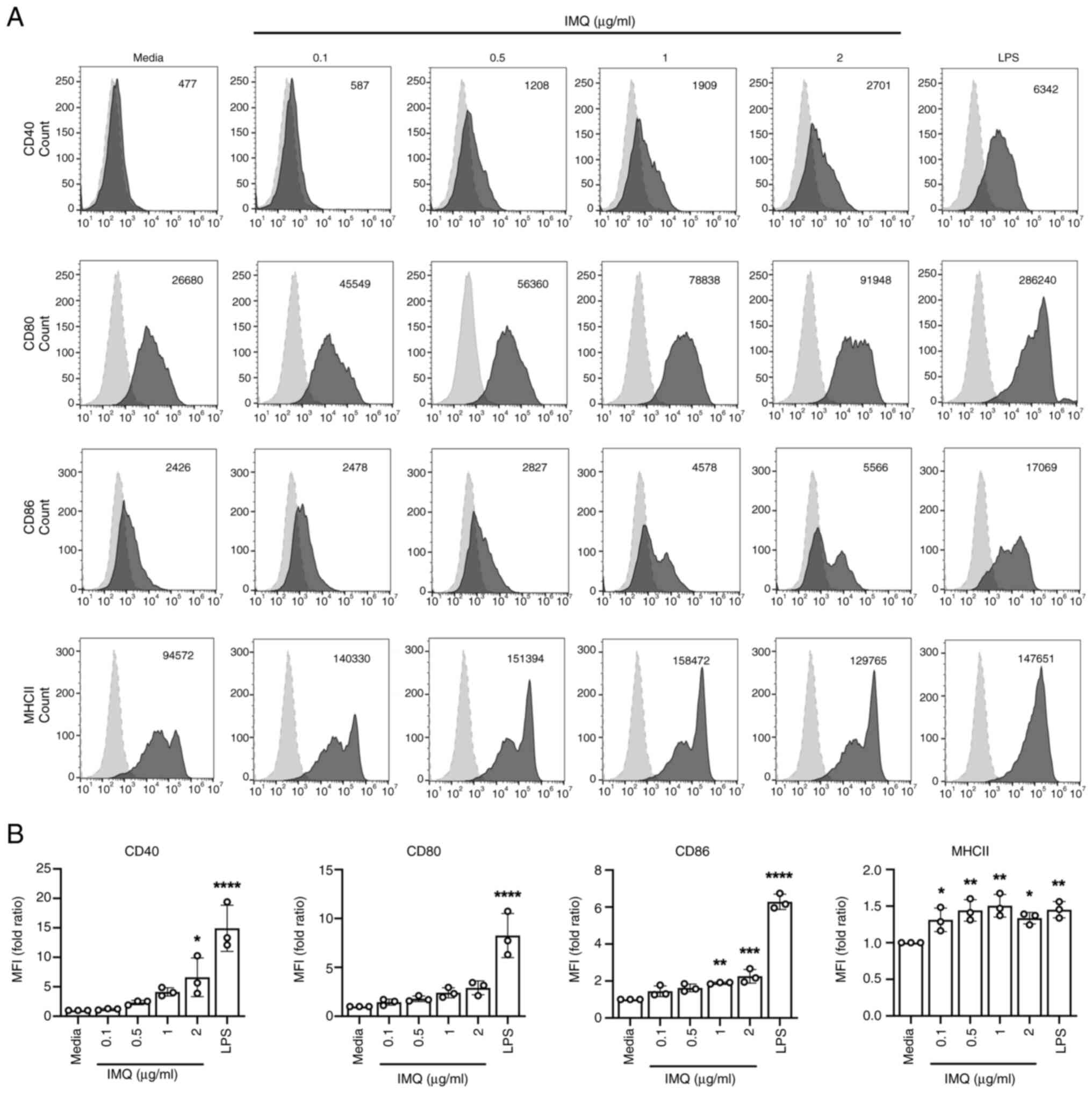
Figure 1

IMQ increases the expression of
surface molecules in bone marrow-derived dendritic cells. (A) Flow
cytometry analysis of CD40, CD80, CD86 and MHCII on
CD11c+ cells following IMQ or LPS treatment. (B) Bar
graphs showing fold changes in MFI relative to medium-treated
controls. Data are presented as the mean ± SD (n=3; biological
replicates). *P<0.05, **P<0.01,
***P<0.001 and ****P<0.0001 vs. medium
group; as determined using one-way ANOVA followed by the Bonferroni
post hoc test. IMQ, imiquimod; LPS, lipopolysaccharide; MFI, mean
fluorescence intensity; MHC, major histocompatibility complex.

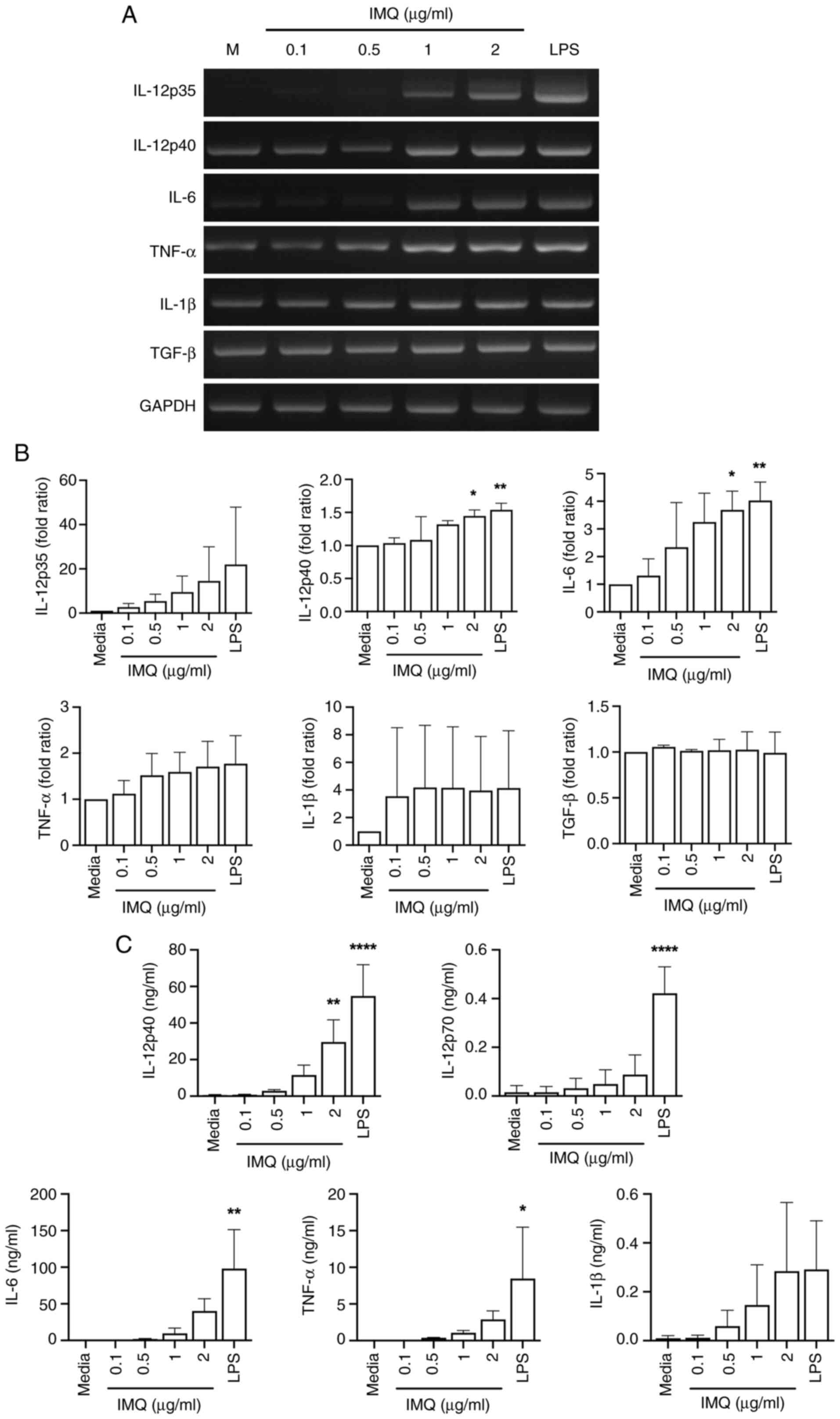
Figure 2

IMQ induces release of
pro-inflammatory cytokines in DCs. (A) Reverse transcription-PCR
was used to assess mRNA expression levels of IL-12p35, IL-12p40,
IL-6, TNF-α and IL-1β following IMQ or LPS stimulation. (B) Bar
graphs depicting the fold ratio of mRNA expression relative to the
medium-treated group. (C) ELISAs quantified the secretion levels of
pro-inflammatory cytokines in the supernatants. Data are presented
as the mean ± SD (n=3; biological replicates). Statistical
significance was assessed using one-way ANOVA followed by the
Bonferroni post hoc test; *P<0.05,
**P<0.01 and ****P<0.0001 compared with
the medium-treated DCs. DC, dendritic cell; IMQ, imiquimod; LPS,
lipopolysaccharide; M, media.

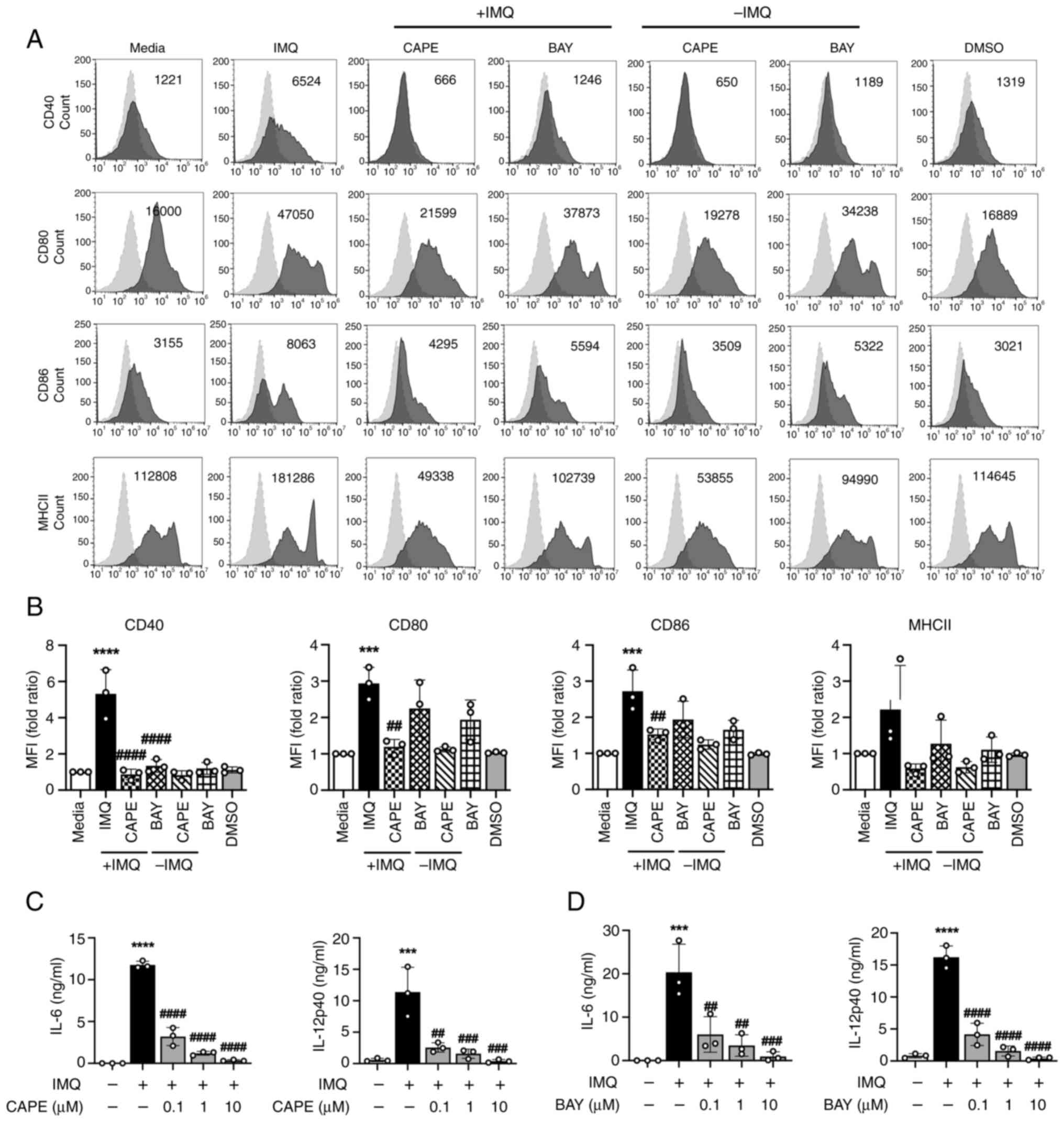
Figure 3

IMQ increases expression levels of
surface markers and pro-inflammatory cytokine secretion in DCs via
the NF-κB signaling pathway. (A) CD11c+ DCs were
pre-treated with CAPE or BAY (1 µM) for 30 min, followed by IMQ (1
µg/ml) for 20 h. Flow cytometry was performed to examine CD40,
CD80, CD86 and MHCII expression. (B) Quantification of the MFI for
the markers shown in (A), presented as fold changes relative to
medium-treated controls. (C) DCs were pre-treated with varying
doses of CAPE, an NF-κB inhibitor, before IMQ treatment, and IL-6
and IL-12p40 levels in the supernatant were assessed using ELISAs.
(D) DCs were pre-treated with varying doses of BAY, another NF-κB
inhibitor, before IMQ treatment, and IL-6 and IL-12p40 levels were
measured using ELISAs. Data are presented as the mean ± SD (n=3;
biological replicates). ***P<0.001 and
****P<0.0001 vs. medium group;
##P<0.01, ###P<0.001, and
####P<0.0001 vs. IMQ group, as determined using
one-way ANOVA with the Bonferroni post hoc test. BAY, Bay 11-7082;
CAPE, caffeic acid phenethyl ester; DC, dendritic cell; IMQ,
imiquimod; MFI, mean fluorescence intensity; MHC, major
histocompatibility complex.

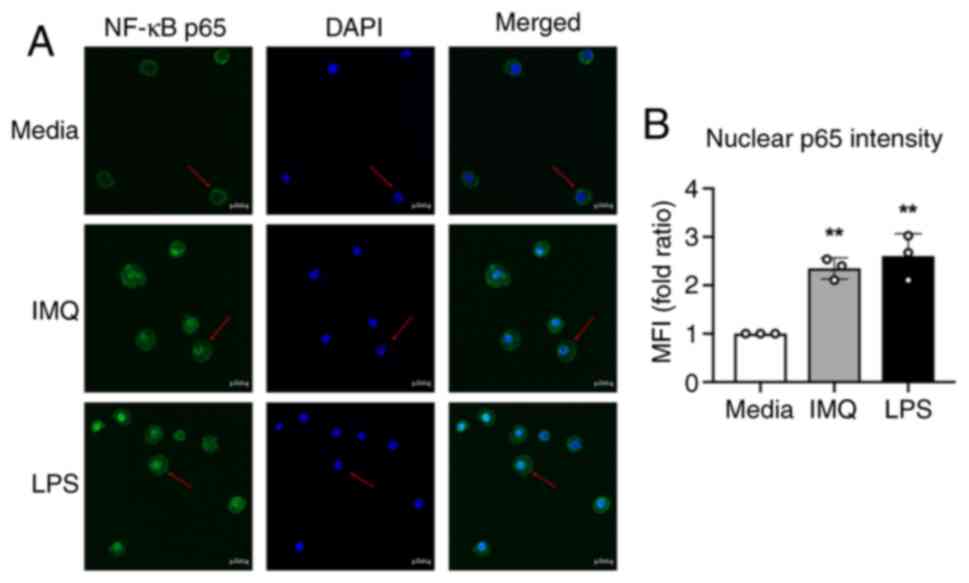
Figure 4

IMQ promotes activation and
maturation of DCs via the NF-κB-dependent signaling pathway.
Immature DCs were treated with IMQ (1 µg/ml) or LPS (100 ng/ml) for
1 h. (A) Confocal laser scanning microscopy was used to detect
nuclear translocation of NF-κB p65 in IMQ-treated DCs. Scale bar,
10 µm. (B) Bar graph showing the fold ratio of fluorescence
intensity of nuclear p65 compared with the medium group. Data are
presented as the mean ± SD (n=3; biological replicates).
**P<0.01 vs. medium group, analyzed by one-way ANOVA
with the Bonferroni post hoc test. DC, dendritic cell; IMQ,
imiquimod; LPS, lipopolysaccharide; MFI, mean fluorescence
intensity.

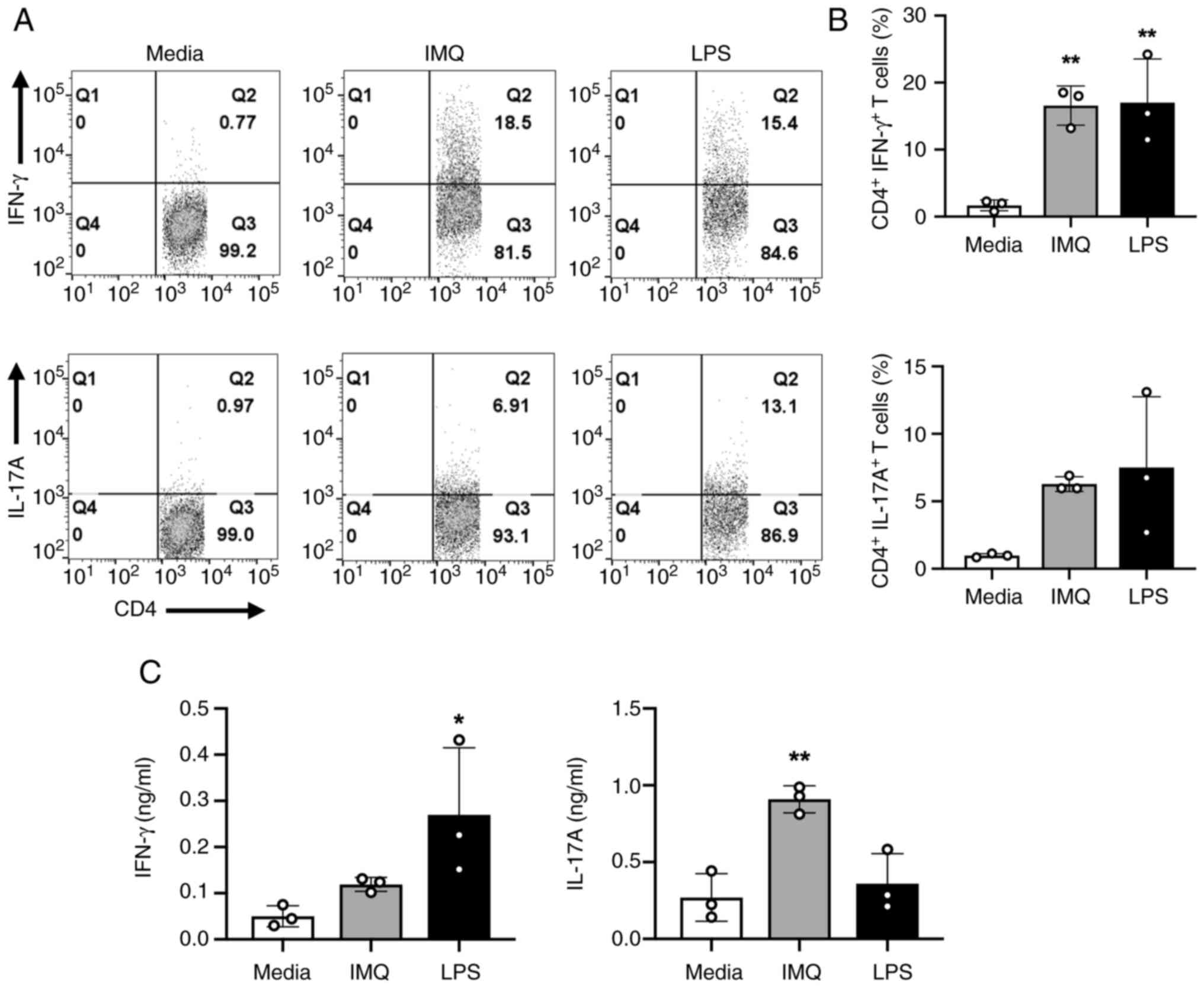
Figure 5

IMQ-treated DCs induce polarization
of OT-II naive CD4+ T cells to pathogenic Th1 and Th17
subsets. Immature DCs were treated with ovalbumin (20 ng/ml) for 2
h, followed by IMQ (1 µg/ml) or LPS (100 ng/ml) stimulation for 6
h. The DCs were then co-cultured with OT-II CD4+ T cells
at a 1:10 ratio for 3 days. (A) Flow cytometry was used to assess
IFN-γ+ and IL-17A+ CD4+ T cells.
(B) Frequency of IFN-γ+ and IL-17A+
CD4+ T cells is shown as the mean ± SD (n=3; biological
replicates). (C) IFN-γ and IL-17A secretion was measured using
ELISAs. *P<0.05 and **P<0.01 vs. medium
group; one-way ANOVA with the Bonferroni post hoc test. DC,
dendritic cell; IMQ, imiquimod; LPS, lipopolysaccharide; Th, T
helper.

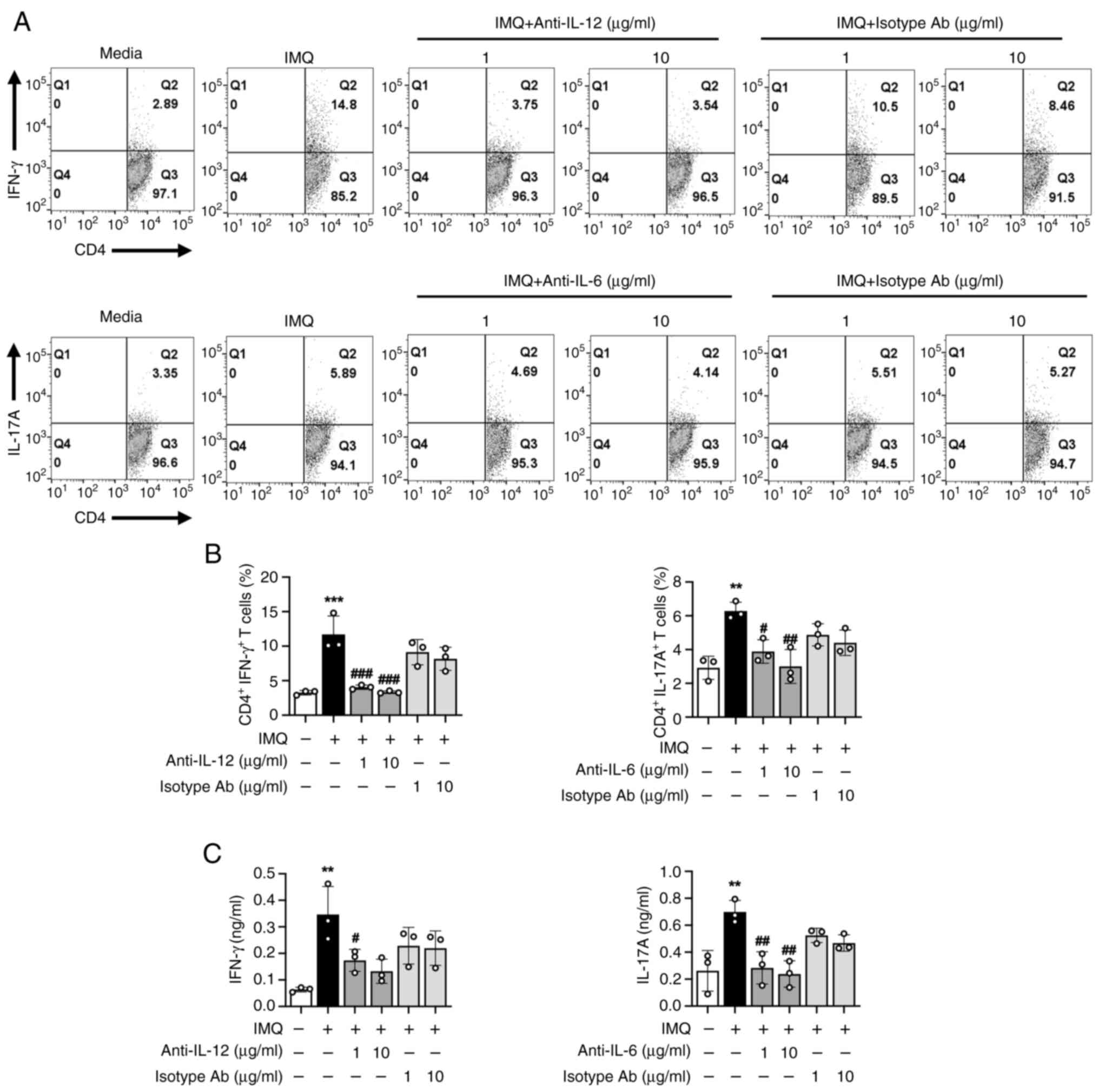
Figure 6

IMQ-treated DCs promote the
polarization of Th1 and Th17 subsets via IL-12 and IL-6 production.
DCs were pulsed with ovalbumin (20 ng/ml) for 2 h, followed by IMQ
(1 µg/ml) for 6 h, and co-cultured with OT-II CD4+ T
cells at a 1:10 ratio for 3 days in the presence of anti-IL-12,
anti-IL-6 or isotype control antibodies (1 and 10 µg/ml). (A) Flow
cytometry was used to analyze the populations of IFN-γ+
and IL-17A+ CD4+ T cells. (B) Percentages of
IFN-γ+ and IL-17A+ CD4+ T cells
are presented as the mean ± SD (n=3; biological replicates). (C)
IFN-γ and IL-17A protein levels in supernatants were measured using
ELISAs. **P<0.01 and ***P<0.001 vs.
CD4+ T cells co-cultured with media-treated DCs;
#P<0.05, ##P<0.01 and
###P<0.001 vs. IMQ group; one-way ANOVA with the
Bonferroni post hoc test. Ab, antibody; DC, dendritic cell; IMQ,
imiquimod; Th, T helper.
View References

1 

Damiani G, Bragazzi NL, Karimkhani Aksut C, Wu D, Alicandro G, McGonagle D, Guo C, Dellavalle R, Grada A, Wong P, et al: The global, regional, and national burden of psoriasis: Results and insights from the global burden of disease 2019 study. Front Med (Lausanne). 8(743180)2021.PubMed/NCBI View Article : Google Scholar

2 

Parisi R, Iskandar IY, Kontopantelis E, Augustin M, Griffiths CE and Ashcroft DM: Global Psoriasis Atlas. National, regional, and worldwide epidemiology of psoriasis: Systematic analysis and modelling study. BMJ. 369(m1590)2020.PubMed/NCBI View Article : Google Scholar

3 

Armstrong AW and Read C: Pathophysiology, clinical presentation, and treatment of psoriasis: A review. JAMA. 323:1945–1960. 2020.PubMed/NCBI View Article : Google Scholar

4 

Griffiths CE, Armstrong AW, Gudjonsson JE and Barker JNWN: Psoriasis. Lancet. 397:1301–1315. 2021.PubMed/NCBI View Article : Google Scholar

5 

Zhou X, Chen Y, Cui L, Shi Y and Guo C: Advances in the pathogenesis of psoriasis: From keratinocyte perspective. Cell Death Dis. 13(81)2022.PubMed/NCBI View Article : Google Scholar

6 

Man AM, Orăsan MS, Hoteiuc OA, Olănescu-Vaida-Voevod MC and Mocan T: Inflammation and psoriasis: A comprehensive review. Int J Mol Sci. 24(16095)2023.PubMed/NCBI View Article : Google Scholar

7 

Schön MP: Adaptive and innate immunity in psoriasis and other inflammatory disorders. Front Immunol. 10(1764)2019.PubMed/NCBI View Article : Google Scholar

8 

Kamata M and Tada Y: Dendritic cells and macrophages in the pathogenesis of psoriasis. Front Immunol. 13(941071)2022.PubMed/NCBI View Article : Google Scholar

9 

Patel U, Mark NM, Machler BC and Levine VJ: Imiquimod 5% cream induced psoriasis: A case report, summary of the literature and mechanism. Br J Dermatol. 164:670–672. 2011.PubMed/NCBI View Article : Google Scholar

10 

Wu JK, Siller G and Strutton G: Psoriasis induced by topical imiquimod. Australas J Dermatol. 45:47–50. 2004.PubMed/NCBI View Article : Google Scholar

11 

Parab S and Doshi G: The experimental animal models in psoriasis research: A comprehensive review. Int Immunopharmacol. 117(109897)2023.PubMed/NCBI View Article : Google Scholar

12 

Van Der Fits L, Mourits S, Voerman JSA, Kant M, Boon L, Laman JD, Cornelissen F, Mus AM, Florencia E, Prens EP and Lubberts E: Imiquimod-induced psoriasis-like skin inflammation in mice is mediated via the IL-23/IL-17 axis. J Immunol. 182:5836–5845. 2009.PubMed/NCBI View Article : Google Scholar

13 

Wohn C, Ober-Blöbaum JL, Haak S, Pantelyushin S, Cheong C, Zahner SP, Onderwater S, Kant M, Weighardt H, Holzmann B, et al: Langerinneg conventional dendritic cells produce IL-23 to drive psoriatic plaque formation in mice. Proc Natl Acad Sci USA. 110:10723–10728. 2013.PubMed/NCBI View Article : Google Scholar

14 

Rendon A and Schäkel K: Psoriasis pathogenesis and treatment. Int J Mol Sci. 20(1475)2019.PubMed/NCBI View Article : Google Scholar

15 

Yin X, Chen S and Eisenbarth SC: Dendritic cell regulation of T helper cells. Annu Rev Immunol. 39:759–790. 2021.PubMed/NCBI View Article : Google Scholar

16 

Gutcher I and Becher B: APC-derived cytokines and T cell polarization in autoimmune inflammation. J Clin Invest. 117:1119–1127. 2007.PubMed/NCBI View Article : Google Scholar

17 

Tai Y, Wang Q, Korner H, Zhang L and Wei W: Molecular mechanisms of T cells activation by dendritic cells in autoimmune diseases. Front Pharmacol. 9(642)2018.PubMed/NCBI View Article : Google Scholar

18 

Qu Y, Li D, Xiong H and Shi D: Transcriptional regulation on effector T cells in the pathogenesis of psoriasis. Eur J Med Res. 28(182)2023.PubMed/NCBI View Article : Google Scholar

19 

Jang S, Kwon EJ and Lee JJ: Rheumatoid arthritis: Pathogenic roles of diverse immune cells. Int J Mol Sci. 23(905)2022.PubMed/NCBI View Article : Google Scholar

20 

Wagner CA, Roqué PJ and Goverman JM: Pathogenic T cell cytokines in multiple sclerosis. J Exp Med. 217(e20190460)2020.PubMed/NCBI View Article : Google Scholar

21 

Liu T, Zhang L, Joo D and Sun SC: NF-κB signaling in inflammation. Signal Transduct Target Ther. 2(17023)2017.PubMed/NCBI View Article : Google Scholar

22 

Athie-Morales V, Smits HH, Cantrell DA and Hilkens CMU: Sustained IL-12 signaling is required for Th1 development. J Immunol. 172:61–69. 2004.PubMed/NCBI View Article : Google Scholar

23 

Pidala J, Beato F, Kim J, Betts B, Jim H, Sagatys E, Levine JE, Ferrara JLM, Ozbek U, Ayala E, et al: In vivo IL-12/IL-23p40 neutralization blocks Th1/Th17 response after allogeneic hematopoietic cell transplantation. Haematologica. 103:531–539. 2018.PubMed/NCBI View Article : Google Scholar

24 

Zhou L, Lopes JE, Chong MMW, Ivanov II, Min R, Victora GD, Shen Y, Du J, Rubtsov YP, Rudensky AY, et al: TGF-beta-induced Foxp3 inhibits T(H)17 cell differentiation by antagonizing RORgammat function. Nature. 453:236–240. 2008.PubMed/NCBI View Article : Google Scholar

25 

Cao L, Deng J, Chen W, He M, Zhao N, Huang H, Ling L, Li Q, Zhu X and Wang L: CTRP4/interleukin-6 receptor signaling ameliorates autoimmune encephalomyelitis by suppressing Th17 cell differentiation. J Clin Invest. 134(e168384)2023.PubMed/NCBI View Article : Google Scholar

26 

Deng Y, Wang Z, Chang C, Lu L, Lau CS and Lu Q: Th9 cells and IL-9 in autoimmune disorders: Pathogenesis and therapeutic potentials. Hum Immunol. 78:120–128. 2017.PubMed/NCBI View Article : Google Scholar

27 

Inaba K, Inaba M, Romani N, Aya H, Deguchi M, Ikehara S, Muramatsu S and Steinman RM: Generation of large numbers of dendritic cells from mouse bone marrow cultures supplemented with granulocyte/macrophage colony-stimulating factor. J Exp Med. 176:1693–1702. 1992.PubMed/NCBI View Article : Google Scholar

28 

Hilligan KL and Ronchese F: Antigen presentation by dendritic cells and their instruction of CD4+ T helper cell responses. Cell Mol Immunol. 17:587–599. 2020.PubMed/NCBI View Article : Google Scholar

29 

Bol KF, Schreibelt G, Rabold K, Wculek SK, Schwarze JK, Dzionek A, Teijeira A, Kandalaft LE, Romero P, Coukos G, et al: The clinical application of cancer immunotherapy based on naturally circulating dendritic cells. J Immunother Cancer. 7(109)2019.PubMed/NCBI View Article : Google Scholar

30 

Brasel K, De Smedt T, Smith JL and Maliszewski CR: Generation of murine dendritic cells from flt3-ligand-supplemented bone marrow cultures. Blood. 96:3029–3039. 2000.PubMed/NCBI

31 

Shortman K and Naik SH: Steady-state and inflammatory dendritic-cell development. Nat Rev Immunol. 7:19–30. 2007.PubMed/NCBI View Article : Google Scholar

32 

Xu Y, Zhan Y, Lew AM, Naik SH and Kershaw MH: Differential development of murine dendritic cells by GM-CSF versus Flt3 ligand has implications for inflammation and trafficking. J Immunol. 179:7577–7584. 2007.PubMed/NCBI View Article : Google Scholar

33 

Lellahi SM, Azeem W, Hua Y, Gabriel B, Rye KP, Reikvam H and Kalland KH: GM-CSF, Flt3-L and IL-4 affect viability and function of conventional dendritic cell types 1 and 2. Front Immunol. 13(1058963)2023.PubMed/NCBI View Article : Google Scholar

34 

Ouaaz F, Arron J, Zheng Y, Choi Y and Beg AA: Dendritic cell development and survival require distinct NF-kappaB subunits. Immunity. 16:257–270. 2002.PubMed/NCBI View Article : Google Scholar

35 

Andres-Ejarque R, Ale HB, Grys K, Tosi I, Solanky S, Ainali C, Catak Z, Sreeneebus H, Saklatvala J, Dand N, et al: Enhanced NF-κB signaling in type-2 dendritic cells at baseline predicts non-response to adalimumab in psoriasis. Nat Commun. 12(4741)2021.PubMed/NCBI View Article : Google Scholar

36 

Alam MM, Yang D, Trivett A, Meyer TJ and Oppenheim JJ: HMGN1 and R848 synergistically activate dendritic cells using multiple signaling pathways. Front Immunol. 9(2982)2018.PubMed/NCBI View Article : Google Scholar

37 

Natarajan K, Singh S, Burke TR Jr, Grunberger D and Aggarwal BB: Caffeic acid phenethyl ester is a potent and specific inhibitor of activation of nuclear transcription factor NF-kappa B. Proc Natl Acad Sci USA. 93:9090–9095. 1996.PubMed/NCBI View Article : Google Scholar

38 

Pierce JW, Schoenleber R, Jesmok G, Best J, Moore SA, Collins T and Gerritsen ME: Novel inhibitors of cytokine-induced IkappaBalpha phosphorylation and endothelial cell adhesion molecule expression show anti-inflammatory effects in vivo. J Biol Chem. 272:21096–21103. 1997.PubMed/NCBI View Article : Google Scholar

39 

Harrington LE, Hatton RD, Mangan PR, Turner H, Murphy TL, Murphy KM and Weaver CT: Interleukin 17-producing CD4+ effector T cells develop via a lineage distinct from the T helper type 1 and 2 lineages. Nat Immunol. 6:1123–1132. 2005.PubMed/NCBI View Article : Google Scholar

40 

Schön MP and Erpenbeck L: The interleukin-23/interleukin-17 axis links adaptive and innate immunity in psoriasis. Front Immunol. 9(1323)2018.PubMed/NCBI View Article : Google Scholar

41 

Wu R, Zeng J, Yuan J, Deng X, Huang Y, Chen L, Zhang P, Feng H, Liu Z, Wang Z, et al: MicroRNA-210 overexpression promotes psoriasis-like inflammation by inducing Th1 and Th17 cell differentiation. J Clin Invest. 128:2551–2568. 2018.PubMed/NCBI View Article : Google Scholar

42 

Zeng J, Lei L, Zeng Q, Yao Y, Wu Y, Li Q, Gao L, Du H, Xie Y, Huang J, et al: Ozone therapy attenuates NF-κB-mediated local inflammatory response and activation of Th17 cells in treatment for psoriasis. Int J Biol Sci. 16:1833–1845. 2020.PubMed/NCBI View Article : Google Scholar

43 

Leung S, Liu X, Fang L, Chen X, Guo T and Zhang J: The cytokine milieu in the interplay of pathogenic Th1/Th17 cells and regulatory T cells in autoimmune disease. Cell Mol Immunol. 7:182–189. 2010.PubMed/NCBI View Article : Google Scholar

44 

Murugaiyan G, Beynon V, Pires Da Cunha A, Joller N and Weiner HL: IFN-γ limits Th9-mediated autoimmune inflammation through dendritic cell modulation of IL-27. J Immunol. 189:5277–5283. 2012.PubMed/NCBI View Article : Google Scholar

45 

Kaplan MH: Th9 cells: Differentiation and disease. Immunol Rev. 252:104–115. 2013.PubMed/NCBI View Article : Google Scholar

46 

Goswami R and Kaplan MH: A brief history of IL-9. J Immunol. 186:3283–3288. 2011.PubMed/NCBI View Article : Google Scholar

47 

Mostafa A, Sakurai K, Murata T, Dainichi T, Tian H, Yodoi J and Kabashima K: Recombinant human thioredoxin ameliorates imiquimod-induced psoriasis-like dermatitis in mice. J Dermatol Sci. 116:55–58. 2024.PubMed/NCBI View Article : Google Scholar

48 

Kim N, Lee S, Kang J, Choi YA, Lee B, Kwon TK, Jang YH and Kim SH: Hispidulin alleviates imiquimod-induced psoriasis-like skin inflammation by inhibiting splenic Th1/Th17 cell population and keratinocyte activation. Int Immunopharmacol. 87(106767)2020.PubMed/NCBI View Article : Google Scholar

49 

Liu R, Du S, Zhao L, Jain S, Sahay K, Rizvanov A, Lezhnyova V, Khaibullin T, Martynova E, Khaiboullina S and Baranwal M: Autoreactive lymphocytes in multiple sclerosis: Pathogenesis and treatment target. Front Immunol. 13(996469)2022.PubMed/NCBI View Article : Google Scholar

50 

Clark RA and Schlapbach C: TH9 cells in skin disorders. Semin Immunopathol. 39:47–54. 2017.PubMed/NCBI View Article : Google Scholar

51 

Jabeen R and Kaplan MH: The symphony of the ninth: The development and function of Th9 cells. Curr Opin Immunol. 24:303–307. 2012.PubMed/NCBI View Article : Google Scholar

52 

Xu L, Kitani A, Fuss I and Strober W: Cutting edge: Regulatory T cells induce CD4+CD25-Foxp3-T cells or are self-induced to become Th17 cells in the absence of exogenous TGF-beta. J Immunol. 178:6725–6729. 2007.PubMed/NCBI View Article : Google Scholar

53 

Zhou X, Bailey-Bucktrout S, Jeker LT and Bluestone JA, Martínez-Llordella M, Ashby M, Nakayama M, Rosenthal W and Bluestone JA: Instability of the transcription factor Foxp3 leads to the generation of pathogenic memory T cells in vivo. Nat Immunol. 10:1000–1007. 2009.PubMed/NCBI View Article : Google Scholar

54 

Khmaladze I, Kelkka T, Guerard S, Wing K, Pizzolla A, Saxena A, Lundqvist K, Holmdahl M, Nandakumar KS and Holmdahl R: Mannan induces ROS-regulated, IL-17A-dependent psoriasis arthritis-like disease in mice. Proc Natl Acad Sci USA. 111:E3669–E3678. 2014.PubMed/NCBI View Article : Google Scholar

55 

Singh TP, Zhang HH, Hwang ST and Farber JM: IL-23- and imiquimod-induced models of experimental psoriasis in mice. Curr Protoc Immunol. 125(e71)2019.PubMed/NCBI View Article : Google Scholar

Related Articles

  • Abstract
  • View
  • Download
  • Twitter
Copy and paste a formatted citation
Spandidos Publications style
Cho Y, Kwon J and Kim TS: Imiquimod promotes Th1 and Th17 responses via NF‑&kappa;B‑driven IL‑12 and IL‑6 production in an <em>in vitro</em> co‑culture model. Exp Ther Med 30: 175, 2025.
APA
Cho, Y., Kwon, J., & Kim, T.S. (2025). Imiquimod promotes Th1 and Th17 responses via NF‑&kappa;B‑driven IL‑12 and IL‑6 production in an <em>in vitro</em> co‑culture model. Experimental and Therapeutic Medicine, 30, 175. https://doi.org/10.3892/etm.2025.12925
MLA
Cho, Y., Kwon, J., Kim, T. S."Imiquimod promotes Th1 and Th17 responses via NF‑&kappa;B‑driven IL‑12 and IL‑6 production in an <em>in vitro</em> co‑culture model". Experimental and Therapeutic Medicine 30.3 (2025): 175.
Chicago
Cho, Y., Kwon, J., Kim, T. S."Imiquimod promotes Th1 and Th17 responses via NF‑&kappa;B‑driven IL‑12 and IL‑6 production in an <em>in vitro</em> co‑culture model". Experimental and Therapeutic Medicine 30, no. 3 (2025): 175. https://doi.org/10.3892/etm.2025.12925
Copy and paste a formatted citation
x
Spandidos Publications style
Cho Y, Kwon J and Kim TS: Imiquimod promotes Th1 and Th17 responses via NF‑&kappa;B‑driven IL‑12 and IL‑6 production in an <em>in vitro</em> co‑culture model. Exp Ther Med 30: 175, 2025.
APA
Cho, Y., Kwon, J., & Kim, T.S. (2025). Imiquimod promotes Th1 and Th17 responses via NF‑&kappa;B‑driven IL‑12 and IL‑6 production in an <em>in vitro</em> co‑culture model. Experimental and Therapeutic Medicine, 30, 175. https://doi.org/10.3892/etm.2025.12925
MLA
Cho, Y., Kwon, J., Kim, T. S."Imiquimod promotes Th1 and Th17 responses via NF‑&kappa;B‑driven IL‑12 and IL‑6 production in an <em>in vitro</em> co‑culture model". Experimental and Therapeutic Medicine 30.3 (2025): 175.
Chicago
Cho, Y., Kwon, J., Kim, T. S."Imiquimod promotes Th1 and Th17 responses via NF‑&kappa;B‑driven IL‑12 and IL‑6 production in an <em>in vitro</em> co‑culture model". Experimental and Therapeutic Medicine 30, no. 3 (2025): 175. https://doi.org/10.3892/etm.2025.12925
Follow us
  • Twitter
  • LinkedIn
  • Facebook
About
  • Spandidos Publications
  • Careers
  • Cookie Policy
  • Privacy Policy
How can we help?
  • Help
  • Live Chat
  • Contact
  • Email to our Support Team