Spandidos Publications Logo
  • About
    • About Spandidos
    • Aims and Scopes
    • Abstracting and Indexing
    • Editorial Policies
    • Reprints and Permissions
    • Job Opportunities
    • Terms and Conditions
    • Contact
  • Journals
    • All Journals
    • Oncology Letters
      • Oncology Letters
      • Information for Authors
      • Editorial Policies
      • Editorial Board
      • Aims and Scope
      • Abstracting and Indexing
      • Bibliographic Information
      • Archive
    • International Journal of Oncology
      • International Journal of Oncology
      • Information for Authors
      • Editorial Policies
      • Editorial Board
      • Aims and Scope
      • Abstracting and Indexing
      • Bibliographic Information
      • Archive
    • Molecular and Clinical Oncology
      • Molecular and Clinical Oncology
      • Information for Authors
      • Editorial Policies
      • Editorial Board
      • Aims and Scope
      • Abstracting and Indexing
      • Bibliographic Information
      • Archive
    • Experimental and Therapeutic Medicine
      • Experimental and Therapeutic Medicine
      • Information for Authors
      • Editorial Policies
      • Editorial Board
      • Aims and Scope
      • Abstracting and Indexing
      • Bibliographic Information
      • Archive
    • International Journal of Molecular Medicine
      • International Journal of Molecular Medicine
      • Information for Authors
      • Editorial Policies
      • Editorial Board
      • Aims and Scope
      • Abstracting and Indexing
      • Bibliographic Information
      • Archive
    • Biomedical Reports
      • Biomedical Reports
      • Information for Authors
      • Editorial Policies
      • Editorial Board
      • Aims and Scope
      • Abstracting and Indexing
      • Bibliographic Information
      • Archive
    • Oncology Reports
      • Oncology Reports
      • Information for Authors
      • Editorial Policies
      • Editorial Board
      • Aims and Scope
      • Abstracting and Indexing
      • Bibliographic Information
      • Archive
    • Molecular Medicine Reports
      • Molecular Medicine Reports
      • Information for Authors
      • Editorial Policies
      • Editorial Board
      • Aims and Scope
      • Abstracting and Indexing
      • Bibliographic Information
      • Archive
    • World Academy of Sciences Journal
      • World Academy of Sciences Journal
      • Information for Authors
      • Editorial Policies
      • Editorial Board
      • Aims and Scope
      • Abstracting and Indexing
      • Bibliographic Information
      • Archive
    • International Journal of Functional Nutrition
      • International Journal of Functional Nutrition
      • Information for Authors
      • Editorial Policies
      • Editorial Board
      • Aims and Scope
      • Abstracting and Indexing
      • Bibliographic Information
      • Archive
    • International Journal of Epigenetics
      • International Journal of Epigenetics
      • Information for Authors
      • Editorial Policies
      • Editorial Board
      • Aims and Scope
      • Abstracting and Indexing
      • Bibliographic Information
      • Archive
    • Medicine International
      • Medicine International
      • Information for Authors
      • Editorial Policies
      • Editorial Board
      • Aims and Scope
      • Abstracting and Indexing
      • Bibliographic Information
      • Archive
  • Articles
  • Information
    • Information for Authors
    • Information for Reviewers
    • Information for Librarians
    • Information for Advertisers
    • Conferences
  • Language Editing
Spandidos Publications Logo
  • About
    • About Spandidos
    • Aims and Scopes
    • Abstracting and Indexing
    • Editorial Policies
    • Reprints and Permissions
    • Job Opportunities
    • Terms and Conditions
    • Contact
  • Journals
    • All Journals
    • Biomedical Reports
      • Information for Authors
      • Editorial Policies
      • Editorial Board
      • Aims and Scope
      • Abstracting and Indexing
      • Bibliographic Information
      • Archive
    • Experimental and Therapeutic Medicine
      • Information for Authors
      • Editorial Policies
      • Editorial Board
      • Aims and Scope
      • Abstracting and Indexing
      • Bibliographic Information
      • Archive
    • International Journal of Epigenetics
      • Information for Authors
      • Editorial Policies
      • Editorial Board
      • Aims and Scope
      • Abstracting and Indexing
      • Bibliographic Information
      • Archive
    • International Journal of Functional Nutrition
      • Information for Authors
      • Editorial Policies
      • Editorial Board
      • Aims and Scope
      • Abstracting and Indexing
      • Bibliographic Information
      • Archive
    • International Journal of Molecular Medicine
      • Information for Authors
      • Editorial Policies
      • Editorial Board
      • Aims and Scope
      • Abstracting and Indexing
      • Bibliographic Information
      • Archive
    • International Journal of Oncology
      • Information for Authors
      • Editorial Policies
      • Editorial Board
      • Aims and Scope
      • Abstracting and Indexing
      • Bibliographic Information
      • Archive
    • Medicine International
      • Information for Authors
      • Editorial Policies
      • Editorial Board
      • Aims and Scope
      • Abstracting and Indexing
      • Bibliographic Information
      • Archive
    • Molecular and Clinical Oncology
      • Information for Authors
      • Editorial Policies
      • Editorial Board
      • Aims and Scope
      • Abstracting and Indexing
      • Bibliographic Information
      • Archive
    • Molecular Medicine Reports
      • Information for Authors
      • Editorial Policies
      • Editorial Board
      • Aims and Scope
      • Abstracting and Indexing
      • Bibliographic Information
      • Archive
    • Oncology Letters
      • Information for Authors
      • Editorial Policies
      • Editorial Board
      • Aims and Scope
      • Abstracting and Indexing
      • Bibliographic Information
      • Archive
    • Oncology Reports
      • Information for Authors
      • Editorial Policies
      • Editorial Board
      • Aims and Scope
      • Abstracting and Indexing
      • Bibliographic Information
      • Archive
    • World Academy of Sciences Journal
      • Information for Authors
      • Editorial Policies
      • Editorial Board
      • Aims and Scope
      • Abstracting and Indexing
      • Bibliographic Information
      • Archive
  • Articles
  • Information
    • For Authors
    • For Reviewers
    • For Librarians
    • For Advertisers
    • Conferences
  • Language Editing
Login Register Submit
  • This site uses cookies
  • You can change your cookie settings at any time by following the instructions in our Cookie Policy. To find out more, you may read our Privacy Policy.

    I agree
Search articles by DOI, keyword, author or affiliation
Search
Advanced Search
presentation
Experimental and Therapeutic Medicine
Join Editorial Board Propose a Special Issue
Print ISSN: 1792-0981 Online ISSN: 1792-1015
Journal Cover
December-2025 Volume 30 Issue 6

Full Size Image

Sign up for eToc alerts
Recommend to Library

Journals

International Journal of Molecular Medicine

International Journal of Molecular Medicine

International Journal of Molecular Medicine is an international journal devoted to molecular mechanisms of human disease.

International Journal of Oncology

International Journal of Oncology

International Journal of Oncology is an international journal devoted to oncology research and cancer treatment.

Molecular Medicine Reports

Molecular Medicine Reports

Covers molecular medicine topics such as pharmacology, pathology, genetics, neuroscience, infectious diseases, molecular cardiology, and molecular surgery.

Oncology Reports

Oncology Reports

Oncology Reports is an international journal devoted to fundamental and applied research in Oncology.

Experimental and Therapeutic Medicine

Experimental and Therapeutic Medicine

Experimental and Therapeutic Medicine is an international journal devoted to laboratory and clinical medicine.

Oncology Letters

Oncology Letters

Oncology Letters is an international journal devoted to Experimental and Clinical Oncology.

Biomedical Reports

Biomedical Reports

Explores a wide range of biological and medical fields, including pharmacology, genetics, microbiology, neuroscience, and molecular cardiology.

Molecular and Clinical Oncology

Molecular and Clinical Oncology

International journal addressing all aspects of oncology research, from tumorigenesis and oncogenes to chemotherapy and metastasis.

World Academy of Sciences Journal

World Academy of Sciences Journal

Multidisciplinary open-access journal spanning biochemistry, genetics, neuroscience, environmental health, and synthetic biology.

International Journal of Functional Nutrition

International Journal of Functional Nutrition

Open-access journal combining biochemistry, pharmacology, immunology, and genetics to advance health through functional nutrition.

International Journal of Epigenetics

International Journal of Epigenetics

Publishes open-access research on using epigenetics to advance understanding and treatment of human disease.

Medicine International

Medicine International

An International Open Access Journal Devoted to General Medicine.

Journal Cover
December-2025 Volume 30 Issue 6

Full Size Image

Sign up for eToc alerts
Recommend to Library

  • Article
  • Citations
    • Cite This Article
    • Download Citation
    • Create Citation Alert
    • Remove Citation Alert
    • Cited By
  • Similar Articles
    • Related Articles (in Spandidos Publications)
    • Similar Articles (Google Scholar)
    • Similar Articles (PubMed)
  • Download PDF
  • Download XML
  • View XML
Article Open Access

The role of AI models in enhancing choledocholithiasis diagnosis: A systematic review and meta‑analysis

  • Authors:
    • Panagiotis G. Doukas
    • Sotirios G. Doukas
    • Arkady Broder
  • View Affiliations / Copyright

    Affiliations: Department of Medicine, Rutgers‑Robert Wood Johnson Medical School/Saint Peter's University Hospital, New Brunswick, NJ 08901, USA, Section of Gastroenterology and Hepatology, Department of Medicine, Rutgers‑Robert Wood Johnson Medical School/Saint Peter's University Hospital, New Brunswick, NJ 08901, USA
    Copyright: © Doukas et al. This is an open access article distributed under the terms of Creative Commons Attribution License.
  • Article Number: 221
    |
    Published online on: September 16, 2025
       https://doi.org/10.3892/etm.2025.12971
  • Expand metrics +
Metrics: Total Views: 0 (Spandidos Publications: | PMC Statistics: )
Metrics: Total PDF Downloads: 0 (Spandidos Publications: | PMC Statistics: )
Cited By (CrossRef): 0 citations Loading Articles...

This article is mentioned in:


Abstract

Accurate choledocholithiasis (CDL) diagnosis is essential to avoid delayed treatment, prevent complications and reduce unnecessary interventions. Traditional guidelines aid in risk stratification but may lack precision. Notably, artificial intelligence (AI) and machine learning (ML) offer innovative tools that may enhance the accuracy and timeliness of CDL prediction. The present study aimed to systematically evaluate the diagnostic performance of AI‑assisted tools in predicting CDL and to compare it to traditional guideline‑based methods. A comprehensive search was conducted in MEDLINE, EMBASE, PubMed and Web of Science, identifying 578 studies. After screening and application of the inclusion criteria, 11 studies were analyzed. A bivariate random‑effects model was used to pool sensitivity, specificity and positive likelihood ratios (LR+). Summary receiver operating characteristic (SROC) curves were also generated. Meta‑analysis showed an overall high pool sensitivity and specificity of AI‑assisted models: 83.2% [95% confidence interval (CI): 68.9; 91.8] and 91.1% [95% CI: 84.7; 95.0], respectively. The LR+ from the common effect model was 8.39 [95% CI: 7.4; 9.5], suggesting that AI models have a moderately strong ability to predict CDL. AI models demonstrated higher diagnostic performance than traditional American Society for Gastrointestinal Endoscopy guidelines, as evidenced by SROC comparisons. In conclusion, AI‑assisted tools show promise in enhancing CDL diagnosis through high sensitivity and specificity. Innovative AI and ML tools may serve as predictive tools and therapeutic decision‑support systems deserving further clinical validation.
View Figures

Figure 1

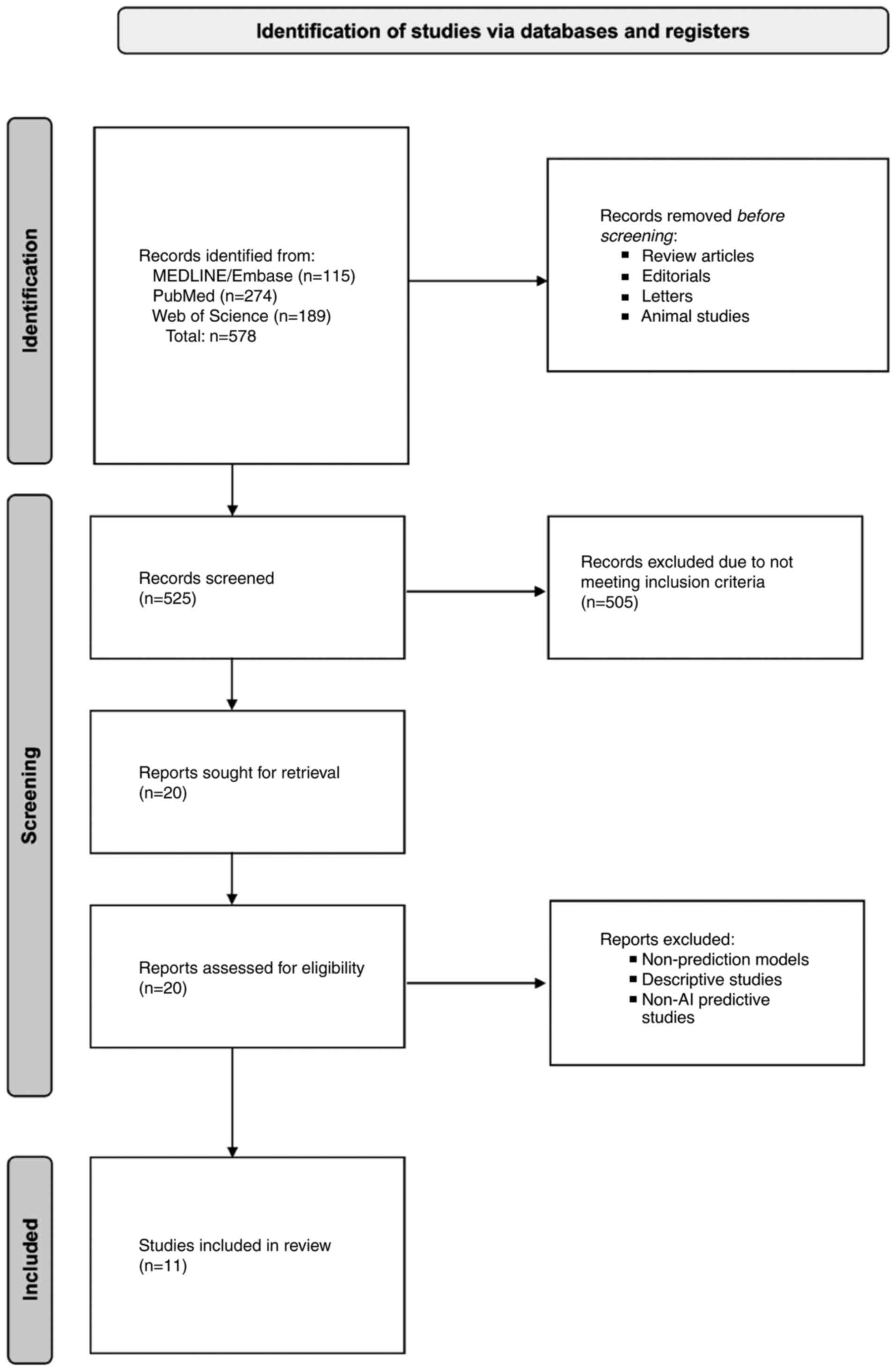
PRISMA 2020 flow diagram of study
selection for meta-analysis of AI models in choledocholithiasis
diagnosis. This diagram illustrates of the structured
identification, screening, eligibility assessment, inclusion
process in this review. To ensure transparency, reproducibility of
the literature search and selection methodology, this flow chart
documents the number of records retrieved, excluded at each stage,
and the full articles assessed for eligibility and the final group
of studies included in the quantitative synthesis. AI, artificial
intelligence.

Figure 2

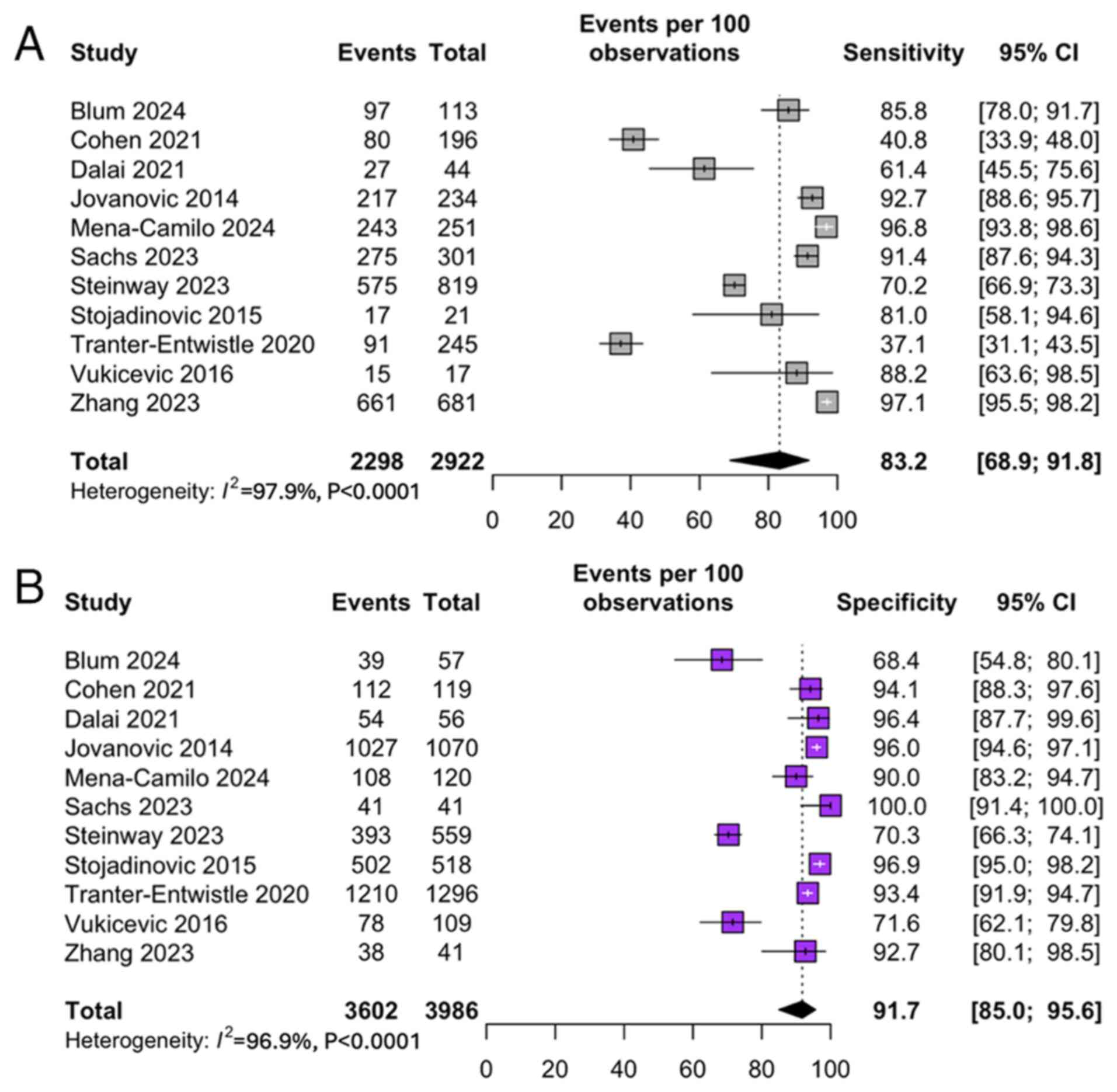
Forest plots displaying (A) pooled
sensitivity estimates and (B) pooled specificity estimates across
included studies, for AI-assisted models in choledocholithiasis
diagnosis. Each square represents an individual study estimate with
95% CI bars, scaled by sample size (total n=7,053). Pooled
estimates were calculated using a bivariate random-effects model.
AI models demonstrated pooled sensitivity 83.2% (95% CI 68.9-91.8)
and specificity 91.1% (95% CI 84.7-95.0). These plots highlight a
consistently strong diagnostic accuracy among diverse machine
learning models. AI, artificial intelligence; CI, confidence
interval.

Figure 3

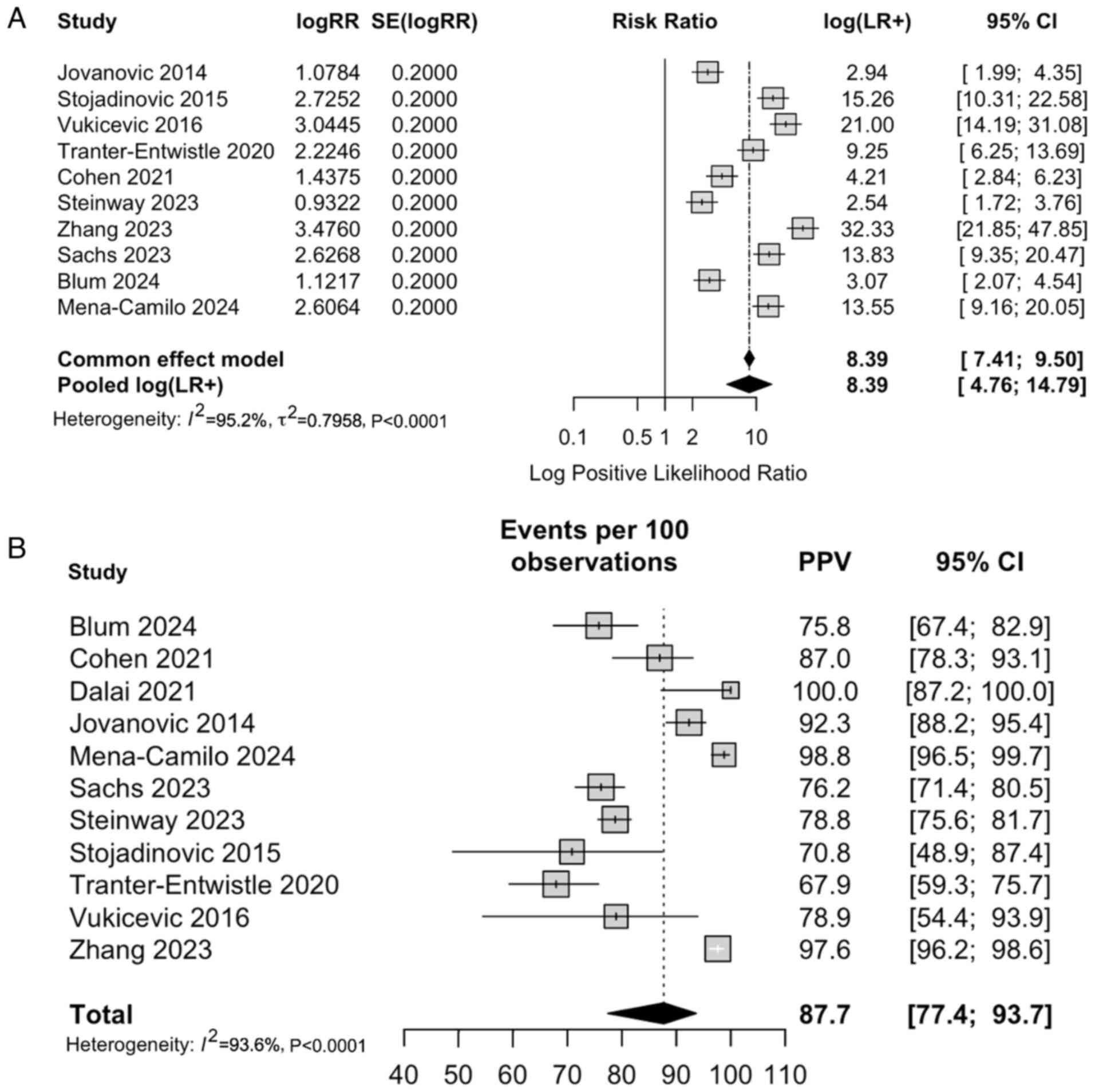
(A) Forest plot of LR+ for AI-based
diagnostic models across the 11 included studies (>7,000
patients), illustrating their ability to correctly ‘rule in’ CDL
when the test result is positive. The pooled LR⁺ from the
common-effect model was 8.39 (95% CI: 7.41-9.50), indicating that
AI-assisted tools substantially increase the post-test probability
of disease compared to pre-test estimates. (B) Forest plot
summarizing PPV estimates from studies evaluating AI-based
diagnostic tools for CDL. Pooled PPV was 87.7% (95% CI: 77.4-93.7),
demonstrating strong predictive performance in clinical practice.
Cis for individual studies highlight variability related to patient
selection, disease prevalence, and input variable differences, but
overall estimates indicate robust diagnostic accuracy across
diverse populations and model architectures. CDL,
choledocholithiasis; CI, confidence interval; LR+, positive
likelihood ratio; PPV, positive predictive value. AI, artificial
intelligence.

Figure 4

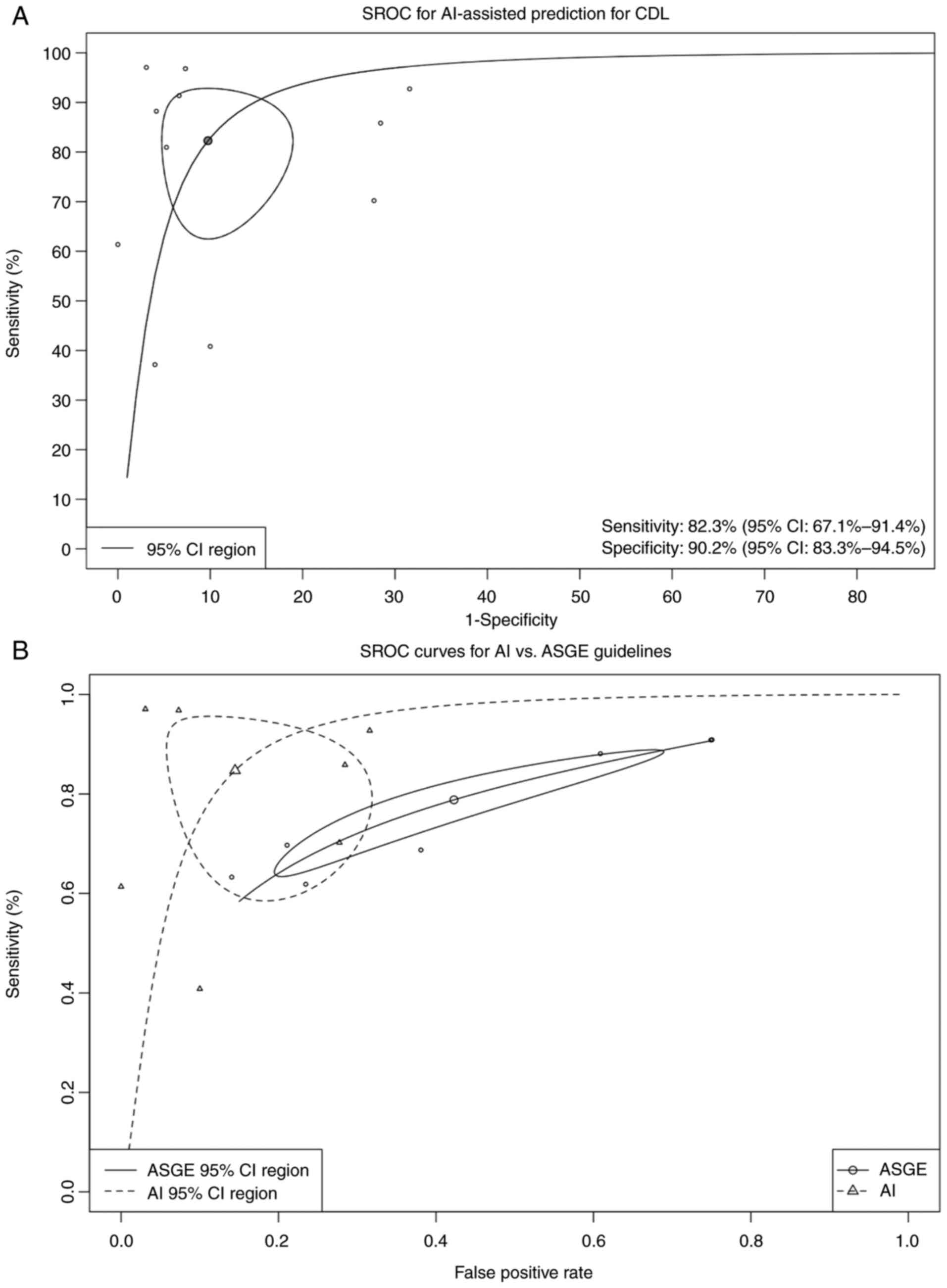
(A) Bivariate random-effects SROC
curve of AI-assisted diagnostic tools derived from 11 studies
involving over 7,000 individuals. The pooled AUC was 0.94 (95% CI:
0.83-0.98), indicating high discriminative performance across
diverse clinical populations. Threshold effect testing showed no
significant heterogeneity (P>0.05). Using Deeks' test, funnel
plot analysis for publication bias did not demonstrate significant
asymmetry (t=1.84, P=0.13). (B) Comparative SROC curves of
AI-assisted models vs. the 2019 ASGE high-risk criteria. AI models
demonstrated significantly higher pooled diagnostic accuracy with
an AUC of 0.91 (97.5% CI: 0.76-0.96) compared to ASGE criteria (AUC
0.76; 97.5% CI: 0.72-0.80). Mixed-effects meta-regression
(generalized linear mixed model, likelihood ratio test P=0.019)
confirmed the superior performance of AI models. Sensitivity and
specificity estimates for AI models were 86.1% (95% CI: 68.5-94.7)
and 93.3% (95% CI: 71.4-98.7), respectively, compared to ASGE
guideline performance of 78.4% (95% CI: 67.5-86.4) and 57.5% (95%
CI: 37.3-75.6). CDL, choledocholithiasis; SROC, summary receiver
operating characteristic; AI, artificial intelligence; AUC, area
under the curve; CI, confidence interval; ASGE, American Society
for Gastrointestinal Endoscopy.

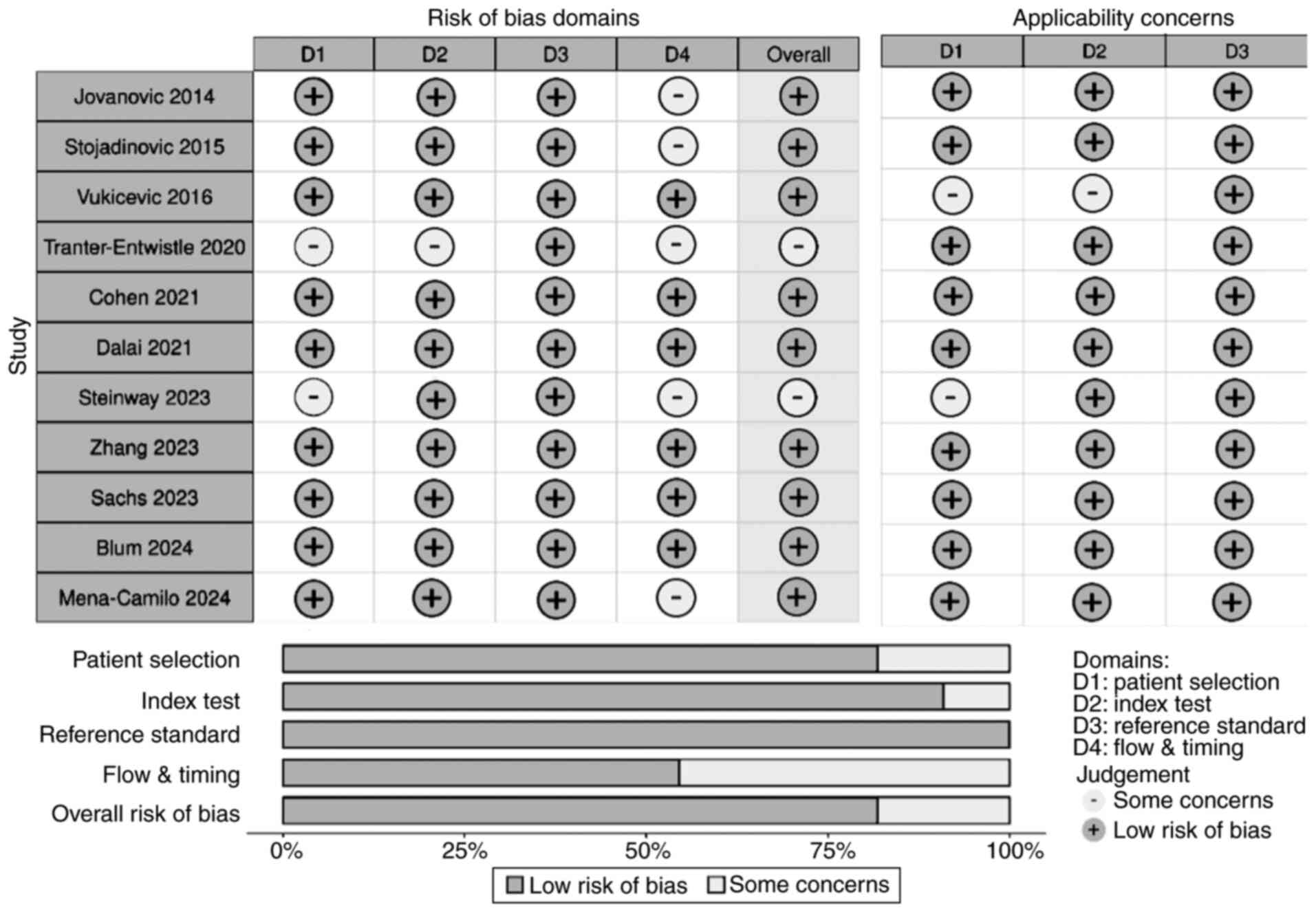
Figure 5

The Quality Assessment of Diagnostic
Accuracy Studies 2 tool was used to evaluate risk of bias and
applicability concerns for the 11 included studies (>7,000
patients). The round-shaped plot (top) summarizes the judgment of
each study across four bias domains, patient selection, index test,
reference standard, and flow/timing, and three applicability
domains, using grey (low risk), and white (some concerns). No areas
of high risk were noted. The summary plot (bottom) depicts the
overall proportion of studies rated at low risk or with some
concerns within each domain. Overall, most studies demonstrated low
risk in the index test and reference standard domains, while
patient selection and flow/timing presented the most frequent
concerns, primarily due to retrospective designs, incomplete
clinical data, or unclear temporal alignment of index and reference
tests. Applicability concerns were minimal for most studies,
reflecting consistent patient populations and appropriate test
applications. These results indicate an overall moderate to high
quality of included studies, supporting the robustness of the
meta-analysis findings.

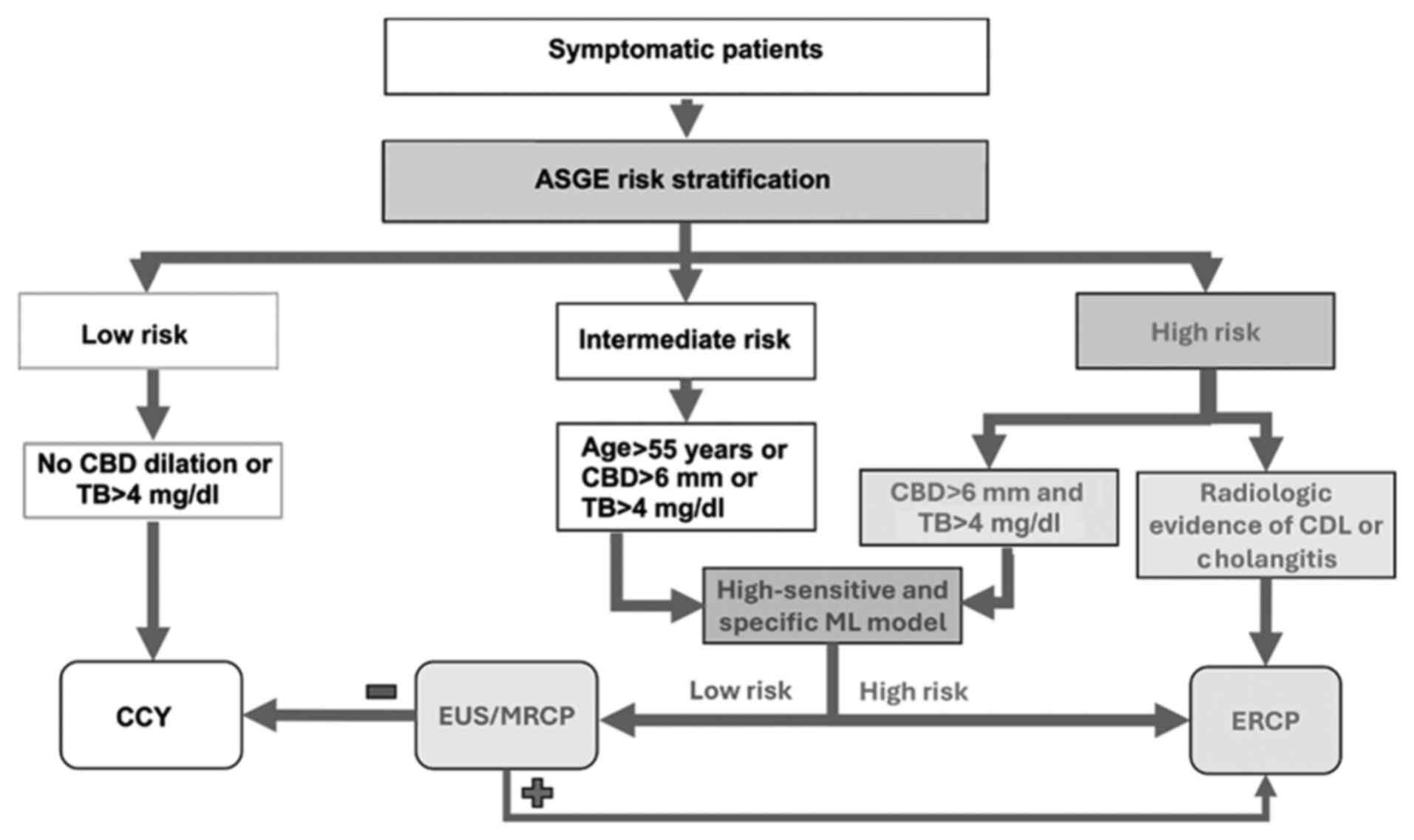
Figure 6

Proposed diagnostic pathway
incorporating AI-assisted risk stratification for suspected CDL
into ASGE guidelines. Conceptual diagram illustrating the
integration of AI-based predictive tools into clinical workflows
for patients with suspected CDL, particularly among
intermediate-risk and high-risk groups lacking definitive imaging
or clinical confirmation. AI, artificial intelligence; ASGE,
American Society for Gastrointestinal Endoscopy; CDL,
choledocholithiasis; TB, total bilirubin.
View References

1 

Tazuma S, Unno M, Igarashi Y, Inui K, Uchiyama K, Kai M, Tsuyuguchi T, Maguchi H, Mori T, Yamaguchi K, et al: Evidence-based clinical practice guidelines for cholelithiasis 2016. J Gastroenterol. 52:276–300. 2017.PubMed/NCBI View Article : Google Scholar

2 

Unalp-Arida A and Ruhl CE: Burden of gallstone disease in the United States population: Prepandemic rates and trends. World J Gastrointest Surg. 16:1130–1148. 2024.PubMed/NCBI View Article : Google Scholar

3 

Li S, Guizzetti L, Ma C, Shaheen AA, Dixon E, Ball C, Wani S and Forbes N: Epidemiology and outcomes of choledocholithiasis and cholangitis in the United States: Trends and Urban-rural variations. BMC Gastroenterol. 23(254)2023.PubMed/NCBI View Article : Google Scholar

4 

Molvar C and Glaenzer B: Choledocholithiasis: Evaluation, treatment, and outcomes. Semin Intervent Radiol. 33:268–276. 2016.PubMed/NCBI View Article : Google Scholar

5 

Morales SJ, Sampath K and Gardner TB: A review of prevention of Post-ERCP pancreatitis. Gastroenterol Hepatol (N Y). 14:286–292. 2018.PubMed/NCBI

6 

ASGE Standards of Practice Committee. Buxbaum JL, Abbas Fehmi SM, Sultan S, Fishman DS, Qumseya BJ, Cortessis VK, Schilperoort H, Kysh L, Matsuoka L, et al: ASGE guideline on the role of endoscopy in the evaluation and management of choledocholithiasis. Gastrointest Endosc. 89:1075–1105.e15. 2019.PubMed/NCBI View Article : Google Scholar

7 

ASGE Standards of Practice Committee. Maple JT, Ben-Menachem T, Anderson MA, Appalaneni V, Banerjee S, Cash BD, Fisher L, Harrison ME, Fanelli RD, et al: The role of endoscopy in the evaluation of suspected choledocholithiasis. Gastrointest Endosc. 71:1–9. 2010.PubMed/NCBI View Article : Google Scholar

8 

Tunruttanakul S, Chareonsil B, Verasmith K, Patumanond J and Mingmalairak C: Evaluation of the American society of gastrointestinal endoscopy 2019 and the european society of gastrointestinal endoscopy guidelines' performances for choledocholithiasis prediction in clinically suspected patients: A retrospective cohort study. JGH Open. 6:434–440. 2022.PubMed/NCBI View Article : Google Scholar

9 

Rajpurkar P, Chen E, Banerjee O and Topol EJ: AI in health and medicine. Nat Med. 28:31–38. 2022.PubMed/NCBI View Article : Google Scholar

10 

Kröner PT, Engels MM, Glicksberg BS, Johnson KW, Mzaik O, van Hooft JE, Wallace MB, El-Serag HB and Krittanawong C: Artificial intelligence in gastroenterology: A state-of-the-art review. World J Gastroenterol. 27:6794–824. 2021.PubMed/NCBI View Article : Google Scholar

11 

Byrne MF, Chapados N, Soudan F, Oertel C, Linares Pérez M, Kelly R, Iqbal N, Chandelier F and Rex DK: Real-time differentiation of adenomatous and hyperplastic diminutive colorectal polyps during analysis of unaltered videos of standard colonoscopy using a deep learning model. Gut. 68:94–100. 2019.PubMed/NCBI View Article : Google Scholar

12 

Korbar B, Olofson AM, Miraflor AP, Nicka CM, Suriawinata MA, Torresani L, Suriawinata AA and Hassanpour S: Deep learning for classification of colorectal polyps on Whole-slide images. J Pathol Inform. 8(30)2017.PubMed/NCBI View Article : Google Scholar

13 

An Q, Rahman S, Zhou J and Kang JJ: A comprehensive review on machine learning in healthcare industry: Classification, restrictions, opportunities and challenges. Sensors (Basel). 23(4178)2023.PubMed/NCBI View Article : Google Scholar

14 

Trezza A, Visibelli A, Roncaglia B, Spiga O and Santucci A: Unsupervised learning in precision medicine: Unlocking personalized healthcare through AI. Appl Sci. 14(9305)2024.

15 

Blum J, Hunn S, Smith J, Chan FY and Turner R: Using artificial intelligence to predict choledocholithiasis: Can machine learning models abate the use of MRCP in patients with biliary dysfunction? ANZ J Surg. 94:1260–1265. 2024.PubMed/NCBI View Article : Google Scholar

16 

Cohen RZ, Tian H, Sauer CG, Willingham FF, Santore MT, Mei Y and Freeman AJ: Creation of a pediatric choledocholithiasis prediction model. J Pediatr Gastroenterol Nutr. 73:636–641. 2021.PubMed/NCBI View Article : Google Scholar

17 

Dalai C, Azizian J, Trieu H, Rajan A, Chen F, Dong T, Beaven S and Tabibian JH: Machine learning models compared to existing criteria for noninvasive prediction of endoscopic retrograde cholangiopancreatography-confirmed choledocholithiasis. Liver Res. 5:224–231. 2021.PubMed/NCBI View Article : Google Scholar

18 

Jovanovic P, Salkic NN and Zerem E: Artificial neural network predicts the need for therapeutic ERCP in patients with suspected choledocholithiasis. Gastrointest Endosc. 80:260–268. 2014.PubMed/NCBI View Article : Google Scholar

19 

Mena-Camilo E, Salazar-Colores S, Aceves-Fernández MA, Lozada-Hernández EE and Ramos-Arreguín JM: Non-invasive prediction of choledocholithiasis using 1D convolutional neural networks and clinical data. Diagnostics. 14(1278)2024.PubMed/NCBI View Article : Google Scholar

20 

Floan Sachs G, Ourshalimian S, Jensen AR, Kelley-Quon LI, Padilla BE, Shew SB, Lofberg KM, Smith CA, Roach JP, Pandya SR, et al: Machine learning to predict pediatric choledocholithiasis: A western pediatric surgery research consortium retrospective study. Surgery. 174:934–939. 2023.PubMed/NCBI View Article : Google Scholar

21 

Steinway SN, Tang B, Telezing J, Ashok A, Kamal A, Yu CY, Jagtap N, Buxbaum JL, Elmunzer J, Wani SB, et al: A machine learning-based choledocholithiasis prediction tool to improve ERCP decision making: A proof-of-concept study. Endoscopy. 56:165–171. 2024.PubMed/NCBI View Article : Google Scholar

22 

Stojadinovic MM and Pejovic T: Regression tree for choledocholithiasis prediction. Eur J Gastroenterol Hepatol. 27:607–613. 2015.PubMed/NCBI View Article : Google Scholar

23 

Tranter-Entwistle I, Wang H, Daly K, Maxwell S and Connor S: The challenges of implementing artificial intelligence into surgical practice. World J Surg. 45:420–428. 2021.PubMed/NCBI View Article : Google Scholar

24 

Vukicevic AM, Stojadinovic M, Radovic M, Djordjevic M, Cirkovic BA, Pejovic T, Jovicic G and Filipovic N: Automated development of artificial neural networks for clinical purposes: Application for predicting the outcome of choledocholithiasis surgery. Comput Biol Med. 75:80–89. 2016.PubMed/NCBI View Article : Google Scholar

25 

Zhang H, Gao J, Sun Z, Zhang Q, Qi B, Jiang X, Li S and Shang D: Diagnostic accuracy of updated risk assessment criteria and development of novel computational prediction models for patients with suspected choledocholithiasis. Surg Endosc. 37:7348–7357. 2023.PubMed/NCBI View Article : Google Scholar

26 

Zhou Y and Dendukuri N: Statistics for quantifying heterogeneity in univariate and bivariate meta-analyses of binary data: The case of Meta-analyses of diagnostic accuracy. Stat Med. 33:2701–2717. 2014.PubMed/NCBI View Article : Google Scholar

27 

Huerta-Reyna R, Guevara-Torres L, Martínez-Jiménez MA, Armas-Zarate F, Aguilar-García J, Waldo-Hernández LI and Martínez-Martínez MU: Development and validation of a predictive model for choledocholithiasis. World J Surg. 48:1730–1738. 2024.PubMed/NCBI View Article : Google Scholar

28 

Shi Y, Lin J, Zhu J, Gao J, Liu L, Yin M, Yu C, Liu X, Wang Y and Xu C: Predicting the recurrence of common bile duct stones after ERCP treatment with automated machine learning algorithms. Dig Dis Sci. 68:2866–2877. 2023.PubMed/NCBI View Article : Google Scholar

29 

Huang L, Lu X, Huang X, Zou X, Wu L, Zhou Z, Wu D, Tang D, Chen D, Wan X, et al: Intelligent difficulty scoring and assistance system for endoscopic extraction of common bile duct stones based on deep learning: Multicenter study. Endoscopy. 53:491–498. 2021.PubMed/NCBI View Article : Google Scholar

30 

Wang Z, Yuan H, Lin K, Zhang Y, Xue Y, Liu P, Chen Z and Wu M: Artificial intelligence-empowered assessment of bile duct stone removal challenges. Expert Systems Applications. 258(125146)2024.

31 

Li D, Du B, Shen Y and Ge L: Artificial Intelligence-assisted visual sensing technology under duodenoscopy of gallbladder stones. J Sensors. 2021(5158577)2021.

32 

Akabane S, Iwagami M, Bell-Allen N, Navadgi S, Kawahara T and Bhandari M: Machine learning-based prediction for incidence of endoscopic retrograde cholangiopancreatography after emergency laparoscopic cholecystectomy: A retrospective, multicenter cohort study. Surg Endosc. 39:1770–1777. 2025.PubMed/NCBI View Article : Google Scholar

33 

Hou JU, Park SW, Park SM, Park DH, Park CH and Min S: Efficacy of an artificial neural network algorithm based on Thick-slab magnetic resonance cholangiopancreatography images for the automated diagnosis of common bile duct stones. J Gastroenterol Hepatol. 36:3532–3540. 2021.PubMed/NCBI View Article : Google Scholar

34 

Sun K, Li M, Shi Y, He H, Li Y, Sun L, Wang H, Jin C, Chen M and Li L: Convolutional neural network for identifying common bile duct stones based on magnetic resonance cholangiopancreatography. Clin Radiol. 79:553–558. 2024.PubMed/NCBI View Article : Google Scholar

35 

Singhvi G, Ampara R, Baum J and Gumaste V: ASGE guidelines result in Cost-saving in the management of choledocholithiasis. Ann Gastroenterol. 29:85–90. 2016.PubMed/NCBI

36 

Kang J, Paik KH, Lee JC, Kim HW, Lee J, Hwang JH and Kim J: The efficacy of clinical predictors for patients with intermediate risk of choledocholithiasis. Digestion. 94:100–105. 2016.PubMed/NCBI View Article : Google Scholar

37 

He H, Tan C, Wu J, Dai N, Hu W, Zhang Y, Laine L, Scheiman J and Kim JJ: Accuracy of ASGE high-risk criteria in evaluation of patients with suspected common bile duct stones. Gastrointest Endosc. 86:525–532. 2017.PubMed/NCBI View Article : Google Scholar

38 

Jacob JS, Lee ME, Chew EY, Thrift AP and Sealock RJ: Evaluating the revised american society for gastrointestinal endoscopy guidelines for common bile duct stone diagnosis. Clin Endosc. 54:269–274. 2021.PubMed/NCBI View Article : Google Scholar

39 

Lee H, Song T, Park DH, Lee SS, Seo DW, Lee SK, Kim MH, Jun JH, Moon JE and Song YH: Diagnostic performance of the current Risk-stratified approach with computed tomography for suspected choledocholithiasis and its options when negative finding. Hepatobiliary Pancreat Dis Int. 18:366–372. 2019.PubMed/NCBI View Article : Google Scholar

40 

Anand G, Yeh HC, Khashab M, Kim KJ, Lennon AM, Shin EJ, Canto M, Okolo PI, Kalloo AN and Singh VK: Mo1582 Patterns of MRCP Utilization prior to ERCP among patients at high risk for choledocholithiasis. Gastrointestinal Endoscopy. 73:AB393–AB394. 2011.

41 

Tuna Kirsaclioglu C, Çuhacı Çakır B, Bayram G, Akbıyık F, Işık P and Tunç B: Risk factors, complications and outcome of cholelithiasis in children: A retrospective, single-centre review. J Paediatr Child Health. 52:944–949. 2016.PubMed/NCBI View Article : Google Scholar

42 

Frybova B, Drabek J, Lochmannova J, Douda L, Hlava S, Zemkova D, Mixa V, Kyncl M, Zeman L, Rygl M and Keil R: Cholelithiasis and choledocholithiasis in children; risk factors for development. PLoS One. 13(e0196475)2018.PubMed/NCBI View Article : Google Scholar

43 

Murphy PB, Vogt KN, Winick-Ng J, McClure JA, Welk B and Jones SA: The increasing incidence of gallbladder disease in children: A 20year perspective. J Pediatr Surg. 51:748–752. 2016.PubMed/NCBI View Article : Google Scholar

44 

Lascia AD, Tartaglia N, Pavone G, Pacilli M, Ambrosi A, Buccino RV, Petruzzelli F, Menga MR, Fersini A and Maddalena F: One-step versus two-step procedure for management procedures for management of concurrent gallbladder and common bile duct stones. Outcomes and cost analysis. Ann Ital Chir. 92:260–207. 2021.PubMed/NCBI

45 

Jones M, Johnson M, Samourjian E, Slauch K and Ozobia N: ERCP and laparoscopic cholecystectomy in a combined (one-step) procedure: A random comparison to the standard (two-step) procedure. Surg Endosc. 27:1907–1912. 2013.PubMed/NCBI View Article : Google Scholar

46 

de Medeiros KS, Aragão Fernandes AC, Fulco Gonçalves G, Villarim CVO, Costa E Silva LC, de Sousa VMC, Meneses Rêgo AC and Araújo-Filho I: Cholecystectomy before, simultaneously, or after ERCP in patients with acute cholecystitis: A protocol for systematic review and/or meta analysis. Medicine (Baltimore). 101(e30772)2022.PubMed/NCBI View Article : Google Scholar

47 

Ebigbo A, Messmann H and Lee SH: Artificial intelligence applications in Image-based diagnosis of early esophageal and gastric neoplasms. Gastroenterology. 169:396–415.e2. 2025.PubMed/NCBI View Article : Google Scholar

48 

Sharma P and Hassan C: Artificial intelligence and deep learning for upper gastrointestinal neoplasia. Gastroenterology. 162:1056–1066. 2022.PubMed/NCBI View Article : Google Scholar

49 

Alhejaily AG: Artificial intelligence in healthcare (review). Biomed Rep. 22(11)2024.PubMed/NCBI View Article : Google Scholar

Related Articles

  • Abstract
  • View
  • Download
  • Twitter
Copy and paste a formatted citation
Spandidos Publications style
Doukas PG, Doukas SG and Broder A: The role of AI models in enhancing choledocholithiasis diagnosis: A systematic review and meta‑analysis. Exp Ther Med 30: 221, 2025.
APA
Doukas, P.G., Doukas, S.G., & Broder, A. (2025). The role of AI models in enhancing choledocholithiasis diagnosis: A systematic review and meta‑analysis. Experimental and Therapeutic Medicine, 30, 221. https://doi.org/10.3892/etm.2025.12971
MLA
Doukas, P. G., Doukas, S. G., Broder, A."The role of AI models in enhancing choledocholithiasis diagnosis: A systematic review and meta‑analysis". Experimental and Therapeutic Medicine 30.6 (2025): 221.
Chicago
Doukas, P. G., Doukas, S. G., Broder, A."The role of AI models in enhancing choledocholithiasis diagnosis: A systematic review and meta‑analysis". Experimental and Therapeutic Medicine 30, no. 6 (2025): 221. https://doi.org/10.3892/etm.2025.12971
Copy and paste a formatted citation
x
Spandidos Publications style
Doukas PG, Doukas SG and Broder A: The role of AI models in enhancing choledocholithiasis diagnosis: A systematic review and meta‑analysis. Exp Ther Med 30: 221, 2025.
APA
Doukas, P.G., Doukas, S.G., & Broder, A. (2025). The role of AI models in enhancing choledocholithiasis diagnosis: A systematic review and meta‑analysis. Experimental and Therapeutic Medicine, 30, 221. https://doi.org/10.3892/etm.2025.12971
MLA
Doukas, P. G., Doukas, S. G., Broder, A."The role of AI models in enhancing choledocholithiasis diagnosis: A systematic review and meta‑analysis". Experimental and Therapeutic Medicine 30.6 (2025): 221.
Chicago
Doukas, P. G., Doukas, S. G., Broder, A."The role of AI models in enhancing choledocholithiasis diagnosis: A systematic review and meta‑analysis". Experimental and Therapeutic Medicine 30, no. 6 (2025): 221. https://doi.org/10.3892/etm.2025.12971
Follow us
  • Twitter
  • LinkedIn
  • Facebook
About
  • Spandidos Publications
  • Careers
  • Cookie Policy
  • Privacy Policy
How can we help?
  • Help
  • Live Chat
  • Contact
  • Email to our Support Team