Spandidos Publications Logo
  • About
    • About Spandidos
    • Aims and Scopes
    • Abstracting and Indexing
    • Editorial Policies
    • Reprints and Permissions
    • Job Opportunities
    • Terms and Conditions
    • Contact
  • Journals
    • All Journals
    • Oncology Letters
      • Oncology Letters
      • Information for Authors
      • Editorial Policies
      • Editorial Board
      • Aims and Scope
      • Abstracting and Indexing
      • Bibliographic Information
      • Archive
    • International Journal of Oncology
      • International Journal of Oncology
      • Information for Authors
      • Editorial Policies
      • Editorial Board
      • Aims and Scope
      • Abstracting and Indexing
      • Bibliographic Information
      • Archive
    • Molecular and Clinical Oncology
      • Molecular and Clinical Oncology
      • Information for Authors
      • Editorial Policies
      • Editorial Board
      • Aims and Scope
      • Abstracting and Indexing
      • Bibliographic Information
      • Archive
    • Experimental and Therapeutic Medicine
      • Experimental and Therapeutic Medicine
      • Information for Authors
      • Editorial Policies
      • Editorial Board
      • Aims and Scope
      • Abstracting and Indexing
      • Bibliographic Information
      • Archive
    • International Journal of Molecular Medicine
      • International Journal of Molecular Medicine
      • Information for Authors
      • Editorial Policies
      • Editorial Board
      • Aims and Scope
      • Abstracting and Indexing
      • Bibliographic Information
      • Archive
    • Biomedical Reports
      • Biomedical Reports
      • Information for Authors
      • Editorial Policies
      • Editorial Board
      • Aims and Scope
      • Abstracting and Indexing
      • Bibliographic Information
      • Archive
    • Oncology Reports
      • Oncology Reports
      • Information for Authors
      • Editorial Policies
      • Editorial Board
      • Aims and Scope
      • Abstracting and Indexing
      • Bibliographic Information
      • Archive
    • Molecular Medicine Reports
      • Molecular Medicine Reports
      • Information for Authors
      • Editorial Policies
      • Editorial Board
      • Aims and Scope
      • Abstracting and Indexing
      • Bibliographic Information
      • Archive
    • World Academy of Sciences Journal
      • World Academy of Sciences Journal
      • Information for Authors
      • Editorial Policies
      • Editorial Board
      • Aims and Scope
      • Abstracting and Indexing
      • Bibliographic Information
      • Archive
    • International Journal of Functional Nutrition
      • International Journal of Functional Nutrition
      • Information for Authors
      • Editorial Policies
      • Editorial Board
      • Aims and Scope
      • Abstracting and Indexing
      • Bibliographic Information
      • Archive
    • International Journal of Epigenetics
      • International Journal of Epigenetics
      • Information for Authors
      • Editorial Policies
      • Editorial Board
      • Aims and Scope
      • Abstracting and Indexing
      • Bibliographic Information
      • Archive
    • Medicine International
      • Medicine International
      • Information for Authors
      • Editorial Policies
      • Editorial Board
      • Aims and Scope
      • Abstracting and Indexing
      • Bibliographic Information
      • Archive
  • Articles
  • Information
    • Information for Authors
    • Information for Reviewers
    • Information for Librarians
    • Information for Advertisers
    • Conferences
  • Language Editing
Spandidos Publications Logo
  • About
    • About Spandidos
    • Aims and Scopes
    • Abstracting and Indexing
    • Editorial Policies
    • Reprints and Permissions
    • Job Opportunities
    • Terms and Conditions
    • Contact
  • Journals
    • All Journals
    • Biomedical Reports
      • Information for Authors
      • Editorial Policies
      • Editorial Board
      • Aims and Scope
      • Abstracting and Indexing
      • Bibliographic Information
      • Archive
    • Experimental and Therapeutic Medicine
      • Information for Authors
      • Editorial Policies
      • Editorial Board
      • Aims and Scope
      • Abstracting and Indexing
      • Bibliographic Information
      • Archive
    • International Journal of Epigenetics
      • Information for Authors
      • Editorial Policies
      • Editorial Board
      • Aims and Scope
      • Abstracting and Indexing
      • Bibliographic Information
      • Archive
    • International Journal of Functional Nutrition
      • Information for Authors
      • Editorial Policies
      • Editorial Board
      • Aims and Scope
      • Abstracting and Indexing
      • Bibliographic Information
      • Archive
    • International Journal of Molecular Medicine
      • Information for Authors
      • Editorial Policies
      • Editorial Board
      • Aims and Scope
      • Abstracting and Indexing
      • Bibliographic Information
      • Archive
    • International Journal of Oncology
      • Information for Authors
      • Editorial Policies
      • Editorial Board
      • Aims and Scope
      • Abstracting and Indexing
      • Bibliographic Information
      • Archive
    • Medicine International
      • Information for Authors
      • Editorial Policies
      • Editorial Board
      • Aims and Scope
      • Abstracting and Indexing
      • Bibliographic Information
      • Archive
    • Molecular and Clinical Oncology
      • Information for Authors
      • Editorial Policies
      • Editorial Board
      • Aims and Scope
      • Abstracting and Indexing
      • Bibliographic Information
      • Archive
    • Molecular Medicine Reports
      • Information for Authors
      • Editorial Policies
      • Editorial Board
      • Aims and Scope
      • Abstracting and Indexing
      • Bibliographic Information
      • Archive
    • Oncology Letters
      • Information for Authors
      • Editorial Policies
      • Editorial Board
      • Aims and Scope
      • Abstracting and Indexing
      • Bibliographic Information
      • Archive
    • Oncology Reports
      • Information for Authors
      • Editorial Policies
      • Editorial Board
      • Aims and Scope
      • Abstracting and Indexing
      • Bibliographic Information
      • Archive
    • World Academy of Sciences Journal
      • Information for Authors
      • Editorial Policies
      • Editorial Board
      • Aims and Scope
      • Abstracting and Indexing
      • Bibliographic Information
      • Archive
  • Articles
  • Information
    • For Authors
    • For Reviewers
    • For Librarians
    • For Advertisers
    • Conferences
  • Language Editing
Login Register Submit
  • This site uses cookies
  • You can change your cookie settings at any time by following the instructions in our Cookie Policy. To find out more, you may read our Privacy Policy.

    I agree
Search articles by DOI, keyword, author or affiliation
Search
Advanced Search
presentation
Experimental and Therapeutic Medicine
Join Editorial Board Propose a Special Issue
Print ISSN: 1792-0981 Online ISSN: 1792-1015
Journal Cover
March-2026 Volume 31 Issue 3

Full Size Image

Sign up for eToc alerts
Recommend to Library

Journals

International Journal of Molecular Medicine

International Journal of Molecular Medicine

International Journal of Molecular Medicine is an international journal devoted to molecular mechanisms of human disease.

International Journal of Oncology

International Journal of Oncology

International Journal of Oncology is an international journal devoted to oncology research and cancer treatment.

Molecular Medicine Reports

Molecular Medicine Reports

Covers molecular medicine topics such as pharmacology, pathology, genetics, neuroscience, infectious diseases, molecular cardiology, and molecular surgery.

Oncology Reports

Oncology Reports

Oncology Reports is an international journal devoted to fundamental and applied research in Oncology.

Experimental and Therapeutic Medicine

Experimental and Therapeutic Medicine

Experimental and Therapeutic Medicine is an international journal devoted to laboratory and clinical medicine.

Oncology Letters

Oncology Letters

Oncology Letters is an international journal devoted to Experimental and Clinical Oncology.

Biomedical Reports

Biomedical Reports

Explores a wide range of biological and medical fields, including pharmacology, genetics, microbiology, neuroscience, and molecular cardiology.

Molecular and Clinical Oncology

Molecular and Clinical Oncology

International journal addressing all aspects of oncology research, from tumorigenesis and oncogenes to chemotherapy and metastasis.

World Academy of Sciences Journal

World Academy of Sciences Journal

Multidisciplinary open-access journal spanning biochemistry, genetics, neuroscience, environmental health, and synthetic biology.

International Journal of Functional Nutrition

International Journal of Functional Nutrition

Open-access journal combining biochemistry, pharmacology, immunology, and genetics to advance health through functional nutrition.

International Journal of Epigenetics

International Journal of Epigenetics

Publishes open-access research on using epigenetics to advance understanding and treatment of human disease.

Medicine International

Medicine International

An International Open Access Journal Devoted to General Medicine.

Journal Cover
March-2026 Volume 31 Issue 3

Full Size Image

Sign up for eToc alerts
Recommend to Library

  • Article
  • Citations
    • Cite This Article
    • Download Citation
    • Create Citation Alert
    • Remove Citation Alert
    • Cited By
  • Similar Articles
    • Related Articles (in Spandidos Publications)
    • Similar Articles (Google Scholar)
    • Similar Articles (PubMed)
  • Download PDF
  • Download XML
  • View XML
Case Report

Submucosal colonic fecalith mimicking a submucosal malignant tumor at the anastomotic site after colon cancer: A case report

  • Authors:
    • Motoaki Yuhi
    • Masatsugu Hiraki
    • Shin Takesue
    • Mariko Hashiguchi
    • Megumi Nishiyama
    • Yoshiaki Egashira
    • Tatsuya Manabe
    • Hirokazu Noshiro
  • View Affiliations / Copyright

    Affiliations: Department of Surgery, Saga University Faculty of Medicine, Saga 849‑8501, Japan, Department of Pathology, Saga University Faculty of Medicine, Saga 849‑8501, Japan, Department of Radiology, Saga University Faculty of Medicine, Saga 849‑8501, Japan
  • Article Number: 65
    |
    Published online on: January 8, 2026
       https://doi.org/10.3892/etm.2026.13060
  • Expand metrics +
Metrics: Total Views: 0 (Spandidos Publications: | PMC Statistics: )
Metrics: Total PDF Downloads: 0 (Spandidos Publications: | PMC Statistics: )
Cited By (CrossRef): 0 citations Loading Articles...

This article is mentioned in:


Abstract

Submucosal fecaliths occurring at the anastomotic site after intestinal surgery are rare. In addition, endoscopic histological diagnosis of submucosal lesions is challenging. The present study describes a rare case of a submucosal lesion suspected of being a submucosal tumor at the anastomotic site following colectomy, resulting in a postoperative diagnosis of submucosal fecalith. A 70‑year‑old man had a history of abdominal surgery, including colectomy for colon cancer and small bowel resection for gastrointestinal stromal tumor (GIST). During follow‑up, a calcified submucosal lesion was detected near the anastomotic site after transverse colectomy, and its size gradually increased. Colonic GIST was suspected based on diagnostic modalities. The patient underwent partial laparoscopic resection of the small intestine and transverse colon, including the previous anastomotic site. Macroscopically and microscopically, the resected specimen was not identified as a neoplasm, but was instead revealed to be a cystic lesion containing soft and brownish materials, which was not connected to the colonic lumen, suggesting bowel duplication containing a fecalith. In conclusion, the present study reports on the case of intestinal duplication containing a submucosal fecalith mimicking submucosal neoplasm.

Introduction

Submucosal fecaliths are extremely rare, with most previously reported cases occurring in the cecum or at the appendiceal orifice (1), unrelated to surgical treatment. In such cases, the formation of submucosal fecaliths is thought to be associated with fecal material becoming trapped at the appendiceal orifice and gradually migrating into the submucosal layer over time (2). In other words, submucosal mass formation due to fecalith results from the presence of an appendiceal-like space that allows feces to enter accompanied by chronic inflammation. Therefore, submucosal fecalith formation in parts of the colon other than the cecum is rare, and its occurrence at a surgical site is even more uncommon. Furthermore, submucosal lesions are particularly difficult to diagnose histologically via an endoscopic biopsy, making a preoperative diagnosis challenging and often necessitating surgical resection.

We herein report a rare case of a submucosal fecalith mimicking a colonic submucosal tumor located at the small intestine-transverse colon anastomosis site after right colectomy. This report explores the potential mechanisms underlying the formation of submucosal fecaliths at the surgical site, and discusses the associated diagnostic challenges, comparisons with previously reported cases, and considerations for appropriate management.

Case report

A 70-year-old man had a history of multiple abdominal surgeries performed in our department (Department of Surgery, Saga University Faculty of Medicine, Saga, Japan) and had been undergoing ongoing postoperative surveillance. He had undergone open right colectomy for ascending colon cancer (1st surgery, pT1bN0M0, pStage I) and laparoscopic-assisted transverse colectomy with end-to-end ileo-transverse colon anastomosis for transverse colon cancer located 3 cm distal to the previous anastomosis site (2nd surgery, pT3N0M0, pStage IIa) at 51 and 58 years old, respectively.

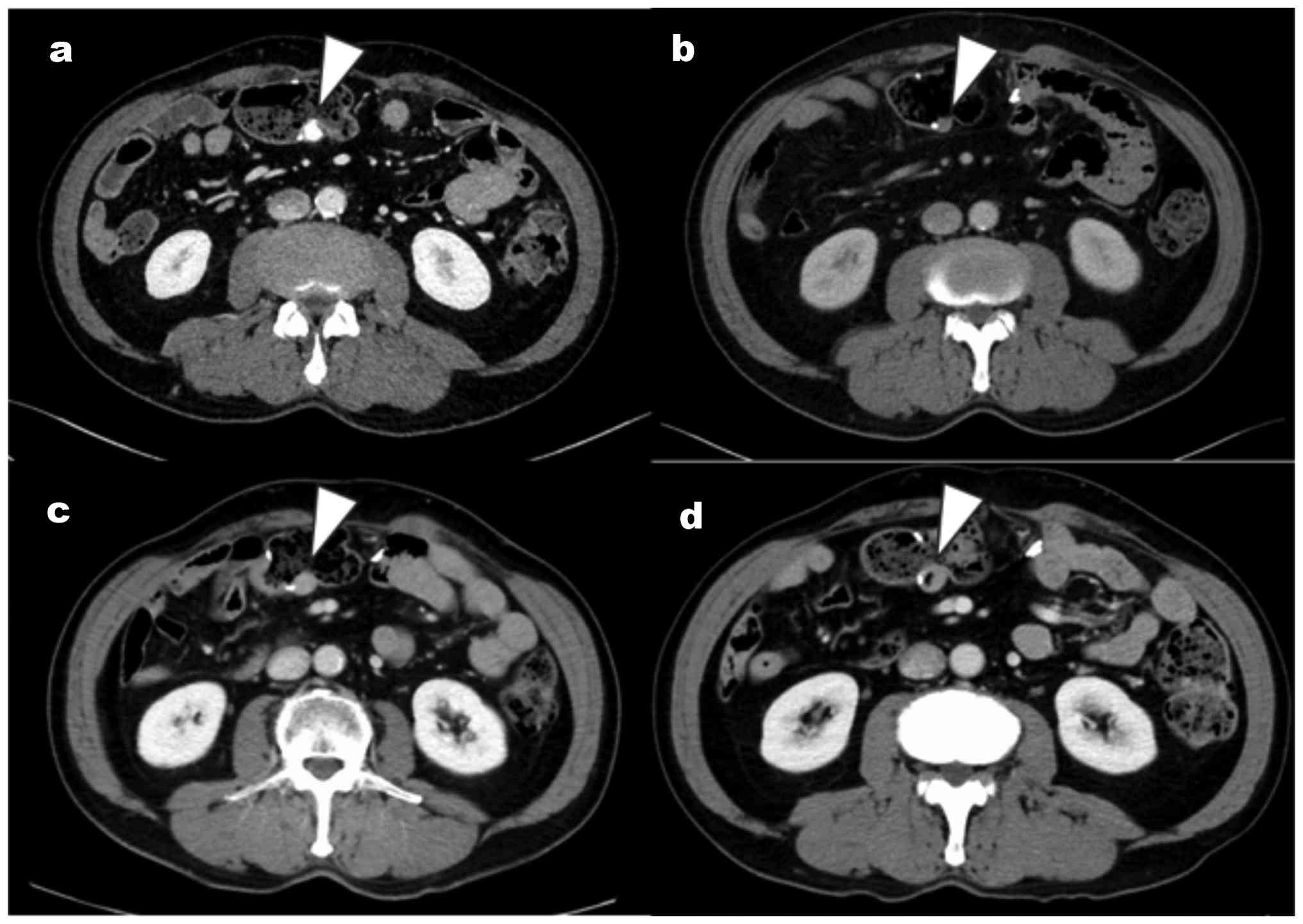
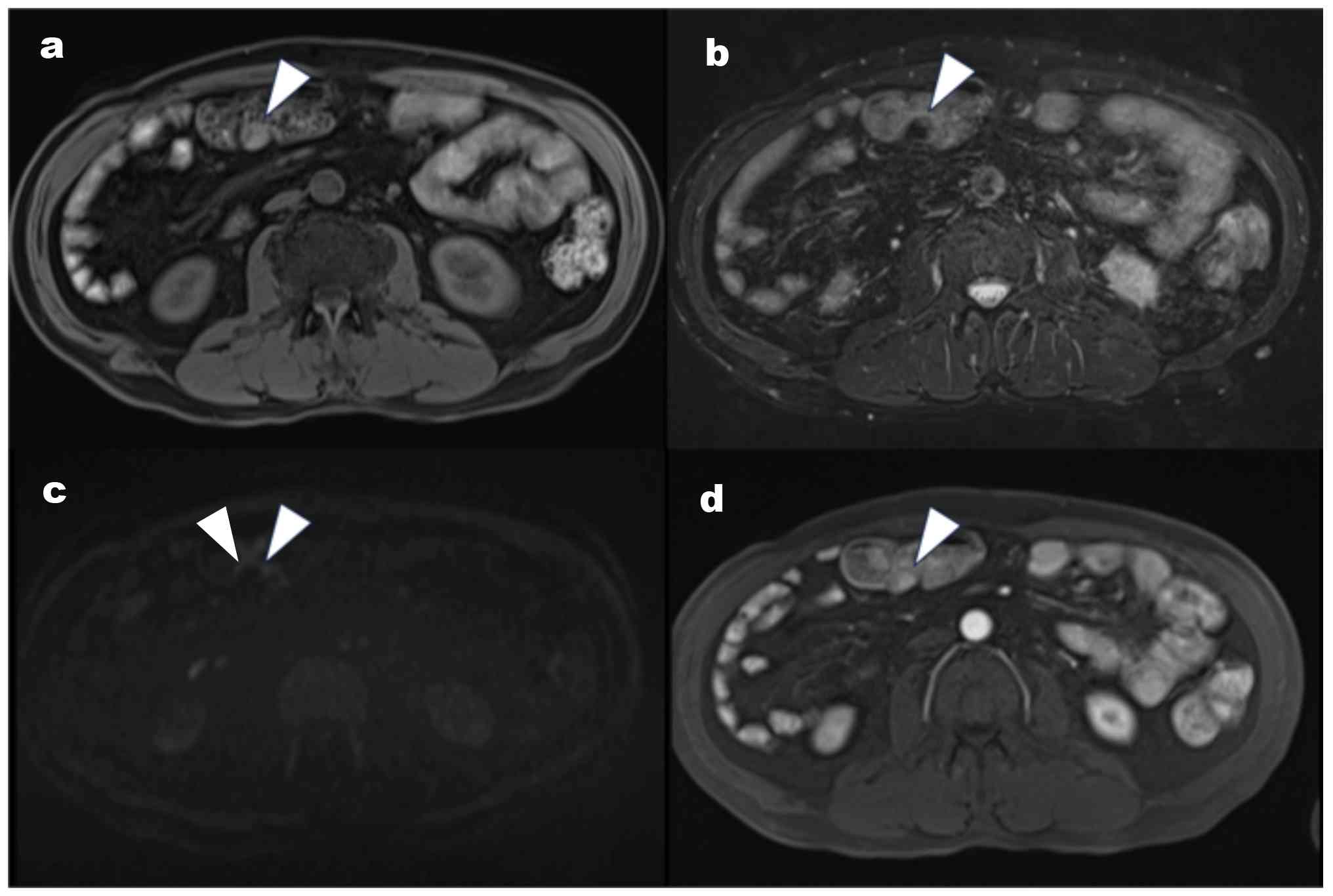
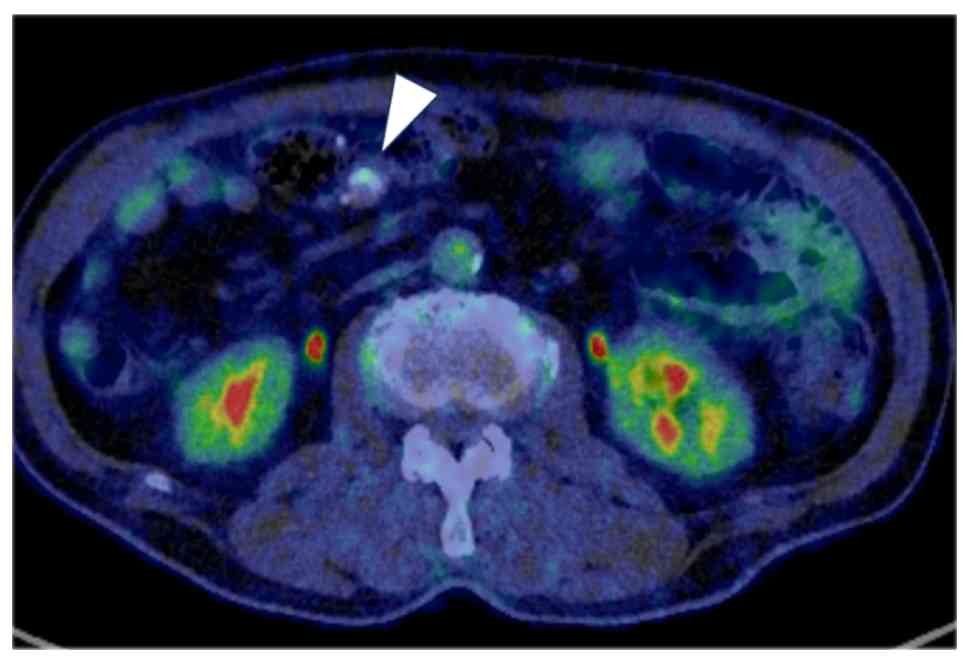
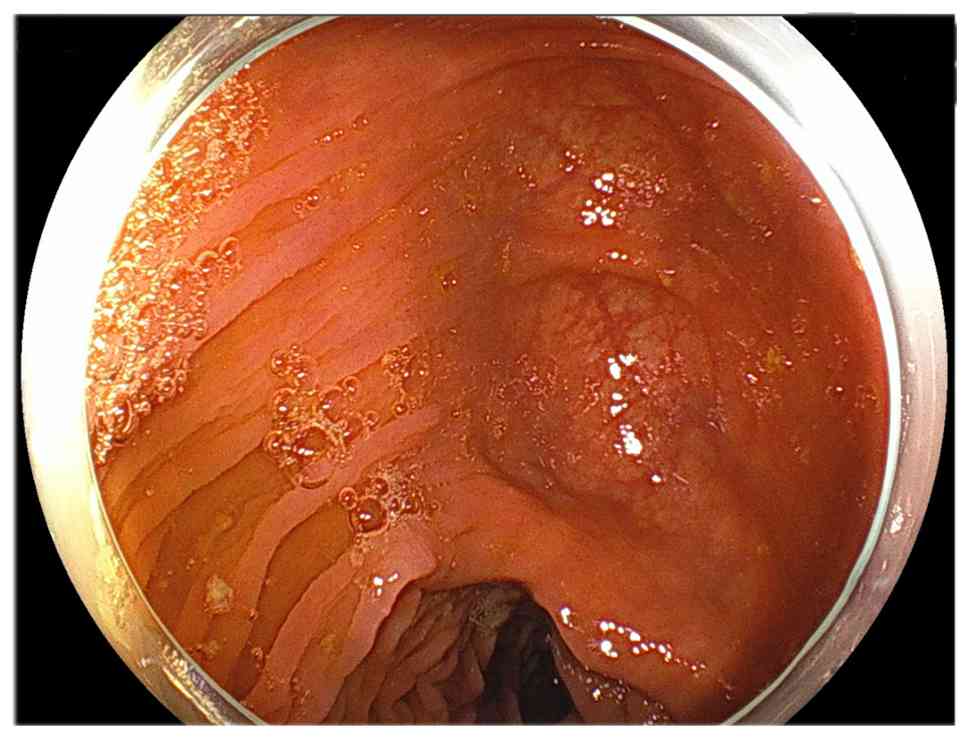
At 68 years old, he underwent laparoscopic small bowel resection for a submucosal tumor as his 3rd surgery and was diagnosed with gastrointestinal stromal tumor (GIST) categorized as low-risk based on the modified Fletcher classification. During the examination of postoperative surveillance 12 months after the last surgery (11 years after the 1st surgery), contrast-enhanced computed tomography (CT) revealed a faint high-attenuation nodule with calcification near the anastomotic site of the previous transverse colectomy (27x15x13 mm, Fig. 1A). A retrospective review of the CT images revealed that the lesion could be identified as early as 10 years ago (1 year after the 1st surgery) (Fig. 1B) and showed a slow increase in size over several years (Fig. 1C and D). Blood examinations revealed no elevation of carcinoembryonic antigen or carbohydrate antigen. Magnetic resonance imaging (MRI) also detected a nodule at the anastomosis site. However, the tumor showed no signal intensity on T2-weighted imaging, without restricted diffusion on diffusion-weighted imaging, or contrast enhancement on dynamic imaging (Fig. 2). Furthermore, positron emission tomography (PET) demonstrated no significant fluorodeoxyglucose uptake in the lesion (Fig. 3). Colonic endoscopy revealed no tumors in the mucosal layer, and no tumors were detected in the submucosal layer (Fig. 4). Therefore, a histopathological diagnosis using endoscopic ultrasound-guided fine needle aspiration could not be made.

Contrast-enhanced CT findings. (A)
Contrast-enhanced CT 1 year after GIST surgery (3rd surgery; 11
years after the 1st surgery) showed a calcified submucosal lesion
at the anastomotic site following transverse colectomy (arrowhead).
The nodular lesion (arrowhead) was first identified (B) one year
after the 1st surgery following the retrospective review of CT
images, and (C) an increase trend in size five years after the 1st
surgery. (D) Nine years after the 1st surgery, the lesion
(arrowhead) continued to enlarge, with visible air. The order of
the figures in the actual time series is b, c, d and a. CT,
computed tomography.

Figure 1

Contrast-enhanced CT findings. (A) Contrast-enhanced CT 1 year after GIST surgery (3rd surgery; 11 years after the 1st surgery) showed a calcified submucosal lesion at the anastomotic site following transverse colectomy (arrowhead). The nodular lesion (arrowhead) was first identified (B) one year after the 1st surgery following the retrospective review of CT images, and (C) an increase trend in size five years after the 1st surgery. (D) Nine years after the 1st surgery, the lesion (arrowhead) continued to enlarge, with visible air. The order of the figures in the actual time series is b, c, d and a. CT, computed tomography.

Contrast-enhanced MRI findings. MRI
showed a lesion (arrowhead) with (A) slightly high signal intensity
on T1-weighted imaging, but (B) without high signal intensity on
the T2-weighted imaging. (C) No apparent restricted diffusion was
observed (arrowhead) on diffusion-weighted imaging. (D) No obvious
contrast enhancement was observed (arrowhead) on the dynamic study.
MRI, magnetic resonance imaging.

Figure 2

Contrast-enhanced MRI findings. MRI showed a lesion (arrowhead) with (A) slightly high signal intensity on T1-weighted imaging, but (B) without high signal intensity on the T2-weighted imaging. (C) No apparent restricted diffusion was observed (arrowhead) on diffusion-weighted imaging. (D) No obvious contrast enhancement was observed (arrowhead) on the dynamic study. MRI, magnetic resonance imaging.

PET-CT findings. PET-CT showed no
significant fluorodeoxyglucose uptake in the lesion (arrowhead).
PET-CT, positron emission tomography-computed tomography.

Figure 3

PET-CT findings. PET-CT showed no significant fluorodeoxyglucose uptake in the lesion (arrowhead). PET-CT, positron emission tomography-computed tomography.

Colonic endoscopy revealed no tumors
at the anastomotic site.

Figure 4

Colonic endoscopy revealed no tumors at the anastomotic site.

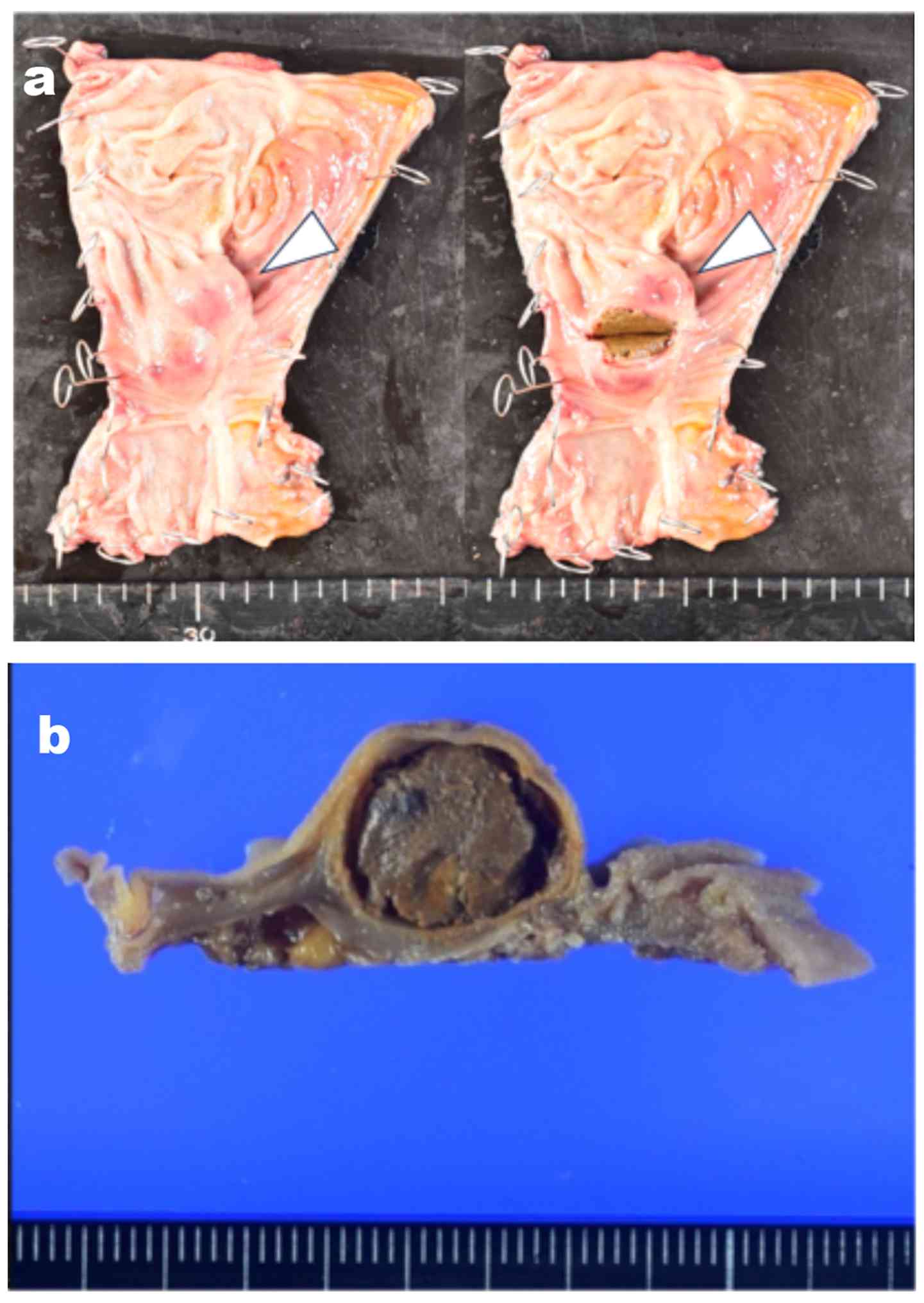
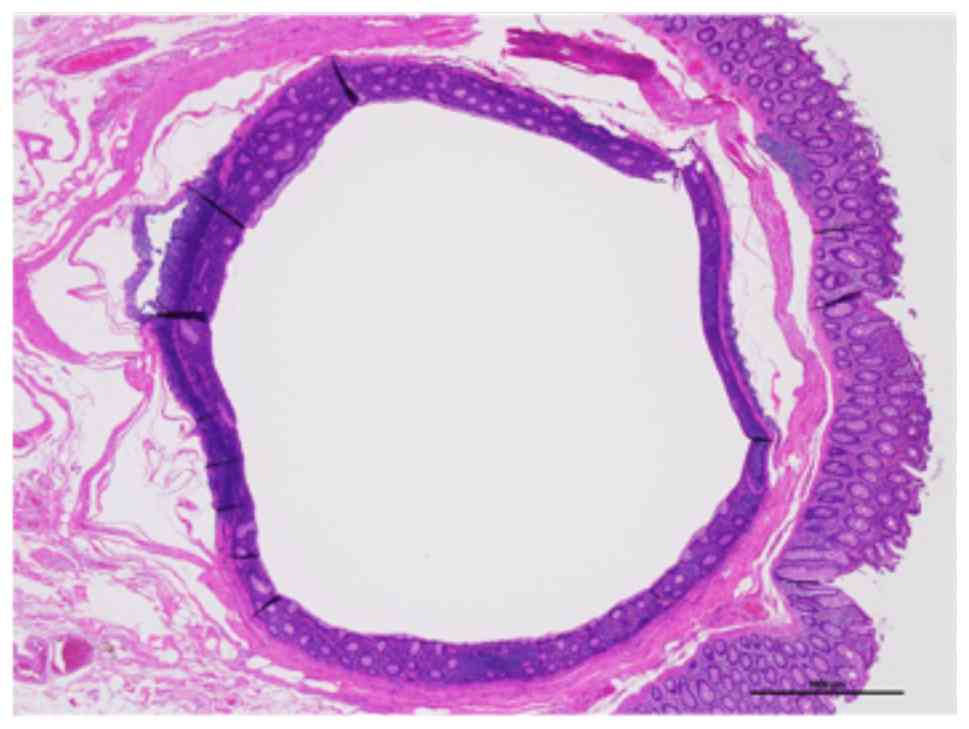
Although the imaging findings suggested a low possibility of a malignant tumor, the lesion showed gradual enlargement with calcification and possibly mild enhancement on CT. Thus, GIST with low-grade malignant potential was diagnosed. Partial laparoscopic resection of the small intestine and transverse colon including the previous anastomotic site was performed for both diagnostic and therapeutic purposes as his 4th surgery. During surgery, a tumorous lesion was identified at the ileocolic anastomosis site. The lesion was dissected with the 5-cm margin proximally and distantly, followed by reconstruction with intracorporeal functional end-to-end anastomosis. Resected specimen showed a submucosal tumor at the anastomotic site, which included soft brownish structures inside (Fig. 5). Tissues were fixed in 10% neutral buffered formalin at room temperature for 48 h and sectioned at 4 µm. The tissue sections were then stained with hematoxylin (at room temperature for 10 min) to visualize cell nuclei, followed by counterstaining with eosin (at room temperature for 2 min) to visualize the cytoplasm and extracellular matrix. Observations were performed under a light microscope. A histopathological examination revealed that the lesion had a cystic structure filled with yellow-brown intestinal content mixed with calcified deposits. The cystic structure was primarily located in the submucosal layer of the colon, surrounded by a thin layer of muscularis propria, and its lumen was lined by non-neoplastic colonic mucosa. No clear communication was observed between the cyst and colonic lumen (Fig. 6). Based on these findings, the lesion was diagnosed as duplication of the bowel containing fecaliths.

Resected specimen. (A) Macroscopic
findings of the surgical specimen showed that the lesion
(arrowhead) was located on the colonic side of the anastomotic site
(left), and the cross section of the lesion contained intestinal
contents with brown color mixed with calcified deposits (right).
(B) Furthermore, in the formalin-fixed specimen, no communication
was observed between the lesion and the intestinal lumen.

Figure 5

Resected specimen. (A) Macroscopic findings of the surgical specimen showed that the lesion (arrowhead) was located on the colonic side of the anastomotic site (left), and the cross section of the lesion contained intestinal contents with brown color mixed with calcified deposits (right). (B) Furthermore, in the formalin-fixed specimen, no communication was observed between the lesion and the intestinal lumen.

Histopathological findings.
Microscopically, the structure was primarily located within the
submucosal layer of the colon, surrounded by a thin layer of
muscularis propria, and lined by non-neoplastic colonic epithelium
(hematoxylin and eosin stain, x20). Scale bar: 1,000 µm.

Figure 6

Histopathological findings. Microscopically, the structure was primarily located within the submucosal layer of the colon, surrounded by a thin layer of muscularis propria, and lined by non-neoplastic colonic epithelium (hematoxylin and eosin stain, x20). Scale bar: 1,000 µm.

The patient was discharged from the hospital on postoperative date eight days after surgery without any complications. No recurrence was observed at eight months after the last surgery.

Discussion

Submucosal fecaliths are most often reported in the appendix or cecum, where fecal material enters an appendiceal-like space and causes chronic inflammation that leads to fecalith formation (1). However, their occurrence at the surgical site after colectomy is extremely rare. Since 2004, only five cases, including our case, have described a fecalith presenting as a submucosal lesion at the surgical site after colorectal surgery, as shown in Table I (3-6). Azizi et al (3) reported a submucosal fecal mass after the stapled hemorrhoidopexy and speculated that it was due to the gradual penetration of the fecal material through a non-healed staple-line. Bustamante et al (4) reported a case of submucosal fecalith at the cecum that was identified three years after an appendectomy; however, the lesion was located in a mucosal fissure near the appendiceal orifice, with no direct association with the prior appendectomy procedure noted. Two cases were detected as anastomotic diverticulum with a fecalith at the site of previous colonic anastomosis (5,6). In our case, the submucosal fecalith was located near the staple line without communication of the intestinal lumen or existence of the mucosal fissure or diverticular. Thus, this case was considered similar to the Azizi s cases (3).

Table I

Reports of submucosal fecalith presenting at the surgical site after colorectal surgery.

Table I

Reports of submucosal fecalith presenting at the surgical site after colorectal surgery.

First author, yearAge, yearsSexPrevious operationInitial detection after the surgeryMaximum diameter, mmLocationPre-treatment diagnosisTreatment(Refs.)
Azizi, 201130FStapled hemorrhoidopexy3 years40RectumN.D.Excised(3)
Bustamante, 201934MAppendectomy3 years40CecumMalignancy suspectedRight hemicolectomy(4)
Ma, 202265FPartial rectal cancer resection7 years20RectumTumor recurrenceEndoscopic removal(5)
Li, 202445MSigmoidectomy3 yearsN.D.ColonAnastomotic diverticulum filled with fecalithEndoscopic submucosal resection(6)
Present case70MTransverse colectomy1 year27ColonGIST suspectedPartial resection of the intestine-

[i] N.D., not documented; GIST, gastrointestinal stromal tumor.

However, the pathogenesis of submucosal fecalith formation at the surgical site remains unclear. In the present case, we speculated that a mucosal defect at the anastomotic site during the transverse colectomy may have formed a diverticulum or mucosal-strangled, leading to the continuous accumulation of feces into the space of the submucosal layer. Initially, there may have been communication between the diverticulum-like lesion and the intestinal lumen, considering that a retrospective review of CT scans revealed that the lesion had temporarily contained air (Fig. 1D). However, the entrapped feces may have been epithelialized over the long course of tissue repair, ultimately forming a submucosal fecalith. Another possibility is that this submucosal tumor developed because a diverticulum located near the anastomosis site became a closed space due to the anastomosis, and thereafter developed into a cyst-like structure.

Regarding the treatment strategy in this case, the tumor was reached 27 mm in diameter and showed a tendency to increase in size. In addition, considering the patients  age and had a history of surgery for malignant abdominal diseases, including GIST, relative surgical indications were considered. In general, it is recommended that all stromal tumors of the large intestine be surgically excised, regardless of their size or level of suspicion for malignancy (7). After obtaining sufficient informed consent, surgery was performed for diagnosis and treatment. However, MRI and PET-CT could not detect features suggestive of high-grade malignancy, and the imaging pattern differed from that of the previous GIST. Furthermore, a retrospective review of previous CT scans revealed that the lesion had appeared shortly after transverse colectomy and temporarily contained air. Considering these factors, if we had been aware that a submucosal fecalith could develop at the surgical site, then the operation might have been avoided. In addition, if a submucosal tumor is detected, then endoscopic submucosal dissection should also be considered in such cases. However, in this case, a submucosal tumor was located at the anastomotic site and the intestinal deformation likely caused by the anastomosis made preoperative endoscopic confirmation difficult. Furthermore, only four similar cases have so far been reported in the past (3-6), as the result, it might be still difficult to make a diagnosis of a submucosal colonic fecalith in such cases.

In conclusion, We encountered an extremely rare case of a submucosal fecalith mimicking a submucosal tumor at the anastomotic site after colon cancer. When a submucosal tumor is suspected at the anastomotic site following colectomy, the possibility of a submucosal fecalith should be considered.

Acknowledgements

Not applicable.

Funding

Funding: No funding was received.

Availability of data ana materials

The data generated in the present study may be requested from the corresponding author.

Authors  contribution

MY, MHi, ST, MHa, MN, YE, TM and HN contributed to the diagnosis and treatment of the patient. MY, MHi and ST contributed to the surgical treatment. MHa and MN were responsible for the pathological diagnosis, YE contributed to the imaging diagnosis. MY contributed to drafting the manuscript. MHi and TM edited the manuscript. MY and MHi confirm the authenticity of all the raw data. TM and HN supervised the patient s treatment. All authors read and approved the final manuscript.

Ethics approval and consent to participate

Not applicable.

Patient consent for publication

Written informed consent for the treatment, as well as for the publication of this case report and accompanying images, were obtained from the patient.

Competing interests

The authors declare that they have no competing interests.

References

1 

Bekki T, Fukuda T, Moriuchi T, Namba Y, Okimoto S, Mukai S, Saito Y, Oishi K, Nishida T and Ohdan H: Appendicitis with submucosal fecalith mimicking a submucosal tumor: A case report. Surg Case Rep. 27(105)2021.PubMed/NCBI View Article : Google Scholar

2 

Alhalabi SM, Alsaati G and Al-Kawas F: Fecalith presenting as a submucosal cecal mass. Clin Gastroenterol Hepatol. 11(A24)2013.PubMed/NCBI View Article : Google Scholar

3 

Azizi R, Sotoudehnia S, Heidari A and Zahedi-Shoolami L: A submucosal fecal mass as the complication of stapled hemorrhoidopexy: A case report. Int J Surg Case Rep. 2:109–110. 2011.PubMed/NCBI View Article : Google Scholar

4 

Bustamante JP, Goñi HEB, Salas FP and Mosco MD: Submucosal fecalith presenting as a submucosal cecal mass. ACG Case Rep J. 6(e00182)2019.PubMed/NCBI View Article : Google Scholar

5 

Ma B, Wu J, Jiang L, Zhang H, Xu H and Shi L: Anastomotic diverticulum with a fecalith after resection of rectal cancer: A rare case. Am J Gastroenterol. 117(1735)2022.PubMed/NCBI View Article : Google Scholar

6 

Li Q, Gong Z, Tang W and Hu D: An unusual cause of protruding submucosal lesion in the colon (with video). Gastrointest Endosc. 99:295–297. 2024.PubMed/NCBI View Article : Google Scholar

7 

Syllaios A, Schizas D, Davakis S, Koutras A, Vailas M, Machairas N, Mpaili E and Felekouras E: GISTs of the large intestine: Review of the literature. J BUON. 25:15–22. 2020.PubMed/NCBI

Related Articles

  • Abstract
  • View
  • Download
  • Twitter
Copy and paste a formatted citation
Spandidos Publications style
Yuhi M, Hiraki M, Takesue S, Hashiguchi M, Nishiyama M, Egashira Y, Manabe T and Noshiro H: <p>Submucosal colonic fecalith mimicking a submucosal malignant tumor at the anastomotic site after colon cancer: A case report</p>. Exp Ther Med 31: 65, 2026.
APA
Yuhi, M., Hiraki, M., Takesue, S., Hashiguchi, M., Nishiyama, M., Egashira, Y. ... Noshiro, H. (2026). <p>Submucosal colonic fecalith mimicking a submucosal malignant tumor at the anastomotic site after colon cancer: A case report</p>. Experimental and Therapeutic Medicine, 31, 65. https://doi.org/10.3892/etm.2026.13060
MLA
Yuhi, M., Hiraki, M., Takesue, S., Hashiguchi, M., Nishiyama, M., Egashira, Y., Manabe, T., Noshiro, H."<p>Submucosal colonic fecalith mimicking a submucosal malignant tumor at the anastomotic site after colon cancer: A case report</p>". Experimental and Therapeutic Medicine 31.3 (2026): 65.
Chicago
Yuhi, M., Hiraki, M., Takesue, S., Hashiguchi, M., Nishiyama, M., Egashira, Y., Manabe, T., Noshiro, H."<p>Submucosal colonic fecalith mimicking a submucosal malignant tumor at the anastomotic site after colon cancer: A case report</p>". Experimental and Therapeutic Medicine 31, no. 3 (2026): 65. https://doi.org/10.3892/etm.2026.13060
Copy and paste a formatted citation
x
Spandidos Publications style
Yuhi M, Hiraki M, Takesue S, Hashiguchi M, Nishiyama M, Egashira Y, Manabe T and Noshiro H: <p>Submucosal colonic fecalith mimicking a submucosal malignant tumor at the anastomotic site after colon cancer: A case report</p>. Exp Ther Med 31: 65, 2026.
APA
Yuhi, M., Hiraki, M., Takesue, S., Hashiguchi, M., Nishiyama, M., Egashira, Y. ... Noshiro, H. (2026). <p>Submucosal colonic fecalith mimicking a submucosal malignant tumor at the anastomotic site after colon cancer: A case report</p>. Experimental and Therapeutic Medicine, 31, 65. https://doi.org/10.3892/etm.2026.13060
MLA
Yuhi, M., Hiraki, M., Takesue, S., Hashiguchi, M., Nishiyama, M., Egashira, Y., Manabe, T., Noshiro, H."<p>Submucosal colonic fecalith mimicking a submucosal malignant tumor at the anastomotic site after colon cancer: A case report</p>". Experimental and Therapeutic Medicine 31.3 (2026): 65.
Chicago
Yuhi, M., Hiraki, M., Takesue, S., Hashiguchi, M., Nishiyama, M., Egashira, Y., Manabe, T., Noshiro, H."<p>Submucosal colonic fecalith mimicking a submucosal malignant tumor at the anastomotic site after colon cancer: A case report</p>". Experimental and Therapeutic Medicine 31, no. 3 (2026): 65. https://doi.org/10.3892/etm.2026.13060
Follow us
  • Twitter
  • LinkedIn
  • Facebook
About
  • Spandidos Publications
  • Careers
  • Cookie Policy
  • Privacy Policy
How can we help?
  • Help
  • Live Chat
  • Contact
  • Email to our Support Team