Spandidos Publications Logo
  • About
    • About Spandidos
    • Aims and Scopes
    • Abstracting and Indexing
    • Editorial Policies
    • Reprints and Permissions
    • Job Opportunities
    • Terms and Conditions
    • Contact
  • Journals
    • All Journals
    • Oncology Letters
      • Oncology Letters
      • Information for Authors
      • Editorial Policies
      • Editorial Board
      • Aims and Scope
      • Abstracting and Indexing
      • Bibliographic Information
      • Archive
    • International Journal of Oncology
      • International Journal of Oncology
      • Information for Authors
      • Editorial Policies
      • Editorial Board
      • Aims and Scope
      • Abstracting and Indexing
      • Bibliographic Information
      • Archive
    • Molecular and Clinical Oncology
      • Molecular and Clinical Oncology
      • Information for Authors
      • Editorial Policies
      • Editorial Board
      • Aims and Scope
      • Abstracting and Indexing
      • Bibliographic Information
      • Archive
    • Experimental and Therapeutic Medicine
      • Experimental and Therapeutic Medicine
      • Information for Authors
      • Editorial Policies
      • Editorial Board
      • Aims and Scope
      • Abstracting and Indexing
      • Bibliographic Information
      • Archive
    • International Journal of Molecular Medicine
      • International Journal of Molecular Medicine
      • Information for Authors
      • Editorial Policies
      • Editorial Board
      • Aims and Scope
      • Abstracting and Indexing
      • Bibliographic Information
      • Archive
    • Biomedical Reports
      • Biomedical Reports
      • Information for Authors
      • Editorial Policies
      • Editorial Board
      • Aims and Scope
      • Abstracting and Indexing
      • Bibliographic Information
      • Archive
    • Oncology Reports
      • Oncology Reports
      • Information for Authors
      • Editorial Policies
      • Editorial Board
      • Aims and Scope
      • Abstracting and Indexing
      • Bibliographic Information
      • Archive
    • Molecular Medicine Reports
      • Molecular Medicine Reports
      • Information for Authors
      • Editorial Policies
      • Editorial Board
      • Aims and Scope
      • Abstracting and Indexing
      • Bibliographic Information
      • Archive
    • World Academy of Sciences Journal
      • World Academy of Sciences Journal
      • Information for Authors
      • Editorial Policies
      • Editorial Board
      • Aims and Scope
      • Abstracting and Indexing
      • Bibliographic Information
      • Archive
    • International Journal of Functional Nutrition
      • International Journal of Functional Nutrition
      • Information for Authors
      • Editorial Policies
      • Editorial Board
      • Aims and Scope
      • Abstracting and Indexing
      • Bibliographic Information
      • Archive
    • International Journal of Epigenetics
      • International Journal of Epigenetics
      • Information for Authors
      • Editorial Policies
      • Editorial Board
      • Aims and Scope
      • Abstracting and Indexing
      • Bibliographic Information
      • Archive
    • Medicine International
      • Medicine International
      • Information for Authors
      • Editorial Policies
      • Editorial Board
      • Aims and Scope
      • Abstracting and Indexing
      • Bibliographic Information
      • Archive
  • Articles
  • Information
    • Information for Authors
    • Information for Reviewers
    • Information for Librarians
    • Information for Advertisers
    • Conferences
  • Language Editing
Spandidos Publications Logo
  • About
    • About Spandidos
    • Aims and Scopes
    • Abstracting and Indexing
    • Editorial Policies
    • Reprints and Permissions
    • Job Opportunities
    • Terms and Conditions
    • Contact
  • Journals
    • All Journals
    • Biomedical Reports
      • Information for Authors
      • Editorial Policies
      • Editorial Board
      • Aims and Scope
      • Abstracting and Indexing
      • Bibliographic Information
      • Archive
    • Experimental and Therapeutic Medicine
      • Information for Authors
      • Editorial Policies
      • Editorial Board
      • Aims and Scope
      • Abstracting and Indexing
      • Bibliographic Information
      • Archive
    • International Journal of Epigenetics
      • Information for Authors
      • Editorial Policies
      • Editorial Board
      • Aims and Scope
      • Abstracting and Indexing
      • Bibliographic Information
      • Archive
    • International Journal of Functional Nutrition
      • Information for Authors
      • Editorial Policies
      • Editorial Board
      • Aims and Scope
      • Abstracting and Indexing
      • Bibliographic Information
      • Archive
    • International Journal of Molecular Medicine
      • Information for Authors
      • Editorial Policies
      • Editorial Board
      • Aims and Scope
      • Abstracting and Indexing
      • Bibliographic Information
      • Archive
    • International Journal of Oncology
      • Information for Authors
      • Editorial Policies
      • Editorial Board
      • Aims and Scope
      • Abstracting and Indexing
      • Bibliographic Information
      • Archive
    • Medicine International
      • Information for Authors
      • Editorial Policies
      • Editorial Board
      • Aims and Scope
      • Abstracting and Indexing
      • Bibliographic Information
      • Archive
    • Molecular and Clinical Oncology
      • Information for Authors
      • Editorial Policies
      • Editorial Board
      • Aims and Scope
      • Abstracting and Indexing
      • Bibliographic Information
      • Archive
    • Molecular Medicine Reports
      • Information for Authors
      • Editorial Policies
      • Editorial Board
      • Aims and Scope
      • Abstracting and Indexing
      • Bibliographic Information
      • Archive
    • Oncology Letters
      • Information for Authors
      • Editorial Policies
      • Editorial Board
      • Aims and Scope
      • Abstracting and Indexing
      • Bibliographic Information
      • Archive
    • Oncology Reports
      • Information for Authors
      • Editorial Policies
      • Editorial Board
      • Aims and Scope
      • Abstracting and Indexing
      • Bibliographic Information
      • Archive
    • World Academy of Sciences Journal
      • Information for Authors
      • Editorial Policies
      • Editorial Board
      • Aims and Scope
      • Abstracting and Indexing
      • Bibliographic Information
      • Archive
  • Articles
  • Information
    • For Authors
    • For Reviewers
    • For Librarians
    • For Advertisers
    • Conferences
  • Language Editing
Login Register Submit
  • This site uses cookies
  • You can change your cookie settings at any time by following the instructions in our Cookie Policy. To find out more, you may read our Privacy Policy.

    I agree
Search articles by DOI, keyword, author or affiliation
Search
Advanced Search
presentation
Experimental and Therapeutic Medicine
Join Editorial Board Propose a Special Issue
Print ISSN: 1792-0981 Online ISSN: 1792-1015
Journal Cover
June-2026 Volume 31 Issue 6

Full Size Image

Sign up for eToc alerts
Recommend to Library

Journals

International Journal of Molecular Medicine

International Journal of Molecular Medicine

International Journal of Molecular Medicine is an international journal devoted to molecular mechanisms of human disease.

International Journal of Oncology

International Journal of Oncology

International Journal of Oncology is an international journal devoted to oncology research and cancer treatment.

Molecular Medicine Reports

Molecular Medicine Reports

Covers molecular medicine topics such as pharmacology, pathology, genetics, neuroscience, infectious diseases, molecular cardiology, and molecular surgery.

Oncology Reports

Oncology Reports

Oncology Reports is an international journal devoted to fundamental and applied research in Oncology.

Experimental and Therapeutic Medicine

Experimental and Therapeutic Medicine

Experimental and Therapeutic Medicine is an international journal devoted to laboratory and clinical medicine.

Oncology Letters

Oncology Letters

Oncology Letters is an international journal devoted to Experimental and Clinical Oncology.

Biomedical Reports

Biomedical Reports

Explores a wide range of biological and medical fields, including pharmacology, genetics, microbiology, neuroscience, and molecular cardiology.

Molecular and Clinical Oncology

Molecular and Clinical Oncology

International journal addressing all aspects of oncology research, from tumorigenesis and oncogenes to chemotherapy and metastasis.

World Academy of Sciences Journal

World Academy of Sciences Journal

Multidisciplinary open-access journal spanning biochemistry, genetics, neuroscience, environmental health, and synthetic biology.

International Journal of Functional Nutrition

International Journal of Functional Nutrition

Open-access journal combining biochemistry, pharmacology, immunology, and genetics to advance health through functional nutrition.

International Journal of Epigenetics

International Journal of Epigenetics

Publishes open-access research on using epigenetics to advance understanding and treatment of human disease.

Medicine International

Medicine International

An International Open Access Journal Devoted to General Medicine.

Journal Cover
June-2026 Volume 31 Issue 6

Full Size Image

Sign up for eToc alerts
Recommend to Library

  • Article
  • Citations
    • Cite This Article
    • Download Citation
    • Create Citation Alert
    • Remove Citation Alert
    • Cited By
  • Similar Articles
    • Related Articles (in Spandidos Publications)
    • Similar Articles (Google Scholar)
    • Similar Articles (PubMed)
  • Download PDF
  • Download XML
  • View XML
Article Open Access

TNF‑α blockade reverses Stevens‑Johnson syndrome/toxic epidermal necrolysis through the RORγt/Foxp3‑mediated restoration of T helper 17/regulatory T cell balance

  • Authors:
    • Zhao Ma
    • Wei Zhang
    • Sai-Fei Xi
    • Ting-Ting Shi
    • Xin-Chang Xu
  • View Affiliations / Copyright

    Affiliations: Department of Pharmacy, Hangzhou Third People's Hospital, Hangzhou Third Hospital Affiliated to Zhejiang Chinese Medical University, Hangzhou, Zhejiang 310009, P.R. China, Department of Chemical Drug Inspection, Hangzhou Institute of Food and Drug Inspection and Research (Hangzhou Center For Adverse Reaction Monitoring of Drugs and Medical Devices), Hangzhou, Zhejiang 310009, P.R. China
    Copyright: © Ma et al. This is an open access article distributed under the terms of Creative Commons Attribution License.
  • Article Number: 164
    |
    Published online on: April 14, 2026
       https://doi.org/10.3892/etm.2026.13159
  • Expand metrics +
Metrics: Total Views: 0 (Spandidos Publications: | PMC Statistics: )
Metrics: Total PDF Downloads: 0 (Spandidos Publications: | PMC Statistics: )
Cited By (CrossRef): 0 citations Loading Articles...

This article is mentioned in:


Abstract

Within the present study, the aim was to examine how the expression of retinoic acid‑related orphan receptor γ‑t (RORγt) and Foxp3 influences the balance between T helper 17 (Th17) cells and regulatory T cells (Tregs) in a mouse model of Stevens‑Johnson syndrome/toxic epidermal necrolysis (SJS/TEN) and to determine the association of this mechanism with the therapeutic response to a TNF‑α blockade. A murine SJS/TEN model was induced and animals were assigned to three groups: Disease model, TNF‑α inhibitor treatment and healthy control. The analytical methods conducted included histopathology (H&E and toluidine blue staining), measurement of serum cytokines using ELISA, flow cytometric quantification of Th17 and Treg frequencies in peripheral blood, immunohistochemical (IHC) evaluation and reverse transcription‑quantitative PCR (RT‑qPCR) analysis of RORγt and Foxp3 expression in isolated CD3+ T lymphocytes. Mice in the model group displayed characteristic histopathological features, including widespread epidermal necrosis, dense dermal inflammatory infiltration and increased mast cell counts. Serum concentrations of IL‑17 and IL‑23 were elevated. Immune profiling demonstrated a higher frequency of Th17 cells, a lower frequency of Tregs and a consequently increased Th17/Treg ratio. Both IHC and RT‑qPCR data indicated marked upregulation of RORγt and downregulation of Foxp3 at both protein and transcriptional levels. Treatment with a TNF‑α inhibitor reversed these changes, resulting in ameliorated skin pathology, normalized Th17/Treg balance, reduced RORγt and restored Foxp3 expression. The degree of Foxp3 restoration and Th17/Treg rebalancing were positively correlated with a clinical improvement in skin lesions. Overall, disruption of Th17/Treg equilibrium, driven by dysregulation of the RORγt/Foxp3 axis within CD3+ T cells, was found to be a key mechanism in SJS/TEN pathogenesis. TNF‑α blockade exerts its therapeutic effect by transcriptionally reprogramming T cells, directly suppressing the expression of RORγt while promoting the expression of Foxp3. This bidirectional regulation corrects the Th17/Treg imbalance. These findings demonstrate the important immunomodulatory action of TNF‑α inhibition and offer preclinical support for its use in SJS/TEN, while suggesting potential biomarkers for monitoring treatment efficacy.
View Figures

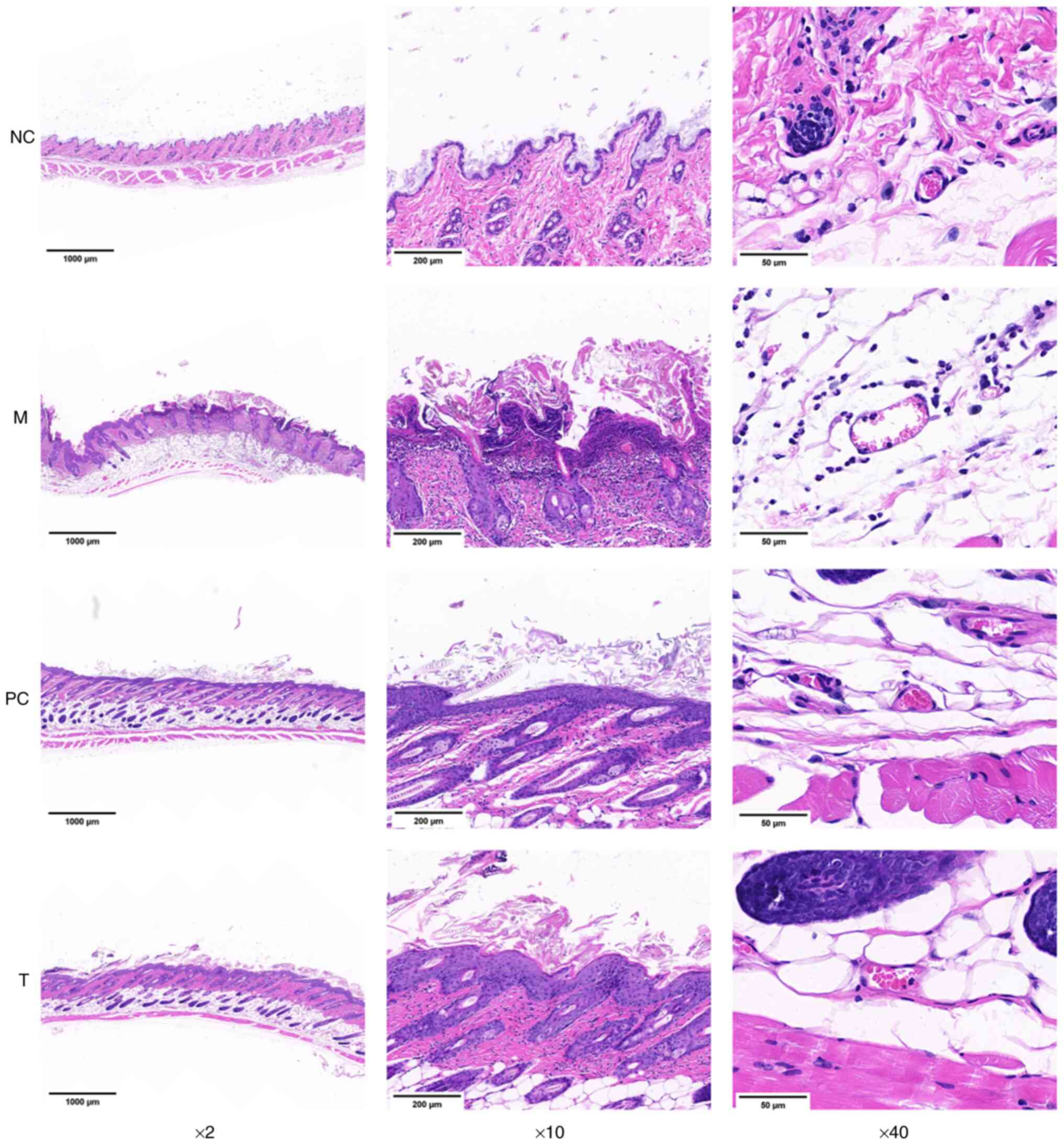
Figure 1

Representative microscopic
manifestations of H&E staining of skin tissues in each group
(n=6 per group). Magnification, x2, x10 and x40. M,
trichloroethylene model; PC, positive control; T, TNF-α antagonist
treatment; NC, vehicle control.

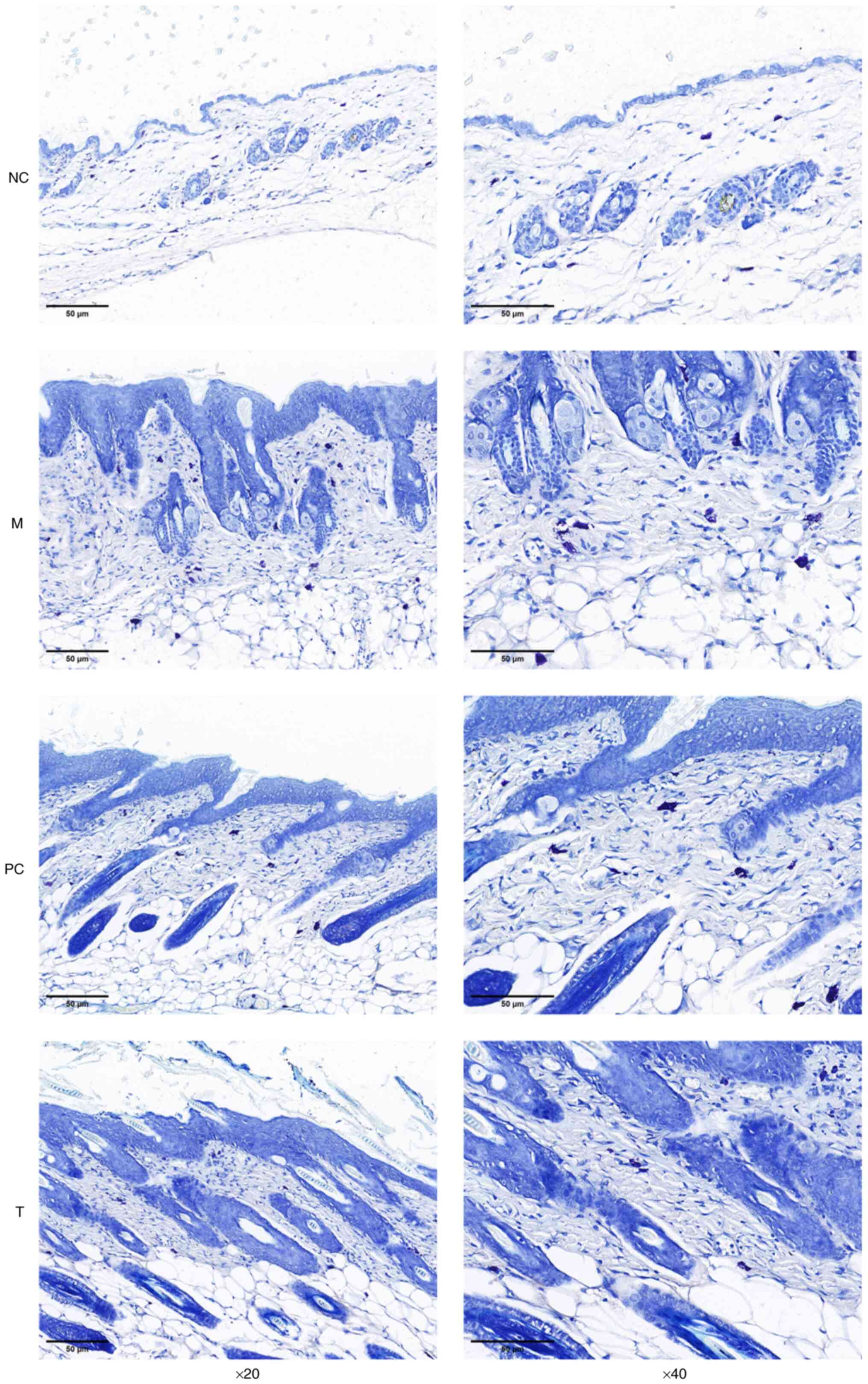
Figure 2

Toluidine blue staining results of
samples from different treatment groups (n=6 per group). Scale
bars, 50 µm. M, trichloroethylene model; PC, positive control; T,
TNF-α antagonist treatment; NC, vehicle control.

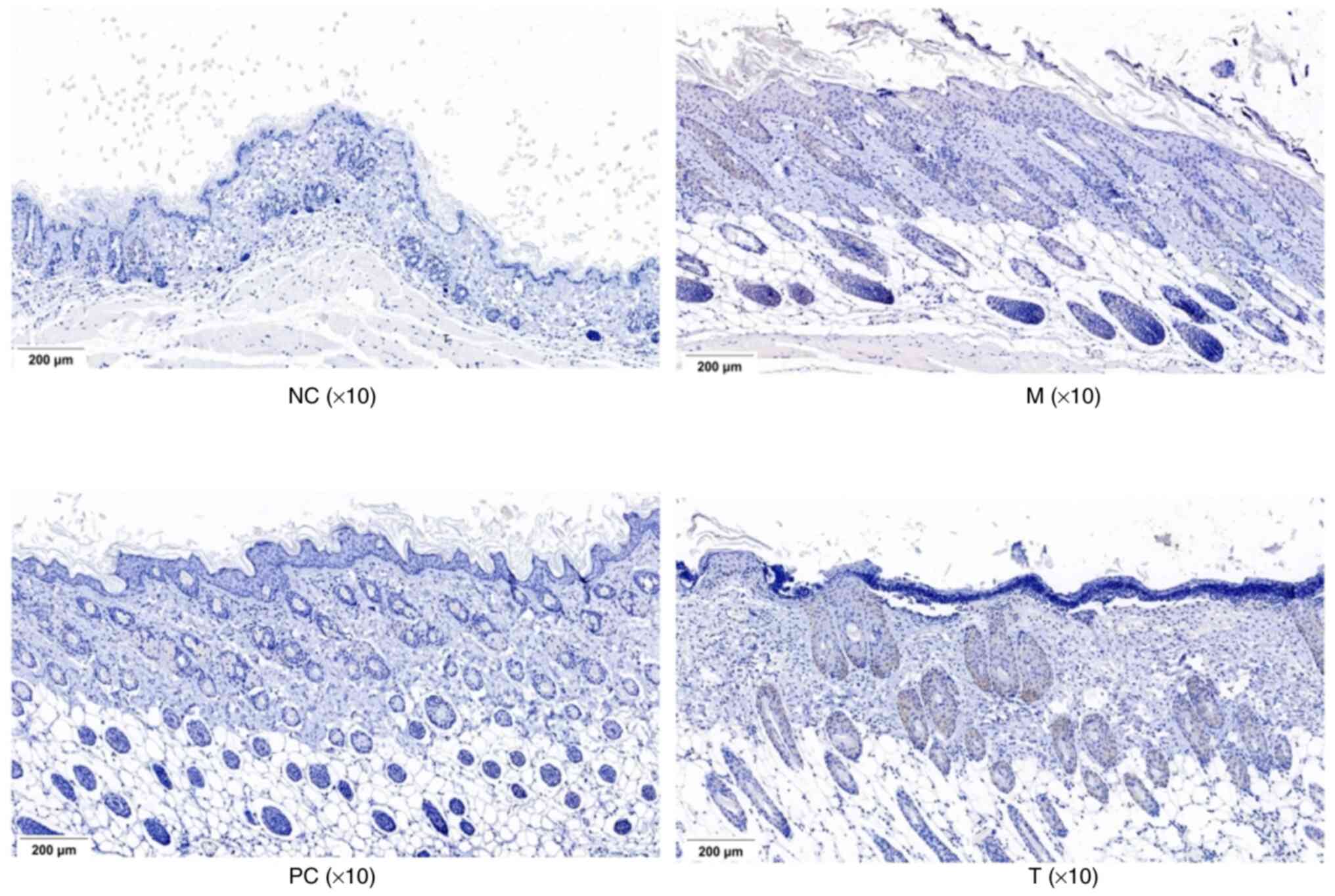
Figure 3

Caspase-3 expression in skin tissues
from each experimental group (n=6 per group). Scale bars, 200 µm.
NC, vehicle control; M, trichloroethylene model; PC, positive
control; T, TNF-α antagonist treatment.

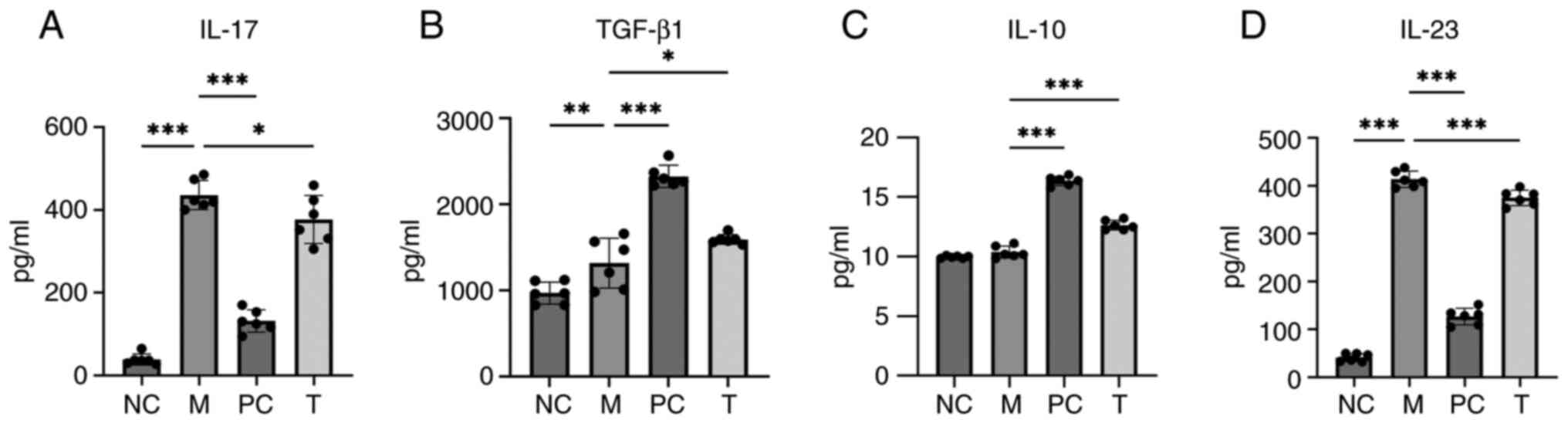
Figure 4

Comparison of serum (A) IL-17, (B)
TGF-β1, (C) IL-10 and (D) IL-23 levels in each group. Data are
presented as the mean ± SD (n=6 per group). Statistical
significance was determined by one-way ANOVA with Tukey's post hoc
test. *P<0.05, **P<0.01 and
***P<0.001. NC, vehicle control; M, trichloroethylene
model; PC, positive control; T, TNF-α antagonist treatment.

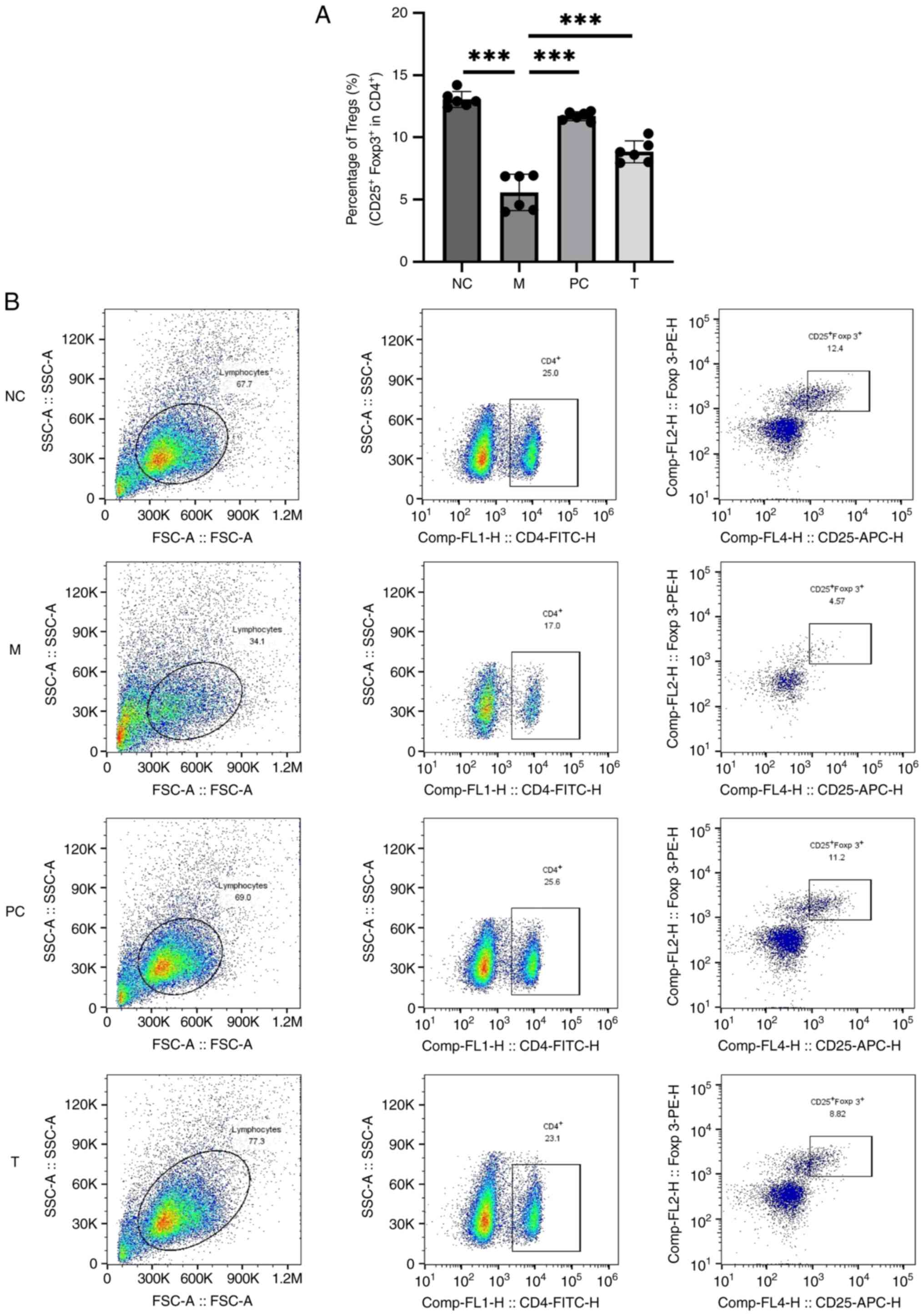
Figure 5

(A) Comparison of the proportion of
Tregs in peripheral blood of each group. (B) Representative flow
cytometry plots of Tregs in the peripheral blood of each group.
Data are presented as the means ± SD (n=6 per group). Statistical
significance was determined by one-way ANOVA with Tukey's post hoc
test. ***P<0.001. Tregs, regulatory T cells; NC,
vehicle control; M, trichloroethylene model; PC, positive control;
T, TNF-α antagonist treatment; SSC-A, side scatter area; FSC-A,
forward scatter area.

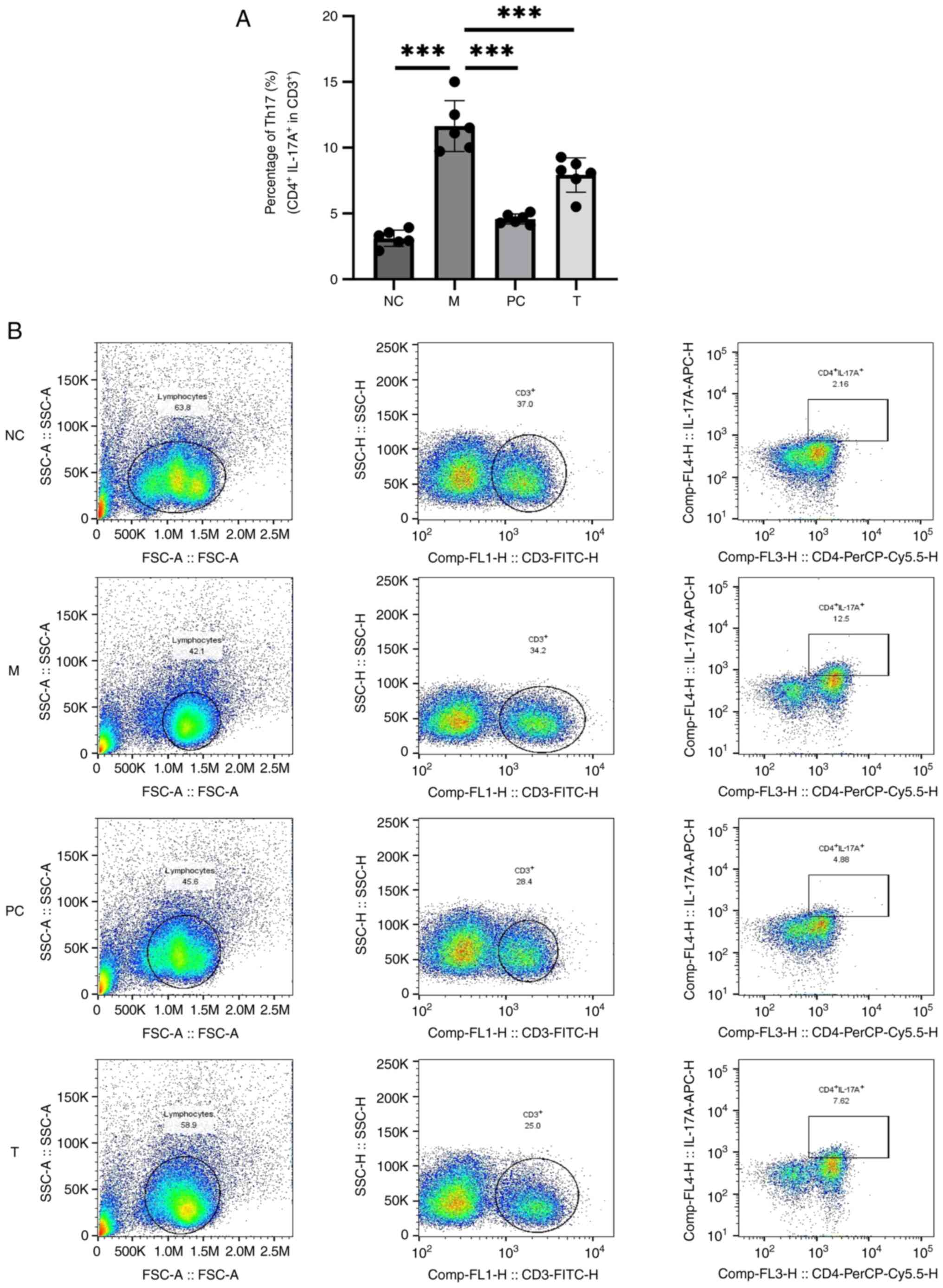
Figure 6

(A) Proportion of Th17 cells in the
peripheral blood of each group. (B) Representative flow cytometry
plots of Th17 cells in the peripheral blood of each group. Data are
presented as the means ± SD (n=6 per group). Statistical
significance was determined by one-way ANOVA with Tukey's post hoc
test. ***P<0.001. Th17, T helper 17; NC, vehicle
control; M, trichloroethylene model; PC, positive control; T, TNF-α
antagonist treatment; SSC-A, side scatter area; FSC-A, forward
scatter area.

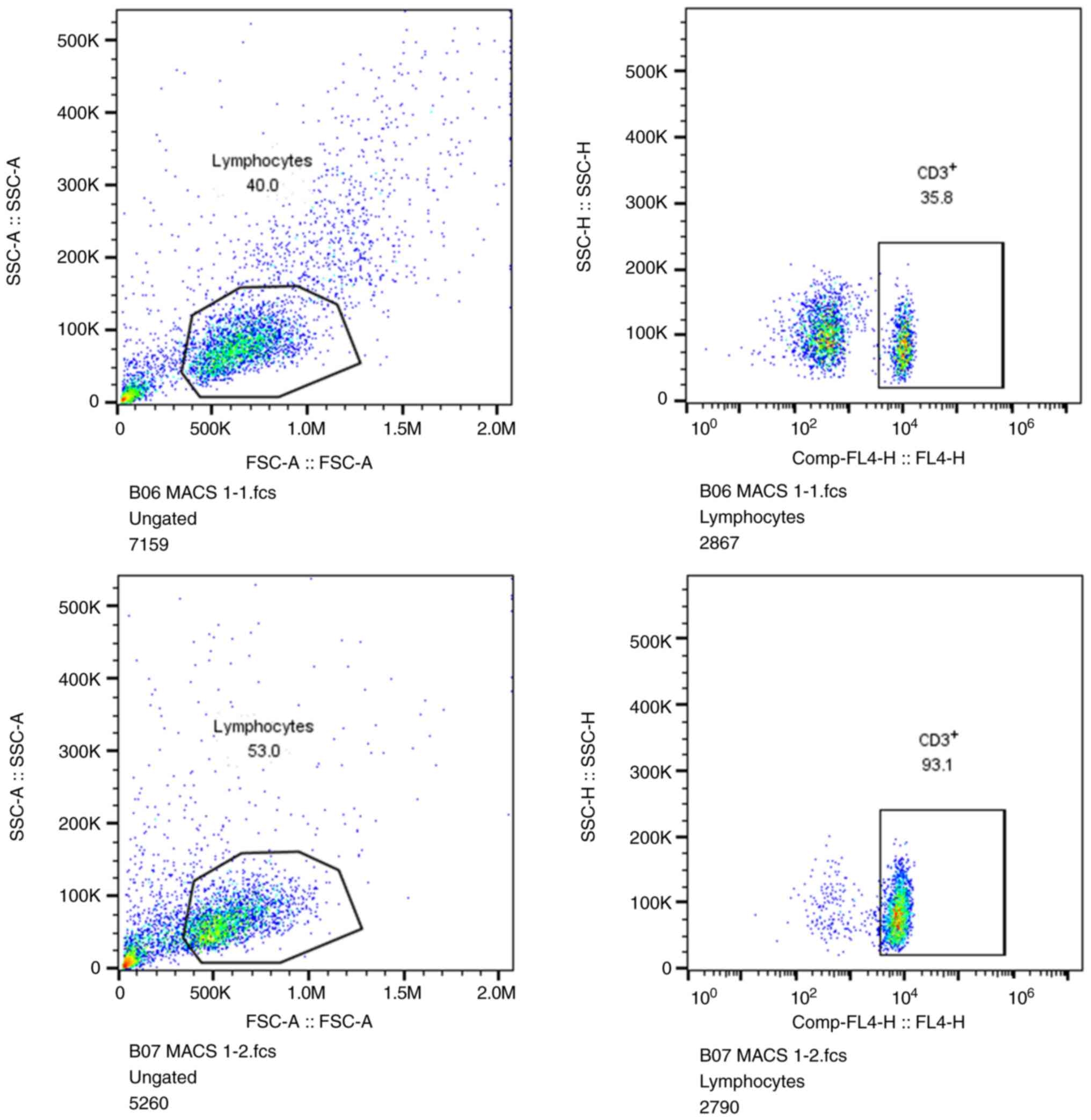
Figure 7

Flow cytometry analysis of the
proportion of CD3+ T cells before and after magnetic
bead sorting (n=6 per group). SSC-A, side scatter area; FSC-A,
forward scatter area.

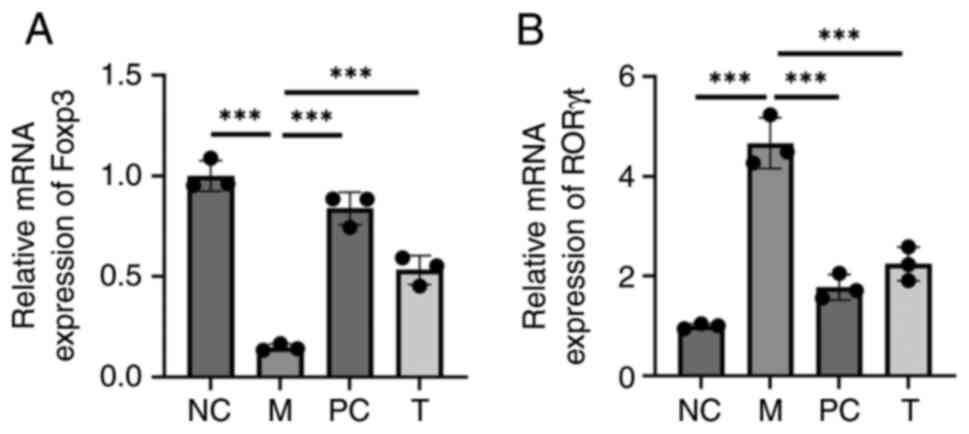
Figure 8

mRNA expression levels of (A) RORγt
and (B) Foxp3 in purified CD3+ T cells measured by
reverse transcription-quantitative PCR. Data are presented as the
mean ± SD (n=6 per group). Statistical significance was determined
by one-way ANOVA with Tukey's post hoc test.
***P<0.001. NC, vehicle control; M, trichloroethylene
model; PC, positive control; T, TNF-α antagonist treatment; RORγt,
retinoic acid-related orphan receptor γ-t.
View References

1 

Charlton OA, Harris V, Phan K, Mewton E, Jackson C and Cooper A: Toxic epidermal necrolysis and Steven-Johnson syndrome: A comprehensive review. Adv Wound Care (New Rochelle). 9:426–439. 2020.PubMed/NCBI View Article : Google Scholar

2 

Mockenhaupt M: Stevens-Johnson syndrome and toxic epidermal necrolysis: Clinical patterns, diagnostic considerations, etiology, and therapeutic management. Semin Cutan Med Surg. 33:10–16. 2014.PubMed/NCBI View Article : Google Scholar

3 

Duong TA, Valeyrie-Allanore L, Wolkenstein P and Chosidow O: Severe cutaneous adverse reactions to drugs. Lancet. 390:1996–2011. 2017.PubMed/NCBI View Article : Google Scholar

4 

Oakley AM and Krishnamurthy K: Stevens-Johnson syndrome. StatPearls. Treasure Island (FL): StatPearls Publishing Copyright ©. 2026, StatPearls Publishing LLC., 2026.

5 

Zahra FT, Imtiaz A, Khan A and Fatima M: JAK inhibitors in toxic epidermal necrolysis a new frontier in therapeutics. Ann Med Surg (Lond). 88:1206–1208. 2026.PubMed/NCBI View Article : Google Scholar

6 

Murphy TJ, Fijany AJ, Swafford EP, Garcia JT, Vyas P, Beyene RT, Gondek SP, Wagner AL, Patel MB and Slater ED: The outcomes of SJS/TEN: A nationwide analysis. J Burn Care Res: irag010, 2026 (Epub ahead of print).

7 

Schneider JA and Cohen PR: Stevens-Johnson syndrome and toxic epidermal necrolysis: A concise review with a comprehensive summary of therapeutic interventions emphasizing supportive measures. Adv Ther. 34:1235–1244. 2017.PubMed/NCBI View Article : Google Scholar

8 

Creamer D, Walsh SA, Dziewulski P, Exton LS, Lee HY, Dart JKG, Setterfield J, Bunker CB, Ardern-Jones MR, Watson KMT, et al: UK guidelines for the management of Stevens-Johnson syndrome/toxic epidermal necrolysis in adults 2016. J Plast Reconstr Aesthet Surg. 69:e119–e153. 2016.PubMed/NCBI View Article : Google Scholar

9 

Yamane Y, Matsukura S, Watanabe Y, Yamaguchi Y, Nakamura K, Kambara T, Ikezawa Z and Aihara M: Retrospective analysis of Stevens-Johnson syndrome and toxic epidermal necrolysis in 87 Japanese patients-treatment and outcome. Allergol Int. 65:74–81. 2016.PubMed/NCBI View Article : Google Scholar

10 

Zimmermann S, Sekula P, Venhoff M, Motschall E, Knaus J, Schumacher M and Mockenhaupt M: Systemic immunomodulating therapies for Stevens-Johnson syndrome and toxic epidermal necrolysis: A systematic review and meta-analysis. JAMA Dermatol. 153:514–522. 2017.PubMed/NCBI View Article : Google Scholar

11 

Chung WH, Hung SI, Yang JY, Su SC, Huang SP, Wei CY, Chin SW, Chiou CC, Chu SC, Ho HC, et al: Granulysin is a key mediator for disseminated keratinocyte death in Stevens-Johnson syndrome and toxic epidermal necrolysis. Nat Med. 14:1343–1350. 2008.PubMed/NCBI View Article : Google Scholar

12 

Chung WH, Hung SI, Hong HS, Hsih MS, Yang LC, Ho HC, Wu JY and Chen YT: Medical genetics: A marker for Stevens-Johnson syndrome. Nature. 428(486)2004.PubMed/NCBI View Article : Google Scholar

13 

White KD, Abe R, Ardern-Jones M, Beachkofsky T, Bouchard C, Carleton B, Chodosh J, Cibotti R, Davis R, Denny JC, et al: SJS/TEN 2017: Building multidisciplinary networks to drive science and translation. J Allergy Clin Immunol Pract. 6:38–69. 2018.PubMed/NCBI View Article : Google Scholar

14 

Ivanov II, McKenzie BS, Zhou L, Tadokoro CE, Lepelley A, Lafaille JJ, Cua DJ and Littman DR: The orphan nuclear receptor RORgammat directs the differentiation program of proinflammatory IL-17+ T helper cells. Cell. 126:1121–1133. 2006.PubMed/NCBI View Article : Google Scholar

15 

Harrington LE, Hatton RD, Mangan PR, Turner H, Murphy TL, Murphy KM and Weaver CT: Interleukin 17-producing CD4+ effector T cells develop via a lineage distinct from the T helper type 1 and 2 lineages. Nat Immunol. 6:1123–1132. 2005.PubMed/NCBI View Article : Google Scholar

16 

Zhu J and Paul WE: CD4 T cells: Fates, functions, and faults. Blood. 112:1557–1569. 2008.PubMed/NCBI View Article : Google Scholar

17 

Hori S, Nomura T and Sakaguchi S: Control of regulatory T cell development by the transcription factor Foxp3. Science. 299:1057–1061. 2003.PubMed/NCBI View Article : Google Scholar

18 

Brunkow ME, Jeffery EW, Hjerrild KA, Paeper B, Clark LB, Yasayko SA, Wilkinson JE, Galas D, Ziegler SF and Ramsdell F: Disruption of a new forkhead/winged-helix protein, scurfin, results in the fatal lymphoproliferative disorder of the scurfy mouse. Nat Genet. 27:68–73. 2001.PubMed/NCBI View Article : Google Scholar

19 

Noack M and Miossec P: Th17 and regulatory T cell balance in autoimmune and inflammatory diseases. Autoimmun Rev. 13:668–677. 2014.PubMed/NCBI View Article : Google Scholar

20 

Lee GR: The balance of Th17 versus treg cells in autoimmunity. Int J Mol Sci. 19(730)2018.PubMed/NCBI View Article : Google Scholar

21 

Nistala K and Wedderburn LR: Th17 and regulatory T cells: Rebalancing pro- and anti-inflammatory forces in autoimmune arthritis. Rheumatology (Oxford). 48:602–606. 2009.PubMed/NCBI View Article : Google Scholar

22 

Tapia B, Padial A, Sánchez-Sabaté E, Alvarez-Ferreira J, Morel E, Blanca M and Bellón T: Involvement of CCL27-CCR10 interactions in drug-induced cutaneous reactions. J Allergy Clin Immunol. 114:335–340. 2004.PubMed/NCBI View Article : Google Scholar

23 

Stern RS and Divito SJ: Stevens-Johnson syndrome and toxic epidermal necrolysis: Associations, outcomes, and pathobiology-thirty years of progress but still much to be done. J Invest Dermatol. 137:1004–1008. 2017.PubMed/NCBI View Article : Google Scholar

24 

Tohyama M, Watanabe H, Murakami S, Shirakata Y, Sayama K, Iijima M and Hashimoto K: Possible involvement of CD14+ CD16+ monocyte lineage cells in the epidermal damage of Stevens-Johnson syndrome and toxic epidermal necrolysis. Br J Dermatol. 166:322–330. 2012.PubMed/NCBI View Article : Google Scholar

25 

Paquet P and Piérard GE: Soluble fractions of tumor necrosis factor-alpha, interleukin-6 and of their receptors in toxic epidermal necrolysis: A comparison with second-degree burns. Int J Mol Med. 1:459–462. 1998.PubMed/NCBI View Article : Google Scholar

26 

Nassif A, Bensussan A, Dorothée G, Mami-Chouaib F, Bachot N, Bagot M, Boumsell L and Roujeau JC: Drug specific cytotoxic T-cells in the skin lesions of a patient with toxic epidermal necrolysis. J Invest Dermatol. 118:728–733. 2002.PubMed/NCBI View Article : Google Scholar

27 

Schwartz RA, McDonough PH and Lee BW: Toxic epidermal necrolysis: Part II. Prognosis, sequelae, diagnosis, differential diagnosis, prevention, and treatment. J Am Acad Dermatol. 69:187.e1-e16. 203–204. 2013.PubMed/NCBI View Article : Google Scholar

28 

Tian CC, Ai XC, Ma JC, Hu FQ, Liu XT, Luo YJ, Tan GZ, Zhang JM, Li XQ, Guo Q, et al: Etanercept treatment of Stevens-Johnson syndrome and toxic epidermal necrolysis. Ann Allergy Asthma Immunol. 129:360–365.e1. 2022.PubMed/NCBI View Article : Google Scholar

29 

Cao J, Zhang X, Xing X and Fan J: Biologic TNF-α inhibitors for Stevens-Johnson syndrome, toxic epidermal necrolysis, and TEN-SJS overlap: A study-level and patient-level meta-analysis. Dermatol Ther (Heidelb). 13:1305–1327. 2023.PubMed/NCBI View Article : Google Scholar

30 

Wang H, Zhang JX, Li SL, Wang F, Zha WS, Shen T, Wu C and Zhu QX: An animal model of trichloroethylene-induced skin sensitization in BALB/c mice. Int J Toxicol. 34:442–453. 2015.PubMed/NCBI View Article : Google Scholar

31 

Azukizawa H: Animal models of toxic epidermal necrolysis. J Dermatol. 38:255–260. 2011.PubMed/NCBI View Article : Google Scholar

32 

Böyum A: Isolation of mononuclear cells and granulocytes from human blood. Isolation of monuclear cells by one centrifugation, and of granulocytes by combining centrifugation and sedimentation at 1 g. Scand J Clin Lab Invest Suppl. 97:77–89. 1968.PubMed/NCBI

33 

Enerbäck L: Mast cells in rat gastrointestinal mucosa. 2. Dye-binding and metachromatic properties. Acta Pathol Microbiol Scand. 66:303–312. 1966.PubMed/NCBI View Article : Google Scholar

34 

Ramos-Vara JA: Technical aspects of immunohistochemistry. Vet Pathol. 42:405–426. 2005.PubMed/NCBI View Article : Google Scholar

35 

Annunziato F, Cosmi L, Santarlasci V, Maggi L, Liotta F, Mazzinghi B, Parente E, Filì L, Ferri S, Frosali F, et al: Phenotypic and functional features of human Th17 cells. J Exp Med. 204:1849–1861. 2007.PubMed/NCBI View Article : Google Scholar

36 

Livak KJ and Schmittgen TD: Analysis of relative gene expression data using real-time quantitative PCR and the 2(-Delta Delta C(T)) method. Methods. 25:402–408. 2001.PubMed/NCBI View Article : Google Scholar

37 

Wang CW, Yang LY, Chen CB, Ho HC, Hung SI, Yang CH, Chang CJ, Su SC, Hui RCY, Chin SW, et al: Randomized, controlled trial of TNF-α antagonist in CTL-mediated severe cutaneous adverse reactions. J Clin Invest. 128:985–996. 2018.PubMed/NCBI View Article : Google Scholar

38 

Teraki Y, Kawabe M and Izaki S: Possible role of TH17 cells in the pathogenesis of Stevens-Johnson syndrome and toxic epidermal necrolysis. J Allergy Clin Immunol. 131:907–909. 2013.PubMed/NCBI View Article : Google Scholar

39 

Zhou L, Lopes JE, Chong MMW, Ivanov II, Min R, Victora GD, Shen Y, Du J, Rubtsov YP, Rudensky AY, et al: TGF-beta-induced Foxp3 inhibits T(H)17 cell differentiation by antagonizing RORgammat function. Nature. 453:236–240. 2008.PubMed/NCBI View Article : Google Scholar

40 

Ueta M, Kannabiran C, Wakamatsu TH, Kim MK, Yoon KC, Seo KY, Joo CK, Sangwan V, Rathi V, Basu S, et al: Trans-ethnic study confirmed independent associations of HLA-A*02:06 and HLA-B*44:03 with cold medicine-related Stevens-Johnson syndrome with severe ocular surface complications. Sci Rep. 4(5981)2014.PubMed/NCBI View Article : Google Scholar

41 

Ushigome Y, Mizukawa Y, Kimishima M, Yamazaki Y, Takahashi R, Kano Y and Shiohara T: Monocytes are involved in the balance between regulatory T cells and Th17 cells in severe drug eruptions. Clin Exp Allergy. 48:1453–1463. 2018.PubMed/NCBI View Article : Google Scholar

42 

Sun L, Zhao Q, Ao S, Liu T, Wang Z, You J, Mi Z, Sun Y, Xue X, Ogese MO, et al: Feedback regulation of VISTA and Treg by TNF-α controls T cell responses in drug allergy. Allergy. 80:1400–1416. 2025.PubMed/NCBI View Article : Google Scholar

43 

Hama N, Aoki S, Chen CB, Hasegawa A, Ogawa Y, Vocanson M, Asada H, Chu CY, Lan CCE, Dodiuk-Gad RP, et al: Recent progress in Stevens-Johnson syndrome/toxic epidermal necrolysis: Diagnostic criteria, pathogenesis and treatment. Br J Dermatol. 192:9–18. 2024.PubMed/NCBI View Article : Google Scholar

44 

Chen CB, Abe R, Pan RY, Wang CW, Hung SI, Tsai YG and Chung WH: An updated review of the molecular mechanisms in drug hypersensitivity. J Immunol Res. 2018(6431694)2018.PubMed/NCBI View Article : Google Scholar

45 

Milojevic D, Nguyen KD, Wara D and Mellins ED: Regulatory T cells and their role in rheumatic diseases: A potential target for novel therapeutic development. Pediatr Rheumatol Online J. 6(20)2008.PubMed/NCBI View Article : Google Scholar

46 

Zhang S, Tang S, Li S, Pan Y and Ding Y: Biologic TNF-alpha inhibitors in the treatment of Stevens-Johnson syndrome and toxic epidermal necrolysis: A systemic review. J Dermatolog Treat. 31:66–73. 2020.PubMed/NCBI View Article : Google Scholar

47 

Heuer R, Paulmann M, Mockenhaupt M and Nast A: Systemic immunomodulating therapies for epidermal necrolysis (Stevens-Johnson syndrome/toxic epidermal necrolysis): A systematic review and meta-analysis. J Dtsch Dermatol Ges. 24:34–42. 2026.PubMed/NCBI View Article : Google Scholar

48 

Umemura M, Okamoto-Yoshida Y, Yahagi A, Touyama S, Nakae S, Iwakura Y and Matsuzaki G: Involvement of IL-17A-producing TCR γδ T cells in late protective immunity against pulmonary Mycobacterium tuberculosis infection. Immun Inflamm Dis. 4:401–412. 2016.PubMed/NCBI View Article : Google Scholar

49 

Roujeau JC: The spectrum of Stevens-Johnson syndrome and toxic epidermal necrolysis: A clinical classification. J Invest Dermatol. 102:28S–30S. 1994.PubMed/NCBI View Article : Google Scholar

50 

Roujeau JC: Treatment of severe drug eruptions. J Dermatol. 26:718–722. 1999.PubMed/NCBI View Article : Google Scholar

51 

Yao L, Baltatzis S, Zafirakis P, Livir-Rallatos C, Voudouri A, Markomichelakis N, Zhao T and Foster CS: Human mast cell subtypes in conjunctiva of patients with atopic keratoconjunctivitis, ocular cicatricial pemphigoid and Stevens-Johnson syndrome. Ocul Immunol Inflamm. 11:211–222. 2003.PubMed/NCBI View Article : Google Scholar

52 

Yu X, Kasprick A, Hartmann K and Petersen F: The role of mast cells in autoimmune bullous dermatoses. Front Immunol. 9(386)2018.PubMed/NCBI View Article : Google Scholar

53 

Suurmond J, van Heemst J, van Heiningen J, Dorjée AL, Schilham MW, van der Beek FB, Huizinga TW, Schuerwegh AJM and Toes REM: Communication between human mast cells and CD4(+) T cells through antigen-dependent interactions. Eur J Immunol. 43:1758–1768. 2013.PubMed/NCBI View Article : Google Scholar

54 

Chatterjea D, Paredes L, Martinov T, Balsells E, Allen J, Sykes A and Ashbaugh A: TNF-alpha neutralizing antibody blocks thermal sensitivity induced by compound 48/80-provoked mast cell degranulation. F1000Res. 2(178)2013.PubMed/NCBI View Article : Google Scholar

55 

Wershil BK, Furuta GT, Lavigne JA, Choudhury AR, Wang ZS and Galli SJ: Dexamethasone or cyclosporin A suppress mast cell-leukocyte cytokine cascades. Multiple mechanisms of inhibition of IgE- and mast cell-dependent cutaneous inflammation in the mouse. J Immunol. 154:1391–1398. 1995.PubMed/NCBI

56 

Yang XO, Pappu BP, Nurieva R, Akimzhanov A, Kang HS, Chung Y, Ma L, Shah B, Panopoulos AD, Schluns KS, et al: T helper 17 lineage differentiation is programmed by orphan nuclear receptors ROR alpha and ROR gamma. Immunity. 28:29–39. 2008.PubMed/NCBI View Article : Google Scholar

57 

Pandiyan P, Zheng L, Ishihara S, Reed J and Lenardo MJ: CD4+CD25+Foxp3+ regulatory T cells induce cytokine deprivation-mediated apoptosis of effector CD4+ T cells. Nat Immunol. 8:1353–1362. 2007.PubMed/NCBI View Article : Google Scholar

58 

Acosta-Rodriguez EV, Rivino L, Geginat J, Jarrossay D, Gattorno M, Lanzavecchia A, Sallusto F and Napolitani G: Surface phenotype and antigenic specificity of human interleukin 17-producing T helper memory cells. Nat Immunol. 8:639–646. 2007.PubMed/NCBI View Article : Google Scholar

59 

Hung SI, Mockenhaupt M, Blumenthal KG, Abe R, Ueta M, Ingen-Housz-Oro S, Phillips EJ and Chung WH: Severe cutaneous adverse reactions. Nat Rev Dis Primers. 10(30)2024.PubMed/NCBI View Article : Google Scholar

60 

Irani Y, Scotney P, Nash A and Williams KA: Species cross-reactivity of antibodies used to treat ophthalmic conditions. Invest Ophthalmol Vis Sci. 57:586–591. 2016.PubMed/NCBI View Article : Google Scholar

61 

Shen C, Maerten P, Geboes K, Van Assche G, Rutgeerts P and Ceuppens JL: Infliximab induces apoptosis of monocytes and T lymphocytes in a human-mouse chimeric model. Clin Immunol. 115:250–259. 2005.PubMed/NCBI View Article : Google Scholar

62 

Lopetuso LR, Petito V, Cufino V, Arena V, Stigliano E, Gerardi V, Gaetani E, Poscia A, Amato A, Cammarota G, et al: Locally injected Infliximab ameliorates murine DSS colitis: Differences in serum and intestinal levels of drug between healthy and colitic mice. Dig Liver Dis. 45:1017–1021. 2013.PubMed/NCBI View Article : Google Scholar

63 

Gibson A, Ram R, Gangula R, Li Y, Mukherjee E, Palubinsky AM, Campbell CN, Thorne M, Konvinse KC, Choshi P, et al: Multiomic single-cell sequencing defines tissue-specific responses in Stevens-Johnson syndrome and toxic epidermal necrolysis. Nat Commun. 15(8722)2024.PubMed/NCBI View Article : Google Scholar

64 

Zhou L, Lu Y, Zou Y, Wei H, Guo X, Li Q, Zhou Y, Zhao X, Xie F and Zhang L: Drug-induced Stevens-Johnson syndrome and toxic epidermal necrolysis: A 10-year retrospective study of 103 cases. Clin Exp Dermatol. 50:2200–2208. 2025.PubMed/NCBI View Article : Google Scholar

65 

Chung WH, Chang WC, Lee YS, Wu YY, Yang CH, Ho HC, Chen MJ, Lin JY, Hui RC, Ho JC, et al: Genetic variants associated with phenytoin-related severe cutaneous adverse reactions. JAMA. 312:525–534. 2014.PubMed/NCBI View Article : Google Scholar

Related Articles

  • Abstract
  • View
  • Download
  • Twitter
Copy and paste a formatted citation
Spandidos Publications style
Ma Z, Zhang W, Xi S, Shi T and Xu X: TNF‑&alpha; blockade reverses Stevens‑Johnson syndrome/toxic epidermal necrolysis through the ROR&gamma;t/Foxp3‑mediated restoration of T helper 17/regulatory T cell balance. Exp Ther Med 31: 164, 2026.
APA
Ma, Z., Zhang, W., Xi, S., Shi, T., & Xu, X. (2026). TNF‑&alpha; blockade reverses Stevens‑Johnson syndrome/toxic epidermal necrolysis through the ROR&gamma;t/Foxp3‑mediated restoration of T helper 17/regulatory T cell balance. Experimental and Therapeutic Medicine, 31, 164. https://doi.org/10.3892/etm.2026.13159
MLA
Ma, Z., Zhang, W., Xi, S., Shi, T., Xu, X."TNF‑&alpha; blockade reverses Stevens‑Johnson syndrome/toxic epidermal necrolysis through the ROR&gamma;t/Foxp3‑mediated restoration of T helper 17/regulatory T cell balance". Experimental and Therapeutic Medicine 31.6 (2026): 164.
Chicago
Ma, Z., Zhang, W., Xi, S., Shi, T., Xu, X."TNF‑&alpha; blockade reverses Stevens‑Johnson syndrome/toxic epidermal necrolysis through the ROR&gamma;t/Foxp3‑mediated restoration of T helper 17/regulatory T cell balance". Experimental and Therapeutic Medicine 31, no. 6 (2026): 164. https://doi.org/10.3892/etm.2026.13159
Copy and paste a formatted citation
x
Spandidos Publications style
Ma Z, Zhang W, Xi S, Shi T and Xu X: TNF‑&alpha; blockade reverses Stevens‑Johnson syndrome/toxic epidermal necrolysis through the ROR&gamma;t/Foxp3‑mediated restoration of T helper 17/regulatory T cell balance. Exp Ther Med 31: 164, 2026.
APA
Ma, Z., Zhang, W., Xi, S., Shi, T., & Xu, X. (2026). TNF‑&alpha; blockade reverses Stevens‑Johnson syndrome/toxic epidermal necrolysis through the ROR&gamma;t/Foxp3‑mediated restoration of T helper 17/regulatory T cell balance. Experimental and Therapeutic Medicine, 31, 164. https://doi.org/10.3892/etm.2026.13159
MLA
Ma, Z., Zhang, W., Xi, S., Shi, T., Xu, X."TNF‑&alpha; blockade reverses Stevens‑Johnson syndrome/toxic epidermal necrolysis through the ROR&gamma;t/Foxp3‑mediated restoration of T helper 17/regulatory T cell balance". Experimental and Therapeutic Medicine 31.6 (2026): 164.
Chicago
Ma, Z., Zhang, W., Xi, S., Shi, T., Xu, X."TNF‑&alpha; blockade reverses Stevens‑Johnson syndrome/toxic epidermal necrolysis through the ROR&gamma;t/Foxp3‑mediated restoration of T helper 17/regulatory T cell balance". Experimental and Therapeutic Medicine 31, no. 6 (2026): 164. https://doi.org/10.3892/etm.2026.13159
Follow us
  • Twitter
  • LinkedIn
  • Facebook
About
  • Spandidos Publications
  • Careers
  • Cookie Policy
  • Privacy Policy
How can we help?
  • Help
  • Live Chat
  • Contact
  • Email to our Support Team