Spandidos Publications Logo
  • About
    • About Spandidos
    • Aims and Scopes
    • Abstracting and Indexing
    • Editorial Policies
    • Reprints and Permissions
    • Job Opportunities
    • Terms and Conditions
    • Contact
  • Journals
    • All Journals
    • Oncology Letters
      • Oncology Letters
      • Information for Authors
      • Editorial Policies
      • Editorial Board
      • Aims and Scope
      • Abstracting and Indexing
      • Bibliographic Information
      • Archive
    • International Journal of Oncology
      • International Journal of Oncology
      • Information for Authors
      • Editorial Policies
      • Editorial Board
      • Aims and Scope
      • Abstracting and Indexing
      • Bibliographic Information
      • Archive
    • Molecular and Clinical Oncology
      • Molecular and Clinical Oncology
      • Information for Authors
      • Editorial Policies
      • Editorial Board
      • Aims and Scope
      • Abstracting and Indexing
      • Bibliographic Information
      • Archive
    • Experimental and Therapeutic Medicine
      • Experimental and Therapeutic Medicine
      • Information for Authors
      • Editorial Policies
      • Editorial Board
      • Aims and Scope
      • Abstracting and Indexing
      • Bibliographic Information
      • Archive
    • International Journal of Molecular Medicine
      • International Journal of Molecular Medicine
      • Information for Authors
      • Editorial Policies
      • Editorial Board
      • Aims and Scope
      • Abstracting and Indexing
      • Bibliographic Information
      • Archive
    • Biomedical Reports
      • Biomedical Reports
      • Information for Authors
      • Editorial Policies
      • Editorial Board
      • Aims and Scope
      • Abstracting and Indexing
      • Bibliographic Information
      • Archive
    • Oncology Reports
      • Oncology Reports
      • Information for Authors
      • Editorial Policies
      • Editorial Board
      • Aims and Scope
      • Abstracting and Indexing
      • Bibliographic Information
      • Archive
    • Molecular Medicine Reports
      • Molecular Medicine Reports
      • Information for Authors
      • Editorial Policies
      • Editorial Board
      • Aims and Scope
      • Abstracting and Indexing
      • Bibliographic Information
      • Archive
    • World Academy of Sciences Journal
      • World Academy of Sciences Journal
      • Information for Authors
      • Editorial Policies
      • Editorial Board
      • Aims and Scope
      • Abstracting and Indexing
      • Bibliographic Information
      • Archive
    • International Journal of Functional Nutrition
      • International Journal of Functional Nutrition
      • Information for Authors
      • Editorial Policies
      • Editorial Board
      • Aims and Scope
      • Abstracting and Indexing
      • Bibliographic Information
      • Archive
    • International Journal of Epigenetics
      • International Journal of Epigenetics
      • Information for Authors
      • Editorial Policies
      • Editorial Board
      • Aims and Scope
      • Abstracting and Indexing
      • Bibliographic Information
      • Archive
    • Medicine International
      • Medicine International
      • Information for Authors
      • Editorial Policies
      • Editorial Board
      • Aims and Scope
      • Abstracting and Indexing
      • Bibliographic Information
      • Archive
  • Articles
  • Information
    • Information for Authors
    • Information for Reviewers
    • Information for Librarians
    • Information for Advertisers
    • Conferences
  • Language Editing
Spandidos Publications Logo
  • About
    • About Spandidos
    • Aims and Scopes
    • Abstracting and Indexing
    • Editorial Policies
    • Reprints and Permissions
    • Job Opportunities
    • Terms and Conditions
    • Contact
  • Journals
    • All Journals
    • Biomedical Reports
      • Information for Authors
      • Editorial Policies
      • Editorial Board
      • Aims and Scope
      • Abstracting and Indexing
      • Bibliographic Information
      • Archive
    • Experimental and Therapeutic Medicine
      • Information for Authors
      • Editorial Policies
      • Editorial Board
      • Aims and Scope
      • Abstracting and Indexing
      • Bibliographic Information
      • Archive
    • International Journal of Epigenetics
      • Information for Authors
      • Editorial Policies
      • Editorial Board
      • Aims and Scope
      • Abstracting and Indexing
      • Bibliographic Information
      • Archive
    • International Journal of Functional Nutrition
      • Information for Authors
      • Editorial Policies
      • Editorial Board
      • Aims and Scope
      • Abstracting and Indexing
      • Bibliographic Information
      • Archive
    • International Journal of Molecular Medicine
      • Information for Authors
      • Editorial Policies
      • Editorial Board
      • Aims and Scope
      • Abstracting and Indexing
      • Bibliographic Information
      • Archive
    • International Journal of Oncology
      • Information for Authors
      • Editorial Policies
      • Editorial Board
      • Aims and Scope
      • Abstracting and Indexing
      • Bibliographic Information
      • Archive
    • Medicine International
      • Information for Authors
      • Editorial Policies
      • Editorial Board
      • Aims and Scope
      • Abstracting and Indexing
      • Bibliographic Information
      • Archive
    • Molecular and Clinical Oncology
      • Information for Authors
      • Editorial Policies
      • Editorial Board
      • Aims and Scope
      • Abstracting and Indexing
      • Bibliographic Information
      • Archive
    • Molecular Medicine Reports
      • Information for Authors
      • Editorial Policies
      • Editorial Board
      • Aims and Scope
      • Abstracting and Indexing
      • Bibliographic Information
      • Archive
    • Oncology Letters
      • Information for Authors
      • Editorial Policies
      • Editorial Board
      • Aims and Scope
      • Abstracting and Indexing
      • Bibliographic Information
      • Archive
    • Oncology Reports
      • Information for Authors
      • Editorial Policies
      • Editorial Board
      • Aims and Scope
      • Abstracting and Indexing
      • Bibliographic Information
      • Archive
    • World Academy of Sciences Journal
      • Information for Authors
      • Editorial Policies
      • Editorial Board
      • Aims and Scope
      • Abstracting and Indexing
      • Bibliographic Information
      • Archive
  • Articles
  • Information
    • For Authors
    • For Reviewers
    • For Librarians
    • For Advertisers
    • Conferences
  • Language Editing
Login Register Submit
  • This site uses cookies
  • You can change your cookie settings at any time by following the instructions in our Cookie Policy. To find out more, you may read our Privacy Policy.

    I agree
Search articles by DOI, keyword, author or affiliation
Search
Advanced Search
presentation
Experimental and Therapeutic Medicine
Join Editorial Board Propose a Special Issue
Print ISSN: 1792-0981 Online ISSN: 1792-1015
Journal Cover
October-2026 Volume 32 Issue 4

Full Size Image

Sign up for eToc alerts
Recommend to Library

Journals

International Journal of Molecular Medicine

International Journal of Molecular Medicine

International Journal of Molecular Medicine is an international journal devoted to molecular mechanisms of human disease.

International Journal of Oncology

International Journal of Oncology

International Journal of Oncology is an international journal devoted to oncology research and cancer treatment.

Molecular Medicine Reports

Molecular Medicine Reports

Covers molecular medicine topics such as pharmacology, pathology, genetics, neuroscience, infectious diseases, molecular cardiology, and molecular surgery.

Oncology Reports

Oncology Reports

Oncology Reports is an international journal devoted to fundamental and applied research in Oncology.

Experimental and Therapeutic Medicine

Experimental and Therapeutic Medicine

Experimental and Therapeutic Medicine is an international journal devoted to laboratory and clinical medicine.

Oncology Letters

Oncology Letters

Oncology Letters is an international journal devoted to Experimental and Clinical Oncology.

Biomedical Reports

Biomedical Reports

Explores a wide range of biological and medical fields, including pharmacology, genetics, microbiology, neuroscience, and molecular cardiology.

Molecular and Clinical Oncology

Molecular and Clinical Oncology

International journal addressing all aspects of oncology research, from tumorigenesis and oncogenes to chemotherapy and metastasis.

World Academy of Sciences Journal

World Academy of Sciences Journal

Multidisciplinary open-access journal spanning biochemistry, genetics, neuroscience, environmental health, and synthetic biology.

International Journal of Functional Nutrition

International Journal of Functional Nutrition

Open-access journal combining biochemistry, pharmacology, immunology, and genetics to advance health through functional nutrition.

International Journal of Epigenetics

International Journal of Epigenetics

Publishes open-access research on using epigenetics to advance understanding and treatment of human disease.

Medicine International

Medicine International

An International Open Access Journal Devoted to General Medicine.

Journal Cover
October-2026 Volume 32 Issue 4

Full Size Image

Sign up for eToc alerts
Recommend to Library

  • Article
  • Citations
    • Cite This Article
    • Download Citation
    • Create Citation Alert
    • Remove Citation Alert
    • Cited By
  • Similar Articles
    • Related Articles (in Spandidos Publications)
    • Similar Articles (Google Scholar)
    • Similar Articles (PubMed)
  • Download PDF
  • Download XML
  • View XML

  • Supplementary Files
    • Supplementary_Data.pdf
Article Open Access

Predicting lower extremity deep vein thrombosis in elderly patients with hip fracture: A machine learning model with emphasis on diabetes as a key risk factor

  • Authors:
    • Qian Song
    • Ping'an Shi
    • Peng Tian
    • Aijun Chao
    • Yinguang Zhang
    • Qiang Dong
  • View Affiliations / Copyright

    Affiliations: Department of Osteo‑Internal Medicine, Tianjin University Tianjin Hospital, Tianjin 300122, P.R. China, Department of Endocrinology, Tianjin University Tianjin Hospital, Tianjin 300122, P.R. China, Department of Orthopedics, Tianjin University Tianjin Hospital, Tianjin 300122, P.R. China
    Copyright: © Song et al. This is an open access article distributed under the terms of Creative Commons Attribution License.
  • Article Number: 259
    |
    Published online on: July 29, 2026
       https://doi.org/10.3892/etm.2026.13253
  • Expand metrics +
Metrics: Total Views: 0 (Spandidos Publications: | PMC Statistics: )
Metrics: Total PDF Downloads: 0 (Spandidos Publications: | PMC Statistics: )
Cited By (CrossRef): 0 citations Loading Articles...

This article is mentioned in:


Abstract

Lower extremity deep vein thrombosis (DVT) is a serious complication in elderly patients with hip fracture, contributing to increased morbidity and mortality. Diabetes mellitus, with its prothrombotic state, may further elevate this risk. Early identification of high‑risk patients is important for targeted thromboprophylaxis. The objective of the present study was to develop and validate machine learning (ML) models for predicting DVT using clinical variables available at admission in elderly patients with hip fracture, with a specific focus on diabetes as a key predictor. A retrospective cohort study of elderly patients (≥65 years) with hip fracture who were admitted to a tertiary academic medical center (Tianjin Hospital, China) between January 2020 and December 2025, was conducted. A total of seven ML algorithms were developed and validated using a 70‑30 split with 10‑fold cross‑validation. Model interpretability was enhanced using Shapley Additive exPlanations (SHAP) analysis. Subgroup analyses were performed to evaluate model performance across diabetic and non‑diabetic populations. DVT occurred in 16.5% (66/400) of patients during hospitalization. Diabetes was present in 32.5% of the cohort and was significantly associated with DVT (odds ratio=2.64; 95% CI: 1.56‑4.48). The random forest model demonstrated an improved performance [area under the curve (AUC)=0.92; accuracy=0.87; sensitivity=0.85; specificity=0.88]. SHAP analysis identified diabetes‑associated variables (hemoglobin A1c, diabetes duration and fasting glucose) among the top predictors, along with age, albumin, D‑dimer and immobility on admission. Lipid parameters, including low‑density lipoprotein cholesterol and triglycerides, also contributed to prediction. Model performance remained robust in diabetic (AUC=0.94) and non‑diabetic (AUC=0.90) subgroups. Calibration was good (slope=1.02; intercept=‑0.02; Brier score=0.09; Hosmer‑Lemeshow P=0.45). Decision curve analysis determined clinical net benefit across thresholds of 15‑40%. ML models, particularly random forest, accurately predicted DVT in patients with elderly hip fracture using routinely available admission data. Diabetes therefore emerged as a pivotal risk factor and its inclusion enhanced predictive accuracy. The present model holds promise for early risk stratification and individualized thromboprophylaxis, although rigorous external validation is warranted before any clinical application.
View Figures

Figure 1

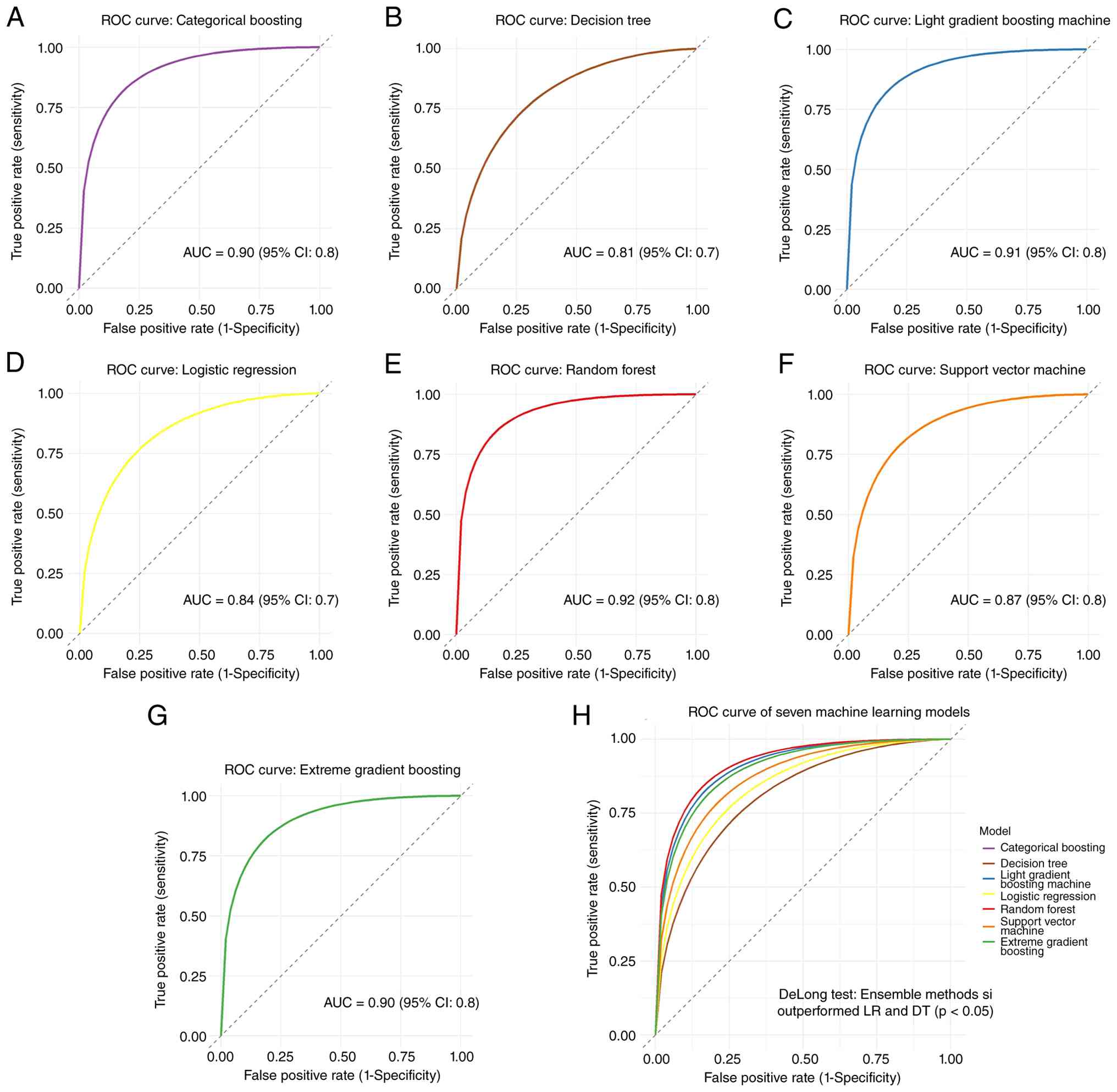
ROC curves of seven ML models. ROC
curves for (A) CatBoost, (B) decision tree, (C) LightGBM, (D)
logistic regression, (E) random forest, (F) SVM and (G) XGBoost,
with AUC values as indicated. (H) Overlay of the ROC curves of all
seven models, with corresponding AUC values listed: CatBoost, 0.90;
decision tree, 0.81; LightGBM, 0.91; logistic regression, 0.84;
random forest, 0.92; SVM, 0.87; XGBoost, 0.90. The diagonal dashed
line represents the reference line of no discrimination. ROC,
receiver operating characteristic; ML, machine learning; AUC, area
under curve; SVM, support vector machine; XGBoost, Extreme Gradient
Boosting.

Figure 2

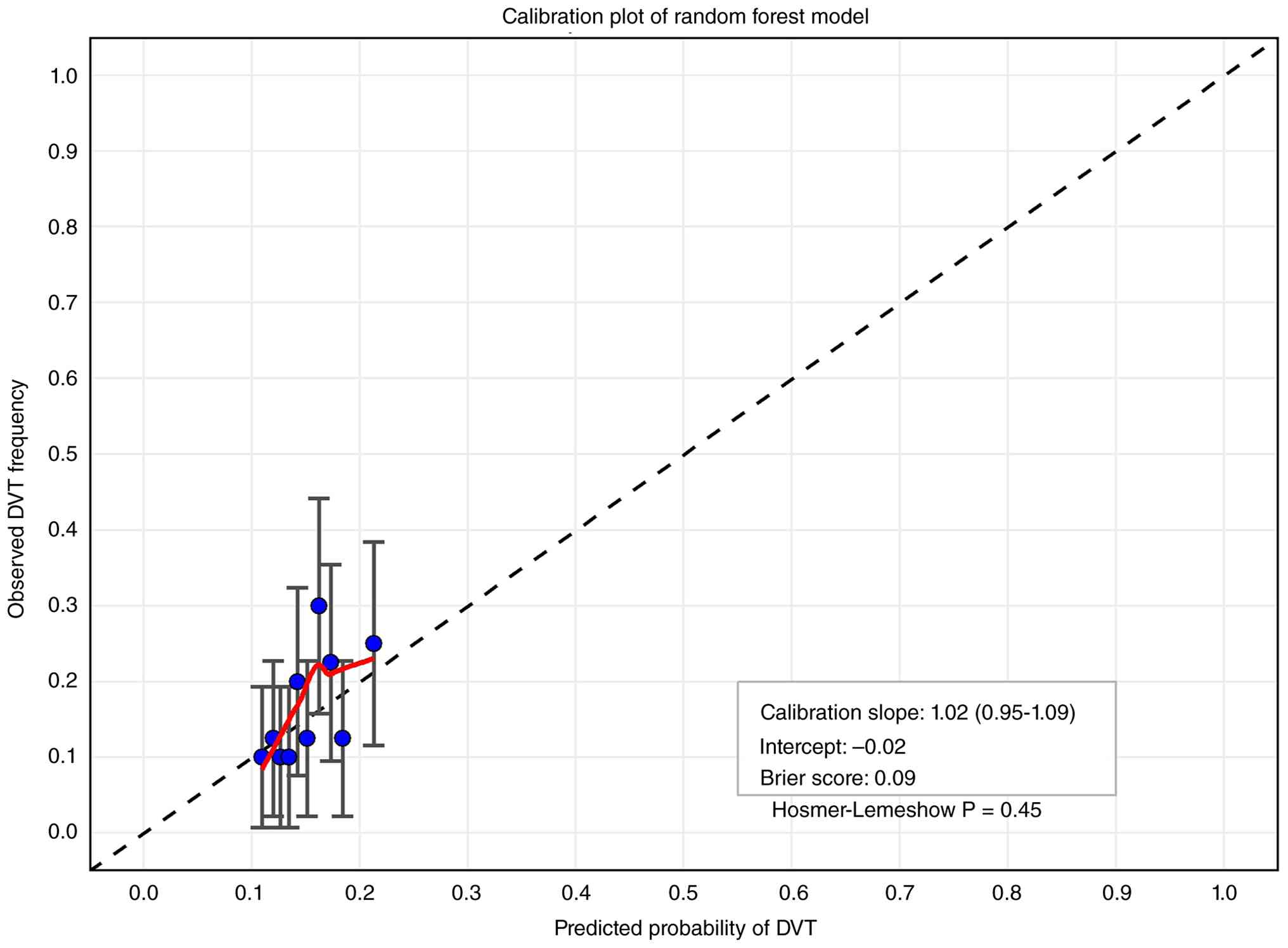
Calibration plot of the random forest
model. Calibration metrics for the random forest model: A
calibration slope of 1.02 (95% CI: 0.95-1.09), intercept of -0.02,
Brier score of 0.09 and a Hosmer-Lemeshow P=0.45, indicating good
calibration. The x-axis represents the predicted probability of DVT
and the y-axis the observed DVT frequency. DVT, deep vein
thrombosis.

Figure 3

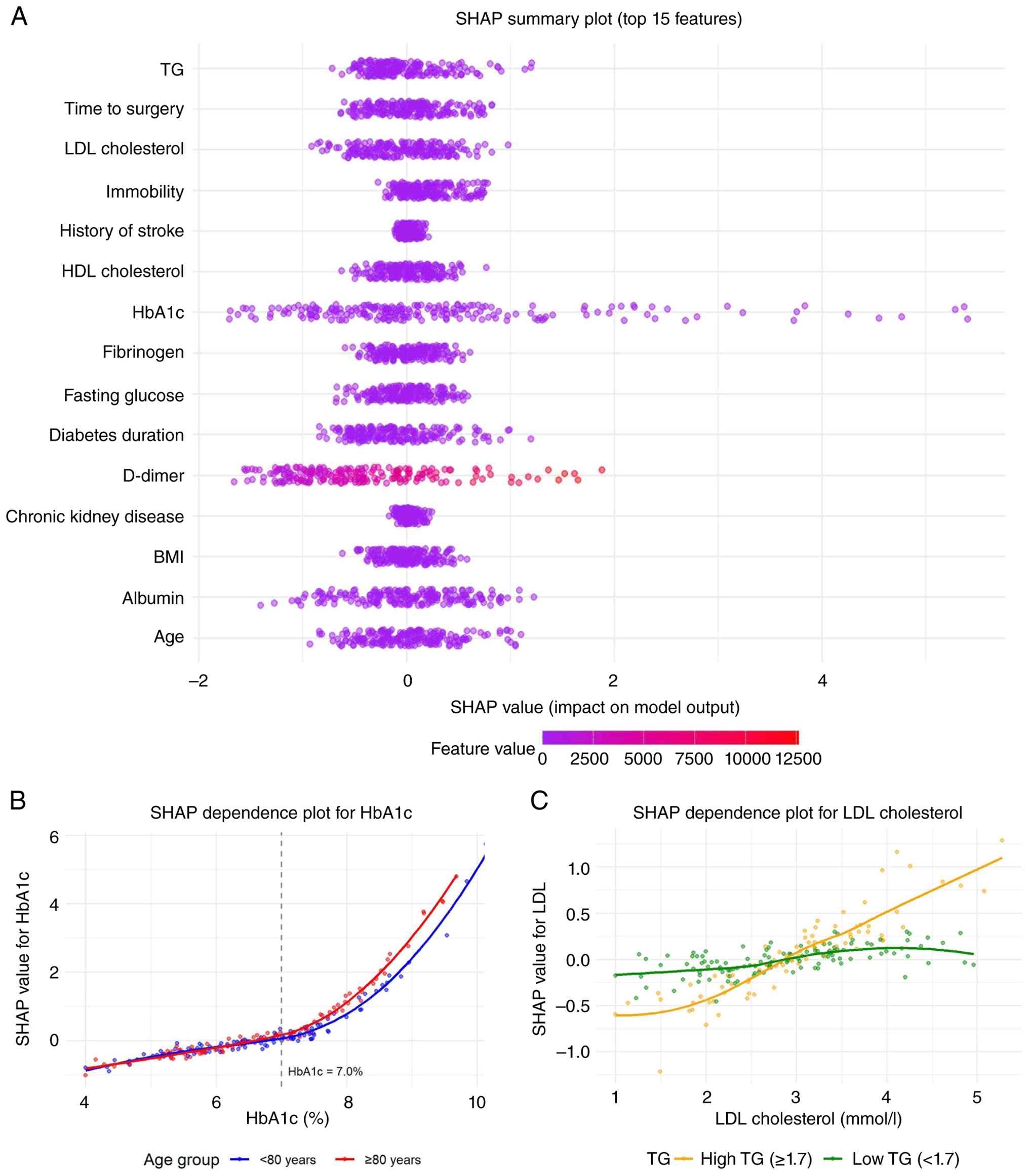
SHAP analysis of the random forest
model. (A) SHAP summary plot listing the top 15 features ranked by
mean absolute SHAP value. The color bar indicates feature value
(red indicates high and blue indicates low). Positive SHAP values
correspond to increased DVT risk. The features shown (from top to
bottom) are: TG, time to surgery, LDL cholestrol, immobility,
history of stroke, HDL cholestrol, HbA1c, Fibrinogen, fasting
glucose, diabetes duration, D-dimer, chronic kidney disease, BMI,
albumin and age. (B) SHAP dependence plot for HbA1c. Points are
colored by age group (blue indicates <80 years and red indicates
≥80 years). The vertical dashed line marks the threshold
HbA1c=7.0%. (C) SHAP dependence plot for LDL cholesterol. Points
are colored by TG level (red indicates low TG <1.7 mmol/l and
green indicates high TG ≥1.7 mmol/l). SHAP, Shapley Additive
exPlanations; DVT, deep vein thrombosis; LDL, low-density
lipoprotein; HDL, high-density lipoprotein; TG, triglyceride;
HbA1c, hemoglobin A1c.

Figure 4

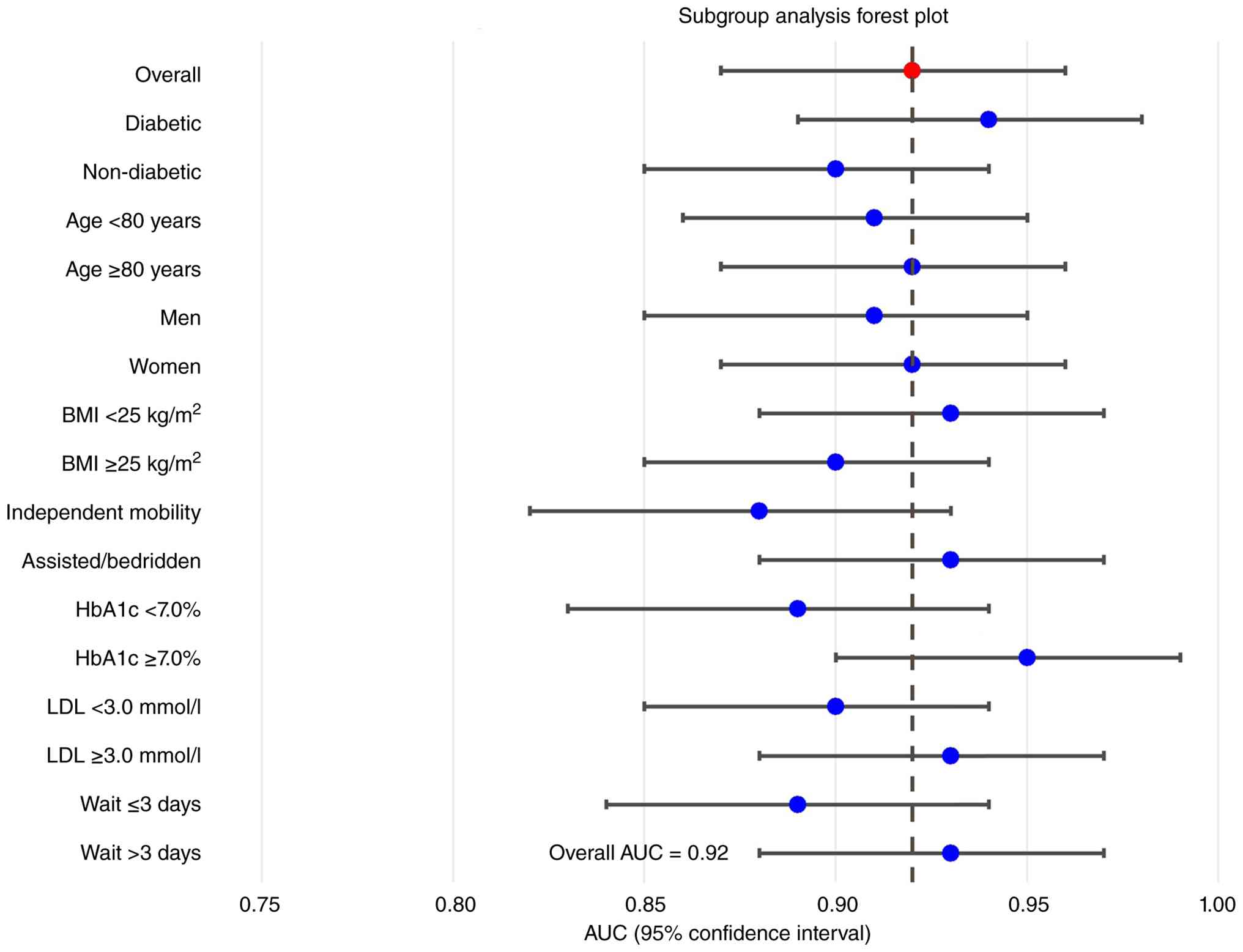
Subgroup analysis forest plot. Forest
plot showing the AUC values of the random forest model across
clinically relevant subgroups. The subgroups are: Overall,
diabetic, non-diabetic, age <80 years, age ≥80 years, men,
women, BMI <25 kg/m2, BMI ≥25 kg/m2,
independent mobility, assisted/bedridden, HbA1c <7.0%, HbA1c
≥7.0%, LDL <3.0 mmol/l, LDL ≥3.0 mmol/l, wait ≤3 days and wait
>3 days. The overall AUC (red dot) is 0.92; individual subgroup
estimates are indicated by blue dots. The vertical dashed line
represents the overall AUC. LDL, low-density lipoprotein; AUC, area
under curve; HbA1c, hemoglobin A1c.

Figure 5

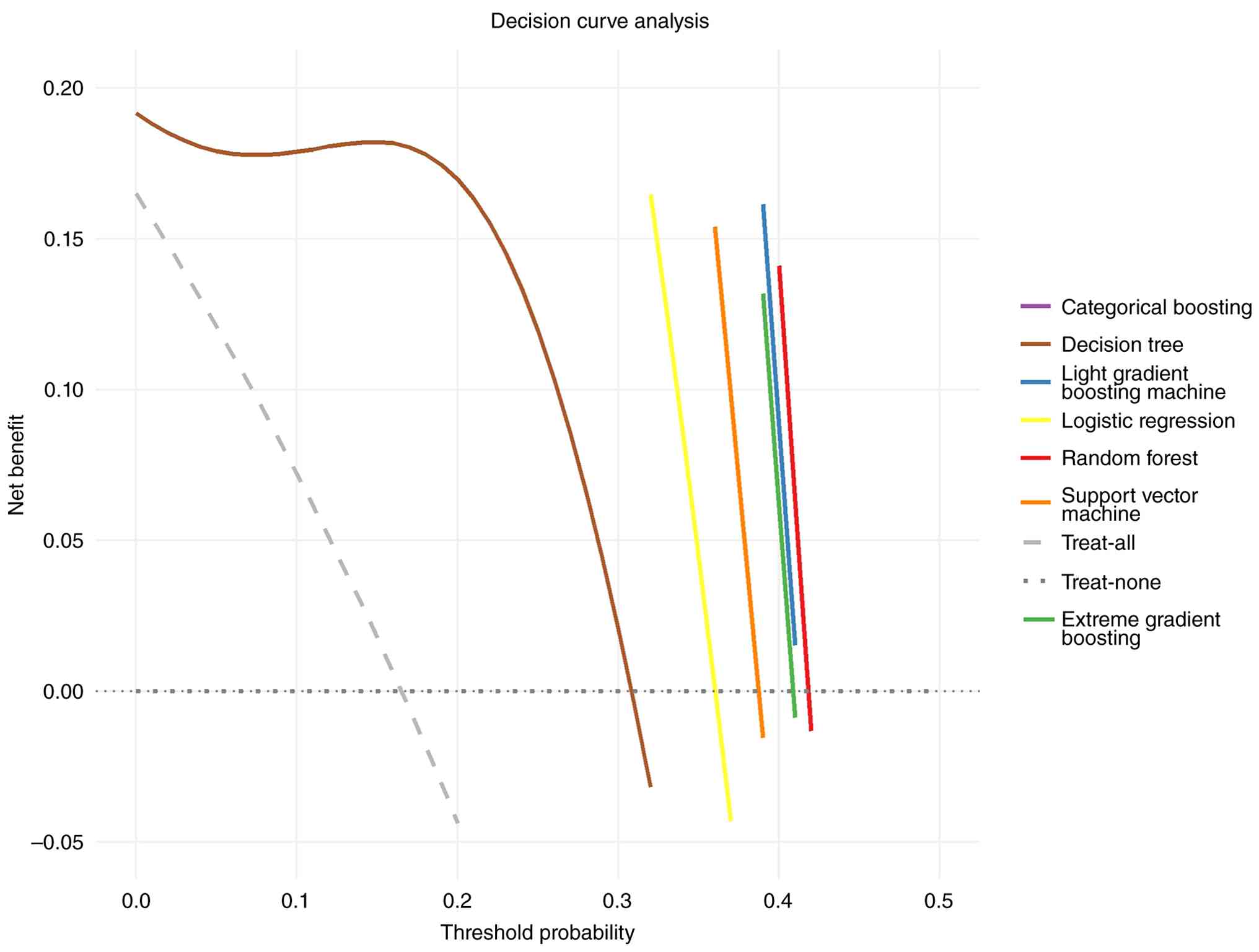
Decision curve analysis. Decision
curves depicting the net benefit of seven machine learning models
(CatBoost, Decision Tree, LightGBM, logistic regression, random
forest, SVM and XGBoost) together with the treat-all and treat-none
strategies across threshold probabilities from 0-0.5. The key
identifies each model and strategy by color. SVM, support vector
machine; XGBoost, Extreme Gradient Boosting.

Figure 6

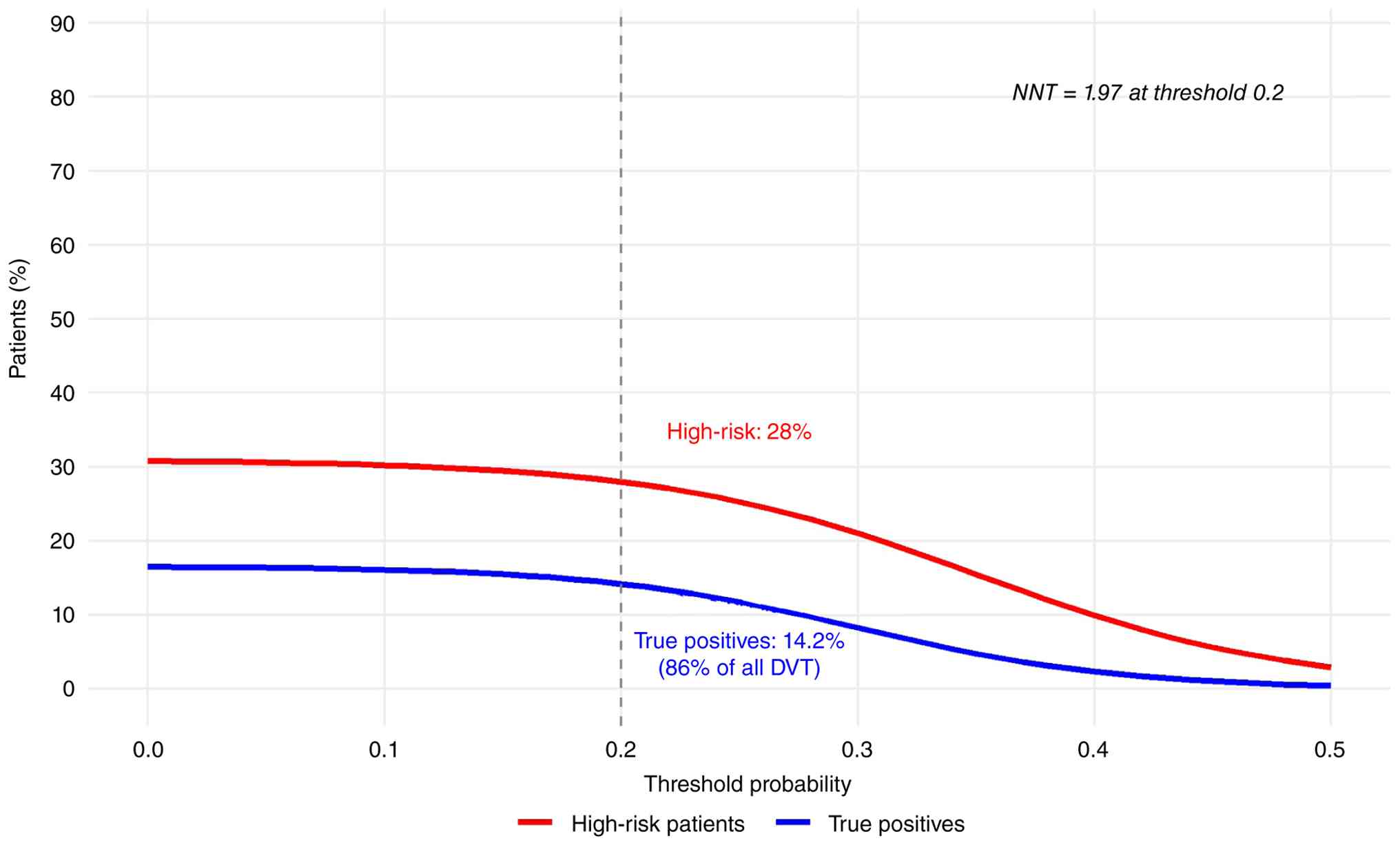
Clinical impact curve for the random
forest model. The clinical impact curve illustrates the proportion
of patients classified as high-risk (red line) and the proportion
of true positives among them (blue line) across a range of risk
thresholds. At a threshold of 0.2, ~28% of patients would be
identified as high-riska nd 14.2% of all patients would be true
positives, corresponding to a sensitivity of 86% (86% of all DVT
cases are captured). The NNT at this threshold is 1.97, indicating
that 1.97 patients need to be classified as high-risk and receive
intervention to prevent one DVT event. The vertical dashed line
marks the 0.2 threshold. DVT, deep vein thrombosis; NNT, needed to
treat.

Figure 7

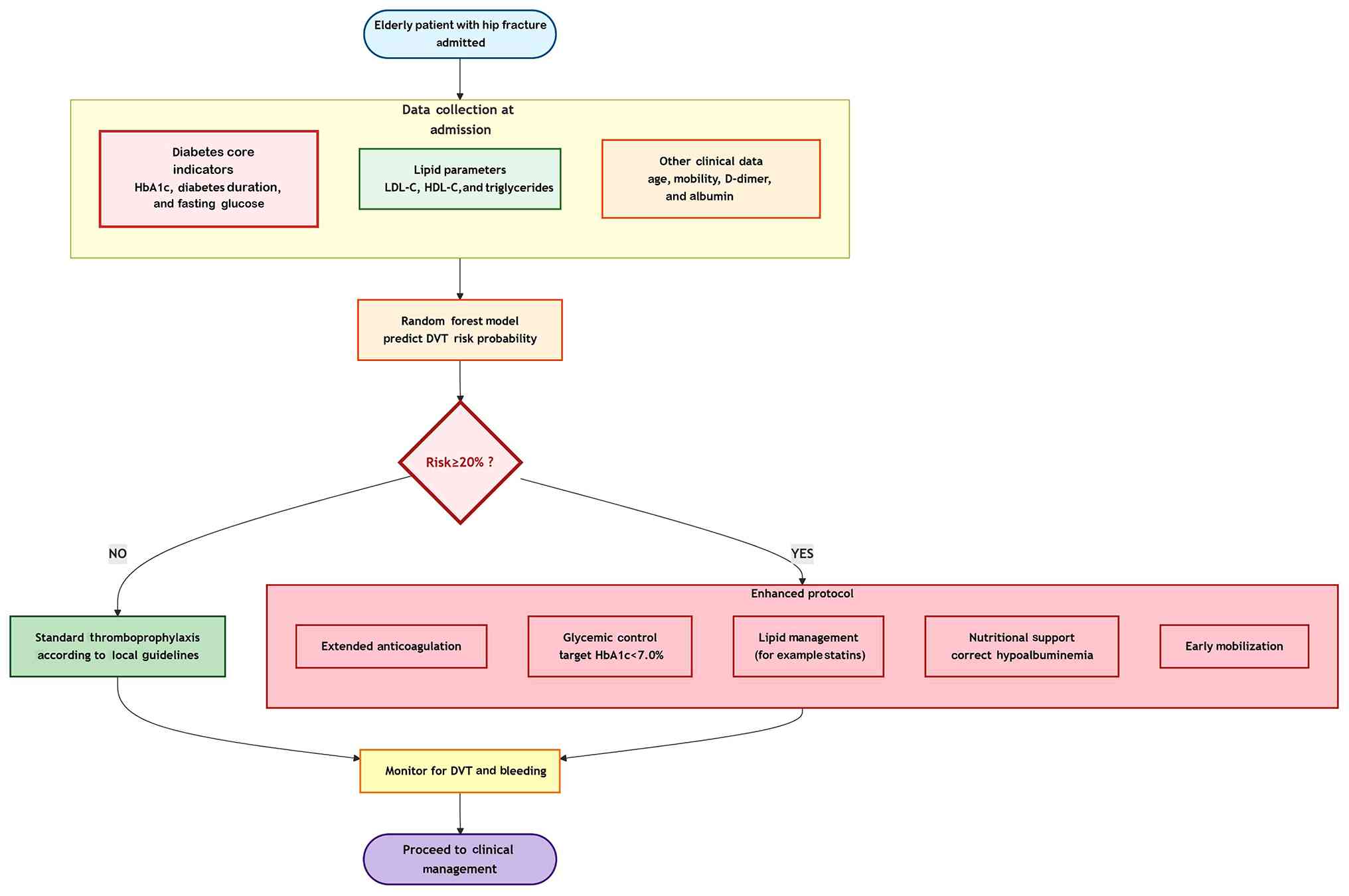
Proposed clinical decision pathway
for DVT risk stratification and prevention at admission. This
conceptual flowchart outlines a hypothesis-generating framework
based on the present exploratory findings. External and prospective
validation are required before any clinical implementation. The
pathway is intended for research purposes to guide future studies.
Data available on admission, including diabetes-specific variables
(HbA1c, diabetes duration and fasting glucose) and lipid parameters
(LDL cholesterol, HDL cholesterol and triglycerides), are collected
and input into a validated random forest model to predict DVT risk.
Patients are stratified into high-risk and low-risk categories
based on a predefined threshold. High-risk patients trigger an
enhanced thromboprophylaxis protocol encompassing extended
anticoagulation, glycemic optimization targeting HbA1c <7.0%,
lipid management, nutritional support to correct hypoalbuminemia
and early mobilization protocols. Patients at low risk receive
standard thromboprophylaxis according to local guidelines. This
pathway enables early, personalized risk stratification and
facilitates timely implementation of targeted preventive measures.
LDL, low-density lipoprotein; HDL, high-density lipoprotein; DVT,
deep vein thrombosis; HbA1c, hemoglobin A1c.
View References

1 

Zrour S, Belhaj Salem S, Ben Chekaya N, Grassa R, Bejia I and Abid A: Survival rate after osteoporotic proximal femur fractures. Tunis Med. 102:1078–1083. 2024.PubMed/NCBI View Article : Google Scholar : (In French).

2 

Andaloro S, Cacciatore S, Risoli A, Comodo RM, Brancaccio V, Calvani R, Giusti S, Schlögl M, D'Angelo E, Tosato M, et al: Hip fracture as a systemic disease in older adults: A narrative review on multisystem implications and management. Med Sci (Basel). 13(89)2025.PubMed/NCBI View Article : Google Scholar

3 

Fa-Binefa M, Clara A, Lamas C and Elosua R: Mediterranean diet and risk of hip fracture: A systematic review and dose-response meta-analysis. Nutr Rev. 83:1133–1143. 2025.PubMed/NCBI View Article : Google Scholar

4 

Soro-García P and González-Gálvez N: Effects of progressive resistance training after hip fracture: A systematic review. J Funct Morphol Kinesiol. 10(54)2025.PubMed/NCBI View Article : Google Scholar

5 

Geerts WH, Bergqvist D, Pineo GF, Heit JA, Samama CM, Lassen MR and Colwell CW: Prevention of venous thromboembolism: American college of chest physicians evidence-based clinical practice guidelines (8th edition). Chest. 133 (Suppl 6):381S–453S. 2008.PubMed/NCBI View Article : Google Scholar

6 

Zöller B, Li X, Sundquist J and Sundquist K: Risk of pulmonary embolism in patients with autoimmune disorders: A nationwide follow-up study from Sweden. Lancet. 379:244–249. 2012.PubMed/NCBI View Article : Google Scholar

7 

Anderson FA Jr and Spencer FA: Risk factors for venous thromboembolism. Circulation. 107 (Suppl 1):I9–I16. 2003.PubMed/NCBI View Article : Google Scholar

8 

Zhang L, He M, Jia W, Xie W, Song Y, Wang H, Peng J, Li Y, Wang Z and Lin Z: Analysis of high-risk factors for preoperative DVT in elderly patients with simple hip fractures and construction of a nomogram prediction model. BMC Musculoskelet Disord. 23(441)2022.PubMed/NCBI View Article : Google Scholar

9 

Piazza G, Goldhaber SZ, Kroll A, Goldberg RJ, Emery C and Spencer FA: Venous thromboembolism in patients with diabetes mellitus. Am J Med. 125:709–716. 2012.PubMed/NCBI View Article : Google Scholar

10 

Ageno W, Becattini C, Brighton T, Selby R and Kamphuisen PW: Cardiovascular risk factors and venous thromboembolism: A meta-analysis. Circulation. 117:93–102. 2008.PubMed/NCBI View Article : Google Scholar

11 

Yang CS and Tan Z: Construction and validation of a predictive model for preoperative lower extremity deep vein thrombosis risk in elderly hip fracture patients: An observational study. Medicine (Baltimore). 103(e39825)2024.PubMed/NCBI View Article : Google Scholar

12 

Caprini JA: Risk assessment as a guide for thrombosis prophylaxis. Curr Opin Pulm Med. 16:448–452. 2010.PubMed/NCBI View Article : Google Scholar

13 

Doggen CJM, Smith NL, Lemaitre RN, Heckbert SR, Rosendaal FR and Psaty BM: Serum lipid levels and the risk of venous thrombosis. Arterioscler Thromb Vasc Biol. 24:1970–1975. 2004.PubMed/NCBI View Article : Google Scholar

14 

Moellmann HL, Alhammadi E, Boulghoudan S, Kuhlmann J, Mevissen A, Olbrich P, Rahm L and Frohnhofen H: Risk of sarcopenia, frailty and malnutrition as predictors of postoperative delirium in surgery. BMC Geriatr. 24(971)2024.PubMed/NCBI View Article : Google Scholar

15 

Niu Y, Wang Q, Lu J, He P and Guo HT: Risk factors for postoperative delirium in orthopedic surgery patients: A systematic review and meta-analysis. Ann Med. 57(2534520)2025.PubMed/NCBI View Article : Google Scholar

16 

Ge X, Yao L, Liu Y, Wang Y and Zhang F: Comparing machine learning models for predicting preoperative DVT incidence in elderly hypertensive patients with hip fractures: A retrospective analysis. Sci Rep. 15(13206)2025.PubMed/NCBI View Article : Google Scholar

17 

Chen H, Yu D, Zhang J and Li J: Machine learning for prediction of postoperative delirium in adult patients: A systematic review and meta-analysis. Clin Ther. 46:1069–1081. 2024.PubMed/NCBI View Article : Google Scholar

18 

Yuan J, Zeng Q, Li J, Cong Z and Zhang Y: Machine learning applications in sports injury prediction: A narrative review. Sci Prog. 108(368504251385956)2025.PubMed/NCBI View Article : Google Scholar

19 

Rozera T, Pasolli E, Segata N and Ianiro G: Machine learning and artificial intelligence in the multi-omics approach to gut microbiota. Gastroenterology. 169:487–501. 2025.PubMed/NCBI View Article : Google Scholar

20 

Ramos MV: Reviewing the context of molecular modeling to enhance the application of machine learning technologies for safer bioinformatics. Protein Pept Lett. 32:772–775. 2025.PubMed/NCBI View Article : Google Scholar

21 

Dastan D, Soleymanekhtiari S and Ebadi A: Peptidic compound as DNA binding agent: In silico fragment-based design, machine learning, molecular modeling, synthesis, and DNA binding Evaluation. Protein Pept Lett. 31:332–344. 2024.PubMed/NCBI View Article : Google Scholar

22 

Gui C, Gao Y, Zhang R and Zhou G: Bioinformatics analysis of lactylation-related biomarkers and potential pathogenesis mechanisms in age-related macular degeneration. Curr Genomics. 26:191–209. 2025.PubMed/NCBI View Article : Google Scholar

23 

Gomase VS, Dhamane SP, Kemkar KR, Kakade PG and Sakhare AD: Immunoproteomics: Approach to diagnostic and vaccine development. Protein Pept Lett. 31:773–795. 2024.PubMed/NCBI View Article : Google Scholar

24 

Mann J, Lyons M, O'Rourke J and Davies S: Machine learning or traditional statistical methods for predictive modelling in perioperative medicine: A narrative review. J Clin Anesth. 102(111782)2025.PubMed/NCBI View Article : Google Scholar

25 

Holler E, Ludema C, Ben Miled Z, Rosenberg M, Kalbaugh C, Boustani M and Mohanty S: Development and validation of a routine electronic health record-based delirium prediction model for surgical patients without dementia: Retrospective case-control study. JMIR Perioper Med. 8(e59422)2025.PubMed/NCBI View Article : Google Scholar

26 

Needleman L, Cronan JJ, Lilly MP, Merli GJ, Adhikari S, Hertzberg BS, DeJong MR, Streiff MB and Meissner MH: Ultrasound for lower extremity deep venous thrombosis: Multidisciplinary recommendations from the society of radiologists in ultrasound consensus conference. Circulation. 137:1505–1515. 2018.PubMed/NCBI View Article : Google Scholar

27 

Tamariz L, Harkins T and Nair V: A systematic review of validated methods for identifying venous thromboembolism using administrative and claims data. Pharmacoepidemiol Drug Saf. 21 (Suppl 1):S154–S162. 2012.PubMed/NCBI View Article : Google Scholar

28 

Drosdowsky A and Gough K: The charlson comorbidity index: Problems with use in epidemiological research. J Clin Epidemiol. 148:174–177. 2022.PubMed/NCBI View Article : Google Scholar

29 

Liu C, Peng XX, Cai SY, Liu YL, Zhang C and Hu F: Development of a pre-processing workflow for real world data derived from multicenter clinical laboratories. Zhonghua Liu Xing Bing Xue Za Zhi. 46:296–306. 2025.PubMed/NCBI View Article : Google Scholar : (In Chinese).

30 

Namjoo-Moghadam A, Abedi V, Avula V, Ashjazadeh N, Hooshmandi E, Abedinpour N, Rahimian Z, Borhani-Haghighi A and Zand R: Machine learning-based cerebral venous thrombosis diagnosis with clinical data. J Stroke Cerebrovasc Dis. 33(107848)2024.PubMed/NCBI View Article : Google Scholar

31 

Collins GS, Moons KGM, Dhiman P, Riley RD, Beam AL, Van Calster B, Ghassemi M, Liu X, Reitsma JB, Van Smeden M, et al: TRIPOD+AI statement: Updated guidance for reporting clinical prediction models that use regression or machine learning methods. BMJ. 385(e078378)2024.PubMed/NCBI View Article : Google Scholar

32 

Collins GS, Reitsma JB, Altman DG and Moons KG: Transparent reporting of a multivariable prediction model for individual prognosis or diagnosis (TRIPOD): The TRIPOD statement. BMJ. 350(g7594)2015.PubMed/NCBI View Article : Google Scholar

33 

Hayssen H, Cires-Drouet R, Englum B, Nguyen P, Sahoo S, Mayorga-Carlin M, Siddiqui T, Turner D, Yesha Y, Sorkin JD and Lal BK: Systematic review of venous thromboembolism risk categories derived from Caprini score. J Vasc Surg Venous Lymphat Disord. 10:1401–1409.e7. 2022.PubMed/NCBI View Article : Google Scholar

34 

Clinkenbeard K, Bossle K, Pape T, Woltenberg LN and Saha S: Time to hip fracture surgery and mortality. South Med J. 116:274–278. 2023.PubMed/NCBI View Article : Google Scholar

35 

Ten Cate V, Prochaska JH, Schulz A, Nagler M, Robles AP, Jurk K, Koeck T, Rapp S, Düber C, Münzel T, et al: Clinical profile and outcome of isolated pulmonary embolism: A systematic review and meta-analysis. EClinicalMedicine. 59(101973)2023.PubMed/NCBI View Article : Google Scholar

36 

Ma R, Yu W, Tian J, Tang Y, Fang H, Ming X and Liu H: Machine learning in the prediction of venous thromboembolism: Systematic review and meta-analysis. J Med Internet Res. 27(e77339)2025.PubMed/NCBI View Article : Google Scholar

37 

Selvin E, Steffes MW, Zhu H, Matsushita K, Wagenknecht L, Pankow J, Coresh J and Brancati FL: Glycated hemoglobin, diabetes, and cardiovascular risk in nondiabetic adults. N Engl J Med. 362:800–811. 2010.PubMed/NCBI View Article : Google Scholar

38 

Davis JW, Weller SC, Porterfield L, Chen L and Wilkinson GS: Statin use and the risk of venous thromboembolism in women taking hormone therapy. JAMA Netw Open. 6(e2348213)2023.PubMed/NCBI View Article : Google Scholar

39 

Pencina KM, Thanassoulis G, Pencina MJ, Toth PP and Sniderman AD: Hemoglobin A1c and abdominal obesity as predictors of diabetes and ASCVD in individuals with prediabetes in UK Biobank: A prospective observational study. Cardiovasc Diabetol. 23(448)2024.PubMed/NCBI View Article : Google Scholar

40 

Jiao X, Zhang Q, Peng P and Shen Y: HbA1c is a predictive factor of severe coronary stenosis and major adverse cardiovascular events in patients with both type 2 diabetes and coronary heart disease. Diabetol Metab Syndr. 15(50)2023.PubMed/NCBI View Article : Google Scholar

41 

Merrell LA, Esper GW, Ganta A, Egol KA and Konda SR: Impact of poorly controlled diabetes and glycosylated hemoglobin values in geriatric hip fracture mortality risk assessment. Cureus. 15(e36422)2023.PubMed/NCBI View Article : Google Scholar

42 

Kanchanabat B, Stapanavatr W, Meknavin S, Soorapanth C, Sumanasrethakul C and Kanchanasuttirak P: Systematic review and meta-analysis on the rate of postoperative venous thromboembolism in orthopaedic surgery in Asian patients without thromboprophylaxis. Br J Surg. 98:1356–1364. 2011.PubMed/NCBI View Article : Google Scholar

Related Articles

  • Abstract
  • View
  • Download
  • Twitter
Copy and paste a formatted citation
Spandidos Publications style
Song Q, Shi P, Tian P, Chao A, Zhang Y and Dong Q: Predicting lower extremity deep vein thrombosis in elderly patients with hip fracture: A machine learning model with emphasis on diabetes as a key risk factor. Exp Ther Med 32: 259, 2026.
APA
Song, Q., Shi, P., Tian, P., Chao, A., Zhang, Y., & Dong, Q. (2026). Predicting lower extremity deep vein thrombosis in elderly patients with hip fracture: A machine learning model with emphasis on diabetes as a key risk factor. Experimental and Therapeutic Medicine, 32, 259. https://doi.org/10.3892/etm.2026.13253
MLA
Song, Q., Shi, P., Tian, P., Chao, A., Zhang, Y., Dong, Q."Predicting lower extremity deep vein thrombosis in elderly patients with hip fracture: A machine learning model with emphasis on diabetes as a key risk factor". Experimental and Therapeutic Medicine 32.4 (2026): 259.
Chicago
Song, Q., Shi, P., Tian, P., Chao, A., Zhang, Y., Dong, Q."Predicting lower extremity deep vein thrombosis in elderly patients with hip fracture: A machine learning model with emphasis on diabetes as a key risk factor". Experimental and Therapeutic Medicine 32, no. 4 (2026): 259. https://doi.org/10.3892/etm.2026.13253
Copy and paste a formatted citation
x
Spandidos Publications style
Song Q, Shi P, Tian P, Chao A, Zhang Y and Dong Q: Predicting lower extremity deep vein thrombosis in elderly patients with hip fracture: A machine learning model with emphasis on diabetes as a key risk factor. Exp Ther Med 32: 259, 2026.
APA
Song, Q., Shi, P., Tian, P., Chao, A., Zhang, Y., & Dong, Q. (2026). Predicting lower extremity deep vein thrombosis in elderly patients with hip fracture: A machine learning model with emphasis on diabetes as a key risk factor. Experimental and Therapeutic Medicine, 32, 259. https://doi.org/10.3892/etm.2026.13253
MLA
Song, Q., Shi, P., Tian, P., Chao, A., Zhang, Y., Dong, Q."Predicting lower extremity deep vein thrombosis in elderly patients with hip fracture: A machine learning model with emphasis on diabetes as a key risk factor". Experimental and Therapeutic Medicine 32.4 (2026): 259.
Chicago
Song, Q., Shi, P., Tian, P., Chao, A., Zhang, Y., Dong, Q."Predicting lower extremity deep vein thrombosis in elderly patients with hip fracture: A machine learning model with emphasis on diabetes as a key risk factor". Experimental and Therapeutic Medicine 32, no. 4 (2026): 259. https://doi.org/10.3892/etm.2026.13253
Follow us
  • Twitter
  • LinkedIn
  • Facebook
About
  • Spandidos Publications
  • Careers
  • Cookie Policy
  • Privacy Policy
How can we help?
  • Help
  • Live Chat
  • Contact
  • Email to our Support Team