Introduction
Rutin (also known as vitamin P or rutoside) is a
flavonoid belonging to a ubiquitous group of naturally occurring
polyphenolic compounds found in vegetables, fruits and plant-based
beverages (1). It is particularly
abundant in buckwheat, citrus fruits, apples, tea, onions and red
wine.
Rutin, in the form of quercetin, is known for its
anti-inflammatory, antimutagenic, antioxidant, anticancer,
gastroprotective and neuroprotective effects (2,3). Its
pharmacological activities are partly explained by the inhibition
of cyclooxygenase (COX) and lipoxygenase (LOX) pathways, as well as
by the modulation of oxidative stress and cytokine signaling.
Experimental evidence also highlights that rutin may
exert cartilage-protective and anti-inflammatory actions through
the activation of SIRT1 and reduction of oxidative damage, further
supporting its potential relevance in osteoarthritis models
(4,5). Recent experimental evidence has
further demonstrated that rutin may inhibit the progression of
osteoarthritis by reducing inflammatory mediators and cartilage
degradation through cystathionine-β-synthase-mediated RhoA/ROCK
signaling (6).
There are a few experimental studies available on
the use of Rutin in animal osteoarthritis, demonstrating protective
effects against cartilage degeneration (4,5).
Beyond osteoarthritis, experimental evidence suggests that rutin
may also exert potentially relevant effects on musculoskeletal
tissues through the modulation of oxidative stress, inflammatory
signaling, osteoclast activity and bone metabolism (4,6).
These findings broaden the biological rationale for investigating
rutin in rheumatic and musculoskeletal disorders. In tendinopathy,
oxidative stress, inflammatory signaling, and impaired tissue
repair are recognized components of disease pathophysiology,
providing a biological rationale for investigating antioxidant and
anti-inflammatory compounds, such as rutin in tendon disorders,
including rotator cuff tendinitis. However, there are only a
limited number of clinical trials evaluating the effects of Rutin
in human rheumatic disorders (7-12).
Notably, all available clinical studies used
Phlogenzym®, a fixed-dose combination of bromelain,
trypsin and rutoside (a glycosylated form of rutin), enabling the
determination of the isolated effects of rutin monotherapy. This
limitation should be acknowledged when interpreting clinical
outcomes.
The aim of the present study was to conduct a
systematic review on the use of rutin as a treatment for rheumatic
diseases.
Data and methods
A corrected and structured literature search was
conducted on the PubMed and SciELO databases from 1966 to
September, 2024 using the following Boolean strategy: (‘rutin’ OR
‘rutoside’ OR ‘rutosid’ OR ‘vitamin P’) AND (‘rheumatologic’ OR
‘rheumatic disease’ OR ‘fibromyalgia’ OR ‘rheumatoid arthritis’ OR
‘spondyloarthritis’ OR ‘osteoarthritis’ OR ‘tendinitis’ OR
‘tendinopathy’ OR ‘tendon’ OR ‘rotator cuff’ OR ‘gout’).
The search had no language restriction. The
reference lists of the selected articles were analyzed to identify
additional publications. The search results were screened to
identify human clinical studies and to exclude preclinical studies
conducted exclusively on animals or in vitro. Eligible
studies included clinical studies evaluating rutin, either as
monotherapy or as a component of a combination treatment, in
patients with rheumatic or musculoskeletal diseases. Preclinical
studies, reviews, editorials and studies without clinical data were
excluded.
The author screened the titles and abstracts of the
retrieved records and subsequently assessed potentially eligible
full-text articles. Finally, a standardized form was designed to
extract the information from relevant articles, including authors,
year of publication, the number of patients studied, demographics,
disease duration, follow-up, rutin posology, outcomes and
side-effects.
The methodological quality and risk of bias of the
included clinical trials were assessed according to their study
design, considering the randomization process, deviations from
intended interventions, missing outcome data, outcome measurement
and the selection of reported results. Given the very small number
of eligible studies and their clinical and methodological
heterogeneity, the quantitative assessment of publication bias was
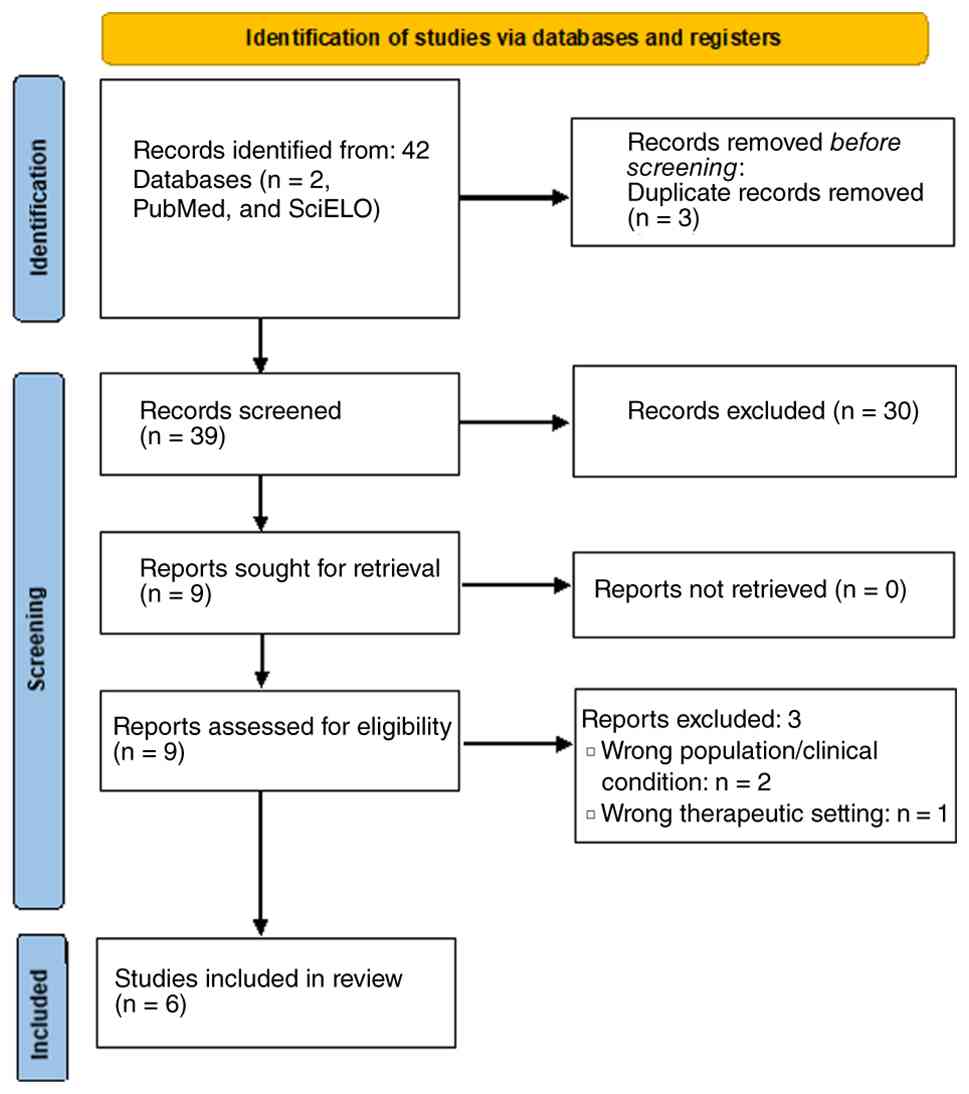
considered inappropriate. The study selection process was
documented in a PRISMA flow diagram to improve transparency in
reporting, and is presented in Fig.
1. The Cochrane Risk of Bias 2 (RoB 2) tool was used to assess
the risk of bias of the included randomized clinical trials. The
results of the risk-of-bias assessment are presented in Table I.
 | Table IRisk-of-bias assessment of the
included randomized clinical trials. |
Table I
Risk-of-bias assessment of the
included randomized clinical trials.
| Authors, year of
publication | D1. Randomization
process | D2. Deviations from
intended interventions | D3. Missing outcome
data | D4. Measurement of
the outcome | D5. Selection of
reported result | Overall risk | (Refs.) |
|---|
| Akhtar et al,
2004 | Some concerns | Low | Some concerns | Low | Some concerns | Some concerns | (8) |
| Klein et al,
2006 | Some concerns | Low | Low | Low | Some concerns | Some concerns | (9) |
| Tilwe et al,
2001 | Some concerns | High | Low | High | Some concerns | High | (10) |
| Szczurko et
al, 2009 | Low | High | Some concerns | High | Low | High | (11) |
| Bolten et al,
2015 | Some concerns | Low | High | Low | Low | High | (12) |
| Singer and
Oberleitner, 1996 | Pending full-text
assessment | Pending | Pending | Pending | Pending | Pending | (7) |
Results
The present review identified six clinical studies
encompassing a total of 558 patients, conducted across Austria,
Canada, Germany and Pakistan, thereby providing a modest, yet
geographically diverse body of evidence on the therapeutic effects
of rutin as part of oral enzyme combinations in rheumatic
conditions (7-12).
In total, four studies evaluated Phlogenzym®, whereas
the two additional studies by Singer and Oberleitner (7) and Bolten et al (12) evaluated Wobenzym, an oral enzyme
formulation also containing rutin/rutoside. As all studies employed
multi-component enzymatic formulations containing rutin/rutoside
together with proteolytic enzymes, it is essential to emphasize
that none of the included trials investigated rutin as a standalone
intervention. This methodological constraint significantly limits
the ability to isolate the specific pharmacological contribution of
rutin itself, as bromelain and trypsin are known to exert
independent anti-inflammatory and proteolytic actions that may
synergistically contribute to the observed clinical outcomes
(7-12).
The main characteristics of the included studies, including sample
size, demographic characteristics, disease duration, follow-up,
rutin/rutoside-containing formulation and dosage, clinical
outcomes, and adverse events, are summarized in Table II.
| Table IIClinical studies of rutin-containing
enzyme formulations in rheumatic diseases. |
Table II
Clinical studies of rutin-containing
enzyme formulations in rheumatic diseases.
| Authors, year of
publication | No. of patients | Demographics | Disease duration | Follow-up | Rutin posology | Outcomes | Side effects | (Refs.) |
|---|
| Singer and
Oberleitner, 1996 | 80 | Patients with painful
knee OA in an acute phase; groups comparable regarding age and
sex | Groups comparable
regarding OA duration; exact values not reported in the
abstract | 28 days treatment +
28 days treatment-free observation | Wobenzym, 4x7
capsules/day | Significant
improvement (P<0.05) in pain at rest, during motion, walking, at
night, and tenderness; no significant difference versus
diclofenac | AEs in 14 patients,
mainly gastrointestinal; allergic rash and dizziness also reported;
6 discontinued | (7) |
| Akhtar et al,
2004 | 103 | 58 females/45 males;
mean age, 52 years | 18-20 months | 6 weeks |
Phlogenzym® (bromelain, 90 mg;
trypsin, 48 mg; rutoside, 100 mg), two tablets three times
daily | WOMAC pain,
stiffness, and physical function improved; overall efficacy
comparable to diclofenac | Mild gastrointestinal
adverse events; no severe adverse events | (8) |
| Klein et al,
2006 | 90 | 48 females/ 42 males;
mean age, 55 years | 24-26 months | 12 weeks |
Phlogenzym® (bromelain, 90 mg;
trypsin, 48 mg; rutoside, 100 mg), two tablets three times
daily | Improvement in pain
and function comparable to diclofenac; improvement in joint
tenderness favored enzyme therapy | Mainly mild
gastrointestinal symptoms; no serious adverse events | (9) |
| Tilwe et al,
2001 | 50 | 33 females/17 males;
mean age, ~50 years | 12-14 months | 6 weeks |
Phlogenzym® (bromelain, 90 mg;
trypsin, 48 mg; rutoside, 100 mg), two tablets three times
daily | Significant
improvement in OA symptoms; efficacy generally comparable to
diclofenac | Predominantly mild
gastrointestinal adverse events | (10) |
| Szczurko et
al, 2009 | 85 | Adults with rotator
cuff tendinitis | >6 weeks | 12 weeks |
Phlogenzym® containing
bromelain, trypsin and rutoside | SPADI decreased by
54.5 vs. 18% in the controls; improvements also observed in pain
VAS, MYMOP, SF-36, and shoulder range of motion | Predominantly mild
adverse events; no major safety concerns | (11) |
| Bolten et
al, 2015 | 150 | Adults with
moderate-to-severe painful knee OA; middle-aged/older
population | Variable; chronic
knee OA | 12 weeks | Wobenzym, six
tablets/day (288 mg trypsin + 540 mg bromelain + 600 mg rutoside
trihydrate/day) | Lequesne index
significantly improved vs. placebo with Wobenzym and diclofenac; no
significant difference between active treatments; WOMAC also
improved | Treatment-related
AEs: 7.2% with Wobenzym, 15.6% with diclofenac, and 9.1% with
placebo; mainly gastrointestinal | (12) |
The risk-of-bias assessment of the included
randomized clinical trials is summarized in Table I. Methodological quality varied
across studies, with concerns mainly related to incomplete
reporting of the randomization process, lack of blinding in open or
pragmatic trials, missing outcome data, and the measurement of
subjective outcomes.
The demographic characteristics across studies were
relatively consistent, with participants generally being
middle-aged or older adults and with both sexes represented across
the trials. Disease duration also varied substantially (from >6
weeks to 54 months), indicating that both early-stage and chronic
presentations of osteoarthritis and tendinitis were represented.
This diversity enhances external validity, while also introducing
clinical heterogeneity that may influence treatment
responsiveness.
Across the five osteoarthritis trials,
rutin-containing oral enzyme therapy demonstrated clinical efficacy
generally comparable to diclofenac in conventional measures of
disease severity, including pain, Western Ontario and McMaster
Universities Osteoarthritis Index (WOMAC) domains, joint stiffness,
physical function, Lequesne's index, and composite assessments of
tenderness and swelling (7-10,12).
The addition of the Singer and Oberleitner (7) and Bolten et al (12) trials strengthens the evidence base
in knee osteoarthritis, as both were randomized controlled studies
comparing an oral enzyme combination containing rutin/rutoside with
diclofenac.
Singer and Oberleitner (7) evaluated 80 patients with painful knee
osteoarthritis in an acute phase in a double-blind trial. Patients
received Wobenzym or diclofenac for 28 days, followed by a 28-day
treatment-free observation period. Pain at rest, during motion,
while walking, at night and tenderness improved significantly
(P<0.05) following treatment, with no significant difference
between the two treatment groups. A tendency toward relapse was
observed during the subsequent treatment-free period. Global
assessments of efficacy and tolerability by physicians and patients
were predominantly rated as ‘very good’ or ‘good’.
Bolten et al (12) evaluated 150 patients with
moderate-to-severe painful knee osteoarthritis in a randomized,
double-blind, placebo-controlled trial comparing Wobenzym,
diclofenac and a placebo over a period of 12 weeks. Both active
treatments led to significant improvements in the Lequesne
algofunctional index compared with the placebo, with no significant
difference between Wobenzym and diclofenac. WOMAC scores also
improved in both active-treatment groups, and rescue paracetamol
consumption was significantly lower with Wobenzym than with the
placebo. These findings provide additional placebo-controlled
evidence supporting the symptomatic efficacy of a Rutin-containing
enzyme combination in knee osteoarthritis (12).
One clinically notable observation emerged from the
German study by Tilwe et al (10), in which improvement in joint
tenderness was significantly greater in the Phlogenzym®
group compared with diclofenac. Although mechanistic
interpretations remain speculative, this finding may reflect the
unique enzymatic activity of bromelain and trypsin in modulating
inflammatory edema and tissue sensitivity, effects not typically
associated with diclofenac.
In the randomized study by Akhtar et al
(8), global physician-assessed
treatment efficacy demonstrated favorable ratings for 51.4% of the
patients in the rutin/Phlogenzym® group compared with
37.2% in the diclofenac group. Although the difference did not
reach statistical significance, the numerical trend suggests
potential clinical advantages, particularly when combined with the
favorable safety profile observed in the enzymatic therapy group.
Disease severity reductions were paralleled by measurable
functional improvements, reinforcing the consistency of benefit
across trials.
The study on rotator cuff tendinitis conducted in
Canada by Szczurko et al (11) also demonstrated clinically relevant
improvements with enzyme-based therapy. The Shoulder Pain and
Disability Index (SPADI) decreased by 54.5% in the
Phlogenzym® group compared to only 18% in the
exercise-based control group. This substantial improvement suggests
a potential therapeutic role for rutin-containing enzymatic
formulations in tendinopathy; however, as only one study evaluated
rotator cuff tendinitis, comparisons of treatment responsiveness
between tendinitis and osteoarthritis cannot be established.
Additional outcomes, including reductions in pain (visual analog
scale), enhancements in the MYMOP, measure yourself medical outcome
profile (MYMOP) and SF-36 scores, and measurable gains in shoulder
extension, flexion and abduction, reinforce the robustness of the
findings and point toward meaningful improvements in both symptoms
and function.
Adverse events were generally mild and predominantly
gastrointestinal across the six studies, although their frequency
varied considerably among trials. In the study by Singer and
Oberleitner (7), adverse events
were reported in 14 patients receiving Wobenzym, including
gastrointestinal complaints, dizziness and one allergic rash; 6
patients discontinued treatment due to adverse events. In the study
by Bolten et al (12),
treatment-related adverse events occurred in 7.2% of patients
receiving Wobenzym, compared with 15.6% receiving diclofenac and
9.1% receiving the placebo, and were predominantly mild-to-moderate
gastrointestinal events. Across the overall evidence base, no new
major safety signal emerged for the rutin-containing enzyme
combinations.
Overall, the expanded evidence base of six clinical
studies indicates that rutin-containing enzyme combinations provide
symptomatic improvement in osteoarthritis, with efficacy generally
comparable to diclofenac in the available comparative trials
(7-10,12).
The single study on rotator cuff tendinitis also reported
substantial improvements in pain and function (11); however, the limited evidence does
not permit conclusions regarding differential efficacy across
rheumatic conditions. As Rutin was administered exclusively as part
of multi-component enzyme formulations, these results cannot
establish the efficacy of rutin monotherapy.
Discussion
The present systematic review provides a detailed
synthesis of the existing clinical evidence on the use of rutin,
administered exclusively as a component of multi-enzyme
formulations containing proteolytic enzymes, including
Phlogenzym® and Wobenzym, in the management of
osteoarthritis and rotator cuff tendinitis. Although the number of
available studies remains limited, the collective findings allow
for a nuanced interpretation of both the therapeutic potential and
the inherent methodological constraints of the current evidence
base. Notably, the available clinical evidence cannot be
interpreted as evidence of efficacy of rutin monotherapy, as none
of the included studies evaluated rutin as a standalone therapeutic
agent. Moreover, the evidence is restricted to osteoarthritis and
rotator cuff tendinitis, and therefore cannot be extrapolated to
other rheumatic diseases (7-12).
Across the five osteoarthritis trials, the results
generally demonstrate that rutin-containing multi-enzyme
formulations provide symptomatic improvement, with efficacy
comparable to diclofenac in the available head-to-head trials
(7-10,12).
The inclusion of the studies by Singer and Oberleitner (7) and Bolten et al (12) strengthens this observation by
adding randomized evidence in knee osteoarthritis, including
placebo-controlled data from Bolten et al (12). Diclofenac, as one of the most
widely used non-steroidal anti-inflammatory drugs (NSAIDs)
worldwide, remains a benchmark for the symptomatic treatment of
osteoarthritis; thus, any alternative demonstrating comparable
efficacy with a more favorable safety profile warrants clinical
attention. The superiority of enzyme therapy in joint tenderness
observed in the German randomized trial (10) suggests possible advantages in
specific inflammatory parameters, potentially mediated through
pathways distinct from traditional NSAIDs. Nevertheless, these
findings should be interpreted cautiously due to the limited number
of studies, variable sample sizes, relatively short follow-up
periods, and clinical and methodological heterogeneity of the
available trials.
These mechanistic distinctions merit deeper
consideration. Rutin possesses well-established anti-inflammatory
and antioxidant activities, including the inhibition of COX and LOX
pathways, the reduction of reactive oxygen species, and the
modulation of cytokine expression (2-5).
Preclinical studies highlight that rutin can activate SIRT1,
contributing to chondroprotection against oxidative stress-induced
cartilage damage, a mechanism highly relevant to the
pathophysiology of osteoarthritis (5). However, it is important to recognize
that all clinical studies evaluated rutin within multi-component
enzyme formulations, rather than as a monotherapy.
Phlogenzym® contains bromelain and trypsin in addition
to rutin/rutoside, while Wobenzym formulations also combine
rutin/rutoside with proteolytic enzymes. Therefore, other active
components likely contribute substantially to the observed clinical
outcomes. Bromelain has demonstrated the capacity to reduce the
level sof pro-inflammatory cytokines, such as TNF-α and IL-1β, to
inhibit platelet aggregation and to modulate leukocyte trafficking
(13). Trypsin and other
proteolytic enzymes have been reported to regulate tissue
remodeling and edema reduction. These findings are consistent with
broader evidence on nutraceutical combinations in osteoarthritis,
in which multiple bioactive compounds may act synergistically to
modulate inflammation and joint metabolism (14). Thus, the potential mechanism of
these rutin-containing enzyme formulations may involve
complementary, rather than isolated actions of their components:
Rutin may contribute predominantly antioxidant and
anti-inflammatory effects, whereas the proteolytic enzymes may
provide additional anti-inflammatory, edema-modulating and
tissue-remodeling effects. Such complementary actions could
theoretically explain why these combinations may produce clinical
effects that cannot be attributed to rutin alone. However, the
available trials were not designed to determine pharmacological
synergy or the individual contribution of each component;
therefore, a synergistic effect remains a hypothesis rather than an
established clinical mechanism.
These proposed and potentially complementary
mechanisms of rutin/rutoside and proteolytic enzymes, together with
their possible effects on cartilage, synovial and tendon tissues,
and the principal clinical outcomes observed in the included
studies, are summarized in Fig. 2.
Notably, the mechanistic pathways depicted in Fig. 2 are derived predominantly from
experimental evidence and should not be interpreted as
demonstrating the clinical efficacy of rutin monotherapy or a
clinically proven synergistic interaction among the formulation
components.
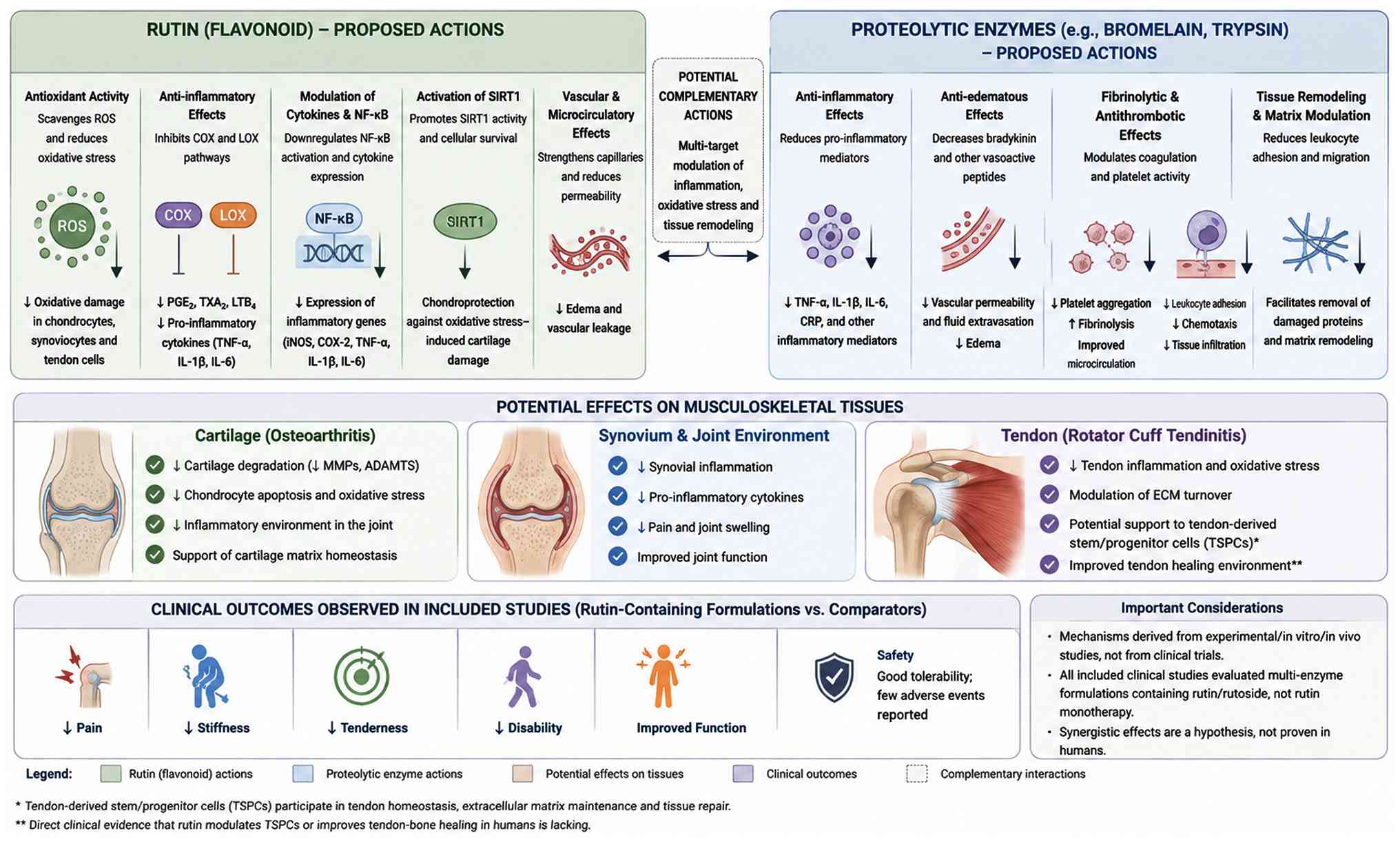 | Figure 2Proposed mechanisms of action of rutin
and rutin-containing multi-enzyme formulations in osteoarthritis
and rotator cuff tendinitis. Schematic representation of the
proposed biological actions of rutin and proteolytic enzymes,
including bromelain and trypsin, in musculoskeletal tissues. Rutin
may exert antioxidant and anti-inflammatory effects through
modulation of oxidative stress, COX/LOX pathways, inflammatory
cytokines, NF-κB signaling and SIRT1 activation, whereas
proteolytic enzymes may contribute additional anti-inflammatory,
anti-edematous, and tissue-remodeling effects. These potentially
complementary mechanisms may influence cartilage, synovial and
tendon homeostasis. The figure also summarizes the main clinical
outcomes reported with rutin-containing multi-enzyme formulations
in the included studies. Mechanistic pathways are primarily based
on experimental evidence and should not be interpreted as
demonstrating the clinical efficacy of rutin monotherapy. TSPCs,
tendon-derived stem/progenitor cells; COX, cyclooxygenase; LOX,
lipoxygenase; NF-κB, nuclear factor kappa B; SIRT1, sirtuin 1; ROS,
reactive oxygen species; ECM, extracellular matrix. |
Rutin should also be considered within the broader
biological context of flavonoids with potential effects on
musculoskeletal tissues. Experimental studies on flavonoid and
flavonoid-like compounds, including trifolirhizin, corylifol A,
isosinensetin, chrysin, oroxylin A, tiliroside and scutellarein
have reported the modulation of pathways involved in osteoblast and
osteoclast activity, oxidative stress, inflammation and bone
remodeling (15-17).
These findings provide a useful mechanistic framework for
considering the potential effects of rutin on bone and joint
tissues. Nevertheless, direct comparisons between rutin and these
compounds remain limited, and an ample amount of the available
evidence is derived from in vitro or animal models;
consequently, these observations should not be interpreted as
evidence of equivalent clinical efficacy.
The single study evaluating rotator cuff tendinitis
reported substantial improvements in pain, disability and shoulder
function with Phlogenzym® (11). Rotator cuff tendinitis is
characterized by soft-tissue and tendon pathology rather than the
cartilage degeneration characteristic of osteoarthritis, providing
a biological rationale for considering the potential effects of
anti-inflammatory and proteolytic enzyme therapy in this setting.
The marked improvement in SPADI scores in the
Rutin/Phlogenzym® group compared with physical exercise
alone (11) is clinically
noteworthy. However, because only one included study evaluated
tendinitis, the available evidence does not permit conclusions
regarding whether Rutin-containing enzyme therapy is more effective
in tendinopathy than in osteoarthritis. Tendon healing is also
influenced by tendon-derived stem/progenitor cells (TSPCs), which
participate in tendon homeostasis, extracellular matrix
maintenance, and tissue repair (18,19).
Oxidative stress and persistent inflammatory signaling may impair
the regenerative capacity of these cells and contribute to abnormal
tendon healing. Given the antioxidant and anti-inflammatory
properties attributed to rutin, a potential interaction with
biological pathways relevant to TSPC function and tendon repair is
plausible. However, direct evidence demonstrating that rutin
modulates TSPCs or improves tendon-bone healing in humans is
currently lacking, and this association should therefore be
regarded as a mechanistic hypothesis requiring experimental
confirmation.
Despite these favorable signals, several limitations
within the existing evidence base warrant emphasis. First, despite
the inclusion of two additional trials, the overall number of
studies remains limited, and follow-up periods were relatively
short, restricting conclusions regarding long-term safety,
sustained efficacy, or disease-modifying potential. Second, the use
of combination therapy prohibits understanding the isolated
contribution of rutin. Furthermore, most trials lacked detailed
reporting of statistical significance levels (e.g., P-values,
confidence intervals), risk-of-bias assessments and standardized
evaluations of heterogeneity. These methodological gaps underscore
the need for rigorously designed randomized controlled trials that
incorporate validated outcome measures, adequate blinding, longer
follow-up periods, and modern statistical methodologies. In
addition, the small number of studies and their clinical and
methodological heterogeneity preclude robust generalization of the
findings and meaningful assessment of publication bias. Therefore,
the evidence presented herein should be considered preliminary and
hypothesis-generating rather than confirmatory.
Another key consideration pertains to the
pharmacokinetic limitations of oral rutin, which is known to have
poor intestinal absorption, rapid metabolism to quercetin
derivatives, and limited systemic bioavailability (3). These characteristics may blunt its
therapeutic potential in systemic inflammatory diseases and help
explain the modest effects observed in osteoarthritis, where deeper
intra-articular penetration may be required for significant symptom
relief. Future research should explore enhanced delivery systems,
such as nanoparticle formulations, liposomal encapsulation, or
combination therapy with bioavailability enhancers, to optimize
rutin absorption and bioactivity. These pharmacokinetic limitations
may be particularly relevant when considering rutin as a standalone
therapeutic agent and provide an additional rationale for
investigating whether combination formulations can enhance its
biological or clinical effects.
Looking ahead, there is substantial rationale to
investigate rutin-containing therapies not only in osteoarthritis
and tendinitis, but also in other rheumatic diseases characterized
by oxidative stress and inflammatory cytokine cascades, including
rheumatoid arthritis, psoriatic arthritis, ankylosing spondylitis
and crystal arthropathies (2,3). The
preclinical literature strongly supports the potential of rutin to
modulate pathways relevant to these diseases, but clinical
validation is entirely lacking. Accordingly, future studies are
warranted to distinguish clearly between rutin monotherapy and
multi-component formulations, and to determine whether the effects
observed with rutin-containing enzyme combinations are attributable
to rutin, to the proteolytic enzymes, or to complementary
interactions among their components.
In conclusion, the available clinical evidence on
rutin is limited to a small number of studies evaluating it as a
component of multi-component enzyme formulations, including
Phlogenzym® and Wobenzym, in osteoarthritis and rotator
cuff tendinitis. Although preliminary clinical benefits have been
reported, the limited sample sizes, short follow-up periods, and
inability to isolate the effects of rutin preclude definitive
conclusions regarding its efficacy as monotherapy. Further
high-quality randomized controlled trials are warranted.
Acknowledgements
Not applicable.
Funding
Funding: No funding was received.
Availability of data and materials
The data generated in the present study may be
requested from the corresponding author.
Author's contributions
JFDC conceptualized the study, was involved in the
data analysis, literature search, and in the writing and revision
of the manuscript. JFDC confirms the authenticity of all the raw
data. The author has read and approved the final manuscript.
Ethics approval and consent to
participate
Not applicable.
Patient consent for publication
Not applicable.
Competing interests
The author declares that he has no competing
interests.
References
|
1
|
Middleton E Jr, Kandaswami C and
Theoharides TC: The effects of plant flavonoids on mammalian cells:
Implications for inflammation, heart disease, and cancer. Pharmacol
Rev. 52:673–751. 2000.PubMed/NCBI
|
|
2
|
Guardia T, Rotelli AE, Juarez AO and
Pelzer LE: Anti-inflammatory properties of plant flavonoids.
Effects of rutin, quercetin and hesperidin on adjuvant arthritis in
rat. Farmaco. 56:683–687. 2001.PubMed/NCBI View Article : Google Scholar
|
|
3
|
Ganeshpurkar A and Saluja AK: The
pharmacological potential of rutin. Saudi Pharm J. 25:149–164.
2017.PubMed/NCBI View Article : Google Scholar
|
|
4
|
Horcajada MN, Sanchez C, Scalfo FM, Drion
P, Comblain F, Taralla S, Donneau AF, Offord EA and Henrotin Y:
Oleuropein or rutin consumption decreases the spontaneous
development of osteoarthritis in the Hartley guinea pig.
Osteoarthritis Cartilage. 23:94–102. 2015.PubMed/NCBI View Article : Google Scholar
|
|
5
|
Na JY, Song K, Kim S and Kwon J: Rutin
protects rat articular chondrocytes against oxidative stress
induced by hydrogen peroxide through SIRT1 activation. Biochem
Biophys Res Commun. 473:1301–1308. 2016.PubMed/NCBI View Article : Google Scholar
|
|
6
|
Sui C, Wu Y, Zhang R, Zhang T, Zhang Y, Xi
J, Ding Y, Wen J and Hu Y: Rutin inhibits the progression of
osteoarthritis through CBS-Mediated RhoA/ROCK signaling. DNA Cell
Biol. 41:617–630. 2022.PubMed/NCBI View Article : Google Scholar
|
|
7
|
Singer F and Oberleitner H: Drug therapy
of activated arthrosis. On the effectiveness of an enzyme mixture
versus diclofenac. Wien Med Wochenschr. 146:55–58. 1996.PubMed/NCBI(In German).
|
|
8
|
Akhtar NM, Naseer R, Farooqi AZ, Aziz W
and Nazir M: Oral enzyme combination versus diclofenac in the
treatment of osteoarthritis of the knee-a double-blind prospective
randomized study. Clin Rheumatol. 23:410–415. 2004.PubMed/NCBI View Article : Google Scholar
|
|
9
|
Klein G, Kullich W, Schnitker J and
Schwann H: Efficacy and tolerance of an oral enzyme combination in
painful osteoarthritis of the hip. A double-blind, randomised study
comparing oral enzymes with non-steroidal anti-inflammatory drugs.
Clin Exp Rheumatol. 24:25–30. 2006.PubMed/NCBI
|
|
10
|
Tilwe GH, Beria S, Turakhia NH, Daftary GV
and Schiess W: Efficacy and tolerability of oral enzyme therapy as
compared to diclofenac in active osteoarthrosis of knee joint: An
open randomized controlled clinical trial. J Assoc Physicians
India. 49:617–621. 2001.PubMed/NCBI
|
|
11
|
Szczurko O, Cooley K, Mills EJ, Zhou Q,
Perri D and Seely D: Naturopathic treatment of rotator cuff
tendinitis among Canadian postal workers: A randomized controlled
trial. Arthritis Rheum. 61:1037–1045. 2009.PubMed/NCBI View Article : Google Scholar
|
|
12
|
Bolten WW, Glade MJ, Raum S and Ritz BW:
The safety and efficacy of an enzyme combination in managing knee
osteoarthritis pain in adults: A randomized, double-blind,
placebo-controlled trial. Arthritis. 2015(251521)2015.PubMed/NCBI View Article : Google Scholar
|
|
13
|
Brien S, Lewith G, Walker A, Hicks SM and
Middleton D: Bromelain as a treatment for osteoarthritis: A review
of clinical studies. Evid Based Complement Alternat Med. 1:251–257.
2004.PubMed/NCBI View Article : Google Scholar
|
|
14
|
Bharat KT, Manhas NS, Gutcho J, Lin J,
Bhattacharyya S and Kounang R: Ingredients of a natural oral
nutritional supplement and their role in the treatment of
osteoarthritis. Clin Med Insights Arthritis Musculoskelet Disord.
15(11795441211063365)2022.PubMed/NCBI View Article : Google Scholar
|
|
15
|
Huang J, Song D, Xu M, Gan K, Wang C, Chen
L, Huang Q, Chen J, Su Y, Xu J, et al: Trifolirhizin reduces
osteoclast formation and prevents inflammatory osteolysis by
inhibiting RANKL-induced activation of NF-κB and MAPK signaling
pathways and ROS. Phytother Res. 38:4650–4666. 2024.PubMed/NCBI View
Article : Google Scholar
|
|
16
|
Li H, Deng W, Yang J, Lin Y, Zhang S,
Liang Z, Chen J, Hu M, Liu T, Mo G, et al: Corylifol A suppresses
osteoclastogenesis and alleviates ovariectomy-induced bone loss via
attenuating ROS production and impairing mitochondrial function.
Biomed Pharmacother. 171(116166)2024.PubMed/NCBI View Article : Google Scholar
|
|
17
|
Li K, Xiao Y, Wang Z, Fu F, Shao S, Song
F, Zhao J, Lin X, Liu Q and Xu J: Tiliroside is a new potential
therapeutic drug for osteoporosis in mice. J Cell Physiol.
239(e31209)2024.PubMed/NCBI View Article : Google Scholar
|
|
18
|
Qin S, Wang W, Liu Z, Hua X, Fu S, Dong F,
Li A, Liu Z, Wang P, Dai L, et al: Fibrochondrogenic
differentiation potential of tendon-derived stem/progenitor cells
from human patellar tendon. J Orthop Translat. 22:101–108.
2019.PubMed/NCBI View Article : Google Scholar
|
|
19
|
Wang W, Qin S, He P, Mao W, Chen L, Hua X,
Zhang J, Xiong X, Liu Z, Wang P, et al: Type II collagen sponges
facilitate tendon stem/progenitor cells to adopt more chondrogenic
phenotypes and promote the regeneration of fibrocartilage-like
tissues in a rabbit partial patellectomy model. Front Cell Dev
Biol. 9(682719)2021.PubMed/NCBI View Article : Google Scholar
|