Spandidos Publications Logo
  • About
    • About Spandidos
    • Aims and Scopes
    • Abstracting and Indexing
    • Editorial Policies
    • Reprints and Permissions
    • Job Opportunities
    • Terms and Conditions
    • Contact
  • Journals
    • All Journals
    • Oncology Letters
      • Oncology Letters
      • Information for Authors
      • Editorial Policies
      • Editorial Board
      • Aims and Scope
      • Abstracting and Indexing
      • Bibliographic Information
      • Archive
    • International Journal of Oncology
      • International Journal of Oncology
      • Information for Authors
      • Editorial Policies
      • Editorial Board
      • Aims and Scope
      • Abstracting and Indexing
      • Bibliographic Information
      • Archive
    • Molecular and Clinical Oncology
      • Molecular and Clinical Oncology
      • Information for Authors
      • Editorial Policies
      • Editorial Board
      • Aims and Scope
      • Abstracting and Indexing
      • Bibliographic Information
      • Archive
    • Experimental and Therapeutic Medicine
      • Experimental and Therapeutic Medicine
      • Information for Authors
      • Editorial Policies
      • Editorial Board
      • Aims and Scope
      • Abstracting and Indexing
      • Bibliographic Information
      • Archive
    • International Journal of Molecular Medicine
      • International Journal of Molecular Medicine
      • Information for Authors
      • Editorial Policies
      • Editorial Board
      • Aims and Scope
      • Abstracting and Indexing
      • Bibliographic Information
      • Archive
    • Biomedical Reports
      • Biomedical Reports
      • Information for Authors
      • Editorial Policies
      • Editorial Board
      • Aims and Scope
      • Abstracting and Indexing
      • Bibliographic Information
      • Archive
    • Oncology Reports
      • Oncology Reports
      • Information for Authors
      • Editorial Policies
      • Editorial Board
      • Aims and Scope
      • Abstracting and Indexing
      • Bibliographic Information
      • Archive
    • Molecular Medicine Reports
      • Molecular Medicine Reports
      • Information for Authors
      • Editorial Policies
      • Editorial Board
      • Aims and Scope
      • Abstracting and Indexing
      • Bibliographic Information
      • Archive
    • World Academy of Sciences Journal
      • World Academy of Sciences Journal
      • Information for Authors
      • Editorial Policies
      • Editorial Board
      • Aims and Scope
      • Abstracting and Indexing
      • Bibliographic Information
      • Archive
    • International Journal of Functional Nutrition
      • International Journal of Functional Nutrition
      • Information for Authors
      • Editorial Policies
      • Editorial Board
      • Aims and Scope
      • Abstracting and Indexing
      • Bibliographic Information
      • Archive
    • International Journal of Epigenetics
      • International Journal of Epigenetics
      • Information for Authors
      • Editorial Policies
      • Editorial Board
      • Aims and Scope
      • Abstracting and Indexing
      • Bibliographic Information
      • Archive
    • Medicine International
      • Medicine International
      • Information for Authors
      • Editorial Policies
      • Editorial Board
      • Aims and Scope
      • Abstracting and Indexing
      • Bibliographic Information
      • Archive
  • Articles
  • Information
    • Information for Authors
    • Information for Reviewers
    • Information for Librarians
    • Information for Advertisers
    • Conferences
  • Language Editing
Spandidos Publications Logo
  • About
    • About Spandidos
    • Aims and Scopes
    • Abstracting and Indexing
    • Editorial Policies
    • Reprints and Permissions
    • Job Opportunities
    • Terms and Conditions
    • Contact
  • Journals
    • All Journals
    • Biomedical Reports
      • Information for Authors
      • Editorial Policies
      • Editorial Board
      • Aims and Scope
      • Abstracting and Indexing
      • Bibliographic Information
      • Archive
    • Experimental and Therapeutic Medicine
      • Information for Authors
      • Editorial Policies
      • Editorial Board
      • Aims and Scope
      • Abstracting and Indexing
      • Bibliographic Information
      • Archive
    • International Journal of Epigenetics
      • Information for Authors
      • Editorial Policies
      • Editorial Board
      • Aims and Scope
      • Abstracting and Indexing
      • Bibliographic Information
      • Archive
    • International Journal of Functional Nutrition
      • Information for Authors
      • Editorial Policies
      • Editorial Board
      • Aims and Scope
      • Abstracting and Indexing
      • Bibliographic Information
      • Archive
    • International Journal of Molecular Medicine
      • Information for Authors
      • Editorial Policies
      • Editorial Board
      • Aims and Scope
      • Abstracting and Indexing
      • Bibliographic Information
      • Archive
    • International Journal of Oncology
      • Information for Authors
      • Editorial Policies
      • Editorial Board
      • Aims and Scope
      • Abstracting and Indexing
      • Bibliographic Information
      • Archive
    • Medicine International
      • Information for Authors
      • Editorial Policies
      • Editorial Board
      • Aims and Scope
      • Abstracting and Indexing
      • Bibliographic Information
      • Archive
    • Molecular and Clinical Oncology
      • Information for Authors
      • Editorial Policies
      • Editorial Board
      • Aims and Scope
      • Abstracting and Indexing
      • Bibliographic Information
      • Archive
    • Molecular Medicine Reports
      • Information for Authors
      • Editorial Policies
      • Editorial Board
      • Aims and Scope
      • Abstracting and Indexing
      • Bibliographic Information
      • Archive
    • Oncology Letters
      • Information for Authors
      • Editorial Policies
      • Editorial Board
      • Aims and Scope
      • Abstracting and Indexing
      • Bibliographic Information
      • Archive
    • Oncology Reports
      • Information for Authors
      • Editorial Policies
      • Editorial Board
      • Aims and Scope
      • Abstracting and Indexing
      • Bibliographic Information
      • Archive
    • World Academy of Sciences Journal
      • Information for Authors
      • Editorial Policies
      • Editorial Board
      • Aims and Scope
      • Abstracting and Indexing
      • Bibliographic Information
      • Archive
  • Articles
  • Information
    • For Authors
    • For Reviewers
    • For Librarians
    • For Advertisers
    • Conferences
  • Language Editing
Login Register Submit
  • This site uses cookies
  • You can change your cookie settings at any time by following the instructions in our Cookie Policy. To find out more, you may read our Privacy Policy.

    I agree
Search articles by DOI, keyword, author or affiliation
Search
Advanced Search
presentation
International Journal of Molecular Medicine
Join Editorial Board Propose a Special Issue
Print ISSN: 1107-3756 Online ISSN: 1791-244X
Journal Cover
2014-February Volume 33 Issue 2

Full Size Image

Sign up for eToc alerts
Recommend to Library

Journals

International Journal of Molecular Medicine

International Journal of Molecular Medicine

International Journal of Molecular Medicine is an international journal devoted to molecular mechanisms of human disease.

International Journal of Oncology

International Journal of Oncology

International Journal of Oncology is an international journal devoted to oncology research and cancer treatment.

Molecular Medicine Reports

Molecular Medicine Reports

Covers molecular medicine topics such as pharmacology, pathology, genetics, neuroscience, infectious diseases, molecular cardiology, and molecular surgery.

Oncology Reports

Oncology Reports

Oncology Reports is an international journal devoted to fundamental and applied research in Oncology.

Experimental and Therapeutic Medicine

Experimental and Therapeutic Medicine

Experimental and Therapeutic Medicine is an international journal devoted to laboratory and clinical medicine.

Oncology Letters

Oncology Letters

Oncology Letters is an international journal devoted to Experimental and Clinical Oncology.

Biomedical Reports

Biomedical Reports

Explores a wide range of biological and medical fields, including pharmacology, genetics, microbiology, neuroscience, and molecular cardiology.

Molecular and Clinical Oncology

Molecular and Clinical Oncology

International journal addressing all aspects of oncology research, from tumorigenesis and oncogenes to chemotherapy and metastasis.

World Academy of Sciences Journal

World Academy of Sciences Journal

Multidisciplinary open-access journal spanning biochemistry, genetics, neuroscience, environmental health, and synthetic biology.

International Journal of Functional Nutrition

International Journal of Functional Nutrition

Open-access journal combining biochemistry, pharmacology, immunology, and genetics to advance health through functional nutrition.

International Journal of Epigenetics

International Journal of Epigenetics

Publishes open-access research on using epigenetics to advance understanding and treatment of human disease.

Medicine International

Medicine International

An International Open Access Journal Devoted to General Medicine.

Journal Cover
2014-February Volume 33 Issue 2

Full Size Image

Sign up for eToc alerts
Recommend to Library

  • Article
  • Citations
    • Cite This Article
    • Download Citation
    • Create Citation Alert
    • Remove Citation Alert
    • Cited By
  • Similar Articles
    • Related Articles (in Spandidos Publications)
    • Similar Articles (Google Scholar)
    • Similar Articles (PubMed)
  • Download PDF
  • Download XML
  • View XML
Article

The role of quantitative changes in the epxression of insulin receptor substrate-1 and nuclear ubiquitin in abnormal glycometabolism in the livers of KKay mice and the relative therapeutic mechanisms of Astragalus polysaccharide

  • Authors:
    • Yan Ye
    • Tao Deng
    • Xin-Yue Wan
    • Jing-Ping Ouyang
    • Min Liu
    • Xian-Qing Mao
  • View Affiliations / Copyright

    Affiliations: Department of Gastroenterology, Renmin Hospital of Wuhan University, Wuhan, Hubei 430060, P.R. China, School of Basic Medical Sciences, Wuhan University, Wuhan, Hubei 430071, P.R. China
  • Pages: 341-350
    |
    Published online on: December 9, 2013
       https://doi.org/10.3892/ijmm.2013.1580
  • Expand metrics +
Metrics: Total Views: 0 (Spandidos Publications: | PMC Statistics: )
Metrics: Total PDF Downloads: 0 (Spandidos Publications: | PMC Statistics: )
Cited By (CrossRef): 0 citations Loading Articles...

This article is mentioned in:


Abstract

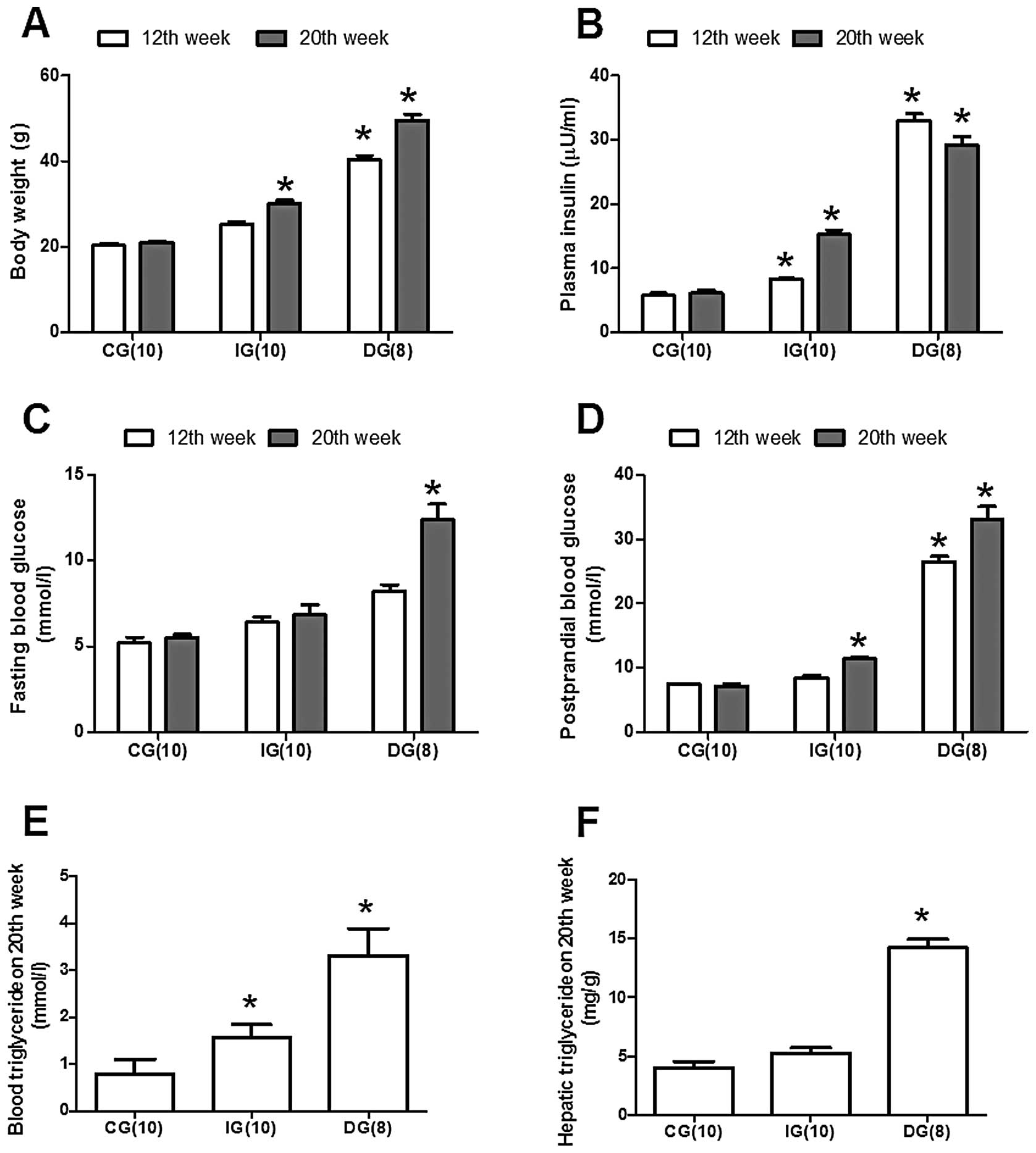
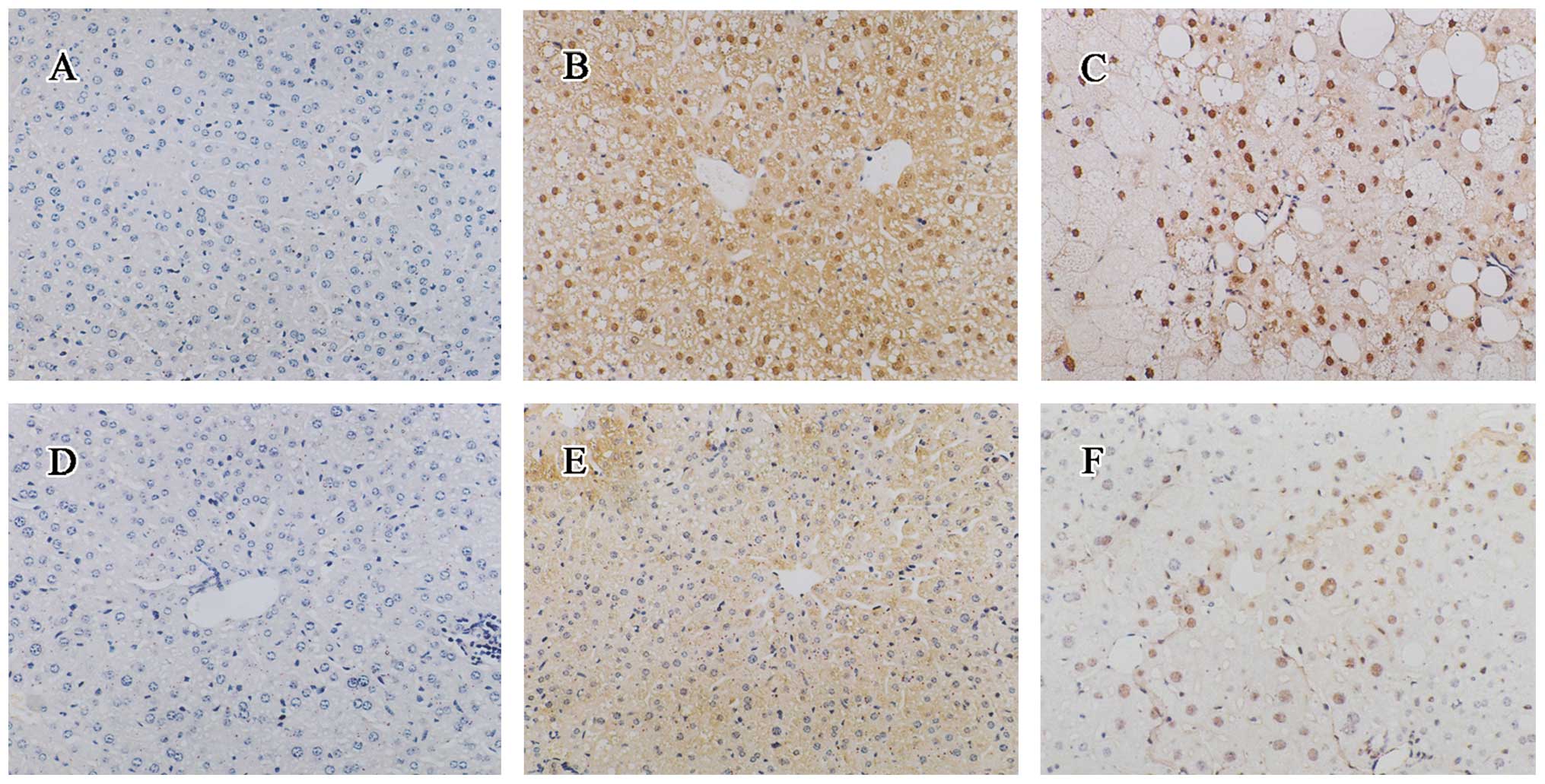
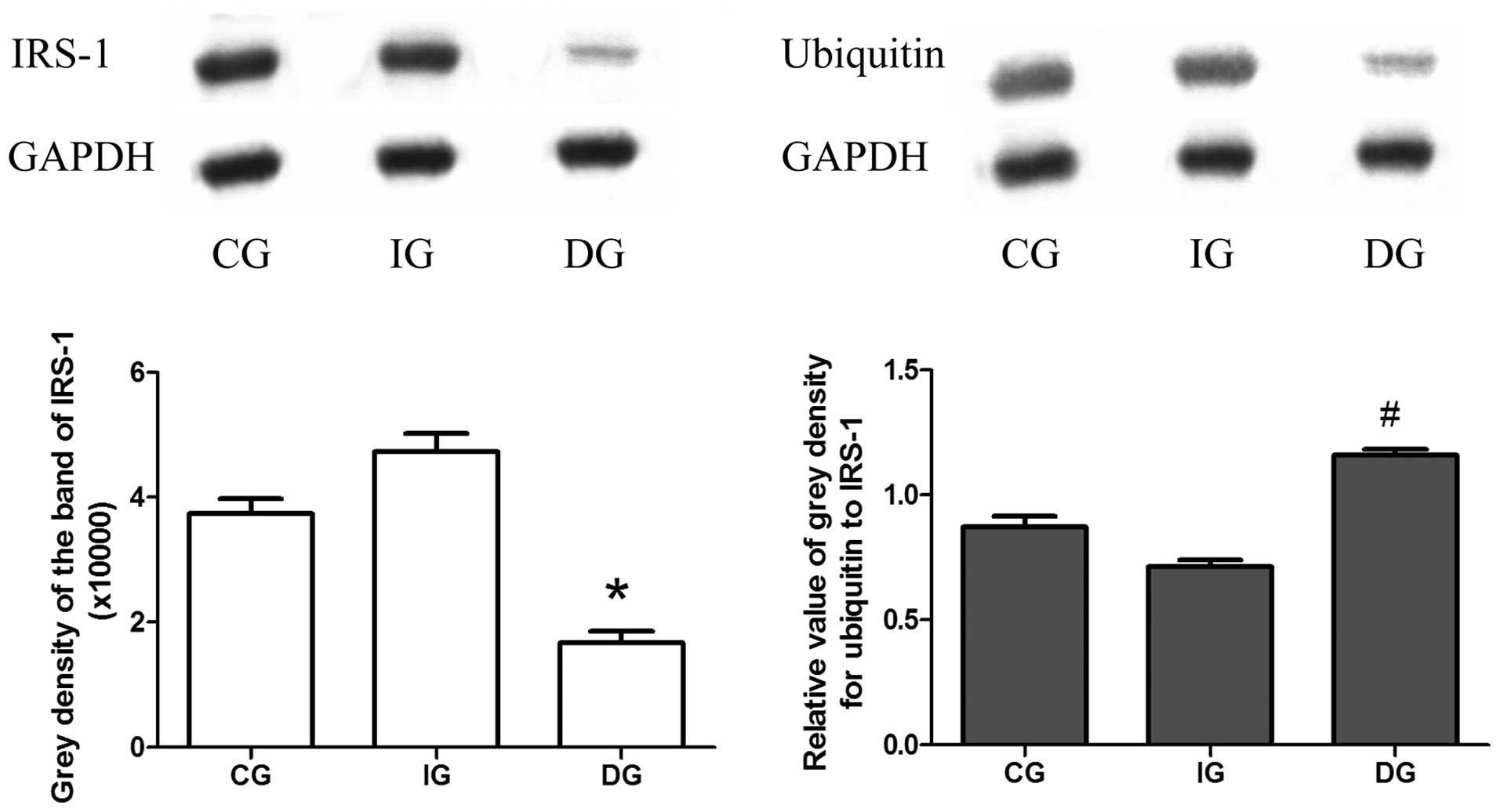
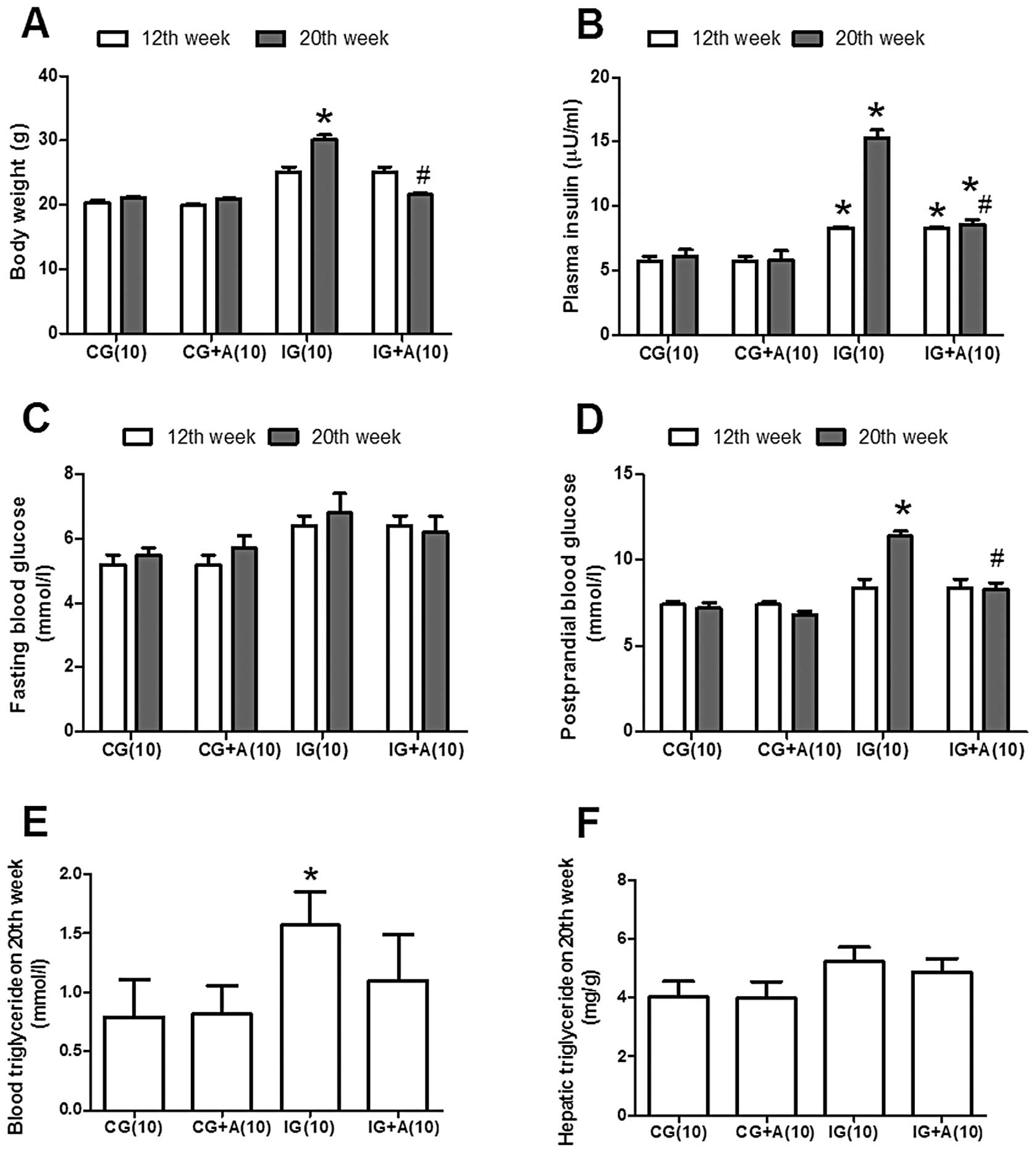
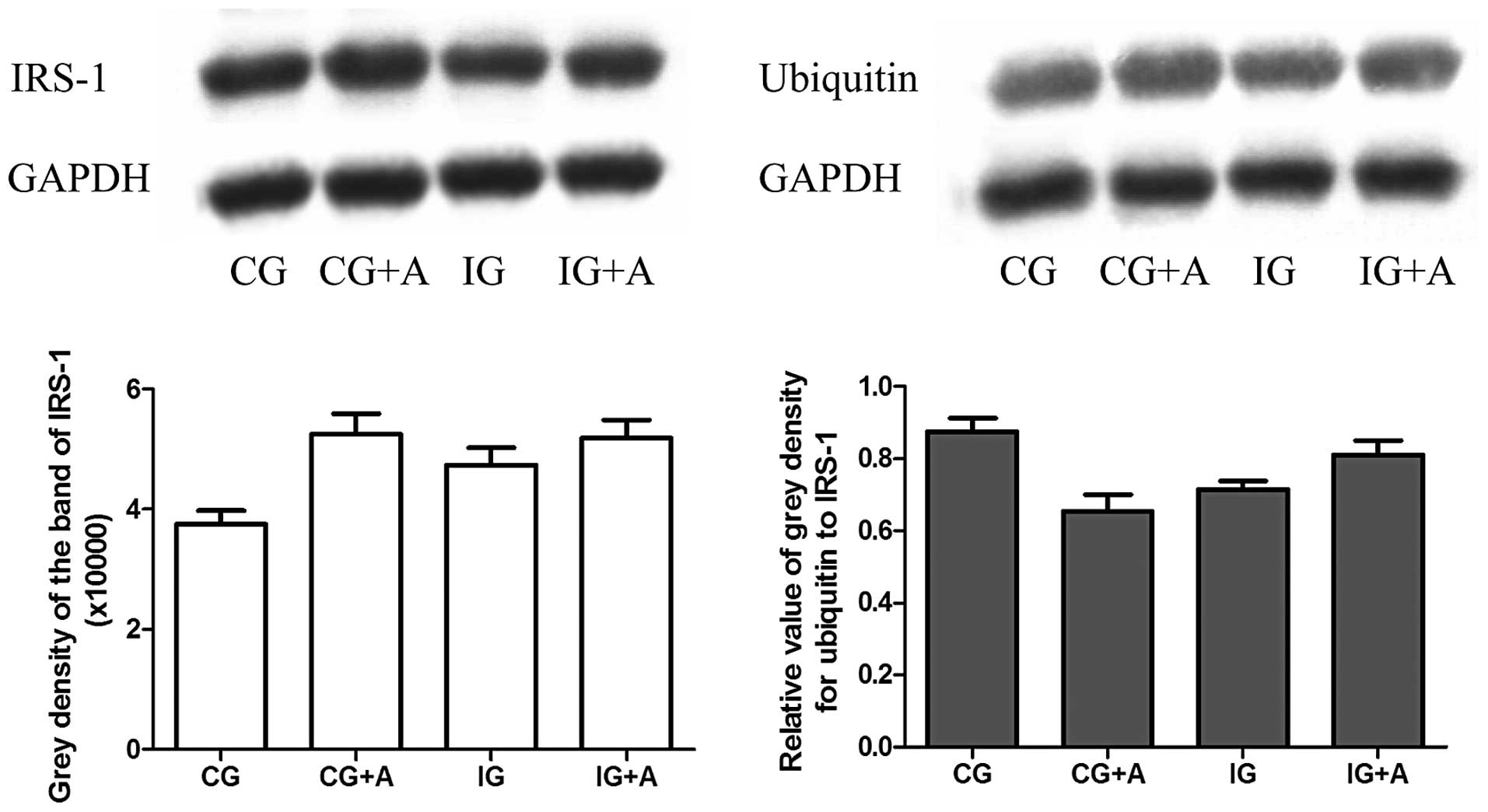
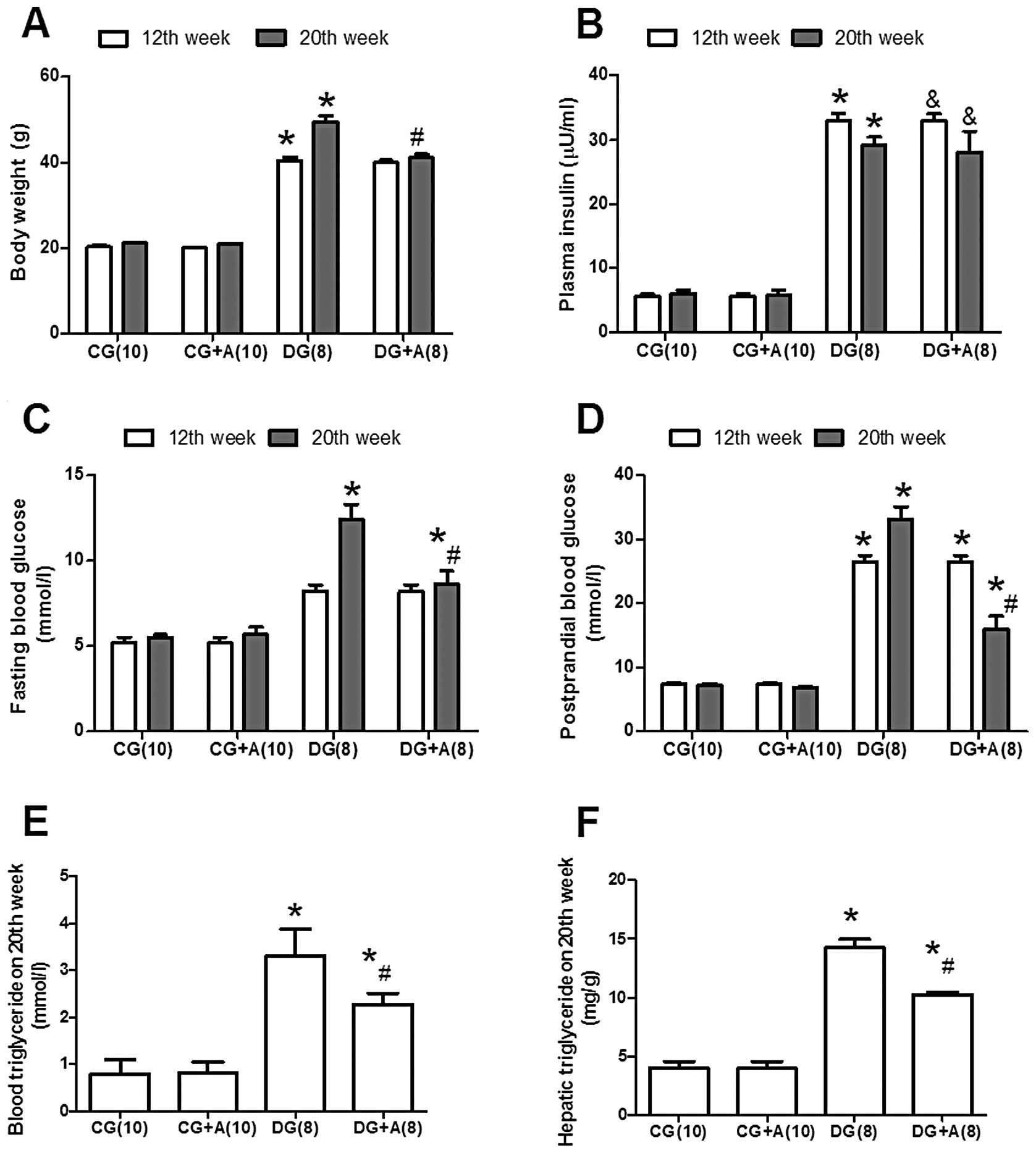
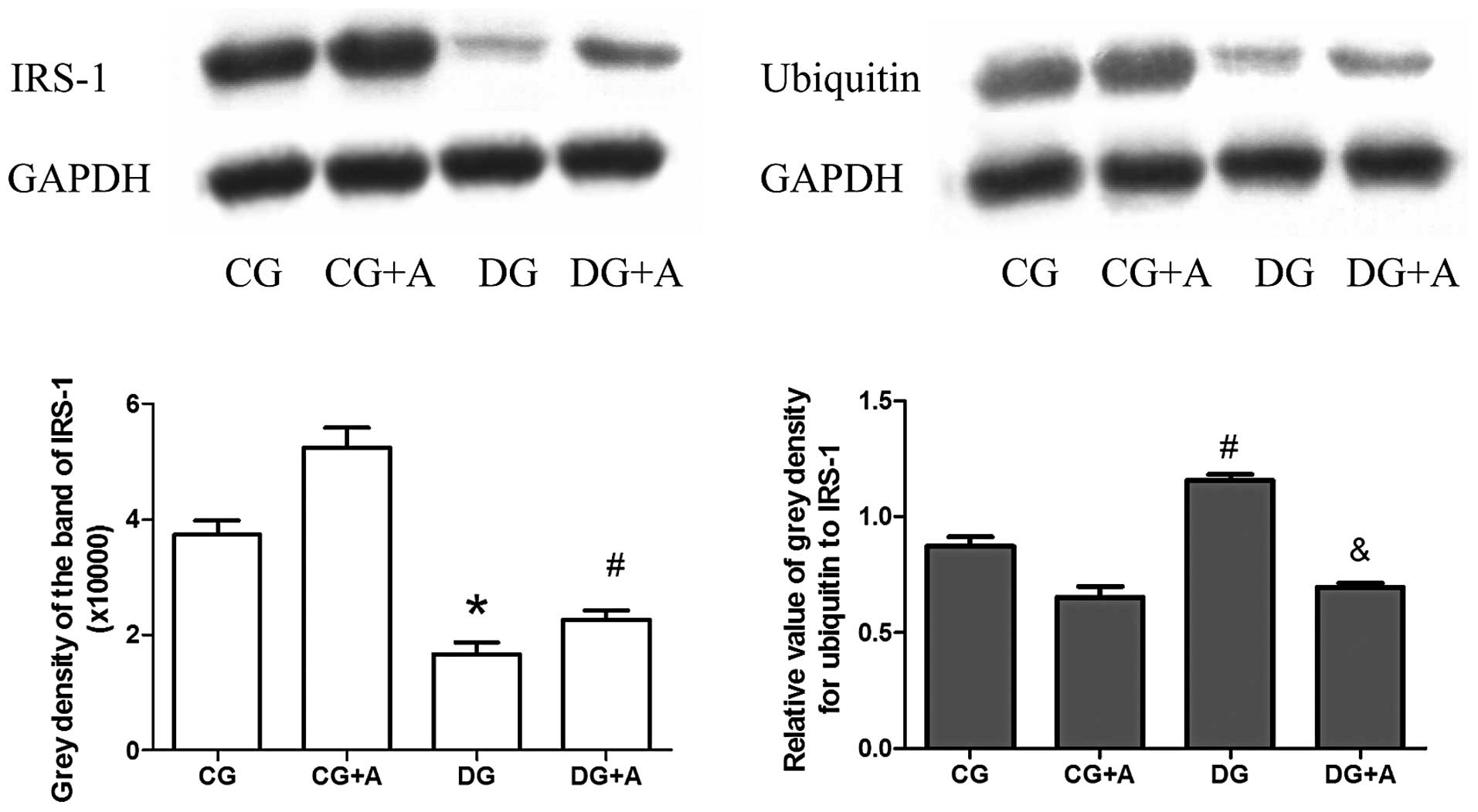
Ubiquitin and the ubiquitination pathway are important regulators of insulin signaling. The insulin receptor substrate‑1 (IRS-1), an ubiquitin-interacting adaptor protein, serves as the key docking protein in insulin signaling. The effects of this dynamic interaction and the changes in ubiquitin expression on hepatic insulin signaling, as well as the relative therapeutic effects of Astragalus polysaccharide (APS) have not yet been elucidated. In this study, we aimed to investigate the abnormal changes which occur in the levels of IRS-1 and ubiquitin in the livers of mice (mice with insulin resistance and diabetes), and to elucidate the possible mechanisms responsible for these changes. A control group (CG), an insulin resistance group (IG) and a diabetes group (DG) were respectively composed of 12-week-old C57BL/6J mice fed a normal diet, C57BL/6J mice fed a high‑fat diet and KKay mice fed a high‑fat diet, and treatment groups were composed of corresponding groups treated with APS (CG + A, IG + A, DG + A). All the mice were age-matched and grouped at random. After eight weeks, the mouse models were successfully established and the related physiological or biochemical indexes were detected using corresponding methods. Ubiquitin expression in the liver was detected by immunohistochemisty, and western blot analysis was used to detect the expression of IRS-1 and ubiquitin. The results revealed that the expression of IRS-1 in the DG was significantly lower compared to that in the CG and IG; however, the nuclear expression of ubiquitin and the ubiquitination levels of IRS-1, including body weight and blood glucose and triglyceride levels in the DG were significantly higher compared to those in the CG or IG (P<0.05). There was a significant improvement in the ubiquitination levels in DG + A, including the blood glucose and triglyceride levels compared with the DG (P<0.05). From the stage of insulin resistance to the stage of diabetes, the reduced expression of IRS-1 and its enhanced ubiquitination levels combined with the overexpression of nuclear ubiquitin contributed to the abnormal glycometabolism and the disruption of insulin signaling. APS showed beneficial effects, such as lowering body weight, as well as blood glucose and triglyceride levels, and these effects correlated with the downregulation of the ubiquitination levels of IRS-1 and the nuclear expression of ubiquitin.
View Figures

Figure 1

Figure 2

Figure 3

Figure 4

Figure 5

Figure 6

Figure 7

View References

1 

Boller S, Joblin BA, Xu L, et al: From signal transduction to signal interpretation: an alternative model for the molecular function of insulin receptor substrates. Arch Physiol Biochem. 118:148–155. 2012. View Article : Google Scholar : PubMed/NCBI

2 

White MF: IRS proteins and the common path to diabetes. Am J Physiol Endocrinol Metab. 283:E413–E422. 2002.PubMed/NCBI

3 

Tamemoto H, Kadowaki T, Tobe K, et al: Insulin resistance and growth retardation in mice lacking insulin receptor substrate-1. Nature. 372:182–186. 1994. View Article : Google Scholar : PubMed/NCBI

4 

Draznin B: Molecular mechanisms of insulin resistance: serine phosphorylation of insulin receptor substrate-1 and increased expression of p85alpha: the two sides of a coin. Diabetes. 55:2392–2397. 2006. View Article : Google Scholar

5 

Gual P, Le Marchand-Brustel Y and Tanti JF: Positive and negative regulation of insulin signaling through IRS-1 phosphorylation. Biochimie. 87:99–109. 2005. View Article : Google Scholar : PubMed/NCBI

6 

Lee AV, Gooch JL, Oesterreich S, Guler RL and Yee D: Insulin-like growth factor I-induced degradation of insulin receptor substrate 1 is mediated by the 26S proteasome and blocked by phosphatidylinositol 3′-kinase inhibition. Mol Cell Biol. 20:1489–1496. 2000.PubMed/NCBI

7 

Chen W, Xia YP, Chen WJ, Yu MH, Li YM and Ye HY: Improvement of myocardial glycolipid metabolic disorder in diabetic hamster with Astragalus polysaccharides treatment. Mol Biol Rep. 39:7609–7615. 2012. View Article : Google Scholar : PubMed/NCBI

8 

Wang N, Zhang D, Mao X, Zou F, Jin H and Ouyang J: Astragalus polysaccharides decreased the expression of PTP1B through relieving ER stress induced activation of ATF6 in a rat model of type 2 diabetes. Mol Cell Endocrinol. 307:89–98. 2009. View Article : Google Scholar

9 

Kallon S, Li X, Ji J, et al: Astragalus polysaccharide enhances immunity and inhibits H9N2 avian influenza virus in vitro and in vivo. J Anim Sci Biotechnol. 4:222013. View Article : Google Scholar

10 

Lu J, Chen X, Zhang Y, et al: Astragalus polysaccharide induces anti-inflammatory effects dependent on AMPK activity in palmitate-treated RAW264.7 cells. Int J Mol Med. 31:1463–1470. 2013.

11 

Wu Y, Ou-Yang JP, Wu K, Wang Y, Zhou YF and Wen CY: Hypoglycemic effect of Astragalus polysaccharide and its effect on PTP1B. Acta Pharmacol Sin. 26:345–352. 2005.

12 

Mao XQ, Wu Y, Wu K, Liu M, Zhang JF, Zou F and Ou-Yang JP: Astragalus polysaccharide reduces hepatic endoplasmic reticulum stress and restores glucose homeostasis in a diabetic KKAy mouse model. Acta Pharmacol Sin. 28:1947–1956. 2007. View Article : Google Scholar

13 

Saltiel AR and Kahn CR: Insulin signalling and the regulation of glucose and lipid metabolism. Nature. 414:799–806. 2001. View Article : Google Scholar : PubMed/NCBI

14 

Pessin JE and Saltiel AR: Signaling pathways in insulin action: molecular targets of insulin resistance. J Clin Invest. 106:165–169. 2000. View Article : Google Scholar : PubMed/NCBI

15 

Iwatsuka H, Shino A and Suzuoki Z: General survey of diabetic features of yellow KK mice. Endocrinol Jpn. 17:23–35. 1970. View Article : Google Scholar : PubMed/NCBI

16 

Hitman GA, Hawrami K, McCarthy MI, et al: Insulin receptor substrate-1 gene mutations in NIDDM; implications for the study of polygenic disease. Diabetologia. 38:481–486. 1995. View Article : Google Scholar : PubMed/NCBI

17 

White MF: The IRS-signalling system: a network of docking proteins that mediate insulin action. Mol Cell Biochem. 182:3–11. 1998. View Article : Google Scholar

18 

White MF: The IRS-signalling system in insulin and cytokine action. Philos Trans R Soc Lond B Biol Sci. 351:181–189. 1996. View Article : Google Scholar : PubMed/NCBI

19 

Thirone AC, Huang C and Klip A: Tissue-specific roles of IRS proteins in insulin signaling and glucose transport. Trends Endocrinol Metab. 17:72–78. 2006. View Article : Google Scholar : PubMed/NCBI

20 

Kubota N, Kubota T, Itoh S, et al: Dynamic functional relay between insulin receptor substrate 1 and 2 in hepatic insulin signaling during fasting and feeding. Cell Metab. 8:49–64. 2008. View Article : Google Scholar : PubMed/NCBI

21 

Goodyear LJ, Giorgino F, Sherman LA, Carey J, Smith RJ and Dohm GL: Insulin receptor phosphorylation, insulin receptor substrate-1 phosphorylation, and phosphatidylinositol 3-kinase activity are decreased in intact skeletal muscle strips from obese subjects. J Clin Invest. 95:2195–2204. 1995. View Article : Google Scholar

22 

Björnholm M, Kawano Y, Lehtihet M and Zierath JR: Insulin receptor substrate-1 phosphorylation and phosphatidylinositol 3-kinase activity in skeletal muscle from NIDDM subjects after in vivo insulin stimulation. Diabetes. 46:524–527. 1997.PubMed/NCBI

23 

Krook A, Björnholm M, Galuska D, et al: Characterization of signal transduction and glucose transport in skeletal muscle from type 2 diabetic patients. Diabetes. 49:284–292. 2000. View Article : Google Scholar : PubMed/NCBI

24 

Abe H, Yamada N, Kamata K, et al: Hypertension, hypertriglyceridemia, and impaired endothelium-dependent vascular relaxation in mice lacking insulin receptor substrate-1. J Clin Invest. 101:1784–1788. 1998. View Article : Google Scholar : PubMed/NCBI

25 

Taniguchi CM, Ueki K and Kahn R: Complementary roles of IRS-1 and IRS-2 in the hepatic regulation of metabolism. J Clin Invest. 115:718–727. 2005. View Article : Google Scholar : PubMed/NCBI

26 

Song R, Peng W, Zhang Y, et al: Central role of E3 ubiquitin ligase MG53 in insulin resistance and metabolic disorders. Nature. 494:375–379. 2013. View Article : Google Scholar : PubMed/NCBI

27 

Chen YC, Fueger PT and Wang Z: Depletion of PAK1 enhances ubiquitin-mediated survivin degradation in pancreatic β-cells. Islets. 5:22–28. 2013.PubMed/NCBI

28 

Kirk-Ballard H, Wang ZQ, Acharya P, et al: An extract of Artemisia dracunculus L. inhibits ubiquitin-proteasome activity and preserves skeletal muscle mass in a murine model of diabetes. PLoS One. 8:e571122013.

29 

Conaway RC, Brower CS and Conaway JW: Emerging roles of ubiquitin in transcription regulation. Science. 296:1254–1258. 2002. View Article : Google Scholar : PubMed/NCBI

30 

Muratani M and Tansey WP: How the ubiquitin-proteasome system controls transcription. Nat Rev Mol Cell Biol. 4:192–201. 2003. View Article : Google Scholar : PubMed/NCBI

31 

Wadosky KM and Willis MS: The story so far: post-translational regulation of peroxisome proliferator-activated receptors by ubiquitination and SUMOylation. Am J Physiol Heart Circ Physiol. 302:H515–H526. 2012. View Article : Google Scholar : PubMed/NCBI

32 

Han L, Wang P, Zhao G, Wang H, Wang M, Chen J and Tong T: Upregulation of SIRT1 by 17β-estradiol depends on ubiquitin-proteasome degradation of PPAR-γ mediated by NEDD4-1. Protein Cell. 4:310–321. 2013.

33 

Kilroy G, Kirk-Ballard H, Carter LE and Floyd ZE: The ubiquitin ligase Siah2 regulates PPARγ activity in adipocytes. Endocrinology. 153:1206–1218. 2012.

34 

Stravodimou A, Mazzoccoli G and Voutsadakis IA: Peroxisome proliferator-activated receptor gamma and regulations by the ubiquitin-proteasome system in pancreatic cancer. PPAR Res. 2012:3674502012. View Article : Google Scholar

Related Articles

  • Abstract
  • View
  • Download
  • Twitter
Copy and paste a formatted citation
Spandidos Publications style
Ye Y, Deng T, Wan X, Ouyang J, Liu M and Mao X: The role of quantitative changes in the epxression of insulin receptor substrate-1 and nuclear ubiquitin in abnormal glycometabolism in the livers of KKay mice and the relative therapeutic mechanisms of Astragalus polysaccharide. Int J Mol Med 33: 341-350, 2014.
APA
Ye, Y., Deng, T., Wan, X., Ouyang, J., Liu, M., & Mao, X. (2014). The role of quantitative changes in the epxression of insulin receptor substrate-1 and nuclear ubiquitin in abnormal glycometabolism in the livers of KKay mice and the relative therapeutic mechanisms of Astragalus polysaccharide. International Journal of Molecular Medicine, 33, 341-350. https://doi.org/10.3892/ijmm.2013.1580
MLA
Ye, Y., Deng, T., Wan, X., Ouyang, J., Liu, M., Mao, X."The role of quantitative changes in the epxression of insulin receptor substrate-1 and nuclear ubiquitin in abnormal glycometabolism in the livers of KKay mice and the relative therapeutic mechanisms of Astragalus polysaccharide". International Journal of Molecular Medicine 33.2 (2014): 341-350.
Chicago
Ye, Y., Deng, T., Wan, X., Ouyang, J., Liu, M., Mao, X."The role of quantitative changes in the epxression of insulin receptor substrate-1 and nuclear ubiquitin in abnormal glycometabolism in the livers of KKay mice and the relative therapeutic mechanisms of Astragalus polysaccharide". International Journal of Molecular Medicine 33, no. 2 (2014): 341-350. https://doi.org/10.3892/ijmm.2013.1580
Copy and paste a formatted citation
x
Spandidos Publications style
Ye Y, Deng T, Wan X, Ouyang J, Liu M and Mao X: The role of quantitative changes in the epxression of insulin receptor substrate-1 and nuclear ubiquitin in abnormal glycometabolism in the livers of KKay mice and the relative therapeutic mechanisms of Astragalus polysaccharide. Int J Mol Med 33: 341-350, 2014.
APA
Ye, Y., Deng, T., Wan, X., Ouyang, J., Liu, M., & Mao, X. (2014). The role of quantitative changes in the epxression of insulin receptor substrate-1 and nuclear ubiquitin in abnormal glycometabolism in the livers of KKay mice and the relative therapeutic mechanisms of Astragalus polysaccharide. International Journal of Molecular Medicine, 33, 341-350. https://doi.org/10.3892/ijmm.2013.1580
MLA
Ye, Y., Deng, T., Wan, X., Ouyang, J., Liu, M., Mao, X."The role of quantitative changes in the epxression of insulin receptor substrate-1 and nuclear ubiquitin in abnormal glycometabolism in the livers of KKay mice and the relative therapeutic mechanisms of Astragalus polysaccharide". International Journal of Molecular Medicine 33.2 (2014): 341-350.
Chicago
Ye, Y., Deng, T., Wan, X., Ouyang, J., Liu, M., Mao, X."The role of quantitative changes in the epxression of insulin receptor substrate-1 and nuclear ubiquitin in abnormal glycometabolism in the livers of KKay mice and the relative therapeutic mechanisms of Astragalus polysaccharide". International Journal of Molecular Medicine 33, no. 2 (2014): 341-350. https://doi.org/10.3892/ijmm.2013.1580
Follow us
  • Twitter
  • LinkedIn
  • Facebook
About
  • Spandidos Publications
  • Careers
  • Cookie Policy
  • Privacy Policy
How can we help?
  • Help
  • Live Chat
  • Contact
  • Email to our Support Team