Spandidos Publications Logo
  • About
    • About Spandidos
    • Aims and Scopes
    • Abstracting and Indexing
    • Editorial Policies
    • Reprints and Permissions
    • Job Opportunities
    • Terms and Conditions
    • Contact
  • Journals
    • All Journals
    • Oncology Letters
      • Oncology Letters
      • Information for Authors
      • Editorial Policies
      • Editorial Board
      • Aims and Scope
      • Abstracting and Indexing
      • Bibliographic Information
      • Archive
    • International Journal of Oncology
      • International Journal of Oncology
      • Information for Authors
      • Editorial Policies
      • Editorial Board
      • Aims and Scope
      • Abstracting and Indexing
      • Bibliographic Information
      • Archive
    • Molecular and Clinical Oncology
      • Molecular and Clinical Oncology
      • Information for Authors
      • Editorial Policies
      • Editorial Board
      • Aims and Scope
      • Abstracting and Indexing
      • Bibliographic Information
      • Archive
    • Experimental and Therapeutic Medicine
      • Experimental and Therapeutic Medicine
      • Information for Authors
      • Editorial Policies
      • Editorial Board
      • Aims and Scope
      • Abstracting and Indexing
      • Bibliographic Information
      • Archive
    • International Journal of Molecular Medicine
      • International Journal of Molecular Medicine
      • Information for Authors
      • Editorial Policies
      • Editorial Board
      • Aims and Scope
      • Abstracting and Indexing
      • Bibliographic Information
      • Archive
    • Biomedical Reports
      • Biomedical Reports
      • Information for Authors
      • Editorial Policies
      • Editorial Board
      • Aims and Scope
      • Abstracting and Indexing
      • Bibliographic Information
      • Archive
    • Oncology Reports
      • Oncology Reports
      • Information for Authors
      • Editorial Policies
      • Editorial Board
      • Aims and Scope
      • Abstracting and Indexing
      • Bibliographic Information
      • Archive
    • Molecular Medicine Reports
      • Molecular Medicine Reports
      • Information for Authors
      • Editorial Policies
      • Editorial Board
      • Aims and Scope
      • Abstracting and Indexing
      • Bibliographic Information
      • Archive
    • World Academy of Sciences Journal
      • World Academy of Sciences Journal
      • Information for Authors
      • Editorial Policies
      • Editorial Board
      • Aims and Scope
      • Abstracting and Indexing
      • Bibliographic Information
      • Archive
    • International Journal of Functional Nutrition
      • International Journal of Functional Nutrition
      • Information for Authors
      • Editorial Policies
      • Editorial Board
      • Aims and Scope
      • Abstracting and Indexing
      • Bibliographic Information
      • Archive
    • International Journal of Epigenetics
      • International Journal of Epigenetics
      • Information for Authors
      • Editorial Policies
      • Editorial Board
      • Aims and Scope
      • Abstracting and Indexing
      • Bibliographic Information
      • Archive
    • Medicine International
      • Medicine International
      • Information for Authors
      • Editorial Policies
      • Editorial Board
      • Aims and Scope
      • Abstracting and Indexing
      • Bibliographic Information
      • Archive
  • Articles
  • Information
    • Information for Authors
    • Information for Reviewers
    • Information for Librarians
    • Information for Advertisers
    • Conferences
  • Language Editing
Spandidos Publications Logo
  • About
    • About Spandidos
    • Aims and Scopes
    • Abstracting and Indexing
    • Editorial Policies
    • Reprints and Permissions
    • Job Opportunities
    • Terms and Conditions
    • Contact
  • Journals
    • All Journals
    • Biomedical Reports
      • Information for Authors
      • Editorial Policies
      • Editorial Board
      • Aims and Scope
      • Abstracting and Indexing
      • Bibliographic Information
      • Archive
    • Experimental and Therapeutic Medicine
      • Information for Authors
      • Editorial Policies
      • Editorial Board
      • Aims and Scope
      • Abstracting and Indexing
      • Bibliographic Information
      • Archive
    • International Journal of Epigenetics
      • Information for Authors
      • Editorial Policies
      • Editorial Board
      • Aims and Scope
      • Abstracting and Indexing
      • Bibliographic Information
      • Archive
    • International Journal of Functional Nutrition
      • Information for Authors
      • Editorial Policies
      • Editorial Board
      • Aims and Scope
      • Abstracting and Indexing
      • Bibliographic Information
      • Archive
    • International Journal of Molecular Medicine
      • Information for Authors
      • Editorial Policies
      • Editorial Board
      • Aims and Scope
      • Abstracting and Indexing
      • Bibliographic Information
      • Archive
    • International Journal of Oncology
      • Information for Authors
      • Editorial Policies
      • Editorial Board
      • Aims and Scope
      • Abstracting and Indexing
      • Bibliographic Information
      • Archive
    • Medicine International
      • Information for Authors
      • Editorial Policies
      • Editorial Board
      • Aims and Scope
      • Abstracting and Indexing
      • Bibliographic Information
      • Archive
    • Molecular and Clinical Oncology
      • Information for Authors
      • Editorial Policies
      • Editorial Board
      • Aims and Scope
      • Abstracting and Indexing
      • Bibliographic Information
      • Archive
    • Molecular Medicine Reports
      • Information for Authors
      • Editorial Policies
      • Editorial Board
      • Aims and Scope
      • Abstracting and Indexing
      • Bibliographic Information
      • Archive
    • Oncology Letters
      • Information for Authors
      • Editorial Policies
      • Editorial Board
      • Aims and Scope
      • Abstracting and Indexing
      • Bibliographic Information
      • Archive
    • Oncology Reports
      • Information for Authors
      • Editorial Policies
      • Editorial Board
      • Aims and Scope
      • Abstracting and Indexing
      • Bibliographic Information
      • Archive
    • World Academy of Sciences Journal
      • Information for Authors
      • Editorial Policies
      • Editorial Board
      • Aims and Scope
      • Abstracting and Indexing
      • Bibliographic Information
      • Archive
  • Articles
  • Information
    • For Authors
    • For Reviewers
    • For Librarians
    • For Advertisers
    • Conferences
  • Language Editing
Login Register Submit
  • This site uses cookies
  • You can change your cookie settings at any time by following the instructions in our Cookie Policy. To find out more, you may read our Privacy Policy.

    I agree
Search articles by DOI, keyword, author or affiliation
Search
Advanced Search
presentation
International Journal of Molecular Medicine
Join Editorial Board Propose a Special Issue
Print ISSN: 1107-3756 Online ISSN: 1791-244X
Journal Cover
February-2015 Volume 35 Issue 2

Full Size Image

Sign up for eToc alerts
Recommend to Library

Journals

International Journal of Molecular Medicine

International Journal of Molecular Medicine

International Journal of Molecular Medicine is an international journal devoted to molecular mechanisms of human disease.

International Journal of Oncology

International Journal of Oncology

International Journal of Oncology is an international journal devoted to oncology research and cancer treatment.

Molecular Medicine Reports

Molecular Medicine Reports

Covers molecular medicine topics such as pharmacology, pathology, genetics, neuroscience, infectious diseases, molecular cardiology, and molecular surgery.

Oncology Reports

Oncology Reports

Oncology Reports is an international journal devoted to fundamental and applied research in Oncology.

Experimental and Therapeutic Medicine

Experimental and Therapeutic Medicine

Experimental and Therapeutic Medicine is an international journal devoted to laboratory and clinical medicine.

Oncology Letters

Oncology Letters

Oncology Letters is an international journal devoted to Experimental and Clinical Oncology.

Biomedical Reports

Biomedical Reports

Explores a wide range of biological and medical fields, including pharmacology, genetics, microbiology, neuroscience, and molecular cardiology.

Molecular and Clinical Oncology

Molecular and Clinical Oncology

International journal addressing all aspects of oncology research, from tumorigenesis and oncogenes to chemotherapy and metastasis.

World Academy of Sciences Journal

World Academy of Sciences Journal

Multidisciplinary open-access journal spanning biochemistry, genetics, neuroscience, environmental health, and synthetic biology.

International Journal of Functional Nutrition

International Journal of Functional Nutrition

Open-access journal combining biochemistry, pharmacology, immunology, and genetics to advance health through functional nutrition.

International Journal of Epigenetics

International Journal of Epigenetics

Publishes open-access research on using epigenetics to advance understanding and treatment of human disease.

Medicine International

Medicine International

An International Open Access Journal Devoted to General Medicine.

Journal Cover
February-2015 Volume 35 Issue 2

Full Size Image

Sign up for eToc alerts
Recommend to Library

  • Article
  • Citations
    • Cite This Article
    • Download Citation
    • Create Citation Alert
    • Remove Citation Alert
    • Cited By
  • Similar Articles
    • Related Articles (in Spandidos Publications)
    • Similar Articles (Google Scholar)
    • Similar Articles (PubMed)
  • Download PDF
  • Download XML
  • View XML
Article

Diallyl trisulfide exerts anti-inflammatory effects in lipopolysaccharide‑stimulated RAW 264.7 macrophages by suppressing the Toll‑like receptor 4/nuclear factor-κB pathway

  • Authors:
    • Hye Hyeon Lee
    • Min Ho Han
    • Hye Jin Hwang
    • Gi‑Young Kim
    • Sung‑Kwon Moon
    • Jin‑Won Hyun
    • Wun‑Jae Kim
    • Yung Hyun Choi
  • View Affiliations / Copyright

    Affiliations: Daegu Gyeongbuk Institute of Science and Technology, Daegu 711‑873, Republic of Korea, Department of Biochemistry, Dongeui University College of Korean Medicine, Busan 614‑052, Republic of Korea, Anti‑Aging Research Center and Blue‑Bio Industry RIC, Dongeui University, Busan 614‑714, Republic of Korea, Laboratory of Immunobiology, Department of Marine Life Sciences, Jeju National University, Jeju 690‑756, Republic of Korea, School of Food Science and Technology, Chung‑Ang University, Ansung 456‑756, Republic of Korea, School of Medicine and Institute for Nuclear Science and Technology, Jeju National University, Jeju 690‑756, Republic of Korea, Department of Urology, Chungbuk National University College of Medicine, Cheongju 361‑763, Republic of Korea
  • Pages: 487-495
    |
    Published online on: December 11, 2014
       https://doi.org/10.3892/ijmm.2014.2036
  • Expand metrics +
Metrics: Total Views: 0 (Spandidos Publications: | PMC Statistics: )
Metrics: Total PDF Downloads: 0 (Spandidos Publications: | PMC Statistics: )
Cited By (CrossRef): 0 citations Loading Articles...

This article is mentioned in:


Abstract

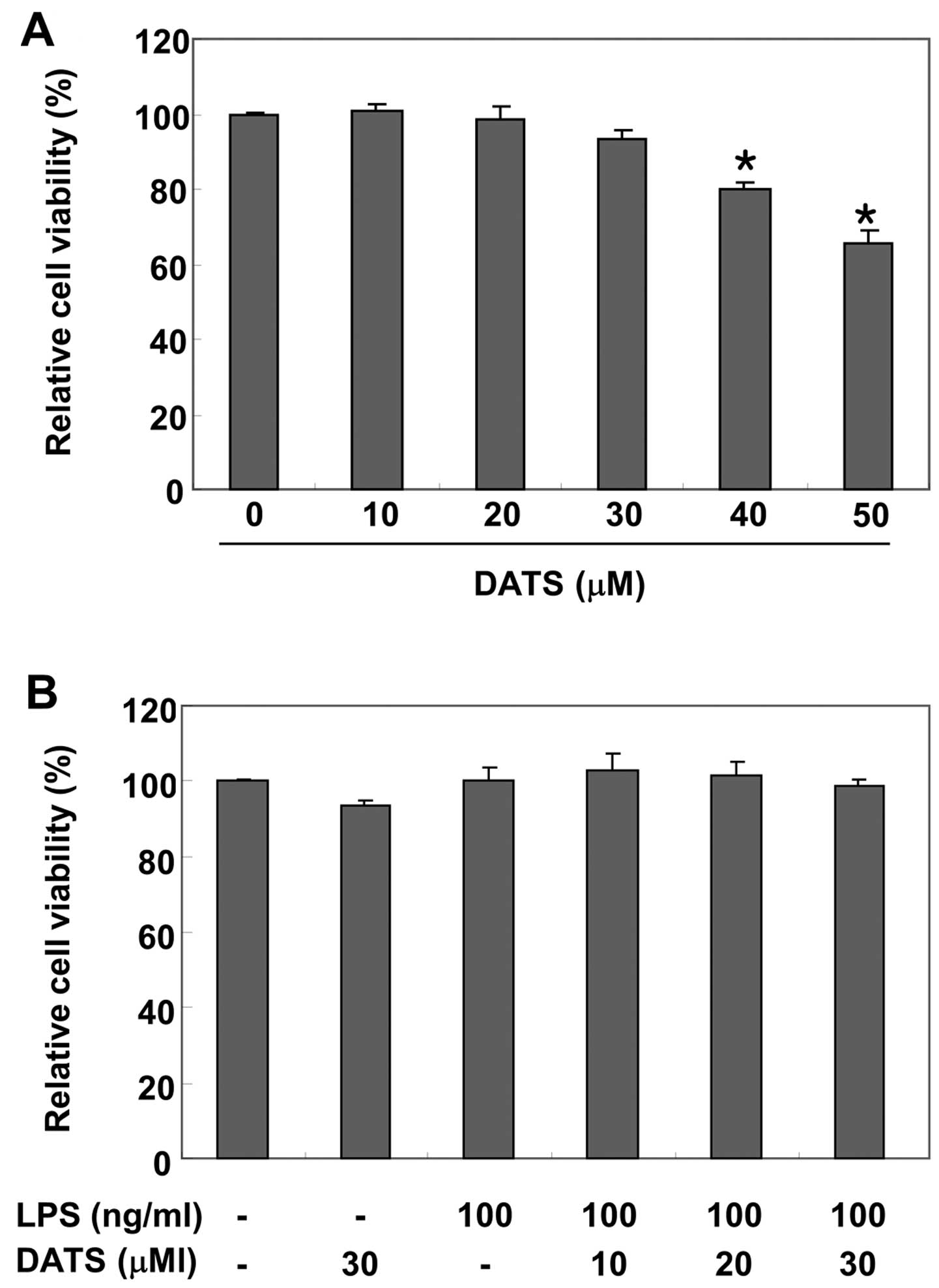
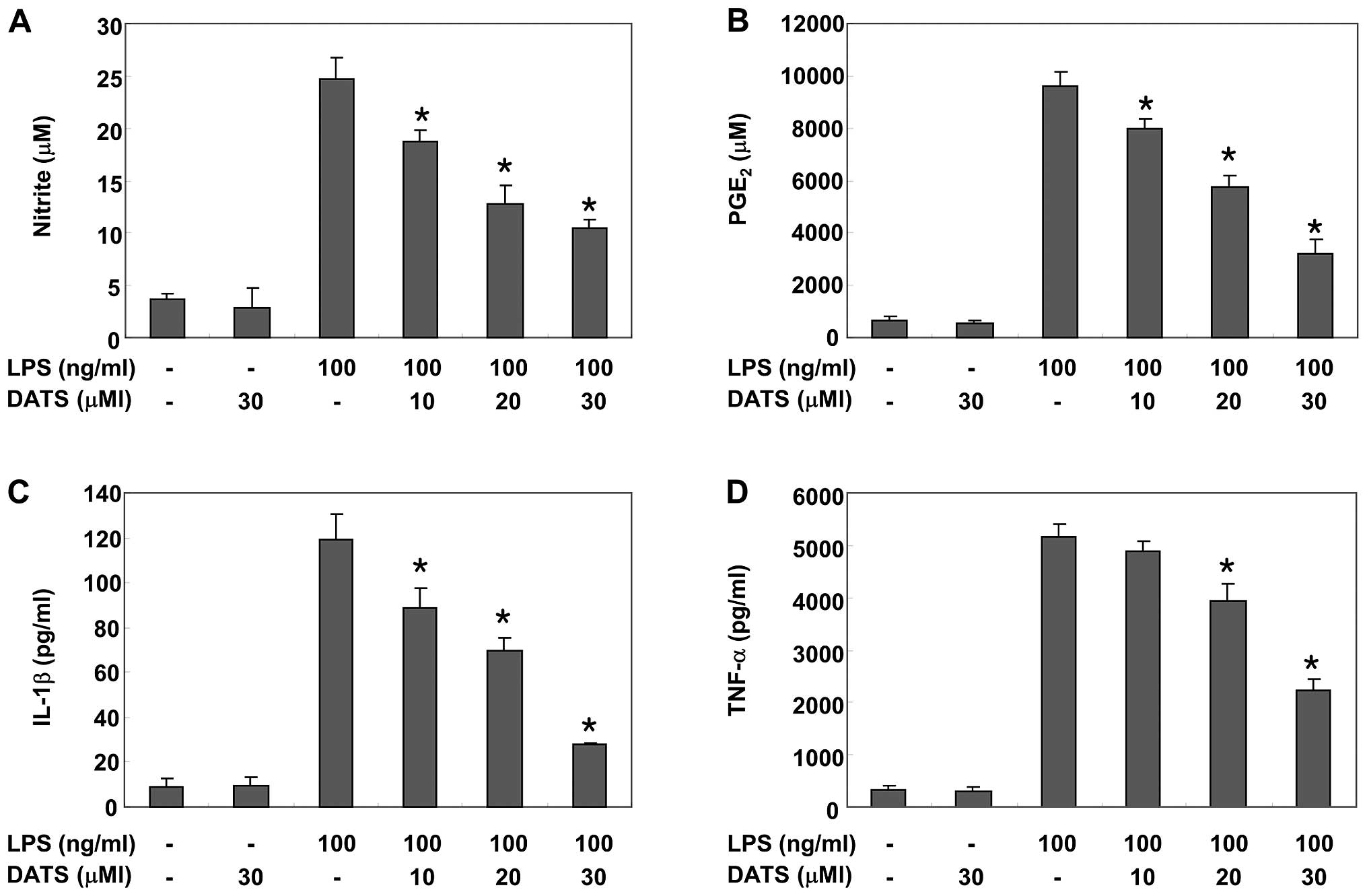
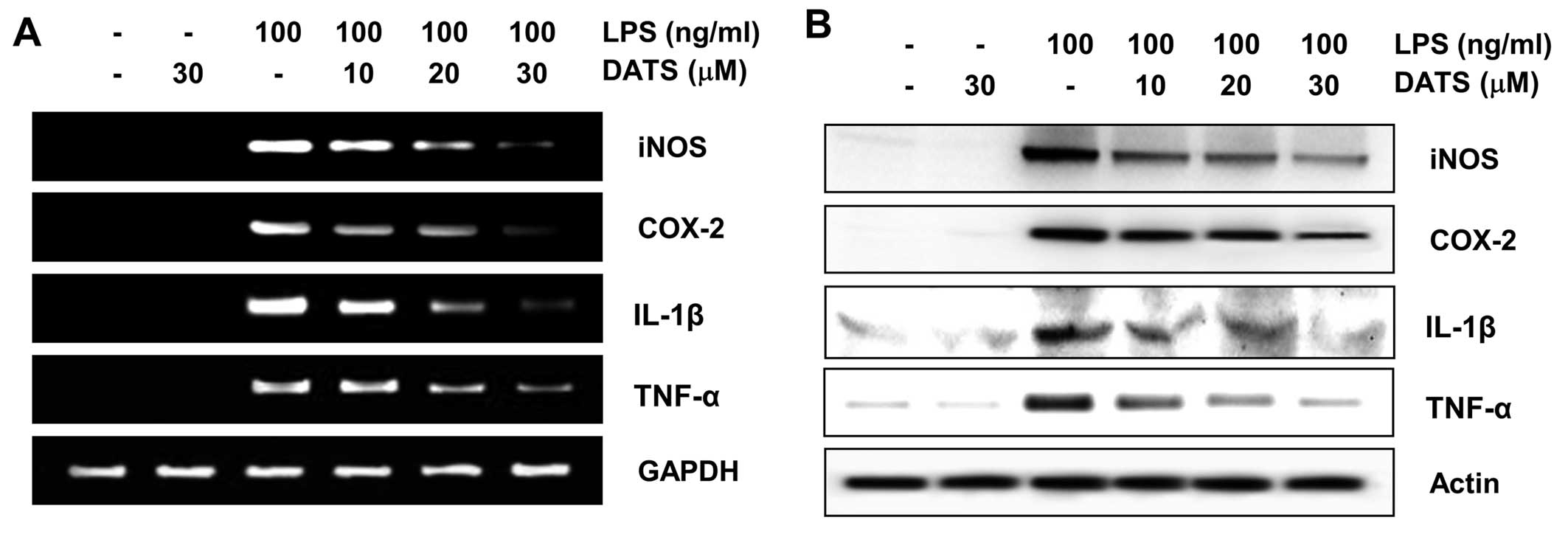
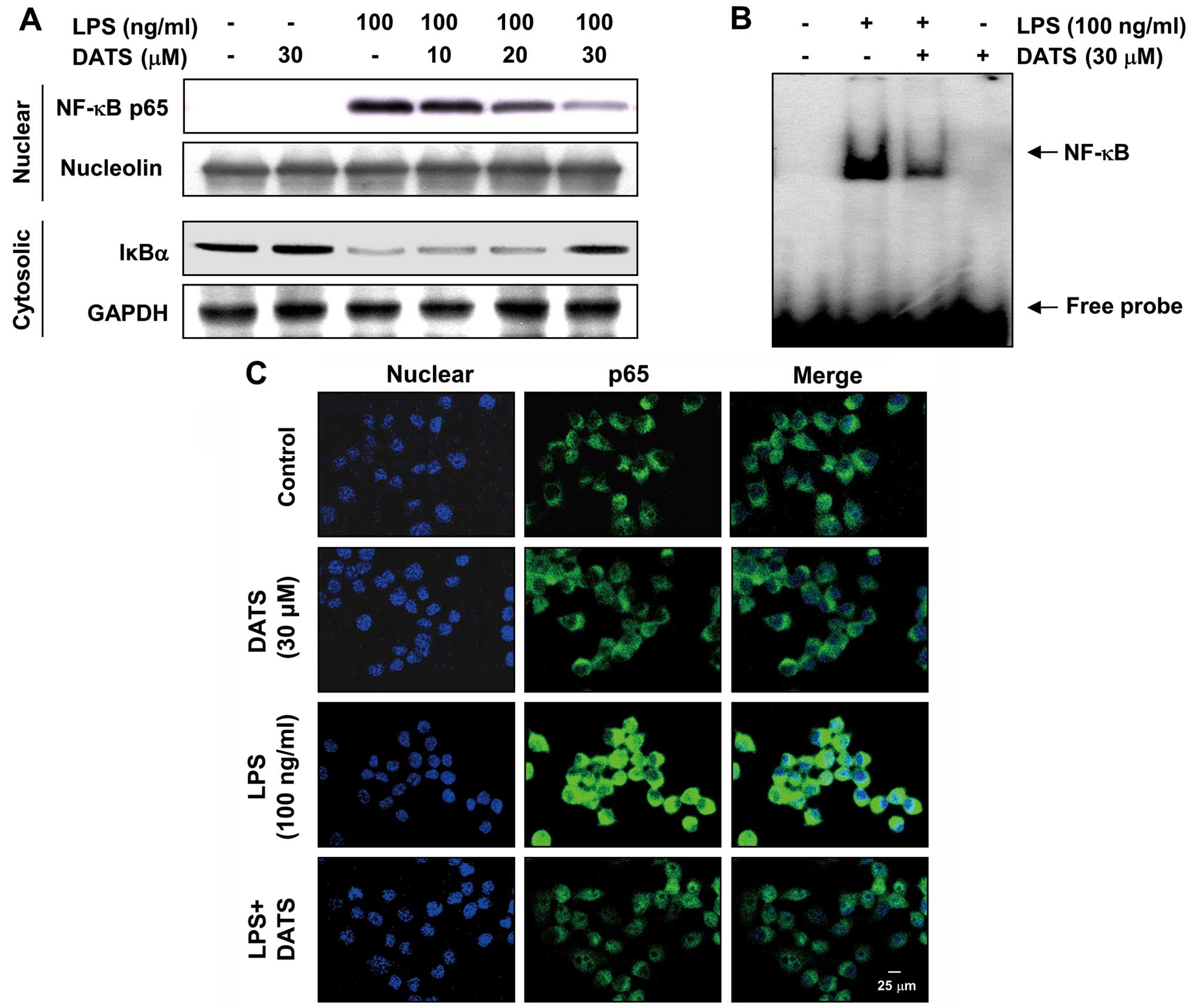
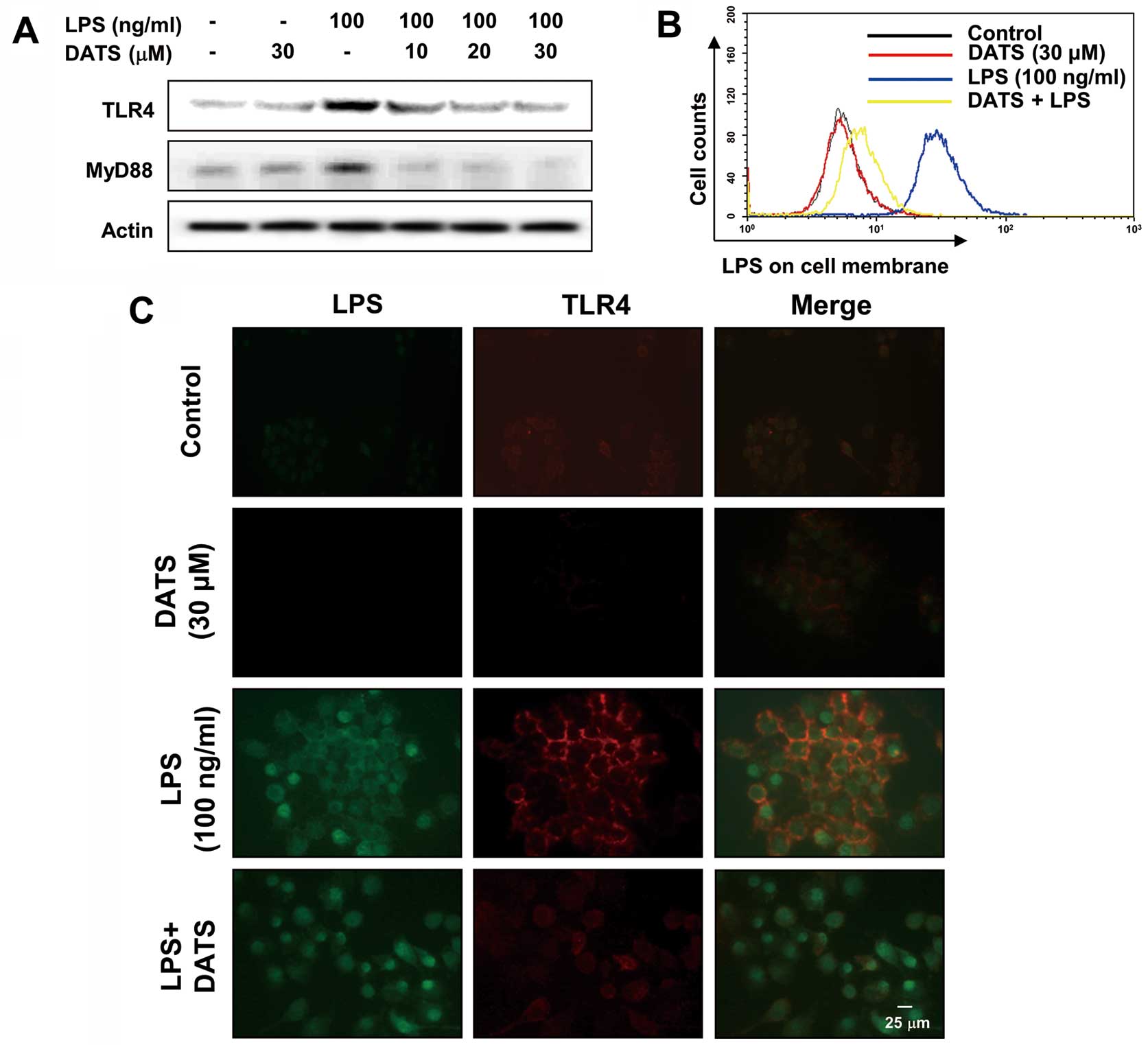
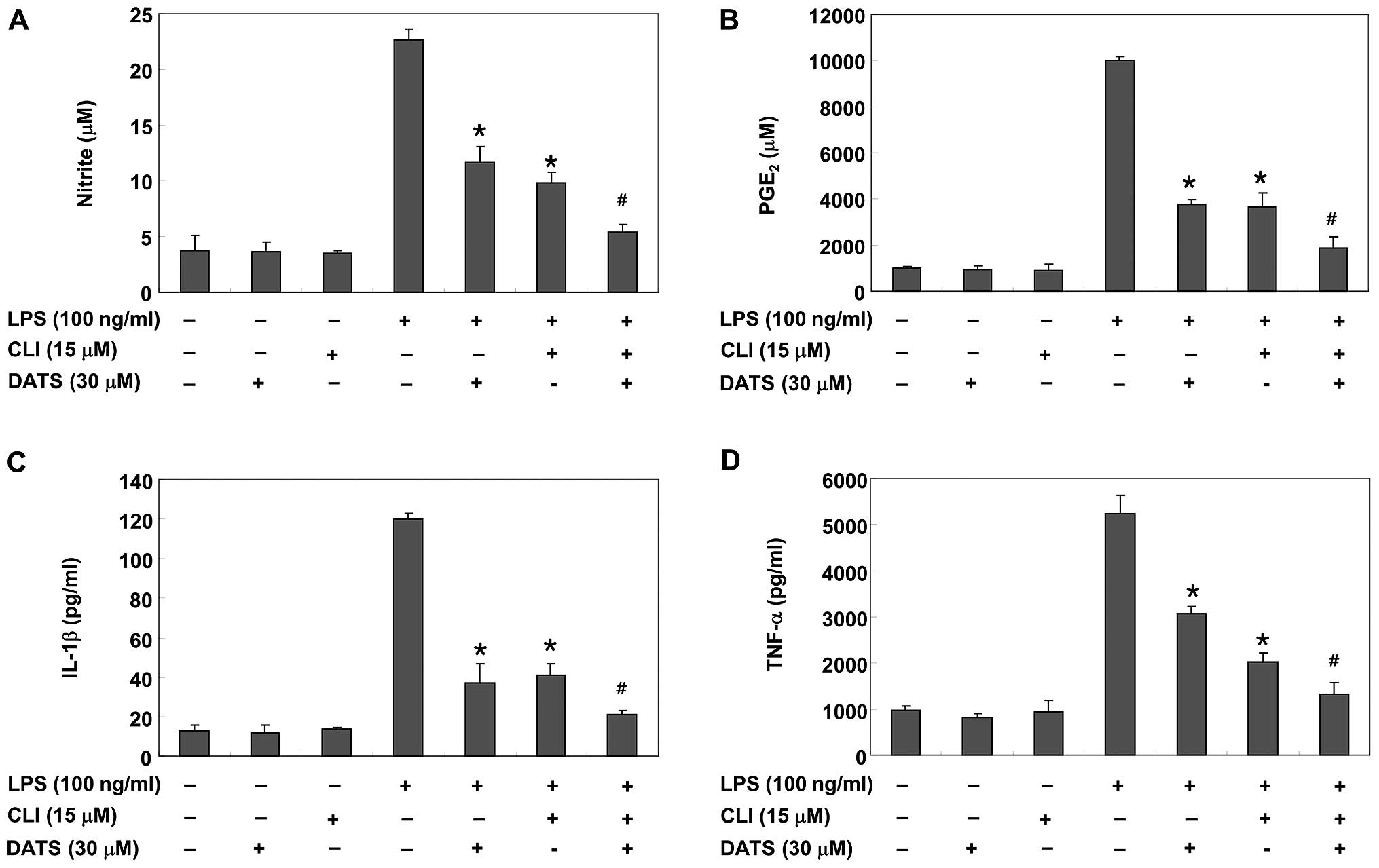
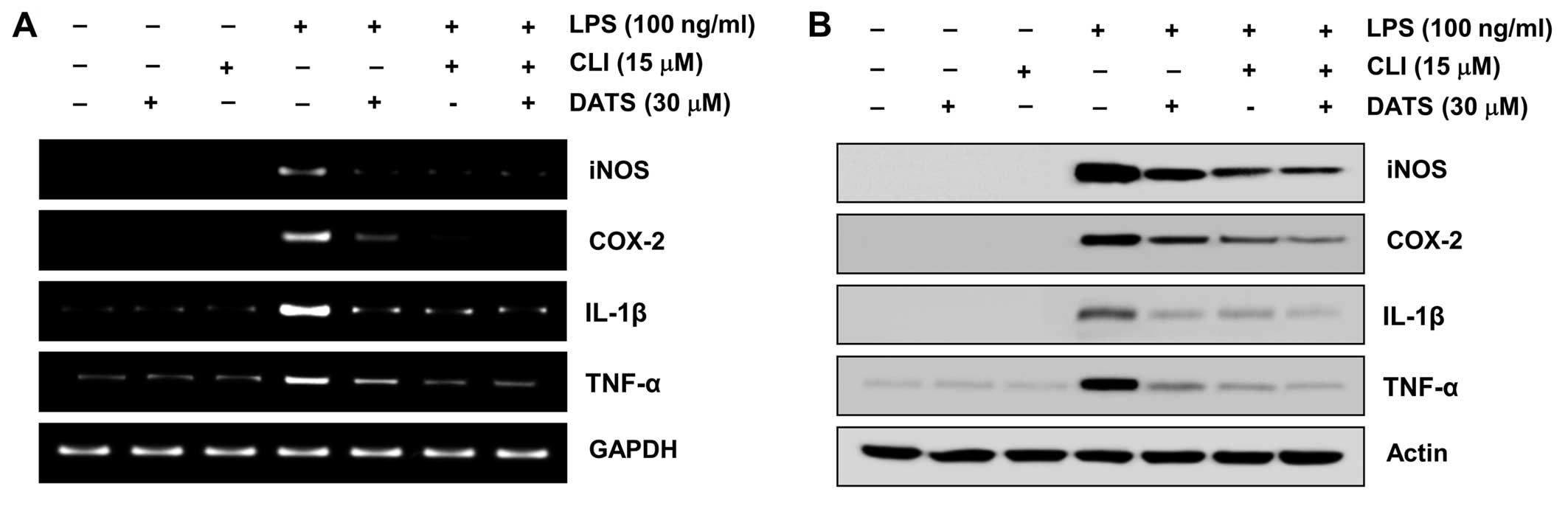
Diallyl trisulfide (DATS; di‑2‑propen‑1‑yl trisulfide) is an organic polysulfide compound found in garlic and other allium vegetables. Although certain studies have demonstrated that DATS possesses strong anti‑inflammatory activity, the underlying molecular mechanisms remain largely unresolved. In the present study, the anti‑inflammatory potential of DATS was investigated using the murine macrophage RAW 264.7 cell model. At non‑toxic concentrations, DATS inhibited the production of nitric oxide (NO) and prostaglandin E2 by inhibiting inducible NO synthase and cyclooxygenase‑2 expression at the transcriptional level in lipopolysaccharide (LPS)‑activated RAW 264.7 macrophages. DATS attenuated the release of the pro‑inflammatory cytokines, tumor necrosis factor‑α and interleukin‑1β, by inhibiting mRNA expression, respectively. DATS also suppressed LPS‑induced DNA‑binding activity of nuclear factor‑κB (NF‑κB), as well as the nuclear translocation of the NF‑κB p65, which correlated with the inhibitory effects of DATS on inhibitor κB (IκB) degradation. In addition, DATS was observed to significantly suppress LPS‑induced Toll‑like receptor 4 (TLR4) and myeloid differentiation factor 88 expression and the binding of LPS to macrophages, indicating the antagonistic effect of DATS against TLR4. Furthermore, blocking TLR4 signaling with the specific TLR4 signaling inhibitor, CLI‑095, increased the anti‑inflammatory potential of DATS in LPS‑stimulated RAW 264.7 macrophages. These data demonstrate that DATS may attenuate the initiation of LPS‑mediated intracellular signaling cascades by suppressing activation of NF‑κB and by inhibiting binding of LPS to TLR4 on macrophages.
View Figures

Figure 1

Figure 2

Figure 3

Figure 4

Figure 5

Figure 6

Figure 7

View References

1 

Lind L: Circulating markers of inflammation and atherosclerosis. Atherosclerosis. 169:203–214. 2003. View Article : Google Scholar : PubMed/NCBI

2 

Bertolini A, Ottani A and Sandrini M: Dual acting anti-inflammatory drugs: a reappraisal. Pharmacol Res. 44:437–450. 2001. View Article : Google Scholar : PubMed/NCBI

3 

Kanno S, Shouji A, Tomizawa A, Hiura T, Osanai Y, Ujibe M, Obara Y, Nakahata N and Ishikawa M: Inhibitory effect of naringin on lipopolysaccharide (LPS)-induced endotoxin shock in mice and nitric oxide production in RAW 264.7 macrophages. Life Sci. 78:673–681. 2006. View Article : Google Scholar

4 

Poltorak A, He X, Smirnova I, Liu MY, Van Huffel C, Du X, Birdwell D, Alejos E, Silva M, Galanos C, Freudenberg M, Ricciardi-Castagnoli P, Layton B and Beutler B: Defective LPS signaling in C3H/HeJ and C57BL/10ScCr mice: mutations in Tlr4 gene. Science. 282:2085–2088. 1998. View Article : Google Scholar : PubMed/NCBI

5 

Takeda K and Akira S: Microbial recognition by Toll-like receptors. J Dermatol Sci. 34:73–82. 2004. View Article : Google Scholar : PubMed/NCBI

6 

Shuto T, Kato K, Mori Y, Viriyakosol S, Oba M, Furuta T, Okiyoneda T, Arima H, Suico MA and Kai H: Membrane-anchored CD14 is required for LPS-induced TLR4 endocytosis in TLR4/MD-2/CD14 overexpressing CHO cells. Biochem Biophys Res Commun. 338:1402–1409. 2005. View Article : Google Scholar : PubMed/NCBI

7 

Chan ED and Riches DW: IFN-gamma + LPS induction of iNOS is modulated by ERK, JNK/SAPK, and p38(mapk) in a mouse macrophage cell line. Am J Physiol Cell Physiol. 280:C441–C450. 2001.PubMed/NCBI

8 

Hattori Y, Hattori S and Kasai K: Lipopolysaccharide activates Akt in vascular smooth muscle cells resulting in induction of inducible nitric oxide synthase through nuclear factor-kappa B activation. Eur J Pharmacol. 481:153–158. 2003. View Article : Google Scholar : PubMed/NCBI

9 

Anwar MA, Basith S and Choi S: Negative regulatory approaches to the attenuation of Toll-like receptor signaling. Exp Mol Med. 45:e112013. View Article : Google Scholar : PubMed/NCBI

10 

Datla P, Kalluri MD, Basha K, Bellary A, Kshirsagar R, Kanekar Y, Upadhyay S, Singh S and Rajagopal V: 9,10-dihydro-2,5-dime-thoxyphenanthrene-1,7-diol, from Eulophia ochreata, inhibits inflammatory signalling mediated by Toll-like receptors. Br J Pharmacol. 160:1158–1170. 2010. View Article : Google Scholar : PubMed/NCBI

11 

Tattelman E: Health effects of garlic. Am Fam Physician. 72:103–106. 2005.PubMed/NCBI

12 

Moyad MA: Bladder cancer recurrence: Part II. What do I tell my patients about lifestyle changes and dietary supplements? Curr Opin Urol. 13:379–383. 2003. View Article : Google Scholar : PubMed/NCBI

13 

Yi L and Su Q: Molecular mechanisms for the anti-cancer effects of diallyl disulfide. Food Chem Toxicol. 57:362–370. 2013. View Article : Google Scholar : PubMed/NCBI

14 

Padiya R and Banerjee SK: Garlic as an anti-diabetic agent: recent progress and patent reviews. Recent Pat Food Nutr Agric. 5:105–127. 2013. View Article : Google Scholar

15 

Capasso A: Antioxidant action and therapeutic efficacy of Allium sativum L. Molecules. 18:690–700. 2013. View Article : Google Scholar : PubMed/NCBI

16 

Iciek M, Kwiecień I and Włodek L: Biological properties of garlic and garlic-derived organosulfur compounds. Environ Mol Mutagen. 50:247–265. 2009. View Article : Google Scholar : PubMed/NCBI

17 

Lea MA: Organosulfur compounds and cancer. Adv Exp Med Biol. 401:147–154. 1996. View Article : Google Scholar : PubMed/NCBI

18 

Amagase H, Petesch BL, Matsuura H, Kasuga S and Itakura Y: Intake of garlic and its bioactive components. J Nutr. 131:955S–962S. 2001.PubMed/NCBI

19 

Chen C, Pung D, Leong V, Hebbar V, Shen G, Nair S, Li W and Kong AN: Induction of detoxifying enzymes by garlic organosulfur compounds through transcription factor Nrf2: effect of chemical structure and stress signals. Free Radic Biol Med. 37:1578–1590. 2004. View Article : Google Scholar : PubMed/NCBI

20 

Fukao T, Hosono T, Misawa S, Seki T and Ariga T: The effects of allyl sulfides on the induction of phase II detoxification enzymes and liver injury by carbon tetrachloride. Food Chem Toxicol. 42:743–749. 2004. View Article : Google Scholar : PubMed/NCBI

21 

Liu KL, Chen HW, Wang RY, Lei YP, Sheen LY and Lii CK: DATS reduces LPS-induced iNOS expression, NO production, oxidative stress, and NF-kappaB activation in RAW 264.7 macrophages. J Agric Food Chem. 54:3472–3478. 2006. View Article : Google Scholar : PubMed/NCBI

22 

Na HK, Kim EH, Choi MA, Park JM, Kim DH and Surh YJ: Diallyl trisulfide induces apoptosis in human breast cancer cells through ROS-mediated activation of JNK and AP-1. Biochem Pharmacol. 84:1241–1250. 2012. View Article : Google Scholar : PubMed/NCBI

23 

You S, Nakanishi E, Kuwata H, Chen J, Nakasone Y, He X, Liu X, Zhang S, Zhang B and Hou DX: Inhibitory effects and molecular mechanisms of garlic organosulfur compounds on the production of inflammatory mediators. Mol Nutr Food Res. 57:2049–2060. 2013. View Article : Google Scholar : PubMed/NCBI

24 

Kyung J, Kim D, Park D, Yang YH, Choi EK, Lee SP, Kim TS, Lee YB and Kim YB: Synergistic anti-inflammatory effects of Laminaria japonica fucoidan and Cistanche tubulosa extract. Lab Anim Res. 28:91–97. 2012. View Article : Google Scholar : PubMed/NCBI

25 

Lee SH, Kim DW, Eom SA, Jun SY, Park M, Kim DS, Kwon HJ, Kwon HY, Han KH, Park J, Hwang HS, Eum WS and Choi SY: Suppression of 12-O-tetradecanoylphorbol-13-acetate (TPA)-induced skin inflammation in mice by transduced Tat-Annexin protein. BMB Rep. 45:354–359. 2012. View Article : Google Scholar : PubMed/NCBI

26 

Joh EH and Kim DH: Lancemaside A inhibits lipopolysac-charide-induced inflammation by targeting LPS/TLR4 complex. J Cell Biochem. 111:865–871. 2010. View Article : Google Scholar : PubMed/NCBI

27 

Aggarwal BB and Natarajan K: Tumor necrosis factors: developments during the last decade. Eur Cytokine Netw. 7:93–124. 1996.PubMed/NCBI

28 

Brennan FM and McInnes IB: Evidence that cytokines play a role in rheumatoid arthritis. J Clin Invest. 118:3537–3545. 2008. View Article : Google Scholar : PubMed/NCBI

29 

Blatteis CM, Li S, Li Z, Perlik V and Feleder C: Signaling the brain in systemic inflammation: the role of complement. Front Biosci. 9:915–931. 2004. View Article : Google Scholar : PubMed/NCBI

30 

Bai AP, Ouyang Q and Hu RW: Diallyl trisulfide inhibits tumor necrosis factor-alpha expression in inflammed mucosa of ulcerative colitis. Dig Dis Sci. 50:1426–1431. 2005. View Article : Google Scholar : PubMed/NCBI

31 

Lee HJ, Lee HG, Choi KS, Surh YJ and Na HK: Diallyl trisulfide suppresses dextran sodium sulfate-induced mouse colitis: NF-κB and STAT3 as potential targets. Biochem Biophys Res Commun. 437:267–273. 2013. View Article : Google Scholar : PubMed/NCBI

32 

Kuo WW, Wang WJ, Tsai CY, Way CL, Hsu HH and Chen LM: Diallyl trisufide (DATS) suppresses high glucose-induced cardiomyocyte apoptosis by inhibiting JNK/NFκB signaling via attenuating ROS generation. Int J Cardiol. 168:270–280. 2013. View Article : Google Scholar

33 

Lai KC, Hsu SC, Kuo CL, Yang JS, Ma CY, Lu HF, Tang NY, Hsia TC, Ho HC and Chung JG: Diallyl sulfide, diallyl disulfide, and diallyl trisulfide inhibit migration and invasion in human colon cancer colo 205 cells through the inhibition of matrix metalloproteinase-2, -7, and -9 expressions. Environ Toxicol. 28:479–488. 2013. View Article : Google Scholar

34 

Akira S and Takeda K: Toll-like receptor signalling. Nat Rev Immunol. 4:499–511. 2004. View Article : Google Scholar : PubMed/NCBI

35 

Fitzgerald KA, Palsson-McDermott EM, Bowie AG, Jefferies CA, Mansell AS, Brady G, Brint E, Dunne A, Gray P, Harte MT, McMurray D, Smith DE, Sims JE, Bird TA and O’Neill LA: Mal (MyD88-adapter-like) is required for Toll-like receptor-4 signal transduction. Nature. 413:78–83. 2001. View Article : Google Scholar : PubMed/NCBI

36 

Jawan B, Kao YH, Goto S, Pan MC, Lin YC, Hsu LW, Nakano T, Lai CY, Sun CK, Cheng YF, Tai MH, Eng HL, Wang CS, Huang CJ, Lin CR and Chen CL: Propofol pretreatment attenuates LPS-induced granulocyte-macrophage colony-stimulating factor production in cultured hepatocytes by suppressing MAPK/ERK activity and NF-kappaB translocation. Toxicol Appl Pharmacol. 229:362–373. 2008. View Article : Google Scholar : PubMed/NCBI

37 

Jung JS, Shin KO, Lee YM, Shin JA, Park EM, Jeong J, Kim DH, Choi JW and Kim HS: Anti-inflammatory mechanism of exogenous C2 ceramide in lipopolysaccharide-stimulated microglia. Biochim Biophys Acta. 1831:1016–1026. 2013. View Article : Google Scholar : PubMed/NCBI

38 

Lee JY, Ye J, Gao Z, Youn HS, Lee WH, Zhao L, Sizemore N and Hwang DH: Reciprocal modulation of Toll-like receptor-4 signaling pathways involving MyD88 and phosphati-dylinositol 3-kinase/AKT by saturated and polyunsaturated fatty acids. J Biol Chem. 278:37041–37051. 2003. View Article : Google Scholar : PubMed/NCBI

39 

Islam MA, Cinar MU, Uddin MJ, Tholen E, Tesfaye D, Looft C and Schellander K: Expression of Toll-like receptors and downstream genes in lipopolysaccharide-induced porcine alveolar macrophages. Vet Immunol Immunopathol. 146:62–73. 2012. View Article : Google Scholar : PubMed/NCBI

40 

Cario E and Podolsky DK: Differential alteration in intestinal epithelial cell expression of toll-like receptor 3 (TLR3) and TLR4 in inflammatory bowel disease. Infect Immun. 68:7010–7017. 2000. View Article : Google Scholar : PubMed/NCBI

41 

Ii M, Matsunaga N, Hazeki K, Nakamura K, Takashima K, Seya T, Hazeki O, Kitazaki T and Iizawa Y: A novel cyclohexene derivative, ethyl (6R)-6-[N-(2-Chloro-4-fluorophenyl)sulfamoyl] cyclohex-1-ene-1-carboxylate (TAK-242), selectively inhibits toll-like receptor 4-mediated cytokine production through suppression of intracellular signaling. Mol Pharmacol. 69:1288–1295. 2006. View Article : Google Scholar

42 

Takashima K, Matsunaga N, Yoshimatsu M, Hazeki K, Kaisho T, Uekata M, Hazeki O, Akira S, Iizawa Y and Ii M: Analysis of binding site for the novel small-molecule TLR4 signal transduction inhibitor TAK-242 and its therapeutic effect on mouse sepsis model. Br J Pharmacol. 157:1250–1262. 2009. View Article : Google Scholar : PubMed/NCBI

Related Articles

  • Abstract
  • View
  • Download
  • Twitter
Copy and paste a formatted citation
Spandidos Publications style
Lee HH, Han MH, Hwang HJ, Kim GY, Moon SK, Hyun JW, Kim WJ and Choi YH: Diallyl trisulfide exerts anti-inflammatory effects in lipopolysaccharide‑stimulated RAW 264.7 macrophages by suppressing the Toll‑like receptor 4/nuclear factor-κB pathway. Int J Mol Med 35: 487-495, 2015.
APA
Lee, H.H., Han, M.H., Hwang, H.J., Kim, G., Moon, S., Hyun, J. ... Choi, Y.H. (2015). Diallyl trisulfide exerts anti-inflammatory effects in lipopolysaccharide‑stimulated RAW 264.7 macrophages by suppressing the Toll‑like receptor 4/nuclear factor-κB pathway. International Journal of Molecular Medicine, 35, 487-495. https://doi.org/10.3892/ijmm.2014.2036
MLA
Lee, H. H., Han, M. H., Hwang, H. J., Kim, G., Moon, S., Hyun, J., Kim, W., Choi, Y. H."Diallyl trisulfide exerts anti-inflammatory effects in lipopolysaccharide‑stimulated RAW 264.7 macrophages by suppressing the Toll‑like receptor 4/nuclear factor-κB pathway". International Journal of Molecular Medicine 35.2 (2015): 487-495.
Chicago
Lee, H. H., Han, M. H., Hwang, H. J., Kim, G., Moon, S., Hyun, J., Kim, W., Choi, Y. H."Diallyl trisulfide exerts anti-inflammatory effects in lipopolysaccharide‑stimulated RAW 264.7 macrophages by suppressing the Toll‑like receptor 4/nuclear factor-κB pathway". International Journal of Molecular Medicine 35, no. 2 (2015): 487-495. https://doi.org/10.3892/ijmm.2014.2036
Copy and paste a formatted citation
x
Spandidos Publications style
Lee HH, Han MH, Hwang HJ, Kim GY, Moon SK, Hyun JW, Kim WJ and Choi YH: Diallyl trisulfide exerts anti-inflammatory effects in lipopolysaccharide‑stimulated RAW 264.7 macrophages by suppressing the Toll‑like receptor 4/nuclear factor-κB pathway. Int J Mol Med 35: 487-495, 2015.
APA
Lee, H.H., Han, M.H., Hwang, H.J., Kim, G., Moon, S., Hyun, J. ... Choi, Y.H. (2015). Diallyl trisulfide exerts anti-inflammatory effects in lipopolysaccharide‑stimulated RAW 264.7 macrophages by suppressing the Toll‑like receptor 4/nuclear factor-κB pathway. International Journal of Molecular Medicine, 35, 487-495. https://doi.org/10.3892/ijmm.2014.2036
MLA
Lee, H. H., Han, M. H., Hwang, H. J., Kim, G., Moon, S., Hyun, J., Kim, W., Choi, Y. H."Diallyl trisulfide exerts anti-inflammatory effects in lipopolysaccharide‑stimulated RAW 264.7 macrophages by suppressing the Toll‑like receptor 4/nuclear factor-κB pathway". International Journal of Molecular Medicine 35.2 (2015): 487-495.
Chicago
Lee, H. H., Han, M. H., Hwang, H. J., Kim, G., Moon, S., Hyun, J., Kim, W., Choi, Y. H."Diallyl trisulfide exerts anti-inflammatory effects in lipopolysaccharide‑stimulated RAW 264.7 macrophages by suppressing the Toll‑like receptor 4/nuclear factor-κB pathway". International Journal of Molecular Medicine 35, no. 2 (2015): 487-495. https://doi.org/10.3892/ijmm.2014.2036
Follow us
  • Twitter
  • LinkedIn
  • Facebook
About
  • Spandidos Publications
  • Careers
  • Cookie Policy
  • Privacy Policy
How can we help?
  • Help
  • Live Chat
  • Contact
  • Email to our Support Team