Spandidos Publications Logo
  • About
    • About Spandidos
    • Aims and Scopes
    • Abstracting and Indexing
    • Editorial Policies
    • Reprints and Permissions
    • Job Opportunities
    • Terms and Conditions
    • Contact
  • Journals
    • All Journals
    • Oncology Letters
      • Oncology Letters
      • Information for Authors
      • Editorial Policies
      • Editorial Board
      • Aims and Scope
      • Abstracting and Indexing
      • Bibliographic Information
      • Archive
    • International Journal of Oncology
      • International Journal of Oncology
      • Information for Authors
      • Editorial Policies
      • Editorial Board
      • Aims and Scope
      • Abstracting and Indexing
      • Bibliographic Information
      • Archive
    • Molecular and Clinical Oncology
      • Molecular and Clinical Oncology
      • Information for Authors
      • Editorial Policies
      • Editorial Board
      • Aims and Scope
      • Abstracting and Indexing
      • Bibliographic Information
      • Archive
    • Experimental and Therapeutic Medicine
      • Experimental and Therapeutic Medicine
      • Information for Authors
      • Editorial Policies
      • Editorial Board
      • Aims and Scope
      • Abstracting and Indexing
      • Bibliographic Information
      • Archive
    • International Journal of Molecular Medicine
      • International Journal of Molecular Medicine
      • Information for Authors
      • Editorial Policies
      • Editorial Board
      • Aims and Scope
      • Abstracting and Indexing
      • Bibliographic Information
      • Archive
    • Biomedical Reports
      • Biomedical Reports
      • Information for Authors
      • Editorial Policies
      • Editorial Board
      • Aims and Scope
      • Abstracting and Indexing
      • Bibliographic Information
      • Archive
    • Oncology Reports
      • Oncology Reports
      • Information for Authors
      • Editorial Policies
      • Editorial Board
      • Aims and Scope
      • Abstracting and Indexing
      • Bibliographic Information
      • Archive
    • Molecular Medicine Reports
      • Molecular Medicine Reports
      • Information for Authors
      • Editorial Policies
      • Editorial Board
      • Aims and Scope
      • Abstracting and Indexing
      • Bibliographic Information
      • Archive
    • World Academy of Sciences Journal
      • World Academy of Sciences Journal
      • Information for Authors
      • Editorial Policies
      • Editorial Board
      • Aims and Scope
      • Abstracting and Indexing
      • Bibliographic Information
      • Archive
    • International Journal of Functional Nutrition
      • International Journal of Functional Nutrition
      • Information for Authors
      • Editorial Policies
      • Editorial Board
      • Aims and Scope
      • Abstracting and Indexing
      • Bibliographic Information
      • Archive
    • International Journal of Epigenetics
      • International Journal of Epigenetics
      • Information for Authors
      • Editorial Policies
      • Editorial Board
      • Aims and Scope
      • Abstracting and Indexing
      • Bibliographic Information
      • Archive
    • Medicine International
      • Medicine International
      • Information for Authors
      • Editorial Policies
      • Editorial Board
      • Aims and Scope
      • Abstracting and Indexing
      • Bibliographic Information
      • Archive
  • Articles
  • Information
    • Information for Authors
    • Information for Reviewers
    • Information for Librarians
    • Information for Advertisers
    • Conferences
  • Language Editing
Spandidos Publications Logo
  • About
    • About Spandidos
    • Aims and Scopes
    • Abstracting and Indexing
    • Editorial Policies
    • Reprints and Permissions
    • Job Opportunities
    • Terms and Conditions
    • Contact
  • Journals
    • All Journals
    • Biomedical Reports
      • Information for Authors
      • Editorial Policies
      • Editorial Board
      • Aims and Scope
      • Abstracting and Indexing
      • Bibliographic Information
      • Archive
    • Experimental and Therapeutic Medicine
      • Information for Authors
      • Editorial Policies
      • Editorial Board
      • Aims and Scope
      • Abstracting and Indexing
      • Bibliographic Information
      • Archive
    • International Journal of Epigenetics
      • Information for Authors
      • Editorial Policies
      • Editorial Board
      • Aims and Scope
      • Abstracting and Indexing
      • Bibliographic Information
      • Archive
    • International Journal of Functional Nutrition
      • Information for Authors
      • Editorial Policies
      • Editorial Board
      • Aims and Scope
      • Abstracting and Indexing
      • Bibliographic Information
      • Archive
    • International Journal of Molecular Medicine
      • Information for Authors
      • Editorial Policies
      • Editorial Board
      • Aims and Scope
      • Abstracting and Indexing
      • Bibliographic Information
      • Archive
    • International Journal of Oncology
      • Information for Authors
      • Editorial Policies
      • Editorial Board
      • Aims and Scope
      • Abstracting and Indexing
      • Bibliographic Information
      • Archive
    • Medicine International
      • Information for Authors
      • Editorial Policies
      • Editorial Board
      • Aims and Scope
      • Abstracting and Indexing
      • Bibliographic Information
      • Archive
    • Molecular and Clinical Oncology
      • Information for Authors
      • Editorial Policies
      • Editorial Board
      • Aims and Scope
      • Abstracting and Indexing
      • Bibliographic Information
      • Archive
    • Molecular Medicine Reports
      • Information for Authors
      • Editorial Policies
      • Editorial Board
      • Aims and Scope
      • Abstracting and Indexing
      • Bibliographic Information
      • Archive
    • Oncology Letters
      • Information for Authors
      • Editorial Policies
      • Editorial Board
      • Aims and Scope
      • Abstracting and Indexing
      • Bibliographic Information
      • Archive
    • Oncology Reports
      • Information for Authors
      • Editorial Policies
      • Editorial Board
      • Aims and Scope
      • Abstracting and Indexing
      • Bibliographic Information
      • Archive
    • World Academy of Sciences Journal
      • Information for Authors
      • Editorial Policies
      • Editorial Board
      • Aims and Scope
      • Abstracting and Indexing
      • Bibliographic Information
      • Archive
  • Articles
  • Information
    • For Authors
    • For Reviewers
    • For Librarians
    • For Advertisers
    • Conferences
  • Language Editing
Login Register Submit
  • This site uses cookies
  • You can change your cookie settings at any time by following the instructions in our Cookie Policy. To find out more, you may read our Privacy Policy.

    I agree
Search articles by DOI, keyword, author or affiliation
Search
Advanced Search
presentation
International Journal of Molecular Medicine
Join Editorial Board Propose a Special Issue
Print ISSN: 1107-3756 Online ISSN: 1791-244X
Journal Cover
June-2017 Volume 39 Issue 6

Full Size Image

Sign up for eToc alerts
Recommend to Library

Journals

International Journal of Molecular Medicine

International Journal of Molecular Medicine

International Journal of Molecular Medicine is an international journal devoted to molecular mechanisms of human disease.

International Journal of Oncology

International Journal of Oncology

International Journal of Oncology is an international journal devoted to oncology research and cancer treatment.

Molecular Medicine Reports

Molecular Medicine Reports

Covers molecular medicine topics such as pharmacology, pathology, genetics, neuroscience, infectious diseases, molecular cardiology, and molecular surgery.

Oncology Reports

Oncology Reports

Oncology Reports is an international journal devoted to fundamental and applied research in Oncology.

Experimental and Therapeutic Medicine

Experimental and Therapeutic Medicine

Experimental and Therapeutic Medicine is an international journal devoted to laboratory and clinical medicine.

Oncology Letters

Oncology Letters

Oncology Letters is an international journal devoted to Experimental and Clinical Oncology.

Biomedical Reports

Biomedical Reports

Explores a wide range of biological and medical fields, including pharmacology, genetics, microbiology, neuroscience, and molecular cardiology.

Molecular and Clinical Oncology

Molecular and Clinical Oncology

International journal addressing all aspects of oncology research, from tumorigenesis and oncogenes to chemotherapy and metastasis.

World Academy of Sciences Journal

World Academy of Sciences Journal

Multidisciplinary open-access journal spanning biochemistry, genetics, neuroscience, environmental health, and synthetic biology.

International Journal of Functional Nutrition

International Journal of Functional Nutrition

Open-access journal combining biochemistry, pharmacology, immunology, and genetics to advance health through functional nutrition.

International Journal of Epigenetics

International Journal of Epigenetics

Publishes open-access research on using epigenetics to advance understanding and treatment of human disease.

Medicine International

Medicine International

An International Open Access Journal Devoted to General Medicine.

Journal Cover
June-2017 Volume 39 Issue 6

Full Size Image

Sign up for eToc alerts
Recommend to Library

  • Article
  • Citations
    • Cite This Article
    • Download Citation
    • Create Citation Alert
    • Remove Citation Alert
    • Cited By
  • Similar Articles
    • Related Articles (in Spandidos Publications)
    • Similar Articles (Google Scholar)
    • Similar Articles (PubMed)
  • Download PDF
  • Download XML
  • View XML
Article

Downregulation of miR-200c protects cardiomyocytes from hypoxia-induced apoptosis by targeting GATA-4

  • Authors:
    • Zhigang Chen
    • Shaoli Zhang
    • Changlei Guo
    • Jianhua Li
    • Wenfeng Sang
  • View Affiliations / Copyright

    Affiliations: Department of Cardiology, The First Affiliated Hospital of Xinxiang Medical University, Weihui, Henan 453100, P.R. China, Department of Internal Medicine Nursing, College of Nursing, Xinxiang Medical University, Xinxiang, Henan 453003, P.R. China
  • Pages: 1589-1596
    |
    Published online on: April 20, 2017
       https://doi.org/10.3892/ijmm.2017.2959
  • Expand metrics +
Metrics: Total Views: 0 (Spandidos Publications: | PMC Statistics: )
Metrics: Total PDF Downloads: 0 (Spandidos Publications: | PMC Statistics: )
Cited By (CrossRef): 0 citations Loading Articles...

This article is mentioned in:


Abstract

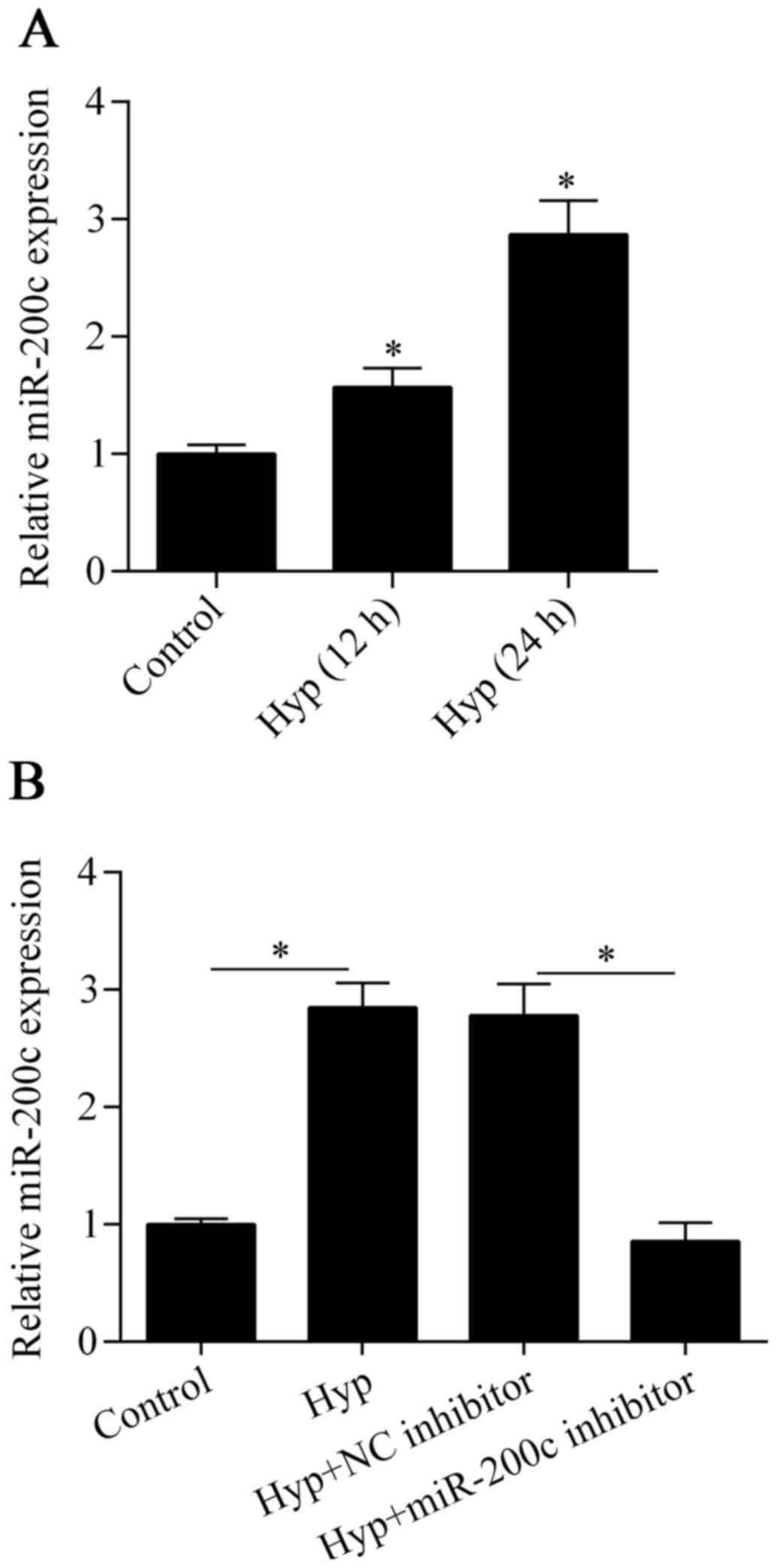
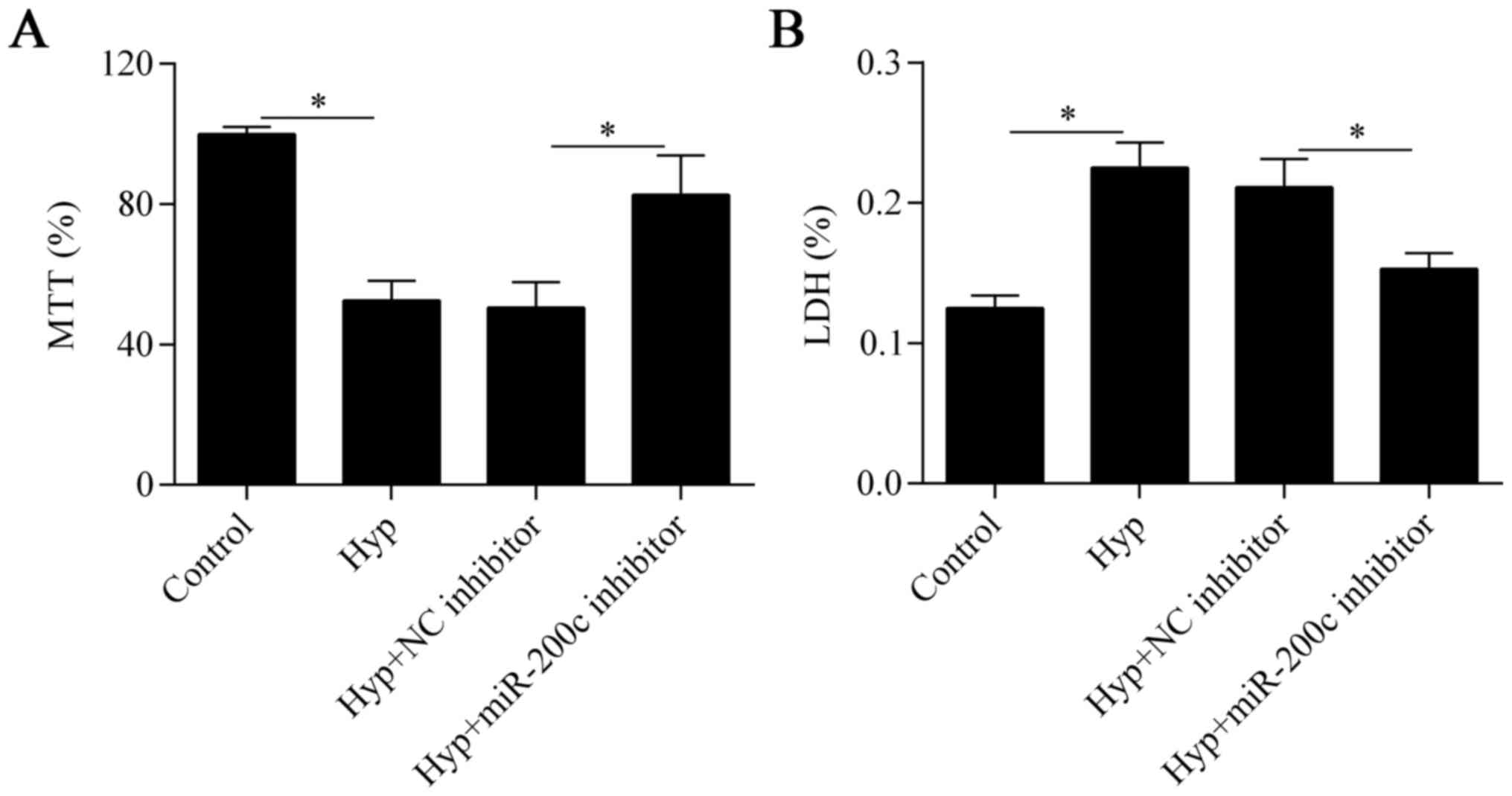
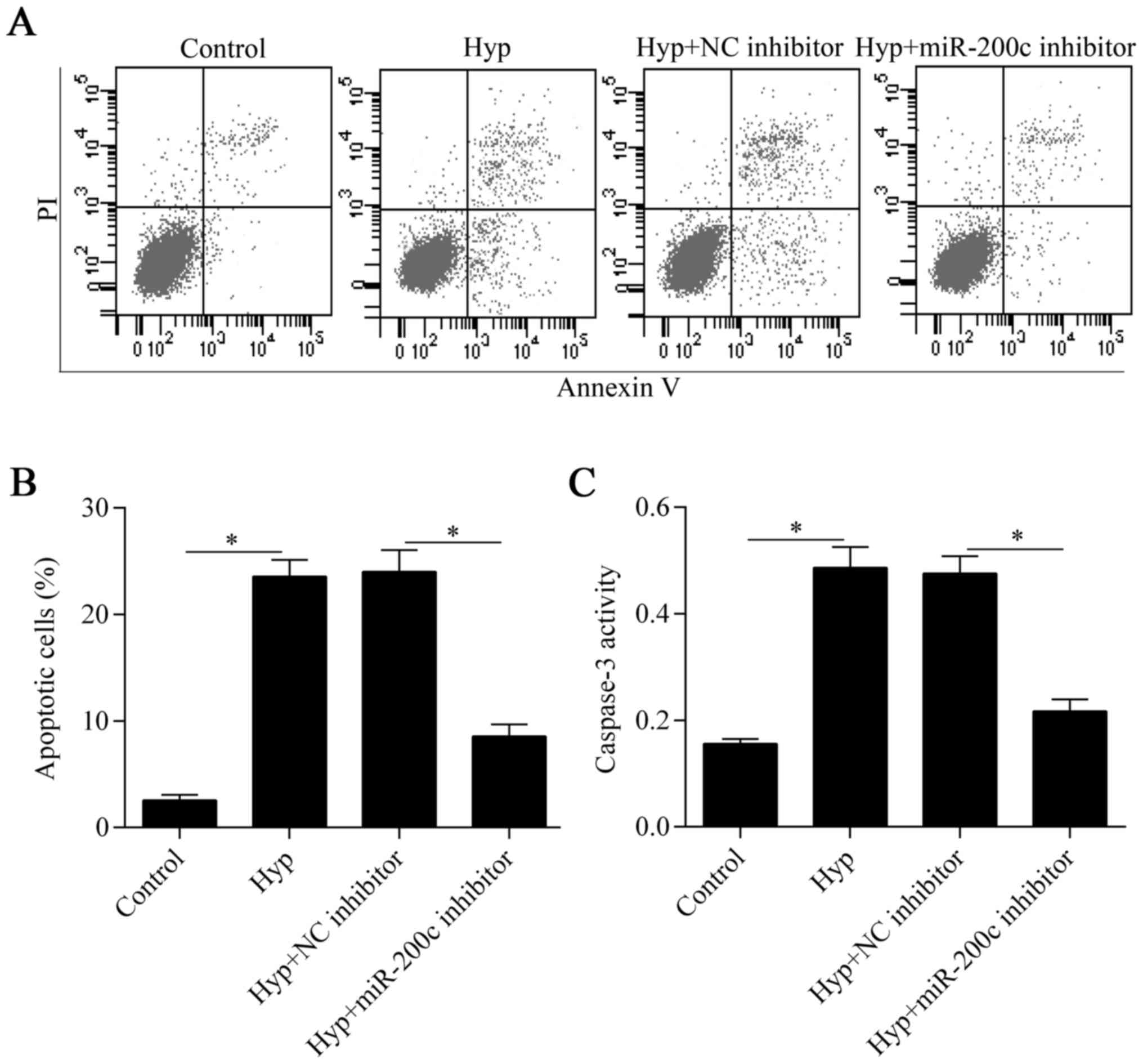
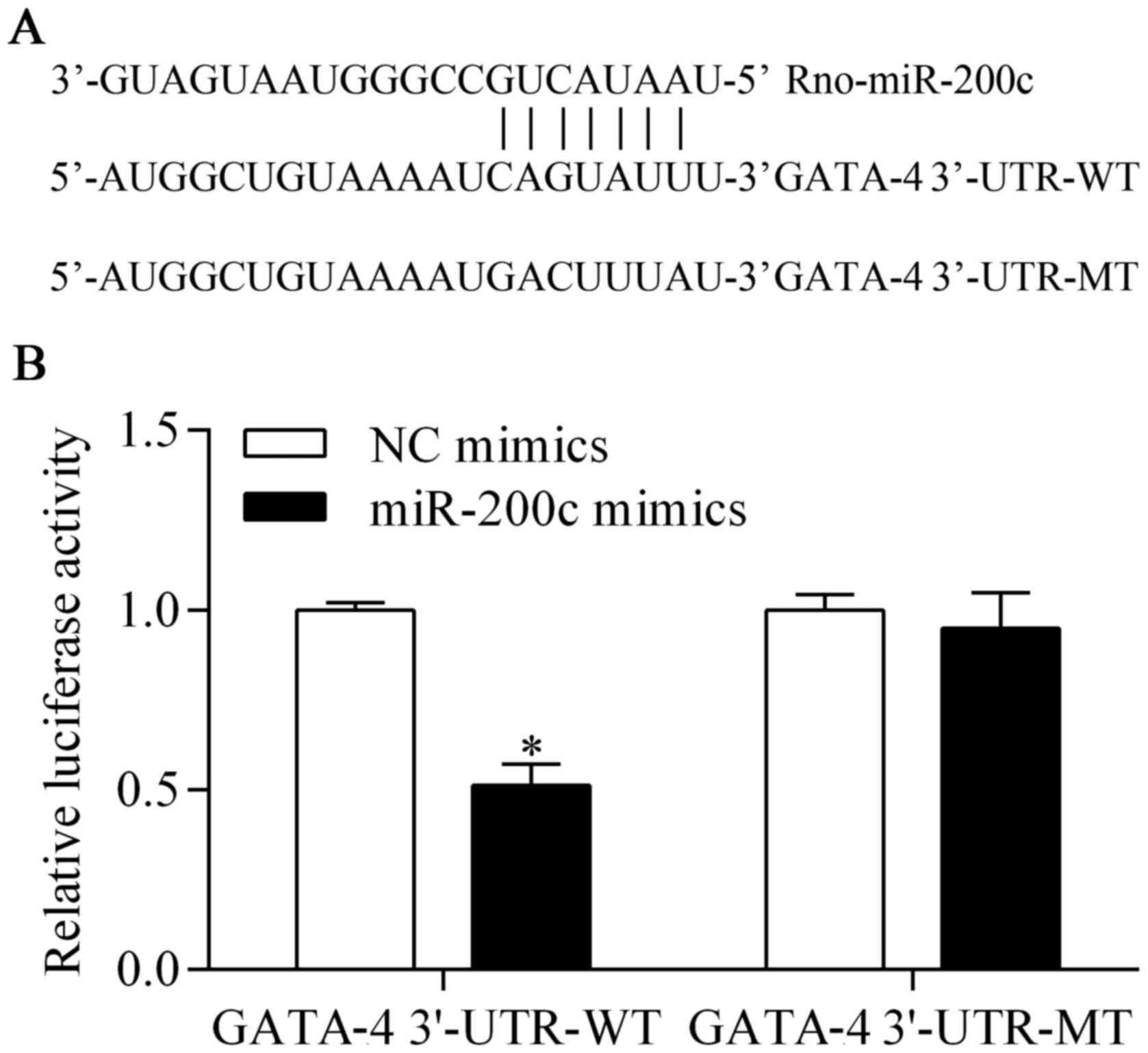
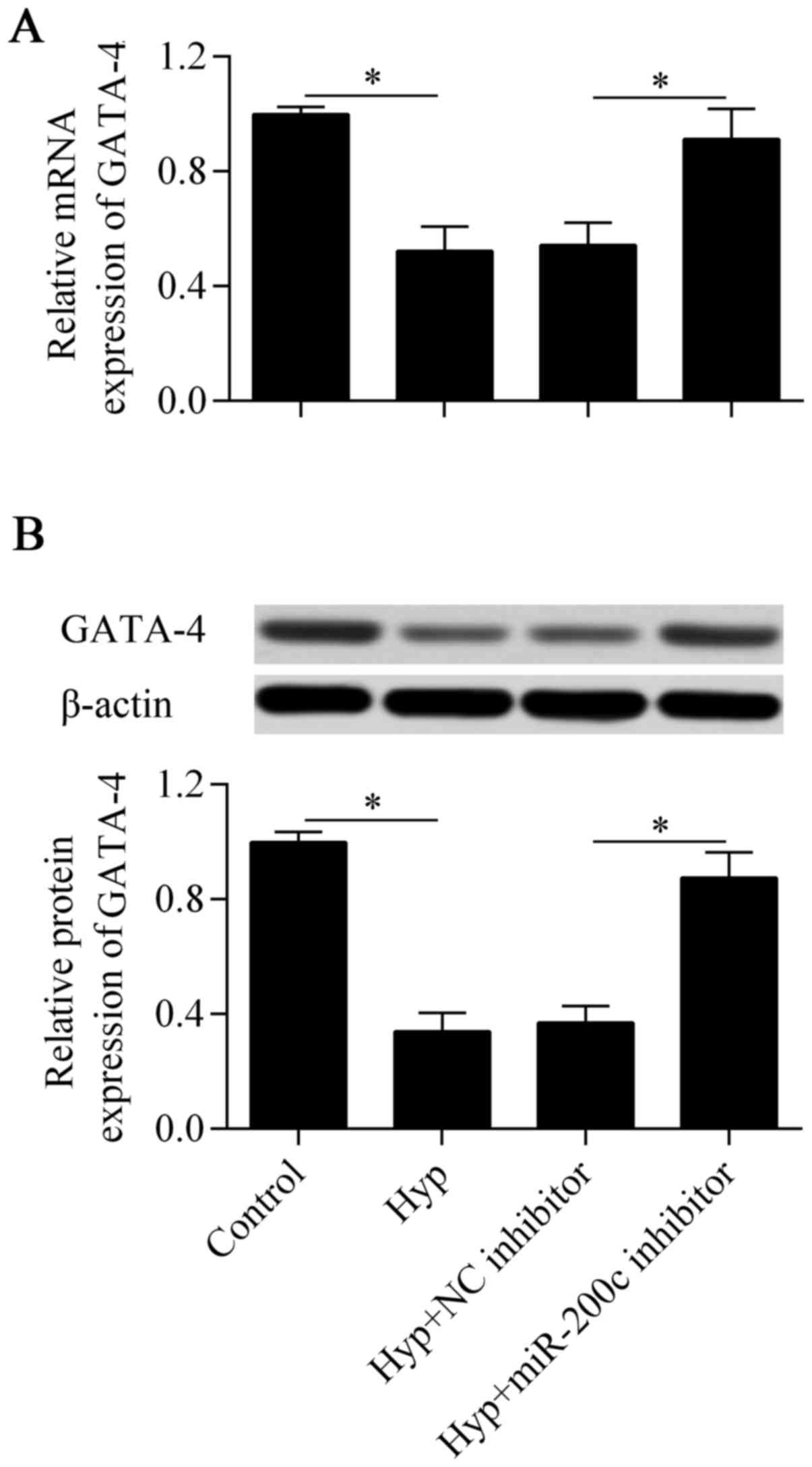
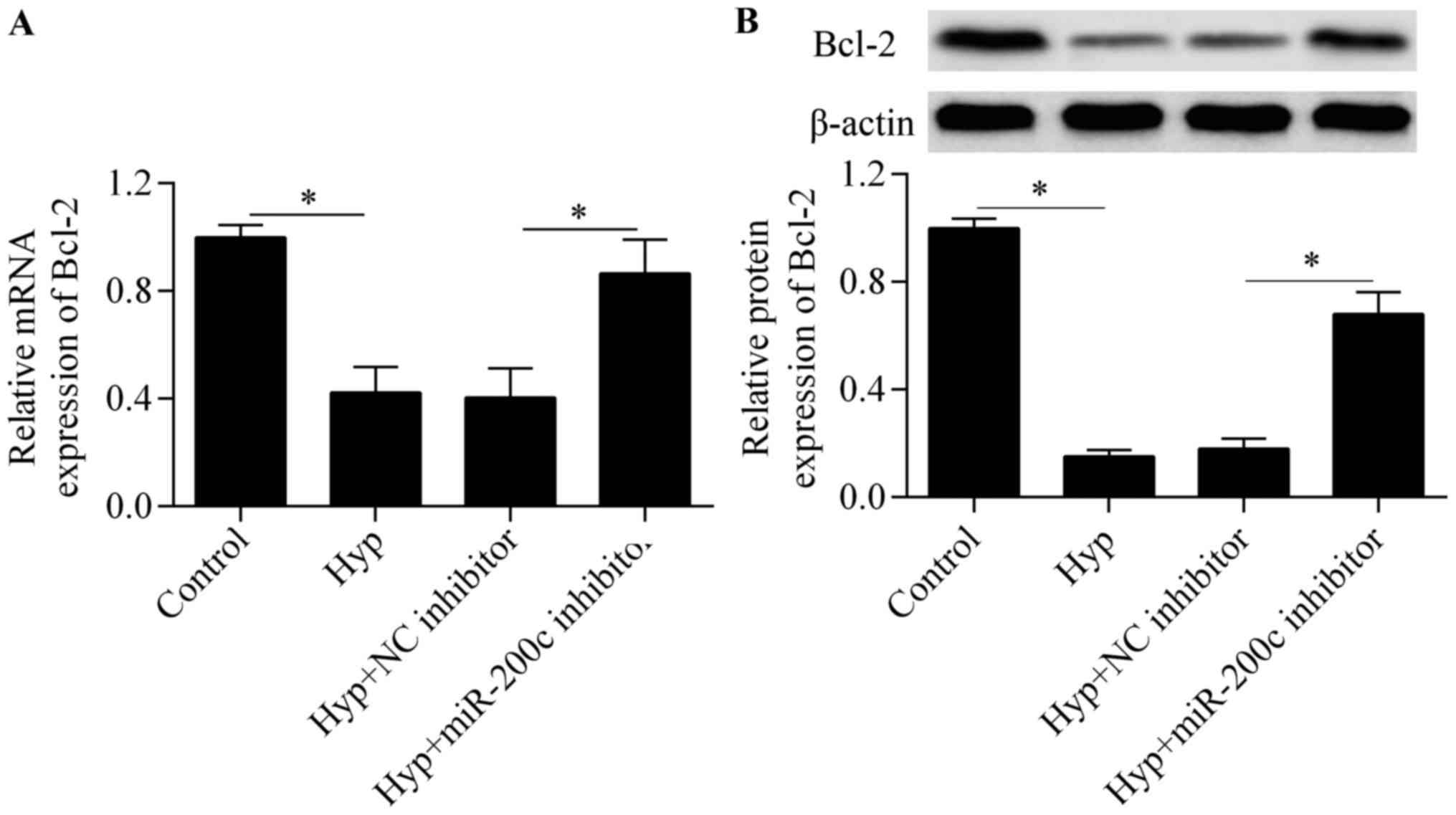
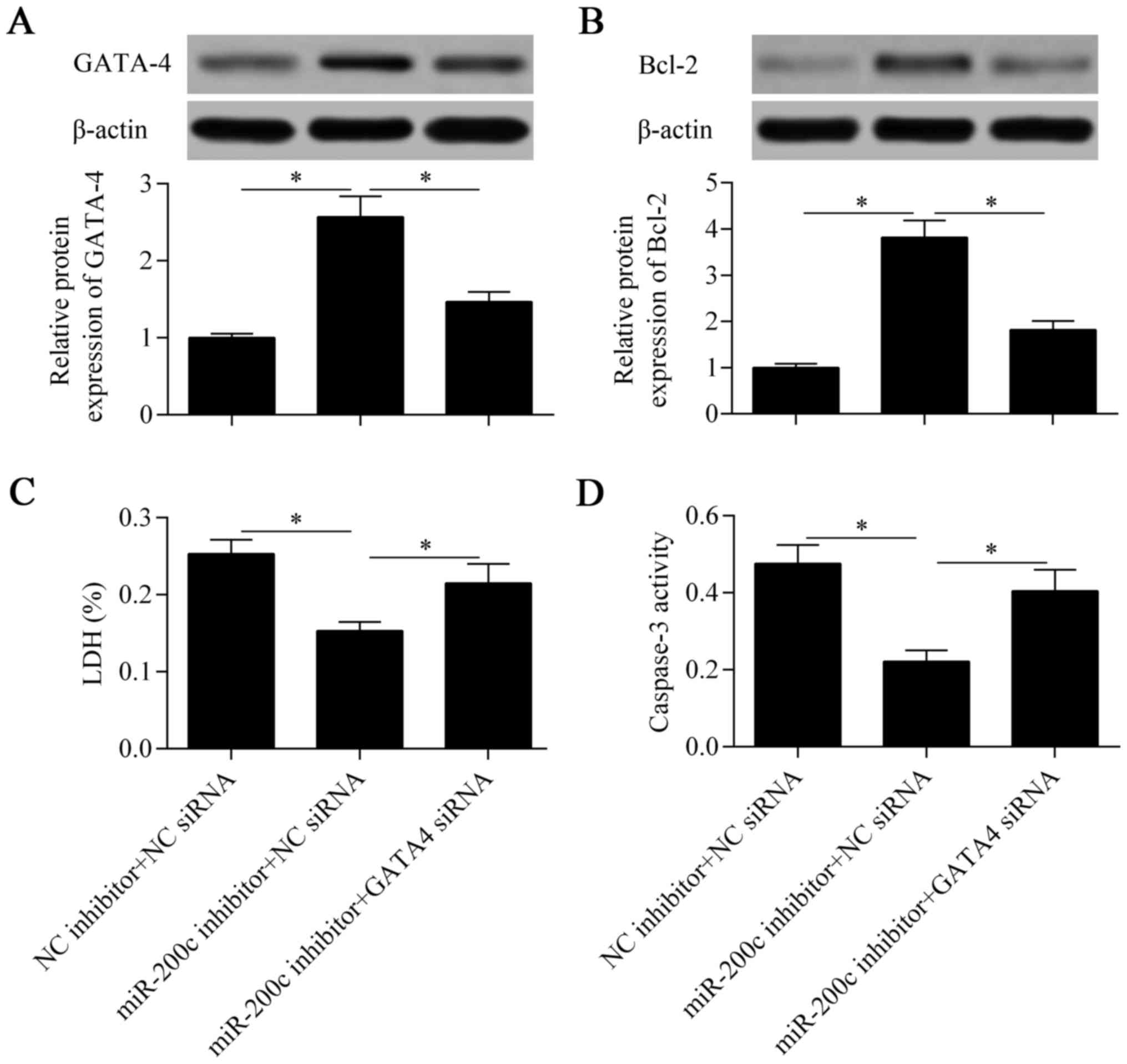
Hypoxia-induced cardiomyocyte apoptosis plays an important role in the development of ischemic heart disease. MicroRNAs (miRNAs or miRs) are emerging as critical regulators of hypoxia-induced cardiomyocyte apoptosis. miR-200c is an miRNA that has been reported to be related to apoptosis in various pathological processes; however, its role in hypoxia‑induced cardiomyocyte apoptosis remains unclear. In the present study, we aimed to investigate the potential role and underlying mechanism of miR-200c in regulating hypoxia‑induced cardiomyocyte apoptosis. We found that miR-200c was significantly upregulated by hypoxia in cardiomyocytes, as detected by reverse transcription-quantitative polymerase chain reaction (RT-qPCR). The lactate dehydrogenase, MTT, Annexin V/propidium iodide apoptosis and caspase-3 activity assays showed that downregulation of miR-200c markedly improved cell survival and suppressed the apoptosis of cardiomyocytes in response to hypoxia. Bioinformatics analysis and the dual-luciferase reporter assay demonstrated that miR-200c directly targeted the 3'-untranslated region of GATA-4, an important transcription factor for cardiomyocyte survival. RT-qPCR and western blot analysis showed that suppression of miR-200c significantly increased GATA-4 expression. Furthermore, downregulation of miR-200c upregulated the expression of the anti-apoptotic gene Bcl-2. However, the protective effects against hypoxia induced by the downregulation of miR‑200c were significantly abolished by GATA-4 knockdown. Taken together, our results suggest that downregulation of miR-200c protects cardiomyocytes from hypoxia-induced apoptosis by targeting GATA-4, providing a potential therapeutic molecular target for the treatment of ischemic heart disease.
View Figures

Figure 1

Figure 2

Figure 3

Figure 4

Figure 5

Figure 6

Figure 7

View References

1 

Yellon DM and Hausenloy DJ: Myocardial reperfusion injury. N Engl J Med. 357:1121–1135. 2007. View Article : Google Scholar : PubMed/NCBI

2 

Glinka YY and Youdim MB: Inhibition of mitochondrial complexes I and IV by 6-hydroxydopamine. Eur J Pharmacol. 292:329–332. 1995.PubMed/NCBI

3 

Kitsis RN, Peng CF and Cuervo AM: Eat your heart out. Nat Med. 13:539–541. 2007. View Article : Google Scholar : PubMed/NCBI

4 

Kang PM, Haunstetter A, Aoki H, Usheva A and Izumo S: Morphological and molecular characterization of adult cardiomyocyte apoptosis during hypoxia and reoxygenation. Circ Res. 87:118–125. 2000. View Article : Google Scholar : PubMed/NCBI

5 

Filipowicz W, Bhattacharyya SN and Sonenberg N: Mechanisms of post-transcriptional regulation by microRNAs: are the answers in sight? Nat Rev Genet. 9:102–114. 2008. View Article : Google Scholar : PubMed/NCBI

6 

Winter J, Jung S, Keller S, Gregory RI and Diederichs S: Many roads to maturity: microRNA biogenesis pathways and their regulation. Nat Cell Biol. 11:228–234. 2009. View Article : Google Scholar : PubMed/NCBI

7 

Su Z, Yang Z, Xu Y, Chen Y and Yu Q: MicroRNAs in apoptosis, autophagy and necroptosis. Oncotarget. 6:8474–8490. 2015. View Article : Google Scholar : PubMed/NCBI

8 

Wang Y, Pan X, Fan Y, Hu X, Liu X, Xiang M and Wang J: Dysregulated expression of microRNAs and mRNAs in myocardial infarction. Am J Transl Res. 7:2291–2304. 2015.

9 

Boon RA and Dimmeler S: MicroRNAs in myocardial infarction. Nat Rev Cardiol. 12:135–142. 2015. View Article : Google Scholar

10 

Hang P, Guo J, Sun C and Du Z: MicroRNAs as candidate drug targets for cardiovascular diseases. Curr Drug Targets. Feb 29–2016.Epub ahead of print. PubMed/NCBI

11 

Samanta S, Balasubramanian S, Rajasingh S, Patel U, Dhanasekaran A, Dawn B and Rajasingh J: MicroRNA: a new therapeutic strategy for cardiovascular diseases. Trends Cardiovasc Med. 26:407–419. 2016. View Article : Google Scholar : PubMed/NCBI

12 

Zou Y, Liu W, Zhang J and Xiang D: miR-153 regulates apoptosis and autophagy of cardiomyocytes by targeting Mcl-1. Mol Med Rep. 14:1033–1039. 2016.PubMed/NCBI

13 

Xu H, Jin L, Chen Y and Li J: Downregulation of microRNA-429 protects cardiomyocytes against hypoxia-induced apoptosis by increasing Notch1 expression. Int J Mol Med. 37:1677–1685. 2016.PubMed/NCBI

14 

Xie J, Hu X, Yi C, Hu G, Zhou X and Jiang H: MicroRNA 451 protects against cardiomyocyte anoxia/reoxygenation injury by inhibiting high mobility group box 1 expression. Mol Med Rep. 13:5335–5341. 2016.PubMed/NCBI

15 

Ke ZP, Xu P, Shi Y and Gao AM: MicroRNA-93 inhibits ischemia-reperfusion induced cardiomyocyte apoptosis by targeting PTEN. Oncotarget. 7:28796–28805. 2016.PubMed/NCBI

16 

Kelley C, Blumberg H, Zon LI and Evans T: GATA-4 is a novel transcription factor expressed in endocardium of the developing heart. Development. 118:817–827. 1993.PubMed/NCBI

17 

Arceci RJ, King AA, Simon MC, Orkin SH and Wilson DB: Mouse GATA-4: a retinoic acid-inducible GATA-binding transcription factor expressed in endodermally derived tissues and heart. Mol Cell Biol. 13:2235–2246. 1993. View Article : Google Scholar : PubMed/NCBI

18 

Liang Q, De Windt LJ, Witt SA, Kimball TR, Markham BE and Molkentin JD: The transcription factors GATA4 and GATA6 regulate cardiomyocyte hypertrophy in vitro and in vivo. J Biol Chem. 276:30245–30253. 2001. View Article : Google Scholar : PubMed/NCBI

19 

Charron F, Tsimiklis G, Arcand M, Robitaille L, Liang Q, Molkentin JD, Meloche S and Nemer M: Tissue-specific GATA factors are transcriptional effectors of the small GTPase RhoA. Genes Dev. 15:2702–2719. 2001. View Article : Google Scholar : PubMed/NCBI

20 

Suzuki YJ: Cell signaling pathways for the regulation of GATA4 transcription factor: implications for cell growth and apoptosis. Cell Signal. 23:1094–1099. 2011. View Article : Google Scholar : PubMed/NCBI

21 

Morimoto T, Hasegawa K, Kaburagi S, Kakita T, Wada H, Yanazume T and Sasayama S: Phosphorylation of GATA-4 is involved in alpha 1-adrenergic agonist-responsive transcription of the endothelin-1 gene in cardiac myocytes. J Biol Chem. 275:13721–13726. 2000. View Article : Google Scholar : PubMed/NCBI

22 

Hautala N, Tokola H, Luodonpää M, Puhakka J, Romppanen H, Vuolteenaho O and Ruskoaho H: Pressure overload increases GATA4 binding activity via endothelin-1. Circulation. 103:730–735. 2001. View Article : Google Scholar : PubMed/NCBI

23 

Kobayashi S, Lackey T, Huang Y, Bisping E, Pu WT, Boxer LM and Liang Q: Transcription factor gata4 regulates cardiac BCL2 gene expression in vitro and in vivo. FASEB J. 20:800–802. 2006.PubMed/NCBI

24 

Kim Y, Ma AG, Kitta K, Fitch SN, Ikeda T, Ihara Y, Simon AR, Evans T and Suzuki YJ: Anthracycline-induced suppression of GATA-4 transcription factor: implication in the regulation of cardiac myocyte apoptosis. Mol Pharmacol. 63:368–377. 2003. View Article : Google Scholar : PubMed/NCBI

25 

Rysä J, Tenhunen O, Serpi R, Soini Y, Nemer M, Leskinen H and Ruskoaho H: GATA-4 is an angiogenic survival factor of the infarcted heart. Circ Heart Fail. 3:440–450. 2010. View Article : Google Scholar : PubMed/NCBI

26 

Bian J, Popovic ZB, Benejam C, Kiedrowski M, Rodriguez LL and Penn MS: Effect of cell-based intercellular delivery of transcription factor GATA4 on ischemic cardiomyopathy. Circ Res. 100:1626–1633. 2007. View Article : Google Scholar : PubMed/NCBI

27 

Shan W, Zhang X, Li M, Deng F and Zhang J: Over expression of miR-200c suppresses invasion and restores methotrexate sensitivity in lung cancer A549 cells. Gene. 593:265–271. 2016. View Article : Google Scholar : PubMed/NCBI

28 

Boominathan L: The tumor suppressors p53, p63, and p73 are regulators of microRNA processing complex. PLoS One. 5:e106152010. View Article : Google Scholar : PubMed/NCBI

29 

Hsieh CH, Jeng JC, Jeng SF, Wu CJ, Lu TH, Liliang PC, Rau CS, Chen YC and Lin CJ: MicroRNA profiling in ischemic injury of the gracilis muscle in rats. BMC Musculoskelet Disord. 11:1232010. View Article : Google Scholar : PubMed/NCBI

30 

Lee ST, Chu K, Jung KH, Yoon HJ, Jeon D, Kang KM, Park KH, Bae EK, Kim M, Lee SK, et al: MicroRNAs induced during ischemic preconditioning. Stroke. 41:1646–1651. 2010. View Article : Google Scholar : PubMed/NCBI

31 

Stary CM, Xu L, Sun X, Ouyang YB, White RE, Leong J, Li J, Xiong X and Giffard RG: MicroRNA-200c contributes to injury from transient focal cerebral ischemia by targeting Reelin. Stroke. 46:551–556. 2015. View Article : Google Scholar : PubMed/NCBI

32 

Venkatadri R, Muni T, Iyer AK, Yakisich JS and Azad N: Role of apoptosis-related miRNAs in resveratrol-induced breast cancer cell death. Cell Death Dis. 7:e21042016. View Article : Google Scholar : PubMed/NCBI

33 

Cui J, Cheng Y, Zhang P, Sun M, Gao F, Liu C and Cai J: Downregulation of miR200c promotes radiation-induced thymic lymphoma by targeting BMI1. J Cell Biochem. 115:1033–1042. 2014. View Article : Google Scholar : PubMed/NCBI

34 

Yu DS, Lv G, Mei XF, Cao Y, Wang YF, Wang YS and Bi YL: MiR-200c regulates ROS-induced apoptosis in murine BV-2 cells by targeting FAP-1. Spinal Cord. Dec 2–2014.Epub ahead of print. PubMed/NCBI

35 

Magenta A, Cencioni C, Fasanaro P, Zaccagnini G, Greco S, Sarra-Ferraris G, Antonini A, Martelli F and Capogrossi MC: miR-200c is upregulated by oxidative stress and induces endothelial cell apoptosis and senescence via ZEB1 inhibition. Cell Death Differ. 18:1628–1639. 2011. View Article : Google Scholar : PubMed/NCBI

36 

Zhang H, Liu J, Qu D, Wang L, Luo JY, Lau CW, Liu P, Gao Z, Tipoe GL, Lee HK, et al: Inhibition of miR-200c restores endothelial function in diabetic mice through suppression of COX-2. Diabetes. 65:1196–1207. 2016. View Article : Google Scholar : PubMed/NCBI

37 

Wu Y, Gu C and Huang X: Sevoflurane protects against hepatic ischemia/reperfusion injury by modulating microRNA-200c regulation in mice. Biomed Pharmacother. 84:1126–1136. 2016. View Article : Google Scholar : PubMed/NCBI

38 

Singh GB, Raut SK, Khanna S, Kumar A, Sharma S, Prasad R and Khullar M: MicroRNA-200c modulates DUSP-1 expression in diabetes-induced cardiac hypertrophy. Mol Cell Biochem. 424:1–11. 2017. View Article : Google Scholar

39 

Suzuki YJ and Evans T: Regulation of cardiac myocyte apoptosis by the GATA-4 transcription factor. Life Sci. 74:1829–1838. 2004. View Article : Google Scholar : PubMed/NCBI

40 

Suzuki YJ: Stress-induced activation of GATA-4 in cardiac muscle cells. Free Radic Biol Med. 34:1589–1598. 2003. View Article : Google Scholar : PubMed/NCBI

41 

Kobayashi S, Volden P, Timm D, Mao K, Xu X and Liang Q: Transcription factor GATA4 inhibits doxorubicin-induced autophagy and cardiomyocyte death. J Biol Chem. 285:793–804. 2010. View Article : Google Scholar :

42 

Li HX, Zhou YF, Zhao X, Jiang B and Yang XJ: GATA-4 protects against hypoxia-induced cardiomyocyte injury: effects on mitochondrial membrane potential. Can J Physiol Pharmacol. 92:669–678. 2014. View Article : Google Scholar : PubMed/NCBI

43 

Yu B, Gong M, Wang Y, Millard RW, Pasha Z, Yang Y, Ashraf M and Xu M: Cardiomyocyte protection by GATA-4 gene engineered mesenchymal stem cells is partially mediated by translocation of miR-221 in microvesicles. PLoS One. 8:e733042013. View Article : Google Scholar : PubMed/NCBI

44 

Yu B, Kim HW, Gong M, Wang J, Millard RW, Wang Y, Ashraf M and Xu M: Exosomes secreted from GATA-4 overexpressing mesenchymal stem cells serve as a reservoir of anti-apoptotic microRNAs for cardioprotection. Int J Cardiol. 182:349–360. 2015. View Article : Google Scholar : PubMed/NCBI

45 

Kyrönlahti A, Rämö M, Tamminen M, Unkila-Kallio L, Butzow R, Leminen A, Nemer M, Rahman N, Huhtaniemi I, Heikinheimo M, et al: GATA-4 regulates Bcl-2 expression in ovarian granulosa cell tumors. Endocrinology. 149:5635–5642. 2008. View Article : Google Scholar : PubMed/NCBI

46 

Zhang N, Ye F, Zhu W, Hu D, Xiao C, Nan J, Su S, Wang Y, Liu M, Gao K, et al: Cardiac ankyrin repeat protein attenuates cardiomyocyte apoptosis by upregulation of Bcl-2 expression. Biochim Biophys Acta. 1863:3040–3049. 2016. View Article : Google Scholar : PubMed/NCBI

47 

Pikkarainen S, Tokola H, Kerkelä R and Ruskoaho H: GATA transcription factors in the developing and adult heart. Cardiovasc Res. 63:196–207. 2004. View Article : Google Scholar : PubMed/NCBI

48 

Jun JH, Shin EJ, Kim JH, Kim SO, Shim JK and Kwak YL: Erythropoietin prevents hypoxia-induced GATA-4 ubiquitination via phosphorylation of serine 105 of GATA-4. Biol Pharm Bull. 36:1126–1133. 2013. View Article : Google Scholar : PubMed/NCBI

49 

Yao CX, Wei QX, Zhang YY, Wang WP, Xue LX, Yang F, Zhang SF, Xiong CJ, Li WY, Wei ZR, et al: miR-200b targets GATA-4 during cell growth and differentiation. RNA Biol. 10:465–480. 2013. View Article : Google Scholar : PubMed/NCBI

50 

Sowa N, Horie T, Kuwabara Y, Baba O, Watanabe S, Nishi H, Kinoshita M, Takanabe-Mori R, Wada H, Shimatsu A, et al: MicroRNA 26b encoded by the intron of small CTD phosphatase (SCP) 1 has an antagonistic effect on its host gene. J Cell Biochem. 113:3455–3465. 2012. View Article : Google Scholar : PubMed/NCBI

51 

Han M, Yang Z, Sayed D, He M, Gao S, Lin L, Yoon S and Abdellatif M: GATA4 expression is primarily regulated via a miR-26b-dependent post-transcriptional mechanism during cardiac hypertrophy. Cardiovasc Res. 93:645–654. 2012. View Article : Google Scholar : PubMed/NCBI

52 

Liu Y, Wang Z and Xiao W: MicroRNA-26a protects against cardiac hypertrophy via inhibiting GATA4 in rat model and cultured cardiomyocytes. Mol Med Rep. 14:2860–2866. 2016.PubMed/NCBI

53 

Tony H, Yu K and Qiutang Z: MicroRNA-208a silencing attenuates doxorubicin induced myocyte apoptosis and cardiac dysfunction. Oxid Med Cell Longev. 2015:5970322015. View Article : Google Scholar : PubMed/NCBI

54 

Huang HN, Chen SY, Hwang SM, Yu CC, Su MW, Mai W, Wang HW, Cheng WC, Schuyler SC, Ma N, et al: miR-200c and GATA binding protein 4 regulate human embryonic stem cell renewal and differentiation. Stem Cell Res (Amst). 12:338–353. 2014. View Article : Google Scholar

Related Articles

  • Abstract
  • View
  • Download
  • Twitter
Copy and paste a formatted citation
Spandidos Publications style
Chen Z, Zhang S, Guo C, Li J and Sang W: Downregulation of miR-200c protects cardiomyocytes from hypoxia-induced apoptosis by targeting GATA-4. Int J Mol Med 39: 1589-1596, 2017.
APA
Chen, Z., Zhang, S., Guo, C., Li, J., & Sang, W. (2017). Downregulation of miR-200c protects cardiomyocytes from hypoxia-induced apoptosis by targeting GATA-4. International Journal of Molecular Medicine, 39, 1589-1596. https://doi.org/10.3892/ijmm.2017.2959
MLA
Chen, Z., Zhang, S., Guo, C., Li, J., Sang, W."Downregulation of miR-200c protects cardiomyocytes from hypoxia-induced apoptosis by targeting GATA-4". International Journal of Molecular Medicine 39.6 (2017): 1589-1596.
Chicago
Chen, Z., Zhang, S., Guo, C., Li, J., Sang, W."Downregulation of miR-200c protects cardiomyocytes from hypoxia-induced apoptosis by targeting GATA-4". International Journal of Molecular Medicine 39, no. 6 (2017): 1589-1596. https://doi.org/10.3892/ijmm.2017.2959
Copy and paste a formatted citation
x
Spandidos Publications style
Chen Z, Zhang S, Guo C, Li J and Sang W: Downregulation of miR-200c protects cardiomyocytes from hypoxia-induced apoptosis by targeting GATA-4. Int J Mol Med 39: 1589-1596, 2017.
APA
Chen, Z., Zhang, S., Guo, C., Li, J., & Sang, W. (2017). Downregulation of miR-200c protects cardiomyocytes from hypoxia-induced apoptosis by targeting GATA-4. International Journal of Molecular Medicine, 39, 1589-1596. https://doi.org/10.3892/ijmm.2017.2959
MLA
Chen, Z., Zhang, S., Guo, C., Li, J., Sang, W."Downregulation of miR-200c protects cardiomyocytes from hypoxia-induced apoptosis by targeting GATA-4". International Journal of Molecular Medicine 39.6 (2017): 1589-1596.
Chicago
Chen, Z., Zhang, S., Guo, C., Li, J., Sang, W."Downregulation of miR-200c protects cardiomyocytes from hypoxia-induced apoptosis by targeting GATA-4". International Journal of Molecular Medicine 39, no. 6 (2017): 1589-1596. https://doi.org/10.3892/ijmm.2017.2959
Follow us
  • Twitter
  • LinkedIn
  • Facebook
About
  • Spandidos Publications
  • Careers
  • Cookie Policy
  • Privacy Policy
How can we help?
  • Help
  • Live Chat
  • Contact
  • Email to our Support Team