Spandidos Publications Logo
  • About
    • About Spandidos
    • Aims and Scopes
    • Abstracting and Indexing
    • Editorial Policies
    • Reprints and Permissions
    • Job Opportunities
    • Terms and Conditions
    • Contact
  • Journals
    • All Journals
    • Oncology Letters
      • Oncology Letters
      • Information for Authors
      • Editorial Policies
      • Editorial Board
      • Aims and Scope
      • Abstracting and Indexing
      • Bibliographic Information
      • Archive
    • International Journal of Oncology
      • International Journal of Oncology
      • Information for Authors
      • Editorial Policies
      • Editorial Board
      • Aims and Scope
      • Abstracting and Indexing
      • Bibliographic Information
      • Archive
    • Molecular and Clinical Oncology
      • Molecular and Clinical Oncology
      • Information for Authors
      • Editorial Policies
      • Editorial Board
      • Aims and Scope
      • Abstracting and Indexing
      • Bibliographic Information
      • Archive
    • Experimental and Therapeutic Medicine
      • Experimental and Therapeutic Medicine
      • Information for Authors
      • Editorial Policies
      • Editorial Board
      • Aims and Scope
      • Abstracting and Indexing
      • Bibliographic Information
      • Archive
    • International Journal of Molecular Medicine
      • International Journal of Molecular Medicine
      • Information for Authors
      • Editorial Policies
      • Editorial Board
      • Aims and Scope
      • Abstracting and Indexing
      • Bibliographic Information
      • Archive
    • Biomedical Reports
      • Biomedical Reports
      • Information for Authors
      • Editorial Policies
      • Editorial Board
      • Aims and Scope
      • Abstracting and Indexing
      • Bibliographic Information
      • Archive
    • Oncology Reports
      • Oncology Reports
      • Information for Authors
      • Editorial Policies
      • Editorial Board
      • Aims and Scope
      • Abstracting and Indexing
      • Bibliographic Information
      • Archive
    • Molecular Medicine Reports
      • Molecular Medicine Reports
      • Information for Authors
      • Editorial Policies
      • Editorial Board
      • Aims and Scope
      • Abstracting and Indexing
      • Bibliographic Information
      • Archive
    • World Academy of Sciences Journal
      • World Academy of Sciences Journal
      • Information for Authors
      • Editorial Policies
      • Editorial Board
      • Aims and Scope
      • Abstracting and Indexing
      • Bibliographic Information
      • Archive
    • International Journal of Functional Nutrition
      • International Journal of Functional Nutrition
      • Information for Authors
      • Editorial Policies
      • Editorial Board
      • Aims and Scope
      • Abstracting and Indexing
      • Bibliographic Information
      • Archive
    • International Journal of Epigenetics
      • International Journal of Epigenetics
      • Information for Authors
      • Editorial Policies
      • Editorial Board
      • Aims and Scope
      • Abstracting and Indexing
      • Bibliographic Information
      • Archive
    • Medicine International
      • Medicine International
      • Information for Authors
      • Editorial Policies
      • Editorial Board
      • Aims and Scope
      • Abstracting and Indexing
      • Bibliographic Information
      • Archive
  • Articles
  • Information
    • Information for Authors
    • Information for Reviewers
    • Information for Librarians
    • Information for Advertisers
    • Conferences
  • Language Editing
Spandidos Publications Logo
  • About
    • About Spandidos
    • Aims and Scopes
    • Abstracting and Indexing
    • Editorial Policies
    • Reprints and Permissions
    • Job Opportunities
    • Terms and Conditions
    • Contact
  • Journals
    • All Journals
    • Biomedical Reports
      • Information for Authors
      • Editorial Policies
      • Editorial Board
      • Aims and Scope
      • Abstracting and Indexing
      • Bibliographic Information
      • Archive
    • Experimental and Therapeutic Medicine
      • Information for Authors
      • Editorial Policies
      • Editorial Board
      • Aims and Scope
      • Abstracting and Indexing
      • Bibliographic Information
      • Archive
    • International Journal of Epigenetics
      • Information for Authors
      • Editorial Policies
      • Editorial Board
      • Aims and Scope
      • Abstracting and Indexing
      • Bibliographic Information
      • Archive
    • International Journal of Functional Nutrition
      • Information for Authors
      • Editorial Policies
      • Editorial Board
      • Aims and Scope
      • Abstracting and Indexing
      • Bibliographic Information
      • Archive
    • International Journal of Molecular Medicine
      • Information for Authors
      • Editorial Policies
      • Editorial Board
      • Aims and Scope
      • Abstracting and Indexing
      • Bibliographic Information
      • Archive
    • International Journal of Oncology
      • Information for Authors
      • Editorial Policies
      • Editorial Board
      • Aims and Scope
      • Abstracting and Indexing
      • Bibliographic Information
      • Archive
    • Medicine International
      • Information for Authors
      • Editorial Policies
      • Editorial Board
      • Aims and Scope
      • Abstracting and Indexing
      • Bibliographic Information
      • Archive
    • Molecular and Clinical Oncology
      • Information for Authors
      • Editorial Policies
      • Editorial Board
      • Aims and Scope
      • Abstracting and Indexing
      • Bibliographic Information
      • Archive
    • Molecular Medicine Reports
      • Information for Authors
      • Editorial Policies
      • Editorial Board
      • Aims and Scope
      • Abstracting and Indexing
      • Bibliographic Information
      • Archive
    • Oncology Letters
      • Information for Authors
      • Editorial Policies
      • Editorial Board
      • Aims and Scope
      • Abstracting and Indexing
      • Bibliographic Information
      • Archive
    • Oncology Reports
      • Information for Authors
      • Editorial Policies
      • Editorial Board
      • Aims and Scope
      • Abstracting and Indexing
      • Bibliographic Information
      • Archive
    • World Academy of Sciences Journal
      • Information for Authors
      • Editorial Policies
      • Editorial Board
      • Aims and Scope
      • Abstracting and Indexing
      • Bibliographic Information
      • Archive
  • Articles
  • Information
    • For Authors
    • For Reviewers
    • For Librarians
    • For Advertisers
    • Conferences
  • Language Editing
Login Register Submit
  • This site uses cookies
  • You can change your cookie settings at any time by following the instructions in our Cookie Policy. To find out more, you may read our Privacy Policy.

    I agree
Search articles by DOI, keyword, author or affiliation
Search
Advanced Search
presentation
International Journal of Molecular Medicine
Join Editorial Board Propose a Special Issue
Print ISSN: 1107-3756 Online ISSN: 1791-244X
Journal Cover
December-2017 Volume 40 Issue 6

Full Size Image

Sign up for eToc alerts
Recommend to Library

Journals

International Journal of Molecular Medicine

International Journal of Molecular Medicine

International Journal of Molecular Medicine is an international journal devoted to molecular mechanisms of human disease.

International Journal of Oncology

International Journal of Oncology

International Journal of Oncology is an international journal devoted to oncology research and cancer treatment.

Molecular Medicine Reports

Molecular Medicine Reports

Covers molecular medicine topics such as pharmacology, pathology, genetics, neuroscience, infectious diseases, molecular cardiology, and molecular surgery.

Oncology Reports

Oncology Reports

Oncology Reports is an international journal devoted to fundamental and applied research in Oncology.

Experimental and Therapeutic Medicine

Experimental and Therapeutic Medicine

Experimental and Therapeutic Medicine is an international journal devoted to laboratory and clinical medicine.

Oncology Letters

Oncology Letters

Oncology Letters is an international journal devoted to Experimental and Clinical Oncology.

Biomedical Reports

Biomedical Reports

Explores a wide range of biological and medical fields, including pharmacology, genetics, microbiology, neuroscience, and molecular cardiology.

Molecular and Clinical Oncology

Molecular and Clinical Oncology

International journal addressing all aspects of oncology research, from tumorigenesis and oncogenes to chemotherapy and metastasis.

World Academy of Sciences Journal

World Academy of Sciences Journal

Multidisciplinary open-access journal spanning biochemistry, genetics, neuroscience, environmental health, and synthetic biology.

International Journal of Functional Nutrition

International Journal of Functional Nutrition

Open-access journal combining biochemistry, pharmacology, immunology, and genetics to advance health through functional nutrition.

International Journal of Epigenetics

International Journal of Epigenetics

Publishes open-access research on using epigenetics to advance understanding and treatment of human disease.

Medicine International

Medicine International

An International Open Access Journal Devoted to General Medicine.

Journal Cover
December-2017 Volume 40 Issue 6

Full Size Image

Sign up for eToc alerts
Recommend to Library

  • Article
  • Citations
    • Cite This Article
    • Download Citation
    • Create Citation Alert
    • Remove Citation Alert
    • Cited By
  • Similar Articles
    • Related Articles (in Spandidos Publications)
    • Similar Articles (Google Scholar)
    • Similar Articles (PubMed)
  • Download PDF
  • Download XML
  • View XML
Article Open Access

Protective effect of autophagy in neural ischemia and hypoxia: Negative regulation of the Wnt/β-catenin pathway

  • Authors:
    • Zhen-Yu Shi
    • Jie-Xin Deng
    • Su Fu
    • Lai Wang
    • Qiang Wang
    • Bin Liu
    • Yong-Qiang Li
    • Jin-Bo Deng
  • View Affiliations / Copyright

    Affiliations: Institute of Neurobiology, Nursing College, Henan University, Kaifeng, Henan 475004, P.R. China, Institute of Neurobiology, College of Life Science, Henan University, Kaifeng, Henan 475004, P.R. China
    Copyright: © Shi et al. This is an open access article distributed under the terms of Creative Commons Attribution License.
  • Pages: 1699-1708
    |
    Published online on: September 28, 2017
       https://doi.org/10.3892/ijmm.2017.3158
  • Expand metrics +
Metrics: Total Views: 0 (Spandidos Publications: | PMC Statistics: )
Metrics: Total PDF Downloads: 0 (Spandidos Publications: | PMC Statistics: )
Cited By (CrossRef): 0 citations Loading Articles...

This article is mentioned in:


Abstract

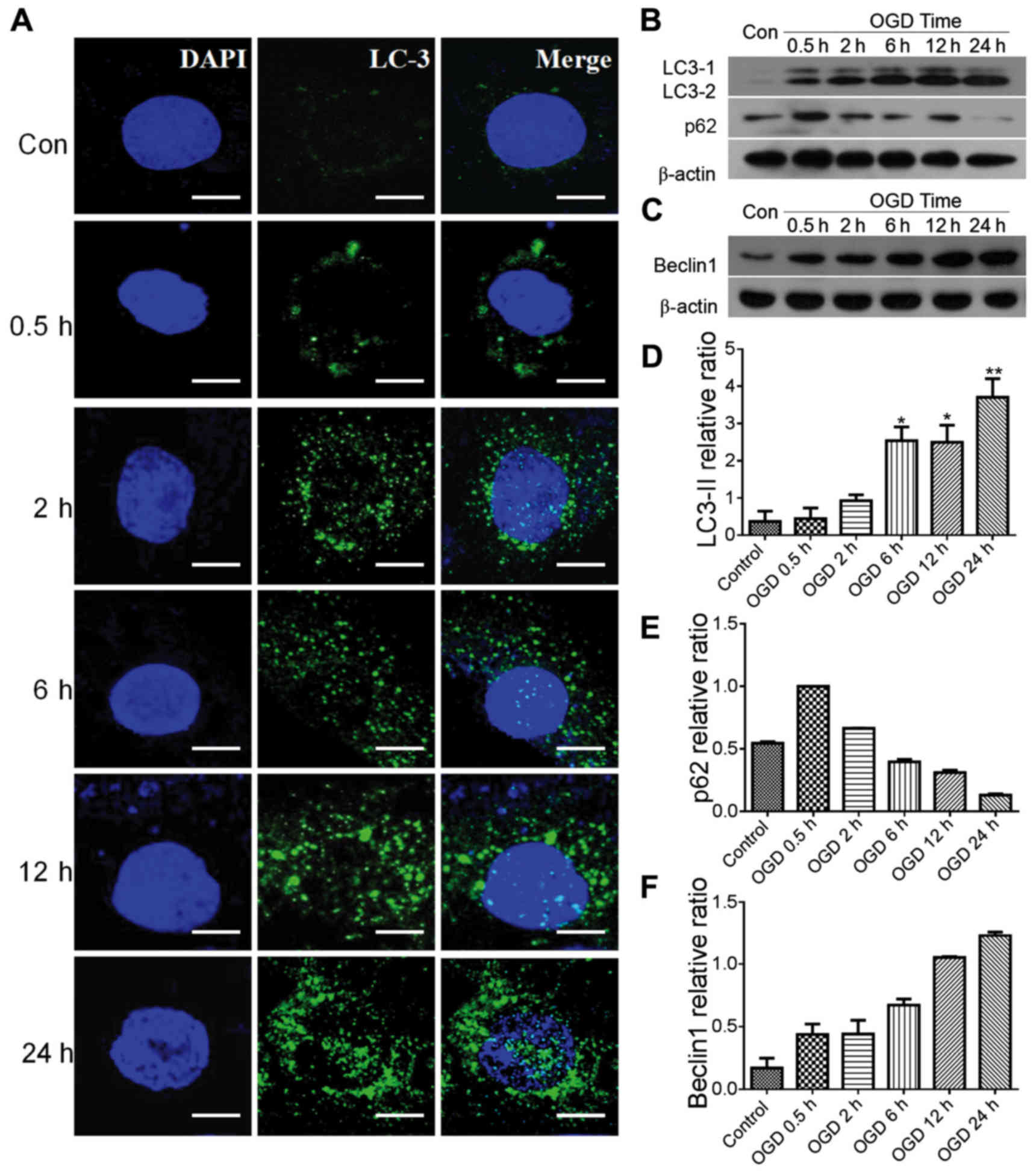
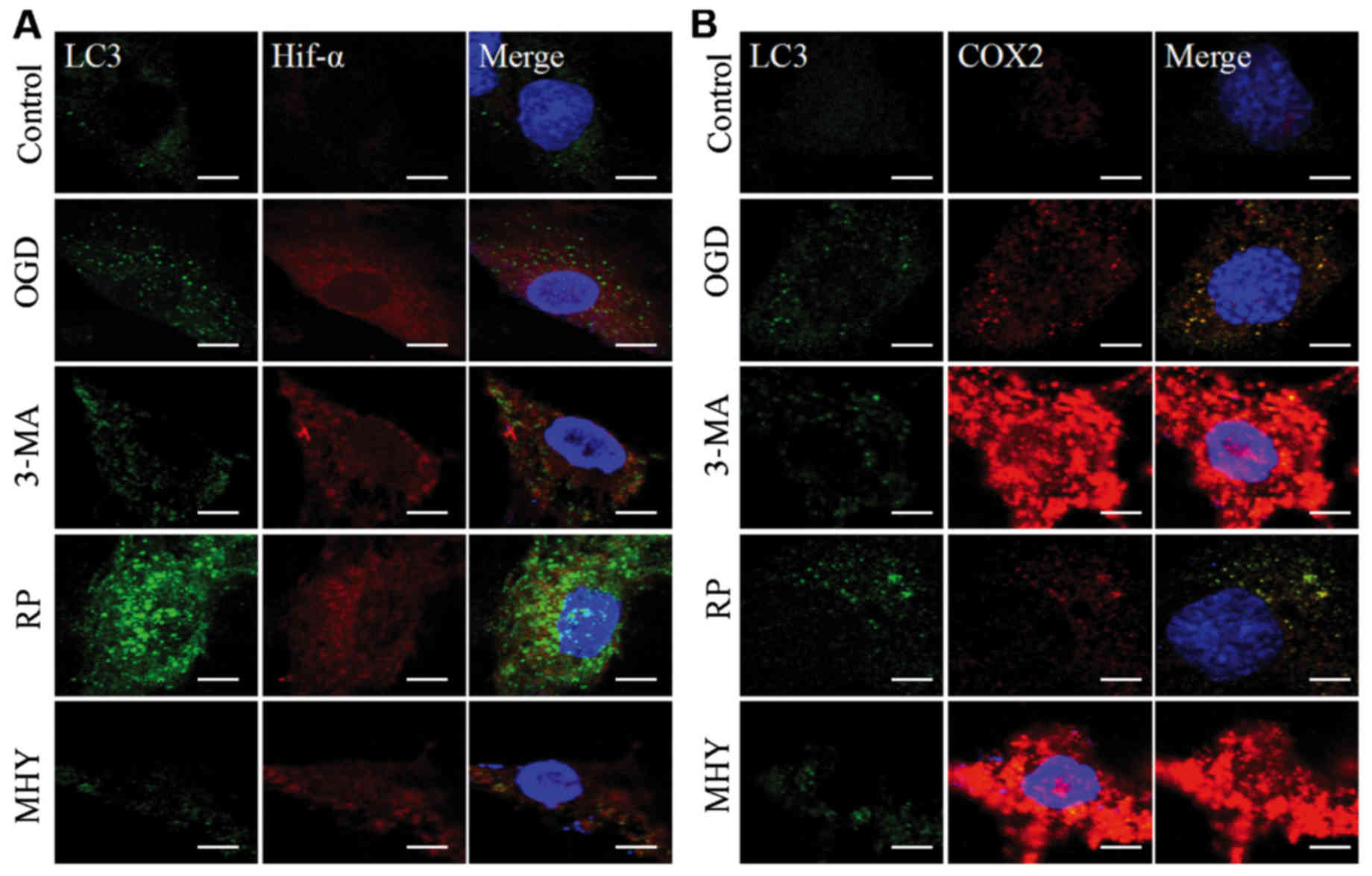
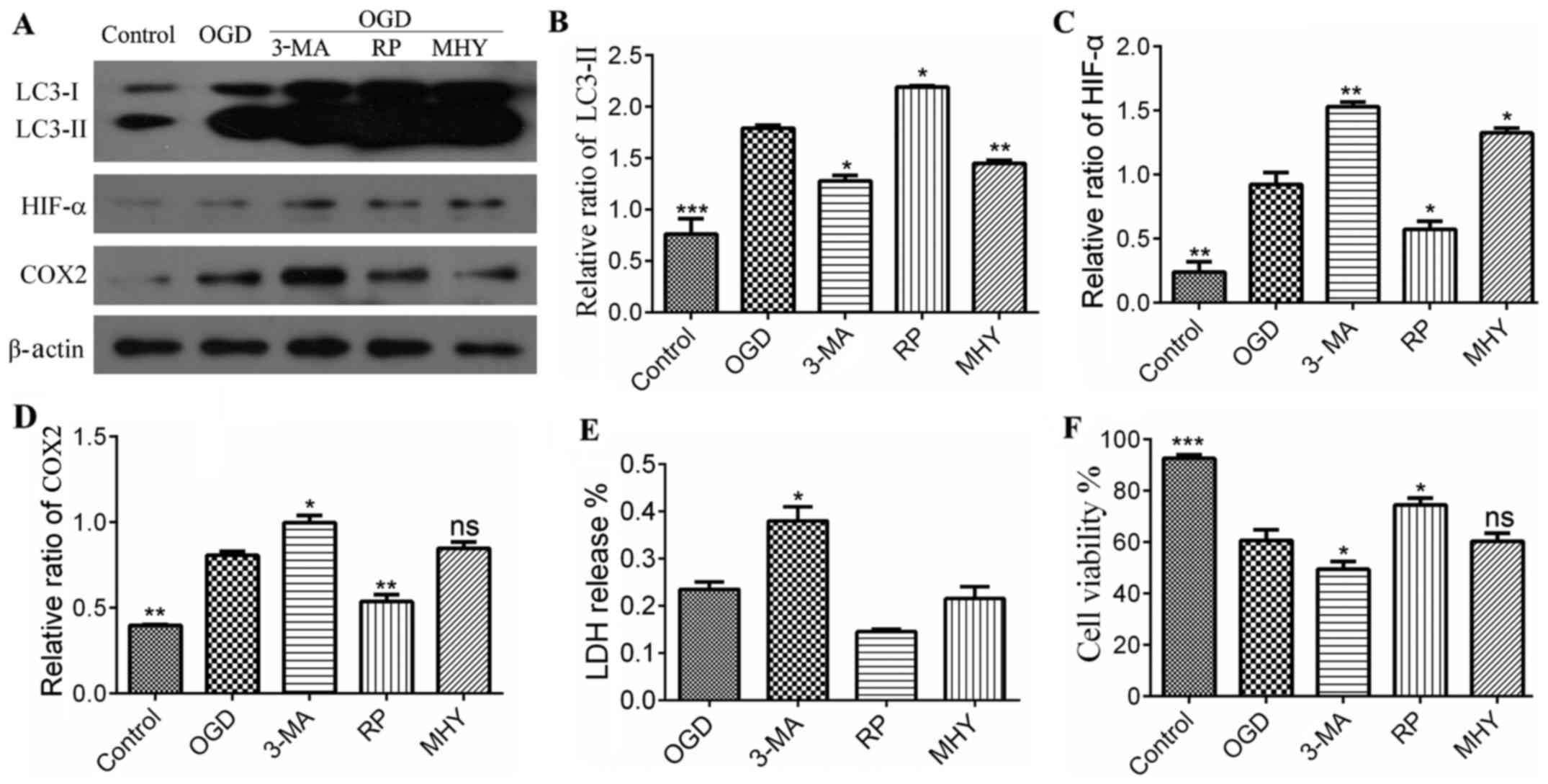
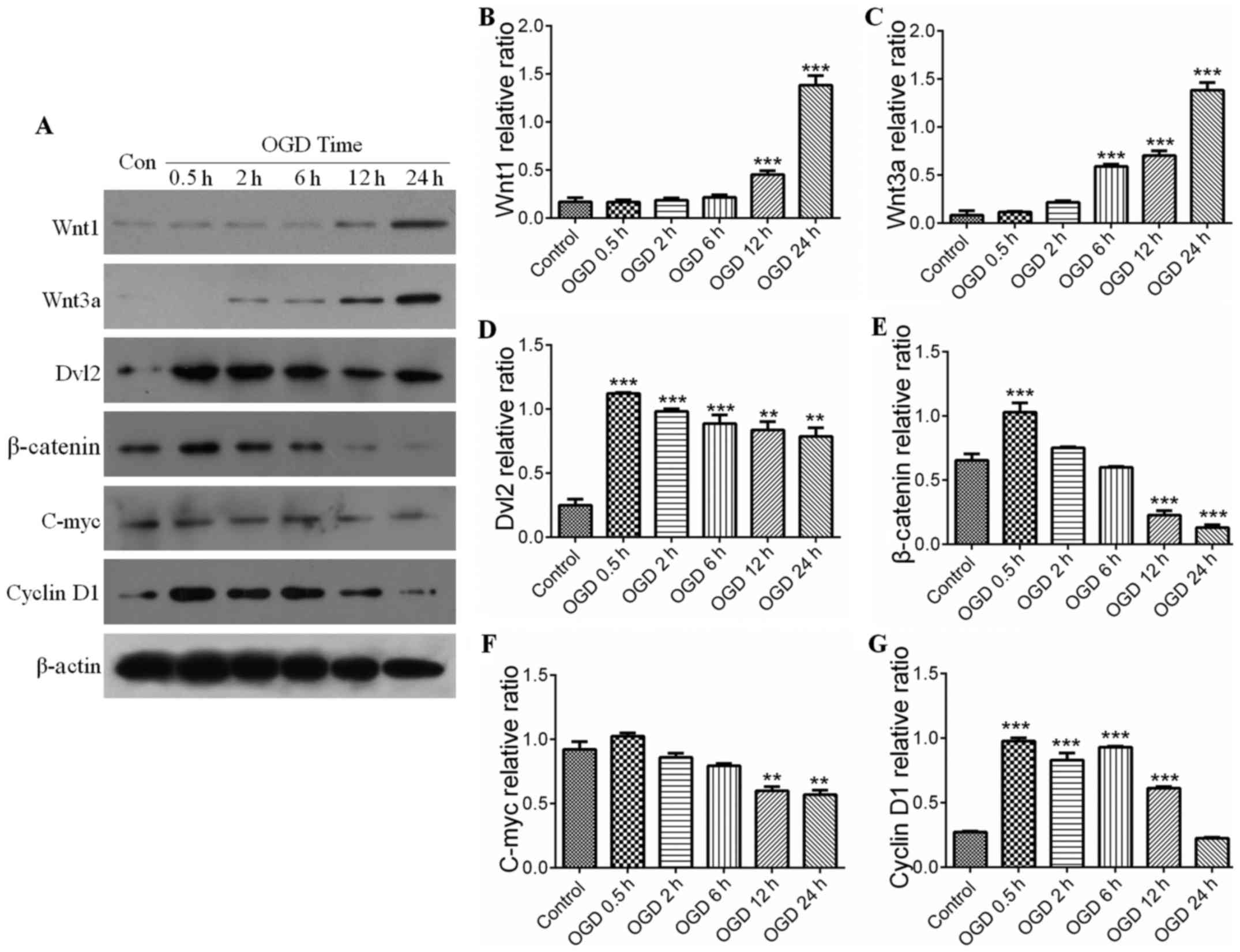
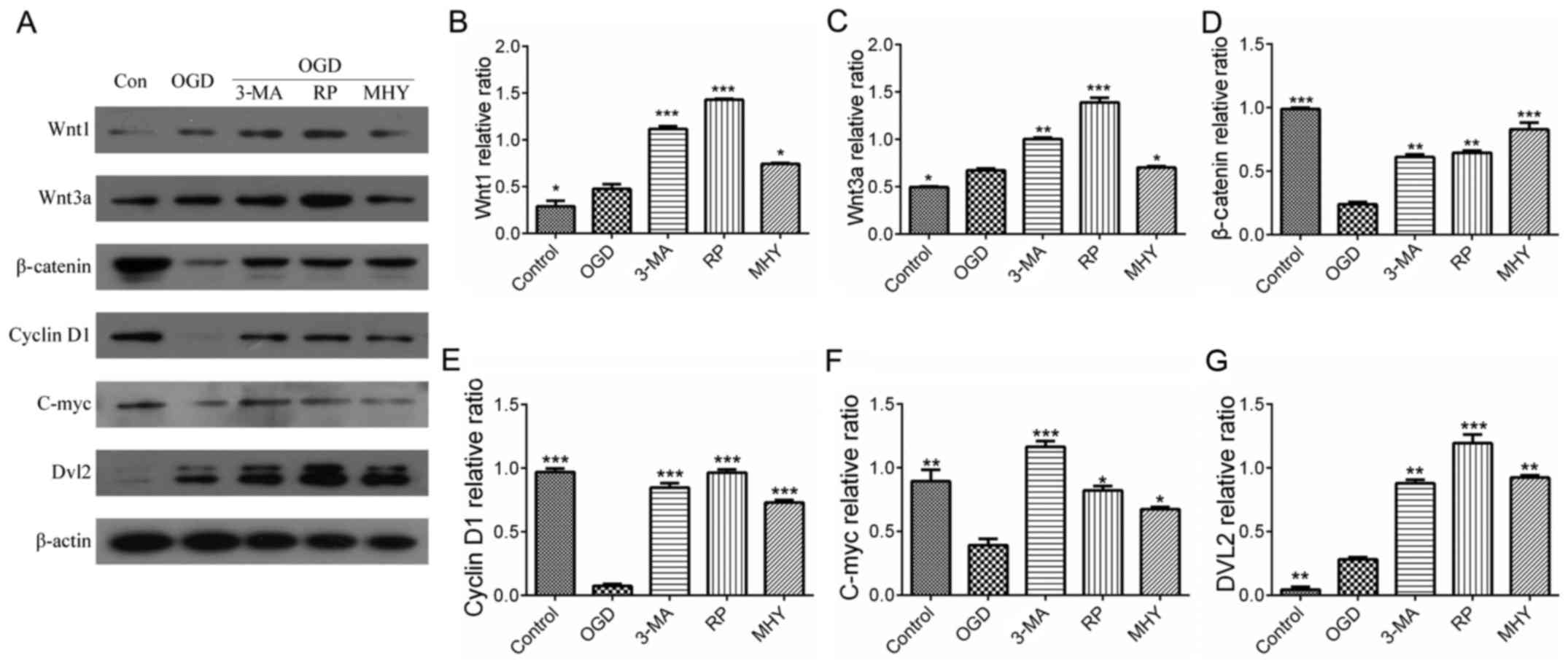
Autophagy is a highly conserved process of self-digestion to promote cell survival in response to nutrient starvation and other metabolic stresses. However, whether ischemic-hypoxic (IH) injury-induced autophagy acts as a neuroprotective mechanism or leads to neuroinjury is a subject of debate. It is known that autophagy is regulated by signaling pathways, including the mammalian target of rapamycin pathway. However, in neural IH injury, whether other signaling pathways are involved in the regulation of autophagy remains to be fully elucidated. In the present study, using the autophagy agonist (rampycin), autophagy antagonist [3-methyl adenine (3-MA)] and lysosome antagonist (MHY1485), autophagy was intervened with at oxygen-glucose deprivation (OGD) 6 h, in order to elucidate the regulatory mechanisms of autophagy. Using immunocytochemistry and western blot analysis, the expression levels of stress-related proteins, such as hypoxia-inducible factor-1α (HIF-1α) (a key regulator in hypoxia) and cyclooxygenase 2 (COX2; inflammatory indicator), were analyzed. In addition, the upstream proteins (Wnt1 and Wnt3a), downstream proteins (Dvl2, β-catenin) and target proteins (C-myc and cyclin D) in the Wnt/β-catenin signaling pathway were examined by immunocytochemistry and western blot analysis. The present study revealed that autophagy was activated with the upregulation of autophagic flux in IH injury; it was demonstrated that autophagy had a protective role in IH injury. The Wnt/β-catenin pathway was involved in IH injury regulation, and the upstream proteins in the Wnt/β-catenin signaling pathway were upregulated, whereas downstream proteins were downregulated by the activity of autophagy accordingly.
View Figures

Figure 1

Figure 2

Figure 3

Figure 4

Figure 5

View References

1 

Lozano R, Naghavi M, Foreman K, Lim S, Shibuya K, Aboyans V, Abraham J, Adair T, Aggarwal R, Ahn SY, et al: Global and regional mortality from 235 causes of death for 20 age groups in 1990 and 2010: A systematic analysis for the Global Burden of Disease Study 2010. Lancet. 380:2095–2128. 2012. View Article : Google Scholar : PubMed/NCBI

2 

Donnan GA, Fisher M, Macleod M and Davis SM: Stroke. Lancet. 371:1612–1623. 2008. View Article : Google Scholar : PubMed/NCBI

3 

Han ZB, Ren H, Zhao H, Chi Y, Chen K, Zhou B, Liu YJ, Zhang L, Xu B, Liu B, et al: Hypoxia-inducible factor (HIF)-1 alpha directly enhances the transcriptional activity of stem cell factor (SCF) in response to hypoxia and epidermal growth factor (EGF). Carcinogenesis. 29:1853–1861. 2008. View Article : Google Scholar : PubMed/NCBI

4 

Wen Y, Zhai RG and Kim MD: The role of autophagy in Nmnat-mediated protection against hypoxia-induced dendrite degeneration. Mol Cell Neurosci. 52:140–151. 2013. View Article : Google Scholar :

5 

Yang Z, Zhao TZ, Zou YJ, Zhang JH and Feng H: Hypoxia Induces autophagic cell death through hypoxia-inducible factor 1α in microglia. PLoS One. 9:e965092014. View Article : Google Scholar

6 

Ma L, Xu Y, Su J, Yu H, Kang J, Li H, Li X, Xie Q, Yu C, Sun L, et al: Autophagic flux promotes cisplatin resistance in human ovarian carcinoma cells through ATP-mediated lysosomal function. Int J Oncol. 47:1890–1900. 2015. View Article : Google Scholar : PubMed/NCBI

7 

Clarke PGH and Puyal J: Autophagic cell death exists. Autophagy. 8:867–869. 2012. View Article : Google Scholar : PubMed/NCBI

8 

Ginet V, Spiehlmann A, Rummel C, Rudinskiy N, Grishchuk Y, Luthi-Carter R, Clarke PG, Truttmann AC and Puyal J: Involvement of autophagy in hypoxic-excitotoxic neuronal death. Autophagy. 10:846–860. 2014. View Article : Google Scholar : PubMed/NCBI

9 

Kroemer G and Levine B: Autophagic cell death: The story of a misnomer. Nat Rev Mol Cell Biol. 9:1004–1010. 2008. View Article : Google Scholar : PubMed/NCBI

10 

Puyal J, Ginet V and Clarke PG: Multiple interacting cell death mechanisms in the mediation of excitotoxicity and ischemic brain damage: A challenge for neuroprotection. Prog Neurobiol. 105:24–48. 2013. View Article : Google Scholar : PubMed/NCBI

11 

Wei K, Wang P and Miao CY: A double-edged sword with therapeutic potential: An updated role of autophagy in ischemic cerebral injury. CNS Neurosci Ther. 18:879–886. 2012. View Article : Google Scholar : PubMed/NCBI

12 

Gomez-Cambronero J and Kantonen S: A river runs through it: How autophagy, senescence, and phagocytosis could be linked to phospholipase D by Wnt signaling. J Leukoc Biol. 96:779–784. 2014. View Article : Google Scholar : PubMed/NCBI

13 

Holla S, Kurowska-Stolarska M, Bayry J and Balaji KN: Selective inhibition of IFNG-induced autophagy by Mir155- and Mir31-responsive WNT5A and SHH signaling. Autophagy. 10:311–330. 2014. View Article : Google Scholar

14 

Kim W, Kim M and Jho EH: Wnt/β-catenin signalling: From plasma membrane to nucleus. Biochem J. 450:9–21. 2013. View Article : Google Scholar : PubMed/NCBI

15 

Petherick KJ, Williams AC, Lane JD, Ordóñez-Morán P, Huelsken J, Collard TJ, Smartt HJ, Batson J, Malik K, Paraskeva C, et al: Autolysosomal β-catenin degradation regulates Wnt-autophagy-p62 crosstalk. EMBO J. 32:1903–1916. 2013. View Article : Google Scholar : PubMed/NCBI

16 

Clevers H and Nusse R: Wnt/β-catenin signaling and disease. Cell. 149:1192–1205. 2012. View Article : Google Scholar : PubMed/NCBI

17 

Inestrosa NC, Montecinos-Oliva C and Fuenzalida M: Wnt signaling: Role in Alzheimer disease and schizophrenia. J Neuroimmune Pharmacol. 7:788–807. 2012. View Article : Google Scholar : PubMed/NCBI

18 

Shruster A, Ben-Zur T, Melamed E and Offen D: Wnt signaling enhances neurogenesis and improves neurological function after focal ischemic injury. PLoS One. 7:e408432012. View Article : Google Scholar : PubMed/NCBI

19 

Chen JL, Lin HH, Kim KJ, Lin A, Ou JH and Ann DK: PKC delta signaling: A dual role in regulating hypoxic stress-induced autophagy and apoptosis. Autophagy. 5:244–246. 2009. View Article : Google Scholar :

20 

Petiot A, Ogier-Denis E, Blommaart EFC, Meijer AJ and Codogno P: Distinct classes of phosphatidylinositol 3′-kinases are involved in signaling pathways that control macroautophagy in HT-29 cells. J Biol Chem. 275:992–998. 2000. View Article : Google Scholar : PubMed/NCBI

21 

Kabeya Y, Mizushima N, Ueno T, Yamamoto A, Kirisako T, Noda T, Kominami E, Ohsumi Y and Yoshimori T: LC3, a mammalian homologue of yeast Apg8p, is localized in autophagosome membranes after processing. EMBO J. 19:5720–5728. 2000. View Article : Google Scholar : PubMed/NCBI

22 

Rubinsztein DC, Gestwicki JE, Murphy LO and Klionsky DJ: Potential therapeutic applications of autophagy. Nat Rev Drug Discov. 6:304–312. 2007. View Article : Google Scholar : PubMed/NCBI

23 

Bodhankar S, Chen Y, Vandenbark AA, Murphy SJ and Offner H: PD-L1 enhances CNS inflammation and infarct volume following experimental stroke in mice in opposition to PD-1. J Neuroinflammation. 10:1112013. View Article : Google Scholar : PubMed/NCBI

24 

Wong KS, Wang Y, Leng X, Mao C, Tang J, Bath PM, Markus HS, Gorelick PB, Liu L, Lin W, et al: Early dual versus mono antiplatelet therapy for acute non-cardioembolic ischemic stroke or transient ischemic attack: An updated systematic review and meta-analysis. Circulation. 128:1656–1666. 2013. View Article : Google Scholar : PubMed/NCBI

25 

Yang Z, Zhong L, Zhong S, Xian R and Yuan B: Hypoxia induces microglia autophagy and neural inflammation injury in focal cerebral ischemia model. Exp Mol Pathol. 98:219–224. 2015. View Article : Google Scholar : PubMed/NCBI

26 

Zhang X, Yuan Y, Jiang L, Zhang J, Gao J, Shen Z, Zheng Y, Deng T, Yan H, Li W, et al: Endoplasmic reticulum stress induced by tunicamycin and thapsigargin protects against transient ischemic brain injury: Involvement of PARK2-dependent mitophagy. Autophagy. 10:1801–1813. 2014. View Article : Google Scholar : PubMed/NCBI

27 

Pellegrini L, Bennis Y, Guillet B, Velly L, Bruder N and Pisano P: Cell therapy for stroke: From myth to reality. Rev Neurol (Paris). 169:291–306. 2013.In French. View Article : Google Scholar

28 

Edinger AL and Thompson CB: Defective autophagy leads to cancer. Cancer Cell. 4:422–424. 2003. View Article : Google Scholar

29 

Scarlatti F, Maffei R, Beau I, Codogno P and Ghidoni R: Role of non-canonical Beclin 1-independent autophagy in cell death induced by resveratrol in human breast cancer cells. Cell Death Differ. 15:1318–1329. 2008. View Article : Google Scholar : PubMed/NCBI

30 

Liang XH, Jackson S, Seaman M, Brown K, Kempkes B, Hibshoosh H and Levine B: Induction of autophagy and inhibition of tumorigenesis by beclin 1. Nature. 402:672–676. 1999. View Article : Google Scholar : PubMed/NCBI

31 

Bartlett BJ, Isakson P, Lewerenz J, Sanchez H, Kotzebue RW, Cumming RC, Harris GL, Nezis IP, Schubert DR, Simonsen A, et al: P62, Ref(2)P and ubiquitinated proteins are conserved markers of neuronal aging, aggregate formation and progressive autophagic defects. Autophagy. 7:572–583. 2011. View Article : Google Scholar : PubMed/NCBI

32 

Cui J, Bai XY, Shi S, Cui S, Hong Q, Cai G and Chen X: Age-related changes in the function of autophagy in rat kidneys. Age (Dordr). 34:329–339. 2012. View Article : Google Scholar

33 

Komatsu M and Ichimura Y: Physiological significance of selective degradation of p62 by autophagy. FEBS Lett. 584:1374–1378. 2010. View Article : Google Scholar : PubMed/NCBI

34 

Masiero E, Agatea L, Mammucari C, Blaauw B, Loro E, Komatsu M, Metzger D, Reggiani C, Schiaffino S and Sandri M: Autophagy is required to maintain muscle mass. Cell Metab. 10:507–515. 2009. View Article : Google Scholar : PubMed/NCBI

35 

Nezis IP, Simonsen A, Sagona AP, Finley K, Gaumer S, Contamine D, Rusten TE, Stenmark H and Brech A: Ref(2)P, the Drosophila melanogaster homologue of mammalian p62, is required for the formation of protein aggregates in adult brain. J Cell Biol. 180:1065–1071. 2008. View Article : Google Scholar : PubMed/NCBI

36 

Nixon RA, Wegiel J, Kumar A, Yu WH, Peterhoff C, Cataldo A and Cuervo AM: Extensive involvement of autophagy in Alzheimer disease: An immuno-electron microscopy study. J Neuropathol Exp Neurol. 64:113–122. 2005. View Article : Google Scholar : PubMed/NCBI

37 

Wang L, Gao C, Yao S and Xie B: Blocking autophagic flux enhances matrine-induced apoptosis in human hepatoma cells. Int J Mol Sci. 14:23212–23230. 2013. View Article : Google Scholar : PubMed/NCBI

38 

Tanida I, Minematsu-Ikeguchi N, Ueno T and Kominami E: Lysosomal turnover, but not a cellular level, of endogenous LC3 is a marker for autophagy. Autophagy. 1:84–91. 2005. View Article : Google Scholar

39 

Gabryel B, Kost A and Kasprowska D: Neuronal autophagy in cerebral ischemia - a potential target for neuroprotective strategies? Pharmacol Rep. 64:1–15. 2012. View Article : Google Scholar

40 

Chang CF, Huang HJ, Lee HC, Hung KC, Wu RT and Lin AM: Melatonin attenuates kainic acid-induced neurotoxicity in mouse hippocampus via inhibition of autophagy and α-synuclein aggregation. J Pineal Res. 52:312–321. 2012. View Article : Google Scholar : PubMed/NCBI

41 

Carloni S, Buonocore G, Longini M, Proietti F and Balduini W: Inhibition of rapamycin-induced autophagy causes necrotic cell death associated with Bax/Bad mitochondrial translocation. Neuroscience. 203:160–169. 2012. View Article : Google Scholar : PubMed/NCBI

42 

Papadakis M, Hadley G, Xilouri M, Hoyte LC, Nagel S, McMenamin MM, Tsaknakis G, Watt SM, Drakesmith CW, Chen R, et al: Tsc1 (hamartin) confers neuroprotection against ischemia by inducing autophagy. Nat Med. 19:351–357. 2013. View Article : Google Scholar : PubMed/NCBI

43 

Scherz-Shouval R, Weidberg H, Gonen C, Wilder S, Elazar Z and Oren M: p53-dependent regulation of autophagy protein LC3 supports cancer cell survival under prolonged starvation. Proc Natl Acad Sci USA. 107:18511–18516. 2010. View Article : Google Scholar : PubMed/NCBI

44 

Wang P, Guan YF, Du H, Zhai QW, Su DF and Miao CY: Induction of autophagy contributes to the neuroprotection of nicotinamide phosphoribosyltransferase in cerebral ischemia. Autophagy. 8:77–87. 2012. View Article : Google Scholar

45 

Yan W, Zhang H, Bai X, Lu Y, Dong H and Xiong L: Autophagy activation is involved in neuroprotection induced by hyperbaric oxygen preconditioning against focal cerebral ischemia in rats. Brain Res. 1402:109–121. 2011. View Article : Google Scholar : PubMed/NCBI

46 

Gordon MD and Nusse R: Wnt signaling: Multiple pathways, multiple receptors, and multiple transcription factors. J Biol Chem. 281:22429–22433. 2006. View Article : Google Scholar : PubMed/NCBI

47 

Wei L, Ding L, Mo MS, Lei M, Zhang L, Chen K and Xu P: Wnt3a protects SH-SY5Y cells against 6-hydroxydopamine toxicity by restoration of mitochondria function. Transl Neurodegener. 4:112015. View Article : Google Scholar : PubMed/NCBI

48 

Zhang J, Götz S, Vogt Weisenhorn DM, Simeone A, Wurst W and Prakash N: A WNT1-regulated developmental gene cascade prevents dopaminergic neurodegeneration in adult En1(+/−) mice. Neurobiol Dis. 82:32–45. 2015. View Article : Google Scholar : PubMed/NCBI

49 

L'episcopo F, Serapide MF, Tirolo C, Testa N, Caniglia S, Morale MC, Pluchino S and Marchetti B: A Wnt1 regulated Frizzled-1/β-Catenin signaling pathway as a candidate regulatory circuit controlling mesencephalic dopaminergic neuron-astrocyte crosstalk: Therapeutical relevance for neuron survival and neuroprotection. Mol Neurodegener. 6:49. 2011. View Article : Google Scholar

50 

Demagny H and De Robertis EM: Smad4/DPC4: A barrier against tumor progression driven by RTK/Ras/Erk and Wnt/GSK3 signaling. Mol Cell Oncol. 3:e9891332015. View Article : Google Scholar

51 

Hooper C, Killick R and Lovestone S: The GSK3 hypothesis of Alzheimer's disease. J Neurochem. 104:1433–1439. 2008. View Article : Google Scholar

52 

Magdesian MH, Carvalho MM, Mendes FA, Saraiva LM, Juliano MA, Juliano L, Garcia-Abreu J and Ferreira ST: Amyloid-beta binds to the extracellular cysteine-rich domain of Frizzled and inhibits Wnt/beta-catenin signaling. J Biol Chem. 283:9359–9368. 2008. View Article : Google Scholar : PubMed/NCBI

53 

Sebastião AM, Colino-Oliveira M, Assaife-Lopes N, Dias RB and Ribeiro JA: Lipid rafts, synaptic transmission and plasticity: Impact in age-related neurodegenerative diseases. Neuropharmacology. 64:97–107. 2013. View Article : Google Scholar

54 

Viti J, Gulacsi A and Lillien L: Wnt regulation of progenitor maturation in the cortex depends on Shh or fibroblast growth factor 2. J Neurosci. 23:5919–5927. 2003.PubMed/NCBI

55 

Gao C, Cao W, Bao L, Zuo W, Xie G, Cai T, Fu W, Zhang J, Wu W, Zhang X, et al: Autophagy negatively regulates Wnt signalling by promoting Dishevelled degradation. Nat Cell Biol. 12:781–790. 2010. View Article : Google Scholar : PubMed/NCBI

56 

Chong ZZ, Shang YC, Hou J and Maiese K: Wnt1 neuroprotection translates into improved neurological function during oxidant stress and cerebral ischemia through AKT1 and mitochondrial apoptotic pathways. Oxid Med Cell Longev. 3:153–165. 2010. View Article : Google Scholar : PubMed/NCBI

57 

Varela-Nallar L, Rojas-Abalos M, Abbott AC, Moya EA, Iturriaga R and Inestrosa NC: Chronic hypoxia induces the activation of the Wnt/β-catenin signaling pathway and stimulates hippocampal neurogenesis in wild-type and APPswe-PS1ΔE9 transgenic mice in vivo. Front Cell Neurosci. 8:172014. View Article : Google Scholar

58 

Zhou KK, Benyajati S, Le Y, Cheng R, Zhang W and Ma JX: Interruption of Wnt signaling in Müller cells ameliorates ischemia-induced retinal neovascularization. PLoS One. 9:e1084542014. View Article : Google Scholar

59 

Zhang Y, Wang F, Han L, Wu Y, Li S, Yang X, Wang Y, Ren F, Zhai Y, Wang D, et al: GABARAPL1 negatively regulates Wnt/beta-catenin signaling by mediating Dvl2 degradation through the autophagy pathway. Cell Physiol Biochem. 27:503–512. 2011. View Article : Google Scholar

60 

Choi SW, Song JK, Yim YS, Yun HG and Chun KH: Glucose deprivation triggers protein kinase C-dependent β-catenin proteasomal degradation. J Biol Chem. 290:9863–9873. 2015. View Article : Google Scholar : PubMed/NCBI

Related Articles

  • Abstract
  • View
  • Download
  • Twitter
Copy and paste a formatted citation
Spandidos Publications style
Shi Z, Deng J, Fu S, Wang L, Wang Q, Liu B, Li Y and Deng J: Protective effect of autophagy in neural ischemia and hypoxia: Negative regulation of the Wnt/β-catenin pathway. Int J Mol Med 40: 1699-1708, 2017.
APA
Shi, Z., Deng, J., Fu, S., Wang, L., Wang, Q., Liu, B. ... Deng, J. (2017). Protective effect of autophagy in neural ischemia and hypoxia: Negative regulation of the Wnt/β-catenin pathway. International Journal of Molecular Medicine, 40, 1699-1708. https://doi.org/10.3892/ijmm.2017.3158
MLA
Shi, Z., Deng, J., Fu, S., Wang, L., Wang, Q., Liu, B., Li, Y., Deng, J."Protective effect of autophagy in neural ischemia and hypoxia: Negative regulation of the Wnt/β-catenin pathway". International Journal of Molecular Medicine 40.6 (2017): 1699-1708.
Chicago
Shi, Z., Deng, J., Fu, S., Wang, L., Wang, Q., Liu, B., Li, Y., Deng, J."Protective effect of autophagy in neural ischemia and hypoxia: Negative regulation of the Wnt/β-catenin pathway". International Journal of Molecular Medicine 40, no. 6 (2017): 1699-1708. https://doi.org/10.3892/ijmm.2017.3158
Copy and paste a formatted citation
x
Spandidos Publications style
Shi Z, Deng J, Fu S, Wang L, Wang Q, Liu B, Li Y and Deng J: Protective effect of autophagy in neural ischemia and hypoxia: Negative regulation of the Wnt/β-catenin pathway. Int J Mol Med 40: 1699-1708, 2017.
APA
Shi, Z., Deng, J., Fu, S., Wang, L., Wang, Q., Liu, B. ... Deng, J. (2017). Protective effect of autophagy in neural ischemia and hypoxia: Negative regulation of the Wnt/β-catenin pathway. International Journal of Molecular Medicine, 40, 1699-1708. https://doi.org/10.3892/ijmm.2017.3158
MLA
Shi, Z., Deng, J., Fu, S., Wang, L., Wang, Q., Liu, B., Li, Y., Deng, J."Protective effect of autophagy in neural ischemia and hypoxia: Negative regulation of the Wnt/β-catenin pathway". International Journal of Molecular Medicine 40.6 (2017): 1699-1708.
Chicago
Shi, Z., Deng, J., Fu, S., Wang, L., Wang, Q., Liu, B., Li, Y., Deng, J."Protective effect of autophagy in neural ischemia and hypoxia: Negative regulation of the Wnt/β-catenin pathway". International Journal of Molecular Medicine 40, no. 6 (2017): 1699-1708. https://doi.org/10.3892/ijmm.2017.3158
Follow us
  • Twitter
  • LinkedIn
  • Facebook
About
  • Spandidos Publications
  • Careers
  • Cookie Policy
  • Privacy Policy
How can we help?
  • Help
  • Live Chat
  • Contact
  • Email to our Support Team