Introduction
Hypoxic ischemic encephalopathy (HIE) can cause
neonatal morbidity and mortality (1). Advances in obstetrical and neonatal
care has improved the survival rate of HIE resulting in an increase
in the number of infants at risk of permanent neurological deficits
(1). Therefore, HIE is still
considered a threat to the quality of a child's health and life and
further research is required to develop effective neurotherapeutic
interventions for HIE.
Circular RNAs (CircRNAs) are a unique type of
endogenous non coding RNAs that are formed by back-splicing events
via protein coding exons (2,3).
They are characterized by conservation, stability, abundance and
tissue/developmental stage-specific expression (4,5).
Previously, it has been reported that circRNAs have multiple
biological functions, which are involved in promoting rolling
circle translation, controlling the transcription of parent genes,
assisting the formation of alternatively spliced mRNA and acting as
microRNA (miRNA/miR) sponges (6-10).
Altered levels of specific circRNAs are reported to be associated
with numerous human diseases, including cancer, ischemia, stroke,
neurodegenerative diseases, heart disease and cartilage degradation
(11,12). Recent studies (4,13)
performed in adult rats demonstrate that cerebral circRNA
expression profiles are significantly altered following stroke and
contribute to the stabilization of mRNA expression (14). Few studies reported to date have
evaluated circRNA alterations in a hypoxic ischemic (HI) injured
brain.
To the best of the authors' knowledge, methods used
for the identification of novel disease-associated circRNAs include
microarray, reverse transcription-quantitative polymerase chain
reaction (RT-qPCR), RNA-seq and capture sequencing (15). To determine whether
hypoxic-ischemic brain damage (HIBD) influences the expression of
circRNAs to identify novel targets for further studies, alteration
of circRNA expression profiles in HIBD rat was investigated in this
study using RNA-Seq. The function of circRNA may be associated with
the known function of the host genes and therefore gene ontology
(GO) and Kyoto Encyclopedia of Genes and Genomes (KEGG) pathway
analysis were performed to predict potential functions of circRNAs
in HIBD. Furthermore, miRNAs regulated by differentially expressed
circRNAs were selected for further investigation using RT-qPCR.
Using a combination of RNA-seq results, bioinformatics analysis and
subsequent RT-qPCR, potential roles of these dysregulated circRNAs
in pathophysiological processes in HIBD are proposed.
Materials and methods
The study included 4 procedural modules, including
library preparation, high throughput sequencing, bioinformatics
analysis and RT-qPCR validation (Fig.
1).
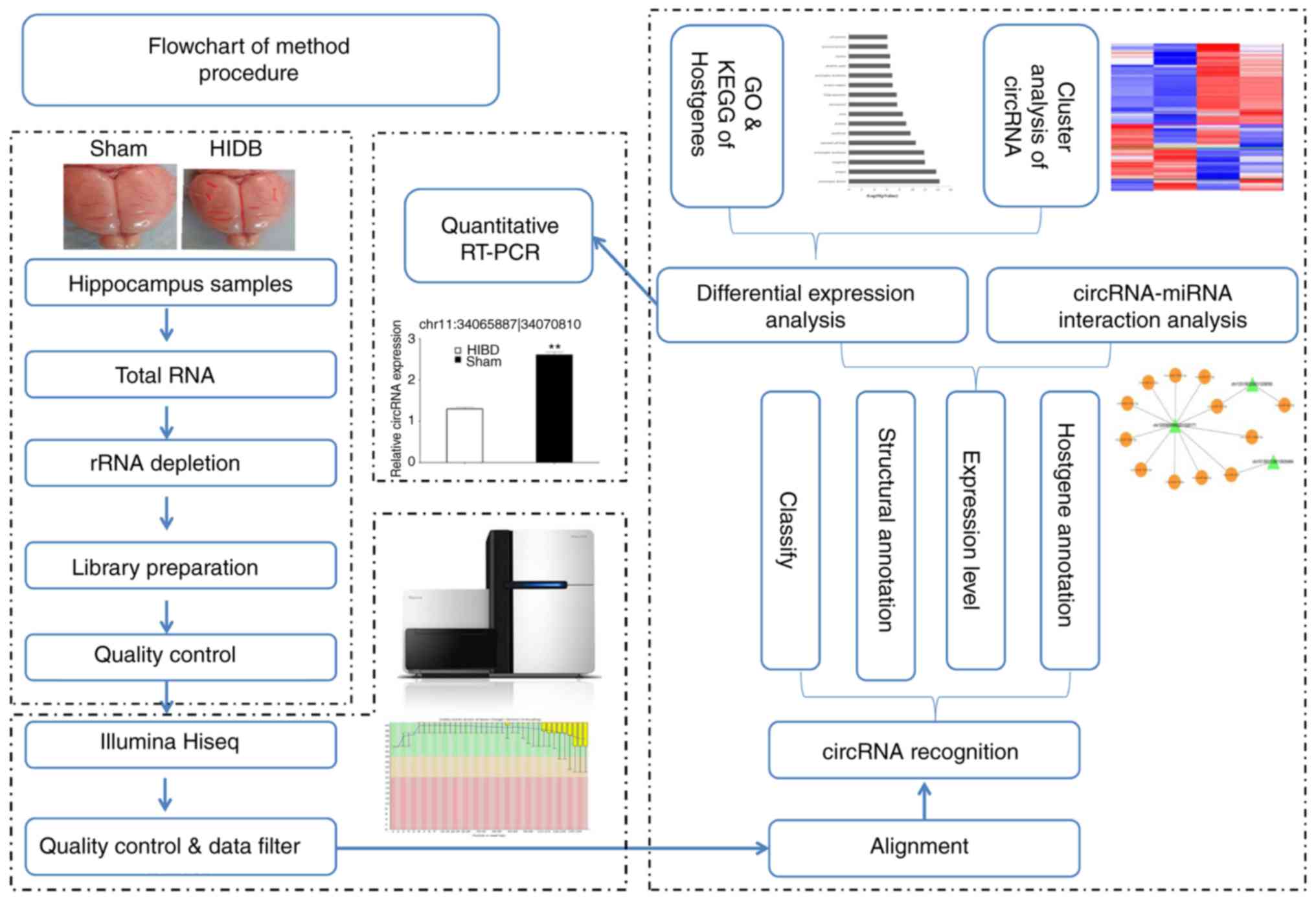 | Figure 1The flowchart of the experimental
procedures. The scheme includes four steps. First, sample
collection, RNA extraction and library preparation. Then,
sequencing with Illumina Hiseq X10 and next, differentially
expressed circRNAs and host genes in neonatal brains following
hypoxic-ischemic brain injury compared with the sham control brains
were identified. Subsequently, bioinformatics analysis, including
GO and KEGG pathway enrichment were network performed for analyzing
the correlation between circRNAs and miRNAs. Finally, RT-qPCR was
utilized to validate the sequencing results. Circ, circular; miRNA,
microRNA; RT-qPCR, reverse transcription-quantitative polymerase
chain reaction; KEGG, Kyoto encyclopedia of genes and genomes; GO,
gene ontology; HIBD, hypoxic-ischemic brain damage; rRNA,
ribosomal. |
Animals
Sprague-Dawley rats, (age 10 days after birth; 18-20
g, without sex selection) were obtained from the Medical Animal
Center of Nanjing Medical University (Nanjing, China). All rats
were housed for ≥7 days prior to the study in a temperature
(22-25°C) and humidity-controlled (50%) animal facility under a 12
h light/dark cycle. Animals had free access to food and water;
however, food was withheld overnight prior to surgery. All animal
procedures were approved by the Zhongda Hospital Committee on
Animal Research and all the experiments were carried out in
accordance with the approved guidelines.
Preparation of HIBD rats
HIBD was produced in rats according to previously
described methods (16). Briefly,
following anesthetization using ether, rats were subjected to
ischemia, with the right common carotid artery permanently double
ligated and sliced from the middle. Following a recovery time of 1
h, the animals were exposed to hypoxia (8% O2, 92%
N2) for 2.5 h and then returned to their normal living
environment. Sham control rats were subjected to isolation and
tying ligatures around vessels without occlusion and subsequent
ischemia. A total of 24 h following HI insult, the rats were
sacrificed using sodium pentobarbital intraperitoneally (40 mg/kg)
and their ipsilateral hemispheres, including the cortex and
hippocampus, were harvested. The tissues were stored in liquid
nitrogen (−196°C) until the following experiment was carried
out.
RNA isolation and quality control
Total RNA was extracted from the hippocampus using
TRIzol Reagent (Invitrogen; Thermo Fisher Scientific, Inc.,
Waltham, MA, USA) according to the manufacturer's protocol. The
concentration and quality of RNA was assessed using NanoDrop
ND-1000 spectrophotometry (NanoDrop, Wilmington, DE, USA) and RNA
integrity was determined using 1% denaturing agarose gel
electrophoresis.
Library preparation and RNA-seq
RNA-seq analysis was performed at the Decode
Genomics Biotechnology Co., Ltd. (Nanjing, China). The sequencing
library was prepared following the removal of ribosomal RNA,
according to Illumina® TruSeq® RNA Sample
Preparation Guide (Illumina, Inc., San Diego, CA, USA). Ligation of
the indexed adaptor was performed following the synthesis of double
strand cDNA. Following size selection using Agencourt AMPure XP
(Beckman Coulter, Inc., Brea, CA, USA), the libraries were
quantified and quality assessed using a Qubit® 2.0
Fluorometer with the Qubit® HSDNA BR assay kit
(Invitrogen™; Thermo Fisher Scientific, Inc.) and Agilent
bioanalyzer (Agilent Technologies, Inc., Santa Clara, CA, USA),
respectively. Sequencing was performed using an Illumina HiSeq X-10
(Illumina, Inc.) with 2×150 bp pair-end technology.
Bioinformatic analyses
Quality control of the sequencing was performed
using FastQC version 0.11.2 (http://www.bioinformatics.babraham.ac.uk/projects/fastqc/).
Raw data of poor quality (>50% bases having a low-quality
threshold <20) and adapter sequences were removed using
SOAPnuke, to improve results. The clean data was mapped to rat
genomes, provided by Illumina iGenomes (downloaded from http://cole-trapnell-lab.github.io/cufflinks/cuffdiff/index.html)
with Tophat2 (version 2.0.7) calling Bowtie2 (version 2.1.0) using
default settings. The read numbers mapped to each circRNA were
counted. RPM Reads Per Million mapped reads, including TopHat
mapping and TopHat-Fusion mapping, were used to calculate the
expression level of individual circRNA. Differential expression
between circRNAs was assessed using DEGseq algorithm (17). The statistical criteria for
selecting aberrant-expressed circRNA was defined using a
q-value [the false discovery rate adjusted P-value <0.05
with a fold-change >2.0 or <0.5 (18,19)]. CircRNA annotation was based on
the Gencode rat genome (v10) (20). The circRNA donator/acceptor site
was intersected to annotate gene regions, including coding RNA,
non-coding RNA, intron, antisense and intergenic regions, with the
BEDTools suite (v2.16.2) (21).
The number of reads aligning to the circRNA-specific head-to-tail
junctions was used as a measurement of circRNAs expression.
GO analysis provides a controlled vocabulary to
describe genes and gene product attributes in any organism
(http://www.geneontology.org). This
ontology includes three domains: Biological processes, cellular
components and molecular functions. Fisher's exact test was used to
detect overlapping data between the differentially expressed list
and GO annotation list, except for that expected by chance. Pathway
analysis was used to map genes to the KEGG pathways.
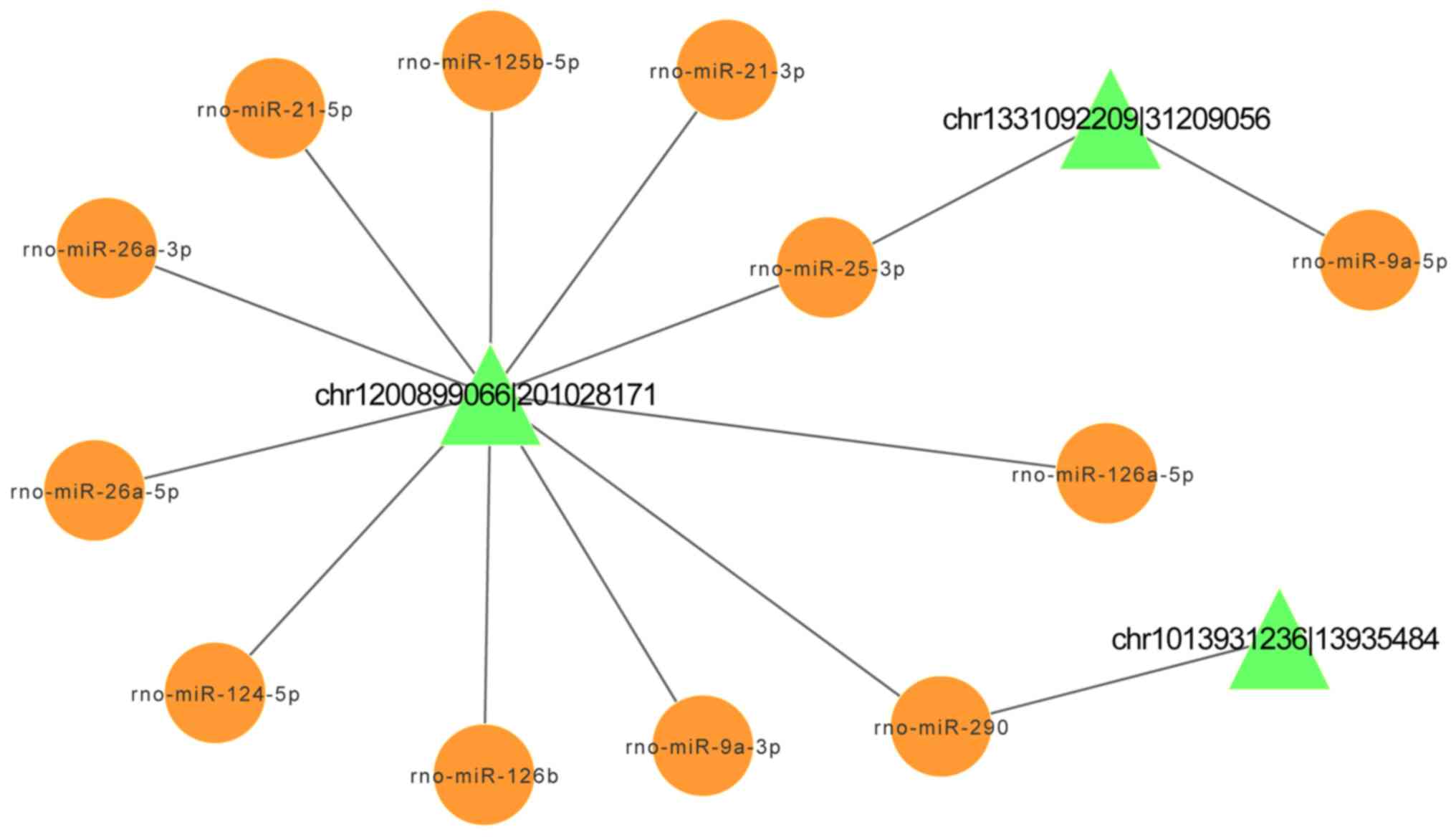
To investigate the regulation between circRNAs and
mRNAs in the neonatal rats following HIBD, interaction networks
were studied among the 6 differentially expressed circRNAs, whose
host gene was located on the exon and was identified along with
their corresponding target miRNAs. CircRNAs-targeted miRNAs were
predicted using miRNA target prediction software based on
TargetScan (http://www.targetscan.org/vert_71/) and miRanda
(http://www.microrna.org/microrna/home.do). The
co-expression network was illustrated using Cytoscape (v2.8.1,
https://cytoscape.org/). The associated analyses
and drawing were performed by Decode Genomics Biotechnology Co.,
Ltd. (Nanjing, China).
RT-qPCR
Total RNA was extracted from hippocampus samples
using TRIzol reagent (Invitrogen; Thermo Fisher Scientific, Inc.)
and converted to cDNA using PrimeScript RT-PCR kit (cat. no.
RR037A; Takara Bio, Inc., Otsu, Japan), according to the
manufacturer's protocol. In brief, the reaction system was
incubated at 25°C for 10 min, and then at 42°C for 60 min. PCR was
performed in a total reaction volume of 25 µl, containing
12.5 µl SYBR Premix Ex Taq (2X), 2 µl cDNA, 1
µl forward primer (10 µM), 1 µl reverse primer
(10 µM), 0.5 µl ROX Reference Dye II (50X) and 8
µl double-distilled water. The amplification procedures were
as follows: 10 min at 95°C to initiate denaturation; 40 cycles of 5
sec at 95°C, 30 sec at 63°C and 30 sec at 72°C; and a final
extension of 5 min at 72°C. Amplification efficiency was evaluated
using standard curve analysis. All samples were normalized using
the 2−ΔΔCq method against GAPDH and the experiment was
repeated in triplicate (22). The
primers of the circRNAs and GAPDH are listed in Table I.
 | Table IDNA sequence of reverse
transcription-quantitative polymerase chain reaction primers used
for analysis of circular RNA and mRNA level. |
Table I
DNA sequence of reverse
transcription-quantitative polymerase chain reaction primers used
for analysis of circular RNA and mRNA level.
| Name | DNA sequence | Product size
(bp) |
|---|
| GAPDH (Rat) | F:
5'-GCTCTCTGCTCCTCCCTGTTCTA-3' | 124 |
| R:
5'-TGGTAACCAGGCGTCCGATA-3' | |
| chr11:
34065887|34070810 | F:
5'-CCTCTGCCTTGTTTTGCTGT-3' | 146 |
| R:
5'-GTTGGGGAGGAAAGGGTTTA-3' | |
| chr10:
13931236|13935484 | F:
5'-TTTTCCACGATGAACAACC -3' | 135 |
| R:
5'-CAGCAGGTGGCAGCTGTAT-3' | |
| chr1:
200899066|201028171 | F:
5'-ATTACCCATGCCCAGATGTT-3' | 126 |
| R:
5'-TGCAGTTTTCAAATGGGTCA-3' | |
| chr13:
31092209|31209056 | F:
5'-CTAAACAGGGGCTTCTCAGC-3' | 88 |
| R:
5'-GTCATTGTTCTAAGCATCAGTGG-3' | |
Statistical analysis
Data analyses were performed using GraphPad Prism
5.0 (GraphPad, Inc., La Jolla, CA, USA), Cluster 3.0 (Human Genome
Center, University of Tokyo, Tokyo, Japan) and Cytoscape 2.8.1
(https://cytoscape.org/). Data are presented as
the with mean ± standard error of the mean and three repeats were
performed for each experiment. Statistical differences were
determined using Students t-test and one-way analysis of variance.
Multiple comparisons between the groups were performed using the
Student-Newman-Kuels method. K-means clustering algorithms were
performed to classify the samples according to the selected
differently expressed genes. All statistical tests were performed
as two-sided tests and P<0.05 was considered to indicate a
statistically significant difference.
Results
CircRNAs expression profiles in neonatal
rats with HIBD
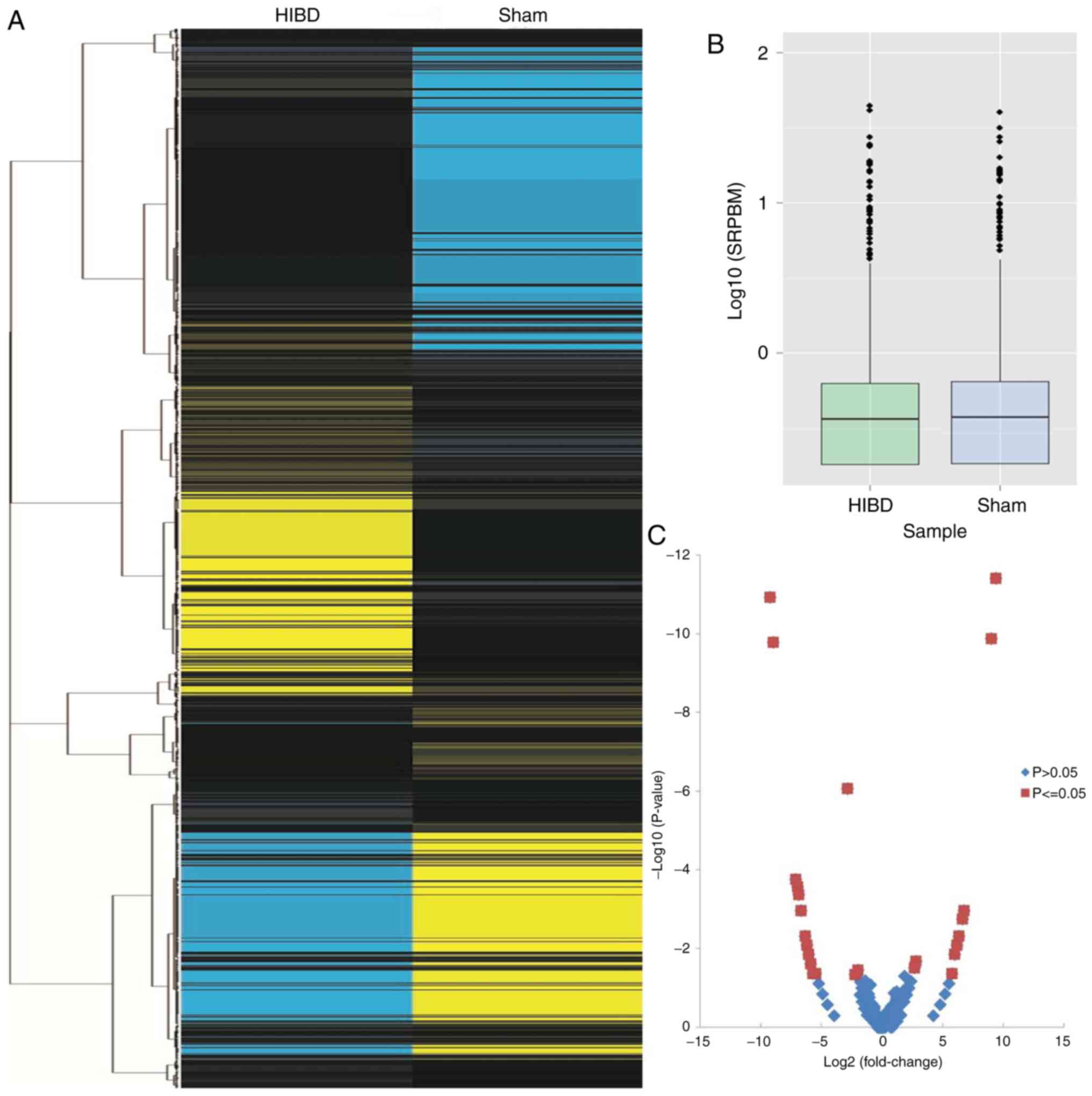
RNA-Seq was used to investigate circRNAs expression
profiles from the hippocampus of HIBD neonatal rats. Hierarchical
clustering was performed to demonstrate the circRNAs expression
pattern between the HIBD and control groups (Fig. 2A). As presented in the box plot,
the distribution of the circRNAs expression profiles across all the
samples are similar (Fig. 2B).
Statistically significant alterations in circRNAs with between the
sham and HIBD groups were identified using a volcano plot (Fig. 2C). Compared with the sham group,
66 circRNAs were demonstrated to be differentially expressed [fold
change (FC) >2.0 and P<0.05] following HIBD, including 20
upregulated and 46 downregulated circRNAs. The top 30 altered
circRNAs are listed in Table II.
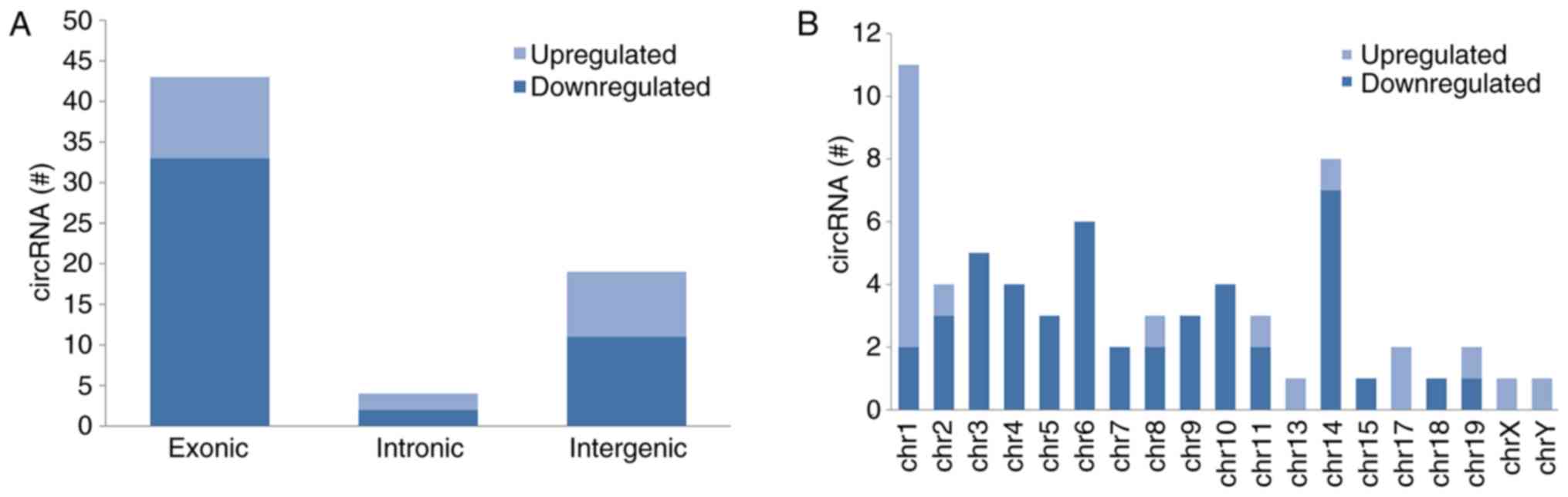
The differentially expressed circRNAs following HIBD included 70%
exonic and 28% intergenic in origin (Fig. 3A). The distributions of altered
circRNAs revealed that the upregulated and downregulated circRNAs
were transcribed from all chromosomes, with the exceptions of
chr12, chr16 and chr20 (Fig. 3B).
The downregulated circRNAs were transcribed from all chromosomes
with the exceptions of chr12, chr13 chr16 and chr17 and the
upregulated circRNAs were transcribed from most chromosomes
(Fig. 3B).
| Table IIThe top 30 differential expressed
circRNAs following hypoxic-ischemic brain damage. |
Table II
The top 30 differential expressed
circRNAs following hypoxic-ischemic brain damage.
| circRNA ID | LogFC | P-value | Chromosome | circRNA_type | Gene symbol |
|---|
| chr1:
204959155|204961691 | 5.7672 | 0.04349 | chr1 | Intergenic | - |
| chr13:
31092209|31209056 | 5.7672 | 0.04349 | chr13 | Exon | Cdh7 |
| chr14:
82168512|82184087 | 5.7672 | 0.04349 | chr14 | Intergenic | - |
| chr17:
5555491|5571375 | 5.7672 | 0.04349 | chr17 | Exon | Agtpbp1 |
|
chrY:1142577|1153312 | 5.7672 | 0.04349 | chrY | Exon | Kdm6a |
| chr1:
200899066|201028171 | 5.9858 | 0.01412 | chr1 | Intron | Ate1 |
| chr1:
156552340|156969428 | 6.1756 | 0.00824 | chr1 | Exon | Dlg2 |
| chr1:
235393349|235395737 | 6.1756 | 0.00824 | chr1 | Exon | - |
| chr1:
195833189|195883848 | 6.3433 | 0.00487 | chr1 | Intergenic | - |
| chr2:
120517204|120520196 | 6.3433 | 0.00487 | chr2 | Intron | Dnajc19 |
| chr19:
26268232|26303010 | 6.6295 | 0.00178 | chr19 | Intergenic | - |
| chr2:
177947848|177973555 | 6.6295 | 0.00178 | chr2 | Exon | Rapgef2 |
|
chr1:195805819|195840151 | 6.7538 | 0.00109 | chr1 | Intergenic | - |
| chr1:
195658176|195833285 | 9.0162 | 0.00000 | chr1 | Intergenic | - |
|
chr17:31482295|31493278 | 9.3864 | 0.00000 | chr17 | Intergenic | - |
| chr11:
83225853|83225993 | -9.2371 | 0.00000 | chr11 | Intron | Vps8 |
| chr5:
90818736|90827570 | -8.9711 | 0.00000 | chr5 | Intron | Kdm4c |
| chr3:
171790813|171790868 | -7.1180 | 0.00018 | chr3 | Intergenic | - |
| chr14:
108446849|108456923 | -6.9588 | 0.00027 | chr14 | Exon | Pus10 |
| chr3:
21894168|21898322 | -6.8721 | 0.00043 | chr3 | Exon | Strbp |
| chr10:
59294314|59298784 | -6.6812 | 0.00109 | chr10 | Exon | Ankfy1 |
| chr11:
34065887|34070810 | -6.6812 | 0.00109 | chr11 | Exon | Morc3 |
|
chr10:74336161|74360926 | -6.3371 | 0.00487 | chr10 | Exon | Gdpd1 |
| chr8:
79234306|79249597 | -6.3371 | 0.00487 | chr8 | Exon | Rfx7 |
| chr10:
13931236|13935484 | -6.2014 | 0.00824 | chr10 | Exon | Pkd1 |
| chr6:
29032002|29074704 | -6.2014 | 0.00824 | chr6 | Exon | Atad2b |
| chr3:
112713524|112752649 | -6.0515 | 0.01412 | chr3 | Exon | Ttbk2 |
| chr5:
128083027|128083901 | -6.0515 | 0.01412 | chr5 | Intergenic | - |
| chr5:
148050939|148054556 | -6.0515 | 0.01412 | chr5 | Intergenic | - |
| chr9:
53646697|53648288 | -6.0515 | 0.01412 | chr9 | Exon | Mfsd6 |
CircRNAs gene symbols GO and pathway
analysis
To determine the roles of circRNAs in physiological
and pathological processes following HIBD, GO and KEGG pathway
analyses were conducted for mRNAs transcribed from the parent genes
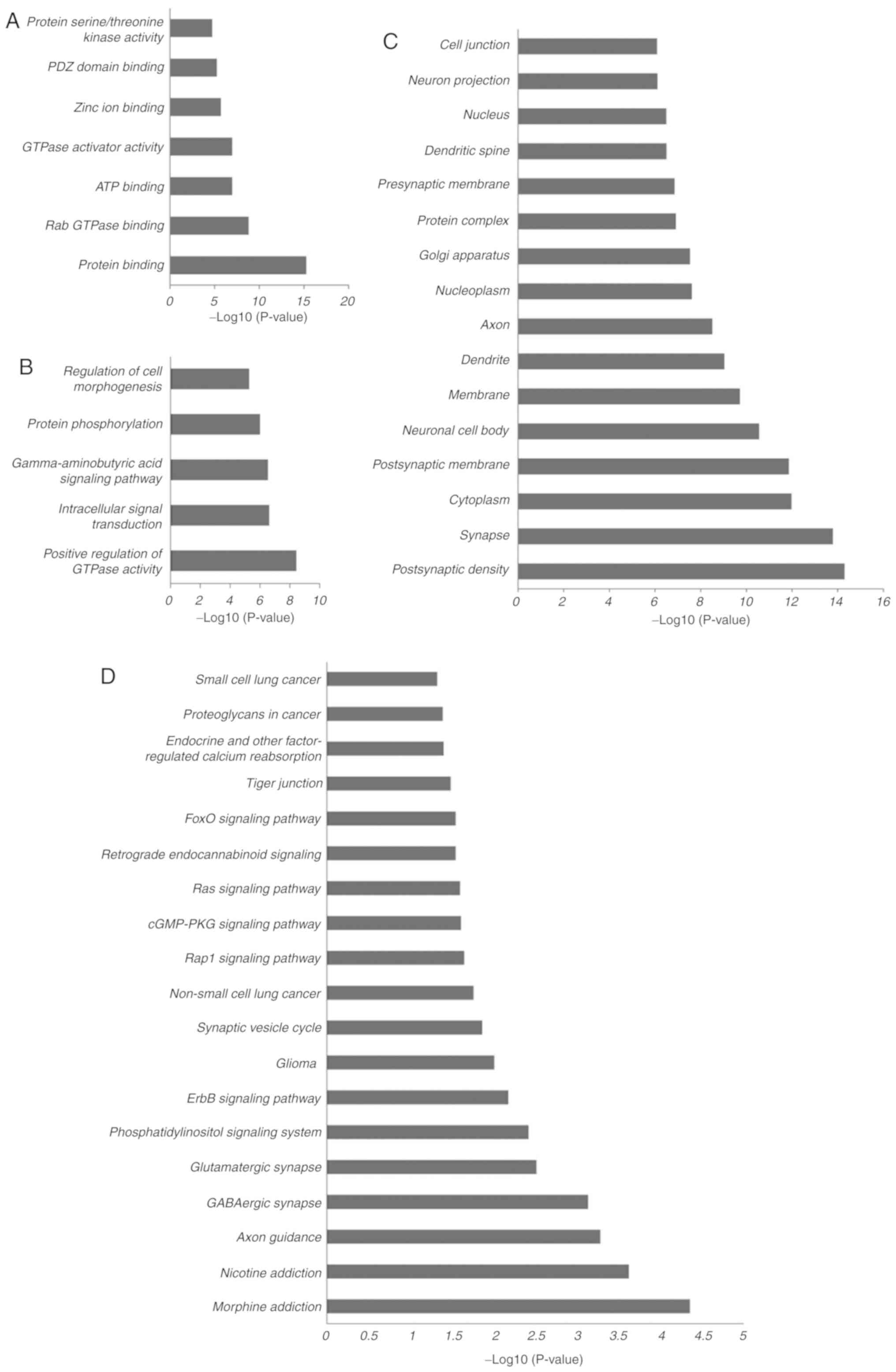
of altered circRNAs. The results indicated that significant
enriched and meaningful GO terms in biological process were
‘positive regulation of guanosine monophosphatase (GTPase)
activity’, ‘intracellular signal transduction’ and ‘γ-aminobutyric
acid (GABA) signaling pathway’ (Fig.
4A). In terms of molecular function, the majority of the
altered circRNA associated mRNAs were identified to be ‘protein
binding’, ‘Rab GTPase binding’ and ‘adenosine triphosphate binding’
(Fig. 4B). The cellular component
(CC) included enriched CC terms, including ‘postsynaptic density’,
‘synapse’ and ‘cytoplasm’ (Fig.
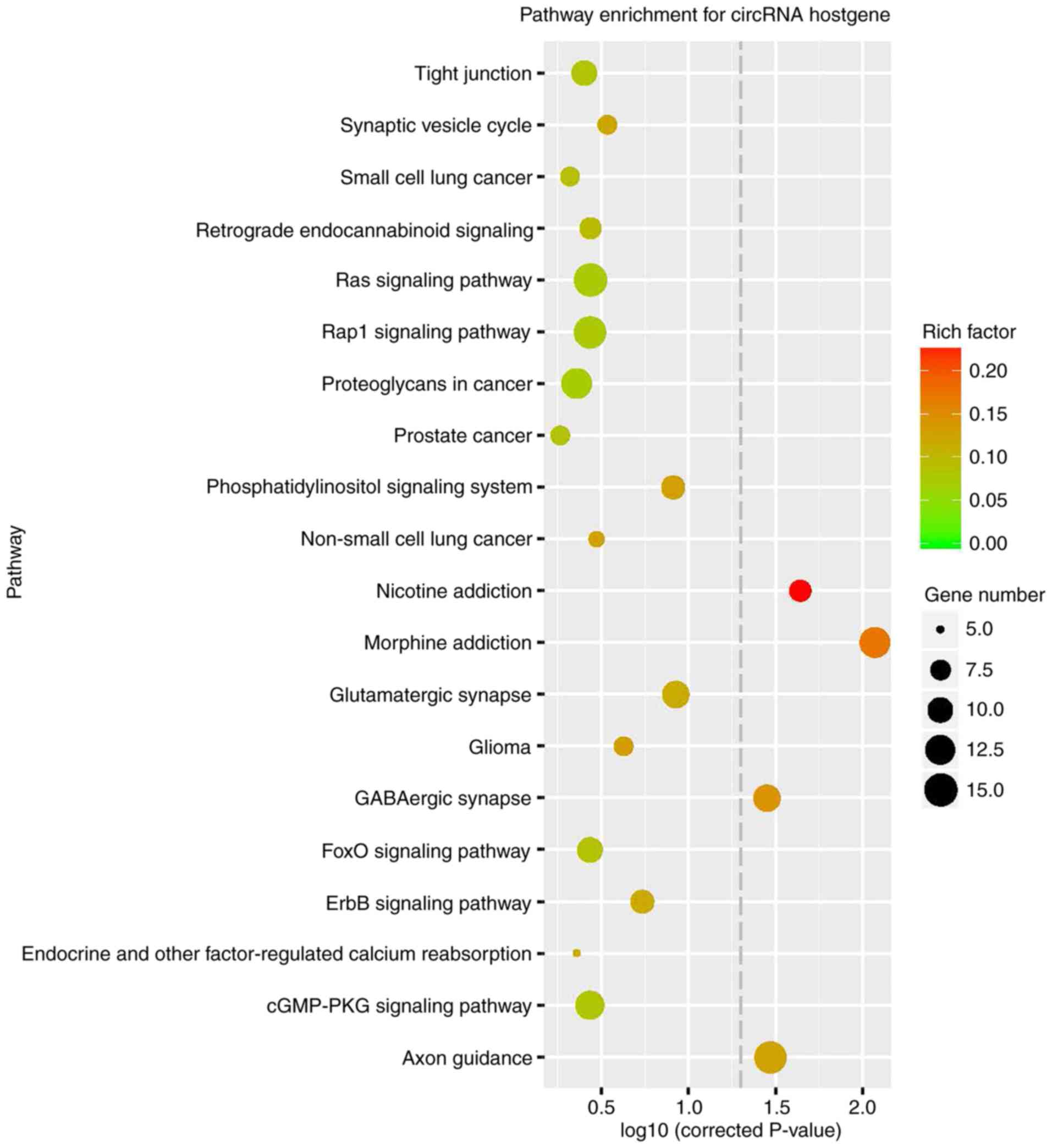
4C). Gene-enriched KEGG pathway analysis suggested pathways
that could be involved during the development of HIBD. The majority
of these circRNAs were target genes involved in morphine addiction,
nicotine addiction, axon guidance, GABAergic synapse and
glutamatergic synapse (Figs. 4D
and 5). Glutamatergic synapse and
axon guidance have been reported to be involved in neuron injury
and regeneration following brain injury in rats (23,24).
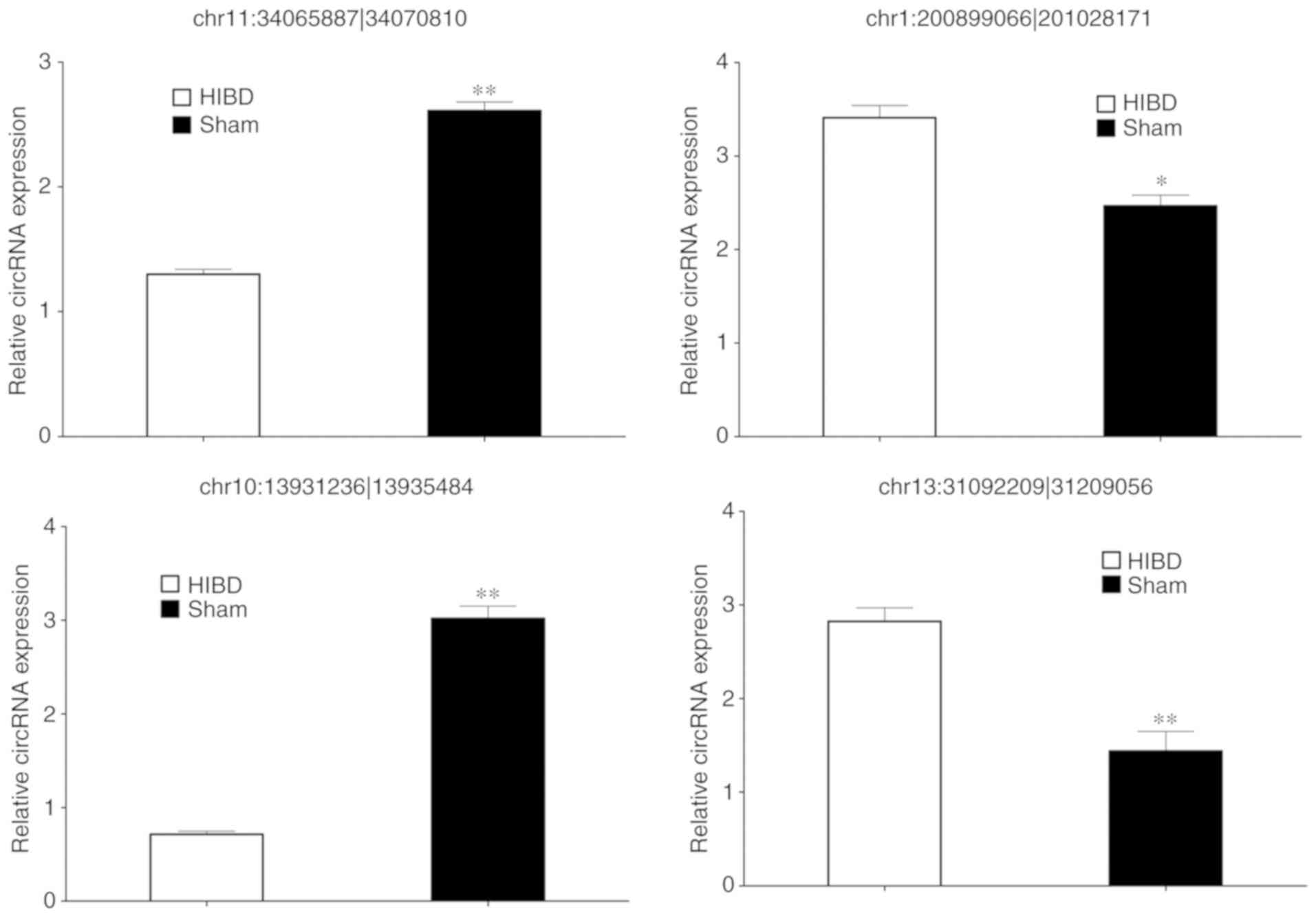
RT-qPCR of circRNA
To verify the RNA-Seq data, 4 differentially
expressed circRNAs were selected for qPCR and compared with the
sham group, including circRNAs chr13: 31092209|31209056 and chr1:
200899066|201028171, which were upregulated, and chr11:
34065887|34070810 and chr10: 13931236|13935484, which were
downregulated significantly following HIBD (P<0.01; Fig. 6). The expression patterns of these
circRNAs were consistent with the RNA-Seq data.
Annotation for circRNA/microRNA
interaction
circRNAs serve a crucial role in sponging and
regulating the expression of miRNA, their interaction with HIBD
associated miRNAs suggests that circRNAs could serve an important
role in pathophysiological processes of HIBD. Therefore, potential
circRNA/microRNA interactions were investigated based on TargetScan
and miRanda. The circRNA/miRNA interaction of the differentially
expressed circRNAs is presented in Fig. 7. These results are in agreement
with previously reported differential expression of miRNA in
neonatal rats (25-29).
Discussion
To the best of the authors' knowledge, this is the
first study to profile circRNA expression in a rat hippocampus
following HIBD. Initially, 66 circRNAs were identified to be
differentially expressed in the early stages following HIBD.
Furthermore, significantly altered GO terms were identified, mostly
correlated pathways and predicted circRNA/miRNA interactions using
bioinformatics analysis. A total of four circRNAs were verified
using RT-qPCR, which was consistent with the results from RNA-seq
data. The potential roles of the altered circRNAs in the
pathophysiological processes following HIBD suggest they could be
potential biomarkers or novel therapeutic targets in the treatment
of HIBD.
The reported evidence indicates that >98%
transcriptional output is not used in protein translation, but
forms various classes of non-coding (nc)RNAs, including miRNAs,
long non-coding RNAs and circRNAs (30). It is currently under debate
whether ncRNAs have multiple functions, including controlling
translation, transcription, epigenetics and RNA/protein
scaffolding. In general, ncRNAs are considered to have novel roles
in genomic regulation and dysregulation of ncRNAs is associated
with the onset of disease and secondary neural damage following
central nervous system (CNS) injury. Notably, several
pathophysiological mechanisms, including inflammation, blood-brain
damage, apoptosis, autophagy, oxidative stress and endoplasmic
reticulum stress are closely associated with the expression of
ncRNAs, it is suggested that the brain damage may be corrected by
determining the level of dysregulated ncRNAs (31-34). Therefore, reversing the altered
ncRNAs could be a potential therapeutic strategy for HIBD.
miR-126 was significantly upregulated following
HIBD, which was in agreement with our previously report; miR-126
expression levels were associated with retinopathy of premature
neonatal rats induced by acidosis, in which mRNA and protein
expression levels of the vascular endothelial growth factor were
notably upregulated (35,36). Similar results were identified for
miR-9a, which was reported to be significantly increased in the
plasma of hyperoxia-induced neonatal rats and involved in ‘in
utero embryonic development’, ‘neurotrophin signaling pathway’,
‘B cell receptor signaling pathway’ and ‘mitogen activated protein
kinase signaling pathway’. On the contrary, miR-21a and miR-25a
were downregulated in the injured cortex following hypoxic-ischemic
brain damage and contribute to neuronal death with increased
expression levels of the proapoptotic B-cell lymphoma 2 family
members-Noxa and Bax. In contrast, increasing the expression levels
of these miRNAs significantly mitigates neural damage (37,38).
Overall, the results from this study suggest
potential in the treatment of HIBD using targeted miRNAs and
lncRNAs. However, the role of circRNAs, a new star of ncRNAs, in
the pathophysiological process of HIBD is yet to be reported. The
expression profiles of circRNA in this study were altered following
HIBD. As previous studies report, circRNAs can regulate the
transcription of their host genes (39,40) and dysregulation could influence
numerous molecular events essential to the process of brain damage
following HIBD. Parent genes that generate HIBD-altered circRNAs
primarily participated in the positive regulation of guanosine
triphosphatase activity, intracellular signal transduction and GABA
signaling pathway, which are indispensable for neural regeneration.
Synapse, neuron part and neuron projection are essential for
neuron-neuron communication, producing movement, feeling and
memory. Altered circRNA-associated mRNAs were primarily located in
the synapse, and the neuron to neuron projection, which may be
correlated to post-HIBD pathophysiology. However, further
investigation is required to determine the regulation of circRNAs
in HIBD.
CircRNAs are reported to act as miRNA sponges and
suppress miRNA activity, resulting in upregulation of miRNA targets
(5,8,41).
miRNAs serves key roles in normal CNS development and function
(42,43) and certain circRNAs could be
involved in HIBD through circRNA/miRNA interactions. The
dysregulated circRNAs following HIBD was demonstrated to include
several miRNA binding sites using miRNA target prediction software.
The correlation of miRNAs with HIBD suggest that circRNAs could
serve important roles in HIBD. For example, chr1:
200899066|201028171 was predicted to bind miR-126a, miR-9a and
miR-26a and miR-9a was identified to be associated with
hypoxia-induced neuronal apoptosis (26,44-46).
In conclusion, the results in this study indicated
that circRNAs were significantly altered in the hippocampus
following HIBD compared with the sham control. Using bioinformatics
analysis and circRNA/miRNA interaction prediction, circRNAs could
be involved in brain damage and also neural regeneration following
HIBD. Therefore, these findings suggest a potential treatment of
HIBD through the modulation of circRNAs. Deciphering the biological
functions of the circRNAs identified in this study requires further
investigation.
Funding
The present study was financially supported by the
Project of Clinical Advanced Techniques, the Primary Research and
Development Plan of Jiangsu Province (grant no. BE2017719), the
Pediatric Medical Innovation Team of Jiangsu Province (grant no.
CXTDA2017022), the Project of National Youth Fund (grant no.
81601355) and the Project of Postdoctoral Fund of Jiangsu Province
(grant no. 1701162C).
Availability of data and materials
The datasets used in this study are available from
the corresponding author on reasonable request.
Authors' contributions
LJ, RZ and ZX contributed to the concept and design
of the present study, prepared the manuscript and conducted the
experiments and data analysis. HL and RZ performed animal
treatments. RZ contributed to the acquisition of data. LJ and ZF
conducted bioinformatic analysis. ZX also provided guidances. All
the authors read and approved the final version of the
manuscript.
Ethics approval and consent to
participate
All animal procedures were approved by the Zhongda
Hospital Committee on Animal Research and all the experiments were
carried out in accordance with the approved guidelines.
Patient consent for publication
Not applicable.
Competing interests
The authors declare that there are no known
competing interests regarding the publication of this study.
Acknowledgments
Not applicable.
References
|
1
|
Wachtel EV and Hendricks-Munoz KD: Current
management of the infant who presents with neonatal encephalopathy.
Curr Probl Pediatr Adolesc Health Care. 41:132–153. 2011.
View Article : Google Scholar : PubMed/NCBI
|
|
2
|
Ashwal-Fluss R, Meyer M, Pamudurti NR,
Ivanov A, Bartok O, Hanan M, Evantal N, Memczak S, Rajewsky N and
Kadener S: circRNA biogenesis competes with pre-mRNA splicing. Mol
Cell. 56:55–66. 2014. View Article : Google Scholar : PubMed/NCBI
|
|
3
|
Qu S, Yang X, Li X, Wang J, Gao Y, Shang
R, Sun W, Dou K and Li H: Circular RNA: A new star of noncoding
RNAs. Cancer Lett. 365:141–148. 2015. View Article : Google Scholar : PubMed/NCBI
|
|
4
|
Rybak-Wolf A, Stottmeister C, Glažar P,
Jens M, Pino N, Giusti S, Hanan M, Behm M, Bartok O, Ashwal-Fluss
R, et al: Circular RNAs in the mammalian brain are highly abundant,
conserved, and dynamically expressed. Mol Cell. 58:870–885. 2015.
View Article : Google Scholar : PubMed/NCBI
|
|
5
|
Lasda E and Parker R: Circular RNAs:
Diversity of form and function. RNA. 20:1829–1842. 2014. View Article : Google Scholar : PubMed/NCBI
|
|
6
|
Li X, Yang L and Chen LL: The biogenesis,
functions, and challenges of circular RNAs. Mol Cell. 71:428–442.
2018. View Article : Google Scholar : PubMed/NCBI
|
|
7
|
Zheng Q, Bao C, Guo W, Li S, Chen J, Chen
B, Luo Y, Lyu D, Li Y, Shi G, et al: Circular RNA profiling reveals
an abundant circHIPK3 that regulates cell growth by sponging
multiple miRNAs. Nat Commun. 7:112152016. View Article : Google Scholar : PubMed/NCBI
|
|
8
|
Hansen TB, Jensen TI, Clausen BH, Bramsen
JB, Finsen B, Damgaard CK and Kjems J: Natural RNA circles function
as efficient microRNA sponges. Nature. 495:384–388. 2013.
View Article : Google Scholar : PubMed/NCBI
|
|
9
|
Memczak S, Jens M, Elefsinioti A, Torti F,
Krueger J, Rybak A, Maier L, Mackowiak SD, Gregersen LH, Munschauer
M, et al: Circular RNAs are a large class of animal RNAs with
regulatory potency. Nature. 495:333–338. 2013. View Article : Google Scholar : PubMed/NCBI
|
|
10
|
Meng S, Zhou H, Feng Z, Xu Z, Tang Y, Li P
and Wu M: CircRNA: Functions and properties of a novel potential
biomarker for cancer. Mol Cancer. 16:942017. View Article : Google Scholar : PubMed/NCBI
|
|
11
|
Hansen TB, Kjems J and Damgaard CK:
Circular RNA and miR-7 in cancer. Cancer Res. 73:5609–5612. 2013.
View Article : Google Scholar : PubMed/NCBI
|
|
12
|
Mehta SL, Pandi G and Vemuganti R:
Circular RNA expression profiles alter significantly in mouse brain
after transient focal ischemia. Stroke. 48:2541–2548. 2017.
View Article : Google Scholar : PubMed/NCBI
|
|
13
|
Liu C, Zhang C, Yang J, Geng X, Du H, Ji X
and Zhao H: Screening circular RNA expression patterns following
focal cerebral ischemia in mice. Oncotarget. 8:86535–86547.
2017.PubMed/NCBI
|
|
14
|
Dharap A, Nakka VP and Vemuganti R: Effect
of focal ischemia on long noncoding RNAs. Stroke. 43:2800–2802.
2012. View Article : Google Scholar : PubMed/NCBI
|
|
15
|
Wang Z, Gerstein M and Snyder M: RNA-Seq:
A revolutionary tool for transcriptomics. Nat Rev Genet. 10:57–63.
2009. View
Article : Google Scholar
|
|
16
|
Zhao F, Qu Y, Xiong T, Duan Z, Ye Q and Mu
D: The neuroprotective role of TERT via an antiapoptotic mechanism
in neonatal rats after hypoxia-ischemia brain injury. Neurosci
Lett. 515:39–43. 2012. View Article : Google Scholar : PubMed/NCBI
|
|
17
|
Trapnell C, Roberts A, Goff L, Pertea G,
Kim D, Kelley DR, Pimentel H, Salzberg SL, Rinn JL and Pachter L:
Differential gene and transcript expression analysis of RNA-seq
experiments with TopHat and Cufflinks. Nat Protoc. 7:562–578. 2012.
View Article : Google Scholar : PubMed/NCBI
|
|
18
|
Zhu L, Ni W, Liu S, Cai B, Xing H and Wang
S: Transcriptomics analysis of apple leaves in response to
alternaria alternata apple pathotype infection. Front Plant Sci.
8:222017. View Article : Google Scholar :
|
|
19
|
Wang Z, Ruan B, Jin Y, Zhang Y, Li J, Zhu
L, Xu W, Feng L, Jin H and Wang X: Identification of KLK10 as a
therapeutic target to reverse trastuzumab resistance in breast
cancer. Oncotarget. 7:79494–79502. 2016.PubMed/NCBI
|
|
20
|
Harrow J, Frankish A, Gonzalez JM,
Tapanari E, Diekhans M, Kokocinski F, Aken BL, Barrell D, Zadissa
A, Searle S, et al: GENCODE: The reference human genome annotation
for The ENCODE project. Genome Res. 22:1760–1774. 2012. View Article : Google Scholar : PubMed/NCBI
|
|
21
|
Quinlan AR and Hall IM: BEDTools: A
flexible suite of utilities for comparing genomic features.
Bioinformatics. 26:841–842. 2010. View Article : Google Scholar : PubMed/NCBI
|
|
22
|
Livak KJ and Schmittgen TD: Analysis of
relative gene expression data using real-time quantitative PCR and
the 2(−Delta Delta C(T)) method. Methods. 25:402–408. 2001.
View Article : Google Scholar
|
|
23
|
Hollis ER II: Axon guidance molecules and
neural circuit remodeling after spinal cord injury.
Neurotherapeutics. 13:360–369. 2016. View Article : Google Scholar :
|
|
24
|
Park K and Biederer T: Neuronal adhesion
and synapse organization in recovery after brain injury. Future
Neurol. 8:555–567. 2013. View Article : Google Scholar
|
|
25
|
Dang YX, Shi KN and Wang XM: Early changes
in glutamate metabolism and perfusion in basal ganglia following
hypoxia-ischemia in neonatal piglets: A multi-sequence 3.0T MR
study. Front Physiol. 8:2372017. View Article : Google Scholar : PubMed/NCBI
|
|
26
|
Cai Q, Wang T, Yang WJ and Fen X:
Protective mechanisms of microRNA-27a against oxygen-glucose
deprivation-induced injuries in hippocampal neurons. Neural Regen
Res. 11:1285–1292. 2016. View Article : Google Scholar : PubMed/NCBI
|
|
27
|
Yin X, Li L, Zhang X, Yang Y, Chai Y, Han
X and Feng Z: Development of neural stem cells at different sites
of fetus brain of different gestational age. Int J Clin Exp Pathol.
6:2757–2764. 2013.PubMed/NCBI
|
|
28
|
Filipowicz W, Bhattacharyya SN and
Sonenberg N: Mechanisms of post-transcriptional regulation by
microRNAs: Are the answers in sight. Nat Rev Genet. 9:102–114.
2008. View
Article : Google Scholar : PubMed/NCBI
|
|
29
|
Zhao R, Qian L and Jiang L: Identification
of retinopathy of prematurity related miRNAs in hyperoxia-induced
neonatal rats by deep sequencing. Int J Mol Sci. 16:840–856. 2014.
View Article : Google Scholar
|
|
30
|
Chandran R, Mehta SL and Vemuganti R:
Non-coding RNAs and neuroprotection after acute CNS injuries.
Neurochem Int. 111:12–22. 2017. View Article : Google Scholar : PubMed/NCBI
|
|
31
|
Gaudet AD, Fonken LK, Watkins LR, Nelson
RJ and Popovich PG: MicroRNAs: Roles in regulating
neuroinflammation. Neuroscientist. 24:221–245. 2018. View Article : Google Scholar
|
|
32
|
Ge X, Han Z, Chen F, Wang H, Zhang B,
Jiang R, Lei P and Zhang J: MiR-21 alleviates secondary blood-brain
barrier damage after traumatic brain injury in rats. Brain Res.
1603:150–157. 2015. View Article : Google Scholar : PubMed/NCBI
|
|
33
|
Han Z, Chen F, Ge X, Tan J, Lei P and
Zhang J: miR-21 alleviated apoptosis of cortical neurons through
promoting PTEN-Akt signaling pathway in vitro after experimental
traumatic brain injury. Brain Res. 1582:12–20. 2014. View Article : Google Scholar : PubMed/NCBI
|
|
34
|
Redell JB, Zhao J and Dash PK: Altered
expression of miRNA-21 and its targets in the hippocampus after
traumatic brain injury. J Neurosci Res. 89:212–221. 2011.
View Article : Google Scholar
|
|
35
|
Zhao R, Hou W, Zhang Z, Qian L and Jiang
L: Differential expression of Mir-1 26 and vascular endothelial
growth factor in retinal cells of metabolic acidosis-induced
neonatal rats. J Nanosci Nanotechnol. 15:2088–2093. 2015.
View Article : Google Scholar : PubMed/NCBI
|
|
36
|
Zhao RB, Qian LJ and Jiang L:
miRNA-dependent cross-talk between VEGF and Ang-2 in
hypoxia-induced microvascular dysfunction. Biochem Biophys Res
Commun. 452:428–435. 2014. View Article : Google Scholar : PubMed/NCBI
|
|
37
|
Sabirzhanov B, Zhao Z, Stoica BA, Loane
DJ, Wu J, Borroto C, Dorsey SG and Faden AI: Downregulation of
miR-23a and miR-27a following experimental traumatic brain injury
induces neuronal cell death through activation of proapoptotic
Bcl-2 proteins. J Neurosci. 34:10055–10071. 2014. View Article : Google Scholar : PubMed/NCBI
|
|
38
|
Zhong J, Jiang L, Cheng C, Huang Z, Zhang
H, Liu H, He J, Cao F, Peng J, Jiang Y and Sun X: Altered
expression of long non-coding RNA and mRNA in mouse cortex after
traumatic brain injury. Brain Res. 1646:589–600. 2016. View Article : Google Scholar : PubMed/NCBI
|
|
39
|
Zhang Y, Zhang XO, Chen T, Xiang JF, Yin
QF, Xing YH, Zhu S, Yang L and Chen LL: Circular intronic long
noncoding RNAs. Mol Cell. 51:792–806. 2013. View Article : Google Scholar : PubMed/NCBI
|
|
40
|
Huang Li Z, Bao C, Chen C, Lin L, Wang M,
Zhong X, Yu G, Hu B, Dai WL, et al: Exon-intron circular RNAs
regulate transcription in the nucleus. Nat Struct Mol Biol.
22:256–264. 2015. View Article : Google Scholar : PubMed/NCBI
|
|
41
|
Ebbesen KK, Kjems J and Hansen TB:
Circular RNAs: Identification, biogenesis and function. Biochim
Biophys Acta. 1859.163–168. 2016.
|
|
42
|
Bhalala OG, Srikanth M and Kessler JA: The
emerging roles of microRNAs in CNS injuries. Nat Rev Neurol.
9:328–339. 2013. View Article : Google Scholar : PubMed/NCBI
|
|
43
|
Liu NK and Xu XM: MicroRNA in central
nervous system trauma and degenerative disorders. Physiol Genomics.
43:571–580. 2011. View Article : Google Scholar : PubMed/NCBI
|
|
44
|
Chen Q, Xu J, Li L, Li H, Mao S, Zhang F,
Zen K, Zhang CY and Zhang Q: MicroRNA-23a/b and microRNA-27a/b
suppress Apaf-1 protein and alleviate hypoxia-induced neuronal
apoptosis. Cell Death Dis. 5:e11322014. View Article : Google Scholar : PubMed/NCBI
|
|
45
|
Chen Q, Zhang F, Wang Y, Liu Z, Sun A, Zen
K, Zhang CY and Zhang Q: The transcription factor c-Myc suppresses
MiR-23b and MiR-27b transcription during fetal distress and
increases the sensitivity of neurons to hypoxia-induced apoptosis.
PLoS One. 10:e01202172015. View Article : Google Scholar : PubMed/NCBI
|
|
46
|
Shin JH, Park YM, Kim DH, Moon GJ, Bang
OY, Ohn T and Kim HH: Ischemic brain extract increases SDF-1
expression in astrocytes through the CXCR2/miR-223/miR-27b pathway.
Biochim Biophys Acta. 1839.826–836. 2014.
|