Spandidos Publications Logo
  • About
    • About Spandidos
    • Aims and Scopes
    • Abstracting and Indexing
    • Editorial Policies
    • Reprints and Permissions
    • Job Opportunities
    • Terms and Conditions
    • Contact
  • Journals
    • All Journals
    • Oncology Letters
      • Oncology Letters
      • Information for Authors
      • Editorial Policies
      • Editorial Board
      • Aims and Scope
      • Abstracting and Indexing
      • Bibliographic Information
      • Archive
    • International Journal of Oncology
      • International Journal of Oncology
      • Information for Authors
      • Editorial Policies
      • Editorial Board
      • Aims and Scope
      • Abstracting and Indexing
      • Bibliographic Information
      • Archive
    • Molecular and Clinical Oncology
      • Molecular and Clinical Oncology
      • Information for Authors
      • Editorial Policies
      • Editorial Board
      • Aims and Scope
      • Abstracting and Indexing
      • Bibliographic Information
      • Archive
    • Experimental and Therapeutic Medicine
      • Experimental and Therapeutic Medicine
      • Information for Authors
      • Editorial Policies
      • Editorial Board
      • Aims and Scope
      • Abstracting and Indexing
      • Bibliographic Information
      • Archive
    • International Journal of Molecular Medicine
      • International Journal of Molecular Medicine
      • Information for Authors
      • Editorial Policies
      • Editorial Board
      • Aims and Scope
      • Abstracting and Indexing
      • Bibliographic Information
      • Archive
    • Biomedical Reports
      • Biomedical Reports
      • Information for Authors
      • Editorial Policies
      • Editorial Board
      • Aims and Scope
      • Abstracting and Indexing
      • Bibliographic Information
      • Archive
    • Oncology Reports
      • Oncology Reports
      • Information for Authors
      • Editorial Policies
      • Editorial Board
      • Aims and Scope
      • Abstracting and Indexing
      • Bibliographic Information
      • Archive
    • Molecular Medicine Reports
      • Molecular Medicine Reports
      • Information for Authors
      • Editorial Policies
      • Editorial Board
      • Aims and Scope
      • Abstracting and Indexing
      • Bibliographic Information
      • Archive
    • World Academy of Sciences Journal
      • World Academy of Sciences Journal
      • Information for Authors
      • Editorial Policies
      • Editorial Board
      • Aims and Scope
      • Abstracting and Indexing
      • Bibliographic Information
      • Archive
    • International Journal of Functional Nutrition
      • International Journal of Functional Nutrition
      • Information for Authors
      • Editorial Policies
      • Editorial Board
      • Aims and Scope
      • Abstracting and Indexing
      • Bibliographic Information
      • Archive
    • International Journal of Epigenetics
      • International Journal of Epigenetics
      • Information for Authors
      • Editorial Policies
      • Editorial Board
      • Aims and Scope
      • Abstracting and Indexing
      • Bibliographic Information
      • Archive
    • Medicine International
      • Medicine International
      • Information for Authors
      • Editorial Policies
      • Editorial Board
      • Aims and Scope
      • Abstracting and Indexing
      • Bibliographic Information
      • Archive
  • Articles
  • Information
    • Information for Authors
    • Information for Reviewers
    • Information for Librarians
    • Information for Advertisers
    • Conferences
  • Language Editing
Spandidos Publications Logo
  • About
    • About Spandidos
    • Aims and Scopes
    • Abstracting and Indexing
    • Editorial Policies
    • Reprints and Permissions
    • Job Opportunities
    • Terms and Conditions
    • Contact
  • Journals
    • All Journals
    • Biomedical Reports
      • Information for Authors
      • Editorial Policies
      • Editorial Board
      • Aims and Scope
      • Abstracting and Indexing
      • Bibliographic Information
      • Archive
    • Experimental and Therapeutic Medicine
      • Information for Authors
      • Editorial Policies
      • Editorial Board
      • Aims and Scope
      • Abstracting and Indexing
      • Bibliographic Information
      • Archive
    • International Journal of Epigenetics
      • Information for Authors
      • Editorial Policies
      • Editorial Board
      • Aims and Scope
      • Abstracting and Indexing
      • Bibliographic Information
      • Archive
    • International Journal of Functional Nutrition
      • Information for Authors
      • Editorial Policies
      • Editorial Board
      • Aims and Scope
      • Abstracting and Indexing
      • Bibliographic Information
      • Archive
    • International Journal of Molecular Medicine
      • Information for Authors
      • Editorial Policies
      • Editorial Board
      • Aims and Scope
      • Abstracting and Indexing
      • Bibliographic Information
      • Archive
    • International Journal of Oncology
      • Information for Authors
      • Editorial Policies
      • Editorial Board
      • Aims and Scope
      • Abstracting and Indexing
      • Bibliographic Information
      • Archive
    • Medicine International
      • Information for Authors
      • Editorial Policies
      • Editorial Board
      • Aims and Scope
      • Abstracting and Indexing
      • Bibliographic Information
      • Archive
    • Molecular and Clinical Oncology
      • Information for Authors
      • Editorial Policies
      • Editorial Board
      • Aims and Scope
      • Abstracting and Indexing
      • Bibliographic Information
      • Archive
    • Molecular Medicine Reports
      • Information for Authors
      • Editorial Policies
      • Editorial Board
      • Aims and Scope
      • Abstracting and Indexing
      • Bibliographic Information
      • Archive
    • Oncology Letters
      • Information for Authors
      • Editorial Policies
      • Editorial Board
      • Aims and Scope
      • Abstracting and Indexing
      • Bibliographic Information
      • Archive
    • Oncology Reports
      • Information for Authors
      • Editorial Policies
      • Editorial Board
      • Aims and Scope
      • Abstracting and Indexing
      • Bibliographic Information
      • Archive
    • World Academy of Sciences Journal
      • Information for Authors
      • Editorial Policies
      • Editorial Board
      • Aims and Scope
      • Abstracting and Indexing
      • Bibliographic Information
      • Archive
  • Articles
  • Information
    • For Authors
    • For Reviewers
    • For Librarians
    • For Advertisers
    • Conferences
  • Language Editing
Login Register Submit
  • This site uses cookies
  • You can change your cookie settings at any time by following the instructions in our Cookie Policy. To find out more, you may read our Privacy Policy.

    I agree
Search articles by DOI, keyword, author or affiliation
Search
Advanced Search
presentation
International Journal of Molecular Medicine
Join Editorial Board Propose a Special Issue
Print ISSN: 1107-3756 Online ISSN: 1791-244X
Journal Cover
February-2023 Volume 51 Issue 2

Full Size Image

Sign up for eToc alerts
Recommend to Library

Journals

International Journal of Molecular Medicine

International Journal of Molecular Medicine

International Journal of Molecular Medicine is an international journal devoted to molecular mechanisms of human disease.

International Journal of Oncology

International Journal of Oncology

International Journal of Oncology is an international journal devoted to oncology research and cancer treatment.

Molecular Medicine Reports

Molecular Medicine Reports

Covers molecular medicine topics such as pharmacology, pathology, genetics, neuroscience, infectious diseases, molecular cardiology, and molecular surgery.

Oncology Reports

Oncology Reports

Oncology Reports is an international journal devoted to fundamental and applied research in Oncology.

Experimental and Therapeutic Medicine

Experimental and Therapeutic Medicine

Experimental and Therapeutic Medicine is an international journal devoted to laboratory and clinical medicine.

Oncology Letters

Oncology Letters

Oncology Letters is an international journal devoted to Experimental and Clinical Oncology.

Biomedical Reports

Biomedical Reports

Explores a wide range of biological and medical fields, including pharmacology, genetics, microbiology, neuroscience, and molecular cardiology.

Molecular and Clinical Oncology

Molecular and Clinical Oncology

International journal addressing all aspects of oncology research, from tumorigenesis and oncogenes to chemotherapy and metastasis.

World Academy of Sciences Journal

World Academy of Sciences Journal

Multidisciplinary open-access journal spanning biochemistry, genetics, neuroscience, environmental health, and synthetic biology.

International Journal of Functional Nutrition

International Journal of Functional Nutrition

Open-access journal combining biochemistry, pharmacology, immunology, and genetics to advance health through functional nutrition.

International Journal of Epigenetics

International Journal of Epigenetics

Publishes open-access research on using epigenetics to advance understanding and treatment of human disease.

Medicine International

Medicine International

An International Open Access Journal Devoted to General Medicine.

Journal Cover
February-2023 Volume 51 Issue 2

Full Size Image

Sign up for eToc alerts
Recommend to Library

  • Article
  • Citations
    • Cite This Article
    • Download Citation
    • Create Citation Alert
    • Remove Citation Alert
    • Cited By
  • Similar Articles
    • Related Articles (in Spandidos Publications)
    • Similar Articles (Google Scholar)
    • Similar Articles (PubMed)
  • Download PDF
  • Download XML
  • View XML

  • Supplementary Files
    • Supplementary_Data.pdf
Article Open Access

Ablation of CXCR4 expression in cardiomyocytes exacerbates isoproterenol‑induced cell death and heart failure

  • Authors:
    • Min Cheng
    • Can Chen
    • Kunwu Yu
    • Xiao Lv
    • Qiutang Zeng
    • Nianguo Dong
    • Feng Zhu
  • View Affiliations / Copyright

    Affiliations: Department of Cardiology, Union Hospital, Tongji Medical College, Huazhong University of Science and Technology, Wuhan, Hubei 430022, P.R. China, Department of Orthopedics, Union Hospital, Tongji Medical College, Huazhong University of Science and Technology, Wuhan, Hubei 430022, P.R. China, Department of Surgery, Union Hospital, Tongji Medical College, Huazhong University of Science and Technology, Wuhan, Hubei 430022, P.R. China
    Copyright: © Cheng et al. This is an open access article distributed under the terms of Creative Commons Attribution License.
  • Article Number: 13
    |
    Published online on: December 29, 2022
       https://doi.org/10.3892/ijmm.2022.5216
  • Expand metrics +
Metrics: Total Views: 0 (Spandidos Publications: | PMC Statistics: )
Metrics: Total PDF Downloads: 0 (Spandidos Publications: | PMC Statistics: )
Cited By (CrossRef): 0 citations Loading Articles...

This article is mentioned in:


Abstract

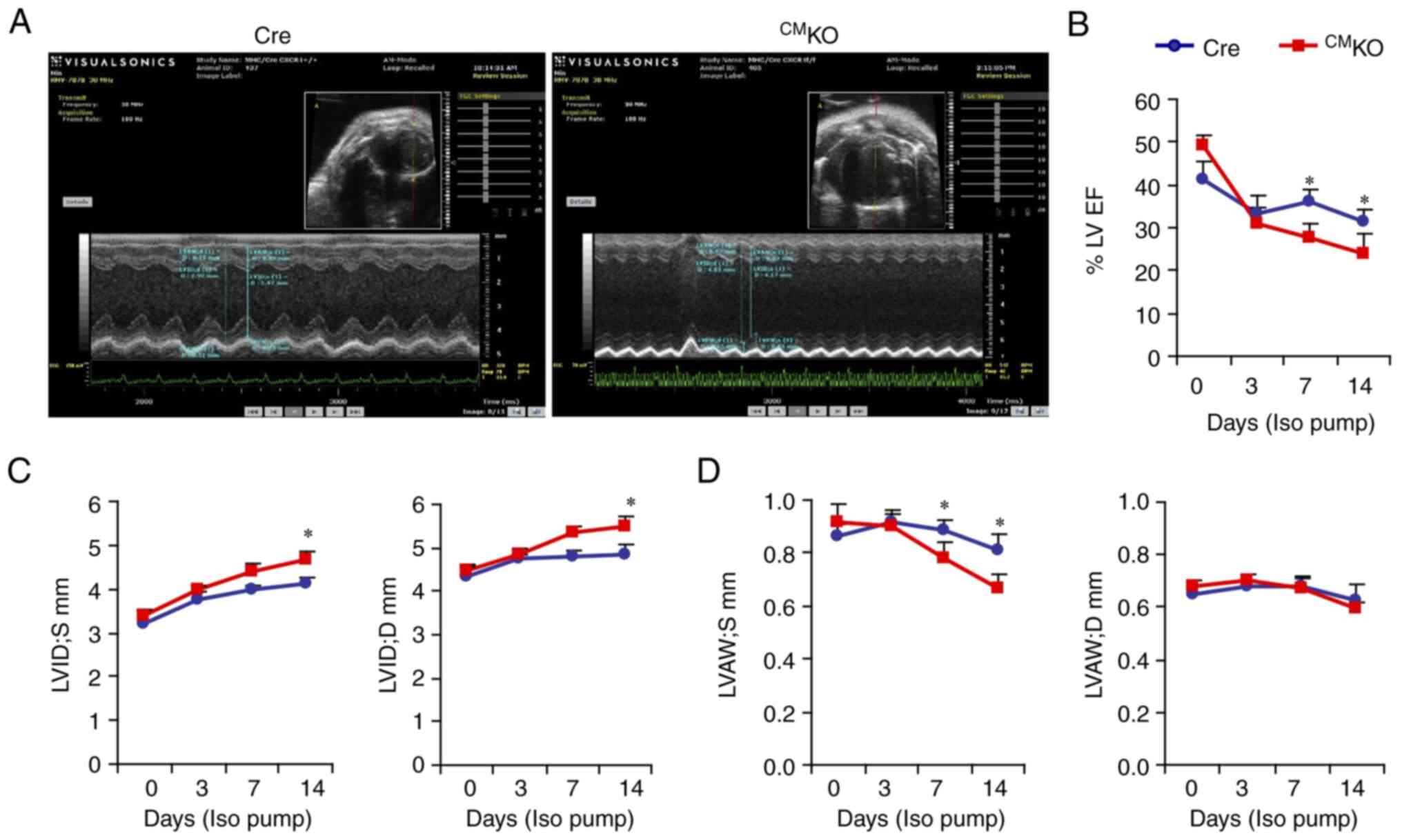
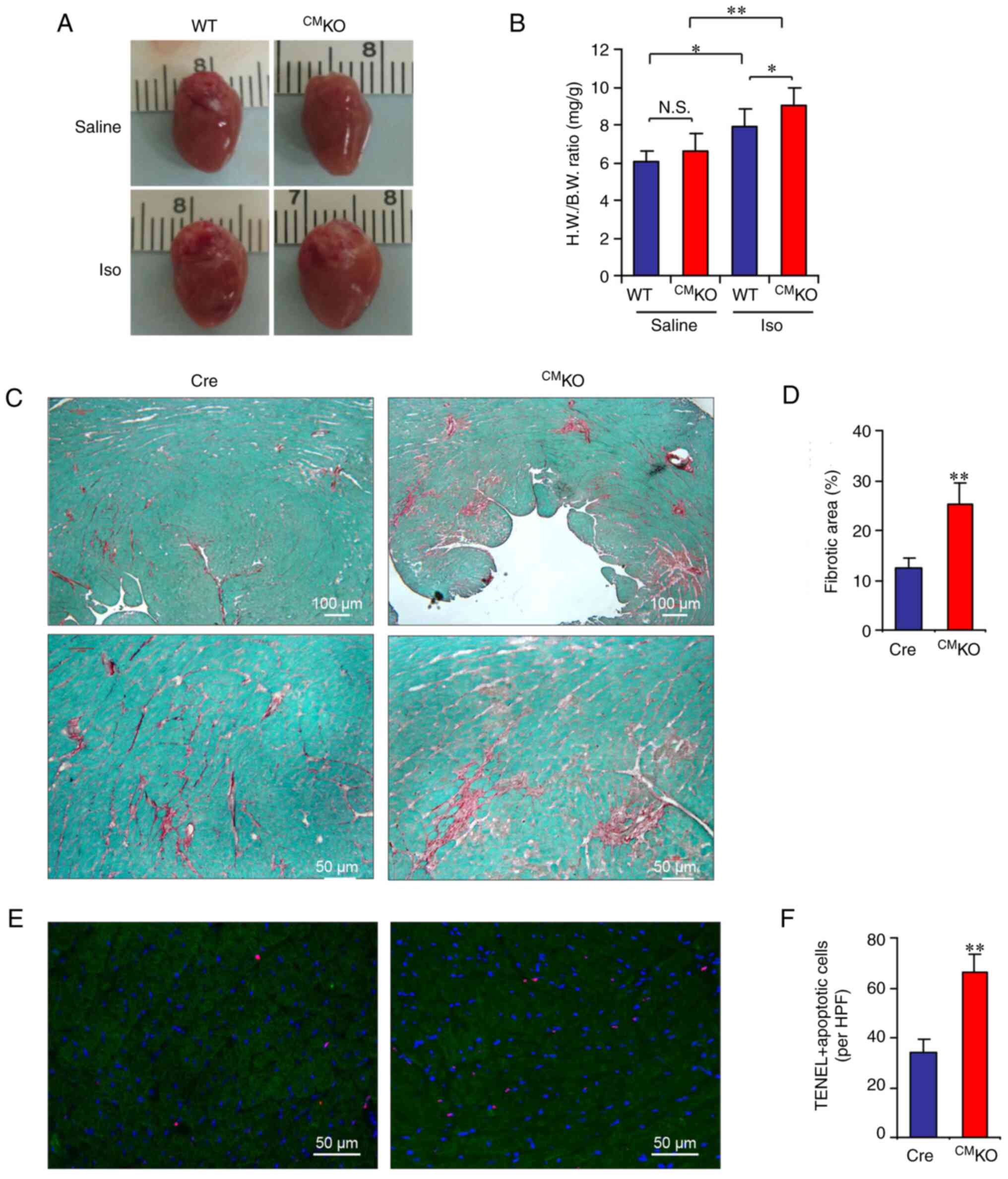
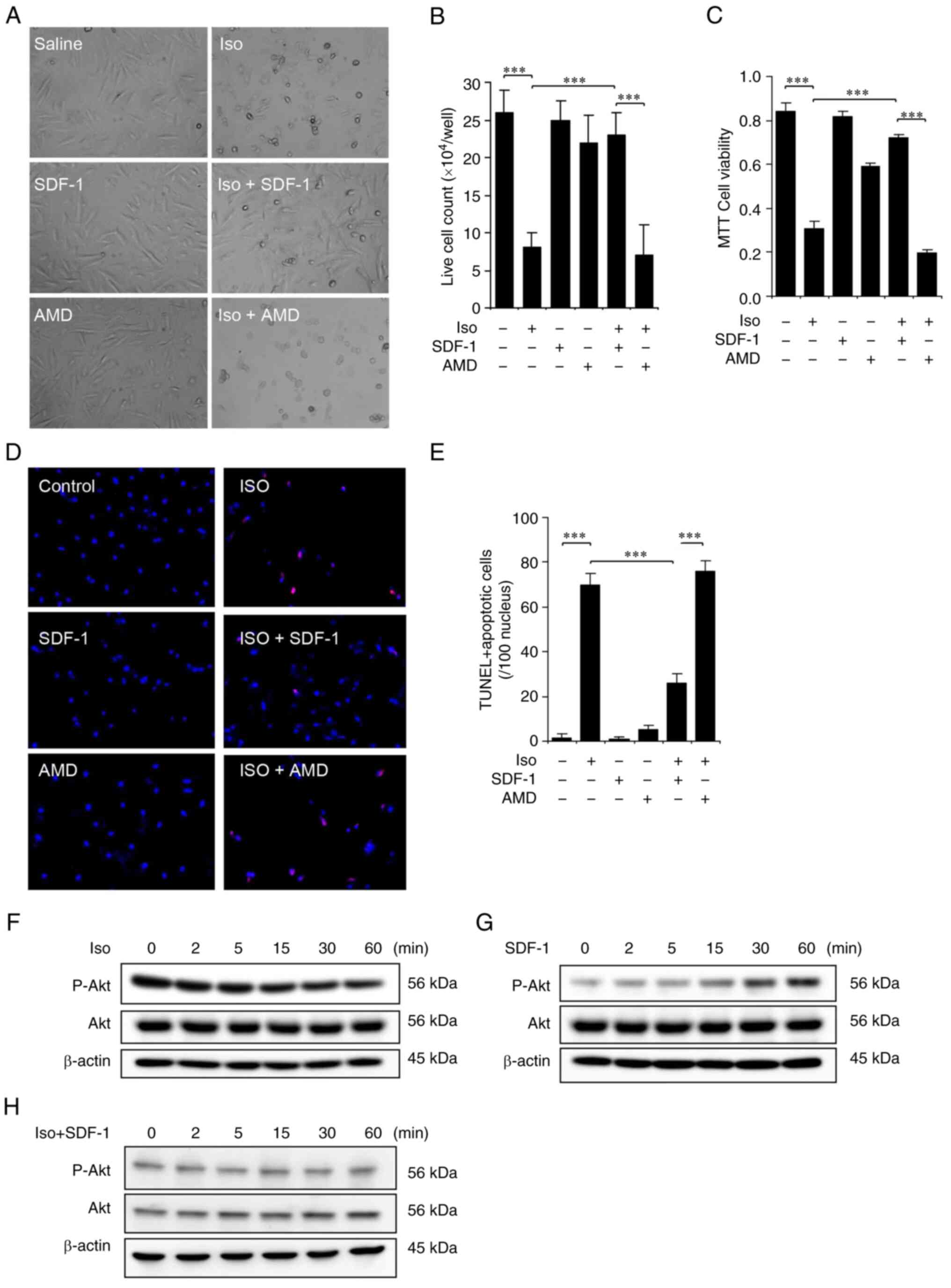
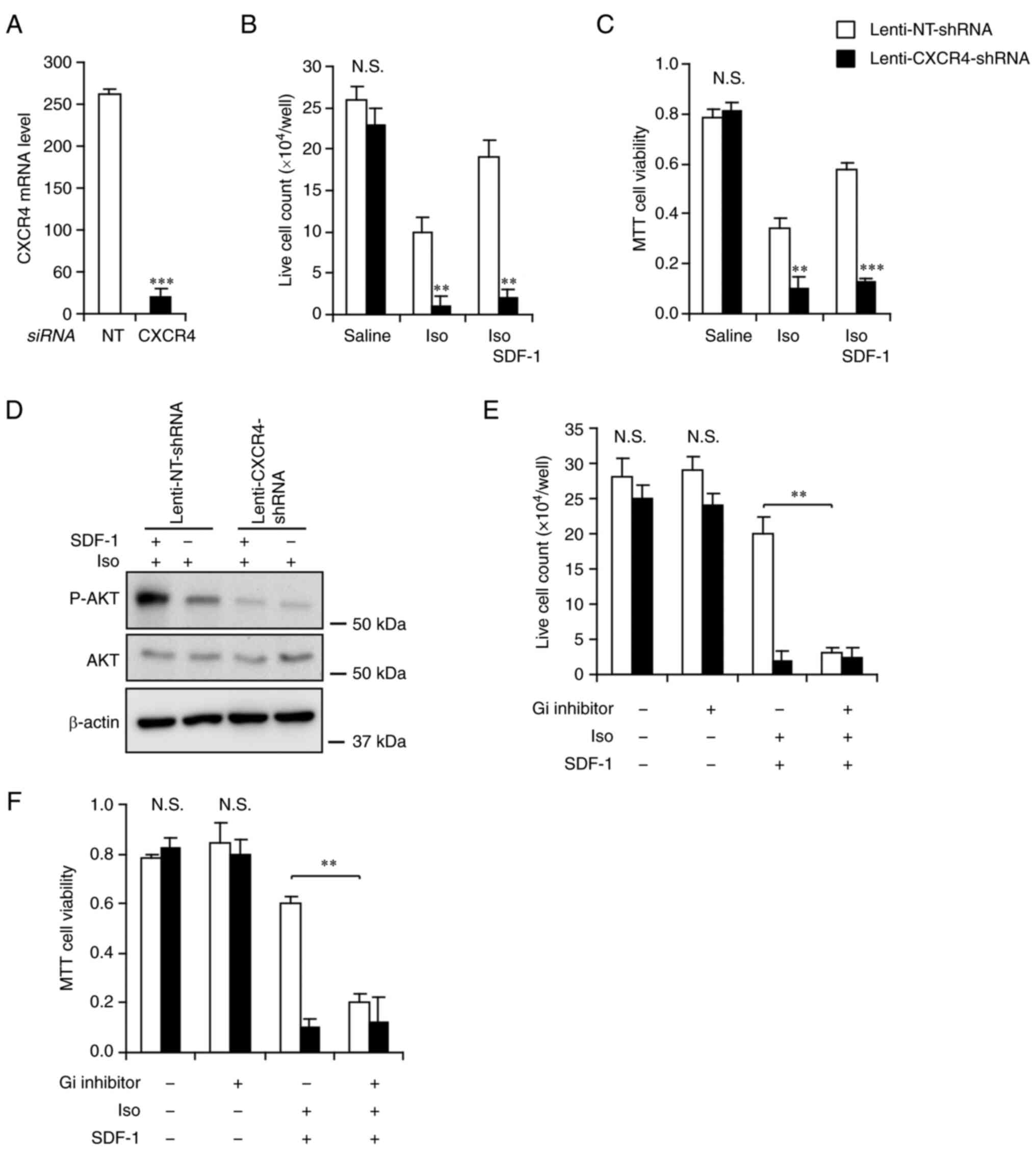
CXCR4 is a seven‑transmembrane‑spanning Gi‑coupled receptor for the SDF‑1 chemokine and plays a critical role in cardiovascular development and post‑injury repair. However, the specific role of CXCR4 in cardiomyocytes is incompletely understood. It was hypothesized that CXCR4 activation in cardiomyocytes antagonizes β‑adrenoceptor/Gs signaling‑induced cardiac dysfunction. Cardiomyocyte‑specific CXCR4 knockout (CXCR4‑CMKO) mice were generated by crossing CXCR4fl/fl and MHC‑Cre+/‑ mice. Their cardiac structure and function in the basal state are equivalent to that of the control MHC‑Cre+/‑ littermates until at least 4 months old. However, following continuous subcutaneous administration of isoproterenol (Iso) via an osmotic mini‑pump, the ventricular myocardial contractility, dilation, cardiomyocyte apoptosis, and interstitial fibrosis are worse in CXCR4‑CMKO mice than in MHC‑Cre+/‑ littermates. In the cultured H9C2 cardiomyocytes, SDF‑1 treatment markedly attenuated Iso‑induced apoptosis and reduction in phospho‑Akt, and this protective effect was lost by knockdown of CXCR4 or by co‑treatment with Gi inhibitors. In conclusion, CXCR4 promotes cardiomyocyte survival and heart function during β‑adrenergic stress.
View Figures

Figure 1

Figure 2

Figure 3

Figure 4

View References

1 

Tachibana K, Hirota S, Iizasa H, Yoshida H, Kawabata K, Kataoka Y, Kitamura Y, Matsushima K, Yoshida N, Nishikawa S, et al: The chemokine receptor CXCR4 is essential for vascularization of the gastrointestinal tract. Nature. 393:591–594. 1998. View Article : Google Scholar : PubMed/NCBI

2 

Nagasawa T, Hirota S, Tachibana K, Takakura N, Nishikawa S, Kitamura Y, Yoshida N, Kikutani H and Kishimoto T: Defects of B-cell lymphopoiesis and bone-marrow myelopoiesis in mice lacking the CXC chemokine PBSF/SDF-1. Nature. 382:635–638. 1996. View Article : Google Scholar : PubMed/NCBI

3 

Zou YR, Kottmann AH, Kuroda M, Taniuchi I and Littman DR: Function of the chemokine receptor CXCR4 in haematopoiesis and in cerebellar development. Nature. 393:595–599. 1998. View Article : Google Scholar : PubMed/NCBI

4 

Askari AT, Unzek S, Popovic ZB, Goldman CK, Forudi F, Kiedrowski M, Rovner A, Ellis SG, Thomas JD, DiCorleto PE, et al: Effect of stromal-cell-derived factor 1 on stem-cell homing and tissue regeneration in ischaemic cardiomyopathy. Lancet. 362:697–703. 2003. View Article : Google Scholar : PubMed/NCBI

5 

Jujo K, Ii M, Sekiguchi H, Hamada H, Thorne T, Klyachko E, Clarke T, Ito A, Misener S, Renault MA and Losordo DW: Bone marrow MMP-9 expression mediates therapeutic effect of selective CXCR4 antagonist AMD3100 on myocardial infarction. Circulation. 118:S536–S537. 2008.

6 

Marin-Juez R, El-Sammak H, Helker CSM, Kamezaki A, Mullapuli ST, Bibli SI, Foglia MJ, Fleming I, Poss KD and Stainier DYR: Coronary revascularization during heart regeneration is regulated by epicardial and endocardial cues and forms a scaffold for cardiomyocyte repopulation. Dev Cell. 51:503–515.e504. 2019. View Article : Google Scholar : PubMed/NCBI

7 

Huang FY, Xia TL, Li JL, Li CM, Zhao ZG, Lei WH, Chen L, Liao YB, Xiao D, Peng Y, et al: The bifunctional SDF-1-AnxA5 fusion protein protects cardiac function after myocardial infarction. J Cell Mol Med. 23:7673–7684. 2019. View Article : Google Scholar : PubMed/NCBI

8 

Abbott JD, Huang Y, Liu D, Hickey R, Krause DS and Giordano FJ: Stromal cell-derived factor-1alpha plays a critical role in stem cell recruitment to the heart after myocardial infarction but is not sufficient to induce homing in the absence of injury. Circulation. 110:3300–3305. 2004. View Article : Google Scholar : PubMed/NCBI

9 

Cheng M, Zhou J, Wu M, Boriboun C, Thorne T, Liu T, Xiang Z, Zeng Q, Tanaka T, Tang YL, et al: CXCR4-mediated bone marrow progenitor cell maintenance and mobilization are modulated by c-kit activity. Circ Res. 107:1083–1093. 2010. View Article : Google Scholar : PubMed/NCBI

10 

Tang YL, Zhu W, Cheng M, Chen L, Zhang J, Sun T, Kishore R, Phillips MI, Losordo DW and Qin G: Hypoxic preconditioning enhances the benefit of cardiac progenitor cell therapy for treatment of myocardial infarction by inducing CXCR4 expression. Circ Res. 104:1209–1216. 2009. View Article : Google Scholar : PubMed/NCBI

11 

Saxena A, Fish JE, White MD, Yu S, Smyth JWP, Shaw RM, DiMaio JM and Srivastava D: Stromal cell-derived factor-1alpha is cardioprotective after myocardial infarction. Circulation. 117:2224–2231. 2008. View Article : Google Scholar : PubMed/NCBI

12 

Segers VF, Tokunou T, Higgins LJ, MacGillivray C, Gannon J and Lee RT: Local delivery of protease-resistant stromal cell derived factor-1 for stem cell recruitment after myocardial infarction. Circulation. 116:1683–1692. 2007. View Article : Google Scholar : PubMed/NCBI

13 

Hu X, Dai S, Wu WJ, Tan W, Zhu X, Mu J, Guo Y, Bolli R and Rokosh G: Stromal cell derived factor-1 alpha confers protection against myocardial ischemia/reperfusion injury: Role of the cardiac stromal cell derived factor-1 alpha CXCR4 axis. Circulation. 116:654–663. 2007. View Article : Google Scholar : PubMed/NCBI

14 

Bromage DI, Taferner S, He Z, Ziff OJ, Yellon DM and Davidson SM: Stromal cell-derived factor-1alpha signals via the endothelium to protect the heart against ischaemia-reperfusion injury. J Mol Cell Cardiol. 128:187–197. 2019. View Article : Google Scholar : PubMed/NCBI

15 

Xiong H, Luo Y, Yue Y, Zhang J, Ai S, Li X, Wang X, Zhang YL, Wei Y, Li HH, et al: Single-cell transcriptomics reveals chemo-taxis-mediated intraorgan crosstalk during cardiogenesis. Circ Res. 125:398–410. 2019. View Article : Google Scholar : PubMed/NCBI

16 

Segret A, Rucker-Martin C, Pavoine C, Flavigny J, Deroubaix E, Châtel MA, Lombet A and Renaud JF: Structural localization and expression of CXCL12 and CXCR4 in rat heart and isolated cardiac myocytes. J Histochem Cytochem. 55:141–150. 2007. View Article : Google Scholar

17 

Pyo RT, Sui J, Dhume A, Palomeque J, Blaxall BC, Diaz G, Tunstead J, Logothetis DE, Hajjar RJ and Schecter AD: CXCR4 modulates contractility in adult cardiac myocytes. J Mol Cell Cardiol. 41:834–844. 2006. View Article : Google Scholar : PubMed/NCBI

18 

LaRocca TJ, Altman P, Jarrah AA, Gordon R, Wang E, Hadri L, Burke MW, Haddad GE, Hajjar RJ and Tarzami ST: CXCR4 cardiac specific knockout mice develop a progressive cardiomyopathy. Int J Mol Sci. 20:22672019. View Article : Google Scholar : PubMed/NCBI

19 

Damas JK, Eiken HG, Oie E, Bjerkeli V, Yndestad A, Ueland T, Tonnessen T, Geiran OR, Aass H, Simonsen S, et al: Myocardial expression of CC- and CXC-chemokines and their receptors in human end-stage heart failure. Cardiovasc Res. 47:778–787. 2000. View Article : Google Scholar : PubMed/NCBI

20 

Wang J, Gareri C and Rockman HA: G-protein-coupled receptors in heart disease. Circ Res. 123:716–735. 2018. View Article : Google Scholar : PubMed/NCBI

21 

de Lucia C, Eguchi A and Koch WJ: New insights in cardiac β-adrenergic signaling during heart failure and aging. Front Pharmacol. 9:9042018. View Article : Google Scholar

22 

Packer M, Carver JR, Rodeheffer RJ, Ivanhoe RJ, DiBianco R, Zeldis SM, Hendrix GH, Bommer WJ, Elkayam U and Kukin ML: Effect of oral milrinone on mortality in severe chronic heart failure. The PROMISE study research group. N Engl J Med. 325:1468–1475. 1991. View Article : Google Scholar : PubMed/NCBI

23 

Shizukuda Y, Buttrick PM, Geenen DL, Borczuk AC, Kitsis RN and Sonnenblick EH: Beta-adrenergic stimulation causes cardiocyte apoptosis: Influence of tachycardia and hypertrophy. Am J Physiol. 275:H961–H968. 1998.PubMed/NCBI

24 

Asai K, Yang GP, Geng YJ, Takagi G, Bishop S, Ishikawa Y, Shannon RP, Wagner TE, Vatner DE, Homcy CJ and Vatner SF: Beta-adrenergic receptor blockade arrests myocyte damage and preserves cardiac function in the transgenic G(salpha) mouse. J Clin Invest. 104:551–558. 1999. View Article : Google Scholar : PubMed/NCBI

25 

Zhu WZ, Wang SQ, Chakir K, Yang D, Zhang T, Brown JH, Devic E, Kobilka BK, Cheng H and Xiao RP: Linkage of beta1-adrenergic stimulation to apoptotic heart cell death through protein kinase A-independent activation of Ca2+/calmodulin kinase II. J Clin Invest. 111:617–625. 2003. View Article : Google Scholar : PubMed/NCBI

26 

Whelan RS, Konstantinidis K, Xiao RP and Kitsis RN: Cardiomyocyte life-death decisions in response to chronic beta-adrenergic signaling. Circ Res. 112:408–410. 2013. View Article : Google Scholar : PubMed/NCBI

27 

Packer M, Bristow MR, Cohn JN, Colucci WS, Fowler MB, Gilbert EM and Shusterman NH: The effect of carvedilol on morbidity and mortality in patients with chronic heart failure. U.S. Carvedilol heart failure study group. N Engl J Med. 334:1349–1355. 1996. View Article : Google Scholar : PubMed/NCBI

28 

Zhang X, Szeto C, Gao E, Tang M, Jin J, Fu Q, Makarewich C, Ai X, Li Y, Tang A, et al: Cardiotoxic and cardioprotective features of chronic β-adrenergic signaling. Circ Res. 112:498–509. 2013. View Article : Google Scholar

29 

Singh K, Xiao L, Remondino A, Sawyer DB and Colucci WS: Adrenergic regulation of cardiac myocyte apoptosis. J Cell Physiol. 189:257–265. 2001. View Article : Google Scholar : PubMed/NCBI

30 

Adams JW and Brown JH: G-proteins in growth and apoptosis: Lessons from the heart. Oncogene. 20:1626–1634. 2001. View Article : Google Scholar : PubMed/NCBI

31 

Steinberg SF: Beta1-adrenergic receptor regulation revisited. Circ Res. 123:1199–1201. 2018. View Article : Google Scholar : PubMed/NCBI

32 

Rohrer DK, Desai KH, Jasper JR, Stevens ME, Regula DP Jr, Barsh GS, Bernstein D and Kobilka BK: Targeted disruption of the mouse beta1-adrenergic receptor gene: Developmental and cardiovascular effects. Proc Natl Acad Sci USA. 93:7375–7380. 1996. View Article : Google Scholar : PubMed/NCBI

33 

Milano CA, Allen LF, Rockman HA, Dolber PC, McMinn TR, Chien KR, Johnson TD, Bond RA and Lefkowitz RJ: Enhanced myocardial function in transgenic mice overexpressing the beta-2-adrenergic receptor. Science. 264:582–586. 1994. View Article : Google Scholar : PubMed/NCBI

34 

Engelhardt S, Hein L, Wiesmann F and Lohse MJ: Progressive hypertrophy and heart failure in beta1-adrenergic receptor transgenic mice. Proc Natl Acad Sci USA. 96:7059–7064. 1999. View Article : Google Scholar : PubMed/NCBI

35 

Iwase M, Bishop SP, Uechi M, Vatner DE, Shannon RP, Kudej RK, Wight DC, Wagner TE, Ishikawa Y, Homcy CK and Vatner SF: Adverse effects of chronic endogenous sympathetic drive induced by cardiac GS alpha overexpression. Circ Res. 78:517–524. 1996. View Article : Google Scholar : PubMed/NCBI

36 

Antos CL, Frey N, Marx SO, Reiken S, Gaburjakova M, Richardson JA, Marks AR and Olson EN: Dilated cardiomyopathy and sudden death resulting from constitutive activation of protein kinase a. Circ Res. 89:997–1004. 2001. View Article : Google Scholar : PubMed/NCBI

37 

Nichtova Z, Novotova M, Kralova E and Stankovicova T: Morphological and functional characteristics of models of experimental myocardial injury induced by isoproterenol. Gen Physiol Biophys. 31:141–151. 2012. View Article : Google Scholar : PubMed/NCBI

38 

Chang SC, Ren S, Rau CD and Wang JJ: Isoproterenol-induced heart failure mouse model using osmotic pump implantation. Methods Mol Biol. 1816:207–220. 2018. View Article : Google Scholar : PubMed/NCBI

39 

Tan Y, Li Y, Xiao J, Shao H, Ding C, Arteel GE, Webster KA, Yan J, Yu H, Cai L and Li X: A novel CXCR4 antagonist derived from human SDF-1beta enhances angiogenesis in ischaemic mice. Cardiovasc Res. 82:513–521. 2009. View Article : Google Scholar : PubMed/NCBI

40 

Wu M, Zhou J, Cheng M, Boriboun C, Biyashev D, Wang H, Mackie A, Thorne T, Chou J, Wu Y, et al: E2F1 suppresses cardiac neovascularization by down-regulating VEGF and PlGF expression. Cardiovasc Res. 104:412–422. 2014. View Article : Google Scholar : PubMed/NCBI

41 

Kuznetsov AV, Javadov S, Sickinger S, Frotschnig S and Grimm M: H9c2 and HL-1 cells demonstrate distinct features of energy metabolism, mitochondrial function and sensitivity to hypoxia-reoxygenation. Biochim Biophys Acta. 1853:276–284. 2015. View Article : Google Scholar :

42 

Livak KJ and Schmittgen TD: Analysis of relative gene expression data using real-time quantitative PCR and the 2(-Delta DeltaC(T)) method. Methods. 25:402–408. 2001. View Article : Google Scholar

43 

Cheng M, Yang J, Zhao X, Zhang E, Zeng Q, Yu Y, Yang L, Wu B, Yi G, Mao X, et al: Circulating myocardial microRNAs from infarcted hearts are carried in exosomes and mobilise bone marrow progenitor cells. Nat Commun. 10:9592019. View Article : Google Scholar : PubMed/NCBI

44 

Nie Y, Han YC and Zou YR: CXCR4 is required for the quiescence of primitive hematopoietic cells. J Exp Med. 205:777–783. 2008. View Article : Google Scholar : PubMed/NCBI

45 

Wang ER, Jarrah AA, Benard L, Chen J, Schwarzkopf M, Hadri L and Tarzami ST: Deletion of CXCR4 in cardiomyocytes exacerbates cardiac dysfunction following isoproterenol administration. Gene Ther. 21:496–506. 2014. View Article : Google Scholar : PubMed/NCBI

46 

Bresnick AR and Backer JM: PI3Kβ-A versatile transducer for GPCR, RTK, and small GTPase signaling. Endocrinology. 160:536–555. 2019. View Article : Google Scholar : PubMed/NCBI

47 

Zhu WZ, Zheng M, Koch WJ, Lefkowitz RJ, Kobilka BK and Xiao RP: Dual modulation of cell survival and cell death by beta(2)-adrenergic signaling in adult mouse cardiac myocytes. Proc Natl Acad Sci USA. 98:1607–1612. 2001. View Article : Google Scholar : PubMed/NCBI

48 

Wang XX, Zhang FR, Zhu JH, Xie XD and Chen JZ: Up-regulation of CXC chemokine receptor 4 expression in chronic atrial fibrillation patients with mitral valve disease may be attenuated by renin-angiotensin system blockers. J Int Med Res. 37:1145–1151. 2009. View Article : Google Scholar : PubMed/NCBI

49 

Liu X, Zeng Y, Liu Z, Li W, Wang L and Wu M: Bioinformatics analysis of the circRNA-miRNA-mRNA network for atrial fibrillation. Medicine (Baltimore). 101:e302212022. View Article : Google Scholar : PubMed/NCBI

50 

Zhang YF, Meng LB, Hao ML, Li XY and Zou T: CXCR4 and TYROBP mediate the development of atrial fibrillation via inflammation. J Cell Mol Med. 26:3557–3567. 2022. View Article : Google Scholar : PubMed/NCBI

51 

Zhang J, Huang X, Wang X, Gao Y, Liu L, Li Z, Chen X, Zeng J, Ye Z and Li G: Identification of potential crucial genes in atrial fibrillation: A bioinformatic analysis. BMC Med Genomics. 13:1042020. View Article : Google Scholar : PubMed/NCBI

52 

Liu P, Sun H, Zhou X, Wang Q, Gao F, Fu Y, Li T, Wang Y, Li Y, Fan B, et al: CXCL12/CXCR4 axis as a key mediator in atrial fibrillation via bioinformatics analysis and functional identification. Cell Death Dis. 12:8132021. View Article : Google Scholar : PubMed/NCBI

53 

Agarwal U, Ghalayini W, Dong F, Weber K, Zou YR, Rabbany SY, Rafii S and Penn MS: Role of cardiac myocyte CXCR4 expression in development and left ventricular remodeling after acute myocardial infarction. Circ Res. 107:667–676. 2010. View Article : Google Scholar : PubMed/NCBI

Related Articles

  • Abstract
  • View
  • Download
  • Twitter
Copy and paste a formatted citation
Spandidos Publications style
Cheng M, Chen C, Yu K, Lv X, Zeng Q, Dong N and Zhu F: Ablation of CXCR4 expression in cardiomyocytes exacerbates isoproterenol‑induced cell death and heart failure. Int J Mol Med 51: 13, 2023.
APA
Cheng, M., Chen, C., Yu, K., Lv, X., Zeng, Q., Dong, N., & Zhu, F. (2023). Ablation of CXCR4 expression in cardiomyocytes exacerbates isoproterenol‑induced cell death and heart failure. International Journal of Molecular Medicine, 51, 13. https://doi.org/10.3892/ijmm.2022.5216
MLA
Cheng, M., Chen, C., Yu, K., Lv, X., Zeng, Q., Dong, N., Zhu, F."Ablation of CXCR4 expression in cardiomyocytes exacerbates isoproterenol‑induced cell death and heart failure". International Journal of Molecular Medicine 51.2 (2023): 13.
Chicago
Cheng, M., Chen, C., Yu, K., Lv, X., Zeng, Q., Dong, N., Zhu, F."Ablation of CXCR4 expression in cardiomyocytes exacerbates isoproterenol‑induced cell death and heart failure". International Journal of Molecular Medicine 51, no. 2 (2023): 13. https://doi.org/10.3892/ijmm.2022.5216
Copy and paste a formatted citation
x
Spandidos Publications style
Cheng M, Chen C, Yu K, Lv X, Zeng Q, Dong N and Zhu F: Ablation of CXCR4 expression in cardiomyocytes exacerbates isoproterenol‑induced cell death and heart failure. Int J Mol Med 51: 13, 2023.
APA
Cheng, M., Chen, C., Yu, K., Lv, X., Zeng, Q., Dong, N., & Zhu, F. (2023). Ablation of CXCR4 expression in cardiomyocytes exacerbates isoproterenol‑induced cell death and heart failure. International Journal of Molecular Medicine, 51, 13. https://doi.org/10.3892/ijmm.2022.5216
MLA
Cheng, M., Chen, C., Yu, K., Lv, X., Zeng, Q., Dong, N., Zhu, F."Ablation of CXCR4 expression in cardiomyocytes exacerbates isoproterenol‑induced cell death and heart failure". International Journal of Molecular Medicine 51.2 (2023): 13.
Chicago
Cheng, M., Chen, C., Yu, K., Lv, X., Zeng, Q., Dong, N., Zhu, F."Ablation of CXCR4 expression in cardiomyocytes exacerbates isoproterenol‑induced cell death and heart failure". International Journal of Molecular Medicine 51, no. 2 (2023): 13. https://doi.org/10.3892/ijmm.2022.5216
Follow us
  • Twitter
  • LinkedIn
  • Facebook
About
  • Spandidos Publications
  • Careers
  • Cookie Policy
  • Privacy Policy
How can we help?
  • Help
  • Live Chat
  • Contact
  • Email to our Support Team