Spandidos Publications Logo
  • About
    • About Spandidos
    • Aims and Scopes
    • Abstracting and Indexing
    • Editorial Policies
    • Reprints and Permissions
    • Job Opportunities
    • Terms and Conditions
    • Contact
  • Journals
    • All Journals
    • Oncology Letters
      • Oncology Letters
      • Information for Authors
      • Editorial Policies
      • Editorial Board
      • Aims and Scope
      • Abstracting and Indexing
      • Bibliographic Information
      • Archive
    • International Journal of Oncology
      • International Journal of Oncology
      • Information for Authors
      • Editorial Policies
      • Editorial Board
      • Aims and Scope
      • Abstracting and Indexing
      • Bibliographic Information
      • Archive
    • Molecular and Clinical Oncology
      • Molecular and Clinical Oncology
      • Information for Authors
      • Editorial Policies
      • Editorial Board
      • Aims and Scope
      • Abstracting and Indexing
      • Bibliographic Information
      • Archive
    • Experimental and Therapeutic Medicine
      • Experimental and Therapeutic Medicine
      • Information for Authors
      • Editorial Policies
      • Editorial Board
      • Aims and Scope
      • Abstracting and Indexing
      • Bibliographic Information
      • Archive
    • International Journal of Molecular Medicine
      • International Journal of Molecular Medicine
      • Information for Authors
      • Editorial Policies
      • Editorial Board
      • Aims and Scope
      • Abstracting and Indexing
      • Bibliographic Information
      • Archive
    • Biomedical Reports
      • Biomedical Reports
      • Information for Authors
      • Editorial Policies
      • Editorial Board
      • Aims and Scope
      • Abstracting and Indexing
      • Bibliographic Information
      • Archive
    • Oncology Reports
      • Oncology Reports
      • Information for Authors
      • Editorial Policies
      • Editorial Board
      • Aims and Scope
      • Abstracting and Indexing
      • Bibliographic Information
      • Archive
    • Molecular Medicine Reports
      • Molecular Medicine Reports
      • Information for Authors
      • Editorial Policies
      • Editorial Board
      • Aims and Scope
      • Abstracting and Indexing
      • Bibliographic Information
      • Archive
    • World Academy of Sciences Journal
      • World Academy of Sciences Journal
      • Information for Authors
      • Editorial Policies
      • Editorial Board
      • Aims and Scope
      • Abstracting and Indexing
      • Bibliographic Information
      • Archive
    • International Journal of Functional Nutrition
      • International Journal of Functional Nutrition
      • Information for Authors
      • Editorial Policies
      • Editorial Board
      • Aims and Scope
      • Abstracting and Indexing
      • Bibliographic Information
      • Archive
    • International Journal of Epigenetics
      • International Journal of Epigenetics
      • Information for Authors
      • Editorial Policies
      • Editorial Board
      • Aims and Scope
      • Abstracting and Indexing
      • Bibliographic Information
      • Archive
    • Medicine International
      • Medicine International
      • Information for Authors
      • Editorial Policies
      • Editorial Board
      • Aims and Scope
      • Abstracting and Indexing
      • Bibliographic Information
      • Archive
  • Articles
  • Information
    • Information for Authors
    • Information for Reviewers
    • Information for Librarians
    • Information for Advertisers
    • Conferences
  • Language Editing
Spandidos Publications Logo
  • About
    • About Spandidos
    • Aims and Scopes
    • Abstracting and Indexing
    • Editorial Policies
    • Reprints and Permissions
    • Job Opportunities
    • Terms and Conditions
    • Contact
  • Journals
    • All Journals
    • Biomedical Reports
      • Information for Authors
      • Editorial Policies
      • Editorial Board
      • Aims and Scope
      • Abstracting and Indexing
      • Bibliographic Information
      • Archive
    • Experimental and Therapeutic Medicine
      • Information for Authors
      • Editorial Policies
      • Editorial Board
      • Aims and Scope
      • Abstracting and Indexing
      • Bibliographic Information
      • Archive
    • International Journal of Epigenetics
      • Information for Authors
      • Editorial Policies
      • Editorial Board
      • Aims and Scope
      • Abstracting and Indexing
      • Bibliographic Information
      • Archive
    • International Journal of Functional Nutrition
      • Information for Authors
      • Editorial Policies
      • Editorial Board
      • Aims and Scope
      • Abstracting and Indexing
      • Bibliographic Information
      • Archive
    • International Journal of Molecular Medicine
      • Information for Authors
      • Editorial Policies
      • Editorial Board
      • Aims and Scope
      • Abstracting and Indexing
      • Bibliographic Information
      • Archive
    • International Journal of Oncology
      • Information for Authors
      • Editorial Policies
      • Editorial Board
      • Aims and Scope
      • Abstracting and Indexing
      • Bibliographic Information
      • Archive
    • Medicine International
      • Information for Authors
      • Editorial Policies
      • Editorial Board
      • Aims and Scope
      • Abstracting and Indexing
      • Bibliographic Information
      • Archive
    • Molecular and Clinical Oncology
      • Information for Authors
      • Editorial Policies
      • Editorial Board
      • Aims and Scope
      • Abstracting and Indexing
      • Bibliographic Information
      • Archive
    • Molecular Medicine Reports
      • Information for Authors
      • Editorial Policies
      • Editorial Board
      • Aims and Scope
      • Abstracting and Indexing
      • Bibliographic Information
      • Archive
    • Oncology Letters
      • Information for Authors
      • Editorial Policies
      • Editorial Board
      • Aims and Scope
      • Abstracting and Indexing
      • Bibliographic Information
      • Archive
    • Oncology Reports
      • Information for Authors
      • Editorial Policies
      • Editorial Board
      • Aims and Scope
      • Abstracting and Indexing
      • Bibliographic Information
      • Archive
    • World Academy of Sciences Journal
      • Information for Authors
      • Editorial Policies
      • Editorial Board
      • Aims and Scope
      • Abstracting and Indexing
      • Bibliographic Information
      • Archive
  • Articles
  • Information
    • For Authors
    • For Reviewers
    • For Librarians
    • For Advertisers
    • Conferences
  • Language Editing
Login Register Submit
  • This site uses cookies
  • You can change your cookie settings at any time by following the instructions in our Cookie Policy. To find out more, you may read our Privacy Policy.

    I agree
Search articles by DOI, keyword, author or affiliation
Search
Advanced Search
presentation
International Journal of Molecular Medicine
Join Editorial Board Propose a Special Issue
Print ISSN: 1107-3756 Online ISSN: 1791-244X
Journal Cover
December-2024 Volume 54 Issue 6

Full Size Image

Sign up for eToc alerts
Recommend to Library

Journals

International Journal of Molecular Medicine

International Journal of Molecular Medicine

International Journal of Molecular Medicine is an international journal devoted to molecular mechanisms of human disease.

International Journal of Oncology

International Journal of Oncology

International Journal of Oncology is an international journal devoted to oncology research and cancer treatment.

Molecular Medicine Reports

Molecular Medicine Reports

Covers molecular medicine topics such as pharmacology, pathology, genetics, neuroscience, infectious diseases, molecular cardiology, and molecular surgery.

Oncology Reports

Oncology Reports

Oncology Reports is an international journal devoted to fundamental and applied research in Oncology.

Experimental and Therapeutic Medicine

Experimental and Therapeutic Medicine

Experimental and Therapeutic Medicine is an international journal devoted to laboratory and clinical medicine.

Oncology Letters

Oncology Letters

Oncology Letters is an international journal devoted to Experimental and Clinical Oncology.

Biomedical Reports

Biomedical Reports

Explores a wide range of biological and medical fields, including pharmacology, genetics, microbiology, neuroscience, and molecular cardiology.

Molecular and Clinical Oncology

Molecular and Clinical Oncology

International journal addressing all aspects of oncology research, from tumorigenesis and oncogenes to chemotherapy and metastasis.

World Academy of Sciences Journal

World Academy of Sciences Journal

Multidisciplinary open-access journal spanning biochemistry, genetics, neuroscience, environmental health, and synthetic biology.

International Journal of Functional Nutrition

International Journal of Functional Nutrition

Open-access journal combining biochemistry, pharmacology, immunology, and genetics to advance health through functional nutrition.

International Journal of Epigenetics

International Journal of Epigenetics

Publishes open-access research on using epigenetics to advance understanding and treatment of human disease.

Medicine International

Medicine International

An International Open Access Journal Devoted to General Medicine.

Journal Cover
December-2024 Volume 54 Issue 6

Full Size Image

Sign up for eToc alerts
Recommend to Library

  • Article
  • Citations
    • Cite This Article
    • Download Citation
    • Create Citation Alert
    • Remove Citation Alert
    • Cited By
  • Similar Articles
    • Related Articles (in Spandidos Publications)
    • Similar Articles (Google Scholar)
    • Similar Articles (PubMed)
  • Download PDF
  • Download XML
  • View XML

  • Supplementary Files
    • Supplementary_Data.pdf
Article Open Access

Curcumin pretreatment attenuates myocardial ischemia/reperfusion injury by inhibiting ferroptosis, autophagy and apoptosis via HES1

  • Authors:
    • Yong Yuan
    • Huang Huang
    • Tie Hu
    • Chenchao Zou
    • Yamei Qiao
    • Ming Fang
    • Jichun Liu
    • Songqing Lai
  • View Affiliations / Copyright

    Affiliations: Department of Cardiovascular Surgery, The Second Affiliated Hospital, Jiangxi Medical College, Nanchang University, Nanchang, Jiangxi 330006, P.R. China, Department of Cardiovascular Surgery, The First Affiliated Hospital, Jiangxi Medical College, Nanchang University, Nanchang, Jiangxi 330006, P.R. China, Department of Cardiovascular Surgery, The Second Affiliated Hospital, Jiangxi Medical College, Nanchang University, Nanchang, Jiangxi 330006, P.R. China, Jiangxi Provincial Key Laboratory of Basic Pharmacology, Jiangxi Medical College, Nanchang University, Nanchang, Jiangxi 330006, P.R. China, Department of Emergency, Gaoxin Branch of The First Affiliated Hospital, Jiangxi Medical College, Nanchang University, Nanchang, Jiangxi 330006, P.R. China, Department of Cardiovascular Surgery, The First Affiliated Hospital, Jiangxi Medical College, Nanchang University, Nanchang, Jiangxi 330006, P.R. China
    Copyright: © Yuan et al. This is an open access article distributed under the terms of Creative Commons Attribution License.
  • Article Number: 110
    |
    Published online on: October 1, 2024
       https://doi.org/10.3892/ijmm.2024.5434
  • Expand metrics +
Metrics: Total Views: 0 (Spandidos Publications: | PMC Statistics: )
Metrics: Total PDF Downloads: 0 (Spandidos Publications: | PMC Statistics: )
Cited By (CrossRef): 0 citations Loading Articles...

This article is mentioned in:


Abstract

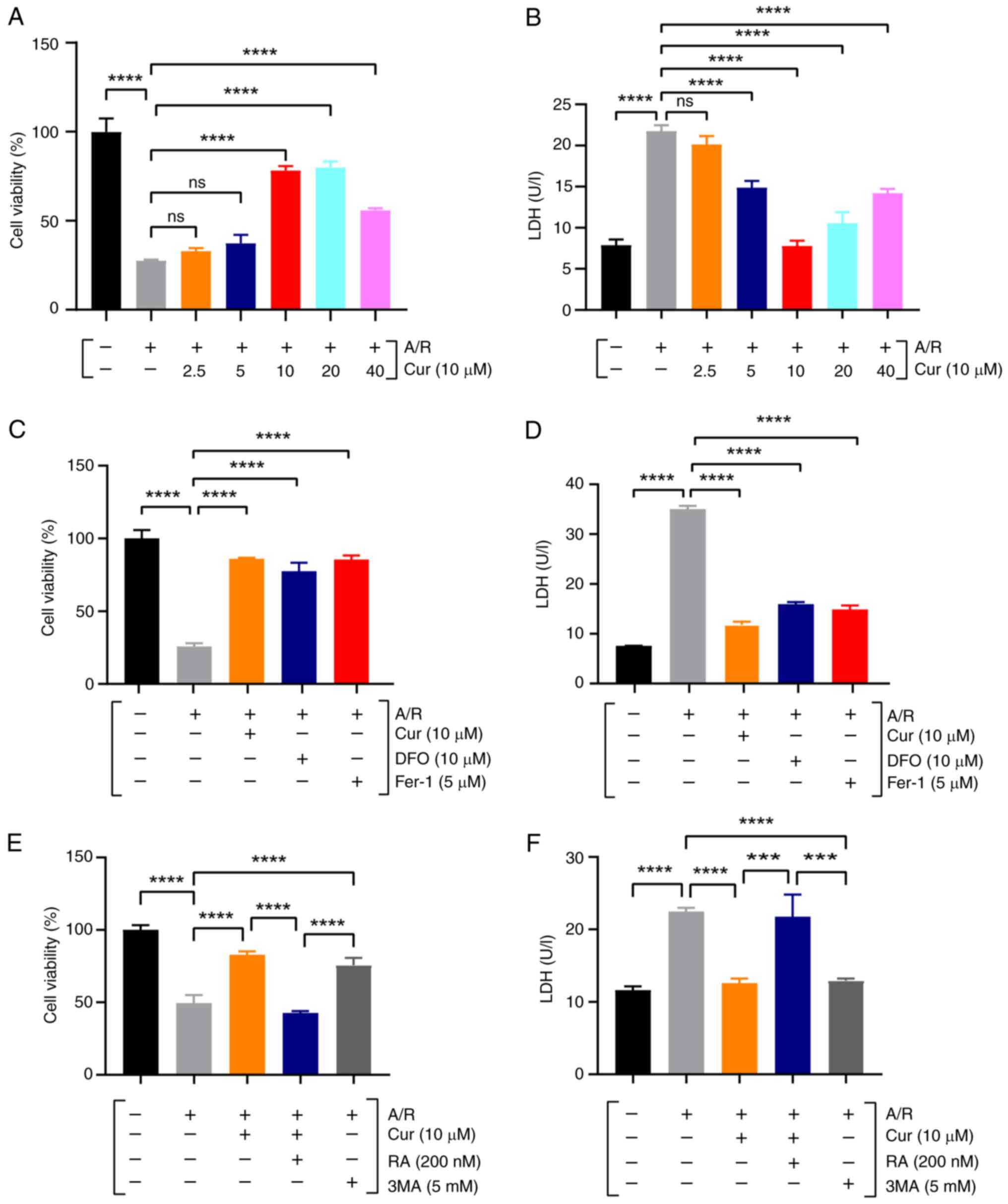
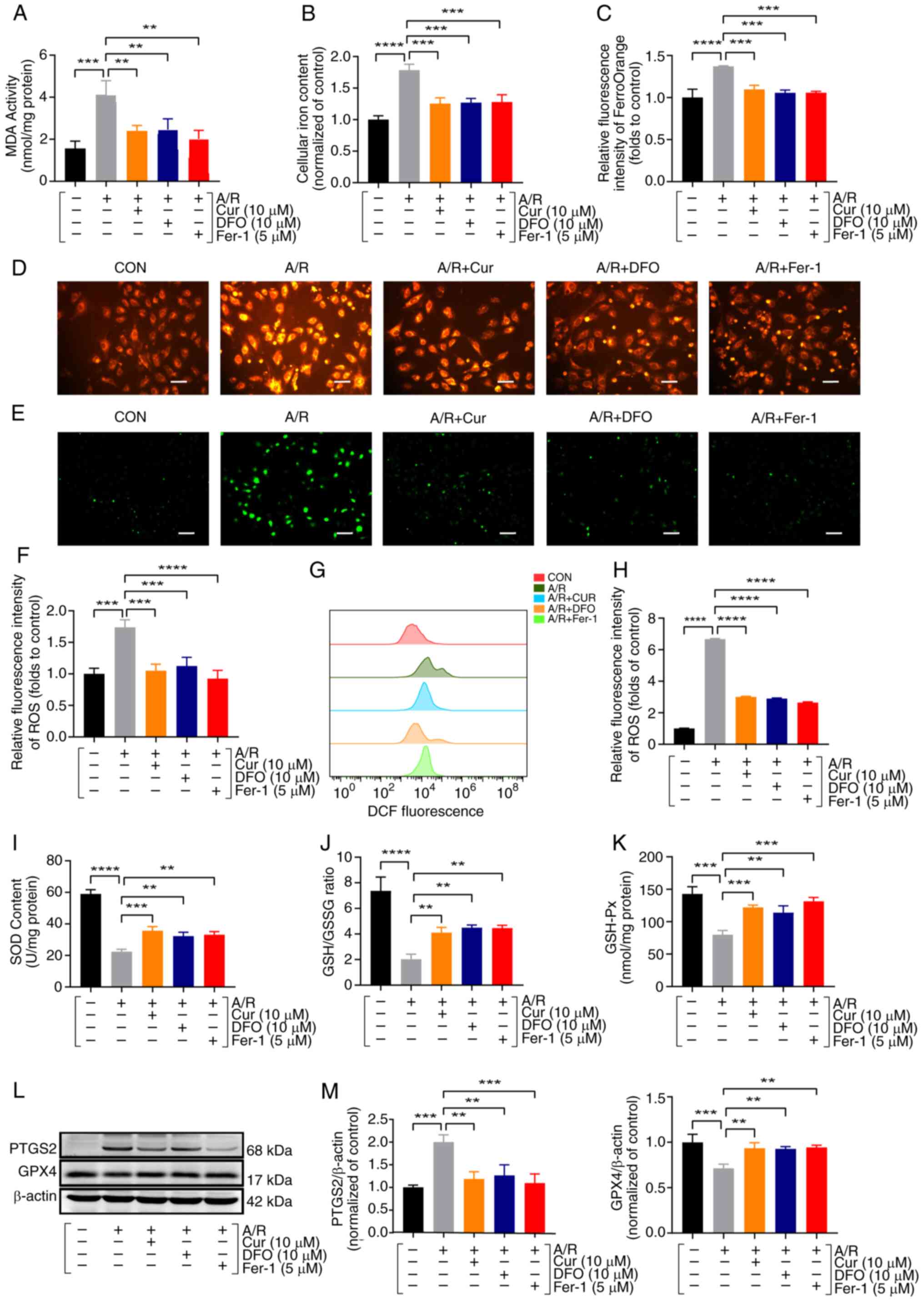
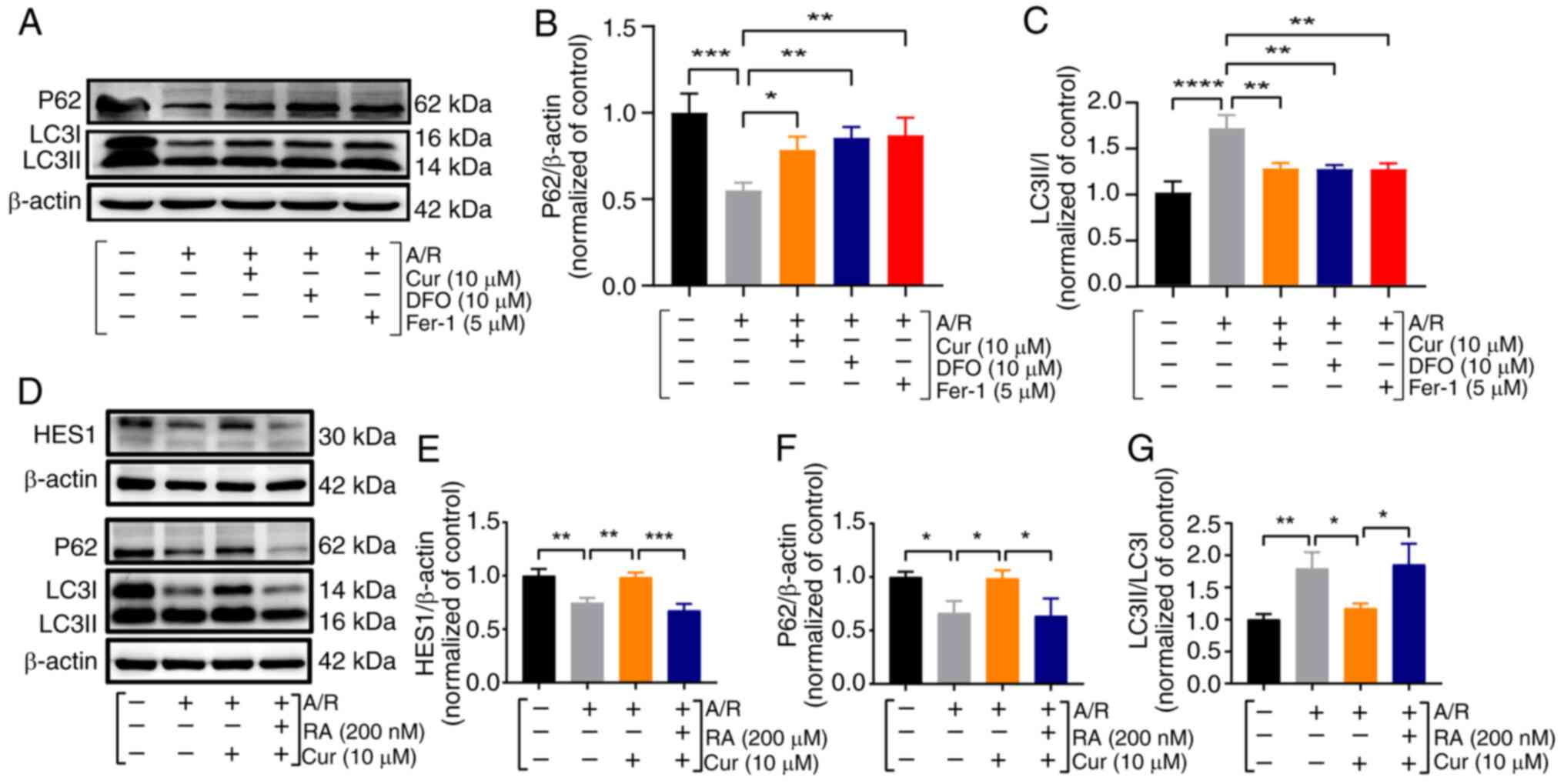
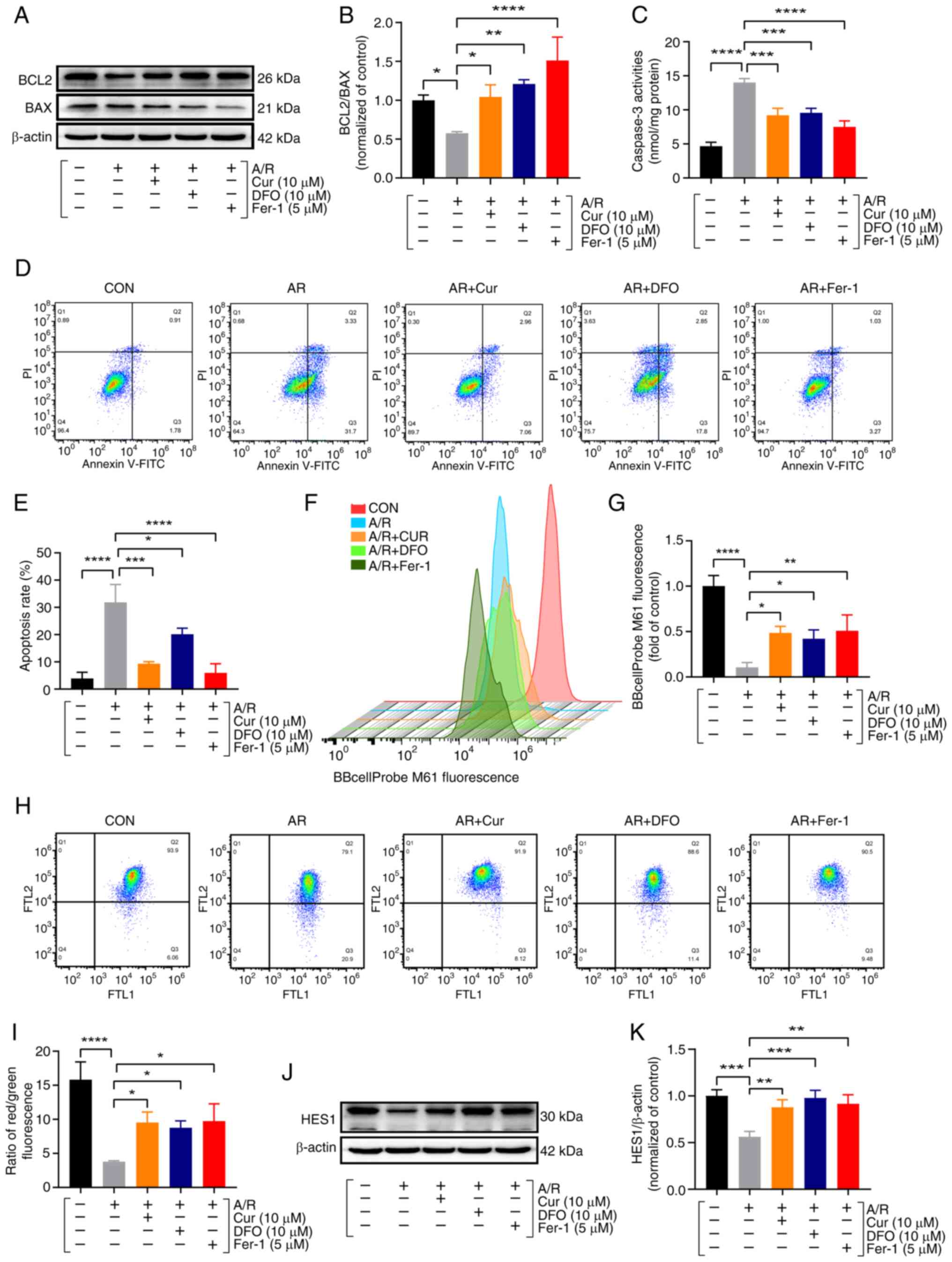
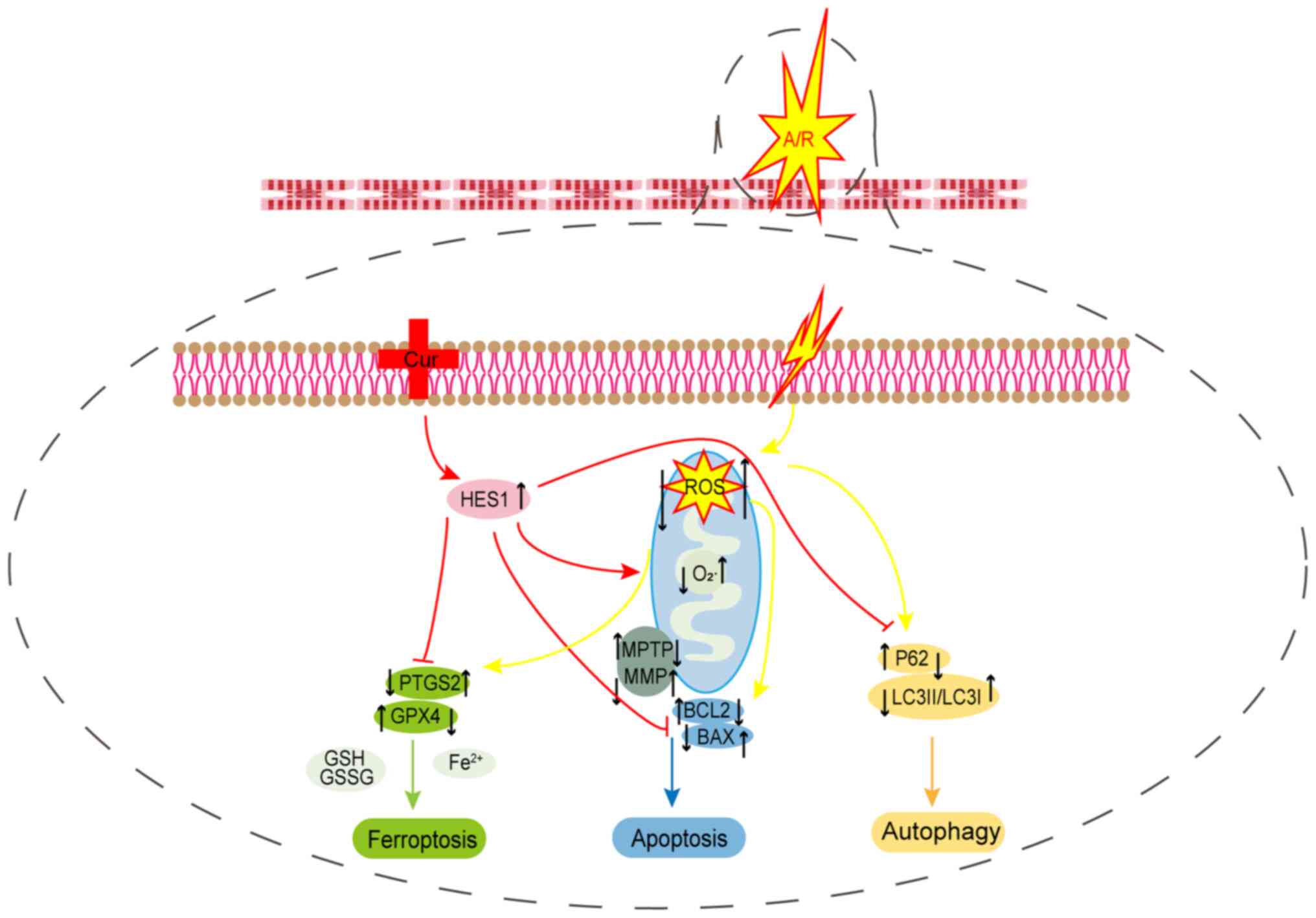
The early restoration of hemodynamics/reperfusion in acute myocardial infarction (AMI) is an effective therapeutic strategy to reduce sudden death and improve patient prognosis. However, reperfusion induces additional cardiomyocyte damage and cardiac tissue dysfunction. In this context, turmeric‑derived curcumin (Cur) has been shown to exhibit a protective effect against myocardial ischemia/reperfusion injury (I/RI). The molecular mechanism of its activity, however, remains unclear. The current study investigated the protective effect of Cur and its molecular mechanism via in vitro experiments. The Cell Counting Kit‑8 and lactate dehydrogenase (LDH) assay kit were used to assess the cell viability and cytotoxicity. The contents of malondialdehyde (MDA), superoxide dismutase (SOD), glutathione peroxidase, glutathione (GSH)/glutathione disulfide (GSSG), total iron, ferrous iron, caspase‑3 and reactive oxygen species (ROS) were measured using an appropriate kit. Western blotting was used to detect the expression of relevant proteins. The levels of apoptosis, mitochondrial permeability transition pore (MPTP) opening, and mitochondrial membrane potential (MMP) were detected by flow cytometry. The study findings indicated that anoxia/reoxygenation (A/R) injury significantly decreased cell viability, increased in LDH and caspase‑3 activities, induced ferroptosis, increased apoptosis and overactivated autophagy. However, pretreatment with Cur or ferrostatin‑1 (Fer‑1, a ferroptosis inhibitor) significantly increased A/R‑reduced cell viability, SOD, glutathione peroxidase activity, GSH/GSSH ratio and HES1 and glutathione peroxidase 4 protein expression; attenuated A/R‑induced LDH, MDA, total iron, ferrous iron, prostaglandin‑endoperoxide synthase 2 protein expression and prevented ROS overproduction and MMP loss. In addition, Cur inhibited caspase‑3 activity, upregulated the Bcl‑2/Bax ratio, reduced apoptotic cell number and inhibited MPTP over‑opening. Furthermore, Cur increased P62, LC3II/I, NDUFB8 and UQCRC2 expression and upregulated the p‑AMPK/AMPK ratio. However, erastin (a ferroptosis activator), pAD/HES1‑short hairpin RNA, rapamycin (an autophagy activator) and Compound C (an AMPK inhibitor) blocked the protective effect of Cur. In conclusion, Cur pretreatment inhibited ferroptosis, autophagy overactivation and oxidative stress; improved mitochondrial dysfunction; maintained energy homeostasis; attenuated apoptosis; and ultimately protected the myocardium from A/R injury via increased HES1 expression.
View Figures

Figure 1

Figure 2

Figure 3

Figure 4

Figure 5

Figure 6

Figure 7

Figure 8

Figure 9

View References

1 

Anderson JL and Morrow DA: Acute myocardial infarction. N Engl J Med. 376:2053–2064. 2017. View Article : Google Scholar : PubMed/NCBI

2 

Algoet M, Janssens S, Himmelreich U, Gsell W, Pusovnik M, Van den Eynde J and Oosterlinck W: Myocardial ischemia-reperfusion injury and the influence of inflammation. Trends Cardiovasc Med. 33:357–366. 2023. View Article : Google Scholar

3 

Salari N, Morddarvanjoghi F, Abdolmaleki A, Rasoulpoor S, Khaleghi AA, Hezarkhani LA, Shohaimi S and Mohammadi M: The global prevalence of myocardial infarction: A systematic review and meta-analysis. BMC Cardiovasc Disord. 23:2062023. View Article : Google Scholar : PubMed/NCBI

4 

Martí-Pàmies Í, Thoonen R, Morley M, Graves L, Tamez J, Caplan A, McDaid K, Yao V, Hindle A, Gerszten RE, et al: Brown adipose tissue and BMP3b decrease injury in cardiac ischemia-reperfusion. Circ Res. 133:353–365. 2023. View Article : Google Scholar : PubMed/NCBI

5 

Xue Y, Fu W, Yu P, Li Y, Yu X, Xu H and Sui D: Ginsenoside Rc alleviates myocardial ischemia-reperfusion injury by reducing mitochondrial oxidative stress and apoptosis: Role of SIRT1 activation. J Agric Food Chem. 71:1547–1561. 2023. View Article : Google Scholar : PubMed/NCBI

6 

Gu S, Tan J, Li Q, Liu S, Ma J, Zheng Y, Liu J, Bi W, Sha P, Li X, et al: Downregulation of LAPTM4B contributes to the impairment of the autophagic flux via unopposed activation of mTORC1 signaling during myocardial ischemia/reperfusion injury. Circ Res. 127:e148–e165. 2020. View Article : Google Scholar : PubMed/NCBI

7 

Cai W, Liu L, Shi X, Liu Y, Wang J, Fang X, Chen Z, Ai D, Zhu Y and Zhang X: Alox15/15-HpETE aggravates myocardial ischemia-reperfusion injury by promoting cardiomyocyte ferroptosis. Circulation. 147:1444–1460. 2023. View Article : Google Scholar : PubMed/NCBI

8 

Del Re DP, Amgalan D, Linkermann A, Liu Q and Kitsis RN: Fundamental mechanisms of regulated cell death and implications for heart disease. Physiol Rev. 99:1765–1817. 2019. View Article : Google Scholar : PubMed/NCBI

9 

Sciarretta S, Maejima Y, Zablocki D and Sadoshima J: The role of autophagy in the heart. Annu Rev Physiol. 80:1–26. 2018. View Article : Google Scholar

10 

Chen X, Xie Q, Zhu Y, Xu J, Lin G, Liu S, Su Z, Lai X, Li Q, Xie J, et al: Cardio-protective effect of tetrahydrocurcumin, the primary hydrogenated metabolite of curcumin in vivo and in vitro: Induction of apoptosis and autophagy via PI3K/AKT/mTOR pathways. Eur J Pharmacol. 911:1744952021. View Article : Google Scholar : PubMed/NCBI

11 

Steinberg GR and Hardie DG: New insights into activation and function of the AMPK. Nat Rev Mol Cell Biol. 24:255–272. 2023. View Article : Google Scholar

12 

Dixon SJ, Lemberg KM, Lamprecht MR, Skouta R, Zaitsev EM, Gleason CE, Patel DN, Bauer AJ, Cantley AM, Yang WS, et al: Ferroptosis: An iron-dependent form of nonapoptotic cell death. Cell. 149:1060–1072. 2012. View Article : Google Scholar : PubMed/NCBI

13 

Fang X, Ardehali H, Min J and Wang F: The molecular and metabolic landscape of iron and ferroptosis in cardiovascular disease. Nat Rev Cardiol. 20:7–23. 2023. View Article : Google Scholar

14 

Xing G, Meng L, Cao S, Liu S, Wu J, Li Q, Huang W and Zhang L: PPARα alleviates iron overload-induced ferroptosis in mouse liver. EMBO Rep. 23:e522802022. View Article : Google Scholar

15 

Hu T, Zou HX, Le SY, Wang YR, Qiao YM, Yuan Y, Liu JC, Lai SQ and Huang H: Tanshinone IIA confers protection against myocardial ischemia/reperfusion injury by inhibiting ferroptosis and apoptosis via VDAC1. Int J Mol Med. 52:109 [pii]2023. View Article : Google Scholar : PubMed/NCBI

16 

Liu B, Zhao C, Li H, Chen X, Ding Y and Xu S: Puerarin protects against heart failure induced by pressure overload through mitigation of ferroptosis. Biochem Biophys Res Commun. 497:233–240. 2018. View Article : Google Scholar : PubMed/NCBI

17 

Cao JF, Gong Y, Wu M, Xiong L, Chen S, Huang H, Zhou X, Peng YC, Shen XF, Qu J, et al: Molecular docking and molecular dynamics study Lianhua Qingwen granules (LHQW) treats COVID-19 by inhibiting inflammatory response and regulating cell survival. Front Cell Infect Microbiol. 12:10447702022. View Article : Google Scholar : PubMed/NCBI

18 

Poespoprodjo JR, Douglas NM, Ansong D, Kho S and Anstey NM: Malaria. Lancet. 402:2328–2345. 2023. View Article : Google Scholar : PubMed/NCBI

19 

Wang ZK, Chen RR, Li JH, Chen JY, Li W, Niu XL, Wang FF, Wang J and Yang JX: Puerarin protects against myocardial ischemia/reperfusion injury by inhibiting inflammation and the NLRP3 inflammasome: The role of the SIRT1/NF-κB pathway. Int Immunopharmacol. 89:1070862020. View Article : Google Scholar

20 

Duan W, Yang Y, Yan J, Yu S, Liu J, Zhou J, Zhang J, Jin Z and Yi D: The effects of curcumin post-treatment against myocardial ischemia and reperfusion by activation of the JAK2/STAT3 signaling pathway. Basic Res Cardiol. 107:2632012. View Article : Google Scholar : PubMed/NCBI

21 

Zhu P, Yang M, He H, Kuang Z, Liang M, Lin A, Liang S, Wen Q, Cheng Z and Sun C: Curcumin attenuates hypoxia/reoxygenation-induced cardiomyocyte injury by downregulating Notch signaling. Mol Med Rep. 20:1541–1550. 2019.PubMed/NCBI

22 

Huang H, Lai S, Wan Q, Qi W and Liu J: Astragaloside IV protects cardiomyocytes from anoxia/reoxygenation injury by upregulating the expression of Hes1 protein. Can J Physiol Pharmacol. 94:542–553. 2016. View Article : Google Scholar : PubMed/NCBI

23 

Yu L, Li F, Zhao G, Yang Y, Jin Z, Zhai M, Yu W, Zhao L, Chen W, Duan W, et al: Protective effect of berberine against myocardial ischemia reperfusion injury: role of Notch1/Hes1-PTEN/Akt signaling. Apoptosis. 20:796–810. 2015. View Article : Google Scholar : PubMed/NCBI

24 

Flameng W, Borgers M, Daenen W and Stalpaert G: Ultrastructural and cytochemical correlates of myocardial protection by cardiac hypothermia in man. J Thorac Cardiovasc Surg. 79:413–424. 1980. View Article : Google Scholar : PubMed/NCBI

25 

Li FJ, Long HZ, Zhou ZW, Luo HY, Xu SG and Gao LC: System X(c) (-)/GSH/GPX4 axis: An important antioxidant system for the ferroptosis in drug-resistant solid tumor therapy. Front Pharmacol. 13:9102922022. View Article : Google Scholar : PubMed/NCBI

26 

Cai C, Guo Z, Chang X, Li Z, Wu F, He J, Cao T, Wang K, Shi N, Zhou H, et al: Empagliflozin attenuates cardiac microvascular ischemia/reperfusion through activating the AMPKα1/ULK1/FUNDC1/mitophagy pathway. Redox Biol. 52:1022882022. View Article : Google Scholar

27 

Sun Y, Yao X, Zhang QJ, Zhu M, Liu ZP, Ci B, Xie Y, Carlson D, Rothermel BA, Sun Y, et al: Beclin-1-dependent autophagy protects the heart during sepsis. Circulation. 138:2247–2262. 2018. View Article : Google Scholar : PubMed/NCBI

28 

Ye T, Yang W, Gao T, Yu X, Chen T, Yang Y, Guo J, Li Q, Li H and Yang L: Trastuzumab-induced cardiomyopathy via ferroptosis-mediated mitochondrial dysfunction. Free Radic Biol Med. 206:143–161. 2023. View Article : Google Scholar : PubMed/NCBI

29 

Herzig S and Shaw RJ: AMPK: Guardian of metabolism and mitochondrial homeostasis. Nat Rev Mol Cell Biol. 19:121–135. 2018. View Article : Google Scholar :

30 

Zhao D, Liu J, Wang M, Zhang X and Zhou M: Epidemiology of cardiovascular disease in China: Current features and implications. Nat Rev Cardiol. 16:203–212. 2019. View Article : Google Scholar

31 

Sawashita Y, Hirata N, Yoshikawa Y, Terada H, Tokinaga Y and Yamakage M: Remote ischemic preconditioning reduces myocardial ischemia-reperfusion injury through unacylated ghrelin-induced activation of the JAK/STAT pathway. Basic Res Cardiol. 115:502020. View Article : Google Scholar : PubMed/NCBI

32 

Wu X, Liu L, Zheng Q, Ye H, Yang H, Hao H and Li P: Dihydrotanshinone I preconditions myocardium against ischemic injury via PKM2 glutathionylation sensitive to ROS. Acta Pharm Sin B. 13:113–127. 2023. View Article : Google Scholar : PubMed/NCBI

33 

Yu LM, Dong X, Xue XD, Zhang J, Li Z, Wu HJ, Yang ZL, Yang Y and Wang HS: Naringenin improves mitochondrial function and reduces cardiac damage following ischemia-reperfusion injury: the role of the AMPK-SIRT3 signaling pathway. Food Funct. 10:2752–2765. 2019. View Article : Google Scholar : PubMed/NCBI

34 

Wan J, Zhang Z, Wu C, Tian S, Zang Y, Jin G, Sun Q, Wang P, Luan X, Yang Y, et al: Astragaloside IV derivative HHQ16 ameliorates infarction-induced hypertrophy and heart failure through degradation of lncRNA4012/9456. Signal Transduct Target Ther. 8:4142023. View Article : Google Scholar : PubMed/NCBI

35 

Jiang C, Shi Q, Yang J, Ren H, Zhang L, Chen S, Si J, Liu Y, Sha D, Xu B and Ni J: Ceria nanozyme coordination with curcumin for treatment of sepsis-induced cardiac injury by inhibiting ferroptosis and inflammation. J Adv Res. 63:159–170. 2023. View Article : Google Scholar : PubMed/NCBI

36 

Ruan Y, Xiong Y, Fang W, Yu Q, Mai Y, Cao Z, Wang K, Lei M, Xu J, Liu Y, et al: Highly sensitive curcumin-conjugated nanotheranostic platform for detecting amyloid-beta plaques by magnetic resonance imaging and reversing cognitive deficits of Alzheimer's disease via NLRP3-inhibition. J Nanobiotechnology. 20:3222022. View Article : Google Scholar : PubMed/NCBI

37 

Wang X, Zhang Y, Yang Y, Zhang W, Luo L, Han F, Guan H, Tao K and Hu D: Curcumin pretreatment protects against hypoxia/reoxgenation injury via improvement of mitochondrial function, destabilization of HIF-1α and activation of Epac1-Akt pathway in rat bone marrow mesenchymal stem cells. Biomed Pharmacother. 109:1268–1275. 2019. View Article : Google Scholar

38 

Kim YS, Kwon JS, Cho YK, Jeong MH, Cho JG, Park JC, Kang JC and Ahn Y: Curcumin reduces the cardiac ischemia-reperfusion injury: Involvement of the toll-like receptor 2 in cardiomyocytes. J Nutr Biochem. 23:1514–1523. 2012. View Article : Google Scholar : PubMed/NCBI

39 

Bo H and Feng X: Post-treatment curcumin reduced ischemia-reperfusion-induced pulmonary injury via the Notch2/Hes-1 pathway. J Int Med Res. 48:3000605198924322020. View Article : Google Scholar : PubMed/NCBI

40 

Zhang M, Yu LM, Zhao H, Zhou XX, Yang Q, Song F, Yan L, Zhai ME, Li BY, Zhang B, et al: 2,3,5,4′-Tetrahydroxystilbe ne-2-O-β-D-glucoside protects murine hearts against ischemia/reperfusion injury by activating Notch1/Hes1 signaling and attenuating endoplasmic reticulum stress. Acta Pharmacol Sin. 38:317–330. 2017. View Article : Google Scholar : PubMed/NCBI

41 

Zhou XL, Wan L, Xu QR, Zhao Y and Liu JC: Notch signaling activation contributes to cardioprotection provided by ischemic preconditioning and postconditioning. J Transl Med. 11:2512013. View Article : Google Scholar : PubMed/NCBI

42 

Zhou XL, Zhao Y, Fang YH, Xu QR and Liu JC: Hes1 is upregulated by ischemic postconditioning and contributes to cardioprotection. Cell Biochem Funct. 32:730–736. 2014. View Article : Google Scholar : PubMed/NCBI

43 

Wang L, Lai S, Zou H, Zhou X, Wan Q, Luo Y, Wu Q, Wan L, Liu J and Huang H: Ischemic preconditioning/ischemic post-conditioning alleviates anoxia/reoxygenation injury via the Notch1/Hes1/VDAC1 axis. J Biochem Mol Toxicol. 36:e231992022. View Article : Google Scholar

44 

Jiang X, Stockwell BR and Conrad M: Ferroptosis: Mechanisms, biology and role in disease. Nat Rev Mol Cell Biol. 22:266–282. 2021. View Article : Google Scholar : PubMed/NCBI

45 

Wang X, Chen X, Zhou W, Men H, Bao T, Sun Y, Wang Q, Tan Y, Keller BB, Tong Q, et al: Ferroptosis is essential for diabetic cardiomyopathy and is prevented by sulforaphane via AMPK/NRF2 pathways. Acta Pharm Sin B. 12:708–722. 2022. View Article : Google Scholar : PubMed/NCBI

46 

Galy B, Conrad M and Muckenthaler M: Mechanisms controlling cellular and systemic iron homeostasis. Nat Rev Mol Cell Biol. 25:133–155. 2024. View Article : Google Scholar

47 

Jankowska EA, Kasztura M, Sokolski M, Bronisz M, Nawrocka S, Oleśkowska-Florek W, Zymliński R, Biegus J, Siwołowski P, Banasiak W, et al: Iron deficiency defined as depleted iron stores accompanied by unmet cellular iron requirements identifies patients at the highest risk of death after an episode of acute heart failure. Eur Heart J. 35:2468–2476. 2014. View Article : Google Scholar : PubMed/NCBI

48 

Fang X, Cai Z, Wang H, Han D, Cheng Q, Zhang P, Gao F, Yu Y, Song Z, Wu Q, et al: Loss of cardiac ferritin H facilitates cardiomyopathy via Slc7a11-mediated ferroptosis. Circ Res. 127:486–501. 2020. View Article : Google Scholar : PubMed/NCBI

49 

Fleming RE and Ponka P: Iron overload in human disease. N Engl J Med. 366:348–359. 2012. View Article : Google Scholar : PubMed/NCBI

50 

Li D, Zhang G, Wang Z, Guo J, Liu Y, Lu Y, Qin Z, Xu Y, Cao C, Wang B, et al: Idebenone attenuates ferroptosis by inhibiting excessive autophagy via the ROS-AMPK-mTOR pathway to preserve cardiac function after myocardial infarction. Eur J Pharmacol. 943:1755692023. View Article : Google Scholar : PubMed/NCBI

51 

Ye Y, Chen A, Li L, Liang Q, Wang S, Dong Q, Fu M, Lan Z, Li Y, Liu X, et al: Repression of the antiporter SLC7A11/glutathione/glutathione peroxidase 4 axis drives ferroptosis of vascular smooth muscle cells to facilitate vascular calcification. Kidney Int. 102:1259–1275. 2022. View Article : Google Scholar : PubMed/NCBI

52 

Ikeda S, Zablocki D and Sadoshima J: The role of autophagy in death of cardiomyocytes. J Mol Cell Cardiol. 165:1–8. 2022. View Article : Google Scholar :

53 

Liu W, Chen C, Gu X, Zhang L, Mao X, Chen Z and Tao L: AM1241 alleviates myocardial ischemia-reperfusion injury in rats by enhancing Pink1/Parkin-mediated autophagy. Life Sci. 272:1192282021. View Article : Google Scholar : PubMed/NCBI

54 

Li Y, Liang P, Jiang B, Tang Y, Liu X, Liu M, Sun H, Chen C, Hao H, Liu Z, et al: CARD9 promotes autophagy in cardiomyocytes in myocardial ischemia/reperfusion injury via interacting with Rubicon directly. Basic Res Cardiol. 115:292020. View Article : Google Scholar : PubMed/NCBI

55 

Wen L, Cheng X, Fan Q, Chen Z, Luo Z, Xu T, He M and He H: TanshinoneⅡA inhibits excessive autophagy and protects myocardium against ischemia/reperfusion injury via 14-3-3η/Akt/Beclin1 pathway. Eur J Pharmacol. 954:1758652023. View Article : Google Scholar

56 

Fan G, Yu J, Asare PF, Wang L, Zhang H, Zhang B, Zhu Y and Gao X: Danshensu alleviates cardiac ischaemia/reperfusion injury by inhibiting autophagy and apoptosis via activation of mTOR signalling. J Cell Mol Med. 20:1908–1919. 2016. View Article : Google Scholar : PubMed/NCBI

57 

Mohamed DZ, El-Sisi A, Sokar SS, Shebl AM and Abu-Risha SE: Targeting autophagy to modulate hepatic ischemia/reperfusion injury: A comparative study between octreotide and melatonin as autophagy modulators through AMPK/PI3K/AKT/mTOR/ULK1 and Keap1/Nrf2 signaling pathways in rats. Eur J Pharmacol. 897:1739202021. View Article : Google Scholar : PubMed/NCBI

58 

Mancardi D, Pagliaro P, Ridnour LA, Tocchetti CG, Miranda K, Juhaszova M, Sollott SJ, Wink DA and Paolocci N: HNO protects the myocardium against reperfusion injury, inhibiting the mPTP opening via PKCε activation. Antioxidants (Basel). 11:3822022. View Article : Google Scholar

59 

Pan P, Zhang H, Su L, Wang X and Liu D: Melatonin balance the autophagy and apoptosis by regulating UCP2 in the LPS-induced cardiomyopathy. Molecules. 23:6752018. View Article : Google Scholar : PubMed/NCBI

Related Articles

  • Abstract
  • View
  • Download
  • Twitter
Copy and paste a formatted citation
Spandidos Publications style
Yuan Y, Huang H, Hu T, Zou C, Qiao Y, Fang M, Liu J and Lai S: Curcumin pretreatment attenuates myocardial ischemia/reperfusion injury by inhibiting ferroptosis, autophagy and apoptosis via HES1. Int J Mol Med 54: 110, 2024.
APA
Yuan, Y., Huang, H., Hu, T., Zou, C., Qiao, Y., Fang, M. ... Lai, S. (2024). Curcumin pretreatment attenuates myocardial ischemia/reperfusion injury by inhibiting ferroptosis, autophagy and apoptosis via HES1. International Journal of Molecular Medicine, 54, 110. https://doi.org/10.3892/ijmm.2024.5434
MLA
Yuan, Y., Huang, H., Hu, T., Zou, C., Qiao, Y., Fang, M., Liu, J., Lai, S."Curcumin pretreatment attenuates myocardial ischemia/reperfusion injury by inhibiting ferroptosis, autophagy and apoptosis via HES1". International Journal of Molecular Medicine 54.6 (2024): 110.
Chicago
Yuan, Y., Huang, H., Hu, T., Zou, C., Qiao, Y., Fang, M., Liu, J., Lai, S."Curcumin pretreatment attenuates myocardial ischemia/reperfusion injury by inhibiting ferroptosis, autophagy and apoptosis via HES1". International Journal of Molecular Medicine 54, no. 6 (2024): 110. https://doi.org/10.3892/ijmm.2024.5434
Copy and paste a formatted citation
x
Spandidos Publications style
Yuan Y, Huang H, Hu T, Zou C, Qiao Y, Fang M, Liu J and Lai S: Curcumin pretreatment attenuates myocardial ischemia/reperfusion injury by inhibiting ferroptosis, autophagy and apoptosis via HES1. Int J Mol Med 54: 110, 2024.
APA
Yuan, Y., Huang, H., Hu, T., Zou, C., Qiao, Y., Fang, M. ... Lai, S. (2024). Curcumin pretreatment attenuates myocardial ischemia/reperfusion injury by inhibiting ferroptosis, autophagy and apoptosis via HES1. International Journal of Molecular Medicine, 54, 110. https://doi.org/10.3892/ijmm.2024.5434
MLA
Yuan, Y., Huang, H., Hu, T., Zou, C., Qiao, Y., Fang, M., Liu, J., Lai, S."Curcumin pretreatment attenuates myocardial ischemia/reperfusion injury by inhibiting ferroptosis, autophagy and apoptosis via HES1". International Journal of Molecular Medicine 54.6 (2024): 110.
Chicago
Yuan, Y., Huang, H., Hu, T., Zou, C., Qiao, Y., Fang, M., Liu, J., Lai, S."Curcumin pretreatment attenuates myocardial ischemia/reperfusion injury by inhibiting ferroptosis, autophagy and apoptosis via HES1". International Journal of Molecular Medicine 54, no. 6 (2024): 110. https://doi.org/10.3892/ijmm.2024.5434
Follow us
  • Twitter
  • LinkedIn
  • Facebook
About
  • Spandidos Publications
  • Careers
  • Cookie Policy
  • Privacy Policy
How can we help?
  • Help
  • Live Chat
  • Contact
  • Email to our Support Team